Loading summary
Transcript84 lines
- [00:03]
Dena Temple-Raston
From Recorded Future News and prx, this is Click here. From Recorded Future News and prx, this is Click here. For most of human history, being in public meant being being anonymous. You could pass through a train station, a protest, even a crowded street and disappear back into the crowd. Maybe somebody happened to notice you. Maybe they even remembered your face. But that memory stayed human. It's not like that anymore. Now cameras are watching, too, and increasingly they remember what they've seen. Not just your face, but see sometimes also your name, your history. In this video from Minnesota, an ICE agent is attempting to scan the face of someone they've stopped to question even whether the government thinks you belong there.
- [01:05]
Recorded Future News Announcer
Dallas Police Department will soon be using facial recognition technology to identify criminal suspects through millions of photos available online.
- [01:13]
Dena Temple-Raston
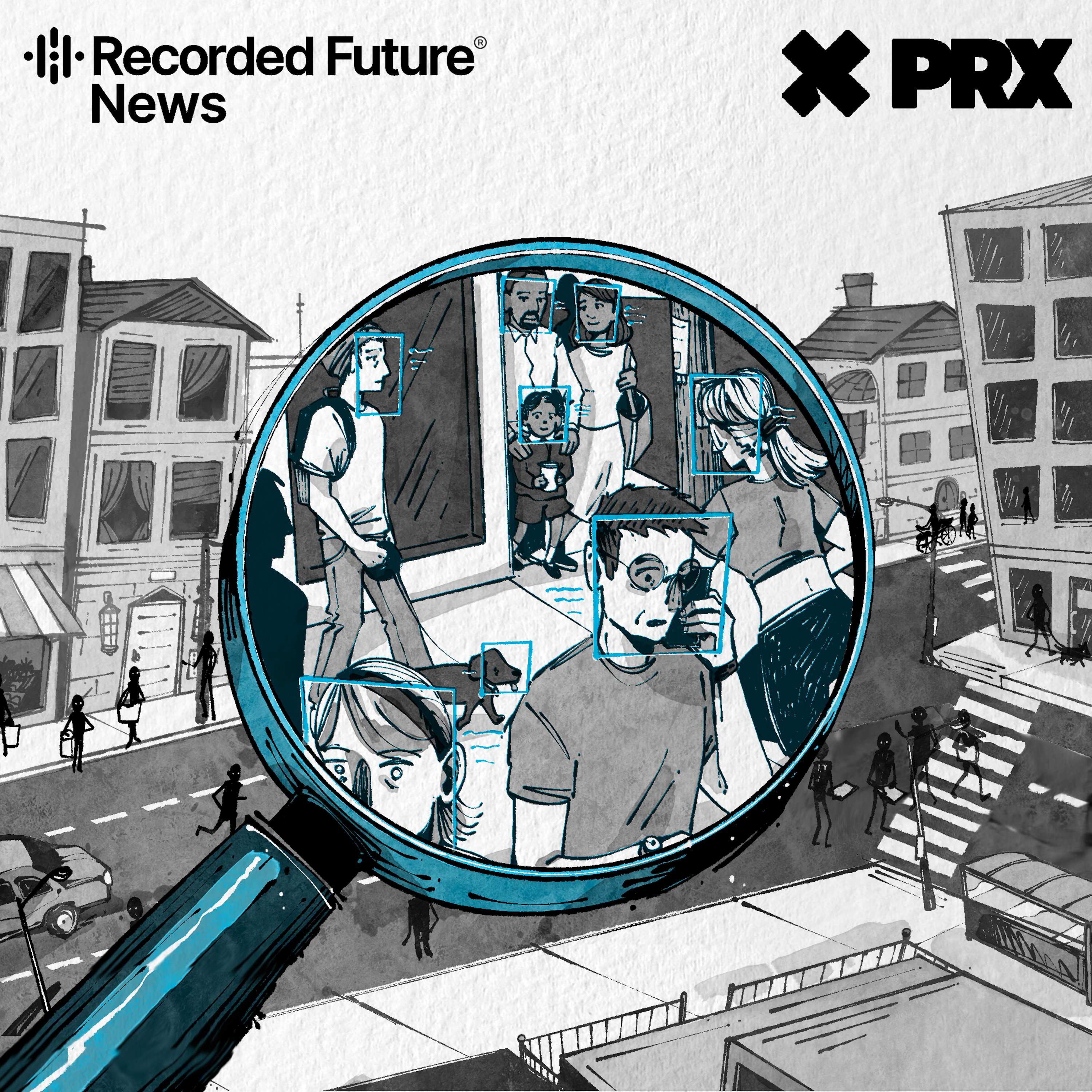
Facial recognition software isn't just identifying people. It's changing the terms of what it means to be in public. Because once a face can instantly pull up a file, a routine encounter can become something else entirely. From Recorded Future News and prx, this is Click Here, a podcast about how technology is changing everything. I'm Dena Temple Rastan, and this week, the end of anonymity. What happens when police body cameras stop just recording what officers see and start knowing who they're looking at? Senior producer Zach Hirsch takes us to Edmonton, Canada, to dig into that very question. Because late last year, police there started testing facial recognition software on body cameras for the first time. And it's making people a little uneasy.
- [02:09]
Narrator/Commentator
The tool designed to watch police is being turned around to watch you.
- [02:13]
Dena Temple-Raston
That's right after the break. Stay with us. Support for Clickure comes from Quince. Lately, I've been more intentional about what I wear day to day, leaning into pieces that feel effortless, comfortable, but still put together. It just makes getting dressed less of a chore. And for a while now, Quince has been my go to. The fabrics feel elevated, the fits are flattering, and everything just works without overthinking it. Quince makes it easy to refresh your everyday this spring with pieces that feel as good as they look. They use premium materials like 100% European linen, organic cotton, and ultra soft denim. Their lightweight linen pants, dresses and tops start at $30 and are effortless, breathable, and easy to wear on repeat. Everything at quince is priced 50 to 80% less than similar brands. They work directly with ethical factories and cut out the middlemen. So you're paying for quality and craftsmanship, not brand markup. I just got a Quince bathing suit that looks like one of those expensive European brands, but for a fraction of the price. Refresh your everyday with luxury you'll actually use. Head to Quince.com clickhere for free shipping on your order and 365 day returns. Now available in Canada too. That's Q-U-I-N-C-E.com clickhere for free shipping and 365 day returns. Quince.com clickhere support for click here comes from NPR's Planet Money podcast. Planet Money has a knack for taking big, complicated stories and making them feel human. Take the conflict between the US And Iran in a recent episode. The show followed a Seattle comic book publisher trying to track down two comic books stuck on a container ship in the Strait of Hormuz. To explain what was happening, Planet Money called a man in Tehran and he described Iran's strategy like 5 seconds to pay or your ship doesn't get to pass through. Just like that, a geopolitical standoff turned into something that you could actually picture. That's the trick Planet Money pulls off over and over again. It funds the people living inside these enormous economic stories and through them helps explain how the world really works. From global shipping to sanctions to why Pokemon cards are suddenly worth so much money, Planet Money makes complicated things feel surprisingly clear. Follow NPR's Planet Money podcast and understand how money shapes the world.
- [05:05]
Zach Hirsch
From recorded future news and prx. This is Click here. Zach I'm Zach Hirsch. If you cross into Canada from Montana and then keep driving north for another six hours, you'll eventually reach the city of Edmonton.
- [05:19]
Katrina Ingram
Edmonton is kind of like a big, small town. A lot of people know each other, so it's kind of nice that way. It's still easy to get around.
- [05:29]
Zach Hirsch
Katrina Ingram has lived in Edmonton for more than 20 years, and while Edmonton is a place small enough that people know each other, it's also a place that thinks bigger. It's become an innovation hub for artificial intelligence, home to the Alberta Machine Intelligence Institute, known as Amy.
- [05:47]
Katrina Ingram
We have one of three elite AI institutes in Canada. So we have a lot of people doing that kind of work.
- [05:54]
Zach Hirsch
A lot of people doing AI work. Katrina teaches AI and ethics at the University of Alberta, and since 2021, she's been working with municipalities and businesses as they integrate new apps and programs into their operations. Among other things, she served as the data ethics advisor for the city of Edmonton, and part of Katrina's job there was to think through what new technologies might mean for the people expected to live with them. So when the Edmonton Police Service began testing new tools to help Solve crimes. Katrina paid close attention. Take this one case when a woman's body was found in a dumpster. The usual hand drawn sketches weren't getting investigators anywhere.
- [06:44]
Katrina Ingram
They had no success with the usual way of here's a police sketch and help us identify this person.
- [06:51]
Zach Hirsch
So edmonton police decided to try something new. They asked AI to create an image of what she might have looked like before she died in hopes of generating new leads. The image was all over social media, giving the case new attention. Though they still haven't made a positive ID. Then back in 2019, the department became the first police service in Canada to try another cutting edge police rapid DNA testing.
- [07:17]
Katrina Ingram
So instead of submitting the DNA to the lab, it was like, we can do it on the spot.
- [07:22]
Zach Hirsch
It was a controversial move. Critics said the technology was too experimental and could make mistakes and potentially misidentify someone. Edmonton police, for their part, were focused on the promise that it could help them identify suspects faster. Now, taken on their own, these were just decisions, but taken together, they start
- [07:44]
Katrina Ingram
to say something and so it sort of speaks to this culture in the edmonton police services of wanting to be first, being quite so.
- [07:52]
Zach Hirsch
Katrina wasn't all that surprised last December when she was scrolling through social media and saw clips of Kurt barton of the edmonton police service. He was standing at a podium to announce a new pilot program.
- [08:05]
Kurt Martin
Good morning everyone. Thank you for joining us today. As many of you know, the EPS has engaged in many ways to continue its innovation and advancement of technology to support frontline officers.
- [08:15]
Zach Hirsch
But this time he said they'd be trying a new facial recognition tool.
- [08:20]
Kurt Martin
This week the EPS will begin a proof of concept testing to evaluate the technical performance of facial recognition enabled body worn video cameras. To be clear, this is not.
- [08:31]
Zach Hirsch
He explained, they wanted to address a long standing finding people with outstanding warrants and safety flags on their record. 2025 wasn't exactly a banner year for Edmonton when it came to crime. The overall crime rate had ticked up after two years of decline. And while there were fewer hate Crimes reported in 2025, the ones that were reported were more violent. The transit system in edmonton was a problem too. It was considered one of the most dangerous in Canada. The thing was, according to the police, a lot of this crime could be linked to repeat offenders. This is how edmonton police chief Warren dreichel characterized it during an interview on local news earlier this year.
- [09:17]
Warren Dreichel
It's a high percentage of the same individuals that are kind of involved in these incidents.
- [09:21]
Zach Hirsch
What can really be done about repeat offenders like this?
- [09:24]
Warren Dreichel
Well, I think there's A couple things, Juan. The first is ensure that when we know who these individuals are, when we see them in transit, we remove them, right? So it's being preventative.
- [09:36]
Zach Hirsch
The edmonton police never explicitly said that was the reason they decided to run the pilot. Something we asked them about several times. But the most generous interpretation is that the department was looking for new ways to respond to edmontonian's concerns about public safety. And they believed facial recognition might help
- [09:55]
Kurt Martin
and will be the first police service in the world to test axon's body worn video camera facial recognition technology.
- [10:02]
Zach Hirsch
Axon is a police technology company best known for making tasers and body cameras. Now, those body cameras for the first time had facial recognition, and edmonton was going to help test them. The goal, officials said, was fairly use facial recognition to help identify people they were already looking for. But they also seemed to understand not everyone would see it that way. At the press conference, they emphasized they were moving cautiously. The pilot would be limited just one month and it would draw from a database of about 7,000 mugshots, all tied to people who were considered potentially violent. Ann Lee cook, Axon's director of responsible AI, was also at the press conference, and she said the pilot was designed to be very specific.
- [10:56]
Ann Lee Cook
We really want to make sure that it's targeted so that these are folks with serious offenses who are uploaded into this database.
- [11:04]
Zach Hirsch
Also, she said facial recognition wouldn't be always running. Officers would turn it on only during an active investigation and that face data
- [11:13]
Ann Lee Cook
is sent to the cloud to compare against the database of persons of interest,
- [11:19]
Zach Hirsch
but not in real time. Body cam footage is uploaded hours later or even the next day. And Anlee emphasized there's always a human in the loop.
- [11:29]
Ann Lee Cook
A potential system match will hit a trained officer and they will be able to see if there's a potential resemblance between the two.
- [11:38]
Zach Hirsch
Over and over they seemed to say, we're doing this thoughtfully, cautiously and in a limited way. And to underscore that point, Ann Lee volunteered for a live demo. The police official turned toward her and pressed a button on his body camera. And it took a moment, but sure enough, her face popped up on a screen set up by the podium showing what that trained officer would see. And it was a match.
- [12:03]
Kurt Martin
And you can see there's quite a few people that are actually captured in this image here. But the only person that was actually triggered the facial recognition is Annie, and that's because she's actually in that database that we had pre populated.
- [12:13]
Zach Hirsch
Of course, this was a controlled demo. The system wasn't tested on the crowd of reporters in the room. As the press conference wound down, the police official emphasized they want to respect people's rights and privacy. A local reporter pressed him on that.
- [12:30]
Local Reporter
I mean, what do you say to Edmontonians who are anxious about the use of AI in something like this?
- [12:37]
Kurt Martin
I think AI is new. It's exciting in many respects. In some ways it can be very scary because it is new. This is, in my mind, something that's very similar to automated fingerprint identification system that we've been using for like 30 years. It just takes it to a different level. We're now using faces instead of fingerprints
- [12:53]
Zach Hirsch
left by criminals at crime scenes, faces instead of fingerprints. To understand why that shift is so important, it helps to go back. After a series of high profile shootings of unarmed black men in the United States, departments across the country began adopting body cameras. Years of protests and viral videos pushed body cams into wider use as a way to increase transparency. The idea was to create a record of police interactions, footage that can be used by officers and by the public in courtrooms or in the court of public opinion. And the logic was if everything is recorded, behavior changes. Almost as soon as Edmonton police announced the pilot, people started arguing over what it meant. Some saw a useful new tool. Anything that can make their job safer and easier for them, I support. Others saw something more unsettling.
- [14:03]
Narrator/Commentator
The tool designed to watch police, is being turned around to watch you.
- [14:06]
Kurt Martin
They say they could capture somebody if they already have a criminal record before they are going to be doing something worse. I think that's the idea behind it.
- [14:15]
Zach Hirsch
And for critics, that was exactly the problem.
- [14:18]
Narrator/Commentator
This should be universally viewed as a
- [14:20]
Zach Hirsch
bridge too far and everybody should be shouting this down. Videos like these got thousands of views, reposts and comments on social media. Experts weighed in like the citizen lab, a research institute at the University of Toronto tracking digital surveillance. One analyst there called the pilot likely the most high risk algorithmic surveillance program that I've observed to date in Canada. We asked Axon and the Edmonton police for a response. Both declined repeated requests for an interview. Axon told us to direct our questions about the pilot to the Edmonton police and pointed us to their company's website, which emphasizes that facial recognition equipped body cameras are not for sale to police departments. This was just a limited test. Axon called the Edmonton pilot early stage field research. Katrina Ingram, the ethical AI consultant from earlier in the show, said, the tension isn't really about this version of the technology. It's about what might come next.
- [15:25]
Katrina Ingram
I guess the part that I get concerned about is you can see the slippery slope, right? You can see that, okay, this is how it is today and that's not bad. But then tomorrow is there pressure? We got to do this faster. And so you sort of see how the door gets opened to the next thing and the next thing. If we go this far, what is the next step?
- [15:47]
Zach Hirsch
And after the break, what the next step has looked like before. Stay with us.
- [15:54]
Sponsor Voice
Support comes from wise the smart way to manage the currencies you need around the globe. Fed up with losing out to hidden fees when you send your money abroad with your everyday bank? Choose the smart way Wise. You can count on the exchange rate you'd usually find on Google. No unwelcome surprises. Plus, ditch that where's my money feeling. Most transfers arrive in under 20 seconds. Join millions saving billions on hidden fees. Be smart, get WISE. Download the WISE app today. Ts and Cs apply.
- [16:25]
Dena Temple-Raston
This show is supported by Human Rights Watch. There are more displaced people in the world than at any time since World War II. The great unrooting is a limited series that tells this epic story through the eyes of a young man from Myanmar. Where do you go when you have to flee? What do you take with you? What if they don't want you when you get there? It's a story of flight and survival, of climate change and social media, of borders and passports and hope. The Great Unrooting from Human Rights Watch, wherever you get your podcasts.
- [17:02]
BBC Podcast Announcer
How are weight loss drugs changing our world? In the span of just a few short years, weight loss jabs have become so prevalent in our culture that they've transformed the way we live, move and eat. Restaurants are serving smaller portions and there's more protein rich food in grocery stores. Does all of this speak to a renewed obsession with skinniness? Listen to the global story on BBC.com or wherever you get your podcasts.
- [17:39]
Zach Hirsch
Welcome back. I'm Zach Hirsch. We've been looking at Edmonton, Canada, where police tested facial recognition technology on body cameras. Officials there said the pilot was narrow, limited, carefully controlled. But critics heard something else. The possibility that this was only the beginning. And there's a reason why some people were concerned. The company behind the latest Edmonton pilot, Axon, has pushed the boundaries of police technology in the past. Take what happened with drones. Law enforcement had been using them for years for search and rescue, monitoring traffic. There were tools with a clear, limited purpose. And then Axon proposed something else. In 2022, its CEO Rick Smith suggested a new drones equipped with tasers responding
- [18:31]
Rick Smith
to school shootings and if that human operator gives the go signal, then the drone rotors up, it immediately deploys into the scene, and there, together with the operator, it can help identify the threat. And under direct control of that human operator, it could incapacitate that threat. I believe this is how we can end school shootings.
- [18:53]
Zach Hirsch
The idea never moved forward. Axon's own AI ethics board raised concerns. But the tension underneath it between what technology makes possible and what the public is willing to accept never really disappeared. You can hear echoes of it in Edmonton. Even on the day the pilot was announced, the police service there was signaling they'd like to move beyond its limited scope. They said that first there will be more testing, but after that, the future gets a little less clear. At the press conference, Kurt Martin with the Edmonton police emphasized that they'd purposely limited the initial field test.
- [19:30]
Kurt Martin
So for officers just to simply go out and basically automatically capturing people's images and basically searching that against the database all the time, I think would be too intrusive. And that's why we really tried to limit it, because we don't want to overreach.
- [19:42]
Zach Hirsch
But he also described something more expansive down the line.
- [19:46]
Kurt Martin
In a future phase, the idea would be obviously to do this in near real time and make sure that officers are aware of any potential dangers if they're, you know, interacting with someone who potentially has a serious warrant.
- [20:01]
Zach Hirsch
Facial recognition operating in near real time isn't completely new. In England and Wales. Almost a third of police forces, 13 of them, are using live facial recognition surveillance cameras. Those go a couple of steps further. It's not just about scanning the face of the person right in front of the officer, but scanning entire crowds in a single year. Police in London say the technology helped them make about 1000 arrests. To get there, the Metropolitan Police reportedly scanned more than 3 million faces. The false alert rate was a fraction of a percent,0003%. That's the argument that supporters make, that this has the potential to bring down crime, to make streets safer.
- [20:49]
Narrator/Commentator
Try to see it from Exxon's or the police department's perspective. So there are people who have warrants out for them who are suspected of having done very serious wrongs in society. And sometimes it's hard to find those people.
- [21:06]
Zach Hirsch
This is Barry Friedman. He studies the intersection of policing and technology at nyu.
- [21:13]
Narrator/Commentator
If you have cameras that can identify those people when they walk in front of them, then you can identify them and take them into custody. And if I could tell you that I could pick up a terrorist, a serial killer, somebody who's responsible for sexual assaults and we know who they are and we've got their image and in this way we can find them and take them off the street. That's gotta be an admirable thing.
- [21:38]
Zach Hirsch
But this admirable thing comes at a price because sometimes the system gets it wrong. In London, between 2024 and 2025, according to the BBC, there were 10 false alerts and to eight out of those 10 people, it turns out, were black. Police say none of those eight were arrested, but there are incidents in which people have been. Take this case. In Southampton, a port city on England's Southern coast, a 26 year old South Asian man named Alvi Chowdhury was arrested for a burglary in a city he says he's never been to.
- [22:17]
Alvi Chowdhury
They arrested me. I was held in custody for about 11 hours before they would even speak to me and take any evidence I had.
- [22:24]
Zach Hirsch
Alvy said when he was finally able to speak with the authorities, even they admitted that he wasn't the person in the video.
- [22:32]
Alvi Chowdhury
An AI facial recognition system matched my picture to the suspect. At this point in time, I assumed he probably looked like me. Didn't look like me at all. I saw a figure of 4% error rates with Asian males. Now, I come from a software engineering background. That's one in 25 requests failing.
- [22:58]
Zach Hirsch
Last year, the UK's Home Office found that facial recognition is more likely to incorrectly identify black and Asian people than white people. Under certain conditions, the false positive rate for Asian people was 4%. For Black people it was 5.5. Back in 2019, Axon considered adding facial recognition technology to body cameras, but they ultimately opted not to go there after their internal ethics board raised concerns about accuracy and bias. Though they claimed at the Edmonton press conference, facial recognition software is better now, but if we just focus on data points like accuracy scores and false positive rates. Barry Friedman from NYU's Policing Project says we missed something. The human impact of being falsely accused.
- [23:49]
Dena Temple-Raston
That's non trivial.
- [23:51]
Narrator/Commentator
You'd want to know how often that's going to happen versus how often we're really going to pick up your sex offender.
- [24:04]
Zach Hirsch
Back in Edmonton, the pilot was supposed to run through December 2025. So what happened? What were the results? Were there errors? The answer is we don't know. Edmonton police, Axon and Alberta's privacy commissioner all told us the same thing. No results to share? Not yet. The thing is, this isn't just a police issue. ICE agents in the US have been using facial recognition software too, taking photos of people. Sometimes people who later turn out to be US Citizens and then checking them against government databases, often without people knowing it. ICE has reportedly done this tens of thousands of times, which is why this moment matters, because the question isn't whether facial recognition will be used, it already is. The question is how far we want it to go and more importantly, allow it to go. I'm Zach Hirsch, and this is Click Here.
- [25:22]
Recorded Future News Announcer
Looking for more of the cybersecurity and intelligence coverage you get on Click Here. Then check out our sister publication the Record from Recorded Future News. You'll get breaking cyber news from reporters in New York, Washington, London and Kyiv, among others, and you'll see for yourself why it attracts hundreds of thousands of page views every month. Just go to the Record Media.
- [25:49]
Dena Temple-Raston
Here's what you need to know about the tech world this week. It's Tuesday, May 19th.
- [25:55]
Local Reporter
OpenAI is being sued by the family of a victim who was killed in a mass shooting at Florida State University. The suit alleges that OpenAI's chatbot, ChatGPT, gave the suspect advice on how to carry out the attack.
- [26:09]
Dena Temple-Raston
When a mass shooting happens, investigators usually look for warning signs, friends, family search histories, manifestos. Now they're also looking at chatbots. Back in April 2025, a gunman opened fire at Florida State University, killing two people and injuring six others. Now the family of one of the victims has filed a lawsuit against OpenAI, alleging the suspect spent months talking with ChatGPT before the attack. According to the complaint, those conversations included questions about guns, Adolf Hitler, and emotional struggles that the family argues should have raised red flags. Their argument is essentially if a human had heard those conversations, they might have stepped in. OpenAI, for its part, says the shooting was a tragedy, but ChatGPT is not responsible. The company says the chatbot gave factual, publicly available information and that it's continuing to build systems designed to refuse dangerous requests. The company also says some flagged conversations are reviewed by human moderators, but even that system is under scrutiny. In a separate lawsuit, OpenAI is accused of failing to alert Canadian authorities after banning a user who later committed violence. In that case, CEO Sam Altman said he was deeply sorry. The bigger question here may be less about whether AI cause violence and more about what responsibility these systems have when they encounter it. Meanwhile, around Lake Tahoe, residents are discovering that in the AI economy, electricity is becoming a luxury item.
- [27:58]
Zach Hirsch
Nearly 50,000 people in one of California's most popular tourist destinations are being told that they will not have electricity next year because data centers need it more.
- [28:07]
Dena Temple-Raston
Northern Nevada has become prime real estate for data centers. Google, Microsoft, Apple all are expanding, and AI infrastructure needs enormous amounts of power. So much power utilities are struggling to keep up. Now residents near Lake Tahoe are being told their utility may stop providing electricity after May 2027 because demand from nearby data centers is outpacing supply. The lights aren't going out tomorrow, but for many residents, this feels like a preview of something bigger communities competing with AI companies for basic resources. For years, tech companies talked about the cloud like it was weightless. Turns out it runs on electricity. Lots of it. Rarely does the end of the school year pass without at least a little chaos. This year, some of it came from hackers.
- [29:02]
Zach Hirsch
The company behind the education software platform Canvas says it reached an agreement with the hackers tied to last week's cyber attack impacting schools and universities nationwide.
- [29:13]
Dena Temple-Raston
Canvas, the online platform used by students to submit assignments, check grades and message teachers, was hit by a cyber attack earlier this month. Hackers connected to the group Shiny Hunters claim to have stolen Data from roughly 275 million users, including names, email addresses and private communications between students and teachers. The timing couldn't have been worse. The attack disrupted schools and universities during finals season, with hackers threatening to leak the data unless a ransom was paid. Canvas's parent company, Instructure, says it reached a deal with the hackers. The company says the stolen data was returned and that the hackers confirmed any remaining copies had been destroyed. The company hasn't said how much was paid. Speaking of school, commencement season continues to bring an unlikely referendum on AI the
- [30:10]
Katrina Ingram
rise of artificial intelligence is the next industrial revolution.
- [30:24]
Sponsor Voice
What happened?
- [30:25]
Dena Temple-Raston
That happened at the University of Central Florida, where graduation speaker Gloria Caulfield, a real estate executive, tried to encourage students to embrace AI. The problem. She was speaking to humanities graduates, so she failed to read the room.
- [30:40]
Rick Smith
It did not feel particularly inspiring for a bunch of young people about to enter the workforce in these creative fields.
- [30:50]
Dena Temple-Raston
Later in the speech, Caulfield compared fears about AI to earlier anxieties over email, texting and the Internet itself, arguing those technologies ultimately created more opportunities than they destroyed. But for students entering creative industries right now, that reassurance didn't exactly land. And she's not alone. Just this past weekend, former Google CEO Eric Schmidt was was also booed during a commencement speech at the University of Arizona after praising AI as a rocket ship. He told graduates, when someone offers you a ride on the rocket ship, you don't ask which seat, you just get on. Apparently, some students would prefer to know where the rocket is headed first. And finally an app called Poop Check is causing a stink about what is exactly counts as personal data anymore.
- [31:44]
Sponsor Voice
There's a literal company collecting photos of
- [31:46]
Dena Temple-Raston
your poop, analyzing it with AI, and
- [31:48]
Zach Hirsch
they offer to sell the database to anybody.
- [31:51]
Dena Temple-Raston
The app asks users to upload photos of their bowel movements so AI can evaluate their gut health. Users get scores, rankings. There's even a leaderboard. The company behind it says it has already collected roughly 150,000. And despite marketing itself as privacy conscious, the fine print tells a different story. According to its terms, the company, Soft All Things llc, can sell, license and use that data to train AI models indefinitely. Which means somewhere out there, your bathroom habits may already be part of the AI economy. Turns out even your digestive system isn't safe from the data grab anymore. Click Here is a production of recorded future News and prx. Today's show was written and produced by Megan Dietrich, Sean Powers, Erica Gaeda, Zach Hirsch and Casey Georgie. It was edited by Karen Duffin and Sarah Covedo and fact checked by Darren Ancrum. Original music is by Ben Levington, with additional music from Blue Dot Sessions. Our staff writer is Lucas Riley, our illustrator is Megan Gough, and our sound designers and engineers are Jake Cook and Jesse Niswonger. Find us on X or Facebook @ClickHereShow or leave us a voice message at 6615ch. Talk sometimes we'll turn those moments into recording, sometimes into a conversation, and sometimes times into a future story you'll hear on this show. I'm Dena Temple Reston, and thanks for listening.
- [33:40]
Aura Sponsor Voice
Most people don't realize how much of their personal information is being bought and sold every day. Data brokers are making billions, pulling details about you from public records and the Internet, then packaging and selling it, usually without your consent. That's how your information lands in the hands of scammers, spammers, even stalkers. It's why you get endless robocalls and why ads seem to follow you everywhere. That's where Aura comes in. Aura actively removes your data from broker sites and keeps it off. They also instantly alert you if your information shows up in a breach or on the dark web. But Aura goes beyond data protection. With one app, you get a vpn, antivirus, password manager, spam, call protection, security, dark web monitoring, and even up to $5 million in identity theft insurance, all backed by 24. 7 US based fraud support. Other companies might sell just credit monitoring or just a vpn. Aura gives you all of it together at the same price. Competitors charge for just one service. Start your free trial today at aura.com safer protect yourself now@aura.com
- [34:52]
Recorded Future News Announcer
if you're looking for a daily guide to cybersecurity news and policy, sign up for the Cyber Daily from Recorded Future News. It serves up the day's most interesting and important cyber stories from our sister publication the Record, and then aggregates all of the big cyber stories you might have missed from news outlets around the world. Just go to TheRecord Media and click on Cyber Daily to get all you need to know about the world of cybersecurity right in your inbox.