Loading summary
Transcript97 lines
- [00:03]
Dena Temple Rastin
From Recorded Future News and prx, this is. Click here. Elsu Kurmasheva remembers something from her Soviet childhood that felt forbidden. Not a crime, exactly, but it was treated like one.
- [00:23]
Elsu Kurmasheva
I remember our teachers telling us about how people in the west celebrated Halloween or the Valentine's Day or Thanksgiving. And they would bring the records, the music. Beatles, of course, and some jazz samples.
- [00:46]
Dena Temple Rastin
In America, that kind of thing would have been cute. A classroom party, a footnote. But in the Soviet Union, those moptop riffs and red paper hearts were radioactive, symbols of the things Soviet leaders feared most, freedom.
- [01:01]
Elsu Kurmasheva
Those kind of realities were not taught officially in textbooks, so they would do it secretly. And I have no idea how they were getting that. And actually, after those parties, Halloween parties at school, they would tell us not to share that with our parents.
- [01:23]
Dena Temple Rastin
And Elsu kept their secret, though it's clear now she probably didn't have to, because, as it turns out, her family had secrets of their own. Her great grandfather was listening, too, but not to the Beatles. He was listening to a sister station to Radio Free Europe, something called Radio Liberty. He was listening to forbidden news in the Tatar language.
- [01:56]
Elsu Kurmasheva
So I remember him and his friends, neighbors, getting together to listen to the Tatar broadcast and learning some things that they would never, ever hear from their local media.
- [02:14]
Dena Temple Rastin
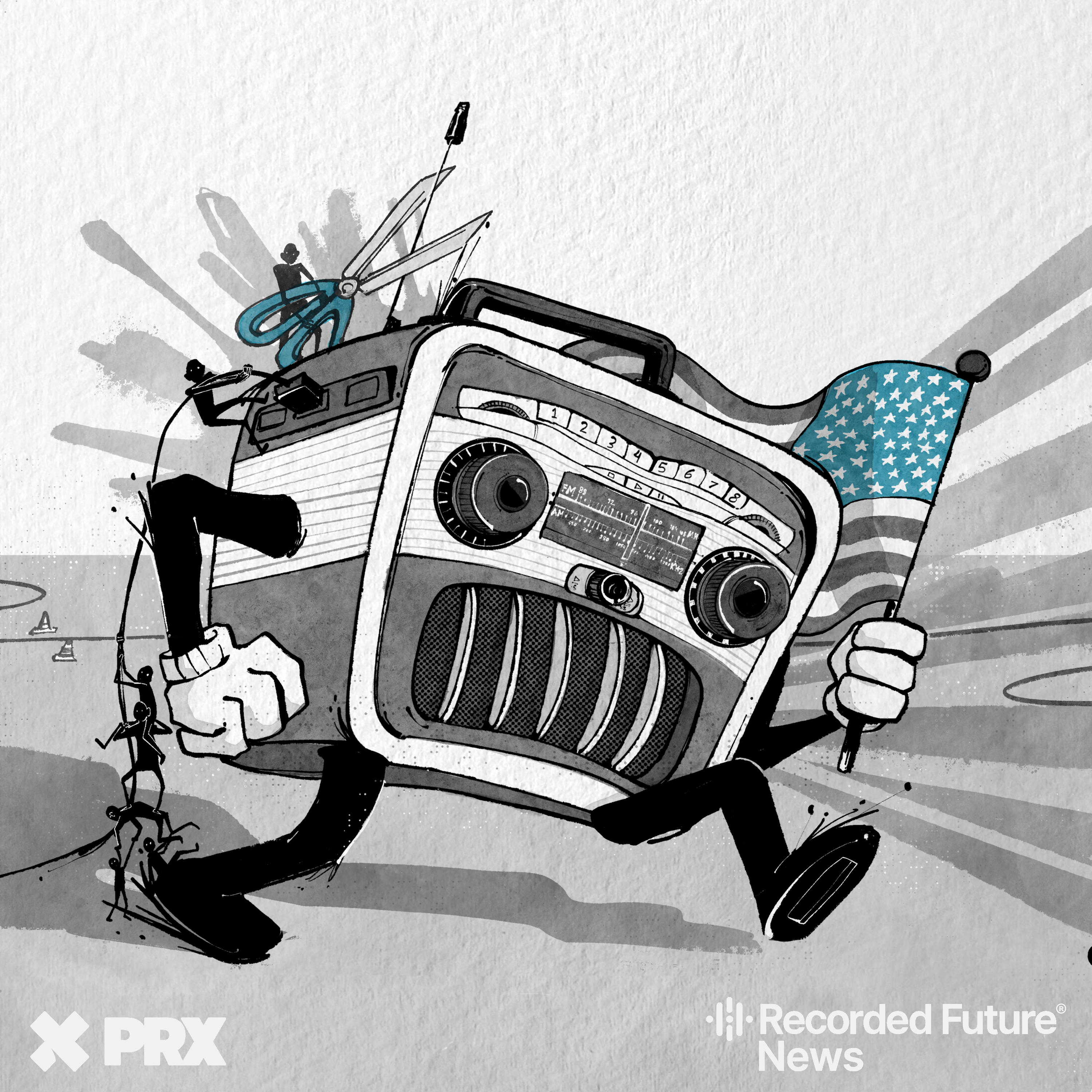
Radio Liberty was America's Cold War megaphone, a surrogate free press beaming unvarnished news into places where the real thing didn't really exist.
- [02:24]
Elsu Kurmasheva
It was banned and jammed in bigger cities, but it was possible to listen to it in the country.
- [02:32]
Dena Temple Rastin
It was from these broadcasts that Soviets learned details about things like the meltdown at Chernobyl.
- [02:39]
Unnamed News Anchor
It's now clear that the Soviet Union has suffered one of the worst disasters in the history of nuclear power.
- [02:45]
Dena Temple Rastin
But RFE wasn't just news. It was a lifeline, maybe even a soft sell on democracy. The premise behind it was deceptively tell people the truth, tell the stories the Kremlin tried to bury. And the hope, naive perhaps, was that the truth would tether them to something bigger, to the idea of America. And that, it turns out, was dangerous. So dangerous that Vladimir Putin three years ago, didn't just call Radio Free Europe biased, he declared it undesirable. He put its reporters under threat. He raided offices. But what no one expected was that the most devastating blow wouldn't come from Moscow, it would come from Washington. I'm Dena Temple Rastin, and this is Click Here, a podcast about all things cyber and intelligence. We tell true stories about the people making and breaking our digital world. And today the story of two efforts to silence Radio Free Europe. The Journal is caught between them and what exactly fills the void when a trusted voice disappears?
- [03:54]
Elsu Kurmasheva
When our fiorell voice leaves those audiences, somebody else's voice will step in.
- [04:02]
Dena Temple Rastin
And the concern is that it won't be an independent voice.
- [04:05]
Elsu Kurmasheva
The concern is that it will be propaganda voice. Yes, they are waiting for that.
- [04:14]
Dena Temple Rastin
Stay with us.
- [04:20]
Unnamed Advertiser
Looking for more of the cybersecurity and intelligence coverage you get on? Click here. Then check out our sister publication, the Record from Recorded Future News. You'll get breaking cyber news from reporters in New York, Washington, London and Kyiv, among others. And you'll see for yourself why it attracts hundreds of thousands of page views every month. Just go to the Record.
- [04:47]
Dena Temple Rastin
From Recorded Future News. This is Click here. I'm Dina Templewrest. Alsu began working for Radio Free Europe in 1998. From their offices in Prague. She became that voice, speaking truth to power and doing so directly in her native Tatar language, beaming news to the people of the Kazan region where she grew up.
- [05:21]
Elsu Kurmasheva
Thank you very much for joining us. It was fascinating to give voice to my voiceless people. Tatars and other ethnic minorities never, ever had independent media. There was something they wouldn't even dream of.
- [05:39]
Dena Temple Rastin
Elsu's family was still based in the hinterlands of Russia, so she traveled there as often as she could. And it was on one of those trips in May 2023, that events took an unexpected turn. Elsu had gone to visit her mother and was on her way back to Prague. It was all very routine, unremarkable. She had her ticket, her carry on, and she was standing in line waiting to board her flight when she heard her name called out over a loudspeaker.
- [06:10]
Elsu Kurmasheva
I heard my name to come to the security.
- [06:13]
Dena Temple Rastin
And did your heart just sink when you heard that?
- [06:16]
Elsu Kurmasheva
Yes, it did. Like formally, officially, I didn't have a reason to be afraid. I wasn't hiding who I was. My name is pretty familiar to local officials. But there was always something until the plane was in the air back to Prague. That was intimidating, especially those last years when the situation around press freedom was getting worse and worse in Russia.
- [06:52]
Dena Temple Rastin
As her name echoed out across the airport, Elsu frantically looked around for a door, for an escape. And then she spotted it.
- [07:00]
Elsu Kurmasheva
There was a bathroom, luckily very, very close to that exit. And I locked myself. I took that time very quick to text a couple of people telling that this is happening.
- [07:14]
Dena Temple Rastin
So you wouldn't disappear.
- [07:16]
Elsu Kurmasheva
Yes, so I don't disappear, so they find me. And the last Voice message I Sent to somebody. To a colleague, I believe, or my husband. I don't remember now. Like, please find me if something happens.
- [07:32]
Dena Temple Rastin
An audio breadcrumb. It'd be a place for people to start their search.
- [07:36]
Elsu Kurmasheva
And then I started hearing police coming to the bathroom door and demanding me to open the door.
- [07:43]
Dena Temple Rastin
Elsu took a deep breath, opened the stall door, and walked out, trying to act as if nothing had happened.
- [07:50]
Elsu Kurmasheva
I pretended that I didn't hear anything, and I was surprised that somebody wanted me to come to the security.
- [07:58]
Dena Temple Rastin
She walked to a back office flanked by security, and they asked her for both her passports. The Russian one she was born with and the American one she'd earned through her work with the radio station. Officials told her she wasn't under arrest. They just said they wanted to talk.
- [08:14]
Elsu Kurmasheva
They promised I would be able to travel the next week if everything was okay. And I tried to assure them that everything was okay. And they said, we will see.
- [08:28]
Dena Temple Rastin
She went back to her mother's house, tried to stay calm, and told herself this was just a misunderstanding, a clerical error, a warning, maybe something that would blow over. And for a moment, she believed it.
- [08:42]
Elsu Kurmasheva
I was almost ready to buy my tickets and pick up my passport. Buy tickets and go back home to Prague. And we were planning October break already.
- [08:55]
Dena Temple Rastin
But the next week came and went, and then another. No charges, no answers, just a silence that grew heavier by the day.
- [09:04]
Elsu Kurmasheva
That first case against me lasted five months.
- [09:09]
Dena Temple Rastin
Five months of waiting, of uncertainty, of bureaucratic fog, followed by more bureaucratic fog.
- [09:15]
Elsu Kurmasheva
They would say that my passport was being checked, my American passport was being checked. And they wouldn't. They just wouldn't pick up a phone. And so I was in total uncertainty, and it was bad.
- [09:31]
Dena Temple Rastin
So she walked. She went on short errands. She tried to act normal, tried to remember what normal actually felt like.
- [09:39]
Elsu Kurmasheva
It wasn't that relaxing time, you know, that you would enjoy.
- [09:44]
Dena Temple Rastin
They were still in control.
- [09:46]
Elsu Kurmasheva
Absolutely. It was in absolute control. I couldn't leave town.
- [09:51]
Dena Temple Rastin
She wasn't in prison, but it was clear she wasn't free. Lamb and rice and apricots were simmering on the stove when a knock came on the door one fall morning in 2023. Also assumed it was something ordinary. A neighbor, a delivery. But it was not. Men in black masks flooded the entryway. No warning, no explanation, just a show of force. The neighbors came out to watch. And in the chaos, Elsu remembers turning to her mother and saying one last thing before they took her away. Take the lamb off the stove.
- [10:25]
Elsu Kurmasheva
I didn't see it coming. Everything seemed Unbelievable. I was expecting that they would introduce even more restriction, say I wouldn't be allowed to use Internet or phones. That was also possible. But I wouldn't believe they would put me in prison.
- [10:46]
Dena Temple Rastin
But they did.
- [10:48]
Elsu Kurmasheva
But they locked me up in prison for not registering as a foreign agent, which was unprecedented.
- [10:55]
Dena Temple Rastin
They also charged her with allegedly spreading misinformation. There was a trial hastily assembled.
- [11:01]
Elsu Kurmasheva
I knew I was facing long sentence. This is because the charges they brought against me, they implied a sentence from five until 10 years of prison.
- [11:15]
Dena Temple Rastin
Ultimately, it came down to six and a half years. As Elsu settled into her terrible new reality, she held onto just one hope.
- [11:24]
Elsu Kurmasheva
I was really hoping that my case would be an example of the strength of rfe, of that powerful job we're doing here at rfe, like how important our work is in Russia.
- [11:45]
Dena Temple Rastin
After the break, Al Su outlasts the pressure of an authoritarian regime, only to discover the more insidious threat coming from an unexpected place. Stay with us.
- [12:01]
Unnamed Advertiser
Looking for more of the cybersecurity and intelligence coverage you get on Click Here. Then check out our sister publication, the Record. From Recorded Future News. You'll get breaking cyber news from reporters in New York, Washington, London and Kyiv, among others. And you'll see for yourself why it attracts hundreds of thousands of page views every month. Just go to the Record Media.
- [12:27]
Dena Temple Rastin
This is Click here. Winter arrived early in Quezon. The snow came fast. And also did what people do in captivity. She turned inward, searching for warmth in unexpected places.
- [12:49]
Elsu Kurmasheva
We in Tatar have a beautiful saying that I'm happy with my small happinesses. I don't know. I know it's impossible to say in English, but. So I would find at least one or two those small pieces of happiness every day that I would focus on.
- [13:09]
Dena Temple Rastin
She clung to routine.
- [13:11]
Elsu Kurmasheva
I'm like a big planner. And so I always had a plan A, plan B, plan C. You know, that something goes wrong. I love it. And even in prison. So of course plan A was to get released, you know, immediately, to be free. But as it wasn't in my control, at least I had a plan B.
- [13:32]
Dena Temple Rastin
And plan B was keep yourself sane.
- [13:35]
Elsu Kurmasheva
It took a lot of time in prison to. To maintain, like, everyday life, you know, as there was no hot water for a long time, so we had to warm up water to brush our teeth, you know, and it took time. This is like those. Those silly things we were focusing on, like what we eat as food was really bad. We tried to make something more decent, so we were inventing new recipes.
- [14:09]
Dena Temple Rastin
The courtyard where they were allowed to exercise was about the size of a parking spot. And one day that November, it filled with snow, and everyone started to make tiny snowmen to pass the time, to try to regain a sense of normalcy.
- [14:24]
Elsu Kurmasheva
But somehow I started making a lighthouse. Then I found a candy wrapper, and luckily it was yellow and red, which reminded me of fire, of the light. And I put it. And I remember watching that lighthouse for a very long time. And it was my first deep thought of me witnessing history once again, of me being there and what it might mean for the journalism community.
- [15:06]
Dena Temple Rastin
The small lighthouse felt like proof that what she did, what Radio Free Europe did, actually mattered. Because if it didn't, why would they lock her up?
- [15:16]
Elsu Kurmasheva
Otherwise, why would they imprison me? And why would they imprison me in Tatastan? You know, in Kazan? It wasn't Moscow, it wasn't St. Petersburg, it was Kazan, where we thought that nobody cares.
- [15:34]
Dena Temple Rastin
But someone did care. A lot of people did. They just couldn't say it out loud or to also directly. And in that silence, Aosu waited. No updates, no messages, no signs. Then, months in, a question from an interrogator offered a glimmer of hope.
- [15:51]
Elsu Kurmasheva
And when, sometime in May, the interrogator brought that up that, well, you know, have you heard about prison exchanges?
- [16:03]
Dena Temple Rastin
Prison exchanges? Elsu didn't even know that was on the table. And just when she thought things couldn't get more surreal, they did.
- [16:11]
Elsu Kurmasheva
So if there is anything you can tell us to. To help to facilitate those negotiations, you know, when that kind of conversation started, very weird how, like, my. My first reaction was like, you lock me down, I'm in prison. How can I influence any negotiations?
- [16:31]
Dena Temple Rastin
A Wall Street Journal reporter, Evan Gerscovich, had been summarily imprisoned too, and President Biden was trying to free them both. Journalism is clearly not a crime. Not here, not there, not anywhere in the world. And Putin should release Evan and also immediately. And then things seem to go from suspended animation to fast forward. The investigation into Alsu's crimes wrapped up.
- [17:01]
Elsu Kurmasheva
It gave me lots of hope and strength. And when a week later, I was taken out of my cell in the prison in Kazan and brought to Moscow, to Lefortova, that was another big sign of something was happening.
- [17:20]
Dena Temple Rastin
As unexpectedly as Alsu was arrested, she was released in what became the biggest prisoner exchange since the Cold War. More than a year after she locked herself in that airport bathroom, frantically texting for help, she was on a plane bound for the United States.
- [17:36]
Unnamed Reporter
The plane has landed, and we are just awaiting the doors to open. And for Those American former Russian prisoners to really touch down their feet. Back on American soil after several years.
- [17:49]
Dena Temple Rastin
At the airport, Alsu hugged her daughter, her husband. She even hugged Joe Biden.
- [17:53]
Unnamed Reporter
Alsu Kurmasheva giving the president a big hug there, too. She's a journalist with Radio Free Europe.
- [18:00]
Dena Temple Rastin
She returned to Prague. She went back to work. She was happy to have escaped the threat from Putin's regime.
- [18:06]
Elsu Kurmasheva
This is what I loved and I thought it will be like that always as how, how can it change? That's, that's what people need, right?
- [18:20]
Dena Temple Rastin
And that might have been it, a rare happy ending had she not come across a post on social media just this past February.
- [18:27]
Elsu Kurmasheva
It started with that famous X post, right, where somebody texted that nobody listened to the radio and Europe is free already.
- [18:43]
Dena Temple Rastin
And the somebody who wrote the post was none other than Elon Musk.
- [18:47]
Elsu Kurmasheva
I thought it was a joke, but it wasn't a joke. I knew that it wasn't a joke.
- [18:52]
Dena Temple Rastin
He said Radio Free Europe was just a mouthpiece for radical left propaganda. It was the first domino to fall.
- [19:00]
Elsu Kurmasheva
This started the butterfly effect, you know, I knew it would have an impact and it immediately started.
- [19:09]
Dena Temple Rastin
Just a short time later, President Trump signed an executive order that eliminated funding for the US Agency that oversees a roster of US Government backed broadcasters. Networks like Radio Free Europe, Radio Free Asia, Middle East Broadcasting Network. These networks are also on Trump's chopping block. The move led to the suspension of some broadcasts and placed over 1,000 employees on administrative leave. And it could end up forcing a lot of journalists back to their home countries where they could be imprisoned or worse. Though in April, a judge offered a temporary reprieve.
- [19:44]
Unnamed News Anchor
A D.C. district judge has ordered the Trump administration to cease attempts to shut down government funded radio networks.
- [19:52]
Dena Temple Rastin
The court said what press freedom advocates had been arguing for months that canceling funds already appropriated by Congress, funds earmarked for Radio Free Europe, Radio Free Asia and Voice of America, wasn't just unprecedented, it was probably unconstitutional. The Trump administration is expected to appeal, but the damage has already been done.
- [20:16]
Elsu Kurmasheva
Part of RFE is still working. Part has been furloughed. And we have even more people who want to be furloughed so we can save money. And this is it. This is what RFE is, this is what ARAFI will be. And if even there are any changes in its name or location or format, that's core, that dedication will stay.
- [20:48]
Dena Temple Rastin
Elsu's boss declined to furlough her. She's doing press advocacy and editing, but she worries what she's doing won't be enough. What she never expected was that the Trump administration could do with the stroke of a pen what authoritarians like Vladimir Putin have tried and failed to do in the 75 years that RFE has been around.
- [21:09]
Elsu Kurmasheva
They are celebrating that they are. They can't believe this is happening because they wanted to close RFE down for decades. And suddenly this happened so fast. We all share one audience. There is audience we try to reach. And if RFE leaves, there can't be an empty space. Somebody else's voice will step in. The concern is that it will be propaganda voice.
- [21:45]
Dena Temple Rastin
In other words, if Radio Free Europe goes dark, it won't be silence that fills the space. It'll be something much easier to control. This is Click Here.
- [22:01]
Unnamed Advertiser
Looking for more of the cybersecurity and intelligence coverage you get on? Click Here. Then check out our sister publication the Record from Recorded Future News, you you'll get breaking cyber news from reporters in New York, Washington, London and Kyiv, among others. And you'll see for yourself why it attracts hundreds of thousands of page views every month. Just go to the Record Media.
- [22:28]
Dena Temple Rastin
Here are some of the top cyber and intelligence stories we're following this week, from a reshuffling inside the White House to a cyber agency in the crosshairs and a secretive video campaign from the CIA. It's Tuesday, May 6th. Late last week, news started to break in Washington.
- [22:47]
Unnamed News Anchor
The breaking news coming out of Washington that the national security adviser, Mike Waltz, and his deputy are reported to be leaving their posts.
- [22:56]
Dena Temple Rastin
At first it looked like a quiet resignation, but then the real story began to surface. Mike Waltz and his deputy, Alex Wong, were being pushed out, according to multiple reports. There were two things behind it Waltz mistakenly adding a journalist to a Signal Group chat in which senior officials were discussing strikes on Yemen and this general sense that Waltz was never fully aligned with Trump's more isolationist America first agenda. But what came next was unexpected. President Trump announced on Truth Social that he'd be putting Waltz's name forward to be the US Representative at the United Nations. Secretary of State Marco Rubio will act as interim national security advisor, the first secretary of state to hold both roles since Henry Kissinger. Last week, the RSA Cybersecurity conference opened in San Francisco. It's usually where policy meets code, but this year it was where frustration metamicrophone.
- [23:59]
Chris Krebs
I can be pissed off that CISA's getting cut back and all that, and I can see the policy arguments for trying to downsize government streamline. But when you've got Volt, Typhoon Salt, Typhoon Flax, Typhoon, whatever, every day knocking on our door. We are not moving forward.
- [24:15]
Dena Temple Rastin
Chris Krebs, the former head of cisa.
- [24:17]
Chris Krebs
Didn'T hold back, make CISA great again.
- [24:21]
Dena Temple Rastin
He's talking about the Trump administration's plans to to dramatically scale back the agency, which is supposed to protect the nation's digital infrastructure. Some cyber experts at the conference said Trump was in the process of a digital disarmament. DHS Secretary Kristi Noem had a different view. She said the cuts weren't just about saving money. They were of course, correction. We saw CISA get into a misinformation, disinformation campaign. They were deciding what was truth and what was not. And it's not not the job of CISA to be the Ministry of Truth. And finally, a pair of China stories in the news. The audio you hear there isn't from a Chinese movie trailer. It's from a new video produced by the CIA, one of two short films with high production values that are targeting Chinese Communist Party Party officials and rank and file officers who might be disillusioned with them. In each video, a character faces corruption, exclusion, and this sense that their future is being written by someone else. And each one ends with a contact. The CIA Director John Radcliffe has said this is part of a broader effort to rebuild human intelligence networks, especially inside China. Last year, the agency dropped a dark web tutorial on how to reach them securely. It was viewed more than 900,000 times. And finally, TikTok is back in the headlines. TikTok has been hit with a 450 million pound fine after it was found to send user data to China illegally. This time it's not the US that's cracking down, it's Europe. Ireland's Data Protection Commission has fined TikTok the equivalent of some $600 million for violating European and privacy laws. Specifically, they say that TikTok transferred data to China and failed to be transparent about it. The regulator found that Chinese surveillance laws were incompatible with European privacy regulations. TikTok says it will appeal and insists that no European data was actually stored in China.
- [26:38]
Erica Guida
Today's episode was written and produced by Megan Dietre, Sean Powers, Zach Hirsch, Dina Temple Rastin, and the lead producer was me, Erica Guida. It was edited by Karen Duffin, Fact Checked by Darren Ankrum, and contains original music by Ben Levingston with some other music from Blue Dot Sessions. Our staff writer is Lucas Riley, and our illustrator is Megan Goff. Martin Peralta and Jesse Niswonger are sound designers and engineers. Click Here is a production of Recorded Future News and prx. Tune in on Friday for Mic Drop, which features our favorite interview of the week. We'll see you then.
- [27:23]
Unnamed Advertiser
Looking for more of the cybersecurity and intelligence coverage you get on? Click here. Then check out our sister publication, the Record from Recorded Future News. You'll get breaking cyber news from reporters in New York, Washington, London, and Kyiv, among others. And you'll see for yourself why it attracts hundreds of thousands of page views every month. Just go to the Record Media.