Loading summary
Transcript108 lines
- [00:03]
Dena Temple Raston
From Recorded Future News and PRX, this is click here. Reality winner was a 25 year old air Force veteran working as a contractor for the National Security Agency when she made a decision that would change her life. It was 2017 and the country was in the middle of a fierce debate about Russian interference in the recent presidential election.
- [00:34]
Recorded Future Narrator
The CIA's revelations confirm what many already suspected.
- [00:37]
Interviewer / Journalist
It was the Russians who tried to interfere in our election. Every member of the Committee agrees it was the Russians. They are trying to sow chaos, confusion and lead to distrust in some of the greatest pillars of American democracy in our government.
- [00:53]
Dena Temple Raston
Reality had access to internal classified reporting channels, and one day she saw a document that described how Russian hackers had targeted a voting software company and how they'd attempted to crack into more than 100 local election systems. The document didn't say they were successful, but instead focused on their efforts to meddle. Reality printed out the document, slipped it out of the secure facility where she worked, and mailed it to the Intercept, a site known for publishing leaked government documents. The document was eventually traced back to Reality and she was charged under the espionage act, a World War I era law originally meant to punish spies and saboteurs, but more recently has been used to prosecute people who leaked to the press. Reality served just over four years of a five year prison sentence. It was the longest sentence ever meted out to someone for sharing classified information with the press. We first spoke with Reality winner back in 2022, not long after her release from prison. And last month we met again, this time in a bookstore in Washington, D.C. good afternoon, everyone.
- [02:05]
Interviewer / Journalist
Welcome to Politics and Prose.
- [02:10]
Dena Temple Raston
I'm Dena Temple Raston and this is Click Here, a podcast about the people making and breaking our digital world. Today, a conversation with Reality Winner about her new book, I Am not yout Enemy. It's part memoir, part reflection on her choices, and part meditation on what happens when idealism collides with secrecy.
- [02:31]
Reality Winner
I broke some major rules. I've never said I didn't break the law. However, the law will treat me the same. If I did it for you guys or if I sold that document to North Korea for a million dollars, the consequences are the same. I don't think that's right.
- [02:49]
Dena Temple Raston
Stay with us.
- [02:52]
Recorded Future Announcer
Looking for more of the cybersecurity and intelligence coverage you get on? Click Here. Then check out our sister publication, the Record. From Recorded Future News. You'll get breaking cyber news from reporters in New York, Washington, London and Kyiv, among others. And you'll see for yourself why it attracts hundreds of thousands of page views every month. Just go to the Record Media.
- [03:17]
Dena Temple Raston
From Recorded Future News. This is. Click here.
- [03:24]
Interviewer / Journalist
I just want to start by setting some expectations a little bit here. I know there are things that you can't talk about. Can you clarify what the parameters are of the conversation?
- [03:34]
Reality Winner
Yes. I've always described them as vague and menacing because I have my NDA that is lifelong from working at the National Security Agency, which is not to reveal classified information. However, in the plea deal that was given to me by the DOJ is anything that could possibly be related to classified information. So at one point, my attorney asked the doj, there was a war in Afghanistan. Are we allowed to say that? Because technically that's related to classified information.
- [04:10]
Interviewer / Journalist
Okay, so let me try and fill in some details that are public so that we don't get you in trouble. When you left the Air Force, you were a commended crypto linguist and a translator, and you were helping geo locate the enemy, basically. And to do all this, you were sitting in a room in the US Listening in on secretly made recordings of people believed to be the Taliban or other terrorists.
- [04:38]
Reality Winner
Yeah. So being one of the first linguists of the war in Afghanistan, to really give a firsthand account of how this war was fought across the world from right here in the D.C. maryland area, was to kind of show like, it was really banal and boring. And we really never at any time felt qualified to do what we were doing, but we were required to do it.
- [05:04]
Interviewer / Journalist
So this is all in the memoir, but can you talk a little bit about that? Like what it's like listening one word at a time and what your job was?
- [05:13]
Reality Winner
We were assigned soldiers on the ground, and our job was just to be the eyes and the ears in and around those soldiers. And so a lot of times we were just doing direct protection operations of soldiers that were on the ground doing. We weren't even sure what they were doing. We were so compartmentalized that we never had, like, the bigger picture of what was going on.
- [05:37]
Interviewer / Journalist
So you're hearing little snippets of conversations and trying to pass those snippets along. You don't know how it's fitting into a broader context. You just know this snippet might be important. So this is what I heard. Does that sound right?
- [05:49]
Reality Winner
Exactly.
- [05:50]
Interviewer / Journalist
And you say in the book that in the end you sort of felt like you helped kill a lot of people and you didn't feel good about that. Can you talk about that a little bit?
- [06:00]
Reality Winner
Like, the people who were our direct supervisors were personnel officers they were not linguists. We were always competing against NSA, Georgia. And so every morning at 7am we'd have to sit there and be on, like, this big old conference call, and day after day, nothing from Maryland. Nothing from Maryland. And the officers would literally come by and be like, y' all need to make something happen.
- [06:29]
Interviewer / Journalist
So in other words, what you're saying is there was a lot of pressure to hear something and report something because you were in competition with other units that were doing the same thing.
- [06:41]
Reality Winner
Exactly.
- [06:41]
Interviewer / Journalist
Got it. Okay. So more and more people like you are doing this kind of work remotely. Right. So you're not on the ground in Afghanistan, which you very much wanted to be, and that's not where they sent you. And they're not on the ground in a war zone. And, like, you, many report that even from a distance, they feel the weight of all of that and even develop ptsd.
- [07:10]
Dena Temple Raston
Did that surprise you?
- [07:12]
Interviewer / Journalist
And when did you understand that you might be on the receiving end of something like that? How did it manifest itself?
- [07:18]
Reality Winner
Yeah. So there's a lot of guilt associated with this career field because we are not overseas. Like, we put on the same uniform as soldiers overseas. We wear the camouflage. We put on the combat boots. And when we enlisted, we were told, learn a language. You'll travel the world. We learned the language, and they said, you're too expensive. You can be in Maryland or Georgia, and you can switch back and forth for the next 20 years, you will not travel. And for us, the guilt was insane. The pressure was insane. And yet we were there because we thought we would do something important, and it just wasn't.
- [08:05]
Interviewer / Journalist
And what did you originally join up for? I know that you wanted to do something very different in Afghanistan, so why don't you explain why you originally joined up and then the sort of disconnect between the.
- [08:17]
Reality Winner
Yeah, I joined to go to Afghanistan. You know, it. It started with 9, 11. It started with my father being a psychologist and a theologist and wanting to understand how psychology and faith can mix to get somebody who's willing to fly a plane into a building. At the time, I just thought if I could get over there, you know, and be somebody. I think I wanted to be a journalist this whole time. I think that that was the goal. But the language school was with the military, and I just wanted to figure it out.
- [08:59]
Dena Temple Raston
Soon after Reality left the Air Force, she began working as a contractor for the National Security Agency, stationed at an army base in Georgia. Her job was signals intelligence, listening to snippets of conversations in Pashto and then translating them into reports that could help soldiers on the ground. It was meticulous, often invisible work, the kind that depends on secrecy to be effective. But outside that secure environment, the world felt different. On the news, classified information was surfacing with surprising frequency. Leaked memos, transcripts, internal reports, all making their way into the headlines.
- [09:38]
Recorded Future Announcer
Today. WikiLeaks, the anti secrecy website, dumped the thousands of pages of CIA documents.
- [09:44]
Recorded Future Narrator
But the code the hackers used appears to be based on cyber tools that were stolen from the National Security Agency and posted online by a group called the Shadow Brokers.
- [09:58]
Interviewer / Journalist
So one of the things we talked about when we came down to Texas was the leak culture in 2017, which I think it's so long ago now, it's really hard for people to remember. So I was hoping that you'd read a little something from the book about that in the weeks before the leak actually happened.
- [10:15]
Reality Winner
As bad as all this was, my distress was amplified by the tone in the media. It's easy to forget now, but the atmosphere then was one of impending authoritarianism. Kind of not hard to forget now. In February, the Washington Post had adopted a new slogan, Democracy dies in darkness. Amid the plethora of crises, a classified intelligence report appeared on NSA polls, the NSA's clearinghouse.
- [10:44]
Dena Temple Raston
This was an internal classified news site that just about everyone inside the NSA read. And a particular report there caught reality's attention.
- [10:53]
Reality Winner
The report's contents were riveting on this issue of Russia's interference in our elections, the hottest, most disputed topic of the day. The document in front of me had exclusive critical details. This report seemed like a bombshell. But one thing confounded me. Why this secret? Why isn't this getting out there? Why can't this be public? It was labeled top secret, but that didn't mean it should be top secret. For one thing, everyone who had access to NSA Pulse could read it. One helpful feature of NSA Pulse is that, like Twitter, it shows which articles are trending. That narrows down the content and directs readers to what others are finding most interesting. The piece began to trend on the site, eventually becoming the most read article, which meant it was being read by countless intelligence agents around the world. This is the National Security State version of going viral. I read the report over again, and then again once more. Again, people in the office were talking about it. Someone asked, dude, did you see that? Yeah, someone replied. I wonder when someone's going to leak that to the press. Surely the information would make its way to the media. I figured it was only a matter of time, but I kept watching the news and it didn't happen. The whole country knew that Trump had volunteered classified intelligence information to Russia, but this was somehow being kept under wraps, somehow. I still didn't plan on doing anything drastic, but as it turned out, that's just what I did.
- [12:28]
Interviewer / Journalist
Just to put a finer point on it, there's an internal sort of Twitter feed with intelligence that everybody's clear to seeing. This internal Twitter feed, you see this document trending that connects Russia with interference in the 2016 election. And at that time, I'm still a journalist, but I was a journalist at the time, in 2017. There were tons of leaks coming out at that time. So your assumption was, this is too hot, it's going to come out. Take us back to that time. It doesn't come out. What's going through your head?
- [13:04]
Reality Winner
So during that time, we did not like leaks. There was always a leak on Friday afternoon. Some of the things that were getting out either, you know, whispers from Congress and stuff like that, it was all word of mouth. But every single week, something had come out in the first four months of the new Trump administration. But we had kind of resigned ourselves to expecting to see this document in the news very soon. When I saw that document, I thought that meant Congress saw it. I thought that meant the Senate saw it. I thought that meant people in power in elected positions had seen it and they hadn't. It just us.
- [13:46]
Interviewer / Journalist
So you thought you were just sort of pushing it out?
- [13:48]
Reality Winner
Yeah, I thought I was pushing it out. I thought Congress was keeping it from y' all, too, but it was kept from Congress as well.
- [13:56]
Interviewer / Journalist
So it's important to know that this document wasn't like 40 pages. You didn't take many documents. This was a five page document. And what happens next?
- [14:09]
Reality Winner
Well, it was my professional 24 year old opinion at the time that the document in question was obsolete, was not compromising sources or methods. And my idea was to get it to the Intercept and to get it in front of the American people, and that the American people would be so grateful to have it, they would be so angry it was kept from them that by the time the consequences caught up with me, they wouldn't be as bad. I don't know what else to say. I don't think I thought I would get away with it, but I didn't know anything about the other leakers, but I knew they did it digitally. So I thought if I did it the lowest possible way, just carrying a paper out and mailing it would buy the Intercept as much time as Possible to get it in front of the American people before they found me. And that was my goal. I was not thinking about what to do after that. That's why I didn't have a single attorney in my life. When the FBI showed up, my only goal was to walk out of there with the document and get it to the intercept.
- [15:28]
Interviewer / Journalist
And so you print out the document printed. Yes. And you have a yoga class that afternoon. You're teaching one. So take me back to that afternoon.
- [15:40]
Reality Winner
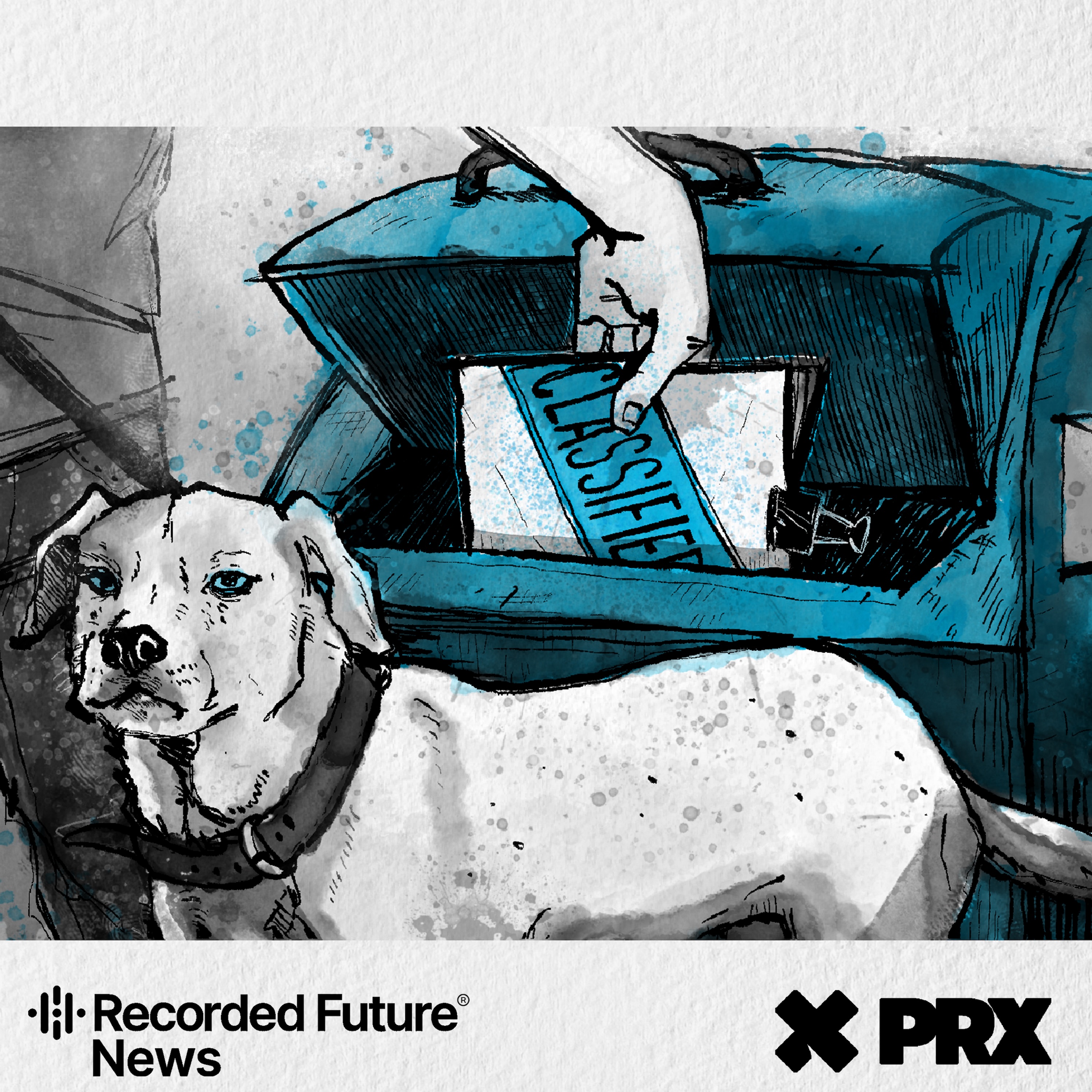
So obviously I had to commit a felony in a way that was convenient to me. So after work, I went to the gym. It was sitting in my car all afternoon. Eventually got put in an envelope and I got called to sub a yoga class. So I went and subbed the yoga class and it was still sitting in my car. And I looked across the street from the yoga studio and there was that blue USPS box. And I thought, well, I have to mail it from somewhere. So I popped across the street, dropped it off, and for two weeks nothing happened. So in my mind I was like, clearly it got lost in the mail or they saw it, they shredded it, nothing will come of this. And so I made myself forget what I had done.
- [16:34]
Dena Temple Raston
Two weeks passed. Reality started to breathe easily. Until there was a knock at her door. That's when we come back. Stay with us.
- [16:45]
Reality Winner
Foreign.
- [16:50]
Recorded Future Narrator
Cybersecurity. Your greatest fear isn't the threats you see. It's the critical signals lost in the noise. Every day, security teams sort through millions of potential threats. That's why Recorded Future exists. To give you precision intelligence tuned to your needs. Our advanced AI detects patterns humans might miss, while our threat intelligence experts, veterans of military and intelligence services, provide crucial context. With recorded future, you gain the confidence to identify critical threats and the precision to act before they become attacks. Learn why 1900 + customers, including 45 + sovereign governments, trust us to detect threats faster and achieve 350% plus ROI within a year.
- [17:44]
Dena Temple Raston
From recorded future news. This is Click here. When Reality Winner slipped that five page document into a mailbox, she set off a chain of events that would turn her life upside down. What she didn't know was that a photocopy of it was sent somewhere. It should never have wound up right back at the nsa. And quickly it got traced back to her. What happened next would test both journalistic process and government power. Before we get to what happened next, it's worth explaining how journalists typically handle classified material. When a reporter receives a document like the one Reality mailed, the first step is to verify that it's real without revealing details that could identify where it came from. That usually means retyping sections or reading small portions aloud to a source rather than sending a scan or a photo of the original. In reality's case, how that process played out at the Intercept would become a turning point in her story. Here's Reality winner again.
- [18:56]
Reality Winner
They had the document. They had it in a secure place. They were following protocol. And Matthew Cole came along, and he wanted to verify the document. Young journalist, his personal interest in verifying the document led him to basically sending either a scan or a direct photograph of the paper itself, with the crease showing it had been printed and folded to somebody he was on a first name basis with in the nsa. So not like the actual journalistic, where you protect it and you go to the right office. He sent it to his buddy, and his buddy's like, hey, where'd that come from? And he said, the mail. And his friend said, can I see the envelope? He said, yeah, sure. It came from Augusta, Georgia. You know, I could have just put my name on the envelope and made it easier for them because he gave it straight to the feds. And a lot of people from the Intercept have condemned that. Why is he going around the Intercept's protocol and doing it on his own personal email to his own personal contact like he was just being messy?
- [20:07]
Interviewer / Journalist
I should say that I talked to the Intercept about this when we interviewed right after you got out of prison, and they claim this is not what happened.
- [20:15]
Reality Winner
I've seen the emails between him and his buddy from the nsa. They're part of the evidence against me.
- [20:20]
Interviewer / Journalist
Okay. I just thought I would say that. So how long was it between that phone call that Cole made and the time when the FBI showed up at your house?
- [20:33]
Reality Winner
So about three weeks.
- [20:35]
Interviewer / Journalist
So take us back. You're coming in, you have groceries, you love animals, and you're coming in the house. And what cars come from. Is it. Is it like a SWAT movie? What is it? What was it like?
- [20:48]
Reality Winner
It was one car and then a second car blocking you in. Yeah. So I was immediately parked in, and that was when Agent Garrick and Taylor came out. So they said, we have a warrant. We are looking for documents. And I was like, I don't have any documents. This is going to be easy. And after that, it just kind of devolved into that interrogation that happened in a back room in my house.
- [21:19]
Interviewer / Journalist
And just to be clear, so at that moment, did you think, oh, they hear about that document? Or did you think, oh, they're here about something else?
- [21:31]
Reality Winner
I Knew they were here about that document, but I didn't have that document.
- [21:37]
Interviewer / Journalist
I see. So maybe you could slip through.
- [21:40]
Reality Winner
Maybe I would have another day to figure out what my legal options were.
- [21:45]
Interviewer / Journalist
Okay. And I should say, if you've ever been curious about what an FBI interrogation is like, an entire play played on Broadway was made from the transcript of that particular back and forth.
- [21:58]
Reality Winner
They published the transcript during a hearing to determine whether or not I was in custody at the time I made that confession. And they turned it into a play. They were like, no, this is a script.
- [22:12]
Interviewer / Journalist
It's actually a really good play. Have you been to it?
- [22:16]
Reality Winner
Oh, absolutely not. No. I don't read, watch, engage in anything about me. It's just immediate physical trauma response.
- [22:27]
Interviewer / Journalist
Got it.
- [22:28]
Dena Temple Raston
Okay.
- [22:29]
Interviewer / Journalist
So did they actually arrest you that day?
- [22:31]
Reality Winner
They did. The only thing I knew about previous leakers was that when they got Chelsea Manning, she went to Quantico and was in solitary confinement for nine months, and nobody knew where she was. So when Agent Garrick decided to try to tell me that I was under arrest, he said, hey, so I'm sorry, but we're gonna have to take you in. Didn't say where I was going. He said, we'll go in this vehicle. Gestured to an unmarked government vehicle with civilian plates. He said, don't worry, we'll cuff you in the front so you're comfortable, and I'll sit next to you the whole way. And I'm sorry, but it's going to be a bit of a drive. So I was like, okay, we are going to Quantico tonight from Georgia, handcuffed.
- [23:22]
Interviewer / Journalist
Were you scared?
- [23:24]
Reality Winner
Yeah. That was when I thought my life was over. They needed a woman to pat me down and do the physical search, so they had to call in somebody from the local sheriff's office. And so a woman police officer came in her marked vehicle, and she took me to the back room and patted me down. And I don't know what happened, but she went and talked to Agent Garrick and Taylor. And after that conversation, another female police officer showed up in her car. And she came up to me and said, hey, I guess I'm going to make the arrest. And she cuffed me and helped me into the back of the vehicle, closed the door, and as she drove away from the FBI, it just felt like I survived because just a bunch of non uniformed armed men. Not a single marked police or not. Not a single marked vehicle. They were just completely incognito, which is what we're seeing in the country now. Yeah, I just knew that once I was in an actual police vehicle with another woman I was documented for and that I could be found.
- [24:42]
Interviewer / Journalist
Did they Mirandize you?
- [24:44]
Reality Winner
Never.
- [24:45]
Dena Temple Raston
Never.
- [24:45]
Interviewer / Journalist
Not even the Georgia police officer? A woman police officer?
- [24:50]
Reality Winner
No, she did not.
- [24:52]
Dena Temple Raston
Wow.
- [24:55]
Interviewer / Journalist
So you're taken to the local jail and you're there for how long?
- [25:02]
Reality Winner
I spent June, July, July, August. Fifteen and a half months there. Maybe 15 months in one room.
- [25:12]
Interviewer / Journalist
And then they transfer you to a federal facility?
- [25:15]
Reality Winner
Well, I went to an ICE detention center, then I got on a plane and then went to a county jail in Oklahoma and then got to go to prison.
- [25:26]
Interviewer / Journalist
You were charged under the espionage act of 1917. What was your understanding of the Espionage act before that?
- [25:35]
Reality Winner
We used to make fun of, like, the World War II posters that were like, loose lip sync ships because it's obvious when Chelsea Manning had leaked and Fox News put the documents up on the TV screen and we watched it from a secured facility on Fox News, like, our brains broke because we're like, that's not a top secret TV screen. It affected our job. When Snowden did his thing. All of a sudden we have to go through metal detectors every day. Like, going through TSA every day to go to work. But we never really thought of it as, like, giving up troop locations, like, in like, a World War II tactical, like, where are the trenches? Right. 793E of the espionage act is simply willful retention and disclosure of national defense information. And there is no, like, legal subtext defining national defense information that's not top secret, classified. It's just whatever they want to define it in your indictment as being.
- [26:39]
Interviewer / Journalist
And what goes through your head when you see now with the second Trump administration, the implication that they want to sort of widen the aperture of the Espionage act to perhaps target journalists, target enemies, et cetera. Does this feel like deja vu all over again to you, or what's your impression of it?
- [26:59]
Reality Winner
Yeah, we are absolutely cooked. We have been trying to get this amended. And the problem with my charge is I walked out with that document. I broke some major rules. I've never said I didn't break the law. However, the way that law is written, like, the law will treat me the same if I did it for you guys or if I sold that document to North Korea for a million dollars, the consequences are the same. I don't think that's right.
- [27:30]
Interviewer / Journalist
So there's a great deal in the book about the time you spent in prison. And I really tell people it's quite moving and really makes us feel like we're There with you. One of the things that you write is that when you came home and you came back to Texas, you were living with your parents, your mom, and, I guess, your stepdad. You said you were free, but you really didn't feel like it. Tell me what you mean.
- [28:00]
Reality Winner
So they don't tell you when you get out that it's harder than prison getting out. I no longer knew how to relate to these people that were known as my parents. And the way that the halfway house operated, with constant downward pressure on me. If the ankle monitor doesn't work at your house, you have to be in custody. If you miss a phone call because you're in the shower, that counts as an escape attempt. Getting drug tested constantly.
- [28:36]
Interviewer / Journalist
And do you feel free now?
- [28:41]
Reality Winner
I do. It's a lot better than when I was under probation. But the last year probation was all right, but it is hard. You can't get pulled over for anything. You can't have a brake light out, you know, because that counts against you. Why are you talking to the cops like you have to report yourself for that? So, like, it's crazy.
- [29:02]
Interviewer / Journalist
If you think back to the person you were before all of this, does any of that person remain, and what do you think has changed?
- [29:20]
Reality Winner
I think that the person I was before I had grown up looking outside of America's borders for problems to solve. Right. But as a kid in the 90s, that's what, like, we were raised to do, to look at other problems and other conflicts to be part of. And so now what I understand is, like, the most dangerous things in America are us.
- [29:46]
Interviewer / Journalist
If you could go back and not leak the document, would you not do it?
- [29:49]
Reality Winner
Absolutely not. If I have to commit a felony over again, I would be a lot more comfortable sitting in that prison for four years, having taken that document straight to D.C. and given it to someone like Bernie Sanders. Right. It would have been the same felony. I still would have gone to prison for it, but it would have been a lot easier to keep my head up knowing that I had tried to do the right thing in the most legal way possible.
- [30:15]
Interviewer / Journalist
Thank you so much for talking to us, Reality. I think that when people actually hear you and talk to you, as I have done, it's not what you expect.
- [30:26]
Dena Temple Raston
You've been listening to a Conversation with Reality winner at Politics and Prose in Washington, D.C. and this is. Click Here.
- [30:42]
Recorded Future Announcer
Looking for more of the cybersecurity and intelligence coverage you get on Click Here. Then check out our sister publication, the Record. From Recorded Future News, you'll get Breaking cyber news from reporters in New York, Washington, London and Kyiv, among others. And you'll see for yourself why it attracts hundreds of thousands of page views every month. Just go to the Record.
- [31:06]
Dena Temple Raston
Here are some of the top cyber and tech stories making news this week. It's Tuesday, November 4th, at the National Security Agency. Things have been unsettled for a while. It started last spring when former NSA director Air Force General Timothy Hawk was suddenly fired. The move caught a lot of people by surprise, and it turns out it wasn't about performance. It was about politics. A far right activist named Laura Loomer allegedly convinced President Donald Trump to remove Hawk because he'd been appointed by President Biden.
- [31:43]
Recorded Future Announcer
She called Hawke's firing a blessing for the American people.
- [31:47]
Dena Temple Raston
Since then, the agency's top jobs have been in limbo for seven months. There's been no permanent director, no deputy director, no general counsel. Lieutenant General William Hartman has been filling in as an acting head of NSA and US Cyber Command, but he's already announced plans to retire once a replacement is chosen. Meanwhile, the agency has quietly lost more than 2,000 employees in the past year, and current staffers have been told to tune into a motivational town hall from Defense Secretary Pete Hegseth. And no one's exactly sure why. For now, the agency that protects America's cyberspace is facing a mystery of its own.
- [32:33]
Reality Winner
On social media, there were some screenshots of some court documents showing that the general manager, in fact had been arrested for selling, stealing and selling, quote, unquote, trade secrets.
- [32:47]
Dena Temple Raston
A former defense contractor executive has pleaded guilty to selling American spyware secrets to Russia. His name is Peter Williams and he used to run a division of L3Harris Trenchant, a firm that builds cyber exploits for the US government. Prosecutors say that between 2022 and 2025, Williams stole sensitive software components and sold them to a Russian broker. There were at least eight of them, all meant to be used only by the use of US and its allies. He was promised millions of dollars in cryptocurrency. Now he faces up to 10 years in prison on each of the two counts of trade secret theft. The Justice Department has started calling international cyber brokers the next wave of arms dealers. This morning, new restrictions for teens who use Chatbots. One of the most popular AI chatbot platforms, Character AI is is banning users under 18 starting November 25th. Anyone who wants to chat will need to verify their age using the company's new in house system. The change comes as Character AI faces mounting lawsuits from families who say it's Chatbots endanger kids. In one case, parents in Florida say their teenage son formed a romantic relationship with a chatbot before dying by suicide. This spring, a judge in that case rejected character AI's claim that its bots are protected by the First Amendment. The new rules mark the company's biggest effort yet to draw clear boundaries for young users and maybe for the industry.
- [34:27]
Interviewer / Journalist
Rosie is our New Robot Maid George Good evening sir.
- [34:32]
Dena Temple Raston
If you ever wanted your own Rosie the Robot, this might be the closest thing yet. A humanoid robot named Neo is now available for pre order for just $20,000 or $499 a month on subscription. It's made by robotics company 1X and stands 5 foot 6 and weighs about 66 pounds. It wears a little fencing suit and it comes with its own washable knit sweater and sneakers, and it can take out the trash, wash, water your plants and even dance. I can't seem to find my glasses.
- [35:05]
Recorded Future Announcer
Is this paprika?
- [35:08]
Reality Winner
No, that's cayenne pepper. Also, your glasses are on your shirt.
- [35:13]
Dena Temple Raston
Neo also talks. It has a speech enabled companion mode that lets it act like an AI assistant, and its makers say it will learn as it goes along picking up new skills until one day it becomes fully open, autonomous, just like Rosie and the Jetsons.
- [35:31]
Interviewer / Journalist
Never fear while Rosie's here.
- [35:39]
Dena Temple Raston
Today's episode was written and produced by Dina Temple Raston, Megan Dietre, Sean Powers, Zach Hirsch and Erica Gaeda. It was edited by Karen Duffin, Fact Checked by Darren Ancrum, and contains original music by Ben Levingston with some other music from Blue Dot Sessions. Our staff writer is Lucas Riley and our illustrator is Megan Gough. Jesse Niswonger and Jake Cook are our sound designers and engineers. Click Here is a production of Recorded Future News and prx. Join us on Friday for Click here's Mic Drop as we look at how the Espionage Act, a century old law once used to prosecute spies and saboteurs, could be turned against someone else. The press.
- [36:24]
Recorded Future Narrator
The problem with the Espionage act is that the statute makes it a crime for someone sitting at home to open up the New York Times or to listen to this podcast and know that they're reading or hearing information related to the national defense.
- [36:40]
Dena Temple Raston
That's Friday on Click Here. We'll see you then.
- [36:51]
Recorded Future Announcer
Looking for more of the cybersecurity and intelligence coverage you get on Click Here, then check out our sister publication the Record from Recorded Future News, you'll get breaking cyber news from reporters in New York, Washington, London and Kyiv, among others. And you'll see for yourself why it attracts hundreds of thousands of page views every month. Just go to the record media.