Loading summary
Transcript89 lines
- [00:03]
Dena Templewest
From Recorded Future News and prx, this is. Click here. Before online banking, before Western Union, before crypto, there was something called hawala. It's a method for moving money trusted for over a thousand years. And it isn't a bank. It's not even a formal system. It's more like a promise sealed with a handshake. Let's say you live in Queens and you want to send money to your cousin in Karachi. You don't need to walk into a bank. You just need to stroll into a corner shop, hand over some cash, say your cousin's name, and a man behind the counter dials up a hawala broker in Pakistan, who then hands your cousin the money in rupees. No paperwork, no wires, just trust and memory. And when it works, it's nearly invisible. It paid dowries in Delhi, covered hospital bills in Mogadishu, and was a lifeline for people left out of the formal banking system. And for centuries, it did exactly what it was meant, to move money quietly, reliably, and almost without a trace. But that same discretion has made hawala a tool for something darker. What the hell was that? The unthinkable happened today. The World Trade center, both towers gone. And we are all witnesses to it. And to some degree, Al Qaeda used it to fund 9 11. ISIS tapped into it, so did Hamas. And now something faster, more techy, is starting to edge hawala out. We were all talking about how crypto is the new hawala. Do you think that's true?
- [01:58]
Matt Price
Yes, 100%.
- [02:00]
Dena Templewest
That's Matt Price. He's the director of investigations at Elliptic, a blockchain analytics company. But he isn't just any blockchain investigator. He spent years at the IRS investigating financial crimes.
- [02:14]
Matt Price
My time is probably more on the operational piece.
- [02:16]
Dena Templewest
I'm sorry, what does that mean? Does that mean you were actually, like, grabbing people? Yeah.
- [02:24]
Matt Price
That's about all I can say on a podcast 20 years ago or more. In the hawala system, it's all essentially word of mouth. Right now, crypto is a distributed network.
- [02:35]
Dena Templewest
That means these days, Matt isn't scanning ledgers. He's following trails of cryptocurrency as they leap from one anonymous wallet to another. And when the money lands in the wrong hands, in the hands of criminals or terrorists, the name of one crypto platform in particular keeps coming up.
- [02:53]
Matt Price
We start to see they all have a common thread where funds are, at some point, moved on. The Tron blockchain.
- [03:00]
Dena Templewest
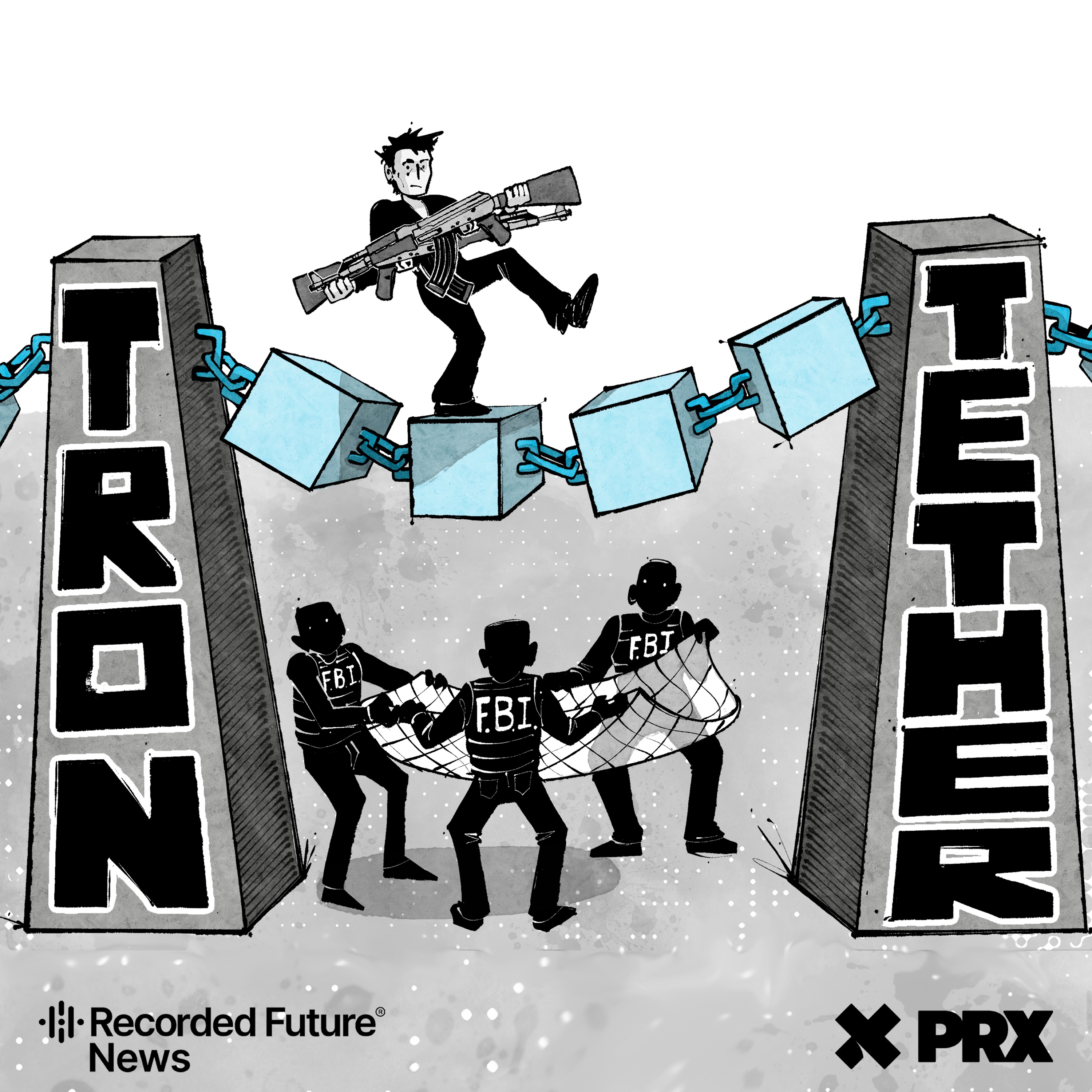
Tron. It sounds like a sci fi reboot, but it's not fiction. It's a blockchain. Fast, cheap and flashy. And it's run by a billionaire who knows how to draw a crowd and wield inflows influence. I'm Dena templewest and this is Click Here, a podcast about the people making and breaking our digital world today. How a flashy Ethereum knockoff became the backbone of a shadow economy. A favorite of scammers, launderers and terrorist groups. And the man at the center of it all. He might be a genius, he might be a grifter, but. Or maybe he's the future. Stay with us. Click Here is brought to you by Progressive Insurance. Do you ever find yourself playing the budgeting game? Well, with the Name youe Price tool from Progressive, you can find options that fit your budget and potentially lower your bills. Try it@progressive.com Progressive Casualty Insurance Company and affiliates Price and coverage match limited by state law. Not available in all states. For recorded future news, this is Click Here. Criminals are drawn to crypto for a simple reason. For a long time, people thought it was anonymous, but it turns out it can not only be traced back to those criminals hiding in the shadows. In some ways, it's made investigators jobs even easier because, as Ari Redboard, the global head of policy at TRM Labs, explains, it leaves a trail.
- [04:47]
Ari Redboard
I have a colleague who's a former IRS CI agent and he talks about the blockchain as a crime scene.
- [04:51]
Dena Templewest
A pristine and permanent crime scene.
- [04:54]
Ari Redboard
One that never forgets very few crime scenes. Can you go back five years, six years, eight years to crimes that may have been committed and actually find direct evidence of those crimes still existing?
- [05:08]
Dena Templewest
The blockchain is a public digital ledger, like an accountant's book, but it lives on thousands of computers at once. So once an entry is in, it can't be erased, can't be fudged. So if hawala was a kind of whisper network, then crypto kind of shouts.
- [05:27]
Ari Redboard
There is a great paradox when it comes to crypto. On the one hand, crypto is really good for criminals because now you can move funds faster, cross border and in larger amounts than ever before. But on the other hand, it's terrible for money laundering because every transaction is logged, immutable and traceable. And we're just seeing this cat and mouse game play out that's always played out in the real world. Playing play out now in the digital.
- [05:51]
Dena Templewest
Space that cat and mouse game, terrorist groups are all over it.
- [05:56]
Ari Redboard
Hamas was an early adopter of crypto.
- [06:01]
Dena Templewest
In the late 2010s, Hamas became one of the first terror groups to Fundraise with crypto. And at first, they didn't exactly try to hide it.
- [06:09]
Ari Redboard
Hamas would, you know, put out solicitations with oftentimes a picture of a wallet address, a Bitcoin address, and say, send the funds here. They show mujahideen holding a flag up with a big Bitcoin symbol with a QR code on the bottom.
- [06:26]
Dena Templewest
That was the strategy. QR codes, wallet addresses, a digital call for donations. They thought it was clever, that they were untouchable. But the Department of Justice had other ideas. In fact, in 2020, federal agents seized hundreds of Hamas linked crypto accounts along with wallets tied to Al Qaeda and the Islamic State. Turns out, crypto isn't so anonymous if you know where to look. So terrorists didn't stop using crypto. They just used it a different way. They went underground, the flags disappeared. They began sharing wallet addresses in encrypted telegram chats instead of social media. And they did this on the Tron platform with their favorite cryptocurrency, something called Tether.
- [07:16]
Jessica Davis
Tron and Tether are two of the main ways that terrorists are moving funds. It is basically like hawala on steroids.
- [07:25]
Dena Templewest
This is Jessica Davis, the founder of Insight Threat Intelligence. And it's been widely reported that Hamas used Tron and Tether to move funds ahead of the October 7 attacks. Other sources suggest that Iran has used the two to move money to groups like Hezbollah. The Islamic State and groups it works with have used it too. Even the UN has talked about Tether and Tron as the preferred choice for a whole host of criminal syndicates trying to launder their crypto. Jessica says criminals and terrorists favor the Tron blockchain for three reasons.
- [08:00]
Jessica Davis
It's pretty fast, it's pretty cheap, and it's pretty easy.
- [08:04]
Dena Templewest
Compared to Bitcoin, Tron is frictionless. Compared to Ethereum, it's a bargain. And it seems to have the one thing criminals like most pretty lackadaisical enforcement.
- [08:17]
Jessica Davis
Terrorists will go to countries and try to operate in countries where enforcement and legislation is the weakest. To a certain extent, I think that something very similar might be happening with the crypto platforms, where they're basically figuring out which cryptocurrencies and which platforms, which blockchains they're able to operate on with impunity.
- [08:41]
Dena Templewest
As we said earlier, Tron doesn't work alone. It's often paired with a stablecoin called Tether.
- [08:47]
Jessica Davis
Let's talk about Tether in particular. So they've issued a stablecoin called usdt. And the thing that's interesting about stablecoins is that they're pegged to, in this case, the US dollar. So that means that its value is.
- [09:00]
Dena Templewest
Really constant, which is exactly the point, because if you're trying to buy, say, hundreds of AK47s, volatility is a liability. You need to plan for how much it'll cost. And the value of Bitcoin swings so wildly, it's more like a wrecking ball than a currency.
- [09:19]
Jessica Davis
You can count on Bitcoin, the value fluctuates profoundly. If you want to move money operationally or to support a terrorist group, Bitcoin, Bitcoin can be a little bit of a guessing game. Like you just don't know what the exchange rate's going to be. You don't know what that's going to look like on a day to day basis. It is very volatile. Usdt, on the other hand, it's going to be one US dollar.
- [09:45]
Dena Templewest
So yes, Tron and Tether are fast. Yes, they're stable. And in the eyes of criminals, that makes them priceless.
- [09:52]
Jessica Davis
Those are all things that pretty much anybody who wants to move money internationally is looking for. And terrorists are no different.
- [09:59]
Dena Templewest
Which brings us to the question no one seems eager to answer. Is Tron just a neutral highway or is it the getaway car? We reached out to Tron to talk about that and they declined to comment for this story. Tether didn't get back to us either.
- [10:14]
Jessica Davis
It's difficult to say necessarily that someone is complicit or facilitating terrorist financing. I think by when you do have a number of terrorist organizations moving to a particular platform, you have to understand that there's probably some significant vulnerabilities there that are allowing that to happen or that are enabling that to a certain extent.
- [10:34]
Dena Templewest
So who might be doing that? Enabling? When we come back, the man behind Tron, a founder who is equal parts pitch man and question mark. Would you eat a banana worth over $6 million? Well, that's what crypto entrepreneur Justin sun has just done. Some call Justin Sun a marketing genius, others a fugitive in waiting. Stay with us.
- [10:59]
Lauren Goode
Hi, I'm Lauren Goode. I'm a senior writer at Wired.
- [11:02]
Ari Redboard
I'm Michael Colori, Wired's Director of consumer tech and culture.
- [11:05]
Lauren Goode
And I'm Zoe Schiffer, Director of Business and industry. And we're the host of Wired's Uncanny Valley. It's a show about the people, power and influence of Silicon Valley.
- [11:16]
Ari Redboard
Every week we get together to talk about how technology and culture from the Valley Valley are influencing our everyday lives.
- [11:22]
Lauren Goode
The Internet really was no longer about the early days. It was about minting money. He was swapping out the hoodie for.
- [11:29]
Ari Redboard
A suit and it just became like the shorthand for I'm the Silicon Valley hustle coder guy.
- [11:34]
Lauren Goode
Or we'll dive deep into the history of some of Silicon Valley's most important institutions and figures.
- [11:41]
Ari Redboard
So a lot of people point to parallels between Sam Altman and Steve Jobs.
- [11:45]
Lauren Goode
Very good for engagement, for Meta, for its bottom line, possibly or probably bad for humanity. I don't know if there's any single person that I would trust with this. Whether you're optimistic or absolutely terrified about what Silicon Valley will do next, this is the podcast for you.
- [12:02]
Ari Redboard
We'll be there to bring the analysis and reporting you can only get from Wired.
- [12:06]
Lauren Goode
Listen to and follow WIRED's Uncanny Valley wherever you get your podcasts.
- [12:25]
Dena Templewest
In 2019, Italian artist Maurizio Catalan unveiled a baffling work of conceptual art. A fresh banana duct taped to a white wall. He called the work comedian, and in November of last year, the display went up for auction. These are words I never thought I'd say. $5 million for a banana. The Catalan is yours. Congratulations. Thank you very much indeed. The bidder, who spent $5.2 million plus another million dollars in auction fees, Justin's son, the 34 year old billionaire founder of Tron. He later ate that multimillion dollar banana.
- [13:06]
Jacob Silverman
Justin sun is known for a certain amount of stunts and self promotion. He has a real talent for it, I'd say. I mean, there is something kind of goofy or even enjoyable about him, kind of as a character in this industry full of absurd people.
- [13:26]
Dena Templewest
Justin's son was born in China, studied in the U.S. founded Tron in 2017, and then he became a headline machine. He paid millions for a charity lunch with Warren Buffett. He booked a $28 million ticket on Jeff Bezos blue origin Rocket Command, engine start, 2, 1, ignition. And then didn't show up.
- [13:49]
Jacob Silverman
He could not come to the United States to claim that prize because of his kind of uncertain legal situation.
- [13:56]
Dena Templewest
This is Jacob Silverman, a journalist who covers crypto. And that uncertain legal situation. It wasn't just visa trouble. The SEC had charged sun and his company with fraud, and you'd think that would slow him down, but it didn't. Instead, he changed the backdrop. He became Grenada's ambassador to the wto. He picked up citizenship in St. Kitts and Nevis and somehow was appointed Prime Minister of a micro nation on the Danube that has no actual residence.
- [14:29]
Jacob Silverman
It's not clear to me that Tron as a company or Justin Sun's operations as a kind of entrepreneur and corporate executive have stuck around in any one place long enough to catch the attention of law enforcement.
- [14:45]
Dena Templewest
Which sounds like a prank, but it isn't. After the US Presidential campaign, Justin sun was back in the headlines.
- [14:53]
Jacob Silverman
He's one of the biggest outside investors in World Liberty Financial, and so he spent.
- [14:58]
Dena Templewest
World Liberty Financial isn't just another crypto startup. It's the Trump family's crypto platform. And Justin's son, he invested $75 million to help it get off the ground. He also spent millions buying Trump's Meme Coin, a purchase that came with a golden ticket, a seat at a private dinner with the president at his Virginia golf club. And this time, Justin's son showed up. Because just weeks into the new administration, the SEC quietly paused its case against him. Coincidence? Maybe. But to Jacob Silverman, it feels like something else.
- [15:36]
Jacob Silverman
He sits very much right now at this nexus of politics and crypto, but also how the more kind of gray market and illicit parts of crypto are really being brought into the light and welcomed in the US legal system, in US Finance, and in the White House and with the Republican Party in a way that we haven't seen before.
- [16:00]
Dena Templewest
For now, Justin sun and Tron appear to have escaped scrutiny. And in fact, they say they're trying to clean up their act, or at least look like they're trying to clean up their act.
- [16:11]
Ari Redboard
We put out a couple reports and essentially those reports said that we're seeing, you know, an overwhelming amount of illicit activity in the stablecoin tether on Tron.
- [16:20]
Dena Templewest
This is Ari Redboard from TRM again.
- [16:23]
Ari Redboard
I think ultimately after we put out that data, they said to themselves, hey, what could we do right as a blockchain?
- [16:30]
Dena Templewest
What they could do as a blockchain to address all of this was fund a financial crime unit. Last year, Tron and Tether teamed up with Ares Co. TRM and created a crypto crime unit they called T3.
- [16:46]
Ari Redboard
We have investigators dedicated to only tracing Tether on Tron full time.
- [16:52]
Dena Templewest
They're tracing the Tether transactions to find the tell tale signs of illicit finance. In its nine months of operation, they say they've frozen millions in illegal transactions.
- [17:03]
Ari Redboard
We've worked with law enforcement globally, so really all around the world to seize back over 200 million in illicit tether.
- [17:13]
Dena Templewest
Proof, says Ari, that maybe if Tron was complicit in the past, it isn't anymore. But others, like Jacob Silverman, aren't buying it.
- [17:23]
Jacob Silverman
Frankly, I'm Not a believer that these companies have changed. There's still a lot of questions that they haven't answered and a lot about how they operate that hasn't changed.
- [17:33]
Dena Templewest
As he sees it, it's a basic conflict of interest. A company that investigates crypto crimes, getting in bed with a company they've investigated.
- [17:42]
Jacob Silverman
To me, it seems inappropriate.
- [17:45]
Dena Templewest
And while critics like Jacob are crying foul, it doesn't look like the US Government, at least for now, is planning to take a closer look. In April, the DOJ quietly dissolved the unit investigating crypto fraud. A third of its crypto enforcers were gone. The SEC has backed off meme coins. OFAC has pulled back on sanctions. And in addition to pausing the case against Justin sun, they've also halted cases against Binance, Coinbase, Kraken and Consensys. But Matt Price, the former IRS investigator now at Elliptic, says don't confuse that with going soft.
- [18:25]
Matt Price
I don't see any change on the criminal side. I don't think anybody is shying away from investigating terror financing or drug smuggling or scams. They are still working cases. They're still active out there.
- [18:37]
Dena Templewest
The mission hasn't disappeared, he says. It's just shifted. They're still chasing child exploitation, still following the money behind fentanyl, still watching terror groups and foreign adversaries, the North Koreas.
- [18:51]
Matt Price
The Irans, the fentanyl smugglers, the scam groups. I haven't seen any throttling back on that. I think it's moving away from a focus on what I would call the kind of the conduct investigations back into the more traditional criminal investigations. Like they want to go after money laundering networks, they want to go after child sex abuse, material people, they want to go after that. There doesn't seem to be the appetite necessarily to go after crypto businesses.
- [19:16]
Dena Templewest
Translation, they're targeting criminal networks. But when it comes to crypto businesses, the platforms, its executives, enforcement seems to be looking the other way. And that, Jessica Davis says, may not be as harmless as it sounds. Here she is again.
- [19:33]
Jessica Davis
There's been a lot of different moves to limit the power of investigative agencies to stand down things like kleptocracy investigations units, and to a certain extent, to prevent more rules being applied to cryptocurrency companies that all add up to, I would say, argue, like a lightening of restrictions on cryptocurrency.
- [19:59]
Dena Templewest
And that matters because when the US Relaxes scrutiny, so does everybody else.
- [20:05]
Jessica Davis
The United States really sets the tone for the rest of the world. If the US Is pushing forward with enhanced regulation, enhanced due diligence, really pushing the envelope in terms of shutting down illicit crypto activity. No one else is going to do that.
- [20:23]
Dena Templewest
Justin sun once ate a banana taped to a wall. He said it was art. And maybe it was because like a lot of art, it was ridiculous and expensive and impossible to ignore. It was also provocative, the kind of performance that doesn't just command attention. It dares you to ask why? Why tape a banana to a wall? Why build a blockchain criminals love? Why drop a lawsuit not long before a multi million dollar meme coin buy?
- [20:53]
Jacob Silverman
We have Justin sun, someone who never would have come to the United States under the Biden administration, being welcomed into the US and actually partnering with the President on his own crypto projects. So in that way, yes, I think he's deeply representative and symbolic and important of what's happening here.
- [21:11]
Dena Templewest
Crypto has always flirted with the absurd. Dog coins, laserize libertarianism delivered via meme. But behind the spectacle is something quieter and far more dangerous. Because if you strip away the fortune cookie slogans and flashy marketing, what you're left with is power. Power that moves faster than regulation. Power that trades transparency for influence. Power that now has a seat at the table and maybe even a visitor's badge for the West Wing. And like a banana, it's beginning to rot. This is Click Here.
- [21:52]
Sean Powers
Looking for more of the cybersecurity and intelligence coverage you get on Click Here. Then check out our sister publication the Record from Recorded Future News. You'll get breaking cyber news from reporters in New York, Washington, London, and Kyiv, among others. And you'll see for yourself why it attracts hundreds of thousands of page views every month. Just go to the Record Media.
- [22:17]
Dena Templewest
Here is some of the top cyber and intelligence news of the past week. First, a cyber attack on one of America's biggest food distributors is emptying grocery store shelves across the country and leaving some patients without prescriptions. Then why? A key federal agency designed to protect critical infrastructure may be spared the worst of proposed budget cuts, at least for now. And finally, the maker of America's best known tractor is facing an unusual legal challenge, one that could reshape the way we fix everything. It's Tuesday, June 17th. A cyber attack on a major food distributor is causing disruptions leading to near empty shelves at some grocery stores and pharmacies. A cyberattack is taking aim at Americans in the checkout line. One of the country's largest grocery distributors, United Natural Foods, was forced to shut down some of its internal systems after a cyber incident. The company, which supplies some 30,000 stores across the US and Canada, including Whole Foods, is now scrambling to restock the barren shelves and get prescriptions moving again. The FBI is investigating, and so far no one's claimed responsibility. Patients now waiting more than four days for prescriptions. It's scary.
- [23:40]
Jessica Davis
It's very scary.
- [23:45]
Dena Templewest
Meanwhile, in Washington, a political tug of war has started over cybersecurity funding.
- [23:51]
Sean Powers
Keeping Americans safe and secure is a.
- [23:53]
Dena Templewest
Fundamental duty, and the measure we are.
- [23:55]
Sean Powers
Considering this evening supports that mission.
- [23:59]
Dena Templewest
The Trump administration proposed slashing the budget of CISA by nearly half a billion dollars. CISA is the federal agency tasked with protecting against ransomware, infrastructure attacks, and more. But this week, a House panel pushed back, approving a version of the bill that would cut far less just $135 million. The burden to respond to the next ransomware attack on your local hospital or deadly hurricane in your district will increasingly fall to state and local leaders who lack the resources to protect your sensitive healthcare information from hackers. As our sister publication, the Record, has previously reported, the administration plans to reduce the agency's workforce by some 1300 people, and the fight over CISA's future may be just beginning. And finally, a courtroom drama starring a tractor company, a group of angry farmers, and the FTC John Deere.
- [24:58]
Ari Redboard
Yes, the tractor company is being sued.
- [25:01]
Dena Templewest
By the FTC John Deere. Yes, the green and yellow tractor giant is being sued by the federal government in five states for allegedly monopolizing the repair market for its products. The company insists only its authorized dealers can service its machines. But a judge has allowed not one but two lawsuits to move forward, including a scathing opinion that mocked the company's legal strategy as just a bad sequel candidate for one of the worst movies of the year. Wasting. The judge went on to channel his inner Siskel and Ebert and gave the motion a big two thumbs down. I can't believe it. With the case could have sweeping implications for the growing right to repair movement and whether Americans are allowed to fix the things they own. That's it for this week. Until then, the balcony is closed.
- [25:56]
Megan Dietre
Today's episode was written and produced by Megan Dietre, Zach Hirsch, Erica Gaeda, Dina Temple Rastin, and me, Sean Powers. I was the lead producer. The episode was edited by Karen Duffin, Fact Checked by Darren Ankrum, and it contains original music by Ben Levingston with some other music from Blue Dot sessions. Our staff writer is Lucas Riley and our illustrator is Megan Gough. Jesse Niswonger is our sound designer and engineer. Click Here is a production of Recorded Future News and PRX Tune in on Friday for Mic Drop, which features our favorite interview of the week. We'll see you then.
- [26:52]
Sean Powers
Looking for more of the cybersecurity and intelligence coverage you get on? Click Here. Then check out our sister publication, the Record from Recorded Future News. You'll get breaking cyber news from reporters in New York, Washington, London, and Kiev, among others. And you'll see for yourself why it attracts hundreds of thousands of page views every month. Just go to the Record Media.