Loading summary
Transcript71 lines
- [00:03]
Dena Temple-Raston
From recorded future news and prx, this is click here. In the late 1980s, Xiao Cheng came to the United States from China to study astrophysics at Notre Dame.
- [00:26]
Xiao Cheng
I am always fascinated by the question of time or time and space.
- [00:32]
Dena Temple-Raston
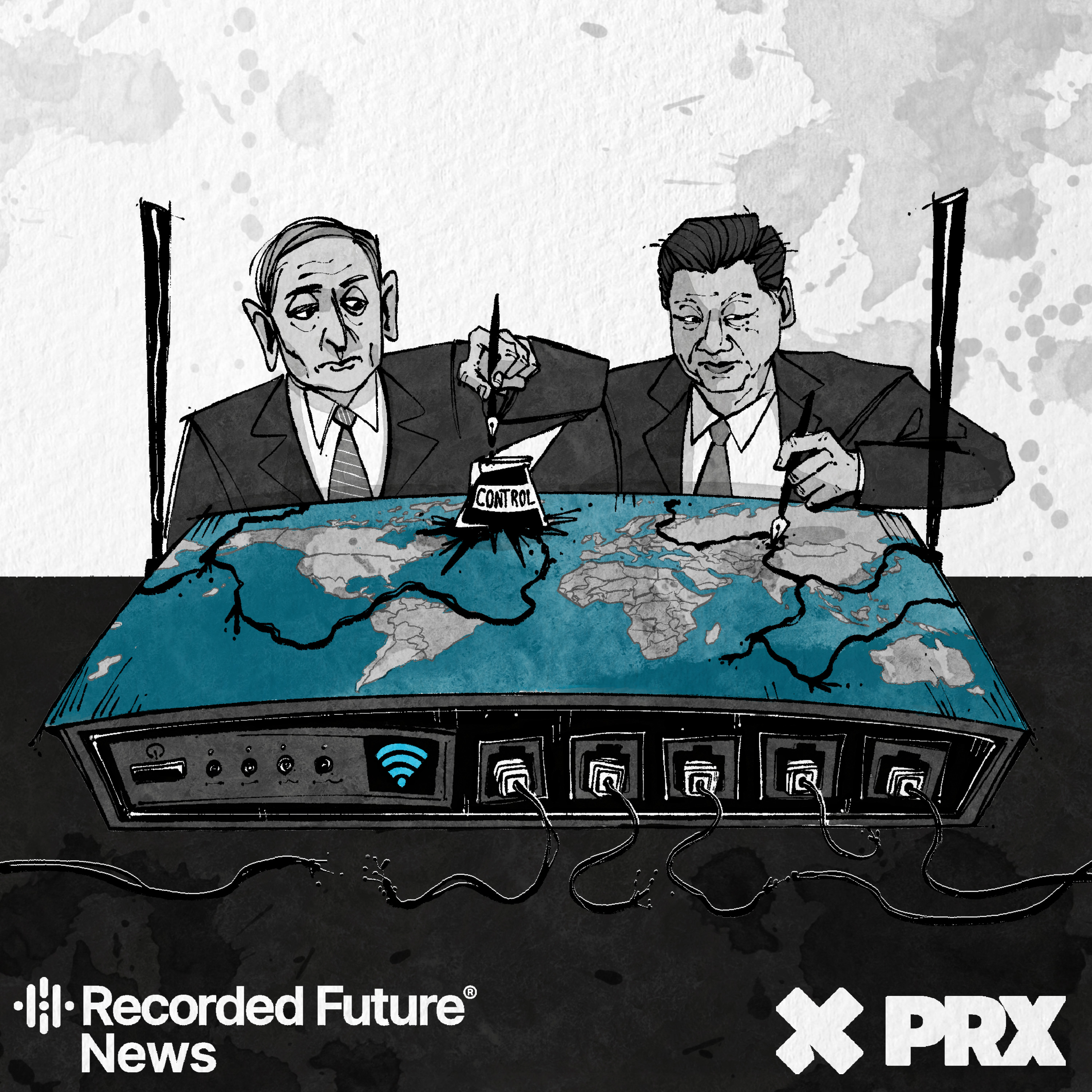
He imagined a life studying galaxies, the logic of the universe, not the politics of power. And then the Tiananmen Square protests happened. The students marched out of the gates of their universities and into conflict with authority. For weeks in the spring of 1989, students filled the streets of Beijing, calling for more openness, more freedom, maybe even a little democracy. The protesters camped out in the square. They hung banners from buildings and argued politics in the open. And while the demonstrations didn't last, the belief that China was opening up did. A year later, the Internet arrived. It looked like the next chapter in the same story, but it wasn't. From Recorded Future News and prx, this is Click Here, a show about how technology is changing everything. I'm Dena Temple Rust. This week a story about how one of the biggest predictions about the Internet turned out to be dead wrong. The thinking was that once information could move freely, governments wouldn't be able to control it in the same way anymore. China had other ideas.
- [01:59]
Xiao Cheng
The state didn't lose a second to make sure those information flow needs to
- [02:05]
Dena Temple-Raston
be controlled and what happened next helped reshape the Internet for everyone. Stay with us. Support for Click Here comes from Decagon Growth sounds like a good problem to have until it's 2am Customers are waiting for answers and your support team is stretched thin. A lot of companies turn to AI for help and then discover that most AI tools aren't really solving the problem, they're just creating a different one. Decagon was built for that moment. It helps companies create personalized concierge style customer experiences with AI agents across chat, email, email, voice and SMS. They're available 24, 7, feel natural to talk to, and can resolve customer requests on their own so businesses can keep up with requests without losing their personal touch. Workflows can be updated using natural language so the teams can make changes themselves without long engineering cycles. Decagon gives your team full visibility into why agents make decisions and what's happening across every conversation. It's helping power millions of conversations every day for brands you know and love like Avis, Affirm, fanatics and Aura ready to transform your customer support. Go to Decagon AI Clickhere to get a personalized demo and see what Decagon can do for your team. Check out Decagon at Decagon AI clickhere that's Decagon AI clickhere Support for Click Here comes from NPR's Planet Money podcast. Curious about the economic forces shaping your daily life? The Planet Money podcast makes the economy make sense by telling stories about the people inside it. Take the wmba. Most people heard the leak, landed a big new collective bargaining agreement. But Planet Money went deeper inside the negotiations themselves. They found a Nobel Prize winning economist helping players make their case with something surprisingly a pie chart. Because the real fight wasn't just about bigger salaries, it was about revenue share and whether players would finally get a bigger piece of a rapidly growing business. Planet Money explained why that matters and why this deal could reshape women's sports for years to come. That's what Planet Money does. It takes ideas that sound abstract. Collective bargaining sanctions labor markets and turns them into stories that feel immediate and human. Other episodes have explored why Pokemon cards are outperforming some investments, or how Russia's economy adapted after years of sanctions and what a 750 pound restaurant robot says about the future of work. Planet Money is economics told through curiosity, surprise and great storytelling. Follow NPR's Planet Money podcast and understand how money shapes the world. History has a way of turning on moments that don't feel historic at the time. In the spring of 1989, many Chinese students believed they were helping build a more open China. Then, on June 4th of that year, the Beijing leadership sent troops in to clear Tiananmen Square. This is how a CBS correspondent described it at the time.
- [05:45]
Xiao Cheng
Now people are running away from the
- [05:48]
Dena Temple-Raston
gunfire from the advancing troops. Assuming they are advancing, I guess they are.
- [05:55]
Xiao Cheng
There are students running behind them, throwing
- [05:57]
Dena Temple-Raston
rocks, picking up debris. Xiao Qian had spent two months in China around that time, long enough to imagine one future for the country and long enough to watch another one arrive.
- [06:09]
Xiao Cheng
I came back to China. I saw everything since then.
- [06:17]
Dena Temple-Raston
After Tiananmen, Xiao walked away from astrophysics. The future suddenly seemed to be happening right here on Earth.
- [06:24]
Xiao Cheng
I left my physicist career, became a full time human rights activist, which meant
- [06:31]
Dena Temple-Raston
he couldn't really go home again. So from afar, he watched China grow quieter. The press was constrained. The space for dissent kept shrinking. Then, just as the walls seemed to be closing in, something new appeared. Something that didn't seem to care about borders or governments.
- [06:50]
Xiao Cheng
It spans the globe like a superhighway. It is called Internet.
- [06:56]
Dena Temple-Raston
To dissidents like Xiao, the Internet seemed to reveal a weakness in authoritarianism itself, because authoritarian systems depend on controlling the flow of information. And suddenly information could move on its own without an editor without a checkpoint and without an obvious off switch.
- [07:16]
Xiao Cheng
I thought Internet may be the answer for bringing freedom and democracy to Chinese people. There was a new hope of freedom information brought maybe by technology, this thing called Internet.
- [07:33]
Dena Temple-Raston
And at first, it really did feel that way. In the 1990s, Chinese users actually did experience something like free expression online. People were posting, organizing, connecting in ways they never had before.
- [07:49]
Xiao Cheng
Millions and millions of Chinese people had a new space to express themselves and a new way to organize themselves.
- [07:56]
Dena Temple-Raston
The hope was that open networks would naturally lead to open societies. Once information started moving freely, the thought was governments would eventually lose the ability to control it, making closed societies impossible to sustain. The thing is, when the leadership in Beijing looked at the very same technology, it saw something unsettling, even dangerous, because when information moves freely, power moves too. One response might have been to just pull the plug on the Internet before it could destabilize the state. But there was one problem with that. The Chinese people liked the Internet. They wanted it. And cutting the country off completely risked backlash of its own. And this is where the Chinese leaders saw something the rest of the world largely missed. The Internet didn't have to be destroyed to be controlled. They just had to build a Chinese version of it.
- [08:56]
Xiao Cheng
The state didn't lose a second to make sure those information flow needs to be controlled. Therefore, the technology which is great firewall being established in a very early stage.
- [09:09]
Dena Temple-Raston
At the time, many American officials thought China's efforts were doomed. The Internet was simply too sprawling and too decentralized, offensive. Even President Bill Clinton mocked the idea.
- [09:21]
Xiao Cheng
Now, there's no question China has been trying to crack down on the Internet.
- [09:26]
Dena Temple-Raston
Good luck.
- [09:31]
Xiao Cheng
That's sort of like trying to nail
- [09:32]
Recorded Future Announcer
Jell O to the wall.
- [09:35]
Dena Temple-Raston
For a while, Hsiao thought Clinton might be right, that open technology would eventually outrun the censors.
- [09:41]
Xiao Cheng
I was so optimistic and hopeful, and I even used The Star Wars 1st Trilogy Episode New Hope to describe what Internet could bring to China. So in the first 15 years of the Internet, seems like the Internet users being empowered more than censors can catch up.
- [10:06]
Dena Temple-Raston
Then Xi Jinping came to power, and Xiao's Star wars metaphor stopped feeling like a metaphor. For years, he'd believed China's information controls were temporary, a phase in a longer story bent toward openness.
- [10:22]
Xiao Cheng
I called that period of time the Emperor strike vodka. Which is true that he pushed the society and including the Internet, under the control. But I was still hoping the third episode should be called Return of Jedi. But it didn't.
- [10:45]
Dena Temple-Raston
The Return of the Jedi Never came. China had been building the Great Firewall for years. But under Xi, the project became more ambitious. The goal wasn't simply to block information from entering the country. It was to shape the information people encountered in the first place.
- [11:03]
Xiao Cheng
Because within the Great Firewall, the Chinese state can have full control and surveillance to everything going on, from technology to people. It's extraordinary apparatus of surveillance and control.
- [11:22]
Dena Temple-Raston
For Xiao, understanding that system became something of a life's work. He devoted his career to studying how China was reshaping the Internet. Today, he's a research scientist at UC Berkeley's School of Information. And from that vantage point, he watched China build a system capable of shaping not just what people say online, but what they see and share and even find in the first place. Because the control wasn't just happening at the surface. It was being built into the infrastructure underneath the Internet itself, down in the invisible layers. Most users never think about routers, network infrastructure, the plumbing underneath the Web. This type of control works in layers, Xiao says. First, you control the gateways. Nearly all international Internet traffic entering China passes through a small number of government controlled exchange points. So the state can inspect what comes in and what stays out. A kind of border patrol for the Internet. Then came the filtering sites like Facebook, Google X, YouTube, they're all blocked in a lot of countries. Users can get around censorship using VPNs, tools that disguise where you're browsing from. But China learned how to detect many of those, too. Leaders didn't want to create a digital desert exactly. They just wanted a different kind of Internet. So they didn't keep Western apps out, they just built replacements people would actually want to use, like WeChat and Douyin.
- [12:58]
Xiao Cheng
Most of the time, Chinese users are practicing their daily digital usage within the Great Firewall, whether it's a social media, whether it's a digital payment, whether it's whatever, Uber app.
- [13:11]
Dena Temple-Raston
So inside the Great Firewall, life still functions. You can text friends, order dinner, pay your bills, and you live an entire digital life. But inside a system, the government monitors and shapes. And over time, that changes behavior, even the way people speak. China has created entire lists of banned
- [13:31]
Xiao Cheng
words and phrases, and there's hundreds of thousands of we call sensitive words. They use keywords to filtering what people say and what can be said.
- [13:43]
Dena Temple-Raston
Some are tied to things like violence or gambling, but others are political references to democracy, activism, sensitive Chinese history. The result is a strange kind of silence. Not the silence of people saying nothing, but the silence of people learning instinctively what not to say. So could you walk me through what happens when someone in China posts something that is deemed sensitive? What happens to that post?
- [14:15]
Xiao Cheng
Many things could happen. First thing happens is you can't even post that because the keywords from your keyboard to Internet or to whatever the social media platform you're trying to post already filtered. It could be just the post never been posted and you didn't even know.
- [14:33]
Dena Temple-Raston
Sometimes the post disappears. Sometimes the whole account disappears. Sometimes people disappear.
- [14:41]
Xiao Cheng
You may receive a phone call or police who are directly visiting you. They can also imprison people, and there are hundreds of those cases.
- [14:55]
Dena Temple-Raston
For years, Xiao watched the Chinese government get better and better at controlling information. But he noticed something else, too. Every time the system closed a door, someone found a window. And sometimes those windows revealed far more than anyone intended. More on that after the break. Stay with us.
- [15:26]
TED Tech Announcer
If you're struggling to keep up with all the latest innovations in tech and what they'll mean for your life, TED Tech has you covered. Get ahead of the curve with digestible downloads on some of the biggest ideas in technology, from AI and virtual reality to clean tech. Find TED Tech wherever you get your podcasts.
- [15:47]
Xiao Cheng
It is called Internet.
- [15:48]
Dena Temple-Raston
I use the world Wide web information superhighway. Cyber security. Why do things go viral? Click here. In 2012, Xiao was researching an event that had been censored in China. He was curious why authorities were trying so hard to suppress it. Instead, he stumbled onto something far stranger. Not the story itself, but a glimpse of the system censoring it.
- [16:15]
Xiao Cheng
I was googling. I was googling, like, what about this event? Like why they're censoring it? But it shows up a folder under my search.
- [16:25]
Dena Temple-Raston
He clicked on the folder and his jaw dropped. Inside were censorship directives from the Chinese government, detailed instructions about what could be said online and what had to disappear. It wasn't just a directive. It was years of them. A kind of paper trail left behind by a system designed to leave no trace.
- [16:46]
Xiao Cheng
It contains not only one directive relating to that particular event. It contained the entire year's censorship. Secret directives. This type of information, of course I know, exist, but they're supposed to be behind of a very secure Chinese official. Servers should never grabbed by the Google search.
- [17:11]
Dena Temple-Raston
And yet somehow there they were, just sitting on Google waiting to be found. They as though someone inside the system had accidentally or maybe intentionally left a door cracked open, providing a glimpse into the machinery behind the great firewall. Naturally, Xiao wanted to know who uploaded it. He couldn't find a person's name, but he did find their intention.
- [17:36]
Xiao Cheng
Apparently, the person who put that is someone who can access such information. But this person gave Fodor a name. The name is called for the Future Evidence.
- [17:55]
Dena Temple-Raston
For Future Evidence. As if someone inside the system already understood that one day people might deny any of this had ever happened. So it's almost like a message in a bottle that this person hoped someone would find.
- [18:10]
Xiao Cheng
That's right.
- [18:11]
Dena Temple-Raston
Wow. Someone inside China had risked an extraordinary amount to let the outside world see this material. And Xiao had just the right place to share this information publicly. A site where he preserved the very things the Chinese government wanted erased. And he called it China Digital Times. He gathered posts that slipped past the censors, documents that leaked videos that went viral before they could be erased. And in a strange way, his archive actually curated itself. Ordinary Chinese citizens became, in essence, the reporters, and the government became the editor.
- [18:52]
Xiao Cheng
We call it the Chinese Censor selected and Curated content. The Chinese censorship is our editorial board. They know what to censor, what's important to them. Our job is to find those actions and find those contents.
- [19:10]
Dena Temple-Raston
Xiao spent years collecting those contents, those fragments before they disappeared. It became a kind of cat and mouse game. Citizens trying to speak and a government trying to erase what they said. But now AI is tilting that battle toward the state, allowing content to be filtered instantly, quietly, before most people ever had a chance to see it.
- [19:34]
Xiao Cheng
They can micro target people and contents, and they can preemptively control the information space. The Internet now become much more a technology of control than technology of liberty. I think that's a global issue, but in China, it's a very clear case.
- [20:01]
Dena Temple-Raston
For Xiao, China isn't just a glimpse of the Internet's future. It's a warning about what happens when a technology built to spread information becomes a tool for controlling it. And increasingly, China is exporting the tools it built to maintain that control. Now, a leak of tens of thousands of documents shows that a little known Chinese company with ties to that firewall is exporting those tools to other countries in Africa and Asia. In September 2025, a leak exposed a little known Chinese company called Gige Networks. On paper, it looked like an ordinary cybersecurity firm selling network monitoring tools to governments and businesses. But the leaked document showed evidence of techniques pioneered inside China's great firewall being exported abroad so other countries could rein in their Internets too.
- [20:54]
Recorded Future Announcer
Foreign.
- [21:01]
Dena Temple-Raston
Doesn't stop at software. It also travels inside products themselves. Phones, cars, cameras, consumer electronics exported around the world.
- [21:11]
Xiao Cheng
I know China has a very large market, so those Chinese AI technologies will be embedded in every Chinese product. Imagine microwaves. Imagine cars getting exported globally. And that is the world we are entering right now.
- [21:37]
Dena Temple-Raston
The Internet was supposed to erase borders. Instead, many countries have spent the last two decades rebuilding them online. The question is, what happens next? Is this just a chapter in the Internet's history, or is it the future? For Xiao, the answer is less clear than it once was.
- [21:57]
Xiao Cheng
History has its own pace. Sometimes there's new hope appears, and sometimes the pushback or the other trends will come. I'm not quite sure which stage we're in. We're certainly not in the most optimistic stage, but the technology is moving very fast. It will bring us many, many advantages, many new challenges, and many even more Adjusting times coming.
- [22:26]
Dena Temple-Raston
Xiao no longer talks about the Internet the way he did in the 90s. The optimism is harder to find. But he hasn't given up on the idea that there's a force pushing in the other direction. The human desire to connect, to share information, to find one another.
- [22:42]
Xiao Cheng
Otherwise, we are not, as a species going to survive correctly moving towards the future. So no matter what kind of a force forcing this division and suppression and Balkanization, the counter force must be working to unite us and to connect us.
- [23:06]
Dena Temple-Raston
This is. Click here.
- [23:11]
Recorded Future Announcer
If you're looking for a daily guide to cybersecurity news and policy, sign up for the Cyber Daily from Recorded Future News. It serves up the day's most interesting and important cyber stories from our sister publication the Record, and then aggregates all of the big cyber stories you might have missed from news outlets around the world. Just go to the Record Media and and click on Cyber Daily to get all you need to know about the world of cybersecurity right in your inbox.
- [23:42]
Dena Temple-Raston
Here's what you need to know about the tech world this week. It's Tuesday, June 16th. For years, people worried about a future where a machine could decide who lives and who dies. The assumption was that that future was still ahead of us. It turns out it wasn't.
- [24:01]
Xiao Cheng
For years now, we've suspected that AI has been used in warfare, not just as a sort of an assistant, but to actually find a target and kill a target.
- [24:10]
Dena Temple-Raston
According to a new report, that moment has already happened. Researchers say autonomous drones killed soldiers on a battlefield in Ukraine roughly two years ago, selecting and attacking targets without direct human oversight. The victims included two soldiers and a military truck. The revelation lands at an awkward time. Last year, the United nations called for global restrictions on lethal autonomous weapons. The goal was to have international rules in place by 2026. The deadline seems to have slipped, which leaves a question that sounds increasingly less theoretical. How much authority are we willing to hand over to a machine? Burner phones have long offered something rare anonymity. But now federal regulators want to make them a lot harder to buy. The Federal Communications Commission wants to make
- [25:05]
Xiao Cheng
it effectively impossible for people to buy what many call burner phones by forcing telecoms to get all the customers IDs.
- [25:13]
Dena Temple-Raston
The FCC has proposed new rules rules requiring telecom companies to verify and store customer identities, names, addresses, government IDs, even IP addresses. The agency says the information would help investigators track criminals using prepaid phones for scams and fraud. But critics say the same phones are also used by people trying to protect themselves, like domestic violence survivors or whistleblowers or journalists, people who simply don't want every phone they own tied to their identity. And there's another concern. Telecom companies get hacked all the time, so a rule designed to collect more information could also create a bigger target. The FCC is accepting public comments through June 25. If you're watching television in New York this summer, there's something new you may be seeing a disclaimer. Any advertisements that use AI generated characters in place of real actors will now violate state law if they don't clearly make it known. A new state law requires advertisers to disclose when they're using AI generated people instead of real humans. The law applies to synthetic characters that appear to be real people. People violators face fines starting at $1,000, and supporters say the measure is about transparency. Opponents argue it adds new compliance burdens to an industry already adapting to AI. Either way, New York is becoming one of the first testing grounds for a question regulators around the country are still grappling with When AI can convincingly imitate a person, what should audience be told? And finally, one of the biggest questions in technology right now is whether the AI boom resembles the start of something historic or the beginning of another bubble. Investors got a new clue last week. Both Anthropic and OpenAI are looking to go public later this year. How SpaceX performs could give us an indication of investor appetite for these unprofitable AI companies. SpaceX made its long awaited stock market debut on Friday. The company is now valued at roughly $2 trillion, instantly becoming one of the largest publicly traded companies in America. Outside the Nasdaq, investors celebrated. Some dressed as astronauts, others wore Occupy Mars T shirts. But Wall Street's attention wasn't just on rockets. Both OpenAI and Anthropic are reported reportedly considering the public offerings of their own, which means investors aren't really betting on a single company anymore. They're betting on an entire vision of the future. The question is whether that future can live up to the price tag. Click Here is a production of Recorded Future News and prx. Today's show was written and produced by Megan Dietrich, Sean Powers, Erica Guida, Zach Hirsch and Maya Fawaz. It was edited by Karen Duffin and Sarah Cavedo and fact checked by Darren Ancrum. Original music is by Ben Levingston, with additional music from Blue Dot Sessions. Our staff writer is Lucas Riley, our illustrator is Megan Gough, and our sound designers and engineers are Jake Cook and Jesse Nicewan Longer. I'm Dena Tumble Raston and we'll see you next week.
- [28:59]
TED Tech Announcer
Support for this program comes from Recorded Future. In cybersecurity, the biggest risk isn't what can be seen, it's what gets missed. Recorded Future analyzes billions of signals to help organizations stay ahead of threats. Recorded Future Know what matters? Act first.
- [29:15]
Recorded Future Announcer
Looking for more of the cybersecurity and intelligence coverage you get on? Click here, then check out our sister publication the Record from Recorded Future News. You'll get breaking cyber news from reporters in New York, Washington, London and Kyiv, among others. And you'll see for yourself why it attracts hundreds of thousands of page views every month. Just go to therecord Media.