Loading summary
Transcript147 lines
- [00:03]
Dina Temple Raston
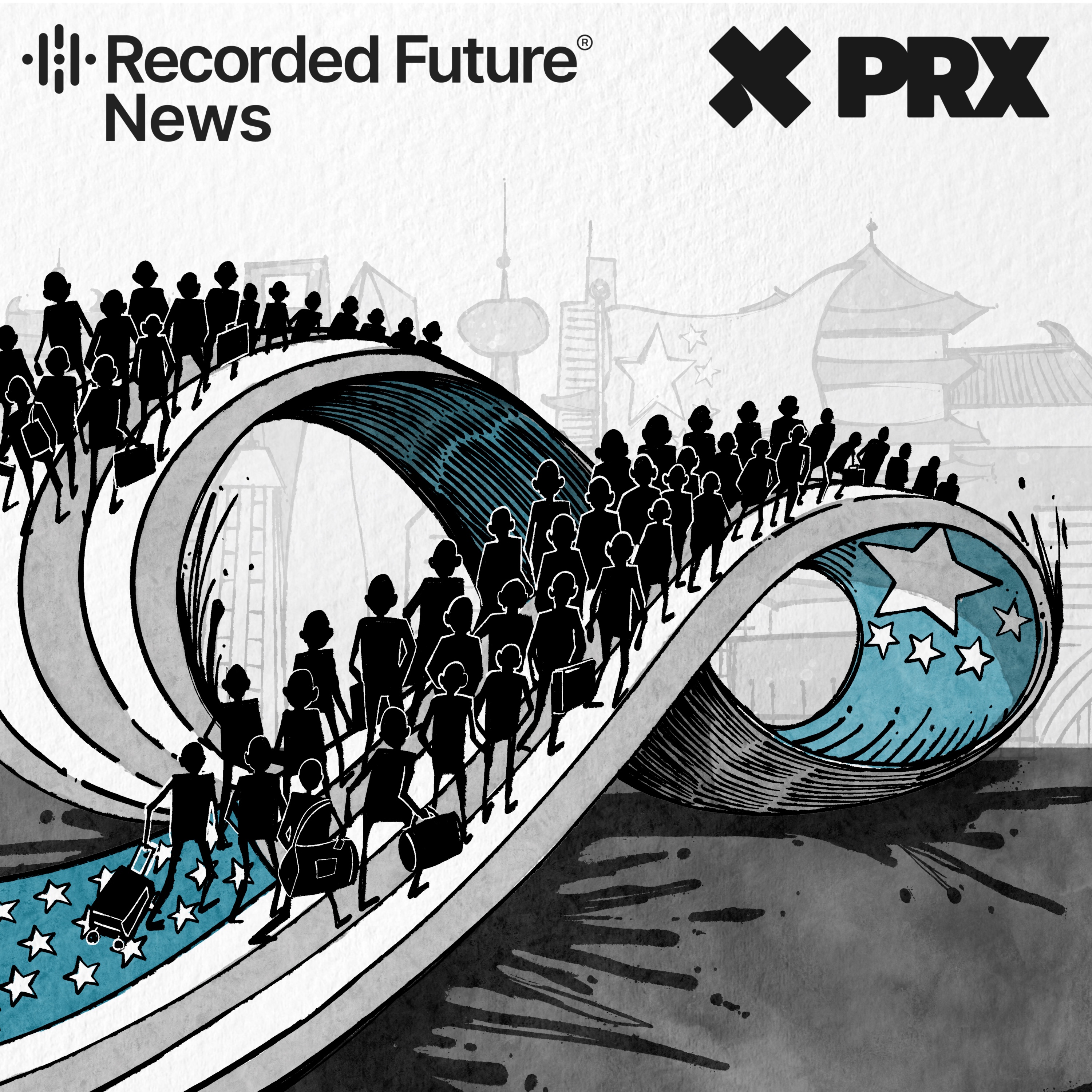
From Recorded Future News and prx, this is Click here. Hey there, it's Dena. A quick note before we start. Twice a month, we team up with our friends at the one A news magazine for something we call Cyber Monday. This time, we're looking at how fear, especially around someone's country of origin, can start to affect national security by influencing who gets to do the work, who gets to stay, and where that work happens. For decades, the United States had a quiet advantage. It wasn't just money or military power. It was people. The ability to draw in some of the world's brightest minds and clear the way for them to create scientists, engineers, researchers. People came here to study and stayed to invent. That pipeline helped shape everything from the Internet to modern medicine to the space program. But it also depended on something less visible. Trust. So what happens when that trust starts to erode? We spoke with Monet about one scientist the US Sent away and how his forced departure helped rewrite a little bit of history. The first voice you'll hear is from 1A's host, Jen White.
- [01:36]
Jen White
Dina, welcome back.
- [01:37]
Dina Temple Raston
Thanks so much.
- [01:38]
Jen White
So, Dina, when we talk about the current and historical state of scientific leadership in the U.S. how much of that story depends on people who came to this country from somewhere else?
- [01:48]
Monet
Well, that's a foundational part of the story. If you look at the last 80 years of American innovation, a huge portion of it runs through universities and labs that were filled with people from all over the world. Graduate programs, especially in science and engineering, have depended on international students. And many of those students didn't just pass through. I mean, just look at Silicon Valley. They started companies, they led research teams, and they trained the next generation. So this isn't incidental, it's structural. And the US built a whole ecosystem that didn't just tolerate foreign talent, but actually completely relied on it.
- [02:25]
Jen White
So how much of the success of this talent capture system relies on the ability to just come to the US versus a real belief that people can come, stay and build something?
- [02:38]
Monet
Well, that was sort of the implicit bargain, right? Coming to school here is quite expensive. You come here, you study, you do your research, and in return, the bargain is you get access to world class institutions, funding, freedom to pursue ideas. And for decades now, that bargain has held. But it only works if the people who are coming here believe they're actually wanted and believe that they can build a life here. And once that starts to unravel, which is starting to happen, the whole system
- [03:09]
Dina Temple Raston
becomes a lot less stable.
- [03:11]
Jen White
If people see the US as less welcoming who or what steps into that void and how quickly can that shift happen?
- [03:19]
Monet
It's happened incredibly. I mean, just days after the Trump administration announced that it would make it harder to get a visa to come here. Countries like China, but also places like France and Canada, they were putting out all calls to researchers saying, hey, don't worry about this US Problem. We've got funding, we've got lab space, we've got incentives to relocate. So as the US Becomes a less welcoming place, there are plenty of alternatives. And talent is actually very mobile. Scientists go where they can do their work. And if it's not here, then it's going to be somewhere else. And I think what we did in our reporting is we realized that the
- [03:56]
Dina Temple Raston
stakes for this are really long term.
- [03:58]
Monet
The decisions that are being made now about visas and funding and research restrictions, they don't just affect next year. They shape innovation and how it happens
- [04:07]
Dina Temple Raston
5, 10, 20 years down the line.
- [04:10]
Jen White
You and the team at Click Here looked at moments in history when the US Pushed away people. It was really depending on. What did you find?
- [04:17]
Monet
We did a deep dive on a scientist named Chen Xuexin. He came to the US As a student.
- [04:22]
Dina Temple Raston
He's Chinese.
- [04:23]
Monet
He trained at top institutions, Caltech, mit. And then he became part of this generation of scientists who were helping lay the groundwork in this country for modern rocketry. He worked with Oppenheimer. He had top level clearances. They actually made him an honorary member of the military. And then in the early years of
- [04:43]
Dina Temple Raston
the Cold War, all that changed.
- [04:46]
Jen White
Why did you want to tell this story right now? Because you're taking a historical example, but you're placing it firmly in the context of US Policy today.
- [04:56]
Monet
We try to do that whenever we do these historical stories to say we need to learn from our mistakes. I think if you talk to just about anybody, whether they're pro China, you know, there are two types of people. There are panda huggers, people who love China, and then what we call dragon slayers. And I think both panda huggers and dragon slayers will tell you is that Chen Shuishen was a huge mistake for the United States. If they had, even if they had just investigated it and left him in the country instead of deporting him back to China, would we be in the same sort of space race that we are today? Most people say we probably wouldn't be. Same thing. You know, this is how Pakistan provided nuclear information to other countries in Asia. This is the same thing. So these are lessons that we seem to have to learn, but we forget them. And right now with all the visas being pulled back, right now with the sort of inhospili because it's so inhospitable for students who are coming here, they're looking to other places. And even France has this whole program that says, hey, do you feel unwelcome in the United States, come here, research here.
- [06:07]
Jen White
I wonder in your reporting if you found that that is also attractive to American scientists who maybe feel like, I actually want to be in an environment where there is more global cooperation.
- [06:21]
Monet
Yes, the numbers are not really solid yet, but there has been a brain
- [06:25]
Dina Temple Raston
drain of Americans who say, look, I
- [06:27]
Monet
don't have funding anymore. I can't get research assistance because I can't get visas for my research assistants. This is just too hard. And we know that there's a marriage between federal government and research institutions and universities. Universities are under pressure, too. So I personally know lots of professors
- [06:48]
Dina Temple Raston
who have said, hey, Canada looks pretty
- [06:50]
Monet
good and it's not that far. And they're leaving hoping they can sort of ride this out.
- [06:55]
Jen White
Does the reporting we'll hear in just a little bit here, does it offer any lessons about course correction? If the US Wants to continue to be a hub for research and progress,
- [07:08]
Monet
I think by just telling Chen Shuishen's story, it tells you just how bad and wrong it can go when you decide to sort of single out one particular person. And it's almost his story is particularly sad because he had already proven himself 100 times over. He was helping with Oppenheimer. He was helping with the rocket program
- [07:27]
Dina Temple Raston
in the United States.
- [07:28]
Monet
He had moved here with his family. He had been here for years. And all that wasn't enough at the beginning of the Cold War to save him.
- [07:41]
Jen White
And coming up, Nina walks us through the story of Tien Hsien Tsun and how one decision made in a moment of fear reshaped the future of the US and one of its most dangerous rivals. That's just ahead.
- [08:00]
Dina Temple Raston
Support for Click here comes from NPR's Up first podcast. NPR understands your curiosity is boundless, but your time isn't. And that's what's so great about Up First. Everything you need to know to start your day in about 10 minutes. But there's another part of up first you may not know about. They're awesome at the deep dive. They recently focused on school choice and a city in Iowa closing elementary schools and a billionaire backed charter school with a playground in the cafeteria. And it gave me a new way at looking at the whole issue. Recent episodes looked at what the Iran war means for the US Economy and why Attorney General Pam Bondi's exit is a bigger deal than it first appears. All of this every morning in under 15 minutes. Up first does something most daily news shows don't it asks better questions to get better answers. Not just about what happened, but how it came about, why it's important, what's to come. Which, if you think about it, is the difference between just knowing the news and understanding it. Follow NPR's Up first podcast so you can understand what matters and what happens next. It's hard news through a human lens.
- [09:14]
Wise Sponsor Voice
Support comes from Wise the smart way to manage the currencies you need around the globe. Fed up with losing out to hidden fees? When you send your money abroad with your everyday bank, choose the smart way. Wise. You can count on the exchange rate you'd usually find on Google. No unwelcome surprises. Plus, ditch that where's my money feeling. Most transfers arrive in under 20 seconds. Join millions saving billions on hidden fees. Be smart, get wise. Download the wise app today. Ts and Cs apply.
- [09:49]
Dina Temple Raston
It is called Internet. I use the World Wide Web information superhighway. Cybersecurity why do things go viral?
- [09:57]
Jen White
Click here. This is 1A. I'm Jen White. We're talking about the role that people from overseas play in making the US A center of innovation. It's part of our Cyber Monday series, an ongoing partnership with Click here From recorded Future News and PRX host Dina Temple Rastin dove deep into the story of a Chinese scientist who studied in the US and was recruited to work on the Manhattan Project. But his future was irrevocably changed by fear. Let's listen.
- [10:29]
Dina Temple Raston
More than a century ago, China owed the United States millions of dollars. It was the price of defeat reparations after a brief war at the turn of the 20th century, Harvard historian William
- [10:41]
William Kirby
Kirby explains the Qing Empire lost the Boxer War and had to pay a huge indemnity to the victorious Western powers.
- [10:50]
Dina Temple Raston
But the US Made an unusual choice. Instead of collecting it invested, the Americans
- [10:57]
William Kirby
gave a large part of this indemnity back to China. Used to educate young Chinese to study in the United States.
- [11:06]
Dina Temple Raston
It was a scholarship meant to spread democracy, a program that brought some of China's brightest minds to the US and that's how a young engineering prodigy named Chen Shuishen arrived in the United States. On that kind of scholarship.
- [11:21]
William Kirby
He came from an elite family. He finished at the very top of his class, graduating really in a period of great promise and growing prosperity in China. In 1930, 4.
- [11:33]
Dina Temple Raston
Chen landed at MIT, then moved west to Caltech. He finished his master's degree in just a year and went on to earn a PhD under one of the most celebrated physicists of the era, Theodore von Karman.
- [11:47]
William Kirby
Von Karman would later describe him as his most brilliant student. And impressed by his quickness of mind,
- [11:57]
Dina Temple Raston
Von Karman became more than just a professor to Chen. He became a mentor. And when Chen began thinking about returning to China, it was von Karman who convinced him to stay.
- [12:07]
William Kirby
They persuaded him to stay at Caltech, stating that doing scientific research in the US will strengthen the anti fascist force for China.
- [12:17]
Dina Temple Raston
That was in fact the point of the scholarship program. To expose brilliant Chinese students to American values and hope they'd return home ready to fight fascism and steer China toward democracy. Chen seemed convinced. He stayed in Pasadena and joined a group of engineers doing some early rocket testing.
- [12:37]
William Kirby
People who became known by friends as the Suicide Squad because a number of their experiments exploded. Not lethally, at least as far as I know.
- [12:51]
Dina Temple Raston
Those explosions weren't accidents. They were experiments. The spark of what would eventually become NASA's Jet Propulsion Laboratory. Then came World War II. And even though the US still hadn't given Chen citizenship, the country trusted him deeply. He was brought into the Manhattan Project, commissioned as a lieutenant colonel in the Air Force. He was sent to Europe to interrogate Nazi rocket scientists. And in the years that followed, he decided to make the US his permanent home. But his timing couldn't have been worse.
- [13:24]
William Kirby
He applied for U.S. citizenship to be a naturalized citizen in 1949, the same year that the Chinese Communist Party came to power.
- [13:33]
Dina Temple Raston
That year changed everything, because as the Cold War escalated, suspicion in America shifted. China was no longer seen as a wartime ally. It was suddenly the enemy.
- [13:45]
Agent Emmerson
The fall of China to the Communists remains a subject for intense debate. How did this happen? America's Warrants then accuses the Chinese Communists of open and notorious aggression. Chinese Communist regime by its actions has caused grave doubts to people all over the world.
- [14:03]
Dina Temple Raston
The fear mongering overtook reason. And it's telling just how easily it crowded out the facts. Because not even Chen's decades of scientific breakthroughs could protect it. Not even his top secret wartime service. Professor Chan, we're with the U.S. immigration Service.
- [14:20]
Agent Emmerson
I'm Agent Emmerson.
- [14:20]
Dina Temple Raston
This is from a mainland Chinese movie about Chen.
- [14:23]
Agent Emmerson
We need to have a little talk with you, Professor.
- [14:25]
Dina Temple Raston
And Chen suddenly found himself in the crosshairs.
- [14:29]
William Kirby
The director of the Czech Propulsion act had come to believe that there were some spies within this the enterprise. And his suspicion fell on Anyone Jewish and anyone Chinese.
- [14:41]
Dina Temple Raston
The FBI placed Chen under house arrest and investigated him for five years. But they found no espionage, no invisible ink, no blueprints smuggled to Beijing. And while he had his defenders, von Karmen supported him.
- [14:58]
William Kirby
J. Robert Oppenheimer, who had worked with Chen on the Manhattan Project, supported him.
- [15:02]
Dina Temple Raston
It wasn't enough. In 1955, Chen was deported as part of a larger prisoner exchange. And he was furious.
- [15:10]
William Kirby
He told reporters at the time that he would never step foot in America again. And he never did.
- [15:17]
Dina Temple Raston
The United States had exiled one of its greatest scientific minds, and he wasn't alone.
- [15:23]
William Kirby
Between the years 1949 and 1956, 129 returned Chinese scientists went to work directly for, as Chen did, the Chinese Academy of Sciences.
- [15:35]
Dina Temple Raston
It was almost ironic. Just as the US Fear of China was reaching its peak, the country handed Beijing a gift. Chen went on to become the father of China's space and missile programs. And many of the other Chinese scientists, they helped build the country's nuclear weapons, its robotics, its energy systems. Together, these are the very technologies that today challenge American power. Universities in Congress eventually pushed back, and the students came back, too. America opened its doors again, and the results were staggering.
- [16:16]
William Kirby
Thirty to 40% of the PhD students in the leading American research universities are internationals, coming here for the opportunity.
- [16:26]
Dina Temple Raston
And most of them stayed. Three quarters of those PhD students built their lives here, starting companies, fueling innovation. Tech firms now make up 60% of all H1B visa sponsorships. More than half of the U.S. s billion dollar startups have at least one immigrant founder. For a while, it looked like America had learned its lesson. But last spring, it all came roaring back when President Trump began questioning why so many foreign students are here in the first place.
- [16:57]
Agent Emmerson
We want to know where those students come. Are they troublemakers? What countries do they come and we're not going to.
- [17:03]
Dina Temple Raston
And here's where the past really grabs the present by the that voice of paranoia. It didn't just start with Trump. It started with Roy Cohn, who sharpened his teeth alongside Senator Joseph McCarthy during the Red Scare, and then, decades later, whispered in Donald Trump's ear long before he ever went into politics.
- [17:24]
Agent Emmerson
One thing we have to understand at the outset is that the Communist Party is not a political party. It's a criminal conspiracy.
- [17:31]
Dina Temple Raston
That edge, the sharp defense of fear, a strategy still cuts through. And Harvard historian William Kirby says, what it bred then, it's breeding again now.
- [17:42]
William Kirby
It's a moment which reinforces the sense of mutual paranoia of the 1950s, which is healthy for nobody.
- [17:51]
Dina Temple Raston
The Trump administration is threatening to revoke student visas. And while the president has gone back and forth on this, the threat hangs over more than 275,000 Chinese students. And the pressure isn't just on them. Research dollars are frozen, deals are being cut. And the cost, that's harder to measure because America's edge in science was never a birthright. It was built brick by brick on openness, on funding, on trust. And now every one of those pillars
- [18:22]
Steve Blank
is under threat, already trying to run twice as hard to keep up with China. Now this is a severe body blow to the US national security, let alone our economy.
- [18:34]
Dina Temple Raston
For decades, the US Led the world in innovation.
- [18:37]
Cole McFaul
But now the narrative is changing. From 10 years ago, China was a mass producer of cheap goods. Today, in more and more fields, China is now becoming the world's chief innovator as well as producer.
- [18:53]
Dina Temple Raston
This is Cole McFaul. He's a senior research analyst at Georgetown's center for Security and Emerging Technology. He says China has been making a massive bet on science and technology, what he calls S and T. And that bet is paying off by any kind
- [19:09]
Cole McFaul
of S and T metric that you want to pick. China is catching up to and in some cases surpassing the United States. Whether that's number of scientific papers, paper citations, a number of patents, China's really catching up.
- [19:23]
Dina Temple Raston
And here's the twist. This playbook isn't new. China borrowed it from U.S. science and
- [19:29]
Steve Blank
engineering lead started in World War II with federal funding and continued for 80 years until this administration.
- [19:37]
Dina Temple Raston
That's Steve Blank, a Stanford entrepreneurship professor. And he says America's edge wasn't inevitable. It was built with purpose. Before World War II, federal funding for research barely existed then. The war changed everything.
- [19:53]
Steve Blank
They proposed something insane at the time which said, look, we ought to do military research and development, not yet weapons, but military RD in universities.
- [20:03]
Dina Temple Raston
That decision birthed the institutions we take for granted now, like NASA, the National Science foundation, the National Institutes of Health. And it laid the groundwork for breakthroughs that rewrote modern Life. Things like GPS turn right and the Internet, MRIs, the flu vaccine, microchips and touchscreens. In China, they saw how successful this approach was and followed suit. Cole McFaul again.
- [20:33]
Cole McFaul
In 1986, for example, China establishes its National Natural Science foundation of China. And the inspiration of that just comes straight from the US National Science Foundation.
- [20:44]
Dina Temple Raston
They built their own nih. They created a NASDAQ style exchange to fund homegrown innovation, and they poured money into it, more than a tenfold increase in just two decades. Then they started to bring their scientists back home.
- [20:59]
Steve Blank
China copied our innovation ecosystem, not because they wanted to build commercial technology, but they wanted a replicator national security kind of innovation ecosystem.
- [21:10]
Dina Temple Raston
And it's working.
- [21:11]
Cole McFaul
So in 5G photovoltaics, advanced battery technology, commercial drones, and others. China is a global leader and some would say the top leader in, in those technologies.
- [21:25]
Dina Temple Raston
This was never just an economic race. It was always about security. Which is why the Trump administration's downshift feels like more than just a blow to scientific discovery. It feels dangerous. Since April, the National Science foundation has cut more than 1600 research grants. Billions in funding gone. At the very moment when innovation has never mattered more to national security.
- [21:51]
Steve Blank
And we essentially just handed the golden ring to China.
- [21:54]
Dina Temple Raston
They've read the playbook and now they're writing the next chapter. Given all that, it raises a question, why now? Maybe the answer's in a seating chart at Trump's inauguration.
- [22:11]
Monet
In the second row, next to SpaceX and Tesla CEO Elon Musk was Apple CEO Tim Cook, Google CEO Sundar Pichai, Amazon CEO Jeff Bezos, and Meta CEO Mark Zuckerberg.
- [22:25]
Dina Temple Raston
The seating chart wasn't an accident. It was a signal. A signal that the Trump administration didn't see the future of science and technology running through government labs or public institutions anymore. It could well be handed off to them, to the private sector. But Steve Blank says if you stop the story there, you miss the bigger picture.
- [22:48]
Steve Blank
It's very easy. All we need are a bunch of entrepreneurs and innovators to move faster than government agencies and therefore we're done. CEOs seem to think their technology came from the stork and don't understand the seed corn that was planted for years or decades.
- [23:04]
Dina Temple Raston
Because those same companies that look like self made empires, they were built on government investment. Take Google. It didn't just sprout fully formed out of Silicon Valley. It grew out of a federally funded research program at Stanford. Because the kind of science that leads to real breakthroughs doesn't turn a profit overnight, governments can afford to wait years, sometimes decades. Most industries can't. And that's the gap Cole McFaul says we should all be worried about.
- [23:37]
Cole McFaul
I mean, really, the private sector's ability to fund basic research is very concentrated in the biotech sector. And so like, what about electrical engineering and mechanical engineering and computer science and these other critical technology fields that we know will define US China tech competition for years to come.
- [23:56]
Dina Temple Raston
And that's the thing. Restrictions made today don't just shape the next quarter, they shape the next generation. The People making those decisions, the ones deciding where America will lead and where it will lag, often know very little about how science actually works.
- [24:12]
Steve Blank
You have people who have probably never run a science lab making long term decisions about who's going to be the leader in science and engineering, not tomorrow, but in five or 10 years.
- [24:23]
Dina Temple Raston
The administration has defended its cuts to research funding and visas, framing them in part as ideological. This time, the Red Scare rhetoric isn't about communism. It's about diversity, equity, and inclusion. Which makes this all feel uncomfortably familiar and shows why Chen Shuishen, the brilliant scientist we talked about earlier, who was sent back to China, isn't just a cautionary tale, he's a warning.
- [24:50]
Steve Blank
You know, science doesn't discriminate. That's the mistake that's being made here in confusing ideology with science and engineering. Consequences, I think, have been played out multiple times when you try to do that.
- [25:02]
Dina Temple Raston
And when fear trumps reason, the institutions designed to push back often don't. During the Red Scare, it took years for Congress, the courts, and even the press to find their footing, to finally say out loud what so many had only whispered. And then a voice broke through.
- [25:19]
Agent Emmerson
We must not confuse dissent with disloyalty. We will not be driven by fear into an age of unreason.
- [25:27]
Dina Temple Raston
That voice belonged to Edward R. Murrow, one of the most trusted journalists in America and one of the few willing to stand up and say, the emperor had no clothes.
- [25:37]
Agent Emmerson
The actions of the junior senator from Wisconsin have caused alarm and dismay amongst our allies abroad and given considerable comfort to our enemies. And whose fault is that? Not really his. He didn't create this situation of fear, he merely exploited it.
- [25:52]
Dina Temple Raston
So Chen Shuishen's story isn't just history. It's a mirror. And if we're not careful, we may see our own reflection.
- [26:00]
Agent Emmerson
Looking back, Cassius was right. The fault, dear Brutus, is not in our stars, but in ourselves. Good night and good luck.
- [26:13]
Jen White
That was the host of the Click Here podcast and radio show, Dena Temple Raston. Up next, as the collegiate school year draws to a close, we check in on how things have been going for the international students still here in the US and the institutions that have fought to keep them enrolled. I'm Jen white. This is 1A.
- [26:37]
Dina Temple Raston
This show was supported by Human Rights Watch. There are more displaced people in the world than at any time since World War II. The great unrooting is a limited series that tells this epic story through the eyes of a young man from Myanmar. Where do you go when you have to flee? What do you take with you? What if they don't want you when you get there? It's a story of flight and survival, of climate change and social media, of borders and passports and hope. The great unrooting from Human Rights Watch wherever you get your podcasts. Support for Click Here comes from CleanMyMac. CleanMyMac helps you clear space, reduce background strain, and maintain steady performance without constant interruptions. It's not about cleaning files or fixing machines. It's about removing the friction that breaks momentum. CleanMyMac is the quiet presence that keeps creativity uninterrupted, so that when you're finishing up a pitch deck at midnight or exporting a huge project, you can trust your Mac to keep up. Personally speaking, when I'm working late on deadline for Click Here, the spinning wheel of death is the last thing I need. Get tidy today. Try seven days free and use the code clickhere for 20% off.
- [27:59]
Liam Knox
If there was a big red button that would just demolish the Internet, I would smash that button with my forehead.
- [28:06]
Jen White
From the BBC, this is the Interface,
- [28:09]
Steve Blank
the show that explores how tech is rewiring your week and your world.
- [28:13]
Dina Temple Raston
This isn't about quarterly earnings or about tech reviews.
- [28:16]
Jen White
It's about what technology is actually doing
- [28:19]
Steve Blank
to your work, your politics, your everyday
- [28:22]
Liam Knox
life, and all the bizarre ways people are using the Internet.
- [28:26]
Steve Blank
Listen on BBC.com or wherever you get your podcasts.
- [28:36]
Dina Temple Raston
Hey there, it's Dena again, and you're listening to one of our regular Cyber Mondays with WAMU's Jen White. And we'll get right back to the show. The next voice you hear is Jen Weitz.
- [28:49]
Jen White
Let's get back to today's installment of our Cyber Monday series. Joining us now in studio to talk about what the school year has been like for foreign students studying in the is Liam Knox. He's an education reporter with Bloomberg News. Liam, welcome back to 1A.
- [29:03]
Liam Knox
Thanks for having me.
- [29:04]
Jen White
Liam, you joined the show last June to talk about the uncertain future for the nation's international students. We're coming up on the end of the collegiate spring semester in just a few weeks. So in broad terms, what does this year look like for students studying here in the US from abroad?
- [29:20]
Liam Knox
Largely, what this year has looked like is a kind of steady curbing and decline of the population. Last June, I think when we spoke, it was just coming to the end of a significant pause on the visa issuance at consulates around the world that had a very significant impact on international enrollment. This whole year, we've seen pretty significant declines. 15, 17, 19% in that range in international student populations at US colleges. And the real kicker is that kind of there's been a long tail to the effects of the Trump administration's efforts to curb this population at US campuses. Just recently, data came in showing about a 35% decline in visa issuances over the past year, which is kind of we're going to Colleges are going to start seeing that in their enrollment numbers as students choose where they're going to go. As we get a clearer picture of campus populations in the spring, how is
- [30:25]
Jen White
this breaking down when we look at undergraduate programs as compared to graduate programs,
- [30:30]
Liam Knox
it's having a markedly bigger impact on graduate programs. It's certainly affecting undergraduate programs. But even at some of the colleges where Trump and the White House explicitly directed their efforts to curb populations, in some cases they've actually grown. Columbia, Harvard, I mean, these are places where there's always going to be a huge appetite among the international population to go where they have room to grow. It's in places that have been extremely dependent on international students. Graduate programs in stem, in the sciences, in the biomedical sciences especially, but also graduate programs at smaller colleges, at regional public institutions, at small private universities that have really put a lot of their eggs in the basket of international students, most of whom pay full tuition as other revenue streams have dried up. That's where the real financial impact and student impact is going to be felt, of course, as the graduate student population declines. That has a big effect on research institutions as well. That might take a little bit longer to be seen. It's not like some of these small private colleges that are immediately kind of facing a certain existential threat from the decline, but it's certainly beginning to show its effects at those research institutions.
- [31:52]
Jen White
Just remind us how the Trump administration has been justifying its moves to restrict foreign enrollment in higher education. Has its message evolved at all over the past year?
- [32:03]
Liam Knox
Yeah, well, its tactics have certainly evolved. I don't think its message has evolved. The administration officials have continued to maintain that American institutions should be primarily for Americans, not that they aren't already, but even more so. And that us their argument is that international students crowd out, especially at elite and selective institutions, spots that otherwise would go to American students. Other people in higher ed would probably tell you that a lot of times those international students actually create more seats for American students, especially ones that need financial aid, by funding, you know, contributing more revenue. But a lot of the tactics have now become less about directly targeting the students existing and more about looking toward the future and kind of restricting narrowing the pipeline that has funneled international students in increasingly large numbers to this country over the past few decades.
- [33:02]
Jen White
So I just want you to lay out the stakes for us a little bit and explain how universities are trying to pivot in this moment if they can't rely on foreign enrollment to help build their coffers.
- [33:14]
Liam Knox
It's a great question. It's something that university leaders are grappling with constantly. Right now, whenever I speak to enrollment managers, presidents, deans of colleges, department heads, they're all trying to figure out how to fill this gap. For some colleges, again, it's more pressing than others. Losing all those international students can be kind of devastating for local economies as well as university finances. And so lots of people are trying to figure out what to do when universities themselves are looking at how to hedge here, in some cases very rare. They're looking to, okay, invest more in, or establish more beachheads abroad where they can have international students come to a campus that they own, but that isn't in the US There are many of these campuses around the world where the visa problems aren't as big of an issue. Most colleges can't do that. Most colleges, frankly, are going to have to shrink. At least that's kind of what the numbers show. There's been a large amount of growth in institutions, both private colleges, the number of them, and large universities kind of expanding what it is they do in the past few decades. And the flow of international students has been a large boon to that sector. And as colleges look to reposition themselves not just because of the decline of international students, there are a number of other factors. Declining demographics domestically that you know as that international students have helped to make up for. Ironically, as well as declining research funding, you know, fewer opportunities for federal financing for students, they are looking at a future of kind of austerity. Not all colleges, like I said, but a lot of them will have to think about downsizing.
- [35:05]
Jen White
Healthcare is one of the bright spots in the current economic environment. It's a place where you're still seeing job growth. You've been reporting about the Trump administration's moves in medical school enrollment. What did you find?
- [35:19]
Liam Knox
Well, they have been targeting medical schools lately, at least. The most recent development is that they've started targeting medical schools. The Department of Justice accusing them of racial discrimination in admissions, you know, kind of launching civil rights investigations that, as we saw last year, can be a prelude to broader funding freezes. These medical schools. It's interesting because you say, yes, healthcare is one of the few growing sectors, most employment and healthcare aren't doctors. They didn't go to medical school. They're in the health sciences, they're in med tech. They're like, they work in hospitals, they're nurses. So I'll get back to medical schools in a second. But those actually are jobs that are even more in danger from some of the Trump administration's latest moves. A lot of international students go into those fields through college, through other visa postgraduate visa pathways, like optional practical training or H1B visas and health research is the same way. When we look at that area of growth, which is it's not just that there's a boom in healthcare, it's that there's increasingly growing need for those workers as well. They're increasingly essential. It's international students there. It's also graduate students. This is tangentially related. But as the number of international students in these pipelines declines, the number of domestic students is likely going to go down as well. The Trump administration recently put a cap on the ability for domestic students to borrow from the federal government to attend very expensive graduate programs like nursing, like medical school. Medical school is wildly expensive. Most students, when they become doctors, are eventually able to pay it off. But the federal government putting a total lifetime cap of $200,000 on medical school debt is going to restrict a lot of students ability to go unless they can pay up front. And so you have all these ways that the Trump administration is squeezing medical schools, is squeezing the pipeline of health care workers. To hear them say it without really even meaning to, right? That's not the goal. And yet that's the byproduct.
- [37:41]
Jen White
I want to turn to China. We heard earlier from the Click Here team and they shared the story of a Chinese scientist who came to study in the US in the early 20th century. He made significant contributions to the country. He was eventually deported. Secretary of State Marco Rubio last year promised to revoke the visas of Chinese students studying in the US and just last week, 20 Chinese scholars who flew to Seattle to attend a conference were detained and refused entry by customs and border Patrol. What is the current US Posture toward Chinese students?
- [38:14]
Liam Knox
Specifically, our stance toward Chinese students has in large part mirrored our kind of geopolitical relationship with China in general over the years. Actually, it's been a very interesting mirror under certain administrations, there's been a large amount of detente, outreach, bridging. It's been a kind of way for, for both countries to engage in kind of soft power diplomacy. And it's been largely successful. I mean, the amount of Chinese students flowing to the US in the mid 2000s, early 2010s massive explosion. A lot more cross cultural exchange in that way, a lot more academic and research exchange. And it's that academic and research exchange that has worried a lot of conservative politicians, Chinese students who are in research programs that are maybe deal with sensitive national security technologies or, you know, research over the years. I mean, it's been over a decade now of kind of this larger scare around their participation there. And yet, you know, those Chinese students are also the attitude on their end is that they're increasingly less dependent on the US for education. Their universities are getting better and better since the pandemic. They're increasingly less likely to go abroad for education. China used to be by far the number one origin country for US International students. It's India now. And the number of students from China is going down exponentially.
- [39:47]
Jen White
So in just a quick sentence, what other education stories are you paying attention to as this spring semester wraps up?
- [39:53]
Liam Knox
Well, I'm looking very carefully at the visa numbers and at enrollment numbers, particularly graduate school enrollment numbers as we go into the fall, both because of international student declines and everything else we looked around. That's going to be a big bellwether for what's happening in higher education.
- [40:06]
Jen White
Well, that's Bloomberg education reporter Liam Knox. Liam, thanks for joining us.
- [40:10]
Liam Knox
Thank you.
- [40:11]
Jen White
Today's producer was Chris Costano with help from clickiers, Megan Dietre and Shawn Powers. This program comes to you from wamu, part of American University in Washington, distributed by npr. I'm Jen White. This is one A
- [40:29]
Dina Temple Raston
that was part of our conversation with one A host Jen White about the perils of expelling foreign talent from the U.S. you can hear the full segment@WAMU.org click here is a production of Recorded Future News and PRX. Today's show was written and produced by Megan Dietre, Sean Powers, Erica Gaeda, Zach Hirsch, and Casey Georgie.
- [40:54]
Monet
It was edited by Karen Duffin and
- [40:56]
Dina Temple Raston
Sarah Covedo and fact checked by Darren Ancrum.
- [40:59]
Monet
Original music is by Ben Levingston with
- [41:02]
Dina Temple Raston
additional music from Blue Dot Sessions. Our staff writer is Lucas Riley. Our illustrator is Megan Gough, and our sound designers and engineers are Jake Cook and Jesse Niswonger. I'm Dina Temple Ralston and thanks for listening.
- [41:25]
Wise Sponsor Voice
Support for this program comes from Recorded Future. In cybersecurity, the biggest risk isn't what can be seen, it's what gets missed. Recorded Future analyzes billions of signals to help organizations stay ahead of threats. Recorded Future Know what matters. Act first.
- [41:40]
Dina Temple Raston
Looking for more of the cybersecurity and
- [41:42]
Steve Blank
intelligence coverage you get on Click here, then check out our sister publication the
- [41:47]
Dina Temple Raston
Record from Recorded Future News.
- [41:49]
Steve Blank
You'll get breaking cyber news from reporters in New York, Washington, London, and Kyiv, among others, and you'll see for yourself why it attracts hundreds of thousands of
- [41:59]
William Kirby
page views every month.
- [42:01]
Dina Temple Raston
Just go to therecord Media.