Loading summary
Transcript104 lines
- [00:03]
Dena Temple Rastin
From Recorded Future News and prx, this is Click here. Karen Moronsky Chapman never saw her job as political. She just wanted to make the government work a little better.
- [00:20]
Karen Moronsky Chapman
I joined USDS to help people, to help American people, to deliver better services.
- [00:26]
Dena Temple Rastin
She's a data scientist and for the last couple of years, Karen's been quietly working deep inside the federal government at a little known agency called the United States Digital Service, or usds. This is her first media interview.
- [00:43]
Karen Moronsky Chapman
A lot of what I was doing was trying to bridge the different data silos across government and really just help agencies be more efficient and effective by using data to inform decisions.
- [00:58]
Dena Temple Rastin
You can think of the USDS as a kind of help desk, though that would be underselling it. It's more like help desk meets Seal Team 6, a kind of special ops team for broken websites. When federal systems start to fall apart, it's the USDS that gets the call. Like in the spring of 2024 when the Department of Education rolled out its new FAFSA application. That's the form college students use to apply for federal financial aid. And last spring, it broke in a spectacular way. The Department of Education just found a calculation error on hundreds of thousands of student aid applications. Forms failed to upload, pages led nowhere. Students born in the year 2000 walked out completely. It was chaos.
- [01:50]
Karen Moronsky Chapman
The FAFSA fiasco was pretty on par with, like healthcare.gov like, like it was pretty close to being a healthcare.gov situation.
- [02:00]
Dena Temple Rastin
Healthcare.gov, that was the catastrophic rollout of the Affordable Care act, what we call Obamacare these days. The website to sign up crashed just two hours after launch. It wouldn't be an exaggeration to say it became a national embarrassment so disastrous it prompted the government to create the USDs to be a rescue team for things like this. So when FAFSA fell apart in 2024, it was Karen and her team who stepped in. They stabilized the site, unlocked access, and got students the aid they needed. They've done this kind of work for the cdc, Social Security education. It's high stakes, high pressure, but Karen loved it.
- [02:48]
Karen Moronsky Chapman
It's really easy to get addicted to this work because it's so meaningful. There's very few roles that you can be positively impacting the lives of millions, if not hundreds of millions of people.
- [02:59]
Dena Temple Rastin
And for a while, it felt, well, safe, totally immune from the churn of politics.
- [03:04]
Karen Moronsky Chapman
Yeah, like technology is not political. Like technology should be nonpartisan. It doesn't matter who's president. I'm here to serve the people, but I was wrong. Doge has proved that technology and its use can be highly partisan.
- [03:22]
Dena Temple Rastin
I'm Dena Temple Reston, and this is Click Here, a podcast about all things cyber and intelligence. We tell true stories about the people making and breaking our digital world. And today, Doge and the usds, the Department of Government Efficiency, is charged with rooting out waste, fraud, and abuse. But when it made its way to the U.S. digital Services Department, it appeared to be taking an agency built to protect the government's digital systems and started doing just the opposite.
- [03:54]
Karen Moronsky Chapman
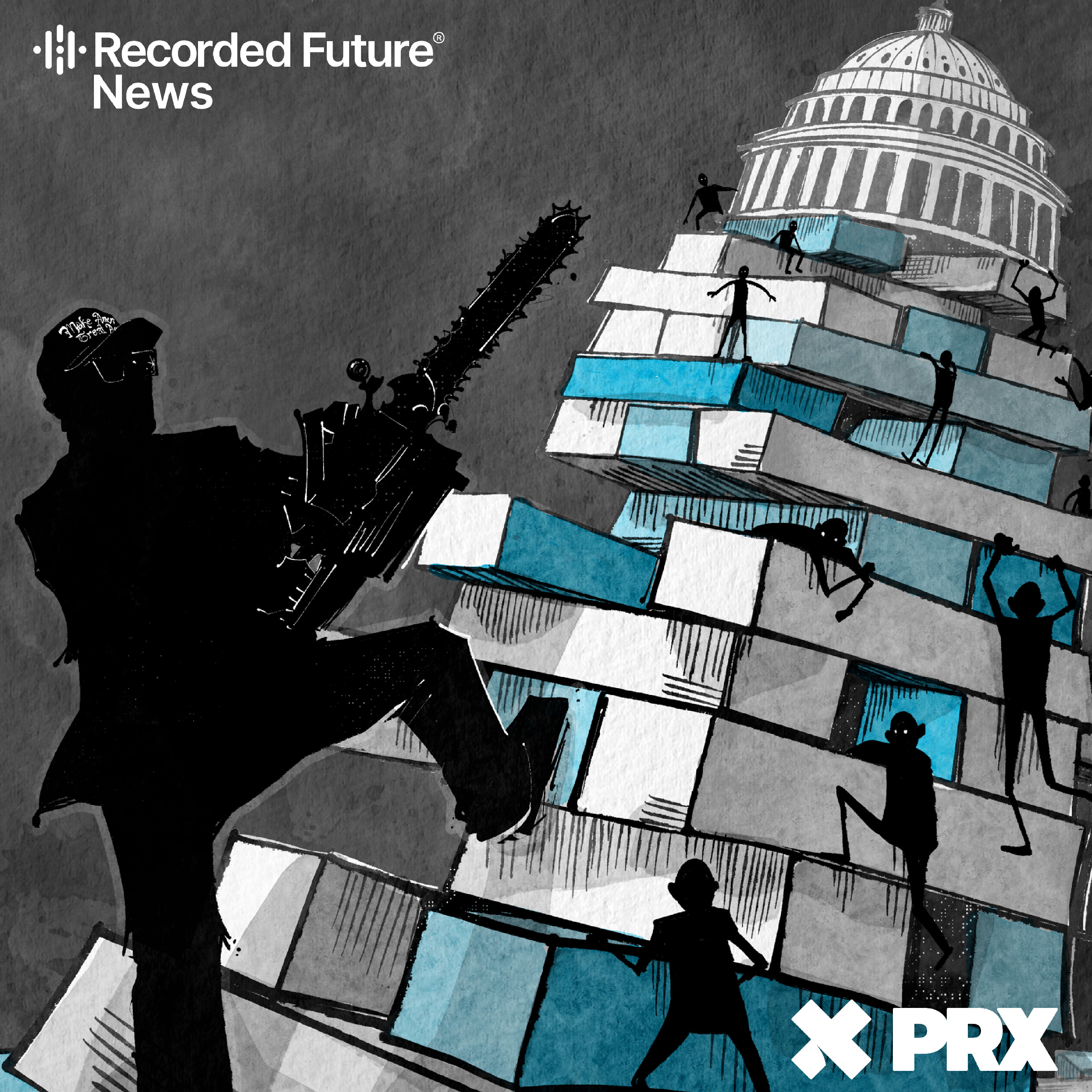
A good analogy is it's like Jenga, and at some point Doge is pulling out pieces and something's going to topple and we may not be able to put it back.
- [04:05]
Dena Temple Rastin
Stay with us. Support for Click Here comes from CleanMyMac a cluttered desktop isn't just an eyesore. It wastes mental energy, slows down your Mac, hampers focus. Since 2008, CleanMyMac has helped users optimize their devices, and the latest version focuses on comprehensive care, not just cleaning. With CleanMyMac, you'll boost both your Mac's performance and your productivity by easily identifying and removing large, unnecessary files, including cache files. CleanMyMac finds outdated files that can be safely removed, so there's no need to worry about losing important documents or photos. Decluttering isn't just about speed. It's about creating an environment that helps you work smarter, not harder. Your Mac will continue to run clutter free with the Smart Care feature, ensuring your Mac stays in top shape. With just one click, you can effortlessly clean up ram, manage processes, and even check for malware. Deep clean your Mac, scan for potential threats, and boost performance, all with one click. Experience CleanMyMac for yourself. Try it free for seven days and use promo code. Click as in Click here to save an additional 20% on your purchase. @CleanMyMac.com click here is brought to you by Progressive Insurance. You chose to hit play on this podcast today. Smart Choice make another smart choice with Auto Quote Explorer to compare rates from multiple car insurance companies all at once. Try it@progressive.com Progressive Casualty Insurance Company and affiliates not available in all states or situations. Prices vary on how you buy from recorded future news. This is Click Here. When President Trump signed that executive order creating Doge, it made huge headlines. But tucked inside the order was something almost no one noticed. It turned the USDS into into Doge.
- [06:26]
Karen Moronsky Chapman
I expected there to be a Doge. I expected Doge to want to work with us. I did not expect Doge to co opt us.
- [06:37]
Dena Temple Rastin
The truth is, when Karen Moronsky Chapman first heard whispers about a new Department of Government efficiency. She didn't recoil. She actually leaned in because she'd seen the problems up close. The broken workflows, the patchwork of systems efficiency. It sounded refreshing, even necessary. The day after the inauguration, Karen and her colleagues were summoned one by one, pulled into a room where a Doge administrator sat waiting. And then came the questions.
- [07:13]
Karen Moronsky Chapman
What makes you exceptional? What are you the best in the world at? What's something exceptional you've done here? Who are the exceptional people at usds? And then the very last question was, what do you think of Doge? I said something about like, I can get behind efficiency. And then I was like, based on my experience in government, here are three areas you could focus on.
- [07:36]
Dena Temple Rastin
After that, though, there was silence. No follow up, no directives, no strategic planning. The only word they got about Doge's plans for the government's digital infrastructure, they got the way the rest of us did. Through all those headlines.
- [07:56]
Karen Moronsky Chapman
Doge'S newest target, Diversity, Equity and Inclusion at the Department of Education is expected to make job.
- [08:03]
Dena Temple Rastin
Cuts at the Department of Homeland Security.
- [08:06]
Karen Moronsky Chapman
And a federal appeals court cleared the.
- [08:08]
Dena Temple Rastin
Way for Doge to continue shutting down usaid.
- [08:12]
Elon Musk
But I want, I don't want to see this kind of death by a thousand cuts that we're witnessing now.
- [08:19]
Dena Temple Rastin
Karen understood what was at stake, not in some abstract academic sense, but in a direct, real world way. If the news reports were accurate, and she had no reason to think they weren't, Doge wasn't just challenging policy. It was bypassing the protocols designed to protect the personal data of American citizens. And that, to Karen, was the real danger.
- [08:44]
Karen Moronsky Chapman
There are very complex agreements to be able to share data across government agencies.
- [08:50]
Dena Temple Rastin
There's a reason why what the IRS knows about you is siloed off from what? Social Security? Privacy. That data is so sensitive, it's shared very, very sparingly.
- [09:02]
Karen Moronsky Chapman
We were only given access to things we needed to do our job. We didn't just get willy nilly access to systems. And as a citizen, I feel good about that. You shouldn't have access to data that you don't have a justifiable reason to have access to it.
- [09:21]
Dena Temple Rastin
For a long time, actually, fewer than 50 people had full access to Social Security data. That is, until Doge came to Washington. A court found that not only had Doge's young staffers been given that access, some were given that access before their background checks were even completed. And it wasn't just access to view the data, it was also in some cases, access to change it.
- [09:47]
Karen Moronsky Chapman
I remember when I heard that they had right access to Treasury, I was like, oh my gosh.
- [09:51]
Dena Temple Rastin
Like you can break things and not small things. Trillions of dollars worth of things like Social Security and tax refunds.
- [10:00]
Karen Moronsky Chapman
The majority of folks I see having been hired into DOGE are very junior. These systems are not going to be anything like anything that they have seen before.
- [10:10]
Dena Temple Rastin
Take the Social Security system. It was built in the 60s and 70s and it runs on Cobol, a programming language that is two or even three times older than some of the DOGE staffers.
- [10:21]
Karen Moronsky Chapman
They clearly don't understand COBOL. When they were like, oh, there's 150 year olds at Social Security.
- [10:28]
Dena Temple Rastin
Elon Musk talked about that during an interview on Fox.
- [10:31]
Elon Musk
Cursory examination of Social Security. And we've got people in there that are 150 years old now. Do you know anyone who's 150? I don't. Okay.
- [10:41]
Dena Temple Rastin
And Musk said it was proof of fraud, except Karen says it actually wasn't.
- [10:47]
Karen Moronsky Chapman
And it's like, no, that's the default date for cobol. Like if the field is missing just the default date. That's why there's all these 150 year olds.
- [10:55]
Dena Temple Rastin
These 150 year olds weren't getting checks. They just didn't have a birth date in the system. And Karen said she would have told the DOGE people as much if they'd only asked, but they never did. They just assumed they knew better.
- [11:10]
Karen Moronsky Chapman
They have been giving the keys to the kingdom without really understanding what they have keys to.
- [11:15]
Dena Temple Rastin
We reached out to the White House and doged a comment about this and they didn't get back to us.
- [11:21]
Karen Moronsky Chapman
You really need people who have been doing this for a while. They know how to fix things. They know how things can work more efficiently. But our leadership was getting shut out.
- [11:31]
Dena Temple Rastin
Some of these systems are held together with the computer equivalent of duct tape and baling wire. And every update over the years added to this complexity. And if you weren't familiar with it, you couldn't possibly know what might happen if something got tweaked. Small changes can have huge ripple effects.
- [11:49]
Karen Moronsky Chapman
DOGE is pulling out pieces and we're like, okay, it didn't fall over. Things are fine. But one of like, there's no way you can play Jenga where it doesn't eventually crumble. And at some point they're going to pull out a piece and something's going to topple and we may not be able to put it back.
- [12:14]
Dena Temple Rastin
Just weeks. After Doge took over usds, Karen received one of those Fork in the Road emails. It was a buyout offer.
- [12:22]
Karen Moronsky Chapman
The Fork in the Road had a FAQ that was like, we want you to leave your low productivity public sector jobs to go to high productivity private sector jobs. That is so insulting. I work way harder in this job than I ever did in any private sector job. I was often working 80 hours, you know, a week. I did it because the work mattered so much. And to say to these people, well, you're lazy. Like, go do something productive is just dehumanizing.
- [12:56]
Dena Temple Rastin
Karen didn't take them up on the offer, but by Valentine's Day, a lot of others weren't given a choice.
- [13:02]
Karen Moronsky Chapman
Around 7pm, people started getting emails that they were fired. And we're all connected on chat. So you just hear, oh my gosh, I just got fired. It's like someone was in the office, like copying and pasting these and sending them out one by one instead of like all at once. And so like every few minutes it would be like, oh, my gosh, I was fired. Oh my gosh, I was fired. So for two hours I'm sitting on my phone hitting refresh. Am I fired? Am I fired? And it just seemed like our supervisors did not even know who was being fired. They were checking in with us, like, are you still here?
- [13:38]
Dena Temple Rastin
By the end of the purge, a full third of USDS staffers were given the axis. Karen survived, but only because she happened to work on fafsa, a Trump administration priority.
- [13:51]
Karen Moronsky Chapman
They did not fire the FAFSA team, but they fired lots of other teams that support the fafsa, including, I think they fired close to two thirds of the technology office, including the engineering team that supports FAFSA. And lo and behold, within 24 hours, the FAFSA site had an outage. Hundreds of FAFSA users reported an outage over the last 24 hours.
- [14:16]
Elon Musk
The outage came after the US Department.
- [14:18]
Dena Temple Rastin
Of Education announced their plan to lay off 1300 employees.
- [14:22]
Karen Moronsky Chapman
That's just one example of you can't just delete parts of a system and expect things to just continue working, especially when you don't take the time to understand that system. And they're not, they're not. We're seeing as they're pulling things out, everything just crumbling around it because they all depend on each other.
- [14:43]
Dena Temple Rastin
Does it feel like a hostile takeover or something?
- [14:47]
Karen Moronsky Chapman
Oh, my gosh, yes. The whole thing feels like a hostile takeover. And I have been. I have been in a organization that has been sold and bought out and been kind of hostilely taken over. And this, this is beyond that. I mean, other hostile takeovers, they at least kind of figure out what you do before they fire you. This is we're going to fire and then we're going to figure out what's left.
- [15:11]
Dena Temple Rastin
There is, of course, a method for gaining efficiency without breaking the systems. And that's when we come back. Stay with us.
- [15:29]
Karen Moronsky Chapman
Hi, I'm Morgan Sung, host of Close All Tabs from kqed, where every week we reveal how the online world collides with everyday life.
- [15:37]
Dena Temple Rastin
You don't know what's true or not because you don't know if AI was involved in it.
- [15:42]
Karen Moronsky Chapman
So my first reaction was, haha, this is so funny. And my next reaction was, wait a minute, I'm a journalist. Is this real?
- [15:49]
Dena Temple Rastin
And I think we will see a twitch streamer president maybe within our lifetimes.
- [15:53]
Karen Moronsky Chapman
You can find Close All Tabs wherever you listen to podcasts.
- [16:00]
Dena Temple Rastin
Chatgpt, AI Machine, Satellite, engine ignition. Click here and lift up. Looking back on it, we should have known that President Trump was going to start firing federal workers en masse. He hinted at it during an audio conversation on X with Musk in August 2024.
- [16:19]
Elon Musk
Well, you, you're the greatest cutter.
- [16:22]
Dena Temple Rastin
I mean, I look at what you do, you walk in and you just say, you want to quit.
- [16:26]
Elon Musk
They go on strike. I won't mention the name of the company, but they go on strike. And you say, that's okay, you're all gone.
- [16:31]
Dena Temple Rastin
But back when he originally said it, it seemed like a kind of fever dream, something one businessman might say to another. But then, just a few weeks later, Trump turned from talking about Elon Musk's past business practices to what Elon could do like that in the future in government. And it started to formalize and morph into a kind of campaign promise.
- [16:53]
Elon Musk
At the suggestion of Elon Musk, I will create a government efficiency commission tasked.
- [17:00]
Dena Temple Rastin
With conducting a complete financial. But here's the thing. What Trump was allegedly promising the federal government had already been doing for more than 100 years. The United States has a sort of auditor in chief, the Comptroller General of the United States, and he runs the Government accountability office, or GAO, which is staffed by more than 3,000 professionals who've built guidelines for doing audits without breaking the systems they're trying to help. Lots of guidelines.
- [17:28]
Elon Musk
If you have trouble falling asleep, go to GAO's website, and the government auditing standards is readily available.
- [17:39]
Dena Temple Rastin
That's Gordon Craig. He's an assistant professor of accounting now at Milgard School of Business at the University of Washington. But for more than two decades, he did a special kind of audit.
- [17:51]
Elon Musk
I joined Milgard after retiring from the U.S. army Audit Agency, where I was a civil service internal auditor for the Department of the Army.
- [18:03]
Dena Temple Rastin
Gordon would be the first to tell you that government waste exists and that it should be rooted out. But he'll also tell you this. Audits are only helpful when they're done right. What we're seeing right now going on, say at the U.S. digital Service, or we're seeing go on at CISA or the treasury or all these other DOGE things we're seeing, are those performance audits?
- [18:29]
Elon Musk
No.
- [18:31]
Dena Temple Rastin
Why do you say that so emphatically?
- [18:33]
Elon Musk
I mean, they can call it an audit if they want to. I can't, you know, can't stop them from doing that. But what standards are they following? Because, you know, they're not anything close to what I followed for 30 years. And I'm also a certified internal auditor and certified fraud examiner. You know, if I were releasing stuff like this, I would lose my license. It's malpractice.
- [19:08]
Dena Temple Rastin
Gordon says true government audits come in three financial audits that check if the numbers are accurate, attestations which basically look at whether the system is meeting standards. And finally, performance audits. Are we achieving what we say we are? And there's a process to how to do it right. In fact, there's an actual book, the.
- [19:29]
Elon Musk
Yellow book is what we call it, because the Dead Trees edition, you know, has a yellow cover and has since the 80s.
- [19:39]
Dena Temple Rastin
A typical performance audit takes about 10 months and lots of learning.
- [19:44]
Elon Musk
We suspend our judgment until we have talked to management, sometimes to line workers. And, you know, if we think there's something odd or wrong, we're going to get, you know, the perspectives of all the stakeholders that we can before coming to conclusions.
- [20:14]
Dena Temple Rastin
The goal isn't to simply embrace the status quo. Auditors want to challenge it, but they want to do so thoughtfully because as both Gordon and Karen have said, you can't just walk in and start pulling out wires because of what might look like waste at first. Plush might be a legacy system, and what looks like fraud might be a COBOL default value.
- [20:36]
Elon Musk
There it is going in effectively with a battering ram.
- [20:41]
Dena Temple Rastin
A federal judge called it hitting a fly with a sledgehammer. So even though they're calling this an audit, you as an expert in this for decades, just don't think this is an audit at all. This seems like something completely different.
- [21:00]
Elon Musk
It's something completely different. I'm going to go out on a limb here and maybe beyond the scope of what you brought me on is to me, it looks like a domestic terrorist attack on the US Government by people who figured that they're not going to get their way through the rule of law.
- [21:24]
Dena Temple Rastin
While Karen Meronsky Chapman might not use those exact same words, she says she has seen the same thing.
- [21:31]
Karen Moronsky Chapman
Their stated mission was to improve efficiency and to modernize government systems. But if you were genuinely trying to fix things, why would you fire most of the technologists in government? Like, why would. Why would you do that? And for me, if things were truly about efficiency, you would want data. You would want even better data than what we currently collect.
- [21:54]
Dena Temple Rastin
So why cut the people who understand the data best?
- [21:57]
Karen Moronsky Chapman
Good data leads to accountability and transparency, and I think that's why they're cutting these things. Dina, the only reason I can think of that you would fire all these technologists is you don't want people who know enough to call out what you are doing.
- [22:13]
Dena Temple Rastin
All of this reminded me of a recent conversation I had with General Paul Nakasone, the former director of NSA and US Cyber Command. He said, the real danger isn't just broken systems. It's losing the people who know how to fix them. My concern always is, you know, losing really good talent. As a former commander, as a former director, I want the best talent. I don't want something that's going to disrupt that. I don't want something that calls into question whether or not this is a good place to work. And so that's my concern, because bad press demoralizes and confusion drives people away. And when systems fail, it won't be Musk or Trump who fixes them. It'll be people like Karen, and Karen won't be there.
- [22:55]
Karen Moronsky Chapman
What I was seeing Doge do was dismantle government services. They're not being thoughtful about how their actions are impacting real people. And I could not in good faith be a part of an organization that was purposefully harming Americans, particularly some of the most vulnerable Americans.
- [23:22]
Dena Temple Rastin
That's why in late February, Karen and 20 of her colleagues drafted a letter of resignation. And it read, we will not use.
- [23:30]
Karen Moronsky Chapman
Our skills as technologists to compromise core government systems, jeopardize Americans sensitive data, or dismantle critical public services. We will not lend our.
- [23:42]
Dena Temple Rastin
They sent in their letter on February 25th. And since then, USDS has lost more than half its workforce. So if Doge pulls out too many pieces and the Jenga puzzle of government services does fall apart, it's not clear who'll be left to fix. This is Click here.
- [24:03]
Gordon Craig
If you're looking for a daily guide to cybersecurity news and policy, sign up for the Cyber Daily from Recorded Future News. It serves up the day's most interesting and important cyber stories from our sister publication the Record, and then aggregates all of the big cyber stories you might have missed from news outlets around the world. Just go to the Record Media and click on Cyber Daily to get all you need to know about the world of cybersecurity right in your inbox.
- [24:32]
Dena Temple Rastin
It's Tuesday, April 15th, and here are some of the top cyber and intelligence headlines of the past week. The cybersecurity agency known as CISA is facing massive cuts by the Trump administration. We reported in the Record late last week that some 50% of the agency's full time employees and some 40% of its contractors could end up losing their jobs, among other things. The Department of Homeland Security is expanding its early retirement offers, and critics now worry that the cuts are more than just cost saving measures. The concern is that they could undermine the very systems designed to keep the country's critical networks safe from cyber attack.
- [25:18]
Karen Moronsky Chapman
Now the administration has announced that it.
- [25:20]
Elon Musk
Will begin immediately screening immigrants social media.
- [25:23]
Dena Temple Rastin
Posts In a move that civil liberties groups have called chilling, the Trump administration says it will start screening immigrants social media for anti Semitic content as a.
- [25:34]
Karen Moronsky Chapman
Means to deny people applying for permanent resident status or to pull student visas.
- [25:40]
Dena Temple Rastin
The policy, which the administration said would take effect immediately, follows a new and unprecedented agreement between the IRS and ice. The tax agency has agreed to share immigrants tax information with the agency that could eventually move to deport them. And in crypto news, the Department of.
- [26:01]
Karen Moronsky Chapman
Justice disbands its national crypto enforcement team and switches up the kinds of crypto crimes it'll prioritize.
- [26:06]
Dena Temple Rastin
That announcement makes clear that instead of policing the industry broadly, as the Biden administration had done, Trump's Justice Department will focus on instead on crypto crimes that involve specific violations, things like fraud, terrorism and drug trafficking. The SEC is also pulling back on crypto lawsuits and firing its crypto experts. Analysts say this marks a major pivot in how the US Plans to regulate crypto. President Trump and his sons have deep ties to the industry. And then finally, a new international effort is underway to set the rules of the road for commercial spyware. In Paris last week, 21 countries came.
- [26:47]
Elon Musk
Together to sign something that is called.
- [26:50]
Gordon Craig
The Pall Mall process.
- [26:51]
Dena Temple Rastin
The US Wasn't on the original list of supporters, but now it says it plans to join the question is what does responsible really mean when it comes to software that can and has track journalists, dissidents and political rivals? The initiative was launched by the UK and France last year to try to rein in the rampant use of commercial spy work.
- [27:31]
Karen Moronsky Chapman
Today's episode was produced by Zach Hirsch, Megan Dietre, Erica Gaeda, Sean Powers, and Dina Temple Rastin. It was edited by Karen Duffin, Fact Checked by Darren Ankrum, and contains original music by Ben Livingston with some other music from Blue Dot Sessions. Our staff writer is Lucas Reilly and our illustrator is Megan Gough. Martin Peralta is our sound designer and engineer. Click Here is a production of Recorded Future News and prx. Tune in on Friday for Mic Drop, which features our favorite interview of the week. We'll have a new episode of Click Here on Tuesday. We'll see you then.
- [28:26]
Gordon Craig
Looking for more of the cybersecurity and intelligence coverage you get on Click Here? Then check out our sister publication the Record from Recorded Future News. You'll get breaking cyber news from reporters in New York, Washington, London and Kyiv, among others. And you'll see for yourself why it attracts hundreds of thousands of page views every month. Just go to therecord Media.