Loading summary
Transcript102 lines
- [00:03]
Dena Temple Raston
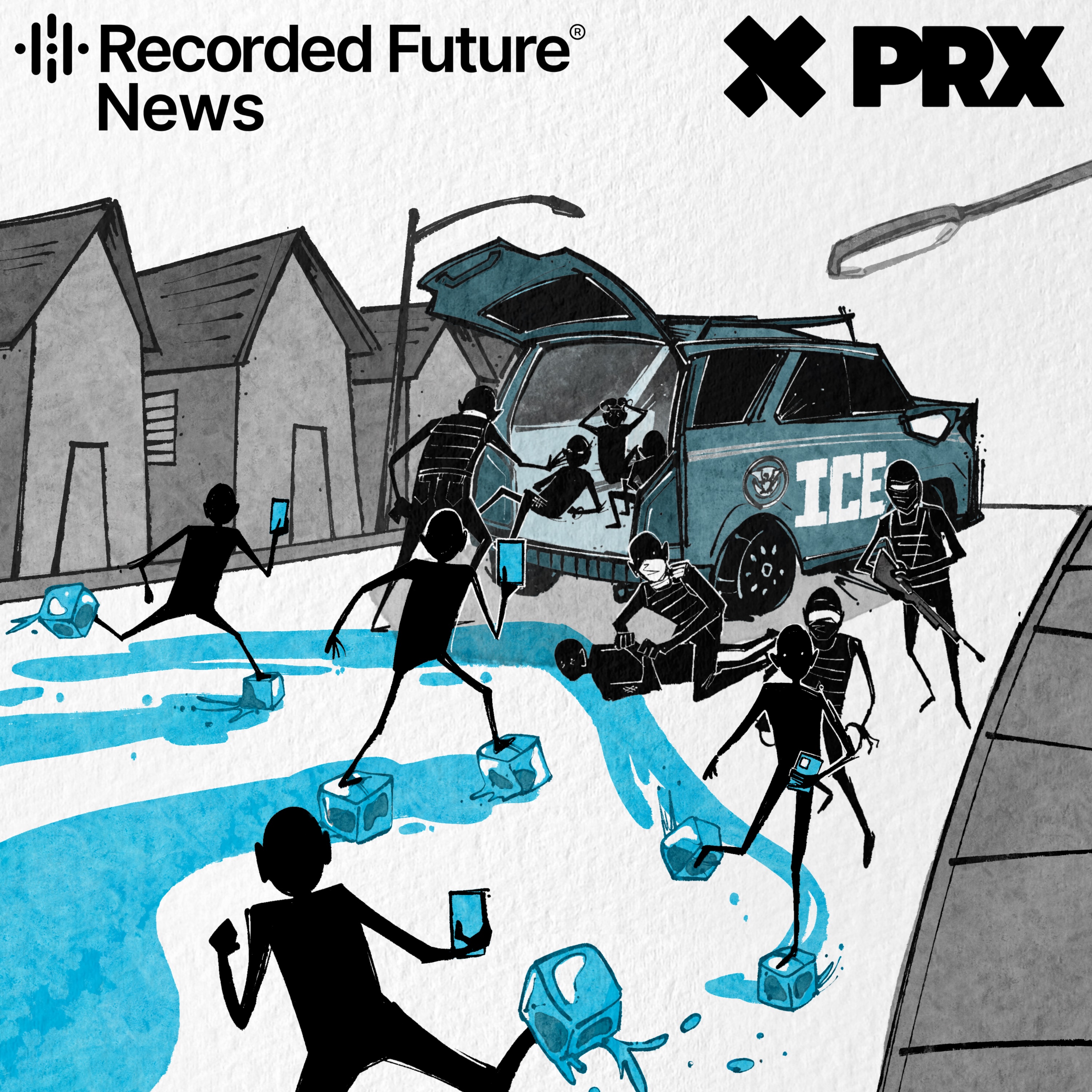
From Recorded Future News and prx, this is Click here. Ruth has lived in Los Angeles for 10 years, and for eight of those, she's been unhoused. She spends her days navigating the city's maze of systems, trying in the way she can to improve them.
- [00:34]
Ruth
In my quest to get housing, I've discovered a lot of things about systems, and I've been documenting them and trying to share them with people.
- [00:47]
Dena Temple Raston
She writes about it all on a substack. And lately, as she's been documenting her neighborhood, she's noticed something new.
- [00:54]
Ruth
Dark colored pickup trucks with no license plates and masked agents, you know, with vests, weapons.
- [01:03]
Dena Temple Raston
ICE patrols, Immigration and Customs Enforcement, rounding people up.
- [01:08]
Ruth
In my particular neighborhood, they're very present. The car wash in my neighborhood had a raid. There were people hiding in a closet in the business. They thought it was an active shooter. It's really torn our neighborhood apart. Like, it's really scary.
- [01:29]
Dena Temple Raston
She says it's a familiar kind of scary, at least to her, because we.
- [01:34]
Ruth
Have raids that happen all the time with encampments and rangers and regular police, and it's a very similar kind of terror, I think.
- [01:45]
Dena Temple Raston
So she started to wonder, was there anything she could do to help? Since she was out there watching and documenting anyway, maybe she could find a way to alert people if ICE was around. Then one night online, she found something she thought might help. An app called iceblock.
- [02:05]
Ruth
It's just pins on a map. If you've cited ICE agents or a raid, you just drop a pin. You can put details in a little.
- [02:16]
Dena Temple Raston
Field and everyone using the app within a 5 mile radius of you gets an alert. So Ruth downloaded it and waited. And just a few days before we talked, something happened. It was the middle of the night, and a bunch of unmarked vehicles pulled into the parking lot where she sleeps.
- [02:36]
Ruth
Several cars and men with masks that they were strapping on and velcroing their, I guess, bulletproof vests. They were putting magazines in their guns. And then they pulled out of the parking lot altogether.
- [02:54]
Dena Temple Raston
And did you immediately open up the iceblock app and drop a pin?
- [02:58]
Ruth
I did. I wanted people to know that they were in this neighborhood again.
- [03:05]
Dena Temple Raston
I'm Dena Templewaston, and this is Click Here. We tell true stories about the people making and breaking our digital world. Under the Trump administration, ICE arrests have doubled this year. Raids have become more aggressive, more visible, more militarized. So activists have turned to technology to warn, to organize, and to resist. And the app Ruth stumbled on, iceblock, has found itself at the center of that digital Crossfire.
- [03:34]
Joshua Aaron
I was simply trying to do something to fight back and help. I don't want to just sit around and say, oh, this is horrible what's happening in this country, but there's nothing I can do about it. So I did something about it. And, you know, damn the torpedoes if something happens to me because of it.
- [03:50]
Dena Temple Raston
Well, something did happen. Something that has everyone from Ruth in Los Angeles to legal experts in Washington asking what happens when speech and dissent move from the streets to the cloud. Stay with us.
- [04:07]
Recorded Future News Announcer
If you're looking for a daily guide to cybersecurity news and policy, sign up for the Cyber Daily From Recorded Future News. It serves up the day's most interesting and important cyber stories from our sister publication the Record, and then aggregates all of the big cyber stories you might have missed from news outlets around the world. Just go to TheRecord Media and click on Cyber Daily to get all you need to know about the world of cybersecurity right in your inbox.
- [04:38]
Dena Temple Raston
From Recorded Future News, this is Click here. Joshua Aaron has been building apps since he was a kid, though his first one wasn't exactly an app, was actually.
- [04:52]
Joshua Aaron
A program on an Apple iigs. And that is a very, very old computer that I went to computer camp when I was 13 years old and I created a blackjack.
- [05:03]
Dena Temple Raston
Apparently about a decade later he was working at Apple, though only briefly.
- [05:08]
Joshua Aaron
I was not huge on the Apple corporate culture, so that really didn't fit with what I wanted to do.
- [05:16]
Dena Temple Raston
So he joined a rock band. Then came startups, a few small wins, a few pivots, and finally a quiet life in Austin building everyday tech tools, things like a PDF converter or a health app until 2024 when Donald Trump won a second term and Joshua began watching the new immigration raids on TV with growing alarm. And while the administration says ICE is just going after the worst of the worst criminals, according to an analysis by the Marshall Project and others, the vast majority of people they're rounding up are asylum seekers, legal residents and people with no prior convictions. At gaping holes left in this Denver apartment door after it was broken by ICE agents. Behind it was nine year old Nicole. She said we were getting ready in the room to go to school and then ICE knocked down the door. A violent confrontation where ICE agents physically separated a family.
- [06:21]
Ruth
Oh my God.
- [06:23]
Dena Temple Raston
Monica Elizabeth Moreta Thrown to the ground by an ICE agent, ICE agents arrested a time Tufts University graduate student with a valid student visa. Lawyers for that student, they say they do not know where she is right now and have not been able to contact her?
- [06:39]
Joshua Aaron
Where is the due process? Where is, you know, any way to prove your innocence?
- [06:45]
Dena Temple Raston
So he started to wonder, could he use code to find a solution?
- [06:49]
Joshua Aaron
My brain started going and I thought about all of these different ideas that I could possibly do to help people.
- [06:59]
Dena Temple Raston
And then one day he came up with an idea to alert people when a raid appears imminent. He called it Ice Block. And that's the app Ruth used in la.
- [07:09]
Joshua Aaron
So iceblock is an early warning system. And basically what it does is it detects where you are using your location and within a five mile radius of where you are, it will notify you of ice sightings.
- [07:25]
Dena Temple Raston
As he thought about the best way to get the broadest reach, he decided to crowdsource the alerts.
- [07:31]
Joshua Aaron
Users see something and tap something. And that's kind of the slogan for the app is see something, tap something.
- [07:39]
Dena Temple Raston
So what was the biggest challenge in building an app like this?
- [07:43]
Joshua Aaron
Privacy security. That was absolutely the biggest hurdle. So the last thing I wanted is to get a subpoena that says, I want the entire database for IceBlock. And then for whatever reason there were, there was identifiable information for users in that where.
- [08:01]
Dena Temple Raston
So he made a choice. He would not require users to sign up in any way. He'd collect nothing. No names, no email addresses. Of course, there isn't anything online that's completely anonymous. You still have to download it through an app store. But on his end, Joshua wanted to hold zero data on his users. He toiled away for months trying to make this idea into a reality. And then finally, in April 2025, he launched. He put Iceblock out into the world very quickly. Thousands of users signed up and he could see how it worked in real life.
- [08:40]
Francisco Chavo Romero
We think it's helpful. I mean, we've had somebody say to us that they saw something on one of these apps while simultaneously we were getting a call from somebody.
- [08:50]
Dena Temple Raston
That's Francisco Chavo Romero. He works with an advocacy group in Los Angeles called Union del Barrio. They run their own alert system, a kind of old school hotline where people call in to report they've seen ice and then his group confirms it on the ground.
- [09:07]
Francisco Chavo Romero
What we call ground truthing. Spot checking the situation. Because we don't like to put out an alert until we confirm that it's actually something happening.
- [09:16]
Dena Temple Raston
People with his group downloaded Ice Block.
- [09:18]
Francisco Chavo Romero
So it actually confirmed the situation.
- [09:21]
Dena Temple Raston
Second confirmation.
- [09:22]
Francisco Chavo Romero
Yeah, it's like a second confirmation. Right.
- [09:25]
Dena Temple Raston
And while he liked the idea behind Ice Block, he did worry a little about the crowdsourcing part of it. Since their sightings aren't verified. Iceblock could spread panic as easily as it spreads information. Joshua understood that, too. Crowdsourcing offers greater reach, but at an.
- [09:44]
Joshua Aaron
Expense like, we can't do moderation. We can't block users. You know, there are trade offs.
- [09:51]
Dena Temple Raston
You can't. You can't protect against false reports, for example.
- [09:54]
Joshua Aaron
We cannot.
- [09:56]
Dena Temple Raston
So he built in safeguards. He limited the number of sightings someone could post. Users could only report within their own five mile radius. And every four hours, all the sightings would clear. Still, trolls found it and targeted it.
- [10:11]
Joshua Aaron
People posting, every morning, I do 100 false sightings. An ice block. Do you know? Really? Because it would take 500 minutes to do that.
- [10:24]
Dena Temple Raston
But trolls weren't the real problem. The real problem came from a different place. The White House.
- [10:30]
Joshua Aaron
My wife's sister called us and said, oh, my God, they're talking about Joshua's app at the White House press briefing. And. And we went, I'm sorry, what?
- [10:37]
Dena Temple Raston
During a daily press briefing, a reporter asked the White House press secretary about iceblock. I just watched a CNN segment on a new app called iceblock, and it.
- [10:46]
Ruth
Kind of appeared to be promoting this app where you can tell people where ICE agents are. Given the recent rise, that tells people where ICE agents are.
- [10:54]
Zach Hirsch
Yes.
- [10:55]
Dena Temple Raston
Suddenly, this tiny app he built in Austin was part of the national debate. Within hours, the acting director of ICE had issued a statement about ICE Block. A short time after that, Attorney General Pam Bondi was on cable news, not just talking about the app, but about Joshua himself.
- [11:13]
Ruth
And we are looking at him, and he better watch out because that's. That's not a protected speech that is threatening the lives of our law enforcement officers throughout this country. And shame on cnn. I just saw that.
- [11:25]
Dena Temple Raston
And was that sort of surreal?
- [11:27]
Joshua Aaron
To put it mildly, yes.
- [11:30]
Dena Temple Raston
But sometimes condemnation has a way of amplifying the thing it condemns. And the more officials warned about iceblock, the more people downloaded it. A few thousand users became 20,000, then 200,000, then 1 million. Iceblock was suddenly one of the most downloaded apps on Apple's app store. For Joshua, it felt like vindication. The idea he'd built in his living room was suddenly part of a national conversation. News outlets were talking about it. Lawmakers were referencing it. Even the President's team seemed to know his name. It looked like everything he'd been working toward was finally happening. But just as that dream was taking shape, it started to unravel. Because for all the noise around him, no one from the administration had actually reached out to talk to him about it.
- [12:21]
Joshua Aaron
I have not even received an email, a phone call, a visit, a nothing. I have never received any communication, nor has my legal team. So what did they do? They couldn't hurt me, so they hurt my wife. If they can't get one person, they're going to go after their family. It's mob tactics.
- [12:40]
Dena Temple Raston
And that's when the tone shifted from digital debate to something darker. When we come back, the moment Joshua's fight for accountability becomes a fight for survival. Stay with us. Do you ever feel like you blinked your eyes and then woke up in some kind of sci fi movie? Suddenly it seems like the very existence of AI is changing everything, including our relationships.
- [13:07]
Zach Hirsch
I would like to think that I could not fall in love with an AI companion, but I really think that anybody could.
- [13:15]
Dena Temple Raston
I'm OS Velocian. And I'm Cara Price. We break down the tech news you really need to know. Listen to tech stuff in the iHeartRadio app, Apple Podcasts, or wherever you get your podcasts. ChatGPT, AI machine, satellite engine ignition. Click here and lift up. Joshua's wife, Carolyn, worked at the Justice Department. A forensic accountant in the US Office of the Trustee, that's a DOJ financial watchdog.
- [13:44]
Joshua Aaron
Her job was to protect against fraud in the bankruptcy system. She's really, really brilliant, scary brilliant, and she, I mean, saved millions and millions and millions of dollars over the course of her tenure there.
- [14:00]
Dena Temple Raston
With the administration's focus on eliminating waste, fraud, and abuse, her job seemed safe. But a few weeks after the White House started talking about iceblock, Carolyn was abruptly fired.
- [14:11]
Joshua Aaron
They took an almost decade. Veteran of the Office of the US Trustee, highly respected by all of her colleagues and anybody who knew her. And they took her out simply because she's married to me.
- [14:25]
Dena Temple Raston
A Justice Department spokesperson confirmed her firing was due to her connection to iceblock. Because she had a financial stake in her husband's company. It's unclear what law, if any, that actually violates. Carolyn, for her part, declined to speak with us. But it turned out the administration was just warming up. Breaking news. Dallas law enforcement is responding to a shooting at an ICE facility. It appears that several people have been shot, some fatally. According to Homeland Security, in late September, a sniper opened fire at an ICE detention center before taking his own life. Two detainees were killed. And when investigators examined the shooter's phone, the FBI says the gunman downloaded a list of DHS facilities and searched apps that tracked ICE agents. Almost immediately, top ICE officials like Marcos Charles began pointing fingers at apps like iceblock. It's no different than giving A hitman, the location of their intended target.
- [15:23]
Joshua Aaron
And this is exactly what we saw happen in Dallas yesterday. We truly wish we didn't have to say I told you so, but here we are.
- [15:33]
Dena Temple Raston
To Joshua, it felt surreal, but also illogical. After all, the shooter didn't need ICE Block or any other app to know that ICE officers would be at an ICE facility where the shooting happened.
- [15:47]
Joshua Aaron
I know police officers are at the police station. I know firefighters are at the fire station. I know ICE agents are at an ICE detention facility. I know grocery store clerks are at our supermarket. I don't need an app to tell me any of this.
- [16:02]
Dena Temple Raston
It was a logic gap wide enough to drive a news cycle through. Because while iceblock did let users share information about raids, he'd built it specifically to prevent people from doing things like doxxing ICE agents.
- [16:15]
Joshua Aaron
It absolutely does none of that. It's not even possible. There's no way to upload a photo, no way to upload a video, and the notes field is limited to 180 characters. So when they say it's putting people in danger, what they mean is, don't track what we're doing, because we want to keep doing this in secrecy, and we're going to threaten anybody who violates that.
- [16:38]
Dena Temple Raston
Shortly after the Dallas ICE facility shooting, Attorney General Pam Bondi was testifying at a Senate hearing, and she called out the app by name.
- [16:47]
Ruth
The ICE Block app that was reckless and criminal in that people.
- [16:52]
Dena Temple Raston
And it turned out that the Senate wasn't the only place Pam Bondi was making that case. Joshua was home one afternoon in early October when he got an email from Apple.
- [17:03]
Joshua Aaron
I got a message from Apple claiming they received information from law enforcement alleging iceblock was targeting law enforcement officers. And after reevaluating the app, Apple reversed course on their initial approval, citing objectionable content.
- [17:17]
Dena Temple Raston
Wow. Joshua's lawyers had spent weeks vetting the app with Apple before it went live. Apple's lawyers had approved it, but after pressure from the administration, Apple did an about face. Iceblock would no longer be available in the App Store, while Iceblock was only available on iPhones. Google followed suit, pulling any app like his from their store, too.
- [17:41]
Joshua Aaron
Google came out that same night and issued a statement that says, we weren't contacted by anybody, but we too are going to remove all law enforcement tracking apps.
- [17:49]
Zach Hirsch
Wow.
- [17:50]
Dena Temple Raston
We reached out to Apple and Google for comment. Apple didn't get back to us, but the company told other news outlets what they told Joshua based on the information they got from law enforcement about safety risks associated with the app. They removed iceblock and other apps like it from the App Store. Google said authorities never contacted them about it. And Joshua, for his part, he says this is unconstitutional, a crackdown on speech protected by the First Amendment because ICE Block didn't tell people what to do. It just shared information. And that idea, sharing what's out there, letting people make their own choices, isn't exactly new. Think of Waze, you know, the app that lets drivers flag construction, traffic jams, and even police.
- [18:40]
Joshua Aaron
It's the same thing as a speed trap notification. If you know that this cop is up ahead, what are you going to do? You're not going to go by at 100 miles an hour. You're going to slow down and you're going to avoid the confrontation with that officer and avoid getting a ticket.
- [18:54]
Dena Temple Raston
To Joshua, his app is no different. It's protected speech and the government leaning on tech companies to take it down. That, he says, is the real danger.
- [19:05]
Joshua Aaron
We have the right to know what's going on. The media has access, right? That's the freedom of the press, and that is the First Amendment. And big tech that controls what we can have on our devices, that we pay for, that we own, is now saying what you can and cannot be notified about. They are making those decisions and that should scare everybody.
- [19:30]
Dena Temple Raston
For now, iceblock still works, but only for people who downloaded it before October. His website warns people not to delete the app or reset their phones or they'll lose access altogether. And Joshua says he's not giving up.
- [19:44]
Joshua Aaron
I am going to fight it with everything I have. You know, I have an incredible legal team behind me and we'll be doing everything in our power to fight this.
- [19:52]
Dena Temple Raston
Meanwhile, activists are turning back to more traditional tactics, something Francisco Chavo Romero actually predicted might happen. He's the organizer with Union del Barrio in LA who we heard from earlier. He said his group stuck with the telephone hotline and in person verification in part because because of something like this. We spoke with him about a week before ICE Block was pulled down, because.
- [20:17]
Francisco Chavo Romero
One day, what's going to happen, they may pull the rug from all those platforms. And if you only rely on that technology and those platforms, then you're going to be dead in the water.
- [20:29]
Dena Temple Raston
He says it's easy to pull an app offline and much harder to pull an entire people.
- [20:35]
Francisco Chavo Romero
We definitely have our phone trees, we have a hotline, and we have volunteer operators that are picking up the lines.
- [20:43]
Dena Temple Raston
And those volunteers, he says, are only growing in number, even though both Joshua and Francisco know they're up against an organization with tens of billions in funding, military grade gear, and the reins of the judicial system. Josh is preparing to fight in the courts. And Francisco's network? They just keep picking up the phone and heading out into the streets. Not in spite of what they're up against, he says, but because of it. The first crackdown on the Ice Block app only made it more popular, and Francisco says that in combination with the heavy handed approach on the ground, may end up doing something the administration didn't intend galvanizing the only thing they can't erase.
- [21:26]
Francisco Chavo Romero
Community response we believe that the goal of coming in heavily militarized was to instill fear to a level where people were afraid to come out right? But the reverse occurred. Community has lost fear of standing up and protesting.
- [21:47]
Dena Temple Raston
And if the past few months have shown anything, it's that people find a way. They always do. This is Click Here.
- [22:01]
Recorded Future News Announcer
Looking for more of the cybersecurity and intelligence coverage you get on Click here. Then check out our sister publication the Record from Recorded Future News. You'll get breaking cyber news from reporters in New York, Washington, London and Kyiv, among others. And you'll see for yourself why it attracts hundreds of thousands of page views every month. Just go to the Record.
- [22:25]
Dena Temple Raston
Here are some of the top tech stories making news this week. It's Tuesday, October 21st. The streaming platform Roku may be doing more than just helping you binge bluey. The state of Florida just filed a lawsuit against Roku for tracking your children. Florida's attorney general is accusing Roku of illegally collecting and selling children's data things like their viewing habits, location, even voice recordings, all without parental consent. The state says Roku violated Florida's new digital Bill of Rights by sharing information with advertisers and data brokers. And the fines? They can reach $50,000 per violation. Triple that when the consumer is a child. Parents, it seems, are reminding the streaming giants who's really in charge.
- [23:16]
Joshua Aaron
15 billion in bitcoin from pig butchering scams. You heard that right. Pig butchering scams.
- [23:24]
Dena Temple Raston
The Justice Department just made the largest cryptocurrency seizure in US history. $15 billion with a B in bitcoin. The target of the bust? Chen Ji, a Cambodian businessman accused of running an empire of romance scams. Sweet talk first, heartbreak later. Prosecutors say Chen's network operated forced labor compounds across Cambodia, where trafficked workers were made to carry out the scams. One site alone had more than 1200 mobile phones and some 76,000 social media accounts. The Justice Department has now designated Chen's company Prince Holding Group as a transnational criminal organization. If convicted, chen faces further 40 years in prison, but he remains at large. And now to this developing news and a billion dollar scam targeting drivers across Southern California. If you've gotten a weird text lately about a toll you didn't pay or a random post office fee, you're not alone. Scam texts are everywhere right now. Federal investigators say they're part of a billion dollar scheme run by organized crime groups in China. These scammers are using using SIM farms to blast out these texts by the thousands, and they're even paying gig workers to help. Here's how it works. You get a text about an overdue bill and the link leads to a phishing site that steals your credit card information. That card gets loaded into a digital wallet in China, linked to another wallet here in the US and then someone in America uses TAP to pay to buy phones, gift cards and luxury goods, and all that gets shipped back to China and sold, homeland Security told the Wall Street Journal. These scam texts have cost Americans about a billion dollars over the past three years. And finally, last week, Instagram content got a little less rated R. All teenagers on Instagram will be seeing posts, reels.
- [25:24]
Joshua Aaron
And stories that are a little more PG13.
- [25:28]
Dena Temple Raston
Instagram's parent company, Meta, is taking cues from Hollywood movie ratings to limit what teens see Online. Users under 18 will automatically get stricter content filters. No more posts promoting drugs, sex or dangerous stunts unless parents choose to opt out. The rules will even apply to Meta's chatbots, which have been flagged for inappropriate conversations with minors. But not everyone's buying the new safeguards. Some parents and researchers say Meta's track record on content moderation speaks for itself, and they're calling the update little more than a public relations stunt.
- [26:14]
Zach Hirsch
Click Here is a production of recorded Future News and prx. Our team includes Dina Temple Raston, Megan Dietre, Sean Powers, Erica Gaeda, and me, Zach Hirsch. I was the lead producer on this episode. The story was edited by Karen Duffin and fact checked by Darren Ankrum. It contains original music by Ben Levingston with additional music from Blue Dot Sessions. Our staff writer is Lucas Riley and our illustrator is Megan Gough. Jesse Niswonger and Jake Cook are our sound designers and engineers. Join us Friday for Click here's Mic Drop. When we drop in on a movement that's both high tech and lo fi, where neighborhood watch meets digital resistance, everybody's.
- [26:56]
Francisco Chavo Romero
Like, why is the Border Patrol way up here in Bakersfield?
- [27:00]
Zach Hirsch
That's Friday.
- [27:01]
Dena Temple Raston
We'll see you then.
- [27:11]
Recorded Future News Announcer
Looking for more of the cybersecurity and intelligence coverage you get on? Click Here. Then check out our sister publication the Record from Recorded Future News. You'll get breaking cyber news from reporters in New York, Washington, London, and Kyiv, among others. And you'll see for yourself why it attracts hundreds of thousands of page views every month. Just go to the Record Media.