← Clotheshorse with Amanda Lee McCarty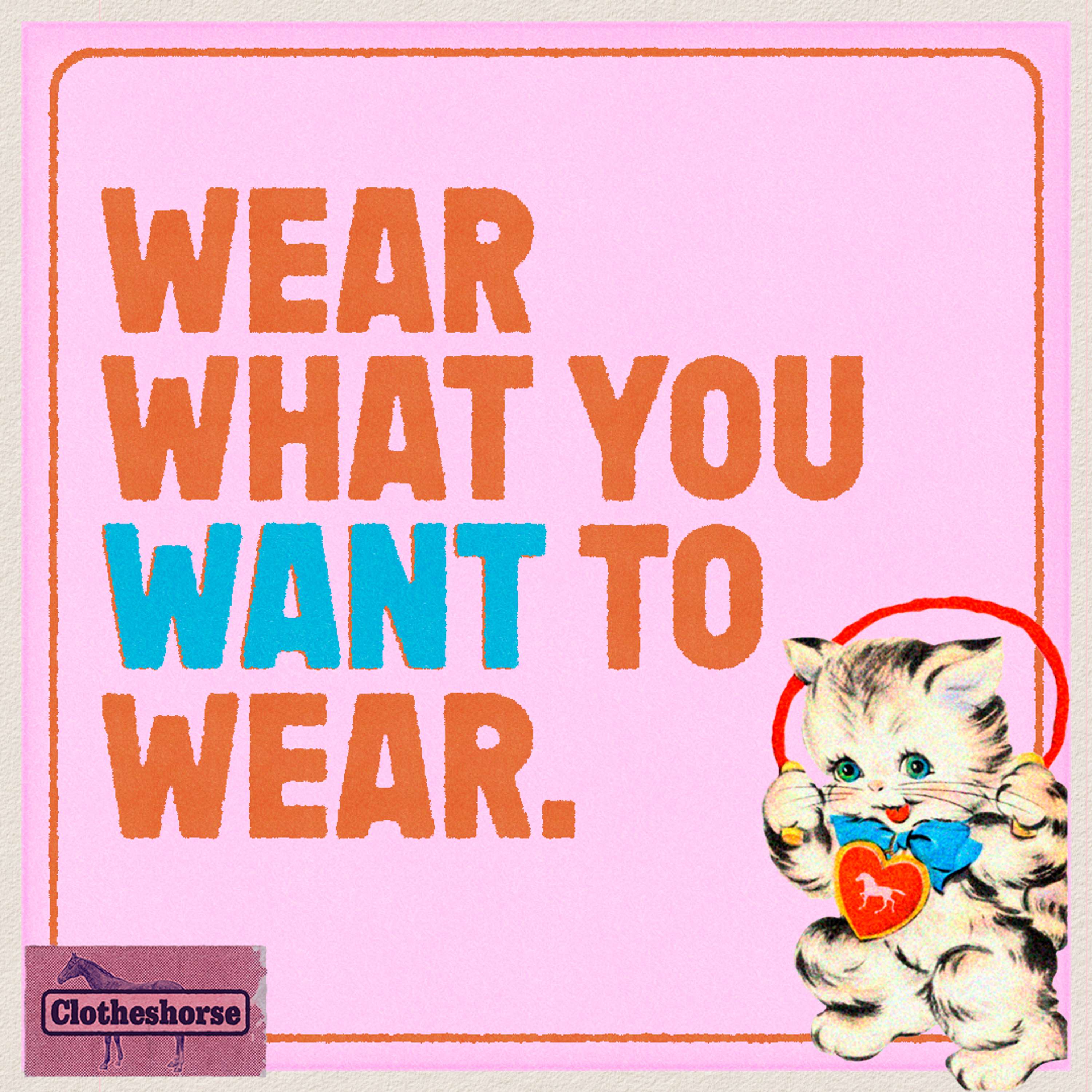
Clotheshorse with Amanda Lee McCarty
Episode 232: Wear what you want to wear, with Marlee of Style Me Slowly
01:50:03
Loading summary
Transcript198 lines
- [00:18]
Amanda
Welcome to Closed Source, the podcast that has major, and I mean major, vegetable garden plans this year. I am essentially, like, tripling my garden space this year, and I'm pretty excited about it. I have already planted the cold weather vegetables, lots of Brussels sprouts. Exciting, of course. And I'm going to be planting a lot more stuff over the next few weeks. And I just got to say, this is not a gardening podcast and it never will be. But I got to tell you, during the summer, I would get up every morning and in my nightgown, go outside and harvest something from my garden. Sometimes, like, so much stuff that I had to take multiple trips. You know, hell, jalapenos and squash and kale and all kinds of other things. And nothing, seriously, nothing compares to the satisfaction and joy that comes from harvesting something that you grew yourself. I mean, there's nothing you could buy that would feel as good as, like, just magically growing stuff. I mean, yes, it is work, but it's pretty interesting work. And I don't know, it's very, like I said, rewarding. Although it is a long game, right? You gotta wait a few months, but then the gifts keep coming. And I'll just say to you that no matter whether you live, like on a farm, like I literally do, or you have an apartment with a balcony, or you even just can grow one pot of lettuce in your apartment kitchen by a window, I highly recommend doing it because, like, seriously, shopping? Nothing compared to growing something. And yes, sometimes it won't work. You'll learn a lot of things the hard way, but when it does work, it is just truly magical. And I don't know, it makes you appreciate everything else around you so much more when you see how it all begins. Anyway, this is not a gardening podcast and I'm your host, Amanda, and this is episode two, 232 and wow, you are in for a treat this week. My guest is someone you have met in the past. It's Marlee of Style Me Slowly, a podcast that features size inclusive, sustainable brands. And in addition to that, Marley is a styling coach who helps her clients find closet contentment by discovering their own personal, unique, sustainable style. And I have been sitting on this interview for a couple weeks, like, so excited to get it out in the world to you. It was such a joy to edit listen to again, but I've had the grossest, wettest, most coughenest cold ever. Dustin brought it back from Tor. We've both been coughing and blowing our noses like it's going out of Style. And I think I'm finally at a stage where I can talk for more than one minute without coughing. And so here is this conversation, and, wow. We talk about a lot of important stuff, like why flattering is kind of a myth. And it, you know what, it puts the focus on the wrong person's happiness. We talk about the challenges of breaking up with the rules. We have been taught about what we can and cannot wear. It's hard work, trust me, to get over those fake rules that feel so real. We're going to explain why understanding what you really want to wear is a very important part of the slow fashion way of life. And then Marley is going to share her recommended process for understanding your own personal, unique style. And we're going to talk about so much more even beyond that. And of course, we're going to talk about the show, what not to wear, among many other things. But I'm excited for you to hear this conversation. But before we jump into that, I just wanted to make a brief announcement that, in my opinion, is very exciting, and that is. Clotheshorse is officially traveling to the Pacific Northwest in October for two shows. The first one will be on Thursday, October 23rd, at the Hereafter in Seattle, which is part of the Crocodile. And then on Sunday, October 26th. I'm coming home, baby. I'm coming home to the city that I think of as my home, despite being born in Pennsylvania. And I consider it my home because it's where I've lived the largest part of my adult life. And it's where greatest critical mass of the humans I love are. And that is Portland, Oregon. Once again, that's gonna be on Sunday, October 26, and it's gonna be at one of my favorite venues. I have so many memories. I've seen so many good shows there. It's called Holocene. Very excited to be doing that. I don't have many more details for you in terms of, like, times, guests, et cetera. I'm really just starting to work on that right now. Tickets won't be on sale for a few months. Course, I will let you know as soon as they are. And I'll tell you, if these shows go well, which, seriously, if we can't sell out Portland, I give up. But if they do well, I'm gonna do a larger tour next year. You know, it's just like, will people come? Will I like doing it? I do have a feeling that I like doing it. And will I or will I not fall on stage? That is like, one of my biggest fears. I also just want to drop here that I really wanted to do LA or San Francisco as part of this group of shows. But unfortunately my booking manager doesn't really have contacts in those cities. So if you literally know someone who is in booking at one of these venues, and I'm talking like a sh. Like a show concert venue, not like a wedding or party venue, like a place that sells tickets and people go do things and there's probably a bar or whatever. If you know someone who works in a place like that, like a good contact, a place that could have about 100 people holler at me, drop me a line and maybe I can connect my booking manager with that venue. And if you don't, that's okay too because I mean I'm really excited to come to the Pacific Northwest. Justin and I are going to make a little bit more of like a family trip out of it because we have so many loved ones up there, including like my parents and my sisters and so many people who are my family at this point. Also it's going to be like our wedding anniversary. So I told him maybe we could go out to the South Wester or up to Olympic national park or something like that. So we're still figuring out those details. But I'm really excited to just, I don't know, come home. That's what it feels like for me. I may do an additional one day jamboree style event on Saturday 1025 in Portland, kind of just depending on interest, location, the finances of it all. So stay tuned for that. If that's something you're actually think you would want to attend, you should let me know. Obviously, of course all of these plans could change if things get weird in the world. It's why I didn't do any spring tour dates or the jamboree in the spring because I just felt too afraid. I'm trying to be less fearful and live my life and give this a try. So fingers crossed that things don't get too weird in the world. I also just wanted to throw out there that I am working with my booking manager to keep prices as low as we can while still making sure everyone gets paid. Like the venue needs to get paid, right? They take a big cut of this. My booking manager needs to get paid and I need to bare minimum, this will be the best case scenario for me. Just cover the expenses of getting Dustin and I out there. So we're doing what we can. We're going to keep it accessible. I really hope that a lot of you come And I'm excited to see your faces. And I have some really great episode ideas planned, so stay tuned for more. Once again, tickets not on sale yet. I think that might be starting in June, maybe July. We have so many months right now. Right. But as soon as I know more details, you'll be the first to know. I've said it before, and I'll say it again. I have bought and worn a lot of clothes that I just never loved. I don't even think, like, I liked them. These are just things that just felt like costumes for fitting in the uniform, for being respected and taken seriously. What I felt others wanted me to wear based on, I don't know, like, the character I was playing in their lives. And these clothes moved in and out of my life way too fast. I didn't feel comfortable in them, and they were never exactly what I wanted to wear. And you know what? I'm gonna. I'm gonna tell you. I love clothes. I love getting dressed every day. And I think about how many years I wore what I thought I had to wear and didn't get to wear what I wanted to wear. It makes me really sad. Actually. Here's something I've learned over the past few years, really, honestly, just since I started working on Clotheshores, when I finally, for, like, I don't know, I'm, like, in this new phase of my life, I guess, where I get to, like, own my life. And I know you say. I say that out loud, and you're like, that's so sad. But I honestly just never got to feel like I owned my life. I always felt like my job owned me or someone I was dating who was horrible owned me, or some, like, social group of people who didn't really like me that much owned me. I don't know. I just felt like I never owned what happened in my life every day until, honestly, like, the past few years and part of that has been, like, I get to wear whatever I want every day. It's life changing, okay? Knowing what you really, truly like to wear and want to wear and then actually wearing those items over and over again. Well, one, it feels amazing. But it's also super radical in a fast fashion world because you're telling the world a lot of important things. When you do that and get ready for a lot of cursing in rapid succession, you're saying, fuck trends, fuck style rules. Fuck what you, some stranger or some person who's meddling in my life. Fuck what you think is flattering. Fuck what people say. Someone my age or size or gender is supposed to wear. And fuck this notion that I need a steady stream of new clothes. And yeah, even you take the cursing out of that. These seem like kind of obvious and basic things when you say them out loud, but the reality is that the fast fashion machine, and it's not just the fast fashion brands, it's like the blogs and the influencers and even magazines, you know, they. That machine, it relies on us following trends and listening to these so called rules about what we're allowed to wear and feeling like we periodically have to like reboot our entire wardrobe because we passed a certain birthday or we joined a new social group or whatever it is that we're being told means we need a lot of new clothes. Knowing and trusting our personal style is a key part of ending over consumption. Yeah, wearing clothes that you actually like is super important. And today Marly is going to guide us through how we can figure that out. So let's jump right in. Marley, do you want to introduce yourself to everyone?
- [12:09]
Marlee
Yes. My name is Marlee Rosen and I'm also known as Style Me Slowly. Style Me Slowly. The work I do is I am a style coach who focuses on sustainable size inclusive fashion. I work with people in all body types, but I try to help them discover their personal style and I use like slow fashion tools to help them with that personal style self discovery. And I also have my own podcast, the Style Me Slowly podcast, where I interview the founders of sustainable size inclusive brands to give them a platform to share their stories.
- [12:46]
Amanda
And I know that a brand that you featured on your podcast actually announced this week that they are shutting down.
- [12:54]
Marlee
Yes.
- [12:55]
Amanda
Very sad, very sad. It's the brand Ray Wray, if anybody is wondering. And I guess it's because the owner is having health issues. Made me really sad though, because I just think they really, they do more than a lot of other brands, you know.
- [13:13]
Marlee
Yes, Ray was doing something, I feel very unique in the sustainable and size inclusive fashion space. They were making clothing that was like not ball gowns by any means, but like that was just like a little more elevated, I guess I would say. And they really took size inclusivity to heart. And it was something that was central to the brand's values, which especially with the founder being straight sized, how much she cares about size inclusivity is. Especially now they've spoken to her, interviewed her. Like, it really is just incredible to have someone who like truly is like doing true allyship for the fat community.
- [13:59]
Amanda
Yeah.
- [13:59]
Marlee
And so I'm, I for one will be really Sad to see this brand go away.
- [14:05]
Amanda
Me too. Me too. And I guess if there's, like, one silver lining to this, that's maybe not even the right term. It's that she didn't say, like, hey, we're closing up because we are broke. Because adding sizes hasn't worked. Because, like, sticking to our brand values hasn't been profitable. And to me, that was a relief. I, like, immediately was, like, skimming the caption, like, okay, on the Instagram post, like, what happened? I need to know, because I don't. You know, I mean, okay, we all know that most people do not read captions. They do not read the whole article. They only read the headline or the first three sentences. And so I don't want the narrative out there to be like, oh, well, you know why they went out of business? It's because they had all those sizes or because, yes, they stuck to their values, and capitalism won't let you do that or, you know, whatever. Like. Or, like, small businesses are just failing right now, and that's how it is. It actually was just, like, a conscious decision to not be able to do it anymore. And I want people to hold that really close to themselves that this business model can work and should work. And that's not why this brand stopped doing what they're doing.
- [15:16]
Marlee
Absolutely. And I do think that, I mean, we are, unfortunately, in a period where a lot of small businesses are struggling. And so every single time a brand closes, it just sort of gets lumped in as, like, oh, they were struggling, too. I know that happened a lot with the brand Ark that they closed down when, like, around this. It was, like, the same week. I feel like that a few other brands closed as well, but they also closed for personal reasons, not financial reasons. But they keep getting lumped into that conversation. And so I think it's really important that we do highlight that sometimes brands close down for other reasons, and it has nothing to do with the finances.
- [15:55]
Amanda
Absolutely. Sometimes they're just like, I don't want to do it anymore. You know, like, Psychic Outlaw is wrapping things up over the next few weeks, and it was just basically like, I want to break from it. You know, I know last year, another brand called the Hippie Shake did the same thing, and they're actually coming back. There was another brand that I really liked is a UK brand, Megan Crosby. Like, one of my favorite dresses from her, it's pink with, like, puff sleeves and a strawberry print. She also was just like, I want to take a break, because this is hard work, you know, And I think we have to respect, of course, let people stop doing something when they don't want to do it anymore. But I also think it's really important for us to recognize that not every business closes because it was a bad idea or because no one supported it. Sometimes it's just like you don't want to do it anymore or life changes. Small businesses are run by humans. And, you know, that's the difference between like, say, Ray and like, I don't know, Zara. I mean, well, many differences there, right? But like, Zara is run by like a massive team and there's like, shareholders and a board. And so if one person is like, I'm having health issues, I need to take a break. Zara keeps Zara ing on, you know.
- [17:08]
Marlee
Yes, absolutely.
- [17:10]
Amanda
Yeah. So anyway, I was like, oh, we gotta talk about that when I talk to Marley. Okay. But today we're actually gonna talk about personal style. We're hoping to sort of give you a little bit of a beginner's guide to sustainable personal style. And this is really important to me because I think that there's still out there is this misconception that if you care about having sustainable style, if you're looking for a sustainable wardrobe, if you care about sustainability, then you must just be wearing like a brown hemp tunic every day and you're never cute, and you have to give up your own personal preferences all in the name of the planet. Right. But of course, plenty of people are listening to me say that. And being like that is the wrongest thing I've ever heard. I totally agree. As a person who wears like puff sleeve strawberry print dresses on the regular, that actually you can have any kind of personal style you want. You can be goth, you can be kawaii, you can be minimalist, you can be maximalist, and it can be sustainable.
- [18:22]
Marlee
Absolutely.
- [18:23]
Amanda
So I'm excited for us to talk about that today. And I thought we could get started by just, I think, and I know you feel the same way, that actually, like, understanding your personal style and being real with yourself about it and like, sort of embracing it is actually a really important part of living a more sustainable way of life, of being a part of the slow fashion way of life. Right. So why do you believe that these things are very important together?
- [18:54]
Marlee
Because I think that, like, one of the main drivers of, like, everyday people's over consumption is not being clear on what they actually like. Because when you get clear on what it is that you actually want to put on your body, what you actually enjoy having on you. When you go out into the world, the desire to be always searching and wanting more and more and more, it. It doesn't necessarily completely go away. I'm not saying this is, like a cure all, but it absolutely diminishes because you're no longer trying to find or trying to, like, figure out who you are because you. You have a clear sense of it.
- [19:37]
Amanda
I think that is so true because in the times in my life where I have been sort of cycling through clothing at the fastest, it's because I kind of was wearing not what I wanted to wear, but what I thought I was supposed to wear, what people seem to want me to wear, sort of what I needed to wear to feel like I fit in wherever I was at that point. And those are the clothes that I had the least sentimental attachment to. That as soon as some part of my life, whatever it was that was making me feel like I needed to dress that way, when that time ended and a new time began, those were the clothes that immediately went to the Buffalo Exchange, you know, like, immediately. No hesitation.
- [20:23]
Marlee
Yes.
- [20:23]
Amanda
And I do think that, like, feeling unsure or maybe unconfident in what we like is a big driver of shopping, which is why it's. It's. It's so successful for fast fashion to constantly sell us a bunch of trends, like, really fast, because then we just get caught up in that, and we think that's what we're supposed to wear. We don't take a moment to say, like, hey, so I see that, like, super oversized pants is a trend right now. Is that actually something I like personally? You know? Right. So I. I think. I. I think, yeah, like, just knowing what you like is really important, but I also just want to call out, and this is something that has. Even when I know that this is something I want to wear, whatever that might be, I'll get hung up in this idea of, like, is it flattering?
- [21:16]
Dustin
And.
- [21:17]
Marlee
Okay, I'll.
- [21:18]
Amanda
I mean, I'm gonna tell you. Sometimes people send me messages on Instagram in the rare instance where I am, like, shown on Instagram to tell me that they don't think that my outfit is flattering.
- [21:30]
Marlee
Okay. Yes. No, that's. That's. Yes, yes. That's terrible. But I'm also thinking, like, like, and what do you want me to do? Like, oh, I was getting that message. Right. Like, what do you want me to do about that?
- [21:43]
Amanda
I mean, I. I want to. I, like, obviously to, like, exist on the Internet and not totally be destroyed into a million different pieces. I have to tell myself that people most of the time have good intentions when they tell you something like that. I mean, obviously there are times where I'm like, that person just wanted to be mean. Right. But, like, in that situation, I feel like they're trying to help. But I. I'm just gonna tell you, like, first off, I've always thought just the word itself, flattering. It sounds. I can't explain it, but it's. You know how, like, some words you're like, oh, that's a cozy word, or that is a neutral word, or that is a fun word or whatever. Flattering. Just, like, singing it out loud. I'm like, it. It makes my mouth make a shape that feels unpleasant.
- [22:29]
Marlee
Yes, I totally hear you. And it's so interesting that now that I've really removed flattering from my own vocabulary, even when I see brands using it with good intention. Because I think a lot of times when brands say this piece is flattering, what they're trying to say is, you are going to feel good when you're wearing this piece. And that's, like, a good thing. Like, we should feel good in our clothes.
- [22:53]
Amanda
Yeah.
- [22:53]
Marlee
I'm, like, still turned off by that messaging. Just because I now have such a negative association with that word.
- [23:02]
Amanda
It just sounds so antiquated. It sounds like it's from a different time where what we wear is not about what makes us feel good. It's about what other people think of us when we're wearing that. And almost always, it implies making yourself smaller.
- [23:21]
Marlee
Yes.
- [23:22]
Amanda
Right. So it's incredibly. It's incredibly like, fat phobic on top of everything else. But it's also misogynist, you know, and it. It just. It's an ugly word. What do you do? Because I'm sure when you are working, when you're coaching people on their style, I'm sure that word comes up abs.
- [23:43]
Marlee
It absolutely does. And so I make it very clear to my clients. Like, first of all, I meet all my clients where they're at, and my clients come to me at all different phases and stages in terms of their life. I've had clients of all ages in terms of where they are with their relationship with their body, and in terms of even where they are with their relationship with personal style. Like, I have some clients coming in who have, like, literally nothing to wear, and then I have other clients who are like, hey, I actually have a good sense of what I like, and I just need a little help putting it together, like, finding the last few pieces in my closet that I'm looking for. So my. Because of that, my clients all have different relationships with the word flattering. But so I make it very clear to them up front that I am not concerned with whatever society deems is flattering. I'm only concerned with how they feel about themselves when the clothes are on their body. And if they want clothing to fit a certain way because that's what feels best to them, then I'm going to help them find the pieces that fit them in that way. And if they want to go against, you know, norms, like, if what feels good to them doesn't align with the norms of flattering, then I'm gonna find them those pieces. And so it's really about. I've, like, removed the word not just from my own vocabulary, but from the work that I'm doing. And so if in the back of their mind they're thinking something's flattering or not flattering, like, that's sort of for them to cope with and figure out. But I'm just solely concerned with, like, how do you feel in these clothes? Do you like how they are on your body? Yes or no? And then we move on.
- [25:35]
Amanda
I mean, I think that's incredible because. And it's. It's. It's radical thinking, really, because generally, especially those of us who are signed female at birth, we are kind of taught from an early age that what we think and feel should matter less than what people around us think and feel. And so we're often, I don't know, we're supposed to just, like, not care about ourselves in a weird way and really prioritize as part of that how other people feel about how we look.
- [26:07]
Marlee
Yes.
- [26:08]
Amanda
And it's less about, like, do you feel good? And more of, do people feel like you look good? Right. And that is, like, where flattering comes from. It feels like such an external adjective. Right. It's really coming from other people sort of reflecting back to us. Not even what the mirror reflects back to us. And it's really built on, like, other people's ideas about, oh, you should always make your waist look small, and you shouldn't wear anything with too broad of shoulders or you shouldn't, you know, you shouldn't wear stripes or horizontal stripes or, you know, like, all these things. You should cover your arms. All these gross old rules are often. And we perceive them as rules. Right. Like, we gotta be flattering. We gotta follow these rules. I've been. They've been regurgitated to me by magazines and blogs and people on social media over and over. Again, I found myself thinking these things, even if I didn't believe them per se. We. We take them to be sort of like the gospel, but the reality is that they were just someone's opinion that got repeated enough that they became fact, you know, to us. Yeah. And I. I just. I love and. And trust me, I get caught in this sometimes, too, where I'm like, oh, I don't know. Is this too boxy? Like, are people. You know, we all have. It's an ongoing process to undo that work, but totally. But it's really important. How do you get people, even yourself, to sort of let their brains ex. I don't know, prioritize how they feel in the clothes versus how others will think of them in the clothes? Because that's, like. That's a struggle, right, to say, like, okay, I'm kind of drowning out this external noise and just listening to myself.
- [28:02]
Marlee
So I think a big part of it is figuring out what you like on your body and then learning how to adapt it for different situations that you're in. And at least in my experience, the biggest thing with clients that we are adapting from situation to situation is type of fabric. Because I absolutely have clients who, like, work. Work in environments where there is a, you know, standard of dress that needs to be followed. And so a really big thing that I do with those clients is I say, okay, like, you like this shape of jeans, and you like this shape of T shirt. What fabrics can we look for that are going to feel more elevated than jeans and T shirt, but are going to be this. The piece is going to be the same shape, the same cut and style that you're looking for. So it's really about figuring out, like, what. What shapes do I like on my body, what colors do I like in my body? And then how can I translate that for different parts of my life? It is in a lot of ways akin to a uniform. But I. You know, with my clients, we, like, find ways to sort of break out of the box and to add different kinds of pieces in and to mix things up and make it. It more exciting than, oh, just like, wearing one kind of clothing over and over and over again. But, yeah, I've sort of. We make it more about again, like, how can I elevate pieces or make them make more sense for the occasion? For me, I found that I had to have actually, like, sort of grayed things down because I actually gravitated towards a lot, like, I'd say more luxurious fabrics, but they don't necessarily make sense for my life. So I've been like, how can I have like a T shirt or a sweatshirt that has like a similar shape to like this blazer or this like, silk blouse that I really like? So with my clients, we do that in sort of both directions and just allows them to feel again, like, feel really comfortable in the clothes that's clothing that they enjoy having on their body and also feel like they are dressed appropriately for situations where, because realistically, like, people go to events or go to jobs or there is like an expected level of dress. And so it's okay to say, okay, I'm gonna meet that occasion, but do it in a way that still is true to my personal style.
- [30:29]
Amanda
Yeah, no, I love that. Like really sort of taking the time, giving yourself the luxury of that time to figure out what that point of intersection is, rather than just like throwing up your hands and being like, I guess I'll just buy these clothes that I hate.
- [30:45]
Marlee
Yes.
- [30:46]
Amanda
So I've definitely, I've found myself in that with certain especially like, professional situations where I feel like I'm wearing a costume, like I'm wearing my professional costume. And those things, once I don't have to wear them regularly again, they go away fast. You know, they. They live in the back of my closet. So, you know, there are other rules that I think are always so silly that get thrown around and once again, using rules in quotes. And I'm sure you encounter these all the time too. Like nav and black can't be worn together. Do you hear any other weird rules like this that people have sort of like internalized?
- [31:25]
Marlee
I mean, I definitely get like the horizontal stripes one a lot. That it's like horizontal again, like, not flattering. Horizontal stripes are not flattering. Honestly, the biggest one for me is like this, the sea. I don't know what the actual name for it is, but like the season based color palettes where you're like a soft winter or whatever that for whatever reason that has become. Because some of the ones that you're mentioning sort of like went out of style in the slow fashion community a long time ago. Right, right. The color palette one has like really like, put its claws into the slow fashion community.
- [32:05]
Amanda
It is.
- [32:05]
Marlee
So you have this, you have this like, whole, like, this whole section of people who like, really do care about sustainable fashion, but have convinced themselves that they can only wear these four colors because of their skin tone.
- [32:18]
Amanda
It's so true. I see, like, there's like entire like subreddits for these different color seasons. I guess that's what they are. And I. It. It always seems. It's really funny to me, actually. Not that, like, listen, if you're deeply invested in your season color, good for you. If you love it and it makes you feel good, keep doing it. But it. It's actually something that's been around for a really long time. And when I was in middle school, school, my mom was dating this guy whose sister in law, I think she worked for Mary Kay or, you know, the makeup brand. Or maybe it was Amway because they were in a lot of MLMs, but, like, you know, 90s MLMs, they're a little bit different.
- [33:03]
Marlee
Totally.
- [33:04]
Amanda
And she came over and did our colors, like, our seasons. And I. And I remember because my hair is actually naturally kind of like a dirty blonde. I dye it darker and have been since middle school practically. But she did our colors when my hair was undyed, and she was like, you're a summer, right? And here are the colors you can wear. Or no, maybe I was. I think, no, I'm a spring. I don't know. Basically, like, it was like, you can wear a lot of pastels. Which I was like, okay, well, I'm rejecting that, because at that point, I felt that was embarrassing. But now I'm, like, leaning into it. But she did say, like, if you had darker hair, you would be a winter. Which then I think means I'm supposed to wear, like, jewel tones or something. And Interesting. It just feels like even when I was having that done and I wasn't, like, obviously old and experienced enough to think about, like, the relevance of such things or where they began, even then having it done, I was like, this feels like something from, like, the 80s, you know? Like, it felt like this is something you do, and then you wear big shoulder pads and get, like, fuchsia lipstick and stuff. And these are all viable things right now, too, of course, if you love them. But I was like, this just seems like something people, like, people who are on, like, primetime soap operas, probably have their colors done like this. Like, it was just really funny to me. But so I feel like in the past, like, couple years, though, it has been, like, coming back in this major way. And I see people talking about it all the time.
- [34:39]
Marlee
Mm.
- [34:40]
Amanda
And I don't. I mean, on one hand, if you like the colors for your season, they're actually, like, your favorite colors to wear. I guess it's validating. I don't know.
- [34:52]
Marlee
Yeah, I always. I mean, again, similar to, like, the flattering. Not flattering. Like, I always tell my clients like, if something is working for them, that's great, and they should go with that. And truly, like, my goal is not to force my clients into a clothing style or a color or a fabric or anything that, like, they're just not going to be happy with. Like, that's. That's not what we're going for. And I find for most of my clients that letting go and while it takes some time, but, like, letting go of a lot of those rules, restrictions, expectations, that's when they can start the actual personal style work. Because when you sort of let it all go, then you are left with, what do I like and what do I not like? When I put this color on my body, how does it make me feel? And when you don't have any of those rules, that's all you're left with, is how you feel about it. And so I really do try and push my clients to at least give that a try, give it a go and see how it makes them feel. And yes, if they have had their colors done and it turns out that those are the colors they like, then that's the colors I'm gonna source clothing in for them, no problem. But most of my clients have been like, oh, you know what? It would actually be really nice, even if it's not, like, the main color in my wardrobe, to, like, throw in a pop of this or throw in a little bit of that, or, like, once in a while, I could get a dress or a pair of pants that's this other color. And I just think that that's a lot more fulfilling than really restricting yourself.
- [36:27]
Amanda
More and more totally. And, I mean, even though it sounds a little lighter to just be like, I'm, these are my colors, then it's not dissimilar to other, like, I mean, to be blunt, other bullshit that's been fed to us for generations now about, like, dressing for your body type. I mean, that was, like, the first time I encountered that was in Teen magazine in middle school. So, you know, I'm like, like, 12, reading this magazine that is intended for teenage girls, but probably mostly girls in middle school. And here they are. We haven't even developed into our adult bodies yet, and we're being told, are you a pear? Are you straight? Are you an apple? Are you an hourglass? Here are the things you should be wearing, and it is act. It is shared with you as if this is like, these are scientifically proven rules for what you can and cannot wear, right? And the color thing is, like, a gentler version of that. But it's the same kind of thing where, like, you, based on your genetics, what your physical body is, are being locked into what you can and cannot wear.
- [37:41]
Marlee
Yeah, totally.
- [37:42]
Amanda
And I. I don't know. Like, I think color is really interesting because I think color is a very emotional thing. And I can assure you that if I got my colors done and the person said, okay, well, the colors that are best are you on you are, like, yellow, orange, and brown. I would be devastated because I don't like those colors. They're fine for furniture, but, like, not. Like, they. They don't get me excited. Like, I want to wear, like, pink and red and blue and, like, really bright colors and patterns and stuff like that. Now someone's listening to this, and that's literally their nightmare. And they're like, no, I hope my colors are brown and yellow and orange, you know, or navy or whatever. But I have myself felt because, you know, I had a subscription to every magazine that targeted teenagers when I was growing up. And then I transitioned into college into, like, getting all the fashion magazines. And the same rules just get thrown at you all the time, whether it's in terms of clothing and the colors you're supposed to wear or the size of your body or even that if you have green eyes, you should try wearing purple eyeshadow. That's a real thing. I remember trying to wear purple eyeshadow. Okay. And I. It was not a. It was not a win for me, okay. It felt really weird. But, you know, like, these things, they just get drilled into your head until you're like, oh, yeah. I guess what I'm supposed to do is wear things that are cinched at the waist and de. Emphasize my bust. And I'm always supposed to wear purple eyeshadow. And this is the cards. These are the cards I've been dealt. Right. I just hate it. I hate it so much. And I think it's really, really hard. Even when, you know, we can say out loud, these are things that are stupid, that we need to separate ourselves from and do what feels good to us. I will tell you, there have been times where I have subconsciously been like, should I buy that purple eyeshadow? And then I'm like, no, you won't use it.
- [39:47]
Marlee
That's the thing about societal norms is that it is really hard to unlearn them. It's. It's just really hard.
- [39:56]
Amanda
It's really hard.
- [39:57]
Marlee
And again. And that is why, like, when I work with a client, and they're sort of stuck on something, and they really can't get over it. Then I'm like, okay, like we're not going to push it too far because that's me trying to put, me trying to fight this out of you isn't going to get you, it's not going to get you closer to where you want to be.
- [40:16]
Amanda
No, definitely not.
- [40:18]
Marlee
And when I can sense that a client is ready for the push, then I will give them the push. Like I remember with a client she was trying on different tops and we were talking about I get into the nitty gritty. So we were literally talking about top length because there are certain brands that I recommend to clients that for no additional charge will customize the length of your top. And she had always bought her tops at a certain length because she felt more comfortable covering up her stomach and that was just comfortable for her. But she kept looking at herself in the mirror in this top and was like, like I just feel like the length is wrong. Like I, it just, even though it covers up my stomach, it's not doing what I wanted to do. And so I was like, what if we bring it up one inch and we just like she just like pinned it up and she was like yeah, that's a lot better. And so when the clients are asking for it, I, I will give the little push.
- [41:16]
Amanda
That's good, that's good. Sometimes we kind of need that.
- [41:25]
Dustin
Lets take a moment to thank some of the incredible small businesses who keep clotheshorse going via their generous Patreon support.
- [41:32]
Amanda
Spokes and Stitches is a size inclusive pattern making and sewing studio based in Philadelphia, Pennsylvania. Pattern maker Ruby Gertz teaches workshops for hobbyists and aspiring designers so that anyone can learn the foundational skills of designing and making their own clothes. If you're looking to expand your design skills beyond following store bought patterns, check out Ruby's flagship Sloper workshop, an in person two day pattern making retreat where you will learn how to drape a set of basic block patterns that capture your unique shape and proportions. You can use these basic block or sloper patterns as a foundation for infinite styles of garments that are custom made to your body's one of a kind contours. No more full bust, flat seat or sway back adjustments. Start with a foundation that fits. Ruby also provides professional services such as pattern digitization, size charts, pattern making and grading services for indie slow fashion brands that want to prioritize inclusive sizing. You can find Ruby on Instagram @spokenSandStitches and get in touch with her for professional services at www.spokesandstitches.com Selena Sanders a.
- [42:43]
Dustin
Social impact brand that specializes in upcycle clothing using only reclaimed vintage or thrifted material from tea towels, linens, blankets and quilts. Sustainably crafted in Los Angeles, each piece is designed to last in one's closet for generations to come. Maximum Style Minimal carbon footprint. Shift clothing out of beautiful Astoria, Oregon with a focus on natural fibers, simple hard working designs and putting fat people first. Discover more@shiftwheeler.com late to the party Creating one of a kind statement clothing from vintage salvaged and thrifted textiles. They hope to tap into the dreamy memories we all hold. Floral curtains, a childhood dress, the wallpaper in your best friend's rec room. All while creating modern sustainable garments that you'll love wearing and have for years to come. Late to the Party is passionate about celebrating and preserving textiles, the memories they hold and the stories they have yet to tell. Check them out on Instagram. Latetothepartypeople Vino Vintage Based just outside of la, we love the hunt of shopping secondhand because you never know what you might find. Catch us at flea markets around Southern California by following us on Instagram Vino Vintage so you don't miss our next event. Dylan Paige is an online clothing and lifestyle brand based out of St. Louis, Missouri. Our products are chosen with intention for the conscious community. Everything we carry is animal friendly, ethically made, sustainably sourced and cruelty free. Dylan Page is for those who never stop questioning where something comes from. We know that personal experience dictates what's sustainable for you and we are here to help guide and support you to make choices that fit your needs. Check us out@dylan page.com and find us on Instagram ylanpage life and style Salt Hats Purveyors of truly sustainable hats, hand blocked, sewn and embellished in Detroit, Michigan. Find us on Instagram Althats Gentle Vibes Vintage we are purveyors of polyester and psychedelic relics. We encourage experimentation and play not only in your wardrobe but in your home too.
- [45:02]
Amanda
We have have thousands of killer vintage.
- [45:04]
Dustin
Pieces ready for their next adventure. See them all on Instagram. Entlevibesvintage Thumbprint is Detroit's only fair trade marketplace. Located in the historic Eastern market. Our small business specializes in products handmade by empowered women in South Africa making a living wage creating things they love like hand painted candles and ceramics. We also carry a curated assortment of sustainable and natural locally made goods. Thumbprint is a great gift destination for both the special people in your life and for yourself. Browse our online store@thumbprintdetroit.com and find us on Instagram thumbprintdetroit.
- [45:49]
Amanda
Vagabond Vintage DTLV is a vintage clothing.
- [45:52]
Dustin
Accessories and decor reselling business based in downtown Las Vegas, Nevada. Not only do we sell in Las.
- [45:59]
Amanda
Vegas, but we're also located throughout resale.
- [46:02]
Dustin
Markets in San Francisco as well as at a curated boutique called Lux and Ivy located in Indianapolis, Indiana.
- [46:09]
Amanda
Jessica, the founder and owner of Vagabond Vintage DTLV recently opened the first IRL.
- [46:15]
Dustin
Location located in the Arts district of downtown Las Vegas on August 5th. The shop has a strong emphasis on 60s and 70s garments, single stitch tees and dreamy loungewear. Follow them on Instagram Vagabond Vintage DTLV and keep an eye out for their website coming fall of 2022.
- [46:39]
Amanda
Obviously, people, for one, they can hire you to help them make this happen. And I'm going to share all your information in the show notes so people can reach out to you. But let's just say someone's like, hey, I like, don't have the budget for that or the time or I, I'm totally, you know, I, I feel like I just can't do that. How do you recommend people get started with figuring out what they want to wear? Because that seems like to be the heart of sustainable personal style is actually wearing what you want to wear. And it should be easy. But as we've just been talking about, we have all this noise around us that makes us say like, well, I'd rather wear pink eyeshadow, but I remember Teen magazine telling me it should be purple. So what? How do I figure out what kind of stuff I want to wear? Like, where do you tell people to start?
- [47:26]
Marlee
Well, first of all, I tell everyone to stop getting rid of the clothes that they already have.
- [47:33]
Amanda
Okay.
- [47:33]
Marlee
Because that's the biggest mistake that people make when they, they decide they want to do personal style work is they go, I'm going to get rid of all the clothes that I own.
- [47:43]
Amanda
I hate it. I hate it.
- [47:45]
Marlee
You're, you're going to be in trouble if you do that. I'm going to tell you why. First of all, that's just not sustainable because we all know where that clothing is going.
- [47:52]
Amanda
Exactly.
- [47:53]
Marlee
We're not even gonna get into that. Like, we all know what's happening. But then you are left with a closet of nothing and you still have to go to work tomorrow or have to, you know, go to a family event or whatever. The thing is you have to do, that thing has not gone away.
- [48:08]
Amanda
Yeah.
- [48:09]
Marlee
And you don't have any clothes, but you don't have the skills to find new pieces. So inevitably, you're gonna go back to the same places where you always bought clothes and buy the same things that you were buying all along. And it's truly a vicious cycle.
- [48:25]
Amanda
It is.
- [48:26]
Marlee
So if you think the first step is to get rid of it all, just give it a pause. We'll let you get rid of the stuff you really don't like eventually, I promise. It's coming. But just start with what is already in your closet.
- [48:39]
Amanda
I actually love this because it's for some people who are hearing you say that, they're, like, thinking, yeah, obviously I wouldn't get rid of all my clothes, but I want to be clear that that happens, you know, And I see constantly. Not as much recently, but in the era of the capsule wardrobe being a big social media conversation, people were literally getting rid of all their clothes and then buying a capsule wardrobe to be more sustainable. And it just. It. Even as I was just saying that out loud right now, I kind of got a little pain in my stomach. Seriously. Because it was so common. So common to see that happening. And I also am going to tell you, because I am a creep on the Internet, and I. Thankfully, you know, being a speed reader means I can creep on people all over the Internet everywhere, and just observe them, and I have time for it. So, you know, I will see people on Reddit or in Facebook groups kind of talking about how they want to be more sustainable. And the first thing they're going to do is get rid of all the synthetic fabrics in their wardrobe. And because it is 2025 and most clothes made in the past few years are synthetic, they are literally getting rid of all their clothes and starting over. And I hate that so much.
- [50:01]
Marlee
I mean, it was. It was seeing comments like that on Facebook, that's like, why I started doing this work, because I kept seeing people. Whether it was that or whether it was someone saying, oh, you have to figure out your colors, or, oh, like, what shape is your body? And I was like, no, no, no. Like, put on the brakes. We're doing this wrong.
- [50:19]
Amanda
Yeah.
- [50:20]
Marlee
Like, I just want to help people in a way that's actually helpful. So, yes, I. I totally get that. That get that same feeling that you're talking about getting when you see that on Reddit.
- [50:33]
Amanda
It seems like, really, if you are like, okay, I actually don't like the clothes that I wear. Like, I need. I need Marley's help. I need to, like, figure out what I like to wear. It seems like if you actually went through your closet piece by piece and kind of tried it on, you're gonna find the things in there that you actually really do like a lot. They're probably the things closest to the front because you wear them the most often. But there. There are things in there that are good.
- [51:02]
Marlee
Absolutely. And that's why, like, after I yell at you, I don't. But, you know, after I'm like, stop doing that, the next thing I will tell and I'll do. This is what I do with my clients, is I say to them, like, just start taking photos of yourself every single day in your clothes. You don't have to put them on the Internet. No one has to see them. But just start to get a sense of what it is you're actually putting on your body and start identifying either what it is you like about your clothes or even what it is that you don't like about your clothes. And a lot of people are nervous to identify the things they don't like because they feel like that is, like, coming from a place of negativity. But I actually think it's really empowering to know what you don't like, you don't like, because then we can eliminate all of the things that you don't like. And again, you're going to be left with what. What's left now, right?
- [51:56]
Amanda
Yeah.
- [51:56]
Marlee
If I say I don't like all these different types of pants, there's probably only one or two types of pants left, or maybe there's only skirts left, or maybe there's only dresses left, or if I don't like sleeves that fit this way, then there's going to only be this type of sleeve left. And that is sometimes the best way to figure out what it is that you like.
- [52:15]
Amanda
Yeah, I. I actually really love that. And, like, I am not the kind of person who generally takes outfit photos for no particular reason, really. I think I'm afraid I'll be tempted to post them on the Internet. But last fall, I actually did that for a few weeks because I was trying to decide, you know, I was going to Japan for a whole month, and I was trying to decide what to pack because, you know, I am not one of those people who buys a whole new suitcase of clothes for a vacation. And I hope that no one listening to this is E. What I usually do is I pack what I perceive as my favorite clothes. Right. And then I'm like, I'm gonna feel fabulous every day that I'm there. But Sometimes I end up taking stuff that is like, actually it was a bad idea because of, like, where I'm going and what I'm doing. Like, maybe I didn't need that many sequin dresses to go on an outdoor vacation or on a road trip or something, right? So I was like, you know, I need to pack outfits that I'm gonna wear over and over again for 30 days that I can mix and match that will fit in one suitcase. Like, what does that look like? And so, and I'm never sharing these photos because they're not cute photos or anything like that. But every day I took a picture of my outfit. Like, what am I wearing and what did I do that day? And as I was sitting down to pack, because, like, I'm gonna be honest, I made a real process out of this. I had like a rolling rack where I was starting to put things so that I could see them together. And like, I shuffled them around over the weeks leading up, up to the trip. And then I was able to decide because, you know, if you really care about your clothes and what you wear, packing for a month is hard. It's really hard, right? And what I found when I was taking these photos every day, and by the way, when I took these every day when I was getting dressed, I didn't have like any sort of self imposed rules, like, oh, well, that's something you only wear when you go out, or that's something you only wear when you go into town, or like, this is for special occasions. I. I was like, where? I'm going to be sitting at home working at my desk for a month, wear whatever I want to every day. It was actually kind of fun. And then looking at those outfits, I was like, oh, this is so interesting because actually my favorite outfits that seem to make me feel the best are not all the things that I thought were my favorite clothes.
- [54:29]
Marlee
Interesting.
- [54:30]
Amanda
And that was really interesting. Not that I have less love or affection for these other items. It just was like, oh, I see now that if I want to wear that thing, I always have to wear this kind of bra or those kinds of shoes or whatever to make it work. It's not actually as versatile and maybe beloved as I thought it was. I didn't throw it. That doesn't mean I was like, oh, that stuff's going in the trash or anything. But I recognize that like a little bit of the way I had been going around packing for trips was a, was a little wrong, right? And I don't think I would have gotten there if I hadn't taken photos ever. Every day. And I think just seeing what you actually wear and like, wearing is. It's something we definitely don't get to reflect on often enough because they were busy, you know.
- [55:18]
Marlee
Yeah. Yeah.
- [55:19]
Amanda
Okay. So while we're just here talking about people throwing out all their clothes.
- [55:24]
Marlee
Yes.
- [55:25]
Amanda
I just want to. Because I'm sure, you know, people who hire you like they want. They want to have a more sustainable closet. Do you recommend that in the process of that. And I already know the answer, but I just want you to say it out loud that people get rid of all their fast fashion.
- [55:42]
Marlee
No, absolutely not.
- [55:43]
Amanda
Okay, good.
- [55:48]
Marlee
I legitimately, and I say this to clients all the time. I don't care where your clothes came from. I don't care where a piece comes from. I don't care if you work with me. And while you're working with me, you decide to buy a fast fashion piece. What I care about is that you become more intentional about the new pieces that you're adding. Ideally, yes, they're coming from a more sustainable source, but even just having a better sense of your personal style means that even if the piece is fast fashion, it's more likely to stay in your closet for a longer period of time. A great example of this is actually I had a client who was a longtime client, and she made, you know, the mistake we all dread of forgetting to bring her suitcase with her on a beach vacation. It was a driving vacation, and she left her suitcase.
- [56:42]
Amanda
Oh, my God.
- [56:43]
Marlee
Yeah. And we had been working together for a few months, but where she was going, like, the only option for her to be able to buy enough stuff to, like, get through the weekend was Target. But she was able to go into Target and use all of these tools and all of these skills that she had to pick out pieces that she's like, okay, yes, I don't want to buy clothes from Target, but I'm going to be able to wear these clothes again. I. I'm going to be able to incorporate them into my wardrobe with pieces I already own. I'm going to get as much use and as much life out of them as I possibly can. And she still has some of those pieces in her closet. And this was, like, years ago because, again, she went into Target with that personal style and sustainable fashion mindset.
- [57:32]
Amanda
And I think that's such an important thing to call it here, that mindset. Right. That I have been. Obviously, I've been talking about this stuff for, like, five years now, and I've had many times. So much time to reassess, reapproach, think about things in more complex ways, and see all of the nuances over the years. And something that has really struck me in the past year or two is so often we get stuck at where to buy something. Right. And we don't get past it. Right. And what we really need to think is, is how we buy things. Right?
- [58:18]
Marlee
Yes.
- [58:19]
Amanda
And knowing what you like and are going to wear a lot and seeing that item fitting into your lifestyle and getting years of wear out of it is far more impactful than buying something you really don't like from a sustainable brand.
- [58:37]
Marlee
Yes.
- [58:37]
Amanda
Which is not to say, like, obviously, in an ideal world, we wouldn't even have to make that decision of, like, is this a good brand or a bad brand? Absolutely right. And it sucks that we are pigeonholed into that because this industry is so sick. Right. But ultimately, like, if you can't afford sustainable brands or there are none out there that speak to you or that make things in your size or any number of other reasons why you wouldn't prefer to buy something from them or maybe buy something that you would wear a lot from them, it's okay if you have to go to Target or Uniqlo or Old Navy or whatever it is, as long as you're gonna wear it for a long time and you're not gonna buy five of that thing when you only need one. And I think, once again, it's not where we buy it. It's not even like, what we buy. It's, like, how we buy it. And that is that, actually, in a weird way, is more work than looking for a list and being like, I guess I'm gonna buy this thing. Right. Cause it's like, you have to know yourself, and that's hard.
- [59:50]
Marlee
Yeah. That is something that I really do try and work on with my clients is, like, starting to create a process for how pieces are going to come into your wardrobe. I, for years, like, my own personal process has been, I call it like, the wish list, slash, shopping list. And so basically, like, any time. And for me, the inspiration for wanting a piece tends to come, like, from. I want to say, like, within, but really, like, from, like, experiences that I'm having with the clothes in my closet, where I'm saying, I really wish I had X to go with these other things, though. For a lot of other people, it can. It can come from influencers or the Internet or walking past a store. But anytime I get an inkling that I want something, I write it down on a list. And then I wait 30 days and I see how I feel about that thing in 30 days.
- [60:47]
Amanda
That's so good. Yeah. I mean, the slow part of slow fashion is kind of the most important adjective is just slow, like slowing down the process of buying something, meaning giving yourself time, and then slowing down the amount of time a garment is in your life. Right. And these are both. I mean, like, the. The world is set up and engineered in a way right now to make things faster. Right. And like, I have worked in on with so many brands in so many meetings where we are literally trying to figure out, out how to shave three seconds off of the checkout process so people won't think about things and they'll buy it and.
- [61:29]
Marlee
Wow.
- [61:29]
Amanda
I know, I know. And I mean, that's why, like, sometimes you don't even have to log in to your account on a website anymore. Or like, Shopify brags all the time. I don't know if you've ever heard any of their ads in a podcast episode. Not closed source, but just in general. But they brag about how they have the number one converting checkout experience, meaning, like, more people see it the whole way through than like any other checkout that's out there. And I'm gonna tell you right now, it's because you create like an account with Shop, and then you can shop from any website that is on Shopify without even having to like, log in, you know, and it's like speed is how everything around us is built right now. And so it is, it is work. It is hard. It makes me think of like when you're actually, you're going down a hill on a bike and you're kind of like, this is a little too fast for me. Or maybe it's. I'm. I'm a nervous Nelly, so I'm like. And you're like, doing everything you can to slow down the bike. That's kind of what we're talking about when we talk about slowing down buying, because everything out there in terms of shopping is created to be this ultra fast, downhill experience. So, you know, another thing you said that you think is a really essential tool for sort of like understanding who you are and what you like. Is Pinterest.
- [62:50]
Marlee
Yes, yes.
- [62:52]
Amanda
Tell us about that.
- [62:53]
Marlee
Yeah. So once my clients have spent some time taking outfit photos of themselves or even sometimes simultaneously, I will ask them to utilize Pinterest just, just to really looking for outfits, just to try and get a sense of, like, what are the things that are catching their eye for me as their Style coach. They. I'll ask them to put this, a Pinterest board together. And it's really. Pinterest is great for pattern recognition because that's, like, the biggest thing that I do in style coaching, because since I'm personalizing everything I do for each client, I'm trying to look for the pattern in what you, as a client, are attracted to, because that's how I can figure out what you like or help you figure out what you like. And so Pinterest is really great for that because you can in, like, 50 to 100 pins. And there really is a limit, by the way. Like, when you start pinning too many things, it goes off the rails a little bit.
- [63:49]
Amanda
You think, like, 50 to 100 is the sweet spot.
- [63:52]
Marlee
That's sort of like the sweet spot.
- [63:53]
Amanda
Okay.
- [63:54]
Marlee
Fewer than 50. I find that it's hard to find patterns. Patterns makes sense because you could, like, realistically, like, most people probably have 50 pieces of clothing in their closet. When you think about, you know, shoes, accessories, all those things, like, 50 pieces is not really that many. So it's hard to identify, like, a real pattern.
- [64:17]
Amanda
Right.
- [64:17]
Marlee
But so if we do, like, between 50 and 100, then you start to see, like, oh, like, I keep. Keep seeing this color showing up over and over again. Oh. I keep seeing the shape of pants showing up over and over again. Oh. And it tends to be paired with this type of top over and over and over again. And that is something that is so useful for me with clients. But that's something that, you know, anyone can do. I'm not like a pattern recognition expert, or at least I don't think I am. I think that anyone, if you take some time, like, don't do it all in one day, but if you spend across a week just pinning a few things every day that are really catching your eye, and then you go back to it, you're going to notice, oh, these are things that are coming up for me over and over and over again. And those are the types of pieces that it could be worthwhile to add into your closet.
- [65:10]
Amanda
That makes sense. I can totally see patterns in what draws my eye all the time. But sometimes you really need someone who's on the outside to point it out to you.
- [65:20]
Marlee
Yes. Yeah. And that's. I feel like a lot of what I do is sort of like showing my clients the truth that's already inside of them. Which, like, sounds a little hokey, but, like, I think. I think when, like, we. If we distill it down, like, we actually do know what we like. But I think, like, we're talking about, like, because of all these other societal things coming in, we sort of get away from what we like, and it sort of gets covered up. We're not really clear on it.
- [65:45]
Amanda
Right.
- [65:46]
Marlee
And so we just need the time and the space to, like, come back to that and really allow ourselves to identify what it is that we like.
- [65:55]
Amanda
I mean, I think that it's so important to say, once again, this is about, like, what you want to wear. Because I do think, you know, there's this narrative out there, you know, for reasons that a stylist actually shows up or a styling coach shows up and tells you what you're gonna wear and that what you like is probably wrong. And specifically, I know we've talked about this before, but I do think part of that narrative comes from what not to wear.
- [66:29]
Marlee
Yeah. Cause that's. I mean, if you think about the show that was. What they were doing, is they were showing up at someone's house, they were bombarding them, and saying, everything, you know, is wrong. I'm gonna tell you what's right.
- [66:42]
Amanda
And, like, here's the thing. Sometimes I love reality shows like that. I haven't watched what not to Wear for a long time, but let me tell you, I would binge that when I was at my mom's house. Like, it was. It was always like, a marathon of it. Right. And, you know, I also have always really liked Kitchen Nightmares, for example. Totally different subject matter, but it's the same premise. The expert comes in, sees what you're doing, tells you you're doing it all wrong. You're upset about it. That makes great tv. Then they do what you're supposed to do, tell you what you're supposed to. And I mean, that's in quotes, what you're supposed to do, and then you do it. And in theory, it's a happy ending. And I can't speak much to what has happened with people who are on what not to wear. But now I'm gonna go down that rabbit hole this weekend. But I'll tell you, of course, when I have watched Kitchen Nightmares, I always look to see what the restaurant is doing. Now, for anyone who doesn't know what Kitchen Nightmares is, it's basically like. I mean, you've watched it, Marley. Right?
- [67:42]
Marlee
Yeah.
- [67:43]
Amanda
Okay, so, like, a restaurant will be struggling business wise, and then. Oh, my God. Why am I blanking on his name? What is his name?
- [67:51]
Marlee
It's Gordon Ramsay.
- [67:52]
Amanda
Gordon Ramsay. Thank you. Yes. I was like Garth Brooks. Whoa. I need to get more sleep. Very different guy.
- [67:57]
Marlee
That's the wrong.
- [67:58]
Amanda
Although that'd be interesting. What? Watch. Okay, so Gordon Ramsay comes in. He's this, like, expert restaurateur, slash chef. And he. It's like. It's so formulaic, right? It's like he goes to the restaurant, he orders a bunch of food. It's gross. He's gagging. He's dramatic about it. Then they go out, back in the kitchen, nine times out of ten, it's super filthy. The. It's mostly frozen food. Blah, blah, blah, blah, blah. And then the owner of the restaurant is upset. There's anger, maybe crying. It just depends. Then Gordon comes back and is like, here's your new menu. And we go home, and then we're gonna renovate the whole restaurant. Then you're gonna come in. It's gonna be totally different experience. And people come to the dinner and are like, this is the best thing ever. Whatever. It's always the same formula, right? It's hard to binge it. It's good when you're sick. Cause you're like, I don't have a thing too hard. This is. I know how this is gonna go, but I always have to look up, like, are these restaurants still doing what Gordon Ramsay said they should do? And I'll tell you, most of the time, they're not. And it's because. Not that his advice isn't good, but it's so such a far swing from what these business owners want to do. And I'm not saying that they shouldn't take his advice, because sometimes these restaurants are disgusting and they are doomed because of that. But I feel like what not to wear was very similar and that it was like, everything you're doing is wrong. I don't care if you like it or not. I'm telling you what to do because I'm the expert. And when it comes to a restaurant, it makes a little bit more sense than, like, clothing.
- [69:31]
Marlee
Well, it's like a health code violation.
- [69:33]
Amanda
Yeah. You're like, this is fair. You should not be, like, putting raw chicken on the floor. I'm. I'm into that. Yeah. Whereas here we're just talking about, like, someone likes to wear printed socks or something. It's like, the stakes are lower, but they're presented both in pretty, like, extreme emotional ways. Because this is reality tv. This is what makes good tv. And I think it has really reinforced this narrative that, one, what we want to wear is probably wrong. And two, a stylist who is an expert, just like Gordon Ramsay, will come in and tell you what's wrong and tell you what you are supposed to wear, and it has nothing to do with you. And so I do wonder if sometimes when clients start working with you, that they might be like, marlee, you're, like, being really too nice to me.
- [70:30]
Marlee
So. Yeah, I mean, I've never had a client say, I'm being too nice to them, but I will say that. So before anyone works with me, we get on a call together and the call is about them, like, deciding if they want to work with me or not, and also me deciding if they're a good fit to be my client. And I make it very clear on that call, like, who I am and what I'm about. And I'm like, here's all the ways I can help you, and here are the things that I'm not going to do for you. So I think clients who decide to work with me again, even if they're clients who, like, it is outside of their comfort zone or they're new to sustainable fashion, they're. They. They kind of have a sense of who I am and what I'm about when they choose to work with me. And they know that I'm not just gonna tell them what to do. And also, it's funny that you call that nice, because I think some of them wish I would just tell them, no, I know. And I make it a little. I make it a little harder on them by pushing. Cause, like, what I'm really doing is pushing back at them when they say, marley, what do you think about this? I'm turning it around to them and going, well, what do you think? And that's can. That's really hard for some people.
- [71:45]
Amanda
No, I do think that probably there are people who are like, no, seriously, just tell me. Because we tend to think that what we like is wrong. And I think that's something we all have to work on. Right. And it's because we've been, you know, in all these sources, some, Some, you know, very blatantly and sometimes more sort of like surreptitiously. We have been told our whole lives that these things are right and these things are wrong, and that generally that means that we're wrong. Right. And that what you wear is not like something where you, like, follow your instinct, it's where you follow rules. Yeah, it's just like, I mean, it's great. It's great for getting people to over consume clothes. Right. But I bet that there are times, I mean, like, I feel like if I was like, Marlee, I want you to help me style myself. I would pin the stuff and then we would be like, okay, well, Amanda, like, I just don't know where you're gonna wear all these, like, hoop skirts or whatever. Maybe that's an extreme example. But I mean, you do a big full skirt. I love. But do you ever have times where you're like, okay, it seems like what you wanna wear is like wide leg silk trousers, but you actually spend all day with your kids and they're gonna ruin them. Like, do you ever have situations like that and what do you do?
- [73:13]
Marlee
Well, I mean, yeah, that's where the fabric conversation comes back around. Right? Because there are beautiful, drapey, wide leg pants that are in much more. I was gonna say dishwasher, washing dishes, Garbrooks dishwasher.
- [73:29]
Amanda
It doesn't matter.
- [73:31]
Marlee
Yes, in much more washing machine friendly fabrics. And yes, because I. Absolutely. I think what's most interesting for me is when I have clients who are, like, doing a little bit of both where, like, they're going to an office in person and they need something that's a little more elevated, but then they're going home and they're immediately taking their work clothes off. Cause they have a three year old whose fingers are sticky all the time and who knows what. What's on them.
- [73:57]
Amanda
Oh, yeah.
- [73:58]
Marlee
And they're like not gonna. They're not risking the silk pants, but they don't want to just like throw on a sweatsuit. They still want to feel like themselves. They want to feel like they can also wear those clothes on the weekend to go to the park and be outside. And so, yeah, like, I definitely. I spend a lot of time with my clients talking to them about what their life looks like, so that I have a really clear sense of what's realistic for them and what makes sense for them. And that is when my recommendations do start to come in where I'm like, well, you're telling me your life looks like this. And we need to make sure that you are finding clothes that make sense for that life and that also still feel really true to who you are.
- [74:40]
Amanda
And do you ever conversely have people who are like, I love this really beautiful thing, but I don't deserve it. Oh, yeah, yeah, I bet, I bet. And what do you do in that situation? What do you do then?
- [74:58]
Marlee
So first of all, like, I think everyone deserves everything that they want to have to, like, to an extent, right? Like, the people I'm working with, I'm not working with people that are like, taking more than they deserve by any means. I tend to be working with people who have been really hard on themselves for a very long time about a lot of things or have not. Even if they haven't been hard on themselves, they've prioritized everyone else but themselves. So in that sense, I'm like, you all deserve everything you want. And we talk about how realistic is it for me to have a piece like this, like, would. Because sometimes, even if I think you deserve something, you're gonna be unhappy with that stunning dress in your closet when you know you're gonna have nowhere to wear it to.
- [75:42]
Amanda
Yeah.
- [75:42]
Marlee
And it's not gonna make any sense for your life, and it's just gonna sit there in your closet, and it's gonna make you sad. So we definitely, like, like, I want to have those conversations with clients and figure out, like, does this make sense for the life that you have? And if it doesn't, again, like, how can we find something that is similar but makes more sense for your life so that you'll actually get to wear it? Because I, I, I want my clients to wear the clothes that are in their closet.
- [76:11]
Amanda
Yes. Yes. I mean, I, I. What I love about what you do is that. That you are. I don't know, you're, like, prioritizing what people feel innately and not trying to control the narrative at all. And I just. I think that that is so important. I mean, I think the recurring theme as we're talking about this is sustainable personal style is about sort of, like, being honest with yourself and trusting yourself.
- [76:41]
Marlee
Mm. Because, again, it's like when we're not honest with ourselves about what we actually like and don't like, and when we don't trust ourselves, but what we like and don't like that is when we're going to. And I always, like, in my mind, it's the mall, for whatever reason, but I'm, like, imagining, because, like, this is what I did for many years, is I would go to the same stores in the mall because, like, there's only so many stores in the mall, and I'd buy this. Basically the same thing. Maybe the color was slightly different or the fabric was slightly different or the length of it was slightly different or whatever, but I would just be buying the same things over and over again. And that wasn't getting me any closer to anything. I just had 10 of the same pairs of pants in different color, and I didn't like any of them. So I. That's really what I'm hoping my clients don't have.
- [77:26]
Amanda
To do anymore, I mean, for yourself. Because obviously, like, you've had this own journey, this journey on your own. What did you find and were you maybe surprised to realize when you started listening to yourself about what you wanted to wear?
- [77:46]
Marlee
I think I was surprised by how much I really did know what I wanted. And that really, for me, the key thing was not knowing where to find it. Because again, like, like that store at the mall is every. I'm oversimplifying, but every store at the mall is basically like a copy paste of each other. And then like slightly different ones for a slightly older demographic, slightly younger demographic, more this style, more that style, more alternative, more mainstream, more preppy, whatever it is. But like they're all the same thing over and over and over again. And so if you're actually trying to look for something that isn't that, you're never gonna find it in those spaces. And so that was like the biggest struggle for me was like, I actually did know what I liked and what I didn't like. I just had no idea where to look for it. And also there had been certain things that I had like, decided that I like large categories of things. I was like, I do not like T shirts.
- [78:52]
Amanda
Hey, I, like, get that feeling. I understand that one. Yeah, yeah.
- [78:56]
Marlee
And. But it was because the T shirts that were available were again, all the same type of T shirt. They were all especially like, I'm thinking like early 2000s. They were all way too long.
- [79:09]
Amanda
Always.
- [79:10]
Marlee
I'm, I'm. I'm five'five My waist is super close to my bust line and I have a really big butt. So super uncomfortable for me. Right. When the T shirt's way too long, they were always tight.
- [79:23]
Amanda
Yeah, in weird ways. In weird ways.
- [79:26]
Marlee
Weird ways.
- [79:26]
Amanda
Yeah.
- [79:26]
Marlee
And again, with the shape of my body, like, they. It was tight in all the places that you would never want it to be because it just wasn't comfortable. And then when I realized, like, oh, I can find like a T shirt that has like a little boxier cut, it's a little bit more cropped without being like a full on crop top, like these things exist, I was like, oh, like, I do like T shirts. I just didn't like crappy ones, to be frank.
- [79:53]
Amanda
True story, though. No, I totally think that that is real. You know, for me, when I finally had this moment to be like, from now on, I wear what I want is actually when I stopped working on the fashion industry, interestingly enough. And you know what I realized is that all these years I have been wearing Dark colors all the time, usually black. And when I unpacked it, it was because I'd always been told my whole life that black makes you look thinner. Right. It's more flattering on everyone. And what I really wanted to wear was color and print and you. It's funny. The other day, I was wearing a black dress because I really needed to do laundry, and I was in a zoom meeting, and I, like, caught. You know, I'm sorry. It's. You should. No one should ever have a zoom meeting with me because I am 25% of the time looking at myself. I can't help it. Right? And I was looking at myself, and I was like, wow, that just, like, doesn't even look like me.
- [80:57]
Marlee
Like, wow.
- [80:59]
Amanda
You know? Like, it. It feels like this relic of a past for me. And once again, that was me saying, this is what I am actually, like, not what I'm supposed to wear, because someone, somewhere along the way said it was more flattering. And that was, like, a huge. That was a huge realization for me, honestly, like, that I didn't need to, like, wear black clothing every day to be more flattering, you know?
- [81:30]
Marlee
Yeah. I had a similar experience when I left teaching, actually. And I had already been, like. I actually started my business when I was. I was a teacher.
- [81:39]
Amanda
Oh, wow.
- [81:40]
Marlee
So I was doing both the same. Yeah, I was doing both at the same time. And so I had. I was pretty clear on my personal style, but a good chunk of my wardrobe was devoted to clothing that did. Again, it did fit in with my personal style, but definitely leaned more work appropriate.
- [81:58]
Amanda
Right.
- [81:59]
Marlee
Which, especially for someone teaching middle school, meant that it leaned more modest. And after leaving teaching, there are. Again, there are still pieces that I still have. Cause I love those pieces. But there were other pieces that I did have to let go of because they just didn't feel like me anymore at all. They really felt like. Like, you were talking about, like, this, like, relic of, like, you have to have your body be so covered because you. There's just, like, so much, like, anxiety of, like, if my shirt goes up a little bit and a student sees my stomach, what are they gonna do? What are they gonna say? Is it gonna create some sort of a scandal? Am I gonna have to go to the principal's office and talk to them about it? And that's really. That's really ingrained in you when you become a teacher. Like, when, like, I have a master's in teaching, and I feel like part of my master's program was, like, modesty. 101. It's really pretty wild. Else. And so, yeah, leaving teaching and realizing, like, oh, like, I don't need to have these pieces of clothing anymore because they are not serving me, or I can wear clothing that's a little bit different from what I thought I had to because this isn't a part of my life anymore was, like, a really big deal.
- [83:16]
Amanda
Yeah, it is a really big deal to. I don't know, to. It shouldn't be, but to just, like, wear what you want to wear. It shouldn't be there. And I think it is at the core of so much of the sad, unworn clothing that I see out there. You know, in your experience, is this process of sort of figuring out your personal style. Does it take a long time? Does it happen really fast? Like, what should people expect to invest from a time perspective into that journey?
- [83:54]
Marlee
So I think that the figuring out part of it doesn't. That is almost the fastest part. But I think what takes a long time is the actual curation of bringing it into your closet. And that's where it's really important to slow down. Like, someone could say, like, I'm gonna take the next, like, two to three weeks and, like, really hone in on this. And, like, you could really have a sense of what you like at the end of those two, three weeks. But it's going to take you longer than that to actually curate the pieces and do it in a thoughtful way. So I would definitely say, yeah, it's a. When I did my personal style work for myself before I started my business, I spent an entire summer doing it. And the first I'd say two, like. Like one to two months. Months was really just me, like, taking pictures, note taking, jotting things down, writing it out, really figuring it out in that kind of way. And then it was like, another two months of shopping where I was going into lots of stores, doing lots of brand research, figuring out, you know, where I actually wanted to buy clothing from, trying things on that I thought I liked, and turned out I didn't like, trying things on that I thought I didn't like, and it turned out I did like them and all that kind of stuff. So it can definitely be a long process. And I think that if you're gonna do it, you should give yourself the time to do it, to do it. Well, when I work with a client, it's a minimum of three months, and that is with me doing a lot of the work for them. I have done all the brand research. I have all these resources. I Have all these relationships and I have like a, like a formula in a sense that I'm using that even though it's individualized for each client, I sort of know what questions to ask, I know what to look for. And so if you're doing it on your own, you should expect that it's going to take a little bit longer, but that's, that's okay. And that's, in my opinion, it's a good thing for it to take time.
- [86:11]
Amanda
Yeah, I think so too. I think, once again, we're used to things happening so fast for us, but really, like, often the things that happen the fastest are kind of the least. They have the least longevity. Right. Do you have any final advice for anyone who is trying to figure this out?
- [86:32]
Marlee
Something that I think it's really important for people to know is that everyone is deserving of personal style. It's not something that some people aren't worthy of. Some people don't get to spend the time on. I think that if you have the time and the ability to do the work, then you get to have personal style. It's not something that we have to, like, deserve. Everyone deserves it.
- [87:02]
Amanda
I mean, I love that. I do think that in a, in a weird way, maybe not a weird way, recognizing your personal style and making decisions around that and really living in that, it's actually a form of self care. And it can be really good for your brain to just feel good about what you're wearing.
- [87:24]
Marlee
Absolutely.
- [87:25]
Amanda
And showing your true self to the outside world. And I think that even if you've listened to this conversation and you're like, I actually, like, don't care about style or fashion or anything like that, I can guarantee you that you do have your own personal style. Even if it's like, I just really like to blend in or wear really simple clothing or wear the same thing every day. These are all forms of personal style.
- [87:52]
Marlee
Yeah. Because those are all choices like, you made. Even if your choice is to not care about clothing, that's a choice that you made.
- [88:00]
Amanda
Yeah, exactly. I've had this conversation with so many people over the years. I'm like, you think you don't care about clothes? Guess what? You do. I bet you wouldn't wear that over there. And they're like, no, I definitely wouldn't wear that over there. And I'm like, exactly, you care.
- [88:12]
Marlee
That's so true.
- [88:14]
Amanda
Well, thank you so much, Marlee. This was really, really fun. And of course, like I said, I'm going to share in the show notes where people can find you so that they can get your expert advice.
- [88:25]
Marlee
Amazing. I thank you so much for having me.
- [88:34]
Amanda
If you're enjoying this episode, then this.
- [88:36]
Dustin
Is a great time to remind you that my work here at Close Source is made possible by the support of listeners like you.
- [88:42]
Amanda
Just like NPR and these great small businesses.
- [88:46]
Dustin
Please go give them your support. Blank CAS or Blanket Coats by cas is focused on restoring, renewing and reviving the history held within vintage and heirloom textiles by embodying the love, craft and energy that is original to each vintage textile. As I transfer it into a new garment, I hope we can reteach ourselves to care for and mend what we have and make it last. Blank CAS lives on Instagram at Blankcas and a website will be launched soon@blankcas.com located in Whistler, Canada. Velvet Underground is a velvet jungle full of vintage and secondhand clothing plants, a.
- [89:33]
Amanda
Vegan cafe and lots of rad products.
- [89:37]
Dustin
From other small sustainable businesses.
- [89:39]
Amanda
Our mission is to create a brand.
- [89:41]
Dustin
And community dedicated to promoting self expression as well as educating and inspiring a more sustainable and conscious lifestyle both for the people and the planet. Find us on Instagram opvelvetunderground or online at www.shopvelvetunderground.com. st. Evens is a New York City based vintage shop that is dedicated to bringing you those special pieces you'll reach for again and again. More than just a store, St. Evens is dedicated to sharing the stories and history behind the garments. 10% of all sales are donated to a different charitable organization each month. New Vintage is released every Thursday@wearsaintevens.com with previews of new pieces and more brought to you on Instagram.
- [90:33]
Amanda
That's war.
- [90:34]
Dustin
St. Evens Country Feedback is a mom and pop record shop in Tarboro, North Carolina. They specialize in used rock, country and soul and offer affordable vintage clothing and housewares.
- [90:47]
Amanda
Do you have used records you want to sell?
- [90:49]
Dustin
Country Feedback wants to buy them? Find us on Instagram Country Feedback Vintage and Vinyl or head down east and visit our brick and mortar. All are welcome at this inclusive and family friendly record shop in the country. Republica Unicornia Yarns Handmade yarn and notions for the color obsessed.
- [91:10]
Amanda
Made with love and some swearing in.
- [91:13]
Dustin
Fabulous Atlanta, Georgia by head yarn wench Kathleen. Get ready for Rainbows with a side of Giving a damn. Republica Unicornia is all about making your own magic using small batch, responsibly sourced, hand dyed yarns and thoughtfully made notions. Slow fashion all the way down and discover the joy of creating your very own beautiful hand knitting, knit, crocheted or woven pieces. Find us on Instagram @republicaunicorniarns and at www.republicaunicornia.com. picnic Wear a slow fashion brand ethically made by hand from vintage and dead stock materials, most notably vintage towels. Founder Dani has worked in the industry as a fashion Designer for over 10 years, but started Picnic Wear in response to her dissatisfaction with the industry's shortcomings. Picnic Wear recently moved to rural North Carolina where all their sewing and accessories are now designed and cut, but the majority of their sewing is done by skilled garment workers in New York City. Their customers take comfort in knowing that all their sewists are paid well above New York City minimum wage. Picnic Wear offers minimal waste and maximum authenticity. Future vintage over future garbage Cute Little Ruin is an online shop dedicated to providing quality vintage and secondhand clothing, vinyl and home items in a wide range of styles and price points.
- [92:41]
Amanda
If it's ethical and legal, we try.
- [92:44]
Dustin
To find a home for it. Vintage style with progressive values. Find us on Instagram. Utelittleruin Is there a little bit of Italy in your soul? Are you an enthusiast of pre loved decor and accessories? Bring vintage Italian style and history into your space. With the pewter thimble.
- [93:04]
Amanda
We source useful and beautiful things and mend them where needed.
- [93:09]
Dustin
We also find gorgeous illustrations and make them print worthy tarot cards, tea towels and hand picked treasures available to you from the comfort of your own home, responsibly sourced from across Rome, lovingly renewed by fairly paid artists and artisans with something for every budget. Discover more at theputerthimble.com Deco Denim is.
- [93:32]
Amanda
A startup based out of San Francisco and it sells clothing and accessories that are sustainable, gender fluid, size inclusive and high quality.
- [93:41]
Dustin
Made to last for years to come.
- [93:43]
Amanda
Deco Denim is trying to change the way you think about buying clothes. Founder Sarah Mattis wants to empower people to ask important questions like where was this made? Was this garment made ethically? Is this fabric made of plastic? Can this garment be upcycled and if not, can it be recycled? Sign up@decodenim.com to receive $20 off your first purchase. They promise not to spam you and.
- [94:10]
Dustin
Send out no more than three emails.
- [94:12]
Amanda
A month with two of them surrounding education or a personal note from the founder. Again, that's decodenim.com thanks to Marly for spending some time with us today. I'll share all of her contact info in the show notes, including her podcast Style Me Slowly and more information about her style coaching services because maybe you need you need her, right, to hold you accountable and ask you the different questions and just help you see what maybe you can, you can't see. And I can't think of anyone better to help you than Marley. Also, as part of the process of finding closet contentment via your own unique to you personal style, you might find that you're going to part with some things that you never wear. And guess what? That's okay. Let's get those items into the hands of someone who really wants to wear them, because the most sustainable clothes are the ones that already exist. So this can be a great opportunity to do what I call mindful rehoming. You know, it's easy, it's convenient to just jam your unwanted stuff into a donation bin, but the odds of it being used or worn by another person are actually really slim. And if you've been listening to this podcast long enough, you're like, yeah, Amanda, I know that, okay? But I just like to say it as a reminder. And we've got some new people here who haven't listened to all 232 episodes yet. I know. Can you imagine? Can you imagine? But this is a time when mindful rehoming actually becomes a topic in our lives, right? When we figure out what we really want to wear. And there are many ways that you can re home your clothes with actual people. That's kind of like the target here, right? Getting these clothes to other people. One is like, you know, talking to your friends and family, like, hey, do you want any of this stuff? Or you could have a clothing swap with your friends. Another is via your local buy nothing group or any other mutual aid group in your area. I'll tell you, when we moved to Austin, we chose the neighborhood we wanted to live in because a few people whose opinions I highly regard told me that our neighborhood, Windsor park park, had the best buy nothing group in the city. And facts so true. And clothing never ceased to go the fastest on there. And you might say, like, oh, who would want my, you know, clothes from Target or even from Shein or Temu? I'll tell you what, people want them and they show up for them. And anytime someone offered any clothes in our buy nothing group, they were gone and claimed by the end of the day, sometimes by month, multiple people. So buy nothing group is a great option to explore. My co working space literally has like a closet where you can just add clothes and people can take them. That's also another great way to ensure someone else gets to have them. You could explore other organizations and Shelters in your area, your school's closet. Sometimes schools like to have extra clothes on hand. That's always an option. You know, there, there's so many opportunities in your area to re home your clothes with people you really know. If you're like, I actually don't want to give away my clothes, I'd like to make a little bit of money. You know, you could resell them online on Poshmark or Vinted or Depop. There are so many platforms, I didn't even list them all. That's how many there are. I also recommend looking for a Facebook group for a specific brand because often they do buy, sell, trade on there. And I actually see when people sell stuff within those groups, groups, they actually make more money off of it and it's like guaranteed it's going to a good home because that person's really excited about it. Right. Because they're in that group. You could also take your unwanted clothes to a consignment shop or a place like a buy sell trade place like Buffalo Exchange. If all else fails, honestly, you could donate it to a local thrift store that really will put those clothes out on the sales floor. I mean, there's just so many things, so many things you could do, right? I get a lot of emails pretty frequently people saying like, listen, I have stained up, ripped up, shredded clothes, sweaters, et cetera, that I don't think anyone will ever want and I don't want them to go in the trash. So what should I do? I'm just going to say this officially on the record for all of you. My suggestion here is once again your local buy nothing group because people might want to mend or repair them or they might want to use them for craft projects. Honestly, like I frequently will use like old clothes for various, like craft projects. Making party decorations, you know, making rugs, things like that. All of our wedding decorations were made of secondhand sheets that I dyed and shredded and tied and braided and did months of work on, but I didn't buy anything new for that. And so maybe something's original use is no longer an option. Right? But I bet there's another way it can get used. Also, ripped up clothes can make great pillow, stuffing and all kinds of stuff. So don't think that you're out of options. There's always someone who wants what you have and can put it to use. It might not happen in one day, but I bet it will happen soon. We know that nothing is disposable and we know that the easiest way of rehoming stuff may not be so easy for the people and animals and plants living downstream from our unwanted stuff. Right. So mindful rehoming is worth the time and effort. And I gotta tell you, like, there is something so, so rewarding and joyful about rehoming something that you don't use anymore with someone who is super stoked about it. And I know at the top of this episode I talked about how growing something like gardening is. Is super rewarding and brings this level of like, joy and satisfaction and sort of like magic to your life. I feel like rehoming stuff that you don't use with someone who is totally going to use it is a comparable feeling. And, you know, I think also rehoming things within our community, whether that is our community that is like geographically right around us or our virtual community online, is. It's just part of all of us being more connected to one another. And it just seems like for this century and maybe even longer, we have been pushed to be more independent and siloed from one another, sort of like an army of one. And what we're seeing now more than ever is this. This individual sort of society is. Is not working right. That we really need to be connected with one another, whether that is, once again, the people who live directly around us or people who we connect with online. These are all important relationships. And that connection, it brings joy, it brings comfort, and it brings change with it. It brings tremendous power to make that change. I'm going to wrap this all up with a letter I shared on social media a few weeks ago. I've been meaning to share it with you all for weeks, but. But, like, you know, I've been coughing a lot, so I'm going to share it with you all now. And if you hear this and you're like, wow, I really want to share this with other people, I will share the links for you to find it in the show notes so you can share it with other people in your life. I want to talk to you about someone really important, and that's you. How are you feeling right now? I can't remember a moment this year where I didn't feel this sense of churning fear and anger. It feels like a stomach ache combined with a headache. And I don't even know if those parts actually ache at all. It's just there. Even when I'm busy working or doing something that brings me joy, it's. It's still there, just like humming in the background. It makes it hard to truly feel anything else. I feel trapped. I often feel powerless. And there are moments where I just don't know how I'll get through another day. So if you're feeling something similar, I want you to know that you are not alone. There's nothing worse than feeling powerless, of feeling trapped in an unfair and unjust world and feeling as if there is nothing you can do about it. In fact, that makes everything around you feel like 1,000 times scarier. And suddenly you're just like, rooting for societal collapse. Because then at least, at least then the worst thing will be here and it will have happened and you don't have to worry about it anymore. It just sounds. It sounds like the easiest path forward. But the thing is, we are not doomed unless we just give up and do nothing. And right now, I'll tell you, the worst people, the worst corporations, the worst systems are counting on us burning out, giving up, and becoming compliant. And they think it's going to happen soon because they think we are weak, that we are selfish, that we are lazy. They think we don't have any fight in us. They think they're wearing us out. They think we can be distracted with the next shiny object, whether that's a new streaming series or something new to buy. And you know what? They are wrong. Because we. We are none of those things. We are strong and we will not give up. In times like this, I find that I have to work a little bit harder to be okay. I have to remind myself of why it's important to push forward, to get through this, to not give up. You know, I am not a spiritual person, but I'll tell you, my life is full of meaning, purpose and faith. I find meaning through the relationships and human connections I have been lucky to find. As I move through my life, the people and animals I know remind me every day of how magical life is, how lucky we are to know and love, or at least really like one another. I find purpose through the work I do to educate others and solve problems and hopefully help build a better future. Sometimes the projects and results are big, and other times they are as small and simple as showing someone how to use a spreadsheet. Or a few weeks ago, I showed someone how to share a post to their stories on Instagram. And it all matters to me. I find faith in other people, in our ability to build and create and innovate, in the unmatchable power we have when we all work together toward a common purpose. I believe that truly terrible people are actually a very small minority and they are far Outnumbered by people just like you and me who want everyone they love to be safe, healthy and happy. I believe that we can build the world we want, but only if we do it together. I want you to take some time to consider these questions. Where do you find your meaning, purpose, and faith? What do you need to help you get through this? How can the people around you give you the strength to keep fighting? And how can you offer strength to those around you? Don't be afraid to ask for what you need. And recognize that rest and joy are an important part of resistance. And to keep up that resistance, you need to maintain the strength to face each day. Rest and joy are an important part of that. So get sleep and take naps and eat food that makes you happy. Do completely unserious things. Laugh and daydream and make up elaborate backstories for all of the animals. You know, I highly recommend that. And wake up each day knowing that things are hard, okay? And they are scary and they are infuriating and they are unjust and they are just truly fucked up. But also wake up knowing that you're not alone, that we are fighting this fight together. You and me and everyone we know. And people we will never know. The work is kind of endless because even after we tackle one problem, there will be others. And there will always be the work of reminding others why we can't let these things happen again. Progress will never be linear. Four steps forward, great. Well, they're often followed by one step back. And you know what else I've learned in my life? There will be good times, there will be bad times, and neither, neither will last forever, even when they seem like they will. Yeah. The world gets scarier every day. The list of things to scare and enrage us, it seems to be growing exponentially. Yet I still believe that we can and we will get through this together. Every one of us has an important role to play here. Individual action does matter, despite what you might be told elsewhere. Can one person change the world on their own? Well, of course not. I mean, at least probably not, but. But when working alongside thousands and millions of other people, change is inevitable. And there are so many of us, many more than you can even imagine, who want. Who want better, right? And you're not alone. Right? We're working on this together. And we have so much power when we unite. Thank you for listening to this, and thank you for being here. And thank you for all of the good things you do and will do. Because they matter. They really do. Thanks for listening to another episode of Closed Horse. Written, researched, edited, hosted all the things by me, Amanda Lee McCarty. I say it every episode. I'll say it again. If you like what you're hearing, leave a rating a review. Subscribe. Tell your friends all the things that podcast tell you to do because they really work. If you'd like to support my work financially, there are many ways you can do that. You can find it in the show notes and in the link in my bio on every social media platform. Seriously, if you are on a social media platform, I'm probably there as osehorsepodcast. Lastly, but of course, never leastly, thank you to the one and only Mr. Dustin Travis White for our music and audio support. And I'll be back back next week. Bye.