
Podcast
Coffee Knowledge Hub
Hosted by Andrew Tolley · EN
Do you work in the coffee industry or want to work in the coffee industry? This podcast is about the business of coffee, for people who want to improve their coffee businesses, start a coffee business, or be better at their jobs.
Learn from industry leaders and experts from across the globe. Learn from the mistakes many have made before.
Hosted by Andrew Tolley and Tibor Varady, whose experiences traverse cafe startup, management, training, retail, roasting, and leading diverse teams. We have a combined industry experience of over 30 years. We have been successful competitors, we are both past Chairs of the Barista Guild of Europe (as it was then).
We are excited to help you navigate the dynamic world of coffee businesses.
15episodes
Episodes
Newest firstAll episodes
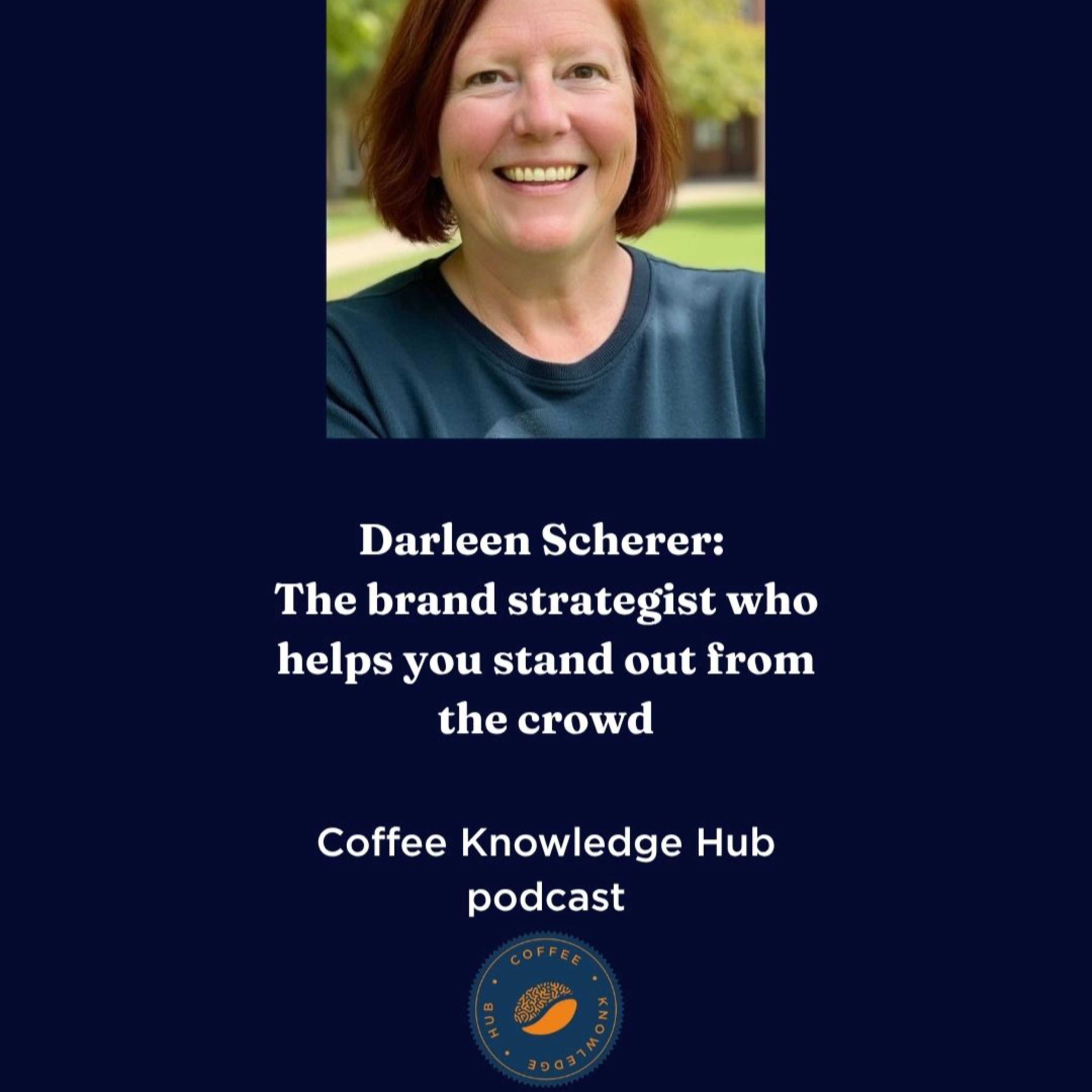
Darleen Scherer: the brand strategist who helps you stand out from the crowd
4w ago00:58:55Tap to summarizeDarleen Scherer has zoomed in on what makes businesses stand out from the crowd since her first job in advertising in the 90’s and through her coffee career that started in the early 2000’s. In this episode we discuss why you need to differentiate your business, how to identify what you makes you special and how to weave your brand identity throughout your business. Darleen Scherer has a career spanning 30 years across advertising, coffee and brand strategy. You can learn more from Darleen through her weekly Linked In newsletter, her website , substack and the coffee knowledge hub.
Transcribe →
Dale Harris: The World Barista Champion on the road to Ithaka - Part 2
Jun 1900:56:34Tap to summarizeOur original conversation with Dale went for over 2 hours and we didn't want to cut any of the good stuff, so here is part 2. Dale went into his sourcing policy, and decision framework for evaluating which coffees to buy. This is very different to what other competition winners do with their coffee sourcing in their roasting businesses. We continued to explore the bigger themes of translating what Ithaka is to his customers and how he is developing this. In reflecting on this episode and part 1 , the tension for Ithaka is also a long standing tension for the specialty coffee industry. How do we welcome coffee lovers into the specialty arena, where diversity of flavours, brewing methods, recipes, and service styles make discovery a closed door that can easily be opened, but still presents a barrier. This makes Dale's challenges more relevant and personal for anyone who is on the same path. https://ithaka.coffee/Watch this on the coffee knowledge hubWe read and reply to all comments across each channel
Transcribe →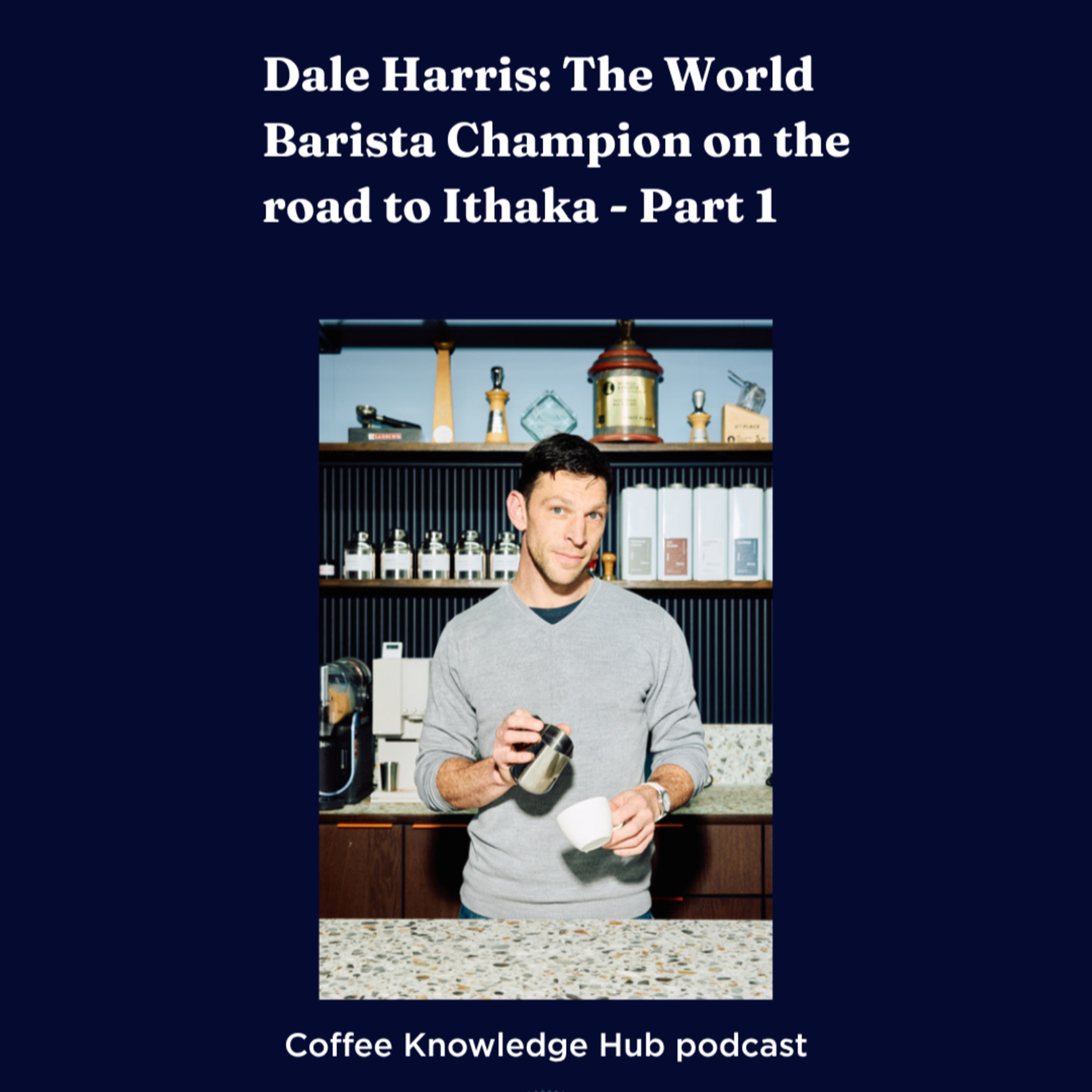
Dale Harris: the World Barista Champion on the road to Ithaka - Part 1
Jun 1200:56:09Tap to summarizeBeing the Wolrd Barista Champion and having 20 years of direct experience in the coffee industry is not a free pass to setting up and building a successful coffee business, but that is also the where the joy is. Dale Harris established Ithaka coffee in 2025 and he shares his experiences. We spoke for over 2 hours and have cut the recording into 2 parts. Part 1 shares the vision and describes Ithaka. Dale's embracing the complexity of coffee and wants his customers to come down the rabbit hole with him. He describes in detail his menu, the pros and cons of using a bean to cup machine and customer perceptions. This is a candid conversation and anyone who knows Dale will see his authentic self, for those who don't, you will see the depth of thought that goes into developing a business, how to build on existing skill sets and embrace learning and the challenges of filling skills and knowledge gaps to create a successful business. Also, if you enjoy this podcast - check out Ithaka coffee You can watch it on Spotify, the Coffee Knowledge Hub, and listen on Apple Podcasts. Insta
Transcribe →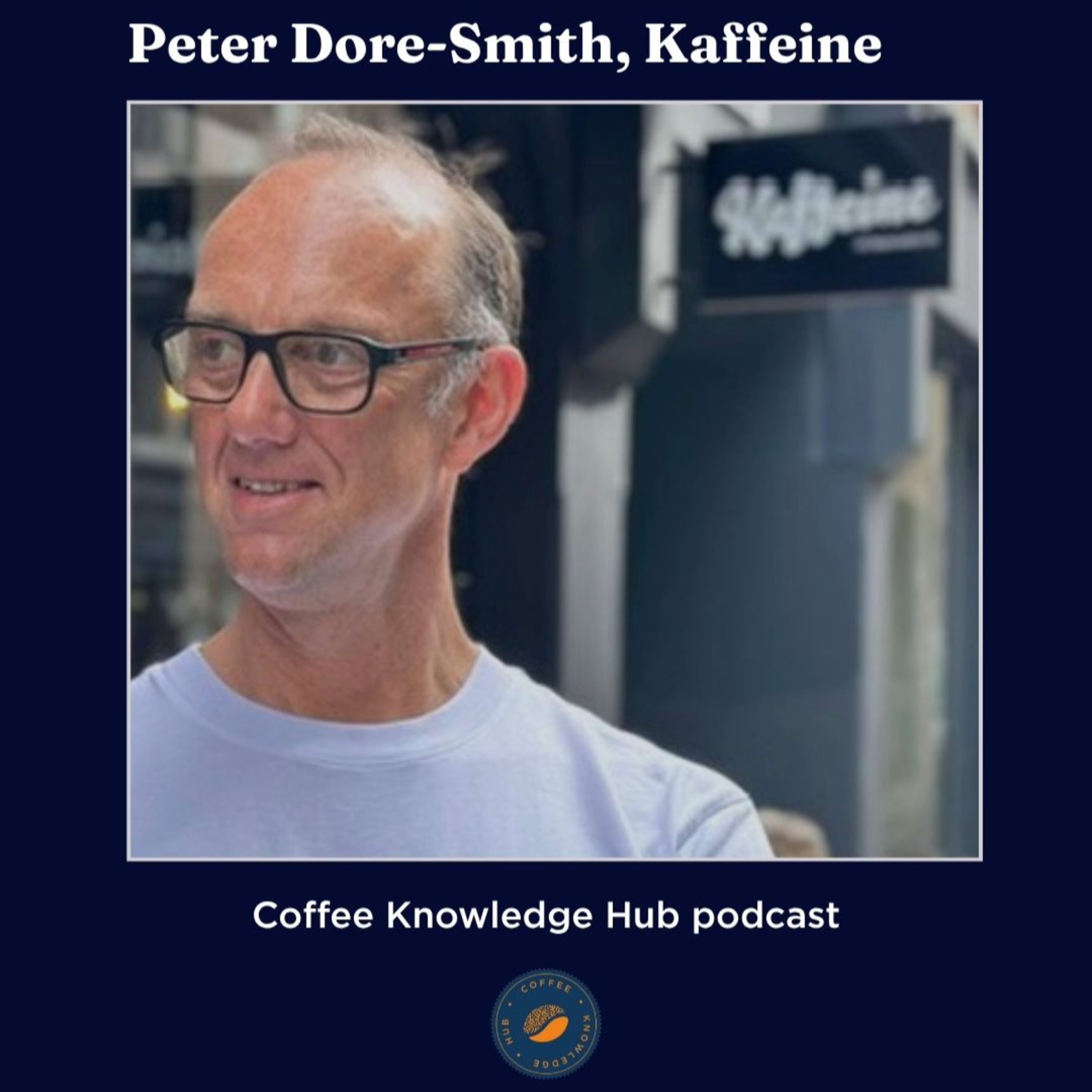
Opportunities, a bit of luck and a lot tenacity: Peter Dore-Smith, Kaffeine
May 2200:48:57Tap to summarizeIn this 34th episode we're sitting down with someone who we have wanted to sit down with since before we started this podcast. Peter Dore-Smith, the founder of Kaffeine in London, has built one of the most recognised specialty cafes in the world. Over the next hour or so we're going to cover what it actually takes to run a great cafe — not in theory, but in practice. We'll get into the vision and hospitality philosophy that has defined Kaffeine since day one, the brand and marketing work that keeps it in people's minds, and the operational and financial discipline that keeps it viable. These are the essential blocks for building a business that outlasts trends and remains visible while the competitive landscape evolves. Peter has always been incredibly generous in sharing his knowledge. If you work in or run your own cafe, or you are thinking about starting one, grab a pen and paper because the masterclass is bout to begin. https://kaffeine.co.uk/Instagram kaffeine.londonhttps://coffeeknowledgehub.com/
Transcribe →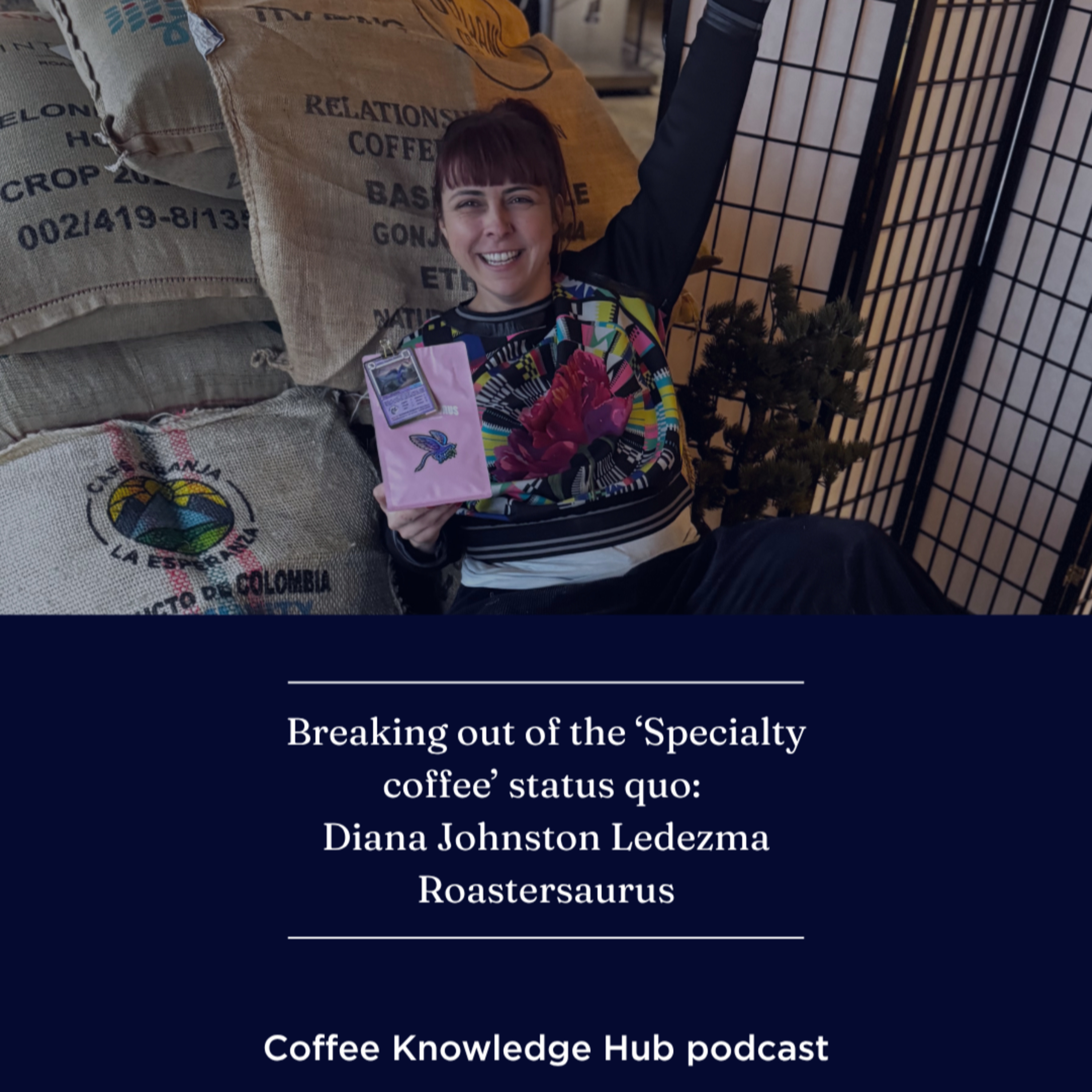
Breaking out of the ‘Specialty coffee’ status quo: Diana Johnston Ledezma Roastersaurus
Apr 101:00:58Tap to summarizeDiana Johnston Ledezma doesn’t fit into neat boxes and neither does her highly original coffee brand - Roastersaurus. It is easy to follow trends - we see it, we like it, we do it. But there are always other ways to achieve the same end goal and there are advantages to doing this. Brands and products are building emotional connections and communicating intrinsic and extrinsic attributes of the product. In this case - specialty coffee. Roastersaurus is an example of how breaking out of the status quo gives a strategic advantage. Namely - it is original - which attracts a new and specific audience, while also being familiar to ‘specialty coffee’ consumers. The concept differentiates Diana’s coffee and brand from an ever more crowded field. Learn more about Roastersaurus and the lessons that can be applied to other coffee brands to help them communicate specialty coffee to increase sales and build long lasting relationships with your customers. Links:Roastersaurus is a category finalist for best coffee packaging in The London Coffee Festival Awards 2026, Vote by 8 April 2026https://invt.io/1wxbs18346l www.roastersaurus.comExample of lore (coffee info) page: Basha Bekele: Raptor Quickfang Lore | RoastersaurusInstagram: roastersaurus
Transcribe →Blueprint for a thriving specialty coffee industry: Mihai Panfil, Origo Coffee
Mar 200:48:03Tap to summarizeAndrew and Tibor caught up with the super-impressive Mihai Panfil, founder of Origo Coffee — one of Romania's most influential specialty coffee businesses, spanning two cafes, a roastery, and the experimental coffee brand - BrewZeus . He's also the driving force behind the Coffee East Coffee Festival, which brings together over 60 roasters and 30,000 visitors each year in Bucharest. Few people have a better view of where Romanian coffee has been, and where it's going.Some highlights - From 0 to over 400 specialty cafes in 12 yearsCultivating a specialty industryBacktracking from automation in favour of the customer experience.There are lessons here for a global audience:1. leadership and vision are needed for developing the industry2. Continuous evolution and experimentation are requisites as the market and different forces shiftOrigo CoffeeLinked INCoffee East coffee festivalBrew ZeustakeawaysMihai Panfil founded Origo Coffee Roasters, a leading specialty coffee business in Romania.The Romanian coffee market was initially dominated by Italian-style cafes with limited options for specialty coffee.Mihai's experience at the World Barista Championship inspired him to create a unique coffee experience in Romania.The first Origo cafe focused on customer interaction and education about specialty coffee.COVID-19 shifted consumer behavior towards home coffee consumption and increased demand for quality coffee.The Coffee East Festival was created to celebrate and connect the coffee community in Romania and Eastern Europe.Mihai emphasizes the importance of collaboration and competition in developing the specialty coffee market.The coffee industry in Romania has seen significant growth, with over 400 coffee shops in Bucharest alone.Mihai believes that the future of coffee consumption may lean more towards home brewing.The success of coffee shops now relies heavily on unique concepts and customer experience.keywords: Mihai Panfil, Origo Coffee Roasters, Romanian coffee culture, specialty coffee, Coffee East Festival, coffee industry challenges, COVID-19 impact, coffee roasting, coffee sourcing, coffee community
Transcribe →
Water for coffee for cafes and operators with Maxwell Dashwood
Jan 3001:28:24Tap to summarizeWe know that you can only do the right thing by your coffee by ensuring that the water you use to brew it is the best it can be. The topic made waves in the industry in large parts thanks to Maxwell Dashwood and Dr Christopher H Hendon’s book Water for Coffee published in 2015. Now they have brought out edition 2, which is essentially a rewrite of the first edition. We spoke to Maxwell to learn how we can apply the updated science and technology as best practices for businesses serving coffee. We cover a lot of topics including: Why water for espresso should be different to water for filterHow to optimise water for different brew methods What to avoid for cafe operators You can buy the book at these respected online retailers: UK:https://maxwelldashwood.com/Europe:www.contributor.coffeeSwitzerlandhttps://www.mylittlecup.ch/products/the-physics-of-filter-coffee-jonathan-gagne-livre-sur-la-science-du-cafe-filtre-copyCanada:eightounceUSA:https://www.scottrao.com/products/water-for-coffee
Transcribe →
Crafting the world barista champtionships
Dec 2000:38:38Tap to summarizeFrom being an 'immigrant' who wanted to shed the stereotype by doing something really American to being told later in life that she was 'too American, this is a world competition', Cindy Ludviksen has the shaped the World Barista Championships to be the leading global coffee competition. It has profoundly changed countless lives over its 25 year history and given the barista profession credibility. This interview highlights how Cindy stepped up as a volunteer, shaking off prejudices about her identity to transform an obscure 'sideline' event at trade shows, into a global phenomenon. This is a case study in leadership, without the authority of an official position and as a minority and a woman. We learn about the early days of the WBCs and how it evolved to become the professional body it is today. We also get insights into Cindy's aspirations for the future of the WBCs. For anyone in the coffee industry who has been touched by these competitions, this is essential listening. You can also comment and watch HEREFind out more about Cindy through Specialty Coffee Assocation and her Linked In
Transcribe →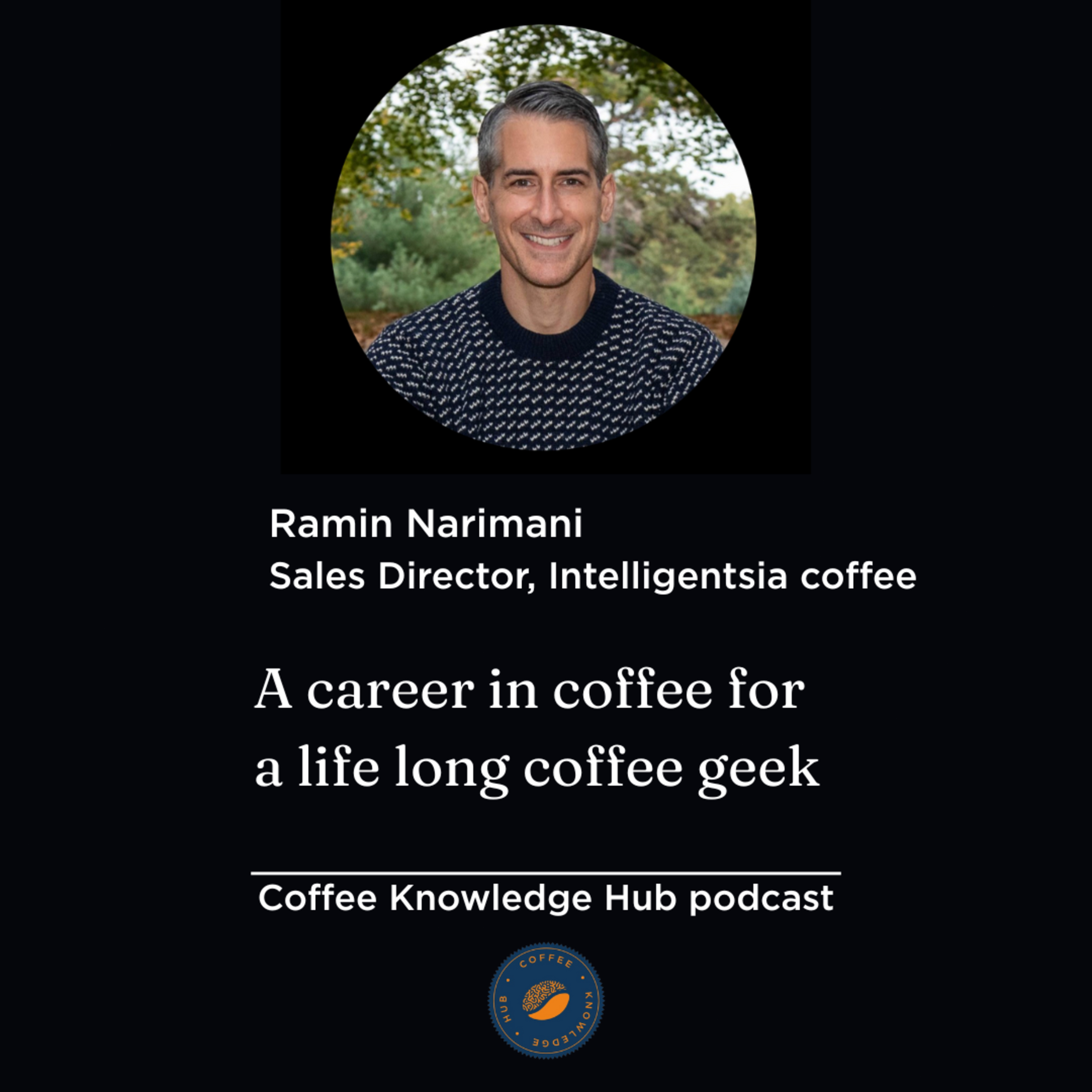
A career in coffee for a life long coffee geek
Dec 401:21:29Tap to summarizeWhat does a coffee career look like when you’re a curious lifelong coffee geek? Meet Ramin N - sales director at Intelligentsia coffee - who shares a ton of insights, knowledge and experience from his 30 year journey in coffee. He has been a barista, cafe owner, trainer, technician, sales manager, sales director and a kind of general manager of a co-roasting business with a foray into retail. We cover a lot of ground in this conversation We wanted to better understand how sales works in a medium sized specialty roaster. This is valuable for anyone working in sales or who wants to work in sales to know what skills and experience are valuable in this role. We talked about the evolution of Intelligentsia coffee from the early days of specialty coffee in the US to today. We learned how they are adapting to new trends in the market and also how they are seeing these trends reflected in sales. The key take-away for us was that continuous curiosity and an entrepreneurial mindset - that takes ownership or has a strong sense of agency, will position you well in the industry for your career development and also for managing some of the more challenging times that life throws at us.
Transcribe →
Bloom: coffee as an agent of change with Tigger Chaturabul and Mikael Jasin
Nov 1000:32:48Tap to summarizeA biography, lessons in mastery, deep insights into the world of coffee and competitions - this interview with the author of Bloom, Tigger Chaturabul and her subject, World Barista Champion 2024 - Mikael Jasin, has something for everyone. Bloom is a compelling story, and we highly recommend it because it will inspire you to achieve your goals, giving you practical advice on how to do it. You will also be inspired knowing that you can reach amazing heights while being authentic to yourself, and vulnerable. Bloom celebrates how a niche craft like coffee-making can be a lens for bigger conversations about purpose, impact,and intentional living.In this episode we discuss how the book came to be, and Mikael shares some advice that will give you a small taste of what you will find in the highly readable pages of Bloom. Video for this episode will be posted on another channel soon. You can learn more about the book here:Contributor for international retail: https://contributor.coffee/products/bloom Tokopedia for Indonesia: https://t.ly/PqFM6Wholesale enquiries:Asia: info@afterhoursbooks.comUK: s.dunienville@goldhawkinternational.comInternational: tigger@contributor.coffee
Transcribe →