← Coffeez for Closers with Joe Shalaby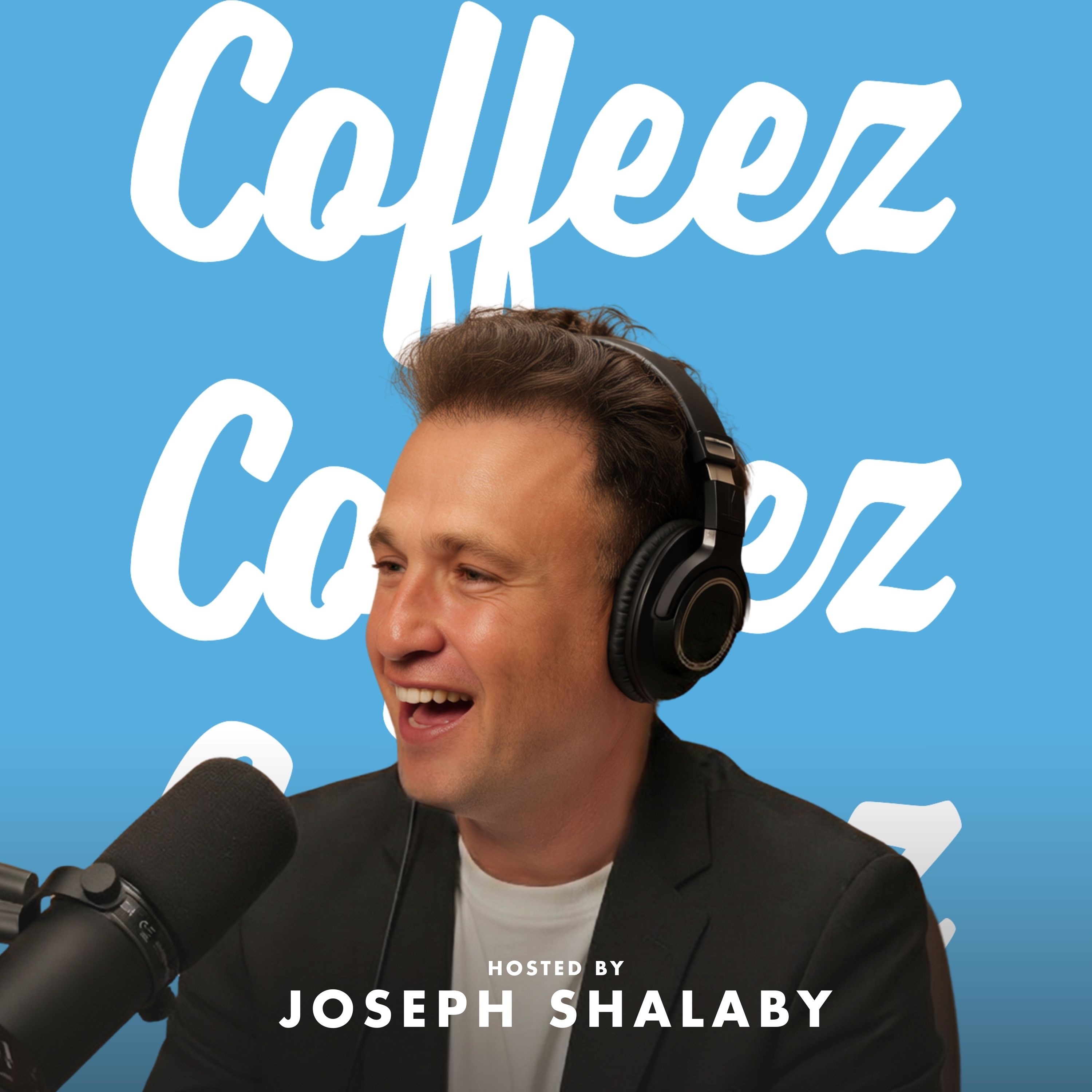
Coffeez for Closers with Joe Shalaby
The Truth About Sports Memorabilia (And Why Authenticity Matters) | Ben Beeri
00:49:48
Loading summary
Transcript121 lines
- [00:00]
A
Welcome to another episode of Coffees for Closers. Today we're sitting down with one of the owners and founders of Golden State Memorabilia, the largest distributor of authenticated memorabilia on the planet. Please welcome Ben Veery. Thanks for coming on the show. Welcome to another episode of coffees.
- [00:20]
B
Thanks for having me, Joe.
- [00:21]
A
Yeah, it's been. It's been a fun conversation so far, chatting with you. And, you know, as I told you in the beginning, I love sports memorabilia. It's cool to meet with someone that has the biggest selection on the planet of sports memorabilia, authentic sports memorabilia. And we're going to dive right into this now. What is it that really attracted you to a marketplace that is, number one, hyper competitive? Number two, there's just a lot of shade around sports memorabilia. What is it that drew you to that business?
- [00:55]
B
For me, it was more of a passion. Like, I just liked going to basketball games when I was a kid. I'd bring my cards, I'd bring my photos, I'd bring my jerseys, and I'd try to get autographs from the players. And I thought it was cool. I grew up in the Bay Area, big Golden State warriors fan. They were not a very good team. No, they just became not a very good team. It got a little bit better. They drafted in 09. They drafted a guy by the name of Stephen Curry, and slowly they started climbing to relevance. And it was cool to just amass a collection over the years and honestly just grow a collection of autographs that I enjoyed. And my business really became a continuation of growing that collection. And I wanted to get to a point when I started my business where I wanted to have 10,000 unique items for sale on our website and stores and online. And then we got to 10,000. We wanted to get to 20,000. And then we got to 20,000. We wanted to get To 30,000. And we got the 30,000. It's like, okay, that's a lot of items. Let's kind of start selling some more stuff. Try to get it down to 20,000 again or start getting it down. I realize less is more when carrying a diverse set of inventory because so many of the different athletes are very niche. And it's. It's nice to have the large selection of things, but most people, like, gravitate to the few athletes many times rather than the many athletes once, you know.
- [02:27]
A
30,000 unique memorabilia pieces. What is the value of something like that?
- [02:35]
B
It gets up there, for sure. I mean, just we got items.
- [02:38]
A
One Jordan item is like, 30 grand.
- [02:40]
B
Sure. Yeah. We get items from $30 to $30,000. I mean, a few could be higher than that even. But it really just depends on what the scarcity of it is, how many can get produced, what the item it's on. Sometimes just one trading card could be tens of thousands of dollars alone. You can add an autograph to that and it climbs in value even more.
- [03:00]
A
Yeah, so you have that. 30,000 is a combination of cards and sports memorabilia or just.
- [03:06]
B
Well, they're all, they're all autographed. Right. So it could be autographed cards, it could be autographed jerseys, photos, balls, any type of item, really.
- [03:15]
A
What's the most expensive piece you've ever sold?
- [03:17]
B
Most expensive piece we've ever sold? Well, I mean, there's a few different ones, right? I mean, usually it ends up being somebody who's deceased or it's scarce. I mean, sold like Lou Gehrig items before. I mean, I had a Jackie Robinson on a nice big photo. That was a pretty cool item. Some trading cards, some trading cards of guys like Steph Curry or Michael Jordan or Kobe Bryant and so people like the Goats, people like the players that really stick out and that's what I love collecting have formed like a connection to them. Like, I mean, people see that and they go, hey, I don't just admire Kobe Bryant for who he is on a basketball court. I admire a guy like Kobe Bryant for who he is as a person, what he represents and the Mamba mentality and how he inspires me to work better at my craft of what I do every day. I couldn't be a professional basketball player. I admire a guy like Steph Curry for his consistency and his loyalty and his infectious joy in which he does everything he does with. I mean, the guy goes on the basketball court and he elevates everybody around him. Each one of his teammates becomes better for being around him. Teammates, coaches, fans, training staff. Like there's guys like Steph Curry, you meet people and like there's nothing, not one person who doesn't become better around him.
- [04:40]
A
Yeah, I had a friend who had a Michael Jordan worn jersey that was signed and he bought it for $200,000.
- [04:49]
B
Well, it's probably gone up in value since.
- [04:51]
A
Yeah, crazy. Like I'm like, here I am bragging about my Michael Jordan jersey that's probably worth 10, 12 grand and he's got like, no, mine is DNA verified worn by Jordan at such and such. Have you ever carried any of that kind of stuff where it's like game worn jersey?
- [05:09]
B
We get game used stuff from time to time. But again, it's like the higher an item climbs in value, the more niche the market gets. Right. So unless you decide you want to take the item to auction and liquidate it.
- [05:22]
A
Right? Yeah.
- [05:22]
B
You don't really get a quick turn on it. So sometimes it's like you find the right buyer for the item, or you're just trying to get rid of the item, move on from it, and get into something else.
- [05:31]
A
When you're carrying 30,000 pieces of inventory, do you have buyers lined up beforehand to acquire that? Like, how does that work? Because that's a lot of inventory to carry. And how do you even carry that stuff? It's not like you carry it in a warehouse. It's gotta be, like, armed, guarded type of facility.
- [05:49]
B
Well, you have items that, sure, yeah. Buyers want to snatch up as soon as you get them in stock. But a lot of items, you just kind of buy them and hold on to them and make them available to the right buyers on the right marketplaces. And each buyer knows what they're looking for. Each buyer knows what team they're a fan of, what celebrities are a fan of. And they'll go and they'll search, hey, if you're a fan of the Houston rockets from the 1994, 1995 championship and you want an autograph of Robert Horry because you thought he was a badass on that team, you'll go online, you'll search for a Robert Horry autograph. They're typically not very expensive. And you'll go ahead and you'll buy one of those, and that just kind of ends up hitting kind of all the nostalgic feels of, hey, I was a fan of this team X amount of years ago. For me, I thought Jason Richardson was awesome when he was on the warriors in 2001 and 2002 winning a dunk contest. We didn't get all star players back then. The warriors didn't really make the playoffs. Like, it was just, what moments can you hold on to that you connect with as a person you think are cool, that you want to commemorate? And that ultimately becomes a reason for wanting to collaborate, collect something, and wanting to go online and search for something and wanting to have it so you can enjoy it.
- [07:08]
A
That's awesome. So, you know, we talked about, you know, the fraud that's going on in the memorabilia world and how prevalent it is now. Now I've bought stuff off of ebay, and sadly, now, like, now ebay now has this, like, other level of authentication outside of psa, because you could say, you're buying something on. On ebay, it's PSA graded. Then PSA is like, this isn't from us. Yeah. So how often are you encountering counterfeits in the memorabilia space?
- [07:42]
B
So for us specifically, I mean, we do our due diligence on each and every item we sell and we ensure that the items we sell are authenticated. There isn't a single item that we sell that isn't authenticated and has gone through all the checks and processes to ensure that, hey, the item that our buyers are getting authentic. The thing that I would kind of advise people who are looking to purchase memorabilia to do, whether it's from us or somebody else, is to educate yourself on which autographs are the authentic autographs versus which ones are not. If you go online, you type in, you're looking for a Kobe Bryant autograph jersey, and one is available to you for three or five hundred bucks. It likely wasn't signed by Kobe Bryant.
- [08:27]
A
Yeah. So what is it? What do you sell a Kobe Bryant signed jersey PSA graded for?
- [08:33]
B
I mean, they range depending on the type of jersey, how it's displayed, era of the autograph. I mean, you can probably get a Kobe Bryant jersey for five to ten grand nowadays.
- [08:45]
A
I'm actually working with the church now. I'm going to. I got a design it really well, like a Kobe signball authenticated by the Lakers with a Kobe PSA9 rookie card and like a really cool picture display. I'm hoping that the church can get 12 to 15 grand for it.
- [09:02]
B
That'll be nice.
- [09:03]
A
Yeah. So, you know, like, I like to collect myself and then I like to buy memorabilia to raise money for charity because people will spend top dollar if it's a donation. So it's like a way that I've been able to kind of like get a multiple on my investment for charity, charitable contributions.
- [09:22]
B
And it's cool anytime you can give back to someone. I mean, it's like really coming from a place of giving and looking at things to, hey, like, I'm not doing this for me, I'm doing this for somebody else. And it's really cool anytime you can put yourself in a frame of mind to be able to do that.
- [09:36]
A
Now, let me ask you, at what age did you realize, like, this is what you want to do? You want to get into sports memorabilia for a living?
- [09:44]
B
Well, it was funny. So I always enjoyed getting autographs from players. I always thought it was cool.
- [09:51]
A
I. I still enjoy that.
- [09:53]
B
I still enjoy it. I had an interesting upbringing in which me getting autographs Was frowned upon by parents, like teachers. Everybody at school, everyone's like, hey, Ben's too focused on getting autographs. And got to a point where when I was 12 years old, I was actually put in for a psychiatric evaluation. It's like, hey, what is wrong with this guy? He's too focused on these autographs. He's not getting as good of grades in school. All this collecting autographs is interfering with him in school. He's not getting as good of a grades as he could be getting. And what's wrong with him? Like, we need to get. Like, we need to get him some help. We need to get Ben some help. What's going on with him? And I was very focused on it. I really enjoyed it. I would always sort all my cards or photos, sort my autographs and just had fun with it. And I got. About a year or so later than that, I got kicked out of school when I was in middle school. And that kind of sent me down a path of, well, what did I do wrong? Like, needing to kind of reflect on myself, understand, hey, what got me here? And how do I get out of this next situation that I'm getting into and kind of work to prop myself up? Me going and getting autographs was a problem to people in the past. Do I now stop doing something that I'm passionate about? Because people are telling me that I shouldn't. And I ultimately kind of took a little bit of a break from it and then came back to it during my high school years, and I was more passionate about it than ever before. And I learned a little bit about the business side of things. And I'm like, it's full steam ahead. It's time to get going on this. And I really. I started working more on the business side of things when I was 20 years old, and things started heading in the right direction. And I'm really grateful. Our business is going to turn 10 years old in April. 20. 26.
- [11:52]
A
Wow. And what age did you create the incorporated?
- [11:56]
B
I was. I was 20 years old.
- [11:57]
A
20. So now you're 30?
- [11:59]
B
Turning 30 in a couple of weeks. I guess I'm getting old now. What can I say?
- [12:04]
A
You're not 40 yet. You got plenty of time now. You know, what would you say to someone who's looking at getting into sports cards, sports memorabilia for a living?
- [12:16]
B
I would say that make sure it's something that you enjoy doing and it's something that you're passionate about. There's plenty of other fields in the world that can be more lucrative than Sports cards and sports memorabilia. Sports cards and sports memorabilia is a fun business to be in. You can certainly make a living and certainly make a good living. But if you really look at every type of business and the levels of scalability to them, there's many other businesses out there that are far more scalable than sports cards sports memorabilia because there's only so many authentic autographs that are being signed by each and every athlete. There's only so many cards that are being produced that have value by the sports cards company. Right. So you essentially end up getting in a business of buying and selling and you can make money doing it, you can make a living doing it, you can make a great living doing it and it's awesome and it's fun. But I would say to make sure that it's something that you genuinely enjoy doing. Because if you get into it without any passion or enjoyment of doing it, there's going to be days that aren't the best days. And those days are really going to knock you down and discourage you and you're not going to want to do it anymore.
- [13:30]
A
Now after you finish college, you're what, not 20, 21, you're 20 years old, right?
- [13:35]
B
22 when I finished college.
- [13:37]
A
And then you go, you tell your parents, you know what, I'm not going to pursue whatever my major was in. I'm going to go into sports memorabilia. What was that like?
- [13:47]
B
That was an interesting time for me. So I graduated college. I really didn't have a full level of belief in myself that I could go for it, go for the entrepreneurial dream, go for my business full time. Why?
- [14:05]
A
What were you questioning?
- [14:07]
B
Well, I was questioning myself and like my self limiting beliefs. And I grew up in an environment that wasn't really conducive to my growth. I wasn't told that I could do anything that I want to do. I was told that, hey Ben, you've got these loves, you've got these passions, but that's what they are, their loves, their passions. Like go find something real to do for a living type of thing. So I graduate college and I go on some job interview and at this point I was working on my business part time and I'm like, maybe I'll go on some job interviews and make an extra 40 or 50 grand a year so I can help fund my business. And I went on a couple job interviews and I remember walking out of a job interview one day and going, I don't want this fucking job anyways. Like there's like, I can't See myself getting up in the morning and coming to work here. I'm just gonna send it. Just gonna go and work full time on my business, more than full time. Every hour, every waking hour of the day. And I started working on golden state memorabilia 16 hours a day, seven days a week. And I probably did that for the next.
- [15:13]
A
But your business relies on capital contributions.
- [15:17]
B
Absolutely.
- [15:18]
A
How did you get capital to attain the inventory, to make it as business? You could work as much as you want until you're blue in the face. But did you get, like, a loan? Did your parents?
- [15:29]
B
You know, Actually, no. I was. I was. I was very. I was very grateful. I had. I had some help from a previous venture that I did. When I was 17, I got into the ticketing business, and I would buy and sell tickets to warriors basketball games. And that's kind of much. I mean, it wasn't a ton. Right. But it's like, hey, when you're starting a business and you've got, say, built up 50 to 100 grand, it's like, I can go and start buying some autographs with that.
- [15:58]
A
Yeah.
- [15:59]
B
Start reselling it. Start buying some more autographs and resell those.
- [16:02]
A
You had an initial venture.
- [16:03]
B
And so I ended up, in 2019, when the warriors moved to the Chase Center, I probably had about 100 grand saved up, and that's what they wanted for the tickets to get the seat licensing fees at the Chase Center. And I told myself that I would be better off investing this into my memorabilia business than I was into the tickets. And that was one of the best decisions I ever made, because later that season, five games into the season, Steph Curry gets hurt. And then later that season, they got suspended for the season, got suspended for Covid, and I would have lost my hundred grand trying to sell the tickets. So a little bit of divine intervention, and I was able to. I was very fortunate that I made the decision that I made to kind of invest more in the memorabilia side of the business. And it was just. Honestly, it was building and managing a collection, and that's what started out, and ultimately it turned into, hey, how do I structure a business? How do I hire employees? How do I build a team? How do I train employees? How do I. I mean, you got to teach yourself about taxes. You got to teach yourself about accounting. You got to teach yourself about leadership and hiring and how to inspire other people to share in your vision and grow. So it's.
- [17:23]
A
How many people are part of your vision now?
- [17:26]
B
Part of my vision. I mean, it was interesting. There were points in time where I was managing upwards of 20 people. And it's like. And we've gotten down. I mean, nowadays we have people coming in and out. I mean, we've got slightly upwards of 10 now. And you end up getting in a spot where it's like, how do you inspire other people to go and chase their dream careers, whether it's with you or not with you? If somebody on my team wants to go and do something else in life, how do I give them the tools to go out and venture into a space where they can go and do that?
- [17:57]
A
I mean, that's what it's about. It's about helping other people grow and seek their passion, seek their dreams.
- [18:02]
B
Totally.
- [18:04]
A
And everyone's different. Right. Let me ask you this though, because I'm always fascinated with people who built a career. I mean, I don't know anyone that's really built a sports memorabilia business. I had someone who built a sports card coaching the biggest in the country business, and they teach people how to do sports cards on the side. But like, sports memorabilia is so niche.
- [18:27]
B
Very.
- [18:28]
A
To begin with. And then you dive into the niches of the niches.
- [18:31]
B
Yeah.
- [18:31]
A
And to be honest with you, the profit is in the niches. It is right with any industry whenever there's a niche. So what niche have you found to be like the, the most lucrative in the sports memorabilia business?
- [18:44]
B
Well, the niche that we have is our autographs are authentic. And there's so many different parts of the business in memorabilia and collectibles, and there's so few people who sell authentic autographs. Overwhelmin majority of autographs that are available on the market for people to purchase are usually not signed by the person that they claim that they're signed by.
- [19:12]
A
That's fascinating. You say that. How do you know that?
- [19:15]
B
Well, I mean, you go online and you look and all of a sudden, hey, there's a brand new style of a Lakers jersey signed by Kobe Bryant. And Kobe, rest his soul, has not been with us for the last five years. He could not have possibly signed X jersey or whatever it is that's being sold for two or three hundred bucks. And you see all this stuff and there's people who are preying on buyers that lack an education as to which of the signatures are authentic. So we really look around and look at all the great companies in our industry that are selling authentic memorabilia. And I commend them because I know what it takes. I mean, you've got to take the time, you've got to sit down with an Athlete. An athlete has to sign the autographs or you've got to purchase the autographs from people who are reputable, who obtained the autographs directly from the athletes. And at the end of the day, the niche is an athlete or a celebrity took a pen and signed the autograph themselves. And that autograph has then gone through an autograph authentication process and has been authenticated. And only then it can be made available to sell.
- [20:19]
A
What is the autograph authentication process?
- [20:22]
B
The autograph authentication process usually runs through one of three main companies, psa, JSA and Beckett. And they have experts who take a look at these autographs, compare them to known examples of autographs signed by said athletes and celebrities, and they come to a conclusion in which they deem the autograph to be either likely genuine or likely not genuine. And in order for an autograph to be authenticated, one of these experts has to deem the autograph to be likely genuine. And so then we end up with these autographs that are authenticated and we can make them available for our buyers to purchase.
- [21:04]
A
Now, let me ask you this, because it seems like your business probably suffered a lot in the beginning. Can you recall one of your greatest struggles.
- [21:14]
B
Oh, man.
- [21:15]
A
In starting Golden State Memorabilia?
- [21:18]
B
Well, I will say this. First of all, as an entrepreneur, I think the greatest struggles you go through in business are personal because you tie your personal identity to how your business is performing. And early on, when you start a business, any business, there is a very, very, very significant chance that your business is going to fail. Like you walk into starting a business. Like if you were to tell 20 year old Ben, hey, in 10 years for your business to still be alive, the odds are 99 point whatever percent is you are going to fail, your business is not going to be around in 10 years. And that's the reality of the situation. So I am essentially going into something knowing that I have a less than 1% success rate of staying around, right? And there's this constant, am I going to, to be able to do this? Is this business going to be viable? Am I going to get to a point where I can make a living? And it's this constant, keep working, keep working. How do I get over the hump? Can I generate revenue? Can I be profitable? Like, can I afford to pay rent for a warehouse? And all these different things that keep coming up and all these different expenses and all the costs of doing business that are unforeseen, that happen to every business owner, and those early on struggles are ones where you have to keep pushing through and you almost have to have a certain sense of like self delusion to believe that you are going to make it against the incredible odds that are stacked against you. And I remember very distinctly we were just kind of starting to get over the hump. We were just starting to generate some revenue. This was around March of 2020 and COVID lockdowns happen. Everything shut down. I lived in Northern California in the Bay area. Our business was based out of Walnut Creek, California. That was one of the most shut down parts of the country. And there was a stay at home order. And all of a sudden I was not allowed to go to my place of business. And I had to sit there and I had to make a decision. I knew that I had signed a lease on that warehouse not too long before that. My business would not survive if I had to continue to pay rent for a business that was non operational. And so I made a promise to myself. I went into the office against the stay at home order seven days a week with no exceptions. Thankfully, during COVID there was no outside distractions. Could work my 16 hour days without being bothered by anyone. There was no, no pressure to go out and be social. There's no friends getting together. There's nothing going on in the outside world. Could go to my place of business, laser in, be laser focused.
- [24:37]
A
And.
- [24:40]
B
The first week of COVID there was no sales. Everybody was uncertain. Nobody was buying anything. I was sitting there questioning, like, is my business even going to survive? I remember going the office, there's no orders to ship. There's no, like, none, none.
- [24:55]
A
Because people are like, why am I gonna buy a memorabilia? I'm gonna die.
- [24:57]
B
Yeah, the world's ending and it's like, okay, like I've got to pay my employees, I've gotta pay rent. There's no money coming in. There's no revenue coming in. Okay, how much money do I've saved? How many months can I keep my business going for? And all of a sudden, a couple weeks later, things kind of started kicking up a little bit. People realized it's like, hey, yes, we are stuck at home. We are going to get through this. We're not going to die. And all of a sudden, sales kind of started kicking up a little bit. And I'd say memorabilia probably became more popular than ever at that time.
- [25:37]
A
Why do you think it became more popular than ever?
- [25:40]
B
I think people were at home and they had an opportunity to reflect on what they could connect with. And regardless of your background or your demographic or what your interests were or political beliefs were you had a certain connection with an athlete or a celebrity, and you resonated with that person. Whether you were mourning the death of Kobe Bryant at that time or whether you thought Luka Doncic was the next big athlete, or Patrick Mahomes is dominating or, hey, Tom Brady's on the Buccaneers. What the hell's going on here? Like, how is this gonna go down? And you've built a connection to an athlete. You resonate with an athlete. Resonate with. Hey, Taylor Swift's coming out with a new album. This is gonna be cool. I'd love to own a piece of memorabilia of hers.
- [26:32]
A
Or.
- [26:32]
B
I just watched this movie, I think. Who was it? It was the Ozark show. I remember we were selling. We were selling. A guy played Marty Bird. We were selling memorabilia. It was like, okay, we haven't been able to sell this guy in years. All of a sudden, now people are. It was Jason Sudeikis. It was, yeah. And people are buying his memorabilia. And it's like. And people were at home, and they had a chance to reflect on who they could connect with. And when people find a moment of connection, that is when they decide to purchase a piece of memorabilia to commemorate that moment of connection.
- [27:10]
A
It's incredible that, you know, during that uncertain time of COVID that people were buying, like, their favorite actors. You know, what were you. What was, like, the bit during that doubtful time. What is it that really kind of helped. Gave you that. That hope that you were gonna get through this?
- [27:34]
B
I think for me, I felt like I didn't really have too much of a choice. Like, my entire personal identity was tied to the success of that business. And if the business failed, then I was a failure. If the business succeeded.
- [27:56]
A
I thought I.
- [27:57]
B
Would be a success. And it was really interesting what happened and what unfolded in my life over the next couple of years where I realized that my business was viable by many measures. My business was viewed as successful by many people, but I didn't feel successful as a person. I didn't feel whole. I didn't feel adequate. And it's so interesting, chasing the external successes that other people view and getting to that place, realizing it's like, okay, now the personal work can begin.
- [28:43]
A
Yeah.
- [28:44]
B
And that was something that really hit me hard because, yes, my name is Ben Beery. I'm an entrepreneur. I'm a business owner. I own this business, Golden State Memorabilia. But I am not the business. I am not the heartbeat. Like, I am separate from the. The business. I am a person. I need to work on myself. I desire to have friendships, connections. I desire to love people, I desire to be loved. I desire to accept people, I desire to be accepted. And it's like, how do you separate your personal self from your business? And I didn't think I could do that because I felt that I had to be the heartbeat of the business. And that was a really interesting journey that that prompted for me.
- [29:37]
A
What was the greatest lesson in that journey?
- [29:40]
B
The greatest lesson is that you get to learn something new about yourself each and every day. And that everything in the past that has happened in your life has happened for you, not to you. And that the future that is ahead of you is unknown. You have no control over it. There's nothing you can do to get the future to reveal itself, but to just accept and embrace that, hey, the future is unknown and I'm here for it. And I look at things now and I'm just grateful for how everything has played out in my life. I understand that it's all been a part of my purpose and I'm genuinely looking at the future and I have no idea what's going to happen in my life, but I'm excited for it. I'm here for it.
- [30:36]
A
Yeah. I mean, that's the part of the journey now. What do you think some of the best advices that you received during the journey?
- [30:49]
B
I think the best advice I received is to just not stray off from who I am as a person and to not diminish who I am in search of acceptance from others. And to lean even further into who I am as a person and into my authenticity. And that there are going to be people out there that judge me or that don't see eye to eye with me or that don't accept me, but as long as I can accept myself and be myself and show love to other people and be respectful to other people and accept other people for who they are, that that's really what matters. And just to be the most authentic version of myself that I can possibly be and hopefully inspire others to be the most authentic version of themselves that they can possibly be be.
- [31:45]
A
Have you any mentors in this memorabilia business? Because it seems like so niche, like who can help you kind of.
- [31:53]
B
It's very niche. We have an industry that's pretty tight knit. There's a lot of us that know each other. I'm very grateful that I've had an opportunity to be around the industry's leaders and learn from them and just see how they operate their businesses directly. It's really just a small group of us that Go and make an effort to try to bring authentic autographs to people and have autograph signings with athletes and celebrities and ensure that these autographs are authenticated and they're made available to our customer base.
- [32:32]
A
You guys host your own signings?
- [32:34]
B
We do at times. And our competition isn't each other. Like, it's really refreshing to see that, hey, here's a guy who owns another company, he's selling an authentic Michael Jordan autograph. I would rather somebody buy from him than buy from the guy who posted ten five hundred dollar Michael Jordan jerseys on ebay that are not signed by Michael Jordan. But that guy's gonna sell his 10 before the guy with the real one's gonna sell his one. So that's kind of interesting. So it's all kind of like, hey, how do we root for each other? How do we kind of come together.
- [33:12]
A
Because you're in this super fraudulent, competitive world?
- [33:16]
B
Well, we root for the people that do things the right way. You root for the people that have integrity. You root for the people that want to see the authentic autograph end up in the customer's hands. And if somebody buys an autograph from somebody else in our business who owns a business and is selling authentic autographs, I don't view that person as a competitor. I view that person as a colleague in our industry. Because they are out there. They're trying to get authentic autographs in people's hands. They're doing things the right way. They're doing things with honor and integrity. And honestly, we need more of that. And the more of that that we get in this business, the more we can educate the end consumers to, hey, there's a difference between authentic autographs and autographs that are not authentic. And hope that more market share shifts towards purchasing the authentic autographs versus the non authentic autographs.
- [34:14]
A
Now, right now, is there a competitor that you can think of that you're like, I want to be like them, or you already dominate the memorabilia space? There's nobody really in here.
- [34:23]
B
My only competitor in life is myself, and it's you versus you. I want to be better tomorrow than I am today. I hope that I'm better today than I was yesterday. And it's really cool when you're on this constant journey of transformation as a person to see who the person that you get to become is and whether that's in business or whether that's personally, it's. There's all these different sectors and different things that you can get interested in in life. And there's different seasons of life. And, and in one season, you may be really interested and really focused on one thing, and in the next season of your life, you're really interested and focused on the next thing. And you can always come back, you can always go back and forth to the different things that you're interested in and just keep pushing, keep becoming, keep transforming. It's like, this is such a wonderful life that we get to live. It's such a privilege to wake up every day and do something that I love for a living. I'm so grateful for it. Such a privilege to wake up every day and get to see people that I love, talk to people I love, share a conversation, share, whether it's a meal or a night out. And it's like, that's what really matters. At the end of the day, it's like, who do you love? Who loves you? Who do you care about? Who cares about you? Who do you accept? Who do you respect? Who accepts and respects you? And who are you becoming? What journey are you on? Who are you becoming as a person and are you proud of the person that you're becoming? Or do you need to give yourself a look in the mirror and say, hey, I am not heading down the right direction right now. I need to change the course that I am heading down so I can become the person that I am meant to become.
- [36:03]
A
That's great advice. And you know, that's something that I always ponder and ask myself, am I the guy that I want to be right now? Am I the person that I'm being? You know, am I hitting my personal goals? And you know, in a business that, where you don't get a lot of mentorship and you don't have competitors to really like, aim for, how are you driving your goals right now? What is it that's keeping you on that path? Because there's really no way to learn. You're setting the path. You're the trailblazer.
- [36:40]
B
So for us, it's how do we get authentic collectibles, authentic memorabilia in customers hands? How can we give them the experience of connection? Somebody grew up and watched Kobe Bryant play and loves Kobe Bryant and wants to purchase a Kobe Bryant autograph.
- [37:03]
A
Everybody wants one of those now, whether they watch them or not.
- [37:06]
B
I want them to have one that was actually signed by Kobe.
- [37:10]
A
Yeah.
- [37:11]
B
And they're not easy to find, but I want them to have the correct one. I want them to have the right one. I want it to be signed by Kobe. There's nothing that breaks my heart more than when I go And I see someone and I visit someone and they're, oh, Ben, you're in the memorabilia business. This is really cool. Oh, yes. I have had this Kobe Bryant jersey on my wall for years. I got this as a gift and I look at it and I'm like, that wasn't signed by Kobe, bro. And that really becomes a dilemma of when you can tell someone and how you break that to them.
- [37:42]
A
Because, like, no, it's authenticated, bro. That's global authenticators. That's not a real company.
- [37:49]
B
It's really like, it's. It's heart wrenching because people invest their hard earned money into this stuff and they invest their hard earned money into these collectibles. And a lot of these collectibles are purchased because they want to have a connection with an athlete. A lot of these collectibles have value and people invest in them because they know that, hey, this item could potentially appreciate in value and I want to have it right. And it's like, so for us, it's, how do we at the most creative with ensuring that people are getting authentic autographs? We recently started our framing services so we can help people custom display the autographs as they would like them. And how to we get creative and help them display the autographs as they would like to have them display. And also, how do you help people display other moments in their lives? Hey, we can also frame wedding photos, we can also frame diplomas. We can custom cut all the different logos and colors. And that stuff has been kind of cool and kind of fun to play around with. And how do you, at the end of the day, help somebody commemorate something that is meaningful to them in their lives? And how do you bring that to them? And for us, that's what drives us.
- [38:56]
A
And you're doing this at scale, so people are doing this with you, and you're doing this at a massive level of production.
- [39:01]
B
It's fun.
- [39:03]
A
A couple last questions before you adjourn. This one's about goals. What's a personal goal that you have for yourself? A goal for your family, which you're single now, so I'm assuming you know your family, whether it's your immediate family or relationships you have, and then a goal that you have for your business?
- [39:21]
B
You know, it's really interesting. I've been reflecting on this a lot lately, and I've gone down this journey over the last few years of discovery and becoming and learning about who I am as a person. And it really just comes to a place of how can I unconditionally Accept myself and love myself and respect myself so I can unconditionally accept others, respect others and love others and stay true to that on a daily basis, be my most authentic self on a daily basis and help inspire other people to go down that path of love, respect, acceptance, authenticity, and radiate that to other people. Because at the end of the day, I'm going to die one day. We all are. And when I die one day, nobody's going to say, he drove that car, he had that watch, he lived in that house, he owned that business. They're going to say, this was Ben as a person. This is the impact that he had on my life. I am better for having interacted with him or having known him. And I really just have a great sense of peace and knowing that I can be that person to other people. And whatever is meant to happen for me in life, with relationships, is going to happen. I was meant to happen for me in my life with family. That's going to happen. I know I'm going to be a great father one day. I've always wanted to be, and I know that's going to be a good path for me. Whatever is meant to happen in my business or businesses at this point is going to happen, and that'll continue to head in the right direction because I'm passionate about it, my team is passionate about it. And how can I help my team grow their careers? How can I pour into them as people and help them develop as people so they, in turn, are able to pour more into the business so they can increase their value, so they can generate more revenue for the company, so I can pay them more, so they've got more fruitful careers and a more successful path ahead? And how do you ultimately just elevate the people around you? I mean, the most significant people that you come across in life elevate the people around them. And it's like the Golden State warriors don't win those championships without Steph Curry as the heartbeat.
- [42:05]
A
That's right.
- [42:05]
B
And when they come into work every day, the training staff is better, the coaching staff is better, players around him is better. Kevin Durant was able to win a champion a couple championships with Steph Curry. I mean, it's like one of the most talented players in the world, Kevin Durant. But you needed that heartbeat and that leadership of Steph Curry, and that radiated all that joy and all of that love through the locker room. And it's infectious when you radiate joy and you radiate love and you're Radiant. You're just respectful to people, and you accept people for who they are. And that's really the path that I desire to go down. Just a constant state of growth, a constant state of becoming, a constant state of raising my vibrational frequency and hopefully inspiring others to raise their vibrational frequency and become the most authentic people that they can be. Like Joe, when I'm around you, I just want you to be Joe. I don't want you to be anybody else. And I accept you for who you are, for whatever's good, for whatever you're struggling to accept yourself with, for whatever you've got going on. I just want you to be you, and I want to love you for you, and I want to accept you for you, and I want to respect you for you, and I want to be able to do that for the people that I come across in my life. So that's where I'm at right now, and that's what I'm excited for. That's coming up for me.
- [43:34]
A
Love that. And what about a business goal?
- [43:39]
B
Business goal is I want to see my team, the people who are on my team, feel as successful as they can feel. I want my team, people on my team to feel like they're working their dream jobs, to be proud of what they tell people when they are asked, what do you do for a living? They can radiate the same level of passion that I can radiate. They can feel valued. They could feel like they're growing not only professionally, but also personally. And I imagine that there's going to come a time where there's going to be other companies as well that I'm working on and just have one big family of a team that we're working with, that we're all pushing to make the world a better place. And that's something that really excites me about business. And I recently started my own podcast and the Authentic Journey. And it's about how I can dive as deep as I can dive into my authenticity and inspire other people to dive as deep as they can dive into their authenticity. And it's just. It's fun. This stuff is fun. You and I are having a conversation. It's amazing. Like, just two humans connecting.
- [44:58]
A
Yeah. What's been some of the best lessons you've learned from your podcast?
- [45:03]
B
One of the most amazing things I've found when you have the privilege of sitting down for a podcast with somebody is you get to know that person better as a person. And I can already love you, and I can already accept you and I can already respect you, but I know that after we sit down for the podcast, I actually get to know you better. Yeah, money can't buy that. Like, there's no greater feeling than knowing. It's like, hey, you and I just sat down for a podcast. Joe, I now know your heart better than I knew it when he sat down. And there's no greater payment than that. There's no better gift than that.
- [45:41]
A
It's amazing what a one hour conversation can do to a relationship because it's a dying attribute. We don't do this very often nowadays. It's always some sort of distracted conversation. You're on your phone, you're doing this, you're doing that, you're, you know. But a podcast is literally unobstructed. Although there's cameras and we're live and this and the other, it's unobstructed, unfiltered, raw content. That's a conversation that, you know where I'm looking you in the eye.
- [46:12]
B
Yeah.
- [46:13]
A
And unfortunately, in this society these days, it just doesn't happen. Yeah, it doesn't happen. One last question for you. When you're in front of the pearly gates, what's God going to tell you?
- [46:28]
B
God is going to tell me that every day when I woke up in the morning, I had an opportunity to elevate myself and elevate others, elevate their soul into the best version of their soul that they can be. I sought out human connection that ultimately turned into soul connection. And when you can get past the human connection part, connect with other people's souls and elevate those souls and help every person be their most authentic self and be the best version of themselves they can be. And get people on a state of constant becoming and constant elevation and constant leveling up of themselves personally, their soul, get people to their goals, get people to show themselves to the world and talk. I mean, there's so many. You and I were talking about this earlier. How many entrepreneurs are out there that are hesitant to share their stories, hesitant to share about themselves, hesitant to let people know what they've been through, what they went through, their failures, their successes? And I feel like there's so many people out there that the world would love to hear more from. And I think that God would tell me that it's like, hey, Ben, you went out there, you were authentic and you genuinely wanted to elevate the people around you and look at how many people you elevated. And for me, that drives me each and every day. And I am like, excited to wake up in morning the morning and see who I can impact and who I can elevate on a daily basis.
- [48:13]
A
Let's go. Beautiful. Well said. If people want to connect with you.
- [48:17]
B
How do they find you can find me on Instagram. Ben Beery B E N B E E R I I recently started my podcast, the Authentic Journey Podcast or on Spotify, Apple, YouTube, wherever you get your podcasts. Instagram the Authentic Journey pod golden state memorabilia gsmemorabilia.com and we're on Instagram @GS memorabilia. You can check out all the different collection, all the different stuff. We're happy to help you guys with all of your framing and display for your collectibles needs. Autograph authentication services, different valuations on items, appraisals, answer different questions and really just help ensure that you guys end up finding like the most authentic autographs that you guys can find. And just ensure that you guys are getting the real deal. Whenever you guys purchase an autograph or purchase a collectible, anything that you want to add to your collection, we want to make sure that what you're getting is genuine. And we're always happy to help. So definitely feel free to reach out to us. Would love to hear from you guys. Love to hear your guys's feedback on different stuff.
- [49:21]
A
Ben, it's been a pleasure to have you. Thank you for jumping on the show. Ben Beery guys Golden State memorabilia. Make sure to check him out. God bless.