← Coin Stories with Natalie Brunell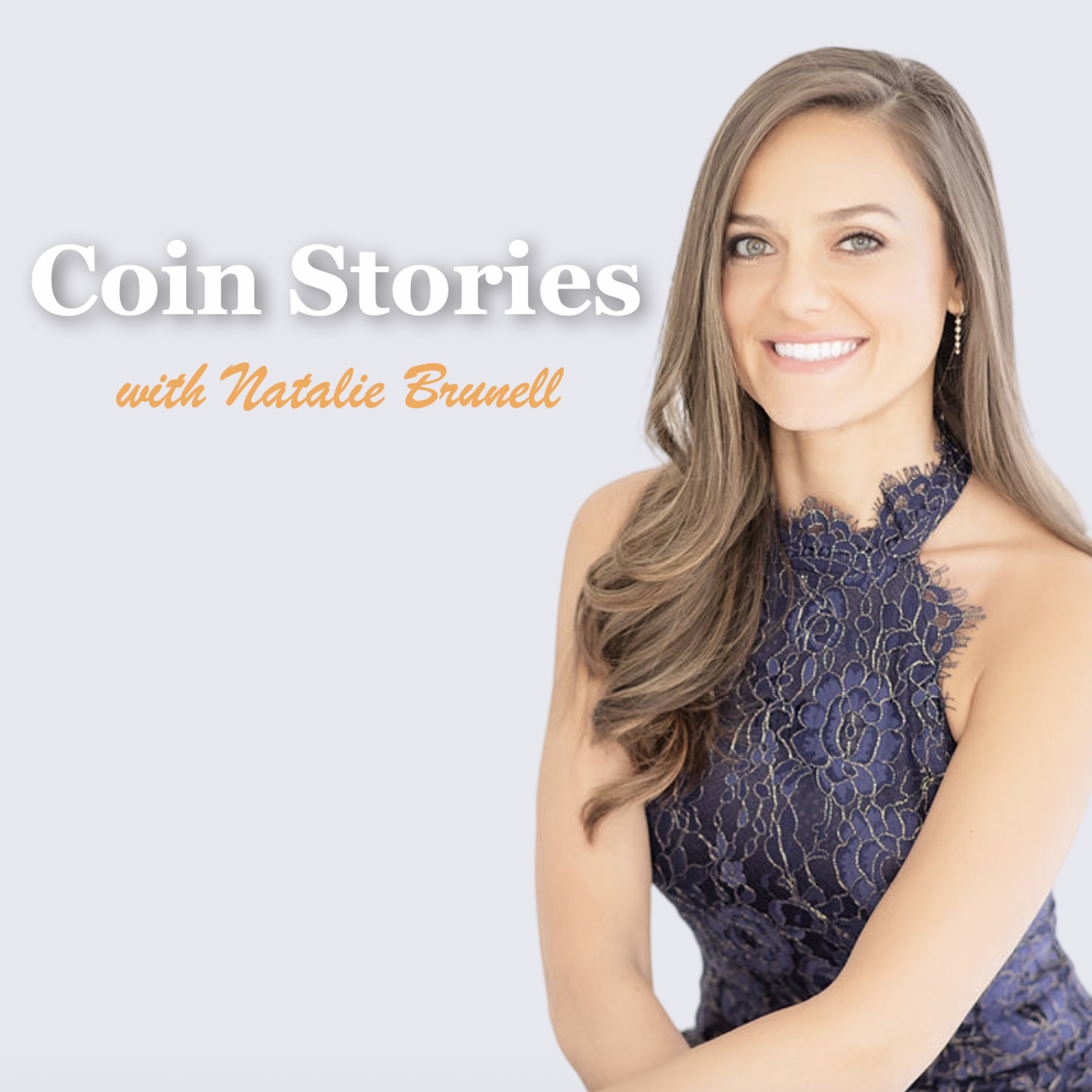
Coin Stories with Natalie Brunell
Luana Lopes Lara: Youngest Self-Made Woman Billionaire on Kalshi, Bitcoin & Beating the Feds
00:51:20
Loading summary
Transcript90 lines
- [00:00]
A
All we could do is we're going to decide if we're going to sue the government to be able to bring these markets. And we had one month and I remember that conversation we had, guys, it's going to be the most intense month of our lives and we have to just like literally give every single thing that we have. It was a very tough like one to two weeks to decide are we being stupid? And this is never going to work.
- [00:19]
B
Well, you were named the youngest self made female billionaire.
- [00:25]
A
It's very surreal and it's just another way to look at how big the company got.
- [00:36]
B
Hey everyone, welcome back to the show. I am so honored to have with me in person today Luana Lopez Lara. She is the co founder of Kalshi. And as we know, prediction markets are all the rage right now. They're sort of converging with crypto. So Luana, it's great to see you. Thank you so much for being here.
- [00:53]
A
Of course. Thank you so much for having me. I'm excited.
- [00:55]
B
I would love to start with your fascinating and very inspiring backstory because you went from professional ballerina in Brazil to mit, very impressive. To working on Wall street to founding Calci, which is the first federally regulated predictions market. Right, right. And it's kind of a big deal. The valuation is pretty huge. It's done incredible things for your life. So take me back to the start.
- [01:21]
A
Yeah, so everything says it's very random, my background for sure of where I, where I've been. But yeah, in Brazil it's actually very common. If you're like a very young girl, like 2 years old, your parents put you to the ballet, ballet classes. And she's very normal. I was extremely lucky that I just loved it from the very start. It was like when I was very little. I just like I want to do more classes and more classes and why don't I start taking tap classes and jazz classes and all those things and. But that always kind of coexisted with school. I always want to be number one. I always wanted to be the best one in literally like I would before. So the school year in Brazil is January to December. So because of the season is the opposite than here. And we would get all the list of books for the year, like end of November maybe like when we end. And then we'd start back in February, the day that the list would come out, my mom would take me to the bookstore, would buy every single book for the year and I would read all of them before the classes would start. So for me it was always the two sides of, like, ballet. I wanted to. I loved it so much, and I wanted to be so good, but school was just so important to me. And I was always very ambitious. When I was little, I had this paper next to my bed that everyone cool. That I would learn about in school. I would write the name down so I would learn about Churchill or Alexander the Great. I would write their name and be like, one day, maybe I would try my best to do something that's even remotely similar to what they do. So I was always a weird child in that way, but I think motivated by always trying to be at the best spot that I could be for. For what I, you know, wanted to do. I went to the professional ballet school. It's called the Bolshoi Ballet, which is the biggest ballet in Russia. They only have one school outside of Russia. It's in the south of Brazil. So I moved there. Was training really, like, eight hours a day. My routine was insane because I would wake up at, like, probably around, like, 6. I would go to school from 7 to 12. Then I'll go to ballet school from, like, 12:30 to 9pm Then I'd go home and I have to study for, like, SATs and all those things. I wanted to come to the US and. And it was a similar thing. I love ballet. That's the thing I love doing the most. But I had higher ambitions, and I wanted to be at the best school, and that was in the US So let me apply to try to go there. And everything worked out and. Yep. And it was from there.
- [03:40]
B
Just curious, was this kind of ambition and belief in yourself instilled in you from your parents? Do you think it's something that you always had?
- [03:49]
A
Oh, not at all. I think it was. It's. I think it was kind of born like this. My parents were almost the opposite. I used to get so stressed with not doing well in school that my parents would be like, if you don't get in 100 and you don't cry, we're gonna, like, go to dinner and have. Do something nice. You're gonna get a gift. And I would, like, still not do it. I would get, like, a 9.9 and be, like, very upset and. And all like that. So I think it's very much for me, I was kind of always very. I think I was just always very competitive, and I just always wanted to be the best I could be to today.
- [04:23]
B
Fascinating. Okay, so did you always want to go to mit and when you went there, you met your co Founder, right?
- [04:29]
A
Yeah, not really. I mean, I didn't really know about any of these schools when I was in Brazil. So obviously everyone knows Harvard, so that was kind of like the one that everyone was like, oh, that's the best school in the world. And I think I first heard about MIT in that movie, I think 21.
- [04:44]
B
Okay.
- [04:45]
A
And I thought it was. It seemed like the best school in the world. It seemed amazing. But when I was applying, actually, there's. There's this places in Brazil that help you apply to colleges in the US because obviously I think that year it were only. Was only me and another girl from my entire state that were applying to school in the US So it's very rare to apply. And so they were helping. They were kind of helping. And they said there was no chance that I was going to get in any of my top choices because it's so hard. Mit. So hard. You need to have international gold medals to go and. And whatever. So at the time, I, Even though I kind of. MIT was kind of like my dream school, I was trying to be realistic and be like, everyone's telling me there's no chance I'm going to get in. But when I got in, I think when I was choosing between different schools, MIT made the most sense for me because I thought it was gonna be the school that would put me most out of my comfort zone. Because when I was studying like eight hours a day. Ballet, right. You have also, like, art history. And it's just basically like a liberal arts education. And I thought MIT would force me to, or I'd get very, very good at math or probably just not work out at all. So I think it was kind of a forcing function. I chose to, like, go for the biggest challenge. And. Yeah. And I met Tarek at the very start. Like, because I'm. I'm from Brazil, like, born and raised. Right. So I was international orientation. He's actually born in California, but he grew up in Lebanon, so he was also an international orientation. And we met and became friends there and we liked the exact same thing. So we worked together at Citadel. We worked together 5 rings capital, which is a small prop shop downtown. And. And yeah, and I think it wasn't. It wasn't. One day we woke up and we're like, let's started this company together. It was a very organic. We were very close friends. We liked the exact same things. We were talking to each other about problems all the time. And we started talking about the scholarship problem. We started talking about, wow, isn't it Weird that Bridgewater has a research division and then there's two other departments of the company that all they're trying to do is figure out how to put that thesis into the market. So the research division would say there's going to be a recession in Germany. Then they have portfolio construction. They would get that and try to figure out how to actually put that position in the markets. And then the traders would actually figure out how to best execute it. So you have these. And then he would be like, yeah, that's weird. At Goldman, I'm here trading and people are calling, trying to get exposure to Brexit and exposure to Trump winning. And we're also coming up with these weird portfolios of shorting the S and P and doing this. And the idea of Kalshi became really clear. We just wanted to let people kind of take out all that problem and let people trade directly on what they had an opinion on and what they actually want, what their thesis actually was. And it was over the course of three years during college that we were talking to each other, talking about prediction markets and all those things up until we eventually really made the jump.
- [07:37]
B
Coinstories is proudly brought to you by Gemini. Start your Bitcoin savings account today. Plus, investing in Bitcoin has never been easier, thanks to Gemini's orange Bitcoin credit card. I've got mine right here. Earn up to 4% back in Bitcoin on everyday purchases like gas, dining, groceries, entries and more. No annual fee, no foreign transaction fees and no exchange fees on your Rewards. Head to gemini.com Natalie make sure to get your copy of my new Bitcoin 101 book. Bitcoin is for everyone. It explains why life has become so unaffordable and how Bitcoin can help you build lasting wealth and freedom. It makes the perfect gift for those new to Bitcoin. Just visit the link in my show notes. Leden just introduced their lowest rates ever. No complexity, no fine print. The larger the loan, the lower the rate. These new rates apply to all new loans, refinances and renewals. With Leden's gold standard protection, your Bitcoin stays custodied, never lent out. You can activate auto top ups and alerts so you're never caught off guard and you can repay anytime with zero penalties. LED in has processed over $10 billion in loans over the last eight years. Don't choose between a great rate and the safety of your Bitcoin. Get both at Lennon. Get a quarter percentage point off your first loan at Leaden IO slash. Natalie and Abundant Minds. One thing I appreciate about Abundant Minds is how straightforward they make bitcoin. You own the machines, they host them in the US and the pricing is clear upfront. It's built for people who want exposure to mining without running operations themselves. And the equipment may qualify for 100% first year bonus depreciation. Learn why so many real estate investors are turning to bitcoin mining. Head to abundantminds.com Natalie I mean, it feels like you kind of invented the concept and it's really about predicting the future. Right? We can't really do it, but when. When you. When you see the numbers and the math, trends and patterns come out that you can sort of read, right? So can you talk to me just about the journey of building it? Because I've seen so many founders talk about the early struggles, right? Like you. You share the idea. No one wants to fund it. Tell me what the experience with Kalshi was like.
- [09:43]
A
Right? It was. We were very lucky on the fundraising side, so that was never an issue for us. But on the beauty in the company side, that was extremely hard because when we learned about it and we're like, okay, we put the name to what we're trying to do. These are prediction markets. And we started researching more about what it was, and it was like, okay, sounds like the problem here is regulatory. Seems like there's some legal issue in the U.S. so we're like, all right, we're gonna solve this legal issue. There's a spreadsheet of 65 names of lawyers. You take 32, you take 33, and just call everyone. And in one day, we called the entire list, and not a single one of these lawyers said that this was doable. They were like, well, it is CFTC jurisdiction, but they were never gonna let you do it. Don't waste your time. Or it's like, no, not even. It was variations of impossible.
- [10:31]
B
Sorry, what's the big deal? I mean, what's the problem with the idea of saying that the people can guess, essentially? Is it gonna be Trump who wins or is it gonna be Biden who wins? I mean, it doesn't seem like that big of a deal.
- [10:42]
A
Right? I agree with you. And I think that the problem at the time is that the CFTC and I think the government in general, they're very used to. They are used to and are okay with going extremely slow on anything that is new. And it kind of squashes all innovation, which I'm sure in the crypto world you're very familiar with. But Also on the other side, I think there's like event contracts that just never really developed in the us. I think they're very used to commodity futures and thinking about leverage and margin and all those very traditional instruments. And when people brought kind of the concept of prediction markets, they got concerned about are these easy to manipulate? How are you going to police for insider trading? How is this, you know, who is actually going to be hedging this? What's the economic impact? Which actually is interesting because when you see a lot of the press coverage that we get now on Kalshi, a lot of it are the actually exact same concerns that the CFTC had back in 2020, 2019 and we actually worked with them to address all of them. So now it's very easy for us when people are worried about insider trading and we're like, well we ban it and we've built systems to ban it and detect it for seven years and now we' actually able to do that very well. But I think the CFTC's concerns really came from like first of all not understanding what was going, like understanding the market, not really understanding and just general slowness. And then we had to work with them on all of that, which was very hard because how it actually works is the government sends you a list of so to backtrack. So like after the 65 lawyers, what we did is through a connection of a connection of a connection of a connection. We got one lawyer that said, I will get you one meeting with the CFTC and what you do in that meeting is up to you. And we were like, wow, okay. We got in and we went. And that's when this started that they are like, this is our list of 20 concerns. And we would take the concerns and be like, okay, this we can solve and prove by a data analysis model. Looking at this event and proving that it's not easy to manipulate this. We can write policies for this, we can analyze the law for. And we did it for 20. We go back to them and they're like, we are okay with one of your answers, have follow up questions on this and we completely disagree with these and come back and like write it. Like find a new plan and write everything again and do all the analysis and go back to them. And that took three, four years.
- [13:01]
B
Wow.
- [13:02]
A
Of just going back and forth and back and forth and back and forth. And it was very hard because if you think about most companies that take so long to be able to launch, they're basically if you get the approval, you get instant product Market fit, right. With the FDA approval, if you figure out a way to cure headaches, you take a long year, like many years to get approval. But after you get approval, you're good to go. You're going to make billions of dollars with us. Our approval was just to allow us to start building a product to try to get product market fit. So then it was kind of like it was a step function to then start hopefully finding that exponential curve. And it was very hard for us to be like, how does this make sense? Like, how does us waiting three, four years to do this? All of our competitors were going offshore trying to do it, kind of like not follow the law and all of that. So it was very, very tough. And the company really just started working two years ago with the election.
- [13:59]
B
So what an incredible story. I mean, you touched on the concerns about insider trading and things like that. Can you clarify, like, how do you prevent people from getting some kind of information, right, especially if they work in powerful positions or in the government from using that on one of these markets to be able to gain an advantage that the public doesn't have?
- [14:17]
A
Right, that is a great question. Insider trading is. There are multiple layers to this, right? I mean, the first one is what's the legal definition of insider trading and what we actually absolutely have to bend. And that is if you use information that you don't have the rights to disclose. So for example, if I sign an NDA because I joined, you know, the Federal Reserve and I sign an NDA as RMI employment, I'm not like, I cannot use that information to tell my friends or I cannot tell that, use that information to make money on the markets, which is basically the same thing as divulging that information. So that's layer one of like, that's absolutely a federal crime. And it's a federal crime. If you look in the stock market, if people are doing that and they work at Facebook and they're thinking, you know, talking to people about their earnings, that's inside of trading. Same thing here. So if you're also like a dancer in the Bad Bunny concert, when you sign an agreement to say that you're going to be a dancer, there there is an NDA, right? There is all these things that you have to follow. And that legal contract makes it absolutely legal for you to participate on Kalship. So that's number one of what the kind of like federal standard is. But we actually go way deeper than that. On top of it, we have like trading prohibitions. So on top of not Just the people that can't legally trade on it. We also prohibit a lot more people from trading. So people that are, you know, have access to it from a friend or people that, you know. For example, with sports, like coaches and players and. And people that are in the drafts and people. We prohibit a lot more people. And with that is like, if you violate that, you're violating an exchange rule, and you can also be prosecuted. Doj, jail, all of that. And then the last layer that we do, and we're the only ones that do this, even the stock market doesn't do it, is that for some classes of users, you're not even able to try to trade. So we block it from the start. So, for example, politicians, if you try to trade on your markets, you're not even going to go through which no one does that in the stock market. You trade, and then they try to figure out what's going to happen. I'm glad you do that. Yeah. No, and in the past seven years, a lot of what we've done is build the systems that can look at all the trade data, look at all the information, because we have name, address, Social Security, all that. So look at all that and find anomalies in trading so that we can. Actually, we had a couple cases come out of, like, a California governor that was trading on himself and was trying to do that. That's one of the reasons we are now doing this.
- [16:39]
B
Kind of California's governor. Like Newsom?
- [16:42]
A
No, like a candidate. A candidate, sorry. Yeah.
- [16:44]
B
Interesting.
- [16:45]
A
So, yeah, no. And some people were always like, why are they doing that? The other one's a Mr. Beast. Editor. He's an editor. He was trading on a market about Mr. Beast. And we're like, it's so clear. Why would you do that?
- [16:56]
B
What's the most interesting thing you've watched play out on the platform? Because there are some really interesting, like, future predictions.
- [17:04]
A
Most interesting. I would actually say the TikTok band market was very exciting. Okay. Because it was so hard. There was nowhere else in the world where you could get that type of information on this question. You could kind of track Facebook stock and be like, is it going up or down? But I think that, like, looking at that and tracking with the news was very, like, exciting and, like, just proving it. But I have to say the most fun. The most interesting and fun we've ever had was the election market in 2024.
- [17:36]
B
Yeah. Talk to us about that. Because that's where you guys really landed on the map. And everyone all of a sudden, you Became a household name. And it changed your life.
- [17:43]
A
It did. It's. So what happened with the election market that was very interesting was after we were able, we took the three to four years to get regulated, spent another one to two, like one year kind of like growing, but growing slowly. But the moment we got regulated, the first thing that we did is start going to CFTC and saying, we want to do election markets. Those are the holy grail of prediction markets. That's what really proves the importance of these markets, the data, all of this. And they said no in it took two years of them saying no and pushing back, but not with good reason, really. They were just like, they just didn't want these markets because they were worried about political reasons. And it got to a point that we lost. We didn't list the 2022 midterm elections. And it got to a point in 2023, after multiple rounds of public comment and all of that, that all we could do. It was a very hard decision. All we could do is we're going to decide if we're going to sue the government to be able to bring these markets. And that was a very hard decision. I love risk. I'm a risk taker. My co founder is really not. He's risk, he's stressed. And I think that's how we work so well together, is because we have this kind of like yin yang kind of energy. And I really wanted to sue because one, the markets were too important. It's like the market that we need. And the other one is that we were right on the law. And I was like, there's no way a judge is going to look at this and outside of us. And we ended up winning one month before the election.
- [19:10]
B
Fascinating.
- [19:11]
A
And we had one month. And I remember that conversation we had with everyone in the office. It was like, guys, it's gonna be the most intense month of our lives. And we have to just like, literally give every single thing that we have to grow this market because our competitors were growing outside the US for over a year. So they were kind of compounding their name, their brand. And the election market is so easy to compound on that. And we only had one month to compound close to the same amount or not, if not more. So we took a lot of very big bets on marketing and all of that stuff. And it ended up panning out and it was awesome. The election night was like one of the best nights of my life.
- [19:46]
B
So it sounds like you kind of always knew that this was going to
- [19:49]
A
take off and work yeah, yeah, I think, yes. It's just, if you ask me why, I'm not sure, but I did just your gut in a lot of ways. Yes. I think it's.
- [20:02]
B
But it's such like a public phenomenon, you know, people are guessing on things. It also seems more affordable, right. Because you look at stocks and people are like, well, I'm behind. They look at Bitcoin, they're like, it's too expensive. They don't know that they can have a fraction. And then you see these bets and it's like a couple cents. Oh, I could do that.
- [20:17]
A
Exactly. It's a lot cheaper and easier to get started. Also, it's very like, it's very safe because you're not trading, you're trading against other people. Right. So like, you don't have to be worried about predatory behavior, all of that stuff. You're just trading against other people and what's going to happen in the future. And you can start with as little as a dollar to just. We have a lot of people that are using Kalshi as kind of validation for their own opinions. So less about like, obviously we have a lot of people that are trying to make a lot of money, but we have people that are more like the. The things I think about. And I think I might be right on. I put a position, so I have a real time view of how right and accurate I am. And I think people are doing that with like a couple dollars. And it's just very cool to see that too.
- [21:00]
B
Do you have a sense of demographics? Like, are women trading as much as men or is this more of like a guy, like a crypto bro type of phenomenon?
- [21:08]
A
Well, I. We're unfortunately not 5050 yet. I hope to get there. We hope to get there soon. I think it's around like almost 30% women though.
- [21:17]
B
Okay.
- [21:18]
A
Which is a lot higher than if you look at surprising like other brokerages and, you know, and all the similar platforms, it's a lot higher. And we've been talking to a lot of women and I think that the thesis that we have right now of why. The hypothesis of why that's happening is because we have so many more markets that women and other kind of, not, not just women, we're seeing like just a way more diverse user base in general from a lot of other groups as well is because now they think they can actually is a game that is not rigged against them and they can actually make money because it's like, it's intimidating to look at the stock market like I don't. We don't really know what's happening. You don't really know who's pricing, you know, these things, who are you trading against? And in these markets, they're somewhat intuitive. You're like, you understand what's happening. You understand the topic of the conversation. You understand politics. Right. And women are trading a lot on politics and entertainment. And you just see them getting excited about. This is the first time it's a game that I feel like I have an edge on and I can actually win. And we're seeing a lot of that. So it's a basically diversity of markets. Just bring a more diverse user base, which we think is going to be a very strong, like a very, very big power of ours going up.
- [22:26]
B
Have you yourself been an investor, like a trader personally, in the markets?
- [22:32]
A
Somewhat. Somewhat. I'm like, I. Because I put. I deal with Kalshi as my, you know, very risky volatile stock holding, but I have like S and P and Treasuries and stuff like that. And I have a little bit of bitcoin, so.
- [22:43]
B
You do? Okay, well, I was going to ask later, but please share your bitcoin story. It started at mit, right?
- [22:49]
A
Right. So I was a freshman in college and I got an email saying the MIT Bitcoin Club, I think was the name where bitcoin lab had $100 of bitcoin of anyone that would just like, sign up to Coinbase. There were three wallets and it was just like Coinbase and just redeem your hundred dollars in bitcoin. That I think was like 0.3 of a Bitcoin at the time. And I was like a freshman in college, had no money. I was like, oh, yes, I'm going to get this $100 and see how it goes. And then I lost my password. So very good, because then I didn't sell. And now I hold this till today and it's just great. It's like this is one of the main benefits of a school like mit. Right? It was just. So if only I had paid more attention to it and bought more bitcoin, I would have had a lot more money.
- [23:32]
B
Now, wait, but you lost your passcode to it.
- [23:34]
A
No, but then I found it again. Coinbase was helping me out. Like, I think senior year I figured out how to get it back. And then because I had started my account in Brazil, it was kind of a mess on, like, where my password and account were, but we were able to find it.
- [23:49]
B
Well, I have read that you can certainly afford to buy a lot Of Bitcoin, you were named the youngest self made female billionaire. I know sometimes it's like uncomfortable to talk about. Like no one wants to talk about how much money they have, right? But like this is a headline in your life, what is that like? I mean, what does it make you feel? Or when you get asked, are you like, I don't want to talk about this.
- [24:16]
A
It's very surreal. And the reason it's surreal, it's because I think it's a testament of just how big the company. It's just another way to look at how big the company got. And this was the dream all along. Not the money I have, but the dream was to get Kalsha to be as big as it is now and as mainstream as it is now. And we have such a long way to go. It's just like all of it is a testament to the work that the entire team put in. If it was just Tark and I would be very, very far from where we are now. It's just we have such an amazing team, but nothing really changes. I think a lot of people expect like, oh, did your life change? And it didn't change at all. I'm in the office 12 to 16 hours a day, working all the time. I absolutely love working. So it's just like my favorite thing, it should be at my desk working. And so nothing really changed. And I think for the company was just more of a, this is a milestone to, you know, be worth like, I think above 10. It was like a very cool milestone for us. But what really mattered was the revenue we're making. The users, we were growing. The users are so much happier. We were actually checking that our NPS every two weeks is higher than it's ever been. It's just been like really, really growing. And that's the stuff that really like gets us very excited. It's not, it's not a big number.
- [25:33]
B
Speed opened the door to digital money. Bitcoin. Now with Speed Wallet, users can also access other digital assets like stablecoins and Digital Gold all in one app. Once it's in your wallet, you can send it, receive it, or instantly swap between assets, including Bitcoin. You can even spend it on gift cards from brands you already use. And if you're a business, you can accept Bitcoin and stablecoin payments with Speed. They're already powering brands like Steak n Shake, accepting Bitcoin across all their locations. So whether you're investing, spending or running a business, Speed does it all. Download Speed Wallet using my link and use my code COINSTORIES10 to get bonus stats after your first transaction. If you've been listening for a while, you've probably heard us talk about bitkey. Bitkey is a private multi sig wallet that removes the biggest point of failure in traditional self custody. The seed phrase. Things get lost, phones get replaced, life happens. Right? Bitkey is designed so your Bitcoin stays secure and recoverable without demanding constant attention or expertise. Use code stories for 20% off at Bitkey World. Are they listening to every call? Tracking every tap? Seeing what apps and websites we're visiting? It's time to ditch big tech surveillance for a privacy phone. The Bitcoin way is your guide helping you choose a device, install a privacy operating system and regain your sovereignty. Visit thebitcoinway.com Natalie to begin today. Finally, Bitcoin IRA. With Bitcoin IRA you can invest in Bitcoin24.7 inside a tax advantaged IRA. Choose a traditional IRA to defer taxes or a Roth IRA for tax free withdrawals. When you retire, take control of your Future with Bitcoin IRA. Head to Bitcoin IRA.com Natalie for up to a $1,000 funding bonus. Well, you're such a source of inspiration, especially because you've accomplished so much at a young age. So what advice do you have, especially for young women that are watching you and seeing what's possible. But you know, we don't always feel like that in our lives. Right. Especially today. So many people have it so hard and, and they look at someone like you and it's like they probably wonder, I probably can't do that. But you seem to have this mentality that anything's possible.
- [27:42]
A
Yeah, I really think like the biggest advice that I got, the main advice I got that I think really helped the company was when Tarek and I were in YC and we were in that middle of calling lawyers all day and all of that. And we sat down with Michael Seibel from yc. He's the founder of, he was the founder of Twitch and he was CEO of YC at the time. And we were like, all these experts are telling us this is impossible, this is impossible, this is impossible. And he told us, like, don't listen to the experts. They're people just like you. Whatever they're experts on, you can become an expert on as well. And they're just people. Everyone that's done anything that's impressive is just a person just like you. It's not that different. And I think it really ties a Lot of how I think about things, it's like, at the end of the day, you should just believe in yourself and take risks. Especially if you're younger, you have kind of like the United States, such a great country for people to take risks. Being like in Brazil, it's so much harder to just try to start a company and bet on yourself. And here's. It's easy. It's obviously not easy, but it's easier. And I think that there's just so much opportunity and I mean, it's easy to talk yourself into believing it's not the right time. And it's kind of like almost sabotaging yourself in a way because you believe it's not the right time or you believe it's the. What's the term? It's like, basically I see a lot of like, people. Oh, I need a lot more experience for this. Yeah, no, we started this out of college and sometimes you just have to go for it and remember that people are just like you. It's just other people that have done, like Apple and Tesla and all of these amazing companies were started by people just like everyone else. And everyone can do it if they just work hard.
- [29:24]
B
I mean, you're really the embodiment of the American dream. And it comes at an interesting time because so many people, even folks I've talked to on my show, they've sort of lost hope in the American dream. They think it's broken. And I would love for you to share why they're wrong. I mean, because you guys did this in the last couple of years. You're both, you were born in a foreign country. Tarek has ties to a foreign country. Right. And you made it happen here.
- [29:49]
A
Right. Well, I am a. I think pretty clearly I'm a firm believer that the American dream is so very alive and looking back of where I grew up in Brazil and I was a middle class family and we had come to the US to go to Disney World and all of that, but that's kind of the extent of it. And I really think the US is a great country that if you believe, if you work really hard and you believe in yourself, you obviously need a lot of luck and all those things. It's better than anywhere else for things to work out. And I think that it's. Obviously the big question is how do you expand the American dream to more people? I think that very few people are able to have that jump. And I'm extremely fortunate to have been lucky enough to get into MIT to get funding that we got and get into these programs and all of that. I'm extremely, extremely fortunate. And we know it's not everyone that has access to that. But I think the question is less about if the American dream is alive, but more, how do you expand American dream to more people? How do you make it so that you don't need to go to a top 10 school for you to get funding from these things? And how do you make it easier for people to take a bet on themselves but have somewhere to land and all of those things? I think it's. But I think there's so many examples of the American dream out there. I think it's like, yeah, when I was little, if you asked me if I would live in the US I'd be like, oh, that's amazing. That would be the dream. And that I'm here able to have my company and pursue all my dreams and having studied where I did, I think it's just surreal. It's very, very grateful.
- [31:19]
B
Yeah, I love that story. And you're right. I think people have self limiting beliefs and they tell themselves that they can't do it or they have it so hard.
- [31:26]
A
Right.
- [31:27]
B
That they don't even try. And you have to try. You have to apply to the schools, you have to go out there, you have to practice. It's not, it's. If you guys would have, you know, given up after the third or fourth lawyer, we wouldn't be here today. Right. You wouldn't have gotten the ultimate approval from the cftc. You have to keep knocking on the doors.
- [31:43]
A
Yeah.
- [31:43]
B
And that's like a huge lesson learned. Right, Right.
- [31:45]
A
And I think that ballet is very good at this because it teaches you that failing is completely normal. Like you're only going to get to do like the three, you know, pirouettes or whatever, the three turns. If you try to do one and you fail 100,000 times and then you get to one and then you get to two and, and being okay with the concept of like, with ballet, you're like, you're trying. And the downside is actually pretty bad because if you fall, you hurt yourself, you might break your foot or something. But you still have to try and do it and understand it takes time and takes practice. And I think that it kind of instilled in my brain that it's, you have to be trying to do things and not kind of selling. And I think it's just important to keep that in mind. And I think it's important for the world to try to, you know, help the People that want to bet on themselves and take risks. I think it's like, not everyone needs to do that, but the people that do want to do that, they should have the support.
- [32:36]
B
I love that. Okay, so I've seen on Kalshi predictions about bitcoin's price, which obviously I love to watch that kind of stuff. Can you share with me a little bit about how the digital assets world is sort of converging with prediction markets?
- [32:50]
A
Right. It's converging a lot. I think it's interesting because when we started the company actually, so this is a fun fact. I don't know a lot of people, I don't think a lot of people know this. We started the company before going to yc. We went to the YC hackathon.
- [33:03]
B
Okay.
- [33:03]
A
Which was basically our first like, let's not say no to these high paying jobs yet. Let's go to three days and see how it goes. And we ended up winning the hackathon. But it was blockchain and I don't remember, it was like a stable coin type of payment thing and it was in crypto. And the initial idea really was to figure out how to do that using blockchain because that was what we were learning in school and all of that. But when we got to the point of the regulatory fight, we were kind of faced with like a choice of which battle to pick. And at this, at that point we were like, we really, really like. And what we are really about is prediction markets and we should fight that battle. We're also the only people fighting that battle. There are way bigger people fighting the crypto battle like Coinbase and we should let them figure that out. And with that, we kind of reduced everything to a single vector, which was how do we get prediction markets and event contracts approved? But we're going more and more like we have a lot of partnerships in the crypto world. We're on Coinbase now. If you ask me, five, ten years from now. I think it's very unlikely that Kalshi won't be on chain. But I think we need a lot more of the regulatory work to get to that side. But I think with us going more in that direction, obviously Polymarket is very big prediction market as well. They are on chain, internationally. There's a lot of other prediction market projects are in crypto. It's just growing a lot. I think there's just so much synergies between the two.
- [34:34]
B
Tell me a little bit more about your interest in bitcoin. Do you find it interesting do you
- [34:39]
A
want to learn about it? I do. I actually remember, I think it was my 6033 class, which was my systems class, that we actually read the bitcoin white paper. The white paper, yes. Back in 2016, maybe 2016, 2017. I don't remember when I took the class, but I think it's very interesting. I won't claim at all that I'm an expert on this, because I'm really not, but I think it's very interesting. I think the crypto world, and I think bitcoin has taken the world by storm. And I think especially in places like Brazil, it's growing so much because it's just so hard. Inflation and interest rates, all those things are so chaotic in Brazil. And I think that bitcoin kind of really brings that alternative, alternative to people that kind of want more stability and kind of more access to kind of a global system. It's very hard in Brazil to be like, okay, if you're going to buy dollars, you're just going to hold these dollars, what are you going to do with them? You can't really do anything transact with them. It's hard to sell, the fees are so high. But with bitcoin, you actually solve a lot of these issues. And I think in the US maybe you don't notice it as much, but when I go back home, you just see kind of the adoption of crypto being so high, especially bitcoin, because of all the problems in the economy.
- [35:48]
B
Yeah, I'm glad you mentioned that, because in Brazil they have the largest Latin American treasury company, and a lot of people are turning to bitcoin as a hedge to the inflation and just a way to save. Are they also in Brazil, investing in the. In the prediction markets?
- [36:05]
A
We started growing internationally now and we just announced our first partnership in Brazil, actually the biggest brokerage in Brazil, to start bringing our products there. Growing international is very important for us. It's like US is obviously very important. We are right now, I think, over 90% market share in the U.S. we still think we can grow an insane amount in the US So that's kind of our number one priority. But international, I think is really the next step for us. So we're focusing a lot on Latin America, Southeast Asia and trying to find the right countries. Obviously, the kind of structure and culture we have in the US which is we want to do things regulatory first and legal, that's the most important thing. We are also doing that outside of the US but we just think it's when we see Kalshi 10 years from now, maybe, as I said, maybe on chain, but 10 years from now, a lot of the what we see Kalshi has is this massive liquidity pool that can price anything extremely fast. So you can be in Brazil and you're trading against people in, I don't know, India, you're trading against people in the US on hundreds of thousands of markets, hundreds of thousands of structures and markets and everyone trades with everyone and you have every liquidity, like all this liquidity concentrated on Kalshi. So that's why it's very important for us to grow internationally but keep the same liquidity pool that we have here. So instead of doing like a lot of companies like Binance do this, it's like the US version and then the outside the US version. Our goal and our plan is to have one single version everywhere.
- [37:33]
B
Well, you answered my next question because I wanted to know where do you see kalshi in like 5 to 10 years? But it sounds like, I mean if, if internationally everyone can be on these markets. There is a currency question, right? Because people use hundreds of different currencies. So is it all going to be priced in one or will it be different ones? Or I guess maybe a bitcoin component, I don't know.
- [37:54]
A
It's a, it's a very, it's a question we think a lot about because one of the most like elegant things about prediction markets is that everything is zero to one, right? So you get the price and you can translate it to a probability in your mind immediately. If something is trading at 30 cents, it means 30% chance of it happening. 68, 68% of something happening, 68% chance. And you get that directly from the price. Now if you're in Brazil and the dollar is like 5.3, whatever the Brazilian real is, then if we put it all in Brazilian reals and you're talking about the contract being 1, 2, 6, and then how do you start thinking about the probabilities? And now if the effects is changing, how are you, how are we doing? So that's a lot of the trickiness that we're thinking about. So maybe what we do is different. The contract size might be different, but then you can arbitrage between smaller pools, all feeding into one pool. So we're trying to figure out how to do it. Because the ux, at the end of the day, the most important thing about prediction markets are the data. And they're like 70% of the people that come to Kalshit, they don't trade they just look at the data and if the data is not intuitive, it's not going to work out. So for us it's not.
- [39:03]
B
They don't come to trade, they come just for the data. Well, so I mean, this is something I was curious about. Are the prediction markets accurate? Are they telling us what is actually going to happen?
- [39:14]
A
So they are not like, you know, the Magic 8 Ball or whatever. They're not like all of the. They are not telling you exactly what's going to happen. What they do is give you a probability distribution. So basically they say there's a 60% chance of it happening. If I told you if you get out of the studio and there's a 40% chance you're going to get hit by a bus, you're not going to get out of the studio. Right.
- [39:35]
B
It's too high.
- [39:36]
A
Right, it's too high, exactly. But so it doesn't mean that something that's 40% chance is zero because it was below 50. And I think that's a lot of the educational challenge we have now, which is people think anything above 50 means is for certain sure going to happen. Anything below 50 is never going to happen. And what prediction markets do is they give you a probability of what can happen. And you can think about even like for a lot of our markets, we have a lot of different lines of like, will it be this price, this price, this price, this price? So you can get kind of actual probability distribution. And there was actually this very interesting paper by the Federal Reserve talking about how Kalship markets are better at forecasting macroeconomic trends than economists, Bloomberg and even the Fed itself.
- [40:17]
B
Well, I believe that all those PhDs at the Fed, they have got it wrong.
- [40:22]
A
Clearly have. Yeah, yeah, yeah.
- [40:24]
B
So can I go on the platform and actually create a prediction myself and have people bet on it?
- [40:30]
A
Yes and no. So you can't just immediately put it up, but you can suggest one. And then it usually takes, if it's similar to a market we've done before, it can take a couple hours, otherwise it takes up to two days because we need to talk to the government and send them the papers. But every single contract that's in the platform has to go for the government before. And there's a full compliance review that we go through. Is it easier to manipulate or not all the trading prohibitions for insider trading that we need to do what the rules really are? Because it's very important that we draw a very as perfect as possible line between what's a yes and what's A no. Some contracts are very hard to do that like a Supreme Court case. It's like a lot of times it's like, what are they going to say on their interpretation? How do you actually draw that line? So some contracts take a little longer, but over 95% of all our markets right now are user suggestions.
- [41:17]
B
So was there any point where you wanted to give up, where you were like, I don't think this is going to work anymore, I'm going to turn away and then you're glad you didn't, or was it always kind of just you're determined to make it work?
- [41:30]
A
I never got to the point that I actually wanted to give up, but it definitely got to points that we were like, we might need to pivot or figure something else out. I think during that election situation because obviously we put three, four years into getting regulated. Then we launched. It wasn't really growing and the regulatory, it was like death by a thousand paper cuts. They were just trying to stop us at every single thing we wanted to do. We were doing like, I think we had 30, now we have 10,000 markets. We used to have 30 markets at the time because the government was just so annoying about everything. And in that process of the election market, right before we decided to sue, it was a very, like, we had to go to the team and be like, we tried bringing election markets to the US three times with two common periods, multiple CFT iterations, like, and it hasn't worked. And we had to, it was very tough. We had to do some layoffs. We had to like, some people were leaving because they're like, these people are insane. What are they just never going to give up on this election idea and it's never going to work. And it was a very tough one to two weeks to decide, are we being stupid? And this is never going to work on an election standpoint and we should just pivot and maybe focus on just binaries or on financials and crypto and go more in the fully financial route. Forget the more prediction market side or should we just keep going and try again? And it was all happening at once with people leaving and us making this decision and all of that. And I think it was just a very stressful moment that we were like, we might have to abandon what we really wanted to do, but I really wanted to sue the government. I'm very proud that I was able to convince my co founder that we should do it. And it all worked out. But it was a very. And by the way, when we made that decision. It wasn't just, let's just sue the government and fuck it, whatever. It was very much, this is all the bad things that can happen, they're going to retaliate against us more. We're not going to get a clearinghouse in time. All of those bad things were going to happen, and all of those bad things actually happened. We were just right on the law and we were able to win. But the assessment of how bad suing was going to be was actually correct as well. So Tarek was 100% right there. But I think we were very lucky that the lawsuit got done in time, because there is no timeframe for lawsuits. It can take forever. So we were lucky that it got done in time and we were right on the law. And lucky that all the judges, even though it was all Democrat people, think it's a Republican Democrat issue. All four judges were Democrats, and they all sided with us. It was unanimous that we were right. But that was a very hard time, for sure.
- [44:17]
B
Yeah. That must have been so intimidating to go up against essentially the most powerful apparatus in the world. Yeah.
- [44:23]
A
I remember I called my parents because at work, I think a lot of my job is to be the very positive. Yeah, you are never. Oh, thank you. And very positive. Never in phase. Always, like, never. Like, just everything is going to be fine and have that kind of like pushing the company in that direction. But it doesn't mean I'm like that outside of work. Sure. So I went. I went home and I remember I had this call with my parents and I was just like. Like, I'm 27 years old, I'm born in Brazil. Like, what am I thinking? That I want to see the government? And my parents were like, well, you know, it's like, your reasoning is sound, but, you know, you have to make this decision yourself. But then it worked out. My parents and my fiance are so supportive that they just deal with my emotional turmoil.
- [45:08]
B
They must be so proud of you. If you could sit across yourself the day you founded Kalshi and, like, have all this experience now and talk to your younger self and say, this is what I wish I knew at this point, what would you say to yourself?
- [45:29]
A
I think it would be two things. One very tactical, one not so much. One that's not technical tactical. I think it's more just like, believing more on what we were doing. Because I think a lot of the stress came from, like, the fear of the unknown in a way, and, like, being very stressed with that. And I think just looking back, I'll be Like, you can chill. It's going to be okay. I think that would be good. But on the other side, I think we've done a lot of mistakes with hiring that I would have gone back and being like, don't worry about execs and hiring execs. Hire the best. Like, empower the very good people that you have, even if they're like, out of college, and really focus on building a great culture with your core people. At the beginning of the company, it was trickier because you. You hear a lot of advice, right, of, like, you need a head of engineering, like a VP of engineering from this type of firm that is just going to manage and build a team, and you need this VP of growth that's going to do that. And when you're a young founder, you're kind of.
- [46:28]
B
You don't.
- [46:29]
A
Obviously don't know what you're doing. No one started a company before, so you're kind of like, worried about what you're doing. And it's easy to tell yourself you're making a lot of progress by just hiring these fancy people, even though actually the only progress you should make is on product and getting the very hardcore great core group in the company. And I think we would maybe have saved, like a year of product velocity if we had just not hired the wrong people and focus exclusively on product versus everything else.
- [46:58]
B
That's good advice. What is a prediction that you wish was on the platform that you want to know the answer to?
- [47:08]
A
Well, this is a funny one, but I used to be a massive One Direction fan, and yesterday in the news, I saw that apparently Harry Styles is engaged with Zoe Kravitz. And I would want to market to know if it's true and if there's a wedding and when it's going to be. But that's a funny one. I think that every market that we really want to market on, we are able to list at this point. Of course, we have markets like war, terrorism, assassination markets that I definitely don't want and we also cannot do. But everything outside of the clearly bad markets we're able to do in a. In a good way. And I think they're. They're in the platform or hopefully going up soon.
- [47:47]
B
So I love it. Now I know you're a One Direction fan. All right, well, Luana, it is such an honor to talk to you. Thank you so much for taking the time to join the show. Any just parting thoughts? Because, again, I mean, to our earlier point, you are so inspiring to so many people, but especially I think to women. And I have a lot of women who watch who are trying to become more economically empowered. And you know, obviously there is like a. There aren't as many female investors as there are men who are investing in trading and own assets. So I think it's an important message because, you know, you want women to feel like they can own their future.
- [48:21]
A
Yeah, I, I think that women are more. You're correct. Women are more risk averse. But I think it's very important to. Not you. Well, I'm weird, but I think it's important to, to make sure that again is like I, I think it's very important to have like this internal thought process always of like, am I thinking like this because of some unconscious bias that I have or is it because it's actually the right thing? Am I afraid of taking risks because I think I don't understand enough? I'm not good enough? Or is it really because the risk is bad? If the risk is bad, you should probably, should not do it. But I think a lot of times people just talk themselves into avoiding things. And I think that's why when we look at the data for women at Calgary, it's very exciting to see a lot of them seeing this as almost like an entry point to doing more things in the finance world and all of that. But I say that I think women got the right to vote in 1920. So it's only 100 years since we can vote. So a long way to go. I think women are going to be a massive part of the financial world and the financial markets and all of that. I think we just, you know, need to give a little bit more time.
- [49:28]
B
Well said. Thank you so much for joining me. It's been a pleasure.
- [49:30]
A
Thank you so much. Thank you.
- [49:32]
B
Thank you so much for checking out this episode of Coin Stories. Make sure you're subscribed to the show so you don't miss any new episodes. If you can turn on those notifications and leave us a positive review, they really help the show grow organically with new listeners. We have a free weekly newsletter. You can sign up@thenewsblock.substack.com, com this show is for educational and entertainment purposes only. Nothing should constitute as financial investment advice and you should always do your own research. I'm always open to feedback and guest suggestions. So please feel free to reach my team at info at talkingbitcoin. Com. I'll see you next time.