← Collectors Gene Radio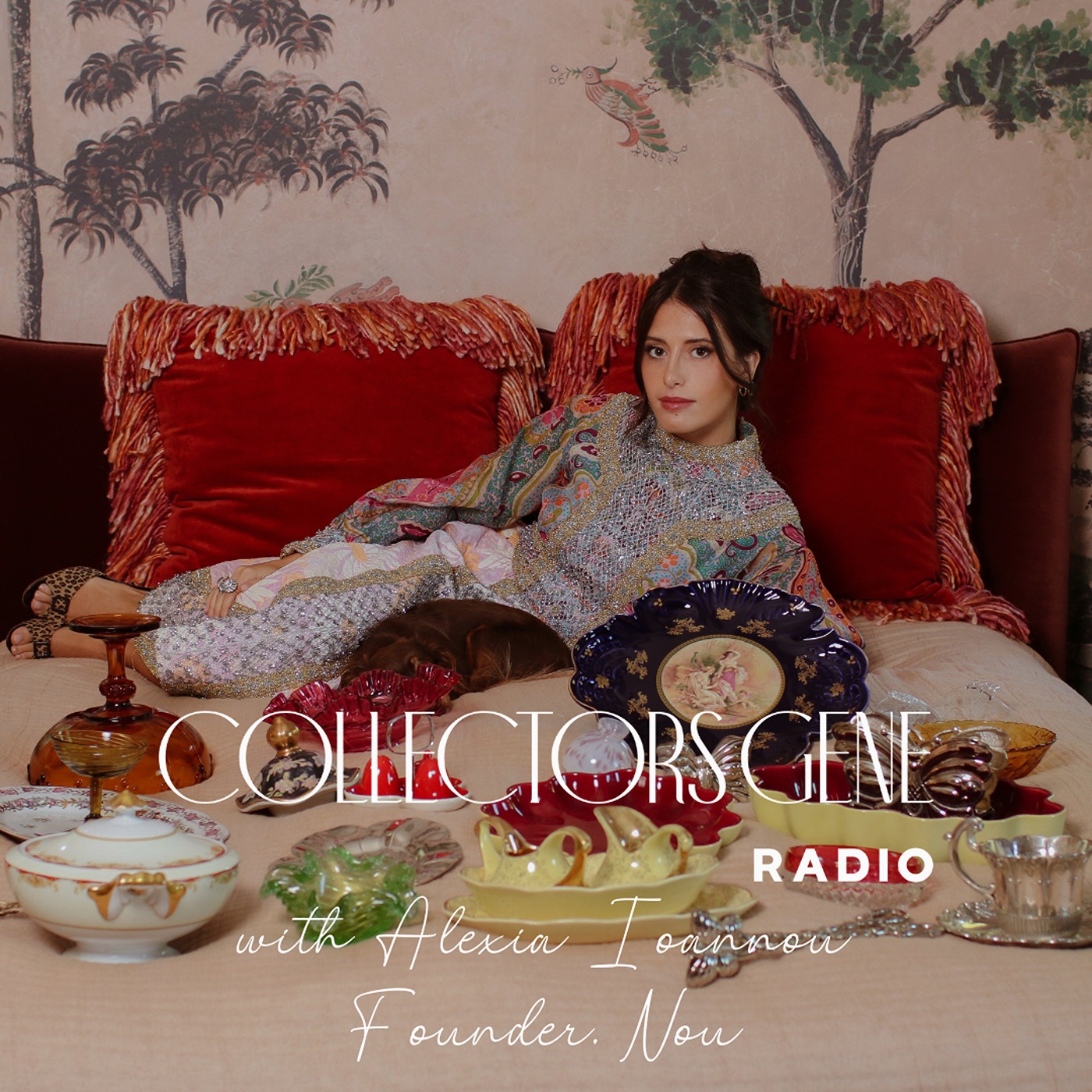
Loading summary
Transcript100 lines
- [00:00]
A
I always say when you walk into a room, people should look at your shoes first because they'll know everything about you just by looking at your shoes. And if your shoes make a statement, you make a statement.
- [00:13]
B
What's going on, everybody? And welcome to Collector's Gene Radio. This is all about diving into the nuances of collecting and ultimately finding out whether or not our guests have what we like to call the Collector's Gene. If you have the time, please subscribe and leave a review. It truly helps. Thanks a bunch for listening and please enjoy today's guest on Collector's Dream Radio. Today, we're diving into the world of vintage fashion with Alexia Ayannu, who has turned the act of collecting into an art form. She's the founder of New, a boutique vintage studio that has become a go to for tastemakers, stylists and starlets alike. Since its launch in 2018, New has redefined what it means to shop vintage, offering ultra rare, handpicked treasures that seamlessly blend heritage and modernity. Alex Journey is one of passion, intuition, and a deep love for the stories behind each piece she discovers. She grew up immersed in design, honing a discerning eye for craftsmanship and timeless style. From sourcing vintage shoes and bags that make you swoon to expanding New into homeware, her philosophy is pretty clear. Every item she shares carries intention, individuality, and a little slice of her vision. She takes us through her evolution from a young collector with a love for fashion history to a tastemaker who spends her days chasing the thrill of discovery. You'll learn how she defines what's new, worthy and what it's like to curate for others, and how, no matter what, she's the customer. So without further ado, this is Alexia Ayannu for Collector's Gene Radio. Alexia, welcome to Collector's Gene Radio.
- [01:48]
A
Thank you for having me.
- [01:50]
B
My pleasure. I feel like, you know, it's a lot of young girls dreams to collect vintage shoes and bags and fashion and all this stuff. So before we really dive into your company, New, I would love to reflect back on when this really started for you.
- [02:07]
A
Yeah, I've always had a shopping problem, and I thought, how can I develop this quote, unquote problem or addiction that I have and make money off of it? And I always had an amazing shoe collection that I watched my mom have growing up, and I just always had an affinity for shoes. And the beauty about shoes is you can only wear ones that are in your size. So once I stumbled upon amazing shoes that I loved that weren't my Size. I was like, I gotta find the right girl for these. And that's kind of how it just developed.
- [02:45]
B
Amazing. And, you know, it's funny, as a collector, it's one thing to be able to purchase this stuff and have the money to do it, but having an eye is not something that comes easy, because in my opinion, you're either born with having an eye for good stuff, or you have to develop it over time. What was the case for you there?
- [03:03]
A
Well, I really feel like, especially in today's world, where there's so many collectors, which is an amazing thing to see develop through the eyes of the Internet now, I really am just trying to always stay ahead of what's next. And, you know, in my world, you can always guarantee a vintage Chanel ballet flat will sell. And. But for me, it's about the art of looking at something that nobody else is necessarily looking for and building a story out of it. So I really do think that that is where I show up for my audience, is when I bring them something that they weren't even knowing that they needed.
- [03:41]
B
Yeah, for sure. I think, obviously, there's the common pieces like you mentioned, like a Chanel ballet flat. You know, even if you're not into shoes and you like luxury things, you've seen those before, you recognize them, and, you know, the Chanel logo. But Chanel also probably probably made a bunch of other things that people didn't know existed. That may be a little bit more niche, but there's always a collector for it, right?
- [04:02]
A
Yeah. For me, shoes being the bread and butter of my business, I really look at them as art pieces, as collectibles. Most of these shoes have lived decades before the customer that's buying them now. And there's a lot of value attached to that. Not just how they were made, but the stories that they keep and the stories that they tell and will continue to tell. And I really love picking out a product that tells you everything about the person that's wearing them. And I always say when you walk into a room, people should look at your shoes first because they'll know everything about you just by looking at your shoes. And if your shoes make a statement, you make a statement.
- [04:44]
B
Yeah, that's true. I never thought about that. It's a little. I'm not wearing heels or anything like that, but I could understand how wearing a pair of interesting shoes would do that, for sure. As you grew up, you kind of mentioned, you know, your mom was into this stuff. Was she a collector as well? Is that kind of where you think you got all of this?
- [05:02]
A
Well, yeah. I always have this token line where I say I come from a long history of high end hoarders or high class hoarders. Because my mom, my grandmother, they just have such a deep appreciation for all things beautiful, whether it be your space, your closet, your life. And to me, it's just intuitive to surround myself with beautiful things that bring me joy and cultivate a certain life that makes me happy. Like they say, money can't buy happiness, and that's certainly true, but I think that things can.
- [05:37]
B
Well, it can certainly buy you some nice shoes, that's for sure.
- [05:40]
A
Yeah.
- [05:42]
B
As you grew up, you know, I'm curious to know, was the thing. Were the things that you were collecting growing up different from how your taste has evolved now?
- [05:52]
A
Yeah, I think being a millennial, I very much used to subscribe to the mindset that more is more and I wasn't as conscious of a consumer. I wish that I had the kind of wits about me to be thrifty when I was younger and start in thrift stores and buy secondhand. But I was really just like scouring the racks of Marshalls and TJ Maxx, just trying to get that high of collecting and building a wardrobe. And then I'll never forget saving all my money when I was working as at Barney's to buy my first Chanel pair of shoes. And looking back, it's like those shoes tell my story, but I probably could have got them at a way better price if I was thinking about buying them secondhand. So my collection and my way into the secondhand world really was just through being more practical and also wanting to curate my closet with things that nobody else was having.
- [06:46]
B
It's funny you say the Marshalls and TJ Maxx things because it's here on the west coast, the things that kind of come through those types of stores here, it's kind of like a dime a dozen that you'll find maybe something great. Right. You really have to search hard at the stores here to find those really special pieces. But I think it teaches you how to really be a collector with a good eye. On the east coast, when I go into like a Marshalls or TJ Maxx there, the racks are filled with really, like, great, incredible stuff that is actually maybe collectible.
- [07:20]
A
Yeah, I mean, it's definitely an art form. And I think that's where I found my. My desire to dig into collect was through chasing this high of finding an amazing piece at a discount price. But I just recently did a piece on my sub stack about why women need to shop. And our innate DNA basically tells us that we need to gather. Like, if you go back to the earliest times in recorded history, men were hunters, women were gatherers, and shopping today just shows up the way it does because we're, like, innately supposed to buy, gather whatever it looks like. Just, we're just going to need to do it.
- [08:07]
B
I'm not going to let my wife listen to this because she's going to make, you know what? I do need that.
- [08:12]
A
Yeah. And I know I. I was like, next time you're walking down that shopping aisle or pressing that checkout button, just remember you're doing what you've always done. You're surviving. But that doesn't mean that you can't have a more mindful approach to it. Which is why, like, I really champion secondhand shopping, vintage shopping, and just mindful consumerism. Like, anytime I'm buying something in, you know, the retail market now, I'm really thinking about it.
- [08:40]
B
Right. You have to kind of think about its future value. Will it hold? Will it be collectible? If it's not, obviously something that you just love for what it is. Right. If you're looking at, is this going to be special down the road, or am I just attracted to it in this moment?
- [08:56]
A
Yeah, exactly. And also, what's the price per wear? I used to advocate this idea on new of drops, and that's how I started the business. It's how a lot of people in this business function, is they function around drops where they'll say, you know, on this date, I'm dropping these 30 shoes. And there's this scarcity, you know, effect. And it definitely helps for selling. But I've kind of evolved my mindset and being like, I want people to be so sure that they want this and that this product resonates with them. And I stopped doing drops and now just upload products as they come to me because I don't want people to be shopping out of this dopamine hit and then regretting it later.
- [09:41]
B
That makes sense. I think that that's a smart way to look at it, because as collectible as shoes and bags and things for the home can be, people do get buyer's remorse. And if you're a true collector, you know what you're looking for and you know if it's special to you or not, I think from the moment that you see it. But there are a lot of people, like you said, who do impulse buying, and then they end up buying being A little bit upset with themselves.
- [10:04]
A
Yeah, exactly. And I know her because I was her. And I feel like in more deeply understanding yourself, you can better understand your shopping habits and which pieces will actually, you know, live within your walls for the rest of your life. And the beauty about vintage and secondhand is that you can always give it a new life. Like whenever I have my pop ups and girls are coming and shopping, we're talking in real life and they're like stressed about the cost because, you know, these shoes are an investment. I just look at them, I'm like, listen, if these shoes aren't exciting to you, next month, put them on depop and sell them for more than what I sold them to you for. Like, at least there's that, the value. But I also just want to advocate for people defining their personal style and investing in pieces that they really believe represent who they are.
- [10:57]
B
I kind of want to unpack, you know, what you just said a little bit, because I think a big thing when it comes to wearables that are also collectibles, people have this push and pull of do I wear it, do I use it? Do I use this bag as a, you know, as my everyday bag that I can have all my makeup in or, you know, all my things, you know, put drinks in, whatever it may be. And do I wear these shoes out because I love them so much, or do I leave them on the shelf and preserve them? What's kind of your method and what do you see most of the people doing that buy stuff from you? Are they collecting to put on the shelf to look at or. Or are they using.
- [11:32]
A
I really think the new girl uses her shoes and wears them. One of my best selling brands is Manolo Blahnik and it's also one of my favorite brands because not only is it extremely well made, but they're wearable, they're comfortable, they're functional. But for me, I obviously have a different take. I have a personal archive of, you know, 40, 50 rare designer shoes that come out on small occasions. And I dream of the day that I get to pass them on to a daughter of mine. I think that I though am an exception. Obviously nobody needs to have that many shoes. So I do think that most of the product that I provide for people is wearable and functional.
- [12:20]
B
Walk me through the process for sourcing things for new and what makes something new worthy, if you will, because not one piece is the same on your site, but you could easily see all of them being a cohesive collection for one person.
- [12:35]
A
Yeah, I think that really is just what the spirit of New is like. The name New is an extension of my actual last name, and the brand is just that. Every single piece that I bring forward is something that I would wear, something that I picked up with my own two hands, and something that I really believe in. You will never see me selling a product that I know I could sell to you, but that I don't believe in.
- [13:03]
B
Right. And how are you sourcing them?
- [13:05]
A
I'm sourcing all day, every day.
- [13:09]
B
Auctions. Are you going to thrift stores?
- [13:12]
A
I'm going to thrift stores. Secondhand resale sites are kind of my jam. I mean, I'm so lucky to live in LA and spend a lot of time in New York. And we have some of the best secondhand resale consignment stores, I think, in the world. And I also love to make trips out of sourcing. So this summer I went to Provence, and I spent a few weeks in that region just doing a lot of research and discovery. And I love to just pick a handful of places every year to go explore and to source.
- [13:45]
B
Isn't Provence the best?
- [13:47]
A
The best. I think that that trip and that level of sourcing really just inspired me to think so much bigger.
- [13:54]
B
And is that. Was going to Provence the impetus for you to start launching more home items for new home, or were you already kind of thinking about that?
- [14:04]
A
Yeah, it definitely was the catalyst for new home. I've always curated vintage items for my home because I'm just a vintage girl, but my mom actually was an interior designer growing up, so I've always lived in abundantly beautiful spaces. And her and I went on that trip together, and we were just so overwhelmed with all of the beautiful things that we were able to discover and to touch with our own hands. And I just remember I looked at her and I said, it's time for. For new to do home. And the thought overwhelmed me. It stressed me out because it's a completely new category to the business, and it definitely is a risk, but it really is such a natural category of myself in my life. And New, like I said, it's an extension of me. So it was time.
- [14:54]
B
Yeah, for sure. I mean, it totally makes sense. I mean, and I think it was. It was a smart play on your end, because I think the. The less obvious option of doing, like, jewelry and watches and that sort of stuff versus home, like, the home stuff is less obvious and on the nose. But I think it's such a smart play because there's so much more to be had from HomeGoods and. And Special things that people source. And the jewelry stuff is really a tough barrier to entry. But when it comes to the home stuff, people can just really not have to break the bank to get something really special.
- [15:30]
A
Oh, yeah. And it just tells you so much about a person, the way that their home feels and looks. And I. If you came to my home right now, almost everything in here is secondhand and tells you not only a story about itself and the piece, but about me.
- [15:47]
B
Yeah, absolutely. You did a article with Vogue, and I'd love to know what kind of a, you know, defining moment that was for you. I mean, I think it's a lot of people's dreams to be in Vogue, and a lot of people try to be in vogue. And I think to have a piece on yourself and your business is pretty special.
- [16:05]
A
Yeah, it definitely was a milestone moment. You know, I've been doing vintage professionally now for almost three years, and I wake up every day and I work towards this vision. And it doesn't feel like work because it really is everything that I love and more. But that being said, it definitely sometimes feels like an uphill battle because being an entrepreneur and I'm a very small business, it's really just me here on my team. And I just recently hired an assistant. I remember that I brought everything that I curated for the home collection to my mom's house to shoot. And she was like, lexi, there's no story here. You have things from Japan, you have things from France. You have things that are mid century, you have things that are, like, from the 1930s. She's like, what are you doing? This isn't cohesive. And I was just like, it's me, though. I would put all of this in my china cabinet right now. I want all of these things. So I'm going to figure out a way to tell this story. And somehow it worked. I still don't know how it did, but it did well.
- [17:13]
B
No shade to your mom or anything, because I'm sure she was extremely successful at what she did. And, you know, I'm sure her taste is amazing. I personally have never seen it, but I appreciate all interior designers. But what I've seen recently with interior designers is, is that okay, if the whole home is French, like, now they're not just putting French antiques because the whole home is French. They're mixing in things from Sweden and Italy and China and Japan and all these things, because if you do it right, it can be cohesive. And I'm happy that you decided to Keep everything for the shoot. Because I think it's important for people to not be pigeonholed to a specific era or design style or, you know, country.
- [17:59]
A
Yeah, I love a space that's layered with history in different eras and different feelings. I think that is why I was able to secure Vogue, because I had this maximalist approach that was like really interesting to people. And I think we trend, especially in la, to be towards a minimalist, you know, cleaner space, which there's a certain value to that too. But I also think that a space should be personal and be from all different parts of yourself and of the world.
- [18:35]
B
So collecting for yourself is one thing, but you know, you buy what you love and that's kind of sort of it. And what catches your eye, it might not be the same as, you know, what every person who buys from your store is going to love, but it's a good representation. But collecting for other people can be so difficult because you really have to know your customer. How do you distinguish between trend driven vintage pieces and ones that truly stand the test of time?
- [19:03]
A
Yeah, as I said from the start, when I started this business, I always looked at the customer as myself. And when I do my in person activations and I meet all of the people that resonate with my brand, they remind me so much of myself. And we might look different, be from different demographics or different parts of the world, but we all have that same ability to see something beautiful in an object or a clothing piece. And for me, it's really just about bringing pieces to the conversation that are unforgettable and are special. Whether they're expensive or not is not the importance to me. It's really about the impact.
- [19:47]
B
Yeah, for sure. I also want to talk more about your personal collection because it wouldn't. None of this would have started if you weren't a collector to begin with. So do you remember the first piece that you bought that you were really proud of? I mean, was it, you know, a pair of Chanel shoes or was there something else that you really, really stretched for?
- [20:05]
A
You know, a lot of people ask me this question and I think when it's hard to, like, pick your favorite child, that's how I feel. But I definitely always come back to these early 2000s pair of Dior Dice heels by Galliano. Because those shoes are what really defined my career and pushed me to create new and to offer vintage to people. Because at that time in my life, I was just very lost. I wasn't sure what I wanted to do or how I was Going to do it. All I knew was that I was a taste maker, and I knew how to make things look beautiful together. I thought maybe about being an interior designer or, you know, starting a fashion label. And then one day on my TikTok, I just posted a quick video of my feet. It didn't even have my face in it. And I was walking in my favorite Dior Galliciano Dice Mules, and it went viral. And everybody was saying, where can I get these shoes? I need these shoes. And in my head, I'm like, do people not realize these are rare Dior? And then I saw the demand. It all just kind of clicked, and I was like, why don't I just start bringing people what I bring into my life for myself?
- [21:21]
B
Is there a city where you love to shop for vintage the most? I mean, I know L. A, like you said, is such a special place, but is there another city or a country that. That you find to just be like, okay, if I. If I lived here full time, I'd be set?
- [21:33]
A
Yeah. I always go to Paris every year to do some sourcing. My favorite thing about Paris is not only the access to some amazing designer vintage, but every time I'm there, I also discover a new European label that I wasn't aware of before and that I just completely fall in love with either the material or the silhouettes, and I just fixate on it for the next year.
- [21:57]
B
Yeah, I mean, Europe, anywhere has always had of the game for the you before the US And I agree. Every time I'm there or I'm researching something about, you know, antiques or other vintage stuff, I always find that I learned something new about someone I didn't know. Yeah, Everyone has their criteria when it comes to vintage and what's acceptable or not to enter their collection. Some people are condition, Some people are design first. What about you?
- [22:29]
A
I feel like I have an unpopular opinion when it comes to condition because I actually love things that have wear and tear to them. Obviously, when it comes to shoes, I have a standard of cleanliness, but there's nothing that my cobbler in LA can't fix. I'll tell you that. One of my favorite sweaters that I have is this cashmere cardigan, and it has holes all over it. And people be like, lexi, you have a hole. And I'm like, I know. Who cares? It's part of the story. Wherever it was, it got some holes, and I'm cool with it.
- [23:03]
B
I love it. Yeah, I mean, you know, the condition thing is tough. It's obviously variable. Across whatever category of collecting you're in. But a lot of people do forget about the restoration aspect of things. In your case, you know, a cobbler who can fix shoes and make them look like they're fairly new. A lot of people don't go down that route or think about that. And I think it's, I think it's a big miss and I think a lot of people don't maybe even realize it exists anymore.
- [23:30]
A
Yeah, isn't. Isn't that interesting that everybody's just always chasing something pristine? But yeah, look more closely. They could actually have something so exciting and they just fix it up a little bit.
- [23:44]
B
Yeah. Are you the type of collector that collects to look at and you know, how often are you using the 40 to 50 pairs of shoes in your collection? What's kind of your go to? I mean, are there pieces that are just untouchable that you just will only look at and not wear?
- [24:02]
A
Yeah. If you came to my home studio, you would see that I'm just surrounded by shoes and certain, certain pairs are really, to me, art pieces. And now expanding into the home category, I have an insane collection of, you know, fine china. And I just recently got this 1970s China cabinet that I. Every day I wake up and I look at it and I'm like beaming with happiness to just have all of my china presented in such a beautiful way. And I really get high off of like just looking at my collection.
- [24:43]
B
I think I saw you posted a video on that cabinet. It's like more mid century, right?
- [24:46]
A
Yeah, I, I'm just obsessed with like the details and I. But the juxtaposition too. You know how we were saying, it's like that's a very mid century piece, which is not typically what I go for, but I stumbled upon it and I, I felt like it could work. And then it holds all of these, you know, mostly Italian and French made china collections from the 50s and the 60s. And they just tell such different stories, but it works.
- [25:14]
B
I love it. You mentioned Manolo Blahnik, and I think that they are one of the greatest brands of all time. And I agree with you. I know because I've had my wife get them before. They're comfortable, they're stylish, they kind of fit the bill for anybody. And a lot of times they don't break the bank. Is there another brand that you're kind of always drawn to when it comes to vintage, besides them?
- [25:39]
A
Well, it really depends on the season. I think that Jimmy Choo used to make the best boots. I don't know if your wife is in the market for some boots for winter, but they have this timeless silhouette, and I can't keep them in stock when I get them. They came in, you know, black and brown and tan, and I could not live without those boots in the winter. So I really am championing Jimmy Choo right now, and I have a broad collection of different styles.
- [26:11]
B
What does collecting mean to you personally? I mean, is it about preserving history or is it curating, or is it really just such a hobby and now business for you?
- [26:23]
A
I think it's about just creating a beautiful life. And as the business evolves, as I do, I really am looking to make new a lifestyle brand and just offer people products where they can curate a beautiful life of and be mindful about their purchases and buy things that, you know, are not only sustainable, but are can last and you can. You can pass them down. I know when I talk about Manolo and how much we love Manolo, it really is insane to think that these shoes are 30 years old and I'm still walking in them.
- [27:05]
B
We've all had that special moment when collecting something where you stumble upon something great in the most unexpected place. Do you have any stories like that that come to mind?
- [27:15]
A
Oh, every week. I mean, I love a giant value thrift center. Like, I. I really am insane. My assistant just has been. She just started with me, and she's been coming with me to the, you know, thrift places, and she's, like, mortified, and I'm, like, digging deep, like, you.
- [27:37]
B
Know, on your hands.
- [27:39]
A
Yeah. And I'm like, pulling out something, and I'm Google reverse image searching it, and it's like the price is $3, and it's like a Murano dish worth $600. And I'm like, oh, my God. Like, I think that's the beauty of being in a place like la, too, is like people don't know or care what they had or what their parents had, and they're just leaving at these Goodwills, and it's insane.
- [28:02]
B
Yeah, it is pretty wild.
- [28:04]
A
Yeah.
- [28:05]
B
In the same vein, collecting is all about the story. You know, a lot of. A lot of people are kind of catching on to the auction scene now, and a lot of times there's themed auctions that hold provenance from specific people. Is that something that matters to you or something that you actively look to add pieces maybe to your personal collection, Anything with provenance or that came from a special collection?
- [28:30]
A
Yeah, I think that as I fine tune my taste, I definitely am gravitating towards specific eras or regions. But for me, it's all about my experience with the item when I first interact with it. And I'll be randomly in a thrift store or a secondhand shop, and I'll walk in, and I look at something, and I'm like, wow, that. That makes me feel something. I need it. So for me, it's really just about the feeling. Specifically, I love, like, portraits of women. Like, naked portraits of women from the 60s and the 70s. I think that those are so fun. So I'm leaning towards more collecting things that, like, tell a story rather than things from a specific artist or, you know, decade.
- [29:21]
B
Yeah, makes sense. Before we wrap it up with the collector's gene rundown, I would love to know, because you're a collector of many things, is there a specific pair of shoes and a bag in your collection that. That you feel sums up who you are and. And what your brand represents?
- [29:39]
A
Yeah, there's an iconic pair of Chanel sandals that have a ladybug on them. And I've always had a sentimental relationship to the symbol of a ladybug. And those shoes are just something I would never let go of. And they're also so adored by my audience and by other fellow vintage shoe collectors. So I would really say that that piece means something the most to me.
- [30:04]
B
I love it. Alexia, let's wrap it up with the collector's gene rundown. You know the drill. You can answer these questions based on any of the things that you collect. First question is, what's the one that got away?
- [30:17]
A
The one that got away, I would say, is this summer, when I was in Provence and I was sourcing, I walked into this corner store that had the most amazing vintage textiles, and I just remember being in awe, and the women didn't allow photos. And at the time, I wasn't thinking ahead. But right now, I'm trying to concept making quilts out of secondhand dead stock fabrics, and I'm having a really hard time finding things that I love, and I just think about that store every day now. I wish that I bought those textiles.
- [30:51]
B
Well, at least you know where it is. You can always go back.
- [30:54]
A
Yeah.
- [30:55]
B
How about the on deck circle? So what's next for you in collecting? Maybe something you're hunting after?
- [31:00]
A
Yeah, I'm just completely focused and obsessed with the home space right now. And I started with tabletop, and next it's really going to be rugs and probably paintings and different types of artwork.
- [31:13]
B
I love that. And are you sourcing that stuff? You know, just Locally, where you're at in la, are you doing auctions or.
- [31:19]
A
You know, I'm not in the auction game and I think it's because, like, I really am so neurotic about getting my hands on things in person and understanding if they're what I'm looking for. But I definitely should be more open to auctions.
- [31:33]
B
Well, you just set some searches up and if anything special comes up that's worth seeing, you know, it's always worth a trip.
- [31:40]
A
Yeah, I need to do that for sure. Probably would save me some money too.
- [31:44]
B
Yeah, possibly. Yes. How about the unobtainable? So this is something that's just too expensive in a museum, A private collection. Just complete unobtainium.
- [31:54]
A
Yeah. So I recently wrote a substack about Andre Pruga, who was this pioneer in the female shoe industry back in the 50s, and he really set the framework for the Manolo Blahniks, for the Christian Louboutins. And all of his shoes now are archival and either in museums around the world or in personal collections. And I would just die to get my hands on a pair of his shoes.
- [32:20]
B
I think we've put some things into the ether on this podcast that have come people's ways. So I think it's very possible that you will.
- [32:28]
A
I'll believe you.
- [32:30]
B
How about the page one rewrite? So if money was no object and you could collect anything else, what would it be?
- [32:36]
A
Yeah, I have an affinity for vintage watches, but it's probably not the watches that most people are looking for. For me, it's about watches that look and feel like jewelry. I've started my collection. It's small but mighty. But where I started really was with vintage Gucci watches from the 80s.
- [32:54]
B
Very cool.
- [32:55]
A
And they're super affordable. They're only two or $300, but they're beautiful and they're brilliantly made and they tell a story. Anytime I wear them, people are like, what is that? So, yeah, I would love to keep collecting different kinds of vintage watches.
- [33:10]
B
I love it. Yeah, that's a forte of mine. And a lot of people that listen to this show is vintage watches. And. And a huge thing right now is, you know, finding the obscure and finding the things that people, you know, didn't realize existed. And these small little cocktail watches from Cartier and that, you know, are diamond encrusted and you can barely even see the time or anything like that. So I think you're in a good spot. How about the goat? Who do you look up to in the collecting world? Or who do you think is just a great collector.
- [33:41]
A
You know, there's not one person I don't come in contact with in this sourcing world that I don't think is the most impressive person ever. So I feel like that's difficult for me to answer. Whether it's somebody that has a small corner, an antique mall, or somebody that has, you know, a vintage shop or an antique shop that's been around for decades. There's never a time where I don't enter these stores and try to understand the person in their vision. And it's something that's so important to me and actually a concept I want to build out to bring to people. Because it's like everybody has such a different story, but such a clear idea of why they're collecting and what they want to collect and how. So I'm just impressed by anybody who's been in the business way before I have.
- [34:27]
B
How about the hunt or the ownership? Which one do you enjoy more?
- [34:33]
A
That's the hardest question of all, I think. I think after talking me probably understand the ownership.
- [34:39]
B
I think so. That was going to be my guess for sure.
- [34:42]
A
Yeah.
- [34:44]
B
And most importantly, do you feel that you were born with the collector's gene?
- [34:50]
A
Obviously, yes.
- [34:52]
B
That's another no doubt question.
- [34:54]
A
Yeah.
- [34:55]
B
I love it. Alexia, thank you so much for coming on Collector's Dream Radio today. Such a pleasure to chat with you. And I'm so happy that we did this. And I can't wait to see everything that you do with. With your company new and. And your substack and all the new things that you. You jump into. It's. It's a very exciting time and I'm thrilled to. To have done this for sure.
- [35:13]
A
Thank you. It was such a pleasure.
- [35:18]
B
All right, that does it for this episode. Thank you all for listening to Collector's Gen.