Loading summary
Transcript305 lines
- [00:01]
Doug Billmeyer
Sometimes the best doesn't cost much. You know, that's a beautiful thing. I spent my life looking for the next thing, looking for something that no one figured out yet, you know, and I think there's still things out there.
- [00:14]
Cameron
What's going on, everybody? And welcome to Collector's Gene Radio. This is all about diving into the nuances of collecting and ultimately finding out whether or not our guests have what we like to call the Collector's Gene. If you have the time, please subscribe.
- [00:29]
And leave a review.
- [00:30]
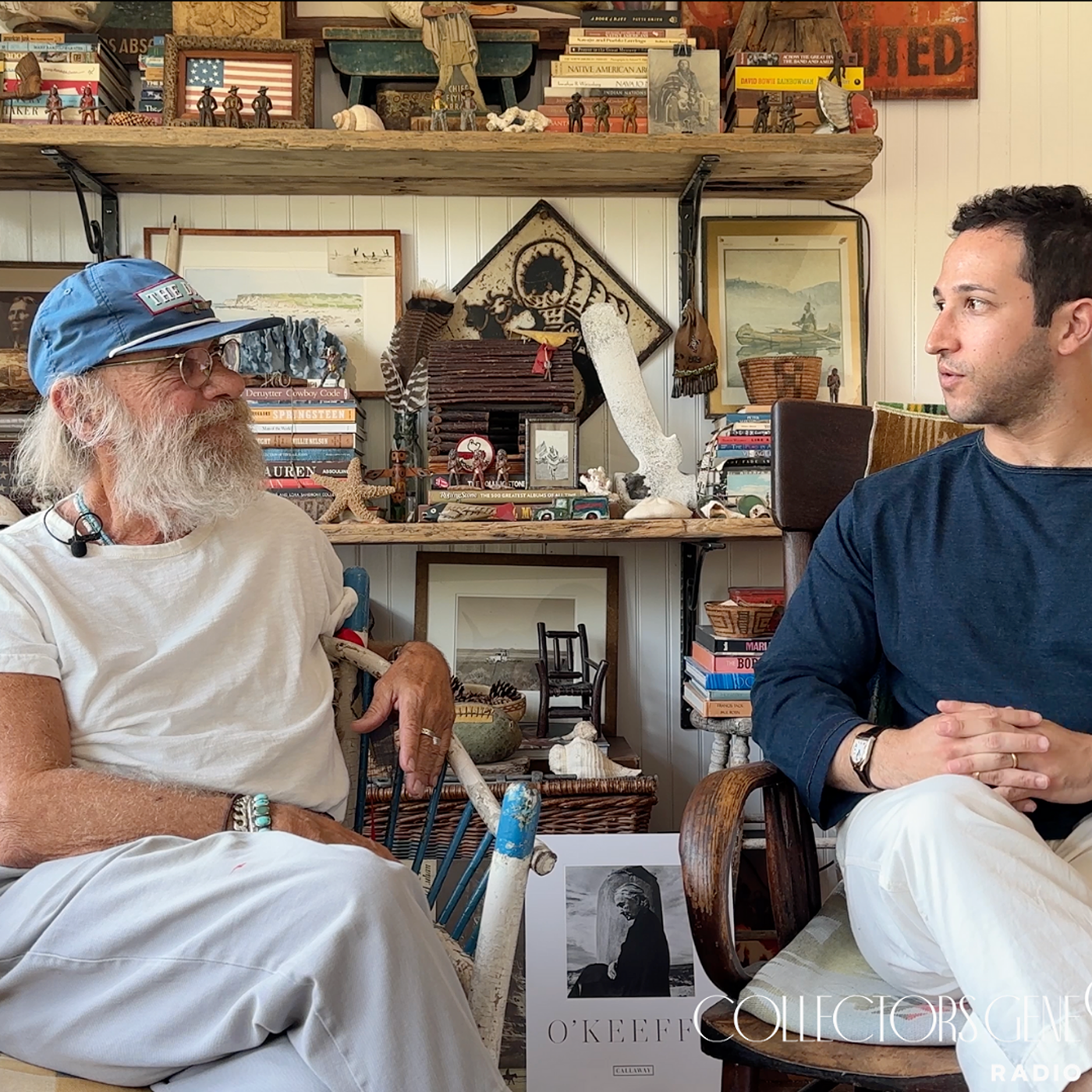
It truly helps. Thanks a bunch for listening and please enjoy today's guest on Collector's Dream Radio. Today I'm in East Hampton, New York to sit down with arguably one of the greatest collectors of all time. In fact, his career has revolved around collecting as the head of Vintage now consultant for Ralph Lauren, and we can attribute our love for western and layered looks to him. Doug Billmeyer is my guest today and for his first ever interview and podcast, I was more than thrilled to sit down with him and his home and spend the day together with him and his wife. Growing up in Kansas, Doug fell in love with denim and began collecting early on. But it's not that simple. See, Doug noticed Levi started to change their fit. So as one collector does, he starts hunting for the old stuff. That's what has made Doug the person we all look up to today. He's always had the foresight as to what's next, which is exactly what happened when he was introduced to the Ralph Lauren brand pretty early on. Doug has spent his career traveling the world hunting for vintage goods for the stores and had anyone look behind the curtain of the early days at the RL store, you would have seen Doug curating one of the most impressive collections around. He recalls going to warehouses in the UK and finding old equestrian and oil paintings in gilt frames that nobody wanted and riding boots and wool blankets from the 20s and 30s and just about everything else that makes up the Ralph Lauren brand. Today, however, it's not just searching the world for objects that makes Doug well, Doug. His design, architecture and merchandising prowess have all played a big role in why we all admire Doug. And you can feel, touch and breathe that when you walk into any Ralph Lauren and Double RL store. As for Doug, well, his home is filled and layered with wool blankets and vintage denim and flannels, Native American jewelry and objects, books, you name it, and he can tell you everything you need to know about each of them. I truly feel honored to share this interview with you all. But even more Grateful to call Doug a friend. So, with great honor, this is Doug Billmeyer for Collector's Gene Radio.
- [02:31]
Doug Billmeyer, previous head of vintage at ralph, now consultant for the brand for.
- [02:35]
Unnamed Speaker
The vintage buying team.
- [02:36]
Cameron
Welcome to Collectors Dream Radio.
- [02:38]
Doug Billmeyer
Thank you. Very nice to be here, Cameron.
- [02:41]
Cameron
So we're in your home, and it's pretty special because this is actually not only your first podcast, but maybe your first video interview before. And I'm honored that you chose me to do it.
- [02:51]
Doug Billmeyer
I'm glad you asked. And you were persistent.
- [02:53]
Cameron
I was, I'll admit that, pretty bashful.
- [02:57]
Doug Billmeyer
Most of the time. And I heard nothing but good things.
- [03:00]
Cameron
I appreciate that.
- [03:02]
Doug Billmeyer
You know, Carter. Encouraged and very encouraged, and they're both dear friends.
- [03:08]
Unnamed Speaker
Love it.
- [03:09]
Cameron
Well, I appreciate that. And it's funny because, you know, there's not very much about you online, actually a lot of curiosity about you, but there's one thing that kind of stays consistent with anyone that's talking about you and your team and what you have done. And at the end of the day, everyone always says thank you. And everyone says, you got to thank Doug. If you ever meet Doug, you gotta say thank you. And that's because you're responsible for pretty much everything that we're surrounded by and things like Double rl. I mean, it's. You're a big part of the heart of that. And so, on behalf of everyone, and this is your first interview. Thank you.
- [03:41]
Doug Billmeyer
Well, and I think going back to, you know, I learned, you know, a long, long, long time ago, and probably Ralph himself, you wouldn't have been where you got to if you didn't have those people with the great shit.
- [03:58]
Cameron
Absolutely.
- [04:00]
Doug Billmeyer
And it's got. It's got to work for both, you know, 100%. They got to walk away happy, like.
- [04:06]
Unnamed Speaker
Absolutely.
- [04:07]
Doug Billmeyer
And knowing that you're still looking for more.
- [04:09]
Unnamed Speaker
Right.
- [04:10]
Doug Billmeyer
So, you know, don't stop. And so treating everyone with respect and being loyal and allowing those people to. To, you know, only, you know, it's only going to be great things for you.
- [04:27]
Cameron
Absolutely.
- [04:27]
Doug Billmeyer
You know, so it is. It is. You know, it's. It's. It's like the guy back there doing dishes.
- [04:35]
Cameron
Right.
- [04:36]
Doug Billmeyer
He's a really important part of that. Right.
- [04:37]
Cameron
Hundred percent. You know, everyone would be getting sick if it wasn't for.
- [04:40]
Unnamed Speaker
Yeah, yeah, yeah.
- [04:42]
Doug Billmeyer
Or they wouldn't have anything to eat on, either.
- [04:44]
Unnamed Speaker
Yeah.
- [04:44]
Doug Billmeyer
Anyway.
- [04:45]
Cameron
And so you grew up in Kansas, and I'm curious to know the things that you saw growing up that really inspired you to kind of start this trajectory of your career.
- [04:55]
Doug Billmeyer
Well, it was A really small, small town. I think 1800 people, and I think there's less there now. Very much a farming community. And it's funny because a lot of the things that I looked for that Ralph coveted, that I coveted were all things that were in my childhood. I mean, one of my grandfathers wore overalls every day with a chambray shirt and he had long sleeve chambray shirts, he had short sleeve chambray shirts and some. Sometimes you wore a waffle and sometimes, you know, depending on the weather. I had another grandfather who wore Levi jeans and he actually liked flannel shirts, but he also wore a lot of denim shirts and chambray shirts. So again, all that has been. And one of my great uncles, he. He always wore an open road. I didn't know what an open road was at the time. He always wore a khaki shirt, khaki pants, and some roper suede boots. I swear I have the same boots that he, you know. And so, you know, yes, there was a lot of things that were going on that unknowns to me became. What happened? Yeah.
- [06:21]
Cameron
And so in high school you start collecting Levi's and that's.
- [06:26]
Doug Billmeyer
Well, it wasn't an active, I'm going to start this or whatever. The Levi was always kind of my Gene. I remember you also. I was also influenced, obviously. No Internet, no computer. So you were influenced by the different, you know, photographs, album covers especially that I would see. And obviously blue jeans and obviously George Harrison with the western shirt and on the Abbey, on the Abbey Road. Right. And the desert boots. So that became like my, you know, my look. And the Levi back then you had to break them in yourself. There was no, you know, pre wash situation. And also I, you know, I knew that the Levi's had changed. I didn't know about the Biggie or the little E or whatever, but something was different. So for a couple reasons, I started looking for old Levi's because number one, someone already did the freaking hard, you know, work breaking them in and, and they were beautiful. And number two, they had the old fit.
- [07:50]
Unnamed Speaker
Right.
- [07:50]
Cameron
And so from there you go to work at a clothing company or store, rather called Woody's. And that's kind of where you got introduced to Ralph.
- [07:58]
Doug Billmeyer
Yeah, one of, one of my, one of the stories that I tell is Woody had sent me to the airport in Kansas City to pick up some guy from New York who worked for a company called Polo Ralph Lauren. So I got there not knowing what the heck to, you know, I don't even know what this Guy looks like, I don't know, you know, how am I going to find this guy and the guy, you know? And you could go right to the gate, then right to the plane. And so anyway, everyone's getting off the plane. Nick. Nick. Shirts, you know, polyester, you know, it looked like, you know, the movie Casino, you know, like, perfect. And here comes a guy in a wide, well, corduroy suit, suede elbow patches. They were quilted, the elbow patches. He had, like, flannel shirt on with. With a yellow club tie. It was amazing.
- [08:57]
Unnamed Speaker
Yeah.
- [08:57]
Doug Billmeyer
So that was my first, you know, inkling of, wow, Yeah, I want to look like this guy. But always before, you know, I go to class and I'd have my. My Levi George Harrison flannel shirt, Neil Young look, or I would have. I would come to work in my preppy button down.
- [09:24]
Unnamed Speaker
Yep.
- [09:25]
Doug Billmeyer
You know, so that's kind of where one of the guys that worked there, kind of a Woody Allen type guy, he would wear a tweed tweed suit with a plaid shirt and a plaid tie. And he and I would do windows. And pretty soon I was just doing windows. But that was a big inspiration was, you know, breaking some of the rules.
- [09:51]
Unnamed Speaker
Yes.
- [09:51]
Doug Billmeyer
Early. Yeah. His pattern on pattern on pattern.
- [09:55]
Unnamed Speaker
Right.
- [09:55]
Doug Billmeyer
Color against color against color. Not matchy matchy, matchy matchy. Which is where up until then was pretty much. Men wore dark suits, black ties, white shirts. The tie was a statement for some guys. And the women were pretty boring. So the whole. The whole generation, the young generation, that Woodstock generation, that was a pretty much, you know, out there. Yeah, absolutely, you know, revolutionary thing.
- [10:32]
Cameron
And then how do you transition into working at Ralph?
- [10:36]
Doug Billmeyer
Well, I think. I think that's, you know, the one thing that I learned at Ralph was, you know, the serious close that suits the sport. Codes don't have to be so serious. Right. And the real casual Woodstock, Neil Young clothes don't have to be so Woodstock that you can mix. You can mix it all together, which he was doing. And one of the things that I got to witness was, you know, growing up in Woody's in Canada, just the first, you know, casual rough wear line was called Chaps. I was telling you earlier, I think that was the first time Ralph had a blue team. And that sort of been mid, mid-70s, you know, and Western wear. Then I went to Dallas years later in the 79, and Western Wear was kind of the big thing then. And again he was starting with the jeans and the flannel shirts. I think by the time I got to New York in 84, is when. When the country store thing really started being a big deal. Early 80s, mid 80s. And so then when RRL was sort of the next. The next step. And that was early 90s.
- [12:15]
Unnamed Speaker
Yeah.
- [12:15]
Cameron
Like 92, 93 is.
- [12:18]
Doug Billmeyer
They probably started working on it in the 90, 91, 92. I think they give 93 as the beginning of the company. So it must have been when the first Polish sports store open, a little corner which double and show. You had this really modern, you know, white club, big yachting crew thing down the middle. And then you had this little shop. I even made sure the stale. The stairs creaked. And I still have a lot of the things from that original store in my office. But, you know, it was a big American flag and some old tin signs, but not too crusty, you know, but, you know, you know, and back then the line RL was pretty small. It was, you know, a few pair of jeans, a few pair of flannel shirts. So the vintage which later became my job was it became a big part of the store.
- [13:34]
Unnamed Speaker
Right.
- [13:34]
Doug Billmeyer
Maybe 50, 60% of the store was vintage.
- [13:40]
Unnamed Speaker
Right.
- [13:40]
Doug Billmeyer
Because it had to be to fill the store up.
- [13:43]
Cameron
And had anyone peeled the curtain back, they would have seen all the things that you were collecting to really get that kind of get that going.
- [13:51]
Unnamed Speaker
Right.
- [13:51]
Doug Billmeyer
Yeah. No. And there was the vintage to be probably profitable. I'm not sure Ralph wanted it in other places, other special stores. That's about the time he had. He would open East Hampton. So that sort of became a little bit of a. Whatever I say, you know, testing ground. So that was kind of started as a country store with the brooms and the quilts and the usual country store. If Ralph did a country store look and kind of then evolved into this collection store and, you know, sexy swimsuits, meeting collection with. And vintage became a part of that. Vintage watches, vintage leather jackets and Levi jeans.
- [14:56]
Unnamed Speaker
Yep.
- [14:58]
Doug Billmeyer
And again, the Levi jean was. It was. You know, even to this day, there was just something about the denim, something about the fit, something about the icon.
- [15:13]
Unnamed Speaker
Yep.
- [15:13]
Doug Billmeyer
Of lead line.
- [15:15]
Unnamed Speaker
Yeah.
- [15:16]
Cameron
So anyway, and so throughout the years, you're hunting for all these things. What's the process of opening up a new store and having to go out and source and collect all these vintage things to fill the store with.
- [15:31]
Doug Billmeyer
Well, obviously it's evolved into something else totally today. But back in the olden days, the flea markets were still pretty full of discarded furniture, which even the mansion was pretty much Regency style furniture, which was sort of like used furniture to the English people.
- [16:04]
Unnamed Speaker
Right.
- [16:04]
Doug Billmeyer
You know, and. But you know, it Was all about capturing the look and sort of learning as you went, to be honest, because there was nothing that any of us were like trained professionals or anything. So it was like, Ralph's doing, country Ralph's doing, Santa Fe, Ralph's doing, you know, ski lodge, Ralph's doing, you know, English, country Ralph's doing. You know, so I sort of learned what that meant, and sometimes the hard way, but, you know, and it was shopping back in those days. Markets.
- [16:54]
Unnamed Speaker
Yeah.
- [16:54]
Cameron
All over the world.
- [16:55]
Doug Billmeyer
Oh, well, the Paris flea market was probably the. Oh, my God, you know, market of all markets. Brimfield was, and to this day, still an amazing, you know, probably for me, more vintage clothes as opposed to furniture. But a lot of the things in my house are from Brookfield. A lot of the things in. Mr. Lawrence Colorado Ranch is based from Broomfield. So again, before the Internet and stuff, people were coming, you know, at certain times, several times a year to these markets from all over the country, or if you're in Europe, all over Europe and bringing with them their little treasures.
- [17:49]
Cameron
For you to take, for you to pick.
- [17:51]
Doug Billmeyer
And that was always the great thing about Ralph Lauren is you got to. You got to pick.
- [17:55]
Unnamed Speaker
Yeah.
- [17:56]
Doug Billmeyer
An antique dealer might be more focused on, okay, I'm gonna buy this chair for 50 bucks. Cause I can sell it for 150 bucks.
- [18:06]
Unnamed Speaker
Right.
- [18:07]
Doug Billmeyer
But that wasn't what we were doing, you know, early days, merchandising. It was more. Yeah, it was more telling a story both in a showroom and a store or in a home.
- [18:18]
Cameron
And if someone wanted to buy it, great.
- [18:20]
Doug Billmeyer
Yeah. And the. When we first started Double rl, it was most everything that wasn't tied down, that wasn't a major fixture was for sale. All the artwork, surfboards, the lamps, the side tables, which was kind of a scary thing, to be honest. Like, if they really. If they would have really taken off. Holy shit. For sure. You know, I was always nervous about that.
- [18:53]
Unnamed Speaker
Yeah.
- [18:55]
Doug Billmeyer
But it actually, you know, did okay, but didn't do good enough for, you know, the money people. Sure. Where the clothing had a nice turn. Had a nice, you know, markup.
- [19:11]
Unnamed Speaker
Right.
- [19:11]
Doug Billmeyer
It's hard to mark furniture on.
- [19:13]
Unnamed Speaker
Yeah, definitely. Definitely.
- [19:15]
Doug Billmeyer
It's an aesthetic if you're buying the. The best stuff.
- [19:18]
Unnamed Speaker
Right.
- [19:18]
Doug Billmeyer
Especially today. Right. For sure. Yeah. You know, even then, you know, I bought this for $10. This chair. I love this chair.
- [19:29]
Cameron
It's fantastic.
- [19:30]
Doug Billmeyer
You know, to me, this is a thousand dollar chair. But I wouldn't really want to sell it because no one would want to give me a thousand dollars.
- [19:41]
Cameron
That Makes sense.
- [19:42]
Doug Billmeyer
Yeah.
- [19:42]
Unnamed Speaker
Yeah.
- [19:43]
Cameron
And so as you're collecting all these things for the stores, you're also collecting for yourself because the things that are in the stores are also well surrounded by them now.
- [19:52]
Doug Billmeyer
And that's really, you know, what I wanted to talk to you about is. Yeah, it was. I kind of had a rule back in the day because, you know, like everyone, we weren't making any money. It was more. We were just having fun. This was passion, you know, we gotta go shopping, you know, so, so many times I saw things that, man, I wish I had money, you know, but if it was under 100 bucks, I kept it easy. Yeah. So a lot of my blankets were cheap.
- [20:23]
Unnamed Speaker
Right.
- [20:23]
Doug Billmeyer
You know, there's a hole in practically 90% of them. You know, it was recently more in the last few years as I've gotten older and not really finding that much under $100.
- [20:41]
Unnamed Speaker
Right.
- [20:42]
Doug Billmeyer
Can't breathe for under realizing maybe it's better to buy something a little bit more, you know, like we were talking about Barry and the blankets. Yeah, sure, he's got the, you know, he's got the stock and the beat up ones, but then there's the stack of the really great ones. It's kind of nice to get one of the really great ones.
- [21:03]
Cameron
Yeah. Once in a blue moon, it's nice to sweat.
- [21:05]
Doug Billmeyer
You'll make it one of those. Right. But I think that's the other thing about vintages is I was always trained probably in the Ralph Lauren world of looking for the patina, looking for the age, looking for the real, you know, the real character. Character. And a lot of that stuff doesn't have a lot of age left.
- [21:37]
Unnamed Speaker
Right.
- [21:38]
Doug Billmeyer
You know, but it looks amazing.
- [21:40]
Unnamed Speaker
Yeah.
- [21:40]
Doug Billmeyer
I think it's instant gratification for, you know, people like myself. They're going out to dinner, they're going to a friend's house. I got these great patch jeans at Ralph Lauren.
- [21:53]
Unnamed Speaker
Amazing.
- [21:54]
Doug Billmeyer
You know, you did your job. But I think finding that gene that's not patched yet. Finding that, you know, and they're, you know, as far as us retailing it, it. It's definitely a fine line.
- [22:10]
Unnamed Speaker
Yeah.
- [22:11]
Doug Billmeyer
If it's too new, they're not interested.
- [22:13]
Unnamed Speaker
Right.
- [22:13]
Doug Billmeyer
You know, but yeah, I see guys posting online, you know, and obviously when I started this whole thing, we were going to the Rose bowl about every other month. Really. The thing then was most people that were buying vintage were the Japanese and the yen was trading amazing against the dollar. That was another huge problem. But what they were most interested in is dead stop. Obviously, I Was looking for the stuff with the patina.
- [22:49]
Unnamed Speaker
Right.
- [22:50]
Doug Billmeyer
You know, so I would be usually on the back row of the Rose bowl where these guys are showing up with the rags.
- [22:58]
Unnamed Speaker
Right.
- [22:59]
Doug Billmeyer
With, you know, their Levi's were C's, not A's, you know, that's. So it kind of worked out.
- [23:08]
Unnamed Speaker
Yeah.
- [23:08]
Doug Billmeyer
You guys buy all the new shit.
- [23:10]
Cameron
I'll buy all the old shit.
- [23:12]
Doug Billmeyer
And it worked for the dealers really well.
- [23:14]
Unnamed Speaker
Yeah.
- [23:14]
Doug Billmeyer
Because they could pick up both.
- [23:16]
Unnamed Speaker
Yeah.
- [23:16]
Doug Billmeyer
Because they saw both. Right. And obviously, I'm gonna charge you more for this because it's got the tag and da, da, da. For me, back then, it was sort of like it's a dead stock for a reason. It didn't sell.
- [23:28]
Cameron
Right. Yeah, no one wanted it.
- [23:30]
Doug Billmeyer
Yeah, no one wanted it. Didn't fit anybody.
- [23:32]
Unnamed Speaker
Yeah.
- [23:32]
Doug Billmeyer
So why do I want it now? I think, you know, if we see something cool in Steadstock and has a tag on it.
- [23:40]
Cameron
Yeah, it might be worth it.
- [23:41]
Doug Billmeyer
Yeah.
- [23:41]
Unnamed Speaker
Yeah, definitely.
- [23:43]
Cameron
When you're buying all this stuff, you know, you're talking about condition of things, right?
- [23:49]
Unnamed Speaker
You're.
- [23:49]
Cameron
You're looking for things that maybe have a little bit more character to them. Was that kind of the business plan for vintage at Ralph from day one? Like, don't spend a bunch of money on the highest quality or the, you know, best condition stuff. Find stuff that has character. We'll toss it in the store.
- [24:05]
Doug Billmeyer
I think today it's not changed. Ralph is the customer, you know, and both in his regular product and his vintage product. And no one. There's no tougher customer than Ralph Lauren. Right. And so, you know, he once told me, if you don't want it, I don't want it. You know, And I've lived by that. And obviously, I can say to this day, everything that I've bought, if it would have fit me and I would have needed it.
- [24:50]
Unnamed Speaker
Yep. It would have been in my closet. Right.
- [24:54]
Doug Billmeyer
And a lot of it is.
- [24:55]
Unnamed Speaker
Yeah.
- [24:56]
Doug Billmeyer
Again, playing the $100 rule, though.
- [24:59]
Cameron
So in terms of, you know, putting vintage in the store and merchandising and you're amongst new things with a sale tag on it that just came out of, you know, the production facility, and you have a vintage case of bracelets and stuff, what's the merchandising strategy of mixing the vintage?
- [25:18]
Doug Billmeyer
Yeah, that's right. You asked me about the. Was that the plan?
- [25:21]
Unnamed Speaker
Yeah.
- [25:21]
Doug Billmeyer
And I think that's been the wonderful thing since day one. This was Ralph's baby. Let's leave him alone a little bit. You know, there's been Rough times back in the day when stuff didn't sell and we've invested all this money and blah, blah, blah. Now I think they're doing record numbers. I should have quit a long time ago. And I think it's just really more. More and more people have become aware right now, back then and today. Obviously you want to buy the best of the best. It's got Ralph Lauren's name on the door. So you want them to walk in and walk out with the best.
- [26:14]
Unnamed Speaker
Right.
- [26:15]
Doug Billmeyer
You know, and there, there's nothing else. And sometimes the best doesn't cost much, you know, that's a beautiful thing. I spent my life looking for the next thing, right. Looking for something that no one figured out yet, you know, And I think there's still things out there, you know, like for instance, I was showing you, I've got a little collection of quilts over the years. I still think quilts are undervalued.
- [26:42]
Cameron
Absolutely.
- [26:43]
Doug Billmeyer
You know, 1880s indigo patches. You're paying a lot of money for squares. Yeah. Anyway. And it's all hand done anyway, you know, stuff like that. And you know, Navajo rugs, dene rugs, I should say things like that. I think still the, what I want to say, the ethnic is not necessarily a great word, but you know what I mean, the different, the different regions around the world, Cultural history. Yeah, the cultural. You know, what happened back then to me is amazing to me is that's what it's all about.
- [27:25]
Cameron
Well, I think it's a testament to. If we go back to the beginning of our conversation, you sourcing these Levi's for yourself because you realize that they had changed and you realized things were changing and then you saw something in Ralph. And I think you've always obviously had that eye for what's next and that's why you've probably been so successful in your careers, you know, head of vintage and consulting and just collecting in general. When it comes to sourcing these days, it's a big job. There's a lot of stores, A lot of stores. You probably have people, I'm assuming, sourcing all over for you at this point.
- [28:03]
Doug Billmeyer
Yeah, there's, there's several, you know, the more you can be diversified around the country, around the world, that's, that's a, that's a great thing. It's, you know, I think there's, there's, there's great people that are young that are finding stuff. I mean, that's the scary thing that a lot of the shows that I grew up going to as a very Young man in learning all the stuff about western or, you know, turquoise or, you know, novel weavings or, you know, whatever you're learning from the people. Because that's, that's the best thing is ask questions. If you're, if you're, if you fall in love with something, find out as much as the guy knows selling it. And obviously today you have Google. You know, I was a professional before Google came around on just about everything.
- [29:04]
Unnamed Speaker
Yep.
- [29:05]
Doug Billmeyer
So anyway, that's. That I think is what, you know, if something interests you, that's what you'll get drawn into it by learning more and more about it and realizing what was going on when this was being made. Yeah, for me, that's, that's, that's, you know, I like that more handmade, you know, both rugs and furniture and clothing. It's all about the hand. The bespoke, you know, stuff that's in Japan, you know, the stuff that the poor people, you know, it's generally more the workers, the, you know, the, you know, the. Not the richer class. Right. Not that didn't have a lot of great stuff. More from London than any place that was also bespoke and whatever. But I think the most amazing thing is a lot of the things that we love started out to be workwear worth selling brand new for $5. $25, in fact. Mr. Or had that interview about that many years ago where he talks about the shirt that he got from Walmart.
- [30:36]
Cameron
From Walmart, yes.
- [30:37]
Doug Billmeyer
So that's the beautiful thing is when something costs $10.
- [30:42]
Unnamed Speaker
Yep.
- [30:42]
Doug Billmeyer
You know, so as far as collecting goes, I. Most of my stuff is at that end of the realm, you know, it's amazing because it's not around anymore.
- [30:57]
Unnamed Speaker
Right?
- [30:57]
Yeah.
- [30:58]
Doug Billmeyer
It's the stuff that people, I mean, vintage comes from. Somebody died.
- [31:05]
Unnamed Speaker
Yes.
- [31:06]
Doug Billmeyer
You know, and somebody now has to get rid of it because they don't want it.
- [31:10]
Unnamed Speaker
Right.
- [31:11]
Cameron
So the life cycle of it.
- [31:12]
Doug Billmeyer
That's the life cycle. You know, someday all my stuff is going to be in the same boat.
- [31:17]
Unnamed Speaker
Right.
- [31:18]
Cameron
Well, I think what's, what's interesting is the idea of building an archive as you collect because you need to pull on things for inspiration. You also need a place to store things because, you know, I'm sure starting out, you didn't have to collect that much, but as you got more and more stores that you had to merchandise, you had to collect a lot because you didn't know what would get used.
- [31:39]
Doug Billmeyer
What wouldn't get used, you know, and. Well, mostly as far as stores went, you and I'm sure it's probably the same today. You had to buy it off of that budget. So a budget had to be created somewhere. And hopefully whoever was doing that store stayed there somehow because it all gets wrapped into that particular location against their bottom line.
- [32:11]
Unnamed Speaker
Right.
- [32:12]
Doug Billmeyer
So however much it costs to open a store is all part of the.
- [32:16]
Cameron
Formula, part of all that. Yeah.
- [32:18]
Doug Billmeyer
So I think that Ralph Lauren basically goes over budget on every single store. I would have to imagine basically every place you could go over budget. Says a lot. Saying it doesn't compromise.
- [32:34]
Unnamed Speaker
Right.
- [32:34]
Doug Billmeyer
You could open a lot cheaper stores and still have the same in there.
- [32:38]
Unnamed Speaker
Right.
- [32:39]
Doug Billmeyer
But it's about the story that he's telling. And that's, that's, that's what, again, all the stuff I have, basically I was out for a reason. Buying him, buying for a store, buying for a showroom, and ran across something I couldn't say no to, I wanted to have. But as far as me and my collecting it, it's more for me. I didn't collect it to be collecting, and I collected it because I liked it as art. The color, the. The pattern, the warmth, the gave the. And. And I use it and I, you know, and, and that's. I think if it's too precious, I don't really want.
- [33:33]
Cameron
Yeah, well, that's, that's the thing.
- [33:35]
Doug Billmeyer
It's.
- [33:35]
Unnamed Speaker
There's this.
- [33:37]
Cameron
This push and pull of really wanting something. But maybe it's too precious or maybe it's too expensive and you're worried to use it or worried to wear it versus finding something like these blankets, which are fantastic. And you could toss it around you when it's cold out. You could layer it on a sofa, you could put it on a chair and you don't worry about it.
- [33:54]
Doug Billmeyer
Yeah.
- [33:55]
Unnamed Speaker
No.
- [33:55]
Doug Billmeyer
And that's. And I think it's funny because I covet this stuff until one of my daughters needs something. Take whatever you want.
- [34:04]
Unnamed Speaker
Yeah.
- [34:05]
Cameron
Yeah, exactly.
- [34:06]
Doug Billmeyer
Maybe not that one, but yeah. You know, I think that's. That's what it's about, is you loving it. And everyone appreciates it or hopefully loves it as well. Both your friends, your family, people you have come over. I think the thing I Learned again from Mr. Lauren is when you're doing. You know, I really came home when I was years and years ago working on the ranch and, you know, but it's the same as a window or anything. Most of your building materials at Ralph Lauren anyway is wood, right? Yeah. So it's brown, right? Everything's brown, right?
- [34:55]
Unnamed Speaker
Yep.
- [34:56]
Doug Billmeyer
And you can paint it white, but so all these fabrics or the color of the room.
- [35:04]
Unnamed Speaker
Yep.
- [35:04]
Cameron
They all mix it up.
- [35:05]
Doug Billmeyer
That's what. And there's a term that Mr. Lauren uses, happy. It's gotta be happy. You know, it's gotta make you want it. It's gotta make you feel good about being around it, being with it, being, you know, so that. That obviously has ruled, you know, And I think the mix of the, you know, the American, you know, beacon blanket with the American Indian rug with the Japanese indigo with the Molly, you know, all that stuff, you know, is good together.
- [35:46]
Unnamed Speaker
Yeah.
- [35:47]
Doug Billmeyer
I mean, there was something I was laughing. I read not too long ago on Instagram, you know, it's not hoarding if it's cool.
- [35:55]
Unnamed Speaker
Yeah, that's true.
- [35:57]
Doug Billmeyer
And that's. That's sort of. I think where I am right now, I. Do I need anything? No, do. Am I gonna get tempted by something? Yes. When I go shopping, is there a shopping list? Is there a plan? Thank God, No. You know, I think, you know, if you're doing a particular show room or a particular look, I gotta find Navy. I've got to find Army. I've got to find country. You know, whatever it is, there's always something that was there. But as far as the vintage and as far as anything, I think, in anyone, I think the more you go with an open mind, this is what's here, right? It doesn't matter what you're looking for.
- [36:46]
Unnamed Speaker
Yes, exactly.
- [36:46]
Doug Billmeyer
This is what's here.
- [36:47]
Unnamed Speaker
Yeah.
- [36:48]
Doug Billmeyer
So here, something's here that you like or something's not here.
- [36:52]
Unnamed Speaker
Right.
- [36:52]
Doug Billmeyer
And I think that's the other thing that I learned very early. It's not bad to walk away with money still in your pocket.
- [36:58]
Unnamed Speaker
Right.
- [36:59]
Doug Billmeyer
And have them buy crap.
- [37:01]
Unnamed Speaker
Yeah.
- [37:01]
Cameron
I was talking about this the other day, and the thing about collecting and going to a flea market is the joy of it. And if you can leave there having not spent a dime and still be happy.
- [37:12]
Doug Billmeyer
Yeah.
- [37:12]
Cameron
You're probably a collector.
- [37:13]
Doug Billmeyer
Yeah. You know, that's. That's definitely, like, you can do it once around, you know, or, you know, there's all kinds of. You know, and I think the. You know, I think today I find more things on. I don't want to say where I find it, but, I mean, Instagram, obviously, you know, that's like, you know, most of the stuff's already sold, right?
- [37:44]
Unnamed Speaker
Yes.
- [37:44]
Doug Billmeyer
And most of the stuff's in Jap Japan.
- [37:46]
Unnamed Speaker
Yeah.
- [37:46]
Doug Billmeyer
And that's one of the things we've talked about, and I've been talking about it since day one, is someday we're going to go over there and buy it all back. Yeah, not buy it all back, but.
- [37:54]
Unnamed Speaker
You know, good amount.
- [37:55]
Doug Billmeyer
Good. Yeah, because that's, you know, we weren't smart enough sometimes to hold on to things, but that's the way. That's the way the world works. And I think that's what makes it interesting. You know, that's how it's got to be. Because I've got a few things I bought over there that they, they probably want back. They would love that back. So, you know, it's all. That's the beautiful part about the world, I think, is for me, it's the French flea market or that amazing table from some historic farm in Japan or Africa is more interesting anymore and more tempting to me because I've seen it all. No, you know, the American.
- [38:45]
Unnamed Speaker
Right.
- [38:45]
Doug Billmeyer
Kind of know. I know it and I love it and I have it. And that's if you're going to add. I think the more diversity. The more diversity is a bad word, but the more, the more interesting it is to mix it up.
- [39:00]
Cameron
Absolutely.
- [39:00]
Doug Billmeyer
I've already said that, but you get what I mean.
- [39:02]
Cameron
Yeah, it makes sense. At the end of the day, you've had an extremely successful career. You are someone that people really look up to, especially in the. In the vintage space. Why is collecting so important to you?
- [39:19]
Doug Billmeyer
Well, I think that's what you kind of get good at. Buying stuff, you know, and seeing cool stuff. Especially, like I said, if you see it before, they realize how special it is. I think lots of times I can get turned off really quick just by the price.
- [39:41]
Cameron
Absolutely.
- [39:41]
Doug Billmeyer
You know, I don't love it that much. And like I said, I think the things that are a little torn, the more, the more they're torn, the more they're beat up, kind of the better for me. But as far as collecting, I can't think of anything on out there I gotta have. I mean, I've been kind of looking for a cool sponge where, you know, picture forever, you know, it's always too small or, you know, something's wrong. But, you know, there's always something that's out there that if I see one, I'm gonna grab it.
- [40:29]
Unnamed Speaker
I love it.
- [40:29]
Doug Billmeyer
I'm a nut for galvanized. I keep buying these galvanized pots for my flowers that are like $20, $10.
- [40:37]
Cameron
They're great.
- [40:38]
Doug Billmeyer
Sometimes you go, what did you pay for? Right. What the hell? But, yeah, no, I think, you know, I'm. Again, I go down to that beach every day, every other day, and I drag Another shell home. Another piece of beach glass, if I can find one, you know, so I'm always. I think that's who you are. That's who I am is just somebody that's always shopping.
- [41:08]
Unnamed Speaker
Yeah.
- [41:09]
Cameron
You know, it's a good, good job to have.
- [41:11]
Doug Billmeyer
Yeah. Supermarket, Same way. Right. I gotta go to the best place.
- [41:15]
Unnamed Speaker
Yep.
- [41:16]
Doug Billmeyer
Yeah, I love it.
- [41:17]
Cameron
Let's wrap it up with the collector's dream rundown. You know, this. You know, you can answer these questions based on any of the things that you collect, whether it's blankets, whether it's galvanized pots or bracelets. Totally up to you. Sound good?
- [41:29]
Unnamed Speaker
All right.
- [41:30]
Cameron
What's the one that got away?
- [41:32]
Doug Billmeyer
Yeah, I would say that's obviously at the time. I wish I would have liked that. And there's a lot of that happens to me almost at every show, whether it's a flannel shirt or a blanket. But I think more than anything, it's. It's more. I wish I would have bought more Levi's when they were cheaper, you know, Makes sense. You know, I mean, thank God I've been able to maintain pretty much my same weight all these years. So I'm wearing the same jeans that I bought for $200.
- [42:11]
Unnamed Speaker
Right.
- [42:12]
Doug Billmeyer
$100 from, you know, the 90s.
- [42:16]
Unnamed Speaker
Right.
- [42:17]
Doug Billmeyer
Early 90s, I think. You know, I think all these years I had several opportunities to buy things that I bought more for the company money.
- [42:30]
Unnamed Speaker
Right.
- [42:30]
Doug Billmeyer
You know, so I think. I think the Dene rugs were very, very undervalued. Still undervalued. So I can't stop buying those. I can't stop buying the cotton blankets. I think those are undervalued because I just think they're so unique. It's. Even in my world, you see so few of them over and over again. I mean, there's a couple that you see over and over again. But, you know, I think the Navo blankets, that you'll never see them all. You'll never see, you know, and I think. I think that's probably fabrics is where I'm going to just say I can never seem to find enough. And things that got away are usually some great thing I saw in the fabric world that someone grabbed anyway.
- [43:25]
Cameron
Makes sense. How about the on deck circle? So this is something that is next for you in collecting something you're hunting after, maybe even a place that you want to go visit a flea market at.
- [43:38]
Doug Billmeyer
Well, I. I love. There's a couple called Marston House. Then they're up in Maine and they're in Provence during the winter. And they've always told me about all these great French flea markets, country flea markets, and I love all the things they collect. I think that's probably. I should do that.
- [44:09]
Unnamed Speaker
Yes.
- [44:10]
Doug Billmeyer
I don't have a plan to do that. I think. I think the. I think the other thing I'd love to do one more time is go back to Japan and bring some stuff home and. Yeah. Dig around more. Their stuff, their country, their cool stuff.
- [44:36]
Cameron
Absolutely. Anyway, amazing. How about the unobtainable? So something that's just too expensive in a private collection or museum, it's just complete unobtainium.
- [44:46]
Doug Billmeyer
Well, I think, you know, I've always been able to appreciate those things. It's funny, I go to museums and I have friends send me pictures. They just went through the museum in Santa Fe, you know, wheel ride, whatever, Whatever it is, and showing me things, and I go, I have one better than that. You know, there's better than that at the ranch or there's better than that, you know, so, again, I think it's because Mr. Lawrence trained my eye. He told me not to lose my nativity, which is very important because I think you get, you know, you get onto something just because it's something.
- [45:33]
Unnamed Speaker
Right.
- [45:34]
Doug Billmeyer
You know, which is a bad thing. I think a lot of dealers specialize in something, which is a good thing. You should specialize in something you're good at. You shouldn't just be all over the board and not know what you're doing. So, you know, I totally understand that. And I. And I think sometimes that a lot of those things, they've learned too much. Sometimes you've learned too much, and you put a price on something because of what it is, what. You know, which is fair. But in my world, all these years, I've had to resell it lots of times. And so I can't really play that game necessarily, because most people don't give a shit. I don't care who wore it.
- [46:24]
Unnamed Speaker
Right.
- [46:24]
Doug Billmeyer
I don't care what war it went through. Right.
- [46:27]
Unnamed Speaker
Yeah.
- [46:28]
Doug Billmeyer
It kind of stiff. Kind of smells.
- [46:32]
Unnamed Speaker
Yeah, yeah.
- [46:33]
Doug Billmeyer
That. You know, the zipper's broken. Right. All those things are more important than. And I think it's now going to be on a new story.
- [46:44]
Cameron
Sure.
- [46:45]
Doug Billmeyer
Because it's now in our store. It's now on your back right now. You know, And I think knowing what it is super important and. I don't know. Make any sense.
- [46:57]
Cameron
Yeah, of course.
- [46:58]
Doug Billmeyer
But as far as. As far as obtaining something that I can obtain, obviously, if I had more money in a bigger House and I could buy better things, more things. It would be more of these rugs.
- [47:11]
Unnamed Speaker
Yep.
- [47:12]
Doug Billmeyer
You know, I mean, my. My friend Shiprock Santa Fe. Every time I look at his Instagram, I drool. You know, I think, you know, you were asking me. I'll just ask questions about. About the neck you look at.
- [47:32]
Unnamed Speaker
Right.
- [47:32]
Yeah.
- [47:32]
Cameron
Well, the. Well, the page one rewrite is if you. If money was no object and you could collect anything else inside in the world, what would it be? And I think you probably said more rugs.
- [47:42]
Doug Billmeyer
Yeah, yeah. No. And there's certain people that I love what they're doing and I never spend my own money there, but John Burch and Wyeth. Amazing. I don't really understand the mid century so much. It's not so much one of a kind, handmade situation, but it's beautiful stuff. I don't need any of it. It doesn't necessarily fit into my world. Mostly.
- [48:16]
Cameron
I don't think an Eames chair works in here.
- [48:18]
Doug Billmeyer
There's certain things, obviously actual Vivort. And when I first saw that for the first time, I lost it.
- [48:30]
Unnamed Speaker
Yeah.
- [48:30]
Doug Billmeyer
I mean, the guy's amazing.
- [48:31]
Unnamed Speaker
Yeah.
- [48:32]
Doug Billmeyer
And still a few things. I see that he's doing amazing.
- [48:37]
Unnamed Speaker
Yeah.
- [48:38]
Doug Billmeyer
And obviously I was telling you about my friend's Morrison house.
- [48:41]
Unnamed Speaker
Yep.
- [48:42]
Doug Billmeyer
And there's several more. I hate to leave people out. I think there's people that. There's a woman, her name was Bryony, that turned me on to so much back in the day in London who died several years ago of a cancer. Terrible. But all that French work wear and all that handmade linen stuff, all those. I got so much knowledge of that from her kind of thing. And I think there's been a lot of people like that through the years. So I think I've also seen those people at the same shows I'm at.
- [49:26]
Unnamed Speaker
Right.
- [49:26]
Doug Billmeyer
Selecting for the museum.
- [49:28]
Cameron
Like, I'm just gonna follow you around.
- [49:30]
Doug Billmeyer
For Sotheby's for the next sale. So. Sure. We're all in the same place. Yeah, I think.
- [49:36]
Cameron
How about the goat for you? So who are some people that you look up to?
- [49:40]
Doug Billmeyer
Well, again, you know, I think I just said it.
- [49:43]
Unnamed Speaker
Yeah.
- [49:43]
Doug Billmeyer
Axel and Sharon, Paul Marston and John Burch. And you know, those guys are all amazing dealers. And there's so many other dealers. There's Doug and the Elvie out of Nashville sets up at Round Top. That's a show that I never have been to Round Top. I never felt that there was enough time, my job to say, I'm gonna go to Texas for Two weeks, you know, like. And there was never. That's more of a furniture show. Sure.
- [50:30]
Unnamed Speaker
Yeah.
- [50:31]
Doug Billmeyer
And all the furniture that we bought in Brimfield and you know, there was a reason for it sort of thing. If you don't have a reason for it, they don't really want you to just go spend money for a reason.
- [50:43]
Unnamed Speaker
Yeah.
- [50:44]
Doug Billmeyer
Probably never been, but that's another one of those places I would like to just walk through.
- [50:51]
Unnamed Speaker
Walk right through.
- [50:51]
Yeah.
- [50:52]
Cameron
Does it ever cross your mind that, you know, a lot of people look up to you as the goat?
- [50:58]
Doug Billmeyer
Well, it's funny because, you know, that's recently starting to realize it's coming to your attention. Not the guy in the room that know. When I ask, what do you think Helden is? Well, you're the one that knows. Yeah. Oh, yeah, you're right. You're right.
- [51:13]
Cameron
I do know.
- [51:14]
Doug Billmeyer
Yeah, you're right. But. And a lot of those guys, like I said, have either retired or passed away, you know, couldn't have been anywhere close to where I am today without them. And. But I think that's the problem today is the knowledge is so easily obtainable on Google or other things that the stories. And one of the reasons I wanted to do this, to be honest, and you got me into it, is telling the stories. It's like passing from one generation to the next. And so it's only fair you got passed to me. I want to pass it to the next. To the next person.
- [52:09]
Cameron
Absolutely. Do you enjoy the hunt or the ownership more?
- [52:13]
Doug Billmeyer
I think. I think I definitely enjoy the hunt, but I definitely enjoy the hunt while I'm doing it and more when it's over. Yes, I don't necessarily look forward to it anymore as much as I used to, but that's just because I'm getting old and I don't want to work. Right. But I think the ownership of it is wrapping up with one of these blankets on a cold morning and walking out of the deck, you know, I mean, I think, you know, treating it all like extension of living with it. Living with it.
- [52:53]
Unnamed Speaker
Yeah.
- [52:53]
Doug Billmeyer
You know, so anyway, I think. I think showing it off and being around it is all. Is all fun as well. But I don't have it here for that reason. Sure.
- [53:09]
Cameron
Most importantly, do you feel that you were born with the collector's gene?
- [53:13]
Doug Billmeyer
I mean, I saw that question you asked me and it's weird because I don't know, you know, I remember dragging stuff home at my little place in little home in Kansas and putting it in my dad's garage and Coming back out six months later, and he threw it away. He became a big collector later because of me. And that's his chair, by the way.
- [53:43]
Cameron
Amazing.
- [53:44]
Doug Billmeyer
And so, yes, I was dragging home stuff, not knowing what I was dragging home. I drove home a Stickly, you know, sofa, not knowing what the hell it was until years later and still have a stickly chair that was my grandfather's that I've kept all these years. It's in the basement. Oh, no, it's in my office, actually, in New York. But I've kept it all these years. And it's not a Stickly. It's a Stickley esque. I shouldn't say the style of Stickley, Arts and crafts, whatever. But again, not knowing. I remember when I first got to New York and I would go to a meeting around floor, and my boss, Jeff Walker, would tell me, oh, yeah, that's. That's very deco. We should do deco furniture. I had no idea what he's talking.
- [54:43]
Cameron
About, but I go, yeah, yeah, I'll find it.
- [54:46]
Doug Billmeyer
And then I'd get on the phone when he wasn't around, flip through his Rolodex and call different antique dealers that he had kept a number of and say, hey, you got deco. You got deco. You got deco. I'm coming over, you know, So I don't know. I'm rambling again. But I think. I think that whole keeping your nativity and loving it for. Because you love it and learning about it is, for me, that's what collecting is all about. And most of the stuff that I collected, I didn't know I was collecting it. I didn't know what it was. I just liked it.
- [55:28]
Cameron
Well, I think it's safe to say that you were born with collector Jean, and thank you so much for having us in your home. And I'm excited to spend a little bit more time with you off camera and hang out for a little bit. So really appreciate it. Doug.
- [55:39]
Doug Billmeyer
Thank you.
- [55:39]
Cameron
Pleasure.
- [55:39]
Unnamed Speaker
Thank you.
- [55:40]
Doug Billmeyer
Thank you. Cheers.
- [55:44]
Cameron
All right, that does it for this episode. Thank you all for listening to Collector's Jean Radio.