Loading summary
Transcript106 lines
- [00:00]
A
Making a collection is like collecting memories kind of thing. For example, when I look at my teapot collection, I always say, like, oh, this one, this piece I got from like Marche de Puce in France, or like, this one I got from in New York or this one I got from Turkey, you know what I mean? So I keep them as like a memory thing for myself as well.
- [00:21]
B
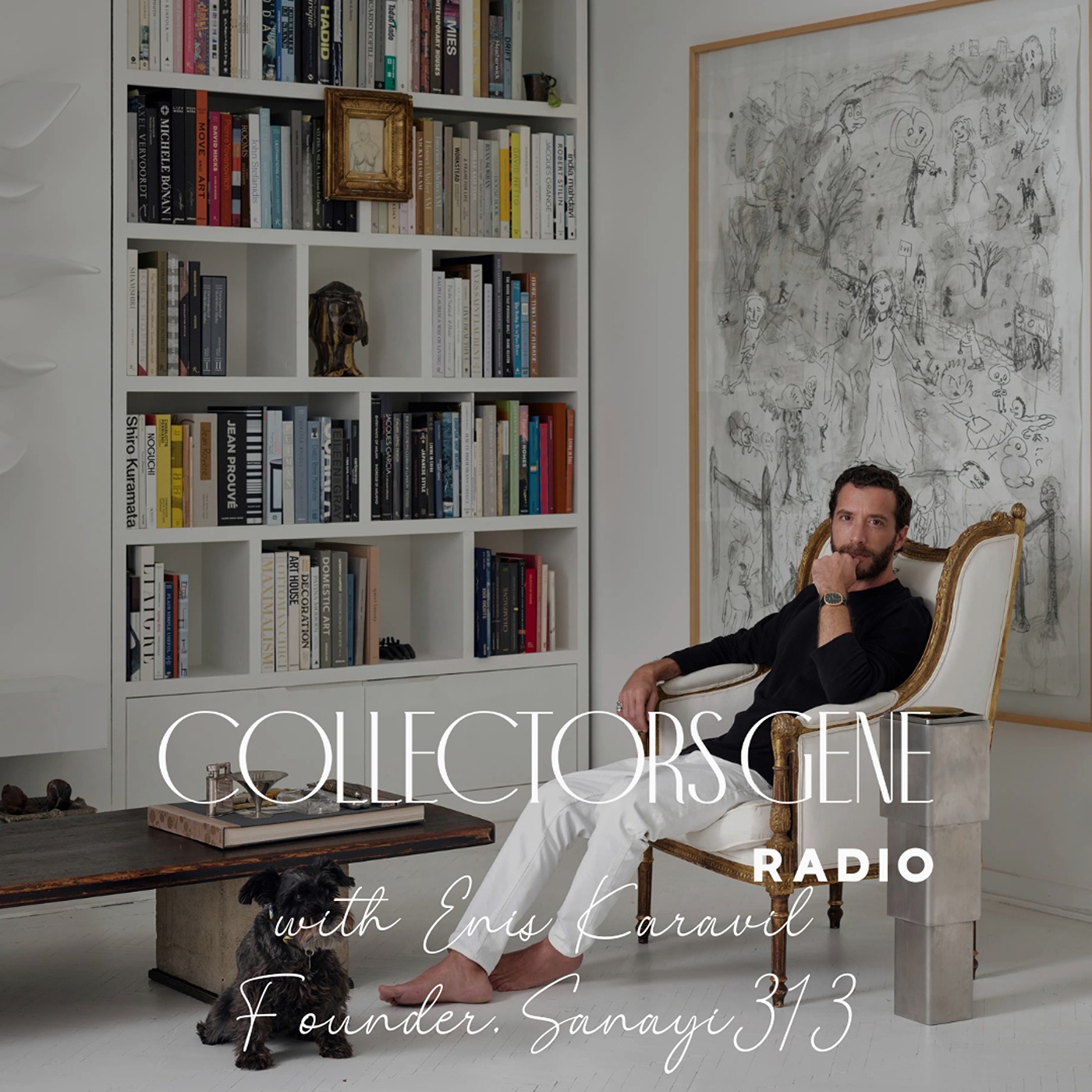
What's going on, everybody? And welcome to Collector's Gene Radio. This is all about diving into the nuances of collecting and ultimately finding out whether or not our guests have what we like to call the Collector's Gene. If you have the time, please subscribe and leave a review. It truly helps. Thanks a bunch for listening and please enjoy today's guest on Collector's Gene Radio. Today I'm thrilled to introduce Enes Caraville, the visionary founder of the interior design firm Sanai 313, a studio celebrated for its distinctive blend of craftsmanship and storytelling and design. Today, we're stepping beyond the world of interiors to uncover another layer of Ennis creative soul, his remarkable collection of vintage teapots, lighters, and other storied objects. Ennis doesn't just collect. He curates with heart first, weaving narratives through the items he acquires. Whether it's a patinated silver teapot with a storied past or a vintage lighter that sparks conversation, we explore how his professional ethos intersects with his personal passion, the allure of patina and imperfection, and what it takes to build a collection that bridges art history and design. So without further ado, this is Ennis Caraville for Collector's Gene Radio. Ennis, welcome to Collector's Gene Radio.
- [01:41]
A
Hi, Cameron.
- [01:43]
B
I'm so excited to have you on the show today. And as a founder of Sanai313, you bring such a unique perspective to the world of interior design and curation. However, I've heard about your amazing teapot collection, which is a first for Collector's Dream Radio. So I'm so thrilled to explore that with you today.
- [02:04]
A
Basically, I was very excited while I was collecting teapots because when I was a kid with my family, I think I went to Wolseley in London and I saw them serving everything with silver pots. So I was very excited and I was very amazed how they can create little details on something very tiny. So that's what excites me a lot because, like, they have different type of, like, different type of caps, different type of holders, and, like, it's very, very exciting for me to find something very unique. When I first started I was just buying without really understanding them. And then after collecting I think 60 or 70 of them, I started to sell them and rebuy new ones. That excites me more. So that's how my collection start to build up. I think it's been 12 years. I've been 14 years. I've been collecting teapots now, and I think I have in total like around 140 or something like that.
- [03:10]
B
Amazing. And so part of your job at your firm is collecting and curating objects and furniture for your projects. And you mentioned in an article with Interior Design magazine that you never start with collecting in mind, but you rather find yourself acquiring the same things over and over again. And that's when you start to do some research. At what point do you start focusing on teapots and what, what really made you interested in them? I mean, I know you saw them when you were a kid, but what made you say, okay, I'm going to start collecting these, and then you start going down the rabbit hole, basically?
- [03:48]
A
I was very amazed because also it's just not like an object that you don't use. It's like everyday object that excites me even more because you can use them, actually. You can use your collection and you can have your tea with every day with a different teapot. So that's like, how can you include them in your normal life? I think that was the point because I don't like to collect useless stuff.
- [04:14]
B
And so the history of the teapot dates back some 5,000 years, starting in China, eventually making its way over to England, where you first saw it. The design and materials have been extrapolated over the years, and the areas to collect teapots in are fairly endless. But I'm curious to know what area you focus on and is there a specific area or design style that that attracts you the most?
- [04:40]
A
I like British pots the most, but I think Chinese ones are very interesting. Having said that, I collect different areas. I don't have like a specific area because I like how they contrast and how they, like, build up with time and history.
- [04:59]
B
Sure.
- [05:00]
A
So that excites me more. So I don't. I'm not focusing on a specific area. Instead of that, I'm collecting different areas from different countries. French ones are different, British ones are different, Japanese ones are different. So I like to see how they come together from different sides of the world.
- [05:17]
B
And a lot of times, you know, when you find these vintage teapots on the secondary market, some of them are engraved either, you know, with something personal Sometimes it's a coat of arms for a family, sometimes it's a specific hotel. Some people love engravings when they collect things. Some people care to stay away from them. What's your method there?
- [05:38]
A
Basically, I stay. I try to stay away from engravings as well because I don't know it has something extra there that I don't need to know. Right. Because I create my own dream on top of a teapot, you know what I mean? So once you have that engravings on it, I feel like it belongs to someone else. Unless it's something not I'm going crazy about. I try to stay away as well.
- [06:05]
B
Sure.
- [06:06]
A
But for example, years ago I bought like this Louis Ton trunk. It comes from a dentist who lived in during Ottoman Empire in Istanbul. So that was very interesting. More than engraving, he has his initial names and like signature because it was his dentist trunk where he used to travel from France to Ottoman Empire. So for example, that's something very interesting for me. That's something I have with a name and engravings on it.
- [06:38]
B
Sure. The provenance and. And the story behind it.
- [06:41]
A
Because for, let's say for a trunk, it's. For me it's important to use this and where they traveled from and what they were using it for. But for teapots, I like to feel them. They're my own vintages or like antiques.
- [06:56]
B
Sure makes sense. I've noticed two things about the way that you display them. And there's not too many photos of your teapot collection. But one that I saw is that they're on a bookshelf, which I thought was so interesting because a lot of people tuck teapots away in the kitchen. And two, a lot of them you leave unpolished and they get this beautiful patina on them. And so I'm assuming both of those were kind of intentional.
- [07:22]
A
Yes, of course, definitely intentional. Because I like how they get older and older with time and how they get darkened. I really like that feeling at home. And it's my dining area where the library stands. So I thought it might be a very nice detail to have them around dining area. That's why I collect them there. And also I like to see them from the back side because you can see the leg and you can see the holder and everything and the cup, everything. So that's how I like to look at them. Basically.
- [07:55]
B
Often when you see vintage teapots for sale, the cream and sugar bowls come with it and it comes as a set. Is that a bonus for you or do you not really care about having the set of the cream and sugar.
- [08:07]
A
Bowls, I never get them because I'm all about teapots and let's say if they don't want to destroy their like it's set, I'll just buy them all and maybe sell the creamery and the saucer and the sugar pot. But other than I just like to collect the teapots.
- [08:28]
B
Yeah. I find with the creamers it's kind of standard, you know, a single handled bowl. But the sugar bowls are sometimes really interesting because they're double handled. They kind of have this trophy look to them and I find that they could be used as, as good decor pieces too.
- [08:44]
A
Exactly. Or like something to serve food or dessert with. Maybe it might be interesting. But I don't, I don't like to see the set together because I was born into a family of collectors and both my mother's side and my father's side had a passion for antiques and especially for silver objects. My grandmother, my mom's mom was obsessed with silver objects, but she was always displaying them as like non touchable or non usable items, you know what I mean? In the living room or in the cupboards or in this place. So that maybe that's why I just like teapots, because I can use them and they're bigger pieces, you can see the details better and they just not look like part of the decoration. They're part of daily life to use. So that makes it more interesting for me.
- [09:33]
B
It appears that maybe not one of your teapots are the same. However, some may share some similar details. How do you find an amazing teapot? What do you do when you, when you come across something that is just so beautiful, but it shares too many similarities with one that you have, do you go for it or do you pass up on it?
- [09:53]
A
I believe in love at first sight. So once if I, once I saw it, if I really like it, no matter what, I will buy it. And if I like it more than I have, I would rather sell mine and keep the new one.
- [10:06]
B
That makes sense. Yeah. Sometimes something's undeniable and when it puts a smile on your face, you can't help but but pull out your credit card.
- [10:14]
A
You know, sometimes you should have it. Like it's a feeling that comes when you see the product or the object. And I can never say no to myself. So once I obsess, and once it's a love at first sight, I can never go wrong. I always end up buying this.
- [10:31]
B
We have a lot in common and sometimes it's a problem.
- [10:35]
A
I think you Know, most of the collectors have many things in common because I think making a collection is like collecting mem memories kind of thing. For example, when I look at my teapot collection, I always say like, oh, this one, this piece I got from like March in France or like this one I got from in New York or this one I got from Turkey, you know what I mean? So I keep them as like a memo memory, memory thing for myself as well.
- [11:03]
B
Now, do you strictly stay with collecting ones that are in silver or. Or some other type of metal that makes sure that they patina? Or is it still that love at first sight thing? Maybe it's ceramic, maybe it's porcelain.
- [11:18]
A
I don't have any ceramic pieces in my collection because I think I like to collect the same materials because I think once they come together they tell a better story and they look more powerful. So I collect only sealer pots. If I fall in love with a ceramic one or porcelain one, I wouldn't include it to my collection. I would use it in the kitchen.
- [11:43]
B
Right. Whereas the other ones kind of stay more for display as an art piece.
- [11:48]
A
Exactly.
- [11:49]
B
I think the listeners would be curious to know what the teapot market is like. I mean, how niche is the teapot market? Are there more collectors than most would think?
- [12:00]
A
I never bump into a teapot collector, to be honest. And when I say people find very strange, but I don't, I don't understand why they were like are you in the tea business or coffee business or what do you do and why are you collecting teapots or are you opening a restaurant? Do you have a restaurant? They always ask me those kind of questions, but to be honest, I don't care. It's just like a very niche market as you said. I'm like, you can find many interesting and because not many people are collecting, you can find more interesting stuff for better budgets.
- [12:34]
B
You said earlier that sometimes you sell something from your collection. How often do you find yourself selling versus acquiring? Do you have a philosophy like one in, one out or are you just selling if something is too similar to what you have?
- [12:53]
A
I usually sell if something too similar to existing ones. Also sometimes it doesn't get aged in a way I want or like maybe sometimes damage. So I changing and like I keep updating my collection, let's say. But selling is not easy thing for a collector. I'm just selling it because I have the very similar one. That's the only reason for that.
- [13:22]
B
You know, a lot of people that don't collect anything when they hear, you know, that somebody's a collector of something. They think that they're constantly shelling out a fortune of money to collect the rarest things in the world. And it's such an expensive hobby. And I find the teapot thing to be so rewarding and such a great answer to the people that think they can't collect because something, you know, because they think collecting is going to be too expensive. I mean, you could go on the Internet and buy amazing vintage silver teapots all day of the week. Well under a hundred dollars.
- [14:02]
A
Yes, definitely. But when you start to get like, when you want your collection to be more interesting, you start to look for like wmf, let's say, or Kristoff or some like, you know, other silver brands. So at that point it gets a bit more expensive.
- [14:19]
B
Sure. But you know, the. The barrier to entry is. Is really welcoming to just about anybody, definitely.
- [14:26]
A
That's for sure.
- [14:28]
B
A factor when it comes to collecting anything is condition. And sometimes it matters more than others for you. And the teapots that you collect, does condition matter too much since you let them patina anyhow?
- [14:42]
A
No, that's like one of the most important thing for me while I'm collecting. I just like. Like there's a click or there's this feeling that while you're going through like flea markets or like antique shops and stuff, it just winks you and then you just find yourself buying it. Like it's just a different feeling. Because also I'm an interior designer and I'm doing projects and I'm like, you know, buying so many antiques. I'm like going around a lot. So that means you start to see a lot of same and similar stuff. So once you see an interesting piece or like, let's say once you find the right thing, you feel it. Let's say at that point, price, condition, nothing is important. You just want to have it at.
- [15:31]
B
This stage in your collecting, you're going into antique shops always, and if you find something great, amazing, you'll buy it. But you're also looking for the rarer pieces, you know, the collaborations with, with Christophel and all these brands. Are you kind of hunting more so these days at auction or are you still doing, you know, the antique shop thing?
- [15:54]
A
I like the antique shopping. I'm a bit old soul guy, so I like. I still like to read newspaper on paper magazines. Paper magazines. And then going to flea markets, touching the products or objects. For me, it's always very important to see, to touch, to feel, to smell.
- [16:12]
B
It's very important and do you find yourself. I mean you've collected so many teapots over the years and you've, you've really seen a lot. I mean you've probably almost seen just about everything. How often do you stumble across something and say, wow, I've just never seen something like this before.
- [16:30]
A
Twice a year, let's say.
- [16:32]
B
Okay, that's, that's pretty good.
- [16:34]
A
Really good. Because like for example, I was in Cambodia a few months ago and I bumped into this shop and I got this little teapot from there and I thought like, I still have so much to discover, you know, because there are different countries of the world and like you can find or, or you can source so many different stuff from different traditions countries or like cities. Yeah, so I can still find interesting stuff.
- [17:06]
B
Now do any of these teapots get some use or are they strictly for collecting and viewing purposes only?
- [17:13]
A
Collecting purposes.
- [17:15]
B
Do you ever buy a vintage one and say I like this one enough, but not for my collection but something I can use or are you using a modern day teapot at home?
- [17:26]
A
I do that, I do that. For example, I use my ash priorities a lot and I like the teapot because they've been doing it for so long. It has like a porcelain teapot inside of a silver thing. There's like a porcelain thing. So it's a very classic kofta. That excites me also. I use it in daily life but I, it's not one of my collection pieces.
- [17:46]
B
Right. So design over functionality is, is what it comes down to for collecting.
- [17:51]
A
Yeah, it excites me also, but it's just not my collection thing.
- [17:55]
B
Now there's a difference between afternoon tea and high tea. Which one do you prefer?
- [18:00]
A
I prefer high tea.
- [18:04]
B
I find most people don't know that there is a difference and that both exist. Most people think you do afternoon tea and you get your little sandwiches and biscuits and all that stuff. But high tea is such an interesting concept to me. Why do you prefer high tea over afternoon tea?
- [18:20]
A
I think it's more elegant and like you can set up, you can set up a better table. I don't know. I like what's going around. High tea mostly like, like you can sit, have your property. That's why I think I like it. I'm not a very morning person and I don't drink tea in the morning. So that's also makes a difference between them for me, I think. And you can like have cooked this bread and like, you know what I mean? It's like more like a meal kind of thing. Haiti, I think.
- [18:57]
B
Yeah, yeah, no, definitely more elegant, for sure. Something that I've been really into lately and going down the rabbit hole of are Swedish antiques. And what you'll find with a lot of them is that they are a result of collaboration products between a designer and a brand. Right. You see a lot of Sphinx 10 and a designer working together on these collaboration pieces. You know, we were talking about teapots being once in a while a child of collaboration. Less from a designer and a brand, but more so just from a brand. Right. Like a Christoffel or an Hermes was maybe making a teapot and it's maybe less on the nose than expected. But are there collaboration designs between a designer and a brand making vintage teapots back in the day?
- [19:50]
A
Sure. I think there is Elsa Pete for Christoph. I have a piece from that also. I think he did a whole collection for them. But the teapot is very nice. I have one of those. I believe collaboration are very powerful because a company like Christophe, who knows how to function and who knows how to produce stuff, coming together with a great artist like Elsa Peretti, it's a great combo. And it's even more exciting for a collector to have a piece from them.
- [20:23]
B
Yeah, absolutely. And they don't come up that often, I'm sure.
- [20:26]
A
Not at all. That's very difficult to find. Sometimes in the markets, even the seller, they don't know what they're selling. Sometimes you find very interesting collaboration through them because they don't, you know, they just bought it from somewhere. They don't even know where it's coming and it's going. That's very interesting also. I find I like a discovery a lot. Oh, you look under and there's like a signature of someone even the seller doesn't know. You know, that's very interesting and exciting for me.
- [20:52]
B
That's always to your benefit when they don't know exactly. Has your collection evolved over the years or, you know, has your focus fairly remained the same in terms of the design and what attracts you collection?
- [21:09]
A
You mean just the people. So because I have few other collections as well, I collect some rare books. I collect now I'm into lighters. I'm collecting. Yeah, old gold and silver lighters that I find it very interesting also because light is I. Even tinier than a teapot and crazy details. A nice. Let's say well done with the like, you know, combination of materials, the contrast, how it works. It's very. I think there's like an engineering inside also, you know what I mean? That's very interesting for me also these days.
- [21:45]
B
Yeah, the lighter thing is interesting because, you know, you have so many makers and brands that were doing it back in the day. I mean, Cartier did amazing ones, obviously. Dupont for Cartier or Cartier for dupont. And the designs are kind of endless. You can get them in precious metal. Are you strictly the same thing there with design? Does the lighter have to attract you that way?
- [22:09]
A
It has to attract me, definitely. Like last lighter I bought it was a collaboration between Duro and dupont. I think it was an extend lighter. It's very interesting and I think they did the collaboration like I think four or five years ago. And it will be my own vintage. I didn't, I buy it new. So that's very interesting for me also something getting all in my hands. I find it very interesting getting all together, let's say there has to be.
- [22:41]
B
Those products now for us to collect to become vintage one day.
- [22:47]
A
Yes. And that shows because I think they can create with the technology and like everything, they can create many different stuff these days.
- [22:57]
B
Well, and I think the one major difference between the teapots that you collect and the lighters that you collect is you can get the lighters up and running and working properly and you can use them and not worry about it too much.
- [23:09]
A
I use them also. I have this lighter. It's I think Dupont or Dunhill. I'm not sure at the moment it's actual ruler, but it's at the same time it's lightish. I find them very interesting also. I think it's dupont. They're like 30 centimeter long, so I can use them as like a ruler on my desk. And the lighter when I need to smoke or like need to light a candle up. So it's multifunction.
- [23:40]
B
It's a two in one.
- [23:41]
A
Yes.
- [23:43]
B
Before we wrap it up with the collector's Genie rundown, I wanted to ask you one last question about all of this and collecting as a whole, and maybe more so specifically teapots and lighters because they are cultural objects. They always have been and they always will be. Do you think that there's a connection between the design projects that you do at your firm and the items that you collect?
- [24:09]
A
Yes, definitely. Because when I'm doing my interior design projects, I always use vintage pieces because I like to combine different areas and I like to create a contrast. So to be able to create a contrast, you need objects from different areas and from different materials so you can create that eclectic look and the mix of different nice things together. For example, if you just collect new stuff, it's like a showroom. But when you add a vintage object from history or like you know, a rare book on the table, I think it adds a lot of value to the project.
- [24:46]
B
Couldn't agree more. Enes let's wrap it up with the collector's gene rundown. You can answer these questions based on any of the things that you collect. Whether it's Vuitton trunks or lighters or teapots. It's totally up to you. So the first question is what's the one that got away?
- [25:03]
A
A Carlo Bugatti chair.
- [25:04]
B
Let's say the on deck circle. So what's next for you in collecting? Maybe it's something that you're hunting after.
- [25:11]
A
I recently started collecting vintage cigarette lighters as I said, and I love a small object packed with details. It excites me a lot during these days.
- [25:21]
B
Do you like a lot of the smaller vintage Hermes silver plated designs that they did?
- [25:26]
A
Yes, I like it. I have many like stationary from those collections and like I have an arms lighter as well. One table lighter, one small lighter. I have many, let's say boxes, silver boxes.
- [25:45]
B
Yeah.
- [25:45]
A
And also I have magnifying glasses from Ironman's collection.
- [25:49]
B
Yeah. With the like rope handle and all that.
- [25:52]
A
Yes, exactly. One of those. And like some other tabletop pieces. So I like to see them together because I think I really like stationery and I need to collect them. Stationery as well.
- [26:05]
B
I'm with you there. I'll see you at the auction.
- [26:08]
A
Amazing.
- [26:10]
B
How about the unobtainable? So this is one that is too expensive in a museum private collection. It's just complete unobtainium.
- [26:18]
A
It's not completely unobtainable but lately I was in New York and I like this Vintage Vacheron Constantin 2022 watch in stainless steel. They just launched item few years ago in gold version but I found the stainless because they're not producing at the moment, stainless steel version. And I saw, I went to this collector watch company in Amsterdam and they sell it as a museum piece. That vintage Vacheron was very pretty but I couldn't have it. But maybe in the Future.
- [26:52]
B
Yeah, the 222 is a very special watch and especially in stainless steel. It's pretty amazing. What I have seen come up is they made smaller size. Ladies size technically is what they call it in the steel and the gold as well. And sometimes those come up and they're a bit cheaper but they're still really, really interesting.
- [27:11]
A
Yes, I Find them interesting and like how tiny and how design the chain. Everything is very interesting.
- [27:18]
B
Yeah, it's great design for sure. The page one rewrite. So if you could collect anything else besides your current and money was no object, what would it be?
- [27:29]
A
If I had all the money and the space in the world, I would love to have accumulated a vintage chair collection. It would feature first edition chairs made by the designers themselves before they went into commercial production. And I would love to have a huge big warehouse where I would artfully display them all together.
- [27:47]
B
I love it. How about the goat? Who do you look up to in the collecting world? Or who do you think is just a great collector?
- [27:56]
A
I always appreciate Michel Bargo's taste. He has a keen eye and unique vision about rare furniture and objects. So I think I can say Michelle Bago.
- [28:07]
B
Love it. The hunt or the ownership? Which one do you enjoy more?
- [28:12]
A
I love the feeling of owning something that I truly like or have wanted for ages. But I also enjoy working hard to get it. The hunt for it is half the fun. Sometimes you win and sometimes you don't, which only triggers your interest towards that thing.
- [28:28]
B
I couldn't agree more. And most importantly, do you feel that you were born with the collector's gene?
- [28:35]
A
As I said, I was born into a family of collectors. Both my mother's side and my father's side had a passion for antiques and silver objects. I'm not sure if it's a gene, but I believe the environment you grow up in is as important as your DNA and has a significant influence on determining the person you ultimately become. When I was a kid, my parents would often take me to antique markets and auctions with them. And that's what I enjoy doing now on my own. From a very early age, I started collecting magazine pages that my mother would bring home. It started with her handful and now I have a huge archive. I call it my own interest through these magazines.
- [29:18]
B
I love it. Enes, thank you so much for joining me on Collector's Gene Radio today. It was such a pleasure to learn more about teapots and collecting and your philosophies. I absolutely, really appreciated it and I hope we get together soon and maybe we'll go find some teapots together.
- [29:34]
A
Perfect. Sounds exciting to me. Thank you so much for your time. Hope to meet you in one day in person.
- [29:41]
B
Yep, we'll get together in New York next time you're there.
- [29:44]
A
Definitely. Thank you so much.
- [29:46]
B
Cheers.
- [29:46]
A
Bye.
- [29:51]
B
Alright, that does it for this episode. Thank you all for listening to Collector's Gene radio.