← Collectors Gene Radio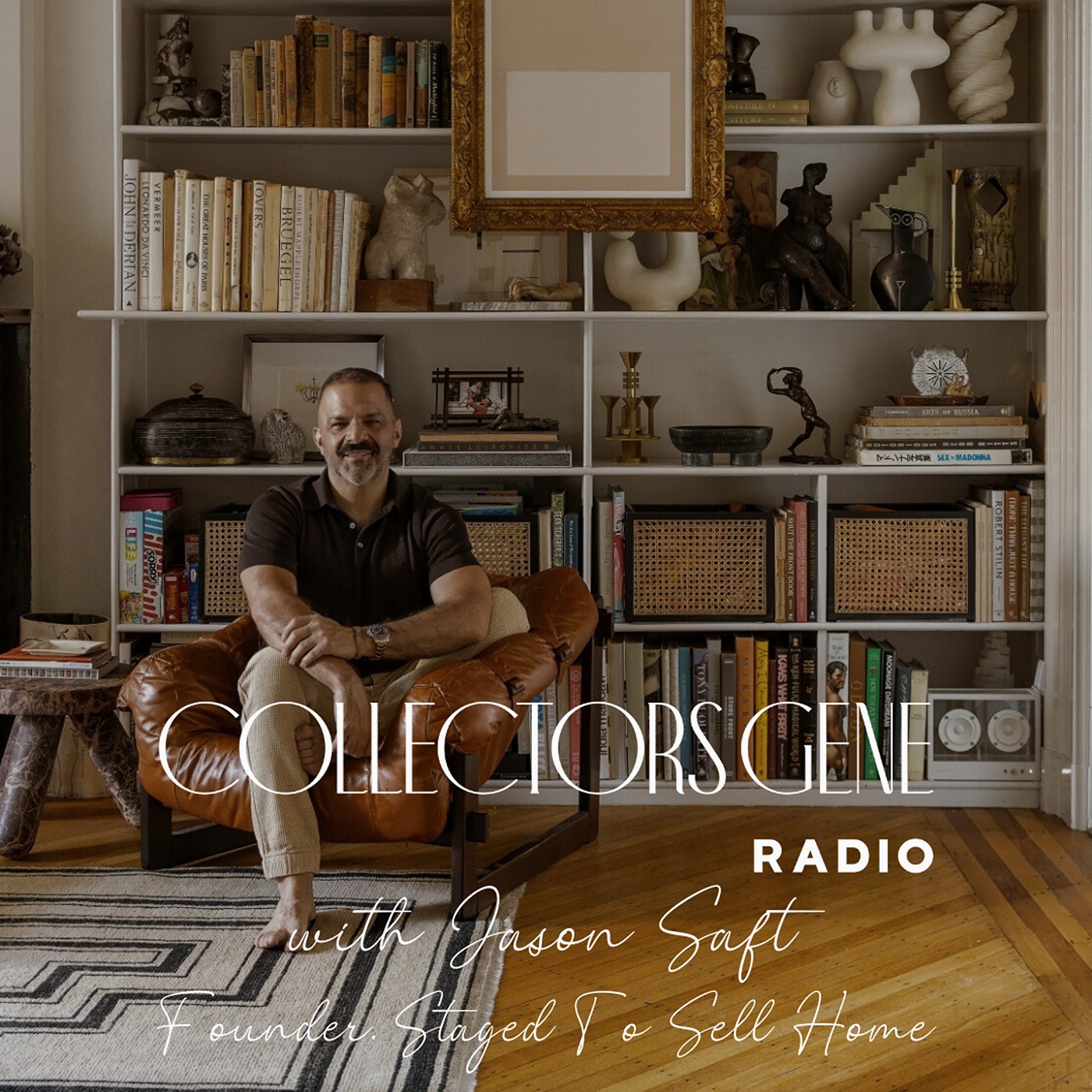
Collectors Gene Radio
Jason Saft - How Collecting Turns Stale Listings Into Staged Showstoppers
00:56:24
Loading summary
Transcript72 lines
- [00:00]
Jason Saft
You know, there is this set of people who are always looking to go deeper into something and explore, especially when we talk about the home, like, what is it that really holds someone's attention?
- [00:15]
Cameron
What's going on, everybody? And welcome to Collector's Gene Radio. This is all about diving into the nuances of collecting and ultimately finding out whether or not our guests have what we like to call the Collector's Gene. If you have the time, please subscribe and leave a review. It truly helps. Thanks a bunch for listening and please enjoy Today's guest on Collectors Dream Radio. Jason Saft is my guest today. And as the proprietor behind the award winning firm States to Sell Home, it's not often that I get to chat with a collector whose job is to, well, collect. Jason's company is responsible for helping sell some of New York's most prominent real estate. His firm has risen to fame for their beautifully staged interiors, good enough for New York's wealthiest buyers. His job is to take a really stale home and turn it into something special that a potential buyer can see themselves living in. We chat about the amazing case studies on his website which showcase how homes sat on the market for a year, sometimes even two years before his team comes in, subsequently selling in less than a week, a lot of times over asking price. As for his collecting, There's a new 23,000 square foot warehouse that holds the ever growing collection of furniture in obj and all of which he gets to look at on a daily basis. So without further ado, this is Jason Saft for Collectors Dream Radio. Jason Saft, a pleasure to have you on Collector's Dream Radio today.
- [01:37]
Jason Saft
I'm super excited. Cameron, thank you so much for having me.
- [01:40]
Cameron
My pleasure. And I'm equally as excited to have you on today because I'm such a big fan of Stage two Cell and you have this award winning firm and I think collecting is such an interesting topic in terms of what you do because you really get to display the things that you collect, the feel the way that you feel they should be represented. Right. Ultimately, this is all in hopes that someone buys the property, Is that right?
- [02:05]
Jason Saft
Correct. I often joke though that my business is really just a justification for my sourcing and antique addiction and habit. I figured out a way to turn it into a business.
- [02:20]
Cameron
I mean, you've definitely mastered it, that's for sure. And I'm curious to know how Stage two Cell started. I mean, was this all because you were a collector?
- [02:31]
Jason Saft
Yeah. So, you know, it's interesting. I come from a family of collectors. I always Love design. And I wanted to design at a very early age. I used to take all my mom's design magazines, and I would. It's funny, I cut a hole in my bed, and I would hide them in there. You know, design decorating was not really an acceptable career choice for a young boy in the 1980s, and so I sort of squashed that. But I was always obsessively looking at magazines. And I have, you know, it's funny now with, like, the rise of Pinterest, I have folders of tear sheets, you know, dating back to high school, of, you know, all these little vignettes and things that I would see and. And design that I love that one day I would want to sort of replicate. So it's. It's kind of fascinating to look through these folders and see them going back, you know, to the 90s. But, you know, how it came to be about 20 years ago, through a series of unfortunate events, mostly, the apartment I was living in became infested with rats, and I had nowhere to live. I started apartment hunting, and it was. It was the most challenging thing I'd ever done. I was young, I was broke, I was in New York. But this was also before iPhones didn't exist. Street Easy and Zillow and all these sort of things with all this information did not exist. There were, you know, you would get a newspaper, and there'd be, you know, three, maybe four lines of words that were not complete words that you had to, you know, learn the codes of what meant what, and that's how you looked for an apartment. And so through that, I ended up getting my real estate license and becoming a real estate agent. And the one thing I started doing sort of very early on is I started meeting people who were having trouble selling their homes or renting their homes, and I would go in them, and I just thought, like, God, of course no one wants to buy this or rent this. It's a mess. Like, it's pretty simple. You know, you walk in the door, it smells. It doesn't look good. It's a little scary. You just kind of want to get out the door. And so in about 2005, I wrote out this thing called Stage 2 Sell, where I offered all my tips and DIY tricks of how to very cost effectively fix up a property in order to get it to become more appealing, ultimately to have it sold. And so I kind of just kept doing that, and I just. I found it really fun. It was more of a hobby. I didn't really think it could or was going to be a business. You know, I didn't come from a place where I thought I didn't have the self esteem to think I could start a business, grow a business. And so I just kept thinking this is just like my fun little thing. But as time goes on, as time went on, people kept pushing me and more and more people asked me to come do it into their property. And every time I would redo a project, it would sell. And you know, even though I'm in New York City, it's. It becomes a very small community. And someone would come into the property that they'd shown multiple times over several years with other agents and they would say, wow, they finally renovated, they fixed all this up, now it's where it should be. And nothing was renovated and nothing was really fixed up aside from just the visual presentation. At times we were painting and changing out lighting and things like that. So that is how all this came to be. I just kept doing the thing that I loved that as a child I would do. And here we are today.
- [06:09]
Cameron
How did you come up with, you know, like a pricing model for this stuff when it really didn't exist before and go out and either buy or rent, you know, all this furniture and obj and all this amazing stuff to put into these units when you're getting started.
- [06:24]
Jason Saft
It's funny, I truthfully didn't. And I've talked with some other people who also have careers. And it's a lot of artists who started, you know, sort of putting out commercially what they just did, right? Like they're, you give a ceramicist some clay and their hands just go sometimes like without explanation. And that, that was sort of how I operated in these spaces. Like, I would have people say, like I would say to someone like, okay, it's noon, why don't you come back at 4:00? And. And I would just start fixing up their place and I'd be running to thrift stores and I, I wasn't really charging much. I sort of felt like I almost didn't deserve to get paid for it. Like, I just, I was figuring it out and playing around. But as it evolved and it grew from just running to get, let's say, new bedding, what I sort of figured out is that I had a general idea of what hiring a staging company to come in and do an apartment would cost. And I would say for the first few years, this is going back maybe around like 20, 10, 11, 12, when I started doing it a little bit more. Seriously, if the cost was going to be 10,000 or $15,000. To have a professional come in, rent the stuff, set it up, take it out. I would say to the seller, how about you give me $4,000 and I'll just figure out everything and I'll just own the furniture because. And the thing that really made sense for a lot of people is one, they were saving a ton of money. Two, they had someone project managing everything. But the other part of it, they were all moving and most everyone was moving, you know, cross country. It wasn't a. These weren't close moves. It's not like someone was moving from uptown to downtown. So they were already looking to get rid of stuff. So for them to not have to worry about the inventory after the sale was sort of a relief to them. So that was like, the very early part of it was just, I would say, okay, I have $4,000 and I've got to furnish an apartment, and I'm just going to figure out how to do it. And you know, in the beginning I lost a lot of money, but I. I look at it as sort of investing in the process. And now, you know, we've come up with a very complex formula of what all our costs are overhead. You know, we factor in the warehouse rent, the staff. There's a certain percentage that we try and get from each piece of furniture for every project. And that's how we've now, like, as this has turned into a business and running it like a business, not as a hobbyist doing something for fun. So that's been a big learning curve for me. And it's interesting just meeting a lot of other people in similar businesses who have all gone through the same sort of trajectory with it. You just, you know, for me, I just felt like, wow, I finally have the chance to do this one thing I've always wanted to do my whole life. Like, I didn't even think about getting paid. You know, I was just happy to cover some of the costs or because of this, you know, this love I've had of childhood of just looking at magazines and looking at these vignettes and images and wanting to create those moments. I mean, even now, some of the things that I acquire, like, they don't. They don't necessarily make sense for the business because we're not. There's no ROI on it, but it is. There's like an emotional artistic ROI for me. And so that's like the. What I'm balancing now is, you know, bringing in a lot of these pieces and Sourcing that are uncommon within staging, but they create these really unique and special homes that people are gravitating towards.
- [10:21]
Cameron
And I'm sure, you know, sometimes it is those small things that maybe don't make sense from a pricing standpoint that give this gravitational pull, an emotional pull to someone who is potentially buying a home. For me, you posted a photo or a series of photos not too long ago, and you had this amazing ballerina statue that bronze and maybe is like a little verdigris. And my eyes were immediately drawn to that. And it's surrounded by, you know, it's sitting in this massive, amazing apartment or unit or home. But my eyes were just immediately drawn to that.
- [10:59]
Jason Saft
Yeah, that was a really fun. So, you know, it's interesting. And this is one of those things that, like, it doesn't make sense for a business, so that I was so in deep with that one. So it's a limestone mansion on the Upper east side, like, right off Central Park. And what's really interesting about it is, and we just did one floor out of six. And so the building and the floor directly below it were the site of the original Leo Castelli Gallery, dating back, I want to say, to the late 60s, early 70s. And so when I'd heard about that, when we first got approached about the project, and then you just start reading about the art world in New York City and who was shown at the Leo Castelli Gallery and what it was like there, and you're reading Donald Judd and Andy Warhol and all these people that are coming through there. I was like, oh, my God. And so I redid this one floor that had not been renovated or touched in probably 50 years or so. The agents shot it with their own real estate photographer for the listing. But I just wanted to spend more time there and sort of like, you know, I look at this work as art, even though it's, you know, decorating and staging. So I brought in my photographer, and we went on a weekend, and we just took, I think, you know, like a. For us, four hours is a lot of time. We move very quickly. And so we shot the space, but then we were just sort of, like, playing around towards the end. And if you were to look at all of the images at once that we shot, you'll notice that this one image in particular that you're talking about, it didn't exist until the end of the shoot. Like, we were just there talking, and we're cheating the furniture and moving things around. I essentially moved around the entire room so that this couch would frame with a piece of art by my friend Lewis that I just. I wanted to bring his. I know him, and I wanted to bring his piece into this, like, historic art world space. You know, it's just sort of like a. Putting a message out into the universe. And then we were just playing around with some of the different elements and antiques that I had in the space. And I just. I put the dancer down in there, and Francisco, the photographer, and I, we just look back, and this was, like, the very end of the shoot. We were pretty much done. We were like, oh, my God, this is like. This is the shot. And so we took that shot, and it's nice to see the response to it. And a lot of the work that I do for this, like, with the photography and the imagery, is meant in a way to sort of, you know, attract people to real estate that maybe wouldn't be looking. I'm putting out these images on Instagram, but I'm linking them back to the property. So the agents are always thrilled because they're getting a lot of people that contact them and say, like, I happen to see this on stage to sell home. And I'm really curious to get more information. And they're not necessarily looking on Zillow or Streeteasy. They're looking at something more interesting and artistic. And so a lot of people give us this sort of creative liberty to go back into a space and to just have the time to create those moments. And that's what's fun. You know, it's not just the time, but it's also the relationship with the photographer and this willingness to experiment and play around. And it's fun when you're working with other people like this, because sometimes those moments and those shots just come from discussion, collaboration. Like, I often walk in with, you know, I sort of jokingly call it my set list. Like, you know, you go to a concert, they have their. Their list ready to go, so we get our shots, but sometimes we're just standing there talking and looking at things from all these different perspectives and vantage points, and that's how those moments come to be. And so it's nice to see such a strong. There's been such a strong reaction to that on the stage, to self, home, Instagram. So it's cool to really see that and how people. Because that's, you know, for me, like, when I was a kid, that that's what I was obsessing over is images like that. So it's just fun to be able to create it now.
- [15:20]
Cameron
Yeah, Absolutely. And you oddly, kind of have to, I'm sure, collect things that you're not too interested in all the time as you have to collect based on the homes that you're staging, which may not necessarily be your taste. And I'm curious to know, as a collector, what's that like and how you, you know, remove yourself sometimes.
- [15:41]
Jason Saft
You know, it's interesting. I. I like such a wide variety of things and time periods, and I think especially going to stuff like Brimfield, you. You start learning about other things and antiquated objects that don't exist or there aren't a need for, but are interesting and fun. And that's. I kind of love bringing that stuff into my work. And so while there may be things I don't gravitate towards, I don't know, I think when you collect and you're using these pieces in this sort of, like, commercial, artistic way, you're a lot more open to stuff. You know, I'm not. I'm not collecting just from my apartment. Right. And sort of limited to it. I'm always just looking at things and open to the idea of something new and different. Even. Like, I found a couple of antique or vintage pencil sharpeners, and I brought it home, one home, and I showed it to my daughter, and she was like, what is that? This is how you sharpen a pencil. And like, she barely uses pencils and don't really, like, barely knows what they are.
- [16:54]
Cameron
Right.
- [16:55]
Jason Saft
So it's interesting we forget about that stuff. And even, like, I. I was playing a song for her recently by one of my favorite songwriters, Nico Case, and it's called Calling Cards, and it's this song about using a calling card. And so I had to explain to her what a payphone was and then show her the images of a payphone. And so for me, this sort of collecting is still very much like that. There's this interest in sort of what was and how things evolve. Like, I find it really interesting to explain to her how when I was a kid, like, your conversation only went as far as the cord that the phone was attached to. And so collecting for me is very much like that. Like, what is. I mean, if you were to go through my warehouse, there are so many things that don't make sense, that don't line up, but they're. They're interesting, they're beautifully made, and they.
- [17:51]
Cameron
Have their time and place.
- [17:53]
Jason Saft
They have their time and place, and they're also like. I don't know. I mean, like, I just recently bought an old drum that to me was like a sculpture, just the way it was constructed. I was like, wow, like people just need to see this. So I try and just keep an open mind and I just look for construction materiality, shape, form, and kind of go with that.
- [18:18]
Cameron
Yeah, I mean, I think the drum thing is pretty interesting too because, you know, sometimes that turns into a piece of wall art. It's not as uniform as it may look as, you know, maybe sitting on the ground or sitting next to a table or on a table. Sometimes, you know, those things become most interesting when they're put on a wall or they're put in a really obscure place that you wouldn't imagine them going in.
- [18:40]
Jason Saft
Yeah.
- [18:41]
Cameron
And so I would assume that, you know, you obviously want to stage homes and pull from different current trends and vintage and mixing modern in. And we all know that there's always delays now when it comes to furniture, especially modern, brand new stuff. And as a collector and as a business owner, how do you deal with that? You know, and you obviously have to be patient. And sometimes there's no end in sight as to when something's going to come in and you have a deadline on a project, you have to pivot. How does that work?
- [19:10]
Jason Saft
Well, I mean, I think that the nice thing for me is I have a very significant inventory. Right. And so where we're actually about to move into a much larger warehouse, 23,000 square feet. I mean, I own enough inventory to I could furnish about 100 properties. So it's very rare and sort of this is the difference between interior design and home staging. Whereas, you know, if I've ordered something that has an 8 to 12 week timeline in my head, I'm already putting it in a project 15 weeks out. And I'm not counting on it. I would say as a whole, the vendors and companies we work with are really good with their timing. But when it doesn't work, this is where, you know, that background of working with no budget, no guidelines, no directives really comes in handy. You just, I'm sure you, you not only learn how to make everything work, but you learn how to. Someone gives you a piece of furniture that you know you'll never use, but if you paint it, you'll use it. I once had someone give me a bed that the headboard, the fabric was, was something I still to this day. This was 10 years ago. I don't think I would ever use the fabric, but I went and I bought fabric, paint and I painted the fabric and then the headboard became completely functional. So you get really resourceful. And, you know, the nice thing about staging versus interior design is, you know, the work is sort of theatrical in a sense. And because sometimes I'm handling the photo shoot, if something hasn't come in, we're maybe able to move one piece into three shots to take its place, and no one's really walking through the spaceship. A checklist of like, you know, this. This end table didn't make it. There's always a way to make something work. And I, like, that's how I train my team now as well, because, you know, my employees, they're working in a company where, like I said, we have enough inventory for 100 homes. But eight years ago, when this was still a hobby thing and I didn't have any employees, I had, like, one or two helpers here and there. They would be installing, and I'd be running to Target to get pillows. Then I would run to go get soap. Then I would run to go to a thrift store to find plates because I couldn't afford to buy them at a store, and I didn't have any wholesaler trade accounts yet. So I find, like, people who have started their business with no resources and are really scrappy and learn to make do is sort of what you're verbalizing with these deadlines. It sort of fades away because you just. You always know no matter what. And I try to teach this to my team. Like, there's always a way to make something work. It's like, here's a problem, but what is the. Like, what are the solutions? And there's always a way to make a solution.
- [22:17]
Cameron
Is there a specific item that you've collected that you feel has played a significant role in a home or multiple homes that you've staged? Is there something that you always go back to as, like, a thing just really worked well, you know, something special, you know, something that wasn't necessarily just a chair placed in the right location, but maybe, you know, maybe a piece of object or something like that.
- [22:42]
Jason Saft
One of my absolute favorites was. So this is. And I wish it still happened, but years ago, Ralph Lauren, the company used to do a once a year, essentially like a warehouse sale. They rented out the Metropolitan Pavilion here in New York, and they would sell off photoshoot props, window displays, broken furniture, like, the most incredible stuff. And everyone would run to all of the Ralph Lauren furniture because it's so expensive, and it would be 70 or 80% off. And then there was another section off to the side, which was all the stuff that they were probably Sourcing at Brimfield and all this, like all the vintage pieces. And I would run over there. There were two things that I have to this day that I love, that I will never sell. There's one, it's this massive metal sign that says Leader the typeface on it. It looks like it could have been for a rock band or something like AC dc, but it's probably from like a gas station or tire store. I've never seen anything like it. I don't know the origin of it, but it's sort of like in the early days where I started having these successes and people like, knew me as a real estate agent who was experimenting with starting the staging company that didn't look like what was known as staging. It became a little bit of like a metaphor and a calling card. And then there was also a big old hulking GE light up sign that I bought that. I keep it now in my office. I bring it out every once in a while, but I kind of love having it near me. And so those were two pieces sort of early on that just had this, like this great patina to it. Stood out. I used to. I would bring the GE sign and that was like my marketing campaign in the early days. I would photograph it in something and it would be like, we bring good homes to. We bring. We bring bad homes to life. And it's funny because a lot of people didn't really know what the, you know, the old GE slogan was. So it didn't always connect unless somebody was closer to my, you know, like in their 40s or older. But those were like two really early pieces that were really special and to this day still have use. And I think for what people perceived as staging, it really stood out because those weren't the things you were seeing. They weren't just white, amorphous, chunky, boucle like pieces. They weren't just a black paint splash on a canvas or a circle. They were things that are just not associated with it. And so those were sort of early on calling cards for me.
- [25:40]
Cameron
Love that. I wish they still did those warehouse sales.
- [25:43]
Jason Saft
Yeah, I do too. It was really, really something.
- [25:48]
Cameron
If a new buyer wanted to purchase the items that you've used to stage, whether they're new or vintage, is that an option for them or is this their back and forth?
- [25:57]
Jason Saft
You know, it wasn't early on when furniture was hard to come by and in the pandemic, but as the business is growing and we have more vendors and more wholesale accounts, yes, that's become much Much more of an option. Some of the vintage stuff I have trouble parting with, and I don't often sell it because I'm trying to do a few different things with it that I feel haven't fully evolved yet as I'm working on sort of like the next phase of the business, and I've really wanted to retain these special pieces. I do have a little bit of trouble giving up the stuff that, like, I've sourced because I'm still working with it in a way that I'm not ready to part with. But that's. That's something I'm working on in a new little endeavor that I'm trying to figure out.
- [26:48]
Cameron
I love it. We'll keep an eye out for it. Now, a lot of people collect in their free time, but you actually also have to do it for your company, so it's really a seven days a week sort of deal. Does collecting still excite you to this day to go out and hunt?
- [27:04]
Jason Saft
Oh, my God. It's become even more. I mean, you. I mean, I'm learning so much more. I mean, I think it used to just be like, I saw something and I was like, oh, this is great and I'll buy it. But now I'm trying to learn about the pieces and where they're from and what their usage was, and I'm going deeper into it and putting more of it into my work. And, you know, I've started going to more fairs and festivals. When I travel, I often. I often bring clothes that have meant to be donated or get got rid of so that I can wear them there and then have space in my suitcase to bring stuff back.
- [27:43]
Cameron
It's smart.
- [27:44]
Jason Saft
I mean, it's only growing. It's not really subsiding, and it's growing into so many other things. And part of what I would like to do, and I'm talking with some friends in the industry now who collect and source and have different businesses, is what I'm working on with this new warehouse and why I haven't wanted to part with the vintages. I'm trying to figure out a way to sort of create these moments, like what you're mentioning with the sculpture, and make those available for purchase so that I can continue to keep sourcing. I want to go to Paris. I want to go to Italy for two weeks and fill up a container of things that like, no one's ever seen before. And so I. As we move into our larger warehouse in November, we should have the space and the ability to start to do things like that and put things in front of people that are just. That are harder to find or just uncommon because that's what excites me, and that's what I've been putting out more into the. My work.
- [28:49]
Cameron
Now I want to go back for a second to talking about, you know, that sculpture and the idea of you have this massive, incredible, historic limestone mansion. And maybe, you know, you and I are a little bit of an anomaly when it comes to this, but my eyes were immediately drawn to that dancer statue. And it's inside this incredible mansion that really deserves a lot of attention as well. You obviously have to stage a property in the most conducive way to not distract the potential buyer from the home itself. Right. But at the same time, you need to fill it with things that make them feel at home and like they want to live there. How do you do that with some of the really special pieces that you stage with? Because sometimes, like, for me, you know, my focal point wasn't the home. My focal point was the things that were inside of it.
- [29:38]
Jason Saft
You know, it's really interesting, like when you. If you were to research home staging and you come up with sort of broad stroke information at it often talks about, you know, strip the personality, white box everything, simplify. It's about the space. You're just laying it out. But, you know, I deal with a certain level of properties, and that doesn't necessarily mean expensive or luxury. Like, I consider. I mean, look, I consider the cost of any home to be a luxury at this point in time. I was a real estate agent for 20 years, and that's where all of this comes from. I learned there's a way, and especially now, where we, like, have all these experiential places and events like this, that sort of thing that didn't exist 10 or 15 years ago. Like in New York. There's the Museum of Illusions, the Museum of Ice Cream, the. I don't know, I take my daughter to the slime factory.
- [30:39]
Cameron
Like, right.
- [30:40]
Jason Saft
People want to be engaged and excited. And I think when you have a really critical eye and you're so deeply enmeshed in it, like we're creating these spaces that they don't necessarily distract. I mean, again, you were looking at a solitary image on social media as opposed to the physical space. Right. Like, that sculpture almost sort of disappears in the room that it was in. That is probably 30 by 50. Right. But the way that it's positioned in that image, it really stands out and sort of steals the show. But in the room, it becomes Another element for the eye to go to. And part of it, what I have found from also, you know, my time as being the agent who staged the property is I think on average, there's a statistic that, you know, the average home buyer in Manhattan spends like seven to 12 minutes in a home. But some of the feedback that we've gotten from the agents is that people spend close to an hour in our properties. And that's what happens when you're using really engaging things that are picked so specific for each property, for each location, for who we believe the buyers are. That the feedback we get is that the people, the agents contact me and say like, like they didn't want to leave, like they just kept there. And so that's what ends up happening is people spend so much more time in a property, they end up bonding with the space. They sit in the space. They don't just walk through it and say, this is nice. They end up sitting down at the couches and having a conversation and sort of imagine like, this is what it's like to have a dinner party. This is what it would be like to live here. This is what it would be like if my kids were running around. And so I think we figured out something that sort of rests outside of the common advice or the type of things you would find on a Google search. And I think that's true really of any industry is there is this set of people who are always looking to go deeper into something and explore, especially when we talk about the home. What is it that really holds someone's attention?
- [33:03]
Cameron
Something I find so fascinating are your case studies on your website. I mean, some of these homes sit for a year, if not more, and then you come in years, you come in, you stage them, and they sell in less than two weeks. It's absolutely mind blowing. So I went ahead and I picked three case studies that I found to be interesting. And I would love for you to tell me something different or interesting about them that you feel maybe helped them sell or something that drew you to them. Sound good?
- [33:33]
Jason Saft
Of course. All right.
- [33:35]
Cameron
First one was 92 Horatio street, apartment 1G in the West Village. And I chose this because I feel like I have a search setting somewhere on my computer because anytime something on Horatio street pops up, I get a notification. And every apartment or home that I see on Horatio street is so different and interesting. And to me it's a great depiction of what New York is all about. And this home was asking 1.75 million. And after you came in, it sold for 2.25 million. Not too shabby, not too bad. A nice 400k there.
- [34:17]
Jason Saft
The seller was very happy. He actually, it's funny, he had left a couple pieces of furniture there. It was his pied a terre. And I had bought a few things from him. And then I guess he had trouble picking up the rest. And he called me, he's like, you know what? He's like, with what you did in there, he's like, if you can go get it, it's yours. Like just you, like, I owe you. Take it. And it was a really nice sort of. There were some really. A couple really special vintage pieces. Yeah, you know, that was an interesting one. So that was a Colfax and Fowler design department. It's funny, one of the things I've learned in this business is sometimes the things that excite me. Like when I first walked into that apartment, it was late at night, it was the dead of winter. It was someone's pied a terre. I don't think the, like, the bed didn't have linens on it. It wasn't fully furnished. You know, it can read almost too costume and so specific. And the agent was really worried about it because there are times where apartments like that, these, you know, these custom built spaces that are, that are made for one person's taste in mind then come to the market and they sort of fall flat. And originally the seller just, you know, they had a few pieces of furniture there and they thought, this will be fine. But the couch that they had was a vintage loveseat that was maybe 50 inches long and didn't look like it could fit even two people on it. And when you really look at the pictures, it's not a very large apartment. It's quite small, but it's so charming. And so that was one where it was such an exercise in restraint because every single thing was considered, every book, every object. Like there were other things that I brought in that just like the color of the book binding threw off everything else. And so it was one of those, like, we just got in really deep and kind of maniacal with testing out the pieces, reconfiguring how their layout was, with how our layout was to craft something that just felt so otherworldly. And like, the idea was that the door would open and even though you want to be in the West Village and you're paying for the West Village, like you're transported to this like European, you know, country sort of chalet.
- [36:55]
Cameron
Yeah. You feel like you're on the countryside. It's pretty incredible.
- [36:59]
Jason Saft
Yeah. And so that's one where I come in and I do the photography with my photographer. We shoot sort of what the real estate agent needs to sell it, and then we shoot the details and the architecture and all the things that Colfax and Fowler brought in. Because all of those things were all resalvaged pieces that were brought over. If you look at the rest of the listings in that building, nothing looks like that. And that was a little bit of the fear is that it was so specific. And the asking price is quite high for a modest sized ground floor, one bedroom. But it exceeded all expectations. I mean, we were really quite shocked. We knew when we saw the photography that, I mean, I felt in my heart like someone is obviously going to buy this. And that's my rule of thumb is, like, if I love something this much, I know there's going to be someone else out there. It just may not be a mass appeal type apartment.
- [38:03]
Cameron
Yep, truly incredible. Love that one. Next one was 970 Kent Avenue, and this one was really cool because there was actually a comparable unit in the same building. Isn't that right?
- [38:16]
Jason Saft
Yeah. This is probably out of everything I've done over the last, like, now 20 years, this is one of my favorite case studies. And I think it's really interesting, like, when someone, you know, because often someone will say, like, well, what's the roi? And how do you quantify this? And we're able to give different metrics and explain it in certain ways. And when it's a buyer's market and properties are not transacting quickly, I often tell a seller, I can't give you an exact ROI calculation. However, the staging right now is really an insurance policy to ensure that you're going to sell within the next year. And again, when you start to factor in what it costs per month to keep these apartments sitting empty, you understand the value of it. And then in other markets where it's a much stronger seller's market, you can say, look, if you put in 20, 30,000, you are looking at a 2 or $300,000 return on this based off of the market. And so 970 Kent was really fascinating. The apartment 409 came on the market in spring. It was listed at $995,000. And it went into contract very quickly, like within a month. And then. And that was all the information that we knew when we were prepping 509, the apartment directly above it. This was a developer's conversion. So all the units are the same. The only difference is 509 is obviously one floor higher. In New York City, the standard average is typically the value should increase between 5 and $15,000 per floor. Unless let's just say in theory this one floor now has Central park views. Then it's a different animal. But in all sort of like 509 should have been worth between 5 and $15,000 more than 409. And so 509, we repainted it, I changed out some lighting. I staged it into what I thought contextually was this really great bed sty loft, bit of an edge to it. So our apartment came on the market and it sold for like $1.22 $8,000. It ended up selling for $216,000 more than the apartment below it within, you know, I think it's 30 or 45 days of each other. And that, that was such a profound metric. I mean even the seller was just like they, they waited till the close, till after the apartment had closed to kind of say to us, like, we still can't believe this is real. You know, we, we saw the other apartment, we saw it close, we thought we would do okay, but like they walked away with $260,000 more for. I think their total investment was like, with the painting, with everything was like 24, $25,000. And so the 216 is the pure profit.
- [41:23]
Cameron
Unbelievable. And I think what's really cool about that is that that probably wasn't the most insane property that you ever staged.
- [41:33]
Jason Saft
Oh, not even. This was a generic white box sort of, you know, in New York City it would be considered like an entry level, maybe first or second apartment. There's nothing, there's nothing really special about it. The location is not prime or anything. But it really was sort of a testament to, you know, if you look at the design and you understand the neighborhood and who lives there and the building type, it definitely makes a lot more sense. Like it really connects to people who are seeking out that area and it's understandable why they paid more.
- [42:14]
Cameron
The last one that I found was 44 Gramercy Park North, Apartment 7C, Gramercy Park. And I chose this because this apartment sat for two years on the market and you came in and it sold within a month with multiple offers. And it looks like it was potentially shown with some of the previous owners furniture, but. Oh yeah, but rearranged. And it had amazing details. Like the fireplace mantle was so ornate but so understated in the same way. But the way that you staged it using previous furniture felt like Such a major improvement, all while keeping the integrity of those details.
- [42:54]
Jason Saft
Yeah, I mean, here's the interest. So there's several buildings along Gramercy park that I work in quite frequently. And this becomes part of it. That's, you know, it's design, it's research and it's understanding the market. And so, you know, this is a very exclusive enclave. It's mostly all pre war buildings. The financial requirements are incredibly stringent. This is, you know, these are not buildings where, you know, like if someone is listening and just lives in a single family housing market, these are buildings and apartments where just because you say I want to buy it and I'm rich doesn't mean that you're going to qualify and get the apartment. These co ops have the ability to just say no. And so the thing that I've learned from working in these buildings is, you know, they're of a certain pedigree. They're a certain type of person that actually does appreciate traditional design and decor. That is part of what is bringing them there. And so, but the way the owner had it, it was so, I mean, it just, it felt as if you were visiting, you know, like Franklin Delano Roosevelt's house. You know, like there's a rope and you're not allowed to step on the other side. It just felt very uncomfortable. It felt incredibly stuffy and dated. But the pieces and the construction were fantastic. And so one of the, it was really interesting. There was a very traditional couch that we just took some fabric and sort of tucked it over this sort of like red brocade like upholstery and covered it with a neutral linen and we moved it over to the dining area and made it a dining banquette and then put in a more modern sofa. Again, this was a few years ago, so my inventory was a little bit limited, but then just played around with the juxtaposition of traditionalism and modernism. I took some of their art that on its own, the way it was displayed looked like maybe it would be at an all male hunting club lounge for a very WASPy clientele. But we rearranged it and put it in a sort of non traditional gallery wall composition with a few modern pieces of art and made it look and feel very different. And so it was really interesting. This apartment was on the market for over two years. There wasn't a single offer. It ended up that there were a couple pieces of art that I commissioned from friends. The Wall Street Journal ended up writing a piece on it and it went into contract almost immediately at the number that it couldn't get for two years. And the thing is, you know, the monthly cost to carry this apartment is really significant. We're talking like four or five thousand dollars a month. So someone was out, you know, close to $100,000 over the course of two years. So, yeah, it's really. And it's why I, you know, if I see. If I'm at a garage sale or a flea market or Brimfield and I see, you know, an inexpensive book on traditional decor and furniture, I'll pick it up and I study it. And I really believe a lot of things have this second life to them, but it's. How do you approach them? How do you mix them in to create something that feels contextual and right. Like if you were standing in front of this building and looking at its neighbors, you know, you know that these traditional pieces and this sort of like, American history belongs in it, but it's. How are you grouping it all together and how are you laying it out it very quickly? You know, as you've observed, there are. When you look at the old version and the new version, there are a lot of the same things, including. Included in there, but it's. How do you mix them together?
- [46:57]
Cameron
Absolutely. And before we wrap it up with the Collector's Dream rundown, I just wanted to say, you know, congrats to you and your team for all the accolades and awards, and the case studies are such a testament as to why they are so well deserved for you and your firm. And it's just so fascinating to me to look at all this stuff, but it's very cool to see the rewards come back to you.
- [47:22]
Jason Saft
Thank you. I really appreciate it. It's interesting when you get to this point in life where your work is what you deeply love and fulfills you, and you just get to keep putting it out there and learning about it. Sometimes I'm working on these projects that I think about. Wow. When I was a kid, I didn't even. I didn't even have the imagination that this type of property existed. You know, growing up in Levittown, Long island, in a. In a simple ranch house like we. Where I grew up was devoid of architecture, history, culture. And so I always used to escape into those magazines to see it. But now sometimes I'm in these places that, like, I didn't even have the imagination for that back then. So it's really for who's ever listening. Like, if you're. You're in a career, right, or something like the figuring out a way to Turn your passion and your purpose into your work, and your craft is. It's really something. Just special.
- [48:21]
Cameron
Great advice, Jason. Let's wrap it up with the collector's dream rundown. You can answer these questions based on any of the things that you collect or things that you buy to stage, whatever it may be. And in your case, the things you collect are the things that you also stage with. So I'm sure we'll get some good answers here. All right, what's the one that got away?
- [48:40]
Jason Saft
Oh, there have been. There have been so many. I would say that several, like, dozens really special mirrors that I love that I just. I lost in auctions or just went too high. I have a thing for antique gilded mirrors.
- [49:02]
Cameron
Yeah, they come up often, but sometimes the right ones and the right scale with the right patina are the hard ones to find.
- [49:10]
Jason Saft
And the right construct, like, part of it, because I'm moving, you know, so frequently is the construction's really important. So some of the delicate ones I have to pass up because I know that we'll break them. But, yeah, there's often ones that the price just goes to a point where I can't sustain it.
- [49:27]
Cameron
How about the on deck circle? So this is something that's next for you when you're collecting, maybe something that you're hunting after.
- [49:33]
Jason Saft
I'm always hunting. But what's next for me in this collector circle is sort of what you pointed out with this dancer sculpture is creating these vignettes and moments and these things that I've collected from all these different places and making them available to people for purchase. That's what I'm working on next with some different small artists and ceramicists and other people whose sources. I'm trying to figure out a way to create these moments, put them out there, and then make them available to people, because that's. I get so many requests on it on Instagram. And so I'm trying to figure out a way to bring that to a reality for people.
- [50:17]
Cameron
Love it. How about the unobtainable? So one that's just too expensive. Museum, private collection.
- [50:24]
Jason Saft
Oh, I was just in. We did a little family trip, and we were in Wyoming, and there was this really fascinating gallery, and there was this stunning painting by Diego Rivera that I think I was just staring at for like, a half hour. And my daughter was like, papa, are you going to buy that? And I was like, well, we'll never eat again, and you're not going to school. If I try. And if I try and buy that, it was. It's Completely out of.
- [50:51]
Cameron
Yeah, you're coming to work for me for free.
- [50:52]
Jason Saft
Completely out of, out of the realm. But it was just. It's beautiful. And sometimes you realize, you know, it's nice to just see something and appreciate it and know that it's just not. It's not for you. But at least you have the opportunity, especially with paintings and artwork, to just. To see the strokes and the layers and really see it up close, I think is something really just enjoyable.
- [51:17]
Cameron
How about the page One rewrite? So I phrase this as if money was no object and you could collect anything else besides what you currently collect, or even if you had to redo it all, what would it be?
- [51:30]
Jason Saft
Oh, my God, I don't even know where to start. I'm like, all of it. I mean, I think I would, like, I would probably buy an apartment in Paris and be sourcing there and through those flea markets and traveling to Brussels and all these other places. And just these antiquities that we don't necessarily have as accessible in the US or at the price points that you find them overseas. Like, I think. I think if money were no object, I'd be going to Europe and sourcing a lot more and just really embracing that and bringing that sort of like old world pieces here and bringing them into really modern spaces.
- [52:11]
Cameron
I think I'm with you on that one. How about the goat? Who do you look up to in the collecting world or who do you think is a great collector?
- [52:20]
Jason Saft
So there's two people in particular. Fritz Cash, who I don't remember his exact title, but he worked for Martha Stewart and in the end of every issue, and I remember this from being a kid, he would arrange collections of things, whether it was like Bakelite serviceware or teacups or pie birds. Like, he just, he created these vignettes that I remember as a kid just obsessing over, and I loved them and I used to save them in the magazines. And then Sean Shearer, who has a store called Cabinet and Kramer out in Franklin, New York. It's like four hours from New York City. I've actually never been, but I have his coffee table book and I follow him on Instagram. Just someone else who sources these really fast, a lot of folk art, folk pieces. And you know, it's funny, it's the kind of stuff, like, where I was raised, even though, like, we're lower middle class, like, would have been considered garbage, he just, he sees the beauty in these. Just these old workhorse pieces and the way that he combines and arranges them. Like, I just, I love, I think in particular those two. And then even someone like Colin King on, on a more modern level who I always talk about, like these lessons in objectivity. Like, you see these pieces and they're more than just like clay or old wood or rusted metal. They're art. Right. And then there's how do you combine them? How do you group them? How do you capture them in a certain light on a certain surface? I think it's all of those things together that really inspire me. And that's sort of, again, going back to that image that you've referenced is. That's what that is, is taking all of these objects and things and finding a way to create a moment that just like visually grabs someone.
- [54:28]
Cameron
In which one do you enjoy more? The hunt or the ownership?
- [54:32]
Jason Saft
Oh, both. I don't think there's one over the other. I love, I love walking through the warehouse and seeing the things and figuring out what I'm going to use and how I'm going to use them. But I love going out and sourcing. I love. Last week was visiting a friend and she likes to go to estate sales and garage sales. We were out in East Hampton and we just were like driving, looking for places and it's just fun. It's really enjoyable. I love the. You never know what you're going to come across. It's like you're just like a modern day treasure hunter.
- [55:06]
Cameron
It's so fun. Most importantly, do you feel that you were born with the collectors gene?
- [55:12]
Jason Saft
Yes. Everyone in my family, the women specifically on both sides, had always collected. And, you know, I come from, my grandparents were first generation. You know, my grandfather was a police officer, my grandmother was a secretary. There was nothing extravagant. It was often, you know, small plates or an ashtray or something from a trip that took a year or two to save. But everyone on all sides of my family always like, they, you know, they were just like surfaces filled with tchotchkes. And so I grew up with that. I appreciated and loved it. And now, like, that's what I've really tried to do with my business.
- [55:52]
Cameron
Amazing. Jason Saff, thank you so much for coming on to Collector's Hume Radio. I look forward to everything that you do at stage two, sell home. And I want to come to one of these staging days and get my hands dirty.
- [56:04]
Jason Saft
Let me know when you're here.
- [56:06]
Cameron
Will do. Thanks again.
- [56:08]
Jason Saft
Awesome. Thank you so much. Take care.
- [56:13]
Cameron
All right, that does it for this episode. Thank you all for listening to Collectors Dream Radio.