Loading summary
Transcript80 lines
- [00:01]
A
I couldn't afford a retail space at the time, and it was the beginning of the lockdowns and the pandemic. And I was like, how can I do this? And how can I make this pivot? And so people were doing all these outdoor activities, especially in Los Angeles, and farmers markets were a big thing. So I came up with the plant truck. So took basically a food truck, ripped the top off, put a greenhouse on, and I would travel around Los Angeles to all the different farmers markets selling house plants.
- [00:30]
B
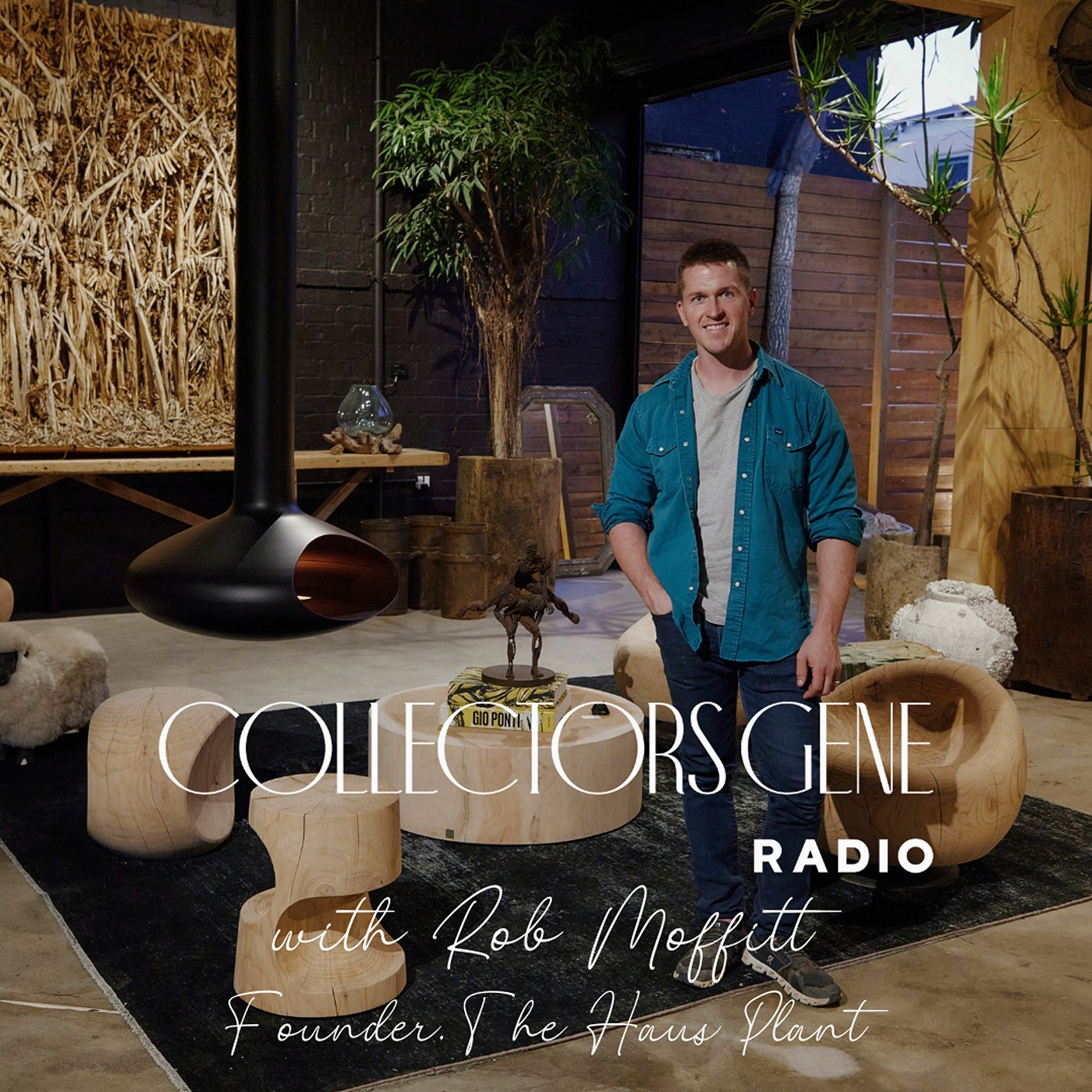
What's going on, everybody? And welcome to Collector's Gene Radio. This is all about diving into the nuances of collecting and ultimately finding out whether or not our guests have what we like to call the Collector's Gene. If you have the time, please subscribe and leave a review. It truly helps. Thanks a bunch for listening and please enjoy today's guest on Collector's Gene Radio. Today we're hearing from plant designer and rare plant collector Rob Moffett. He founded his company, House Plant just a few short years ago on the rare occasion that he didn't previously collect plants at all. Fast forward a few years and Rob's a go to in the plant design world, sourcing and collecting rare plants for some of the biggest interior design projects. Now, these aren't just your typical nursery plants either, Rob, sourcing from some of the most esteemed plant collectors, estates, and even plants that come from the jungles of Brazil and Southeast Asia. It's not just about finding the right plant, though. Rob is known for manipulating roots to be more architectural and displaying them in more organic materials and vessels. This is a first for the show. So without further ado, this is Rob Moffett for Collectors Dream Radio. Rob, welcome to Collectors Dream Radio.
- [01:42]
A
Thank you. Thank you for having me.
- [01:44]
B
So Douglas Friedman connected us, and I'm so excited because I believe it's a first maybe for both of us. My first plant designer and plant collector and your first podcast, right?
- [01:56]
A
Yes, it is awesome.
- [01:58]
B
Well, couldn't be more excited to have you on. And it's such a new area for me to learn about. And I'm really excited to dive into everything, rare plants and plant collecting and designing and all that.
- [02:10]
A
Definitely.
- [02:11]
B
So you kind of fell into all of this a bit haphazardly, I would say. I mean, you were working in the medical field and you began volunteering in the plant world, eventually launching the houseplant, your company. And you started with a mobile greenhouse, which, by the way, is one of the coolest things I have ever seen. I mean, the car Had a greenhouse roof on top of it.
- [02:33]
A
Yeah. Thank you. So it was during the beginning of the pandemic. I had been a nurse for 12 years, and I was getting to the point where I wanted to start exploring more of the creative side of my brain and had started working at a friend's plant shop for fun on my days off from the hospital. And after a while, he was like, okay, you're good. Go do this. So I, you know, couldn't afford a retail space at the time. And, you know, it was the beginning of the lockdowns and the pandemic, and I was like, how can I do this? And how can I make this pivot? And so, you know, people were doing all these outdoor activities, especially in Los Angeles, and farmers markets were a big thing. So I came up with the plant truck. So took basically a food truck, ripped the top off, put a greenhouse on, and I would travel around Los Angeles to all the different farmers markets selling houseplants. So that's kind of how I got my start with a tiny little mobile shop and didn't have to have, like, an actual, you know, brick and mortar retail footprint.
- [03:34]
B
And, I mean, it's your first day with this truck. Did you have clients lined up? I mean, what happened?
- [03:40]
A
Not at all. I kind of went into this blindly. I didn't really know how I was going to go about it. I didn't really know much about the permitting. You know, there's, you know, there's food trucks, there's some retail vendors, but there's not. There's not many plant trucks out there. There are a couple. I found one in Paris. There was one in New York. I think I found every plant truck that existed, and I kind of did my own version of that. But there were many people that were, you know, willing to give you the ins and outs of how they figured it out. So it's kind of something I just kind of had to figure out on my own. I think my first day out, I actually went to a parking lot for a Mother's Day opening at Fred Siegel.
- [04:19]
B
Oh, amazing. That's great. I'm sure you had a ton of great clients there already.
- [04:24]
A
Yeah, it was great. I mean, the first day, I think it was mostly friends and family and curious people going into the store that would stop by. So I think the truck was kind of a neat. It was very different and unique, so people kind of piqued their interest there.
- [04:39]
B
What do you love so much about plants that made you make this jump and ultimately become a go to in the Industry and a collector.
- [04:48]
A
Yeah. I think I originally got into plants out of, like a. More the creative side. Like, I guess that's kind of how I fell into plant design. But I think just my background in healthcare and caring for people, it kind of translates over to caring for plants in a way. And plants kind of allow you to get lost in them. I think I imagine how it is for a painter painting. When I'm working with plants, I'm away from my phone. I'm kind of in my own world, and it allows me to just connect with nature and kind of like, especially living in a city, more. More in like an urban way, I.
- [05:23]
B
Guess I want the listeners to understand a little bit more about why what you do is so special. Right. These. These aren't just plants from your typical nursery. You're sort of some of the rarest plants in the world. Some even belong in the jungles of places like Brazil and Southeast Asia.
- [05:41]
A
Yeah. So I originally with the truck, I had started just with, you know, basic house plants that you could get at any nursery. And then I started finding clients at these farmers markets in, you know, Beverly Hills or Brentwood or the Palisades. And I noticed that there was an interest for the more unique or, you know, with the antique vessels and the interesting plant pairings. So I started, especially in Los Angeles, with the climate we have, we kind of have access to some really beautiful, you know, old specimen plants. And I started. Started, you know, finding different collectors, other plant collectors, and slowly buying, you know, something I could afford to afford at the time and restyling it and, you know, selling it to a client. So in the beginning, I never really looked at myself as a collector, but more of like, this is what I need to do to get to the next level of business. And, you know, it kind of just led me down this path of over time, like actually being a collector myself.
- [06:40]
B
And you collect rare bonsais, right?
- [06:42]
A
Yeah, I do rare bonsais, cadiziform plants, anything with, like, very unique shape or age. I think the more strange or weird, the better. And I love going to, you know, an old nursery that's a little rundown, and I go right for the back of things that are overlooked. And those are where all the, like, hidden gems are that you can kind of, you know, give a second life to or restyle and shape the way that I find interesting. So that's one thing that I really love about this world I'm in now.
- [07:13]
B
What makes bonsais so special to you? And how do you go about sourcing Them.
- [07:18]
A
I love the story that they all have. Like I said, I'm meeting with these other plant collectors who've been in the industry for, you know, 30, 40 years, and I'm finding I'm buying plants that they like. There's one that I bought that was from a collector who remembered going to a plant trade show with his dad, you know, 50 some years ago and buying this plant. And I actually bought it off him and restyled it. So I love hearing the stories of these plants, the stories of the collectors who've been doing this for longer than I've been alive. And then knowing that I'm kind of bringing them into my own collection and giving them a second life and a second story. And then when I sell them to a client, you know, I have a lot of really, really interesting, neat clients. So these plants are getting like a second and a third life, you know, through me, which is really, really fun and exciting for me. Yeah.
- [08:12]
B
And I think the other interesting thing is, you know, when you look at the way that people collect a lot of about what they love is how can they also display it. Right. How can you display wine artfully? Right. And so for you, I feel like from what I've seen, the new thing that people are really loving when it comes to displaying these plants is not in your typical pot. Right. It's in more of like a rugged, free form stone that's been carved out and then the plant sits in that. Is that kind of what the market is after?
- [08:41]
A
Yeah. I'm always trying to find, you know, what hasn't been done before, what's new, or do my take on what has been done. And then I'm finding that, or I found that working with interior designers has been a big opportunity for kind of pushing those limits because they're always on the forefront of design and trying to figure out what hasn't been done before. So kind of the way I got started in that world was going and offering my plants for free to big design showrooms like Holly Hunt and Nikki Keough and some places like that. And, you know, interior designers would find me there. And then also the collaborative process too, with, you know, them bringing me into these clients homes. They're ready for the photo shoot. Usually the plants are the sort of the last thing to come in. Sometimes the house is still. Looks to me like it's still under construction. And photo shoot is happening next week. So I have to think quick on my feet and do these plant and vessel pairings pretty quick. But it also allows me to sort of grow and figure things out as I go.
- [09:42]
B
Is there a bonsai species that you find to be more rewarding to collect? Not necessarily in a monetary side of things, but just something that really gives back. Right. There's certain brands of certain people that love to collect certain things that they always go back to that just they feel like they get the most out of just from enjoyment levels. Is there something like that with bonsai species?
- [10:06]
A
I'm finding, I mean, I'm still pretty new in this whole world. I've been doing it total about 3 years now in terms of a business and collecting for just a little bit longer than that. But I'm finding that I'm going through phases and cycles of what species I like. I really like the manipulation of certain plant like species. My favorite, I would say, is this. It's a ficus petiolaris and then manipulating their roots or their branches with wires, or having the roots growing over a rock and placed in a vessel. So I like plants that kind of allow you to manipulate them over time and that makes them, I think, all that more special and sort of one of a kind collector pieces.
- [10:52]
B
Do all the plants that you source and collect need cared for differently or is there a standard practice?
- [10:58]
A
There's definitely standards. So with my business, we have a whole maintenance program because a lot of the more interesting, special, rare and expensive plants need a little bit more specialized care. There are the standards of plant care when it comes to watering and fertilizing. Well, fertilizing can be a bit different, but watering, pest control, the type of pests you might see, especially when you're bringing these plants that, you know, might be from the jungles of Brazil or, you know, Madagascar. And we're bringing them into our, you know, dry apartments or homes. So we're, we're taking them out of where they should be and putting them in our homes where they look beautiful. So every plant is a little bit different, but the care and the basics, I think, can be taught pretty simply.
- [11:46]
B
And the maintenance side of your business is that you go into these clients homes on a frequent basis to check on them, to take care of them.
- [11:53]
A
Yeah, we service the Los Angeles area and we have maybe like 30 to 40 clients that we see on a weekly basis where we, after we do the install, we continue with our maintenance team and we go in and make sure everything is free of pests and looking good and, you know, there's no issues. So. Yeah.
- [12:13]
B
So your plants have been featured in many notable interior design projects. How do you Work with designers and collectors to ensure that your plants fit perfectly within their spaces.
- [12:25]
A
That has been the most exciting thing for me. Two years ago, I was sitting on the side of the street in a hot truck trying to sell plants, and then I sort of pivoted the business and, you know, really was pushing to what I wanted to do, which was more of like the plant design and working with designers. So when I think. I think probably Nikki Keough and Amy and Todd were the first designers that I sort of worked with and then just sort of being a little part. Because some of these design projects, as, you know, last for years and plants are kind of the last thing to come in. So having them trust me with my taste and vision to work alongside theirs has been really neat. So the process of that has been really interesting and I'm still kind of learning as I go. Every designer is different, their process is different, but I think them having the house plant as a resource for, you know, these additional touches to their design project has been a really neat kind of marriage of design.
- [13:25]
B
Yeah, absolutely. And, you know, it kind of seems like from the photos that I've seen and the work that you've done that a lot of times one plant makes more of a statement than multiple plants. And as a collector, is there ever a struggle there, you know, leaving one plant as the focal point versus showcasing several rare plants in a singular space? Because I, you know, the trend, I feel like for a long time with people who maybe didn't know what they were doing is they were just going to the store and buying a million different pots and just putting them on the ground. And it just looked like, you know, they were trying to start their own jungle in their own homes. And it wasn't the most aesthetically.
- [14:04]
A
Yeah, I mean, I think this is going to be. I mean, like I said, I'm so new to the, you know, design world in general, let alone the plant design world. But, you know, like, historically, back in the 70s, we had these built in planter boxes in these mid century modern homes with, you know, huge trees and palms. And then there was, you know, back in the, I think probably like early 2000s, there was like the fiddle leaf fig that started showing up in the design magazines. And now you see them everywhere. Um, so I think there's definitely. And then most recently, the black olive is in every design magazine. Everybody wants it, and they're kind of a difficult tree to care for. So I'm really hoping people move away from that one right now. What I really like to do is these smaller, more structural pieces, these like, you know, with the architectural branches. And it. It's interesting that I kind of have my plants in these magazines. So I like to think that I have a little bit of say in where this trend is going. So I'm actually curious where. Where it will go because I want keep up with it and maybe set some of those trends.
- [15:07]
B
What are the common misconceptions that people have around plant design and collecting that we could just debunk right here?
- [15:15]
A
Set it and forget it. Plants are living things. They can go into shock when they change environments, especially with the more interesting ones. They do require a little bit more care, and plants need light. And I think those are some of the biggest misconceptions as, you know, people are used to their, you know, their. Their palms or their fiddle leaf where they kind of just like set it in the corner and leave it. I think when you start to get into the more interesting and exotic species, there is a little bit more care involved. And, you know, that's one thing that some people maybe frown upon with, you know, some of these plants in these magazines is a lot of times these are used for the photo shoot and they don't. They maybe not live in this dark bathroom or wherever they're seeing them. So I just. That's one thing that I think I would like to set the record straight is sometimes the plants that you see in a photo don't live there long term.
- [16:08]
B
Right. I'm sure hanging eucalyptus from a showerhead is your biggest nightmare.
- [16:13]
A
Totally.
- [16:15]
B
As with most of us collectors, an item must go through this mental checklist that we have in order for us to, quote, unquote, pull the trigger for you. What does it take for you to add something to your personal collection, and does it differ from what gets added to houseplant?
- [16:33]
A
I'm just recently getting to the point where I'm collecting for my personal collection at my house. I only have two plants, and one of them is just a big money tree stump, and then the other one's more interesting. But I don't like to keep plants at my own house because I am with plants and everybody else's plants, you know, most of the day. So when I come home, I like a simple plant or two to take care of. And also those ones are also for sale. My bigger collector pieces that are not for sale, I keep in the showroom because they're that impressive. And I think the big ones help sell the smaller versions of that as well.
- [17:09]
B
Yeah, for sure. And besides, just knowing what you're looking at. Is there a way to confirm the rarity or the provenance of some of these plants? Do you have to buy the dealer?
- [17:21]
A
Yeah, I think I'm learning that over time. You know, a couple years ago, the, you know, the brachy chitin, which is an Australian bottleneck tree, was kind of this rare plant, and everybody wanted it. And then I started sourcing more and more and using them and things, and then they became. They're becoming more and more common, and a lot of people are starting to sell them. So it also depends on how things are reproduced. During the pandemic, there was this whole thing with the variegated monstera, where it was, you know, the, you know, typical, like, Swiss cheese monstera plant that you would see it like a Trader Joe's or, you know, kind of any plant store, but it had this white, sort of white leaf variegation to it, and that was considered very rare. And these were going for thousands and thousands of dollars. And then these growers kind of caught on to that, and they were able to mass produce them. So now you can kind of find them again anywhere. The thing I really like about, you know, a rare plant is the age, because you get, like, really interesting branching and these really thick bases and caudex. So I think. I think for a plant to be rare, quote, unquote, I also look at things like age and shape and form.
- [18:32]
B
Yeah, absolutely. And how do you determine, you know, the value of some of these plants? I mean, if someone, you know, a collector comes and says, hey, I have this rare plant. You've never seen it before. How do you even go about making an offer to acquire it?
- [18:45]
A
To be honest, I'm still learning that I've gotten a gauge on what. There's two other big plant design companies in Los Angeles, and I've kind of learned where I fit in the market. I also want to be fair. I don't want to take advantage of clients, so I try to keep my pricing fair. But also, some of these things do have the age and the rarity that they do require a higher dollar amount. So I think just learning over time.
- [19:16]
B
Yeah, yeah, makes sense. So you mentioned earlier, you only keep a couple plants at home, and of course they're for sale. But as you're just getting started in this collecting world, from what I've seen from a lot of collectors in a lot of different sectors, when you first start out collecting, you kind of just want to buy everything because your interests are so broad and everything's amazing. And what is that, you know, juxtaposition. I always ask this question to new collectors of, you know, you don't want to sell stuff, but you also have a business to fund, and what's that like of keeping and selling and back and forth?
- [19:53]
A
I'm learning the balance of that right now. My head of sales, I think, has to sometimes take my credit card away because I. If a collection comes up. So basically, the way it works for me is I now have a handful of people that go out and buy full collections of, you know, say, somebody who, you know, passed away or somebody who can't care for their, you know, this collection they've been curating over the last couple decades, and they'll go in and buy everything, and then they shoot me a message and say, hey, I just got this collection, and do you want to come take a look and see what you want first? So I'll go in and I'll pick out anything that I want, and then they'll sell the rest in, you know, their retail store or anything or to other collectors. So it has been really hard when I see, like, an amazing collection come up of some of the. Some things that I've never seen before of that age or what have you. And it's really hard for me to not buy everything. And also space. I'm running out of space at my current location. So I think the next step is to buy a plot of land somewhere outside of Los Angeles and kind of have that for when these big collections do come up. I can buy it and stash it and store it and wait until I have the client for it.
- [21:02]
B
Makes sense. Yeah. It's funny, you know, you see a lot of these big estates and the gardens are always groomed and everything like that. And I think people don't realize that a lot of these people do collect plants and that there are interesting and rare plants. It's not just, you know, a random hedge or anything like that. Like, they have a story and they have a purpose, and there's a reason that it's there and that it looks the way it does.
- [21:23]
A
Yep. I recently. One of my. One of the neighbors to where my showroom is in Los Angeles, he runs estate sales. And he. When I was doing construction on the building, he kind of saw that I had all these antiques and plants, and he kind of popped his head in and introduced himself. And just recently, maybe a month or two ago, he came in and he's like, hey, I have this fabulous home in Beverly Hills. She was a plant collector, has this amazing stuff you have to come by. So he allowed me to come in before the estate sale opened to anybody else. And sure enough, she had some plants and some, you know, vessels that I had to have. So I kind of brought my truck up there, bought everything, and filled it up. But, yeah, that's where you find some of the best things is these. These estate sales. You know, a random person's backyard in the middle of the desert. Like, I'm always on the hunt for these things.
- [22:15]
B
I love it. Before we wrap it up with the collector's gene rundown, I'd love to understand a little bit more. You know, you started the houseplant based on passion, and then you subsequently became a collector because of it. And now that you're a full fledged collector of this stuff, I would love to know how you feel it's helped propel your business to where it is today.
- [22:35]
A
Well, for me, this was like a passion project and a hobby almost. I was working as a nurse up until just a year and a half ago, and I kind of cut back there while I was doing this. So for me, it sort of just turned into what it is. And I think there's a lot, especially during the pandemic, a lot of people, a lot of plant shops opened up, and a lot of them have since closed. I think the one thing that makes the house plant what it is is, you know, my true passion and love for just finding the best of the best and collecting and all the time. I mean, I'm always on the hunt, always searching for the best. So I think that is one thing that's really helping. You know, there's a couple of, like I mentioned, there's a couple other, you know, plant design stores in town, and they've been doing it for 40, 50 years. And, you know, they have some of the best things. And, you know, I'm two and a half, three years in, and I'm starting to build my own collection, too.
- [23:29]
B
Absolutely. It's about having the collector's mentality to help that move forward. I love it. Rob, let's wrap it up with the collector's dream rundown. What's the one that got away?
- [23:43]
A
There was a tree when I first got into this more exotic collecting world that was 40, 50 years old. It was grown over this massive piece of limestone, but it was just out of my budget at the time, so I had to pass on it. But I still think about that one. Where.
- [24:01]
B
Where was it?
- [24:02]
A
It was here in Los Angeles. It was from a collection, I think, that the owner had passed away. And then one of my brokers here had found it and offered it to me, but wasn't. Wasn't the right time.
- [24:15]
B
And how does that work? Would you take the piece of limestone with it?
- [24:18]
A
Yeah, yeah. The roots were completely grown, like, trained to grow over it and attached. So, I mean, you would have to use the jaws of life to get it off of there.
- [24:27]
B
And then. And then what would you. You know, what, as a plant designer, where. I'm curious, where would something like that go? Because it's more structural if it's growing over, you know, a limestone wall or whatever.
- [24:37]
A
So usually when you find stuff like this, it's kind of overgrown and gnarly and a little bit messy. So I would use, like, you know, my bonsai tools and wiring to kind of reshape it and style it. And then, you know, typically I would, you know, source a vessel, whether it be like a willy ghoul or like another piece of stone, and then style it within that as well. Mm, okay.
- [24:57]
B
Interesting. How about the on deck circle? So what's next for you in collecting? Maybe a plant? You're hunting after the plants?
- [25:08]
A
I'm just always on the hunt for plants. I think bigger is where I'm going next. Right now I don't have any heavy machinery, but I'm looking at another space. I'm looking at a forklift, I'm looking at a crane and more help. So once I have those things in place, then I'll be able to go after some of the bigger specimen trees that I'm not able to right now.
- [25:30]
B
I love it. How about the unobtainable? So this is one that is just too expensive in a museum, a private collection. It's just complete Unobtainium.
- [25:38]
A
Take a walk through Huntington Gardens. They have. They have, you know, some of the most amazing specimens that you can't find anywhere else. So I go there for inspiration. And yeah, they have some of the most beautiful plants I've seen.
- [25:54]
B
How about the page one rewrite? So if money was no object and you could collect anything else in the world besides plants, what would it be?
- [26:03]
A
Hmm. Two parter. I think not having the money up front has allowed me to be really scrappy and figure things out as I go. So in the beginning, I really wanted, like, a big loan or figure out a way to dump a bunch of money into this. So I'm actually grateful that I had to figure it out as I went. But back to your actual question. I think cars. I know nothing about cars, but every time I see, like, an old 57 Chevy or an old Corvette or something. I would love to someday own an.
- [26:38]
B
Old car and have a bonsai sticking right outside the back.
- [26:42]
A
Absolutely. Deliver that to a client's house in the old car.
- [26:45]
B
Exactly. Love that. The goat. Who do you look up to in the collecting world or who do you think is a great collector?
- [26:55]
A
A lot of these interior designers, I'm learning have, you know, because like I said, I'm new to the design world, but a lot of these interior designers have entire warehouses of things that they've collected from their sourcing trips in Europe and all over the world. So I'm. I don't know if I have my goat. But also a lot of the plant collectors that I collect from, I'm envious of their collection. So I think there's a number of them out there.
- [27:24]
B
Yeah, it's always hard to choose one, right?
- [27:25]
A
Yeah.
- [27:27]
B
The hunt or the ownership. Which one do you enjoy more?
- [27:30]
A
Oh, I love the hunt. You know, going into these strange places, and then you. When you come across that, like, special gem, it just kind of makes the whole thing worth it.
- [27:38]
B
Most importantly, do you feel that you were born with the collector's gene?
- [27:43]
A
Um, I believe so.
- [27:46]
B
I love it. And you didn't discover it maybe until just recently, but it's.
- [27:49]
A
It's.
- [27:49]
B
It hits you hard.
- [27:50]
A
Yeah, it's. It's a recent discovery, but it hit me hard. It's funny because I never really. I don't like clutter. I don't like stuff in my apartment. I'm very minimalist. But if you go to my shop, you'd think otherwise.
- [28:03]
B
I love it. Rob, thanks so much for coming on Collector's Dream Radio today. I can't wait to come to LA and see everything that you have going on and see some of these rare plants. It's such a new and exciting area that I think people are going to be super excited about.
- [28:15]
A
Yeah. Excited to have you in. Thanks so much for having me on.
- [28:21]
B
All right, that does it for this episode. Thank you all for listening to Collector's Dream Radio.