Loading summary
Transcript100 lines
- [00:00]
Roy Davidoff
I was a little boy in the mountains and it's my aunt that tells me the story that we're walking through the city in Cromontana and that I stopped by a watch store and I basically looked into the window and I said, I'm going to buy everything.
- [00:14]
Cameron
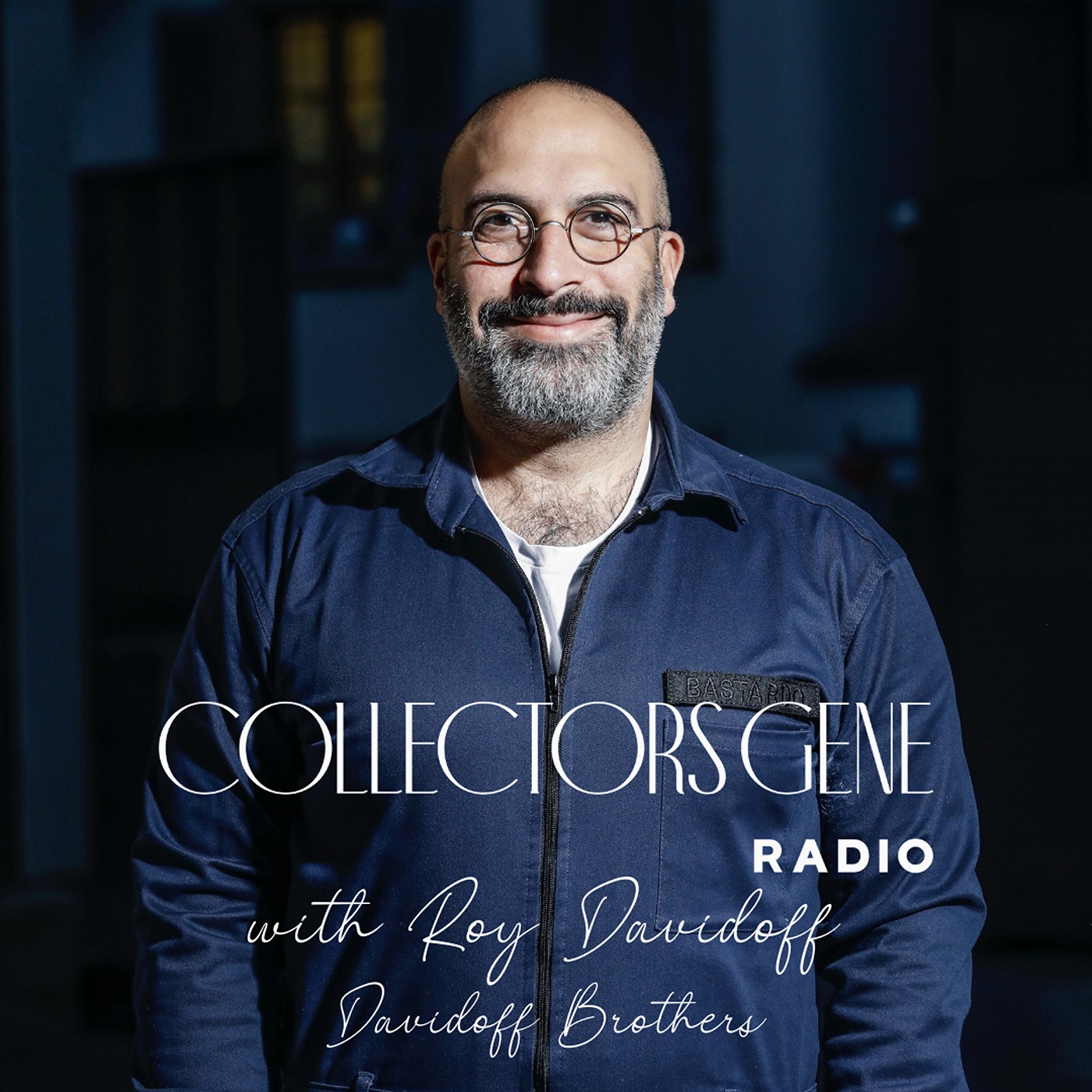
What's going on, everybody? And welcome to Collector's Gene Radio. This is all about diving into the nuances of collecting and ultimately finding out whether or not our guests have what we like to call the Collector's Gene. If you have the time, please subscribe and leave a review. It truly helps. Thanks a bunch for listening and please enjoy today's guest on Collector's Dream Radio. Roy Davidoff is no stranger to the watch community, so I figured it would be great to sit down and understand more as to why that is. Roy's love for watches is no accident, having discovered his passion for them early on, eventually making a career out of it. However, luxury things are in Roy's blood as his family were prominent wholesale gem dealers several decades ago to some of the biggest names in the game. After Roy's father gifted him his Omega Speedmaster, his love for the brand took off, earning him and his brother, conveniently named Davidoff Brothers, a spot as a go to for the brand. They've sold as many as 150 speedmasters in a year and even wrote a book on them. They've since expanded their inventory across multiple brands and categories and are still after the good stuff. At the end of the day, it's all about passion and their roots. So please enjoy. This is Roy Davidoff for Collector's Dream Radio. Roy Davidoff, welcome to Collector's Dream Radio.
- [01:32]
Roy Davidoff
Cameron, thank you very much.
- [01:34]
Cameron
So anyone in the watch world is going to be familiar with you and your brother, but for those that are collectors of other things, can you give the listeners a brief rundown?
- [01:44]
Roy Davidoff
So my brother And I started 10 years ago our company. We got a running start because we've been collectors for years. I've been buying and selling watches since 1989. I'm gonna say right before we moved to Miami. And I've been a fan of watches since the winter of 1980, 81. I was a little boy in the mountains and it's my aunt that tells me the story that we're walking through the city in and that I stopped by a watch store and I basically looked into the window and I said, I'm going to buy everything.
- [02:32]
Cameron
You talk about this story of your aunt seeing you in front of the store and you wanting to buy Everything. But even without that, your father was a collector, isn't that right?
- [02:43]
Roy Davidoff
So my father wasn't a collector. My father, my grandfathers with the plural, and my great grandfather from my father's side all were gem dealers.
- [02:55]
Cameron
Oh, interesting.
- [02:56]
Roy Davidoff
And unfortunately they left no marks because they were all wholesalers to the largest brokers that sold to Cartier. And my dad did a few deals with like Harry Winston directly and other, you know, Lori Graff and other people like this. But this was like decades and decades and decades ago. But they're all like, and they're all like little stories because he, he was able to source for the big dealers.
- [03:26]
Cameron
Right?
- [03:27]
Roy Davidoff
There's no, there's no record of what everything is. People, people today, they know what my father did. But there's no, like he didn't have a retail story. Had an office, you know, on the eighth floor of the main street in Geneva. Fantastic office. Where I remember sheikhs from the Middle east used to come with like suitcases with hundreds of thousands of dollars. I'm talking about like 40 years ago or 35 years ago with like would come and like just buy million dollar jewelry sets with like, you know, Burmese ruby, cashmere sapphires, colored diamonds. And this was like in the 80s, you know. So this is what my father and all my family business. I'm a gemologist. I graduated in Carlsbad in 1999. But this isn't what my brother and I started doing because it's like, you know, we didn't fall far from the tree, but completely different businesses. My grandfather had an Omega, my father had like an Omega Quartz 2 Tone Royal Oak. He wasn't really like a watch collector. He was, you know, a really high end jewelry manufacturer and a rare gemstone dealer.
- [04:46]
Cameron
Well, he must have had some sort of inkling in the watch world because at age 13 he got you a 1969 Omega Speedmaster.
- [04:55]
Roy Davidoff
So it was his, it was his watch.
- [04:57]
Cameron
Oh, interesting.
- [04:58]
Roy Davidoff
It was his watch that he bought down the street. It's a 1969 Mark 2 racing that he got from a shop down the street that doesn't exist anymore. That's literally like a three minute walk from my shop. Would have been the same day that his father, my grandfather, got his Constellation C case designed by Genta. I have both watches, I cherish them, I rarely wear them. And the funny story with both these watches is that dials have been swapped. One of them, the movement is no longer the original movement, it's a service movement from the 80s. They're over polished and you know the story of exactly what I don't want to buy, but those are two models that I cherish very much, including the 1976 Speedmaster new old stock that my brother gave me for my 40th birthday.
- [05:50]
Cameron
Amazing.
- [05:51]
Roy Davidoff
Yeah. So this is the foray in which my mom's, for example, my mom's nice watches today are all watches my brother and I have gifted her over the years.
- [06:02]
Cameron
I'm sure her jewelry setup over the years wasn't too bad, though.
- [06:06]
Roy Davidoff
That's a different discussion.
- [06:10]
Cameron
So, as you mentioned, a understandable big passion of yours and a large part of you and your brother's identity is the Omega Speedmaster. You guys even wrote a book on it. Had you not received that watch as a gift at age 13, do you think your trajectory in collecting and subsequently the ethos of Davidoff brothers would be different?
- [06:32]
Roy Davidoff
I think it would have been because that watch, my brother remembers me wearing it. So then he went out to get the Japan Racing, which was the Racing Re Edition from 2004. He got it because he noticed it, because he noticed mine. And I think that I would have still been interested in watches because that watch I wore, like, super rarely. I mean, you know, I used to wear GMT, Pepsi from the late 90s, Swiss only dial. I used to wear Panerais. All my friends remember me wearing Panerais in the late 90s as well. I collected back then new old stock watches. I would find, like, weird little memo boxes or weird little, like, day dates, Omegas all, like, they had to be, like, with the goop, the purple goop or the blue goop or whatever. And I collected a lot of those, and I kept them. You know, I sold some things, I kept some things. And then just the fact that I kept the heirlooms and my brother bought a Speedmaster. We were in line and everything. As I said, a series of lucky moments. I mean, imagine my father had given me a Rolex or whatever, and then my brother would have seen me wearing that Rolex and we would have just done Rolexes instead of Omegas. It could have been that. But either way, I believe we would have worked in watches.
- [07:55]
Cameron
What is it about the Omega Speedmaster that you love so much from a collecting standpoint?
- [08:01]
Roy Davidoff
So, funny enough, I didn't care so much about Speedmasters when I was working in vintage the first time around in the mid-90s and then all the way to the early 2000s. For me, it was all about really the sport divers. This was really my passion, understanding all the sport divers. This was. I Love that. I loved all the explorers, the Cousteau, the Calypso teams, all the underwater adventures that people had. Even the GMT with its tie to Pan Am. All these little details, really this is what I loved. And when my brother and I started, we wanted to also do Rolexes. But we realized something very early on is that for 1500 bucks you could buy manual wine. Speedmaster, which was the same that was approved by NASA to be used for all astronauts, which for us was like, this is crazy. This little nothing mechanical chronograph is one of the most important watches of the 20th century. So we understood that. And thanks to people like Chuck Maddox who put together crazy websites in the early days of the Internet 1.0. And also to our, to our friends from Moonwatch only. And then also we used to have a good relationship with the Omega Museum. We were able to have good access. For example, today. I mean, a couple years ago you had a question about a Rolex. You couldn't know if the watch was really delivered to so and so country, if it was really born with a blue bezel, if it was really born with so and so shield on the dial for so and so military. But with Omega, you could send them an email with some pictures and like, oh, we have this watch, it says paf. It has a PF on the movement, it says Railmaster on the dial. Or is this correct? Is this not correct? Should it say something else? Or they're like oh yes, this should say Seamaster. Because this was delivered to the Pakistani Air Force. And they're like oh yes, I made a mistake. The picture, I couldn't see what it said, but the picture actually said Seamaster. So it's actually correct. You know, like all these old watches that we would. And actually I have a story about that.
- [10:15]
Cameron
Let's hear it.
- [10:16]
Roy Davidoff
Do you know how watches were sold back in the day when you didn't have attachments, you could put in emails. I had no idea you would photocopy a watch and send it by fax.
- [10:34]
Cameron
Makes sense.
- [10:35]
Roy Davidoff
And people bought hundred thousand dollar watches like that.
- [10:39]
Cameron
Unbelievable.
- [10:41]
Roy Davidoff
Imagine, I mean today people like, they want like four 4K videos, HD quality wrist shots. They want like macro shots. And you used to sell watches from a photocopy that you faxed.
- [10:57]
Cameron
And I'm sure it was much easier back then to be honest, to send something back. Had it not been kosher, nobody cared.
- [11:04]
Roy Davidoff
You would have, let's say a fancy lug Vacheron or a Patek Philippe that you sold for like 2 to $12,000, whatever it was. And the dial was redone, but nobody cared. Nobody cared. They just bought a watch to have a nice watch. The what? The dial was all original, but it was like half of it had turned black. And people didn't care. They just wanted to have a nice wristwatch on the wrist. It's only in the last 10, 15 years, with the advent of, like, Instagram and the Internet, that people are like, oh, my God, it has to be, like, untouched, perfect, blah, blah, blah. So I have one quote that I say every time someone wants to quote me. My quote is, condition, condition, condition. That's it. When you buy a watch, that's what it has to be today. But 20 years ago didn't make a difference. It had to be like a Submariner. Whether it was glossy, matte dial or radium or whatever was like 800 to 1,000 bucks.
- [12:10]
Cameron
And so when it comes to that philosophy of condition, condition, condition, is that how you. That's obviously how you approach things that you buy to sell for the business, but is that how you approach things for your personal collection? Right. Or do you have. We all have some leniencies sometimes when it comes to buying something for personal collection.
- [12:31]
Roy Davidoff
I'm going to add something to that. We. I was talking to someone, I think it was in January. I was at the. I was at a watch show, and I looked around and I realized that all of us watch dealers are a little bit crazy. I mean, really, really, like a little bit crazy. I'm not going to say, like, you know, I'm just going to say most of us are completely OCD in the spectrum. We should be taking medication for some of the stuff that we have. But the point is that watches is an outlet. And then for me, for example, my brother cares a bit less. But when I get a watch new, if the watch is 15 years old, it will literally look like I got it yesterday. So I am obsessed, really obsessed about wearing watches with, like, long sleeves to be protected. And, you know, sometimes I buy watches which are not. So they're like more like daily beaters, and I don't really care. But, like, most of the watches that I buy as new stay as new for, like, years and years and years.
- [13:44]
Cameron
So for you, when it comes to vintage watches, what makes something truly desirable to you to the point where you have to add it to your collection? Is it based on a specific brand or a dial that you've been looking for? What do you typically search for?
- [14:00]
Roy Davidoff
So I no longer really buy vintage, for me, as a collector, because I want to be able to wear any of my watches and not have to be able to tell one of my clients, sorry, I'm keeping this one.
- [14:13]
Cameron
Right.
- [14:14]
Roy Davidoff
I don't find that fair because it's like, I don't know, you go to a restaurant and usually you see the chef in the back kitchen eating a sandwich. You don't see him with the spoon inside the caviar, you know, eating it. He reserves the best cut for the customer and he doesn't serve himself properly. So I just said, my brother and I redecided to stay away from keeping vintage. Sometimes we like, I mean, we lose our mind on the watch. Like he. There was one 298 which he was like, fuck you, I'm keeping it.
- [14:52]
Cameron
Exactly.
- [14:53]
Roy Davidoff
You know what I mean? One watch that he just put on his wrist, he was like, there's just something about it. I just have to keep it. That's why I have a. I have a 76 Speedmaster New World stock. That's why he has two 83 Speedmasters, both delivered from his birth month. No. So I try to collect new watches just because they come with a warranty. I can go swimming with them. I'm not so worried, you know, that someone going to be like, oh, please sell me this watch. And even when during the hype, people were offering me like double what I had paid for my wristwatches when I was like, no, I'm a collector. I like iconic watches. I like blue dials. I prefer integrated bracelets. If there isn't. I wear them on leather. This is, this is who I am. This is what I like. You know, it's. I grew up, I grew up with like Panerais offshores. Those are for me, the coolest watches ever. For me, an offshore was worth three times more. A regular basic offshore was worth three times more than a 5402.
- [15:59]
Cameron
Right?
- [16:01]
Roy Davidoff
Because it was the same base movement except a beefier case, a quick set date and a chronograph. And the 5402 was a non quick date in a flimsy little case.
- [16:17]
Cameron
It is interesting how more complication, or I guess rather more complicated watches sometimes can be cheaper than a more dinky version of the old thing. Or, you know, it just, it's kind of interesting how the market reacts to that.
- [16:34]
Roy Davidoff
We sell perpetual calendars for like right now I have a perpetual calendar for under 60,000 Swiss francs and someone in gold with a skeleton and someone will show up with a stupid 5402. That for sure something has Been redone, repolished, recut, re something for the same price. And I'm like, but it makes no sense.
- [16:58]
Cameron
Yeah, it's always interesting. I'm curious to know what modern brands kind of have you captivated right now.
- [17:07]
Roy Davidoff
I'm a sucker for AP these days. For years, as you can hear me. The jumbo I thought was like not a nice watch because of slow date. And for me that made absolutely no sense. When the Nautilus 375711 upgraded the movement, the 222 was discontinued. But now you have the new one. All the iconic watches had better engine put in them. The Daytona went from being manual to automatic. The sub went from being just aluminum bezel or plexi that's scratchable to a beefier case, ceramic bezel, Sapphire crystal. All these watches improved. And the 5402 and the 15202 was just like this little dinky watch. And then a few years ago when I got my offshore, we went to the museum. I tried on what I thought was a 15202 and it turned out to be a 16202 and had the date setting and I was like, shit, now the watch is right. You know, for me, old design, which is basically today what all brands are kind of doing right, quote unquote, with a brand new technology, better movements and better clasp and better details is what we should be doing. It's same thing when you buy a Porsche. You don't want to buy a Porsche that looks different from one from 10, 20, 30 years ago. Only the proportions have changed, but the overall look is identically the same. Same thing when you buy Mercedes. You buy Mercedes that's 10 years old or 20 years old. It still looks like a Mercedes in.
- [18:50]
Cameron
The showroom today as time goes on. It's obviously no secret that it's really difficult to find something extraordinary. Be it because access to the Internet or auction houses or just the rarity of something truly unknown and unfound coming to the market now after all these years doesn't happen as often as someone who's been doing this for a long time. Do any stories come to mind when you found something that was just extremely special?
- [19:18]
Roy Davidoff
A lot of the stories involve Speedmasters.
- [19:21]
Cameron
Well, yeah, I mean new old stock Speedmasters from forever ago are really rare.
- [19:26]
Roy Davidoff
So I believe that we have come across the absolute nicest, nicest series of 2998. We bought them from all across the world. I bought one that came to me in the flat paper FedEx envelope from Veracruz In Mexico, I bought one that we drove to Germany to pick up, where we had to pay cash. I found one in Paris that a collector had picked up for like cheap at an auction. We got some from some collections. We passed on one, but the dial looked weird. And we didn't realize it was a rare dial that he had picked up years before because it was just cool. But anyways, we could have paid five times more just for the dial. So Speedmaster we were able to. A friend of mine called me once and he's like, dude, I found this watch in Orlando. I paid $3,500 for it. What do you think it is? And I get a picture of the watch and I see the case side and I see the case back and I'm like, shit, let me check. Back then, when it was easier to communicate with the Omega Museum, they're like, don't do anything. Don't tell anyone you have this watch. Let me check. I get a serial number. We check the watch. It takes us like a year. We have to contact Jim Regan from who was the. Who did all the tests on the Speedmasters back in the 60s to ask like, how come this watch is not the Smithsonian? What's the story? And we get a handwritten letter confirming that the watch was not was decommissioned either in the 80s or the 90s because it was not flown. It was only used for ground exercises. And basically like a year later, I go to my friend who picked up this watch for $3,500 and he asks like a six digit price tag on the watch. And my brother and I looked at each other, we're like, okay, fuck it. We have an astronaut watch. So that was one. And then a friend of mine also called me one day. He's like, oh, this watch, I don't know. Last time another astronaut watch came up for auction, the FBI showed up and everybody freaked out. Somebody just brought me this watch. What should I do with it? And I was like, I don't know again. And they're like, no, this one is a non issued. It's part of the 60, but they only deliver like 55 of them. So there's four or five of them floating in the. Floating in the. I mean, not anymore. They're all been all in collections. There's a few of them floating around. And so we bought it. And again, we did all of our research, all the due diligence, and we found out that it was again not issued because it has the model number but not the serial number from NASA. And they're all sequential serial numbers. So it's a batch of five that were not just not done. They just made extra watches and there's even extra dialing around, but that's a different story. So we have this one, and then again, some Rolex dealer comes up with like a white Alaska dial. And we borrowed it for our exhibition. And then we asked him, like, but how much is it? And he gave us the price. And my brother was like, okay, we'll buy it, you know. So we have, like, one of the only two correct white Alaska dials ever to come up at auction was one of ours. One of the two SCB's to come up at auctions was one of ours. One of the two radial dials to come up with correct. With the correct. Nothing removed was one of ours. We've had some crazy 2915 broad arrows, some crazy 29 eight, some really nice 2913, 2914. Military civilian. We had like, I've seen like two in my life. Sorry. The radium skeletonized dial. Because it's like a telephone, a telephone dial. Because the Railmaster Normally is the 3, 6, 9, 12. But this railmaster had all 12 numerals. And I was sitting next to my friend, who's now my friend while he was in the archives with the microfiche, and he was sliding through microfiche and we find that serial range. And you can see that 10 were made and delivered, and that's it.
- [24:00]
Cameron
Wow.
- [24:00]
Roy Davidoff
With that dial with, like, syringe hands, like the really oddity. So we had one of those. No, we've been in that aspect with Omegas. We've been quite lucky.
- [24:10]
Cameron
Tell me about some of these prototype Speedmasters that you see once in a blue moon. Get posted. They have, you know, sometimes like a grayish bezel or dial. They're really interesting.
- [24:21]
Roy Davidoff
So it's a discussion that I. That I get very upset about. But the point is, is that gray bezels are just faded in the 60s, all the way up to the early 70s, all the way up, I think, to 76. I think you can find those black bezels faded after 1960. 768. I would say mid 68. They would only fade to gray before 1968. From 1960, 61, they could fade to two different colors of blue. They could fade to green. They could fade to brown. They could fade to gray. Gray, silver, even some. So just in terms of bezels. And there's basically like. And you can, over time, you can see, like batches that you can see A bezel. And you're like, oh, it's this year. Because you recognize that you've seen like four or five other watches with the same type of aging. Same way you see tritium, the same way you see something like, there's like also batches of tropical dials. Like, even us, we sold watches and then we realized that the dial was like two, three years earlier because after it was past that date where the tropical dials still existed.
- [25:39]
Cameron
Really interesting.
- [25:40]
Roy Davidoff
So for us, this is. And also. So you asked me about the gray dials. There's like short indexes, long indexes. They're gray, grayish blue, blue. It's very difficult to differentiate them and say which one is more correct than the other. But basically, if it's before 1968, it has to have long indexes. And if it's after 1972 or 1970, sorry, 1971, 72, it can be short index, blue dial, because that technology of blue dial didn't exist prior to 1971. But regardless, it's a really rare dial. So if you're buying it, like those Singer dials that you find sometimes in floating around in watches, it's okay. We know the dial was not born in the watch. We know it was either a prototype dial or some trial, like they were just trying to do stuff with it. As long as it is disclosed, for me, it's perfectly fine. But you have to know, and the buyers usually know, some nefarious people made up stories. But the point is that they're just rare dials that were not cased or were sent to retailers to maybe help them sell their old stock, whatever the story may be. And that's it.
- [26:53]
Cameron
At some point in collecting and dealing, it's inevitable that you make the jump into something that you truly believe in, even if the market may disagree. Is there anything that you could think of of a time where you and your brother really believed in something and the market wasn't necessarily there yet, but the risk paid off eventually.
- [27:12]
Roy Davidoff
Speedmasters.
- [27:14]
Cameron
Yeah, I mean, they. They have. They didn't really explode. I mean, it's.
- [27:18]
Roy Davidoff
We bought Speedies for like 17,000 that we were like, this is expensive. And then we held onto it a little bit because we couldn't sell it right away. And then we sold it for like 35k and we were like, king of the world. We doubled our money, which is, like impossible in this world. And then we bought the watch back for 80k. I mean, for example, I bought a watch that a dealer. Dealer shows me a picture of A watch. And I was like, sure, you know, what do you want for it? Like, oh, like €2,600 or whatever. It was $2,500. The dollar was more or less euro. And then we realized it's super rare watch. So we were asking 15 and people are offering us like 12. And then we're like. And the price went up and then we're asking like 20. People are asking, offering us like 18. And we still didn't sell the watch. And after like two years of owning it, we finally put it up at auction and the watch sells for like $60,000. Amazing watch that we paid. So we believed in the watch. We believe, believe in the product. The watch is still. The watch is worth more today than what it did in this auction. Wow. So no, no Speedmasters, really. Watches that we believed in. Past tense. Because unfortunately today the market is a bit more shy. We still have incredibly rare Speedmasters. Right now. We have a. We don't show them because we really show them to our, to our collector friends. But they're usually not going to show up on the websites or at the same time. But we have like some. Just every time I open the box, I'm like, holy shit. How lucky are we to have like that many in that condition?
- [28:58]
Cameron
Has collecting watches led you down the path of collecting anything else?
- [29:02]
Roy Davidoff
It has not, actually, no. It has a little bit. I always collected books.
- [29:08]
Cameron
What kind?
- [29:10]
Roy Davidoff
About watches. I try to collect as many books about watches as possible. A couple years ago, I gave away, I would say a third of my library just because I was moving and I didn't care anymore. I kept the Patek, the ap, the Vacheron, the Omega, the Cartier. But like, I mean, I wish I had kept the Piaget stuff because there's some pretty cool designs in there, but I have a few that I was able to find. Again, Breguet I kept also, but I had like, had like GP or like other brands that did like, you know, all this. I had like, just an obnoxious amount of like, watch catalogs from the 80s and 90s, early 2000s and, you know, but I was like, who cares? Like, I had like, brands that no longer exist. Catalogs or like leaflets of like, people who did watches for important watchmakers, but they finally made their brand. I mean, I wish I had really, really kept everything, but I didn't have the space. I really enjoy, you know, the old catalogs, but sometimes I look through and it's a bit nostalgic because I see like a gold Paul Newman for like $25,000.
- [30:25]
Cameron
It could also give you a heart attack.
- [30:27]
Roy Davidoff
Yeah. But it's funny because it's next to like some stupid watch that's also $25,000 that today is worth 15. And I'm like the poor guy who bid on the wrong watch today. Those Gold Palm humans go from like hundreds of thousands to millions of dollars.
- [30:43]
Cameron
Yeah, I mean that's, I think a lot of people's biggest regret is not buying as many of those as possible.
- [30:49]
Roy Davidoff
Bitcoin. I'm sorry, $300 bitcoin. Today's worth 60. There's nothing. I mean, unless you're Ro Montanari and you found like cheapy Cartiers in a flea market for a couple hundred bucks that are worth today hundreds of thousands. Bitcoin. For me, there's no regrets. I sold watches for like 15,000 Swiss francs or 20,000 Swiss francs, but today are worth like five, six times more. But it's the market, you know, this is the, you know, I sold, I sold to a collector some very rare GMT for 40k. You put an Oxford and it went for 150. But again, you know, it's the markets on Speedmasters. This happens rarely because it's like our market. I mean, there isn't a rare Speedmaster that appears that no one calls us on other watches. We're not the go to guys. But again, we don't do Speedmaster as much as we used to. I think one year we sold like 150 or 170 speedmasters. And I spoke to the director of the boutique at the time and he's like, I didn't sell them any Speedmasters. Yeah.
- [31:58]
Cameron
He's like, can I get a sales job? Roy, let's wrap it up here with the collector's dream rundown. You can answer these based on watches that you buy for your personal collection or for the business or books that you're collecting. Totally up to you. What's the one that got away?
- [32:15]
Roy Davidoff
I'm not going to say it's the one that got away. I think I was just speaking about the Daytona that I had sold because I needed money to like, you know, it was all my money back then and I was like my collecting budget. But I should have kept it. It was like a new old stock. 6663 Big Red. The watch had been worn a handful of times. You could, you could see like, I remember there was like three strikes inside the pinhole where you could read the serial number. That's how many times opened. The watch was absolutely immaculate. The blade, sorry, the top of the blade where the Rolex logo is had like zero scratches. I mean my current Rolex is probably more worn than this Daytona. And it was, for me it was like, it was a late, late 80s. It was just an incredible watch and I sold it unfortunately. And it's one watch that still stays in the back of my mind because everything else I've been able to reacquire or I've gone over it.
- [33:18]
Cameron
Do you remember what you sold it for?
- [33:22]
Roy Davidoff
Yeah, like 18,000.
- [33:24]
Cameron
Oh man.
- [33:27]
Roy Davidoff
It was a lot back then. They were worth like 12 to 15.
- [33:31]
Cameron
Yeah, makes sense. How about the on deck circle? So what's something that you're hunting after now?
- [33:37]
Roy Davidoff
So I am no longer hunting for anything. I remember five, six years ago I made a stupid list of everything I want and everything that I have. And my wish list was, I'm going to say like 40 to 50 watches. And my have list was like five, six watches which were watches given to me by my father. My grandfather's watch, a watch I got when I was 18. You know, that's pretty much. That was pretty much it. And now my wish list is less than 5 and my have list is 10 times that size. So I'm quite happy with my collection and I'm waiting for like one watch maybe and I'm no longer, I mean I'm no longer. I have to sell one or two watches for every watch that I buy.
- [34:36]
Cameron
That's a good way to add some new stuff in there, especially with modern. Because modern stuff is and can be a lot more expensive than the vintage stuff depending on what you're looking for. So it makes sense.
- [34:46]
Roy Davidoff
I'm very happy that my collection, I mean I had like 25 Speedmasters and now I have like nine.
- [34:54]
Cameron
I love it. How about the unobtainable? So this is one that is too expensive. It's in a museum, a private collection. Complete unobtainium.
- [35:03]
Roy Davidoff
So circling back to my. To my quick internship working for Aurel Bax at Phillips. I was able to hold a watch in my hands that belonged to Duke Ellington. It's a tasty Tendi with split seconds.
- [35:23]
Cameron
Oh, wow.
- [35:24]
Roy Davidoff
It is by far the cleanest watch I've ever held in my hands. I played with it during the viewing and that watch still rattles in my mind. That's one of the reasons why I loved when relaunched their watches. I was like, ah, this is a little bit of the feeling that I had when I had that watch in my hands. Except it's a percent or a Tenth of a percent of the value.
- [35:51]
Cameron
Right. Do you know where that watch went?
- [35:54]
Roy Davidoff
Patek Philippe Museum. I can go look at it once in a while.
- [35:57]
Cameron
Yeah, it's not too far from me, right?
- [35:59]
Roy Davidoff
Exactly. It's really like a walk over the hill.
- [36:03]
Cameron
The page one rewrite. So if you could collect anything else besides watches, money is no object, what would it be?
- [36:09]
Roy Davidoff
You know what? If money was no object, the page rewrite will be colored diamonds. Because I wish I would have kept some of the colored diamonds. Diamonds my father used to trade in, in the 80s and early 90s because he was buying them for like thousands dollar carats. And today they're worth hundreds, if not millions of dollars a carrot. So if I were to go back, I would probably collect those type of gem, gem quality diamonds and emeralds and rubies and sapphires that he sold, you know, for fair market value back in the day. But today they're worth like 100 times more or 10, 20, 1,000 times more.
- [36:46]
Cameron
Yeah. If you owned all those, you could probably also own all the watches that you want to own.
- [36:51]
Roy Davidoff
If I own one of them, I could own all the watches.
- [36:53]
Cameron
One of them, exactly. How about the goat? Who do you look up to in the collecting world as a great collector?
- [37:01]
Roy Davidoff
So it's a difficult question because the more you are known, the more people are after you. So there are a lot of collectors that I really enjoy spending time with. I know I would say dozens of them. And one of our, one of our clients, my brother and I, really a dear friend, I still remember him. He showed up like in the hunting gear with like a shitty suitcase filled with like bottom third watches that he wanted to trade up. And he became over time one of the biggest collectors that we knew. He had split second Rolex. He's had like every iteration of the Bakelite Radium GMT of the James Bond Rolexes. He's had some crazy important Patek Philippe. He's had every iconic reference from every iconic brand. Every sale there was like one or two watches from his or he bought one or two watches for himself. I think that his collection still rattles in my mind as well. I would say I cannot name him, but he's a dear friend to Sasha and I and his collection is really one that I one day strive to have. I couldn't have similar because he has different means than we do. But this is the type of collection that I can see in the future for someone with unlimited funds. And not when you see people today that are dispatching their collection while telling People that this is their collection. I don't like it. I prefer people to stay anonymous.
- [38:46]
Cameron
Love it. How about the hunt or the ownership? Which one do you enjoy more?
- [38:50]
Roy Davidoff
The hunt. I'll give you an example. I have a dear friend who's in finance world, but he is a phenomenal photographer. He goes to Africa and he hunts. He hunts like this incredible African animal, mammals, land mammals. He takes amazing pictures. But basically he hunts not for the trophy, he hunts for the picture. So for me, I believe that not the Instagram picture, but basically I love to have owned a watch. I'm very happy to sell it. Like, we've owned some crazily rare watches. We help people. I helped a friend of mine acquire and then a legend, one of the five or six knowns, the gold, the oyster, Paul Newman's. So the hunt is more interesting. The ownership, once you own the watch, it's like, whatever, We've owned it, now we can. The hunt is more fun.
- [39:50]
Cameron
Makes sense. And most importantly, do you feel that you were born with the collector's gene?
- [39:56]
Roy Davidoff
100%. I was born with the collector's gene. I used to collect swatches that were in my budget. Then I went up into, you know, thousand $2,000 watches. And then now, you know, it's exponential from there. So 100%. I was born with the collector's gene.
- [40:15]
Cameron
I love it. Roy, thank you so much for joining me today. It was such a great pleasure to talk with you. I know you're across the world and last time we saw each other was in New York. So I look forward to doing that again soon.
- [40:26]
Roy Davidoff
Thank you very much for your time.
- [40:28]
Cameron
Cheers. Take care.
- [40:30]
Roy Davidoff
Cheers.
- [40:33]
Cameron
All right, that does it for this episode. Thank you all for listening to Collector's Dream Radio.