Podcast
Conspiracy Theories Exploring The Unseen
Hosted by Michael Fortune · EN
The act of conspiring an evil, unlawful, treacherous, or surreptitious plan formulated in secret by two or more persons; plot. A combination of persons for a secret, unlawful, or evil purpose. An agreement by two or more persons to commit a crime, fraud, or other wrongful act, any concurrence in action; combination in bringing about a given result.
Become a supporter of this podcast: https://www.spreaker.com/podcast/conspiracy-theories-exploring-the-unseen--5194379/support.
Become a supporter of this podcast: https://www.spreaker.com/podcast/conspiracy-theories-exploring-the-unseen--5194379/support.
376episodes
Episodes
Newest firstAll episodes
The Billionaire Influence_ The Media Shield
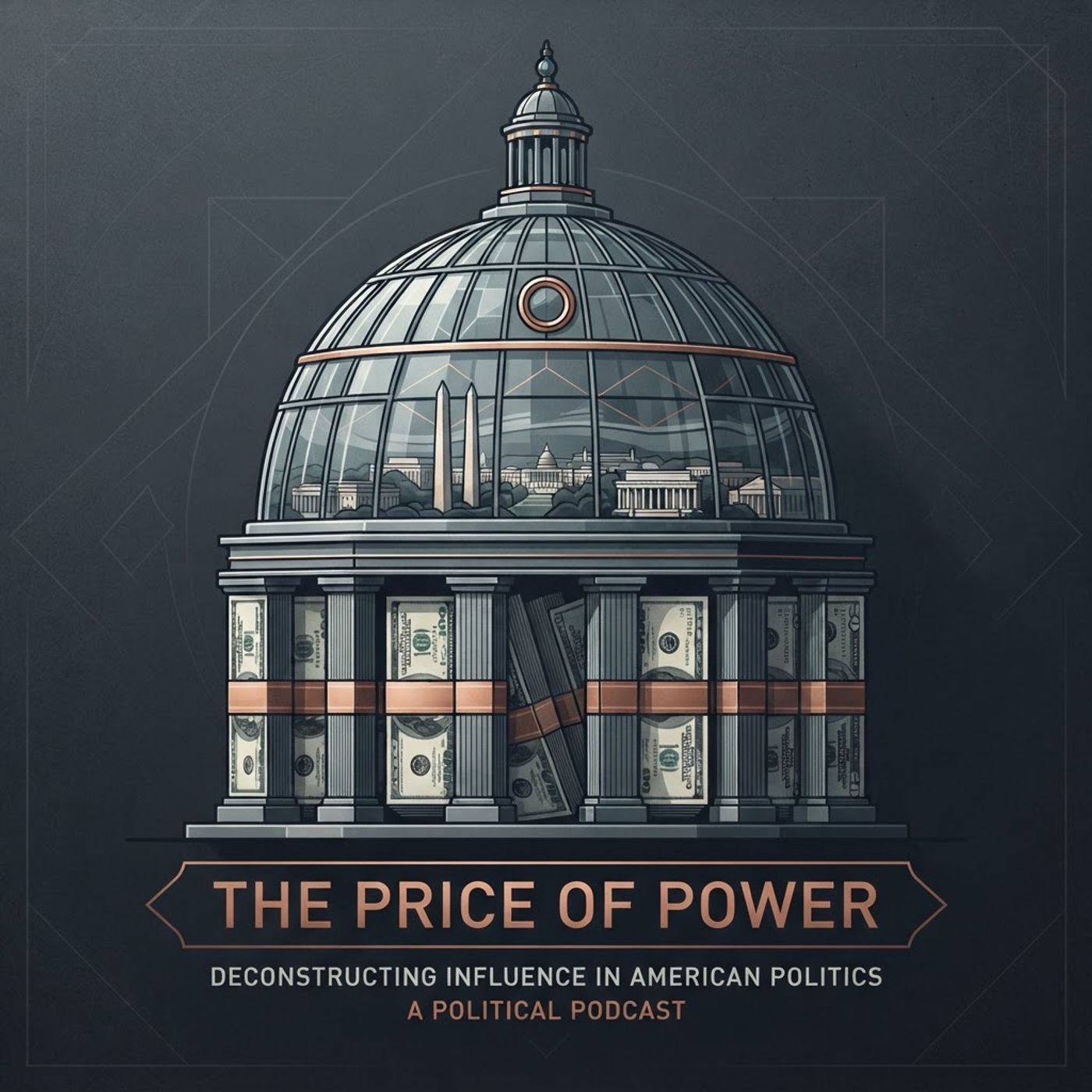
3d ago00:02:37Tap to summarizeImagine a world where the news you read, the opinions you consume, and the political candidates you see on your feed are curated by the same people who hold the keys to the global economy. This isn't a plot from a dystopian novel; it is the reality of the modern Media Shield. In 2025, billionaire wealth hit a staggering $18.3 trillion, marking an 81% increase in just five years. But this isn't just about yachts and luxury real estate; it is about the quiet accumulation of influence through the institutions that tell us what is true. We have seen a massive consolidation of media ownership, where billionaire families step in as the owners of legacy newspapers and digital outlets. Some call it an act of rescue, arguing that billionaire stewardship provides the capital necessary to keep struggling journalism alive. But look closer, and you see what many experts call an insurance policy. By controlling the platform, these owners can gently tilt the narrative, shielding their broader business portfolios from regulatory scrutiny and public pressure. It is a strategic layer of protection that goes far beyond traditional lobbying. Consider the math: in 2024, one out of every thirteen dollars flowing into federal elections came from the wealthiest individuals. It is no wonder that billionaires are 4,000 times more likely to hold political office than the average citizen. This concentration of power finds its roots in the 2010 Citizens United decision, which effectively opened the floodgates for unlimited financial influence in our democracyBecome a supporter of this podcast: https://www.spreaker.com/podcast/conspiracy-theories-exploring-the-unseen--5194379/support.
Transcribe →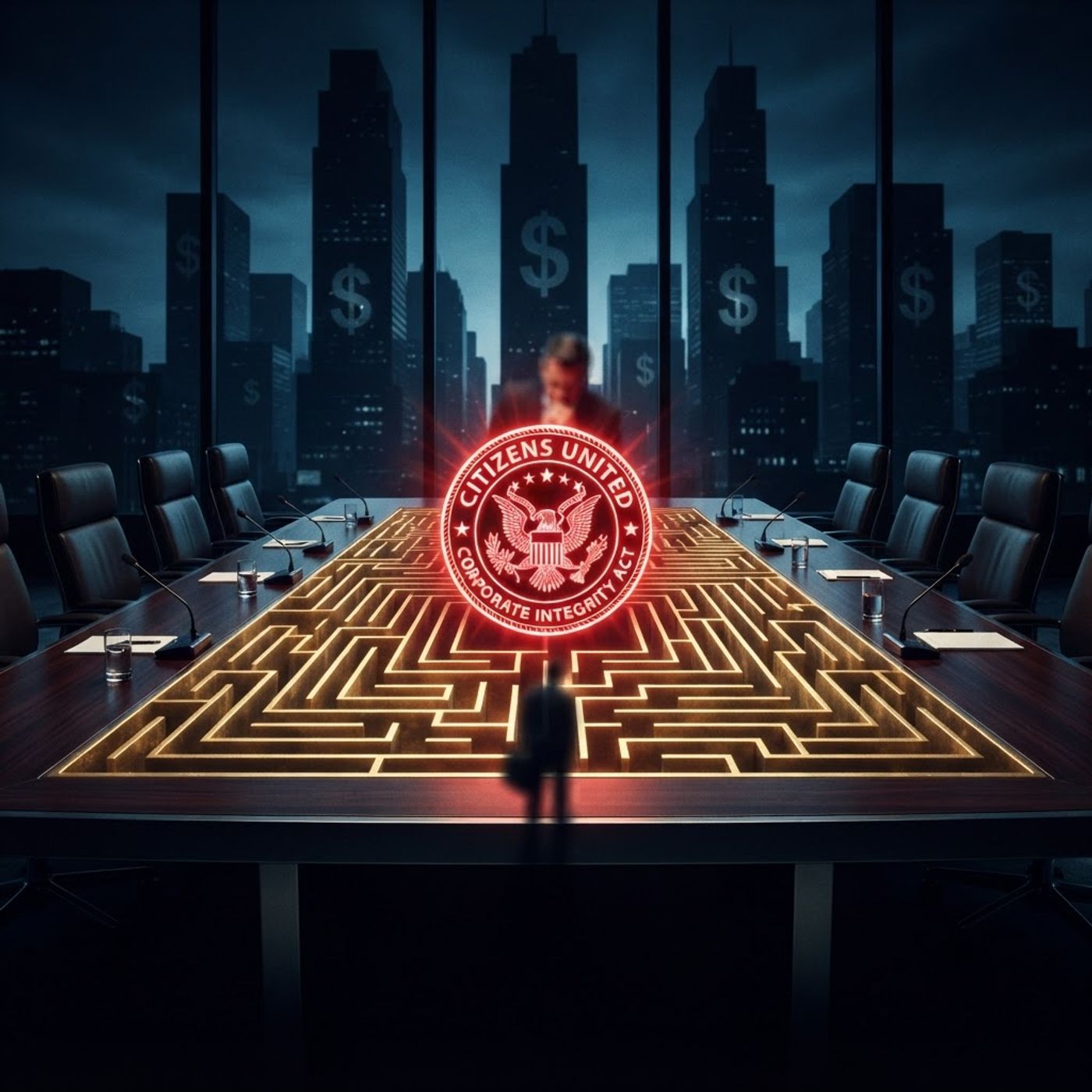
The Gilded Shield_ How Wealth Reshapes Reality
3d ago00:02:09Tap to summarizeImagine the American political landscape not as a public square, but as a gated community where only a few have the keys to the gate. Since the 2010 Citizens United ruling opened the floodgates for unlimited political spending, we have witnessed a transformation in how power is exercised. It is no longer just about lobbying; it is about owning the megaphone. Consider the numbers: between 2008 and 2024, billionaire political contributions surged by a staggering 5,400 percent. Today, just one hundred of these donors account for nearly a fifth of all political spending. We are currently living through a level of wealth concentration unseen since the original Gilded Age, with 724 individuals commanding eight trillion dollars. This wealth is not just sitting in vaults; it is actively purchasing influence. A growing trend is the strategic acquisition of major media outletsBecome a supporter of this podcast: https://www.spreaker.com/podcast/conspiracy-theories-exploring-the-unseen--5194379/support.
Transcribe →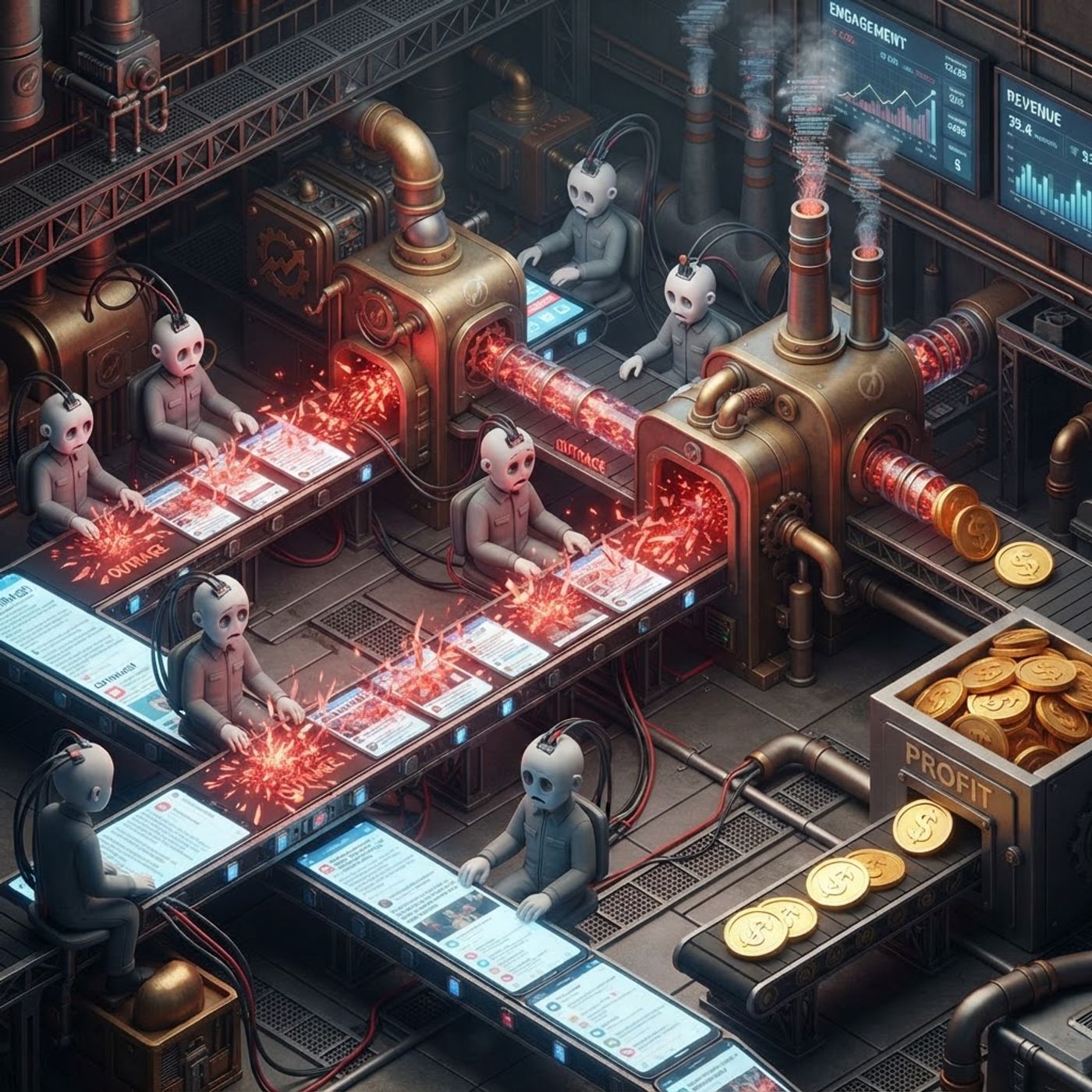
The Feedback Loop_ How Anger Is Taught and Automated
3d ago00:02:38Tap to summarizeImagine for a moment that your emotions aren't just your own. Think of your sudden surge of frustration after reading a headline as a deliberate design choice, a product output generated by a silent, invisible machine. This is the industrialization of outrage. We are no longer just interacting with platforms; we are being conditioned by them through a relentless feedback loop. When you hit that share button on a post that makes your blood boil, you aren't just expressing an opinion. You are participating in a digital harvest. Research shows that content triggering anger or fear performs roughly 20 percent better than neutral posts. This isn't a coincidence; it is the core business model of the attention economy. These platforms have learned that anger acts as a renewable fuel source, keeping you scrolling, clicking, and returning for more. The psychological foundation for this is what experts call the Bad is Stronger than Good principle.Become a supporter of this podcast: https://www.spreaker.com/podcast/conspiracy-theories-exploring-the-unseen--5194379/support.
Transcribe →
The Rage Engine_ Why Your Brain is Being Hacked
3d ago00:02:24Tap to summarizeImagine for a moment that your brain is a survival machine, built over millions of years to prioritize danger over comfort. If a rustle in the bushes meant a predator, you had to act instantly. Today, those same evolutionary survival instincts are being mined like raw ore. This is the core of the attention economy, a system where the most profitable commodity isn't oil or gold—it is your reactive anger. Digital platforms have essentially discovered a biological hack. By flooding your feed with content that triggers moral outrage, they bypass your logical brain and go straight for your fight-or-flight response. It is a calculated strategy because studies show that morally charged posts are nearly twice as likely to be shared as neutral ones. WBecome a supporter of this podcast: https://www.spreaker.com/podcast/conspiracy-theories-exploring-the-unseen--5194379/support.
Transcribe →
The Power of Choosing Peace
3d ago00:03:03Tap to summarizeHave you noticed that being alone is starting to feel less like a temporary state and more like a deliberate life choice? It is a fascinating shift. We are moving away from the old idea that solitude is just a byproduct of isolation or some kind of social failure. Instead, more people are actively prioritizing peace over traditional relationship structures. The first thing to clarify here is the difference between loneliness and solitude. Loneliness is that painful, hollow ache we feel when we crave connection but cannot find it. Solitude, however, is a chosen, restorative experience. Think of it like a diet: just as everyone has different nutritional needs, we all have different social appetites.Become a supporter of this podcast: https://www.spreaker.com/podcast/conspiracy-theories-exploring-the-unseen--5194379/support.
Transcribe →
The Modern Love Dilemma
3d ago00:02:28Tap to summarizeIf it feels like dating has become an uphill battle lately, you are certainly not alone. Recent data suggests that nearly half of Americans believe finding a connection is significantly harder today than it was just a decade ago. We are living in a paradox of choice, where the infinite swipe on our phones convinces us that a better option is always just one tap away. This mindset discourages us from investing in the real, imperfect people right in front of us, leading to a sense of perpetual dissatisfaction. In fact, roughly 75 percent of dating app users report feeling genuine burnout. It is exhausting to treat human connection like a shopping experience, especially when the digital nature of these apps often strips away the nuance of face-to-face interactionBecome a supporter of this podcast: https://www.spreaker.com/podcast/conspiracy-theories-exploring-the-unseen--5194379/support.
Transcribe →
The Hidden Price of Staying the Same
4d ago00:02:34Tap to summarizeWe love to talk about the Return on Investment, or ROI. We calculate every dollar spent on new projects and track every cent of profit. But we rarely talk about the silent killer of growth: the Cost of Inaction. Imagine you are standing on a moving walkway, but the walkway is moving in the opposite direction. If you just stand still, you aren't actually staying in place; you are falling behind. This is what economists call strategic inertia. It is the hidden, cumulative tax you pay for refusing to evolve. Think about those outdated legacy systems your office might still be using. Maybe it is an old on-premise payroll platform that crashes every month. Keeping it seems safe because it is familiar, but the data tells a different story.Become a supporter of this podcast: https://www.spreaker.com/podcast/conspiracy-theories-exploring-the-unseen--5194379/support.
Transcribe →
The Polarization Profit (1)
5d ago00:02:45Tap to summarizeImagine a business model where the primary product is anger. It sounds counterintuitive, but in today's media and digital landscape, division has become one of the most profitable commodities on the market. We are living through an era where political friction is not just a side effect of democracy; it is the engine driving advertising revenue. Social media algorithms are engineered to capture your attention by feeding you content that triggers your strongest emotions. Why? Because engagement—whether it is a furious comment or an indignant share—keeps you scrolling, and more scrolling means more ad dollars. This creates a feedback loop where the loudest, most extreme voices dominate the conversation, even though they represent only about one-third of the population. But this divide isn't just happening on our screens; it is moving into our boardrooms. We are seeing a rise in what experts call partisan segregation within corporate leadershipBecome a supporter of this podcast: https://www.spreaker.com/podcast/conspiracy-theories-exploring-the-unseen--5194379/support.
Transcribe →
The Polarization Profit Margin (1)
5d ago00:02:32Tap to summarizeImagine a business model where the primary product is anger. It sounds counterintuitive, but in today's media and digital landscape, division has become one of the most profitable commodities on the market. We are living through an era where political friction is not just a side effect of democracy; it is the engine driving advertising revenue. Social media algorithms are engineered to capture your attention by feeding you content that triggers your strongest emotions. Why? Because engagement—whether it is a furious comment or an indignant share—keeps you scrolling, and more scrolling means more ad dollars. This creates a feedback loop where the loudest, most extreme voices dominate the conversation, even though they represent only about one-third of the population. But this divide isn't just happening on our screens; it is moving into our boardrooms. We are seeing a rise in what experts call partisan segregation within corporate leadership. When executive suites become echo chambers of like-minded political views, the risk of groupthink skyrocketBecome a supporter of this podcast: https://www.spreaker.com/podcast/conspiracy-theories-exploring-the-unseen--5194379/support.
Transcribe →
The Technopolar Shift_ Who Really Rules the World
5d ago00:02:36Tap to summarizeFor decades, we have lived in a world where one flag flew highest above the rest. The United States has been the undisputed superpower, the one architect of global order. But if you look at the landscape today, that picture is starting to blur. We are moving toward a multipolar, and some would argue, a 'G-Zero' world, where no single country dictates the outcome of global events. Think of it less like a contest between two titans and more like a high-stakes chessboard where the pieces are multiplying. China is undoubtedly the most visible challenger, using massive infrastructure projects to expand its reach. But they are dealing with internal pressures and a growing coalition of nations wary of that expansion. At the same time, we have to look at India, a nation now boasting the largest population in the world and climbing rapidly in both economic and military might.Become a supporter of this podcast: https://www.spreaker.com/podcast/conspiracy-theories-exploring-the-unseen--5194379/support.
Transcribe →