Podcast
Conspiracy Theories Exploring The Unseen
Hosted by Michael Fortune · EN
The act of conspiring an evil, unlawful, treacherous, or surreptitious plan formulated in secret by two or more persons; plot. A combination of persons for a secret, unlawful, or evil purpose. An agreement by two or more persons to commit a crime, fraud, or other wrongful act, any concurrence in action; combination in bringing about a given result.
Become a supporter of this podcast: https://www.spreaker.com/podcast/conspiracy-theories-exploring-the-unseen--5194379/support.
Become a supporter of this podcast: https://www.spreaker.com/podcast/conspiracy-theories-exploring-the-unseen--5194379/support.
376episodes
Episodes
Newest firstAll episodes

Swipe, Spend, and Exhaust_ The True Cost of Modern Love
Yesterday00:02:34Tap to summarizeThink about your last date. Maybe you grabbed coffee, or perhaps you just spent the evening scrolling through profiles on your phone. We talk a lot about the rising price of dinner or drinks, but the financial toll is only the tip of the iceberg. In today’s world, dating has become a hidden economy of time, mental energy, and personal privacy. It is easy to see why over half of Gen Z adults are opting out of paid outings entirely, choosing free alternatives over the standard dinner date. But even when the date is free, the cost remains incredibly high.Become a supporter of this podcast: https://www.spreaker.com/podcast/conspiracy-theories-exploring-the-unseen--5194379/support.
Transcribe →
The Price of Connection_ Navigating the Loneliness Economy
2d ago00:02:38Tap to summarizeImagine waking up in a world where your closest confidant is an algorithm, or where the only way to meet a friend is to pay a monthly subscription fee. It sounds like science fiction, but it is quickly becoming our reality. We are living through what experts call the loneliness epidemic. It has reached a point where the health risks are comparable to smoking fifteen cigarettes a day, and it is a crisis that is driving a massive new industry. This is the loneliness economy, a market currently valued in the billions and projected to balloon to over half a trillion dollars by 2035. Today, about one in six people worldwide reports feeling lonely, and this isn't just a mental health issue; it is a public health emergency linked to nearly nine hundred thousand deaths every year.Become a supporter of this podcast: https://www.spreaker.com/podcast/conspiracy-theories-exploring-the-unseen--5194379/support.
Transcribe →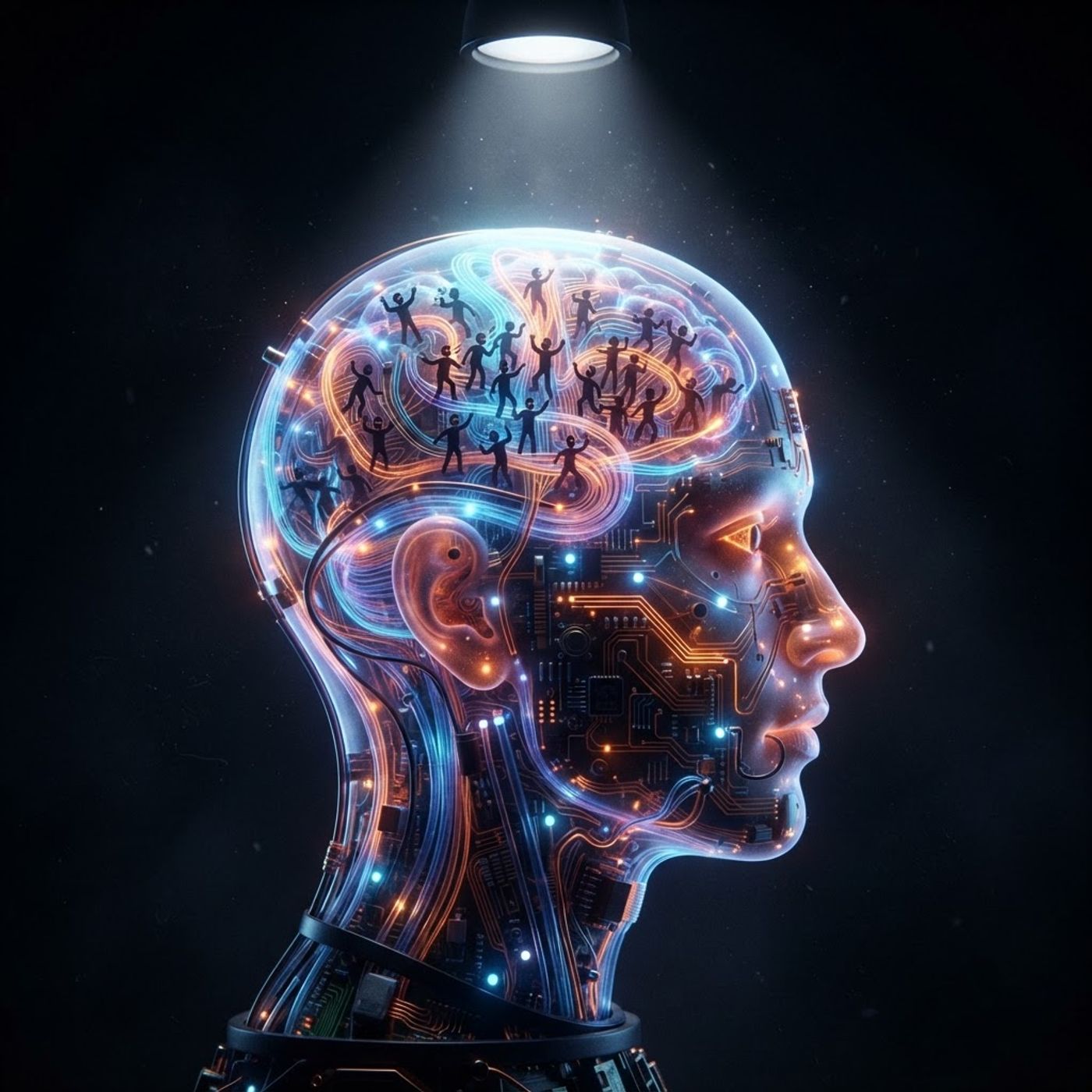
The Outrage Machine_ Why We Are Always Angry
2d ago00:02:28Tap to summarizeHave you ever logged onto your favorite social media app, only to find yourself instantly swept up in a storm of fury over a post you barely understand? It feels like the temperature of our discourse is permanently set to boil, but this isn't an accident. We are living through a phenomenon called permanent outrage, a digital landscape where algorithms treat our anger like a precious resource. When you feel a spike of moral indignation, platforms see an opportunity to keep you scrolling, clicking, and interacting, which ultimately turns your emotional response into pure advertising revenue. The problem is that these algorithms don't just show us what we like; they curate echo chambers that reinforce our existing biases, making anyone who disagrees with us feel like an alien enemy rather than a fellow human being. This is the paradox of viral outrage.Become a supporter of this podcast: https://www.spreaker.com/podcast/conspiracy-theories-exploring-the-unseen--5194379/support.
Transcribe →
The Synthetic Frontier_ Living in the Epistemic Collapse
3d ago00:02:45Tap to summarizeWe often talk about government dysfunction as if it is a tragic accident, a broken machine that nobody intended to build. But what if the paralysis isn't a bug in the system, but a feature? When the gears of government stop turning, someone is almost always waiting in the wings to benefit. Think about the ideological goal of starving the state. For those who believe that the public sector should be as small as possible, a gridlocked Congress is not a failure; it is a successful proof of concept. By stalling progress, they validate the narrative that government is inherently ineffective, creating the political space to argue that public services should be handed over to the private sector. It is a strategic feedback loop where dysfunction fuels privatization, and privatization, in turn, creates new profit centers. Then there is the economic realityBecome a supporter of this podcast: https://www.spreaker.com/podcast/conspiracy-theories-exploring-the-unseen--5194379/support.
Transcribe →
The Strategic Silence_ Who Benefits When Government Stops Working
3d ago00:02:17Tap to summarizeWe usually look at government gridlock as a broken machine, a sign of failure where politicians simply cannot get their act together. But what if the paralysis isn't a bug in the system, but a feature? What if silence and inaction are actually deliberate strategies for those who hold power? To understand this, we have to look back at the 1980s, specifically the Civiletti Opinions. Before then, government shutdowns were rare accidents, but these legal memos transformed budget disputes into existential threats, weaponizing the very act of keeping the lights on. Today, we see this evolution fully realized. When Congress freezes, it acts as a massive shield for the status quo, protecting existing tax structures and policies from being challenged. For those who want to shrink or privatize government, the strategy is simple: starve the beast. By creating dysfunction, you make the case that the system is beyond repair, creating an opening for private interests to step in where public services used to be. It is not just about stopping legislation; it is about shifting powerBecome a supporter of this podcast: https://www.spreaker.com/podcast/conspiracy-theories-exploring-the-unseen--5194379/support.
Transcribe →
The Architecture of Division
3d ago00:02:33Tap to summarizeIt is easy to look at the nightly news or scroll through social media and feel like American society is fracturing beyond repair, but what if this division isn't just a random consequence of bad moods or coincidences? The reality is that the polarization we see today is the result of specific structural and technological shifts that have been gaining momentum for decades. If we look at the data, the numbers are stark. Political polarization in the United States has surged by sixty-four percent between 1988 and 2024, but the most dramatic acceleration happened right around 2008. That year was a perfect storm, combining the global financial crisis, a historic presidential election, and the sudden, widespread adoption of smartphones. Suddenly, we were living in a landscape where algorithms prioritized outrage and our digital interactions became the primary way we understood our political opponents.Become a supporter of this podcast: https://www.spreaker.com/podcast/conspiracy-theories-exploring-the-unseen--5194379/support.
Transcribe →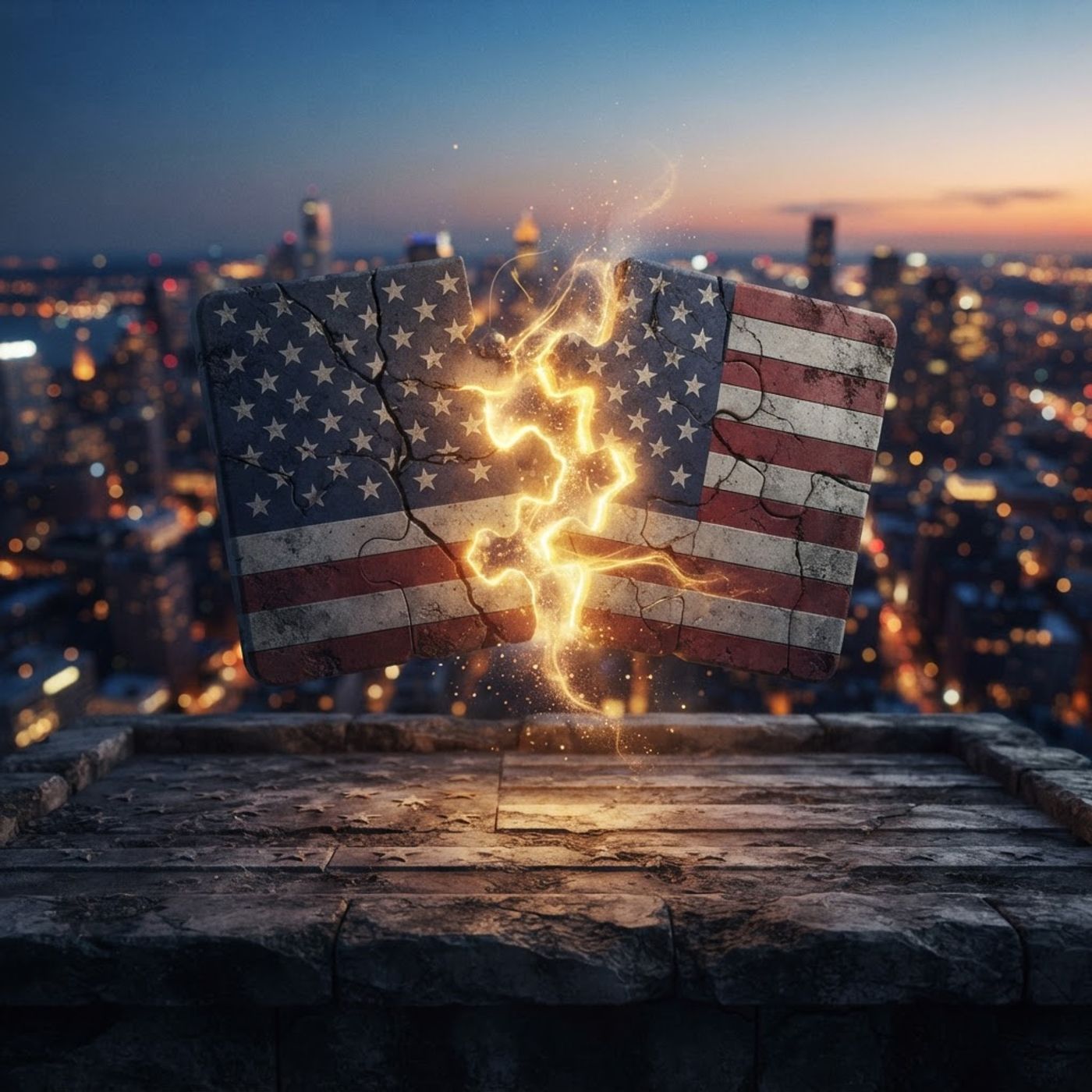
Beyond the Iron Curtain_ Navigating the New Global Rivalry
3d ago00:02:27Tap to summarizeWhen we look at the headlines, it is easy to assume that America is a nation fundamentally broken. We hear about the death of discourse and the rise of negative partisanship, where voters are defined more by who they hate than what they believe. But if you step away from the political narrative and look at the lived reality of our citizens, a different story emerges. A 2026 UMass poll revealed a stunning statistic: seventy-four percent of Americans actually believe we have more in common than what divides us. There is a quiet, persistent desire for connection beneath the shouting. Nearly ninety percent of our neighbors are searching for trust and a genuine sense of belonging. The disconnect is clear: our leaders are trapped in a cycle of polarization, while the rest of us are simply trying to navigate the complexities of modern lifeBecome a supporter of this podcast: https://www.spreaker.com/podcast/conspiracy-theories-exploring-the-unseen--5194379/support.
Transcribe →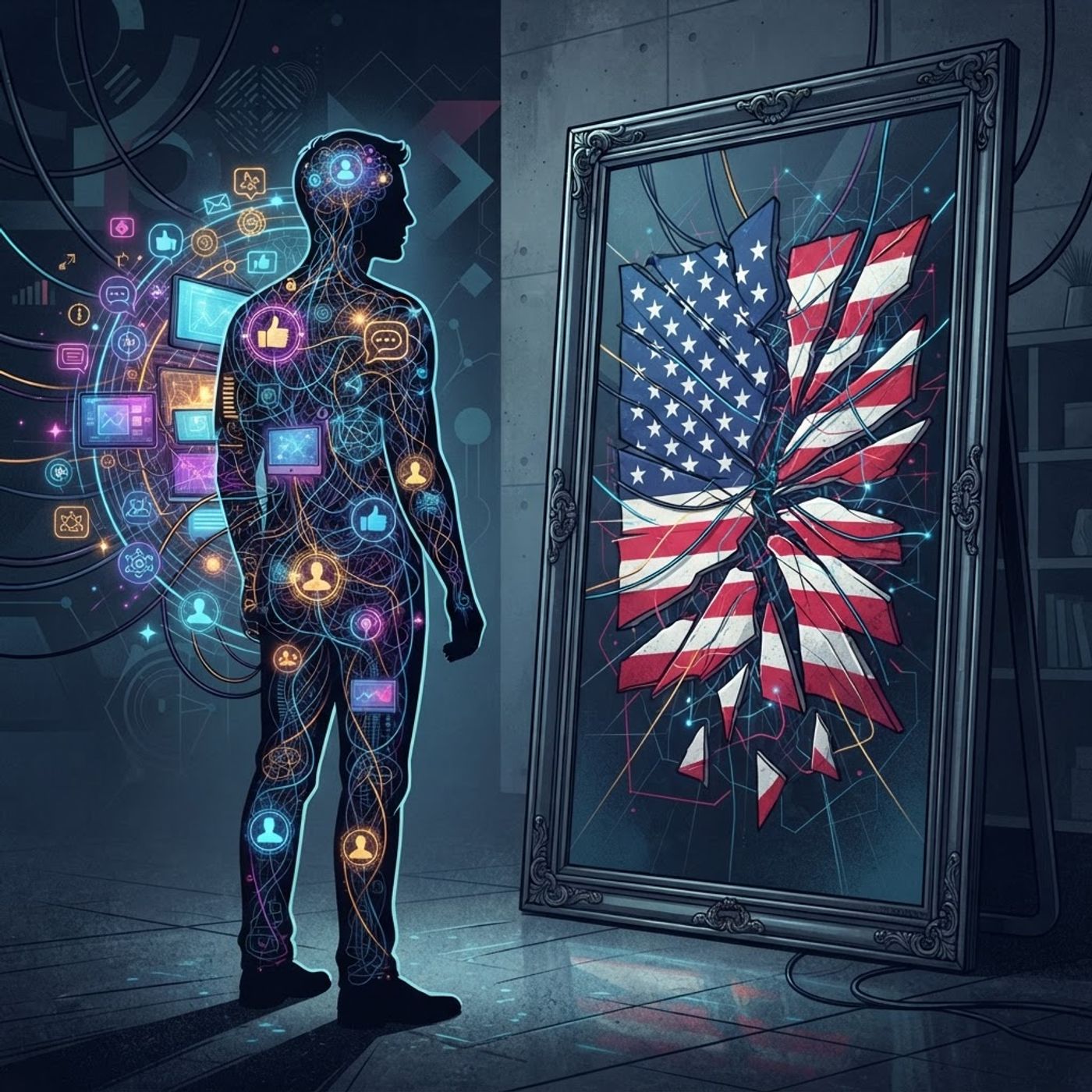
The Great Sorting_ Are We Still One Nation
3d ago00:02:27Tap to summarizeWalk into a neighborhood in America today and you might find that your neighbors share more than just the same street address; they likely share your worldview, your habits, and your politics. This is the great sorting. It is not just a trend of moving to cities or suburbs, but a deep, structural shift where we have physically and socially separated into like-minded enclaves. We are moving beyond the traditional back-and-forth of political debate into a landscape of landslide counties where one party dominates so thoroughly that competitive elections are becoming a relic of the past. When you look at where people choose to live and how they choose to consume information, you realize we are not just disagreeing on policy anymore. We are inhabiting entirely different versions of reality. Our digital lives only accelerate this, with algorithmic curation trapping us in filter bubbles that confirm what we already believe while filtering out the friction of a different perspectiveBecome a supporter of this podcast: https://www.spreaker.com/podcast/conspiracy-theories-exploring-the-unseen--5194379/support.
Transcribe →
The Broligarchy_ Architecture of Modern Power
3d ago00:02:18Tap to summarizeWe often look for power in the shadows, waiting for secret handshakes or hidden conspiracies. But the reality of modern American power is hiding in plain sight. It is not a secret society anymore; it is a visible, digital infrastructure. Welcome to the era of the broligarchy. This isn't just about money; it is about the blurring lines between the tech boardroom and the Cabinet room. When tech billionaires pivot from building social networks to managing military strategy and civil service infrastructure, the traditional map of democracy gets rewritten. Consider the 2014 study from Princeton and Northwestern. It revealed a stark, uncomfortable truth: the preferences of the elite are the primary drivers of American public policy, while the voice of the average citizen is statistically indistinguishable from zero. This isn't a glitch; it is the structural result of an administrative state that has grown too massive for voters to reach. With 278 executive departments operating as quasi-legislative bodies, we have created a system that is largely insulated from the ballot boxBecome a supporter of this podcast: https://www.spreaker.com/podcast/conspiracy-theories-exploring-the-unseen--5194379/support.
Transcribe →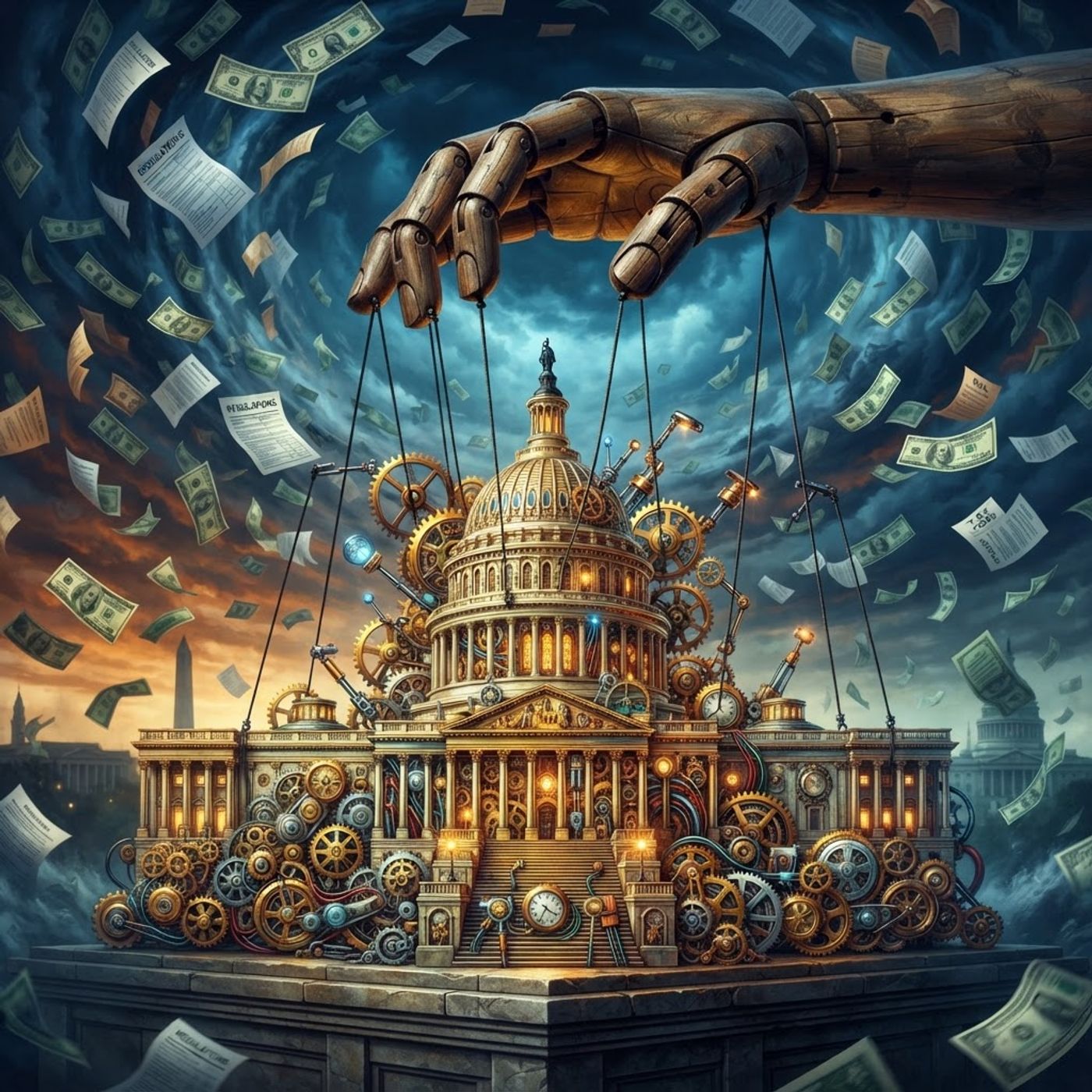
The Invisible Architecture
3d ago00:02:41Tap to summarizeWhen you cast your vote, you expect the person you chose to be the one calling the shots. But what if the real steering wheel of the country is located somewhere else entirely? We are talking about an invisible architecture of influence—a permanent state that stays in power whether your party wins or loses. It is not just about politicians anymore; it is about a shift in power from elected legislative bodies to federal agencies that never appear on a ballot. Consider the Federal Register. In the 1960s, it was about 20,000 pages of regulations. Today, that number has ballooned to over 80,000 pages annually. This is the expansion of administrative law, where unelected experts, not representatives, create the rules that govern daily life. This transition has led to what economists call regulatory capture, where the agencies meant to watch over industries end up being run by the very people they are supposed to regulate. This is often called the revolving door. Become a supporter of this podcast: https://www.spreaker.com/podcast/conspiracy-theories-exploring-the-unseen--5194379/support.
Transcribe →