Loading summary
Transcript45 lines
- [00:00]
A
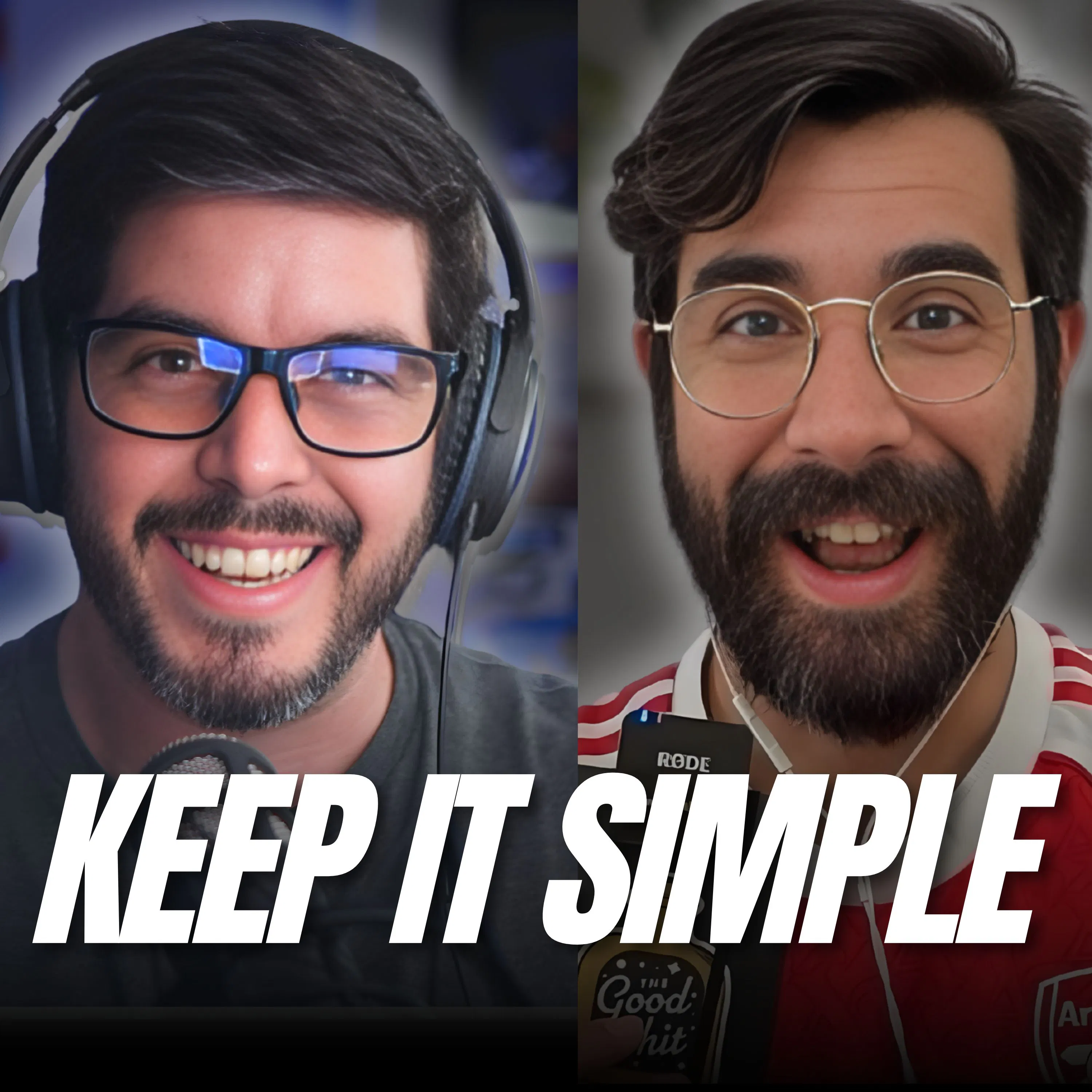
Guys, welcome back to Content is Prophet. Today we have a special treat with Fonzie joining us in our sessions. Let's go.
- [00:10]
B
Come on, let's go.
- [00:13]
A
Fonzie, how's it going man? Welcome back to the show.
- [00:16]
B
Thank you, thank you. It's been a while. I'm excited. So you had a couple things you wanted to discuss. Top priority, Top priority one. And you know, the brighter man, my here on the show.
- [00:28]
A
So absolutely that's made an appearance. That's what we bring you, man. That's it. That's the only reason my wife is
- [00:35]
B
giving me the side eye. She's like, drop the ego.
- [00:39]
A
Never, man, never. That's called confidence. That's fine. So you know, the other, the last couple weeks we've had like pretty interesting conversations in Business Creator Club for those interested. Business Creator the club is the beginning of our awesome community. We have some very dedicated people shout out to Dana on there, like the last couple he's been, you know, sharing a little bit of the things that he's been doing with AI newsletter, which is super cool. But there's several topics. We chat every Friday on our open Q and A. Right. And you know, I titled this like the Creator's Advantage five Lessons from Real Creative Roundtable. And that's really what it was. We had about five people in that roundtable. A couple of them doing incredible things in newsletters. The other ones doing live streaming. They did a 24 hour live stream event which was awesome. So we saw the before and we saw the after and then we also had a lot of discussions around not only AI, but systems and the function of content in general and what people are seeing right now in the world. So a lot of the things that we talk about here on the show, but I'm excited to kind of get into it. We're probably going to get to like four of these. Maybe three, maybe four. We'll see. Depends on the time. But yeah. Fonzie, anything like top of mind that you've seen lately in the industry in general?
- [02:03]
B
I mean, I have a lot of thoughts about content, especially now on the side of repurposing and all that stuff. But I'm sure we'll get, we'll get to those. But primarily is just having a really good understanding, understanding of who you're talking to and then going back to kind of like some principles of like understanding, you know, attention retention and like how can I present this type of content? You know, I mean there's a lot of competition, there's a lot of people out there creating content. But honestly, I don't think that necessarily it's, it's a bad thing, if you want to put it that way. I, I think it's just we just gotta look at it from the point of view of not necessarily creative innovation, but look at it from maybe asking ourselves, how can I gather interest from people that I can help? Right? How can I put myself out there that I can help people? And this can lead to more conversations. I think there's a big emphasis on how to create content without the intention. You know, just kind of like, how can I automate the whole process and just put it out there? Because people are telling me that I need to create content. But I think now more than ever, it's not just a game of volume. Like volume, yes, can be beneficial, but at the same time is, do you have the intention? Do you have the quality, do you have the resonance? Right? So that's kind of like where I'm going and seeing some of these points that you guys talked about on that roundtable. I mean, it's just interesting to see some of the conclusions in there. Obviously, as soon as I read them, I have my own bias. Kind of like, you know, hit me hard.
- [03:55]
A
That's why we brought you on and
- [03:56]
B
gather a couple of opinions. But yeah, I'm just. We'll see where this goes.
- [04:01]
A
Yeah, I love it. I think, like, on my side personally, we've seen so many case studies. Everything works. At the end of the day, you gotta find a thing that works for you. Like, every single business is different. Every single creator is different. And I think, who's the guy, the guy that hosts.
- [04:19]
B
Let me, let me interject here real quick. You said everything works. And I, I just want to make sure we clarify that for people because I agree with you. There's more than one way to add up to 10, right? You can have two plus eight, five plus five. There's many different ways you can get to a destination. The destination that we talk to here in content is profit, is how to create content that turns into profit. But that being said, I don't think is every way works, is there many ways that work? We just need to do them correctly, you know, and somebody can be under the perception of, I'm doing one of these ways, I'm not generating profit. Well, then the feedback is, you're probably not doing that way correctly, you know, and then that requires some level of reflection. And be like, okay, how can, if I am going to keep doing it on this way, how can I Improve on it and make it better. So I think there's a little distinction in there, you know, because I understand we want to encourage people obviously to like be consistent with the strategy that they decide to go with. But at the same time, it's like, you gotta remove.
- [05:30]
A
You didn't hear the second part of that statement that I said, right? Like, it's like, I know bro, but
- [05:33]
B
I just got fired up. I just got for. I. I have like 20 episodes. I haven't been here. You know, I got so much to say.
- [05:40]
A
I just said, you gotta find the right way. And here, here's the thing. I mean, this is something that happened today in Pod Match Elite. We had one of the round t, right? And one of the guys, not the roundtables, the seat of fire. What's it called? The seat of fire.
- [05:56]
B
The hot seat.
- [05:57]
A
The hot seat. And this person was showing us the entire system that they use right now to acquire the customers that they need. Right. And immediately what came to mind was, wow, this is really complex. And it's because, you know, is a very small team is mainly him doing the thing. Like he, he's like, this is the full time thing that he does. But he also spots opportunities and create solution. Kind of like our story with, you know, business and content is profit. I think we're a little bit more defined now on that direction. When we first started, you know, we found solutions and we're like, well, maybe we can help people here. Maybe we can have, you know, help somebody else here. And then like this very complex system happens. And one of the pieces of feedback that came out of that was like, okay, how do we simplify it? And then one of the questions I personally asked him was, you know, based on this system, if you have the numbers, like from content to lead magnet, from lead magnet to email, from email to like sales call, like whatever system they were using, do we have those numbers to actually see if it's working? You know, out of a thousand people that see the content, how many click the link? How many go to your email list? How many people go to the link manager, if that is the system? So there's no light that that system works. But there might be another system that is very simple that could also work and we haven't tested it out. So one of the ideas there was, okay, can under the same content framework, is there a way that you can run paid ads to the content that you're already creating into a webinar, into a call, for example? Right. Or every opt in that you have today based on your content, on your newsletter, on your blog, as soon as they opt in, can you give him a phone call, right, and be like, hey dude, I'm very curious to see like what, what he called and those were like very specific examples to what he was doing. But what I'm saying is like there's some things that are going to work. Slowly they're going to work. There's some things that if they're not working, we got to find out why they're not working. Like we have to like we got to see like what are the numbers behind the opt ins, right? Like are people actually reading the emails are actually. Why do people are not clicking the link if the link is right at the bottom of the email, people finishing reading and clicking or is the link top on their click? There's so many elements at the end of the day. One of the things that I've been challenging myself with is like how can we simplify even more at the end of the day?
- [08:21]
B
Right?
- [08:22]
A
Because if you want to scale, it has to be simple. So I think you have your cursor there in System Beat Talent. Is that by chance or is that the one that you want to talk about?
- [08:34]
B
No, I think it's just by chance.
- [08:36]
A
Okay. I think it's like segue is really good on what we were just saying. But one of the statements here that we came from Business Creator Club was Systems Beat Talent at the end of the day. And I think a lot of the people that we see not only in the community but also in the scale, they come in maybe thinking that they have a really good talent when it comes to delivering the content because they know, because they've been in the industry. But, but one thing knowing the topic and the other thing is like delivering that, that content or delivering that in a way that creates attraction or creates questions for follow up or action on social media at the end of the day. So part of the feedback on the call was well, how can we not burn out, try to find that version of it? Like how can we create in a way that's exciting, that is different, that also attracts, that creates revenue for the business and where the some of the points that we're doing there. So you know, we've had the discussion in the show where do we actually create more of what we enjoy creating but the result a little bit slower? Or do we create something that maybe we're not a big fan of but create massive results or they create really good results.
- [09:42]
B
You post, you know, once every other week the cycle with which you're gonna give feedback is gonna be way too slow for you to improve. So whether you have talent or not, the cycle is still going to be very slow. Right? And you can argue, you can study it, you can research, you can do a lot of things. And yes, those are ways you can improve. But at the end of the day, getting in front of the camera and sharing your message is probably one of the best ways to get that feedback loop right. Then. Besides, that is the whole matter of if you have systems, it probably makes it repeatable for you, makes it consistent. Um, so I wouldn't even count talent, because, sure, if you have talent, let's say you're comfortable in front of the camera, you can still be sharing the wrong message and not be getting results. So at the end of the day, it goes back to those cycles of feedback. Are you getting enough feedback to know what to work on on your content? Right. Like if nobody, if your content is reaching nobody, that means you probably have an idea and a hook problem, right? It's not a matter of how you're delivering that now. If you have a problem where people are dropping halfway through the middle, then I wouldn't look at it as, oh, I'm not talented enough. I'm not delivering the information in the most exciting way. I would look at it as, my message might not be valuable enough. I might not be delivering the message in an interesting way for the audience to have a takeaway, a clear takeaway that they can implement. Right? So personally, I think removing the whole word talent from the equation is going to be beneficial for you that are creating content. Because this is my own personal opinion, once you put the word talent in it, it feels like you're adding something that is outside of your control. Oh, I wasn't born with talent to be in front of the camera, therefore I shouldn't be creating any content. You're literally giving control to some external thing out there that you don't have power over. But if you say I have the power to improve by taking reps and looking at the feedback now, you're claiming your own improvement. You're claiming the power that things are now in your control. And that is what you where you want to be, right? You want to control the controllable at the end of the day. So removing the whole word talent of content might just be beneficial for you because it might help you frame and be in the right mindset to have improvement on your content.
- [12:31]
A
I love it. I think there's, there's hope for everybody, right? And there's people. You know, I've heard this comment many times, like, well, what about these guys that, you know, feels like they have a camera behind them all the time and thing? And, you know, the. The one that comes to mind all the time is scary, but I remember, like, we had this, like, big light bulb when we, you know, peek behind their systems where it's like, this guys have, you know, these cameras that follow them or our events, and they're always recording. But there's also a team of like seven people, you know, making him look good at the end of the day, on the back end. So systems, that's how it's scalable, right? Versus you try to do that by yourself, it's obviously going to be a little bit different. So.
- [13:06]
B
And I'm sure when it. When he said, that's the other thing is like, do not compare yourself. You know, when they journey to somebody else.
- [13:14]
A
The first videos, like, seven years ago, right?
- [13:16]
B
Like, and still, like, the level of comfort. I think the level of comfort doesn't quite indicate the talent that I'm doing air quotes in here. You know, some people might just be more confident in front of the camera than others. So you might go back and they still look confident and you're like, oh, my gosh, I'm not. I'm not like that. It's like, just stop comparing yourself completely to anybody. It doesn't matter. Like, if you're looking at other people's content, look at their content with the lens of research in terms of how are they presenting the idea. Can I borrow the format that they're using? Those are the things that you need to be looking at, not at the performance in front of the camera. You need to be looking at more of the building blocks of their content and how you can replicate that in your own content and then just focus on yourself. What we talked about, that cycle of feedback.
- [14:10]
A
Absolutely. I love it. Obviously, there's a couple more here, but I want to touch base on one that I think it connects really with Reven, because, you know, sometimes we are guilty of this. And I see a lot of people making. I don't say the. The same mistake, but, like, learning from this a lot where it's like, I remember. Do you remember when we were judges at Startup Weekend, that we were up there and then there's this guy asking us, like, what do you guys sell? And we're like, we do, you know, content production. And the guy's like, okay, sweet, sell. Sell it to me. Because the guy's like, you know, a sales guy and we're like, well, do you publish content right now? Like long form content, podcasting? We're doing, you know, multi purposeing exclusively back then. And the guy's like, no, I do not do it. I'm like, but there's nothing to sell, right? And the guy was so angry that we're like, that we're not even trying to sell it. And I think at the time, you know, we're obviously reading a lot about the topic, but it's like, who's the person that's closest to you that needs your problem solved at the end of the day? Like, I don't need to. We're, we're coming from that face of trying to convince somebody to like create long form content so then we can go sell on the service that we had. And it was so much friction and, you know, so much time spent in that. And I think a lot of people that start with content are in that spot where they're trying to communicate an idea or, or to a level where they're trying to convince people that that's what they want to do, right? Like, and the goal of this, of content is almost like this radar, right? I'm finding the signal with your messaging of the people that already need your solution, right? And it's like, how, how can we amplify distribution? Like, how can we run ads? Can we, you know, going to communities that are experiencing that problem? Can we go guest on other shows that talk about that specific topic and that way we can find the people that are closer to the, to the problem. I would love to hear your thoughts on, on this.
- [16:09]
B
I think it boils down to understanding who you're talking to and who can you help. Now what I see in here a lot is maybe people's lack of confidence or like when they're starting or maybe they haven't worked with high end clients, if you want to put it that way. They might be thinking to themselves, oh, I need to be talking to me couple months back, couple years back, or like at the beginning stages. And I mean, obviously that is gonna be a, a challenge, right? We got, we got a guest right here on the, on the show.
- [16:51]
A
I know about to like knock down my door right here.
- [16:57]
B
My. For those listening, I have my daughter next to me. She's looking at my brother and trying to give her opinion. She about to turn one. So what I was, what I was saying with this is, oh, sorry, I
- [17:11]
A
got, oh, very distracted there.
- [17:13]
B
Pause, pause, pause. She has something in her mouth.
- [17:16]
A
Okay, there we go.
- [17:19]
B
All right, we got it, we got it, we got it, we got it. Okay, so can you, can you reel me back in?
- [17:27]
A
You're good. You're talking about the content and the real problem with like messaging. Talking back to yourself like a few years back and so on.
- [17:36]
B
Yes, correct. So it's, I think just like that lack of clarity of who they can help makes you, makes you in a way default to. I'm just going to help the person that is indecisive on what they want. They don't quite know what they want. And then you try to convince them that like, hey, you need, you need this thing. Right. But at the end of the day, like, this is going to be a tough one because those are the people that don't quite necessarily have the pain, you know, and they don't know the solution. They don't know exactly what they need. The level of awareness is not the right one. And just having those conversations is going to be, it's going to be very tough. Right. It might go to, hey, why are you this expensive? Or blah, blah, blah. Just a whole bunch of objections rather than trying to find somebody that, you know, 100% you can, you can help that they know they have that problem. Right. They are problem aware. They are solution aware. They, you know, it's. I don't play golf, but here's a golf analogy. You know, it's probably way easier to do, you know, put the ball inside the hole if you're like a three feet away pot rather than a hole in one. You know, talking to people that might not even be problem aware is like trying to hit a hole in one. You're just so far away that it's just going to take you so many tries or, or, you know, even get even closer to the cell. But if you're somebody that is like right there, they're problem aware, they're solution aware. They, they have the itch. They need a solution right now to solve all their problems. Like, cool. Like that is the problem.
- [19:10]
A
Yeah.
- [19:11]
B
The person you should be talking to. And that comes down to clarity and understanding who you can help the best. Yeah, that's a good exercise. Just, just ask yourself, do I know this?
- [19:21]
A
Yeah, yeah, yeah. And, and I think, you know, as your business continues to experiment with things like that, something that you should revise and go back to it, which is that feedback loop that we talked about and we go back to the initial story that we share here on the show where it's like a lot of People think we do these wide cast of content that attracts people into the lead magnet and then the league minor into the email and then more content and then the thing and it's like, well what about. We can go directly to the decision maker and collaborate with him in the form of content. What we talk about on pipeline platform, or we serve that person, that ideal customer that, you know, that content informat ads, for example, and then we hop on a call because it's the fastest way to get feedback from, you know, what do they need, do actually need this kind of stuff and where do we find them? Where are the pools of customers? Like where are they hanging out online or in person? We often forget that in person is very important. For example, an event, you know, you, you go speak an event, you are a guest speaker, you go, you're part of the panel, you go, you show up to the event and you talk to the people at event right at the end of the day. But it's like, okay, how do we get that feedback as fast as possible so we can dial in the messaging. You know, we lived it to where like with content momentum, with our, our service that is literally a fractional content team. We're talking to the wrong people for a long time. And now we're finding these amazing companies that, you know, they need the exact solution that we need. There are a few, like there's not a lot of them, but there are a few. But there is a high ticket product that, that we sell there. And then with the studio is very much the opposite because it's very focused on podcasting. The solution is very clear. We help you, you know, come in, record and we produce a podcast. That's it, right? It's super simple. And so we've seen both sides and it's been really interesting to kind of dial it down and see find the right person for the product that, that we're selling, you know. So anyways, I know that today was a little rambly here and there, but we'll. It's like we lost practice. Fonse, you need to get back. Dude, what the hell?
- [21:27]
B
Well, I think we just got thrown off by the technical issues.
- [21:31]
A
It's okay, we got this. We're showing commitment to creation because, you know, technical issue kids around. My kids are in spring break, so they're like that. I have the studio barricaded over here. Like the whole door is like they cannot go through. But they know 5:30 is the time I go back. So it is 5:31. So no wonder they're about to knock down that door. All right, Anything, Any. Any thoughts?
- [21:58]
B
No, no, really. Just understand yourself, who you're talking to, and forget about talent.
- [22:06]
A
Let's go. All right, guys, well, if you have any questions, you know that where to find us here on social media in your favorite podcasting platform. And also go to business creator club. We're happy to hang out. We have our next call tomorrow, Friday. If you're listening to this day of lunch, Fridays at 11 Eastern. Come hang out. And, yeah, apart from that, have an incredible day.
- [22:30]
B
See you.
- [22:31]
A
Bye, guys.