← Creative Pep Talk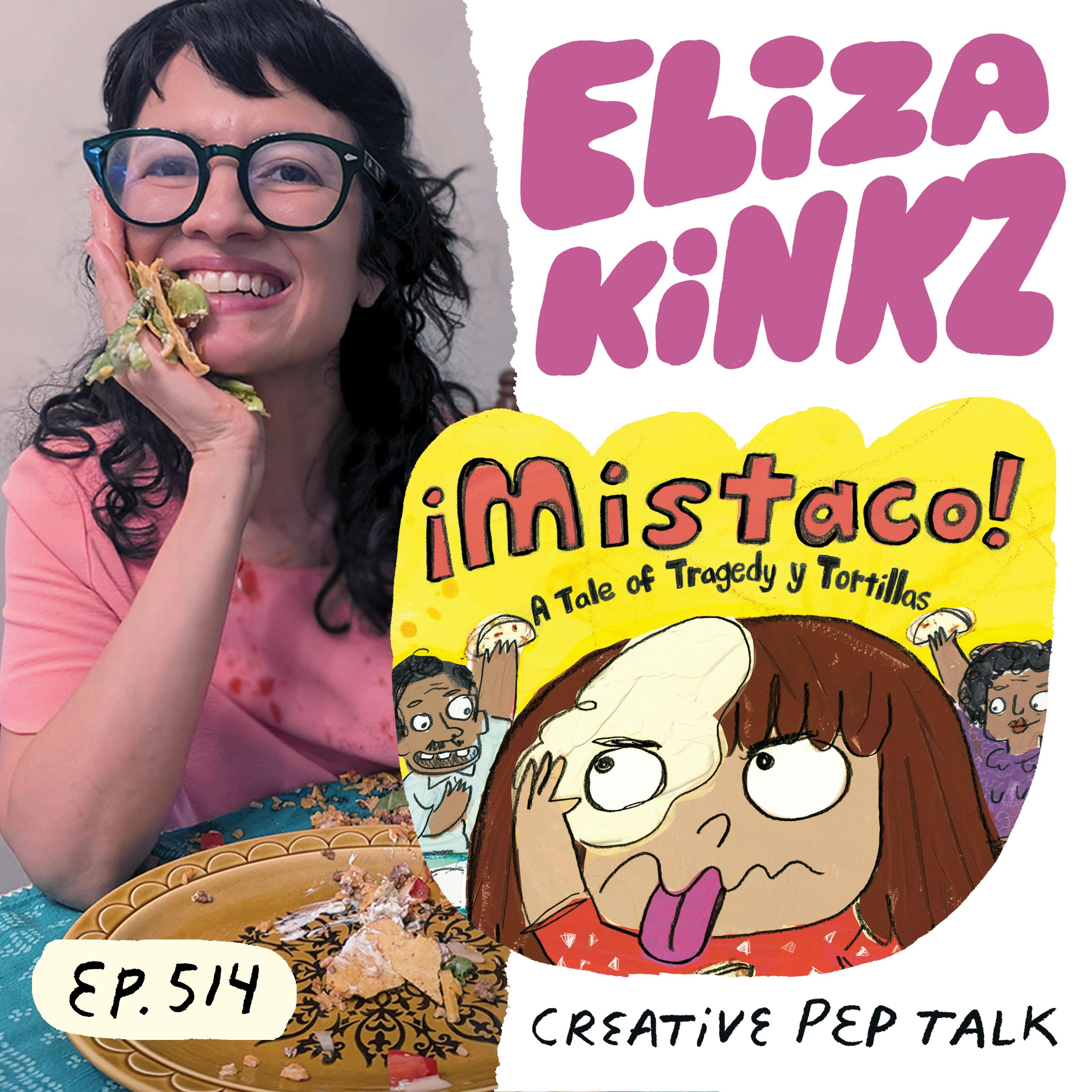
Creative Pep Talk
514 - Tap Your Mood, Connect to Your Target Audience & Fun and Flow Process Inspo with Eliza Kinkz
01:07:21
Loading summary
Transcript140 lines
- [00:03]
Eliza Kinks
On the creative journey, it's easy to.
- [00:06]
Andy J. Pizza
Get lost, but don't worry, you'll lift off. Sometimes you just need a creative pep talk. So I don't know about you, but I pursued a creative path because I thought making creative work was fun, fun. And then as I pursued that path, the, the further I pursued it, the less fun it ended up being. And I started to forget why I did this, how to have fun making stuff. So that, that has been a struggle at different times in my creative journey. And so I'm guessing you can relate. Whether you mixed money into it or social media into it, or just, just pressure from yourself, it's easy to lose the fun. And so today on the show, I'm going to chat with a picture book artist and newly picture book author Eliza Kinks is on the show. And this person is just a fun master. You know, every time I talk to her, I've run into her at different picture book events over the past few years and she just brings so much joy and fun to everything that she does. Her work is just brimming with life and humanity and fun. Her book, she's got a few different books that she's illustrated. Goldie's guide to Grandchilding, which is hilarious and fun. Papa's Magical Water jug Clock that is written by Jesus Trejo who I met, who's a stand up comedian and it's just a great dude as well. That book is hilarious and there's so much chaotic stuff happening in the illustration. And so I was pumped to have her on here because she just came out with her new book called Ms. Taco and it's right there if you're watching this on YouTube. And I was so pumped to talk to her because I wanted to know how do you have so much fun when this is your job? Because I'm always looking for ways to get more fun into my process and remember why I love doing this and why I pursued this in the first place. So there's ton. This thing's full of fun. We laugh a lot, but there's also a lot of takeaways for you, for me. And then I'll be back at the end with another takeaway. It's going to be called the permission to play CTA is your call to adventure. How to put some of this stuff to action. I'll be back for that, so stick to the end for that. But for now, here is my conversation with Eliza Kinks. Hey, do you like fun? Cuz if you do, go check out Cookie Jam, a mobile Game from Jam City. I like fun. Mobile games can be fun. Phone games, some people call them phone games can be very helpful in certain scenarios. For me, it's like airports and airplanes anywhere where I'm just like contained for a specific period of time. I need a game that's just gonna be some easy fun. It's gonna help me pass some time. Cookie Jam is that kind of game. Match cakes, cookies and candy, thousands of puzzles, free daily rewards, and of course, adorable pandas. What are you waiting for? Download Cookie Jam now. This episode is sponsored by Squarespace. I love Squarespace. I'm a long time user. One of the things I love about Squarespace is I will use. It's so easy to use that I will use it to create pitches. If I'm pitching a book or I'm pitching something to a client, I will use a Squarespace page in my website and I'll build the whole thing there. Then you don't have these clunky like document PDFs clogging up people's inboxes and it looks super slick. If you want to see one of those that I use all the time. I did one for my series right side out. Andyjpizza.com RSO and you can can see how I create a little pitch summary of that project. Go to squarespace.com pep talk get building for free and trying it out and testing it. And then when you're ready to launch, use promo code pep talk all one word for 10% off your first purchase. Thanks, Squarespace. I. I'm excited that we get to chat with your author Illustrator debut. Right?
- [05:07]
Eliza Kinks
Right. Oh, I know, right? I can't even believe it's out in the world. I'm just like. I feel like just being like this everywhere. Don't you? When you have your book out.
- [05:17]
Andy J. Pizza
Yeah, we both got it. It's very exciting.
- [05:22]
Eliza Kinks
It is. Oh my gosh.
- [05:24]
Andy J. Pizza
It's called Ms. Taco.
- [05:26]
Eliza Kinks
Yes, right? Yes, Ms. Taco.
- [05:29]
Andy J. Pizza
It's great and it's funny and it's heartwarming and gooey and I loved it. It's so good.
- [05:37]
Eliza Kinks
You know, I think I was thinking about you when I said it to you that it would be up your alley because, you know, it's like the social, emotional learning thing too, you know, that technical. But it's like, it's. And it's a really fun way to do it too, which is hard to do, right?
- [05:57]
Andy J. Pizza
Absolutely. And you know, we have this in common that we're making picture books for kids, which, you know, I like. Having that stuff in there, I like, you know, making stuff that's good for kids, but even more, you know, good on a. On a social, emotional level or things like that. But I also. Sophie and I make picture books together, my wife and I, and we're always thinking about. But would kids like it? That's the first thing. Yes.
- [06:27]
Eliza Kinks
Oh, my God. And I wish. I feel like not enough people think about that, which is shocking. Right. With children's book, you think? And I don't know if it's. People just get, you know, so turned into an adult do, you know, like, they can't connect anymore. And then thinking about the business side of publishing or just get. Gosh, I'm sure, you know, it's just like publishing, that industry. They chew you up.
- [07:01]
Andy J. Pizza
It's, you know, it's an old industry.
- [07:03]
Eliza Kinks
Yeah.
- [07:04]
Andy J. Pizza
And it's There. There's a lot of competition and, you know, there's some incredible people doing amazing things there. But I think it's a tricky situation, too. I think, you know, we don't need to go super deep into this. But I thought that, you know, the two things that come to mind for me, I heard someone say this is kind of a bad comparison because it's kind of degrading to kids.
- [07:23]
Eliza Kinks
But.
- [07:24]
Andy J. Pizza
But they said it's kind of like. I can't remember who said this. It might have been on the podcast, but they said it's kind of like dog food where the dogs aren't the one buying it. So this is the problem that you get is that the parents and teachers and therapists and librarians, they're the people buying it. So often the books get made for them instead of the kids. And, you know, that that becomes pretty tricky. And I also think that it's a thing of. There's a really good bit in this book, 4000 Weeks, by Oliver Berkman, and he talks about how we think, a lot of us think about what makes a good childhood is what turns a kid into a good adult rather than a great childhood for childhood's sake of, like, what makes a childhood great based on what it feels like to experience childhood. Does that make sense?
- [08:13]
Eliza Kinks
No. It makes so much sense because just the minute kids come out, we're like, grow up.
- [08:20]
Andy J. Pizza
Yes. Is this going to help you bring value to stockholders one day? Like, that's worth thinking about.
- [08:28]
Eliza Kinks
Yeah. And I mean, it's just ridiculous, like how just the minute we start making marks on paper even, it's like, well, can you write your name now? You know, so we can Go ahead and put that on a worksheet so you can go ahead and start writing and start learning, you know, when really writing, when we're first starting off is just drawing.
- [08:52]
Andy J. Pizza
Yeah.
- [08:53]
Eliza Kinks
And. And it should be. Embrace that. You know, like, it's like we forget that we disconnect from that just because of the outside pressure of the world, because we're, like, told, you know, like, stop playing. Get to work from a young age. You know, and it's even in schools, it's like, recess is less and less and less when it should actually be more and more and more. Like, as we grow older, you know, we should still have recess. Like. Like, how often does it reset you when you're doing art? Just to. You know, even though we love. We're very fortunate and to be in these. Our careers where we have studio spaces, but it's still. It's just going outside and. And like, just touching some flowers or just looking at something you see random on the ground. You're like, where did that come from?
- [09:55]
Andy J. Pizza
Yeah, and I bet, you know, I'm. I. That's what I love about you and your books is that I just. I have to believe that kids are crazy about them because even down to your author photos are hilarious. The one in this book, you look kind of like, what is it? Is it Hannibal Lecter or something?
- [10:14]
Eliza Kinks
Oh, my God. I know. I was like, I love it so much because of that. Even more like, hello, Clarice, can you.
- [10:22]
Andy J. Pizza
Tell people what your author photo is in this book? I'll show it for the people that are watching on YouTube. But.
- [10:28]
Eliza Kinks
Oh, my gosh. It's so like, one of my illustrator friends was like, that is completely terrifying. It's. But it. So it's what you did as a kid with a tortilla. You know, it's like, you would. You, like, got the tortilla and you immediately like, I can play with this item. And so you would bite, like, holes in it. And then all of a sudden, you have this mass that you hold out and you're, like, sticking your tongue out of it. But then you're, like, slowly eating it too, as you're doing it. And it's just. And it's amazing because it actually is a food item that you. It's like, I guess depending on the parent, but I think most parents are like, okay, because your kid is eating it. So you're like, well, play with it. It's not causing a.
- [11:12]
Andy J. Pizza
Do a mask first. Okay.
- [11:16]
Eliza Kinks
Yeah, you're eating it. You're like, okay. And it's not making a mess. And you're like. And it's fun. Like, I actually, at my story times, I've been bringing tortillas and then encouraging kids to do it. And it's just amazing, like, just seeing the little, like, how they bite into it just to create everything. So good.
- [11:36]
Andy J. Pizza
Oh, and it's funny. They're, like, doing creative things, even in the way that they're eating, which is awesome. And I want to talk a little bit about how, you know, looking at you do your press and your author photos and the way you approach your work. There's just so much fun in every bit of it. I want to get to that in a little bit. But first I just want to say, like, this. This book being your first one that you wrote and illustrated, it's really huge because from what I have gathered, you've been pretty obsessed with picture books all the way back into where you were really little. Right. And I heard you tell a funny story about stations as. I don't know if it was first grade or something like that. Can you tell people about that?
- [12:23]
Eliza Kinks
Oh, yeah. So when I was in kindergarten, they usually teachers to control the classroom, they'll have, like, little stations. So, like, it'll be like a little kitchen PlayStation over here, there'll be a station where you do worksheets over here, like you work on a letter, there'll be a station over here. And. And so they had that one day, and then one of the stations was picture books. And so the idea is they had five stations. So by the end of the week, you would have five different activities you completed. And so the first day I was at the picture book station, and I was just like, I love this. I love it so much. And I remember that, like, I still have that feeling when I make picture books, actually. It just like. It's just like. It was just like my heart burst out of my body. And I was just like, this is what I want to do. And so the next day they were like, go to the next station. And I just was like, I'm just gonna pretend nothing's happening and I'm gonna stay at the station. And so by the end of the week, people had one picture book each, you know, and then other activities. And then me, I had, like, 10 picture books.
- [13:32]
Andy J. Pizza
They're like, wait a second, what's going on?
- [13:35]
Eliza Kinks
We've been scammed.
- [13:36]
Andy J. Pizza
You've been doing the same station every day this week.
- [13:39]
Eliza Kinks
Yeah, I know. And I remember my teacher not being happy about it. And then, you know, you. Yeah. And I feel. I felt. I still feel that guilt of, like, being, like, being like. But it was like, if I was that teacher, which I would be a horrible teacher because I would, like, be like, let's just climb trees all day. What? Standardized testing? Forget that. But actually, it sounds like I'd be amazing teacher. Yeah, but I just. Yeah, I just. But it's still like. I just know I had to do that. And I mean, I went different routes. Like, I went into animation from, like, when I went to college, but it was still that storytelling, you know, it's like wanting to tell stories. And the humor. The humor's always been there since I was.
- [14:31]
Andy J. Pizza
This is your fourth book, right?
- [14:33]
Eliza Kinks
Yes. So this is my fourth book. And this is. But this is the first one that I've written and illustrated.
- [14:39]
Andy J. Pizza
Do you get. Do you still feel this, like, thing, like you're getting away with something. You're going to do your, like, end of life review in the afterlife, and you're going to be there and you're like, so what'd you do? Here's my 10 picture books I made. You know, is this the right thing to be doing? I feel like that sometimes. Like, okay, I'm having a blast over here making this stuff, but I wanted to ask you about that. So you loved picture books, clearly love making them. Why did you go then into animation in school?
- [15:10]
Eliza Kinks
You know, I just couldn't picture. I think at the time I was more into adult, like, themes.
- [15:19]
Andy J. Pizza
Right.
- [15:20]
Eliza Kinks
Because of being a teenager and being. And just like there was a lot of that, like. Like a more adult animation, like Spike. And I think it was like Spike and Mike animation show was big. And then I would go to animation. I went to south by Southwest, their animation festival in college. And because I. I was in Austin for a little bit before I went up, I went to school in Columbus, Ohio. Columbus College of Art, Design for Animation.
- [15:47]
Andy J. Pizza
I taught there a little bit. I taught over there. So, yeah, it's funny.
- [15:51]
Eliza Kinks
Oh, my gosh. Yeah, the. But yeah, so it just. At the time I had, like, really adult themes in my animations. Like, like, I did this Matrix animation with, like, tampons. Like, I don't know, Like, I had all sorts wild things going on in my animations for a while. And I had this series, like, Guys I don't Want to Date With. Like, it's just like guys who sniff bike seats. Like, it's just like these crazy animations. And so definitely not kid focus. I got that out of my system. And then I think when I had Kids that. It was like I was thrown back into it. And I was like, oh, my gosh, this is so much easier. And I had so, you know, like, all of us that are getting a picture books, we have so many stories. Like, I mean, people see these few books, but it's like, they don't see, like, the big pile of ideas, like, underneath these books. And so I was like, this is what I want to do, picture books. And just. I've always had a repertoire with kids. Like, I love talking to kids. That's never changed my entire life.
- [17:04]
Andy J. Pizza
Yeah.
- [17:04]
Eliza Kinks
Like, they're my favorite audience.
- [17:06]
Andy J. Pizza
You got pretty. Like, you went to school for animation and then you worked in animation too, right?
- [17:11]
Eliza Kinks
Yep.
- [17:12]
Andy J. Pizza
Okay. And so you got pretty far in there. And then. What was it? A what about picture books appealed more than the animation work?
- [17:23]
Eliza Kinks
Well, I think it's because I just wanted to tell my own stories and. To really tell your own stories, like. Like, because I tried to pitch some shows to Nickelodeon and I'm actually grateful they didn't go through because it ends up not being your story, you know? And, I mean, you do have to compromise a lot with picture books when you're the author, but it's nowhere near. It's nowhere near as much. And then it's just like, I didn't. And you know what? It is also, I didn't feel the love for animation that I do picture books. Like, I just felt immediately at home in the picture book community versus the animation community. I never felt at home. And then even there, I remember thinking to myself, why can't animation look more like the picture book illustration I'm seeing? And I still think that a lot too. Like, it's just, like. It's just so beautiful, the illustrations that you see coming out of the picture book world, and you're just like, how can this. And, I mean, I think they're on their way because there is some really awesome stuff coming out all the time, but it's just never quite right.
- [18:36]
Andy J. Pizza
It's not. Yeah, there's, like, in picture books, it's a lot more stylized, I feel like.
- [18:41]
Eliza Kinks
Yeah.
- [18:42]
Andy J. Pizza
Than a lot of the animation stuff and a lot of the animation thing. Maybe it's because it's such a. So expensive. There's maybe. And there's so many people involved that it ends up getting watered down to try to appeal to a mass audience. And maybe there's a fear of stylization that's gonna throw people off. I don't know.
- [19:03]
Eliza Kinks
That makes sense with management. Right? Yeah.
- [19:08]
Andy J. Pizza
Well, I wondered Also, if what attracted you out of animation into picture books was the process. Because every time I've ever seen you start talking about process, you really light up.
- [19:22]
Eliza Kinks
Oh yeah. Just like, gosh, I just always love the beginning process of it. I mean, like all of us do. Like, I mean that's what will make us take on a project, right? Like this insane. Like it's like the torture. It's like we're just all about jumping in again. Do you know, for these projects, it's like we get so in love with. It's like love at first sight with these ideas for us. And so, and I think that's the thing. It's just like I want to do a lot more ideas. I want them to be finished quicker. Yeah, like animation is long, long process. Especially with you're doing independent animation too. And even if you're working with a few people, it's still so long. And also I really, I just love having my hands on everything. Right. It's like you're having your. You're sort of like at the beginning process, you're writing it, you're like figuring out how this world looks and it's just. And you know, the thing that I think is the real struggle for a lot of illustrators because it's like our audience is play based, they're play focused. Like they want us to play. Like they, you know, any kid, any kid you go up to is immediately ready for you to play with them. Like 100%, like more like 5 billion percent. And it's really hard because you want to keep that play in your books. But it's so hard to do right, because you get involved with these projects and you'll be looking at everything so long that it's like becomes work. And so it's very tricky. It's, it's. Picture books are so tricky with that to get that play still in them because you, when you have that play in it, kids know it. They know it.
- [21:20]
Andy J. Pizza
Yeah, so I completely agree with that. And actually, you know, this is what I was. I was kind of suspicious about this, where the work feeling alive and playful, I know is important to you and I know that you know the speed at which you can make animation and how cumbersome the process is just in terms of length and. Yeah. How alive you can stay in the process seemed like it was hard for you. And then you found this process in making picture books, which is pretty unique. I don't know if you feel that way, but when I've seen how you go about Creating picture books. I think it's pretty unusual, but it's very focused on keeping it playful, keeping it alive. Right. Could you talk a little bit about how you like, from start to finish, how you go about making picture books and you can speak to. I really loved hearing you talk about how even when you get the manuscript for a book that you didn't write, how you'd instantly start drawing in there. So if maybe you could go from there to like just how you complete a book. Because I think that I. You're totally right that I don't think it's just picture books. I think it's every project that you're going to try to create a finished piece of work. Everybody knows that capturing what's in the sketch in the book, like, everyone knows that's so hard. Trying to capture what's on the demo tape into the song that you put out is. It's really delicate art. And I think that you're a kind of obsession with process. Seems like it's all about figuring out how to carry that. Like, you know, I'm thinking like a, you know, egg and spoon race kind of thing. There's like a weird thing, like a delicate balance. But yeah, maybe you could start with the manuscript and just talk through how you approach it.
- [23:26]
Eliza Kinks
It is so true. It's such a delicate balance. Like. Like I feel like I'm constantly doing this dance and I'm like holding like a stack of plates and on top of the stack of plates is like folding cards and it's just like. And then on top of that is like a flamingo or something. Like, it's just like. It's just like the wildest.
- [23:50]
Andy J. Pizza
I also love flamingos.
- [23:51]
Eliza Kinks
I have to say, I do love flamingo. Are flamingos amazing? I mean, look, I have a flamingo, like right. Right here in the background. That was like my. One of my kids favorite toys. I keep stealing it back and he keeps stealing.
- [24:03]
Andy J. Pizza
I didn't mean to cut you off. No, no.
- [24:06]
Eliza Kinks
I'm the one that brought up flamingos. Either if I'm doing the story or it's like always drawings and images and words are always playing together. And so if I get a manuscript, like if. Even if I'm the one that wrote it and I'll print it out, it's like I draw over like you would in the margins of your textbook as a kid. You know, like you just get so bored. Just like. Like, I can't stand this anymore. Just like draw little things or just draw doodles or whatever. And so I just, like, look at the words, and it's like, what is this image? Or what is this word triggering? Like, what kind of image am I. Am I seeing from the sentence? And so I'll just go through and just draw everything. And some images, you know, don't make it past that draft, but some images ended up being carried throughout the book and make it to the very final. And so from there, I'll take those images, and I just try to be very rough, Very rough. I'm always, like. When I talk to students about this, I'm always like, do not be precious. At this stage, you can never be precious. Like, I mean, and it's like, take a. Take a note from kids. Kids aren't like, precious with paper. They're like, do, like, one little drawing on the side, throw that paper away, and then go to the next one. And it's just like, you can't be precious, especially at the beginning. You just have to, like, just marks of what's sort of going on. You know what's going on. As long as you know what's going on, like, that's all you need to worry about. And then once I have that figured out with the words, I will usually send it off to. To either. If it was, like, my idea of a story, I would probably still keep it to myself for a little bit, because I would be working on it some. But if I'm working with a publisher, then I'll usually send it off to my art director with the words, and I'll be like, is this working for you? And it's just like. And always. It's always. Even if you worked with them, they're like, is it gonna. It's gonna look more detailed? Like, no matter what. Like, if you've done a completely finished book and you're like. You're like, yes, of course. Of course. This is not anything final. Of course. And so from there, you get it back. And then, like, they may have some notes, and then that's when you, like, start moving stuff around and figuring stuff like, okay, the words are gonna go here, this is gonna go here. And. But still at that process, like, you really should not be worried about backgrounds. You're just worried about big shapes. And it's still, like, a delicate act because you want to have fun. You want the story to flow. Like, you want the kids to be excited to turn the page. Like, it's just, like, it's already. So it's such a delicate act. And then also, you're trying to pay attention to the story structure, too. Like, it's like this house structure. You don't want to mess up the house. You don't want the house to fall down halfway through the book. So it's like a lot of balancing right there. And then look at me. I'm moving. Like, I'm moving. And then. So from there, it's like, you know, I usually send that away to. That would be a point where I would send something to my agent. Like, if I was feeling like, this is good. This is a good structure, but it's still movable. Everything's still movable. You don't want it to be unmovable until you get to the final art. Like, everything should still be. You shouldn't be holding on to anything, like, really passionately, you know, like, of course, we all. We all can't help it. We all have our passion moments, but it's like you have to try to give it up at that point for the service of the story, because you want that whole story to flow well. And so from there, you got the story flowing well. Your art director's happy. Then you start going into the final drawings. And that's, I think, the tightest process for me, because I'm trying to figure out, well, are there knickknacks over here in the background? And it's like, I might have to move this over here if I want that. And so I'll get the drawings how I like it, and then I'll send those off to approval, and if those are approved, then I'll go to final art. And then this is where things get wild for me, because I want to go back to play, because I just. I just tightened up as much as I will agreeably tighten up, which is probably not anywhere as much as most people. But so I. Tight. So I want to play now. And so what I'll do is, with these final drawings, I'll put a piece of paper over that drawing that's very detailed, and then I'll just. Oh. And then I'll just. Oh, I should add before this. What I'll do is I'll do a color sequence. So I'll figure out the color sequence for the entire book. Because I want to make sure stuff is repeating. Stuff is like, the colors I want for each section, you know, because there's sometimes different emotions on each section.
- [29:25]
Andy J. Pizza
Yeah.
- [29:25]
Eliza Kinks
Or different feelings going on, but you still want it all to work together. And so I'll do a general color sequence for the whole book, but it's small because I don't Want to be too precious with it. Like, because I want to let other colors come out. If they want to. If they want to come out to play, they can come out to play. I don't want them to feel intimidated by my color sequence. So from there, I have my finished drawing. I put a piece of watercolor paper on it, and then I add color. Like, I don't draw the drawing exactly. I add some colors. Like, I'm like. And I don't. I'm not precious, too. Like, sometimes will be matte pencil, sometimes it'll be pastel, Sometimes it'll be, like, a little bit of watercolor. You know, I'll just mark where stuff is.
- [30:13]
Andy J. Pizza
Yeah.
- [30:14]
Eliza Kinks
And then from there, I do that with every picture book image in the whole picture book. So I have those papers ready to go, and then.
- [30:26]
Andy J. Pizza
And they're just papers where you've put color on it.
- [30:30]
Eliza Kinks
Yeah. It's not like, anything final. And it's. It's like. And if somebody looked at it, they'd be like, what is this? You know, it's like, this is, like, very abstract new work from you, Eliza. Like, if anybody came in my studio, like, it wouldn't look like anything. And so I lay those all out next to one another. And then this is where it gets really fun, is I paint the entire picture book all at once over the course of, like, usually it's a month about.
- [30:57]
Andy J. Pizza
Yeah.
- [30:57]
Eliza Kinks
Is. I'll lay it all out. And so there's a certain.
- [31:01]
Andy J. Pizza
Lay it out. Can I just.
- [31:03]
Eliza Kinks
Oh, yeah, please do. Yeah, please do.
- [31:05]
Andy J. Pizza
So you'll paint it all at once, where you have your tables set up in, like, a U shape. Yeah, it's like a U, big U shape. Imagine. And they've got all of the spreads out individually, and they're all being painted kind of at the same time. Like, you're moving around painting this over a month, you said, right?
- [31:24]
Eliza Kinks
Yeah.
- [31:26]
Andy J. Pizza
It's awesome. It's really cool.
- [31:29]
Eliza Kinks
Oh, my gosh.
- [31:30]
Andy J. Pizza
And why do you do that?
- [31:33]
Eliza Kinks
I think it's. Well, I know. I know it's to keep the life. Like, because you get. If I'm just focused on one painting, I would start getting precise with it. But if I'm laying out a bunch of green on a bunch, then I'll just go through, and I'm more, like, free with my paint strokes, which I'm already super free with my paint strokes. But it's like, I get, like, even more because I'm like, oh, let's paint over here. Let's paint over here. Oh, you Know, this color would actually look good right here. Maybe I'll put a little right here. You know, it's not as like.
- [32:03]
Andy J. Pizza
And then you also, I've heard you like, then you're going to add it to other spreads to make sure the colors are working through. That makes tons of sense. You know the thing that. So I love all of that. It's really fascinating. The thing that I'm really curious about is there's kind of two things happening as you move through that process. One is you're like the steward of something. I think you call it the life. But I think it. I don't know if that's the only thing it is, but you're like protecting this really delicate thing that's really important to you all the way through the process. And you kind of have a intuitive sense of like what you need to do to make sure that it's there. And it's a bunch of different things. You know, you called it the life. You talk about it like play whatever it is. Like there's, it's. You're mentioning it when you're saying not being precious and all these different things that you're doing this in the process to keep this thing safe and alive. That's one part of it. And the other part of it is all of these. You, you actually like go into character several times throughout of these voices of like, is it going to be more detailed? And also like, what are you doing with that? And, and it's funny, like, you know, the final product. I've heard people engage with it. And by the way, if people don't know these are award winning books, you go look at them, they're hilarious. I think they're undeniably great. But I think also people don't really know how this comes together or why does it work or whatever it is. So as you're moving through that process, you're doing that thing where you're like, your job is to take care of this thing. Even though you have these voices that are clearly, you're aware of them. I don't know if they're in your head, but there's voices from the outside that are like, what are you doing? Why are you doing it that way? What's happening? I don't know if you could speak to what do you think you're protecting? And then how do you get yourself to give yourself permission to do that when there's all these other people maybe questioning you? I even think I'll add one other piece to this where looking at the books that you've done for other people. One of the things I love about what you're doing is you're writing with pictures, which is, like the. I think, the ideal for illustration, where you're adding a bunch of stuff to the story that isn't in the text. That's really adding a lot of chaos and funny and all this stuff. And I'm just thinking, where do you get this confidence in permission when, you know there's so many people in the process are like, what are you doing? What are you protecting? And how do you. How did you find that, like, confidence to. To do that?
- [34:55]
Eliza Kinks
I think it's just like, I love. I just love this so much. All these questions. You just. It's like, what are the voices in your head telling you, Eliza, right now? What are they telling you they hear right now? Of course they are. They're all around me. Yeah. I just love. This is so good, you know, and then I love, like, somebody publishing what said? Like, nobody could get away with this except Eliza Kinks could get away with this.
- [35:35]
Andy J. Pizza
Like, yeah.
- [35:36]
Eliza Kinks
And that's what I feel like. I feel like I'm just so playful that at every level of publishing, I'm just like, let's play. What are we doing?
- [35:47]
Andy J. Pizza
Like, why are we running around in animation, though?
- [35:50]
Eliza Kinks
No, I don't think so. And I think it's the kids. Like, I'm around kids a lot nowadays with, like, I'll go do school visits and I talk to kids, and then I have kids, too, you know, and, like, I. And I spent many years being around them, too. Like, a lot of, like, I took some time off and just was, like, playing with my kids. And I mean, I probably would have liked to play a little less with my kids, but the cost of child care, like, made that not possible. And so. But I still, like, I was playing with them all the time and just going places and stuff like that. And I think I just get so excited about making these books that I'm like, let's throw this in. Let's throw this in. Let's put this in. Like, let's put this in. And I think it's probably a lot of the cases I overwhelmed them with so much stuff that they're like. They're like, okay, I think this is working, I guess.
- [36:47]
Andy J. Pizza
So much out there that they don't. That they bring it back a tad because they're like, ok, well, that. But then you still got away with tons because you throw so much at them.
- [36:56]
Eliza Kinks
Yeah. I think that is the case. It's like, it's like when you just come into the house with like this big box of thing and I just like toss it in the air and then like, I run out.
- [37:07]
Andy J. Pizza
I heard in your first book, the Goldie book. Oh yeah, Goldies. What is it? Guide for grandchilding. Is that what it is? And I heard that it seems like a similar thing where you put so many fart jokes into it that they were like, the. The only thing they could say is like, maybe a little less in there.
- [37:27]
Eliza Kinks
I do. Oh my God, I have so many in there. I can't believe they let me get away with it. Oh my gosh. They let me get away with so much with that book. I like showed that book at one school and one of the girls was like, I think this book is inappropriate. And I was like, my job here is.
- [37:49]
Andy J. Pizza
Yeah, that's the job of the artist. Design is everywhere in our lives. Perhaps most importantly in the places where we just stopped noticing. 99% Invisible is a weekly exploration of the process and power of design and architecture. Host Roman Mars asks questions like, why do we use the bleep sound to cover up inappropriate words on radio and tv? What's with mall culture? And how did the mall become a ubiquitous part of of American life? And why are houseplants having a moment right now? 99% invisible will answer all of that and more every Tuesday. Follow and listen to 99% invisible wherever you get your podcasts.
- [39:05]
Eliza Kinks
Summer's here and Nordstrom has everything you need for your best dress season ever. From beach days and weddings to weekend getaways in your everyday wardrobe. Discover stylish options under $100 from tons of your favorite brands like Mango Skims, Princess Polly and Madewell. It's easy too, with free shipping and free returns in store order, pickup and more. Shop today in stores online@nordstrom.com or download the Nordstrom app.
- [39:35]
Andy J. Pizza
There's something I feel like I'm missing. So it seems like having kids reconnected you with a part of yourself, this play aspect. But do you feel like that journey into animation, that journey into being a serious teenager slash young adult making weird grown up stuff. Do you what do you feel like you took from that and brought into this? Because I'm really fascinated by a lot of people's journeys have these like, not necessarily false start because like they're pretty obviously related but like this tangent at the beginning and then when they go into the thing where they're really hitting their stride, they're bringing something different and So I wonder if there's anything from that animation phase that you think that you are bringing into the process that is. I don't know. Do you feel like there's any element of that that you brought?
- [40:34]
Eliza Kinks
Oh, yeah, it's the humor. The humor for everything. That's the huge thread through all my work. And then just. It's like, humor that, like, goes even more off the wall. Like, it's like. It's like you just don't know where it's going. Like, it's like that humor where you're, like, starting to laugh and then you're starting to get uncomfortable again, and then you're starting to laugh again. Like, and then. So I'm always after that kind of laughs from kids. Like, I just want to. And. And it's like, you know, back to the social emotional thing. Like, gosh, what is more a relief and a release than laughter? Like, especially the laughter that, like, comes out. And. And it's like you laughing so hard you start to cry.
- [41:21]
Andy J. Pizza
Yeah.
- [41:22]
Eliza Kinks
And. And it's like. Is there. And then that euphoria you feel afterwards from doing it, like, where. Especially. It's like sometimes you can't even breathe. You're just laughing so hard, and it's like. I think that's the biggest service we could actually do as picture book creators is laughing. Like, it's just, like. Just for these kids. Because it's, like, such a safe way to be emotional in school, you know, Like. Cause there are a lot of the times it's like, they have you. They have big emotions, which, oh, my gosh, I love. Like, wouldn't you love to just, like. Like, see they're out of something at the grocery store and, like, lay down in the aisle and be like, why? Why? Where is my favorite pickles? Why? And then just have the grocery store manager come over and be like, there, there. The pickles are here. The pickles are here for you. And you're like, no, it's too late. That's still. I'm so emotional now, just, like, letting it all out. Oh. And it's just like. And it's not. It's not safe a lot of the time, you know, for. For us to have those big emotions. But, oh, my gosh, laughter, ugh, just releases it all.
- [42:46]
Andy J. Pizza
That's really interesting. I hadn't even thought a ton about laughing as kind of connected to emotion, but it is a huge emotion, and it is a huge emotion that is kind of socially. Socially acceptable to. To engage in. But then, you know, I've heard stand up comedians talk about how it also is a real disarmer and it's where you can. And that's kind of the interesting thing about if you end up getting too heavy handed with your message or coming in too strong with teaching in a book, then you're not going to disarm, you're not going to get engagement. And so I do think, yeah, I think it makes tons of sense. And do you think. I think in entertainment, animation's more in that entertainment world, it's more removed from education than books are. And so there is a real focus on humor and entertainment for entertainment's sake. And so are you saying you kind of, you feel like you pulled some of that ethos into making picture books?
- [43:52]
Eliza Kinks
Yeah, I think there's something about that. Like it's like sometimes like picture books can be a little like it's like they're either too sweet, right. Or then sometimes they're too high brow. And it's like I feel like it's nice for them to be, especially for kids, for them to be like, it's like a tightrope I'm walking. It's like I want them to be appealing on a broad level. So you do have to give a little bit of that really detailed illustrations. I feel like I'm always after though. Like my high standard is the laughter. And I don't feel like you can laugh anywhere near as much at a really beautiful detailed illustration as you can as like a kid's drawing of their grandma, you know, like it's just like, it'll just be like this face with some sticks on the side, you know, and it's just like that's my Granada. And it's like. And it just like. And you just like you try not to laugh because it's just so good and so funny and there's just. And so it's, it's a very hard thing because I do have a great appreciation for those books and love of those books. But it's. And I don't want to sound like I don't hold them in the greatest esteem because I do. But I think for me my goal is to make the kids like laugh really hard and make them happy and then just bring up their common jokes that we all relate to, which is like poop, you know, like it's just like you just say poop in a classroom and the kids are like.
- [45:46]
Andy J. Pizza
It's also just a crazy power to go in there as the outsider. There's no, you know, you don't have Any responsibility of like chilling them out afterwards. And you can go in there and be hilarious.
- [45:56]
Eliza Kinks
Oh my God. I'm always warning the librarians. I'm like, I'm sorry. Sorry. After I leave, please try to have me at the end of the day because I just rile everybody up. Like I go in there and it's like pretty chill. And then all of a sudden, like afterwards everybody's like.
- [46:14]
Andy J. Pizza
That'S hilarious. I think to me, the thing that is kind of the takeaway for that is there's real power in knowing who you're making stuff for. And I've thought a lot about this recently. This idea of the, the artists artists trap or the comedians comedian trap or the musicians musician. And I think that there maybe for some people actually that is their target and that is really what they want to do. They want to make their music for the top musicians and they want to be that. And I, you know, I think about things like, I'm a really big fan of this. I can never remember what's the. I can never remember the name of this publisher. It's something Lion.
- [47:08]
Eliza Kinks
I know the one you're. Enchanted Lion.
- [47:11]
Andy J. Pizza
Enchanted Lion. I think it is. Yeah. But they did this amazing thing where they've made this imprint, imprint and I've. I backed it on Kickstarter and it's picture books for adults. I think it's really amazing because they've actually created these books. Some of them are like really gorgeous. Some of them are tackling more grown up themes. And I think it's really incredible because I'm a huge fan of books like that.
- [47:37]
Eliza Kinks
Yeah.
- [47:38]
Andy J. Pizza
And I, and I love those things. But there are, there's a difference. And there is a striking a balance of those things too. But there's also a difference between that and then something where this is made for. I even go further than that. When I'm making the books. I'm thinking of a particular type of kid. And there were. Sometimes when I do school visits, I'll meet that kid that, this book. I made this for like weird kids. And like the, you know, a lot kids seem to like the books. But then there'll be one kid that's like, you don't understand. This book is weird. Like I, I like that. And so I think there's something about, you know, you're. I guess I'm trying to get at like that seems like part of what you're protecting away from those voices you're protecting like. No, I'm protecting this book for. To, for it to be what it needs to be for who it's for. And does that feel right to you?
- [48:42]
Eliza Kinks
Yeah, I think it's. I protective of giving kids books that they would love, you know, like, I know like, because I recently had a librarian tell me like a kid saw my book and they like got it and they were just like holding it and shoot and they looking at it like. And then they were like, this book was made for kids.
- [49:08]
Andy J. Pizza
Yeah.
- [49:08]
Eliza Kinks
And they said that. And I was like. And I was like, that's true. That's exactly right. And then she was like, she's like, yeah. And I was thinking of it after and a lot of the picture books art don't seem to be made for kids.
- [49:21]
Andy J. Pizza
Right.
- [49:24]
Eliza Kinks
But yours are. And I felt like that was one of the highest compliments I've gotten recently from a like librarian. I was like, especially from a librarian too, because they know it like they're saying books day in, day out. What comes in, what comes out. And, and that's exactly what I want to hear from kids that they. Because I did make it for them. I didn't make it for my publisher, I didn't make it for my peers. I made it for a six year old that wants a book that they want to look at again and again and they want to laugh a lot.
- [49:59]
Andy J. Pizza
I think, you know, it makes me think like it's really easy to fall into that trap of making work for your peers. I think it's important to have FaceTime with the people that you're trying to make stuff for so you can remember why it is you're doing this, just like you do with kids. But any artist could could say that because it's easy to fall into the circles of your market or industry or whatever and then start valuing what they say is important. And that can be a big distraction.
- [50:33]
Eliza Kinks
Yeah, I mean that's one of the things I've always encouraged younger illustrate children's book. You know, illustrators. People wanting to get into is like, are you around kids ever? And I was like. And then some of them are like, no, I'm not around kids or I don't have kids. And I'm like, well, try to figure out a way that you can be around kids. Because there's the really easiest way is you can volunteer very easily. An elementary school in your city. And they have like I mentor at an elementary school nearby and it's only like a half hour my week. But then I get so many stories in the case of 30 minutes. Like the other day I was there and These girls were taking the trash out for their teacher. And as they were dragging it down the hall, they were leaving this long, slimy yogurt. It was like all yoplay. I don't know if that bag was entire yoplaits, discarded packages, but it was like yo play all the way. Like. Like I was just watching them. Like, I almost. I was like. And then I was like, should I say something? And then I didn't want to say anything because I didn't want to get them in trouble. And then I thought about grabbing a mop because I saw a mop down the hallway. I was like, maybe I should just start slowly following. But it's just like, I just was there for half hour and I got that amazing image and story that I could use somewhere in a picture book. You know, it's.
- [52:01]
Andy J. Pizza
I love that idea. Yeah. I think instantly when we're talking about this, in theory of like, you need to get around the people that you're making stuff for, it can sound nice in theory. It can sound like, oh, yeah, sure, do that. And that's such a real practical example of how to go do that thing. I think it's pretty. I think. I think other people should take that. If you don't have kids, if you're not doing that. But even if you do, you know, your kids grow up. I think staying in touch with that is really important. That's super cool. And I think you could apply it to other things too. It doesn't have to just be that. But I. And actually, even after all the stuff we've been through since 2020, I've been so active in trying to say yes to being around people, especially the kind of people that I want to make stuff for, want to participate in those sorts of groups. Because you're. That sensitivity atrophies so quickly if you're not. And it's the same thing of, like, it's so hard for me to come up with something funny or a good story to tell on stage when I'm in my room alone. But when I'm on stage, all of a sudden there's a bunch of stuff that's just coming to me because there's something that happens when you're in front of those people.
- [53:15]
Eliza Kinks
No, for sure. I. I love, like. And I never thought I would with being with picture books. You know, all of us, I think, assume we're just going to be in our studios working quietly, and then the books will go in the world and sell themselves. It'll be so magical. Like that's all we have to do. But, no, it's like, I feel like so much of the job is now getting in front of people and really talking to kids and talking to audience, talking to groups of librarians. And I do agree. It's like. And I love that part now. And I never expected that. I was. For a little bit. When I realized that was part of the job, I was like, do I want to do this? But now it's one of my favorite parts, is the song and dance, man.
- [53:56]
Andy J. Pizza
I have two other quick questions for you.
- [53:58]
Eliza Kinks
Yeah.
- [53:58]
Andy J. Pizza
The other thing that you seem to be protecting through all of that process is having fun. And that's a thing that I'm very aware of in my own process. Even the last picture book that I just finished up, when I went into the sketches, actually, the whole process, I was, like, aware of how to make it fun, how to not think a ton. And when I'm drawing, like, just whatever I was trying to draw, I just tried to draw it without thinking and. And try to move through it quickly and enjoy the whole process. Because I know that looseness is where you get funny things and whatever. Because you seem so in touch with silliness and fun. You do all these different things that seem. It just seems like it's really natural. How do you. Do you think you. Do you have any tips about what may help people access that? Because for me, my problem is this is my job. So I get. It's almost every day. I mean, I'm so lucky to do this, but almost every day, I have to remind myself that I'm lucky and that this is what I wanted to do.
- [55:04]
Eliza Kinks
Oh, everybody. This industry.
- [55:09]
Andy J. Pizza
I'm sure. But what do you think helps you do that?
- [55:14]
Eliza Kinks
Gosh, you know, I think it is paying attention to my moods as an artist, like, because sometimes I don't want to do drawing and stuff like that. I mean, there's, of course, times you're, like, under deadline. You gotta do it. But if I don't, if I'm not under a really immediate deadline, I pay attention to that feeling, and I'm like, well, what do you want to do? And I, like, talk to myself like that. And then myself will be like, I just want to go play Stardew Valley. Like, I just want to go read a comic book on my couch. Like, I want to go. I feel like I'm a kid, like, in a trench coat, you know? Like, I'm not. I don't think I'm an adult. I don't think I've ever grown up, honestly, like, all like. Like one time my kid was having a fit on the floor or, like on a trail or something, and then he was just, like, laying there, and I was like, you know, that looks pretty nice. And I lay down next to him, and I was just like. And you just start observing stuff, like, really get down. Like, whenever I talk to kids, I always get down on their level.
- [56:15]
Andy J. Pizza
Yeah.
- [56:15]
Eliza Kinks
Because I don't want them looking up to me. I want to be looking up to them.
- [56:18]
Andy J. Pizza
Yeah.
- [56:19]
Eliza Kinks
And it's so. I think it's just. Just being. Just being open to laughing. Like, just like thinking of something silly and, like, get away from the screen, you know, like, just be drawing something weird in your sketchbook. Like, draw like a dinosaur in a bikini. Or, like, just draw like. Like a bear, like smooching a penguin. You know, it's just like, all just sort of ridiculous stuff that you would draw as a kid. But it's like. Like, write some fan fiction. Like, Ninja Turtle fan fiction. Being like, me and the Ninja Turtles were fighting one day.
- [56:55]
Andy J. Pizza
Why are all these ideas just coming to you? They're right there.
- [57:05]
Eliza Kinks
I think that's just me. I'm just like, my head's just open to the universe.
- [57:09]
Andy J. Pizza
It's like, I love it. It's so good. And I, you know, I think that's great advice. This is something that I learned from a buddy of mine who I do a show with called Color Me Andrew Nair. When we would go work, even. Even when there's a deadline, he would start. He still does this. And it's always a good reminder to me. He'll start with, like, we'll get there to go draw this mural. And it'd be like, cool, you want to go get a coffee? And I'm like, yeah, okay. Like, I think we're supposed to be doing the work. And I'm just this, like, anxiousness. But what ends up happening. Even when I wasn't doing this full time, if I had two hours or three hours on a Saturday, it would. It would work to start with kind of like in therapy, like a dropping in to what are you feeling any. Because you might be. Go get a coffee for 20 minutes and then come back. And now you're like, okay, I'm loose. I'm like, you know, I'm in it. And the same goes for. I want to. I don't really feel like that. I feel like just reading a comic for 20 minutes or whatever. There's some. And it reminds me of. Also I've seen, like, Research about how you get better ideas when you're happy. And so I wonder if that's it, too, of just trying to, like, regulate a little bit before you get in.
- [58:27]
Eliza Kinks
Yeah, I think you're exactly right. It's just letting yourself. Like it is. It's letting yourself play. Right. It's like, no, you have to be the adult. Do this thing right now, because it's this person expecting it. But if you just let yourself play, it's like, you know, for schools, like, kids that go to recess do so much better with sitting in the classroom afterwards to do an assignment. And it's like, I think we have to remember that as adults, we need to play, too, as well. We can't. It's not like we're meant to be working these, like, 10 hours that we tell ourselves we have available to do art, you know, it's. We need to be taking care of ourselves and realizing that rest time is just as important to the art.
- [59:07]
Andy J. Pizza
I like that. You know, play is this thing of you. You know, you can't play because you have to. So I like this. I like.
- [59:14]
Eliza Kinks
That's not.
- [59:14]
Andy J. Pizza
That's a. That's like, the opposite energy. So I like this hacking your brain to get. Because you want to get in that play state while you're working. And so starting with, like, what feels like play just for a little bit.
- [59:26]
Eliza Kinks
Yeah.
- [59:27]
Andy J. Pizza
And then just. Just slide into the work. I think I have been trying to do that a lot more, and I'm kind of been. I've kind of been blown away by. Because I. But I've gotten to a habit over the past few years of really white knuckling. Like, I have got to be. I got to finish this because I have too much stuff to do. And I've kind of been blown away by how much more productive I am if I allow myself just a little bit of freedom at the start.
- [59:51]
Eliza Kinks
It's so true. Oh, my gosh. Just that freedom at the start and not making yourself just drag yourself into it. Like, actually just being like, well, I really don't want to do this. Well, what do you want to do? And it's like, I've. And then your workflow. So much better afterwards. You get so much more done. It's crazy.
- [60:09]
Andy J. Pizza
It's. It's crazy. All right. I could talk to you for a lot longer. I'm very excited about your book, Ms. Taco. It's very funny. It's. There it is. You got it right here. Very funny. Very heartwarming. And I think it's really great. Everybody should go get it. Where can people find you?
- [60:30]
Eliza Kinks
They can find me@eliza kings.com. or you can find me also on Substack. Just look for Eliza Cakes. Just hold some cheese in the air or something.
- [60:41]
Andy J. Pizza
Well, thanks for doing this. It was tons, tons of fun.
- [60:44]
Eliza Kinks
It was. Thank you so much for having me.
- [61:04]
Andy J. Pizza
All right, I'm back with your cta, your call to adventure. We like to leave you with something you can do. Not just feel inspired, but, like, let's take some action first. I got to say thank you to Eliza Kings for coming on here and spending some time with me. Had a blast chatting with you. Hope to see you soon. Best wishes for the book launch and what have you. Ms. Taco is out. Go get it now. It's hilarious. Your kids will love it. You'll love it. It's. It's just great. And it's got a great, heartwarming message as well about mistakes. Ms. Tacos, we just did an episode not long ago about perfectionism, and I think this pairs very well with that. But my cta, I'm back. Permission to play. Here's what I want you to do. Next time you go to create something, I want you to spend the first 20 minutes doing whatever sounds fun before you start making the art. And so if it's, you know, drinking a Kool Aid, if it's just going outside and getting some rays, getting in the hammock, if it's throwing a ball with your dog, if it's eating beef jerky, whatever it is, if your spouse sees you, your kid sees you and they're like, what the heck are you doing? You're supposed to be working. I want you to say, I got permission to play. I got a prescription from Dr. Pizza himself to say, the first 20 minutes of the creative session today is going to be whatever I want it to be. Whatever sounds good. And I think that's great for, like, slipping in the play, into the work, But I also think it's great just for being present. And I think that's really important in the creative work. Like, how can you. How can you, like we said in the episode, drop in to where you are and get connected with, what am I feeling? I do this also, in a way, when I go do a talk. I try to save the first three to five minutes of the talk when I get on stage just to talk about whatever it is I'm feeling right that moment. And it's a hack for being present. So I'm acknowledging where I am, what I'm feeling how I'm feeling about the talk, how I'm feeling about the audience, like something I want to connect to, something that is real about what I'm feeling right now. And there's something about that that makes me so much more present. So you can do that in your creative practice. You can say, what feels, what do I feel like I need for just 20 minutes and see if it helps you not just be more productive once you get into the work, but also more playful and more creative once you start getting in there. Because it's. I've been doing this really consistently and it's kind of changed. It's really helped me, too, with just stress, chronic stress. Just having a little bit more lightness to the work and it doesn't have to take forever. It doesn't have to throw off your whole creative session. I know the time is precious. I'm not talking about spending a whole day goofing around. Although that's good sometimes, too. Anyway, thanks, Eliza, for being on the show. Thank you to Sophie Miller. I did a whistle like I was gopher from Winnie the Pooh or that gopher from lady and the Tramp. Sophie. I couldn't. I couldn't do it again. If I tried, which I was trying, but I can't do it again. Sophie Miller, my wife, she helps me so much with this show as an editor and producer. Super huge thanks to Connor Jones of Pending Beautiful for the audio and video edits and sound design and animations. Thanks to Yoni Wolf of the band Y for our theme music and our soundtrack. And thanks to all of you for showing up and listening. Great to have you. Hope you enjoyed it. Hope you felt inspired. Hope you got something to take action on. Until we speak again, stay pepped up.
- [65:09]
C
I'm Courtney Act. Many of you may know me from RuPaul's Drag Race, celebrity Big Brother, Dancing with the Stars, or probably my hit album, Kaleidoscope.
- [65:20]
Eliza Kinks
Well, guess what?
- [65:21]
C
I have got a brand new show called R and R with Courtney act and I want you to check it out. You know I hate small talk. I want to go deep and I.
- [65:30]
Andy J. Pizza
Want to go quickly.
- [65:30]
C
And on my show, we do just that. In today's world, it feels really polarised and we're more connected than ever, but really we can feel isolated and I don't like that. I want the story shared here on R and R to make us realize that our similarities are greater than our differences. So join me and my fabulous guests like Nicole Byer, Tom Daley, Margaret Katia, Adore Delano, Jackie Beat, and many more. If you're looking for some rest and relaxation, you've come to the wrong place because we are peeling back the layers of superficiality and we're getting down to the real stuff. Follow R and R with Courtney act on Apple Podcasts, Spotify, YouTube, or wherever you're listening now.
- [66:10]
D
Hi, this is Zibby Owens, host of Totally Booked with Zibby. Formerly Moms don't have Time to Read Books. In my daily show, I interview today's latest best selling, buzziest or underrated authors and story creators whose work I think is worth your time. As a bookstore owner, publisher, author and obviously podcaster, I get a comprehensive look at everything that's coming out and spend my time curating the best books so you don't have to stay in the know. Get insider insights and connect with guests like Grammy Award winning singer Alicia Keys, critically acclaimed author Judy Blume, and Academy Award winning screenwriter John Irving every single day. With Totally Booked, you aren't just listening, you're part of the story, so don't miss out. Follow Totally Booked with Zibby on Apple Podcasts, Spotify, or wherever you're listening now.