← Creative Pep Talk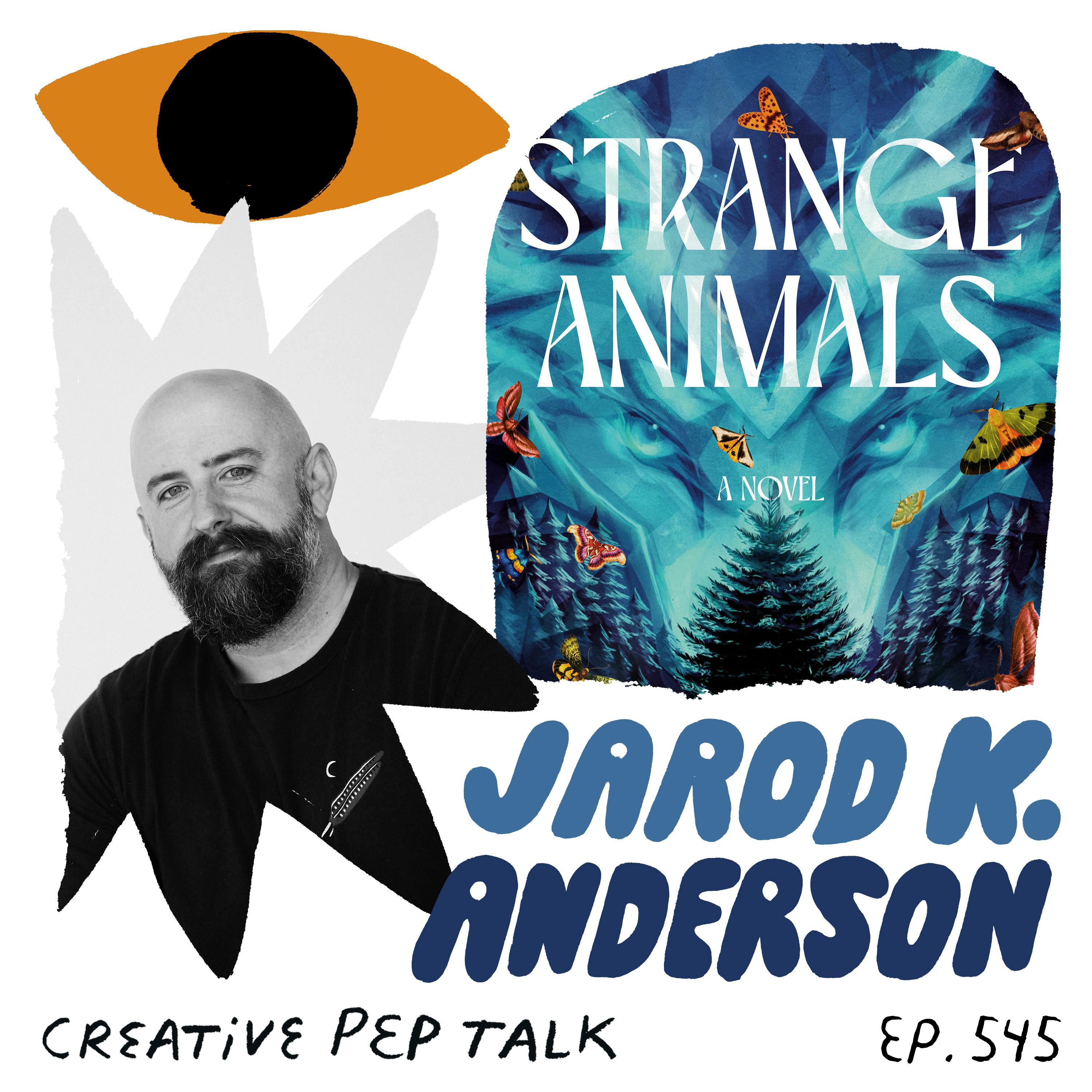
Creative Pep Talk
545 - Make Your Life & Creative Work More Rich with Meaning with Jarod K. Anderson
01:12:14
Loading summary
Transcript316 lines
- [00:01]
A
I don't know about you, but for me, I'm waking up into a chaotic world most days, both in my house, just like dogs, whining, kids screaming, all that kind of stuff. But also the news, what have you. It can be very difficult, a difficult ask to get up and just put some pants on, let alone make any creative work. Draw something, film something, write something. It is asking a lot in the face of what you're facing and what I'm facing today. But this episode is hopefully a reminder to help you feel fresh, that creativity can be a salve and a solve for that feeling. This conversation in today's episode made me feel in a new way, in a fresh way, as a reminder of how meaningful life can feel when you create work that feels meaningful to you. Today's episode is with Jared K. Anderson, AKA the Crypto Naturalist, on Instagram. No, not cryptocurrency or anything like that, but cryptid. Nature, Mysterious nature. And he writes poetry there. He has a new book out. It's a novel called Strange Animals. I frickin loved it. It is juicy, it's philosophical, but it's also just fun. Sucks you in right away. And it's mysterious and just so good. I loved it. We're gonna talk about that project today as a way of talking through how Jared, as a neurodivergent person who struggles with major depression, has used his creativity, that creative lens, to create and see meaning in life and find a life that is rich with meaning through art and nature. And if you stick around to the end, I'm going to share with you a creative call to adventure. We're calling it. We're calling it See the Pattern. And it's a way to use your creative eye to start sensing and digging into the meaning that life can offer you. But for now, I hope this conversation makes you feel as excited to create meaning and create meaningful work as. As it did for me. Jared is just an inspiring guy and this was a fantastical chat. A fantastical chat. It was fantastical and fantastic. All right, here he is. Jared K. Anderson on the creative journey.
- [02:38]
B
It's easy to get lost, but don't worry, you'll lift off.
- [02:44]
A
Sometimes you just need a creative Pepsi. For me, a home cooked meal is very hard to beat. Fresh food, real ingredients. Nothing is better than that. HelloFresh makes home cooking easy, delicious and fun night after night. Look, my family has freaking loved our hellofresh meals. It was amazing for my 17 year old because it's been this easy entry point to cooking real recipes. Which is just so cool to see before she starts going off to college. We are a family that loves food, but the portions have been great and we've had leftovers after every meal. It's inspired us to try things we've never made and my youngest daughter can't stop talking about the coconut rice that we had with the rainbow trout. You can pick from lots of high protein meals. Feel great about the wholesome ingredients like sustainably sourced seafood and 100% antibiotic and hormone free chicken and even get seasonal produce that keeps things fresh and interesting. Go to hellofresh.com pep talk10fm to get 10 free meals plus a free zwilling knife. A $144.99 value on your third box offer valid while supplies last. Free meals applied as discount on first box. New subscribers only varies by plan there's no one that's had a bigger impact on my productivity than writer Cal Newport, but he has a lot of books. So where should you start? I now have an answer for this question because a new class rebuild you'd focus and reclaim your time on Masterclass. This class is an accessible way into his philosophy and gives you a breakdown of his approach to time blocking, which changed my schedule forever. My wife often teases me about these big chunks of my time that are just labeled deep work. That's Cal Newport. Another class I'm super interested in exploring next is Dopamine. Take youe brain back by Dr. Anna Lemke. Being ADHD, I have been looking for the right resource about dopamine to dive into and this class looks like just the ticket. With plans starting at $10 a month billed annually, you get unlimited access to 200 plus classes taught by the world's best business leaders, writers, chefs, and more. Maybe my favorite thing about Masterclass is audio mode. Turn your commute or workout into a classroom with audio mode, you can listen to Masterclass lessons anytime, anywhere. There's no risk. Every new membership comes with a 30 day money back guarantee. Right now our listeners get an additional 15% off any annual membership of Masterclass@masterclass.com Pep Talk. That's 15% off@masterclass.com Pep Talk first thing I have to say I have three things that I have to say about the book real quick before we get into it. I love the book. I absolutely love the book. The second thing is fiction can be a little bit difficult for me if it's not my flavor. Sure, yeah, I read a lot of nonfiction. I read a few fiction books every year. If it's not working. I have a hard time. And your book, I flew through your book.
- [06:00]
B
Oh, nice. Cool.
- [06:01]
A
And that is pretty rare for me. It has to be right in my kind of taste.
- [06:05]
B
Yeah. Thank you. Me too. I have finally, finally graduated past making myself finish a book because I started it, so. Yeah.
- [06:16]
A
But I was, you know, I didn't know exactly what to expect, actually. And then I just was like, oh, man, this is, this is absolutely my jam. Loved it. And not no spoilers, but I definitely. You got me at the end. The pacing is right. I was welling up.
- [06:33]
B
Thanks.
- [06:33]
A
I just. As a creator, those are the kind of things that I feel like are too vulnerable to most people for people to say. And I just wanted to start by being like, dude, I loved it. You had me the whole time. I was feeling it. The pacing was great. I loved it.
- [06:50]
B
Oh, I, I, I appreciate it because, you know, I made myself cry writing it, but you never know if that translates.
- [06:56]
A
But that's all you have, really. Right. That's your taste. And I, I was going to ask you about that, so maybe we'll get to that in a little bit. First off, like, a lot of what we're going to talk about is kind of around the creation of this book. Yeah. But it's creativity in general, creative practice, all that kind of thing. But maybe you could briefly give a synopsis of what this book is.
- [07:19]
B
Yeah, I usually start with the premise when I try to do a synopsis.
- [07:23]
A
Right.
- [07:24]
B
So, like, there's a guy who gets hit by a bus and essentially dies, and his death is undone by a giant crow who trades him an acorn, and then it gets weirder from there, is what I like to say. Yeah, that's how we start weird. Yeah.
- [07:42]
A
And it gets weirder from there. Very true.
- [07:43]
B
Yeah. Yeah. So, you know, it's hard to go back to your kind of everyday life after a thing like that happens. And that feeling of unease with what reality is dovetails for this character, with a sense that he has a disconnection from nature that suddenly feels like a pebble in his shoe and that he wants to return, but he's not exactly sure what that means, which takes him out into the Catskill Mountains, where he starts seeing sorts of nature that other people don't.
- [08:16]
A
Cryptids.
- [08:18]
B
Cryptids.
- [08:19]
A
Yeah. I don't think that's a spoiler to say. No, I think that's pretty much in the premise.
- [08:24]
B
It's baked in.
- [08:25]
A
Yeah, I think that's, that's a good, A good description. Now, my way into Knowing about you and knowing your work comes more from like a nonfiction Y side. And my first question was, I know you have background in this, but this feels a little bit different from what maybe people on the Internet really know you for. Is that true?
- [08:47]
B
Yeah. Yeah, somewhat.
- [08:48]
A
Okay.
- [08:49]
B
So, you know, if we want the wheelhouse, definitely.
- [08:53]
A
But. But I didn't fully ex. I didn't really know what to expect, and then I was surprised.
- [08:59]
B
I'll tell you a thing that haunts me on a career level.
- [09:02]
A
Yeah.
- [09:03]
B
I used to work in. In marketing, and I'm often haunted by the thought that I have a confusing brand.
- [09:14]
A
Yeah. I think a lot of creative people can relate to that, for sure.
- [09:18]
B
Yeah. And sometimes, you know, I get itchy even thinking about brand and, you know, the baggage with that and capitalism and all that.
- [09:25]
A
Yeah.
- [09:26]
B
But, you know, a lot of people know me for the weird fiction podcast.
- [09:32]
A
Right.
- [09:32]
B
I started when I was working in marketing because I needed an outlet that was just weird and just for me. And then I really got a following. Publishing poetry online.
- [09:44]
A
Yeah.
- [09:44]
B
And then selling poetry collections. And then there are a lot of people who met me through the memoir about depression and connecting with nature.
- [09:54]
A
Yeah.
- [09:56]
B
And so. Yeah. Then when I come out with a fantasy novel, a handful of people are like, oh, neat. Yeah, this makes sense. And then, you know, there have been some people that were like, who got a hold of an early copy and sort of said, you know, I read this because I really loved your. Your memoir and the gentleness, and this was a little too scary for me.
- [10:14]
A
Yeah.
- [10:15]
B
It's like, yeah, fair.
- [10:17]
A
That's funny. I. I didn't think of it as being scary, but I feel that I was thinking either you would say, yeah, it felt like a stretch, or it felt like more of a return. It sounds like a little bit more of a return.
- [10:29]
B
Yeah. So that's. That's what I'm getting to with the weird brand feeling is that it's all very much me. It's just that, you know, I'm an. I'm an. I'm an attention deficit kid. And
- [10:42]
A
you're multifaceted. Yeah.
- [10:44]
B
And not just a project, but a genre gets stale for me after a while.
- [10:49]
A
Totally.
- [10:50]
B
So, you know, I. I'm writing full time these days, and so I've had quite a few, like, philosophical conversations with. With my partner Leslie, about what I want to do and what it would look like to do exactly what I want to do. And it's like, okay, well, one year I write a nonfiction book, and then the next year I write a Novel. And I'm constantly writing poetry, and, you know, it's just kind of all over.
- [11:13]
A
Right.
- [11:14]
B
But when I've. When I've expressed anxiety to, like, my agent or. Or an editor, they tend to say, like, well, like, the brand is you.
- [11:22]
A
Yeah.
- [11:23]
B
And like, your voice and your interest.
- [11:24]
A
Yeah.
- [11:25]
B
So.
- [11:26]
A
And it's in. Yeah, it's in the. Your general interest. There's a lot of ways where it's right on. But I just thought, knowing you from a little bit more nonfiction, memoir, poetry, I didn't real. I kind of expected this to be more realistic. Really. That's kind of what. But I was happy it wasn't, though, because that's my taste. I was totally into that. Knowing this is a little bit of a return to the kind of fictional stuff that you were doing. What do you feel like the journey through doing a memoir and poetry gave you that you didn't have when you were maybe writing fiction before all of that?
- [12:03]
B
So a thing I felt like, really clicked for me as a creative person in my early 30s. We'll say I'm in my mid-40s now.
- [12:16]
A
Yeah.
- [12:17]
B
Was a real appreciation for the power and necessity of sincerity in my work and honesty. So, you know, like, I was always like the kid that was like, oh, you should be a writer. You know, we love your writing. But. But I had some of that gifted program kid baggage where, like, I wanted to write to impress.
- [12:43]
A
Yeah.
- [12:44]
B
And then I went off and got a master's in literature and was sort of deep in academia, writing and mindset. And then I really wanted to write to impress.
- [12:53]
A
Right.
- [12:55]
B
And you know, that. That was stale for me. It wasn't really connecting with an audience when I was trying to do that kind of poetry. Sort of the more academic style of poetry. And the effort wasn't paying me back in the way that I knew it could from when I was more playful as a kid.
- [13:18]
A
Yeah.
- [13:20]
B
So, you know, doing my sort of weird Cryptid podcast when I was also a director of marketing.
- [13:29]
A
Yeah.
- [13:30]
B
Was like, okay, enough. Like, I gotta get back to my roots. Like, I like nature. I also like monsters and fantasy. So trying to take, I don't know, prestige or ego off the table a little bit.
- [13:47]
A
Yeah.
- [13:48]
B
Was really how I started to connect with creativity again. And poetry was my first genre. You know, I won a statewide poetry contest when I was 10, you know.
- [14:03]
A
Yeah.
- [14:04]
B
And sometimes I joke about masculinity because I had to miss football practice to go to a poetry, you know, reading.
- [14:11]
A
Yeah. Were you cool with that? Was that a conversation in your Head or were you just like, that's just me.
- [14:16]
B
I used to read poetry over the loudspeaker in my elementary school, so I was okay with it.
- [14:21]
A
Yeah.
- [14:21]
B
It was sort of later when I was like, oh, I started to get cultural signals that it was not cool to be a poet.
- [14:27]
A
Right.
- [14:29]
B
But yeah, like, the poetry is really my. My vehicle for honesty. So, like, that was great. But. But honestly, fiction doesn't really feel like a different animal for me.
- [14:41]
A
Yeah.
- [14:42]
B
It's a little more freeing sometimes in that when I write non fiction, I'm a little worried about being objectively wrong.
- [14:50]
A
Right, you mean. Yeah. Can you say more about that? Well, like, I mean, in your life or do you mean, like. Like sometimes if you're speaking to your experience and maybe what helps you, but you're worried that this is maybe not the advice that professionals might give? Is that kind of in that vein?
- [15:06]
B
Yeah. Especially writing about mental health.
- [15:08]
A
Sure.
- [15:09]
B
You know?
- [15:10]
A
Yep.
- [15:10]
B
I. I had an editor that kind of had to walk me back on not throwing caveats on everything I said.
- [15:16]
A
Yeah, I get that.
- [15:17]
B
You know, not an expert.
- [15:18]
A
I get that. Yeah. I totally get that.
- [15:19]
B
This book is a me too. Not a how to Ye. Yeah. But fiction. Like, I'm not worried about that as much. So, you know, at the risk of. Of sounding a little insufferable, I can think of, like, truth rather than fact.
- [15:34]
A
Sure.
- [15:35]
B
Yeah.
- [15:36]
A
I think what you're. You know, I love all the stuff you're talking about, and I think it's a. It's something that I've tried to explore on the show because I. I experienced this, but I don't. I honestly don't feel like I hear artists talk about this much, but it's so prevalent in my life, which is. It's somewhere between either like, ego and heart, or I think about it like, it's because you need a little bit of both in a lot of ways. And it also feels like acquired tastes that are like the right tastes versus what we would deem as guilty pleasures. And I think, to me, so much of my journey has been trying to figure out what is the relationship between those. Because a lot of kids go to art school and they do get better, and they do. They learn so much and they acquire taste. And for me, I didn't go to proper art school, but even that experience for me, design, illustration college that I went to, my taste was elevated. I learned so many very, very important things. But so much of my journey to getting to anything worthwhile was picking and choosing and also disappointing your heroes. Kind of thing. Right. So I love what you're talking about there. And I also wonder, like, it encourages me when I think about my own writing and things that I'm trying to make. When you learn devices and tricks, and I like devices and tricks. They're fun and they're interesting and they can help you. But it is easy to get to the part where you forget where's the part that is the heart and what you really feel and where you, you know, how do you think you got past that? You know, what you learned in college or how do you, how do you reconnect to that?
- [17:31]
B
I mean, the thing I'll say is it's an ongoing.
- [17:34]
A
Right.
- [17:34]
B
Process.
- [17:34]
A
Yeah, yeah.
- [17:35]
B
Of me, like, feeling like a creeping urge to be, you know, capital A artistic or capital L literary. But one counterbalance for me is like, you know, I developed a bit of an Instagram following with these very short, very accessible little poems or poem adjacent things. Yeah. And people would send me messages about how, like, they didn't think of themselves as someone who liked poetry and now they're interested and who could I recommend? And so it's like, ego is on one side of the scale. And then I have these conversations around accessibility that kind of counterbalance it for me where it's like, okay, like, I want to, I want to write a. A fancy castle on a forest hill, but I also want a really big welcome mat, like a really friendly entrance. And, you know, more and more in my creative practice, like, what I am figuring out is that I hate sameness.
- [18:49]
A
Yeah.
- [18:49]
B
I feel that in my own work. So, like, I like to go back and forth between, like, even in my poetry, I'll do a very plain, very direct statement. And then maybe I'll do a more abstract image. But it's the, it's the, it's the journey between the two ends of the spectrum. And I think that's, you know, personal, impersonal, concrete, abstract. Ego. Accessibility.
- [19:15]
A
Yeah.
- [19:15]
B
Like, it's. I like to ping pong between these things and I think that's what, like, keeps art interesting. Like, that's what I want to read.
- [19:24]
A
Yeah.
- [19:24]
B
So that's what I want to create.
- [19:26]
A
Question is about ADHD stuff, because you mentioned that you were up for talking about that kind of thing, and I think that's such an interesting. I think there's a lot of talk around being neurodivergent, being adhd. That makes you more creative. I had a spell where I was medicated. I have no, I have lots of friends that are medicated. That are adhd. I have no global take on that. It's purely my experience. For me, in this time of my life, that was a. That had too many downsides for me and I grieve not having it too, because there's so many downsides to not having it. But when I was medicated, a lot of people think, oh, I'm gonna lose my creativity. I felt I had just as much access to it. I didn't have as much of an impulse to do it for a bunch of reasons. One is that it's harder than regular things when. When mundane things are easy for you. So. So I don't know if that makes sense. But. But the other reason that I think I was. I less needed to be creative is what you're speaking to, which is what feels like part of the super creative quality of a ADHD person is I just desperately needed novelty. I needed everything to be different. And so that of course breeds creativity. So I love, I love what you're speaking to there. It makes me think about my. How that. It definitely plays out in anything I write. But yeah, no otherwise.
- [20:49]
B
Yeah. So, I mean, my two big ones are chronic major depression, adhd.
- [20:54]
A
Yeah.
- [20:55]
B
And so, you know, I have found antidepressants that don't work for me because they even me out so much. I don't have the like, spark to create. And I only recently started trying ADHD meds. Like, but I have like the quick release Adderall that lasts like three hours.
- [21:15]
A
Yeah.
- [21:16]
B
So I only reach for it when
- [21:18]
A
like I taxes time or.
- [21:20]
B
Well, or like, or like, you know, over the last couple months it's been like big edits due.
- [21:27]
A
Right. Yeah.
- [21:28]
B
Okay, well, that isn't exactly. I mean, if we're talking novelty, that isn't. That doesn't really put a spring in my step necessarily when I'm heading to the, to the desk in the morning. So like.
- [21:38]
A
Okay, that's not the juicy stuff now that the, the ADHD brain loves.
- [21:42]
B
No. So like, the meds have helped with that a little bit. Although I will say that, like, the meds are great, but I have to make myself start doing the task when I take the meds.
- [21:53]
A
Yeah.
- [21:53]
B
True or otherwise, I'm just very focused on whatever.
- [21:56]
A
Yeah, I was like that too. I totally relate to that.
- [21:59]
B
Like, whoops, the kitchen's very clean.
- [22:01]
A
But. Yeah. But I still miss my deadline. So. What I wanted to ask you about ADHD neurodivergence. I have to do a little setup here. So I think we've talked about my book Invisible things. Some of the stuff we're writing that's going to be more long form fiction is very similar in that it's a kid that sees invisible things. And so there's some very. There's big similarities between the book you wrote and the ones that we're working on. And I felt. I got really emotional thinking about that and why that might be why we would need. Want drawn to Hidden World. I don't want to put words in your mouth, so what do you make of that?
- [22:52]
B
So honestly, it's a little of that thing I said earlier about truth and fact.
- [22:57]
A
Like.
- [22:57]
B
Like truth and fact are sisters, they're not twins. And I have a six year old. I have a six year old son named Arthur. And he doesn't need a lot of. He doesn't need the same tricks. I need to remember that we live in like a magical world.
- [23:22]
A
Right? Yeah.
- [23:23]
B
You know, like I've said before, like I've seen him like shake with excitement just watching a bumblebee. Right. So like, I think that's a core aspect of the world, but I think that stuff fades a little bit from, from familiarity as an adult. So like, you know, we live in a world with electric eels and colossal squids and like those are all out there right now as we're talking about, um, but can feel like, you know, inert, textbook stuff. So I like to reach for the hidden worlds, like the monsters, a level of nature kind of lurking beneath the surface of what we see. But I also think that's true.
- [24:08]
A
Yeah.
- [24:10]
B
I was looking at lichen on the sidewalk outside a little while ago and it's like, all right, what's lichen? It's an algae and a bacteria. So the metaphor in my brain is it's a gardener and a garden or a shepherd in a flock, and which is which, like, the roles are always changing. So there's a kind of honesty for me in the fantastical or the hidden world that I don't know how to express without it.
- [24:41]
A
Yeah, I totally relate to that. I love that. And I think it's at the heart of my work around invisible things. And Sophie and I have wrote that together. I think it's a. I think we both have an impulse that is something like realizing that 95% of our universe is invisible. It helped me. It wasn't until I was like 17, 18 that I started to read like pop quantum physics stuff and just all kinds of things in that realm and realize like, oh, our universe is truly bizarre and weird. And it was that kind of Stuff that made me feel I'd spent so much. You know, I'm a big believer in imagination, but I'd spent so much time up into that point trying to escape reality because it was boring. Just trying to get away from it. Yeah. When I was a kid, just imagination as a teenager, it was more than imagination. It was anything I could get to, like, get out of here.
- [25:41]
B
Yeah.
- [25:42]
A
And so it wasn't until I started to realize, like, oh, our universe is crazy, and even the psychology of another person is so. There's so much depth there that I started like, oh, what if I. I could go deeper into reality and find what I'm looking for rather than escaping it? And so, yeah, I don't. I think I was reading your book and feeling this kinship to. And again, it doesn't. Even though there's fantasy, it's fantasy. It doesn't feel like that. It feels like trying to get more to truth than fact, as you would say. I'm.
- [26:17]
B
I'm curious. Like, I sort of grew up in a very. We don't talk about stuff. Midwestern household.
- [26:24]
A
Yeah.
- [26:25]
B
Where you kind of, like, you rub the shine off of reality so much, you almost have to relearn it. Like, I wonder if you have any of that in your background.
- [26:35]
A
Can you say more about that? Like. Yeah, that looks like.
- [26:39]
B
Yeah. So, like, you know, I write a little in the memoir about. About it being a facet of toxic masculinity, but I think it's actually bigger than. Than that of the, like, polite conversation or the water cooler conversation or what subjects are acceptable or, you know, it's. It's cynical. It's. It's troubling. But, like, the. You don't show weakness.
- [27:03]
A
Yeah.
- [27:03]
B
And what's weakness? Well, sincerity or honesty or weakness. Because, like, if you let somebody see the real you there, you've let them in the house, the front door is unlocked.
- [27:14]
A
Yeah.
- [27:15]
B
And so, you know, being raised in a culture that gave me those kind of guiding principles for how to conduct myself was a thing I really had to unlearn. And nobody did it on purpose. You know, I don't remember being sat down. But, like, I do think, like, I sure could have used some mental health intervention and help and maybe medication when I was younger, but that was not one of the subjects that was. Okay.
- [27:45]
A
That we could talk about. Yeah, yeah, I get that. I think even I lived in England for five years, and my wife is British. And I'd say it's, you know, even more true in my experience there. Now, obviously, I haven't lived there in a long time, so things may have changed. And we only saw. I only experienced a portion of that. But that was. You know, it's very British to be like, we're not going there. Like, we're not going to talk about feelings and what have you. And I think that, yeah, I definitely had the urge to mask hypersensitivity to the world and things of that nature. And so, you know, making art, sometimes I think, like, I'll find myself masking in so many different situations. And I think I'm supposed to be an artist. I'm supposed to be me professionally. And I still fall into all of these traps of hiding who I am. And I. And. And so art also becomes a practice of trying to be honest. There are times where I'll be like, okay, you're gonna go, right? And we don't know if this is gonna be for anything. And you can literally say anything that you want, say the most, whatever the wildest thing you can think of that you feel, and put it in here. Maybe something will come from it, maybe not, but that. I'm always surprised by how much there is. You know, how do you. As you're working through this, you were talking about. I really wanted to get to
- [29:16]
B
a
- [29:16]
A
thread through the show. Is this idea of taste being the starting point, being one of the only things you have is, like, what lights me up? And that looks like, yeah, at the start and at different points in the journey, other people's work. But really, it's the same for your own work. You're tasting it as you go. You're trying to see, does this do the trick? And you said as you were writing this, there were times where it made you cry, it made you feel something. Can you speak to what you think did it for you? What is this piece of work? I have another way of asking that, too. But what does this piece of work do that. And I know it's hard, maybe sometimes explain it, but yeah, yeah.
- [30:01]
B
You know, there's kind of a running arc for the main character is having a moment where he suddenly feels like a stranger in his own life. And why did I make the choices that landed me in this job in this city? Kind of comparing notes with his current self versus his childhood self and thinking of it as like, okay, was this just a series of compromises? And then, you know, ending up out in the woods and feeling completely lost and vulnerable and like he wasn't in any way qualified to be there, and he wasn't, you know, that. That feels like A metaphor for all kinds of times in my life. And so when he gets back up on his feet a little bit and gets his weird found family, like a lot of those just little moments in the story where he starts defining himself and being more open to the world. Like some of, some of those just little moments would hit me and make me tear up. And you know, full disclosure, lots of stuff makes me tear up constantly. It doesn't matter what it is.
- [31:18]
A
That's what it's like. The. I mean, I'm a big believer in all the stories that I try to tell. Sometimes. Sometimes I'll go into a story with more of an impression or a curiosity of like, I like this image, I like that kind of thing. I'll do that. But a lot of the stuff that I, the stuff that I really my go to is much more of a write what, you know, sort of thing. Like, what are the stories that I've lived? What are the perspectives that have changed? That sort of thing. It sounds like that is coming right from your life.
- [31:55]
B
Yeah.
- [31:55]
A
Is that true?
- [31:56]
B
Yeah.
- [31:57]
A
And do you feel like I'm also interested in like the. I think the younger. This isn't always, this isn't a rule, but the younger I'll make something for the more I'll be like, I want to have lived that story before I tell it. If I'm making a picture book, I want to be like I'm 10 years out of that. I feel kind of like I have a perspective on it. If I'm writing more like grown up stuff for the podcast or whatever or for my substack, I usually, I'll allow for more. Like, I still don't know about this. Do you. This thing of escaping. I think a lot of people, when they get to 40. I know I do. I feel like so many ways where I tried to avoid doing the thing you're supposed to do and then I did all a bunch of them. I didn't even realize I was doing that. I didn't realize how many compromises I was making. I didn't, you know, it. It's so ingrained in everything. The expectations and the norms and all that kind of thing. Do you feel like this book is a story that you lived or that you're living and if, if. And yeah, maybe you could speak to what that is really like in your life?
- [33:09]
B
Yeah, I mean, I do feel like it's a story I've lived. I mean, at this point I see all kinds of stuff in the woods.
- [33:18]
A
Yeah.
- [33:18]
B
And a lot of it's there. But, you know, the. The baggage I take with me, I think, is. Is an unusual perspective sometimes. And I mean, one of the parallels is I was definitely the guy who made a bunch of choices that I. I later saw as compromises.
- [33:37]
A
Right.
- [33:38]
B
And I think a lot of it was just fear, you know, like, I was. I was first generation college student and I was a non traditional college student when I went. And.
- [33:50]
A
Yeah, that's a lot of risk.
- [33:51]
B
Yeah. And so. So you get in this mindset or. I got in this mindset of. Of living defensively, where a lot of what motivated me was trying to anticipate and mitigate dangers.
- [34:08]
A
I relate.
- [34:10]
B
Yeah. You know, financial dangers. There's, you know, this. This world is not kind.
- [34:17]
A
Yeah.
- [34:17]
B
To. To poverty in this country or anyone who doesn't fit kind of the norm. And so. Yeah, you know, I think I was just living defensively. You know, I took out loans to go to college and stuff. It needed to turn into something recognizable as a job and a career path. Now, I've totally left that behind at this point. But, like, for a long time, like, I was definitely living in that defensive mindset. And if you couple that with a kind of tendency toward all or nothing thinking, I have it made creativity really hard. Because if I can't write all day, what's the point? Or if I can't be a capital W writer, what's the point? You know, every.
- [35:14]
A
I. Every listener can feel that. I'm certain of it. Yeah.
- [35:18]
B
So, you know, like, especially with adhd, for me, I feel like sometimes I have to spin up, like, in preparation to do a thing.
- [35:30]
A
I have a. Yeah, go ahead. Well, I feel that 100%. I. I was just getting ready to do an episode about this idea of these two kind. I see these two. I don't know if it's neurotypical versus adhd, but it's just what I witness in people. Like, a lot of people when they're doing tasks, they look like a little race car on a track. And, you know, the finish line of finishing the task is like this little thing that's a motor. And so, like, when the car passes through, it goes voom. And it gets another one. So every task they complete, it just kind of perpetuates. Whereas mine is like the car that you pull backwards a bunch of times, rev up, and then you blast through the task and you get slower as you go. Each task is like a wall that you break through that I completely.
- [36:12]
B
That's me. That's a really good metaphor.
- [36:15]
A
Yeah, I Completely relate.
- [36:16]
B
Yeah, I have that and I also have the, like, I have a dentist appointment at noon, so it's hard to do something in the morning.
- [36:23]
A
Oh, yeah, me too.
- [36:24]
B
I'm already thinking about the thing that's coming, so.
- [36:27]
A
Very true. Yeah. It's hard for me because that in particular really hurts my. I have had to learn that I require quite a bit of stimulation to be happy.
- [36:39]
B
Yes.
- [36:39]
A
And so I have to schedule a lot of things knowing I'm going to be uncomfortable with it, knowing that part of the discomfort is for me. I think why I fixate on the noon dentist thing is I know if I don't give it my full focus, I will miss it.
- [36:55]
B
Oh, yeah.
- [36:57]
A
And so I've tried recently especially to lean into all these things and give myself grace. You will make mistakes, but if you don't schedule this stuff, you're not gonna be worth anything anyway. You have to be doing stuff, man. Like, you have. You, you're happier, you're, you know. Yeah.
- [37:16]
B
Yeah. That's the, that's the catch 22. It is like, the other answer is nothing.
- [37:21]
A
Yeah, the other answer is nothing. And I, There's a lot of times where I just go ping ponging from one to the other. I, I'm like, I'm gonna fill up, I'm gonna do all this stuff. I'm gonna go, go, go. And then I make so many mistakes. I'm like, you know what the problem is? Stuff. Doing stuff.
- [37:32]
B
Yeah.
- [37:32]
A
I'm getting rid of it. Yeah.
- [37:34]
B
Yeah, I've done that. And it didn't fix things.
- [37:36]
A
It doesn't fix things.
- [37:37]
B
No, I mean, you're, you're, you're. Your matchbox car metaphor too, of like the, the finish line supercharging. Like, so I don't have that.
- [37:44]
A
Me neither.
- [37:45]
B
But the other problem I have that I've been thinking of lately too is that, like, I don't feel the finish line.
- [37:53]
A
I don't feel the finish line either.
- [37:55]
B
No. Like, and I keep, I keep chewing on that as a, as an issue of like, why don't I feel the finish line? I've even started, like, writing out to do lists and check mark and taping them up so that I can at least see.
- [38:07]
A
Yeah.
- [38:08]
B
Because otherwise I'll sometimes get into this, like, identity issue where I'll have a, I'll catch a thought like, ah, you know, I never finish anything. And I'm like, hang on. Like, I finish all kinds of stuff. Why am I having this thought? And sometimes it almost feels like accomplishments are just like a debt I owed. So there's nothing to celebrate. It's just like, okay, well, that was a thing I was supposed to do. What's next?
- [38:32]
A
Like, I've heard it explained. Like, what your brain's supposed to do is when you finish the task, it gives you a little boost. And then. But what people with ADHD often experience is a relief. Like you say, with the debt. And my dad would like. I used to hate mowing the grass. That was like, one of my main chores. Hated it to the point where when I was like 13, I pretended to get injured because I was like, I went up that hill, went wrong. You know, I'm embarrassed by that. But that's true. That's a true story. I was just. I hated it. And then he would finish the grass and then stand and look at it and he's like, don't you, like, feel like. I feel nothing? I feel like I hate that I did this. I feel worse having done it, but I'm glad that I don't have to do it for a week. That's it.
- [39:17]
B
Were you worried about critique of your.
- [39:20]
A
Oh, yeah, for sure. Yeah, I definitely have that too. Very, like, hypersensitive to the whole time, overthinking everything.
- [39:27]
B
I used to. I still struggle with insomnia, but I think part of it was that I always wanted to do work when everybody else was asleep because my least favorite thing in the world was somebody commenting on the work I was doing.
- [39:38]
A
I feel that that's why for a long time I was getting really not enough sleep because I would wake up so early so I could write. Because, yeah, that's the only time it feels okay.
- [39:48]
B
Yeah, yeah, yeah. Like, the stolen moments were when I could be me. And so, like, even now when, like, no one is, you know, I own a house, nobody is paying attention to me. Like, I'm still like, yeah, like, okay, I'll wait till. I'll wait till my. My wife and son are asleep. And then I'm like, why am I waiting?
- [40:08]
A
Yes.
- [40:08]
B
What is this?
- [40:09]
A
Leftover completely feel that. You don't need a million killer outfits to look good. You need a few well designed pieces and everyday essentials that feel comfortable, stylish and dependable no matter what season it is. Quint's works directly with top factories and cuts out the middlemen. You're not paying for brand markup or fancy retail stores, just quality clothing. Their clothing is rated between 4.5 and 5 stars by thousands of people wearing them every day. And they only partner with factories that meet rigorous Standards for craftsmanship and ethical production. We went out for Valentine's Day recently and when I saw what Sophie was wearing I thought, oh man, I don't think I have anything that can match that put together look. And I went in my closet just, you know, already defeated and then saw my long sleeve quince button down and thought, boom. That is the ticket. It comfy real fabrics. I felt very sharp right now. Go to quince.com pep talk for free shipping and 365 day returns. That's a full year to build your wardrobe and love it. And you will now available in Canada too. Don't keep settling for clothes that don't last. Go to Q U I n c e.com Pep Talk all one word for free shipping and 365 day returns. Quince.com Pep Talk this episode is sponsored by Squarespace. I freaking love having Squarespace as a sponsor because it's easy to sell it when you love something this much. I'm a big fan. Squarespace is an all in one website platform designed to help you succeed online. Here's what I love about Squarespace. They're intuitive and super versatile. Drag and drop tools mean you can make a custom website without knowledge of code. That makes people say, whoa, who made that for you? Looks like you built that from scratch. People have really said stuff like that to me about my site and I built it myself quite easily with Squarespace. You can check it out@andijpizza.com if you want to check that out. What I did with it, it doesn't look templatey and it screams my creative brand. I also love that I have all of my domains through Squarespace now, which makes it seamless and easy to manage. I know the first thing as creative folks do when we get an idea is to grab that URL. Now you can keep track of all your websites and your domains in one place. That's super intuitive and easy to manage. Head to squarespace.com pep talk for a free trial and when you're ready to launch, use promo code PEP Talk all one word to save 10% off your first purchase of a website or domain. I just wanted to highlight the crying while working. Crying at your own work. I know I don't feel like it took me a long time to make anything that felt like that and to the point where I didn't know it existed then. Once you know it exists, I feel like you're like, oh, there's so much energy here. It feels real. And the reason I highlight it is you have to go along. I think you have to go quite some time not knowing that. You know, just working on stuff and it's. I just wish someone would have told me, like, you're gonna get to a point where what you're making feels meaningful.
- [43:41]
B
Yeah.
- [43:42]
A
And that's a big theme in the book too, of like, making meaning. How does that show up for you? I know you have a relationship to animals and nature and what you see, and it sounds like, from what I can tell, I relate to not knowing what to do with kind of the spirituality of that.
- [44:02]
B
Yeah.
- [44:03]
A
Can you speak to that a little bit? Because I know so many creative people are so. Right. Brain symbolic. But it's difficult to access that in our world. For good reason too. Yeah, don't speak to that.
- [44:15]
B
I mean, I guess the upfront material on that is like, I'm very itchy about any kind of established religion.
- [44:25]
A
Yeah, me too. Yeah, me too.
- [44:28]
B
Somehow, for me, accessing the sacred or spiritual, it has to come from me as a creative act. It has to be sort of so personal that I know I was involved in the creation of. Of the story.
- [44:44]
A
Yeah.
- [44:45]
B
You know, it's like I understand my place in the world. I understand my identity. I understand the world through story. Right. And I think of myself as a storyteller too. So I was never interested in accepting anybody else's story in terms of, like a doorway to a deeper connection with the world or spirituality. Okay, cool. But then also, it took me a long time to find a place at which I could respect my own stories. Because, of course, the problem is if you made your own story. Not a lot of mystique there. True. It's like you. You watched the Sausage.
- [45:29]
A
Yeah, that's true.
- [45:30]
B
Yeah.
- [45:30]
A
Right.
- [45:31]
B
So.
- [45:33]
A
But that's where Gohan.
- [45:35]
B
Well, it's just. I was just gonna say, like, it's funny, like, for a while there was like, well, I can't respect my own sense of the sacred because it's like, it's not brand name.
- [45:45]
A
Right.
- [45:46]
B
Yeah, Like.
- [45:47]
A
Right.
- [45:47]
B
Nobody else would get this.
- [45:49]
A
That's interesting.
- [45:50]
B
So, like. Like, it's the. Who gives you permission to feel connection or a sense of the sacred? And so kind of, it kind of goes parallel with my development as a creative person of like, giving myself that permission.
- [46:06]
A
And isn't that. And I think that's connecting to crying at your work, the journey to that making meaning. Doesn't that end up being. I think that is. That feels like what a creative practice can become is this. And this is kind of one of those things where I was talking to one of my daughters and we both have itchiness around religion quite a bit. Having grown up in the Midwest, I got plenty of it, had my own experiences with that, et cetera. And I was talking to her about, we were talking about artists, musicians and God. And there was something that she hadn't made the connection that that was really a thing. Right. And I realized, oh, for most of my. All my 20s probably, I didn't connect those two things. And then up until now, I'm almost 40, I'm realizing, oh, all the artists that really get into ends up being kind of a spiritual practice and that meaning making and it's personal to you and that storytelling, that's what it sounds like you're doing and it feels like that's kind of what is going on the book, in the book. And I didn't really put those things together.
- [47:21]
B
But yeah, it's funny too. Like I, I read like a negative review of my memoir a little while ago.
- [47:29]
A
That's always fun.
- [47:29]
B
Yeah, well, you know, I've gotten pretty thick skin at this point. But it was interesting to me because it was like, I think it was like a 24 year old dude and he was like, you know, ah, just feels performative and overblown and stuff and
- [47:44]
A
that that word loves to be thrown around but.
- [47:46]
B
But the thing of it was, it was like I kind, I looked at that, I was like, I might have written that review of this book when I was 24.
- [47:52]
A
Right, yeah, sure, that's a good perspective.
- [47:56]
B
It's something I'm embarrassed to admit, but like I remember writing like a scathing review of Mary Oliver poetry when I was in college of like, what's this? Like, it's so simple. And what. Who cares about this bird? You know, it's.
- [48:11]
A
That's so funny.
- [48:12]
B
My brain flashes back to that, you know, often where I'm just like, who? What were you thinking?
- [48:18]
A
It almost feels like a critique of yourself in a way. I don't know if it was coming
- [48:23]
B
from there then, but yeah, it absolutely was. Where like I, I'm sure like the venom in that feeling I had or maybe even in that review. I don't know that person.
- [48:34]
A
Right.
- [48:34]
B
But it's like partly like I'm not allowed to access an honest version of this or sincerity or be open about this. So like kind of how dare you. And, and with the Mary Oliver, it was, it was double edged because it was like, hey, you're writing really simple poetry and that's not what we do here in, in you know, which goes
- [48:54]
A
back to what we started the conversation.
- [48:56]
B
Capital literature. That's not what we're doing. And you' being very open and sort of childlike in this poem. Like, what are you doing? Get out of here with that.
- [49:07]
A
And then later you learn that breaking the rules in meaningful ways is like, where it's at. Yeah. How you can access that. So I want to just. I don't know if we belabored the point enough here, but I want to just go back to that thing of this storytelling meaning making. I think I wish I could go back to me at 24 and who was just starting to be like. I think I like these things. I'm gonna start pulling on it. I remember doing that and thinking, this is nothing. There's nothing here. Because I just didn't have any of the tools. I hadn't had the experience. And that's one of the things I would want to go back and say. It's like, this is what you do. This is the meaning making. Yeah.
- [49:54]
B
That's. That's one of the things I. I talk about with aspiring writers is. And moments of epiphany. I've had of, like, so many of the things I did over the years that felt like nothing were not nothing. And it always is nothing until it's something. And the only way you get to a place where you feel like something is all of those little quiet, private moments with yourself that feel like nothing.
- [50:19]
A
Yeah. And I felt that. I felt that same thing. And then I. Now I'm to the point where, like, starting out similar to you. I felt a lot of pressure to succeed. I had neurodivergent people. I at least assume are neurodivergent. Where this stuff comes from in my life. Watched the world be very unkind to them. Just thought, I gotta figure this out. And so much of my early. I was so distracted by. I have to make this a commercial success.
- [50:47]
B
Yes.
- [50:47]
A
That pulling those threads was. Were really difficult. But those are the things that led to things. By the time now there are projects I've done that feel because of the crying while working. That kind of thing. So healing that I get.
- [51:01]
B
Oh.
- [51:01]
A
I get why you would do this even if it wasn't your job. You know. And that. And the podcast has evolved towards that as well.
- [51:08]
B
Yeah. Like a lot of it is a thing you enjoy. And then a realization that no one is stopping you.
- [51:18]
A
Yeah.
- [51:19]
B
From participating in this tradition that means something to you. And then it's a struggle to take yourself seriously in it. And then, like, you Said a lot of it feels like nothing or time wasting or self indulgent or frivolous. And like, that's it. That's what it feels like. Correct.
- [51:37]
A
A lot of the time. Yes, exactly.
- [51:39]
B
You know, the editor I got for the novel, he was like the top of my list editor I wanted to he. At Valentine. He was the editor for the Martian and Ready player one. Crazy cool dude that I wanted to work.
- [51:52]
A
Wild.
- [51:52]
B
Yeah.
- [51:53]
A
That's amazing.
- [51:54]
B
Yeah. Yeah. I was so excited. And when I first talked to him, he really liked the manuscript. And he said, I also read like this piece you published in this tiny journal. And I went to OSU and I read your honors thesis on John Milton. I was like, what?
- [52:13]
A
This is a good fit.
- [52:14]
B
Yeah. But I was like, what? Like all these, like little tiny things over there was a little bit of a. This is your life in tiny writing things that you put out into the world. When I connected with this, this like dream editor that I wanted to work with. So it's like, it was one of the most tangible moments of the. All the little things along the way matter that I have had.
- [52:37]
A
And all you. You know, I feel like all people in your position can do for younger people is to tell that story. And because it is so, so much of it early on feels like you're digging into nothing. And I think it's just so important to be like, as long as it's rich for you keep doing that.
- [52:56]
B
If I give one advice thing.
- [52:58]
A
Yeah.
- [52:58]
B
To people, to people. Trying out there is like process goals, not outcome goals. Became like a religion to me when I was submitting to agents and editor and you know, dealing with rejection for years and years and years, which is like, you know, I couldn't control outcomes. I can't say I'm gonna get an agent this year because that's too far outside of my direct control if I want to feel successful. So process goals. I'm gonna submit to 20 agents this year. You know, I'm gonna write this many pages or, you know, for me, with my brain. I'm a big believer in more than nothing. Like, if I'm trying to write a book, something, it's more than nothing. Every day I have to visit it, at least.
- [53:45]
A
That's. I love that. That's a great goal.
- [53:46]
B
I gotta sit in the chair for 20 minutes. I might say the goal is 500 words.
- [53:51]
A
Every kind of goal. That's a great. That's a great way. Especially one that's just so difficult to get to. Yeah.
- [53:55]
B
Because, you know, I start Skipping too many days and it becomes too scary because now it's touching the hot stove because it has somehow become an emblem of my failure, my inability to follow through on goals or whatever. So it's like the more than nothing and the process not outcome were so important to me.
- [54:14]
A
I'm smiling because the episode we released this week, 5 39, is literally all about process versus nice. So totally on board with that. One question I like to ask creative people that have a project like, this is. What is the nerdiest. What's the nerdiest passion around this book that people might not ask you about? Like, maybe something that. And it can be something that you're. Like, this is particularly successful to me. Like, or, like this aspect of it. Or it works for me in a way and maybe people won't notice it or maybe it'll just go subconscious or. I don't know if anything comes to mind.
- [54:54]
B
But I mean, something comes to mind, but it's.
- [54:56]
A
But are you scared to talk?
- [54:57]
B
No, I'm not. It's just that, like. Like, there are Easter eggs in this book.
- [55:03]
A
Yeah.
- [55:04]
B
That relate back to the little fiction podcast I did.
- [55:07]
A
Okay.
- [55:08]
B
But, like, that podcast felt like building a showplace for my imaginary friends. So, like, the book to me is the origin story of the main character of.
- [55:23]
A
Of the podcast. That's very cool.
- [55:25]
B
And there are a lot of references to little things in the podcast that are just part of this weird personal mythology that I've enjoyed.
- [55:34]
A
Yeah.
- [55:34]
B
As like, a sandbox to play in. So, like, I don't even know if nerdy is the word. Like, it's so, like, just a kind of a wink to myself that, like, feels like getting away with something because it's like, you know, it's a Penguin Random House book, and it's like, yeah, but, like, look at all these nods and winks to my imaginary friends in it. Like, I love that. So that, you know, there's some nerdy science stuff in it. That's. For me, there's the, like, making meaning stuff that is like me saying, I see you to some people who struggle with the same mental health stuff I do. So a lot of it is like, I don't know. Books are so cool. It's so cool to, like, connect brain to brain. Like, like, here's here. Come on into my internal life and make yourself at home.
- [56:27]
A
And like, kind of like, there's a theme of that in the book of going into each other's brains and stuff like that. I won't speak to it. I Don't want to give anything away. But I love what you said about these imaginary friends and this whole world that you created. To me, it gets back to this theme of the creative practice as a way of seeing meaning, making meaning in your life. You talking about storytelling, mental health. One of the things that I'm a big believer in, kind of the Niels Bohr quote of the opposite of a profound truth might be another profound truth, especially in creative work. So there's like, yes, my random example is, yes, blue and yellow or blue and purple. Purple and yellow go well together. Right. Color theory works. But sometimes we want our eyes to bleed and it be neon green and neon red. There are times for things. There's taste for things. There's. It's personal, subjective. And so I give you all that because I'm about to say something that sounds like I'm, you know, being harsh on people that want nihilistic stories, want things that don't add up, and they want. They. Their claim is like, well, story shouldn't resolve because life doesn't resolve. And I. I respect all that. I even. Like, there are examples of that that I really dig. But at the same time, especially when your mental health is suffering, to me, I want to go the opposite way. And that's what my creative practice is, which is I don't need story to be more life. I need life to be more story. And when you're making your own invisible world and your own invisible friends and you're creating all of this, there's all this richness in this book from your previous stuff that you've made that's. It's. So. It's such a. A rich mental health practice in that way. Yeah.
- [58:21]
B
I feel like a lot of people come to the conclusion that the world is meaningless and then stop there.
- [58:30]
A
Right.
- [58:30]
B
Which.
- [58:31]
A
Right.
- [58:31]
B
Which. You get to a certain perspective, and it's like, the world is meaningless and neat. Like. Like meaning is subjective. So, like, making meaning is a practice that requires your participation and intention. So I don't think I'm gonna leave a story ever at that kind of a nihilistic, everything is meaningless kind of place, because that wouldn't jive with my worldview. Like, that's an invitation. And, you know, as somebody who struggles with depression, there are a lot of days that I wake up and feel like I'm starting at a deficit in terms of making friends with the world in reality. And on the one hand, man, that sucks. And on the other hand, I've gotten pretty good at going out and Making friends with the world in an intentional, practical, hands on kind of way. And if I can do anything in a story, it would be like helping somebody else model that and figure figuring it out. Like sometimes it feels like a superpower. It's not a superpower I would wish on anybody, but it comes with certain,
- [59:55]
A
you know, some serious kryptonite situations too. But yeah.
- [59:58]
B
Yes, but like dealing with depression for a long time really is like, okay, I feel like this, but what can I do? Like what verbs can I reach for either in terms of making meaning, like story internal stuff or getting out and walking in the woods or making up an imaginary world? Like all this stuff feels so abstract except that I know that it has concrete impact on me. Like it's not.
- [60:31]
A
And it has concrete impact on the people that consume the work. And you know that from the work that you consume. Yeah, life more meaningful. And yeah. I think if anything I'm taking from this is to remember that that practice is the creative practice. It's easy, especially when you're doing any of it for any monetary compensation or any likes on the Internet or whatever. It's very easy to forget it that no matter how all that goes, this can be a practice of making meaning and making richness in life.
- [61:04]
B
Yeah. Even even now that it's a career thing for me and like I'm signing contracts for next books and stuff. Like I still have to kick to some degree kick those thoughts out of the room when I'm deciding what I want to do. Because like what thoughts of what makes the most sense or what might be the most lucrative or like where the market is for something I might want to make cool. But all of that has to be secondary to something I'm actually enthusiastic about, partly because of all of my neurodivergent stuff. Like I need to care about what I'm doing and especially at the beginning of a project, I gotta feel like a spark of excitement to work on it.
- [61:55]
A
100%. Yeah. Anytime we talk about like organizing what project to do, ease comes into it. And a big part of ease is I am obsessed with this. I want to do this. That makes it easy. Right. And I'm not pro or against or what. I don't really have a take on Rick Rubin, but I like this one thing I heard him say, which was the audience comes last. I really liked that because he didn't say they're not part of the equation. He put them in a hierarchy. And I liked this thing you're saying that getting those voices out at the beginning. That's my same experience with when I'm writing or making a project, I always try to say, once we have it, I don't care if we look for where this fits in the market. I don't care if we look for, oh, we could buddy up with this direction. Because that's working. People are interested in that. Fine, I'm up for that. But I don't want it to determine what I'm doing.
- [62:51]
B
Yeah, absolutely. And part of it for me is like an act of faith that like there is an audience out there for whatever it is that I connect with.
- [63:01]
A
Like, and it's faith with your taste. What?
- [63:04]
B
Yeah, yeah. Or just like the big diverse family of humanity. Like, like nothing that I'm going to think is important enough to spend a whole bunch of life hours on is gonna like, butt against the backboard with everybody. Like, like it's gonna find its people. And that was a thing I was missing when I was. Was having trouble connecting with my own work. Is the, like, thinking of the audience first and then trying to somehow back in to what will make them like me?
- [63:36]
A
Yeah, it's a bad recipe for making stuff.
- [63:39]
B
Yeah. Terrible. And people can sense it.
- [63:41]
A
Oh, yeah. It's so, it's so pandering. Yeah, I know what you'll like. You know, it's very condescending. I like to think of that as I didn't do. I went to school in England, so I didn't have general studies. I never did philosophy. So I don't know a ton about Kant, but I do know that he called taste common sense. And the reason why it's a common sensitivity, it's just what you're getting at. It's this idea that if it is doing it for you, you can kind of trust there are people out there that have that in common, that sensitivity. And that's your best bet because it's also an intuitive, impossible to pin down thing when it works. So you have to tap into it in a emotional, intuitive way.
- [64:24]
B
Yeah.
- [64:24]
A
You know what I mean?
- [64:25]
B
Sometimes I think about it with stand up comedy.
- [64:28]
A
Me too.
- [64:28]
B
Like, stand up comedy works when someone says something out loud and like, you laugh partly because suddenly it's like they pulled a piece of dirty laundry out of your house and you're like. Because there's that spark recognition in somebody else's like internal, small, everyday life, you know? But like, stand up comedy wouldn't work if we didn't have all of these little invisible threads connecting us in our lives.
- [64:52]
A
And it takes that trust of Especially if you're gonna bring one of those pieces of dirty laundry out the. For it to work, it has to be one that other people aren't pulling out as much or noticing, and that makes it especially vulnerable. That's the taste where you're like, I like this. But this is. I don't see anybody else saying they like this. You know what I mean? That's. That it's risky. It's hard to get to. To like, get that level of muscularity to do that.
- [65:19]
B
Yeah. And it's not an intellectual thing.
- [65:21]
A
Yes, exactly.
- [65:22]
B
Instinct thing of like, oh, this connects with me. Oh, like, you don't. You don't have time. You don't think through a joke. You know, and that's one of the
- [65:29]
A
weird things about I. I'm not anti critics at all. I think that there's a. There's. There's a justified reason for that a lot of the time. But. But I do think it. Especially people that don't engage a lot with art, it makes them feel like, I have to know why this is good. I have to be able to explain it. Yeah. Versus the artist knows. I don't even know why I liked it. I don't even, you know, I can maybe give you reasons or I like to pontificate on that could be this Mike. And, you know, but the best stuff you like, you didn't taste a bite of something and think, I. The reason I like. No, you just like that. You know what I mean? That's the good stuff.
- [66:09]
B
Yes. Yeah. Yeah. I mean, you know, I used to have to write essays of like, literary theory.
- [66:14]
A
Right.
- [66:15]
B
Where it was like, no, no, no, this isn't a matter of taste. Like, this is objectively good because of this argument I'm about to present to you.
- [66:22]
A
And I bet it serves you too. It serves you to do both sides. It's like that opposite of a profound truth. It serves you to go in that headspace too. Sometimes I think, but.
- [66:31]
B
And I don't know.
- [66:32]
A
I don't know if you'll defend it as much as that, but.
- [66:34]
B
Well, like, the thing I will say is like, I. I feel I wasn't always there this way, but like, I feel kind of like extending grace to, like, negative reviews I see of even my own stuff. Like that guy where I was like, yeah, I was there once. I'm like, we're just not in the same spot. Like, and good. Like, I. I want it to be a big, unpredictable, diverse world so that, you know, that is part of the act of faith of let's figure out what I'm going to hyper focus on next. And it'll find its people, you know.
- [67:06]
A
Yeah, I. I read you with that last question. This feels like really well done in that it's. If the book feels kind of like an amazing pilot that could be a special or be cool, meaning like if it exists on its own, it works on its own.
- [67:24]
B
Yeah.
- [67:25]
A
But it also feels like it kind of opens a whole world of a series. Have you. Is that intentional?
- [67:31]
B
It is a whole world.
- [67:32]
A
Okay.
- [67:32]
B
Like, I did 70 podcast episodes that take place in this world and have infinite more ideas if it.
- [67:40]
A
So it could have a follow up.
- [67:41]
B
Yeah. I mean, the novel I'm writing right now is in the same world and I even built an Easter egg into strange animals. About the thing that my editor doesn't even know that I'm. I'm poking at right now.
- [67:55]
A
You know, that's. This is where it gets fun. Yeah, dude.
- [67:58]
B
Yeah. Just like the interconnected, like, especially setting up a premise of like, there's hidden kinds of nature and they interact with the real world in unpredictable ways. And some people are experts on them. But like, you know, a thing I'm playing with is like, yeah, they're crypto naturalists, but like they're also witches.
- [68:15]
A
Yeah.
- [68:16]
B
And their lens through which they view the strange nature is different. Like, different jargon, different terminology for the same thing, you know, and so I like to play with. With that. Yeah.
- [68:27]
A
Okay. My. My brain is going all kinds of places with that. Very interesting. I'm excited to see that when it comes out. Thank you so much for taking the time. Thanks for the book. I absolutely loved it. It's my taste in a. In a way that I don't even know if I've experienced before. So thanks.
- [68:47]
B
Thanks. Thanks so much for having me. And thanks for reading. Yeah.
- [69:06]
A
Our creative call to adventure is called See the Pattern. And this is what it's all about. This is not something you're going to create. It's going to be seen differently. You're going to do a mission to see patterns in your life. Now, this is commonly called synchronicity, in the spirit of Jared K. Anderson, the crypto naturalist. We're not gonna. We don't need to. I'm happy if you wanna see synchronicity, things, meaningful patterns, patterns in your life, these things showing up over and over. I'm happy for you to take them as mysteriously and spiritually as you want to see those coincidences, but I don't think that you have to have a Mystic view on life. To see value in these patterns and see meaning in these patterns. Like Jared K. Anderson, there is a meaning making. You can look at these patterns and these events and these encounters that you have in life as an inkblot test, as a way of being like, why? This is something that reoccurred in my life, but there's lots of reoccurring things in my life. Why did I notice this? Why is. Pay attention to what you're paying attention to. You're seeing, like, oh, why is it that today I'm noticing all the squirrels? Maybe it's ADHD like me and Jared, I don't know. But what is grabbing your attention on a reoccurring basis? Next week, we're gonna do some art around this, but for this week, just try to tap into that. Just try to notice that for me, it looked like doing this for three days. For three days, I had to set my intention to be looking out at the universe, looking out at my world and saying, what is repeating? What is showing up? And some things showed up. Possums were one of them. Another one was people mistaking me for living somewhere totally different. Like, oh, I thought you were from this place. That happened in this very bizarre way over and over again. And instead of, yes, you can be like, okay, what's the universe telling me? I'm game for that. Go for that. But you don't have to. You can say, what is it about this that is so noticeable and remarkable to my brain? How can I work with that? How can I write about that? Your job as a creator is to create meaning from that. Sometimes you'll see these people and they're looking through history or ancient texts, and they're reinterpreting, interpreting it and finding patterns and creating conspiracies and all that. And I think, yeah, you could do that, or you could be an artist, you could be a writer, and you could find those patterns and you could create those, connect those dots and be like, oh, this is a story. This is the callback. This is the full circle moment. It's the same energy. And so whether you want to see your life as this mystic unraveling from some higher intelligence, that's great, that's fine. More power to you. But if you don't have a higher power, there's still power in noticing what you're noticing, seeing the pattern. So my call to adventure for you this week is to notice. Notice the things that are coming up over and over, over this week. And it might take you a few days of just showing, like, you know, going to bed at night, waking up in the morning, just being like, hey, let's look for what's showing up and then we can. That can be creative fodder. That can be something for us to wrestle with and think about and use as symbolism and and messaging in our life and in our work and find that meaning. I find this practice really, really valuable. It's been really inspiring me since I had this chat with Jared. Massive. Thanks to Jared for making time for this and hope to have you back sometime. Everybody go check out Strange Animals link in the show notes to that book. Highly recommend it. I was right in. Very juicy, super fun. Some rich philosophy, some stuff that moved me. Mental health stuff. Also just fun. Weird creatures. All about that. Loved it. And yeah, so go check it out. Thanks to Sophie Miller for being an editor and producer on this episode. She really helped me think about how to frame this one and how to approach it. Putting it out there. Thanks to Connor Jones of Pending Beautiful for audio edits, video edits, sound design, animation. Thanks to Yoni Wolf of the band Y for our theme music and soundtrack and thanks to all of the you for listening. Till we speak again, stay pepped up. Hey, I want to tell you about a podcast we're partnering with called Planet Visionaries. This show is not about the problems facing our planet, but the amazing solutions and work that's being done to save and protect our planet. If you are a sensitive, creative person like me and suffer from environmental dread from time to time, this show is for you. I was listening to a recent episode featuring actor Mark Ruffalo and Gloria Walton, the CEO of the Solutions Project. And hearing the amazing progress that they've made in the space of of renewable energy really filled me with hope. Like I actively noticed. Wow, I am so comforted and inspired by this. Go check out Planet Visionaries, hosted by rock climber and founder Alex Honnold. Wherever you listen to podcasts,
- [74:46]
B
not all darkness is dangerous. Sometimes it's the doorway to becoming whole. On the brand new podcast the Shadow Sessions, hosted by me, Hiba Balfour, a psychologist and trauma expert, we shed light on the hidden corners of the human experience through raw, unfiltered conversations from the edge of healing. The Shadow Sessions invites you to do the deeper work that leads to real change. Follow the Shadow Sessions wherever you're listening now.