
Podcast
Creekside
Hosted by Church of Christ in Valrico FL · EN
Weekly sermons and other content from Creekside Church of Christ in Valrico, Florida
43episodes
Episodes
Newest firstAll episodes
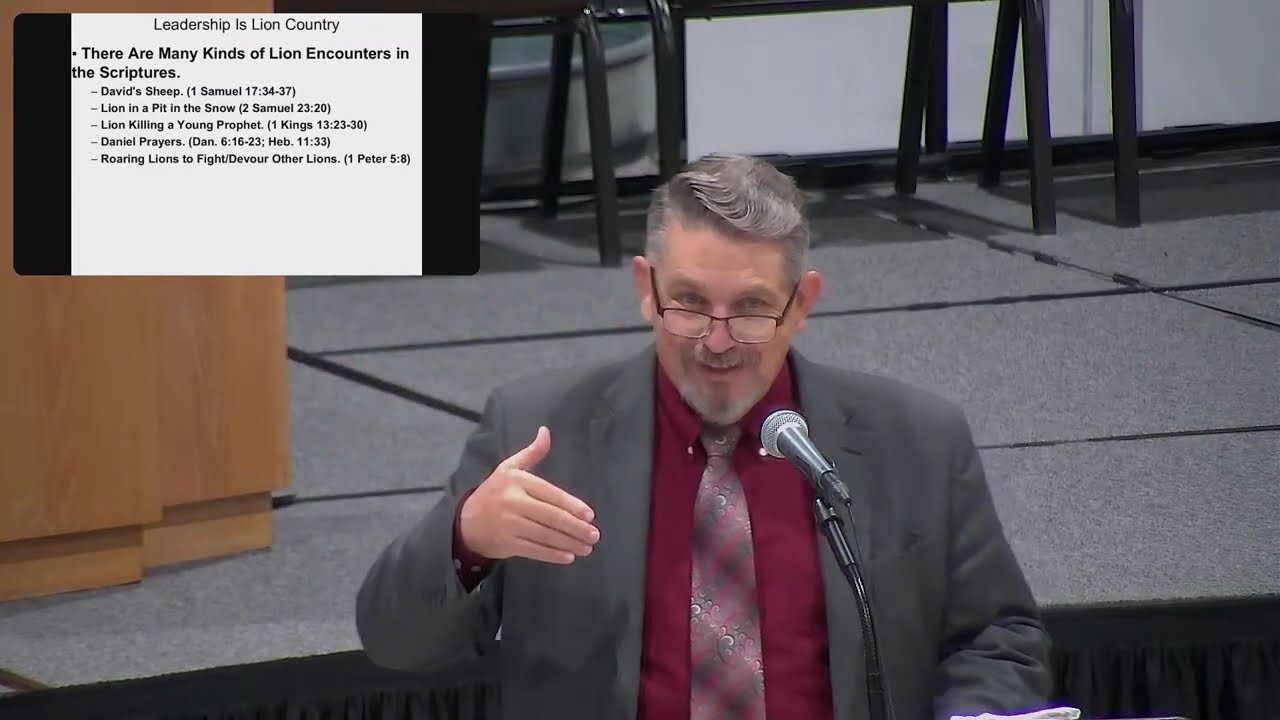
Leadership Is Lion Country
1w ago00:40:48Tap to summarize_Original video already has a description. Suggested footer to append:_ Originally Aired: 2026-08-02 3949 Lithia Pinecrest Rd. Brandon, FL 33596
Transcribe →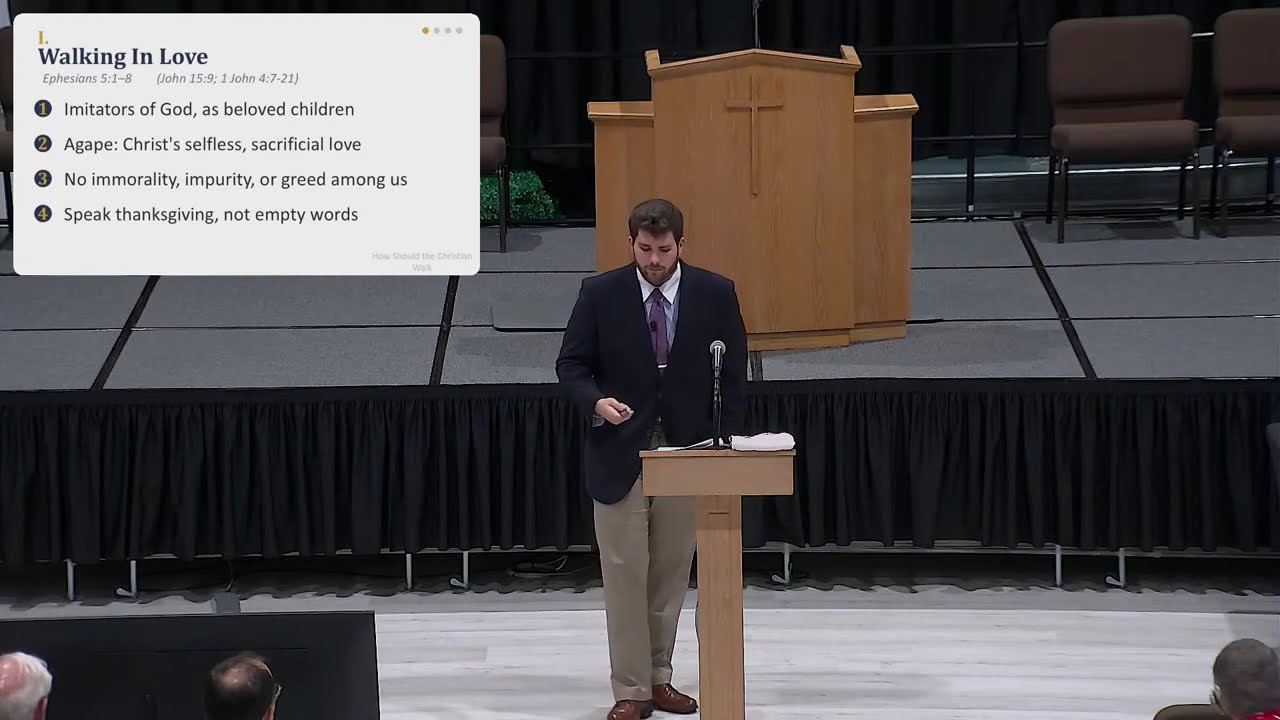
How Should the Christian Walk?
2w ago00:26:27Tap to summarizeChrist walked in love for us, so what is the Christian's own walk supposed to look like day by day? Sager Blackman stays in Ephesians and works through Paul's four "walk" commands, closing with a question worth sitting in: if nothing changes in your walk after tonight, would you be okay with that? Main text: Ephesians 5v1-21; Ephesians 4v17-32 Outline: - Walking in Love (Ephesians 5v1-7) - Walking as Children of Light (Ephesians 5v8-14) - Walking in Wisdom (Ephesians 5v15-21) - Walking in Change, Where the Walk Begins (Ephesians 4v17-32) The lesson grew out of the Florida Bible Camp theme "Walking in Jesus Daily," and it stays practical: the gossip and slander that come so naturally, the words we choose, how much of the day disappears into doom scrolling or overwork, and what to do with anger before you go to bed. There are short looks at the Greek behind agape, thanksgiving, and dissipation. Learning to walk gets compared to a child taking first steps, watching where he is going, practicing over and over, never deciding he is not good enough to keep trying. The last point is that none of this works in reverse, because the change of Ephesians 4, putting off the old self and putting on the new through Christ and baptism, is where the walk begins. Originally Aired: 2026-07-26 Speaker: Sager Blackman 3949 Lithia Pinecrest Rd. Brandon, FL 33596 Chapters: 0:00 Lesson: Ephesians 5v1-21 and Ephesians 4v17-32 2:37 Walking in Love (Ephesians 5v1-7) 8:33 Walking as Children of Light (Ephesians 5v8-14) 15:56 Walking in Wisdom (Ephesians 5v15-21) 20:21 Walking in Change, Where the Walk Begins (Ephesians 4v17-32) 27:07 The Four Walks Together
Transcribe →
How Should the Christian Walk?
3w ago00:33:19Tap to summarizeEphesians 4 describes two very different kinds of unity in the church: one God has already given us to guard, and one we are called to build together. This lesson walks through both and asks what it takes to grow up into Christ as one body. Main text: Ephesians 4v1-6, 4v11-16 Outline: - Walk worthy of your calling (Ephesians 4v1) - Family unity: a unity we preserve (Ephesians 4v2-6) - Functional unity: a unity we promote (Ephesians 4v11-16) The first unity is a family unity we did not create and must not lose: because we share one Lord, one faith, and one baptism, we preserve it with humility, gentleness, patience, and love instead of letting pride divide us. The second is a functional unity, where the risen Christ hands out gifts and roles so that every member, not only the leaders, has real work to do in building up the church. The goal is a congregation that grows up together, learning to think, judge, and love the way Jesus does. If you have ever wondered how believers who see things differently can still be one, or where you fit in the body of Christ, this study speaks to it. Our calling is not perfection but faithfulness. Originally Aired: 2026-07-19 3949 Lithia Pinecrest Rd. Brandon, FL 33596 Chapters: 0:00 Lesson: Ephesians 4v1-6, 4v11-16 0:55 Walk worthy of your calling (Ephesians 4v1) 4:49 Family unity: a unity we preserve (Ephesians 4v2-6) 21:17 Functional unity: a unity we promote (Ephesians 4v11-16)
Transcribe →
Daniel: The Lord’s Dominion Is Eternal
3w ago00:32:36Tap to summarizeEarthly kingdoms rise, powerful rulers boast, and God’s people sometimes face intense pressure, but Daniel’s visions reveal a greater reality: the Son of Man has received an everlasting kingdom. This sermon examines Daniel 7:13–14 and follows the theme of God’s sovereignty through Daniel’s exile, Nebuchadnezzar’s humiliation, the persecution of the saints, the rise and fall of empires, and the promise of resurrection. Daniel reminds believers that political power is temporary, hostility cannot defeat God’s kingdom, and history remains under the authority of Jesus Christ. Key passages include Daniel 1:8–20, Daniel 2:19–22, Daniel 4:32–36, Daniel 7:13–14, Daniel 7:21–27, Daniel 9:24–27, Daniel 11:36–45, and Daniel 12:1–3. Kings rise, kingdoms fall, but the dominion of the Son of Man is eternal. Originally Aired: 2026-07-19 3949 Lithia Pinecrest Rd. Brandon, FL 33596
Transcribe →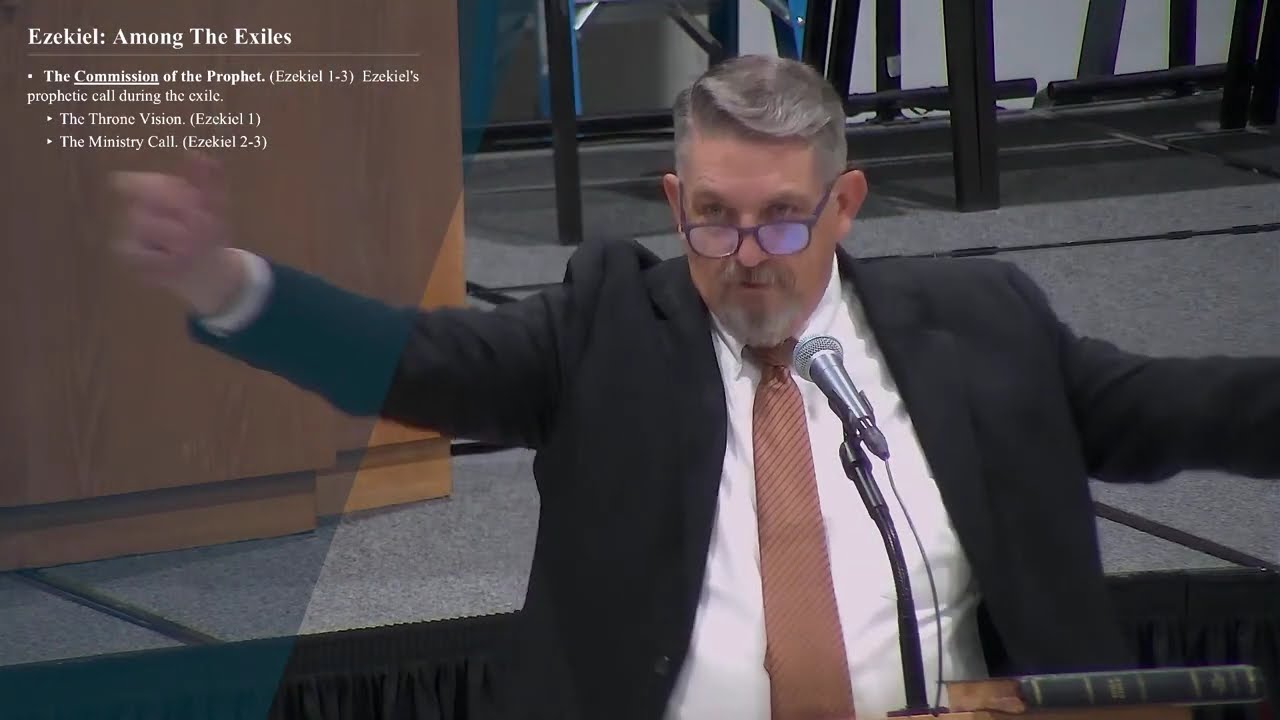
Ezekiel: Among The Exiles
Jul 1300:35:06Tap to summarizeEzekiel spoke to people whose homes, temple, security, and expectations had been shattered by the Babylonian exile. Yet beside the Chebar canal, God revealed that his glory was not confined to Jerusalem and that judgment would not be the final word. This overview follows four major movements in Ezekiel: the commission of the prophet, the correction of God’s people, the judgment of the nations, and the consolation of God’s restoration plan. It examines Ezekiel’s throne vision, his calling as a watchman, the departure of God’s glory, the promise of a new heart, the valley of dry bones, the future Shepherd, and the restored city called “The LORD Is There.” Ezekiel’s message confronts idolatry, injustice, pride, and false hope while reminding broken and displaced people that God can cleanse, renew, gather, and restore. The book ultimately points toward Jesus Christ, the true Shepherd who seeks the lost, gives spiritual life, and brings God’s people home. Key passages include Ezekiel 1–3, Ezekiel 11:17–20, Ezekiel 18, Ezekiel 33–37, Ezekiel 40–48, John 10:11, and Hebrews 8:6–13. 3949 Lithia Pinecrest Rd. Brandon, FL 33596
Transcribe →
Bored To Death
Jul 1300:20:04Tap to summarizeWhy can life feel repetitive even when we have more entertainment, information, and opportunities than ever? In Ecclesiastes 1:4-11, the Teacher watches generations pass, the sun rise and set, winds circle, rivers run, human appetites remain unsatisfied, and memories fade. Life under the sun keeps moving, but earthly achievement, pleasure, novelty, and recognition cannot provide lasting fulfillment. Searching for Heaven on Earth: Bored to Death examines the daily grind, the pressure to succeed, our desire for something new, and the fear of being forgotten. Ecclesiastes exposes the limits of life viewed only from an earthly perspective, while Jesus offers the bread of life, living water, forgiveness, purpose, and eternal hope. When life under the sun leaves us restless, life under the Son calls us to faithful obedience, loving service, meaningful labor, and lasting life in Christ. Key passages include Ecclesiastes 1:4-11, Matthew 7:24-27, Mark 10:42-45, Luke 24:46-47, John 4:14, John 6:35, John 10:10, John 14:6, and 1 Corinthians 15:58. 3949 Lithia Pinecrest Rd. Brandon, FL 33596
Transcribe →
The Song of the Seasoned Soul
Jul 600:24:28Tap to summarizePsalm 37 is a song for the seasoned soul, written for anyone who has tried to do right while the wicked seem to get away with everything and wondered whether God is really faithful. This lesson walks through the psalm's repeated calls to stop fretting and trust the Lord even when His timing is not our own. Main text: Psalm 37v1-11 Outline: - A psalm for the seasoned soul, learned best through life's storms - Do not fret: slow your tempo instead of acting in the heat of the moment - Trust in the Lord: absolute dependence when everything says you must act - Dwell in the land: feed on God's faithfulness, not your own timetable - Delight yourself in the Lord until He is your one desire (Psalm 37v4) The psalm speaks to the tension every believer feels when life is hard and the people who ignore God appear to come out ahead. Its answer is not to worry, envy, or force an outcome, but to trust God's certain faithfulness and wait patiently for Him. Using the picture of a song's time, tempo, and text, the lesson shows how we tend to affirm God's faithfulness in theory yet only trust it when His timing suits us. It is a message about anxiety, patience, and learning to rest in God before the real storms come. The call is to live a life of ordered peace that makes the gospel believable to a watching world. Originally Aired: 2026-07-05 3949 Lithia Pinecrest Rd. Brandon, FL 33596 Chapters: 0:00 Lesson: Psalm 37v1-11 9:52 Do not fret: God's tempo for our lives 10:45 Trust in the Lord 13:57 Dwell in the land 19:56 Rest in the Lord and wait patiently 22:38 Wait on the Lord 24:34 Delight yourself in the Lord
Transcribe →
Kingdom Confession
Jul 600:39:47Tap to summarizeSaying "Jesus is Lord and Christ" was never meant to be a phrase you recite before communion. In a world that crowned Caesar as savior and lord, calling Jesus Lord meant handing Him your whole life, and it still does. Main text: Matthew 10v32-33 Outline: - Jesus is Lord and Christ, the great confession - His kingdom and His values are not of this world (John 18v36) - We live by every word of God, the church as a contrast community (Matthew 4v4) This lesson traces the great confession of Acts 2v36, that God made Jesus both Lord and Christ, and asks what it costs to actually mean it. Because Christ's kingdom is a theocracy and not a democracy, His values of meekness, forgiveness, purity, and loving your enemies have to replace the values our culture takes for granted. The Sermon on the Mount shows how sharply that life runs against the world, and how the church is meant to live as a contrast community that follows every word of God, not just the convenient ones. It ends with a plain call to repentance and baptism for anyone still outside the kingdom. Good study for anyone wrestling with allegiance, surrender, and what it really means to follow Jesus as Lord. Originally Aired: 2026-07-05 3949 Lithia Pinecrest Rd. Brandon, FL 33596 Chapters: 0:00 Lesson: Matthew 10v32-33 8:17 Jesus is Lord and Christ, the great confession 15:44 His kingdom and His values are not of this world (John 18v36) 35:57 We live by every word of God
Transcribe →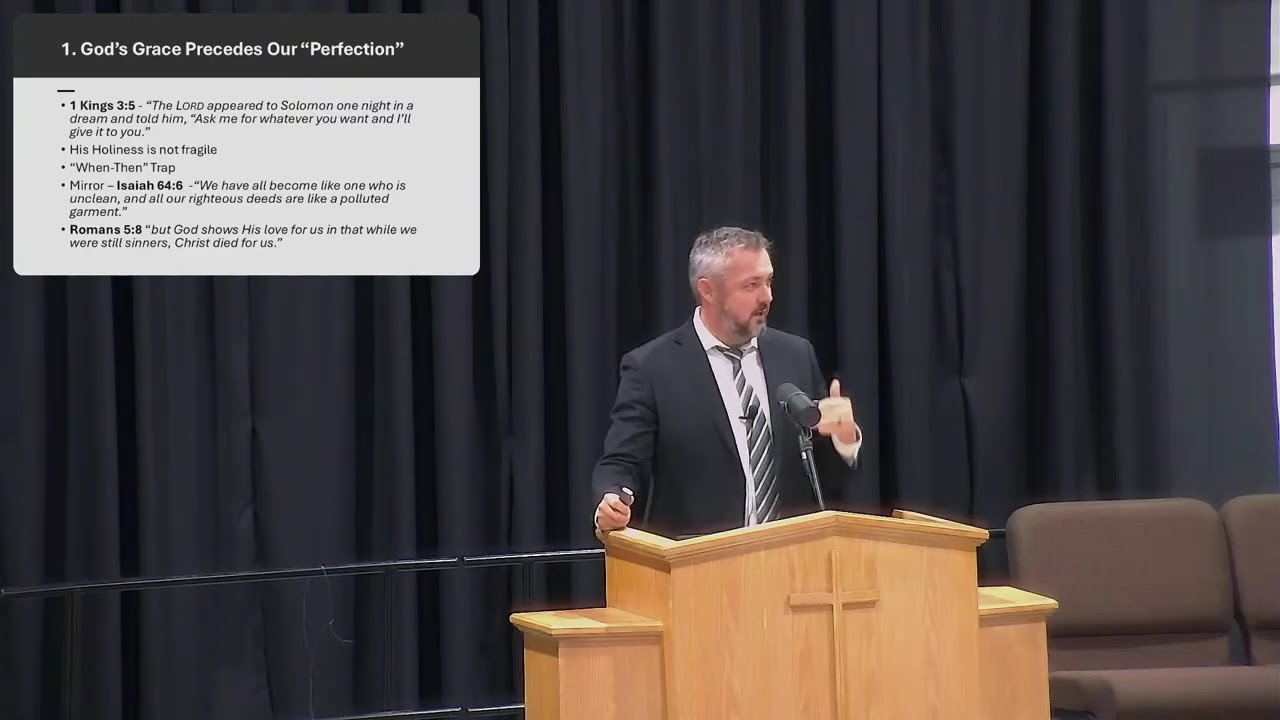
Grace at Gibeon
Jun 2900:23:20Tap to summarizeSolomon loved the Lord, but he worshiped at a forbidden high place at Gibeon. Instead of scolding him, God shows up and offers him anything he asks, proving grace does not wait for us to get our lives clean first. Main text: 1 Kings 3v2-15 Outline: - God's grace precedes our perfection - God meets us in between seasons - God alters our direction This lesson looks at how God meets us in the messy, in-between places of life, the seasons of grief, addiction, divorce, or just feeling stuck between who we were and who we are becoming. Using Solomon's dream at Gibeon, plus Zacchaeus, the invalid at the pool in John 5, and the prodigal son, Keegan shows that grace is a rescue mission, not a stamp of approval on bad habits. God does not leave us where He finds us; He reroutes us toward Himself. The call is simple: stop waiting until you are good enough to pray, and come to God as you are right now. Originally Aired: 2026-06-28 Speaker: Keegan 3949 Lithia Pinecrest Rd. Brandon, FL 33596 Chapters: 0:00 Lesson: 1 Kings 3v2-15 6:52 God's grace precedes our perfection 11:25 God meets us in between seasons 17:46 God alters our direction
Transcribe →
Acts #4
Jun 2900:39:04Tap to summarize3949 Lithia Pinecrest Rd. Brandon, FL 33596
Transcribe →