← Cuerpos especiales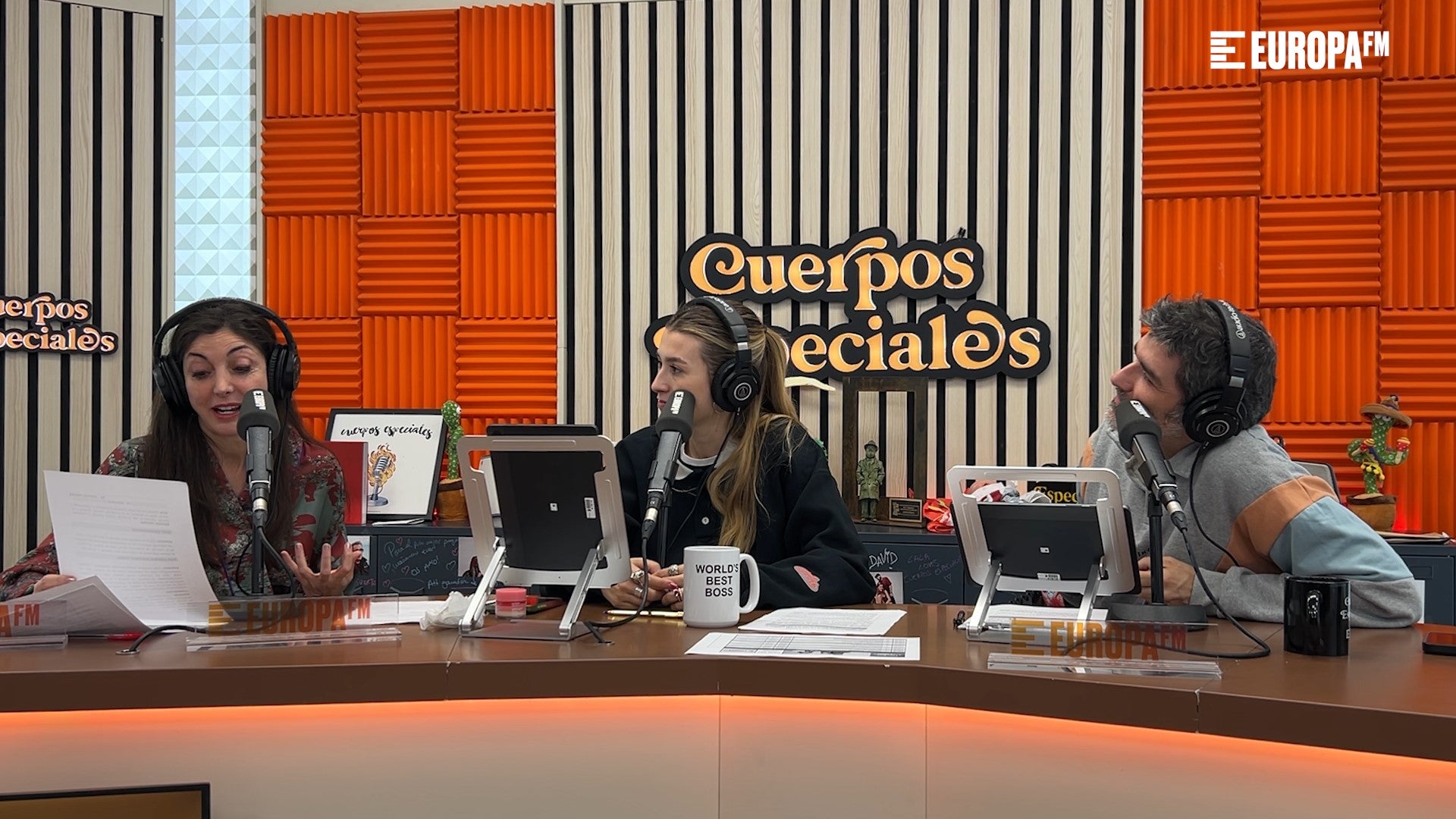
Cuerpos especiales
Espido Freire compara a Las Ketchup con grandes personajes de la mitología
00:07:28
Tras verlas interpretar Aserejé en el Festival de Sanremo, Espido Freire no puede evitar hablar de Las Ketchup. En su sección de Cuerpos especiales compara al trío cordobés con Las tres Gracias, las tres Parcas que decidían el destino humano, las Erini...
Loading summary
Transcript93 lines
- [00:00]
A
Escuchando Cuerpos Especiales en Europa FM. Y ahora llega la sección de la escritora, Premio Planeta y en breves, ganadora del Grammy Latino. Gracias a nosotros. Ganadora del Grammy Pido Freire. ¿Cómo estás?
- [00:11]
B
Pues perdona, pero cantar cantuve así no sabéis que yo fui cantante de ópera.
- [00:16]
C
No te creo.
- [00:16]
A
Ah, bueno, claro.
- [00:18]
B
Yo tuve una brillante carrera musical antes de tener una brillante carrera en Cuerpos especiales.
- [00:22]
C
Es verdad.
- [00:22]
A
Se me había olvidado que te lo está pasando.
- [00:24]
B
Es cierto. Y ahora que Rosalía me ha empezado a abrir por ahí el melón, en
- [00:27]
C
cualquier día puede llegar tu momento.
- [00:29]
A
¿Quieres que te pongamos la semana que viene una canción tuya?
- [00:32]
B
Muchas gracias. A ver cómo van al. Dios mío. No, no, gracias. Esa temporada pasó. Bueno, niña y niño, ¿Qué ha pasado esta semana?
- [00:41]
C
¿Tienes actualidad este fin de semana?
- [00:42]
B
Pues que hemos vuelto sin quererlo a los 2000, a principios de los 2000. Esperemos no seguir por ahí. Y de pronto, en el sacrosanto escenario del Festival de la canción de Saint Remo, aparecen las ketchup.
- [00:56]
C
Lo he visto.
- [00:56]
B
¿Lo has visto?
- [00:57]
A
Sí, es maravilloso.
- [00:58]
B
En Italia, el país de la ópera, hablando de todo un poco, de Puccini, de gente que bebe el café como Di. Y de pronto. Tres mujeres perfectamente alineadas, con vestidos llamativos, volantes rojo y el letra Lamborghini que no sabemos.
- [01:23]
C
La nieta de Lamborghini.
- [01:24]
B
Sí, que yo pensé que era seudónimo,
- [01:25]
C
pero no, es nieta del creador de Lamborghini.
- [01:28]
B
Bueno, pues no sabemos cómo se ha colado, pero allí está también giro de
- [01:33]
A
todo el mundo, todo el que valía,
- [01:34]
B
todo el que tenía paso lateral. Tiki tiki. ¿Y qué estaba viendo yo ahí a las tres gracias? Claro, a ver, yo ya no veo lo que. Yo ya lo que veo es o literatura o mitología o elemento simbólico. Las tres gracias que representaban la belleza, la gracia, la abundancia. Las Ketchup es verdad que te recuerdan la boda en agosto de tu prima Marian.
- [01:58]
A
Bueno, pero las tres gracias también.
- [02:00]
B
El efecto es casi el mismo.
- [02:02]
A
Casi, casi.
- [02:02]
B
Además hay algo escultura en ese movimiento repetido hasta el infinito. Hay un eco de Armoto. Hay un eco de. Por favor, Nacho, no me mires así. Hay un eco.
- [02:12]
C
Hay un eco.
- [02:13]
A
Hay algo como que te atrapa, como que te atrae.
- [02:15]
B
Hipnótico. Y además que inmediatamente se empezaba a reproducir con una. El baile con coreografía cuasi perfecta.
- [02:22]
C
Gracias por el cuasi.
- [02:24]
B
Como una secta de hilo más o menos. Entonces tú sigues mirando y otras evocaciones llegan a tu mente. Bueno, a la mía, a la vuestra, no sé, según os lo diga lo vais a ver. Porque en el fondo siempre, siempre en este program hemos comprobado que sabéis mucho más de lo que pensáis que sabéis. Eso es verdad.
- [02:39]
C
Sobre todo Eva.
- [02:41]
A
Los dos en conjunto somos tontos. Pero luego rascas un poco y no somos tan tontos.
- [02:46]
B
Y tenéis una cultura general mucho mayor de la que en general se piensa.
- [02:51]
A
Gracias. Despido. Porque ya es hora de que alguien nos diga no somos tontos.
- [02:57]
B
Vamos a cambiar de leyenda. Porque en esos movimientos también hay cabreo, hay determinación, hay una energía como de una tormenta eléctrica. Las Erinias.
- [03:07]
A
Lo estaba pensando.
- [03:08]
B
Las Furias que perseguían a aquellos que habían osado atentar contra las leyes de la naturaleza. Los que castigaban los crímenes de los humanos con una severidad implacable. Y entonces ahí entra Elemborgini. ¿Qué hace ese Etra? ¿La habéis visto bailar?
- [03:24]
C
Bueno, a ver, vamos a decir una cosa que es a tope con el momento que crean entre todas. Pero Electra no puede cantar peor, o sea, no se sabe la letra. No se sabe la letra.
- [03:35]
A
Electra no se sabe la letra. No se sabe la letra.
- [03:39]
B
No. Y además las Furias castigaban la tibieza. Si vas a cantar el ASRG, lo cantas como si invocaras a los dioses del Olimpo.
- [03:48]
A
El que saca la navaja y no la claves para.
- [03:50]
C
Es un parguelá.
- [03:51]
B
Aquí se viene a incendiar.
- [03:53]
C
Esto es así.
- [03:54]
B
No, no se viene.
- [03:54]
C
Hombre.
- [03:55]
B
Hay algo vengativo además en la intensidad de todas estas mujeres, como si estuvieran. ¿Creíais que sabéis lo que era el kitsch? ¿Vais a tomar kitsch?
- [04:03]
C
Verás.
- [04:03]
B
Claro, porque es que vuelvo otra vez. Es que esos lunares, es que esos vestidos, es que esa gloria.
- [04:10]
A
Me encanta cómo lo describe. Eso no es bestia.
- [04:13]
B
Volvemos a esa imagen que yo tengo clavada y que, como tantas otras de este programa, me acompañarán mucho tiempo. Yo espero nunca perder la memoria, porque entonces los recuerdos aleatorios que vengan nos pertenecerán de este programa.
- [04:26]
C
Sí no quiero ser yo la imagen que te torture.
- [04:28]
B
Yo pronto estaré con 97 años y diciendo cosas como el gato volador.
- [04:31]
C
Claro, Aunque tengas un accidente, despiertes del coma y solo te acuerdes de nosotros.
- [04:36]
B
Pero eso mola.
- [04:37]
A
Eso es bonito.
- [04:38]
B
Grandes momentos de cuerpos especiales repetidos una
- [04:41]
C
y otra vez en mi cabeza en bucle.
- [04:42]
B
Pero eso de mayor. Bueno, volvemos a lo mismo. Volvemos a lo mismo. Tres mujeres marcan el compás. Una repetición hipnótica, un ritmo Machacón e inevitable. ¿Aquí os suena? Tres mujeres, ritmo inevitable. Las Parcas.
- [05:01]
A
Lo iba a decir. Te juro que estaba pensando. Pasado, presente y futuro.
- [05:04]
B
Muy bien.
- [05:05]
A
Te juro que lo iba a decir. Son las Parcas.
- [05:07]
C
Claro, gustándote a ti, Hércules de Disney.
- [05:09]
A
Es que lo iba a decir, pero
- [05:10]
B
no lo he dicho. Hércules. Ay, por Dios.
- [05:12]
C
Bueno, es que son nuestras referencias.
- [05:14]
A
Espido, Espido y yo vamos de la historia. ¿Donde puedo mamar?
- [05:17]
B
Vale, no pasa nada. Es decir, tenéis las Parcas de Hércules en mente. Las tres severas hermanas que hilaban, medían y cortaban el hilo de la vida.
- [05:25]
C
Eso.
- [05:26]
B
Pues las Ketchup hilan la primera sílaba, miden la resistencia del espectador. Ja de jeve. Y cortan, atacan, machacan todo el resto de tu dignidad en el momento en el que te rindes y te lanzas a lo que crees que es bailar.
- [05:41]
A
DGB, tú de jeve.
- [05:46]
B
Y como de las Parcas. De las hereje. Nadie escapa.
- [05:49]
C
Nadie escapa. Nadie.
- [05:51]
B
Las Parcas decidían el destino humano. Las Ketchup decidieron que el verano de 2002 sería eterno.
- [05:57]
C
Vaya que sí lo fue. Recuerdos de Vietnam.
- [06:01]
B
¿Rematamos?
- [06:02]
A
No, no, claro.
- [06:03]
B
Tres figuras femeninas reunidas cantan al unísono. Alteran la percepción colectiva. Salve Macbeth. Algún día serás rey. Las tres brujas de Macbeth.
- [06:14]
A
Pero todas son tres brujas todo el rato.
- [06:15]
B
No luchaban con espadas, alteraban el destino con palabras. Aquí ocurre lo mismo. Azerejé, Acerejé. Y un auditorio entero cambia de estado mental. La única tragedia es intentar resistirse. Y lo mejor, nadie quiere, nadie puede romper el hechizo. Porque al final, lo mitológico es lo que pertenece, lo que permanece era tras era. Y la seregé, queramos o no, ya pertenece al Olimpo de los dioses.
- [06:39]
C
Bravo. Bravo.
- [06:40]
A
Bravo. Bravo. ¿Cómo se puede hacer algo tan bonito con tremenda mierda? Eso es lo que ha hecho.
- [06:46]
C
Es increíble lo que ha hecho. Es increíble lo que ha hecho. Le hemos dado el gurruño que le sale del culo a un perro y nos ha devuelto una corona de diamante.
- [06:53]
A
Toda mi admiración hacia tu persona. Porque cómo eres capaz de hacer de algo que es un zurullo algo tan bello.
- [06:59]
B
No os preocupéis, la semana que viene estaré en Florencia para recuperarme, para absorber belleza, equilibrio y delicadeza y volveré con las fuerzas renovadas.
- [07:07]
C
Es verdad, te veremos en dos semanitas.
- [07:09]
A
Vuelve, vuelve, que te veo yo por allí perdiéndote con lo David de Miguel Ángel y toda esta gente.
- [07:14]
B
Ya os necesito.
- [07:15]
A
Madre mía.
- [07:16]
C
Y bien habla. Muchas gracias, Espido. Y si algo tiene la perla de Rosalía es que muy educada, siempre te saluda, siempre dice hola, mira, salud, espera
- [07:25]
A
que la salud venga. Hola, Rosy, que.