← Cuerpos especiales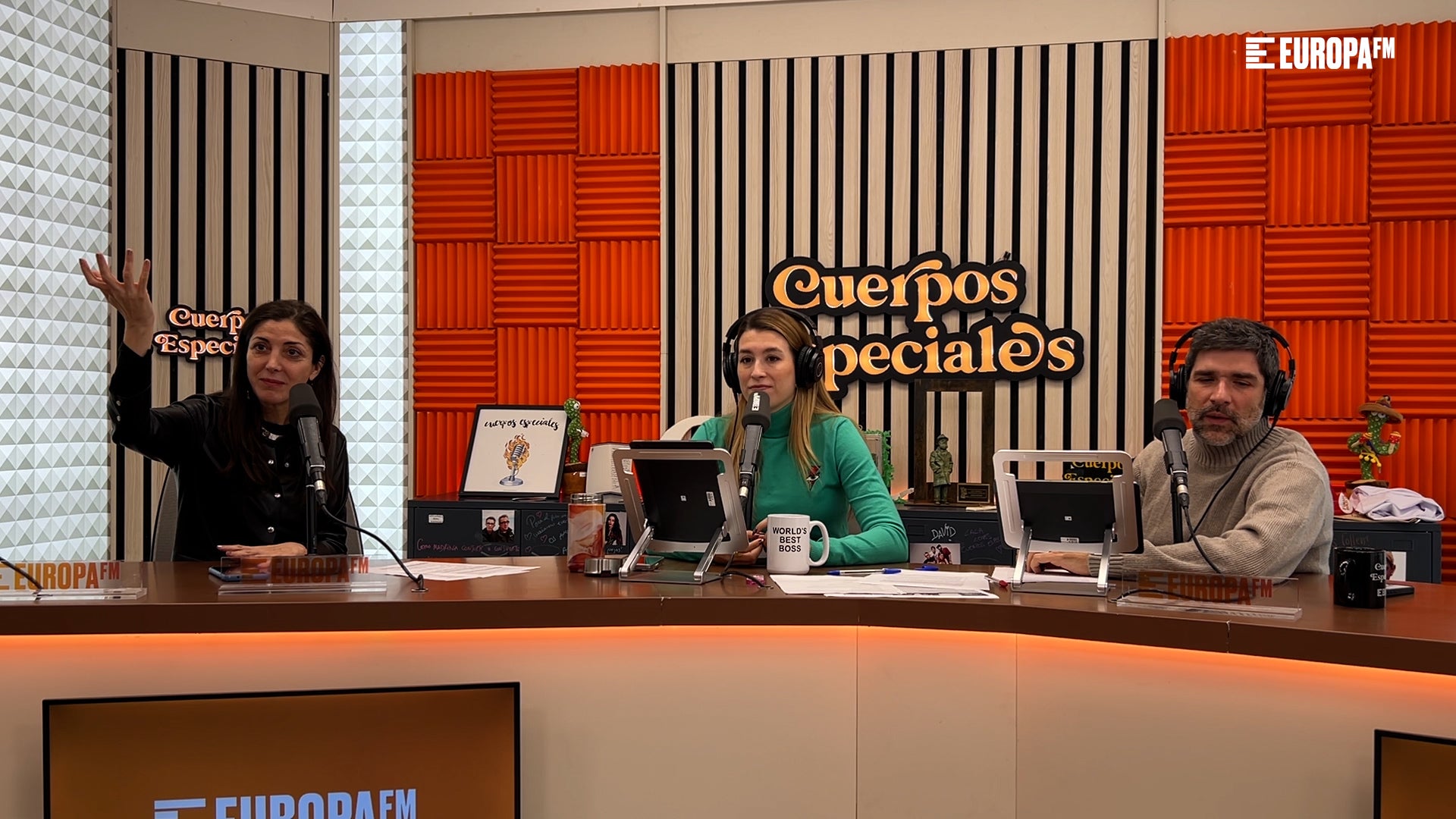
Cuerpos especiales
Espido Freire relaciona 'Ven, ven, ven' de las Sex Bomb con la 'Odisea' de Homero
00:06:47
Espido Freire se enfrenta al análisis de Ven, ven, ven de las Sex Bomb en Cuerpos especiales, y la escritora tiene claro que el hit pop tiene una clara similitud con lo que hacía "las sirenas" en la obra la Odisea.
Loading summary
Transcript75 lines
- [00:00]
Ignacio
Y escuchando cuerpos especiales en Europa FM. Y ya está en esta mesa una de las mejores escritoras en lengua española, la Daddy Yankee de la literatura. Buenos días, Espido Freire. ¿Cómo estás?
- [00:11]
Espido Freire
Pues bien, ya cada vez vengo más vestida, macarra.
- [00:13]
Ignacio
Bueno, pues porque estás adoptando.
- [00:14]
Eva
Ya tu personaje está saliendo a la calle. Porque hoy Espido, antes de empezar la sección, ha dicho a la persona que me ha puesto la canción de hoy le voy a meter un puñalón.
- [00:22]
Espido Freire
No, no le he dicho eso. Le estaré esperando en un callejón oscuro.
- [00:25]
Eva
Bueno, lo has dicho en tu idioma.
- [00:26]
Ignacio
Bueno, lo has dicho muy vitoriano, pero al final todo subyace.
- [00:30]
Espido Freire
Es que yo vuelvo a esta sección con una certeza absoluta. Primera, que no me creéis nada. Y después la literatura clásica sigue viva, disfrazada ahí en Bosco, pero viva, pero viva. A veces en un reggaetón, a veces en un súper, en la típica ráfaga que te hace pensar pero ¿Por qué me sé la letra de esto de memoria, por Dios? ¿En qué momento de mi vida me aprendí esta canción? Hoy vamos a hablar de Ven, de la Sexbomb.
- [01:01]
Eva
La verdad.
- [01:03]
Espido Freire
Ya, pero vosotros os superáis y yo también, porque la voy a comparar con la odisea.
- [01:08]
Ignacio
¿Qué dice? La odisea.
- [01:09]
Eva
No te creo que esto sea La Odisea.
- [01:11]
Espido Freire
Bien, a ver, todos los académicos de la lengua que nos escuchan cada martes.
- [01:15]
Ignacio
Nos escuchan muchísimos académicos de la lengua.
- [01:17]
Espido Freire
Te sorprendería. Respiren, por favor. Yo sigo aspirando a. ¿Sabes en que? En algún momento. Esto no es una Aspiro Freire. Yo Aspiro Freire no es una provocación gratuita, es una comparación absolutamente seria. Yo ya sabéis que tengo sentido del humor, pero siempre hablo en serio.
- [01:35]
Ignacio
Sí, por supuesto que sí.
- [01:37]
Espido Freire
Entonces, yo os digo La Odisea y la Sexbomb.
- [01:41]
Eva
Este cable, ¿Cómo lo unimos?
- [01:43]
Espido Freire
Vamos a la letra, porque todo está en la letra. Si pensáis en el vídeo, no te ven, ven, ven, hace bang, bang, bang, luego bum, bum, bum y estalla el corazón. A ver, a ver. Esto no es una invitación romántica, por mucho que lo pensáramos. Esto es una estrategia no muy sofisticada, un poco en harapos, como van en el vídeo. Insisto, hay un vídeo, y ese vídeo es de 2003. Yo lo he vuelto a ver, Quiero que todo el mundo lo vuelva a ver, ¿De acuerdo?
- [02:13]
Ignacio
Parece que estás amenazando a la audiencia. Ve a ver. Esto no es a la audiencia es a la persona que te ha dicho que hagas.
- [02:19]
Eva
Esta pensando a lo mejor en la directora de este programa.
- [02:22]
Espido Freire
Bueno, pues vosotros vais viendo el devenir en imágenes de esas cuatro muchachas poco vestidas que se contonean. Y ahí es donde entramos directamente en Homero.
- [02:32]
Ignacio
Las sirenas.
- [02:33]
Espido Freire
Claro.
- [02:34]
Ignacio
Lo sabía.
- [02:34]
Espido Freire
Pero qué bien, qué lija. Te quiero mucho, Ignacio. Qué lista.
- [02:40]
Ignacio
Yo hoy sí estoy en La Odisea.
- [02:42]
Espido Freire
Cuando Ulises se encuentra con las sirenas, no pasa nada diferente. Las sirenas no gritan, no están.
- [02:48]
Ignacio
Oye, ¿Qué pasa, tío marinero?
- [02:50]
Espido Freire
No amenazan, tío, haber sacado. No, no, ni siquiera persiguen. Están ahí todas incitantes, con sus largos cabellos, sus caderas timbreantes y cantan. Bueno, cantan.
- [02:59]
Ignacio
Estas no cantan, cantan ese barco velero montando de luz.
- [03:03]
Espido Freire
Oh no, pero. Oh no. Pero qué crossover te imaginas de repente.
- [03:06]
Ignacio
Ellas con el pelo largo en plan este barco velero y Ulises no voy.
- [03:09]
Espido Freire
No, por Dios, a esa no, a esas. Bueno, vamos a dejarlo en que en lugar de cantar tanto dicen ven. Y. Y ese ven, ven, ven implica una renuncia mental.
- [03:20]
Ignacio
¿Cómo?
- [03:20]
Espido Freire
Porque es el momento en el que el deseo se apodera de todo.
- [03:23]
Eva
Claro, te abandonas.
- [03:24]
Espido Freire
Ulises, el estratega, el veterano de Troya, el que se inventó el caballo, sabe que ese canto lo va a destruir, se deja de intelectualidades y aún así quiere escucharlo. Igual que vosotros sabéis que esta canción no nos aporta nada y aún así me hacéis analizarla.
- [03:39]
Ignacio
Bueno, no nos aporta nada, pero aquí estamos todos, está todo bien. No nos aporta nada.
- [03:43]
Espido Freire
Bueno, no nos aporta absolutamente nada. Este tiempo y el anterior es perdido. Pero bueno, quiero que os fijéis en esto de nuevo. Ven, ven, bam, bam, bam, bum, bum, bum, bum.
- [03:55]
Eva
No hay un gran argumento, no hay, no hay.
- [03:57]
Ignacio
La verdad que ahora que lo dices, no mucho.
- [03:59]
Eva
No, no, es un razonamiento, porque el.
- [04:02]
Espido Freire
Canto de las sirenas funciona por acumulación. No te convencen, te erosionan.
- [04:07]
Ignacio
Ah. Es como la técnica del martillo pilón.
- [04:10]
Espido Freire
Al final cae bam, bam, bam, bum, bum, bum.
- [04:12]
Ignacio
Es un martillo pilón.
- [04:13]
Eva
A los hombres es verdad que con esto nos basta. A. A mí me dicen ven, bam, bam, bam. Y yo bum, bum, bum. Yo bueno, muy.
- [04:22]
Ignacio
Serás tú altas capacidades. Bueno, si eres.
- [04:25]
Espido Freire
Las sirenas no engañan, no engañan. Son honestas, prometen placer y lo dan.
- [04:31]
Ignacio
Ya está.
- [04:31]
Espido Freire
El problema es que luego no Hay nada más.
- [04:34]
Ignacio
¿Qué va a haber? Si me tengo que volver al mar, ¿Qué va a haber? ¿Te vas a comprometer con una sirena?
- [04:38]
Espido Freire
Yo qué sé. Cartas a larga distancia.
- [04:40]
Ignacio
Pero si están mojadas. ¿Cómo te llega una?
- [04:42]
Espido Freire
Bueno, qué mejor.
- [04:44]
Ignacio
Cómo eres, Madre mía. De repente, cartas mojadas. La nueva canción de Maná.
- [04:55]
Espido Freire
En el muelle de San Blas. Y recordad, Ulises, ante ese trance, no se tapa los oídos. Eso lo hacen los marineros, que son como la plebe. Ulises quiere oírlo todo, pero sin morir. Así que se ata al mástil. Y esa es la gran lección clásica que Benben te da. No hay por qué eliminar el deseo, hay que gestionarlo. En Ben Ben, el cuerpo manda. Solo hay ritmo, sudor, repetición. Pero el ingenioso Ulises sobrevive porque pone límites físicos a un deseo abstracto. No sé por qué estoy dirigiéndome a Eva, pero creo que ella necesita escuchar esto.
- [05:28]
Ignacio
Ah, vale, Sí, Bueno, fíjate.
- [05:30]
Espido Freire
Se ata, se inmoviliza. Él anticipa lo que va a ocurrir.
- [05:33]
Eva
Porque se conoce Ulises, que ha ido a terapias tuyas.
- [05:38]
Espido Freire
Ulises. Ulises sabe mucho de esto.
- [05:40]
Ignacio
Ulises mástil. Y aquí se utiliza bromuro.
- [05:43]
Eva
Claro. Ulises dice me voy a atar al mástil que no conozco.
- [05:46]
Espido Freire
Exactamente. Ven. Y eso explica por qué seguimos necesitando a Homero, aunque sea para entender las canciones que sonaban en las discotecas de los 2000 a las 4 de la mañana, cuando ya todo lo demás estaba agotado.
- [05:58]
Ignacio
Tío, está en Homero esto.
- [06:00]
Espido Freire
La cultura clásica sirve para esto. Para que no bailes demasiado cerca de sirenas ni de monstruos.
- [06:08]
Ignacio
Es precioso lo que acaba de decir.
- [06:10]
Espido Freire
En la siguiente podemos subir de nivel. Podéis poner gasolina y el descenso a los infiernos de Orfeo.
- [06:16]
Ignacio
Bueno, pues ya que lo has dicho, ya la tenemos hecha para la semana que viene. La verdad es que dicho así lo pides, lo tienes.
- [06:23]
Espido Freire
Yo ya no escucho nada de manera inocente.
- [06:25]
Ignacio
Si nosotros solo queremos que estés feliz. Tú quieres hacer la gasolina, hazte la gasolina. Si nosotros. Con que vengas cada semana con estas ganas, ya está.
- [06:33]
Eva
Ya se está riendo el Fide.
- [06:35]
Ignacio
Ya me ha caído los palos en las ruedas. Muchísimas gracias.
- [06:39]
Eva
Y Damiana David se acaba de comprometer con do Cameron. Seguro que ya están pensando en la luna de miel que harán el Nexamer.