← Cuerpos especiales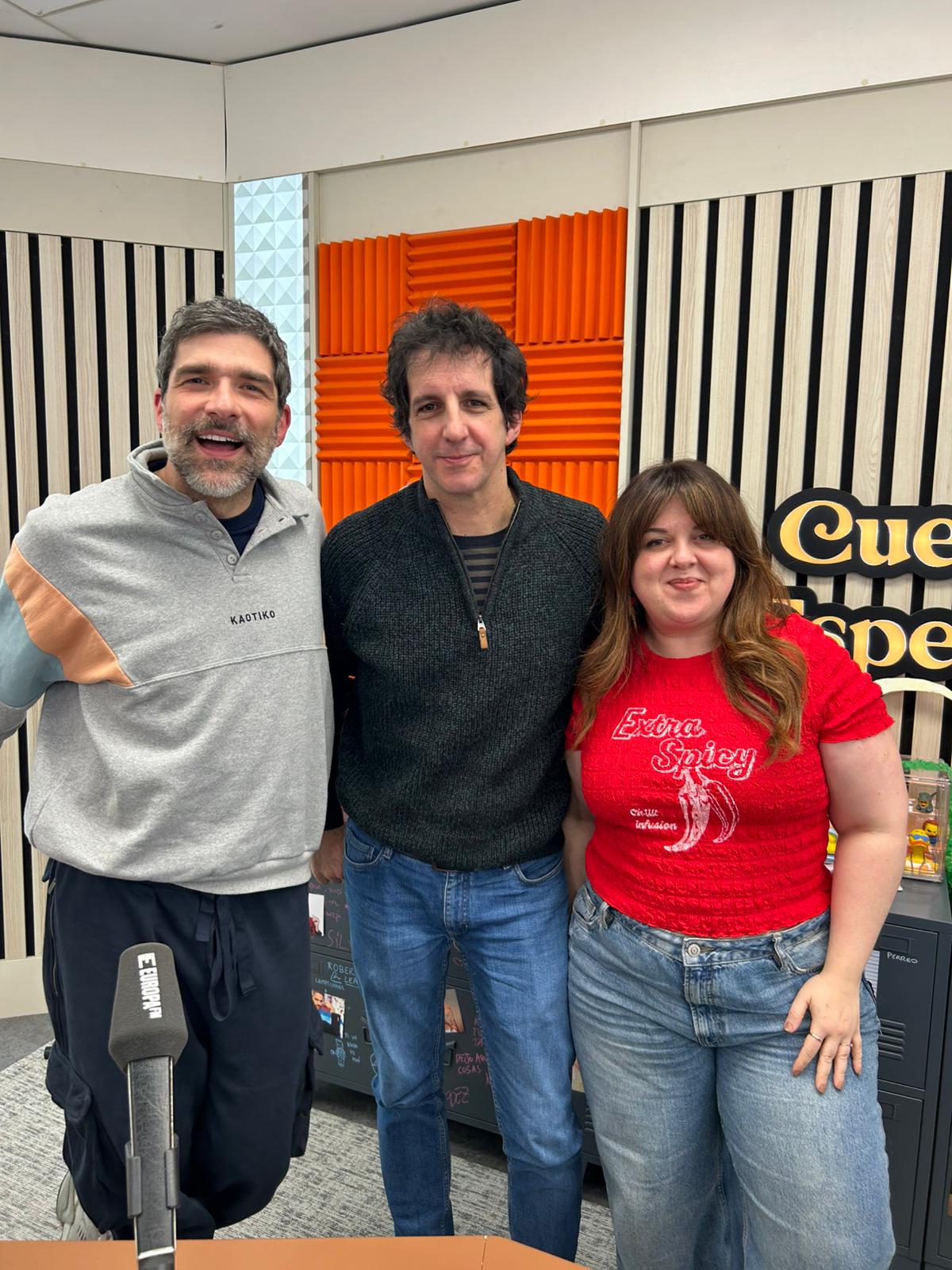
Cuerpos especiales
La entrevista de Guillermo Ortega en 'Cuerpos especiales'
00:14:28
Guillermo Ortega debuta como invitado en Cuerpos especiales para presentar la obra de teatro Frankie y Johnny en el Claro de Luna, en la que trabaja con su pareja Fátima Baeza. El actor cuenta cómo surgió la idea de representar esta famosa producción d...
Loading summary
Transcript126 lines
- [00:01]
A
Estás escuchando Cuerpos especiales en Europa FM. Y hoy ha venido un actor al que todos queremos, porque fue Paco en Aquí no hay quien viva. Y está aquí para hablarnos de Frankie Joni en el claro de luna, la obra de teatro que protagoniza ahora en Madrid. Buenos días, Guillermo Ortega.
- [00:14]
B
Buenos días. ¿Qué tal?
- [00:15]
C
Buenos días.
- [00:16]
A
Gracias. Bienvenido a este programa. ¿Primera vez en Cuerpos Especiales?
- [00:20]
B
Primera vez, sí señor.
- [00:21]
A
¿Qué te parece el edificio?
- [00:23]
B
Pues está bien. Es el edificio de la prensa.
- [00:25]
C
Sí.
- [00:25]
B
Maravilloso. Sí.
- [00:27]
C
Hemos estado en auténticos zulos, o sea que yo creo que como primera vez. Yo creo que está bien. ¿Como bien?
- [00:32]
A
Sí, yo he empezado a apostar en carreras de caballos desde que trabajamos aquí, porque he encontrado una habitación donde hay gente con chistera apostando. No lo entiendo.
- [00:39]
C
Y hay muchas portadas de periódicos del año catapum, que podrían ser también los de ahora, o sea, fuerte también en ese momento.
- [00:46]
A
Sí, sí, sí, sí, sí. Bueno, vienes a hablarnos de la obra que estás haciendo en el Teatro Lara desde octubre, Frankie. Johnny en el claro de la luna cuenta la historia de un cocinero que tras una noche de pasión con una compañera de trabajo, se enamora y lucha por conquistar el corazón de su amante. ¿Qué más podemos contar sin hacer spoiler?
- [01:01]
B
A ver, es una historia que empieza al revés. Normalmente las historias románticas se conoce chico, chica, se llevan fatal y acaban en la cama. Aquí es al revés. Empieza en la cama. Empieza en la cama y es maravilloso. Eso se puede contar porque es como empieza la función, que nadie se haga ilusiones porque es a oscuras, pero se intuye. Entonces es maravilloso cómo han funcionado. Y a partir de ahí, él intenta que haya algo más y ella no está muy dispuesta a que haya algo más. Vamos descubriendo por qué no está muy dispuesta y vemos hasta el final. No sabemos qué va a pasar.
- [01:38]
C
Estoy dentrísimo. En la obra, Johnny se queda coladito, pero Frankie dice que no se siente igual, como acaba de decir. Algunos ha flipado demasiado con la obra y el otro ha tenido que decir mira, relaja, relaja, relaja.
- [01:48]
B
Bueno, yo es que soy un poco flipado.
- [01:51]
A
Eres intenso.
- [01:52]
B
Soy bastante intenso. Soy muy intenso, totalmente. Pero bueno, como la actriz que trabaja conmigo es Fátima Baeza, que nos conocemos hace bastantes años, pues tenemos bastante confianza.
- [02:04]
A
Tenéis mucha.
- [02:05]
B
Tenemos mucha. No quería decirlo, pero sí quería dejarlo en otro término.
- [02:11]
A
Pero bueno, sí, es una obra. Estábamos hablando antes de empezar la entrevista, de que es una obra muy conocida, que a lo mejor en España no lo es tanto, pero que en Nueva York se ha hecho un montón de veces, que incluso tiene una adaptación al cine. ¿Habéis aportado algún cambio o matiz?
- [02:26]
B
Sí, bueno, a ver, las versiones de cine y de teatro. Esto empieza en el off Broadway, a finales de los años 80, en plena ola de sida. Lo digo porque tiene importancia también en la obra, aunque no es evidente, pero tiene importancia. Y empieza el Odd Broadway. Empieza a crecer, a crecer, a crecer, hasta tal punto que le ofrecen hacer la película al propio autor. Hace el guión, lo protagonizan Al Pacino y Michelle Pfeiffer.
- [02:51]
C
Casi nada.
- [02:51]
B
Casi nada. Lo que pasa es que el guión de la película es completamente diferente, porque toda la historia de la obra de teatro sucede en una habitación una noche.
- [02:59]
A
Claro, en el mismo sitio.
- [03:00]
B
Claro. Y eso para cine iba a ser un poquito pesado. Y entonces el autor los saca fuera de ahí, los lleva al restaurante, hace diversas subtramas con los compañeros de trabajo. Y esa es la diferencia.
- [03:11]
A
Menos mal que no lo hacen ahora en la actualidad, porque entonces harían lo mismo, pero meterían una persecución en coche, dinosaurios, la parte del helicóptero estrellándose, por ejemplo. Si, no, queda un poco flojo.
- [03:23]
C
Has comentado que muchos grandes actores han interpretado a tu personaje. Michael Shannon, Stanley Tucci y Al Pacino, como has dicho. Sí, sí. ¿Te has documentado y has visto algo de sus aproximaciones al personaje o ha preferido decir no quiero influenciarme, quiero sentí?
- [03:36]
B
No, claro. No me gusta nunca ver cómo lo han hecho, porque te puede influir muchísimo. Quieres llegar a ese resultado y es imposible. Entonces te vas a frustrar un montón. La directora sí que nos mira. Por qué nos pasaba material. Veía algo al día siguiente llegar al ensayo, pero poco. Y luego la película sí que la vi porque me mira, no tiene nada que ver. Así que la podéis ver porque sé que sois muy maniáticos, como el que
- [04:04]
A
te puede ver la cuarta temporada de Juego de Tronos, porque no se parece en nada. No hay ningún problema.
- [04:10]
B
La vi y tal, pero no las aproximaciones, las otras versiones. Además, que son unos actores tan grandes que dices que luego te vas a hacer caquita.
- [04:21]
C
Claro. Pero sí, claro.
- [04:22]
A
Mucha presión.
- [04:23]
C
Totalmente. Y mejor en plan voy yo a mi bola.
- [04:26]
A
Claro. Sí, total. Fátima Baeza es la otra protagonista de la obra y vosotros ya os conocéis, Lo estabas comentando antes. Esto surge. ¿Qué fue primero, la idea de trabajar juntos o la idea de hacer la obra?
- [04:37]
B
Y luego surgió la idea de trabajar juntos. La idea parte en realidad del Teatro Lara, que quieren hacer una producción. Hablan con la directora, que es Pilar Massa, y le queremos hacer una producción porque la experiencia que habían tenido con ella había sido muy positiva, pero queríamos algo pequeño, íntimo. Y entonces ella, como yo venía de trabajar con ella, que habíamos hecho un jardín, me oye, me apetecería mucho trabajar contigo, con Fátima. ¿Os gustaría hacer algo vosotros dos? Y ah, pues sí. Y ya nos pusimos a buscar textos, íbamos encontrando textos que nos encantaban y estaban ya los derechos cogidos. Y de repente llegamos a este, que nos parecía bastante difícil que accedieran a darnos los derechos, porque es una sala pequeña, claro, para ellos no es muy rentable, pero sí les gustó la propuesta y dijeron que adelante. Desde ahí, desde New York, se lo comió todo Clara, que está aquí al lado, que es nuestra productora. Y nada, dijeron venga, adelante.
- [05:35]
C
Oye, la obra es una comedia, pero tiene momentos muy emotivos. ¿Qué dirías que oyen más en el público, risas o?
- [05:42]
B
Pues mira, va por días. Hay días. Hay públicos superrománticos, hay públicos súper concienciados, porque claro, esta obra es de los 80. Que un tipo insista, insista e insista hasta la saciedad para estar con una mujer no se ve igual ahora que en los 80.
- [05:58]
A
Tiene otra óptica.
- [05:59]
B
Entonces hay públicos concienciados, hay públicos muy románticos, hay públicos muy divertidos, normalmente, y la gente se ríe, pero tampoco todas las funciones. Aquí hay un festival. Hay días que la gente está escuchando, que les ve superinteresados con la lagrimilla.
- [06:14]
A
¿Te pasa, Guillermo, que haces una media de todo el público que hay viendo la obra y te caen bien o mal, como una sola persona, empiezas a hablar y hoy me caen bien?
- [06:25]
B
Sí, puede pasar que hay que tener cuidado. Cuidado con que se te vayan los ojos a esa única persona que está aburrida en el público.
- [06:31]
A
Te pasa, ¿Verdad?
- [06:32]
B
Hay que desviar, hay que desviar. No, no le mires.
- [06:35]
A
Y como de repente empieza a mirar el móvil y que le empieza a iluminar la cara y se convierte en una cabeza levitando en mitad del horroroso.
- [06:43]
B
Eso se dice en el teatro. Por favor, cuiden la iluminación de los móviles. Desde aquí lo digo, por favor, los móviles Esa luz hay oscuro. Tú estás en el escenario, ves oscuro y de repente ves una luz de móvil y todas tus frustraciones e inseguridades te vienen y te distrae muchísimo porque
- [07:01]
A
además esa persona está otra cosa que no tiene nada que ver contigo y no puedes evitar mirarle la cara y ver cómo está haciendo.
- [07:06]
B
Claro, totalmente. Probablemente no tiene nada que ver contigo. Le está encantando la obra. Luego le ves que termina la función, está aplaudiendo furibundamente y tú dices no entiendo nada porque lo que tú dices igual está pendiente de un familiar o
- [07:17]
C
yo qué sé, ¿No? Totalmente, totalmente. Bueno, pues vamos a escuchar una canción a Caigo Abamax con Wherever. Y ahora seguimos con la entrevista especiales en Europfm y seguimos con un actor que no ha salido de tu tele desde hace varias décadas. Y él es Guillermo Ortega.
- [07:33]
A
Hasta el 6 de junio en el Teatro Lara en Madrid. Frankie y Joni en el Claro del. Por favor, todo el mundo que vaya a verlo. Una obra en la que tu personaje se enamora muy rápidamente.
- [07:42]
B
Muy rápidamente de una. Bueno, lleva seis semanas conociendo a una compañera de trabajo. Él es nuevo en el trabajo, él es cocinero, ella es camarero. Lleva seis semanas conociéndola pero no se ha atrevido a pedir la salida. Hoy han tenido la primera cita y empieza la obra.
- [07:56]
A
Pero es que eso pasa ya.
- [07:57]
C
El turrón.
- [07:57]
A
Claro, cuando tú ya estás en una cosa, tu cabeza ya se ha montado una película.
- [08:01]
C
Hombre, en el primer día ya.
- [08:02]
A
Claro. Un día pasa algo y para ti eso es el principio de. Y para la otra persona lo mismo. Me he liado con ecos. Dinero.
- [08:09]
B
Exactamente, exactamente. Y luego también que llegas a una edad que no puedes dejar pasar las oportunidades. Claro. Ya no tienes por frecuencia o lo que sea, ya no tienes tantas oportunidades. No la puedes dejar pasar.
- [08:20]
C
Totalmente.
- [08:21]
A
¿A ti te ha pasado en la vida real que te has enamorado de algún proyecto demasiado?
- [08:26]
B
Sí.
- [08:26]
A
Con cosas laborales.
- [08:28]
B
Con cosas laborales, sí.
- [08:29]
C
Y lo has idealizado más. Y luego has dicho.
- [08:31]
B
Luego me he encontrado con la visión del director o la directora.
- [08:34]
A
Ay no.
- [08:36]
B
Pero bueno, hay que tirar, hay que tirar.
- [08:38]
C
Oye, ¿Vas a estar en el Teatro Lara hasta junio? Hasta el 6 de junio. ¿Tiene ya pensado tu siguiente proyecto para después o quieres estar?
- [08:45]
B
No, luego igual seguimos. Haremos un parón para verano. Luego igual seguimos. Tengo pensada una cosa, pero no sé si saldrá.
- [08:55]
C
Entonces No hay que.
- [08:56]
A
¿No te quieres enamorar?
- [08:58]
B
No, lo quiero gafar día a día.
- [09:01]
A
Bueno, en unos meses se cumplirán los 20 años del final de Aquí no hay quien viva, donde estuviste desde el inicio. Una serie que no pasa de moda y que le sigue llegando a nueva generación. A ti te flipa cuando te paran por la calle, alguien muy joven y te dice Paco, el del videoclub. Y tú piensas. Si tú no sabes ni lo que es un videoclub.
- [09:15]
B
Claro, ya no, ya no, porque sigue pasando. Llevo 20 años con gente pagándome que acaba de descubrir la serie. Tú imagínate 20 años que la gente la acaba de descubrir.
- [09:26]
C
Es muy fuerte.
- [09:26]
A
Es muy fuerte.
- [09:27]
B
Es muy fuerte. Entonces, sí, claro, flipo. Porque eso digo qué pensarán de lo que era un videoclub. Pero claro, lo verán con cierto cariño. Mira esto que pasaba a principios de los 2000.
- [09:36]
A
Claro, ya es vintage.
- [09:37]
B
Sí, totalmente.
- [09:38]
A
Cuéntame. Es el nuevo. Cuéntame.
- [09:40]
B
Yo he visto las imágenes y es verdad que las imágenes son muy vintage.
- [09:44]
A
La calidad de la imagen. Total.
- [09:46]
C
A mí me gustaría mucho que la gente que no sepa lo que es un videoclub se quedase. Que realmente crean que era el videoclub de Paco. Porque literalmente eso era. A saber lo que había en el videoclub de Paco aquí en Viva. Un día tenía un restaurante, otro día. Eso me encantaba muchísimo. Viendo el éxito reciente de la película de Aída, ¿Estarías dispuesto a participar en alguna película aquí a quien viva?
- [10:07]
B
Sí, sí, claro. Hombre, fíjate, sería muy divertido. Lo que pasa es que echaríamos de menos a algunos que no están, pero sí, sí. Bueno, encontrarme con los compañeros.
- [10:17]
C
Me encantaría ser un sueño, la verdad. Pagaría bastante dinero porque eso pasase.
- [10:22]
A
Es tu cosa 100%.
- [10:23]
C
Imagínate.
- [10:25]
A
Hablando de videoclubs, ¿Recuerdas cuál es la última película que alquilaste en un videoclub?
- [10:29]
B
No, la verdad es que no. Sí, recuerdo las discusiones que teníamos todas las parejas los viernes por la noche en los videoclubs, pero no me acuerdo cuál sería.
- [10:38]
C
Es verdad que tendría que ser buen sitio de terapia de pareja a un videoclub. La persona que se encargaría de ello estaría viendo discusiones constantes. Que yo quiero ver a Noa de Julia Robert.
- [10:47]
A
En mi casa había unas buenas peloteras y acababa alquilando yo los inmortales. 300 pesetas. Me costaba alquilarlo también estabas en Amares para siempre donde interpretabas a Emilio Posadas dependiente de una juguetería Como padre, ¿Alguna vez te pasa que has comprado algún juguete diciendo que era para tus hijos? ¿En realidad era para ti?
- [11:05]
B
No, la verdad, porque soy muy juguetero Bueno, sí, Ahora que caigo, sí. No que lo haya comprado, pero sí que me he engañado yo a mí mismo diciendo esto le va a encantar y luego no le ha gustado tanto le acabo yo con el juguete Sí, sí, sí.
- [11:24]
C
Eso es increíble.
- [11:25]
A
Total.
- [11:25]
C
Bueno, pues da tiempo para un pequeño juego, ¿No?
- [11:29]
A
Tenemos un juego preparado, Tenemos un juego. ¿Johnny, tu personaje en Johnny y Frankie en El Claro de la luna llama a la radio para pedir que pongan la canción más bonita jamás escrita que resulta ser Claro de luna de Claude Debussy Ahora nosotros queremos saber para distintas situaciones cuál dirías tú que es realmente la mejor canción? Te vamos a proponer canciones y situaciones y tienes que elegir, por ejemplo, la mejor canción para enamorar a tu crush Te Vamos a dar dos opciones. ¿Por debajo de la mesa de Luis
- [11:57]
B
Miguel Por debajo de la mesa Acaricio
- [12:05]
A
lo está viendo o Jardín de rosas de Duncandú Dime tu nombre Mejor Esta mejor, no?
- [12:15]
C
La cara de por debajo
- [12:18]
A
las tiene mejores de verdad.
- [12:21]
C
Vamos con la siguiente situación porque hay tienes que elegir la mejor canción para decirle a tu abuela cómo le ha salido el estofado Tenemos Gloria de Humberto Tocci Me lo como todo de la
- [12:35]
A
Chiqui Me lo como todo
- [12:39]
B
Pues mira, diré Gloria porque era el nombre de la abuela de mis hijos así que
- [12:43]
C
diré Gloria Pues mira, perfecto.
- [12:45]
A
Mira, pues la que más pega. ¿Nos da tiempo una más? Yo creo que sí. Venga. ¿Cuál sería la mejor canción para escuchar en un día de mucha lluvia? Te damos dos opciones La primera es Rosas de La Oreja de Van Gogh
- [12:58]
C
Por eso espera con la carita en
- [13:01]
A
papá que llegaras con Ros o Cuando brille el sol de La Guardia Me quedo con La guardia Bueno, estoy mal de La Oreja de Van Goglala Hombre, claro, por supuesto. Da tiempo a una más, creo Bueno,
- [13:19]
C
pues ¿Qué canción elegirías para romper con tu pareja? Déjame de Los secretos o Libre de Nino Bravo Libre, totalmente libre.
- [13:34]
A
Feísimo. ¿Le vas a poner libre a tu pareja? Te tengo que decir una cosa A ver cómo empieza y empieza a sonar libre.
- [13:41]
B
Yo estaba pensando después, pero claro, No es verdad. Para dejarlas un poco claro
- [13:47]
C
un pájaro que escapó de su prisión.
- [13:50]
A
Imagínate poniéndosela en silencio. ¿Y tú?
- [13:52]
C
Tengo que decir una cosa.
- [13:54]
A
Vale.
- [13:55]
C
Que te gusta mucho, ¿No?
- [13:58]
A
Guillermo, muchísimas gracias por venir a Cuerpos Especiales.
- [14:01]
B
A vosotros.
- [14:02]
A
En el Teatro Lara lo repetimos hasta el 6 de junio. Frankie y Johnny en el claro de la luna. No os la perdáis, por favor. Y esta es tu casa. Vente cuando quieras.
- [14:10]
B
Muchas gracias.
- [14:10]
A
Ahora no fumamos un puro en la sala de al lado, que siempre hay señores.
- [14:12]
C
Cochino.
- [14:13]
A
Yo no lo entiendo. Un descansito. Y ahora seguimos en Cuerpos Espe. Especiales.
- [14:18]
C
Cuerpos especiales.
- [14:19]
B
De lunes a viernes de 7 a 11.
- [14:21]
C
Y sábados y domingos de 8 a
- [14:23]
A
10 de la mañana. Con Eva Soriano, Nacho García y Lala
- [14:26]
C
Chu en Europa FM.