← Culture Apothecary with Alex Clark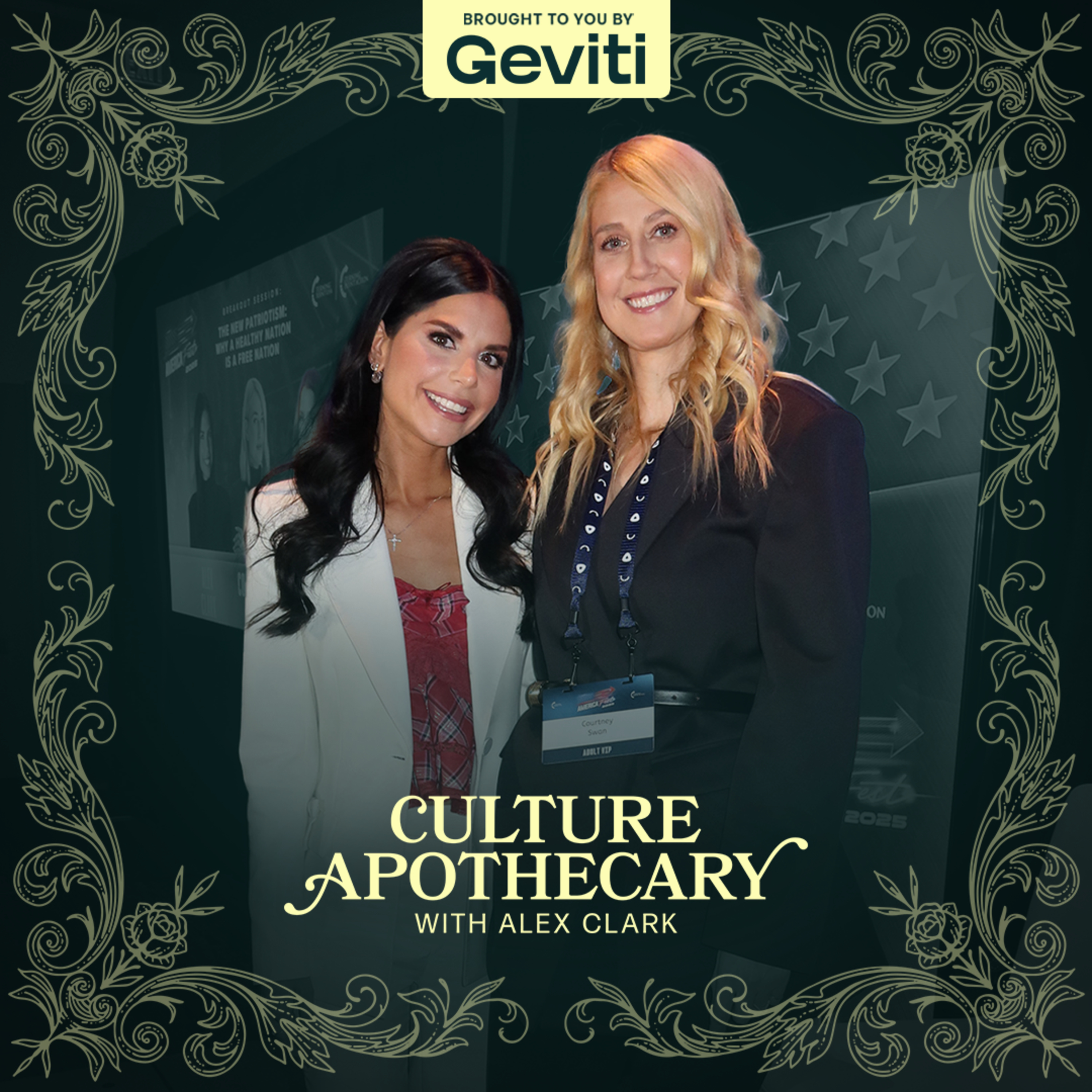
Culture Apothecary with Alex Clark
MAHA Tips, Tricks, & Wins | Alex Clark and Courtney Swan LIVE at AMFEST
00:47:47
Loading summary
Transcript97 lines
- [00:22]
A
Hey, everyone. Hi. Wow. Judging by how packed this room is and the line and the fighting that's happening in the hallway because they want to get in, I would say that we all really want to make America healthy again. My name is Alex Clark. I am the host of Culture Apothecary. It's a little health and wellness podcast. I don't know if you've heard of it. And this is my friend Courtney Swan, host of Real Foodology podcast. Courtney and I met last September, testifying at the Senate with RFK Jr. And Callie and Casey Means and the food babe, protesting and talking about the chronic disease epidemic that has absolutely rattled this country. And so I'm so proud of Courtney, and she's been in this space so much longer than me, and she's so much smarter than me. So we're really excited to hear from Courtney, but I thought we'd start first. Courtney, if you want to start talking about who you are, your credentials, and why you became a prominent Maha figure.
- [01:25]
B
Yeah. So I always joke that I was Maha way before Maha was actually a movement. I got started very young. My mom actually was cooking everything from scratch for me as a kid. And at the time, I didn't know how because I grew up in what I call the Dunkaroos generation. I mean, we were eating Dunkaroos and Pop Tarts, and all my friends were getting all this junk food that my mom wasn't allowing me to have. So I went to college, and I had an opposite experience where I was eating fast food that I wasn't eating before, and I was eating junk food. I gained weight really rapidly, and I felt super sick in my body. I had acne that I never had before. I felt fatigued. I just. I felt the way that I think many Americans feel eating the standard American diet. And I had this really unique perspective where I knew what it felt like to be. To feel really healthy and feel really good. And so I decided to go into nutrition. I started learning about how corrupt our food system is, and I became incredibly passionate about just sounding the alarm. I felt like so many people didn't know that. I mean, essentially, we're being poisoned, right? And I just needed an outlet, really, to share what I was learning. I went back to school. I got my master's of science in nutrition. I'm an integrative nutritionist. And I started Real Foodology as a way just to get this information out to everybody, because I felt like nobody knows that this is happening, and. Cause I think there's this general understanding that if you go to the grocery store, it must be safe and healthy to eat. Right. Which is actually not the case, and we're trying to fix that right now. So that's my story.
- [02:50]
A
Thank you. I'll tell mine quickly, in case you haven't heard it before. But basically, I was the Chicken nugget princess, Ultra processed food queen high school. Ate like six Rice Krispies and a fruit punch for lunch every single day. I was always so tired, had zero energy, thought that was completely normal because I was skinny. So I just thought, well, I'm clearly healthy.
- [03:14]
B
Call that skinny fat?
- [03:15]
A
Yes, skinny fat. I was rotting on the inside, had like 12 Dr. Peppers a day. And so, yeah, I was not the. I mean, it's really comical that I am, like, involved in making America healthy again. It's really weird for anyone that's known.
- [03:30]
B
Me for the rest of my life. Early years.
- [03:32]
A
But what happened was during the pandemic, they said that I had to get a vaccine to participate in the public life and keep my job and all of that. And I said, hell, no. This is demonic.
- [03:43]
B
Yes.
- [03:47]
A
And something really didn't sit right with me. And so I'm starting to look into Big Pharma, and I'm finding some stories about when the FDA has been wrong before. Like when they said that OxyContin was the first ever non addictive opioid. How'd that turn out? Not great. And I thought, wow, what if they're wrong this time? That would be pretty crazy. And so started looking into that, learning about hormonal birth control. Once you start going down the big pharma rabbit hole, you inevitably end up in the big food, you know, basement. And so that's where I was. And learning about, you know, Big Ag and Big Chemical, and it just. You just start learning all this stuff. And I realized I have no idea where my food comes from, that food is medicine, and that I don't have to feel this sick and tired. It's actually not normal. This is an exclusively American feeling and that most other countries do not feel like this at, you know, 25, 26 years old or whatever. And so I was super concerned and thought, I've got to start alerting my audience to everything that I'm learning. And during the pandemic, I started kind of changing my content slowly but surely on my podcast that is through Turning Point usa, to focus on more health and wellness topics. And then by last fall, I had rebranded to be exclusively a health and wellness podcast, talking about these issues, you know, spiritual health, emotional Health and physical health. So that's kind of our backgrounds. And, you know, with Courtney, she's actually an expert on this stuff. I'm on the journey with you guys. I'm learning as I go. Like I said, I was not healthy. I didn't even know how to cook. I don't even know if I knew how to boil water, honestly. So a lot has happened for me. So there's still so much to learn. So. So, Courtney, talk to us about this last year in Maha, for anyone that doesn't know, I mean, do you feel like we accomplished much? Did we accomplish? Not that much. A lot. How are we feeling about year one in the books with the Make America Healthy Again move?
- [05:40]
B
So I always say I've been in this movement for a long time. I actually remember watching previous presidents and absolutely begging them and hoping that we were really going to have a fighting chance as far as fighting big food and actually getting America's healthy. And we never really. I just. This is the first chance that I feel like we've ever had to actually do this because I watched every president up until Trump's second term not even mention that we're sick. And I always say, what is the first thing step into healing this and fixing this? We have to admit we have a problem, right? And Trump actually stood up and said, wow, we have a problem. Americans are really sick. And I'm going to appoint Bobby Kennedy to fix this. So that, to me already alone, is a win. We finally are admitting that we have a problem, and now we're starting to address it, which is huge. I think it's bigger than people understand now what Bobby is doing right now. There's a lot of things that I'm very, very excited about what Maha is doing. I think the food dyes thing was amazing. It got some pushback. But look, we should have never had those food dyes in our food in the first place. Place in the uk they already know, and they. They regulate it. They admit that it. It causes hyperactivity in children. What are we seeing in our schools right now? Kids are not able to pay attention. They're bouncing off the walls. Teachers are having a hard time getting them to pay attention. So that was a huge, huge win that we're getting the food dyes out of the food. He's also said that they're going to look at reformulating baby formula right now. The last time that we even looked at the regulations and how they formulate baby formula was in 1985. 5. If you have looked at conventional baby formula anytime recently. It is atrocious, the ingredients that are in there. And so he's actually looking at reformulating that so that the FDA standards are better and safer and healthier for babies. Because where does health start? It starts as an infant. And we want to get our babies healthy. So that is also a great one. The vaccine. They're. They're looking at the childhood vaccine schedule right now, which is incredible. This is such a huge win. They're looking at reevaluating all the vaccines on the childhood schedule, which is incredible. And there was one other one, and they're looking at the COVID vaccines right now, which, I mean, you just talked about. So there are a lot of huge wins. Oh, and there's another one, too. So Bobby Kennedy is actually working on rewriting the nutrition dietary guidelines. This is a really big deal right now. The nutrition guidelines that we have were largely written by Big Food. And it's why we're pushing these ultra processed foods so much and telling people that they're really healthy. And he said that we're going to rewrite them. Actually going to be written by nutrition professionals that aren't getting their information from Big Food. And it's going to be about four pages. Right now. It's about 200 pages. It's hard, it's confusing to follow. They want to make it easier for Americans to understand how to eat healthy and what the guidelines really are.
- [08:17]
A
A couple wins. I want to mention that she didn't mention we're bringing back the presidential fitness test to elementary schools. You're like, okay, that's, that's cute. But I don't understand why that's so important. It's so important because what happens is you start culturally changing the mindset around health in America. And it starts with young kids. We're bringing back prioritizing and understanding, you.
- [08:43]
C
Know, that the food that we eat.
- [08:44]
A
Is important, that ingredients matter, that movement matters, you know, the right healthy fats and all these different things. So that's super crucial that we're doing that with young kids instead of, you know, focusing on like, DEI woke crap. Let's focus on this.
- [09:03]
B
Yes.
- [09:08]
A
Another thing that was announced yesterday is that we are putting a ton of research into supporting and looking into D transitioners. That is huge. And also I, I believe, am I saying this right, that we are removing Medicaid from hospitals that are going to be butchering children? Is. I, I might be wrong, but it's something like that. They're not going to be supporting it. Basically, we're Going to make it incredibly difficult on hospitals that are insistent on performing ch child mutilation surgeries for kids who are claiming to be trans. So that. That's a massive issue because we have so many kids that are. That are hurting and forever mauled, basically. It's just so tragic. So that's really good. And then, well, we cut a bunch of corruption as far as the people who were kind of deciding things about vaccines. We fired a bunch of people.
- [10:02]
B
Oh, yeah, he replaced the entire. I'm forgetting what it's called right now. The VIP panel. Yeah, exactly.
- [10:09]
A
So that's a really big win, too. There's tons of wins, basically. Tons of wins.
- [10:12]
B
Yeah. Basically they're getting industry out, right? They're getting all these industry lobbyists out so that we can actually allow real experts in that don't have these ties to industry that can make decisions that are better for Americans, not just for the corporate interest of these companies.
- [10:26]
A
Okay, so looking at 20, 26, year two of Maha, what have we not tackled that you feel we need to be putting a lot more energy into?
- [10:36]
B
Well, first of all, I do want to remind people it took us about 70 years to get here. We're not going to fix this overnight. And I get it. So many of us are like, let's, let's get this moving. You know, Americans are getting harmed and we need to change this. So we're not going to change it overnight. And I feel like the changes that we have made so far, I mean, I'm impressed that we've even been able to get anything done yet. So I think it's been incredibly incredible. There's some things happening at the EPA right now that we're really not happy about. In fact, I've been super outspoken about this. Something that I'm really concerned about is all the pesticides and herbicides that we're spraying on our food. This is a really big deal, especially when you look around and you see how many. How cancer rates are rising. I think probably everyone in this room has been touched by cancer, whether they've had their own diagnosis or they know someone they love that has been touched by cancer. And we are spraying these known carcinogens on our food. And unfortunately, there have been some rollbacks happening at the EPA right now. Now we're working on it. MAHA is actually actively pushing back on this right now because there's certain chemicals that we're spraying on our food, like paraquat and diquat, that are banned in China, and we're still spraying it on our food here. Glyphosate is another one. That's the World Health Organization. Iarc, which is the International Agency for Research on Cancer, said that glyphosate is a probable human carcinogen back in 2015. And we still have not done anything about that. So what we are hoping and we're putting pressure on the EPA for them to do is for them to put a label on Roundup. It's also known as Roundup. So a lot of people probably have this in their homes as well and using it on their lawns. But it's also being heavily sprayed on our food, and it's ending up in our food supply. And almost 90% of Americans, we're finding glyphosate in their blood now because of this, because it's ending up in our food, it's ending up in our water. So we're trying to put pressure on the EPA to put a warning label on that because there's a really concerning thing happening. We don't know. They keep pushing the vote back, but essentially. So the vaccine liability shield of 1986, if you aren't aware of what that is going to make a comparison here. In 1986, we created the vaccine liability shield, making it to where if someone gets harmed by a vaccine, you cannot hold the companies liable. So the now Fast forward to 2025. Moving into 2026, we have the agrochemical companies like Monsanto, Bayer, Kim, China, Sygenta that make these chemicals that we're spraying on our food. They are looking for that same liability shield. And what's going to happen if that gets passed is that we're going to allow more chemicals to, to flood our food system and have more chemicals that are allowed to be sprayed on our farmland. We are trying to block this right now. This is a really, really big deal that's happening right now. They have tried many different ways to sneak this through. They've tried to sneak it into the farm bill and they're moving that vote until next year. They've also tried to sneak it into the recent appropriations bill. They're also going to be voting on that the end of January. They keep pushing back the vote. So it's kind of been hard to keep up with when they're going to do that, but now they're actually trying to, to bring it up to the Supreme Court so that they can get it passed that way. So they're essentially just trying any avenue they can to sneak this in. And it's a really big deal.
- [13:34]
A
And while they're trying to do this.
- [13:37]
C
What is it?
- [13:37]
A
60 something billion dollars is on the line in lawsuits or something like that with Bayer, am I right? Or a million.
- [13:43]
B
I don't know the exact number, but I can tell you this, that. So the reason that Bayer Monsanto is doing this is because they have been. I'm so glad he brought this up. Since 2018, they have been in lawsuit after lawsuit after lawsuit with mostly farmers that are getting non Hodgkin's lymphom from using glyphosate. And they at this point in time have paid over $2 billion to these farmers for getting cancer. And they keep losing in the court. So this is why they're going now to our government to essentially say we need help, we need to not be held liable for this anymore instead of just changing their products and to stop poisoning us. Now they're just looking for protection from the government.
- [14:20]
C
You're stuck in a traffic jam.
- [14:22]
A
Everyone around you is losing their minds.
- [14:24]
C
People screaming at their steering wheels and your coffee tastes like, like turds. But then you toss in Taylor Duke's Wellness Candy Cane protein and suddenly your car is a sleigh. Rudolph is your co pilot and your stress completely frosted over. This isn't sugar, it's not artificial. It's clean, functional ingredients that actually do things. Peppermint creamy blends perfectly. 20 grams of protein per scoop. Collagen rich, dairy free. I've been making peppermint latte smoothies, even adding it to my yogurt bowls. And it's basically like Mrs. Claus came to my kitchen to coach me on life. Seasonal though. Okay, once it's gone, it's Grinch time. Don't miss it. Head to Taylor DukesWellness.com use code Alex Clark for discount. This is their most popular protein powder flavor they have ever had. Your mornings are never going to taste this festive again. It's Taylor DukesWellness.com use code Alex Clark. Stock up because it's only seasonal and everybody wants it.
- [15:16]
A
I hear everything you're saying, Courtney, but like, what about all things in moderation?
- [15:24]
B
It's very hard to eat in moderation when over 60% of our diets and actually probably is about 70% of our diets now are ultra processed foods. It's also very hard to eat glyphosate in moderation when it's in literally everything. There was a recent study that was just done by the EWG and they tested popular grain products on the shelves. So let's say like Quaker Oats and Wheat Thins and they found that over 80% of these products had high levels of glyphosate in them. So it's very hard to eat in moderation when it's everywhere.
- [15:54]
A
Yeah, it's everywhere. And I think a lot of times.
- [15:56]
C
Even the food that we think, well.
- [15:58]
A
This is a healthier lunch, for example, you know, a turkey sandwich with some mayonnaise and lettuce and tomato. The deli meat that you're getting, it could have tons of sugar in it. The mayonnaise that you're eating could have seed oils, tons of sugar in it. The bread. Talk about what's wrong with the flour in this country.
- [16:19]
B
So we're enriching our flour in this country. So we strip it down and we process it so much that it essentially has no nutritional value. And then we're adding back in synthetic vitamins and minerals. We're adding in something called folic acid, which is, especially if you have a genetic SNP called MTHFR, which is over 60% of women have this genetic SNP. Folic acid is actually essentially poisonous for us. And we're enriching all of these products with folic acid and you're getting just a dead product. So by the time it gets to the shelf, essentially it's rancid. It's. It's synthetic vitamins in there. I've seen a lot of posts from Europeans coming over to America and they try to eat our bread and they go, what is, this is not bread. This is like sugary crap. Cause it's very sugary. There's a lot of additives in there, a lot of preservatives. I actually did an experiment at my house this year where I bought like 5 different store bought breads and left them in my pantry just to see how long they would mold. We were moving, so I bought them in. It was the December actually before, and my husband and I just moved in September and I found these bags, no mold, they were still squishy. The bread looked exactly the same as the day that I bought it.
- [17:27]
A
Let me tell you guys something. As Americans, we are so brainwashed. We think that, you know, we want our food to last as long as possible. We want it to go without mold as long as possible. This is why in Europe they're going to the market like every day, every other day to get their bread and their fresh produce and fruit. That is how food is supposed to be. That is real food. If you're, your food is not molding or going bad in a couple days max, you're not eating food.
- [17:52]
C
You think it's sold in the grocery.
- [17:54]
A
Store, it's food, right? It's not. 80% of the grocery store in America is not food. And so you have to start changing your mindset on that. Really. The only real food in a grocery store that you can find is going to be on the perimeter on the outside of the store. Your milk, your egg and milk, we can get into a whole thing about that.
- [18:10]
B
Got to be careful with that.
- [18:11]
A
Yeah, yeah. Your eggs, your, your, your meat, your produce, your fruit. That is the real food. The stuff in the center of the store isn't real food. And so for me, that was one of the craziest things that I learned. And when I, and then I started to understand the importance of knowing who your farmer is, knowing who your local rancher is, going to the farmer's market to get your fruits and vegetables, you know, on the weekends, things like that. And we just don't do that in America. And I also was freaked out when I interviewed this fifth generational rancher on my podcast and he talked about how when we have another pandemic, which, by the way, not if, when, if Walmart completely runs out of food and we go through a food supply issue again, Americans will start to starve within as little as three days. Because the average American, almost every single American, primarily relies on Walmart for their food. They have no idea where to get food besides Walmart. They do not know who their farmer is, they do not know who their rancher is. And so if that supply chain is disrupted, we are going to starve. And so this is honestly a survival issue, by the way. There is real freedom in health. Freedom. When you are a slave to the government telling you, you know, this is the only place that you can get food. This, this bad food is the only stuff that's good for you. You need to be on a hundred different, you know, pills and medications and SSRI and OIC and whatever. There's no freedom in that. And we can't rely, you know, it's great what Bobby Kennedy is doing, obviously, for some guidance, but at the end of the day, nobody cares about your.
- [19:41]
C
Health, health like you do.
- [19:43]
A
It's really up to us to care and care for our children and ask hard questions and challenge the schools about what they're feeding our kids for their breakfast and lunch. And asking, you know, at our church, hey, can I help supply, you know, the food for our small group this week or for the, you know, the coffee in the mornings? Can I provide a healthy Snack for the little breakfast before service starts, things like that. We have to start taking initiative on those things and kind of be that person in our community. So I just wanna say that, that.
- [20:12]
B
I think you also. There really needs to be a shift of understanding in this country how important our food really is. It is the foundation of our health. And what does Bobby Kennedy say all the time? A sick person has one goal, they have one dream, and that's to be well. When you are sick, the only thing you think about and you worry about is being well. Because when you don't feel good and you're sick and you're fighting for your life, you're not going to be able to show up for your family, you're not going to be able to show up for your job in the way you want to. Your brain's not going to be working as well. I think we really need to shift our whole mentality and really understand and respect how incredibly important our health is. And our food really makes a big deal. Our food really does make everything for that.
- [21:00]
A
Can you paint a picture of exactly how sick we are as Americans in present day?
- [21:07]
B
So it's estimated that only about 7% of Americans are metabolically healthy. So that means about 93% of Americans are unhealthy. 74% of Americans are either overweight or obese. It's pushing to about 50% of our children, if you want to look at alternatively, in Japan, they have about a 3% obesity rate. So it's not a human problem, it's an American problem. We are very sick. Majority of Americans are on three to five different medications. Chronic diseases. So it is estimated. I'm trying to remember the exact number, but it's over 50%. It's estimated that Americans have at least one chronic disease, if not three to four of them. And that's defined as diabetes, cardiovascular disease, obesity. The stats are not great. But what is really cool and exciting about this is that we can change this around pretty rapidly. Just changing your food and changing some of your lifestyle habits. Habits. Prioritizing sleep, getting sunlight, making sure that you're drinking good filtered water. And food, really, food is at the crux of all of this. People can change their diets and see a complete shift and reverse their type 2 diabetes. Even though we're being told that type 2 diabetes is irreversible, you're gonna be on medication for life. That is absolutely not true. All you need to do is make a diet and lifestyle change and you can actually reverse that with a doctor. I Recommend doing that with a doctor. But there are things that we can do in order to prioritize our our diets and our health, and it will actually move the needle.
- [22:39]
A
How do you know what type of food is real food?
- [22:42]
B
Yeah. So I named my podcast and my whole business Real Foodology because I learned very early on the power of real food. So I think we also need to define what an ultra processed food is. So my whole message is, I don't even believe in a diet. I just say, just eat real food. We need to be eating more real whole foods in their natural state. And ultra processed food is something that has been so adulterate and there's so many different additives and fillers and other ingredients there that you don't actually recognize this end product as something that's food. If our great grandparents were to time travel to today and walk through the grocery store and look at some of the food products that we have, I don't even call them food. I call them food like products, because they don't really actually resemble food anymore. They probably would go through the grocery store and go, I don't even know what half of this stuff is. Is this even edible? So real food is food in their most natural state. Whole, unprocessed, as little processing as possible. It doesn't mean that you can't ever buy anything in a package. But I have a really easy tip to know how to navigate the grocery store and know what is real versus what is fake. When you read that ingredient label on the back, this is the number one thing you want to do. By the way, just the front of the package is a billboard for the company. You never just want to go by the front of the package because they're trying to sell it to you and they're not always truthful about what is actually in that product. So you want to turn it around the back, read the ingredient label. It's already going to be a red flag if the ingredient label is this long. So you want it to be pretty simple, not a lot of ingredients. And if you know exactly where you could buy every single one of the ingredients in that ingredient label somewhere in the grocery store. I'm not saying you have to make it, but let's say you could technically, whoops, make that at home, that would be something that would be considered real food. So if you're looking at like a box of Cheez its and you see an ingredient on there that says bht, where are you going to find BHT in a grocery store aisle? You're not. And so that would be an ultra processed food and something that you would want to put back on the shelf.
- [24:40]
C
You think you're safe inside your house, right? Clean walls, comfy couch, maybe a plant or two. But science says the air indoors is often five to 10 times dirtier than outside air. So while you're chilling, watching Netflix, cooking eggs, lighting candles or lying in bed, you're breathing mold spores, pet dander, dust, VOCs from paint or furniture, leftover wildfire or cigarette smoke and God knows what else floating around unseen. Most air purifiers out there are basically decorating secretive. Meanwhile, the Jasper air scrubber is built with commercial grade power in a home friendly chassis. It's not some tabletop toy. This thing moves serious air, scrubs the particles and chemicals and runs quietly enough that you forget it's on. It uses a massive filter and is way bigger than typical consumer purifier so it can catch everything from dust and pollen to find wildfire smoke, VOCs, mold spores, pet dander, cooking smells, chemical off gassing from cleaning products and furniture. Oh my gosh, you guys, guys just had actually ptsd. I dated someone once. His apartment stunk so bad like burnt scrambled eggs. I don't know how to explain it. It smelled like burnt scrambled eggs in there. And this is before Jasper came into my life. And if we were dating when I had Jasper, I would have given him like four of these things because it smelled so bad. My apartment has no smell, zero smell. You plug these in, these smart sensors, start scanning air quality and whatever something dirty is happening, you're cooking, you're painting, your windows opening. After pollen season, Jasper automatically cranks up power and clears the air. With your windows closed all the time in winter, you need this real time protection, no thinking required. We're talking a lifetime quality investment. Your air matters. Just like the water you drink matters, okay? The products going on your body, this is all part of having a healthy living ecosystem in your home. It is not a disposable gadget. If you care about your health, health, your sleep quality, your kids breathing, this is far more than nice to have, okay? Because what you didn't even know was possible, feeling genuinely good air in your home becomes the new normal. If you're done pretending your living room is safe, because it isn't, go to Jasper Co. Grab yours. It's Jasper J A S P R dot co J A S P R dot Code Alex for a discount. That's right, code Alex Jasper co J A S P R doco Clean air isn't luxury co stop thinking that way. It is survival. Last week I'm taking a walk through the forests of Northern Arizona minding my own business when I see a bear literally curling her hair and wearing some weird mud mask and I think well if a bear is out here taking care of its skin, what the heck am I doing? Spoiler not enough. That's why I switched to Primly pure. Their luxury non toxic skincare like their face plumping serum and coffee body scrub for my dry winter skin are muss. I've never felt more like a human being instead of a stressed out bear. In winter everything is non toxic, clean and actually works. The Primally Pure award winning Soothing Spirulina face Mask calms inflammation noticeably, decreases redness, improves hydration and cellular structure, and relieves eczema, psoriasis and acne. I like to use this on multiple areas of the body. If I'm being honest, it's like the mother of all masks. Their holiday Whipped Body Butter really saved me on trips back home to bone chilling Indiana. No toxins, no nonsense, just organic real farm fresh ingredients. Primally Pure is conservative and Christian owned small batch beyond sustainable, making it the perfect gift this holiday season. Their holiday bundles, from cozy vanilla mint body care to cranberry red lip balms are designed to be intentional, luxurious and actually used. You're not gifting endocrine disruptors, you're gifting wellness. So stop panicking over last minute gifts. Be like the bear, but smarter. Head to primallypure.com use code Alex Clark for 15 off that's primally pure.com code Alex Clark for 15 off.
- [28:30]
A
Does organic really matter or is that a gimmick?
- [28:32]
B
Yeah, so I was talking about glyphosate earlier. The reason why organic is so incredibly important is because USDA organic is not allowed to be sprayed with glyphosate. So when we're talking about our fruits and our vegetables, you can guarantee that it wasn't sprayed with glyphosate. It also wasn't sprayed with atrazine, with paraquat, with dioquat. They're protecting us from a lot of the really hard, horrible agrochemicals that are the most concerning. And then when it comes to buying your meat and your dairy, organic has very strict regulations about what they can do with the dairy cows. So they can't inject them with growth hormones, they can't give them antibiotics, they can't give them pharmaceuticals, and they also are not allowed to be fed genetically modified feed. And if you get grass fed dairy and also cows. And it means that they were actually eating a species appropriate diet and probably given some corn and soy, but at least it wasn't genetically modified. So organic is incredibly important across the board because it just, it leaves out a lot of the, the pesticides and the GMOs and all the pharmaceuticals that we don't want to have in our bodies.
- [29:35]
A
I think also something important to bring up for people maybe in this room, maybe your family members that are like, why are you on this crazy health kick? I don't see why this matters. We're all going to die anyway. Et cetera, et cetera, et cetera. Is 67% of military age young men in this country are not eligible for military because of chronic disease. That should terrify the crap out of you. That becomes a national security issue at that point. And right now with the rise of left wing terror attacks, with Islamic terror attacks, we need to feel safe in this country. And who do we look to? We look to our military, right? We look to our police. And if they're all too sick and tired to protect us. Us. Who do we have? I mean, we have ourselves essentially, and we know that. But that is another barrier that we are supposed to have confidence in that I'm losing some confidence in because the, how unhealthy we are. And that affects so many different areas of American life that we don't even necessarily think about like our safety physically. So that's something important to bring up to your family members that like, don't really get this.
- [30:48]
B
Okay, Speaking of safety, I actually have a really powerful story about this. So Americans are also not fully connecting our diets and how it's affecting our brains and our mental health. So we have a good friend, Zen Honeycutts, who started a company called Moms Across America. And she had a mom reach out to her a couple years ago and her son was acting up in school and she kept telling the school, I'm really worried about my son. I feel like he's acting erratic. Can you help me? I don't know what to do. And they kind of ignored it it. So one day the school called her and said, you need to pick up your son. He's saying that he's going to like bomb the school. Like he was saying all this crazy stuff. And this kid's eight by the way, so picks him up, takes him to a psychiatrist. I'm blown away the psychiatrist actually told him this, but the psychiatrist told the mom, you have two options. You either need to change your son's diet and put him on all real food or you need to put him on some sort of medication. The mom decided to change his diet. So she got all of the chicken fingers, the ultra processed foods. So all the crap out of his diet that we've been talking about. So all the, the additives, which total side note, all these fillers and additives that add up. If you were just to look at all the labels of all the foods that you're eating every day and you add up all those different additives that you're eating and you think about what those are all doing in combination with your body, we actually don't know. No one's studying that right now. And we're seeing an effect on the mental health of the youth of this country. And so when she got all those additives out of her food, she said that the school called her two weeks later and they said, whatever you're doing, it's working. This is a different child. And all she did was change his food and got him to eat real foods and stopped feeding him all the ultra processed crap. So it is definitely having an effect on the children in this country and their brains.
- [32:33]
A
Food is literally medicine. And one of the reasons why you think we eat all the time, you know, Americans are so privileged. We always have access to food, so we have no issues. In reality, Americans are starving. We're actually starving because we are not eating true, real, satiating food. That's why you're always hungry. That's why you're eating more and more and we're eating more and more food and yet we are so dehydrated and mineral deficient and nutrient deficient. So we're eating all this food, but it's totally dead devoid of any minerals. We're drinking all this water and we're incredibly dehydrated because we're drinking this purified bottled water that is stripped of all of the minerals that we need. The food that we're eating is grown in the soil that is total depleted of of minerals and nutrients that we need to grow our food in. It's an entire crazy circle. So one recommendation I have is that if you have an option, sometimes there's no option. And water is better than pop. Sorry, I'm from Indiana. I should trigger warning. Water is always going to be a better choice. However, if you are like at the airport or whatever and you have an option, you have spring or you have purified, I always tell people, opt for spring because that has all of the electrolytes that are natural in the water. So I love electrolyte packets, but really you don't need electrolytes if the water you're drinking is spring and has all the minerals in it. You want those electrolyte packets if the water you're drinking is purified, because then you need to put those back in and, you know, the flavors are fun, whatever, I get it. But I'm just saying you don't have to do that if you're drinking real water. And then can you talk about how the soil that we're growing our food in right now is stripped and this plays into the chemicals that we're using in the epa?
- [34:07]
B
Yeah, this is something I'm really passionate about. There's actually a film that you can watch called Common Ground and another film called Kiss the Ground if you want to learn more about this. But I'll give a. A little skim of it. So what we're doing right now with our conventional farming, because we're spraying so much with these pesticides and herbicides, it's killing that natural ecosystem that exists in the soil. And what we've learned is that this isn't just some, ew, some gross bugs that we need to eradicate. There's actually this amazing ecosystem, similar actually to what we have in our guts that we're starting to learn about our microbiome. Right. We have this beautiful microbiome full of good and bad bacteria that actually live in symbiosis together to build our immune system and provide so many functions for our body. Well, it's very similar in the soil. It has an ecosystem of good and bad bacteria in there. And when we're spraying with all these chemicals, we're actually killing all of that ecosystem and we're wiping it out. And what happens is that's actually food for the plants. And so another thing that we're seeing in America right now is that we're seeing our produce nutritional density completely plummet. They're saying that a tomato today has not even a third of the nutritional value that it had 50 years ago. And it's largely because of what we're doing to our soil right now. We're essentially seeing this desertification happening because the soil is dead that we're planting our food in. So I'm a huge proponent of something called regenerative farming, which means that we are working with nature. We're working with nature as God intended, right to farm. And we're not using all these chemicals. And something that, you know, this might be a little bit controversial I feel like in the contro. In the conservative world, but one of the big headlines that we're seeing all the time is, oh my God, there's so much carbon in the atmosphere, right? Like we're trying to reduce the carbon. Well, there is this beautiful design that God did that when the soil is healthy, it's actually pulling carbon from the atmosphere because it's food. Carbon is food for the plants. And so when the plants have enough food, then we get more nutritional dense food for us as well produce. So it's destroying our soil, it's destroying our health. And something that I'm actually really excited about, that I forgot to mention earlier about Maja, is that we just announced with the USDA that they're putting $70 million into, or sorry, $700 million into regenerative farming to start helping more farmers switch over to regenerative farming, which is huge.
- [36:27]
A
That is a great little maha topic that can bridge a gap between you and your liberal friends because they're always like pooping their pants over climate change, right? They love regenerative farming because of the climate change stuff. And I mean, that can be debated. But like, the point is, it's whatever. If they want to say that they support regenerative farming for climate, great. We support it because it gives us healthier food in environment and, and the whole thing, better soil to grow our food in. So we support it for that reason. So if we can all come together and just say, yay, let's agree to push, you know, legislators to back this and support it, by all means.
- [37:05]
C
I just got off the phone with a friend who lives in North Pole. Yeah, the literal North Pole. She's like, you've heard about Rudolph, right? I'm like, no, what happened? She goes, he's a chain smoker, has zero friends, goes to the bar alone, goes home alone. Basically, he's a sad lump of just despair. And I'm like, how does this guy even sleep? And that's when it hit me. He doesn't. He's tossing and turning like a cold, bitter reindeer ghost. And that's where cozy earth comes in these sheets made from viscos from bamboo. Oh, they make me emotional.
- [37:38]
B
They're so comfy.
- [37:39]
C
They're temperature regulating moisture wicking. You lay down, it's like the sun goes on vacation. The air conditioner is personally attending to you now. Well, on second thought, that may not.
- [37:48]
A
Be great for Rudolph, but it would.
- [37:49]
C
Be good for you living in the US of A, right? Especially when your wife is cranking the heat in the winter. And for the first time in your miserable little life, you're actually sleeping. I've tried them. My sleep has gone from walking corpse to mildly functioning corpse in like one night. It's not just sheets. They've got studio pants that are softer than a baby seal's cheek all day, teas that are breathable enough that you could wear them in a sauna and not die. Basically everything you need to survive the world. And the best part, Cozy earth has a 100 night sleep trial. That's right. Three months of testing these things and the literal hottest nightmares of summer or blazing heat of winter when you've got that stuff cranked in the fireplace on. And if you hate them, you can return them. Also a 10 year warranty. 10 years. Go to cozyearth.com use code Alex for 40% off. That's cozyearth.com use Code Alex for 40 off.
- [38:36]
A
No matter what time of year it.
- [38:37]
C
Is, these sheets are going to help you sleep cooler, lounge lighter and stay cozy. I recently had what felt like an emotional breakup with my old makeup bag. I was cleaning it out and realized half the ingredients look like someone spilled Scrabble tiles. And with how many studies point to endocrine disruptors and common cosmetics, I thought, yeah, it's time. This is you, right? Adele Natural Cosmetics can help. It was founded out of a real health journey. Arlene Dy started the company in 2014 after discovering just how harmful mainstream cosmetic ingredients can be. And now everything they make is handcrafted in small batches. And Central Texas. It's a Christian conservative company using sources only from sustainable farms. And because we're officially in dry skin season, fall and winter are really brutal. I know this better than anybody. Adele's aloe hydrating spray is going to be essential. Speaking of essential, essential moisturize, which nourishes without heaviness. Their body oil, which conceal in hydration after a shower. Their moisturizing foundation is a huge fan favorite. It's lightweight, breathable, natural finish. You definitely want to order the liquid foundation brush with that. Many of you forget to do that. The lip conditioner has hyaluronic acid, so it is so good. First of all, it's going to really help with minimizing fine lines, but it really does keep you hydrated. I keep one in every bag. Their glow highlighter, if you love a face highlighter, makes you instantly look alive even if you did not sleep enough and there's no talc or anything bad. Adele is beauty with purpose, integrity and heart. And the Packaging is stunning. You're going to want this displayed on your counter. Go to Adele natural cosmetics.com use code Alex for 25% off your first order. That's Adele natural cosmetics.com code Alex for 25% off.
- [40:09]
B
I was wondering, how do we balance practicality in the health world? Meaning practicality, meaning affordable, simple and most convenient. So I don't think, I think we overly complicate it. In this country you don't need all the powders and the tonics and all this excess stuff. It's great if you, you have extra money for it, right? And you don't need the red lights and all this stuff. Just, you know, go outside and get sunlight and just focus on eating real food. If you really just focus on seeing how many, how much nutrient dense foods you can buy and just focus on the food that you're buying and not be so worried about all of the other powders and the supplements and everything that they're trying to sell you on Instagram and social media. I feel like that's a really good start. I also think too that I'd be remiss not to say this, I said this earlier. I think we need to change our mentality around how important food is. In this country we spend the lowest amount of our paycheck on our food. In other countries they spend the most of their paycheck on their food. So we need to not be postmating so much. Maybe don't go out to eat so many times and prioritize that money to cook at home because it actually is quite affordable if you're cooking all your meals from home or majority of them from home. And if you're stretched for time, meal prep ahead, cook a bunch of stuff, put it in the freezer. I cook a lot of stuff on Sundays and I'll pop it in the freezer and then I can just reheat it in the morning when I have a really quick busy day.
- [41:32]
A
Also, it's an extra. If you can't afford grass fed, grass finished, organic, that's okay. Still get ground beef over a hot pocket. You see what I'm saying? So like if you can't do pasturized eggs, still an egg is better than nothing. So that's the type of thinking it, you know, if you can't afford organic and things like that, those are the extras. There's a tier system, obviously that's the best of the best if you can afford it. But if you can or if you can't, then still prioritizing real food. You know, if. If you're in college, in the food cafeteria, all there is is hamburgers, then I would, you know, get a hamburger. Get the.
- [42:03]
C
The.
- [42:03]
B
The.
- [42:04]
A
Take the bun off.
- [42:05]
C
Yeah.
- [42:05]
A
Get the meat and the lettuce and the tomato and the cheese and. And have that with a fork. And don't eat the bun. Like, little things like that will help you be healthier. Okay, next question.
- [42:15]
D
We have one right over here. You were mentioning an ingredient list. Just like looking on packages.
- [42:22]
C
Thank you.
- [42:23]
D
One that I was wondering about is natural flavors. Because a lot of the things that seem to be healthy and have eight ingredients, and it's like, oh, that looks pretty healthy. And then you're looking at those ingredients, and you're like, how are you getting that type of flavor with those ingredients? Like, if I try cooking that in my house or even sparkling water, it's like carbonated water and natural flavors, and you can't get that flavor without.
- [42:45]
A
That's a really good question.
- [42:47]
B
Great question. I hate to be the bearer of bad news. I'm not a fan of natural flavors. Flavors. And I'll tell you why. So I actually have an insider into this now because I'm working on my own products currently. And what we have found is that these manufacturers, they're hiding so many ingredients under natural flavors. And so a lot of these companies are tricking you. There's a perfect example of something that I found the other day. Chobani Creamer. If you read that ingredient label, you think, oh, this looks so simple. It's milk, it's cream, it's sugar.
- [43:14]
A
Somebody just, like, literally pooped their pants in here.
- [43:19]
B
It looks so simple on the label. And this is what a lot of these food companies are doing now, because they know that shoppers are getting smarter and they're looking for short ingredient lists. They don't want to see a lot of ingredients on there. And so these companies are hiding all these other ingredients under natural flavors. In fact, there was an electrolyte company that just got caught by hiding. They're hiding maltodextrin under their natural flavors, which can really spike blood glucose levels and can have an effect on people that are diabetic. It's called element. Yikes. So I would avoid natural flavors as much as you possibly can, because they're sneaking a lot of ingredients under there that we don't even know what they are.
- [43:55]
A
And not the food version of that, but the body care product version of that is fragrance. Anything that says perfume or fragrance, there's like a bajillion ingredients Hidden in that. So never use stuff that says fragrance or perfume, ever. Your deodorant, your body wash, a can, car air fresheners.
- [44:13]
C
Making you gay.
- [44:13]
A
That's a whole other thing. I've talked about it. You can go back and listen to other stuff. Anyway, I actually, I'm going to. Do we have to wrap up?
- [44:22]
B
We have the last.
- [44:24]
A
Okay, last two questions.
- [44:25]
B
Last two questions are lined up right here. What about getting chemicals out of our bodies?
- [44:33]
A
Like by using binders and detox?
- [44:37]
B
Yeah. So I would highly recommend working with a doctor on this because it is a little bit more complicated than what I can even explain. But I can give you some of the basics. Because we're being exposed to all these chemicals, obviously we want to get them out of our body. One great way to do that is get your lymphatic system moving. And just by simply exercising every day and getting your lymph moving will be a great. Yes. You want to sweat. So poop.
- [44:59]
A
Sweat. There you go. I've said poop three times. Four times.
- [45:05]
B
We love it. Sweating is a big one. If you have access to a sauna, amazing. If you don't do a hot Epsom salt bath to get some sweat going while you do that, while you sauna, or you're doing the Epsom salt bath, take something called activated charcoal and it'll help bind some of that stuff. But it is a little bit more complicated and I think if you can find a practitioner that can help you with that, it would be helpful. I actually do have a practitioner. My dad is a functional medicine.
- [45:29]
C
What?
- [45:30]
A
You've got the whole source right in your home.
- [45:33]
B
Yes.
- [45:34]
A
Be going to. You see, he actually has a. That's great. Thank you. Great question.
- [45:40]
B
Is there any weight to going to our state legislatures and trying to get movements on bans in these kind of foods in our own state, or does this have to be like a national country wide. Yes.
- [45:53]
A
No, there is.
- [45:54]
B
It's happening right now.
- [45:55]
A
Yeah, we've. We've gotten soda off of Snap.
- [45:58]
B
Yeah. And Arizona's working on this right now. We're.
- [46:01]
A
We're going to ban ultra processed food from school lunches in Arizona. I mean, multiple states are doing this, so it is important. And by the way, anyone, and I mean literally anyone can testify at your state senate. So if they do a state senate hearing on one of these bills about like Snap soda on Snap or ultra processed food and kids lunches or any, any maha issue, the public is welcome to. You can write notes. You can have like, you know, a couple paragraphs and say, hey, this is why I oppose this, or this is why I support this. And you can speak. You just go in your courthouse and put your name down. It's very easy, and we need you guys to be doing that. We've both done that.
- [46:36]
B
Yeah. And I'll just say, because we were talking about wins, Texas and Louisiana just signed in Maha bills to start getting some of this crap out of our food.
- [46:44]
C
Yeah.
- [46:49]
A
Guys, subscribe to Real Foodology. That's her podcast. Culture. Apothecary is mine. Before you leave, I want to tell you something. This is really important. Important. Don't snitch on me. I am about to speak on the main stage at, like, I don't know, noon, 12, 18, something like that. Somewhere in there, look on your schedule. I need you guys to all be in there hooting and hollering and freaking out because I'm about to give the most controversial speech. There are many people that are at this conference that are trying to get me to not give this speech. I'm being heavily pressured. I'm very nervous, and I really need your support. So if you support Maha, Please come. Please come and support me. And I need you guys to be my clap people. All right? So thank you for coming. Thank you.