
Podcast
Curious Worldview
Hosted by Ryan Faulkner · EN
Interviews featuring a mix of investigative journalists, affecting writers, economics, geopolitics, explorers and fascinating life stories.
Check out the 'Starter Packs' I put together for the best place to start with the pod... https://curiousworldview.notion.site/Curious-Worldview-Podcast-Guide-412b6a244ebe42b4b46994ed9e4823b5
Subscribe to the Substack: https://curiousworldviewpod.substack.com/subscribe
Whether it's the supply chain of semi-conductors, a 25 year cold-war CIA veteran, negotiation with Chris Voss, Warden of Sweden's biggest prison, Lawrence Krauss and the universe, Cricket with the GOAT Gideon Haigh, Taiwan, China, the great adventurers and explorers the list goes on...
33episodes
Episodes
Newest firstAll episodes

Dennis Voznesenski | How Agriculture Explains Geopolitics
Feb 1600:57:25Tap to summarizeWar & Wheat - Dennis VoznesenskiMy Substack (Subscribe)*Leave a review on Apple or Spotify* (nothing does more to help grow the show)Podcast Starter PacksOffshore Finance/Kleptocracy & Money LaunderingGeopolitics/Economics/Economic DevelopmentExplorers & AdventurersInvestigative Journalists---Dennis Voznesenski is an Australian analyst who has spent his career deep in the world of global agriculture. He is the author of 'War & Wheat'.In this conversation, Dennis explains how geopolitical forces, from trade wars to energy policy, ripple through agricultural markets in ways that are difficult to predict but impossible to ignore. We discuss the unique position of Australian farmers, who compete on the global stage without the subsidies that prop up producers in the US, Europe, and beyond. The unbelievable masses of production. The efficiency of it. How the America's are basically where it all comes from. We get into why farmers are increasingly investing in on-farm storage as a strategic response to volatile markets, how infrastructure gaps in developing regions are holding back enormous agricultural potential, and the tension between the push for greater productivity and the long-term sustainability of the land itself. Dennis also walks us through how historical events provide essential context for understanding where agricultural markets are heading today, and helps explain the current moment through the lens of agriculture. Timstamps.00:00 The Global Landscape of Agriculture12:11 Insights from the Agricultural Industry24:38 The Role of Technology and Innovation31:22 The Impact of Global Events on Agriculture52:56 Future Prospects and Opportunities
Transcribe →
Jeff Farrell | Venezuela... Latin American Correspondent & 'Cocaine Dairies'
Feb 201:27:29Tap to summarizeJeff Farrell 'Cocaine Diaries' My Substack (Subscribe)Jeff Farrell Website*Leave a review on Apple or Spotify* (nothing does more to help grow the show)Podcast Starter PacksOffshore Finance/Kleptocracy & Money LaunderingGeopolitics/Economics/Economic DevelopmentExplorers & AdventurersInvestigative Journalists---When Irish journalist Jeff Farrell arrived in Venezuela during the Chávez years as a Latin American correspondent, he couldn't have chanced a more serendipitous encounter that lead to one of the most harrowing stories he'd ever tell. That encounter was with the Irish drug mule, Paul Keeney, and his story that followed became the bestselling book, 'Cocaine Diaries', which pulls back the curtain on the nightmarish reality of Venezuela's prison system: the corruption, the violence, the abuse and the absurdity.Jeff discusses the extraordinary risks facing foreign correspondents trying to report from Venezuela today, where journalists are turned back at the airport and armed civilian militias called 'colectivos' who patrol the streets. We discuss his forthcoming novel 'Last Call of Caracas', which he's been writing for eight years and life imitated art a bit early in this case because by sheer coincidence, the novel ruptures to a scene of the US attacking Venezuela Throughout it all, Jeff reflects on a country he clearly loves but can no longer safely visit—and holds onto hope that one day, when the regime falls and the diaspora returns, he might get to write something positive about Venezuela for a change.Timestamps00:00 Jeff Farrell & The Story03:00 The Risks of Reporting from Venezuela06:13 The Challenges of Foreign Correspondence09:03 Life Under a Regime of Fear11:59 The Complexities of Venezuelan Society14:57 The Impact of Corruption and Socialism18:12 The Beauty and Paradox of Venezuela21:06 The Geography and Demographics of Venezuela24:04 The Journey of a Foreign Correspondent27:07 The Serendipitous Encounter with Paul Keeney44:27 A Journey into the Venezuelan Prison System51:47 Serendipity and the Book Deal54:07 Paul Keeney's Life and Struggles01:00:22 The Harsh Realities of Venezuelan Prisons01:08:14 Escape from Venezuela01:13:54 The Aftermath of the Book and Future Plans01:18:04 Reflections on Journalism and Human Experience
Transcribe →
Jeremy Dicker | 10 Geopolitical Predictions For 2026
Jan 2601:36:55Tap to summarizeInternational Intrigue - NewsletterMy Substack (Subscribe)*Leave a review on Apple or Spotify* (nothing does more to help grow the show)---Previous guests on the podcast similar to this!Robert Kaplan - A World In CrisisPodcast Starter PacksOffshore Finance/Kleptocracy & Money LaunderingGeopolitics/Economics/Economic DevelopmentExplorers & AdventurersInvestigative Journalists---Jeremy Dicker is a co-founder of International Intrigue, a daily geopolitics newsletter delivered to over 150,000 inboxes worldwide.Before entrepreneurship, Jeremy spent 14 years as an Australian diplomat, with postings in both Latin and North America, Peru, Mexico and LA specifically.International Intrigue was born during London lockdown when Jeremy and his co-founders (fellow former diplomats) jumped on the new media of newsletter’s nascent industry and decided to write to make geopolitics accessible, witty, and funnyJeremey boasts that the writers from ‘The Diplomat’ read the newsletter which is a huge flex given just how good that TV show is. Jeremy and his team published a 25 predictions for 2026 article just a few weeks ago and that’s exactly what we go through on todays episode. Timestamps00:00 - Jeremy & International Intrigue01:01 - Taiwan & Global Disorder11:35 - Prediction 1: Europe's Reliance on the US21:09 - Prediction 2: Cryptocurrency's Mainstream Adoption28:22 - Prediction 3: Nuclear Energy and Tech Giants33:13 - Prediction 4:AI and the Bubble Debate39:59 - Prediction 5: Russia Ukraine42:44 - Prediction 6: The Pink Tide: Shifts in Latin American Politics58:24 Prediction 7: Climate Change01:08:32 - Diplomacy and National Interests: Balancing Values and Policies01:09:03 - Prediction 8: BRICS vs Quad01:15:12 - US Foreign Policy and Global Dynamics01:19:11 - Diplomatic Challenges Under Trump01:26:12 - Prediction 9: The Future of the UN and Global Governance01:30:02 - Prediction 10: China's Technological Ascendancy01:34:53 - Australia's Role in Global Affairs
Transcribe →
Nicolas Niarchos | Cobalt, China & The Congo... The Elements Of Power
Jan 1901:17:31Tap to summarizeThe Elements of Power - Nicolas NiarchosMy Substack (Subscribe)*Leave a review on Apple or Spotify* (nothing does more to help grow the show)---Previous guests on the podcast similar to this!Nicolas Niarchos First Appearance On The PodTim Butcher - Blood River (CLASSIC EP)Adam Hochschild - King Leopold's GhostJon Lee Anderson - New Yorker Staff Writer, A Life Of AdventurePodcast Starter PacksOffshore Finance/Kleptocracy & Money LaunderingGeopolitics/Economics/Economic DevelopmentExplorers & AdventurersInvestigative Journalists---In this episode, New Yorker journalist Nicolas Niarchos discusses the supply chains behind the clean energy transition from child miners and Chinese-owned mega-mines to the coming global scramble for critical minerals.I’ve been eagerly anticipating his new book, and I reckon it is tailor made for this podcast. It’s the history of cobalt it’s extraction and it’s applications and shows how a single mineral has reshaped geopolitics, powered the rise of China’s technological superiority, and further locked millions of Congolese into one of the most brutal extraction economies on earth.This is a story that begins with King Leopold the second the original plunder of the Congo but then runs through Cold War dictatorships and kleptocracy, and ends with Apple, Tesla, BYD, and the race to dominate the future of energy.It’s Nic’s second appearance on this podcast on a similar subject, therefore we avoided to go-over all the same ground as last time. The first episode was about his New Yorker piece on artisanal mining in the Congo, his arrest in the Congo and the foundations for his worldview in covering this issue.Today we go into his new book. Inside the mines of Katanga, inside the rise of China’s battery empire, inside the corruption that still governs Congo’s political system, and inside the coming resource wars that will define the next half-century.Eighty percent of the world’s cobalt now comes from the Congo.Most of it is controlled by Chinese companies.As much as 20% of it is still dug out of the ground by hand.Kinshasa, Congo’s capital, is expected to have 40,000,000 people by 2050.And the world is about to need more of what’s beneath their feet than ever before.
Transcribe →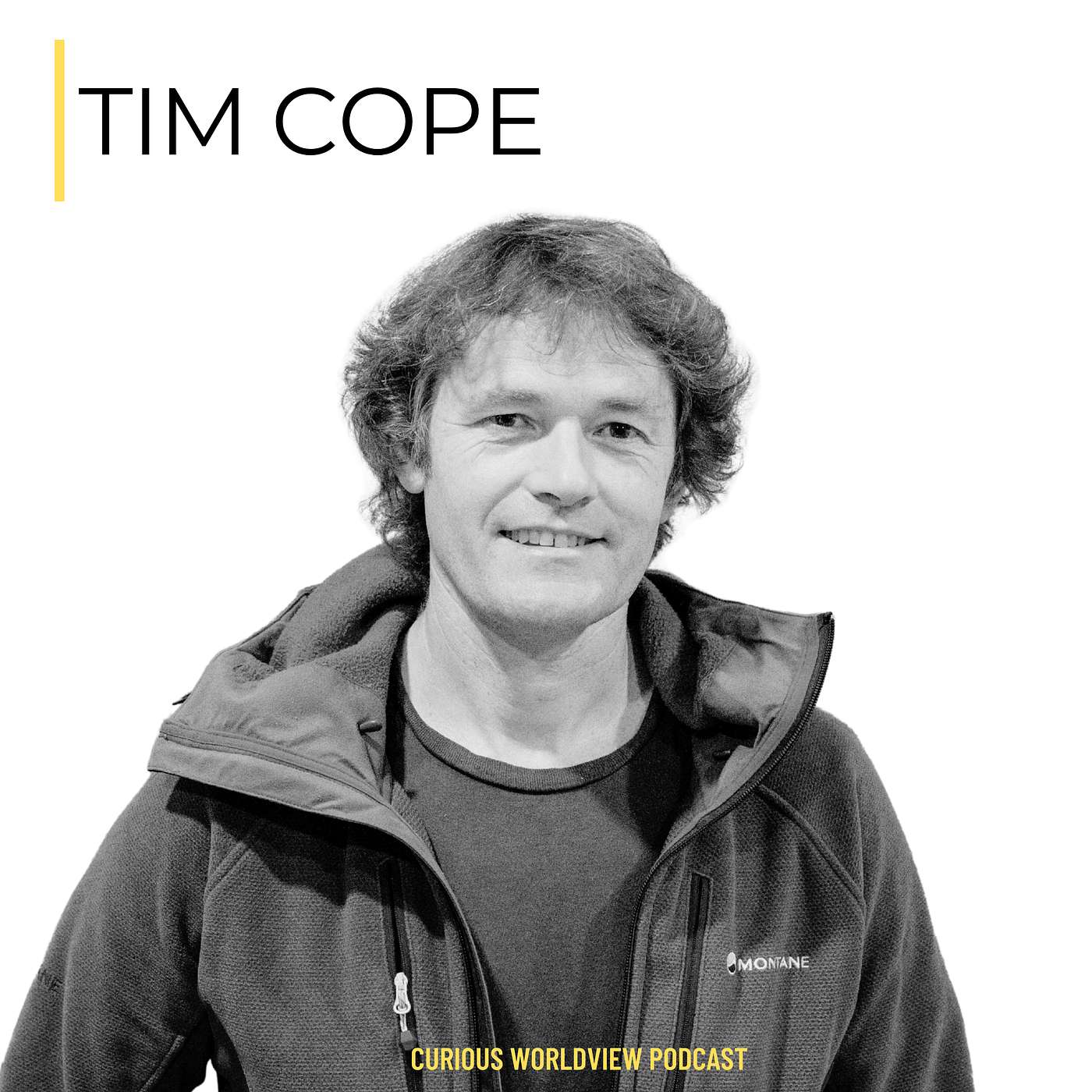
Tim Cope | In The Shadow Of Genghis Khan - 10,000km & 3 Years On Horseback Across The Mongol Empire's Eurasian Steppe
Dec 2202:59:19Tap to summarizeOn The Trail Of Genghis Khan - Tim Cope (Book)My Substack (Subscribe)*Leave a review on Apple or Spotify* (nothing does more to help grow the show)---Previous guests on the podcast similar to this!Jack Weatherford - Genghis Khan & The Making Of The Modern WorldRobyn Davidson - Australian Living Legend. Documenter Of Nomads.Jon Lee Anderson - New Yorker Staff Writer, A Life Of Adventure.---Tim Cope underwent a three year journey traversing the entire Eurasian steppe, starting in Karakorum, the old Mongolian capital, westwards through Mongolia, Kazakhstan, Russia, Ukraine and finally Hungary until he reached the Danube river. The journey took him three years to complete and 4 horses. He picked up a dog along the way, and his journey saw him robbed, threatened, welcomed and exposed to murderous heat and cold.I first wrote to Tim 4 years ago… so we’ve maintained a very spotty correspondence in anticipation for today. Tim Cope is is an Australian adventurer, author, filmmaker, photographer, expedition guide - a fluent Russian speaker - a bloody good writer and someone generous enough to offer me their time and invite me into their home here in rural Victoria. Timestamps.00:00 - Tim Cope02:50 - The Magic Of The Steppe10:10 - Tim's Coma & Writing13:15 - Tim's Backstory24:50 - On The Trail Of Genghis Khan33:01 - The Eurasian Steppe37:41 - The Decline Of Nomadic Cultures46:27 - Entering Into Kazakhstan & Finding A Dog1:02:55 - Tim's Growing Reputation On The Steppe1:10:50 - Alcoholism On The Steppe1:19:12 - Abandoned Goldmine For The Winter1:38:45 - Prostitution 1:50:00 - Tim's Father Passing Away2:05:46 - Hungary2:12:30 - The Problem Of Fitting Back In2:24:50 - Success & Book Publishing2:31:00 - How Mongolia Has Changed2:44:10 - Tim's Evolving Thoughts On Both Russia & Ukraine
Transcribe →
Eric Beecher| The Rogues Gallery Of Media Moguls & The Men Who Killed The News
Dec 100:52:29Tap to summarizeThe Men Who Killed The News (Book)My Substack (Subscribe)* Consider leaving a review on Apple or Spotify * (nothing does more to help grow the show)---Eric Beecher is a veteran journalist, editor and entrepreneur whose experienced first hand the dramatic evolution of the previous 40 years of media. From broadsheet’s to TV to the internet to facebook, podcasts, now AI. Eric has been across all these, both an employee and employer as the business models were repeatedly shaken and recast. And he asks, what is the cumulative damage when owners of journalism place profits and power over civic responsibility and decency. That book is called, ‘The Men Who Killed The News’ and series a history of media moguldom, the perennial story of power and influence chipping away ever so gradually, the role good journalism esteems in helping us make sense of the world. It’s not nostalgia for the good old days, but rather an attempt to understand how we got here, and whether there is anything that can be done about it.Eric was formerly the youngest editor at the Sydney Morning Herald before being recruited by Murdoch himself to run at the time, his latest media acquisition, before resigning sighting ethical differences. Eric runs today alongside his colleagues, Crikey, The Mandarin and SmartCompany. Eric is a major architect of modern Australian independent media, and it is my pleasure to welcome him to the podcast.
Transcribe →
Gareth Gore | Political Fallout & 'Smear Campaign' From Opus Dei
Nov 1700:50:37Tap to summarizeGareth Gore | Unveiling The Conspiracy Of Opus Dei (his first appearance)Gareth Gore - Opus (Amazon)Subscribe To The Curious Worldview Substack---This is Gareth’s second appearance on the podcast. It is the political fallout from everything covered in our first episode where he told the story for how he serendipitously uncovered Opus Dei’s hidden power and financial manipulation while investigating the ruins of the Spanish bank, Banco Popular. It began as a routine story but evolved into the discovery of a global network of manipulation, coercive recruitment, psychological abuse, and enormous financial flows routed through myriad opaque foundations. Gareth spoke about how Opus Dei maintains a polished, benign public image, but secretly operates an inner core of numeraries—members bound by vows of obedience, chastity, and poverty—who are tightly controlled, isolated, and monitored.It’s systematic practices include corporal mortification, constant surveillance, abuse, both emotional and physical and the exploitation of vulnerable young women tantamount to human trafficking. Opus Dei used Banco Popular as a piggy bank for decades, funnelling money through shell foundations and offshore channels to fund their impressive global expansion.This is a Direct quote from Gareth’s first appearance… “This is an organisation that seeks to re-Christianize of the entire world… Opus Dei is informed by a warped, distorted, conservative, radical reading of the Bible. It embeds itself in key institutions, especially in the United States. and Despite its Vatican legitimacy, Opus Dei uses secrecy and corporate structures to evade accountability.
Transcribe →
Gideon Haigh | The Love Of Cricket, Archives & Eclectic Curiosities - Doyen Of Cricket History & Correspondence
Nov 601:45:27Tap to summarizeA probe into Gideon Haigh's worldview, someone I've anticipated interviewing ever since this podcast began. Some highlights from the podcast.On cricket: “Cricket marches backwards into the future — always haunted by its past.”On Warne: “He had perfect superficiality and the gift of putting everyone at ease.”On journalism: “Legacy media has become mindlessly negative. If they can’t own it, they destroy it.”On new media: “It’s amazingly empowering to write something and press publish — no intermediaries, no gatekeepers.”On India: “India has become the gravitational centre of world cricket — a nation full of gods, and some of them play cricket.”On memory: “Memory is a slippery thing — journalists are constantly trying to pin it down, trusting it when it suits us, interrogating it when it doesn’t.”Gideon is a veteran journalist, author and the most eclectic cricket writer alive today. He has prolific output. He’s published more than 50 books and thousands of articles scoping a gamut of topics. Work, bureaucracy, the office, Australian crime, banks, business, scandals, cricket, cricket history, cricket politics, media, journalism, biography, memoir, and too many more to rattle off. Check out the video of this one (Spotify or Youtube). The decor is a very on the nose projection for Gideon's aforementioned interests. Lining opposite walls are two imposing floor to ceiling bookshelves eyeing each down for Gideons attention. Behind him a shrine to cricket and across from him a shrine to the rest. Gideon is also the co-host, alongside Peter Lalor, the wonderful Substack and podcast - Cricket Et Al. If you like Cricket than you’ll love Cricket Et Al.... a few quotes from Gideon in the interview to leave you with."I've always thought journalism was a great vehicle for curiosity"“Contemporaneous documentation — that which was created at the time — is the closest thing we have to truth.”“Part of the romance of archives is finding them — going to see the thing that no one else has looked at.”“We are too easily satisfied with low-hanging fruit. I believe strongly in delayed gratification.”“An inquest is like a lightning flash — it illuminates everything in its surroundings for a moment before vanishing.”“If the record spoke for itself, it wouldn’t need interpretation.”“A good historian has humility. They know they can’t tell the whole thing, but they do their best.”“It’s not imagination that’s rare, it’s perseverance.”“I’m interested in delighting readers, not just informing them.”“The minute I stop getting better, I’ll stop doing it.”“Journalism should be a vehicle for curiosity, not defensiveness.”“I’ve always thought the best journalism comes from knowing who really pulls the strings.”“The site, the Substack — it’s a hungry beast. It requires constant replenishment.”“I’m not just writing to be read. I’m writing to find out what I think.”“I dislike the term ‘non-fiction’ — defining something by what it’s not.”“Legacy media is in long-term decline. They can’t own new ideas — so they’d rather destroy them.”“The barriers to entry have never been lower. The barriers to making a living have never been higher.”“Cricket is a game that marches backward into the future — every feat echoes those that came before.”“Test cricket is romantic love; T20 is carnal love.”
Transcribe →
Robyn Davidson | Among Australia's Most Mythologised Lives... 'Memoir Is The Slipperiest Genre' - Unfinished Woman, Tracks & A Life Of Nomadism
Oct 2102:15:31Tap to summarizeI've anticipated this interview for 6 years. Robyn Davidson has lived one of the most mythologised lives in Australian memory.She famously and unintentionally burst onto the scene with Tracks in 1988, which was a 2,700km camel trek across the Simpson desert. She'd never intended to write a book or document anything of it's kind from the journey, but was desperate for some money to gather supplies for the impending trip. She figured $1000 would do, and serendipitously met the National Geographic photographer who put her on the map whilst cleaning windows as a part time gig in Alice Springs. He said that if she wrote to National Geographic telling them about the journey, then she might get what she needed.They paid her $4,000 which Robyn comments 'was a fortune', and from there, the rest is history.Robyn has since lived between India, London and Australia but travelled most elsewhere on the map. She was with Salman Rushdie while he wrote the 'Satanic Verses', has published a series of books and articles documenting the lives of nomads, lived an 'aristocratic life' with her partner Narendra Singh Bhati in the high Himalayas and most recently published an autobiography titled 'Unfinished Woman'. Robyn say's to me that 'memoir is the slipperiest genre'.I have waited 6 years to do this interview with Robyn. She has a dream guest of mine since before the podcast began. We recorded earlier this year in rural Victoria. The interview is Robyn's life. What led up to tracks, and what happened after. Robyn reflects on her lifelong resistance to labels. Not a “writer,” not a “traveller,” not a “feminist icon,” but simply, as she says, “a person.” We speak about memoir, the slipperiness of memory “in retrospect, memory is imagination”.She speaks candidly about solitude, beauty, and depression, her family, fame, about the distortion of the famous photographs “Rick made me look like a Vogue model, that wasn’t me”, and her uneasy relationship with literary celebrity in London alongside Doris Lessing, Salman Rushdie, Christopher Hitchens, Martin Amis and more.“Whenever you write in the first person, you are necessarily creating a character — a doppelgänger. She is me, but she’s not quite me.”“The truth is, memory is imagination.”“I worship the phrase ‘I don’t know.’ If you don’t have ‘I don’t know,’ you can’t learn anything.”“If you have a firm identity, you’re trapped in it.”In this podcast you can expect the following discussion. The Performed Self & Identity“Whenever you use the first-person pronoun, you are necessarily creating a character.”The Narrative Fallacy“We invent neat, linear, emotionally satisfying stories to explain what happened… but the world is messy, chaotic and driven by chance.”Freedom, Nomadism & Refusal to Be FixedFreedom and movement — literal and intellectual — define her resistance to labels like “travel writer” or “author.”Chance, Fate & Serendipity“On the tiniest turning point you can head off in a billion directions.”Depression, Nihilism & Meaning“It’s a terrible pain that hovers somewhere between the physical body and the mental body.”“To learn how to deal with a profoundly nihilistic view and to counter that view — that’s been the most formative moment of my life.”Beauty, Objectification & Subjecthood“If that journey was about anything, it was about being the subject of my own life, not an object.”Feminism, Rebellion & the 1968 GenerationThe spirit of the late-’60s counterculture — radical freedom, equality, and experimentation — shaped her worldview.Authenticity vs. Fame“What I was interested in was knowledge and whether people were genuine or
Transcribe →
Nicholas Gruen | Brilliant Australian Economist On Pokies, Citizen Juries, Institutional Lethargy, Superannuation & The HALE Index
Aug 12, 202502:46:11Tap to summarizeSubscribe to Nicholas Gruen's Substack - https://nicholasgruen.substack.com/I joined the Australian economist Nicholas Gruen recently in his Melbourne home to host his first 'long-form' podcast (although I'm not sure at what hour it goes from short to long)At the core of Gruen's worldview is the “un-seriousness” he levels at Australian politics, the media landscape, institutions and in a word... bureaucracies.From his creation of the HALE Index to his decades inside Australia’s public institutions, Nicholas continuously challenges orthodox thinking.The podcast covers the (in my opinion) radical yet (Nicholas's opinion) ancient idea of citizens’ juries as a second pillar of representation, the reasons bold policy rarely survives bureaucratic reality, and how lessons from the Toyota production system could help governments actually listen to people at the bottom of the hierarchy.Along the way, Gruen takes us from Australia’s superannuation system to pokies, from the mental health crisis to the subtle erosion of public-spiritedness inside organisations. To be specific, these are all the topics covered in this chat.The HALE Index of Well-being – Why GDP misses the mark, how HALE works, and what it reveals about Australia’s progress.Measuring What Matters – The limits of subjective well-being metrics, correlations between indicators, and why faux indexes mislead policymakers.Indigenous Policy Contradictions – The tension between material “gap closing” and self-determination, and why policy rarely confronts it.Citizens’ Juries & Political Reform – Introducing random selection into governance and how it could act as a check on elected officials.Goodhart’s Law in Action – How turning measures into targets corrupts them, and the problem of gaming metrics in education and beyond.Internal vs External Goods – Alasdair MacIntyre’s framework and its relevance to public service, corporate culture, and motivation.Institutional Stagnation – Why promising initiatives stall, and how bottom-up programs could scale without being crushed by bureaucracy.Toyota Production System Lessons – Building respect for frontline workers into systems and how it transforms performance.Australia’s Superannuation System – Strengths, inefficiencies, unfair taxation, and misaligned regulation of self-managed super funds.Compulsory Voting & Preferential Systems – How they shape Australia’s political centre and guard against extreme populism.Universities Today – The shift from idea-driven discourse to metric-chasing careerism, especially in economics.Trade-offs vs Synergies – Why economics often overemphasises trade-offs, and examples of where quality and cost improve together.Timestamps00:00 Introduction to Nicholas Gruen05:41 The Limitations of GDP as a Measure11:08 Inequality and Its Impact on Well-being16:45 The Role of Metrics in Policy Making22:10 The Importance of Community Engagement41:48 Connecting Education to the Real World47:24 Learning from Toyota's Success56:52 The Flaws in Superannuation System01:02:55 Reforming Auditing Practices01:11:39 The Shift in University Education01:20:59 Divergent Perspectives in Economics01:32:49 Rethinking Representation in Democracy01:48:25 The Role of Elite Consensus in Political Change02:07:58 Understanding Domestic Violence in Indigenous Communities02:21:55 The Role of New Media in Political Discourse02:26:38 The Impact of Gambling on Australian Society02:36:08 The Nature of Optimism and Serendipity in Life
Transcribe →