
Podcast
Curious Worldview
Hosted by Ryan Faulkner · EN
Interviews featuring a mix of investigative journalists, affecting writers, economics, geopolitics, explorers and fascinating life stories.
Check out the 'Starter Packs' I put together for the best place to start with the pod... https://curiousworldview.notion.site/Curious-Worldview-Podcast-Guide-412b6a244ebe42b4b46994ed9e4823b5
Subscribe to the Substack: https://curiousworldviewpod.substack.com/subscribe
Whether it's the supply chain of semi-conductors, a 25 year cold-war CIA veteran, negotiation with Chris Voss, Warden of Sweden's biggest prison, Lawrence Krauss and the universe, Cricket with the GOAT Gideon Haigh, Taiwan, China, the great adventurers and explorers the list goes on...
33episodes
Episodes
Newest firstAll episodes

Andrea Wulf | Around the World With Cook at 17, Dead a Traitor at 39, Forgotten for 200 Years.
Jul 1400:59:49Tap to summarizeAndrea Wulf was born in India to German parents, grew up in Hamburg, and became a writer through pure serendipity... She has since become one of the finest narrative historians today: The Brother Gardeners, Founding Gardeners, Chasing Venus, then The Invention of Nature, her life of Alexander von Humboldt, which won fifteen international awards including the Costa Biography Award, the Royal Society Science Book Prize and the LA Times Book Prize, followed by Magnificent Rebels and now her new book, and the subject of our interview today, The Traveler, which brings alive George Forster, the man Humboldt himself credited with making him an explorer, and the most open mind of the 18th century.Link To 'The Traveler'Link To 'Curious Worldview Substack'Leave a review on Apple or Spotify (nothing does more to help grow the show)It’s an enormous pleasure to have spoken with Andrea, we discussed...Fernweh — the German word for the ache for the distance, and why it's Andrea's "main condition of being"Living voyeuristically through the subjects of her books, and why she had to write about a traveller again after Magnificent Rebels in the pandemicWho was George Forster: the wunderkind who taught himself to read off book spines, was a working botanist on a Russian expedition at ten, and translated a Russian history book into English at twelve.Why Forster was unique among explorers: Columbus's "green" and "naked" vs Forster painting Antarctica in blue, purple and greenDying at thirty-nine in disgrace — written out of history in Germany as a traitor, in Britain as a critic of empire — and the East German rediscovery of the 1950sJames Cook's moral ledger: firearms as display of power, even-handed punishment of crew and islanders, the property concept he couldn't see past, and his genius as navigator and scientistForster and religion: what he actually grasped of Māori and Tahitian cosmology, the Lutheran upbringing, the Rosicrucian detour, and the Bible as "a book of oriental fantasy"Serendipity: the borrowed London house that made her a writerCurious Worldview (catalogue connections to this ep)The Fernweh thread — the ache for the distance that opens this episode is the same force behind Tim Cope's 10,000km ride in the shadow of Genghis Khan, Robyn Davidson's camel trek and life of nomadism, Colin Thubron's half-century of crossing borders, Levison Wood's life in adventure and Chris Arnade walking the world.Why we travel at all — Andrea's distinction between slow travel in an explorer's footsteps and photo-stop tourism picks up exactly where Ash Bhardwaj's 'Why We Travel' left off.The forgotten traveller — Forster joins James Holman, the Blind Traveller, in the catalogue's gallery of history's misplaced adventurers, from the Bryan Bashin episode.The great explorers — Cook, Columbus and the moral spectrum of the age of exploration, ground first surveyed with Scott Rank on the great and famous explorers of history.Colonial reckoning — Cook's contested legacy and the darkness Forster's attitude shines out of run straight back to Adam Hochschild on King Leopold's Ghost and Tim Butcher's Blood River journey through the Congo.Narrative non-fiction masters — Andrea name-checked alongside David Grann, the GOAT of narrative non-fiction, in the conversation itself.The serendipity question — asked now some 300 times, a thread first unspooled with Christian Busch on inviting serendipity into your life.Timestamps...00:00 — Fernweh: the ache for the distance, the word that opens the episode and defines her whole career02:37 — Living voyeuristically through her subjects; writing Magnificent Rebels during the pandemic; why she had to return to a traveller09:41 — Why Forster was unique: Columbus who could only say "green" and "naked" vs the storyteller who painted Antarctica in colour; neither idealising (Rousseau) nor demonising13:34 — The six weeks that changed him: Dusky Sound's "art and industry to these savages" to Queen Charlotte Sound's "we bring death and disease"15:48 — Dead at 39, a traitor; written out of history in Germany and Britain; the East German rediscovery20:15 — The Humboldt imprint: A Voyage Round the World, the 1790 journey through Europe, shovelling sand in revolutionary Paris23:33 — Cook's morality: firearms, even-handed punishment, what Cook couldn't see about Tahitian property that Forster could31:09 — Science aboard an imperial expedition; the real treasure Forster brought home: all humans are one species36:53 — The wunderkind: a working botanist at ten, translating Russian history into English at twelve40:00 — The breadfruit deduction: seedless trees to a correct theory of Polynesian migration43:43 — Forster and religion: what he actually understood of the Māori cosmos, the Rosicrucian years, the Bible as "oriental fantasy"48:27 — Do modern explorers exist? Polymaths, the deep ocean, E.O. Wilson56:37 — The resurrected question: witness any conversation in history → Forster and Humboldt in a carriage through revolutionary France57:58 — Serendipity...
Transcribe →
Ed Cowan | Australian Test Cricket... “The output's objective. There's nothing subjective about a twenty-ball duck”
Jun 3001:18:27Tap to summarizeEd Cowan is an Australian test cricketer, investor, podcaster and author.He’s one of those people whose name I jotted down 6 years ago when I started the show earmarked as a ‘dream guest’.He played in a golden era of Australian cricket and did so at a time when I was obsessed with the sport myself (I had delusions about being a test cricketer) and therefore like the music of your youth those cricketers you grew up with leave a certain impression. I've since been a long time listener of his 'Scaling Up' podcast series and tune in weekly for the ABC Cricket Podcast where he is a co-host.Ed has an occasionally controversial, but always influential voice on the Australian cricketing landscape.It's an absolute pleasure to have recorded this with him.He had 32 test innings for Australia across 18 matches, scored one test hundred and over 1000 runs in total.You’ll find a link to both his book and his podcast here. Leave a review on Apple or Spotify (nothing does more to help grow the show)It’s an enormous pleasure to have spoken with Ed, we discussed...How Ed always kept a foot in multiple worlds, even though it came at a cost. The transition out of professional sport and why so many athletes struggle with it.His mentor Peter RoebuckMental health in cricket and how the culture has shifted.His Test career: the debut hundred, the weight of expectation, homework-gate, and his illness that coincided with the Ashes and the end of his international career.Ed’s views on IPL money, BBL privitisation and governance.The business of cricket: how he'd restructure Cricket Australia, player pay, and bringing patient, evergreen capital into the Big Bash.And, as always, the role serendipity has played in his life, to which, as an opening batsman, he had the perfect answer.Timestamps...00:00 — Realising a cricket career was possible02:17 — Under-19s in Sri Lanka, surrounded by future Test players07:38 — The transition myth: why it's a decade, not twelve months14:08 — Do athletes have too much free time?17:03 — Travel, brooding, and the Matthew Talbot shelter that shifted his perspective27:02 — The Cricinfo depression piece33:31 — NSW's logjam of talent and the fresh start in Tasmania36:30 — Called up to Australia; the left-handed-opener mystery39:36 — Peter Roebuck: discipline, mangoes, and the debut century dedicated to him44:43 — The 18 innings: expectation, emotional regulation, homework-gate50:42 — The Ashes, falling ill, and his final Test54:00 — Resentment, selection, and "perception is reality"55:12 — Death of a Gentleman, the IPL, and cricket's governance crisis1:00:23 — Ambitions in cricket; the ABC podcast as a public service1:08:08 — Privatising the Big Bash and bringing in patient capital1:13:55 — Serendipity, Gideon Haig, and "I was an opening batsman"Some choice snippets from the conversation.On transition out of sport"A lot of sportspeople think transition is your last twelve months of playing and your first twelve months of the real world. That's only a tiny speck of what it actually looks like. You come out of sport and you're at the bottom of the next mountain — you've got the tools to climb it, but that's another journey in and of itself."On identity"One of the thresholds is: do you still think of yourself as a cricketer? It's not part of my identity anymore at all. Some people say, 'You're the guy who used to play cricket.' Yeah, that was me. But that takes a while."On the perspective that pulled him out of a funk (volunteering at the Matthew Talbot shelter)"Here I was brooding over nicking one to second slip the day before. And here are guys who hadn't made any bad choices — they were just out of luck."On the chip on his shoulder"You think I'm not training hard enough? I'll beat you in the beep test. You think I'm not preparing properly? I'll get a hundred on the weekend."On why cricket breeds brooders"The output's objective. There's nothing subjective about getting a twenty-ball duck. And the time lag from error to atonement is long — it can be two days, and you're doing nothing.""The key to good mental health in cricket is celebrating your teammates' success. That's rarer than you'd think."On the fresh start in Tasmania"The joy of a fresh start is you can be whoever you want to be the moment you walk in the door. There's no judgment about what school you went to. You're judged from day one only."On luck (the serendipity close)"Two more centimetres of Morne Morkel's size-fourteen boot behind the line, and I'm out for forty-eight. No one remembers Ed Cowan, Test century.""The harder you work, the luckier you get. Luck can come and find you — but it's up to each individual to make that lucky moment count."On the business of cricket"Our best players probably don't get paid enough, and our worst players get paid too much.""An IPL owner's incentive is not to grow the Big Bash. It's to pillage the Big Bash so the IPL gets stronger."Podcast Starter PacksInvestigative JournalistsOffshore Finance/Kleptocracy & Money LaunderingGeopolitics/Economics/Economic DevelopmentExplorers & AdventurersLeave a review on Apple or Spotify (nothing does more to help grow the show)
Transcribe →
Tim Marshall | 'Despite It All... We Remain Prisoners Of Geography'
Jun 2200:57:44Tap to summarizeTim Marshall is back for a fourth time. We've now done a show for every book: Prisoners of Geography, The Power of Geography and The Future of Geography. Now the book that started a whole genre has turned 10 years, and Tim has gone back and rewritten the entire thing.So the question writes itself: how do you update a guide to how geography explains the world when the geography itself hasn't moved? Tim's answer is that we remain prisoners of it but the case is nuanced, he is quick to deny geographic determinism.In this episode we go region by region, the Strait of Hormuz and pipelines through Oman's mountains, China's escape from its "Malacca Dilemma," Europe's reckoning as America pivots to Asia. The surprise thread is Venezuela, which Tim argues is about Cuba, semiconductors and squeezing China out of Latin America far more than oil. From there: the global populist wave, and his sharpest reframing of the hour arguing that multi-ethnicity was never the problem; badly-done multiculturalism is.We close on the Indo-Pacific as the new centre of the world, on Taiwan and on what it all means for little old Australia — AUKUS, Pine Gap, and Tim's blunt verdict that we matter more to American strategy than even the UK.If this is your first geography episode, start where it began with Tim's very first appearance back in 2021 — or sit it alongside Robert Kaplan on a world in permanent crisis, Sam Roggeveen on the Echidna Strategy, and Robyn Davidson, whom I quote here on Modi's India. The 10th anniversary edition of Prisoners of Geography is out now.Links Tim Marshall BooksCurious Worldview SubstackPodcast Starter PacksInvestigative JournalistsOffshore Finance/Kleptocracy & Money LaunderingGeopolitics/Economics/Economic DevelopmentExplorers & AdventurersLeave a review on Apple or Spotify (nothing does more to help grow the show)
Transcribe →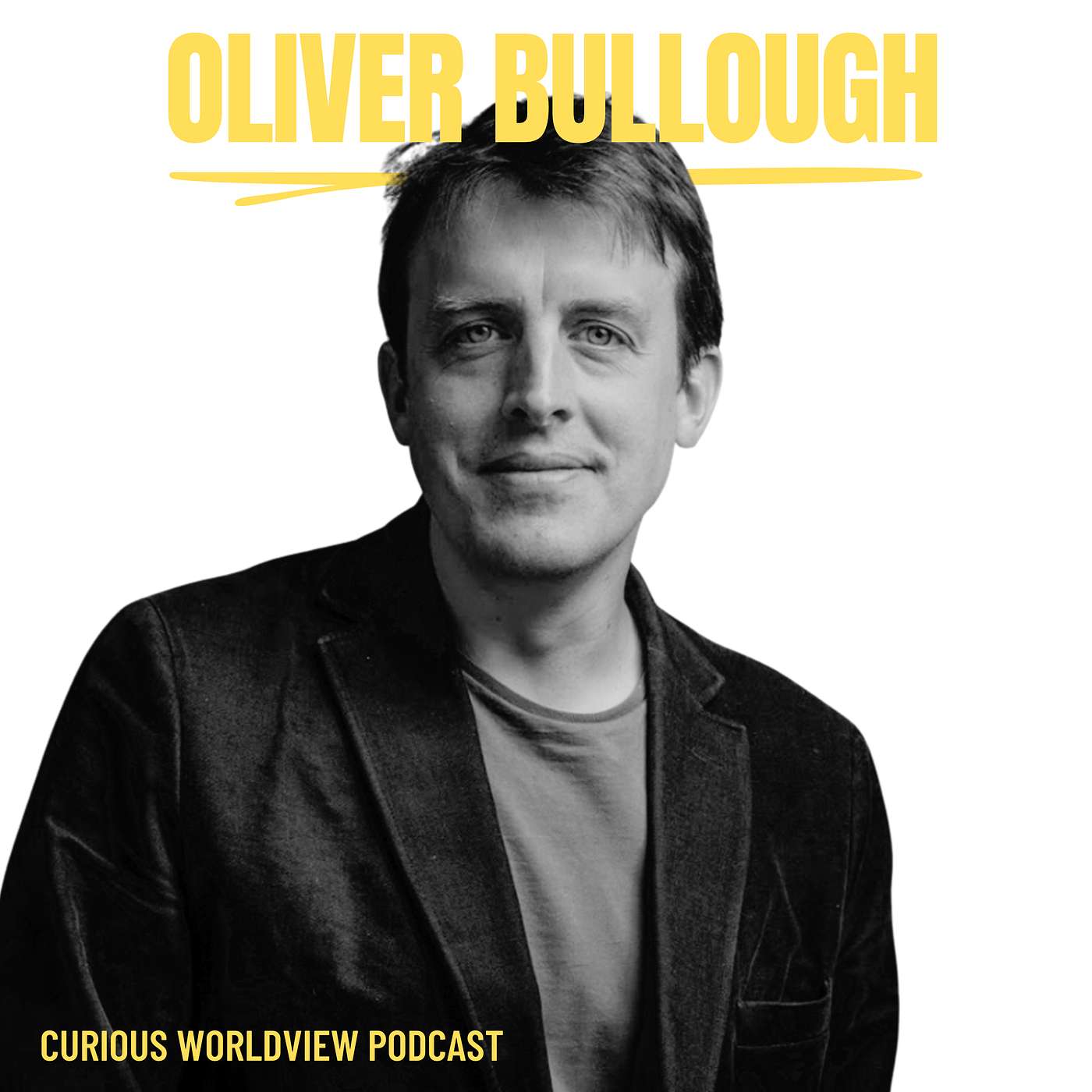
Oliver Bullough | The Awful Consequences Of Moneyland Are Compounding
Jun 901:04:13Tap to summarizeFour years ago, almost to the day of recording, Oliver Bullough was a guest on this show for the first time to discuss his concept of 'Moneyland'. This borderless virtual country where the wealthy go to keep their wealth beyond the reach of any government, any tax office, any voter. Between then and now, I've maintained interest on this thread. Nicholas Shaxson discussed on the pod the cancerous plumbing of the offshore world in Treasure Islands. John Christensen showed how that plumbing quietly corrodes culture and politics. Bill Browder shows where the abstraction becomes violence. Nathan Lynch showed how Australia is every bit as dirty as anywhere else, and Matt Friedman, just a few weeks ago, put a number on the human end of it: $236 billion a year in illicit profit from modern slavery.Oliver's latest book is Everybody Loves Our Dollars: How Money Laundering Won. His argument is bleak, precise, and very hard to wave away. We have spent decades and roughly $200 billion a year building an anti-money-laundering fortress, and by the best available estimates the share of the world economy being laundered hasn't moved since the 1990s. We get into why governments have failed so completely at this one. We follow the money where it actually goes: not just through banks, but through cash (central banks printing $100 bills faster than they can build factories), through crypto and stablecoins, and through the oldest trick of all — value hidden inside shipments of used cars, watches, oil, grain, the way the Medici did it in Florence. We talk about the scam compounds of Southeast Asia, where trafficked people are tortured into defrauding pensioners on the other side of the world, and how that horror connects — directly, traceably — to the very top of global power, through Tether, Cantor Fitzgerald, and a US Commerce Secretary's family.And underneath all of it, the real subject: the relationship between money and power, and what happens to democracy when the two become the same thing. Oliver's "offshore bandits" — elites who loot their own countries while living and banking somewhere else, feeling none of the consequences — are a darker upgrade on Mancur Olson's stationary bandit. It's a Moneyland story, and it's spreading.There are lighter turns too — Wright Patman, the forgotten Texan congressman who fathered anti-money-laundering law; Peter Pomerantsev and the propaganda war; Bill Browder before he was Bill Browder; and an unexpectedly lyrical detour to the walnut forests and white mountains of Kyrgyzstan.Oliver Bullough...Links Oliver Bullough BooksCurious Worldview SubstackPodcast Starter PacksInvestigative JournalistsOffshore Finance/Kleptocracy & Money LaunderingGeopolitics/Economics/Economic DevelopmentExplorers & AdventurersLeave a review on Apple or Spotify (nothing does more to help grow the show)
Transcribe →
Matt Friedman | Modern Slavery Is Getting Worse
May 2501:01:07Tap to summarizeThis podcast has returned to modern slavery three times now. Lisa Kristine showed us its face through her photography. Bruce Ladebu described what it actually takes to pull children out. And Matthew Friedman, in Episode 76, gave us the architecture: thirty-five years working across Nepal, Bangladesh, Thailand, the UN, and eventually the Mekong Club. That first episode opened with the story of an 11-year-old Nepalese girl in a Mumbai brothel who ran across the room, wrapped herself around Matt, and begged him to save her. He couldn't, that day. He came back with police and she was gone. This second conversation picks up in a deglobalising world. The USAID cuts have gutted sixty years of global anti-trafficking infrastructure. The $400 million available to address modern slavery has been halved. HIV clinics, maternal health programs, girls' education initiatives are all gone. And as Matt makes clear, the line from those cuts to a new trafficking victim is not abstract. It runs through hospitals, through debt, through desperation.This episode also goes somewhere I'm afraid I didn't communicate that well, the points of cultural judgement and critique. There's a story of a sixteen-year-old Bangladeshi girl, rescued after two weeks in a brothel, who was turned away at her own front door by a father who loved her because the shame she carried would make her siblings unmarriageable. That story sits at the centre of the hardest question in this conversation: when the cultural machinery enabling trafficking runs this deep, what can the outside world actually do about it? It's a delicate subject, I regret not treating it as such. $238 billion modern slavery generates annually flows through the same offshore plumbing this podcast has covered with Oliver Bullough and John Christensen. Matt explains how banks are already tracking it and how the Mekong Club is working with Interpol, crypto companies, and social media platforms to find it and cut it off.It's a pleasure to welcome Matt Friedman back to the podcast. ResourcesWalk Free Foundation's Global Slavery Index - https://www.globalslaveryindex.org/U.S. Department of State Trafficking in Persons Report - https://www.state.gov/trafficking-in-persons-report/Makon Club - Anti-Human Trafficking Organization - https://makonclub.org/USAID Human Trafficking Programs - https://www.usaid.gov/what-we-do/gender-equality-and-womens-empowerment/human-traffickingInterpol Human Trafficking Unit - https://www.interpol.int/en/How-we-work/Operations/Operation-ScorpionChapters00:00 The Impact of Deglobalization on Modern Slavery02:50 Statistics and Resources in the Fight Against Modern Slavery05:54 Consequences of USAID Cuts on Global Health and Safety08:38 Understanding Human Trafficking and Legal Responses11:40 Cultural Attitudes and Enforcement Challenges14:12 The Role of Vulnerability in Exploitation17:23 Identifying the Most Egregious Examples of Modern Slavery20:02 Cultural Change and the Role of Awareness23:22 Internal vs. External Approaches to Addressing Modern Slavery33:12 The Impact of Fiction on Awareness36:24 Taking Responsibility: Individual Actions Against Human Trafficking38:27 Creating Compelling Content: The Role of Film in Activism40:47 Cultural Sensitivity in Addressing Trafficking43:28 The Urgency of Addressing Human Trafficking50:08 Financial Institutions and Their Role in Combatting Trafficking57:47 The Power of Business in Addressing Human Trafficking59:52 Finding Hope: The Starfish Parable
Transcribe →
Joshua Bandoch | The Science of Persuasion - Why We Feel First Then Reason Later
Apr 2901:35:38Tap to summarizeJoshua Bandoch is the Head of Policy at the Illinois Policy Institute and the debut author of 'How to Get What You Want'. It's persuasion and communication all the way down. Josh's argues that almost everything most of us were taught about how to win an argument is wrong and now the neuroscience proves it. Aristotle, it turns out, had this figured out 2,400 years ago. Kant, the great rationalist of the Enlightenment, did not. We feel first and reason second, and any attempt to persuade that ignores that simple fact is doomed before it starts.Across the conversation we move from the Greeks to Adam Smith, from the Communist Manifesto as a piece of technical propaganda to what makes Steve Jobs, JFK, and Ronald Reagan so memorable as communicators. We talk about the difference between persuasion and manipulation, why authenticity is the most underrated tool in the kit, whether emotional intelligence can really be learned, and what Josh would tell the next Republican candidate trying to thread the needle between MAGA and the traditional conservative base.It's a wide-ranging episode, and one I throughly enjoyed recording. I'm thrilled to welcome to the podcast, Joshua Bandoch.-----Link's To Joshua BandochJoshua Bandoch WebsiteHow To Get What You Want (Book)Timestamps.00:00 Aristotle, Adam Smith, and the 2,400-year science of persuasion07:18 Persuasion vs. manipulation — the three biggest misconceptions12:26 Authenticity, politicians, and why we lose trust16:45 The neuroscience: we feel first, then reason18:37 Negativity bias and the power of being FOR something24:43 The logic tsunami and the limits of pure reason33:02 Body language, tone, and the 7% rule41:25 Emotional intelligence, moral foundations, and what's universal56:54 Storytelling, aesthetics, and the masterclass of practice01:08:24 Reputation, the long game, and the deathbed test01:23:17 Sales, Chris Voss, and advice for the next Republican01:34:01 History's great persuaders, and serendipityPodcast Starter PacksInvestigative JournalistsOffshore Finance/Kleptocracy & Money LaunderingGeopolitics/Economics/Economic DevelopmentExplorers & AdventurersLeave a review on Apple or Spotify (nothing does more to help grow the show)
Transcribe →
Tony Abbott (Australia's 28th Prime Minister) On "Our Countries Remarkable History"
Apr 1500:40:29Tap to summarizeTony Abbott served as Australia's 28th Prime Minister from 2013 to 2015. He is a Rhodes Scholar and among the most polarising and consequential figures in modern Australian political history. Rather than writing a series of memoirs detailing the turbulent years before, during and after his leadership of Australia, he instead, wanted to re-introduce a pride for Australia's history which he is afraid 'the black armband view of history' has erased. Tony makes the case that Australians have far more to be proud of than ashamed.His book is called 'Australia: A History' and tells the story of a not so long ago Australia. The evolution of Australia post 1788. Tony's speculated origins for Australia's egalitarianism. How settlers and convicts ending up working together to create the institutions that endure through till today. And all the meanwhile, not ignoring the devastating consequences the English expansion into Australia had to the indigenous Australian's who were here as long as 60,000 years before. This interview would be good to listen to alongside my interview with Robyn Davidson. They aren't two different idea's of history, but rather two differently sympathetic perspectives on an Australia both have travelled widely and thoughtfully. Link's To Tony AbbottAustralia: A HistoryThis is a summary of what was covered in the interview today. [00:00] — The Black Armband view of history? Abbott defines the term and stakes out his "glass half full" position on Australian history.[01:50] — Ryan pushes back: did Abbott downplay frontier conflict? [03:59] — The Myall Creek Massacre, the legal scandal of the first acquittal, the fury it sparked, and the eventual hanging of seven perpetrators.[06:03] — How short Australian post-1788 history actually is. [08:35] — Peter Thiel's stagnation thesis [12:08] — What evidence does Abbott see of Australians being ashamed of their history? [15:09] — Ryan offers a different read: most Australians are curious about history, not ashamed of it.[18:43] — Why isn't Australian history dramatised more on screen? [20:19] — Finding Nemo point: great fiction drives engagement more than philanthropy or think tanks. [21:04] — Mark Twain visited Australia and described Sydney as "an English city with American energy." Abbott loves the line.[24:47] — The convict origins of Australian egalitarianism. [27:26] — What made the early governors enforce the rule of law rather than create their own tyranny? [31:56] — Overrated / Underrated (Tyler Cowen's question). [35:05] — Indonesia. Why don't we have deeper cultural ties with a neighbour of 300 million? [39:13] — Serendipity vs. Providence. Podcast Starter PacksInvestigative JournalistsOffshore Finance/Kleptocracy & Money LaunderingGeopolitics/Economics/Economic DevelopmentExplorers & AdventurersLeave a review on Apple or Spotify (nothing does more to help grow the show)
Transcribe →
Eric Jorgenson | What We Can Learn From Elon
Mar 3101:05:22Tap to summarizeLink's To Eric Jorgensonejorgenson.com (personal website)scribemedia.com (company)elonmuskbook.org (book)Eric Jorgenson, author of the Naval Almanac and the Book of Elon, and CEO of Scribe Media joins me to discuss what makes Elon Musk the most consequential entrepreneur alive. We dig into Elon's purpose-driven risk-taking, his philosophy of attacking bottlenecks, and why the people who make the biggest dents often pay the steepest personal price. Eric also reflects on his own journey from curating Naval's wisdom at 24 to defining an entirely new genre of book and what it means to do one thing so well the world notices.Timestamps03:53 – "A Million Musks" — what Eric actually means by it04:42 – Can you be a world-changer and still be a good family man?07:22 – The canonical 2008 Elon risk-taking story12:47 – Rolling the winnings: Zip2 → PayPal → Tesla/SpaceXElon's pattern of compounding risk. 16:19 – Elon's talent attraction formula18:20 – Has Elon's politics hurt his ability to hire?19:44 – Elon's first principles communication style21:23 – How much does Elon recognise his own luck?26:09 – Vertical integration and the supply chain philosophy32:36 – How Elon has influenced a new generation of hardware entrepreneurs36:37 – ASML / Martin van der Brink — the supply chain counterpoint38:25 – Could Elon disrupt chip manufacturing?39:50 – Mark Andreessen on founder-led management41:15 – How Eric got Elon's blessing to publish42:32 – The almanac format and defining a genre44:03 – Scribe Media: the business model and Eric's role as CEO48:30 – What did Vance and Isaacson miss that makes room for the Book of Elon?52:11 – Naval's foreword: the reaction and what it meant53:13 – How the Naval Almanac changed Eric's life56:03 – Eric's worldview in the Book of Elon1:00:04 – What would Eric still ask Elon?1:01:08 – "Don't aspire to glory, aspire to work" — what does Eric aspire to now?1:03:21 – The serendipity questionPodcast Starter PacksInvestigative JournalistsOffshore Finance/Kleptocracy & Money LaunderingGeopolitics/Economics/Economic DevelopmentExplorers & AdventurersLeave a review on Apple or Spotify (nothing does more to help grow the show)
Transcribe →
Will Marshall | CEO Of Planet - Creating A Queryable Earth
Mar 2500:57:22Tap to summarizeWill Marshall is the CEO and Co-Founder of Planet.Planet own and operate a fleet of (200+) satellites which image daily, the entire world.Planet’s ultimate ambition is to achieve a queryable earth. The way you might ask Google what the population of Australia is, you’d be able to ask Planet any conceivable question you might have about the surface of the world. The way Google would refer to the Australian Bureau of Statistics for an answer to the countries population, Planet will refer your query to their data, millions and millions of indexed images of the planet’s surface to present you an answer.The applications of this are huge.Take economic intelligence as an example… all types of queries that could summon early indicators of movements that aren’t already priced in.For instance, as an early prediction of retail sales you could ask; How many cars are in Walmart parking lots across America right now? Or even, over the past 3 months, what’s the daily average number been?Which Chinese ports are seeing more or less traffic than they usually might since the 2026 Iran war began?And then there’s uses for climate and the environment.I could ask, at what rate is a specific glacier retreating? Measure this season’s melt against each other year to date.Monitoring and acting upon overfishing in protected zones.Or as I ask Will in the interview, could Planet’s data be more accurate at early predictions regarding where an Australian bushfire season might be worst hitYou can imagine the applications for agriculture but as well, naturally, Planet’s data is also crucial for defence.Will comment’s on Planet’s data indicating very early the Russian buildup of activity closing in on a Ukraine border.And I caught Will just day’s after the 2026 war with Iran, a conflict where Planet’s data is also in use.Will Marshall an incredible entrepreneur, but as you’ll see in the interview, he also has extensive interests beyond just those of his business.Marshall’s PHD advisor was Sir Roger Penrose. He worked at NASA. He was on the team that discovered large quantities of water ice on the moon. He co-invented a space debris collision avoidance method using ground-based lasers. Will has lived in communal housing for 20 years. He’s a Brit abroad in America and is now the CEO of a company not only ambitioning for all the queryable stuff mentioned above, but as well is now partnered with both Google and Nvidia to explore the potential for data centres in space.It’s a enormous pleasure to welcome to Will Marshall to the podcast.Podcast Starter PacksInvestigative JournalistsOffshore Finance/Kleptocracy & Money LaunderingGeopolitics/Economics/Economic DevelopmentExplorers & AdventurersLeave a review on Apple or Spotify (nothing does more to help grow the show)
Transcribe →
Joe Aston | From Rear Window to Rampart
Mar 901:08:41Tap to summarizeRampartThe Chairman's LoungeCurious Worldview Substack*Leave a review on Apple or Spotify* (nothing does more to help grow the show)Podcast Starter PacksInvestigative JournalistsOffshore Finance/Kleptocracy & Money LaunderingGeopolitics/Economics/Economic DevelopmentExplorers & Adventurers---Who is Joe Aston?For my Australian audience, you'll likely know him from his debut book The Chairman's Lounge, a forensic and damning account of Qantas. But for anyone international, put simply, Joe is among Australia's most consequential journalists.He took over the Australian Financial Review's Rear Window column at just 28, and across a twelve-year tenure transformed it into the most anticipated daily column in Australian business and politics. His former editor called it journalism "like never before seen in Australia and arguably the world." Joe's reporting contributed to the downfall of the CPA Australia CEO and board, the resignation of Rio Tinto's chairman, Alan Joyce's early exit from Qantas, and a long list of uncomfortable reckoning in between.In and amongst the many themes that this podcast covers, the most consistent among them has been journalism and good journalists. And I say that because I think I caught Joe at an interesting juncture in his life. In the last twelve months Joe’s gone independent. Leaving the security of the AFR to launch his own media company, Rampart. The work is the same. Breaking the stories from business and politics that his readers have come to expect, but the model is new, and it puts Joe in unfamiliar territory as an entrepreneur which I think is another example of how media business models are being re-cast, and indicative of the direction the best talent is heading towards. We recorded this about ten months into the Rampart journey. We cover his influences, his early years in PR, his personal battles, Rampart and throughout it all, what Joe judges to be, good journalism. Timestamps with Joe Aston00:00 Introduction To Joe02:06 Joe’s Influences08:01 Alcoholism14:54 From The Rear Window To Rampart33:59 Journalistic Courage and Ethical Boundaries44:04 Lessons from PR and Corporate Life54:49 Goals for Rampart and Future Media Innovation01:08:06 Serendipity
Transcribe →