← Dan Snow's History Hit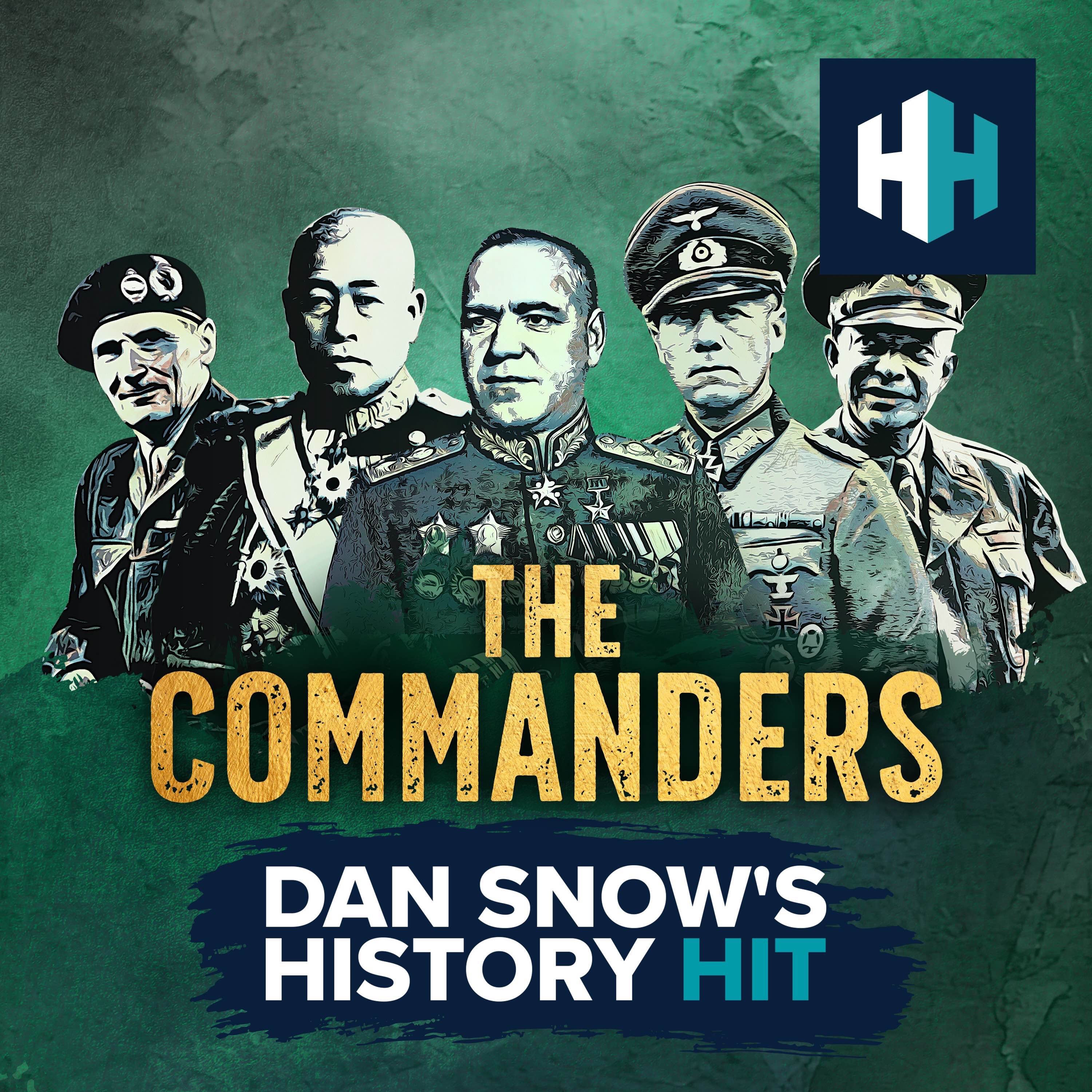
Dan Snow's History Hit
The Commanders: Rommel
01:07:17
Does Erwin Rommel deserve his reputation for tactical brilliance?
Loading summary
Transcript72 lines
- [00:00]
Bill.com Advertiser
When it comes to managing money, forget the hype and look at the results. Bill has a trillion dollars of secure payments powering our BillPay tools. Instead of just moving money, Bill is powering the financial operations of nearly half a million customers. So stop the guesswork and start scaling with the proven choice. Ready to talk with an expert? Visit bill.comproven to get started and grab a $250 gift card as a thank you to Terms and conditions apply. See Offer page for details.
- [00:30]
Factor Meals Advertiser
Pro athletes don't spend their time meal prepping. They eat smart, train hard and recover fast. Factor makes it easy with dietitian designed chef prepared meals built to fuel your performance. Choose from High protein, calorie, smart, GLP1 support and vegetarian options designed by nutrition experts to support strength and recovery. Train like a pro. Eat like a pro. Right now go to FactorMeals.com healthy50off and started get and use code Healthy50OFF for 50% off and free breakfast for a year. That's FactorMeals.com healthy50OFF code Healthy50OFF.
- [01:11]
Saul David
You know what they say. Early bird gets the ultimate vacation home.
- [01:15]
Factor Meals Advertiser
Book early and save over $120 with
- [01:19]
Dan Snow
Robo because early gets you closer to the action.
- [01:22]
Factor Meals Advertiser
Whether it's waves lapping at the shore or or snoozing in a hammock that
- [01:26]
Dan Snow
overlooks, well, whatever you want it to
- [01:29]
Saul David
so you can all enjoy the payoff
- [01:31]
Factor Meals Advertiser
come summer with VRBO's early booking deals.
- [01:34]
Dan Snow
Rise and shine.
- [01:36]
Factor Meals Advertiser
Average savings $141 select homes only.
- [01:49]
Dan Snow
It is the early hours of 24 October 1917. A small detachment of an elite German mountain battalion waits for first light to creep over the ridges along the Isonzo River. Fog lies thick in the valley, clinging to the water and muting sound and vision. The faint smell of poison gas lingers in the air. A platoon commander gives hushed orders and reassures his men as they wait for the battlers to come. They can hear the sound of artillery shells screaming overhead. The young people platoon commander is called Erwin Rommel, a hardy young officer who has already earned himself a reputation for daring on the Western Front. Now he finds himself in the rugged mountains of northeastern Italy, facing the Italian army along the infamous Isonzo Front. Eleven times the Italians have tried to dislodge Germany's allies, the Austro Hungarians, and 11 times they have failed. Hundreds of thousands have died in the attempt. The Italian front is an important reminder that the trenches of France and Belgium certainly did not have the monopoly on futile slaughter in the First World War. Here, like on the Western Front, the two sides are dug in along trench lines facing each other. But here those lines run along the ridges of towering mountains. The weather is even worse than it is in Flanders. Fighting has deteriorated into a brutal attritional slog. For many, it's a struggle to simply survive. Both sides have found it impossible to dislodge one another, and the casualty lists grow and grow. But now this young German platoon commander, Rommel and his Stormtroopers are going to try something different. They specialize in a new kind of fighting. Not the massed assaults that we tend to think of until this point of the First World War, but targeted infiltration. Small, motivated units moving fast, bypassing strongpoints and attacking from behind. Something perhaps more akin to modern day Special Forces than the regimented over the top charges of 1914-15. These strostrupen stormtroopers have already proved their worth against Germany's enemies in places like France and Romania. And now the German High Command has sent them to break the stalemate here and relieve their beleaguered Austro Hungarian allies. When the artillery bombardment finishes, no time is wasted. Rommel's men are already climbing, slipping through gaps in the chaotic, battered Italian front line. Resistance is uneven. Some units defend stoutly. They even try to counterattack towards the sound of gunfire. Others wait for orders that will never arrive. Communication breaks down as messengers are killed and telephone wires cut in several areas. Italian commanders are uncertain whether being attacked from the front or the rear. Rommel thrives in this environment, in this confusion. By daylight, his platoon is well behind the Italian forward positions. There, Rommel does not wait for orders. This will become something of a trademark for him. With a handful of men, he strikes at isolated outposts, overwhelming them with rifle fire, flamethrowers and grenades. He comes from unexpected directions. He uses the terrain to his advantage. Entire units surrender to his comparatively tiny force. He seizes a key position at Kolevarat Bridge, taking an entire regiment. Rather than lose his momentum, Rommel leaves guards with the prisoners and pushes on. Ahead rises Mount Matajer, snow dusted, steep. He doesn't have any explicit orders to take it, but Rommel understands instinctively its importance. If the Germans take Mataja, they can force the complete collapse of this stretch of Italian defenses. For two days, he and his men advance almost continuously, climbing, flanking, bluffing. They eat little, they sleep less. Italian units surrender in batches, sometimes without firing a shot, convinced that a much larger force has surrounded them and cut them off. By the 27th, Mataja has fallen. Rommel's small force has captured over 9,000 Italian prisoners and dozens of guns. He's lost only a handful of men himself, mostly wounded. He would later describe his actions in precise technical language. He would obsess over angles of fire and timings and equipment. But this battle at Caporetto was much more than just a technical achievement for Rommel. It changed his life. It filled him with conviction. He was now certain that audacity, speed and psychological shock could negate the overwhelming firepower of this industrial age. He could win spectacular victories. In the attritional age of trench warfare on the ridges of the Isonzo Valley, the myth of Erwin Rommel had begun to take shape. In the long and contested history of the Second World War. Few German commanders, I think, have inspired as much fascination and debate and discussion as Field Marshal Erwin Rommel. To his admirers, he was always the Desert Fox. He was brilliant and he was daring and he was relatively chivalrous. He fought with speed and imaginative, always against formidable odds. To his critics, while he was a good tactician, but he was elevated far beyond his strategic abilities. He was a vital cog in the monstrous Nazi war machine. But when his reputation has been washed, it's been burnished by myth and propaganda and post war necessity. So who really was Erwin Rommel? How did his life and experiences shape his command style? And how shall we judge his legacy? Just how good was he? This is the first episode in our commanders series where we dig into the lives and decisions of five legendary World War II commanders. We're going to cut through the myth. We're going to really look at what shaped their styles of command, what they did right, what they did wrong. From daring gambles to meticulous planning. We're going to ask where their victories were earned through brilliance, calculation or luck. And indeed, we'll be asking the bigger questions. Do their reputations hold up to scrutiny at all? Are there any turkeys among them? We'll be releasing a new episode every Monday, so make sure you hit follow and check back in for those. For now, I'm very pleased to say that joining us to kick start this series and dig into Rommel is a great friend of the podcast, Saul David. He's a broadcaster, historian, author, most recently of the fantastic book Chunisgrad Victory in Africa. Let's get going. Erwin Rommel was born in 1891 in the town of Heidenheim in southern Germany, part of what was known as the Kingdom of Wurttemberg. Now, we have to bear in mind that Germany around this time had only been in existence for a very brief period. It wasn't really a kind of uniform nation state in the modern sense. It was more a sort of federal empire. It was 20 years old and it had been made up of a patchwork of monarchies and city states with very different histories. And Wurtemberg sat firmly within that structure. So each state, like Wurttemberg, had its own court and bureaucracy. And when Rommel was born, he was technically a subject of the King of Wurttemberg, as well as a citizen of this new German empire. Now, Rommel did not come from traditional military aristocracy, the sort of Prussian Junkers that dominated the German officer corps at this time. His upbringing was solidly middle class. His mother came from very minor nobility. His dad was a schoolteacher. Even so, at the age of 18, Rommel was able to sign up for officer training. Now, you might be forgiven for thinking that in this deeply militarized empire and steeped in the traditions, the hierarchy of this Prussian military, that his sort of unassuming background might be a problem. But it was to prove less of an issue than we might think. Here's Saul to tell us about it.
- [10:31]
Saul David
I think there's a bit of a myth that the only people even in the Prussian army were aristocrats. A big chunk of them were, and an even bigger chunk in the corps d', elite, and that was the famous general staff. But in reality, the German army for a long time, or German armies, better way of putting it down, for a long time had had middle class officers. It had to, you know, the demographics insisted that would be the case. And also there were lots of technical arms like the artillery, the engineers. Eventually we're going to get armor. Not quite yet. Pre First World War. And as a result of all that, you needed people with education. They didn't just typically have to come from an aristocratic background. And so people like Rommel were. And not least because Rommel did have, on his mother's side a bit of minor nobility. People like Rommel were fairly typical in the Wurtemberg army at that time. It's one thing getting a commission, it's another being an outstanding officer. That's the big question mark that's going to be placed against anyone, including Rommel.
- [11:27]
Dan Snow
So he ends up this good old infantry, though, poor bloody infantry.
- [11:31]
Saul David
Apparently he was very good at mathematics, but he wasn't outstanding as a student academically. And also, as we've already discussed, he didn't come from the absolute top draw and therefore wasn't able to choose where he was going to go. He went into the poor bloody infantry, the Wurttemberg infantry. But this was good Grounding for him, frankly, Dan, because if you can prove to be an outstanding junior officer in the infantry, particularly in combat, that's really going to stand you in good. Steady.
- [11:59]
Dan Snow
In 1912, Rommel completed officer training. He was commissioned into the 124th Wurttemberg Infantry Regiment. So look, let's take a step back here and look at the broader picture of Europe. As you know, 1912 is all about to happen. So the German empire, founded in 1871, it had a lot of catching up to do. It was surrounded by great empires. Britain had begun industrialization decades before and it now ruled over the largest empire on the planet. Germany's ancestral foe, France, was expanding rapidly on the global stage. Big empire in North Africa, Southeast Asia, elsewhere. Even if it did face some issues at home. Russia to the east, controlled giant swathes of territory and could bring to bear massive resources. So by the 1890s, the leaders of Germany had determined that they needed rapid industrialization and they needed to expand their military, not only to survive, surrounded, as they thought they were, by enemies, but to buy German membership of this great power club. Germany wanted to be a player. It would pursue a policy of Weltpolitik, world policy. It wanted to become an imperial superpower. It had great advantages. It had coal, it had iron. German industry exploded. The steel mills of the Ruhr and Nasar valleys churned out vast quantities of steel and railways were carved across the empire to transport raw materials and goods. Brilliant universities trained chemists and engineers and physicists who would work hand in hand with industry. At the same time that industrial might was harnessed to further the military. Hardware was pumped out. Fantastic state of the art battleships, artillery pieces, but also things like belt buckles for infantry. All able bodied men were required to serve in the Imperial German army. So that means that Germany could mobilize millions of men with military experience at short notice if there was war. Those same railways that they'd built to transport industrial goods could also rapidly move troops across the empire. And that gave Germany a great advantage. It could move troops from land frontier to land frontier very quickly. The German general staff became masters of logistics. They dominated train timetables and they planned all sorts of war scenarios. War plans of incredible details were drawn up in anticipation of a future conflict. One thing this new Germany was particularly proud of was its navy. That would really be a token of its status on the world stage. Now you only have to look at a map to see that Germany didn't need a cutting edge navy to defend itself against France and Russia, but they still wanted a navy. Because this is an era in which global trade, colonial influence, diplomatic prestige, well, that's all inextricably linked to sea power. The German Emperor Wilhelm had always been jealous of his British first cousin, King Emperor George V, who presided over the most powerful navy on the planet. The Royal Navy had allowed the British Empire to project power to the furthest reaches of the planet. And the theory went that if Germany could build a fleet strong enough to challenge the Royal Navy, then Britain might be scared of Germany. It would avoid confrontation, or it would treat Germany with respect as an equal. So that's the picture, really. By the time Erwin Rommel joins the Wurtemberg infantry in 1912, Germany is a massive continental empire. It's got an extraordinary military machine that seems to be permanently poised for war. It's got a fleet out there in the North Sea and the Baltic that's giving the British nightmares. And just two years later, in 1914, all that machinery roared into motion. For a young, ambitious officer being shaped by the martial culture of the German Empire, war couldn't have come at a more perfect time.
- [15:50]
Saul David
This was a real opportunity. And it's fascinating the speed with which he grasped it with both hands. I think one thing you have to say about him, physically, he wasn't huge, Dan. He's a relatively small, relatively slight build, but he's very hardy, he's tough and he's incredibly brave. He always had been, from a young boy getting into little tussles with schoolmates. He would never allow, you know, someone who appeared to be physically bigger to get the better of him. And that was a lesson he absolutely brought to his career as a young soldier, as a young platoon commander, if he saw a problem immediately ahead, he went straight for it personally. He didn't send his men ahead of him. He actually would go for it himself. I mean, I suppose the initial encounter right at the beginning of the First World war, this is August 1914, when he first comes into contact with the enemy French troops. He's leading a scouting troop ahead. There are only three guys with him, and they come across a group of French soldiers who aren't actually expecting them. They take them by surprise, and instead of calling the rest of his platoon forward, he goes straight for them, orders the three guys with him to open fire, and they take a number of them prisoner. And that is just absolutely typical Rommel. He's not going to wait for support. He is going to take an opportunity and he is going to act very aggressively in any situation he finds himself in.
- [17:05]
Dan Snow
Now, Saul, a lot of paper has been a lot of ink has been spilled, a lot of blood has been shed by historians like you on this subject of decision making in the German army compared to other armies in World War I. Was he encouraged to do that? You know, are these young, well trained, highly motivated, physically fit young lieutenants being allowed to make decisions, perhaps given more authority, more decision making than their equivalents in other combatant nations at this point?
- [17:32]
Saul David
Definitely. Comparatively speaking, though, we have to say, Dan, you can absolutely overdo the point. And I'll give you an illustration of when he does overdo it. And there were many instances actually, and we'll see this later on in his career as he climbs the ranks. And of course, he has more men under his command where he will go off like a bullet of gate without necessarily informing superiors. And there's one classic example of that in early 1915, when he is effectively ordered to take his troops forward in an attack that is not intended to be pressed particularly firmly. He sees an opportunity, breaks into the first kind of bit of the defenses, and just keeps going. This again, is against the French, and finds himself in a position where he's way behind enemy lines, but with only a relatively small number of troops with him. Now, what he was hoping is his superiors, the other company commanders, the other people in his battalion are going to see the situation he's in and they're going to come and support him. Their argument is he's gone out on a limb and it's up to him to extricate himself, which he does incredibly effectively, partly by being aggressive initially and then by pulling back and getting all his men back. He's very disappointed at the way everyone else has behaved within the battalion. They think he's really gone out on a limb and has put him and his men under threat. So you can see in that one example, Dan, that there were limits to younger officers and certainly NCOs. There was a tradition even in the Imperial German army of them using a certain amount of initiative, but you could take that too far. And basically driving this wedge deep into the enemy line without support was perceived by his superiors as being a little bit irresponsible.
- [19:10]
Dan Snow
Even if his bravado got him into hot water with his superiors in the trenches of the Western Front, Rommel built himself a reputation for boldness, initiative and courage. He led from the front. He exposed himself to danger alongside his troops. He demonstrated an instinctive grasp of maneuver warfare even in those trenches. Try and outflank your enemy. Try and exploit surprise press attacks relentlessly. By 1915 he had the Iron Cross. He'd earned that medal both first and second class, I should say. And he was made a company commander in an elite new unit that specialized in mountain warfare, the Alpen Corps. Another thing we can say for certain is that Rommel cared about his men. Casualties are always going to be inevitable. But his operating principle was that the more certain, the more bold you are in your military actions, the fewer casualties you you'll take. And during some larger scale operations in 1917, he would test this strategy to its limit. In 1917, Italy was in especially bad shape. Since 1915, the Italians had joined the Entente, the Allies, Britain and France and others. And its army had launched 11 offensives against the Austro Hungarians along the Isonzo River. These battles gained little ground and cost enormous numbers of life. I mean, if you think the Western Front was bad, honestly, these other fronts, I think actually they're worse. Over 700,000 combined casualties by most estimates, for a total advance of just a few kilometers. Morale was fragile. Units were depleted and overextended. Leadership was sort of rigid and disconnected from reality at the front. Now, many of you will be familiar with the trench warfare in France and Belgium. And this is similar, but worse in a way. Imagine trench warfare, but among mountain peaks. At altitude, the air is thin. Fighting is particularly exhausting. Extreme weather rolls down on you in seconds to blind or freeze you. SHELL blasts and of jagged shards of rock careening into human flesh. The Isonzo front was just a nightmare, even by the stands of the First World War. And the Austro Hungarians were also desperate and overstretched. And they asked Germany for help. And Berlin agreed, but with conditions. Instead of just maintaining that grinding slog, the Germans wanted a decisive blow, a new kind of attack, fast, ruthless. Caporetto was chosen as the weak point. Their plan relied on infiltration. So rather than these mass infantry assaults, you'll be familiar. They thought about deploying specially trained mountain units that would slip through weak points and push deep into the enemy rear, causing confusion and panic and eventually collapse. Now, this is Rommel's signature. This is in his wheelhouse. That offensive began on October 24, 1917. German and Austro Hungarian forces struck under cover of fog. They used poison gas. Instead of just taking on Italian strongpoints, Rommel went straight. He used his playbook. He sort of ignored really how things were unconventionally. He advanced wherever resistance was weakest. He scaled steep slopes the Italians believed were impassable. He split his force into small groups. He took advantage of the Italians rigid command structure, which meant that when Italian units were cut off and outflanked. They often just surrendered because they weren't receiving instructions anymore and they didn't realize how many men had actually surrounded them. It might only be a handful. And Rommel never stopped to consolidate. He just kept moving and moving and moving. His most famous action came at Mount Mataga, a dominant peak overlooking the Italian rear. With fewer than 200 men, Rommel advanced for hours through broken terrain, bypassing enemy positions, striking for unexpected directions. By the time the Italian defenders realized the threat, Rommel's troops were already behind them. And over the course of the day, Italians just became completely demoralised. The enemy's behind you, you assume that the situation has collapsed. Entire units surrendered. Some estimates put the total figure of captured Italians as high as 9,000, with some 80 odd artillery pieces, guns taken to boot. By contrast, Rommel's forces probably took a couple of dozen casualties, dead and wounded at most. It's astonishing. And here's that principle on full display. Act swiftly, violently, decisively, act spontaneously and your men will be better off for it. For his efforts, Rommel was awarded Germany's second highest honor, Paula Merite, or the Blue Max. But with Rommel, you always have to check yourself and ensure you're not straying into myth. The truth is that those achievements were about circumstances. They were about Italian weakness as well as his own brilliance. So the lessons that he took from the First World War, I think possibly they might hinder him as much as help him when he took on a different kind of foe, like the famous fighting British general Bernard Monty Montgomery. Here's Saul again.
- [23:48]
Saul David
What's interesting about Rommel is that in the First World War, he, I think he was very fortunate in the theaters he fought in, and you could argue the same thing in the Second World War. So he fights in the mountains a lot and there are fewer defenders. It's easier to hide in the folds of ground. I mean, if you're thinking about the Western Front, with these two massively entrenched, with a lot of artillery support facing each other, that's where Monty gets most of the experience. And that's where Monti learns that firepower is everything. That's not to say that Rommel doesn't consider firepower important. He does, but he considers it important in as far as you bring fire to bear on a and then you infiltrate. So those lessons that he's learned in the First World War, in the nature of the fighting that he was involved in, particularly in the mountains, he is going to bring into practice in the Second World War, he's going to bring them into practice, both as an armored commander, but also when he actually gets into the desert.
- [24:41]
Dan Snow
So in 1918, as you know, the First World War came to an end. Germany lost. For those of you who don't know, I'll spare you the gory details, but from 1918 onwards, Germany went through a very painful period of upheaval. The economy would collapse, unemployment run rampant. Militias roamed the streets. Coups took place, multiple coups. And this chaos would set the stage for the next global conflict. Most importantly for our story, the German army, the Reichswehr, was drastically reduced in size. Rommel, like many officers, was forced to accept what he felt was an unjust and humiliating defeat. Over the next few years, he would have to adapt from the lofty heights of mountaintop victories to the monotonous slog of military life in a much smaller army during peacetime.
- [25:27]
Saul David
I think the simple fact that he's been selected as one of the hundred thousand members of the Reichswehr. Remember, at the end of the First World War, Germany was forced to reduce its armed forces to just 100,000 strong for the army. And that meant that an army that had been millions at the end of the First World War all of a sudden had to shrink to this tiny size. And they were very choosy about who they selected as their officers, in particular for this reduced army. And he was one of the chosen people. But inevitably, during this peacetime period, it took a long time for him to get promotion. I mean, by 1931, he's finally promoted major, and he's already 40. So we love to think of this wunderkind. You know, he'd done extraordinary things in the First World War, but it's a relatively slow process of promotion and sort of getting on in his career, because that was the nature of the interwar military. Now things are going to change after Hitler takes power, of course, when the German armed forces gets expanded exponentially. But up until that point, it's relatively tough sledding for him. You know, he gets some experience as an instructor in infantry tactics. He eventually gets promoted to lieutenant colonel in charge of this Jaeger battalion in about 1934. But it's been a slow, gradual process up until then. And he hasn't really had an opportunity to put a lot of these principles, which he has learned in the First World War yet into practice.
- [26:49]
Dan Snow
In January 1933, the leader of the Nazi Party, Adolf Hitler, became chancellor of Germany. For many Germans, they felt that they had been disadvantaged by the end of the First World War by the Treaty of Versailles. They thought about the turmoil that had followed and they believed that the Nazi party offered something powerful. National revival. There'd be economic recovery, there'd be a return of national pride, there'd be strong leadership. And massive state funded public works were rolled out. Unemployment was reduced and it was further reduced by a rapid program of rearmament. Rommel, a career army officer, World War I veteran, he was not immune to that appeal. In 1987 he published a very interesting book called Infantry Attacks. I read it at university and it's great. And it's a detailed study of his First World War experience, especially the infiltration tactics he had mastered at Caporetto. And the book was significant. It attracted lots of attention from military thinkers around the world. But most importantly, it put him in direct contact with Adolf Hitler. Hitler admired bold, aggressive commanders, men who embodied speed and surprise and offensive spirit and doing things unusually. And Rommel's style fit that image perfectly. I wouldn't be at all surprised if Hitler secretly envied Rommel for so completely embodying his image of a modern German battlefield commander, something that Hitler would love to have been seen as. Rommel, in turn was impressed by Hitler's apparent political boldness, Germany's recovery. And like many officers, he just appreciated the restoration of, well, military spending, of prestige. He liked the fact the army was growing more opportunities for him and it seemed to eradicate some of the memory of Germany's defeat, which was a source of frustration, sadness, embarrassment for him.
- [28:39]
Saul David
He's a great fan of Hitler's. He's not alone in that. Of course, he has a very vaunted reputation from the First World War, but also he's well known, even in the 1930s, in command of his Jaeger battalion, as a very aggressive commander, man who drills his troops relentlessly, a man who is not interested in admin per se. He's perceived to be a man of action. At the same time, he's an admirer of Hitler because like many officers of that time, there was a sense that Germany had been stabbed in the back at the end of the First World War. Whether that myth was true or not, they certainly believed it. Germany hadn't been utterly defeated on the field. Was so the argument, therefore other elements, the socialists in Rommel's mind. Hitler, of course, you know, conflated the socialists with a Judeo Bolshevik conspiracy. But nevertheless, the idea that a leader would come in who would rejuvenate the army, would make Germany great again, would carry out a series of bloodless conquests, the remilitarization of the Rhineland, the Anschluss with Austria, even. And this did make people nervous, it's true. Even the deal that was done to get the Sudetenland in the end of 1938. And at this point, he'd already come to Hitler's attention. He was actually working as an instructor at the War Academy in Potsdam in Berlin. Hitler was aware of him. He'd met him the year before, and he was given what was considered to be quite a prestigious post, which was a posting from the War Ministry attached to the Hitler Youth Organization. Now, he didn't last long in that position, but he was given command of the escort battalion both when Hitler went into the Sudetenland with all the cheering German Sudetens in the end of 1938, and also in 1939 when he enters Prague after the bloodless capture of the rest of Czechoslovakia. So for those two moments, you could see that there was favor from Hitler, but also from Rommel. There was a sense of Hitler is a man of destiny leading Germany to greatness. And at that point, he was all in as a supporter.
- [30:39]
Dan Snow
As a mutual respect grew between the two men, Rommel increasingly threw his lot in with the Fuhrer, even as Nazi anti Semitism stepped up a gear with the outbreak of the Second World War and became impossible to see beyond. Now much has been made of Rommel's stance on antisemitism. He never formally joined the Nazi Party, but as a senior Wehrmacht commander, he can't be considered as anything other than complicit in the crimes of the Nazi
- [31:05]
Saul David
regime at the beginning of the Second World War. He's promoted to major general. So he's gone from major in 1931 to major general in 1939, and he's on his way. But it's the posting he gets that's significant. He's given command of Hitler's field headquarters at the start of the Second World War. So for the whole of the Polish campaign, he's in charge of the escort battalion and the whole administrative arrangement around supreme headquarters. Where Hitler goes, he goes. And they have a chance during this period, period during the whole of the Polish campaign, to have a lot of personal conversations. He's very admiring of what Hitler does. He gets a sense of Hitler has a real kind of feel for war. There are a number of people sort of suggesting that maybe Hitler, with his experience from the First World War as a corporal, really didn't know what he was doing. You leave that to the professionals. Rommel, who'd never been a member of the general staff, of course didn't agree with this. He absolutely felt that Hitler did have something. He's going to change that view later on. But at this stage of the war they were relatively close and the question marks start coming at this stage, Dan, as to what did Rommel know and when did he know, for example, of some of the darker aspects of what was happening in the Polish campaign? The answer to that, in my view, is probably not at this stage. He is going to find out about it later. Of course, in the wake of all the armies going into Poland, you've got the Einsatzgruppen who are carrying out terrible atrocities. But it's probable at this stage that he certainly was aware of the anti Semitism in Germany. He didn't personally agree with that. He did believe so we think think that there was a Jewish problem, but only insofar as Jews within Germany weren't necessarily loyal to the state. They had loyalty to their own community and he he felt that was slightly problematical. But he certainly wasn't a virulent anti Semite and he certainly wasn't a supporter of the more violent acts like crystal knack in November 1938.
- [33:02]
Dan Snow
You listen to Dan Snow's history at there's more coming up. This episode is brought to you by Best Western Hotels and Resorts. Spring break isn't what it used to be, and honestly, that's a good thing. These days. It's less about chaos and crowds and more about taking a real breather, a chance to explore somewhere new, revisit somewhere familiar, or just slow down for a few days without over planning it to death. That's why I like Best Western for spring travel. It's easy and perfect for the kind of getaway that actually leaves you refreshed. Whether it's a road trip or a quiet city stay, it just works. And right now, they're making it even better. This spring, stay three nights and you'll get a $50 Best Western gift card. No fuss, no pressure, just a well earned break that feels worth it. Life's a trip. Make the most of it at best Western. Visit bestwestern.com for complete terms and conditions. Foreign
- [34:02]
Saul David
this is Ndomic and Su from the no Free Lunch Podcast. Ever feel like your workload is out of control? Like you're wearing every hat and expect
- [34:10]
Dan Snow
it to be everywhere at once?
- [34:12]
Saul David
Running a business means juggling books, payments, leads, payroll, basically everything. But with Intuit QuickBooks, your workload gets unloaded.
- [34:22]
Dan Snow
QuickBooks gives you access to Intuit, powerful
- [34:25]
Saul David
AI agents and trusted human experts who work together to handle the tedious stuff so you can get back to what
- [34:33]
Dan Snow
actually grows your business.
- [34:35]
Saul David
And because everything streamlined on one platform, your customer management, accounting, expenses and payroll all work seamlessly in one place. So go ahead, outdo it with Intuit. QuickBooks get 50% off QuickBooks Online for three months.
- [34:52]
Dan Snow
Terms and conditions apply. Feature availability may vary by product. Visit QuickBooks.com for details.
- [34:58]
Saul David
ActiveCampaign is the marketing automation platform built for big swings and big dreams with intelligent suggestions. Powered by AI and your data. Generate ideas in seconds, import your brand and create full campaigns with simple prompts. Send personalized messages backed by real time feedback, smart segmentation and effortless reporting that tracks every win. Let's redefine what's possible together. Get started for free@activecampaign.com when it comes
- [35:28]
Bill.com Advertiser
to managing money, forget the hype and look at the results. Bill has a trillion dollars of secure payments powering our Bill pay tools. Instead of just moving money, Bill is powering the financial operations of nearly half a million customers. So stop the guesswork and start scaling with the proven choice. Ready to talk with an expert? Visit bill.comproven to get started and grab a $250 gift card as a thank you. Terms and conditions apply. See Offer page for details.
- [36:07]
Dan Snow
So Rommel's opinion on the Jews is a little bit ambiguous in the late 1930s, but his stance on war is anything but. This is the man who'd stormed the peaks of Caporetto, and with the outbreak of the Second World War in 1939, he wanted to be back on those front lines.
- [36:23]
Saul David
I mean, on the one hand, being so close to Hitler was a privileged position. He could see the campaign unfolding, but he also wanted to take part. And being in charge of Hitler's supreme headquarters was not really giving him an opportunity for any action. So a couple of months after that he puts in for a posting. Is there any chance I can get my hands on one of the armored divisions? There were only 10 at that time Panzer divisions, so these were much sought after posting. And importantly, of course, Dan, he had no armoured experience, so the chances of him getting it were relatively scanty if he hadn't had such a close relationship with Hitler. Apparently he was turned down initially, but Hitler interceded and he's given command of the 7th Panzer Division. And as soon as he takes command, you see the classic Rommel fingerprint being put all over this division. You know it's an armored force that has a panzer regiment, it has panzer grenadiers in support, that effectively armored infantry. It also has a reconnaissance battalion. But this is a formation that's designed to be used as a striking force. And those are exactly the lessons that Rommel's learned from the First World War. So he can't wait to get into action. He trains with these men, he's very fit. He makes sure everyone knows what they're doing. He trains incessantly so that they can move in close formation. But already, from this early stage, you're getting the sense that someone, even though he's a divisional commander, actually wants to be up close to the scene of the action with the individual bits of the 7th Panzer Division. He's never going to remain back in the rear like a normal major general would. I suppose the most famous incident, I mean, it's well known, you know, the blitzkrieg campaign, the use of the Ardennes, the arrival at the Meuse River. But the key thing is, how quickly can you get across the Meuse River? This was the big barrier. If they can break through the French defences on the Meuse river and get into the rear, then blitzkrieg has a chance, which is you drive these armoured formations deep into the enemy rear, causing the sort of dislocation he'd done with infantry in the First World War. But you've got to get across the Meuse river first. And that was a major obstacle. The French are defending it from the far side. And when he arrives, or at least the 7th Panzer Division arrives, at the Meuse river, remember at this stage, Dan, a number of Panzer divisions are arriving at the river at the same time, and they all got the task of getting across, which is the first Division across. It's the seventh Panzer Division, mainly because Rommel himself takes personal charge of the crossing. He goes right up, he directs the crossing of infantry in small rubber dinghies. He goes across himself, there's a counter attack against one of the bridgeheads. The E personally directs and manages to fight off. Then he goes back across, gets the panzers to cross over a pontoon bridge a little bit further north, and then at that stage, he's able to lead the panzer division forward in cahoots with other Panzer divisions into this stage of blitzkrieg that is going to prove so devastating. So he is right at the tip of the spear. And there's already a belief by some within the seventh Panzer Division that he's putting himself in too much personal jeopardy. If he gets killed, we lose the commander. And in any case, even if you take the individual elements of a Panzer division, the commanders of those elements wouldn't necessarily have been right up at the front. And yet as the divisional commander, he was in that position. So on the one hand he's making a real difference, but on the other hand he's acting in a way that is likely to take him out of direct communication. He's disrupting the chain of command and that's something he's going to continue doing even though he becomes more senior corps commander, army commander and even army group commander later on in the war.
- [40:00]
Dan Snow
Rommel's 7th Armored Division appeared to be unstoppable during the invasion of France. They advanced so quickly that their own high command often apparently didn't know where they were, let alone the bewildered Allied defenders. Their speed, in fact, earned them a nickname, the Ghost Division. They would come out of thin air and then just melt away at a moment's notice. During the advance on Cherbourg, the division famously covered 150 miles in just 24 hours. It was a record for armoured warfare. I'm sure Genghis Khan's cavalry beat that, but a record for modern armoured warfare. The French garrison surrendered just two days later. As he had during the First World War. What he'd do is he would bypass strongpoints, he wouldn't attack them directly. He left pockets of resistance to be cleared out by following infantry. Instead, he focused on outflanking, on disrupting enemy communications, rear areas, sowing complete confusion and terror. On 22 June, an armistice was signed with the French and Rommel cemented himself in as really the rising star of the German military. But with the advantage of hindsight, there's still just this lingering question, to what extent are these successors Rommels? Was he brilliant as a commander or was this a question of technology, of operational doctrine? Was this the high water mark, the apex moment of this kind of what we call blitzkrieg warfare?
- [41:16]
Saul David
I think it's a bit of both. I mean, there's no question that other Panzer divisions were doing remarkable things. But the division that was generally gaining the most ground was the seventh Panzer Division. It was the first one across the Meuse. It had the record of the number of miles covered in a single day. It was responsible almost single handedly for cutting off and Capturing the vaunted 51st Highland Division, the subject of my very first book, where I first came across Rommel. And although he was perceived to be someone in Hitler's favor, and therefore he only got the job as a result of that, he Certainly did by his performance, live up to the hype, as it were. And the end result of all of this is that he ends the French campaign, which of course is a total destruction of not only the French army but also the bef, which is forced to withdraw from Dunkirk as the most famous divisional commander in the German army and the only one to be granted sort of personal audience with Hitler as a result of all of that. And if you think that the more senior commanders like von Rundstedt, Colonel General von Hoth and various other characters, Kluge, are much more senior in rank than him, there was already at this point a kind of sense of this guy's getting far too much attention, a sense of jealousy, as you can imagine, among the other senior commanders, Rommel's meteoric rise
- [42:36]
Dan Snow
underway and the jealousy of his colleagues wasn't going to stop him. Meanwhile, hundreds of miles away in North Africa, things were also in motion. So Hitler's ally, the Italian leader Mussolini, had declared war on Britain and he hoped to profit from what he assumed was the imminent German victory in Europe. So he wanted to seize Britain's possessions in North Africa and sort of rebuild the Roman Empire of the Mediterranean. In September, Italian forces in Libya, which they already controlled, invaded, British controlled Egypt, but it went badly. In December the British launched Operation Compass, which is an astonishing counter offensive. It just shattered and humiliated the much larger Italian army. Within weeks, tens of thousands of Italian troops were captured. Large amounts of equipment had been lost and the British advanced deep into Libya. Far from conquering North Africa, Italy's North African position was close to total collapse. They were about to be conquered and Mussolini urgently requested German help. Now Hitler was not enthusiastic about this at all. He was by early 1941 only interested in the Soviet Union. North Africa is a sideshow, it's a distraction. But the problem is he couldn't let Italy's position collapse completely. If Libya fell, Britain would gain prestige and it would threaten Southern Europe. It would destabilize the Axis. So Hitler agreed to send a limited German force, the Deutsche Afrikakorps, the dak. And the plan was, and this might sound familiar, would be an elite, hard hitting force of tanks and infantry who through speed and excellence and sheer violence would deal a decisive blow to the British. They would shore up the Italian defence. Rommel's battlefield exploits in France had earned him Hitler's respect and admiration. So it was to Rommel that he turned to now to strike this decisive blow with the prospect of this detached command to get his teeth into no one to answer to Rommel was raring to go.
- [44:30]
Saul David
This is perfect for him, really, isn't it? Partly because the terrain, you know, the great expanses of North Africa are going to give his particular form of mobile warfare an opportunity to play out, but also because he's so separate from the immediate chain of command. I mean, it's interesting, during the whole of the North African campaign, he's technically under the command of the Italians, but he also has this line of appeal all the way back to the okw, that's the Armed Forces High command. And at the apex of that, Hitler himself, and he certainly uses it. So if, for example, he's given an order by the Italians, like he was when he first arrives in North Africa, really to bail them out of a hole, the Italians have been roundly defeated by the British, driven all the way back to Tripoli. I mean, there's a real danger they're going to be forced out of North Africa itself. Afrika Korps goes the other way. With Rommel attached, there's only two divisions to begin with, and only one of those has arrived by the time Rommel begins to take immediate action. When he arrives in Tripoli, he's effectively told by his Italian commanders, just act on the defensive. Let's just shore up the ship. And then we can consider, once we've built up supplies and we've got more of your troops, both of your divisions over, to actually take the initiative. Well, he doesn't pay any attention to that at all. He immediately rounds up any of the forces he can, including some of the motorised Italian forces, and takes the initiative against. It's lucky for him, a British and Commonwealth force that is not the force that had just defeated the Italians, mainly because a lot of those veteran troops have been sent to Greece. This is a much less experienced force. It's strung out, it's not well led, and it's perfect fodder for his type of aggressive action, which in astonishingly short period of time, just a few weeks, manages to retake all the ground that's just been lost and recover the whole of Cyrenaica, which in effect means that Libya, the original Italian colony, is now back under Axis control.
- [46:30]
Dan Snow
Is he up at the front in this campaign?
- [46:32]
Saul David
He's always at the front. This is the extraordinary thing about Rommel. I mean, it's a miracle he's not killed, but he. His feeling is you go there personally, he moves around in an armored car or a Storch. I mean, he'll fly overhead. There are instances of him in the North African campaign, looking down from the Storch, radioing down to his subordinate commanders and saying, if you don't get a move on, I'm going to come down and make you get a move on. So he, on the one hand, had this all seeing eye when he was up in the air, but on the other hand, and this is not always entirely to his credit, he would drive his armored car right to the point of the attack, forcing people forward, encouraging them, organizing petrol supplies, trying to eke out. And because this was a big issue all the way through the North African campaign, supplies. There's often been an accusation that he didn't pay any attention to logistics. He did pay attention to logistics, but he paid attention to taking risks even more so. And that meant that the supply people who were under him were literally tearing their hair out because they knew that the more successful he was and the more ground he gained, the harder it would be to supply those troops and the more danger he would put those troops in. And it was that constant battle, really, between him thinking, well, you can defeat an enemy by getting deep into their rear, and his staff officers knowing, actually, those troops have got to be resupplied.
- [47:53]
Dan Snow
So we got the friction here between Rommel's audacious style of command and the hard realities of warfare. Sure, motivation and innovation will achieve great feats on the battlefield. Rommel proved that in spades. But at some point, the laws of gravity apply. Soldiers succumb to the same factors that limited armies for centuries. You need lots of, well, everything stuff, particularly modern armies. You need sleep, you need food, you need fresh water, you need bullets and grenades and petrol, replacement parts. Even hardened veterans need that. I mean, they need socks and new boots. As Rommel pushed further into the desert and chased the Brits around North Africa, the more stretch and tenuous and fragile these supply lines came. And his army's fighting ability suffered as a result. His neglect of those logistics is the most commonly cited criticism against him, I suppose. Is that fair, though? What were his other options? Can a case be made that this was the only route open to him? You know, Saul, I really go back and forward on this subject and particularly reading your book, Tunis Grad, that was such a fantastic account of this campaign and its finale. But in a way, was Rommel right? Because he faced overwhelming odds. There were plans afoot for another massive Anglo American, Anglo Allied landing in Northwest Africa. The Italians and the Germans were really up against it. Was Rommel right to just see if he could throw a Hail Mary, see if he could Punch the other guy in the teeth and hope that they collapse. I mean, how do you now judge his performance right across that first year and a bit of his North African campaign up to Alamein.
- [49:29]
Saul David
I think he probably was right, Dan. I think you've hit the nail on the head that the longer the war goes on, particularly. I mean, the clock is ticking, particularly after two major events in 1941. That, of course, is Hitler's invasion of the Soviet Union in the summer of 1941, but even more importantly, Pearl harbor at the end of 1941, which brings the Americans into the war. The clock is ticking from that point onwards. I mean, I've told the story of what happens when the Americans actually get to North Africa in late 1942. So it's that window of opportunity that he tries to take advantage of and almost pulls off the really improbable trick of getting all the way to the Suez Canal. Remember this, Dan, after the fall of Tobruk, which he's been trying to achieve for the previous year, and he finally manages it in June 1942 and begins to advance into Egypt and on towards Alexandria and Cairo. People in Cairo are burning papers. They're thinking the game's up. They're thinking he can't be stopped. He's going to get all the way here. He's going to take the Suez Canal, and he's going to cut us off from our vital oil supply lines in the Middle East. So he does come with an ace of actually getting there before the Americans can bring their power to bear. And I think it must have been incredibly frustrating for him. You can see this in his writing in the next year or so, that what he saw as a real strategic opportunity, not just getting to the Suez Canal, but actually advancing through the Middle east, all the way to the Caucasus, was a real missed opportunity because he was never properly resourced. I mean, it's interesting that the number of resources that are put into Tunisia when the game is effectively almost or technically already up. If he'd been given the year before, he almost certainly would have succeeded in getting to the Suez Canal. And he almost gets there anyway. I think if there's a question mark, is that he keeps. Keeps batting his head against the brick wall after he's been initially repulsed from Egypt, after he's been initially repulsed from the Alamein position, and that's at the beginning of July. And yet he keeps trying to batter his way through when it was probably clear that that wasn't going to succeed. And effectively it's downhill all the way.
- [51:37]
Dan Snow
By July, his forces were exhausted. He made a botched final attempt to defeat the British for good. He tried to encircle them at Alam Halfa and that assault stalled near a place called El Alamein. But it would be the later famous, celebrated Battle of El Alamein that would prove the final nail in the coffin for the German war effort in North Africa. That battle took place in October and it took place with Rommel's army suffering from serious problems. There were chronic fuel shortages, overstretched supply lines. They were running all the way back to Tripoli. He was completely reliant on sea transport from Italy, which was very, very vulnerable to the Royal Navy. He had fewer tanks and fewer men than the British and their allies. Meanwhile, that British 8th army under Bernard Montgomery was reorganized. It was revitalised. Monty had built up an overwhelming superiority in men and tanks and artillery and air power, you name it, every aspect of warfare. By October, the British had only twice as many troops, more than twice as many tanks, and hugely superior artillery and logistics. They had far more stuff. The result was a set piece. Grinding assault and ultimately weight of numbers won the day. The Axis line broke. A long retreat across Egypt and Libya began. And to make matters worse, the defeat at El Alamein coincided with Operation Torch, which saw more than 100,000 fresh Allied troops land on the northwest coast of North Africa in the French colonies of North Africa. From that moment on, German hopes in North Africa have been dashed for good. The question, I think, is could Rommel have done anything differently?
- [53:20]
Saul David
His issue was twofold. You mentioned the material resources the enemy have against him, but they're also up against a very effective commander. Probably for the first time, he's coming up against Britain's A team, as it were. I don't think he really does have an opportunity to change things, because he is up against the guy who's very well prepared. He's got a well thought out plan. And when that plan doesn't entirely go as he hoped it would, he adjusts on the hoof. And that's another thing Monty was very good at. And people think he's very inflexible. He has a plan and he sticks to it. Not a bit of it. He's constantly changing his plans on the hoof, but always bringing to bear his advantage in firepower, particularly artillery, anti tank guns and tanks. And slowly but surely, Rommel is ground into the dust at Alamein. And it's only really thanks to him that the army gets away. That is, his Panzer army gets away with any resources, because of course, Hitler famously wanted him to stand fast. It's an order he accedes to for 24 hours and then actually takes it on his own initiative to order a retreat. Which, by the way, is something Hitler never forgives him for. I mean, interesting enough, by the end of the year, he flies to see Hitler and the Wolf's Lair headquarters and tells him the gains up in North Africa, he could see that by the end of 1942. And he was absolutely right. Hitler's not prepared to accept that, not least because he has to support Mussolini. And so they pour more and more troops into a theater that is going to result in one of the biggest disasters for the Germans in the Second World War. And that was not Rommel's fault.
- [54:53]
Dan Snow
This is Dan Snow's history. There's more on this topic coming up.
- [55:05]
Bill.com Advertiser
When it comes to managing money, forget the hype and look at the results. Bill has a trillion dollars of secure payments powering our bill pay tools. Instead of just moving money, Bill is powering the financial operations of nearly half a million customers. So stop the guesswork and start scaling with the proven choice. Ready to talk with an expert? Visit bill.comproven to get started and grab a $250 gift card as a thank you. Terms and conditions apply. See offer page for details.
- [55:35]
Factor Meals Advertiser
Exhausted from spending half your night cooking? Factor eliminates the stress with chef crafted, fully prepared meals delivered to your door. Fresh, never Frozen, ready in two minutes, Factor delivers zero cooking, zero stress. Just heat and eat. Over 100 dietician owners approved options weekly with no refined sugars, artificial sweeteners or refined seed oils. Right now go to factor meals.com easy50off and use code easy50OFF for 50% off and free breakfast for a year. That's FactorMeals.com easy50OFF and use code easy50OFF.
- [56:24]
Dan Snow
In late 1942, the Allies were advancing from both directions. You've got Montgomery's 8th army coming from the east and then from the west. You've got American and British forces who'd landed in Morocco and Algeria. And so German forces in Africa are now facing a two front war. As Saul said, the German High command continued to pour troops into the region. Had they arrived earlier, well, who knows what would have happened? But now it was a bit pointless. Rommel was telling them that defeat was inevitable. These German troops were being airlifted into Tunisia. Now, Rommel did have some advantages here. He suddenly had shorter supply lines from Italy to Sicily and into Tunisia. He also had Tunisia's rugged terrain, which helps his defence. The American troops going up against him, well, inevitably, it's the start of the war for them. They were inexperienced and he was able to inflict a bloody nose at the Kasserine Pass. The Americans took sharp losses, but ultimately this didn't really matter much. The game was up. In March 1943, Rommel, who was personally exhausted, he was in poor health. He was recalled to Germany officially on medical leave. But in reality. Well, in reality, he'd been pulled out before the inevitable defeat. The North African campaign was lost. By May, the Axis forces surrendered. Around 250,000 German Italian troops went into captivity. Rommel would never return to the desert. Back in Europe. Well, things have changed a lot since the heady days of the invasion of France. Germany was now firmly on the defensive. The Soviet Union was pushing west after Stalingrad. The Allies invaded Sicily in July 1943. Italy was teetering on the edge and would soon attempt to switch sides. Hitler needed capable commanders to help him defend his empire in Europe against the inevitable Anglo American invasion in the West. Rommel's reputation made him the obvious choice. In late 1943, Rommel was appointed inspector of coastal defences, later commander of Army Group B, which was responsible for defending northern France and the Low Countries against that Allied invasion. He was tasked with stopping what everybody knew was coming. Now, this would not be easy. The Allies had an overwhelming superiority, particularly now. You know, they had the American military industrial power behind them, the superiority in everything air power, naval forces, troop numbers, industrial production, you name it. Rommel knew Germany could not win a prolonged battle of attrition in France. He believed that the invasion had to be defeated in the first few hours on the beaches. The Allies had to be thrown back into the sea, prevented from landing, really in the first place. And to do this, he came up
- [58:59]
Saul David
with a plan, his plan, and it was a sensible plan because it was the only plan that could have worked, was to defeat the Allies before they actually land. So defeat the Allies on the beaches, you don't let them get off the beaches. And the only way he's going to be able to do that is if he's given enough counterattacking power. And that's effectively panzer divisions. And at this stage of the war, there are 10 Panzer divisions in France. There's a big argument between him and the commander of the panzer forces, von Schweppenberg, as to the strategy for using these panzers. Rommel wants them to be available and therefore close to the coast. Von Schweppenberg wants them all kept in a central sort of reserve, so that they can then be deployed. But Rommel knows that Allied air power is not going to allow them the time and the opportunity to just deploy and get to the beaches. And even if there is the time, they're probably going to get there too late. So they need to be close to the shoreline and they need to react immediately. Well, the end result is a kind of hash. It's a halfway house. Hitler allows him to have three panzer divisions, he allows the other army commander, Blaskowitz, who's really in charge of the Atlantic coast, to have another three, and the remaining four are kept in central reserve. And the outcome of all of this is that on D day itself, there's only a single Panzer Division, the 21st Panzer Division, available to counterattack. And it doesn't counterattack in time, partly because Rommel's not there and not able to issue the necessary orders.
- [60:27]
Dan Snow
Is it true also that there were further hold ups on the 6th of June because of various decisions that Hitler had to make, whether those panzers could be unleashed on the beaches as well?
- [60:35]
Saul David
Yeah. Well, what seems to be clear is that Rommel had the authority to use the panzer divisions that he already had in his area of operations. But remember, his area of operations included the whole of the Pas de Calais. So some of the armoured divisions were up there. That's why there was only one available for D Day. And really it's the speed with which you can get the panzers held in reserve in the centre of France quickly to the beaches. And it was this classic delay. Those panzers aren't released until the afternoon of D day, and of course, they're not going to get into position for another 24 hours. So these crucial first day, first 48 hours are lost, partly because Rommel, as I say, wasn't physically present until the end of D day, and partly because Hitler's refused to release the strategic reserve without his say so. He's not even woken up, by the way, on D day until about 10 o' clock in the morning. People are terrified of waking him. And when he is woken up, he's not immediately aware of the danger. He's still thinking the Pas de Calais is where the real problem's going to come.
- [61:35]
Dan Snow
By D day, by the summer of 1944, is it possible for any German general to shine? It's just staving off the inevitable, you know, the greatest assault in the history of warfare against Third Reich from three different directions.
- [61:50]
Saul David
Yeah, you'll have little moments, I suppose, where there's an opportunity to win tactically in a Relatively small area, but certainly as an army group commander, which rommel is. By 1944, there's very little opportunity. But certainly by 1944, when Rommel's an Army group commander, there's no chance of winning a campaign. You know, they're up against it. There's going to be a grinding attritional warfare. What's interesting about Rommel is he realizes very early on in North Africa the game's up. He also realizes very early on in northwestern Europe that the game's up, and tells Hitler on the 16th of June, that's just 10 days into D Day, that basically we need to do a deal with the Western Allies because we can't hold them. They've got air superiority, they're bringing in more and more supplies. We're never going to wipe out the bridgehead now. It's too late. This is going to be a war of attrition. We cannot win. We need to do a deal with the Western Allies and so at least we can save Berlin from the Soviets. I think that's his thinking.
- [62:48]
Dan Snow
On July 20, 1944, with Germany on the ropes, a bomb exploded at Adolf Hitler's headquarters, his Wolf's Lair. The explosion was meant to kill him, but it narrowly failed. In the weeks that followed, thousands were arrested and executed, including several hundred conspirators. And among the names mentioned in torture chambers across his empire as party to the conspiracy was one Erwin Rommel. As Saul said, Throughout June, early July 1944, Rommel had repeatedly urged Hitler to recognise reality the war must be ended before Germany was utterly destroyed. But Hitler refused to listen. He insisted on holding ground at all costs in fighting on. Rommel became increasingly frustrated and pessimistic. And this is where, well, his position became a little complicated.
- [63:39]
Saul David
There's a lot of confusion about this. We have a crucial meeting between Rommel and Hitler and also von Rundstedt. Von Rundstedt, by the way, has been persuaded by Rommel that they can't win in the west and they both need to. To suggest to Hitler that they need a political solution. This is inverted commas, effectively. You need to start talking to the Western Allies now. That doesn't go down well. Hitler totally shuts them down at that meeting at Mageval at the end of June. And it's as a result of this that I think it coalesces in Rommel's mind as July unfolds, that Hitler is a major obstacle to staving off a disastrous defeat for Germany. He needs to be removed. I think there's a kind of sense in Rommel's mind, maybe it can be done bloodlessly. Maybe I can take responsibility by opening, he tells some of his subordinates, there's a possibility he's going to open the Western Front. In other words, order his men on the Western Front to lay down their arms and let the Western Allies through and obviously, technically get to Berlin. Just how Hitler's going to be toppled in that context, nobody knows. Presumably, Rommel's going to be captured by the Western Allies, but he's going to open the floodgates. That's very much in his mind that Hitler needs to be stopped one way or another. But I don't think he ever comes to terms with the possibility. Although Spiebel, his deputy, is absolutely right at the heart of the bomb plot that they need to assassinate Hitler, that is one step too far for Rommel, and I don't think he ever goes to that point.
- [65:07]
Dan Snow
Under interrogation, several conspirators had mentioned Rommel's name. Now to Nazi leadership, this did present an issue. Rommel was very popular, in large part because of the massive propaganda campaign that the Nazis had been happy to build around him. And so all that made a public trial quite dangerous. Hitler could not risk turning a national hero into a symbol of resistance. So a different solution was chosen. On October 14, 1944, two generals arrived at Rommel's home and they gave him a choice. Either he would have to stand trial before a people's court, which meant humiliation. He might be tortured, he would be executed. His family could also suffer consequences, or he could take poison quietly. His family would be spared. He'd receive a state funeral. His reputation would be preserved.
- [65:57]
Saul David
He's in an impossible position. He's effectively been denounced by one of the officers who was directly involved in the plot. That's Hoffecker, who was Chief of Staff in Paris at the time. So he's not on his staff, but Hoffeka's basically implicated him unfairly, in my view. But what is clear in Rommel's own mind is that his behavior was treasonous, so he can't really see any way out of the option. Basically, either you come to Germany and we try you, or you take your own life and your family will be spared being drawn into the consequences. For a traitor, it was to save his family from the consequences of what he, I think, believed in his own heart to have been treacherous or traitorous behavior, that he accepts the deal and he felt it was a good deal. I mean, you've got this heart, Rending moment where he has to tell his family, first his wife and then his son Manfred, who's on leave at the time, that this is what he's going to do. But he undoubtedly does it for the benefit of his family and a sense that there was no way out for him at that stage.
- [66:57]
Dan Snow
Rommel chose to take his own life. He took cyanide in a staff car outside his home. The regime announced that he died of wounds, sustained an air attack, and he was given a full military funeral. The truth would only emerge after the war, so particularly in Britain, where the memory of his duel with Montgomery in the Western Desert is so imprinted on the popular imagination, particularly in Britain, he is regarded as this great master tactician. Does he deserve that reputation? I mean, would his fellow generals in the head of the Wehrmacht, would they be angry that we selected him to talk about, in this series about great commanders of the Second World War?
- [67:34]
Saul David
I think he could fairly be described, certainly one of the greatest German commanders of the Second World War, arguably the greatest commander of the Second World War. But he did have flaws. He was someone who sometimes took himself out of the communications loop, which is relatively unacceptable, even for a divisional commander, certainly for a corps commander, army commander and an army group commander. And there were times in his career in North Africa, for example, the famous race to the wire where he goes completely incommunicado, and there are real consequences for the forces fighting under him. This belief that aggression is always going to win out is not necessarily the case in warfare. Sometimes you have to take stock, you have to pause. Yes, aggression generally is a good thing, but not at the expense of all other factors. You know, how strong the enemy is, what the intelligence is, what your supplies are. And he definitely had some weaknesses in all those aspects. But on the other hand, he did win some astonishing victories in North Africa. He was never given the opportunity, as we've already discussed, to do that again in the Normandy campaign. He'd done outstanding work as a divisional commander. In the back of my mind, my feeling is that he probably was at his absolute height as a corps commander, but a corps commander is not going to really do it when you think about the greatest commanders of the Second World War. So I am slightly conflicted on that front, but I'm also slightly conflicted on the idea that he was very much whitewashed as a. A good German at the end of the Second World War, because, as I've already tried to explain, he was very close to Hitler. He was a great admirer of Hitler. Yes, he finally fell out of love with Hitler, but only when he perceived that the war was being lost. And by that point, he was under no illusions that some pretty bad things had been done in Germany's name. He wasn't personally responsible. He tended to fight a relatively fair war, the war without hate in his expression in North Africa. And it's absolutely true that if he was given a distasteful order, in his view, he ignored it. The so called commando order, where you execute anyone who's an Allied soldier, who you capture, who's operating behind the lines. We just ignored that. A lot of commanders were captured by his forces and they weren't executed. So he fought fairly, but he was also someone who wasn't able to detach himself from the Hitler regime until it was clear that Germany was losing the war. This is not a moral decision for him. This is a sense of the whole house is coming crashing down. And that's why I think you have to distinguish him between some of the people involved in the bomb plot. Of course, most famously the man who actually planted the bomb himself, who did have moral crimes from 1942 onwards and felt that Hitler actually needed to be removed by force. And Rommel never actually comes to that point of view. So there are question marks in portraying him as the poster boy of the good Germans in the second World War. I think his reputation is overdone in that sense.
- [70:25]
Dan Snow
Sense.
- [70:25]
Saul David
I think it's slightly overdone as a military commander. Yet he did have outstanding talents and he did produce some outstanding results.
- [70:33]
Dan Snow
Saul, you produced outstanding results. Thank you very much for coming back on the podcast. It's always such a huge pleasure, buddy.
- [70:39]
Saul David
Cheers, Dan. Great to chat.
- [70:42]
Dan Snow
So how should we judge Erwin Rommel? Well, unquestionably a gifted battlefield commander, particularly at the tactical and operational level. His instinct for movement and surprise, use new technologies and to capture, keep morale high. It placed him among the most effective combat leaders of that period. And yet he also had his limitations. He struggled with logistics and coordination and the broader political dimensions of war. Morally, well, his legacy is complex, or perhaps not so complex, really. He might not have been a Nazi ideologue. He didn't participate in war crimes on the scale seen elsewhere. But that's not saying much for Nazi generals. There was persecution of North African Jews on his watch. He certainly served a criminal regime. He benefited from its crimes and he only distanced himself from it a bit when defeat became inevitable. In post war years, though, Rommel became useful. Germany was seeking respectable military traditions. The Allies were eager to separate professional soldiers who they were now allies with. As West Germany joined NATO to stand against the Soviet threat, so the Allies built up these so called professional soldiers from out and out Nazi criminals. The myth of the good German general grew up and we still live with that today. I think perhaps the fairest assessment is this. Erwin Rommel was neither an out and out villain or an out and out hero. He was a very capable soldier. He was shaped by but also ultimately totally undone by the sea system in which he served. He was a brilliant commander. He headed blind spots. He's remembered for not just how he fought, but for the uneasy questions that his career still poses about leadership and loyalty and responsibility of a serving officer in wartime. Thanks for listening to this episode of our Commander series, folks. Next Monday we're going to turn to Bernard Montgomery, Rommel's nemesis, you might say Britain's most famous World War II commander. Make sure you hit follow in your podcast player and it will drop into your feed automatically. See you next time folks.
- [73:05]
Saul David
When everything is moving all at once. Your workforce, your tech stack, your business. You don't need more tools. You need one solution. That's why Paylocity built a single platform to connect hr, finance and IT with AI driven insights and automated workflows that simplify the complex and power. What's next. Because when everything comes together in one place, growth comes easy experience. One place for all your HCM needs. Start now at paylocity.com One exhausted from
- [73:35]
Factor Meals Advertiser
spending half your night cooking? Factor eliminates the stress with chef crafted fully prepared meals delivered to your door fresh, never frozen, ready in two minutes. Factor delivers zero cooking, zero stress. Just heat and eat over 100 dietitian approved options weekly with no refined sugars, artificial sweeteners or refined seed oils. Right now go to FactorMeals.com easy50off and use code easy50OFF for 50% off and free breakfast for a year. That's FactorMeals.com easy50OFF and use code easy50OFF.