← Dan Snow's History Hit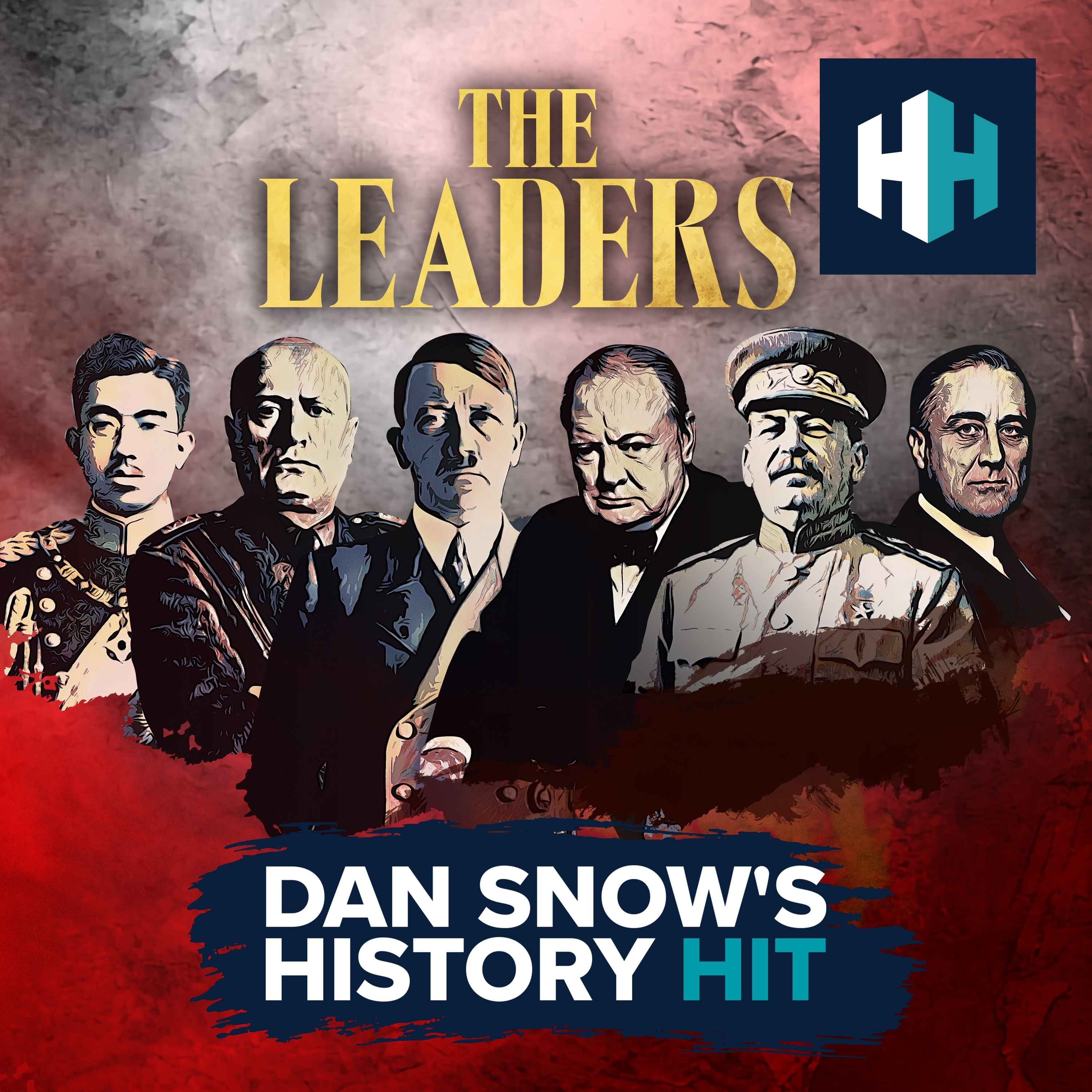
Dan Snow's History Hit
THE LEADERS: Mussolini
01:02:03
How Mussolini's life is a story of ego, brutality and ultimately incompetence.
Loading summary
Transcript93 lines
- [00:00]
Marc Maron
Americans love using their credit cards, the most secure and hassle free way to pay. But D.C. politicians want to change that with the Durbin Marshall credit card bill. This bill lets corporate megastores pick how your credit card is processed, allowing them to use untested payment networks that jeopardize your data, security and rewards. Corporate megastores will make more money and you pay the price. Tell Congress to guard your card because Americans lose when politicians choose. Learn more@guardyourcard.com all you homeowners have unique needs. Some feel the need to leave up holiday decorations year round. Others have the need to use their garage as practice space for their new metal band. And because each homeowner has unique needs, GEICO helps you get the right coverage for your home and what's in it. That way you get exactly what's right for you, even if your needs are unique. Get more with geico. It's Marc Maron here, host of WTF with Marc Maron on acast. When I started this podcast, I didn't have a lot of expectations, but somewhere along the line, podcasting became a serious business. And if you're serious about making money doing a podcast, there's only one place to do it acast. ACAST generates more revenue more reliably than any other platform. Join Acast, the number one podcast platform for monetization, by visiting go.acast.com WTF.
- [01:35]
Dan Snow
It's 29 April 1945. The Second World War in Europe is fast drawing to a close. In a Milan square, five bodies hang upside down from the girders of a half built service station. The day before, the small group had been seized and executed by Italian partisans as they made a desperate bid to escape north, away from the rapidly approaching Allies. The mood of the large crowd is, according to one eyewitness, sinister, depraved, out of control. The dead are attacked, spat on, urinated on and pelted with vegetables. This was the ignominious end of Benito Mussolini, his mistress Clara Petacci, and their Fascist compatriots. Where had it all gone so wrong for the man once known as Il Duce, the leader? Mussolini had once been seen as one of the political heavyweights of Europe. He was intent on building a new Roman Empire to demonstrate Italian might find new living space for the Italian people. But by the end of the Second World War, he'd become a virtual prisoner of the SS in name only, ruling over a vassal state in Hitler's German empire. He was a puppet, a figure of mockery and Vilification. What was it that had brought him to this grisly end? Hubris? Bad luck? Machinations of his enemies? You're listening to Dan Snows History and this is the third episode in our Leaders series where we examine the biggest decisions and the catastrophic mistakes of the six men at the center of the Second World War. I'm joined by Professor Phillips O'Brien, again author of the Strategists, to examine exactly where it all went wrong for Mussolini and why he's garnered the reputation of being, well, a bit of a joke. I'll also be joined by Professor Christian Goeschel from the University of Manchester to unpack the early part of Mussolini's life and how that shaped him as a leader. Benito Mussolini was born on 29 July 18833 in Dovia di Perappio, Italy. His father, Alessandro Mussolini, was a blacksmith and a committed socialist. His mother, Rosa Maltoni, was a devout Catholic schoolteacher. The contrasting world views of his parents were borne out from the start of his life. Named Benito after the liberal Mexican president Benito Juarez, reflecting his father's political leanings, while his mother insisted that the young baby was baptized as he grew up. Mussolini was a difficult student, often bad tempered. Rebellious on occasion, violent. At one stage he stabbed a fellow student with a penknife, believing he'd spilled ink on his work. He was subsequently expelled. Despite these challenges and forced changes of school, he actually achieved decent grades and in 1901 obtained a teaching diploma. He worked briefly as a schoolmaster, a profession for which he was entirely unsuitable. In 1902, Mussolini emigrated to Switzerland to avoid military service. There he became involved in the socialist movement and studied the works of Friedrich Nietzsche and Georges Sorel. Both philosophers left a deep impression on him. Nietzsche for his concept of the Ubermensch, or superman, and Sorel for his advocacy of direct action and the violent overthrow of liberal democracy. In Switzerland, he was arrested several times for his political activities, eventually returning to Italy in 1904 for a stint in the military. After serving for two years, he resumed his career in teaching and journalism. It was in journalism that Mussolini would find his voice. His professor, Christian Goeschel. His mother was Catholic, his father was socialist. Does that reflect a kind of tension in European society in the late 90s 19th early these two competing visions of how to organize society.
- [06:08]
Phillips O'Brien
Mussolini's upbringing was typical of the tensions prevalent in late 19th century Europe. In late 19th century Italy, on the one hand you had Catholic tradition, on the other hand you had the rise of mass society. The working classes wanted to get organized. They wanted to have a share of power. And Italy was one of the countries in Europe with a really vibrant socialist party with a vibrant socialist culture. Mussolini was traveling from Italy to Switzerland until he was evicted. He was moving in similar circles to other even more famous socialists like Lenin. There is no direct evidence that Mussolini ever met Lenin in Switzerland. It must perhaps remain a possibility. Mussolini became so famous as a socialist because he was an extremely effective journalist. Mussolini, unlike Lenin, was not an intellectual. He was a man of action.
- [07:01]
Marc Maron
But he.
- [07:02]
Phillips O'Brien
He really wrote effectively. And he became so famous because he was editor of the main newspaper of the Italian Socialist Party, which was called Avanti Forwards. That is how Mussolini made his mark. So Mussolini didn't make his mark initially as an orator, as someone who gave speeches to packed audiences like Hitler. After World War I, Mussolini was a man who put his ideas effectively into writing. That's how he became so famous. He was a really radical socialist. And it's perhaps not a coincidence that Mussolini, in the years leading up to the First World War, becomes one of the most engaged, one of the most famous socialist activists. Some called him a socialist agitator. He was not anywhere near far right thought. In the years leading up to the.
- [07:57]
Dan Snow
First World War, Mussolini's socialist credentials seemed ironclad. He'd been jailed in 1911 for participating in a riot against Italy's imperialist war in Libya. Then in 1912, he became a member of the National Directorate of the Italian Socialist Party. And as editor of the socialist newspaper Avanti, he increased its readership significantly. But Mussolini's political thinking and positions were evolving. And the outbreak of the First World War would provide a catalyst for radical change in Mussolini's WorldView. Here's Phillips O'Brien.
- [08:33]
Marc Maron
Mussolini, he has this extraordinary transformation at the start of the First World War. The beginning of the First World War. He is an anti war socialist. So what he writes in August 1914 is that this war is a capitalist plot. It's horrible. Italy should stay out. The war is a bad thing. But within like weeks, he's transformed and he becomes a hyper nationalist militarist. What has happened is very difficult to say. It might just be that he sees this as his opportunity. If he's going to be a great figure, it's not gonna be as a pacifist socialist, it's gonna be as a hyper nationalist militarist to get Italy in the war. And then he lobbies from that point to get Italy in the war. And he's bankrolled partly by the government and by business. To make that case. And then Italy does join the war, and he's exultant and he goes and fights in the Italian army.
- [09:23]
Dan Snow
Mussolini was ecstatic about the war, but exactly what did he want Italy to get out of the coming conflagration? Christian Gershel again, Italy is bound to.
- [09:35]
Phillips O'Brien
Go to war on the side of the Central Powers, of Germany and of Austria, Hungary. But the Italian leadership, they're quite unsure, should we go, should we not go? And then a secret treaty is signed in London, the so called Treaty of London, whereby the Entente powers, they promise Italy some territorial gains if they leave the alliance with Germany and Austria, Hungary, if they join France and Britain and Russia. That is what happens. So in 1915, Italy enters the First World War on the side of the Entente. And one of the most vocal, explicit, almost aggressive advocates of Italy joining the war is Benito Mussolini. Mussolini wants Italy to go to war because he thinks that is the only way to unite the country. That's the only way for Italy to become a great power, for Italy to punch above its own weight. Italy without war cannot be finished as a national project in order to be a powerful nation, in order for Italy to finish the Risorgimento, the Italian unification in the 19th century, Italy must go to war. And Mussolini is expelled from the Socialist Party because the Socialist Party in Italy say workers from Italy can't shoot on workers from Germany or from Austria, Hungary. So Mussolini is fired. He goes to war. He's not particularly brave. He's evicted from officer training because his superiors think that he is too much of a radical. He's a really famous socialist at that time. He gets injured in a training accident. So he's not a particularly brave or successful soldier. He doesn't make it beyond the rank of sergeant. Interesting parallel perhaps, that Hitler didn't make it anywhere near the officer rank. So in Germany you have this Corporal Hitler, and in Italy you have that Sergeant Benito Mussolini.
- [11:37]
Dan Snow
Mussolini may have seen the war as an opportunity to transform Italy into a great nation. But his experiences at the front left him uncertain that the Italian people shared his vision.
- [11:48]
Marc Maron
He has very mixed experiences in the front. Part of it he gets protected. But then at some point, he does end up in one of the worst places in the First World War, the Carso Front between the Austrians and the Italians. And what he goes up and down in his experiences is he starts wondering, to what degree are the Italians actually want this war? To what degree are they united nationally? So he'll have moments of bluster. Italy is united we are one country from Sicily to the Alps and we will fight through. And then there's another part of him that goes, well, actually the Italians don't really like this war and they don't want it. So if you're going to distill, what he wants is he wants to have hard edged Italian ness accepted by the population, which he's not sure is there. And you will do that by stressing will and determination. So what Mussolini seems to decide is if you act a certain way, you will become it. And Italian greatness will be down to an act of will as much as reality.
- [12:48]
Dan Snow
The shattering impact of the conflict left Mussolini well, both with a belief that he was central to the coming of Italian greatness as well as giving him the opportunity to do so. The upheavals of the First World War, the instability that followed and the Depression, it just thrusts these marginal people, these people who are on the fringes of thought, screaming, howling in their publications, their niche publications, people like Lenin, Hitler, Mussolini, it thrust them to the pinnacle of political power. In the years that has come, just shows what an upheaval it must have been. Everything, the entire sort of European political order was obviously just shattered by this great event.
- [13:28]
Phillips O'Brien
There was a total shattering of the European political order, of the European social order in World War I. In Italy in particular, going to war had not been popular. Most of the people in Italy were working class. The working classes were overwhelmingly against being drafted into the war. Casualty rates, especially towards the later stages of the war, there were these massive battles between Italy and Austria. Hungary. Casualty rates were extremely high. Think of the Italian defeat at the Battle of Caporetto, for example, a really deadly battle in the First World War. So all of this experience of mass violence had a huge impact on how people thought about the future. And one of them was Mussolini. So what Mussolini does after he gets discharged from the army is that he sets up a new newspaper with funding from industrialists, but also with some small funding from the British. It's called the People of Italy, Il Popolo d'italia, which Mussolini turns into his own publication. So World War I makes Mussolini. Mussolini is already quite well known. But World War I really puts Mussolini onto the map. World War I radicalizes Mussolini and World War I makes Mussolini develop his ideas that turn into what we now call fascism.
- [14:48]
Dan Snow
Tell me a bit more about that journey, because we see it around us today that the journey from socialism too far right without stopping, without passing go. How does Mussolini make that journey?
- [14:59]
Phillips O'Brien
Mussolini made the journey from socialism to fascism not immediately. There's not a single turning point we can point out here. Mussolini made the journey from socialism to fascism gradually in increments. Mussolini, of course, was not the only socialist in Italy who later became a fascist. It is really the experience of World War I. It is this romanticization of fighting. It's the realization that violence, political violence, is legitimate. The mass experience of violence really is one of the main points which turn Mussolini from socialist to fascist. It is gradual. And certainly one of the reasons, One of the more profane reasons why Mussolini becomes a fascist is that the socialist party don't want to have anything to do with him after they cashier him. So Mussolini also is an extremely vain person. He really wants to craft his own movement, and that's what he does. But then Mussolini is not nearly as powerful in the nascent fascist movement as Hitler is in the nascent Nazi movement. Fascism emerges across Italy, especially in the north and in the south. On regional basis. Mussolini often has to compete with other leaders of regional fascist groups, such as Dino Grandi, who later becomes Italian ambassador to London. So Mussolini is not the uncontested chief of fascism after World War I. It takes him a while to establish his position, his reputation and his role. And one of the most important steps towards becoming the boss of fascism is the foundation of the Fascist Party in 1919 in Milano, where Mussolini says, it's basically my party.
- [16:53]
Dan Snow
Phillips O'Brien Both Hitler and Mussolini, who both see frontline service in the war traumatized, no doubt. How are those returning veterans feeding into sort of fascist narrative around. Do they feel that there's a nobility of a common soldier? They've been let down by generals and democratic leaders who spend all day in committee meetings. There needs to be a new sort of strength and virility. We need men of power, men who've seen what the front line really is.
- [17:18]
Marc Maron
Absolutely. I mean, what fascism begins is gonna be an organization for returning soldiers that Mussolini believes the veteran is going to be the future of Italy. The First World War veteran has shown what Italians can be. And so if you are going to have a stronger, more virile Italy, it will come out of veterans acting together. And he writes about this. He's a journalist also throughout the war, so he writes about the importance of keeping the veterans together, making them part of a political organization. And he plays off of that. He dresses up in quasi military uniform, which is, I think, harking back to his First World War experiences.
- [18:00]
Dan Snow
Is there a sense that the future, well, the present and the future somehow has to compensate for what those Men have endured. Is there something about creating a land fit for heroes?
- [18:10]
Marc Maron
Yeah, I don't know if he cares about other people enough. I think it's about creating a land for a hero, and he is the hero. So again, like Hitler, ultimately he wants the Italian people to be what he wants them to be. And this is a very personal thing in his mind about achieving greatness. And he is the person to lead Italy to greatness.
- [18:32]
Dan Snow
So Mussolini takes this group of former soldiers with a penchant for violence and right wing politics. And in the space of a few short years, he uses them to propel himself to the pinnacle of political power. This is Christian Goesl again. And who does he find to join him on that journey? Is there just a group of traumatized veterans of World War I who, as you say, have seen the impact of violence? Are they angry? Are they disillusioned? Do they feel that kind of democratic institutions and all this talking and debates is somehow now unworthy of this bright new future they need to form, forge.
- [19:08]
Phillips O'Brien
The political system in Italy, unlike in Germany in 1918, does not change. Italy remains to be a kingdom. Italy remains a state ruled by a small liberal elite. Many of the soldiers, many of the officers who returned from fighting are so bitterly disappointed that this is still very much an oligarchic system. So the masses want to be having a say in politics. But fascism is not a movement that is popular among the working classes especially fascism is a movement that recruits its members from a battlefield. The early fascists are typically male. Most of them are veterans. And they are men of action. They call themselves men of action. They want to assault those who are standing in their own way. They feel that their participation in politics is not so much through words, but it is through violence, through torturing socialists on the street, through filling them up with castor oil, through humiliating them in public, through sometimes killing them. So fascism becomes a dangerous movement in northern and central Italy at a time when the Socialist Party in 1919 and 1920 increases its agitation, their mass strikes. So at that time, some conservatives, some within the bureaucracy, some within the army, some even within the inner circles of the Italian monarchy, begin to realize well, this new political force of fascism, this new dynamic movement that is a way to keep these socialists out of power. It is a far greater danger, conservatives believe, to have a socialist style revolution. Look at what had happened in Russia in 1917. It's far more amenable to make a deal with this fascist movement that is growing very slowly. In the 1921 parliamentary elections, the Fascist Party scores appallingly around only 2% of the vote. So there is no popular electoral support for the Fascists. But the Fascists take over space. They make themselves known through flags, through wearing black shirts, they invade socialist areas. They make their presence known in Italy. And from 1921, 1922 onwards, there is no way for conservatives in Italy to ignore Mussolini and the Fascists.
- [21:40]
Dan Snow
So he does very badly in the 1921 elections. And yet, months afterwards, he finds himself in a position of enormous power. How does he make that jump?
- [21:49]
Phillips O'Brien
Mussolini makes the jump from an insignificant political force that scores badly in the 1921 elections to the Prime Minister of Italy. Through demonstrations, through spectacles, through performances of power. The most important performance of power is the March on Rome in October 1922. It is a mass demonstration of fascists who all want to congregate outside the gates of Rome. Taking Rome is a long standing trope in Italian nationalist culture. Garibaldi wanted to take Rome during the Risorgimento. So Mussolini assembles his Fascist squads outside the gates of Rome. It's a dreadful situation because it's pouring down with rain. Mussolini himself is not present in Rome. He remains in the editorial offices of his newspaper, the People of Italy. And he only travels to Rome once. He knows for sure that the King will appoint him prime minister of a coalition government. So the King is wavering. Should I instruct, Should I agree with my existing Prime Minister's request to declare a state of emergency martial law? Or should I rather wait and see what is happening? Wouldn't it be better to have someone like Mussolini form a coalition government? The King plays a decisive role. It's the King who decides to appoint Mussolini as Prime minister of a coalition government. Nobody at that time in October 1922 knows that this regime will last for 21 years. Mussolini doesn't know that. The King doesn't know that. Nobody knows that. Initially, it's business as usual. This is a coalition government. This is a government which is now led by a group of thugs, by people who have beaten up, who have killed their political opponents. Mussolini's first speech to the Chamber of Deputies, Italy's parliament, is extremely aggressive, arrogant and boastful. Nobody knows at the time that this will become Italy's regime for 21 years.
- [23:59]
Dan Snow
How does he manage to do that? How does he dismantle Italian democratic institutions? And is there a plan? Does he kind of sit down and go like, here we go, this is what we have to do? Or is it rather organic?
- [24:09]
Phillips O'Brien
Mussolini doesn't have a clear plan on how to conquer power. Let's remember that Mussolini is Europe's first fascist in power. There is no matrix, there is no blueprint for how a fascist movement can secure, can consolidate power. There are quite a lot of obstacles on the way. But since there is a common ground between conservatives and liberals on the one hand, and Mussolini's fascists on the other hand, like the concern about law and order, the determination to keep the socialists at bay, it's often conservatives and liberals who go quite a long way towards helping Mussolini consolidate his power. So the consolidation of power is a drawn out process. It takes from 1922, Mussolini's appointment as prime minister until 1929, when Fascist Italy signs a treaty with the Catholic Church, the Concordat. But Mussolini never fully consolidates his power because he is unable, even at his zenith of power, to get rid of the monarchy. It's the monarch who always holds his hand above Mussolini. It's the monarch who hires Mussolini in 1922. It's the monarch who fires Mussolini when the war goes really badly for Italy in 1943. So there is no blueprint for securing power. It's an organic process which is extremely violent. And it's a process where fascism takes over the rather weak democratic institutions of Italy. Where fascism brings in repressive laws against those who are anti fascists. Censorship is tightened. There's increasing pressure on people to conform. But Fascist Italy is very much the first fascist regime in the world. So it is an experiment in bringing a country under the yoke of fascism.
- [26:07]
Dan Snow
How successful is the campaign of turning Mussolini into Il Duce, the sort of superhuman, the quote, unquote, strong man which we've seen so often in the decades that have followed.
- [26:17]
Phillips O'Brien
Mussolini sees himself very much as a strong man. A very strong cult of Mussolini starts. Pictures of Mussolini become omnipresent in Italian towns and cities, even in Italian villages. Censorship is tightened. The idea of using electronic mass media such as film, is playing into the hands of Il Duce and his regime. Print culture is playing into the hands of Mussolini and his regime in the late 1920s, the early 1930s. Mussolini is often seen as an exemplar of a strong man, of a leader who keeps down the left, who has found an agreement with conservative forces. Even politicians like Winston Churchill at that time expressed some sympathy for Mussolini because they even a clever man like Churchill cannot see how effective fascist propaganda about the Duce as a strong man is. So there is this widespread fascination across the European moderate right, the conservative right. They see in Mussolini an ideal person who finds an Accommodation with the monarchy, with conservative forces, but who at the same time ruthlessly represses the left and the far left. What people outside Italy who admire Mussolini in the 1920s and 1930s do not realize is that Mussolini doesn't only have a very strong urge to rule Italy, he develops an increasingly strong determination to create an Italian empire in the Mediterranean and East Africa. So Mussolini's foreign policy increasingly clashes with the interests of liberal democracies, especially France and Britain.
- [28:14]
Dan Snow
That's what I just want to drill into a little bit more here. To what extent did Mussolini cement his popularity or cement his position, his security of his tenure, by all these fancy new communication techniques and this clever branding? And to what extent was it actions, building infrastructure, invading places around the Mediterranean? Were those things, the actual things he did, popular?
- [28:39]
Phillips O'Brien
The popularity of Mussolini's regime was going through phases. It becomes increasingly difficult as the regime consolidates itself, as the regime becomes more repressive. To find out what the people really think. Censorship is tightened. Secret police forces are being established. So there are reports on what the Italian people thought compiled by police forces and certain policies of the regime. Especially Imperial conquest was initially extremely popular. Other aspects of Fascist policy were unpopular. The increasing corruption of the Fascist party, the directionless foreign policy. From the late 1930s onwards, Fascist Italy is almost continuously at war. When Mussolini becomes Prime Minister of Italy, Italy is engaged in colonial warfare in Libya. In 1923, one of the first foreign policy coups of Mussolini is the occupation of the Greek island of Corfu. That is a way for Mussolini to stand up the League of Nations as ineffective. Across the 1920s, fascist warfare continues in Libya. The war is escalated in extremely brutally by the fascist regime. Then, from the early 1930s, planning for the flagship project of Italian imperialism starts, that is the conquest of Ethiopia, which Mussolini starts in 1935. This is one of the most brutal, one of the most violent colonial warfares the world had ever seen to that date. The Italian forces use poison gas, illegal under the Geneva Convention to make their mark. 1935, 1936 is also a turning point in the relationship between Italy, Fascist Italy on the one hand, and France and Britain on the other hand. Because this growing rift between a rules based international order, which France, Britain and also Italy had helped to create after the First World War, Treaty of Versailles, the establishment of the League of Nations. There is this increasing rift between fascist imperialism and the existing rules based international order. And it's only in 1935 or 1936 that most politicians, diplomats in Britain and elsewhere begin to see how dangerous Mussolini's Italy is as is destabilizing imperialist force that doesn't even shy away from using poison gas.
- [31:26]
Dan Snow
It's another imperialist force that ends up taking over the gaze of the liberal democracies and that's Germany. But it's fascinating to me that how for much of this period, Germany and Hitler was seen as the almost junior partner to what Mussolini was forging in Italy.
- [31:40]
Phillips O'Brien
Hitler is a great admirer of Mussolini. As soon as Hitler finds out about the March on Rome, Hitler really develops in admiration an obsession with Mussolini. Because Hitler sees in Mussolini an exemplar of a fascist leader who comes to power through a twofold strategy. The first strategy is violence. The second part of the strategy is seemingly playing along the existing political system to gain legitimacy. Hitler copies this fascist matrix of securing power when he takes over power in Germany in 1933. Extreme violence, violence in Nazi Germany is even more extreme. But there is also Hitler's obsession initially with seemingly playing along the rules of the German political system. So Hitler is initially the junior partner. There is an embarrassing meeting held in Venice in 1934 where Hitler is photographed wearing a trench coat. Mussolini is there in his glitzy fascist uniform. The relationship soon turns because Fascist Italy and Nazi Germany need one another. They both want to conquer empire. In the case of Germany, it's an empire in Eastern Europe. In the case of Italy, it's an empire in the Mediterranean and East Africa. You can only conquer an empire if you violate international law, if you go totally against the rules based international order, which is supposedly policed by the League of Nations. So Hitler and Mussolini need each other. And it's interesting to zoom in on the year 1935 and the years 1936 and 1935. Hitler reintroduces conscription, creates the Wehrmacht, illegal under the provisions of the Versailles Treaty. Mussolini conquers Ethiopia. The Western powers increasingly isolate Mussolini. Then he realizes Nazi Germany could be an ideal ally. In 1936, Nazi Germany remilitarizes the Rhineland, also illegal under the post war order. France and Britain do not intervene. In 1936 there is also the gradual development of a formal Italian German military alliance. And it's in November 1936 that Mussolini gives a boastful speech in Milan where he proclaims an axis running between Berlin and Rome. So this is an axis that wants to shatter the existing order not only in Europe, but also globally. Because another power that becomes part of this axis is Imperial Japan.
- [34:22]
Dan Snow
You're listening to our leaders series. More after the break. If you're in business, you'd expect money.
- [34:38]
Marc Maron
Movement to be easy. And it is with Visa Direct. Collect, hold, convert and send payments between.
- [34:46]
Dan Snow
More than 195 countries, 160 currencies, and over 11 billion cards, accounts and wallets. Effortlessly and securely move money your way.
- [34:59]
Marc Maron
Learn more@visa.com visa direct your old or broken phone can let you down when you need it most. Perfect. But at Verizon, trade in any old phone from our top brands and get the most for it. Up to $2,000 in value for an amazing, amazing new iPhone 16 Pro with Apple Intelligence and a new line on my plan and iPad and Apple Watch Series 10. That's like a three for one and you can get it on any plan at Verizon. Trade in your old phone for a brand new iPhone 16 Pro, iPad and Apple Watch. The other guys won't give you that. Visit verizon.com today. Additional terms apply. Service plan required for Apple Watch and iPad up to $2,000 value based on iPhone, iPad and Apple Watch what makes a leader? It's a tough question, but this we know for sure. True leaders lead by example. They take risks and plunge into life with determination. And for real leaders, there's a symbol of high adrenaline and high achievement. The Range Rover Sport. The Range Rover Sport redefined sporting luxury with a dramatic modern design that meets a distinctive sporting character and a well appointed cabin brings a sense of occas to every drive. The active noise cancellation feature filters out unwanted sound, making the cabin of Cocoon like sanctuary. Optional PM2.5 filtration reduces odors, bacteria and allergens while CO2 management enhances the wellness of everyone on board. Plus, you can curate the mood of every journey with configurable cabin lighting and bring a hint of refinement to every drive with optional 22 way adjustable heated and ventilated electric memory front seats with massage function. Build your Range Rover sport@rangrover.com US Sport that's range Rover.com US Sport.
- [36:09]
Dan Snow
Hi, I'm Matt Lewis, host of Echoes of History, the podcast that plunges you into the ranks of the Knights Templar, across ancient Egypt and behind the barricades of history's great revolutions to explore the worlds recreated in Assassin's Creed. In our new series Chasing Shadows, we're in feudal Japan alongside samurai warlords and shinobi spies. Whether you're gearing up for Assassin's Creed Shadows or captivated by Japan's rich history, this podcast, brought to you by Ubisoft and historyhit, is a must. Listen, Chasing Shadows is out now on the Echoes of History podcast. Fascist Italy, Nazi Germany, and Imperial Japan may have all been intent on remaking the global order, but as Phillips O'Brien points out, Mussolini seemed to be unclear as to what exactly he hoped to achieve or how he might go about it.
- [37:16]
Marc Maron
Italy, of course, sees as much more territory in the 30s than Germany. Hitler does take Austria, he takes the Sudetenland in Czech. But Mussolini takes all of Ethiopia, which very large area in the 1930s. And also, by the way, Italy does a huge job aiding Franco in Spain. So you would say that Italy looks like it's actually managing an expansionist, aggressive foreign policy as effectively as Hitler in.
- [37:43]
Dan Snow
The 1930s, driven by the same impulses. What's happening here?
- [37:47]
Marc Maron
Some ways you would say, yes, they're nationalists. They're both extreme nationalists. Mussolini has many more doubts about the Italian people than Hitler has about the German people. Mussolini is constantly torn, believe, thinking, I have made the Italian people hard, thinking, really, the Italian people don't want to do this. So I think that that's a real difference between Hitler and Mussolini is their view of their own people. And whereas they both had huge confidence in their own historical destiny, Mussolini, I think, is more worried he can't achieve it. And therefore Mussolini's always worried about how he will be remembered and what he needs to do. So he's Hitler with more insecurities, I think, is how I would describe him.
- [38:33]
Dan Snow
And so it's what he needs to do to pursue that. He wants to make Italy rich, bigger geographically bigger, powerful.
- [38:43]
Marc Maron
Yes. I mean, he wants an empire. Quite clearly, he wants an empire. Exactly what it was going to be is not clear. You know, was it always going to include Greece, or is that a decision he makes in 1940? To what degree did he want to go through all of North Africa? Did he want the French empire in North Africa? I don't think he fully understands or has an idea of exactly what his empire will be. He just wants to take what he can take. The problem he faces is that ultimately he understands he can't take a lot without Germany's help, that his military is not going to be enough to say, take the British on. He can't take on the British Empire. So what he is left with is a desire to assemble an empire and be a great power. But he doesn't have the means to, in and of Italy's self to do that. And that is, you might say, the constant conflict in his policy.
- [39:34]
Dan Snow
Christian Gershel is Munich in 1938. Is that a crowning moment for Mussolini when he appears to have his seat at the biggest table, in fact, he almost prefers to preside over the big table, the room where it happened.
- [39:46]
Phillips O'Brien
The Munich conference in late September 1938 is the first time the Axis alliance between Italy and Germany is showing its real force. We normally think of Munich of appeasement as a British German conflict. But it's Mussolini who escalates the Sudeten crisis in September 1938, the crisis provoked by Hitler initially over territorial claims over German speaking parts of Czechoslovakia, the so called Sudetenland. Mussolini in September 1938 gives extremely violent, pro German, anti Czech, anti Semitic speeches in northern Italy. He really wants to be allied with Germany, but at the same time he tells Hitler unmistakably that he is not prepared for Italy to go to war over Czechoslovakia. Mussolini is ideologically convinced that he wants to fight a war alongside Nazi Germany against France and Britain. But Mussolini is realistic enough that he knows that Italy, it doesn't have the military resources, it doesn't have the manpower to survive a war against France and Britain. So there is this mix between ideological zeal, pro Nazi declarations and at the same time a sense of political realism. Some historians have accused Mussolini of using bluff. He was very good at playing the register of European diplomacy. And it's him who suggests, well, let's have a meeting at Munich where four powers, France, Britain, Nazi Germany and Fascist Italy decide over the heads of the Czechoslovak government to give in to Hitler's territorial demands for the Sudetenland. So Mussolini returns from Munich as the savior of peace in Europe. Mussolini, deep in his heart, wanted war. But he was realistic enough to know that Italy wouldn't have been able to survive a war against Britain and France at that moment. So Mussolini is not ambivalent ideologically he's clear. But he is realistic enough that he knows war now wouldn't be good.
- [41:54]
Dan Snow
Mussolini might well have been seen as one of the great men of Europe. But as the Second World War broke out in September of 1939, the reality of Italy's position bit hard. Despite the speeches, the propaganda, the parades, the bellicose diplomatic posturing, Mussolini knew Italy was fundamentally unready for the struggle ahead. As the Wehrmacht's tanks rolled across the border of Poland, Mussolini looked for a way out.
- [42:20]
Marc Maron
When the Second World War breaks out, Mussolini is in many ways the great man of Europe. He's been in power the longest. He's taken power right after the First World War in a fascist coup, you'd say, in Italy. And he had been a fixture on The European international scene, often seen as a really effective power broker. So the British had relied on Mussolini during the Munich conference. They actually saw Mussolini as a power broker between Hitler and themselves. So he had a greater reputation than actually he deserved, I think we can say, as this very effective international statesman who had put together and made Italy into a greater power than it was in the First World War. The greatest, wisest decision Mussolini ever makes, I would argue, is in August 1939 when Hitler thinks Mussolini is going to go to war with him and ask Mussolini, okay, I'm going to attack Poland. Hitler says, and of course you're going to join me and great, we will go to Axis victory. And Mussolini goes, no, I'm not going to join you. He just doesn't believe it's a wise choice. He doesn't want to fight the British in the Mediterranean because he believes what the Germans, how are they going to help me fight the British in the Mediterranean? I'm going to be stuck fighting the British. And so Mussolini actually ducks and weeds in the summer of 1939 and leads Hitler to one of his oscillations when Hitler gets a completely unexpected letter from Mussolini, basically saying, I'm not going to fight, which Hitler had never counted on. So Mussolini makes that decision and for a few months he actually feels vindicated in this because it doesn't look like the war will quickly be won by Germany. The panic for Mussolini is in April when things start going better for Germany with Denmark and Norway. Germany's getting ready to attack France and then Musi's like, what if Hitler wins? I had not gambled on that. I wasn't ready to take that gamble. But if Hitler wins and I'm not by his side, I could be left behind. We know this, but he tells it to his very young mistress, Khale Pataci. She's writing a diary and he's sort of the old man, worried about the end and saying, I wish to be great before I go. And that is something that was really weighing on his mind in early 1940. And then he eventually decided to get in the war, partly because this is his opportunity.
- [44:34]
Dan Snow
Not only did Mussolini fear being left behind, but by not joining Hitler in the war, Mussolini threatened to not only undermine his own reputation, buoyed up by propaganda, but the credibility of the whole fascist regime.
- [44:47]
Phillips O'Brien
Mussolini in September 1939 is faced with a challenge he has been making. Pro German, pro Nazi, increasingly anti Semitic remarks. Italy brings in racial legislation in 1938. Then when Hitler invades Poland on 1st of September 1939 Mussolini is extremely unhappy. Mussolini refuses to join the war because Mussolini knows that Italy is not ready for a long conflagration with France and Britain. What does Mussolini do? He declares that Italy is a non belligerent nation. Mussolini hates the term neutrality. He thinks that only cowards, weaklings are neutral. The period of non belligerency, of course, raises questions among the Italian people over the direction of the Fascist regime, over the stability of the fascist regime. And it's only after much wavering, after a lot of pressuring from the Germans, that Mussolini finally declares war on France and Britain. On 10th of June 1940, when Nazi Germany's war in Western Europe is almost.
- [45:56]
Dan Snow
Over, Italy might not have been ready for the war. But with Nazi Germany sweeping across Western Europe and seemingly on the brink of victory, Mussolini spotted an opportunity. He could realise some of his imperial ambitions at a knockdown price. But it was not to be. And he thinks if Hitler wins with Mussolini's help, then he'll get a bit of Croatia, he'll get a bit of southern France, he'll get territory.
- [46:21]
Marc Maron
The key thing is he will knock out France with Hitler, which will give Italy a lot. He wants a great deal of southeastern France, but then that then opens up possibilities with France is gone. Like Hitler, he believes Germany will have won the European land war and that means Italy will have endless possibilities going forward. As Germany expands, they can pick off more. So it's, it's not again that he knows exactly what he wants. In the summer of 1940. He just wants stuff. He wants to be great and he's going to be great by piggybacking on German success.
- [46:55]
Dan Snow
And he joins the battle against France late and it's not a huge success, it's a disaster.
- [47:00]
Marc Maron
I mean, his military was a deeply flawed machine. It looked great on parade and it had some very effective combat units who could. The individual soldiers were very good. But what it wasn't was a fully advanced armed force by the standards of the time. It didn't have a great logistics system, it didn't have good vehicles, its air power was patchy. So it wasn't, I would argue, a actual modern military in the way that we would have seen a modern military like the German army or the British army just wasn't of that standard. And that's cruelly exposed for the Italian soldiers when they attack France, even though they greatly outnumber the French. Their equipment's not very good, their trucks break down, they can't get supplies up to the forward units and it's just a catastrophe for the Italians. It goes wrong so badly so that actually the Italians ask the Germans, can you fly us farther into France so we can pretend we get far in? Because they barely make it across the border.
- [48:01]
Phillips O'Brien
Hitler excludes Mussolini from the German armistice negotiations with the French, and the Italian war against France fought in southern France is extremely poor. There are high Italian casualties because snow sets in in the Alpine mountains. So the Second World War doesn't start off well for Italy. And indeed, the Second World War for Italy is going to be a disaster. And it's not one man alone, as Churchill says towards the end of the Second World War about Mussolini. But Mussolini is the tip of the iceberg of an increasingly delusional but always extremely violent Italian elite.
- [48:46]
Dan Snow
You're listening to our Leaders series. Join us after the break.
- [49:00]
Marc Maron
Whether you're a homeowner creating your dream space or a pro managing multiple projects, discover a new way to shop at Ferguson Home, where great ideas become stunning spaces. Visit FergusonHome.com to explore the best selection of bath, kitchen and lighting products. Or book an appointment at one of our showrooms where you can experience products firsthand and get personalized expert support. Every step of the way. Bring your vision to Ferguson Home, where it all comes together. Shop top brands like Jenn Air or find your local showroom@fergusonhome.com I know I'm not alone when I say adulting can be overwhelming. And what we all could use is a drink. That's where Apple and Eve juice comes in. As the rulers of the juice box, they've been making juice joyful for 50 years with refreshing juice blends bursting with bold flavor. One sip sends you right back to childhood. So when the grind dulls your shine, remember to kid yourself. Apple and Eve has delicious juices for at home and on the go shop today.
- [50:12]
Dan Snow
The war started badly for Mussolini. The disastrous performance of the Italian army left Mussolini desperate to prove his mettle and show Hitler and the world that he was still truly a man of destiny. Mussolini's in the war. What's he do next?
- [50:28]
Marc Maron
What he's desperate is to have some independence of action. So the most interesting strategic reflection we have of Mussolini in 1940 in trying to explain exactly what he's doing is what we want to do is fight a parallel war to Hitler. We're Hitler's allies, but we want to have some agency in the war. We fight the parallel war. And so I'm going to do a bit what Hitler does, which I will determine a thing I can take and then I will plan for it and I'll take it and I'll tell Hitler about it and we'll support each other but it will be an Italian operation. And the big one that he makes the decision for in the fall of 1940 is to invade Greece. And this is partly aimed at Britain. His view is if I can take Greece, the British are shut out of the continent. The only place the British can come into the continent in his mind is Greece. That's it. If they don't have Greece, they can't come in anywhere else. It's also one they can attack from the land through Albania, which is an Italian colony. So the British can't disrupt it from sea attacks which already, you know, getting supplies to Libya. It's not always that easy because of the naval war in the Mediterranean. So what he decides okay, is we're going to invade Greece and I can do that because they're the Greeks. How can they really stop a large Italian army? The Italians or Mussolini can't conceive of the Greeks really fighting back enough great dictators. Problem is you always underestimate the people you're attacking. And Mussolini, oh yeah, the Greeks don't, they're not really going to fight. So in September, October, he basically brings into being the invasion of Greece in 1940. We have a minutes of a really quite depressing meeting as they prepare it and the Italians are talking and Musli's talking about very ephemeral things. They just really think they're going to steamroll the Greeks. Not really even thinking about preparing a real detailed military campaign. But that's Mussolini's choice. And what he seems to get the greatest pleasure of is being able to tell Hitler about it just before it happens. He always tells me just before he attacks someone without now I'm going to tell Hitler just before I attack Greece.
- [52:37]
Dan Snow
The Axis hardly deserves the title of an alliance, does it? So on one stage we've got Japan trying to occupy China, Italy trying to occupy Greece and Germany pursuing its agenda. And as you say, kind of parallel but with no, no real strategic alignment. They're not helping each other, none at all.
- [52:55]
Marc Maron
I mean the Germans by the way are planning Barbarossa at this time and Mussolini has no idea. Germans are not letting the Italians into any of their strategic planning. And Mussolini in his own mind does the same thing to Hitler. He's not going to let Hitler know about his plans to invade Greece and he's going to launch it and then be able to tell Hitler that they've done it. So they are what we might say a historic kind of alliance of the almost early modern period where you had states in grouping that would fight wars, but they couldn't consult all the the time. That's how alliances worked. What they were not is what we see between the Anglo Americans, which is this very close political combined chiefs, combined.
- [53:36]
Dan Snow
Staffs serving under officers of a different.
- [53:37]
Marc Maron
Nation, it's completely different. It's a much more of an old fashioned kind of distant alliance.
- [53:43]
Dan Snow
Is there a world, Phil, where the Axis really did work together in the way that the Western Allies did and changed the outcome of the war in some way?
- [53:50]
Marc Maron
Now I think we have to be very careful because the world balance of production was never going to favor the Axis. If the British and the Americans stay together, particularly with the Soviet Union not committing. If you wanted to see a real example of the Axis, that could have been very problematic. It would have been two different things would have happened. One, you could have actually added the Soviet Union to it, which was being discussed. That means Hitler would have had to change his ultimate strategic plans about which are to go into the Soviet Union. But had you actually created an Axis and made the Nazi Soviet Pact into more of an alliance and Hitler said the key thing is to beat the British. So actually we are going to bring the Soviet Union in with us, that would have been a very tricky thing. But I just don't think Hitler could do that. He just couldn't have thought in that way, that sort of imagining a different leadership. The other one would have been had the Japanese and the Germans really coordinated against the Soviet Union in 1941. But they just can't reach that point of coordination. It's simply beyond their own imaginations.
- [54:50]
Dan Snow
Funnily enough, having said all that, Hitler does end up coordinating quite a lot with Mussolini both in Greece and North Africa. But it's extremely reluctantly, right? It's to rescue the Italians from self inflicted disasters.
- [55:01]
Marc Maron
I don't think I'd use the word coordinator. As the Germans begin to dominate is what happened. I mean, the invasion of Greece is a travesty. It's just a disaster for the Italians. They go across the border and the Greeks fight really well, shockingly well for the Italians. And before you know it, the Greeks have driven the Italians back into Albania and they are driving the Italian army almost halfway up into the Italian colony. This is a disaster and it sets off a really dangerous chain of events for Hitler in the Balkans. So the next sort of domino to bit fall as the Greeks do really well. And by the way, the British start aiding the Greeks is that Yugoslavia, which had been pro Axis, not part of the Axis, but at least pro Hitler, has a coup and the government seems to become pro Allied, pro British at that point. And so Hitler has to intervene to stabilize the Balkans in April of 1941. And he switches a lot of the troops that are preparing to invade the Soviet Union to attack down into the Balkans. So that is to save Mussolini and basically bring Yugoslavia back into the fold. That is an entire campaign. But that means Hitler is just doing it to look after him. From that point onwards, Italy is a vassal state of Germany. That Mussolini's ability to act independently is very, very limited. From that point onwards he can still raise an army, but it has to be under German command. It needs German resources, it needs German air power, it needs a lot of the sinews of German power to function. And that's what Greece does, is it exposes that Italy cannot act independently.
- [56:48]
Dan Snow
And you also see that fill in North Africa where the Axis forces are German run dominated by.
- [56:53]
Marc Maron
Well, this is where of course Mussolini gets very sad in 1941, 42, when the axis has their great successes in the desert is that it's always given credit to Rommel. When Mussolini says on one hand, but there are more Italian and there are, there are more Italian forces in North Africa than German forces. And yet it's the German ones getting the attention. Of course the reality is it wouldn't have happened without the German forces. So it's not actually improper that the Germans are getting the attention. It's just the pathetic nature of what Mussolini is left doing, which is trying to slipstream within German power and take advantage of it. And it becomes basically his modus operandi from that point. So when Hitler invades the Soviet Union, which by the way, the Germans actually just lie to the Italians, just we don't know what we're going to do as they're literally about ready to cross the border. We really don't know what we're going to do. And so the Italians have no idea Barbarossa is going to happen. But once Barbarossa happens, Mussolini's like, oh, we'll send you hundreds of thousands of soldiers. And the Germans are like, oh no, don't really, don't worry, Benito. But he forces it. He basically forces the Germans to accept Italian troops because he wants to be seen to be part of it.
- [58:04]
Dan Snow
North Africa looks like the best theater for Italy to enjoy any success, albeit under sort of German management. But right up into 1942, Axis forces are advancing in North Africa.
- [58:14]
Marc Maron
Well, you can see Mussolini's utter reliance on Germany by how he approaches the desert war and how he approaches the war entirely from December 1941 onwards. Now you might think that Mussolini would be depressed with the United States entering the war. What is strange is, at least outwardly, he is very confident. We have from Ciano's diary and other sources that when the Japanese attack, he welcomes it. He says we are now an alliance with the Japanese and the Germans.
- [58:43]
Phillips O'Brien
He is.
- [58:44]
Marc Maron
By the way, one thing that Mussolini does is very healthy respect for the Japanese, which is quite interesting. And he believes the Axis is going to be very strong. And what he thinks is that now we are in this full globalized worldwide war, we will march on to victory with the Axis. And what you see is, at least for a few months, in his mind, some vindication of that in the desert. So the last great successes that the Axis has in North Africa is the first six months of 1942, when Rommel has some of his smashing victories and runs all the way through Libya and deep into Egypt. And of course, Mussolini is trying to say this is an Italian victory as well. This is his last moment of acting the great conqueror. The first six months of 1942. What he can't fully understand is it's just going to end pretty soon and go the other way. He just doesn't seem aware of that. He thinks these victories are going to continue, the Germans are going to win, and that his strategy in his mind is vindicated for the first few months of 1942 with these desert successes. And then it just all goes pear shape.
- [59:51]
Dan Snow
That's how it turns. How should we summarize Mussolini's characteristics as a war leader?
- [59:58]
Marc Maron
He gambled that will could compensate for strength and it can't. That Mussolini really thought if you acted the great power and were in many ways treated as a great power, that would be enough to be a great power. And Italy just wasn't. It didn't have the industrial, technological resources to be a full fledged power like the British or the Germans. And the reality is that his military fails because it never could have succeeded. And he could not realize that. And it meant that he took risks he never should have taken. He could have been Franco. It's the interesting comparison. Mussolini could have stayed in power in Italy for the rest of his life. But he desperately wanted more than to be just the Italian leader. He wanted to expand Italy. And that leads to the seeds of his destruction.
- [60:51]
Dan Snow
He wanted to expand Italy, but did he do the work? I mean, was he just. It was all style over substance. Cause he was in charge through the 20s. Did he take an interest in industrialization, in modernization of the armed forces? Does he personally carry the blame for that failure as well?
- [61:05]
Marc Maron
Well, I think a lot of it was show that. There's a lot of talk about the growth of the Italian economy in the interwar period and the growth of the Italian military machine. And yet the more you study it, the more hollow this. I mean Italian growth wasn't particularly special in the interwar period. The times people thought, oh, the Italians are really growing, they're not really growing. And their military was always this weirdly lopsided machine. So they could build great naval vessels in terms of hulls, but they didn't have radar that worked. They just lacked fully functioning military equipment. Their tanks were just paper thin arms. So they couldn't create a fully fledged military. But they acted like they had one and then they were just cruelly exposed. He bears almost all the responsibility. He's the one who makes the decision. He's the one in charge of Italy. So Mussolini bears the responsibility.
- [61:55]
Dan Snow
Of all the leaders we've talked about, Mussolini has the. He's remembered almost as buffoonish.
- [62:01]
Marc Maron
There is a dangerous tendency to sometimes make him into a comic figure. Be it the way he strutted and jutted out his net that he looks faintly ridiculous. He looks like a Hollywood creation of a fascist dictator. But I think the way to remember him is as a brutal incompetent. He was extremely brutal. He wasn't Hitler levels of mass murdering psychopath, wiping out of peoples. But he killed his enemies. He actually ended up killing people like Ciano, who had been his close associates. After he falls from power in 43 and is brought back from Hitler, he kills a lot of people. At that point he really starts basically sacrificing the Italian people to Germans to remain in any kind of political power. And he's basically Hitler's puppet. From 43 onwards, he is willing to oversee the Germanization of northern Italy. The Germans just take what they want and do what they want. So he is not comic. I think that's the key thing. He is brutal, incompetent, strung up in.
- [63:01]
Dan Snow
The end by Italian partisans, unmourned.
- [63:04]
Marc Maron
His life was basically as long as the Germans could protect him. From 1943 onwards, the only way he stays alive is because the Germans are protecting him. And when the Germans lose the ability to protect him from 1945, it just takes a few days to leave Track down. He's trying to flee north into Germany in 1945 or into the away from the Italian population centers in the north. And they just find him and gun him down on a really nondescript street corner and hang him up in a piazza.
- [63:33]
Dan Snow
And yet Italian Fascism didn't disappear without a trace, did it? The right endured in some ways and is arguably having a renaissance.
- [63:42]
Marc Maron
Well, there is one thing. There is no final solution attached to Mussolini's name. Hitler has the final solution, the Holocaust. Mussolini doesn't have one thing like that. And secondly, the Italian state switches sides in 43, which means Italy as a country doesn't undergo the kind of process Germany undergoes in the Cold War. This sort of occupation, division, real cultural transformation. Italy just doesn't undergo that period. It actually, in 1945, Italy is considered an ally, one fighting with the Allies. And that means that the Italian state and the Italian people have much more control over their own post war narrative and view of themselves. And within that, because of those reasons, I mean, Mussolini always retains some positive memories in Italy in the way that you couldn't for Hitler in Germany. If you go to I love Sicily, you go to a small town in Aci Trezza, you will still see Mussolini's statements on the wall. They haven't taken them down. It's like Hitler having a statement about Greater Germany on the wall of a German city. You wouldn't see that. You will see that in Italy. So it's just fundamentally different.
- [64:55]
Dan Snow
So how should we remember Benito Mussolini? He dreamed of becoming a new Caesar. He wanted to conquer and control the Mediterranean base and to carve out a new Roman Empire. He certainly got as far as the branding stage. He carefully cultivated the image of a man of action, swaggering on the world stage, carrying Italy to greatness once again. But the branding, all that was just an image and nothing more. It lacked the substance to turn it into anything like reality. Mussolini was not just a buffoon or a bluffer whose luck ran out. As Phillips put it, he was a brutal incompetent who led his country to disaster. And ultimately it was the Italian people that paid the price for Mussolini's hubris and ego. It always is. His hands were stained with the blood of his political enemies, but also the poorly equipped, badly led Italian soldiers he sent to die in a war he knew they were unprepared for. And the blood of all those innocent civilians killed as Italy was turned into one of the most savage battlefields of the Second World War. In the next episode, we'll be looking at Joseph Stalin, a man whose brutality and bloodthirstiness matched any of the Axis leaders but who fought on the side of the Allies. Victorious at the end of the Second World War, Stalin ruthlessly reshaped the map of Europe and helped to define global geopolitics for the next 50 years. But how did Stalin and his regime absorb the cataclysmic blows of the Nazi war machine in 1941 and 1942 and turn near defeat into total victory? So join me on Friday for the next episode of the Leaders as we look at Joseph Stalin. If you hit Follow in your podcast player, the episode will drop into your library automatically. You can listen wherever you get your podcast. See you next time.
- [67:02]
Marc Maron
Come on down to Boost Mobile and turn your tax refund into six months of savings. Nope, all wrong. You're on the radio touting Boost Mobile's 5G network. You gotta use your radio voice like this. Come on down to Boost Mobile and.
- [67:14]
Dan Snow
Get six months free when you buy. Six months on our Best Unlimited playlist.
- [67:17]
Marc Maron
Now you go. This is just how my voice sounds. Just say it like you mean it.
- [67:21]
Dan Snow
Okay.
- [67:22]
Marc Maron
Plus, enter to win up to $10,000 and double your tax refund. Oh, my. Requires upfront payment, taxes and fees. Extra terms and exclusions apply. Visit boost mobile.com for full number terms and sweeps details. I love ravioli. Since when do you speak Italian?
- [67:37]
Dan Snow
Since we partnered with SAP Concur. Their integrated travel and expense platform and breakthrough solutions with AI gave me time back to dive into our financial future. We expand into Europe in 2027, so I'm getting ready. Well, you can predict the future. I can predict you'll like that message.
- [67:51]
Marc Maron
What message? Oh, hey, we all got bonuses.
- [67:54]
Dan Snow
You can save for college now.
- [67:55]
Marc Maron
I don't have kids.
- [67:56]
Dan Snow
You don't say SAP Concur helps your.
- [67:59]
Marc Maron
Business move forward faster.
- [68:01]
Dan Snow
Learn more@concur.com.