
Podcast
Data Faces Podcast
Hosted by TinyTechMedia · EN
Data Faces is a data, analytics, AI, and marketing podcast that brings the human stories behind the numbers to the forefront. Hosted by David Sweenor — author and founder of TinyTechGuides — each episode features engaging conversations with the industry's leading voices: the data leaders, analytics practitioners, AI innovators, and marketing leaders shaping the future of data-driven decision-making. We explore the culture, challenges, and real-life experiences of the people behind the numbers — enterprise AI adoption, data governance, generative AI, analytics, and B2B marketing.
20episodes
Episodes
Newest firstAll episodes
When AI copies every feature, what's left to sell? | Donald Farmer
4w ago00:35:32Tap to summarizeFor decades, buying a data platform meant buying into a practice, a methodology, a community, a whole way of seeing the work. Now a general-purpose AI model can copy almost any feature from a prompt. So what does a software vendor sell?On this episode of the Data Faces podcast, David Sweenor talks with Donald Farmer, Principal of TreeHive Strategy and a veteran data product leader from Microsoft and Qlik, about practice versus process, why a Tableau analyst stays a Tableau analyst, why "a human in the loop" is so often a cop-out, and the four human attitudes a system can model but never feel.Key takeaways:-Why the technical feature moat has collapsed, and what replaces it-Practice versus process, and why a practice is sticky when features are not-Why community and identity outlast any single feature-"A human in the loop is a cop-out," and how to design the human attitudes in on purpose-Trust, doubt, ambition, and care, the four things AI can simulate but not feelChapters:00:00 Intro01:16 Meeting at the BARC Data and Analytics Retreat03:07 The shoe shop and an analytic mindset at sixteen05:01 First week at Microsoft, briefing a bank08:32 Why companies still run on spreadsheets10:13 Practice versus process12:52 Tableau versus Qlik, and two different practices16:50 Can vendors still compete on features?20:38 Open source, community, and AI22:01 Do businesses have an ethical stance?25:13 "A human in the loop is a cop-out"27:47 The four human attitudes30:50 Intelligence without purpose33:46 Marvin the Paranoid AndroidRead the full blog post: https://tinytechguides.com/blog/data-faces-donald-farmer-ep43-practice-vs-process/?utm_source=youtube&utm_medium=video&utm_campaign=ep43-donald-farmer&utm_content=descriptionConnect with Donald Farmer: LinkedIn: https://www.linkedin.com/in/donalddotfarmerListen to the Data Faces podcast: YouTube: https://www.youtube.com/playlist?list=PLzrDACjTQ4OBoQ8qM1FMGBwYdxvw9BurR Spotify: https://open.spotify.com/show/6SmGkQGvZQSAT1O7g1l2yFApple Podcasts: https://podcasts.apple.com/us/podcast/data-faces-podcast/id1789416487 Amazon Music: https://music.amazon.com/podcasts/8465f3b3-5d41-4c84-a561-bf8af09560e3/data-faces-podcastThe only podcast that tells the human stories and brings you the faces behind the data.#datafacespodcast #practiceVsProcess #AIstrategy #businessIntelligence #agenticAI
Transcribe →
The three V's of agentic AI | Doug Laney on the self-driving business
Jun 3000:34:58Tap to summarizeDoug Laney coined the three V's of big data in 2001. On this episode of the Data Faces podcast, he names the next three for the agentic AI era: volition, visibility, and viscosity.David Sweenor and Doug Laney get into the seven levels of agentic autonomy, from a basic chatbot to a business that runs itself, why labor savings are the least imaginative way to value an AI agent, who really owns your data, and what it would take for a billion-dollar company to run on a handful of people.Doug Laney is the Innovation Fellow for Data and Analytics Strategy at West Monroe, author of Infonomics and Data Juice, and a former Gartner Distinguished Analyst.Key takeaways:- The three new V's of agentic AI: volition, visibility, and viscosity- The seven levels of agentic AI autonomy, and where most companies actually sit- Substitution, amplification, and invention: a better way to value agents- Warranted delegation over blind trust, the brakes before the accelerator- Why data is the strangest and most renewable asset a company ownsChapters:- 00:00 Intro- 01:55 The Risky Business icebreaker- 04:05 Do the original 3 V's still hold up?- 04:30 The new three V's: volition, visibility, viscosity- 07:06 Why labor savings are the least imaginative measure- 09:43 The hospital example: substitution, amplification, invention- 11:23 Cost versus revenue, and the numerator with no ceiling- 13:44 What MBA students grasp that executives miss- 17:27 Who really owns your data- 20:18 The seven levels of autonomy- 25:47 The billion-dollar company with almost no employees- 29:58 Warranted delegation and the brakes- 33:04 Parting wisdom from Marvin MinskyRead the full blog post:https://tinytechguides.com/blog/data-faces-douglas-laney-ep42-three-vs-agentic-ai/?utm_source=youtube&utm_medium=video&utm_campaign=ep42-douglas-laney&utm_content=descriptionConnect with Doug Laney:LinkedIn: https://www.linkedin.com/in/douglaneyListen to the Data Faces podcast:YouTube: https://www.youtube.com/playlist?list=PLzrDACjTQ4OBoQ8qM1FMGBwYdxvw9BurRSpotify: https://open.spotify.com/show/6SmGkQGvZQSAT1O7g1l2yFApple Podcasts: https://podcasts.apple.com/us/podcast/data-faces-podcast/id1789416487Amazon Music: https://music.amazon.com/podcasts/8465f3b3-5d41-4c84-a561-bf8af09560e3/data-faces-podcast#agenticAI #AIagents #dataStrategy #infonomics #DataFaces
Transcribe →
The Question That Separates AI Value From Sunk Cost | Andreas Welsch
Jun 1600:38:47Tap to summarizeEveryone is racing to do something with agentic AI. Almost nobody is asking whether they should. Andreas Welsch spent close to two decades building enterprise AI at SAP, and he is now one of the most direct voices on what agentic AI demands from business leaders.In this episode of the Data Faces Podcast, David Sweenor and Andreas Welsch talk about the contagion driving AI layoffs, the revenue question leaders keep skipping, the truth about "SaaS is dead," and why agent risk compounds as you add more agents. It is a candid conversation about keeping human judgment in the loop while the hype runs ahead of reality.Key takeaways1. AI layoffs spread like a contagion, one announcement at a time, even when the value case is unproven.2. The question that saves money and sanity is "should we?" not "can we?"3. Rebuilding SaaS yourself is possible, but you pay subscriptions for convenience, maintenance, and peace of mind.4. The bigger prize is revenue and growth, not another round of cost cuts.5. Agentic AI is a probabilistic system that can be confidently wrong, and risk compounds as agents multiply.Chapters (estimated from the transcript, verify against the recording)- 00:00 Intro- 01:01 What Intelligence Briefing does- 01:48 From pediatrician dreams to taking apart RC cars- 03:45 Leaving SAP and becoming the CXO of everything- 10:40 The layoffs vicious cycle and the revenue question- 13:58 Pilots versus production- 21:37 "SaaS is dead" and vibe-coding clones of DocuSign and Mentimeter- 25:00 When to defer risk to a vendor- 27:57 Just because you can does not mean you should- 32:47 Editing a book with three custom GPTs- 36:12 The conventional wisdom that is wrongLinksRead the full blog: https://tinytechguides.com/blog/andreas-welsch-agentic-ai-human-edge/?utm_source=youtube&utm_medium=video&utm_campaign=ep41-andreas-welsch&utm_content=description Connect with Andreas Welsch: https://www.linkedin.com/in/andreasmwelsch Intelligence Briefing: https://intelligence-briefing.com
Transcribe →
Forget AGI. Your AI Is Dumb Without Your Data | Josh Howard, Databricks
Jun 200:36:04Tap to summarize"Without context, your agents are dumb." That's how Josh Howard, Senior Director of Product Marketing for Executive Audiences at Databricks, closed Episode 40 of the Data Faces Podcast.Frontier models are some of the most advanced technology of our lifetime. They are also dumb in the way that matters for your business, because they were trained on the public internet and have never seen your customer records, your forecast methodology, or your sales policies. In this episode, host David Sweenor and Josh Howard unpack new findings from the Databricks and Economist Enterprise *Making AI Deliver* survey of 1,221 senior technology leaders, including the 84/43 measurement gap, why data infrastructure costs more than the GPU bill, where AI agents are already working in the enterprise, and why the real race over the next five years isn't to AGI.**Key Takeaways:**1. Today's models are "dumb" not because they lack capability, but because they lack enterprise context2. 59% of senior tech leaders say data storage and movement is the biggest AI cost, only 25% say compute3. 84% of executives say AI is beating expectations, but only 43% require teams to measure the impact4. AI agents now create 80% of new databases on Databricks' Neon serverless Postgres layer, up from 0.1% in 20235. The next five years will reward boring work: cleaning data, fixing semantics, and tying agent projects to measurable outcomes**Timestamps:**00:00 - Opening and introduction01:17 - Josh's role leading PMM for executive audiences at Databricks02:21 - If not PMM: full-time fly-fishing guide in Colorado03:23 - "Your AI is dumb" — what the phrase actually means05:25 - Structured vs. unstructured data and the industry's row-and-column trap06:20 - Where Josh and Dave first met at Dell Technologies08:13 - Metadata, context, and the 20-year-old enterprise architect fight09:37 - The November 2022 ChatGPT moment in the C-suite11:07 - Trying to pry Excel from a financial analyst's hands at Alteryx12:08 - Human-in-the-loop and the Replit agent that wiped a production database12:53 - Conversational analytics, Databricks Genie, and internal semantics19:11 - Inside the Databricks and Economist *Making AI Deliver* survey20:54 - The 84/43 measurement gap23:21 - The 59/25 cost split — data infrastructure vs. compute28:30 - Upskilling, prompt engineer hype, and behavior change30:17 - AI washing on the 101 corridor and Allbirds' pivot to NewBird AI33:26 - What will look obvious in 202735:39 - Closing thought: "Without context, your agents are dumb"**More insights and resources:**Blog: https://tinytechguides.com/blog/forget-agi-your-ai-is-dumb-without-your-data/?utm_source=youtube&utm_medium=video&utm_campaign=ep40-josh-howard&utm_content=description Survey: https://www.databricks.com/resources/analyst-research/making-ai-deliver**Connect with Josh Howard:**LinkedIn: https://www.linkedin.com/in/joshoward/Databricks: https://www.databricks.com/Drop your thoughts in the comments!Like, share, and subscribe for more insights.#AgenticAI #EnterpriseAI #DataLeadership #Databricks #DataFacesPodcast
Transcribe →
Metadata, semantics, and the future of AI context | Steve Wooledge
May 1900:38:18Tap to summarizeThe difference between an AI that "hallucinates" and one that acts intelligently lies in context.In Episode 39 of the Data Faces Podcast, Steve Wooledge (CMO at Collate) joins David Sweenor to discuss why metadata, once a technical "card catalog," is now the foundational layer for the agentic era. Steve traces his journey from chemical engineering to building categories at Alteryx and Alation, and now leads the charge for open-source semantic intelligence at Collate.Key takeaways:1. Metadata vs. semantics. Technical descriptions aren't enough for AI, and Semantic Intelligence Graphs provide the "gut feel" AI lacks.2. The Switzerland approach. Organizations need a neutral metadata layer that spans silos such as Databricks and Snowflake.3. Marketing velocity. AI is compressing production workflows and "Taste Squared" is the new metric for human marketing leaders.4. The category creation playbook. Steve shares lessons learned from defining "Agentic Data Intelligence" at Alation.Chapters● 0:00 – Introduction● 1:08 – From Chemical Engineering to Data Sales● 3:45 – Guitar Shredding and "Melodic" Hard Rock● 5:01 – Marketing Lessons. Dave Kellogg and the power of first principles● 7:40 – The hard truth about partner marketing and global SIs● 10:18 – Why open source out-innovates the enterprise● 15:56 – Metadata for AI agents. The semantic intelligence shift● 20:45 – The "neutral layer" strategy● 24:03 – How AI is changing the CMO role● 27:23 – "Taste squared." Why you can't be a lazy marketer● 32:19 – Career advice for the next generation of data professionals● 36:28 – Final advice. Peer review and quality controlConnect with Steve● LinkedIn: https://www.linkedin.com/in/stevewooledge/● Collate: https://getcollate.io/Follow TinyTechGuides-- Blog: https://tinytechguides.com/blog/why-ai-agents-require-a-switzerland-approach-to-metadata/?utm_source=spotify&utm_medium=video&utm_campaign=ep39-steve-wooledge&utm_content=description--Substack: https://open.substack.com/pub/davidsweenor/p/why-ai-agents-require-a-switzerland?r=1s6e48&utm_campaign=post&utm_medium=web&showWelcomeOnShare=true#datafacespodcast #AI #Metadata #DataGovernance #B2BMarketing
Transcribe →
Bots Need Not Apply: Authentic Voices in Data and AI | Kate Strachnyi
May 500:36:47Tap to summarizeLinkedIn has a "rewrite with AI" button. Meanwhile, Kate Strachnyi is building an entire media company on authentic human voices. Is she right?In Episode 38 of the Data Faces Podcast, Kate Strachnyi (Founder, DATAcated) shares how she pivoted from finance to data visualization, built a 40+ creator influencer agency, and why she's betting on real humans over AI-generated content.Key Takeaways:1- How Kate followed the revenue data from courses and books to a focused media business2- The DATAcated Plus model: matching authentic creators to brand campaigns in data and AI3- Why Kate calls AI-rewritten content "non-GMO" and holds her creators to the same standard4- The shift from "Kate = DATAcated" to an agency brand that scales beyond one person5- The 20-year question: who fact-checks AI when today's subject matter experts retire?Timestamps:00:00 - Opening0:05 - Kate's background and what DATAcated does2:10 - Pre-finance Kate: what she wanted to be before data found her3:05 - The career pivot from risk management to data visualization5:03 - How DATAcated evolved from training to a media company7:27 - How the influencer model works behind the scenes9:33 - Automating business operations with Claude Code11:01 - Walking the line between brand amplification and spam14:11 - The fake tattoo story from Big Data London15:03 - DATAcated Plus vs. analyst firm engagements17:14 - Sold-out personal branding session at Gartner with Scott Taylor22:15 - Shifting from "Kate = DATAcated" to an agency brand24:02 - What works on LinkedIn now vs. five years ago27:01 - AI-generated content and the "non-GMO" philosophy29:04 - The 20-year question: who fact-checks AI when the experts retire?30:20 - Deep fake Dave and why Kate plans to remain authentic31:24 - Betting on AI for operations while keeping creative output human33:57 - Does AI make you more productive or just busier?36:19 - Where to find Kate and DATAcatedMore insights and resources:Blog: https://tinytechguides.com/blog/Connect with Kate Strachnyi:LinkedIn: https://www.linkedin.com/in/kate-strachnyi-data/DATAcated: https://datacated.com/Drop your thoughts in the comments!Like, share, and subscribe for more data and AI conversations.#AuthenticContent #AI #DataFacesPodcast
Transcribe →
Why Bad Data Didn't Matter Until Now | Brendan Grady
Apr 2100:29:45Tap to summarizeFor 25 years, data quality was everyone'sproblem and nobody's priority. Brendan Grady, EVP and GM of Analytics & AIat Qlik, explains why the stakes just changed.In this episode recorded on location at QlikConnect 2026, David Sweenor and Brendan discuss consequence management, whereenterprise agentic adoption really stands ("prior to stage zero"),Qlik's Trust Score for AI, the shift from dashboards to decision intelligence,and why open standards like MCP matter in an agentic world.For 25 years, data quality was everyone's problem and nobody's priority. Brendan Grady, EVP and GM of Analytics & AI at Qlik, explains why the stakes just changed.In this episode recorded on location at Qlik Connect 2026, David Sweenor and Brendan discuss consequence management, where enterprise agentic adoption really stands ("prior to stage zero"), Qlik's Trust Score for AI, the shift from dashboards to decision intelligence, and why open standards like MCP matter in an agentic world.Key takeaways:Data quality was never fixed because there were no consequences for getting it wrong. AI agents changed that equation.Enterprise agentic adoption is in its earliest days. Customers are experimenting, but production-grade agents are rare.Qlik's Trust Score for AI gives decision-makers a quantifiable measure of data quality before it reaches an agent."Dashboards are dead" as a destination, but the data and decisions they inform are more important than ever.Data professionals should become data product owners and trusted guides as agents take on routine work.Chapters: 0:00 Introduction at Qlik Connect 2026 1:14 Brendan's first job: Sound of Music tourguide 2:04 Lessons from the early analytics era 3:32 Why data quality has never been fixed 4:46 Consequence management in the agentic era6:08 Where agentic adoption actually stands 7:46 Future-proofing against LLM shifts 8:24 The analytics engine and unknown unknowns10:29 Structured vs. unstructured data 12:04 Hallucinations and trust scores 15:30 "Dashboards are dead" 18:05 Brain outsourcing and cognitive debt 21:57 MCP server and open standards 23:54 Qlik 2026 themes: trust, context,flexibility 26:12 Advice for data professionals 28:15 Does AI expand who can participate inanalytics?Links: Blog post: https://tinytechguides.com/blog/why-bad-data-didnt-matter-until-now/BrendanGrady on LinkedIn: https://www.linkedin.com/in/brgrady/ Qlik: https://www.qlik.com/ Data Faces Podcast: https://tinytechguides.com/data-faces-podcast/Subscribe: https://www.youtube.com/playlist?list=PLzrDACjTQ4OBoQ8qM1FMGBwYdxvw9BurR#DataFacesPodcast #QlikConnect #AgenticAI#DataQuality #DecisionIntelligence
Transcribe →
A-Eye Gets Its Own Interview | Data Puppets Bonus
Apr 900:03:44Tap to summarizeOn the Data Faces Podcast, I usually interview someone with a whole face. For this bonus segment, I made an exception.Scott Taylor's Data Puppets character "A-Eye" joins the show fresh from the Gartner Data & Analytics Summit. The puppet had thoughts about agentic AI, data governance, and vendors who couldn't spell AI two years ago.Key moments:1- A-Eye reports from the Gartner show floor2- "Agents writing code, reviewing code, deploying code, and then apologizing for the code"3- "AI is the Ozempic for data governance, baby"4- The Old MacDonald data anthem (yes, I sang along)Watch the full Episode 35 conversation with Scott Taylor:Blog: https://tinytechguides.com/blog/truth-before-meaning-the-three-word-fix-for-data-management/Connect with Scott Taylor:LinkedIn: https://www.linkedin.com/in/scottdtaylor/MetaMeta Consulting: https://www.metametaconsulting.com/Data Puppets: https://www.linkedin.com/company/data-puppets/Drop your thoughts in the comments!Like, share, and subscribe for more data and AI conversations.#DataPuppets #DataFacesPodcast #DataManagement #AI
Transcribe →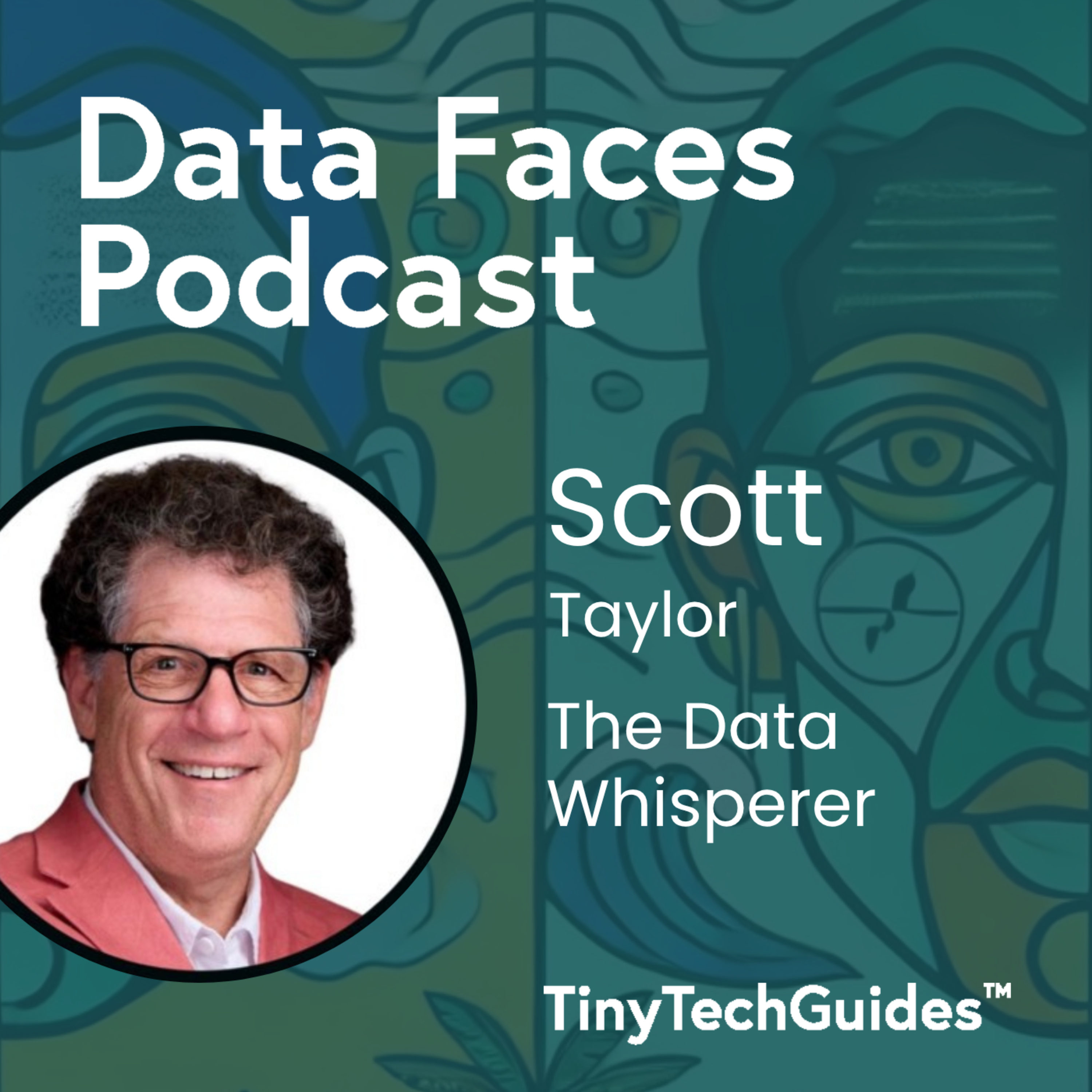
Truth Before Meaning in Data Management | Scott Taylor
Apr 700:35:36Tap to summarizeData leaders have been pitching "data quality" to executives for decades, and the pitch keeps falling flat. Scott Taylor, the Data Whisperer, explains why — and what to do instead.In Episode 34 of the Data Faces Podcast, Scott Taylor (MetaMeta Consulting) shares his three-word data philosophy — truth before meaning — and the 3V framework (Vocabulary, Voice, Vision) that helps data leaders craft narratives executives actually respond to.Key Takeaways:1- "Truth before meaning" — why you must establish trust in your data before deriving any business insight from it2- The 3V framework for structuring executive conversations about data management3- Why data leaders lose the room by leading with "how" instead of "why"4- How vendor messaging at the Gartner D&A Summit created more confusion than clarity5- Why AI is not "the Ozempic for data governance"Timestamps:00:00 - Opening0:06 - Scott's background as the Data Whisperer3:59 - Truth before meaning: Scott's data philosophy in three words6:04 - The supermarket scanner example of truth in data7:56 - Why data practitioners aren't trained in storytelling10:27 - Has AI changed the data management conversation?13:08 - Vendor performance at the Gartner D&A Summit16:27 - "Context is the new oil" and the semantic pedantic cycle19:54 - Crafting a one-sentence data management story for a skeptical CFO22:59 - The 3V framework: Vocabulary, Voice, and Vision25:37 - Data Puppets and using satire to expose organizational dysfunction31:48 - Why humor helps executives hear hard truths34:24 - Where to find Scott Taylor and the Data PuppetsBONUS - Data Puppets segment: A-Eye attends the Gartner D&A SummitMore insights and resources:Blog: https://tinytechguides.com/blog/truth-before-meaning-the-three-word-fix-for-data-management/Connect with Scott Taylor:LinkedIn: https://www.linkedin.com/in/scottdtaylor/MetaMeta Consulting: https://www.metametaconsulting.com/Data Puppets: https://www.linkedin.com/company/data-puppets/Drop your thoughts in the comments!Like, share, and subscribe for more data and AI conversations.#DataManagement #DataGovernance #DataFacesPodcast
Transcribe →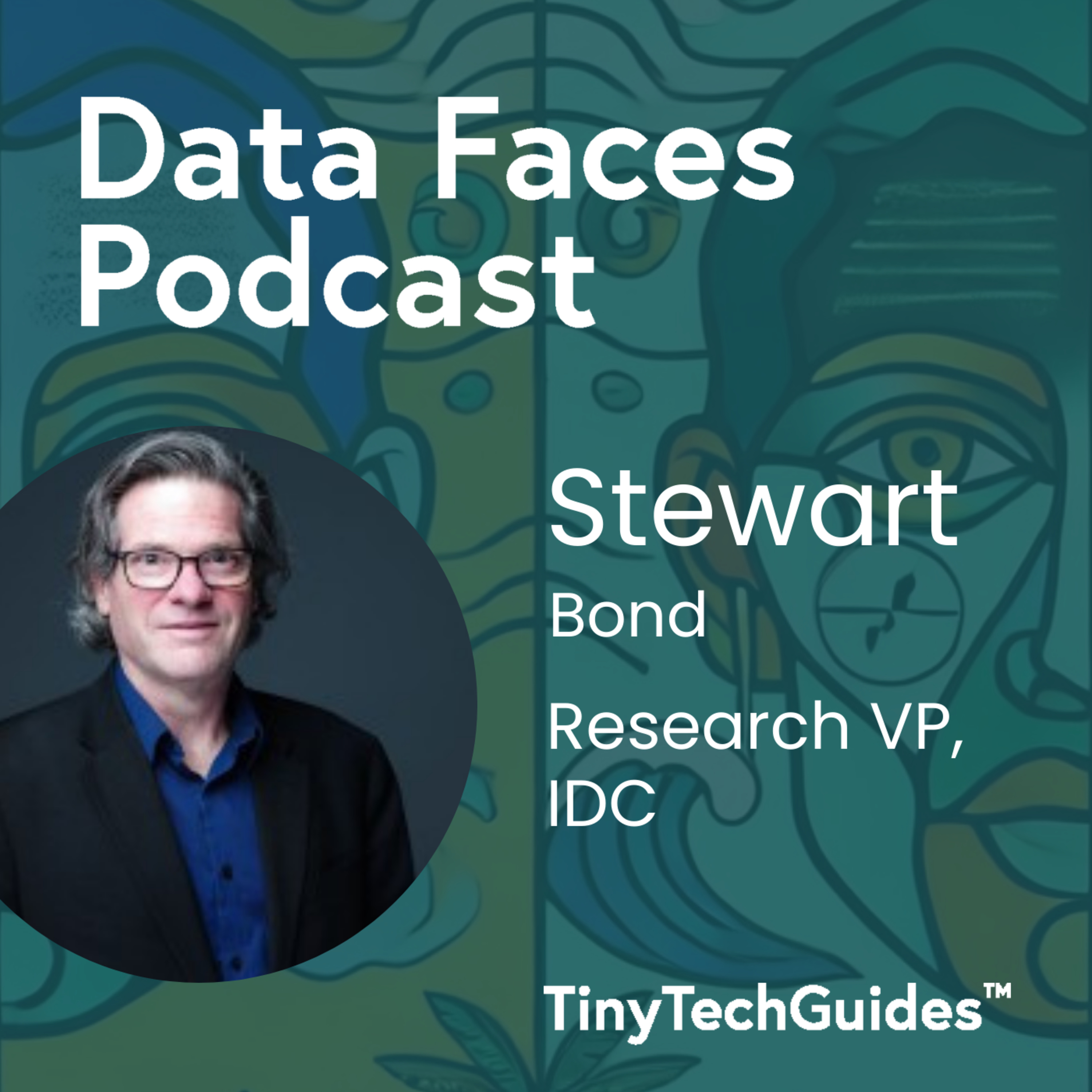
Data Intelligence & Agentic AI | Stewart Bond, IDC
Mar 2400:39:13Tap to summarizeStewart Bond coined the term "data intelligence" in 2016. Now it's a market category. Here's how it happened — and why it matters more than ever for AI.Stewart Bond, Research VP at IDC, joins David Sweenor on the Data Faces Podcast to trace the origins of "data intelligence" from a single research note to a full-blown market category adopted by Collibra, Alation, Informatica, Databricks, and IBM. They dig into what data intelligence actually means, why it's distinct from data governance, and why the rise of agentic AI makes getting it right non-negotiable.Key takeaways:1- Data intelligence (intelligence *about* data) is not the same as data governance — governance is organizational discipline; intelligence is the technology that enables it2- GDPR was the catalyst that accelerated enterprise interest in data intelligence and metadata management3- Databricks redefined the term to mean intelligence *from* data, triggering a debate that's still playing out4- Agentic AI demands high-quality, trustworthy data at the source — "shift left" for data quality is no longer optional5- Unstructured data intelligence is the next frontier, and most organizations are not readyTimestamps:0:00 Opening and introductions1:06 Stewart's background — 30+ years in IT, IBM certified architect, IDC analyst since 20112:31 Personal interests: fishing, road biking, and competitive curling5:00 The origin of "data intelligence" — 2016, ASG Technologies, and one research note6:44 GDPR as the catalyst — data governance vs. data intelligence8:11 Market adoption: Collibra, Erwin, Alation, Informatica, and more11:05 Databricks makes a splash — and Dave Kellogg weighs in13:39 IBM rebrands its portfolio to WatsonX Data Intelligence15:00 What it takes to successfully define a market category16:02 How data intelligence is evolving: semantics, active metadata, unstructured data19:13 Buy vs. build: how organizations assemble data intelligence capabilities23:32 Agentic AI and why data intelligence matters more than ever27:27 "Shift left" — data quality must happen at the source for real-time AI29:14 Cracking the unstructured data quality problem31:21 What CDOs are actually complaining about35:07 Where organizations are under-investing37:46 Data catalog adoption challenges — and how agentic AI can helpListen on your preferred platform:YouTube playlist: https://www.youtube.com/playlist?list=PLzrDACjTQ4OBfdBJQiHax4oR1bXzs8JYYSpotify: https://open.spotify.com/show/3tFMqBPGioiMPxVJOmDPLjApple Podcasts: https://podcasts.apple.com/us/podcast/data-faces-podcast/id1779505301Amazon Music: https://music.amazon.com/podcasts/8465f3b3-5d41-4c84-a561-bf8af09560e3/data-faces-podcastConnect with Stewart Bond:LinkedIn: https://www.linkedin.com/in/stewartlbond/Connect with David Sweenor:Website: https://tinytechguides.comLinkedIn: https://www.linkedin.com/in/davidsweenor/#DataIntelligence #DataGovernance #AgenticAI #DataManagement #DataFacesPodcast
Transcribe →