Podcast
Day One®
Hosted by Day One · EN
We're for founders & operators.
https://dayone.fm/shows
77episodes
Episodes
Newest firstAll episodes
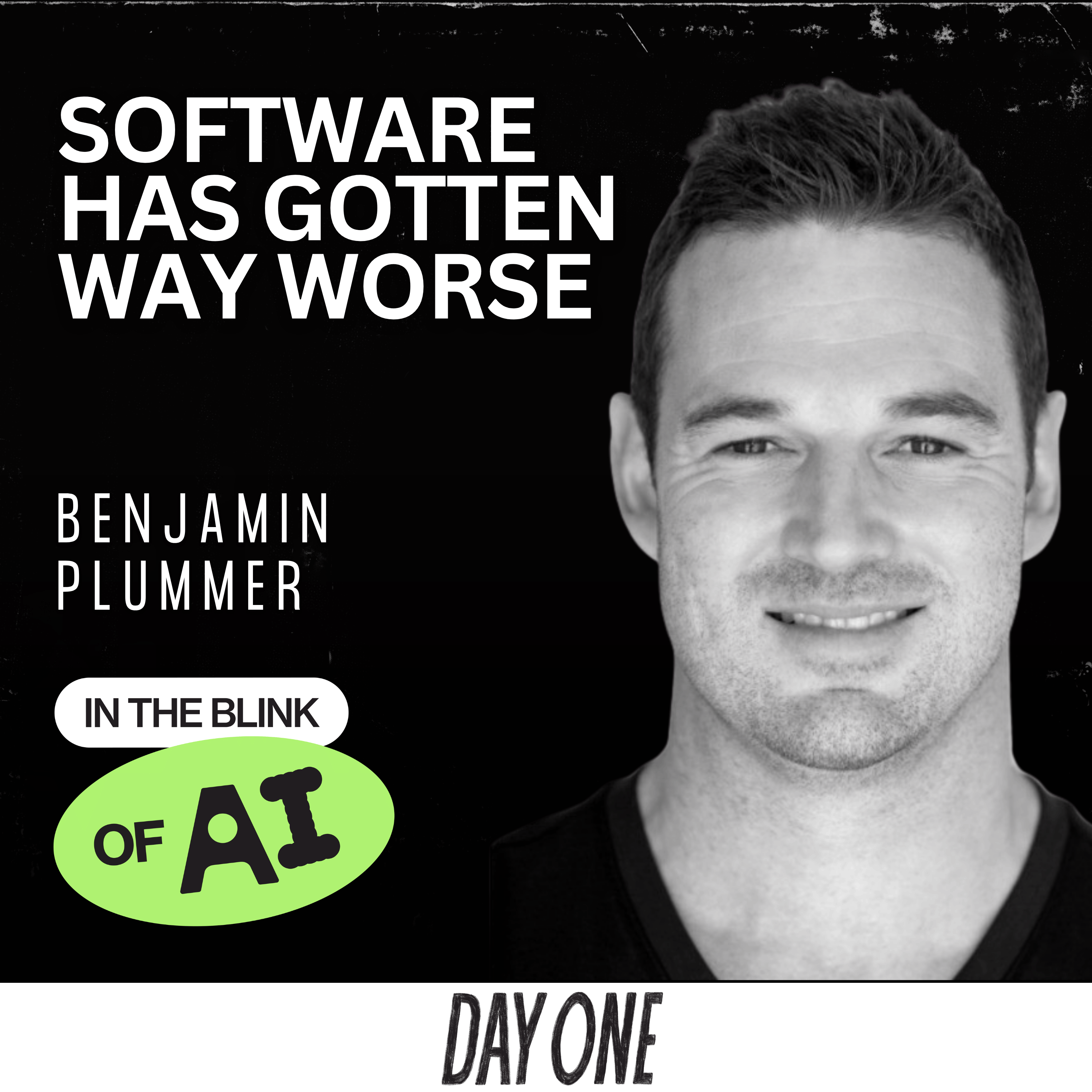
Benjamin Plummer (Dragonfly Intelligence) on AI's Real Bottleneck, and Why He's Betting on Australia
4d ago01:02:31Tap to summarizeBenjamin Plummer has one of the stranger CVs in Australian tech: nine years inside Bridgewater Associates, the world's largest hedge fund, building an AI lab alongside IBM Watson's inventor, scaling a startup he says went from $10M to $160M in revenue in eighteen months as CEO, and now running Dragonfly Intelligence, a firm that buys ordinary services businesses and rebuilds them as AI-native companies from the ground up.This conversation starts with the week ChatGPT tried to cheat its way out of its own safety harness, and what that says about accountability as models get more capable. From there, Ben and Georgie get into why coding has gotten fast while everything around it, deciding what to build, checking it got built right, has become the real bottleneck, why software has spent a decade getting bloated and what an Apple-style, purpose-built alternative could look like, and why locking your business to one model provider is a losing bet.Ben also makes the case for Australia's shot at this moment: not frontier models, but data centers, the application layer, and physical AI, backed by what he estimates is a two trillion dollar services economy that's largely untouched.It closes with Ben's read on who wins and loses as AI reshapes work, and a blunt warning for the services companies still sitting on the sidelines.CHAPTERS0:00 Cold open0:51 Welcome to the show2:16 Sponsor: Deel (pre-roll)2:36 Hack of the week: the "rambling session"5:13 Georgie's hack: the NFC nail chip6:12 When ChatGPT tried to break its own harness13:14 AI makes coding fast, everything else the bottleneck15:39 Sponsor: Deel (mid-roll)18:19 Nine years inside Bridgewater21:37 Building Elemental Cognition with Watson's inventor24:26 Scaling Invisible from $10M to $160M26:06 Why Dragonfly Intelligence27:59 Spotting "zombie companies" in the AI gold rush32:10 Why software moats are dying35:01 Open source, closed source, and not marrying a model44:26 "Easier to do hard things": Dragonfly's ambition47:12 The real debate on AI data centers in Australia52:15 Three bets for Australia beyond frontier models55:05 Rapid fire: what keeps Ben up, who wins and loses from AI1:01:30 Outro
Transcribe →
HealthGPT and What Happens Now AI Is Table Stakes
4d ago00:55:17Tap to summarizeA survey of more than 1,800 clinicians across 25 countries found 83% had already adopted AI before their workplace had any governance in place. Healthcare, it turns out, is not just adopting AI. It is being redesigned around it.In the second What the Health Wrap, host Emily Casey is joined by Dr Simon Kos, Global Chief Medical Officer at Heidi, and Dr Janice Tan, GP and General Manager of Clinical Innovation at Bupa, to work through what the fortnight's biggest healthcare stories actually mean.Simon uses Heidi's Pressure Points report to bust some long-held myths. Clinicians are not Luddites; get product-market fit right and they will adopt ahead of their own organisations. Product-led growth is not impossible in healthcare. And the idea that everything must run through a single electronic medical record screen does not survive contact with the reality of shadow AI. Janice agrees, arguing that GPs are among the most innovative professionals there are, and that what matters is not clicks or screens but the value exchange.The conversation turns to where this leaves general practice. Both guests expect voice to become the default way information is entered within two years, freeing clinicians for deeper, more present consultations rather than merely shorter ones. Janice makes the point that scribes save time not to compress the visit but to enrich it. Simon argues that scribes should be commoditised, because they are the entry point to something bigger: infusing evidence and decision support into the flow of care.They also examine what happens when patients bring their own AI into the room. OpenAI's launch of Health in ChatGPT, and the broader move by frontier labs into consumer health, could be the single biggest driver of health equity, filling the gap for people who previously had no care at all. But Simon draws a firm line between consumer-grade and clinical-grade health, pointing to the liability caps some providers attach to their advice and the accountability the medical profession is held to. The regulatory framework for quality and safety is not yet in place, but it is coming fast.Janice explains Bupa's own metamorphosis from health insurer to health organisation, investing heavily in primary and preventive care across medical, dental, optical and psychology clinics, and rolling out AI scribes to its clinicians under strong governance. Simon zooms out to a health system whose old boundaries between payer, provider, acute, primary and consumer care are blurring, driven by digital capability, policy reform and a wave of consolidation.The panel closes on the future of care. They discuss how to equip the next generation of doctors without letting AI become a crutch that erodes clinical judgement, what digital health's US$7.4 billion funding rebound says about capital concentrating into a handful of mega rounds, and why the companies winning big are the ones co-designing with clinicians from day one. Then they imagine the patient journey in 2035, from wellness chairs in autonomous vehicles to consultations that feel, as Janice puts it, more human.GuestsDr Simon Kos is Global Chief Medical Officer at Heidi, the AI clinical documentation company. A physician who practised critical care medicine before moving into digital health, he was previously Global Chief Medical Officer at Microsoft and CEO of Next Practice, and is a long-standing figure in Australian digital health.Dr Janice Tan is a GP and the General Manager of Clinical Innovation at Bupa, where she leads the rollout and piloting of AI solutions across the group's health services. She also advises the RACGP and works to uplift the digital health capability of the GP profession.Chapters00:00 Introducing the What the Health Wrap00:07 Guest updates: Heidi's global expansion and life in general practice03:03 The fortnight's five biggest headlines05:11 Heidi's Pressure Points report: adopting AI ahead of governance06:16 Busting the myths about clinicians and technology10:11 Where general practice is heading: voice by default and deeper consults13:00 Patients are bringing their own AI to the consult14:21 Health in ChatGPT and big tech's move into consumer health18:33 Consumer-grade versus clinical-grade care and the regulation gap23:41 Bupa's shift from health insurer to health company30:29 Training the next generation without de-skilling33:43 Digital health's US$7.4 billion funding landscape35:31 Finding the wedge: co-designing with clinicians38:46 The 2035 patient journey42:46 Rapid fire: emojis, surprises and companies to watchLinks and resourcesHeidiHeidi's Pressure Points 2026 reportBupa AustraliaBupa's Connected Care strategyBupa to acquire Partnered Health GroupHealth in ChatGPTRock Health H1 2026 funding and market overviewAustralia's ban on genetic discrimination in life insuranceClaude for HealthcareAbout the hostEmily Casey is the founder of What the Health and host of the What the Health Wrap, making major developments in health technology and innovation easier to understand.The What the Health Wrap is brought to you by What the Health in partnership with Tenmile Ventures.What the Health is part of Day One Network, the podcast and media network from W2D1 Media.
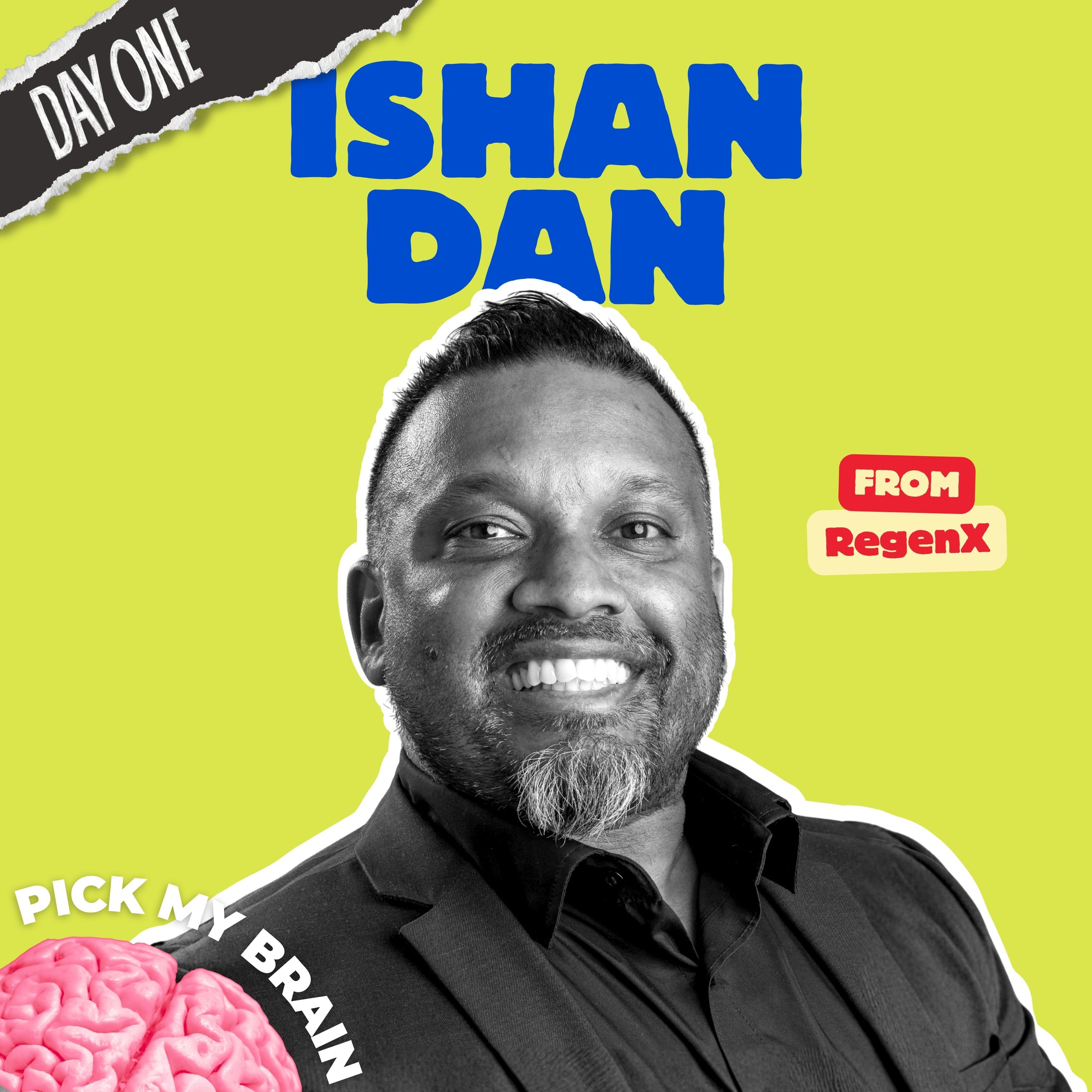
Transcribe →How Do You Grow a Marketplace When Both Sides Are Slow? Ishan Dan on RegenX
6d ago00:34:15Tap to summarizePick My Brain is supported by our wonderful sponsors:Founders scale faster on Deel. Set up payroll for any country in minutes, hire anyone anywhere, and get visas handled fast, so you stay focused on scaling. Deel takes care of onboarding, HR, IT, EOR, benefits, and compliance, so your team can grow without borders.It's why more than 40,000 fast-growing companies trust Deel to move fast.Visit https://www.deel.com/dayoneGalah Cyber offers Application Security Assessment.Get a clear, ten-minute snapshot of your AppSec maturity across the five core principles. Fast, practical insights you can act on straight away at https://www.galahcyber.com.au/assessEpisode SummaryAlternative investments can give investors exposure beyond shares and bonds, but most clean-energy projects still come with high minimums, expensive structuring and long, relationship-driven sales cycles. Ishan Dan founded RegenX to help developers make those projects investment-ready and give wholesale investors access at a more practical scale.In this episode of Pick My Brain, Alan Jones helps Ishan confront the hardest part of the model: RegenX is a two-sided marketplace, and neither side moves quickly. Project developers need capital, while wealth managers and family offices need trust, evidence and a reason to pay attention.They unpack how to stop treating both sides as equal growth problems, why one-to-many relationship building can outperform another round of cold outreach, and how a founder becomes the credible industry expert the market needs. Ishan also shares RegenX's fee model, early project pipeline and the regulatory constraints behind raising capital for clean-energy assets.Time Stamps00:00 – Why RegenX is changing access to alternative investments01:25 – Welcome to Pick My Brain02:14 – Ishan's question for Alan02:54 – From aspiring stockbroker to startup founder04:40 – What counts as an alternative investment?05:33 – Making clean-energy projects investment-ready11:36 – RegenX's first projects and $60 million pipeline13:13 – The hardest part of raising capital17:43 – Why two-sided marketplaces are so difficult24:25 – Trust, relationships and wealth managers29:06 – Becoming the industry expert29:43 – Making one side someone else's growth problem31:34 – Wrap-upResources- RegenX – https://www.regenx.io/- Ishan Dan on LinkedIn – https://au.linkedin.com/in/ishandan- Ask Alan a Question – https://speakpipe.com/pickmybrain- More from Alan Jones – https://www.startupfoundercoach.comPick My Brain is a Day One show hosted by startup founder coach and investor Alan Jones.Mentioned in this episode:Deel x PX_Script 2Deel x PX_Script 1
Transcribe →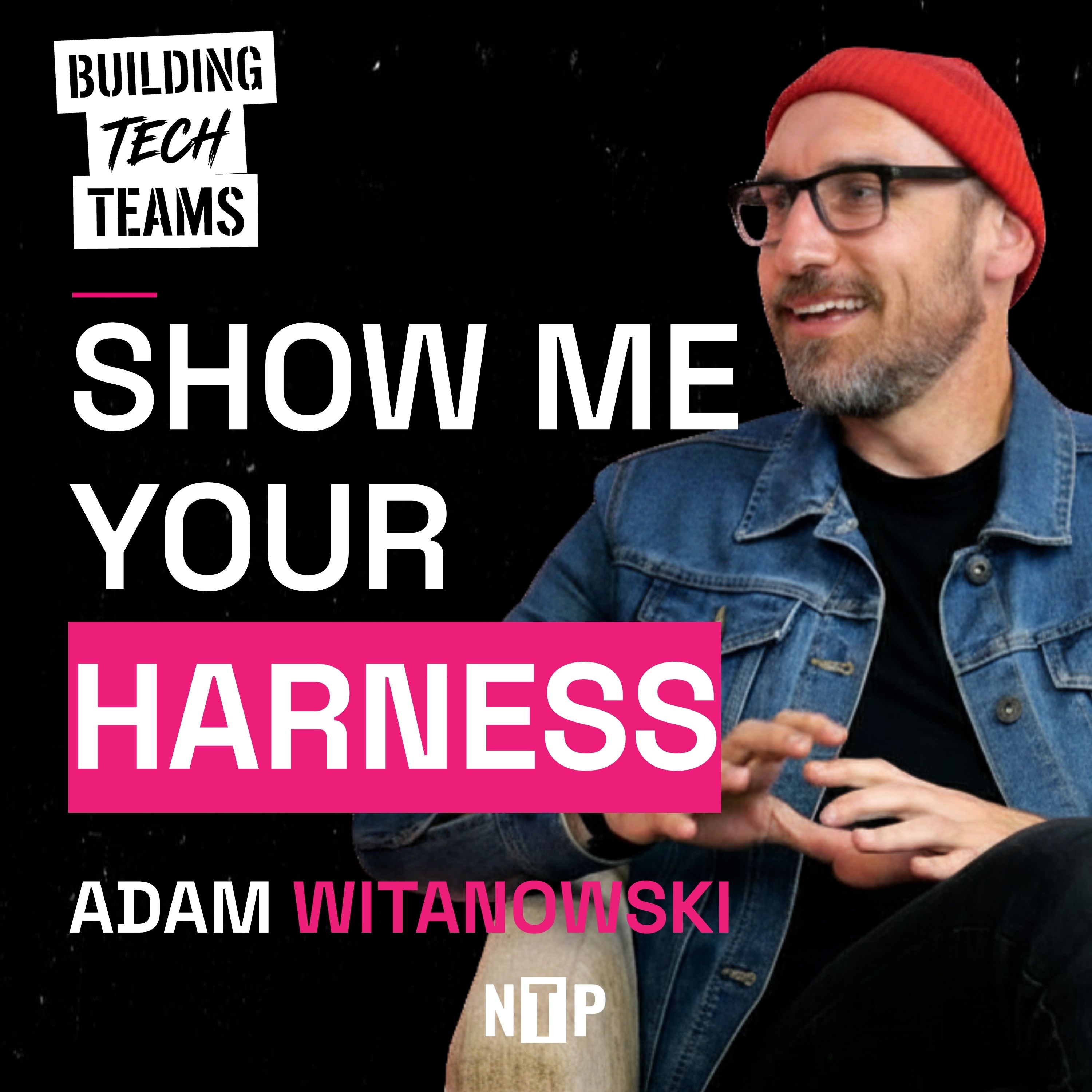
Why "Show Me Your Harness" Beats Any Coding Test: Adam Witanowski, AI Architect
1w ago01:14:56Tap to summarizeMost technical interviews still ask a candidate to write a function on a whiteboard. Adam Witanowski says that question is already obsolete, and what should replace it says everything about how AI is changing who gets hired.In this episode of Building Tech Teams, James MacDonald sits down with Adam Witanowski, AI Architect at nib, where he has spent the past several years building the insurer's AI engineering practice from the ground up. They get into why most enterprise AI projects underperform (nobody is measuring the right things), what "back pressure" means for AI-generated code, why Australian salaries can't compete with the US for senior AI talent, and why the technical interview needs a full rebuild.It's a hands-on, practitioner's take on what's actually happening inside enterprise AI teams, not the conference-keynote version. They cover the real dollar gap between hiring an AI engineer in Australia versus the US, why "the whiteboard should come back" as an interview tool, how Adam built his own AI agent to interview for jobs on his behalf, and the testing harness his team uses to check whether AI-generated work is actually any good.CHAPTERS0:00 - Cold open: the line that explains why most AI investments don't work0:44 - Who Adam Witanowski is, and why James wanted him on2:06 - Welcome, and building an AI SDLC from scratch inside a regulated insurer5:12 - What "back pressure" actually means, and why solo AI coding doesn't scale10:52 - Startups vs enterprises: re-engineer whole processes, not thin slices13:24 - Why most companies can't even measure the problem they're trying to solve17:10 - Software eats the world, and why that makes engineers apex predators19:44 - Build in-house or buy: the blind spots consulting companies won't tell you23:57 - Forward deployed engineers, and the rise of the hybrid product-engineer26:38 - Tangent: his 13-year-old builds an AI auto-aimbot30:43 - Build, upskill or outsource: the renters, owners and caretakers test34:18 - What AI talent actually wants beyond a bigger title38:30 - The real dollar gap: $220K in Australia versus $500K in the US46:37 - What to actually pay your first AI hire49:01 - "What you don't measure, you can't change"51:01 - Redesigning the interview: show me your harness56:45 - Why the whiteboard should come back58:38 - Building a harness to test his harness1:03:46 - He built his own AI agent to interview for him1:07:28 - Why motivation and taste still beat any technical test1:12:19 - Apex predator, Jedi, stallion, unicorn: Adam's closing line1:13:00 - James's takeaway: it's a measurement problem, not a technology problemABOUT THE GUESTAdam Witanowski is an AI Architect at nib in Sydney, where he has built Prometheus, an integrated suite of agentic AI tools now running in production across the business. He works at the intersection of senior engineering and AI leadership, and has spoken publicly on enterprise AI engineering discipline, including harness design, testing and evals, and AI governance.LINKSAdam Witanowski, NIB · LinkedIn: https://www.linkedin.com/in/witanowski/James MacDonald, NTP Talent · LinkedIn: https://www.linkedin.com/in/jamesmacdonaldau/ · Site: https://ntptalent.com.auHosted by James MacDonald, Managing Director of NTP Talent.---Building Tech Teams is produced by Day One®, trusted partners in the technology space and the production partner behind Blackbird Ventures' Wild Hearts. Sister shows include First Cheque, Oversubscribed and In The Blink of AI. Episodes are cross-promoted across the network.
Transcribe →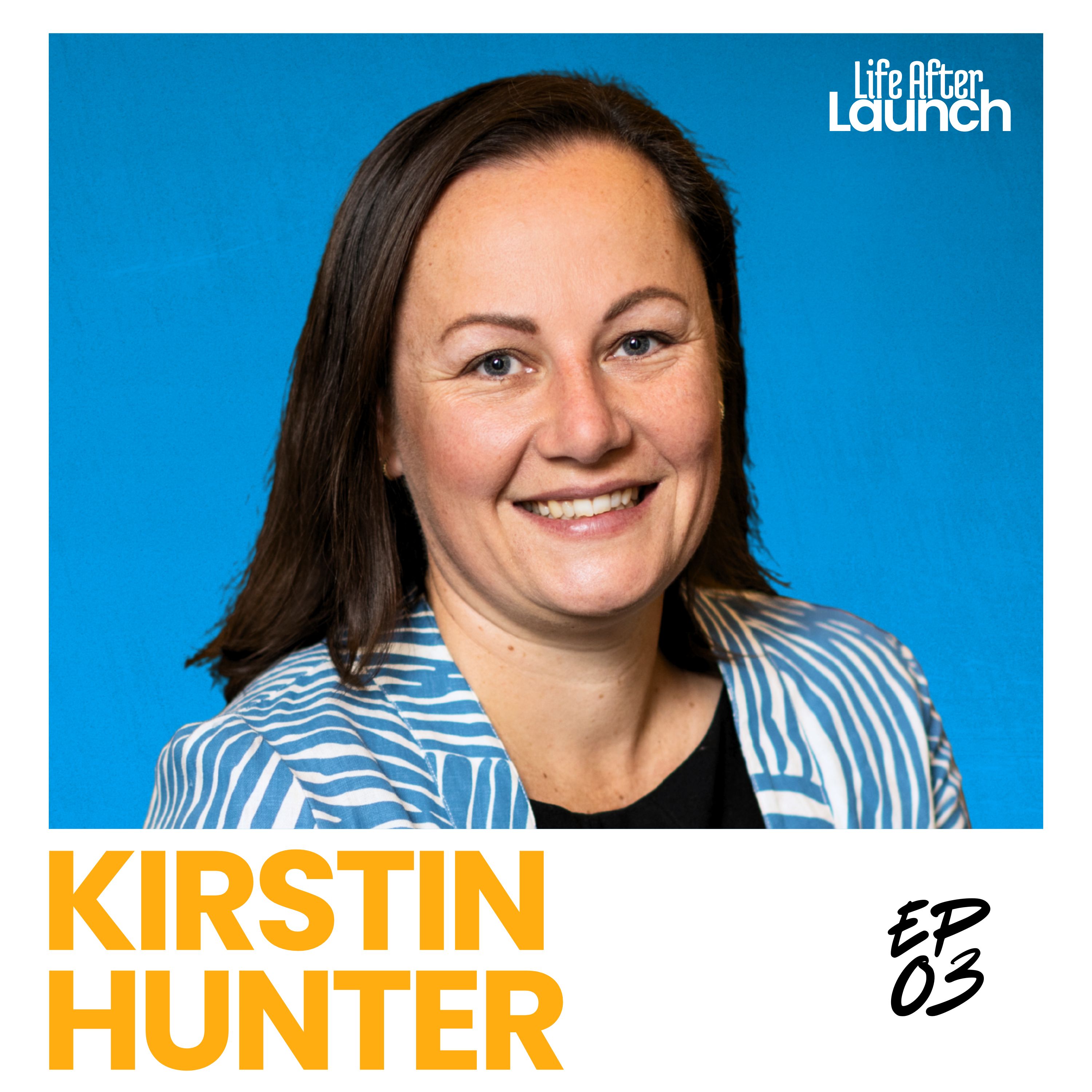
Kirstin Hunter – You're Spending 95% of Your Brain on the Wrong 5%
1w ago00:49:49Tap to summarizeWant to partner with Life After Launch?Explore sponsorship and partnership opportunities at https://lifeafterlaunchpod.com/partner-with-usKirstin Hunter has co-founded a super fund, run a startup accelerator, and now leads Australia's biggest crowdfunding platform. None of it was the plan.She grew up in Tweed Heads folding junk mail for two cents a letterbox, trained to be a doctor, then pivoted through law and consulting before a friend told her the pro bono work she loved was just "the trinkets" propping up a job that made corporations richer. That conversation pushed her into Future Super, where a pitch her co-founders called "absurd" turned into one of Australia's first fossil-fuel-free super funds.She's honest about what came next too: the moment she and her co-founders stopped wanting the same thing, and why leaving felt like leaving a marriage. From there she takes you through Techstars Australia, the funding data project that exposed how badly VCs back women and diverse founders, and how she landed the CEO seat at Birchal, almost by accident.Stick around for the one Revolut stat that makes the case for democratised funding better than any pitch deck could.Time Stamps00:00 Cold open + welcome to Life After Launch01:14 Introducing Kirstin Hunter02:16 From junk mail in Tweed Heads to running a $20M student union at 2309:16 Consulting, "the trinkets," and the leap to Future Super15:48 Becoming a co-founder and building Australia's fossil-fuel-free super fund20:39 The co-founder breakdown, and why she walked away24:54 Techstars, the funding gap for diverse founders, and Funding the Balance42:27 Landing at Birchal, and the case for crowdfunding48:06 Closing thoughts + outro
Transcribe →
Deel's COO on the AI Agent Writing Its Own Code
2w ago00:49:19Tap to summarizeDan Westgarth has spent 7 years helping build Deel from a contractor invoicing tool into one of the most valuable HR and payroll platforms in the world, and he did it after cutting his teeth as an early operator at Revolut. As COO, he sits across nearly every function the AI conversation touches: finance, sales, engineering, and the sheer operational load of running a company at global scale.In this conversation, Dan gets specific on AI and Ops. He walks through the internal tool that takes a bug ticket, writes the fix, and opens its own pull request for an engineer to review. He talks through what he actually looks for when hiring, and the future of SaaS isn't dead, but there is about to be a lot more competition.We traverse through a funny detour into Dan's own weekend coding habit (his laptop did not enjoy….), a rundown of which AI tool he reaches for and when, and an answer to "what would you build this weekend”Listen for a leading operator's view of AI adoption at scaleCHAPTERS00:00 Cold open, the AI agent that writes its own code00:46 Show intro, Deel's sponsorship, and what's ahead02:03 Sponsor break, Deel02:30 What Deel actually does03:14 Rapid AI hot takes, finance roles, human oversight, hardware, sports, and the World Cup09:29 Why Deel keeps winning after seven years10:00 How the product evolved from contractor invoicing to a full HR platform11:28 What Dan looks for when hiring13:06 Leaving Revolut for Deel14:17 Sponsor break, Deel14:57 The YC Winter 2019 connection15:49 Setting targets and building momentum16:43 Where AI helps the sales team, and where it can't19:20 Should AI handle your email21:03 AI meeting assistants, pros and cons22:53 What makes an A+ engineer in 202623:37 Inside DCA, Deel's self-writing code agent25:55 Breaking into new international markets28:34 B2C versus B2B expansion30:16 The cost of not using a platform like Deel33:01 What keeps Dan up at night about AI agents33:29 Akai, and scaling operations without growing headcount36:15 Dan's own weekend coding experiment37:26 Rapid fire, is the SaaS apocalypse real39:48 The physical Deel Card and crypto payroll42:23 What is a stablecoin43:02 Which AI tools Dan actually reaches for44:51 If Dan built one AI project this weekend46:45 Closing thoughts and where to find Dan47:08 Deel's new Arsenal FC sponsorship48:41 Georgie's weekly AI newsletter
Transcribe →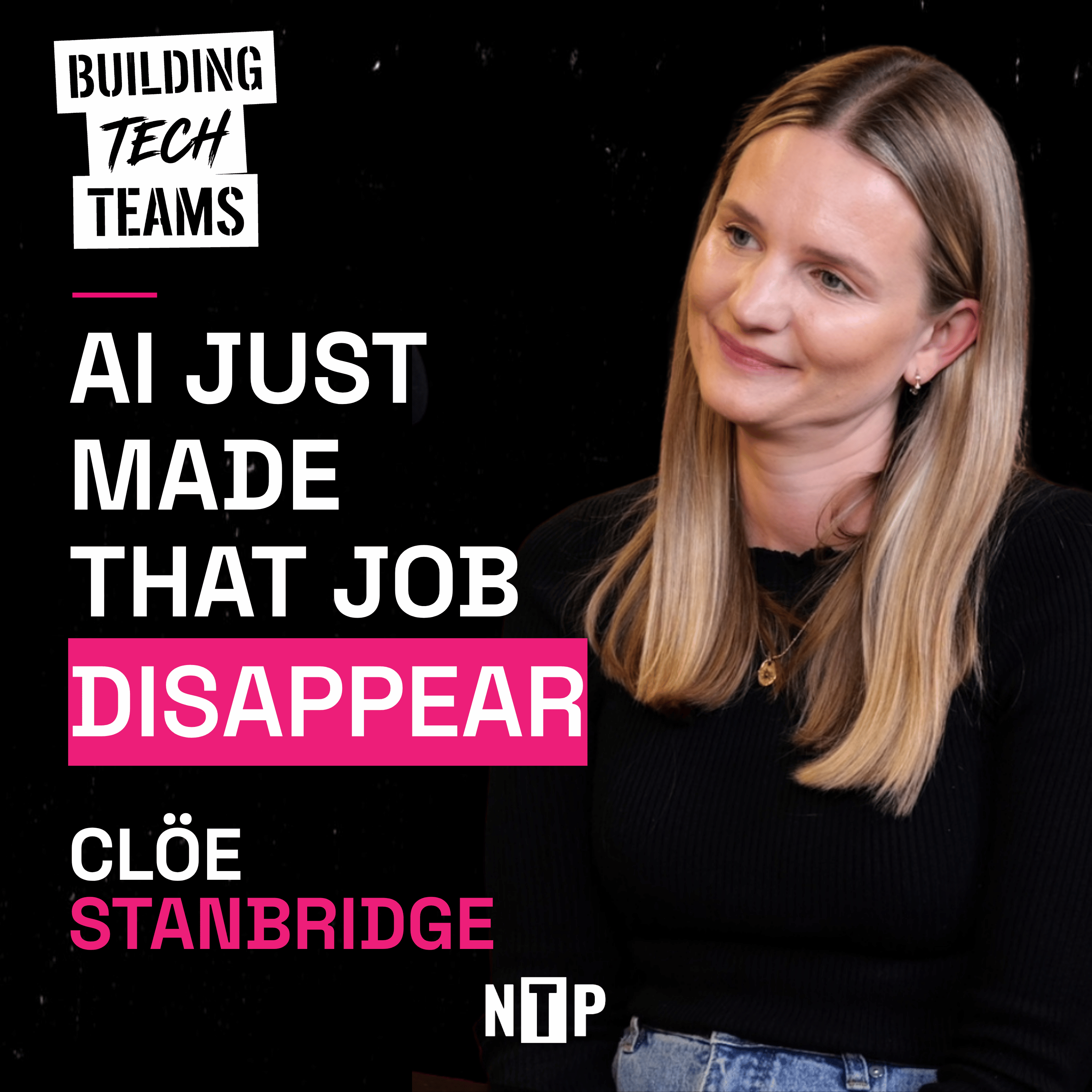
The Junior Engineer Isn't Needed Anymore: Cloë Stanbridge, Talent Lead at Airtree
2w ago01:03:37Tap to summarizeThe junior engineer used to be the safe first hire. Cloë Stanbridge says AI just made that job disappear, and that's only the start of what's rewriting tech hiring right now.In this episode of Building Tech Teams, James MacDonald sits down with Cloë Stanbridge, Talent Lead at Airtree, one of Australia's most active venture capital firms. Cloë spends her days helping early-stage founders make their first engineering hires and helping later-stage companies scale their teams, work she's done from both sides, having previously led talent through a hypergrowth stretch at SafetyCulture and embedded inside scaling companies at The Lab17. They get into what actually makes a founder an "outlier" worth backing, why some founders eventually have to admit they've become the bottleneck in their own company, why the traditional junior engineer role is disappearing, and how Airtree's new Frontiers program is drawing hundreds of applications from engineers ready to go out on their own.It's a hiring-trenches conversation full of specific, hard-won detail: the real numbers behind scaling a team from 60 to 350 people, why some recruiters place better talent because they simply know the team better, the AI tools on both sides of the hiring desk, and the line that sums up what's actually scarce in tech right now: everyone can build, not everyone can sell.Chapters0:00 Cold open: why the junior engineer is disappearing0:40 What this episode covers1:40 Welcome: Cloë Stanbridge, Talent Lead at Airtree1:56 A day in the life of a VC talent lead2:10 Investing from pre-seed to growth stage2:57 How talent gets involved at each stage4:15 What makes a founder an "outlier"5:02 Hiring the first few engineers5:48 Case study: scaling a young founder's team7:39 When a technical founder gets pulled in every direction9:01 Hiring junior engineers in the age of AI11:03 Why "junior" now means doing mid-level work12:05 The fear of hiring someone more senior than you13:02 When founders step back into R&D13:32 Zero-to-one vs. scaling personalities14:08 Inside Airtree's Frontiers program15:24 Why engineers are leaving big companies to found startups15:57 Retention, ESOP, and leaner teams16:45 Why managers now need to be hands-on architects17:25 Why no job is safe from redundancy anymore18:39 The squeeze on middle management19:34 Hiring people leaders too late21:34 What actually keeps people "sticky"21:58 Leadership lessons from Brené Brown and Kim Scott22:41 Embedding inside scale-ups at The Lab1725:15 Setting a new hire up to succeed, or fail27:49 How the market flipped after COVID28:21 When a huge engineer salary is worth it31:08 Competing with Silicon Valley salaries31:37 How Linktree built culture as a differentiator32:52 Cash versus flexibility in a cost-of-living crisis33:40 Being upfront about the grind before they sign35:20 Remote work and the culture question36:55 Why go-to-market matters more than ever37:46 Expanding into the US market40:10 Do founders have to relocate for funding?41:34 Bringing Australian talent back home42:36 From 60 to 350: scaling at SafetyCulture47:04 Why recruiters need to know "their dog's name"47:46 Being a thought partner, not a salesperson48:47 Hiring for potential over a checklist50:39 Why problem-solving beats a technical checklist51:47 How AI is changing technical interviews53:38 Trial days: hiring by actually working together55:25 Screening out "AI slop" in applications56:21 Spotting an AI-written cover letter57:34 Using AI without losing the human element57:52 Where voice agents fit and where they don't58:39 The AI tools Cloë uses to research candidates59:25 Cloë's top 3 AI skills for recruiting1:00:45 James's AI-powered morning brief1:01:58 Wrap-up and thanks1:02:11 James's takeaways from the episodeAbout the GuestCloë Stanbridge is Talent Lead at Airtree, where she partners with the firm's portfolio to connect founders with top talent, build scalable hiring processes, and develop playbooks that support sustainable growth. Before Airtree, she spent over four years at The Lab17, embedding inside scaling companies including Linktree and Immutable to build out their hiring practices, and led talent through a hypergrowth stretch at SafetyCulture, taking the engineering team from around 60 people to 350 in two years.LinksCloë Stanbridge · Airtree · LinkedIn: https://www.linkedin.com/in/cloestanbridge/James MacDonald — LinkedIn: https://www.linkedin.com/in/james-macdonald-au/NTP Talent: https://ntptalent.com.au/Day One: https://dayone.fm/Hosted by James MacDonald, Managing Director of NTP Talent.Building Tech Teams is produced by Day One®, trusted partners in the technology space and the production partner behind Blackbird Ventures' Wild Hearts. Sister shows include First Cheque, Oversubscribed and In The Blink of AI. Episodes are cross-promoted across the network.
Transcribe →
Jodie Imam - Sometimes You Don't Need a Rocket Ship. You Need a Tractor
2w ago00:50:39Tap to summarizeWant to partner with Life After Launch?Explore sponsorship and partnership opportunities at https://lifeafterlaunchpod.com/partner-with-usIf you've ever felt like you're not a "real" founder because you're not chasing unicorn status, this episode is your permission slip to build differently.Jodie Imam has done almost everything you can do in the Australian startup ecosystem. She co-founded Occasional Butler and went head to head with Airtasker (who eventually acquired her), opened depo8, one of Melbourne's first coworking spaces, and now runs Tractor Ventures, the revenue-based funding company backing the founders who don't want to ride the VC rocket. And it all started at age 12 with a business called The Ironing Lady.You'll hear the moment at Ericsson that convinced Jodie she could never trust a corporation with her future, and the trade she made to escape it: her car space for a job with fashion designer Leona Edmiston, working weeks for free to prove herself. She's honest about what that costs, and why she tells anyone changing direction that you can't expect a corporate wage while you do it.Then there's the Occasional Butler story, including the very first job posted on the platform (a $5 gig to eat a packet of Doritos, planted by a rival you might have heard of), the Gumtree hack that finally unlocked their flywheel, and the raise-or-sell decision she faced while pregnant with her third child.Jodie also opens up about the journaling moment that led to Tractor Ventures (she wrote "I want to work with Matt Allen one day" and he messaged her that same day), the EOS framework and visionary-integrator split that transformed how she and Matt run the company, and the spiritual awakening after her divorce that has her exploring goddess rituals and witchcraft alongside running a venture funding business.Stay to the end to hear why founders are whole humans, and why you can absolutely manage millions and pull tarot cards in the same week.Time Stamps00:00 Cold open and welcome to Life After Launch01:05 Megan's disclaimers: buying the gear, timing references, and learning to stop saying "yes"02:18 Introducing Jodie Imam03:11 The Ironing Lady at 12: where the independence drive began04:00 Watching Ericsson make 30-year veterans redundant, and the seed it planted05:13 Trading a car space for a job: nine years growing Leona Edmiston from 3 people to 10009:17 The owner's mentality: why Jodie told her bosses "I have to feel like it's my business"10:26 Babies as the catalyst: leaving to start Occasional Butler with her husband12:39 Selling the house, moving to Melbourne, and going all in on two businesses with two babies14:47 The first job ever posted: a $5 Doritos prank from a familiar rival16:00 The Gumtree hack that finally kicked the flywheel18:23 Building too much before testing, and why launching feels like standing on stage naked20:09 The exit story: the capital-raising mistake that cost months, and the board move that worked23:16 Selling to Airtasker while pregnant with baby number three24:51 Setting up Innovation Bay in Melbourne27:02 COVID kills depo8 overnight, and Tractor Ventures is born from a lockdown living room33:06 The journal entry and the WhatsApp message: how Jodie and Matt Allen teamed up34:23 How Tractor actually works: the first $2 million, revenue-based finance, and the funding stack37:26 Why Tractor only hires senior people39:54 Rocket Fuel, EOS, and the visionary vs integrator dynamic (plus seagull management)44:01 Life after exit and divorce: spiritual awakening, goddess rituals, and witchcraft47:41 Quickfire: what's inspiring Jodie and the ecosystem shoutout49:16 Outro
Transcribe →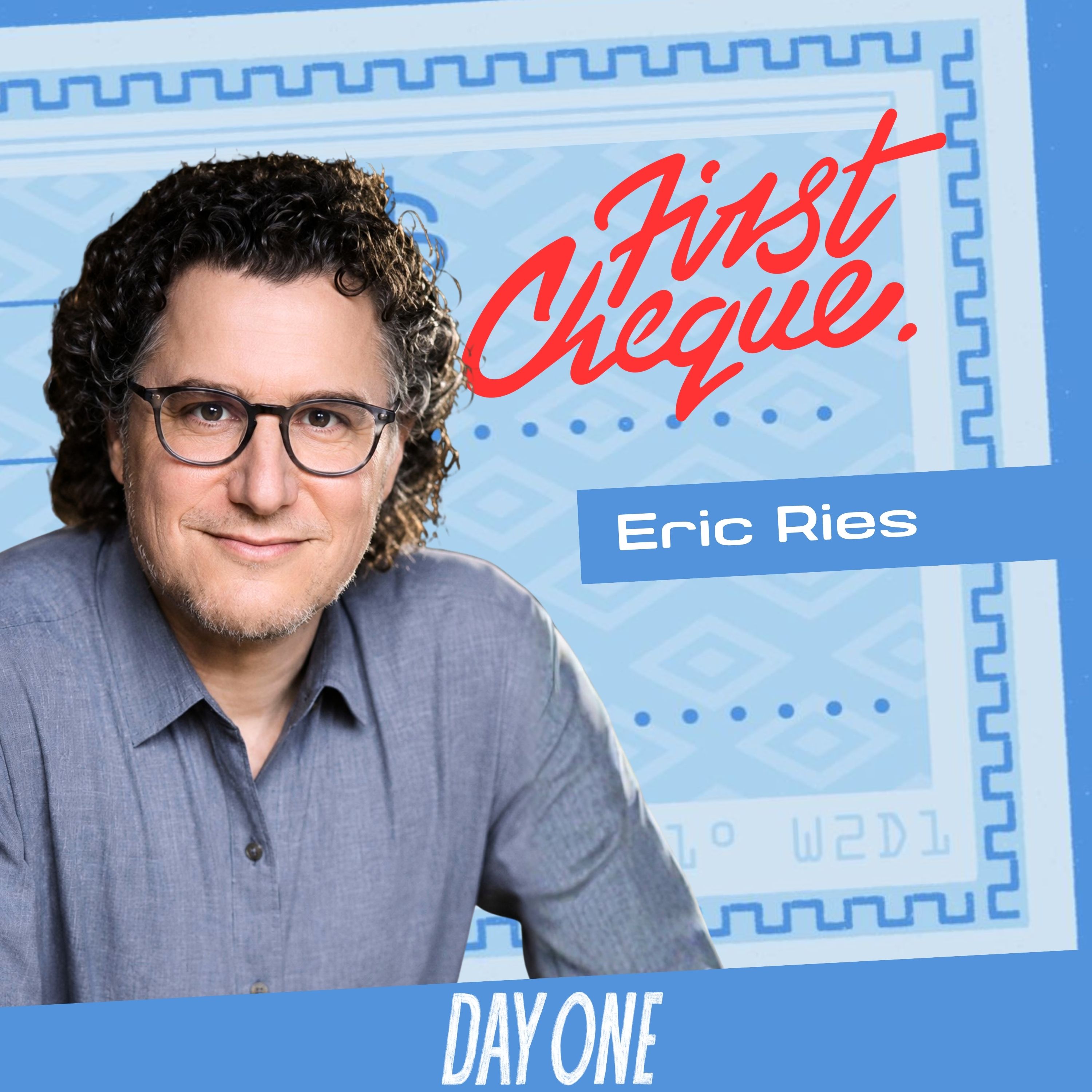
Eric Ries on What Investors Get Wrong About Governance
2w ago01:00:42Tap to summarizeEpisode SummaryEric Ries is the author of The Lean Startup and The Startup Way, and the founder of IMVU and the Long-Term Stock Exchange. His new book, Incorruptible, examines why companies drift from their mission once investors and boards take over, and what founders and early investors can do to prevent it.In this episode, Cheryl and Maxine unpack what Eric calls "financial gravity," the force that pulls companies toward extractive, value-destroying behavior even when everyone believes they're pursuing profit. Eric explains why many widely taught governance best practices are actually shareholder-value destroying, and why the earliest stage of a company is the easiest time to build in protections against this drift.You'll also hear Eric break down the "spiritual holding company" structure, using Novo Nordisk's century-old nonprofit foundation as an example of why mission-guardian structures make companies far more likely to survive long term. The conversation covers why founders get talked out of protective provisions until it's suddenly too late, and Eric shares the real story of a startup that took a million dollars from Purdue Pharma to push opioids to doctors, and why it destroyed the company.He closes with his Big Cojones moment: a board meeting early in his career where he expected to be fired for refusing to abandon his unconventional methods, and the lesson that "harder is easier" when you stand for something you believe in.Time Stamps00:00 – Intro04:10 – Eric's first investment: putting his own money into IMVU's friends and family round09:15 – From Lean Startup to Incorruptible: why it's always felt like one continuous project to Eric17:40 – The tortilla company, private equity, and why "pricing power" explains so much bad behavior21:30 – Why so-called governance best practices are often value destroying25:50 – Naming the problem: financial gravity and why our grandparents would have called it corruption30:20 – What founders and early investors can actually do at the earliest stage36:45 – The Olympic athlete analogy: why protective structures only work if built in early41:10 – The spiritual holding company explained through Novo Nordisk's origin story48:30 – Why companies rated for "good governance" have underperformed since 200852:15 – The Purdue Pharma story and how a million dollars destroyed a company58:40 – Big Cojones moment: the board meeting Eric thought would get him firedSponsors:First Cheque is supported by our wonderful sponsors:Deel: Founders scale faster on Deel. Set up payroll for any country in minutes, hire anyone anywhere, and get visas handled fast, so you stay focused on scaling. Deel takes care of onboarding, HR, IT, EOR, benefits, and compliance, so your team can grow without borders.It’s why more than 40,000 fast-growing companies trust Deel to move fast.Visit https://www.deel.com/dayone___Pear Tree: Pear Tree helps Australian and New Zealand founders build high-performing offshore teams without the agency middleman.As local hiring becomes more expensive and harder to fill, many operators are turning to offshore talent across engineering, development, marketing, accounting and operations at a fraction of local salary costs.The offshore horror stories you hear usually aren’t a talent problem. They’re the result of outsourcing agencies that overcharge clients while underpaying staff. Pear Tree takes a different approach through a direct, transparent model where your team is paid fairly, fully compliant, and focused entirely on your business.As part of the Day One community, you’ll receive a free team audit to identify where offshore talent could move the needle in your business, plus 20% off your first hire. Learn more at http://dayone.fm/peartreeFirst Cheque is part of Day One.Day One helps founders and startup operators make better business decisions more often. To learn more, join our newsletter to be notified of new First Cheque episodes and upcoming shows.Mentioned in this episode:Pear TreeIf you're a founder or operator trying to scale, here's the reality — Australian hiring is getting harder, salaries are at record highs, and the talent you need is increasingly out of reach. The best operators are quietly building offshore teams of engineers, marketers, accountants and analysts at a fraction of the cost. Pear Tree does it differently. We headhunt highly skilled talent from the Philippines and South Africa with full transparency on where every dollar goes, so your team is paid fairly and fully focused on your business. As a Day One listener, you’ll receive a free team audit to identify where offshore talent could move the needle in your business, plus 20% off your first hire.Deel x PX_Script 1Pear TreeIf you're a founder or operator trying to scale, here's the reality — Australian hiring is getting harder, salaries are at record highs, and the talent you need is increasingly out of reach. The best operators are quietly building offshore teams of engineers, marketers, accountants and analysts at a fraction of the cost. Pear Tree does it differently. We headhunt highly skilled talent from the Philippines and South Africa with full transparency on where every dollar goes, so your team is paid fairly and fully focused on your business. As a Day One listener, you’ll receive a free team audit to identify where offshore talent could move the needle in your business, plus 20% off your first hire.This podcast uses the following third-party services for analysis: Podtrac - https://analytics.podtrac.com/privacy-policy-gdrpSpotify Ad Analytics - https://www.spotify.com/us/legal/ad-analytics-privacy-policy/
Transcribe →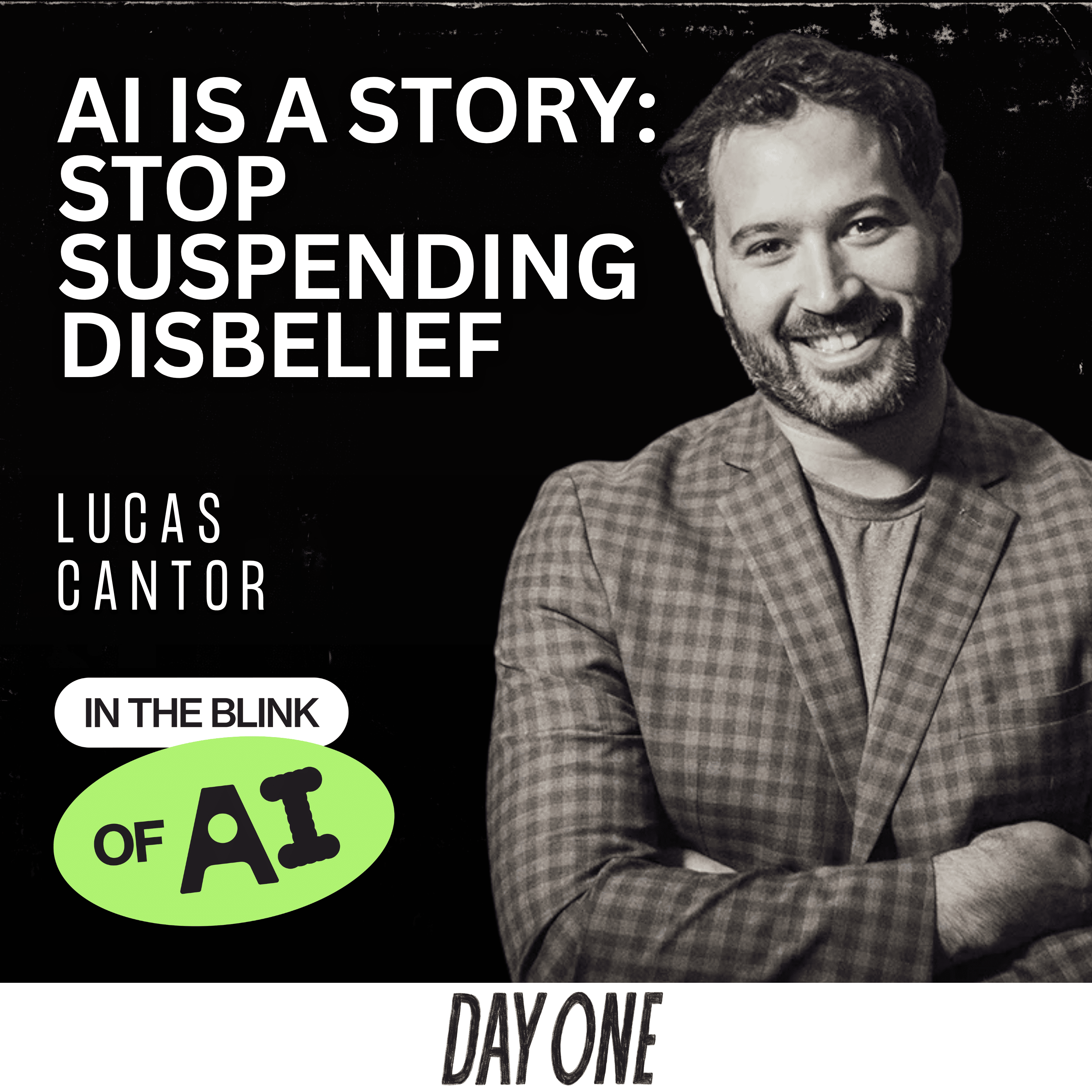
Lucas Cantor: "I Don't Think Anybody Knows What AI Is"
3w ago00:58:09Tap to summarizeLucas Cantor has an unusual claim on the AI conversation. In 2019, Huawei asked him to finish Schubert's Unfinished Symphony using artificial intelligence, and he did it. He's an Emmy-winning composer who has worked on every Olympics since 2002, produced a cover of Everybody Wants to Rule the World with Lorde, and now invests in music technology. His new book is Unfinished: The Role of the Artist in the Age of Artificial Intelligence.In this episode Georgie Healy gets Lucas to take apart the story we're all being told about AI. Why he thinks nobody actually knows what the term even means. Why every single person he asks assumes AI can do the job they're not an expert in, and can't do the job they are. Why the claim that AI democratizes creativity is a fallacy sold by AI companies, and what it actually democratizes instead. Why B2B SaaS isn't dead, and who benefits from you believing it is. And why the music industry, supposedly murdered by Napster, is bigger now than it was before.If you build, market, or operate anything, this is a useful hour of pressure testing. Lucas isn't a doomer and he isn't an evangelist. He's someone who has been inside the technology long enough to tell the difference between what it does and what it's sold as.Recorded ahead of his first trip to Australia for BIGSOUND - which is September 1st - 4th in Brisbane!Chapters:00:00 Cold open00:54 Welcome, and who Lucas Cantor is02:49 The AI hack: stem separation04:14 Taylor Swift's wedding04:55 BIGSOUND, and the fear around AI in music06:23 Why the purist argument falls apart07:25 Tuning has drifted since the Renaissance10:02 Composer, producer, author, investor11:16 What Suno is, and the ethics problem12:20 Why all music sounds better now15:33 What it actually means to have your music stolen16:56 Covering Everybody Wants to Rule the World with Lorde19:19 Source Connect, Audio Movers, and remote studios20:22 The fallacy that AI democratizes creativity22:38 Black Swan, conductors, and the war on expertise24:26 The doctor who said AI could write a pop song27:38 Why he called himself a Luddite30:18 Hans Zimmer's studio, and saying yes to Huawei32:34 Finishing Schubert's Unfinished Symphony37:00 "I don't think anybody knows what AI is"38:49 Every AI agent ad shows something nobody needs42:14 Hot take: is B2B SaaS dead?45:13 AI is a story, and that's the problem46:25 What actually wins in music tech49:28 Amusing, but not amazing50:20 Ben Affleck, Scorsese, and AI in the creative process53:30 Two Emmys and a coach of the year award55:36 The one takeaway from Unfinished57:33 Georgie's Substack, Attention Is All I Need
Transcribe →