Loading summary
Transcript186 lines
- [00:00]
A
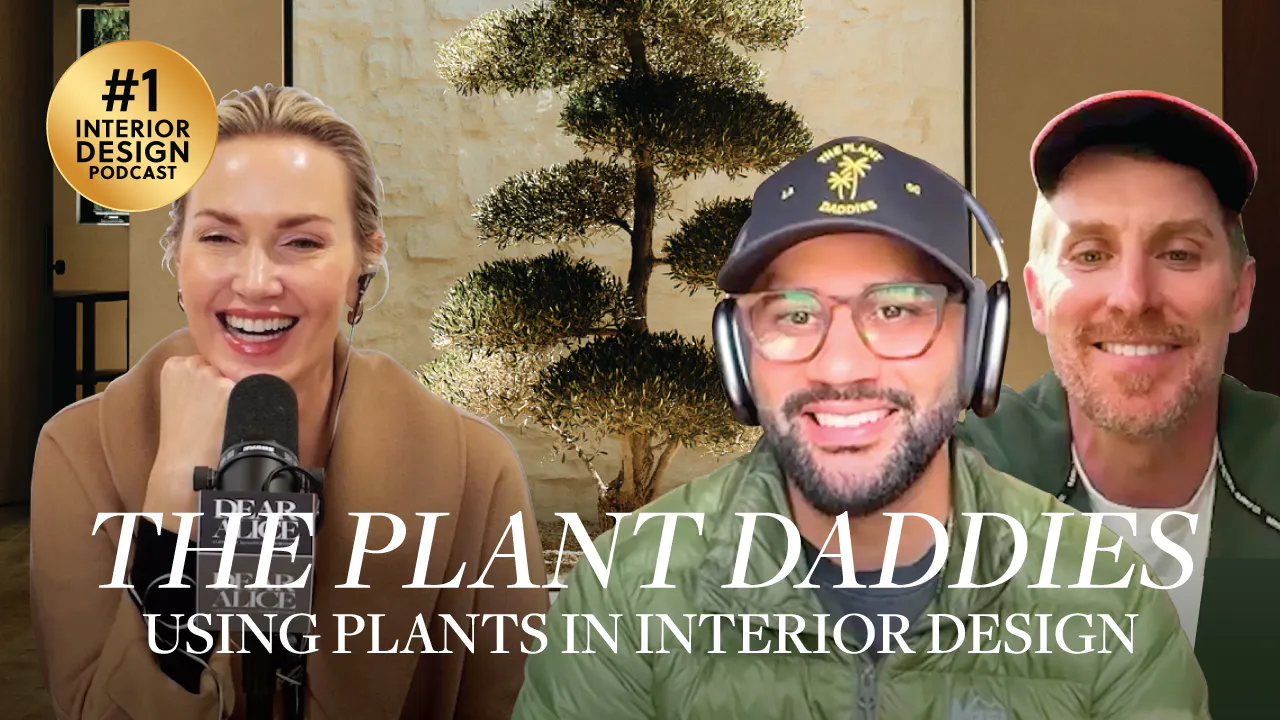
Hello, everyone. Welcome to Dear Alice. Today we are going to be having a special set of guests on the Plant Daddies. We worked with the Plant Daddies on a really cool and special installation that we did recently in Summerlin, Nevada. And we called upon these guys to bring their special set of skills. They're like sculptors and artists with plants, complete artists. And you're gonna have to check them out on Instagram to be able to really see all of the work that they're doing. So we'll make sure and give you their hand. But we want to introduce you to Macy Luccarelli and Dane Jordan, their other plant daddy. Kenny wasn't available for this call, but we're going to take you into this conversation where we learn about their process, about some of their favorite plants to use, how they got started, what not to do. Yes. Yeah. So many things. And one of the biggest trends that we're seeing. It shouldn't even be called a trend, but a thing that is working so well in interiors right now is living plants. Plants are so cool. They add so much to the interior. And we just. We haven't talked enough about it, so we want to get the experts on to talk about how they're doing it.
- [01:12]
B
Yeah. And the stuff that these guys are doing, you don't. You're like, how does that even survive like that? But it's just so fantastic that it. It is there, becomes the room. Like, it's such an identifying factor in these spaces that takes it to the next level.
- [01:25]
A
Yeah.
- [01:26]
C
And they're super interesting. Like Jess said, they our artists. And it was this really fun interview, so I'm excited for you guys to listen to it.
- [01:33]
A
Today we are joined by the Plant Daddies. We're so excited to introduce you guys to Macy Lucarelli and Dane Jordan, known as the Plant Daddies. And they're joining us from California. Are you guys in la?
- [01:46]
D
I'm in la. Macy's in Orange county right now, so divide and conquer.
- [01:51]
A
Amazing. Well, thank you so much for joining us. We worked on a project with the Plant Daddies here at Alid, our design firm. We got this project in the beautiful Summit Club in Summerlin, Nevada. And it was a good friend and longtime client of ours with a beautiful contemporary home. And she said, I need you to come in and put the finished layers and touches in it, make it feel like a home. But I like everything very simple, very pulled back, not a ton of styling. And so the first thought sue and I had was, let's bring in live plants, because I think that will do a lot of the work for us. It'll bring in an element of sculpture and life, and there's a lot of beautiful big windows. And then once the plants are in, I'll bet we just have to do a little tiny bit of styling, but let's get plants in. And so we went about trying to work with some local greenhouses in Las Vegas, and nothing was quite working. We would.
- [02:46]
B
We'd pull, like, very cool images and, like, inspiration stuff that you guys do, and we'd show them to other nurseries, and they'd be like. They'd bring out something that didn't look anything. Anything like what you do. And we're just like, no, that won't work. That won't work. That won't work. So strike. And then we stumbled upon you. We stumbled upon your Instagram feed, and we're like, okay, this is it. This is the stuff. But nobody. Nobody could get that for us. That look, that edit the sculpture. Because really, like, Jess was saying, like, without doing the plants first takes so much of the styling effort away. Like, like, even artwork spots that we thought we'd be getting huge artwork for. We didn't have to, because the plant ended up doing so much for that whole scene.
- [03:27]
E
Then.
- [03:27]
B
Enter scene is plant to hear.
- [03:29]
D
Yeah, yeah, yeah.
- [03:31]
A
So we called your team and worked with you on this home, and it just turned out so incredible that we were like, we've got to really talk about this and share your insights, because a lot of the audience here are design enthusiasts, people that are obsessed with interiors, but also interior designers. Listen to the podcast, and so I know they're going to love learning from you guys. And we would love to hear a little bit about how you started. First of all, I think everybody's story of how they started is one of my favorite parts. And then we'd love to get into your project process.
- [04:02]
D
Sure. Yeah. You want to go or me?
- [04:05]
E
You take it first and jump back and forth.
- [04:08]
D
Okay, cool. So plant daddies. I guess for me, maybe I'll just back up before even the plant daddies was a thing I had of a background and a love for horticulture and architecture and gastronomy food. My dad is a amazing chef, and he kind of. I used to work with him all the time in his restaurants. We used to, like, bicker, just like kids and sons and dads do. And there happened to be a nursery across the street from there. And when we got a big fight, I went to the nursery. I was, like, 16 years old. And I offered. I Asked for a job there, ended up being like one of the mulch boys. And that really was my first introduction to horticulture. So I worked at that nursery. They had a great program which was tied to the university. So we had a lot of like students coming in and teachers and like professional horticulturalists. So I, I just, really just grabbed a hold of that and then that, that really just inspired me. And that's really where my passion for horticulture really got started. Later in life I kind of diverted. I move around the States, I moved to Boston, I was living in Virginia and then I came to LA to go to architecture school. So I went to a small grad prep program here in la, did four years of like fundamental design, cad, rhino, grasshopper type of rendering designs, learning kind of how space works, how you know how to put things in certain places. And I kind of understand architecture. So that's kind of like my background in a very small nutshell. And then when Covid hit, I lost my job. So at the time there I was working in a restaurant and everybody was out of work, obviously the whole world shut down. And I had a ton of plants in my house. So I was already kind of just selling some plants on Facebook Marketplace and kind of trying to make some money doing that. It was very small time, it wasn't really real. I was kind of helping friends out with like helping, you know how everyone had like a home studio, helping them put like plants in the back of their office. But it was really not really what plant daddies is today by any means. And Macy, Macy and I have been friends for years, a very long time. And we were working out one day at the Hollywood bowl which is kind of like our genesis of everything. It was completely empty. I had some weights in the back of my car. We would just go work out in the parking lot like some prison gang. That's awesome. Talk about lying.
- [06:27]
E
Dane got those. Dane brought back like a 45 pound weight bar and a bunch of weights on the plane. Workout gear.
- [06:38]
D
So all the workout gear was sold out in la. You couldn't buy any workout gear anywhere. So I, I flew to Texas, my sister lives in Houston and I bought some workout gear there and I put it in my luggage like bars.
- [06:52]
C
Oh my gosh, that's amazing.
- [06:54]
D
And it caused. They cost more than the weights themselves to get it home. But it was worth it, you know, in the end so. And then Macy, you know, he didn't have anything. We're good friends so we would just shoot it and hang out and Talk about life and stuff. And I think Macy. I can't remember if it was. He brought it up or I brought it up, but, yeah, Macy kind of. He kind of jumps in here now. Yeah.
- [07:18]
E
I mean, we would work out together. We were friends for a long time, and we were both, you know, into fitness and stuff. And like, yeah, you couldn't buy a dumbbell anywhere in LA County. They're all sold out. So we were, you know, Dane, and we were laughing. He's like, dude, I brought back a bunch of weight equip. I lived above a nursery, and I would see all this. This line of. Of people outside this nursery for months and months and months. And it was just. I've. I don't have the technical background that Dane has. Dane's a lot more technical when it comes to the plants. Mine was just much more of a hobby. I have, like, an intense OCD when it comes to cleaning plants. And, like, I've always had my own style. I would pluck everything, and it would be very minimal, and I had a whole house full of plants. My background with plants was also I was a real estate agent. And it was actually the greatest marketing scheme of all time. When I would sell a house and the closing gift would be I would put a big tree in somebody's living room or their master bedroom or somewhere where they would see it. Because when the plants started turning brown or if they died or if something happened to them, the first thing that they would do is they would contact me as their agent, say, hey, my plant's dying. You know, what do I do? So it was a way for me to stay top of mind on with all my clients.
- [08:31]
A
Clients.
- [08:31]
E
I didn't do any marketing. I didn't do any postcards. I just gave plants away. So it was like my, you know, intro to styling plants. And I wanted to get the biggest one so everybody would always see it and it would stand out. Dana and I were working out one day, and I told him I had this dream because I've had plants on my mind, because I'm just hearing this nursery just pump out tons of money all day long. And I was like, dude, I had this dream that we're selling plants. And although we were close, you know, I didn't know anything about his, like, side business. And he's like, dude, I started a plant company, you know, a couple months back, and we started talking about it, and he was like, you know, I have it named. It's called Green Vibes Plants Company. And I was like, look, let's start a plant company together. People called me the Plant Daddy because I would take pictures of these little mini plants. I would get a passion fruit and plant passion fruit vines all over la, because I like passion fruit and you couldn't buy it in the store. And I just wanted to have an unlimited supply of passion fruit. So for years.
- [09:29]
A
Oh, my God.
- [09:29]
B
Amazing.
- [09:30]
E
It's just crazy. This whole business has happened so organically. It's unbelievable. But so I had probably 100 vines planted all over LA, and I would drive around every day and I would take pictures of the vines. They would grow about anywhere between an inch and six inches a day. So for years, I would just always, every couple days, I'd have, like, these vines that were growing. So people started calling me the Plant Daddy. Friends and family, you know, it wasn't anything serious. So when Dane told me he started a company, I was like, dude, I don't have a job right now. I'm not allowed in houses. There was like four months where I couldn't step foot in a house. I was like. And I thought the world was going to go in the other direction. I thought the housing market was going to implode and we were all going to be homeless. Let's call it the Plant Daddies. And then we laughed, we shook hands, and boom, that's how the business started. And we are where we're at today from just organic evolution.
- [10:20]
D
Wow.
- [10:20]
E
That's a hell of a story.
- [10:22]
D
That's awesome.
- [10:22]
A
That's so cool. So how do people find you today and kind of, what's your process when somebody gives you a call? Yeah. Is it usually a designer? Is it a client that has a great home and a great taste level and they recognize how unique and special you have? You know, what you have is both.
- [10:40]
D
Yeah, both pretty much. But we take a. We take a lot of care and we put a lot of work in showcasing our end product and sharing that. I hate to say it, but we are plant influencers by now. It's our second job, or if not our first job, even when we got started in the very beginning, it's all about showcasing the pairing, like unique plant, unique vessel, and photographing that and sharing that with the world. And hopefully someone will like it. And luckily, fortunately for us, a lot of people have been liking it. And then, you know, Instagram has just been really good to us. It's the world we live in today. You know, if you have a business, you just have to. You have to put yourself out there and share it with the world. And this is a type of art, I would say for any art, you have to share it. People are going to appreciate it, they're going to see like all the hard work you put into it and hopefully, you know, you can capture a client that way. But typically most of our clients are either see something that we post and go to our website or call. And then we've been lucky enough to partner here with our team here at Berber Imports, which is a world renowned Import Company with 50 year collection of antiques, pots, vessels. So we've collaborated and we're all, we started here. This is basically our first real, real place where they already kind of had a program with designers and then, you know, we just hopped on that, their, their, their back and now we get clients that way.
- [12:06]
A
Your background is so beautiful. I was so curious about what that was. So that's like a show.
- [12:11]
D
This is like a small portion of like. Yeah, this is the, the bag. No one even goes over here. So maybe at the end I'll try to. If we have good wi fi, I could give you like a quick tour. But it's a 40,000 square foot space. And then we branched out. Now Macy runs our Orange county location which is 6 acres. It's a 6 acres sanctuary park basically. It sounds beautiful, but I know you can see in his eyes it's a lot of work. We just got a lot of rain yesterday and it's just like, you know, you're, it's completely outside. He's got this little, little modular office that he's in right now, but we're building one, a stable one. But he's been really going hard out there making, making it such a beautiful place.
- [12:52]
A
Yeah, that's awesome. So you get a phone call from a client and they say we need you. And, and where do you go from there? Do you say, I'll come by for a consultation and I'll walk the space with you or what's your process like
- [13:04]
E
a couple different ways. How we work, our clients will call us, hit us up on Instagram, lots of questions. You know, basically we have a form, we have a client intake form. So we, we, we instantly say that we work one of two ways. You can either come inside to the warehouse, walk around, we can pick everything out, we can show you guys exactly what we think would work in the spaces. You obviously have to have pictures and some kind of measurements in order to do that. That's a free version. Or we also have, which is becoming very popular, our on site consultation where we can go out to the site. And then what we do is we take extensive pictures, measurements, lighting requirements. We have light meters now. We have all this stuff that we bring in. We take pictures at the right angles, we bring it back, we put it on a deck, and then we Photoshop everything that needs to be out of it out. And we Photoshop the about anywhere between two and three different plant and pot options for each space of what we like and what the customer, you know, likes, if they even know what they like. And that is a design consultation fee. It honestly it should be like three times the amount of what we charge. But we're just trying to get people in the door. But yeah, so people call us, say see us on Instagram, they reach out to us, we give them those two options. We send them a console or an intake form. They fill out the intake form, it goes into our CRM and then we stay in communication. We have all the information we need and then it's just a back and forth until the design process is finished. Once it's finished, we send out the invoice. Everything is agreed upon, they pay it. Then we give them a scheduling link. They schedule the link, we get our time. You know, it's just, just saying it, it just sounds, just saying it sounds exhaust.
- [14:45]
D
We got it down pretty well from trial and error.
- [14:47]
E
We tried everything and now this, this is what's working best for us so far. Not that it won't change, but it's just complicated. But, but yeah, we're, we're.
- [14:55]
D
That.
- [14:56]
E
That's pretty much the process.
- [14:57]
D
Well, it used to be all in our heads. You know, it used to be that we've gotten a little bit more organized and been using some technology and CRM to organize clients and projects as they come in. A lot of clients kick the tires and they just want us to, you know, know, just come to my house and make it pretty. And then they, you know, they don't answer the phone for a month and you know, so we have to keep that, you know, those, that information, maybe move it down until it pops up again, which it usually does, thankfully. But you know, over the years it's taken a lot of trial and error to figure out how to even have an intake. You know, we, we started from zero, you know, not really understanding the ins and out of what a design firm is. I think the most experience Macy and I had, like Macy dealt with more like of a real estate, you know, broker. We're kind of understand the needs of sales and kind of staying on top of them. Top of Mind. And I had, like, a background in hospitality, which kind of understands, you know, the luxury aspect of, like, kind of knowing what the client wants before they even ask for it. And then taking those. Taking those and putting them into, like, selling plants and pots and antiques and installing and the prep and caring for plants. It is a passion job, for sure.
- [16:13]
A
Well, and it's not just the plant either. It's the way that you guys. I don't even know the right way to speak about it. Yeah. Because plants, sculpting, this is a whole different language. But, yeah, you guys go in there and prune these trees into a sculpture. And the. The way that you bring the roots up out of the pot and you are buying, like, living art. I don't know if you can speak to that. I don't know if there's a technique. I don't know if it's Japanese. I don't know where you guys learn this, but it's so special. And I don't know that you can buy. Buy it or find it or find a person like you anywhere in the world that does what you're doing. And it's extraordinary. But can you speak to. What style. Is there a style or how did you learn that?
- [16:54]
D
That. That came on design, actually. So Macy and I, when we. We first started, we couldn't afford the plants we liked. You know, it didn't make any sense. We didn't have some magical funding or budget where we can go buy cool, rare specimens. So we would go to nurseries and, you know, we'll go to the back where they have stuff that looks like it's, like, fallen over. And now it's growing out of the plant, the pot, like, to the side. And this looks half dead. So those are the ones that we had to work with. And, you know, the cheaper ones. The cheaper ones, really, but maybe they're in itself the most beautiful, but they're just forgotten. And all they needed was some tlc. And, you know, if you go to a nursery, everything's just, like, upright and pretty, and they all look exactly the same, because that's what a business is. You need to, like, scale. And everyone needs to. You know, everything needs to fit in the same pot. And you need to understand how to inventory that. And that's the stuff that's out of inventory that no one. No one cares about anymore. And Macy and I were like, look, let's get these things. We could bring them back. We can trim them up, you know, pull the roots out, repot it and. And see how it looks and along with pairing that with the right vessel, which is probably the hardest part of the, the whole thing is understanding, like, how deep the vessel is, what, what the texture is compared to the plant. Where is it going? It's just such a big picture. But when it came to our style, it was again, very organic, pun intended. And the, the style, I think, found us and, you know, and with culture and how designers were working as well, they liked it. So we were just like, let's get try more of that. So that's. I think that's where it all stemmed from.
- [18:40]
E
Yeah. And then just, just to add to that, a really big aspect of it too, is like, you know, Dane comes from somewhat of a horticulture background, more in design. He's got a good style. Me, I didn't come from any kind of plant background, just a hobby. The way that we look at plants is, is not how plant people look at plants. Our style is, it's a type of bonsai. We knew what bonsai was. You know, we knew what it looked like, but we didn't really know what it was. So if we would have had those fundamentals, we probably would have been doing more traditional type plant purchases and root growth and all that stuff. But because we came from a completely different plant world and plant people, we, we tried things that people said couldn't be done. You know, not even knowing that it was taboo. You putting this plant in a dark spot, oh, my God, in the plant business, you'll get eaten alive. People will like, hate you for it. We didn't know better. So. And then we're like, wow, it's not doing that great. What can we do to make this plant? As opposed to just saying, that doesn't go there and it doesn't work. We were like, how can we get this to work? Why doesn't it work? Give it a different kind of nutrients.
- [19:50]
D
You.
- [19:50]
E
We, we took because of the plants that we were buying from those nurseries, the dead section in the back, we had to bring them back to health. We had to repot them. That would, that allowed us to see more of the root structure because we had to repot everything. We would cut and, and prune all the stuff that looked bad and dead off, which would give it a shape, which would make it grow. We learned everything we did. We've learned as we've gone. You take some energy away from the roots, you take some energy away from the canopy, and then now it's kind of got its balanced energy, and then it forces more Root growth into these smaller pots. So now these top heavy things have. Have more root growth in their mouth so they can hold themselves in. It shoots more, more leaf growth and canopy growth in to make these cool, weird designs. So it's like if we were typical plant guys, we would have stumbled upon all this information and knowledge and trial and error. We don't come from that background. We literally experimented with everything and we've done things that people are like, said that could never be done.
- [20:48]
D
Yeah. And my, my horticulture background comes from Virginia. We're in California. There is not any of the same plants other than a crepe myrtle and a boxwood in Virginia. So I know how to. I knew, I learned how to line those up, plant those, you know, but. And do more of a landscaping. But here, you know, it's so temporary. We can really have fun with the plant specimens. You know, succulent varietal trees from Madagascar, bringing things in from Australia. You know, you can go. Go crazy here. All different types of succulent and euphorbias that you've never seen before. You can, you could grow them outside. And then, you know, we don't need to pay for, you know, temp, a controlled temperature warehouse greenhouse to store them during winter, even though this winter has been a little bit colder and, you know, climate's been getting a little hairy nowadays. But we've been, the placement as well as our location has been very, very forgiving to us and helped with the inspiration and, and trying new things. So because we have, you know, sunny California so to thank.
- [21:52]
B
I have a question.
- [21:53]
E
Oh, yeah?
- [21:53]
C
Yeah.
- [21:54]
B
Oh. Just when we think about plant daddies, when we look at the sculpture, sculptural stuff that you do, we do see it more in like these minimal spaces, these California estates and things. And we obviously use you in a project that was a little bit more contemporary, regardless of style. Say you have a traditional home on the east coast, your West Coast. Can you still like, have you guys employed your kind of plantings and that sculptural, minimal, edited back elements in all these types of styles?
- [22:22]
D
Yeah. So thankfully, with these plants that are so sculpted, they, they're almost like puzzle pieces that you can just fit anywhere, especially if you're kind of pairing with a vessel and then with our plant. This is for interior mostly with our plant material that we source here in California, since it. Most of them are going to go interior, that's going to be a controlled setting so we can grow here, shape things here. And then if we need to do Something out of state that's going to freeze in the winter. It's going to be inside, right? So if it's near a nice window, you know, and it's getting plenty of light, there's. There's opportunity there, Granted. It is. It is a lot of work, you know, doing things a little bit out of area, you know, understanding how the scale is of the plant. When we do our rendered packages for designs, they look amazing, but it just. You never get the experience. So a lot of times we'll have clients that we've been working with and we've been sending photos back and forth, and they're like, you know, I'm just going to come in. And they come in, they're like, oh, I love this plan. This is the most amazing plant I've ever seen in my life. I'm like, this is literally the one I sent a photo of. And they're like, this is the same one. They're like, it's so much bigger and it looks so beautiful. And I don't know if it's. Sometimes, though, the plant is like. Speaks to the client. There's some sort of, like, magical energy there. But there's also just. When you experience in real life. Yeah, yeah, yeah.
- [23:42]
E
You know, the 3D element of actually feeling it in a space is something different. 95 of the time, we end up putting the plant that they didn't want in a place they didn't want it. It's just. It's crazy, you know?
- [23:55]
A
Wait, will you speak more to that? Give us an example of that. Who creates the comfort that makes a house feel like a home? Moms do. So this year, let's make mom feel comfortable right back. The robes and slippers at Cozy Earth bring intentional softness to everyday spaces that moms live in most. I love the robe. I'm currently living in it. One of my favorite rituals is coming home after a long day, taking off my work clothes and immediately slipping into my robe. Their robe has this ultra soft feel that wraps your body in warmth and relaxation. It has these huge, spacious pockets, which I totally love and have to put things in as I'm bringing things up and down the hallway. I love having extra pockets. It has an adjustable tie around the waist. And the robes are available in plush quilted waffle and this great stretch knit style. I'm currently using the plush and I love it. It's a spa like feeling in my own home. And the slippers have this great comfort that instantly makes me go into relax mode. There's a plush Shearling footbed that is so warm and soft you just instantly feel like you're home. It's a ritual for me to take off my shoes and slip on my slippers right at the back door. They're cozy, breathable, and they feel great on bare feet. And they're designed to turn everyday moments into small acts of self care.
- [25:16]
C
Every purchase at Cozy Earth is risk free because all of their products come with a hundred night sleep trial and a 10 year warranty. So let this Mother's Day be a reminder that she deserves care too. Discover how Cozy Earth turns everyday routines into moments of softness and ease. Head to cozyearth.com and use our code Dear Alice for an exclusive 20% off. And if you see a post purchase survey, be sure to mention you heard about Cozy Earth right here. That's Code Dear Alice for an extra 20% off. Because home starts with mom.
- [25:44]
A
I feel like people listening, they're not thinking about where they could put a plant. And so I would love to hear an example of what you're saying.
- [25:52]
E
Yeah, people don't look at plants. People are starting to look at plants in, in a way that we are starting to look at plants now. It's becoming more popular. All these different plant companies now that we see are all, they all sell the same plants. All of a sudden they all are starting to look the same. So basically what is like some, someone will have a house and they'll say, this is where I would put my tree. This is where I would put my tree. And this, you know, I don't want to block the view. It can't put it one there. Half of our, our houses are on the coast with ocean views to, you know, be very sensitive to that. So like they would never put a big tree in the corner of their master bedroom, blocking the wind, the view. Well that's the perfect place for us. We have, we have these really cool root systems that show something down low and then as it comes up, it's dainty, it's whimsical, it's sculptural, you can see through it. So not only do you get like the art aspect of it, but you also get to put it in places that typically don't happen. So you know, we'll walk in and they're like, you know, we, oh no, a chandelier needs to go here. And we're like, no, a tree. And they're like, they're like no way. So then when we actually take home the design, we put the plant in that space, they're like, I would have never thought in a million years a tree would have gone, here, I want it here. I, you know, and then, you know, that's, that's.
- [27:09]
D
Or we're. Or we'll pair the. Some. You know, sometimes we're on the project early enough, we'll pair the. The plant specimen to be intertwined with the chandelier. So they speak together. So there's some some sort of magical element going on there as well. Or bathrooms. Right? We've been really big on bathrooms nowadays. Sometimes they have skylights or they got bright window. We'll put something just hanging over the tub. And they would never have thought of something like that. You know, they're like, oh, I would have a, you know, plant in the bathroom. But now, you know, that's one of the first places we go because it's typically always got good light in a lot of bathrooms nowadays, especially in newer architecture, you want that, that, that new, that, that morning light coming in or the afternoon light going into the, to the bathroom. And those are just weird places where we'll put stuff. And then we also have our, our night collection. We call it the Ironwood, which is a completely organic preserved tree branch that we've been. We get cutbacks of them and we'll put those in like, places with no light. So you can have still like an organic element in there, even though it's a preserved cutting. That look really, really cool. And then we pair those again with. With a beautiful vessel. It just, it looks amazing. So those have been really popular. We like selling them because there's no callbacks on the plant, you know, getting underwater. No underwater, you know, so. But they, you know, it's something to have there. And it makes the whole room look like bigger too. So if you have a, you know, tall ceiling, sometimes you just look up and you're done. Right. You don't really get. Understand how big it is. And then if you have some plant vessel in the corner, it gives you more scale. You look up and you, you know, your head goes up with the, with the room and you're like, oh, now you're up in there. And it just kind of gives you a moment to appreciate the entire space. Instead of just like, you know, couch, coffee table, tv, you know, you could actually just encompass yourself in the whole space.
- [29:01]
B
It makes it feel so much more grand.
- [29:04]
D
Yeah. Yeah.
- [29:05]
B
I'll say your eye up for most clients, we talk about this on the podcast a lot. Like, if your room feels like it's falling flat, it needs more it needs something that's living. You need a tree. You need some zebra in there. You need like some. Something organic and living, be it materials. But the tree always. It always, always wins. And I think you said it before, like, I could be. I could be standing here naked. But if there's a tree in the. Nobody sees.
- [29:30]
A
Everyone only sees the tree. Everybody. Everybody's obsessed with the tree. For those people that are listening, I'm curious, do you guys have favorite tree species? I mean, if they're in North Carolina listening and. And obviously they're not going to be able to probably use your services. Is there. There's probably like certain trees that feel really cliche to you guys if you're in the business.
- [29:48]
D
No.
- [29:48]
A
You love every tree.
- [29:49]
D
God, yeah. I'm so bipolar with what I like, you know, it's like it changes with the wind. I kind of compare it to, you know, people are like, what kind of wine do you drink? You know, what. What am I eating? You know, where. Where am I? You know, am I. Is it. Is it brunch?
- [30:04]
E
Yeah, if you can buy it at Home Depot, we don't use it.
- [30:07]
A
Okay. Do you guys have.
- [30:09]
C
I think that's a great.
- [30:12]
D
I will tell you right now, basically, probably kick me for telling the world. I was at Costco the other day and I bought a ficus gini. They had the biggest root I ever seen, and it was for 25. It came with the pot. And I was sending amazing photos. Like, look at this. I'm gonna come back and buy them all. So you never know. You never know.
- [30:34]
A
So you even like a ficus. That's awesome.
- [30:36]
E
The plants we use are ficus. There's like ye. Hundreds of different thousands.
- [30:40]
D
Yeah, yeah.
- [30:41]
A
It's probably how you guys trim it and pot it that make it look so special.
- [30:46]
E
We will pluck about 80% of the leaves and the. The branches off of that tree to make it look unique. A lot of the time that we, you know, a lot of the plants that we use are pretty widely available plants all over the country. People are just like, what is that? And we're like, that's a ficus, Audrey. And they're like, like, that's not a ficus, Audrey. And we have to like zoom in and show them the leave. Like, this is a fic.
- [31:10]
C
I was just gonna say you guys have like, super interesting point of view on plants. And I think, I mean, just your background and your story kind of just proves that. What's the one thing you. You guys learned from like, you know, having to be creative and cutting stuff back. Be like, man, we should never do that again with a plant.
- [31:29]
D
I mean, there's a. Yeah, there's a cool book. Book. It's called Pack of Forms. And inside the book he's like, it's like a old school horticulturist and he has a quote in there and it says, to know is to kill. So to know the plant you're working on, you're probably gonna have to kill it once or twice to understand it. Unfortunately, I, I call it more compost than killing it. But that's awesome. Yeah, a lot of, you know, a lot of the stuff that we, we do, like experiments with, you know, it just goes so far south. And then we've got to just put in the back. We're like, okay, we'll put it, you know, we'll treat it normal again and then put it in the back. And then, you know, it'll. Luckily. You know what my favorite thing about nature and horticulture is that it's so forgiving that sometimes, you know, it just looks like it dead. And then, you know, you just did the most horrible thing to it. You rip the roots out, you cut the top off, and then it's just like all the leaves go away and all the energy just goes. Just slowly goes away. But all you need is like, it's like almost like a fire. Like, all you need is that little spark and then boom, it just comes all the way back. So it's the nature. Nature is very forgiving. You know, you can manipulate it how you want. Sometimes you'll tell you no, but, you know, usually it gives you another chance.
- [32:49]
E
Yeah, you know, we, we like everyone that hits us up on Instagram, we try and hit up every person back. We DM everybody back. Whether it's, you know, instantaneous, or we have to get through all of them and talk to someone a week later, but we always respond. And everybody's like, oh, my God, my plant is dying. I don't want to, you know, do this. What do I do? And I'm just like. The main conversation I have with people is like, hey, your plant is not dying. That thing has got three to six months worth of life left into it. Even if you didn't water it, it's not going to look good, but it's not going to die. You can easily bring it back. Just make a micro change and figure out what's going on. Until you make changes, you know, and plants are three weeks. You don't just, you know, what Kills plan plants. Most is over watering them. You, you, you give it too much water or you just pulled it out of its comfy home and it was put into a new environment. Different temperatures, different light, different heat, different oxygen exchange, all this stuff. So now the plant's gonna sag a little bit. So you're like, oh, this plant needs water. So you give it water. Now there's too much water. Now the leaves are starting to turn brown because there's too much water. And you instinctively think, oh, more water, more water. So you give it more water. And then.
- [33:58]
C
I've done this so many times too.
- [34:01]
B
We love too hard.
- [34:02]
E
Yeah. You want to keep a plan alive and neglect it. It might not look its best, but it'll stay alive. And then you can figure it out. You have a lot of time with plants, and that's why I'm saying you make a change. You wait a couple weeks. You don't just make an exchange every three days. It's going to be dead for sure. Like, you don't know if the water that you gave it, you know, three days ago is what's killing it or if it needs, you know, like, it's just, you gotta.
- [34:25]
D
Yeah, we like, yeah, we air to dry, right? Air on the dry side. So it's better to underwater than to over water. So if you underwater so much that it's like leaves are falling off, that's. That's my favorite spot. It's like right when the leaves start falling off, then, you know, like, okay, I need to add water now, and then next time I won't leave it as long. I'll just shorten it, shorten it up a little. And then once you keep shortening it up, you kind of have that sweet spot. Hot. So right when it's like leaves are about to fall off, just give it some water, especially for interior, because the evaporation rate is just so slow. Like, if you leave a cup on your counter, they'll stay wet forever. Right. Like, I'll stay water. But if you leave it outside, it'll disappear in two days. So that's what you kind of have to understand. And then for every home, everything's so different. Like, I have clients with heated floors and skylights, you know, and so we have the go there and dump water on stuff. And then we have other clients that are like, have it at 67 degrees every day. You know, they open the blinds late. You know, you have to just account for all that stuff. So unfortunately, there's no, there's no algorithm that we could give someone like 7, 7 cups water or 62 ounces of water every Tuesday at 3 o'. Clock. That's the, the quickest way, you know.
- [35:41]
E
Yeah, yeah. No sticker.
- [35:43]
D
Yeah, yeah, yeah.
- [35:44]
E
We can put a plant, the same exact plant in your master bedroom and one in your bathroom and you have to water them differently.
- [35:50]
A
Okay, so let's give some advice to anybody that's just wanting to live with a tree. They've never done it before. First time, first time user. What would you, what would you say?
- [36:01]
D
All the plant daddies.
- [36:02]
A
Yes, for sure. And will you guys, how far, how far will you guys go?
- [36:06]
E
We've serviced all over the country. Okay. Service is different. Like, like servicing the plant weekly has to be very local. We are learning right now that servicing out of our direct areas, out of state just takes so much of our time away. And all the businesses that we, all the business we have here right now, all the projects we have going, all software. So we'll take a job anywhere. We've done them in New York, we've done them in Miami, we've done one in Texas, we are doing a couple in Vegas right now. We've got two going on in San Francisco. But it, you know, it has to be substantial enough for it to be worth our time. And then the installation, the labor and the delivery has to be a significant chunk of that portion as well. Because we're gone for two or three days.
- [36:50]
A
Yeah.
- [36:51]
E
You know, so.
- [36:52]
D
Yeah.
- [36:52]
E
And then we can't service it. So then we also don't want to always do this because then we can't get to it if there is a problem, you know, so we're honestly about to tell everybody no more.
- [37:02]
D
Obviously, unless we say that then we don't do that.
- [37:07]
C
Yeah, we get that too.
- [37:11]
D
But they really want one. I'm like, okay, fine, you know, so
- [37:14]
A
our first choice is obviously call the plant daddies. If, if, if you decide to put that rule in place where you're not going to do out of state work, where would you tell somebody? Like, where should they start? If they, they have a nice sunny bright corner in their bedroom or their living room or something and they want to try bringing in a real tree, not that fake tree that you can get online, but an actual real tree.
- [37:36]
D
Personally, if I, if I, I would just start with our local nurseries, anywhere that you've probably driven by before and saw plants sticking out the top shop, that it might be like, like off a strip mall or just like under some power lines or something like that. Just like just something super random that just looks like a gardening center. That would be a great place to start and you might find something magical there. Usually those guys that run those shops have been there for years. I'm sure they have. You know, we all know the place you're talking about, and they'll. They'll know exactly, you know, all about the. About. About the planter that are taken care of. And then you'll probably get a good deal on it as well. It might be just one cool thing that you find there. Big box stores, you. You can go. You'll probably find a million of the same things that everyone has before. But if you wanted something special, I would. I suggest just pulling over to that. That corner. Corner nursery that. That doesn't probably get as much love as the big box stores and just maybe shop around there. It does take time. And then, you know, so going there, I'd go there prepared, like, hey, this is where I want to put it. This is where I'm thinking of putting it. The more light, no matter what type of plant specimen it is, the better. And then I find the mo. The hardest part, even for people that come here is understanding how tall their ceiling is and how much space they have. Because that is like, now you got to redo it. It's like, you know what? I think it's eight feet. And then it's like, Honey, it's 11ft. They're like, no, I think it's seven feet. I think I could touch it, you know, and there's nothing worse than getting h going, you know, paying for, you know, a log or getting a U haul and going to get something that doesn't fit in the house, you know? Yeah. Or it's just like, you know, not what you wanted. So take the time, understand where you want to put it. Really good light, and then take a chance on those mon PA plant nurseries. And I think you might find something special. And the harder I think it is to find, the more you like it. And then I don't know about you guys, but, you know, when you really like a plant, it is family. It's like an adoption. It's a. Or, you know, it's like another pet or, you know, your, Your. Your housemate. So I, I think, I think it makes it more special that way. Yeah.
- [39:49]
A
Is there a few favorite varieties that you guys would say, go into that mom and pop shop and ask for one of these things if, if, you know, if you can't speak plants?
- [39:58]
D
Yeah, I guess anything ficus will is A little bit more forgiving, especially if you over water underwater. It's a little bit, little bit. Way more information online. There's so many different ficus, Ficus larata or the fiddly fig. Everyone knows that one. You can find some really cool ones that are, you know, just like crazy. But those tend to be a big in the ass though. They are really, really hard to take care of. The fiddly fig, I killed mine. I had one for seven years and I repotted it. It never came back. So you know, and I was, I, you know, I kicked myself for that. But the fiddle fig, you know, granted, you know, we all seen it. I still love it. I just bought a huge one for a client. I mean but it's massive. You know, one of a kind. But you know, they're, they're cool. So it's really, it's up to the client, you know. And then you know, how often are you going to be home? Are you going to be able to take care of it? I think also a dracaena. So those are very introductory. You can forget about it. You don't go, you know, over compensate with like cleaning it and taking care of it. I think a dracaena from a mom paw shop, you'll find something really cool and then you could just pop it in a little pot and then forget about it. Yeah. Yeah. It's awesome. Yeah.
- [41:18]
A
Great.
- [41:18]
E
Yeah, I think, I think just finding, finding you know, something that you like talking to the nursery guy about it and then just starting very basic. So just be basic. And then once you learn that plant, then start taking risks, getting different things, putting them different places. But just go get the right plant from the right place and they'll tell you which ones to get, they'll tell you how to water, they'll tell you what to do and just experiment, you know, just go for it, jump in and then, you know, learn it and pay attention to it. All you have to do is just kind of pay attention to it and then you'll figure it out. You'll see when it's drooping, you'll see when it's drying and then you just kind of throw yourself in there. It's definitely be a solvable problem.
- [41:58]
C
That's right.
- [41:59]
D
Yeah. And then really nowadays information is so easy to get a hold of. Chat. GBT could be your best friend with, with some. So if you're like, you know, I'm gonna buy this plan, I'm gonna put it here, what do you think? You know, it'll even like measure it out for you. So you can probably get away with becoming a plant daddy. With a little AI there, you'll. You'll be good to go.
- [42:19]
A
Do you guys have a favorite tabletop? I know, besides big trees, which I think. I think everybody's probably picturing in their mind while we've been talking, you guys also do tabletop plantings, which we were able to use quite a bit in Las Vegas on cocktail tables or entry consoles. Those are big moves as well in an interior space. Do you guys have a favorite tabletop species?
- [42:39]
D
Yeah. What do you think, Mace?
- [42:41]
E
I think everything that, like, most of the plants we deal with. Besides the ficus, there's a couple other ones, but you wouldn't ever know this. You wouldn't ever have discovered this, but. But they're all desert succulents. They're all just big, giant succulents. The bottle trees, the ponytail palms, the dakarii. All the plants. All the specialty, crazy whimsical plants that we have mostly are succulents. Those are usually my favorite to use. We have one called a decarii. It's called the Madagascar elephant tree. Everybody seems to love that thing. It's really hard to kill. It's not hard to make it have no leaves. But even if it has no leaves, the trunk structure is so cool that it, you know, it's still fine even if it's got no leaves on. And then watching the leaves grow back is a pretty fun process. But, yeah, I like to use succulents
- [43:27]
D
just because they're hard to keep, they're hard to kill. But they also have like, a such a short root structure, so you can put them in a low bowl. So I wouldn't have like a favorite, but my favorite look is just like the smallest vessel with the biggest plant, you know, the smaller. If I could get a smaller pot and a bigger plant, you know, in. In there, that's my favorite. I don't really, you know, there's no certain type. We've been. Macy's been doing the succulents. I've been doing, like, Schiffera, little small umbrella trees that have, like, really, like, big spikes on there or our arms on their branches. And where. Where we specialize is as well as, you know, we took a page out of traditional, like, Japanese Chinese bonsai, where you can wire it and manipulate the branches to where you want them to go and then mix it. It looks almost like jewelry on there. You know, get a nice shiny wire on there, wrap it on there evenly, and then you can just bend it to how you want it to look, and sometimes you take it and then we'll just, like, bend it all the way back onto itself, making it look like. Almost like, you know, utilizing Fibnachi to just, like, make it go into, like, a nice spiral. And that's always. I don't care what type of plan it is. That's always super cool to look at. It's just like static, you know, suspended. Suspended in a little dish. And it's like. Looks like a wave of green. Yeah, it's really cool.
- [44:50]
A
I bet you it's addicting. Once people get started with plant daddies, I'll bet everybody says, hey, let's just. Let's keep going with this. I'll bet you don't ever just do one thing at an install. You probably. Once they see the magic and the power, and you guys probably know it when you first go into a home that they're asking for one thing, but you're like, you're also going to want. Want a lot more of this. And once they experience the magic, it's a.
- [45:14]
D
It's a gate. It's a gateway drug for sure.
- [45:16]
A
Yeah.
- [45:19]
E
Real quick, just. I don't want to interrupt, but I just wanted you guys to see this. I had Johnny go, yes.
- [45:23]
A
What is that?
- [45:24]
D
This is what we're talking about.
- [45:25]
E
This is a succulent. It's hard to see, but it's not
- [45:29]
D
even in the pot.
- [45:30]
E
It's off to the side of the pot. And so we, you know, this thing had a crazy root structure, so the only way it can fit in this pot is if we tilted it sideways.
- [45:39]
D
And.
- [45:40]
E
And, you know, so, like, this has, like, a root that comes all the way over to here. So we couldn't put it. So then what we did was we're like, is it okay to hang a tree off the side? And it's like, it absolutely is. So, you know, it's just.
- [45:53]
A
That's so cool.
- [45:53]
E
These are the kinds of succulents that we. We like to work with just things that you can bend. This was straight. We wired it, we bent it. But, yeah, it's like, it's literally not even in the pot. And, you know, it's like everybody's favorite. So that's kind of.
- [46:05]
A
You guys are so talented. I'm so glad that you guys decided to just start this thing up in the pandemic. You're. Can you even imagine if you didn't, like, it seems like you guys are having the time of your life. You're so talented. All your talents and hobbies are being used at the same time. Your people, people. So I'm sure everybody enjoys working with you. I'm just so happy that you guys, like, found your thing. It's so cool.
- [46:31]
D
We're very fortunate, you know, we're Macy and, And Kenny. I'm gonna name drop him since he's. He's not on here, but our other business partner, Kenny. Kenny and Macy have known each other since they're like five, you know, and then Macy and I have been friends for like 15 years, so we're lucky enough to. Been fortunate enough to work with our friends. And then even the way, like, we hire, it's like our community and our clients as well, they're now our friends. You know, they. We work with designers project after project or project. And like, I'm like, looking at photos, I'm like, oh, that was four years ago. Like, oh, you know, and then we're always talking about new projects that's coming up and the parties and events. And now before you know it, it's like we kind of built this ecosystem where we kind of thrive off of and live and eat off of. And now we have 18 employees. To me, that is crazy.
- [47:19]
A
Congratulations.
- [47:21]
D
Yeah.
- [47:22]
E
2020. Now it's hard to keep track. That's nuts.
- [47:25]
D
That's awesome. Yeah, that's really cool. So it's been fortunate, you know, of course, everyone, if you have any idea on how to run a business, this just a complete nightmare at the same time. Yeah, but, you know, but it's. It's our nightmare. Our little. Our little sweetie prison.
- [47:44]
C
That's hilarious.
- [47:45]
B
When it's with friends, it's not so bad, right?
- [47:48]
C
Yeah.
- [47:49]
B
Work can be more fun than fun, right?
- [47:51]
E
Yeah.
- [47:51]
D
The grass. The grass is greener.
- [47:53]
E
If I'm suffering and I look over and Kenny's suffering and I call Dane and he's suffering, I'm like, all right.
- [47:57]
D
I feel okay.
- [47:58]
A
Exactly.
- [47:59]
D
Yeah.
- [48:00]
A
I love it.
- [48:01]
D
Yeah.
- [48:01]
E
That's. That's the beautiful thing about this business is so far, everything that we wanted to happen since the second we shook hands has happened. We. We wanted to build up an Instagram. We wanted to create like a society, and it's just all naturally happening and it's, it's evolving and it's literally, it's just. It's happening. And, and the best part about it is when we are done and we just put a bunch of plants in somebody's house, us. My favorite part of the business is how these clients are and how happy they are when they see us a month later and how, like, the, the reviews we get and the. The. The, you know, like, calls to the other clients we get from always. Like, everybody is just so stoked. And that's where it's like, it's just so awesome to be around that there's a zero.
- [48:49]
D
Right.
- [48:50]
E
And it's just such a happy place to be. I mean, I wish you could see where I'm at right now. My. My. One of my office doors completely opens up.
- [48:57]
D
Up.
- [48:58]
E
We're in the old Five Points Amphitheater ticket booth right here. Because it's such a raw building that this was like a. An office that was available. So it's like I open this door up and it's like, it's just the most beautiful garden I get to stare at all day long.
- [49:13]
A
What a dream.
- [49:14]
E
You know? So it's just. Yeah. We're so stoked we live in Fern Gully.
- [49:17]
A
That's awesome. Tell all of. Oh, do you have a question?
- [49:22]
C
Oh, I was more of a comment, but I think, think the success you guys are having is because it's. That's the energy you're putting out there. Like, your. Your passion for plants is, like, infectious. And I think the world needs more of that. And the world needs more people that are just like, creating and just artists just being artists, just.
- [49:41]
E
Just to art. Yeah.
- [49:42]
C
You know what I mean?
- [49:43]
D
And.
- [49:43]
E
And that's.
- [49:44]
C
And that's what I think you guys are. And. And yeah, it's, like I said, infectious. And it's fun to see and kind of. Yeah. Hear your guys's story and to follow along on Instagram. And we should give everyone, everyone your handle too. Have we done that yet?
- [49:58]
A
No. Tell them where they can find you.
- [50:00]
E
We can either be on our website, www.theplantdaddies.com or where all of our main portfolio is and all the installs that we do and the crazy things that h happen, it's just. It's at the do Plant Daddies D A D D I E S Perfect follow up. If you DM us. Dane and I are 95% of the time the ones that respond. So you'll be talking to one of us usually. And yeah, if you have any questions, you can always hit us up.
- [50:25]
D
We'll.
- [50:26]
E
We'll walk you through everything we possibly can. As long as it doesn't get out of control, then we have.
- [50:33]
A
That's so great, you guys. We can't thank you enough for coming on the podcast today. I know this is going to be such a valuable resource which is, you know, hard because you don't want to share all your secrets because then you won't be able to. To get a hold of Macy and Dane. But I think it's one of those tricks that you guys are very like, well, one of one kind of business. And it's, it's like buying original artwork and sculpture. And I just know designers everywhere are going to want to know about you guys and, and start following you and, and dig deep as to the change that having something living in your room will make. So thank you so much for coming on.
- [51:08]
E
Yeah, we appreciate it.
- [51:09]
D
One, one last thing. I have to do a shout out to my mom because she was very upset the last podcast. I didn't mention her, so I love you.
- [51:17]
A
I love it. What's your mom's name?
- [51:19]
B
I know.
- [51:20]
D
Jeanette.
- [51:20]
A
Jeanette.
- [51:21]
B
Hi, Jeanette.
- [51:22]
A
Amazing.
- [51:24]
B
Raised a good one.
- [51:25]
A
Yeah, you did. What a great story. You guys are inspirational. Yeah. Thanks for taking time out of your busy schedule to come on dear Alice today.
- [51:32]
D
Yeah, you got it. We enjoy it. Thank you, you guys.
- [51:34]
B
That was so much fun talking to those guys. Thanks for being here with us.
- [51:38]
A
I know. That was so much fun. Oh, gosh.
- [51:40]
B
I felt like I was just talking to family.
- [51:41]
A
Yeah, they're so infectious, their personalities and you can tell they have a real pattern passion for what they do, which just makes you want to get closer to the fire, you know what I mean?
- [51:50]
B
Totally. And who knew the ficus is what's on fire.
- [51:54]
A
I thought for sure they were gonna say do not use a fiddle leaf fig. And they love them all.
- [51:58]
B
I know, because they can do great things with them. That's a true artist. That is a true artist. I will say so. Thanks for being with us today. A couple things we want to remind you guys to sign up for our insiders program. It's such a, I think, a back alley way to, to learn about exclusives. Get the first, you know, sign of the sale. All the things like all of our new products, we roll it out on insider so you guys get to be the very, very first to know about it.
- [52:21]
A
You get a shop product drops two days before anybody else. And so nothing will sell out if you're an insider.
- [52:27]
C
So go to alicelanehome.com and there is a drop down that says insider. Click on that. You'll be able to sign up and go from there.
- [52:35]
B
You're definitely going to want to sign up for it because you can get up to 25 off during our very best sale this month.
- [52:40]
D
Month.
- [52:41]
A
This month.
- [52:42]
B
This month.
- [52:42]
A
The very best sell is this month.
- [52:43]
B
This month?
- [52:44]
A
That's crazy.
- [52:45]
B
I know. Welcome April 2026.
- [52:47]
A
It's the super bowl at Alice Lane. Definitely sign up and get those things before they sell out. This is the biggest event at Alice Lane and I'm so happy. It's April.
- [52:56]
B
I know. And if you have any episode ideas for Dear Alice, just send those Into Dear Alice alicelanehome.com and we'd love to make a podcast out of them.
- [53:04]
A
Thanks so much for tuning in, you guys. We'll catch you next time. Hey, thanks for listening. If you like our show, please leave a five star rating.