Podcast
Decoder Ring
Hosted by Slate Podcasts · EN
Decoder Ring is the show about cracking cultural mysteries. In each episode, host Willa Paskin takes a cultural question, object, or habit; examines its history; and tries to figure out what it means and why it matters.
Get more of Decoder Ring with Slate Plus! Join for exclusive bonus episodes of Decoder Ring and ad-free listening on all your favorite Slate podcasts. Subscribe from the Decoder Ring show page on Apple Podcasts or Spotify. Or visit slate.com/decoderplus for access wherever you listen.
Hosted on Acast. See acast.com/privacy for more information.
164episodes
Episodes
Newest firstAll episodes

Mailbag: Drug Names, Cow Abductions, and the “Ass-Intensifier”
Jul 16, 202500:43:31Tap to summarizeIn this episode we’re opening our mailbag to answer three fascinating questions from our listeners. How did “ass,” a word for donkeys and butts, become what linguists call an “intensifier” for just about everything? How do pharmaceuticals get their wacky names? And why do we all seem to think that aliens from outer space would travel to Earth just to kidnap our cows?In this episode, you’ll hear from linguistics professor Nicole Holliday, historians Greg Eghigian and Mike Goleman, and professional “namer” Laurel Sutton.This episode of Decoder Ring was produced by Willa Paskin, Max Freedman, and Katie Shepherd. Our supervising producer is Evan Chung. Merritt Jacob is Slate’s Technical Director. If you have any cultural mysteries you want us to decode, please email us at DecoderRing@slate.com, or leave a message on our hotline at 347-460-7281.Get more of Decoder Ring with Slate Plus! Join for exclusive bonus episodes of Decoder Ring and ad-free listening on all your favorite Slate podcasts. Subscribe from the Decoder Ring show page on Apple Podcasts or Spotify. Or, visit slate.com/decoderplus for access wherever you listen.Sources for This EpisodeBengston, Jonas. “Post-Intensifying: The Case of the Ass-Intensifier and Its Similar but Dissimilar Danish Counterpart,” Leviathan, 2021.Collier, Roger. “The art and science of naming drugs,” Canadian Medical Association Journal, Oct. 2014.Eghigian, Greg. After the Flying Saucers Came: A Global History of the UFO Phenomenon, Oxford University Press, 2024.Goleman, Michael J. “Wave of Mutilation: The Cattle Mutilation Phenomenon of the 1970s,” Agricultural History, 2011.Karet, Gail B. “How Do Drugs Get Named?” AMA Journal of Ethics, Aug. 2019.Miller, Wilson J. “Grammaticalizaton in English: A Diachronic and Synchronic Analysis of the "ass" Intensifier,” Master’s Thesis, San Francisco State University, 2017.Monroe, Rachel. “The Enduring Panic About Cow Mutilations,” The New Yorker, May 8, 2023.A Strange Harvest, dir. Linda Moulton Howe, KMGH-TV, 1980.“United States Adopted Names naming guidelines,” AMA. Need to set up your Slate Plus feed? If you subscribed through Slate.com, check out our FAQ at slate.com/podcastfaqs for easy instructions. Members subscribed via Apple Podcasts get automatic access—no setup required. Hosted on Acast. See acast.com/privacy for more information.
Transcribe →Introducing The Sporkful | Is Your Recipe Lying To You?
Jul 9, 202500:29:04Tap to summarizeIf you look at any list of best-selling cookbooks, certain words come up over and over again: quick, easy, fast, effortless. But is it actually possible to deliver deliciousness in no time? Or are these recipes too good to be true? This week, The Sporkful talks with intrepid journalist Tom Scocca, who exposed the dirty secret about caramelized onions; recipe-writing legend Christopher Kimball; and food writer (and mom) Elizabeth Dunn, who’s sick of feeling bad when a recipe turns out to be harder than she expected. And we ask: Why do recipes that look simple on paper turn out to be very different once you get into the kitchen?Tom Scocca is the editor of Indiginity, and you can read his Slate story about caramelizing onions here. Christopher Kimball is the founder of Christopher Kimball’s Milk Street. Elizabeth Dunn co-writes the newsletter Consumed. Need to set up your Slate Plus feed? If you subscribed through Slate.com, check out our FAQ at slate.com/podcastfaqs for easy instructions. Members subscribed via Apple Podcasts get automatic access—no setup required. Hosted on Acast. See acast.com/privacy for more information.
Transcribe →
The White Noise Boom
Jul 2, 202500:48:28Tap to summarizeWhite noise has a very precise technical definition, but people use the term loosely, to describe all sorts of washes of sound—synthetic hums, or natural sounds like a rainstorm or crashing waves—that can be used to mask other sounds. Twenty years ago, if you’d told someone white noise was a regular part of your life, they would have found that unusual. Nowadays, it’s likely they use it themselves or know someone who does. The global white noise business is valued at $1.3 billion; TikTok is full of people trumpeting its powers; and Spotify users alone listen to three million hours of it daily. Far more of these sounds already exist than any one person could need—or use. And yet, more keep coming. Looking out at this uncanny ocean of seemingly indistinguishable noises, we wanted to see if it was possible to put a human face on it; to understand why there is so much of it, and what motivates the people trying to soothe our desperate ears with sounds you're not really supposed to hear.In this episode, you’ll hear from Elan Ullendorff, who writes the illuminating Substack Escape the Algorithm; Stéphane Pigeon, founder of myNoise; Brandon Reed, who runs Dwellspring; and Mack Hagood, author of Hush: Media and Sonic Self-Control and host of the podcast Phantom Power.We’d also like to thank Dan Berlau, Sarah Anderson, and Ashley Carman. This episode was written by Katie Shepherd, Evan Chung, and Willa Paskin. It was produced by Katie Shepherd. We produce Decoder Ring with Max Freedman, and Evan is also our supervising producer. Merritt Jacob is Senior Technical Director.If you have any cultural mysteries you want us to decode, please email us at DecoderRing@slate.com, or leave a message on our hotline at 347-460-7281.Sources for This EpisodeAnderson, Sarah. The Lost Art of Silence: Reconnecting to the Power and Beauty of Quiet, Shambhala Publications, 2023.Blum, Dani. “Can Brown Noise Turn Off Your Brain?” New York Times, Sep. 23, 2022.Carman, Ashley. “Spotify Looked to Ban White Noise Podcasts to Become More Profitable,” Bloomberg, Aug. 17, 2023. Carman, Ashley. “Spotify to Cut Back Promotional Spending on White Noise Podcasts,” Bloomberg, Sep. 1, 2023.Hagood, Mack. Hush: Media and Sonic Self-Control, Duke University Press, 2019.Pickens, Thomas A., Sara P. Khan, and Daniel J. Berlau. “White noise as a possible therapeutic option for children with ADHD,” Complementary Therapies in Medicine, Feb. 2019.Riva, Michele Augusto, Vincenzo Cimino, and Stefano Sanchirico. “Gian Lorenzo Bernini’s 17th century white noise machine,” The Lancet Neurology, Oct. 2017.Want more Decoder Ring? Subscribe to Slate Plus to unlock exclusive bonus episodes. Plus, you’ll access ad-free listening across all your favorite Slate podcasts. Subscribe now on Apple Podcasts by clicking “Try Free” at the top of the Decoder Ring show page. Or, visit slate.com/decoderplus to get access wherever you listen. Need to set up your Slate Plus feed? If you subscribed through Slate.com, check out our FAQ at slate.com/podcastfaqs for easy instructions. Members subscribed via Apple Podcasts get automatic access—no setup required. Hosted on Acast. See acast.com/privacy for more information.
Transcribe →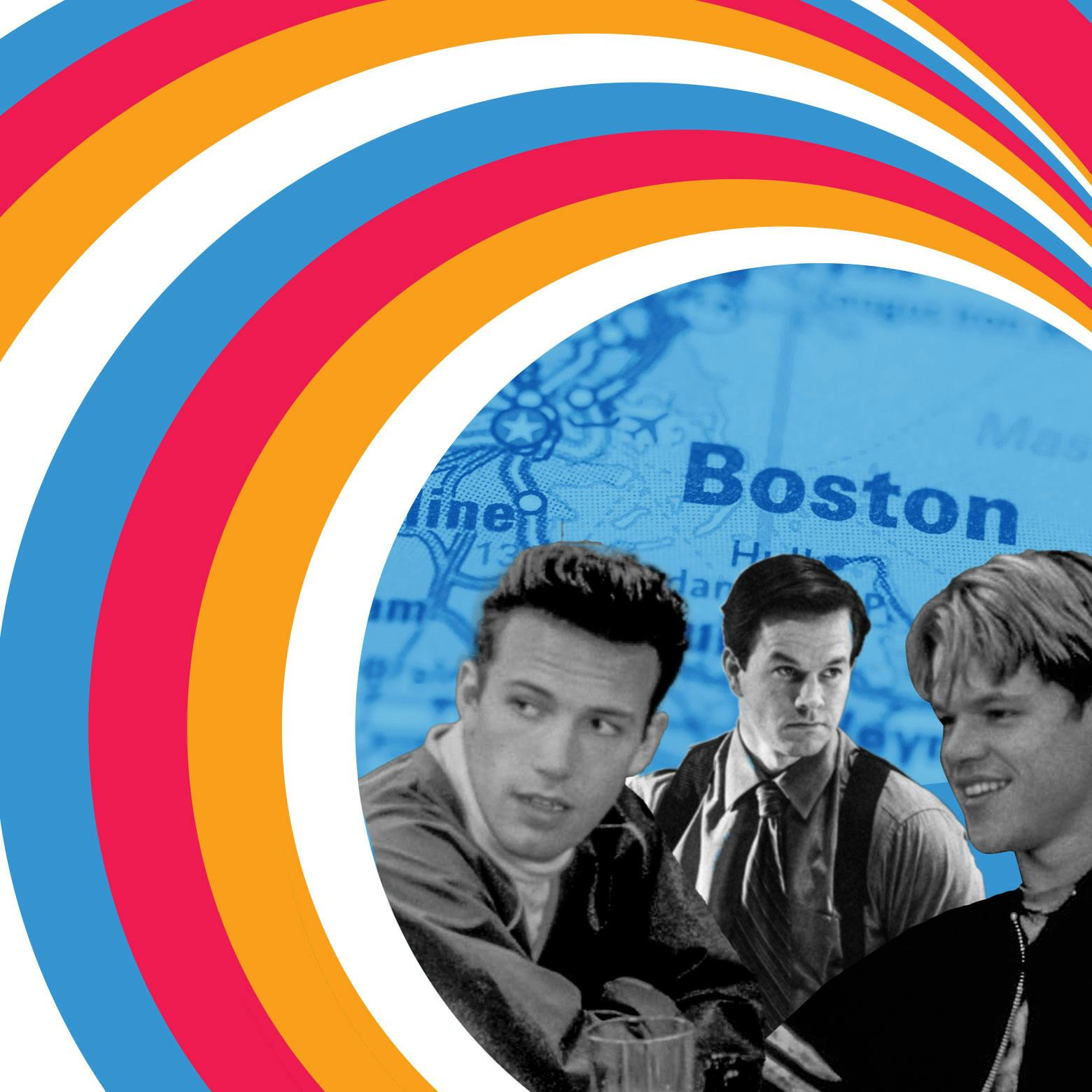
The Boston Cinematic Universe
Jun 18, 202500:43:07Tap to summarizeThis episode is a first for Decoder Ring: a live show, recorded at the WBUR Festival in Boston, Massachusetts. Given the setting, we decided to take on a Boston-based cultural mystery: namely, the “Boston movie.” Beginning in the late 1990s and early 2000s, Hollywood has churned out a whole cycle of films drenched in Beantown’s particularities, crimes, crops, class conflicts, and accents, from The Departed to The Town. Why does a city smaller than El Paso or Jacksonville loom so large in the cinematic imagination? Why does Boston have a movie subgenre all its own? What makes a Boston movie a Boston movie?With the help of three guests—film critic Ty Burr; Lisa Simmons, founder of the Roxbury International Film Festival; and Boston University linguist Danny Erker—we look closely at the history and heyday of the Boston movie: how The Friends of Eddie Coyle set the template, Good Will Hunting shoved the door wide open, and Mystic River ushered in an imperial phase. We discuss the importance of race and class to the Boston movie and the city itself, the role of homegrown movie stars like Ben Affleck and Mark Wahlberg, and, of course, the best and worst of Boston accents on film.This episode of Decoder Ring was produced by Willa Paskin and Max Freedman. Our team also includes Katie Shepherd and supervising producer Evan Chung. Merritt Jacob is Slate’s Technical Director. If you have any cultural mysteries you want us to decode, please email us at DecoderRing@slate.com, or leave a message on our hotline at 347-460-7281.Films referenced in this episode: The Thomas Crown Affair (1968) Love Story (1970) The Friends of Eddie Coyle (1973) The Brink’s Job (1978) The Verdict (1982) Quiz Show (1994) Good Will Hunting (1997) Squeeze (1997) Monument Ave. (1998) The Boondock Saints (1999) Southie (1999) Lift (2001) Blue Hill Avenue (2001) Mystic River (2003) Fever Pitch (2005) The Departed (2006) Gone Baby Gone (2007) The Fighter (2010) The Town (2010) Ted (2012) Ted 2 (2015) Black Mass (2015) Spotlight (2015)Want more Decoder Ring? Subscribe to Slate Plus to unlock exclusive bonus episodes. Plus, you’ll access ad-free listening across all your favorite Slate podcasts. Subscribe now on Apple Podcasts by clicking “Try Free” at the top of the Decoder Ring show page. Or, visit slate.com/decoderplus to get access wherever you listen. Need to set up your Slate Plus feed? If you subscribed through Slate.com, check out our FAQ at slate.com/podcastfaqs for easy instructions. Members subscribed via Apple Podcasts get automatic access—no setup required. Hosted on Acast. See acast.com/privacy for more information.
Transcribe →
The Laff Box (Encore)
Jun 4, 202500:38:17Tap to summarizeDecoder Ring is marking its 100th episode this year. To celebrate, we’re revisiting our very first episode from 2018, which asks: What happened to the laugh track? For nearly five decades, the laugh track was ubiquitous, but beginning in the early 2000s, it fell out of sitcom fashion. What happened? How did we get from The Beverly Hillbillies to 30 Rock? In this episode we meet the man who created the laugh track, which originated as a homemade piece of technology, and trace that technology’s fall and the rise of a more modern idea about humor. With the help of historians, laugh track obsessives, the showrunners of One Day at a Time and the director of Sports Night, this episode asks if the laugh track was about something bigger than laughter. You can read more in Willa’s article “The Man Who Perfected the Laugh Track” in Slate. Links and further reading on some of the things we discussed on the show: Interview with Ben Glenn II on the history of the laugh track in McSweeney’s See a Charlie Douglas Laff Box on Antiques Roadshow More of Paul Iverson’s work restoring laugh tracks and inserting them into new shows The sitcom One Day at a Time Friends without a Laugh Track by Sboss “The Okeh Laughing Record” Tommy Schlamme and Aaron Sorkin’s Sports Night This episode was written by Willa Paskin. It was produced and edited by Benjamin Frisch, who also created the episode art. Decoder Ring is produced by Katie Shepherd, Max Freedman, and our supervising producer Evan Chung. If you have any cultural mysteries you want us to decode, email us at DecoderRing@slate.com, or leave a message on the Decoder RIng hotline at 347-460-7281. We love to hear any and all of your ideas for the show. Want more Decoder Ring? Subscribe to Slate Plus to unlock exclusive bonus episodes. Plus, you’ll access ad-free listening across all your favorite Slate podcasts. Subscribe now on Apple Podcasts by clicking “Try Free” at the top of the Decoder Ring show page. Or, visit slate.com/decoderplus to get access wherever you listen. Learn more about your ad choices. Visit megaphone.fm/adchoices
Transcribe →
The Laff Box (Encore)
Jun 4, 202500:31:47Tap to summarizeDecoder Ring is marking its 100th episode this year. To celebrate, we’re revisiting our very first episode from 2018, which asks: What happened to the laugh track? For nearly five decades, the laugh track was ubiquitous, but beginning in the early 2000s, it fell out of sitcom fashion. What happened? How did we get from The Beverly Hillbillies to 30 Rock? In this episode we meet the man who created the laugh track, which originated as a homemade piece of technology, and trace that technology’s fall and the rise of a more modern idea about humor. With the help of historians, laugh track obsessives, the showrunners of One Day at a Time and the director of Sports Night, this episode asks if the laugh track was about something bigger than laughter.You can read more in Willa’s article “The Man Who Perfected the Laugh Track” in Slate.Links and further reading on some of the things we discussed on the show: Interview with Ben Glenn II on the history of the laugh track in McSweeney’s See a Charlie Douglas Laff Box on Antiques Roadshow More of Paul Iverson’s work restoring laugh tracks and inserting them into new shows The sitcom One Day at a Time Friends without a Laugh Track by Sboss “The Okeh Laughing Record” Tommy Schlamme and Aaron Sorkin’s Sports NightThis episode was written by Willa Paskin. It was produced and edited by Benjamin Frisch, who also created the episode art. Decoder Ring is produced by Katie Shepherd, Max Freedman, and our supervising producer Evan Chung.If you have any cultural mysteries you want us to decode, email us at DecoderRing@slate.com, or leave a message on the Decoder RIng hotline at 347-460-7281. We love to hear any and all of your ideas for the show. Want more Decoder Ring? Subscribe to Slate Plus to unlock exclusive bonus episodes. Plus, you’ll access ad-free listening across all your favorite Slate podcasts. Subscribe now on Apple Podcasts by clicking “Try Free” at the top of the Decoder Ring show page. Or, visit slate.com/decoderplus to get access wherever you listen. Need to set up your Slate Plus feed? If you subscribed through Slate.com, check out our FAQ at slate.com/podcastfaqs for easy instructions. Members subscribed via Apple Podcasts get automatic access—no setup required. Hosted on Acast. See acast.com/privacy for more information.
Transcribe →
The Glaring Problem with Headlights
May 21, 202500:46:17Tap to summarizeSomething seems to have happened to car headlights. In the last few years, many people have become convinced that they are much brighter than they used to be—and it’s driving them to the point of rage. Headlight glare is now Americans’ number one complaint on the road. The story of how and why we got here is illuminating and confounding. It’s what happens when an incredible technological breakthrough meets market forces, regulatory failure, and human foibles. So if you feel like everyone’s driving around with their high beams on all the time, it’s not your imagination. What once seemed like an obscure technical concern has gone mainstream. But can the movement to reduce glare actually do something about the problem? In this episode, you’ll hear from Nate Rogers, who wrote about the “headlight brightness wars” for The Ringer; Daniel Stern, automotive lighting expert and editor of Driving Vision News; and Paul Gatto, moderator of r/fuckyourheadlights. This episode of Decoder Ring was written by Willa Paskin and Olivia Briley, and produced by Olivia Briley and Max Freedman. Our team also includes Katie Shepherd and supervising producer Evan Chung. Merritt Jacob is our Senior Technical Director. If you have any cultural mysteries you want us to decode, please email us at DecoderRing@slate.com, or leave a message on our hotline at 347-460-7281. Want more Decoder Ring? Subscribe to Slate Plus to unlock exclusive bonus episodes. Plus, you’ll access ad-free listening across all your favorite Slate podcasts. Subscribe now on Apple Podcasts by clicking “Try Free” at the top of the Decoder Ring show page. Or, visit slate.com/decoderplus to get access wherever you listen. Learn more about your ad choices. Visit megaphone.fm/adchoices
Transcribe →
The Glaring Problem with Headlights
May 21, 202500:39:47Tap to summarizeSomething seems to have happened to car headlights. In the last few years, many people have become convinced that they are much brighter than they used to be—and it’s driving them to the point of rage. Headlight glare is now Americans’ number one complaint on the road. The story of how and why we got here is illuminating and confounding. It’s what happens when an incredible technological breakthrough meets market forces, regulatory failure, and human foibles.So if you feel like everyone’s driving around with their high beams on all the time, it’s not your imagination. What once seemed like an obscure technical concern has gone mainstream. But can the movement to reduce glare actually do something about the problem?In this episode, you’ll hear from Nate Rogers, who wrote about the “headlight brightness wars” for The Ringer; Daniel Stern, automotive lighting expert and editor of Driving Vision News; and Paul Gatto, moderator of r/fuckyourheadlights.This episode of Decoder Ring was written by Willa Paskin and Olivia Briley, and produced by Olivia Briley and Max Freedman. Our team also includes Katie Shepherd and supervising producer Evan Chung. Merritt Jacob is our Senior Technical Director.If you have any cultural mysteries you want us to decode, please email us at DecoderRing@slate.com, or leave a message on our hotline at 347-460-7281.Want more Decoder Ring? Subscribe to Slate Plus to unlock exclusive bonus episodes. Plus, you’ll access ad-free listening across all your favorite Slate podcasts. Subscribe now on Apple Podcasts by clicking “Try Free” at the top of the Decoder Ring show page. Or, visit slate.com/decoderplus to get access wherever you listen. Need to set up your Slate Plus feed? If you subscribed through Slate.com, check out our FAQ at slate.com/podcastfaqs for easy instructions. Members subscribed via Apple Podcasts get automatic access—no setup required. Hosted on Acast. See acast.com/privacy for more information.
Transcribe →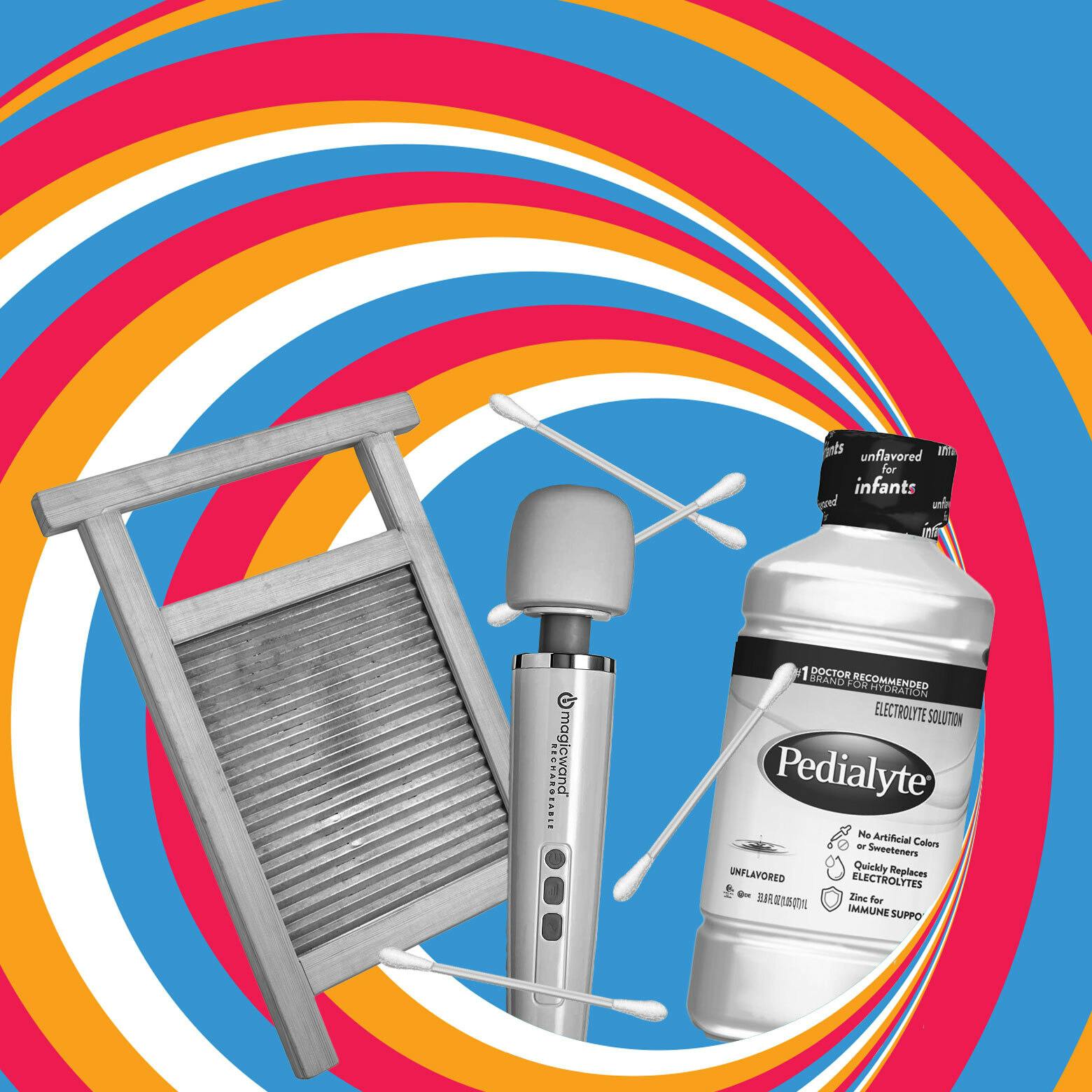
Off-the-Wall Stories of Off-Label Use
May 7, 202500:47:31Tap to summarizeProducts often tell you exactly how they’re intended to be used. But why leave it at that? As a culture, we have long had a knack for finding ingenious, off-label uses for things. In this episode, we take a close look at a few examples of products that are ostensibly meant for one thing, but are better known for something else entirely. We explore Q-tips, which we are explicitly told not to put into our ears; the Hitachi Magic Wand, the iconic sex toy marketed as a body massager; the musical washboard; and the children’s electrolyte solution Pedialyte that many adults swear by as a hangover cure.You’ll hear from Hallie Lieberman, author of Buzz: A Stimulating History of the Sex Toy; Jacqui Barnett of the Columbus Washboard Company; Christopher Wilson, curator and chair of the Division of Home and Community Life at the Smithsonian; musician and educator Súle Greg Wilson; zydeco musicians C.J. Chenier and Steve Nash; Shaughnessy Bishop-Stall, author of Hungover: The Morning After and One Man’s Quest for the Cure; as well as writers Roberto Ferdman, Dan Brooks, and Kaitlyn Tiffany.Decoder Ring is produced by Willa Paskin, Max Freedman, Katie Shepherd, and Evan Chung, Decoder Ring’s supervising producer. We had additional production from Sofie Kodner. Merritt Jacob is Senior Technical Director. Special thanks to Kate Sloan, Dr. Carol Queen, Bryony Cole, Amber Singer, Molly Born, Laura Selikson, and Nell McShane Wulfhart.If you have any cultural mysteries you want us to decode, please email us at DecoderRing@slate.com, or leave a message on our hotline at 347-460-7281.Sources for This EpisodeBishop-Stall, Shaughnessy. Hungover: The Morning After and One Man’s Quest for the Cure, Penguin, 2018.Brooks, Dan. “Letter of Recommendation: Pedialyte,” New York Times Magazine, Jan. 26, 2017.Comella, Lynn. Vibrator Nation: How Feminist Sex-Toy Stores Changed the Business of Pleasure, Duke University Press, 2017.Dodson, Betty. “Having Sex with Machines: The Return of the Electric Vibrator,” Dodson and Ross, June 9, 2010.Feran, Tim. “Pedialyte Is Not Just For Kids,” Columbus Dispatch, July 19, 2015.Ferdman, Roberto A. “The strange life of Q-tips, the most bizarre thing people buy,” Washington Post, Jan. 20, 2016.Kushner, David. “Inside Orgasmatron,” Village Voice, March 26, 1999.Lieberman, Hallie. Buzz: A Stimulating History of the Sex Toy, Pegasus Books, 2017.Lieberman, Hallie. “Selling Sex Toys: Marketing and the Meaning of Vibrators in Early Twentieth-Century America,” Enterprise & Society, June 2016.Russel, Ruth. “Hangover Remedies? I’ll Drink to That!,” Idaho Statesman, Jan. 1, 1978.Sloan, Kate. Making Magic, 2024.Tiffany, Kaitlyn. “How Pedialyte got Pedialit,” Vox, Sep. 10, 2018.Williams, Dell. “The Roots of the Garden,” Journal of Sex Research, August 1990.Wulfhart, Nell McShane. “The Best Hangover Cure,” Slate, Aug. 29, 2013.Want more Decoder Ring? Subscribe to Slate Plus to unlock exclusive bonus episodes. Plus, you’ll access ad-free listening across all your favorite Slate podcasts. Subscribe now on Apple Podcasts by clicking “Try Free” at the top of the Decoder Ring show page. Or, visit slate.com/decoderplus to get access wherever you listen. Need to set up your Slate Plus feed? If you subscribed through Slate.com, check out our FAQ at slate.com/podcastfaqs for easy instructions. Members subscribed via Apple Podcasts get automatic access—no setup required. Hosted on Acast. See acast.com/privacy for more information.
Transcribe →
How “Chicken Soup” Sold Its Soul
Apr 23, 202500:50:49Tap to summarizeChicken Soup for the Soul was the brainchild of two motivational speakers who preach the New Thought belief system known as the Law of Attraction. For more than 30 years, the self-help series has compiled reader-submitted stories about kindness, courage, and perseverance into easily digestible books aimed at almost every conceivable demographic: Chicken Soup for the Teenage Soul, Chicken Soup for the Grandma’s Soul, Chicken Soup for the Golfer’s Soul, and on and on. Since 1993, these books have sold more than 500 million copies worldwide, becoming the best-selling non-fiction book series of all time.But in recent years, the company has become many other things that seem lightyears away from inspirational publishing: a line of packaged foods, a DVD kiosk retailer, and a meme stock. In this episode, with the help of journalist Amanda Chicago Lewis, we tell the story of how this feel-good brand went from comfort food to junk.This episode was written by Willa Paskin and Max Freedman and produced by Max. It was edited by Evan Chung, Decoder Ring’s supervising producer. Our show is also produced by Katie Shepherd. Merritt Jacob is Senior Technical Director. Special thanks to Rachel Strom.If you have any cultural mysteries you want us to decode, please email us at DecoderRing@slate.com, or leave a message on our hotline at 347-460-7281. Want more Decoder Ring? Subscribe to Slate Plus to unlock exclusive bonus episodes. Plus, you’ll access ad-free listening across all your favorite Slate podcasts. Subscribe now on Apple Podcasts by clicking “Try Free” at the top of the Decoder Ring show page. Or, visit slate.com/decoderplus to get access wherever you listen. Learn more about your ad choices. Visit megaphone.fm/adchoices
Transcribe →