
Podcast
Deconstructor of Fun
Hosted by Deconstructor of Fun · EN
Deconstructor of Fun podcast is created by games professionals for games professionals. We explore the business side of the games industry with the goal of bringing listeners content that is relevant, insightful, and entertaining on a weekly basis.
Hosts:
Michail Katkoff www.linkedin.com/in/michailkatkoff/
Eric Kress www.linkedin.com/in/erickress/
Phillip Black www.linkedin.com/in/phillip-black-economist/
Jen Donahoe www.linkedin.com/in/jenniferdonahoe
77episodes
Episodes
Newest firstAll episodes
340. The $12B+ Mobile Ad Market: Sensor Tower's First-Ever Deep Dive
6d ago00:32:21Tap to summarizeAfter years of saying not yet, Sensor Tower finally estimated mobile ad revenue, and the number is $12 billion for 2025.Josh Chandley and Sensor Tower's lead gaming insights analyst Sam walk through how the estimates were built and why $12 billion is a conservative floor. We get into why puzzle pulls more than half of all gaming ad revenue, how AppLovin keeps eating share while smaller networks shrink, the non-gaming advertisers like Temu, Shein, and finance apps flooding into gaming inventory, and why AP-focused hybrids out-earn ad-first hybrids by 4x.CHAPTERS: 00:00 Why Ads Were Opaque01:07 How Sensor Tower Models Ads02:31 The 12 Billion Headline04:00 Coverage Countries Networks06:07 Ads Versus IAP D2C08:52 Non Gaming Demand Surge12:55 Network Share Winners15:15 AppLovin Take Rate Debate19:04 Puzzle Dominates Ad Revenue26:17 Hybrid Casual Economics30:25 Studio Strategy And Wrap
Transcribe →
TWIG #394: Playtika's Solitaire Meltdown, the AppLovin-AdMob Duopoly and Why Nobody Wants New Games
1w ago00:53:33Tap to summarizeThe crew breaks down Sensor Tower's big H1 2026 report, digs into why downloads keep falling while nobody seems to want new games, and asks whether ad revenue was ever going to save anyone. Plus a Warframe live service masterclass and the arrow craze that Kress would very much like everyone to stop talking about.Topics Covered:• Disney Solitaire cannibalizing Solitaire Grand Harvest • Where the diligence went on the SuperPlay deal and who is left • Washington State suing Playtika and Aristocrat over social casino• Sensor Tower H1 2026 with downloads down 12% • The 4X surge stalling out while puzzle keeps compounding• The D2C debate and whether the market ishealthier than it looks• AppLovin and AdMob running two-thirds of gaming ad revenue and what that consolidation does to CPIs• Why the top ad revenue games are smaller than anyone expected• Warframe as the live service masterclass Destiny never pulled offCHAPTERS:00:00 – Intro & welcome (Jen, Kress, Phil, Mishka)01:00 – Mishka's Greece trip & DoF event updates (Seattle Roundtables, Gamescom, Grand Slam, Supper Club)08:00 – Playtika update: Solitaire Grand Harvest cannibalized by Disney Solitaire12:00 – M&A Masterclass callback (Chris Petrarca) & licensing math on Disney deal14:00 – Washington State's gambling lawsuit vs. Playtika — social casino legal risk17:00 – Sensor Tower H1 2026 report: overview & app discovery is "broken"20:00 – Direct-to-consumer (D2C) web shops: how big is the impact really?23:00 – D2C by genre: 4X, social casino, Marvel Strike Force example25:00 – Genre trends: strategy down, puzzle up, Block Blast highlight26:00 – The "Arrow" hyper-casual craze — Block Blast install decline29:00 – UA costs spiking: ad spend up, downloads down30:00 – AppLovin & AdMob's growing duopoly over UA33:00 – Social casino's steepest genre decline & D2C revenue shift36:00 – Top publishers by ad revenue (King, Easy Brain, Huuuge)39:00 – Sensor Tower report wrap-up & praise42:00 – Warframe/Digital Extremes: Destiny comparison & live-service execution44:00 – Warframe monetization model breakdown45:00 – Digital Extremes' mobile SKU built with Finland's Nitro Games46:00 – Warframe mobile growth numbers (PC halo effect)48:00 – Squad RPG/gacha mechanics critique — mobile "solved this years ago"50:00 – Why no Western studio has cracked mobile shooters (Fortnite, Roblox Rivals)51:00 – Warframe's marketing-driven themed content drops52:00 – Shoutout: Christopher Dring's podcast52:00 – Outro & next week preview (Castle Clashers, Capcom)
Transcribe →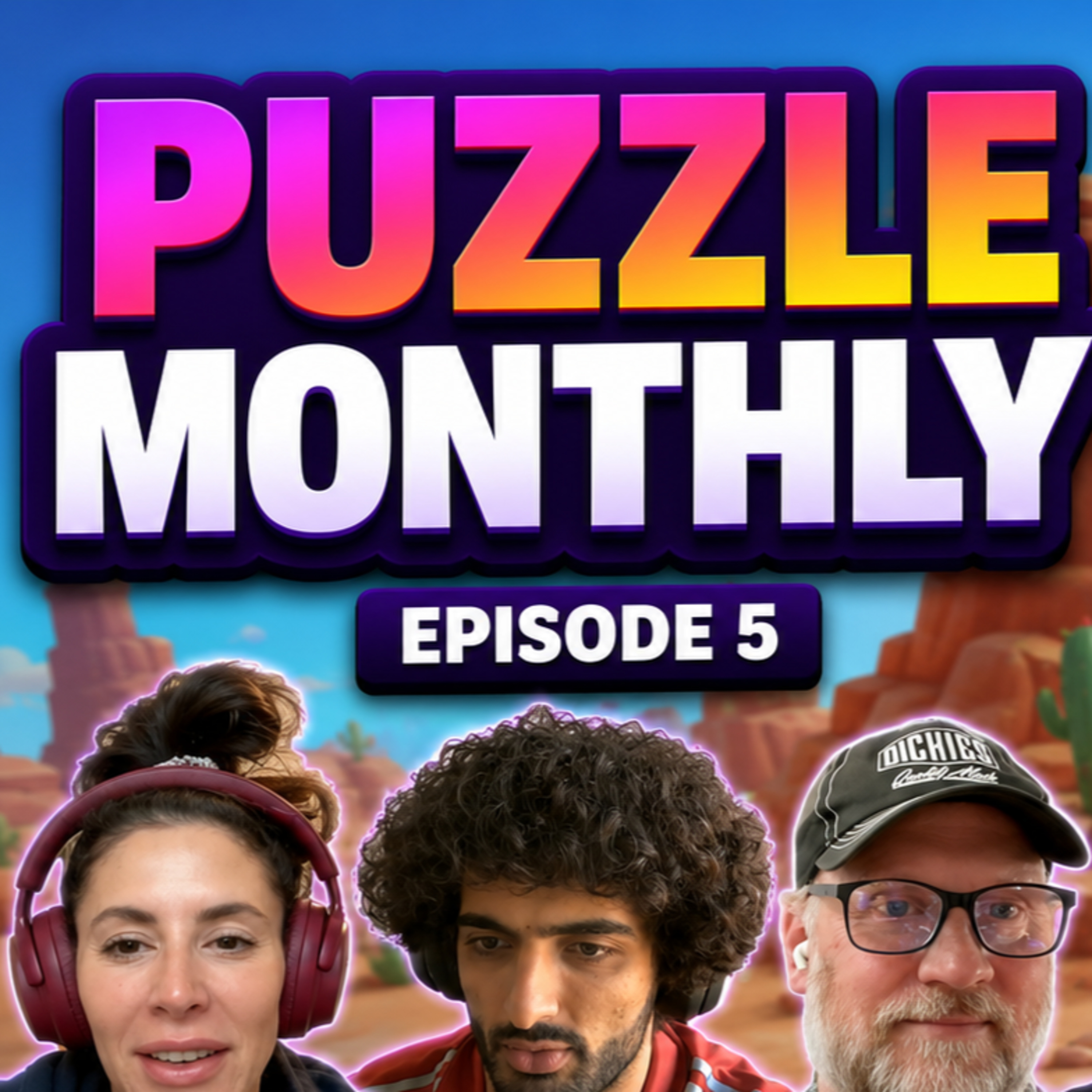
Puzzle Monthly #5: The Secret Behind Toon Blast's Success
2w ago00:36:52Tap to summarizeWhy is Toon Blast still growing while every other Blast game is fading away?In this episode of Puzzle Monthly, we break down Toon Blast's remarkable resurgence, from its early days challenging Toy Blast to its recent revenue explosion fueled by Super Light Ball, LiveOps innovation, and relentless experimentation. We explore why Peak Games continues to outperform the entire Blast genre, and what every puzzle developer can learn from it.Topics Covered:• The evolution of Blast games: Pet Rescue Saga, Toy Blast, and Toon Blast• Why Toon Blast continues to grow while the rest of the Blast genre declines• Super Light Ball and how it transformed engagement and monetization• How LiveOps, Collection Meta, Wild Journey, and new progression systems fueled Toon Blast's resurgence• Why Peak's continuous experimentation has kept the game relevant for over a decade• Whether there's still room for new Blast games or if studios should look elsewhereCHAPTERS:00:00 Meet The Hosts00:40 Why Toon Blast Still Wins02:33 Blast Games Origins02:56 Pet Rescue Vs Fun Luck04:06 Toy Blast Changes Everything08:26 Why Others Couldn't Copy11:43 Revenue Surge Explained12:33 Super Light Bulb Deep Dive17:13 ARPDAU Jumps And Data20:58 Live Ops And Collections25:39 Wild Cards And Monetization31:25 Events Cadence Overhaul34:13 Future Outlook And Wrap
Transcribe →
TWIG #393: GTA 6's Impossible Attach Rate, Playtika's Earn-Out Disaster, and Unity 7's Big Swing
2w ago00:58:25Tap to summarizeConvoy says 85 million copies in 60 days. That means 63% of every console owner alive buys GTA 6, and the closest anyone has come without a bundle is half that.The crew digs into the Newzoo and Convoy numbers behind GTA 6 and finds projections that would require almost every active console owner on earth to buy it. Then Playtika, where a badly negotiated earn-out turned Superplay's success into a balance sheet problem big enough to put the studio on the block. Plus Unity 7's roadmap, Netflix throwing out gaming metrics that mean nothing, and what Township's match mode says about where mobile is heading.Topics Covered:• GTA 6 pre-orders skewing 89% to the $100 SKU• Why the projected attach rates are fantasy• The Ultimate Edition as soft price increase• UGC as the real GTA 6 story nobody is telling• Unity 7 roadmap, MCP integration and no-code web shops• Why Unity cannot scale against AppLovin• Tencent circling Superplay at up to $1.5 billion• The earn-out that broke Playtika's balance sheet• Disney Solitaire's trajectory into 2026• Netflix reporting 11x growth on numbers it will not disclose• Township bolting match onto a builder and printing money• Playable ads becoming actual game modesCHAPTERS: 00:24 Show Intro and Agenda01:38 Banter Marvel Trailers02:49 Announcements and Roundtables04:26 Xbox Hire Update06:14 GTA6 Preorders Pricing15:01 Ultimate Edition Strategy17:33 UGC and Online Upside19:15 Unity 7 Roadmap26:03 Playtika Superplay Rumor27:26 Superplay Earnout Breakdown28:11 Earn Out Math28:59 Tencent Deal Questions29:38 Disney Solitaire Outlook30:49 Why Sell Superplay34:48 Superplay Hits Breakdown36:02 Valuation Reality Check39:13 EA Predicts Winners40:49 Netflix Gaming Metrics43:26 What Metrics Matter46:49 Netflix Versus YouTube48:06 Township Versus Top Tycoon50:41 Match 3 Monetization Engine52:43 Hybridization And Playable Ads56:15 Fortnite Obsession Collab57:43 Wrap Up And Goodbye
Transcribe →
Shooter Monthly #8: The Bungie Eulogy, Why Destiny Fell Off, and Can Marathon Save the Studio
3w ago00:54:35Tap to summarizeBungie built the defining live shooter of the decade, then spent ten years surviving its own crises. This one plays like the eulogy.The crew runs the full ups and downs of Bungie from Myth to Marathon, with an ex-Bungie insider walking through every near-death moment, why Destiny endured far longer than anyone predicted, why it finally fell off, and whether Sony and Marathon can pull the studio back from the edge.Topics Covered:• The end of Destiny and whether Bungie is actually done• The hot take that Xbox is in decline and Bungie should return to make Halo• The full Bungie crisis history from the Myth 2 uninstaller disaster to Marathon• The internal Destiny Supercut that blew up 14 months before launch• The Taken King and Forsaken redemption arcs• Sony's acquisition, the Lightfall flop, and The Final Shape as the ending• Why Destiny survived when its narrative and monetization kept misfiring• The free-to-play misfit problem and DLC warbond monetization• Promising the future as the real retention engine• The maintenance mode debate for aging live service shooters• What Marathon actually needs to rebound
Transcribe →
339. The Most Honest AI Adoption Story in Gaming
3w ago01:08:08Tap to summarizeInnoGames didn't reach for AI to chase a trend. They reached for it because the alternative was shutting down a game people love.Thomas Lehr walks through how InnoGames kept Sunrise Village alive after the business case stopped working, taking the team from 25 people down to 3 and stabilizing a title that was slipping. This is the rare AI adoption story told with actual numbers, actual workflows, and no hiding the parts everyone else leaves out. No people pushed out, no game handed to the agents, no hype. Just a methodical breakdown of where the time went and what AI could realistically take off the table.Topics Covered:• Why the game was declining and what options were on the table before AI• What happened to all 25 people on the team• Going from 25 humans to 3 humans plus AI without killing the game• Decomposing the production pipeline to find where time actually goes• The six-step AI stage designer covering story, quests, balancing, maps, placement, and cinematics• Why building custom tooling beats subscribing to 15 shiny products• Sticking with GPT-4o for years while the pipeline just worked• What it actually costs to run the pipeline every month• The 84% of developers who reject AI at any stage, and the pushback inside the company• A direct playbook for a stuck studio making 500k a month
Transcribe →
TWIG #392: Pokémon’s Gamble, World Cup WHAT & the Monetization Debate
3w ago00:59:10Tap to summarizeJen, Eric, and Phil break down a week where EA torched a premium launch, Sony declared the disc dead, and Riot reminded everyone that nostalgia is still the most reliable growth lever in games. Monetization is the throughline all the way down: who actually has a lever left to pull, and how badly you can blow it up when you pull it wrong.Topics Covered:• League of Legends Classic and the nostalgia playbook• Why WoW Classic and Fortnite OG print money• Whether a Classic mode can actually monetize• eFootball and FC Mobile riding the World Cup• FIFA leaving interactive money on the table• Ultra local live ops and the halftime spike• Pokemon Champions and Nintendo's monetization ceiling• EA College Football 2027 and its pay to progress disaster• The Battlefront II lesson EA forgot• Phil's gunpowder model for monetization backlash• Why premium publishers have no lever left but ARPU• Sony killing the physical disc by 2028CHAPTERS: 00:00 Welcome and Hosts00:23 Episode Agenda01:12 Euro Summer Banter02:42 Seattle Roundtable Plug04:20 Corrections and Clarifications05:27 Xbox Bethesda Strategy10:08 League Classic Nostalgia17:31 Classic Modes Monetization21:57 World Cup Game Boost27:40 Ultra Local Live Ops30:56 Pokemon Champions Reveal31:32 Pikmin and Pokémon Benchmarks32:17 Why Monetization Falls Flat33:42 Switch SKU and Tencent Playbook34:31 EA College Football Backlash40:02 Marketing vs Design Debate43:20 Phil’s Gunpowder Model48:10 Premium Games Need ARPU51:20 Sony Ends Physical Discs56:00 Digital Wins and Final Wrap
Transcribe →
338. The Mobile vs Web User Acquisition: What Nobody's Talking About
4w ago00:30:56Tap to summarizeAppsFlyer just took attribution off mobile and put it on the open web, and it might be the biggest unlock D2C web shops have seen yet.Josh Chandley talks with Adam Smart, Global Director of Product for Gaming at AppsFlyer, about the company's new web attribution product and its bigger bet on becoming a "Modern Marketing Cloud" spanning web, PlayStation, Xbox, and Oculus.Topics Covered:• AppsFlyer's new web attribution product• The shift from MMP to Modern Marketing Cloud• Why D2C web shops are the biggest day one unlock• Mobile UA mindset vs web UA mindset• Fraud and accountability on mobile vs web• Connecting web attribution to in-app ad networksCHAPTERS: 00:19 Why Web Attribution Matters00:33 Modern Marketing Cloud Vision03:28 Web vs Mobile Measurement Basics03:59 Neutral Attribution and ROAS Truth05:59 Why Launch Web Now08:13 D2C Web Shops and Growth11:49 Day One Studio Changes13:38 Mobile vs Web Mindsets15:15 Accountability and Fraud Reality17:37 Connecting Web and In App Ads19:54 Modern Marketing Cloud Explained23:42 Future of UA with AI28:32 AI Agents and Automation in Outlier29:30 Wrap Up and Where to Learn More
Transcribe →
TWIG #391: Xbox's 4,800 Cuts, Apex Predator Playbook, and the 6% Problem Killing New Games
Jul 900:56:50Tap to summarizeXbox just got torched, and the math says new games can't win.Jen and Eric (two for TWIG this week) break down the biggest restructuring in Xbox history: 4,800 jobs cut, Asha Sharma unwinding Phil Spencer's entire studio buying spree, and King and Minecraft pulled in to report directly to her. Is this the setup for an Activision Blizzard 2.0 spin-out? Then they dig into fresh Newzoo data on why only 6% of the market is open to new IP, why forever games keep winning, and how growth has become an ARPU story instead of a new-player story.Topics Covered:• Microsoft cuts 4,800 jobs and 20% of Xbox's workforce• Sharma's memo and the "apex predator" restructuring playbook• King and Minecraft reporting straight to Sharma• Compulsion and Double Fine go independent with their IP• Helen Chang named Xbox's first COO, and what a single P&L signals• The spin-out theory and Activision Blizzard 2.0• Game Pass is stuck at 30 million and devaluing the $80 game• Why only 6% of the market is open to new IP• 60% of revenue coming from games five years or older• Growth as an ARPU story in the West and China• Last War, Whiteout Survival and Kingshot are proving the UA arbitrage gameCHAPTERS:00:00 - Werlcome & Agenda01:57 - World Cup Keeper Highlights03:35 - Kress's New Setup & Family Updates05:42 - NYT Games Shill07:30 - Xbox Rumors to Reality10:51 - Layoffs & Studio Shuffles13:26 - GamePass Stalls at 30 Mil14:45 - King, Mobile, and Minecraft Blindspots19:40 - Vanity Metrics Reality Check21:52 - COO PnL and Platform Model Critique24:22 - Booty Portfolio Shrinks & Next Steps25:46 - Gamepass Devalues Games27:01 - Publishers abandon Xbox28:25 - Spinout and Activision 2.030:04 - Microsoft & King Strategy32:29 - Embracer Parallel Lessons36:14 - Easy Cuts & Creative's Hard Work46:28 - Pipeline Worries for New Hits50:27 - ARPU & GTA Monetization53:11 - Mobile UA Arbitrage Reality54:58 - What Could Save the Industry
Transcribe →
337. Inside New York Times Games: Why Killing 96% of New Ideas Is the Win
Jul 600:50:00Tap to summarizeZoe Bell is the Executive Producer of Games at The New York Times. If you've played Wordle, Connections, Spelling Bee, Strands, Letter Boxed, the Mini, or the Crossword, you've played something she helped build or bring to life. NYT has nearly 13 million subscribers, which includes the game business that features some ads but no in-app purchases and no battle pass.The players run from your group chat to the Vatican. The Pope has mentioned doing the Wordle in interviews, and Carol Burnett's celebrity Wordle group, including Julia Louis-Dreyfus and Charlize Theron, went on Jimmy Kimmel to accuse her of cheating. Her defense: there's no way to cheat at Wordle, and solving it in one guess is just an accident.Zoe sits down with Jen Donahoe to explain how a newspaper that has run for 175 years became one of the biggest names in games. They get into why the team kills 96% of the games it tries, how a subscription model reshapes the way they design and measure success, and what it takes to launch Crossplay, a full multiplayer layer on games that are fundamentally solo.They also talk about making every puzzle by hand while the rest of the industry automates, and where AI earns a place when human craft is the whole point. For anyone building games, this one is a window into the economics and the discipline behind one of the most envied portfolios in the business.CHAPTERS:00:00 Welcome and Guest Intro01:03 From Zynga to Times03:40 Culture Shock at NYT05:53 Respecting Game Expertise07:36 Apps and Platforms10:13 Subscription Monetization14:13 Who Plays These Games18:31 Democratic Game Ideation21:13 Greenlight to Launch Pipeline24:36 Testing Markets and Kill Rate26:00 Killing Prototypes Fast26:37 Morale With Low Hit Rates28:43 Testing Before Soft Launch29:19 KPIs And Portfolio Fit30:31 UA In Subscription Games36:46 Streaks And Crossplay Bonds39:14 AI Human Puzzles First46:32 What’s Next And Submissions48:17 Hiring And Tech Stack
Transcribe →