← Deepen with Pastor Joby Martin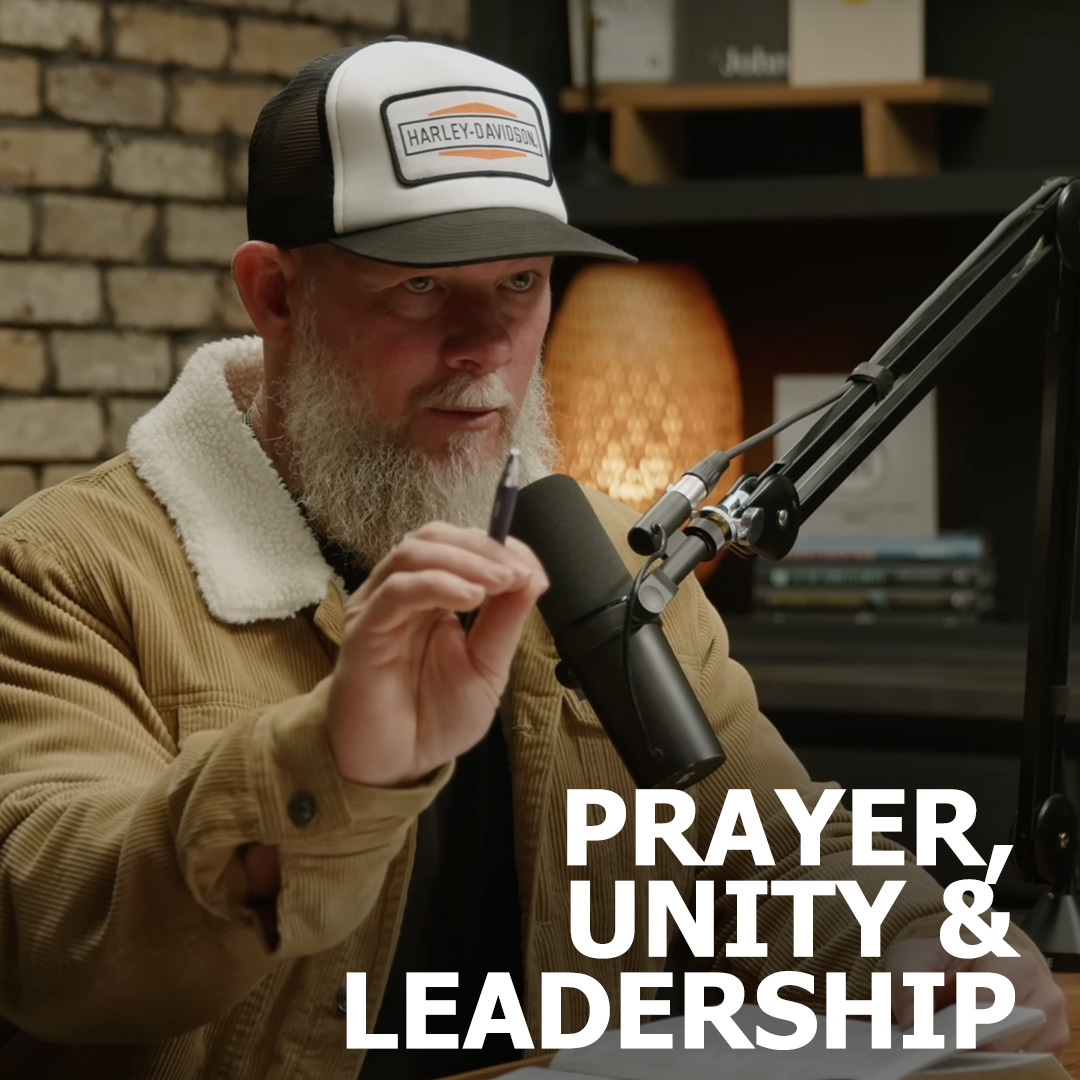
Loading summary
Transcript121 lines
- [00:01]
A
Welcome to Deepen with Pastor Joby Martin. The Church of 1122 is a movement for all people to discover and deepen a relationship with Jesus Christ. And we're praying this message helps you deepen your relationship with him. Now let's dive in.
- [00:18]
B
Hey, welcome back to the Deepen podcast. Pastor Brit bringing the word today and this series in first Timothy. Incredible. And just to back up for a second, big picture, Paul is a, he's an apostle. He, his life was marked by a lot of things, defense of the gospel. But he planted a lot of churches, he traveled around, and you could say that a big part of his mission in life was to establish healthy, autonomous, local churches all over the known world at that time. Is that fair to say? Almost. So the, the context of this letter that we're studying, First Timothy, is him writing to his child in the faith who is the pastor of a church. And so a lot of what we're going to talk about and what we are talking about this, this weekend is healthy, healthy churches. So let's start with what role has a local church played in your life? Personally, as you think about the local church and its, its role, what has that been like?
- [01:23]
C
Pastor Joby? Yeah, I think our, mine and your journey in the local church is a bit different.
- [01:28]
A
Very, very, very different. So I didn't, I've told you before, I did not grow up in the church at all.
- [01:33]
B
Priester.
- [01:35]
A
Yeah, a little bit. Occasionally, not even Christmas that much because we had a, we had a family reunion at Christmas Eve at Uncle Philip's house. And so, but you could always tell the people that went to the church service first before they came over because they were all dressed up and the rest of us were in camo. And so it was kind of benign. And then, and then a few experiences were less than awesome, you know, but the local church in that area in the low country of South Carolina, a bunch of the local churches came together, the Baptist association, and they are the ones that supported and put together Camp Pine Hill. So it was, it was still through the local church, through their camp ministry, that I heard the gospel and got saved. And then I guess my problem shortly after that was camp had done such an amazing and dynamic job of particularly around authenticity, authenticity and being relevant to where we were as teenagers. I mean, it was just the best. And then I had a really hard time figuring that out. When I got to my local church, when I got home, I was like, this isn't the same at all, you know, and, but, but then, but I still, man, I just hung in there. I just would go to church. I had a couple. Probably my worst, one of my worst churches experience, you know, the sunshine story. That'd probably be the bottom. I was involved in this church in high school. It was just the one that all the teenagers went to. And I was heavily involved in fellowship with Christian athletes and all that stuff. And they had this youth group. So I would go and would. They would have like a president, a vice president, a treasurer and a. Something kind of like, you know, class offices. And it was a vote thing. So I get voted as the president of the youth group. And then they told me I couldn't be that cuz I had divorced parents. Bro, that's a weird meeting. Yeah, when you're 16 or whatever, you know, 17 maybe, whatever. And I. So. But yet what was crazy, I don't know, man. I just kept hanging in there with the local church because. But then as I began to get a little bit older, really in college, having some, you know, pretty great experience as a staff person as a bunch of churches. But you know, Brett, yours is quite a bit different.
- [04:00]
C
Oh yeah, yeah. I grew up in it and blessed to have done so. I mean, every now and then I try to take less and less pot shots at where I grew up. The older I get. But every now and then I still. But the man evangelistic Bible teaching, godly, you know, leaders, godly men, godly women, you know, my great Sunday school teachers, great youth group leaders. I mean I was. When I remember being a kid on the weekends, me and my brother would go up to the church and clean the baptism. Like that's what we did as a chore. And so I literally was like, you know, on all fours, scrubbing the baptismal, getting it ready for people to get baptized and baptizing people is still my favorite thing. And so it's funny how that works. But I grew up in it and I'm grateful to have done so. You know, in the sermon we talk about the. Just a little testimony around the most influential or formative relationships that are in my life or have been in my life. And behind all of those is a healthy church, not a perfect church. There's no such thing because people are involved. The only perfect church is the church that Jesus is perfecting. And we'll, you know. But I've been blessed in that. And so I think healthy. There's just nothing like the local church. And we were in a meeting not too long ago and we were talking about this and I was like, you know, being A part of a healthy church is a lot like having a really great kid. When you have a really good child that's just got a good demeanor, they work hard, they're self motivated, and you begin to take that child for granted and you begin to start to like, look for things that you can ride that child about or that you can poke out versus just like, this is a great kid. And that's a lot of times how a healthy local church can be is you can be so close to it that you can take it for granted. And this text was a really. This whole study in one Timothy is a great reminder to me to not take it for granted. Because to be a part of a local, healthy, vibrant church is such a gift and it's such a testament to the spirit of God.
- [06:09]
B
I grew up going to church and then the most formative, like when I first started to get this call to do ministry, I was involved in missions like parachurch missions organizations. And there was, I can remember, a big shift coming home from some of that stuff because you live in this community on a kind of, on a campus and it's not really like real life. It's not like most people's real life. And I sat down with this pastor and he's like, that's not where most people live. They don't live there to like go to Bible study three times a day and worship three times a week. And you know what I mean?
- [06:41]
A
Camp staff.
- [06:42]
B
Right. It's a big, it was a big paradigm shift for me to think, okay, this is where the majority of people are engaging with the outpost of the kingdom is through this thing called the local church. Is there, is there any other comments you could make about the word local? I mean, I think about, there's, there's a bit of a, a trend in like local restaurants or local produce or local goods. And in the age today where there's so much available, like you could stream anybody's church and many people stream ours. You know, it's not local to them necessarily geographically. So is there anything else you would say about the local aspect of it and the importance of the ordinary neighborhood community side?
- [07:23]
A
I think the emphasis when the word local church started being used, it means more like particular church as opposed to church universal. And a part of that is being a Protestant church with some seriously heavy Baptist influence here, that there's an autonomy in a particular church and so you belong to a particular people in addition to belonging to every believer in God's family. But the Catholic Church, which means like the Universal church, not universal in a salvific kind of way. That is very, very different than saying, well, it doesn't really matter what universal church I attend or if I move from this city to that city, it's irrelevant or as long as I'm getting mass and my religious activity. And then Paul in the Pastoral Epistles, which is what first Timothy, second Timothy and Titus are called, Paul instructs to raise up elders in each town where the church is. And so it's, it's very important to be involved in a particular group of people. So even so, local might even lose a little bit of its meaning today because of advances in technology, just like it did when the automobile came out. So very few people that attend 1122 attend their local church because they probably drive by 3 to get there. So now what we mean is a particular group of people. But that could also be true for anybody online. And a part of what we're trying to do with the folks that are choosing to worship with us online is help them be a part of this particular church in a particular way, like whether that's surrounding people with community online or gathering people where they live. So that's why we're doing 1122 outposts. So all of those things still fulfill what Paul instructs Timothy and Titus to be as a church. But that's different than just saying, well yeah, I'm a part of the great big C universal church because I'm a believer. You know, there's a what is it 100 and is it 158 one anothers? I can't remember right now. There's a bunch of over 100 one anothers in the Bible and like love one another and greet one another and forgive one another. You can't one another with people without one another's for sure. So that's why the just, you know, going on the stream fest but not being in fellowship with other believers is lacking in regards to our church experience.
- [09:45]
B
Yeah. And you also stunt your own growth. Like you talked about. Like nothing forms you like these key relationships that you will make in and through the church.
- [09:54]
C
Yeah, I mean I think my, one of my points and thoughts was that behind every person who has made such a significant impact in my life is a healthy church. And so it's just so formative on the whole person. If you give yourself to her, her meaning the church in the way that God designed, you know, that what God can do over the course of time and what God has done historically over the course of time man, she's a supernatural force, man, there's nobody like her. And one of the images I love in the Bible, probably my favorite, and Jesus talks about this in the parables and Paul writes about it, is that the New Testament often talks about the church as a wife, that she is a bride preparing for the bridegroom. And I just think about that. And so to the local church question, it's a family, it's a family unit and that's the heart of the local church, is for it to be family. Now you're not going to experience it only and always like you do your blood family, but the ties that bind are the blood of Jesus. And at times the local church the can be more family than your actual family depending on what's going on in your life, you know what I mean? So it's true.
- [11:12]
A
You know, it is very popular these days to just bash the local church. And man, you can really make a, you know, you can make a splash on social media and build an entire platform just on being critical. And honestly man, woe to those people. Like if you talked about my wife the way you talk about the bride of Christ, I'd be really mad. And I'm, I bet that he is too. So one of the things also that especially as I get older I try to do more and more of this is I think we need to give like all different kind of churches need to give all other Bible believing, Jesus loving churches a lot of grace, you know, like we do things differently man, no problem. There are big churches and small churches and the health of a church is not determined by the size of this parking lot or how many people go there. There are churches that decide to worship in different ways, Praise God for that. There are even some very subjective things that churches decide to do that just expresses the personality of the people that God has brought together in that church. Like it's way more formal or the dress is more formal or there may even be more of a hierarchical understanding of like roles there, you know. But, but, but I think that any church that stands on the word of God and preaches Christ's life, death and resurrection and one day return that we are all on the same team and we should be nothing but high fiving and encouraging one another.
- [12:45]
B
Totally. Yeah, there's, there's more and often in most cases more in common than there is the differences, you know.
- [12:52]
C
Well, I think that's a lot of what Paul's talking about in verse eight. I'm assuming we're about to go there, but he says in verse eight, the first thing we talk about, the first thing we see inside the text we're studying this weekend is that a healthy church is a praying church. And Paul says, I desire that in every place the men should pray, lifting holy hands. And at the end, he puts this tag on, he says, without anger or quarreling, which is kind of a funny thing to say when you're giving people instructions to pray, if you really think about it. You know what I mean? So what's Paul getting at? Well, one, there's false teaching going on in the church. And versus, like, imagine, you know, the illustration is, next time my wife and I are having heated discussion, what would happen if I just threw my hands up and just started praying for her right there?
- [13:39]
B
Right?
- [13:41]
C
What would happen?
- [13:43]
A
Right. The.
- [13:44]
C
The whole temperature would change, the whole tone would change. And it's really hard to be critical at someone when you're praying for that person. And Paul's not saying, don't defend sound doctrine. He's clearly given the commission over and over and over again to defend sound doctrine. But he is saying, go back to verse two when he says, for Kings and all who are in high positions, that we may lead a peaceful and quiet life, that there is a demeanor that is required in order to biblically defend sound doctrine. And that demeanor is built on the foundation of prayer. And specifically, he's saying to the men, because as Pastor Joby's been teaching us, there's no question that the men in this local church were being passive and letting these false teachers take ground that was not gospel ground to be taken. And so I think that's an interesting. That's a huge connection, is that. And also think about the lifting of the holy hands in prayer. That the Bible tells us to lift hands, both shows us and tells us about lifting hands. You go back to the Old Testament, think, you know, Aaron and I can't remember who came around and held Moses arms up. Everywhere you look in the Bible, the raising of hands is both a declaration or a sign of warfare, and it's an act of submission, just like prayer. And that's what Paul's talking about here, is that if you're going to be submitted unto the Lord, there's a demeanor that comes with that submission and there's posture to it. I say it here all the time of, like, when we're inviting people to come down here to pray at the end, it's like, why do you come and pray and kneel at the altars at the end? It's just A really good thing to put your body in the posture that you want your heart and mind to be. It just helps.
- [15:38]
A
So I also think a way that you can look at this is if you divide out, like, at every comma, if that imperative just stands on its own. You see some ingredients of a healthy church. A healthy church is a praying church, a worshiping church, and a fellowship, a unified church. And I don't think Paul wastes time telling people to do what they're already doing. You know, the implication here is men. Part of what it means to stand firm and act like men is you pray. You know, I mean, you go to war on behalf of the women and children and everybody in your church. That the lifting holy hands all throughout the Bible is always associated with worship. And that the men should lead the way in worship instead of leading the way in division, quarreling and anger. You know, we should be leading the way in unity and fellowship.
- [16:31]
B
I think that's where my mind goes first when I read that is about the fundamental thing in a man that's like, oh, you just think about, like, what's the stereotypical man? Stuff is like, fighting. You put your hands up to like, defend or. You know what I mean? Like, that's like culturally, through the ages, it's the determining factor for what makes you a good man, strong man, or what. Tough. You're tough. You know, and so he's. I think in a big part, what he's doing is contrasting that. Say, hey, men should lift hands in prayer, not, you know, to fight. And it's man. Why is a healthy church a praying church? Like, what. What role does prayer take in that healthy local church that we're talking about?
- [17:15]
A
It. It is the connection to the power source.
- [17:17]
C
Amen.
- [17:18]
A
I mean, example I always use is, you know, I've got somebody at our church, they're so sweet, they hook me up. But I've got a dying phone always. And I've got all these little cubes, these little blocks around my house, and I can't keep up with the cords. The cord is like the prayer, you know, like, you wake up every day and you're immediately beginning to drain, and you have this infinite power source in the Lord. And prayer is our connection to that power source.
- [17:44]
B
Yeah. Also makes me think of. You've said this, Pastor Joby. If the Holy Spirit wasn't active in the things that you're doing, would anybody notice? You know, it's like you. A church can do a lot of things that outwardly may seem good and healthy.
- [18:03]
A
Yeah.
- [18:03]
B
But it will not be able to sustain without that internal source of power.
- [18:07]
A
Correct. It's also why we as a church, you know, we have seasons, particularly Lent heading into Easter, where we kick it off with elder led prayer. And then. And that's usually 40 days of prayer and fasting in some version also for 21 days, typically going into saturated. We might have a season of prayer. We're trying to just do what Paul told. So here's the thing about, about Paul's letter to Timothy twice and Titus. It's not just a letter to Timothy, it's a pastoral epistle. And so there's so much in here that is instructive to us, like particularly to us as pastors at a church, at a local church. And so prayer is not just an individual instruction, but an instruction for a church.
- [18:56]
C
I heard Keller say the quote, God is as real to me as prayer is important to me.
- [19:03]
A
Wow.
- [19:05]
C
And it really got me thinking. And what he's saying is that my experience with the Lord God is real whether I pray or not.
- [19:12]
A
True.
- [19:13]
C
My experience of the reality of God, my understanding of the reality of God, my connection to the reality of God, which Piper says, God is reality. Reality.
- [19:22]
A
Right.
- [19:23]
C
So my connection to reality is completely dependent on prayer. To say I'm a Christian is to say I am someone who prays.
- [19:38]
A
I probably watch too much Joe Rogan because I'm. I honestly believe the Lord's like wooing him. Wooing Joe Rogan. He's too smart, he's too curious. These are all positive.
- [19:49]
C
The narrative has changed for sure over 10 years.
- [19:51]
A
These are very positive things. He's a very humble person. His, his recall is unbelievable. He just had that guy Huff on the, the. Do you know this guy? The, the. The guy that has his PhD in ancient texts, basically spends his whole life doing apologetics for the proof of the resurrection in the Bible. That's who's on. I was watching him this morning. But anyway, he also has a bunch of dumb comedians on. And there's one guy named Duncan Trussell. Don't watch it if you can't handle a thousand F bombs. But. And this guy, Duncan Trussell is dressed up like an elf, so, you know, it's not serious. But Duncan Trussell's talking about prayer. And he's like, regardless of what you believe, just do it and see what happens. And he does this kind of apologetic of the experience. That's not the language he would use. And he just talks about when you realize you're not the point. There's something bigger than you, your attention is towards not you, but that you're trying to align yourself with reality. Again, these are not, this is like kind of Christian adjacent, you know what I mean? He's not talking about Christ is the way the truth and the life like we know the reality is. But it's still a step towards this and it's a pretty great apologetic for why prayer matters. So all that say though I'm still praying that Joe puts his faith in Jesus.
- [21:14]
C
Amen.
- [21:15]
A
I thought one day I'm going to talk to him.
- [21:16]
C
Be awesome.
- [21:17]
A
I know.
- [21:18]
B
So what happens in this text is, has been widely debated for many, many years. And because he starts talking about the roles of men and women pro and not probably definitely we read it very different as 21st century Westerners than Paul's audience would have read it. But he's talk, he starts talking about healthy churches, healthy roles inside of churches. And that's going to involve what's a man supposed to do, what's a woman supposed to do, what's an elder supposed to do, what's a deacon supposed to do? And so there's several things, a handful of things that he addresses here. You know, how should you dress, how you know, how should women dress, how should they learn? Learn with quietness and who gets to exercise authority. So let's, let's talk about each one of those in turn. So why would he start with let your adornments be not external. That reminds me of another text in the New Testament, by the way.
- [22:15]
C
Well, again in the back the backdrop is false teaching.
- [22:18]
B
Right.
- [22:19]
C
And that's true here. That's true in Ephesus, which is this, this is Ephesus. I'm saying what Paul's talking about in Ephesians for sure. It's true in Galatians, it's true in Corinthians. And really there's some really low hanging fruit connection between Corinthians specifically and what's happening here in Ephesians. And some of the things that these false teachers are teaching are things that Paul says, the doctrine of demons, that there is a forbidding of marriage and certain foods, that they are committed to genealogies and speculations. And in both the Corinthian church and in the church at Ephesus, some of this false teaching is either is directly pointed at or is inciting a lot of the younger women in the church who were Gentiles, most of them would have been, would have been Gentiles. And so Paul's addressing a couple of things. One is he's addressing the motivation and the application of why do you get up and put the clothes on that you get, that you're putting on. What's the point in coming dressed up with all the, and they're in the first century context, braided hair and the earrings and the, the word is actually cosmos where we get our word cosmetics. And, and, and that's what he's talking about is when you're getting dressed, specifically you're getting dressed and going to, to, to the local assembly, to the church. What, what, what's the point? What are you trying to do here? And, and so that's where the instructions around dress come.
- [24:02]
A
He's saying modest is hottest and the heart behind it. Because, you know, had these passages been used as a hammer? Oh boy, man. I was watching this YouTube clip of this guy talking about, I mean this is a fun as fundamentalist a church, as you can imagine. And he is scolding the women in his church for wearing leggings under their dresses for comfort. I mean these women already have dresses that go below calf. And he's like, those are pants. I mean it's. So I just say that in light of. I don't think we're going to tell people exactly what to. And not to wear. Husbands, you should play a vital role in the dress of your daughter and don't ever give up that fight because what you're fighting for is the heart of people. And submission is never submission until you don't like it. And so just like we're going to tell men all year a bunch of stuff they better tighten up on. Just know that the heart of what Paul is trying to do here is not necessarily prescribed for every culture from now on what you can and can't wear. But like what you said, get to the heart of it. Are you trying to, to make much of you? I mean, everybody wants to look good and feel good, right? No problem. But are you considerate of others? And are you trying to be the point when you're getting. Not just when you're getting dressed, but how you pray, how you worship. And again in the first century, what happens is man, wherever the gospel goes, there's freedom that women and children have never experienced in any other culture. And you deal with this something, but then there can be an over expression of this kind of freedom. And Paul is saying, whoa, whoa, whoa, whoa, whoa, whoa.
- [25:49]
B
Right?
- [25:50]
A
We got to get this under control because God's house is an orderly house.
- [25:53]
C
Yeah, yeah. Something you just said is that everybody wants to look good and to feel good. And I think much of when we encounter verses like this one in Paul, much of what Paul's saying is, why is the choices that you're making, why are those the ones that make you look good and feel good? And especially if it comes to dress or attire. And truthfully, my experience, this is only my experience. And I'm not trying to lay this on the text. I have actually over 20 years of pastoring, I have had to sit and talk to more men about the clothes that they're wearing than I ever have women. And by that I mean not new believers, but men coming in, trying to make a point with a big cuss word on their shirt of like, I can do this or does that make sense? And it's like distracting. And it's like, let's talk about why we're doing this. And if it's to draw attention to yourself or to draw attention to anything but Christ. So I think that's part of what he's addressing, the false teaching that's stirring up this practice. And the second is that the pat to what Pastor Joby just said, that there is an over extension of certain freedoms and liberation that certainly has come through the teachings of Jesus, the way of Jesus and the Apostle Paul, where women are being domineering in an unhealthy, unhelpful way in the local church. And so that's what Paul's getting at here. But modest is hottest. And I would say this, that I was thinking about my daughters in regards to this text and some of the things you just said. And you've taught us this well over the years in regards to your prayers for Reagan in Psalm 139. And something I just learned not too long ago is in Psalm 139, what God thinks about you is the most important thing about you. And that God. We talk a bit about creation in this sermon, the order of creation. God spoke everything into existence until it came to man and woman. And then he got physically involved. He fashioned them with his own hands and in a fearful and wonderful way. And that word, fearful is the Hebrew word yar, and it means with delicate intention. And I just find that fascinating, you know, and if you think about how unique you are. And in my family, my wife, in my family, it's like right hand and left hand. Every analogy falls apart somewhere. But it's like right hand and left hand. Like my I am as necessary to the health of my family as my right hand is to my life. And my wife is as necessary to the Health of my family as the left hand is. And they're equally necessary and equally created, but they're both different. They're unique in their design. And so I just think about my girls, and I just think, man, if your life can be defined by one thing, is that God made you, God sees you, and God loves you, and he does it because it makes him happy. You know, it's like if that fearful and wonderful thing really takes root down in your bones, man, the. The noise of this world, well, it's just not as loud, you know?
- [29:22]
B
Yeah.
- [29:23]
A
And then that. That is what helps navigate different times and seasons. Because what is appropriate on the beach in our context in July is different than what is appropriate in regards to dress on a Sunday morning in the worship center in July because you're in a different place. What you wear to the gym to work out can be different. But even in those two arenas, there are still spectrums that you should pay very close attention to and honor God in all of it.
- [29:56]
B
Yeah.
- [29:56]
A
You know, can't tell you funny cultural dress story. So a bunch of Southern Baptists, God bless them, are planting churches all over the world, like, they do better than any other group of people, whoever has. And they're leading people in Africa to Christ, man. Like tribal Africans, you know, and they show up, and none of the women wear tops. This is Kenya, and it's like, Maasai tribe. And they're like, this ain't it. And so they buy everybody. They send everybody T shirts, you know, and then they come back, like, on another mission trip to check on the church plant, and it's thriving. People love Jesus. And the women are all wearing the T shirts like they've been told, and they're like, oh, great. But they've cut the chest holes in the chest out so that they can breastfeed your kids, but they've got the T shirts on. You know what I'm talking about? And so that is exactly what, like, cultural appropriation is.
- [30:47]
B
Yeah.
- [30:47]
A
You know what I'm saying? So a lot of what he's talking about, particular to this context, is not exactly about, can you braid your hair or not braid your hair? Or do you have to wear silver jewelry? Or maybe you can wear jewelry, but it's got to be made out of seashells. Can't be made out of gold. That's missing the forest for the trees that's wearing the T shirt. But cutting the hole out, you know, or making people wear T shirts in Africa, that's not. That's not what you're trying to solve, we're trying to get back to. All of this is about. I want to order my life in line with the order that God has created me to live for the sake of flourishing and the advancement of the kingdom.
- [31:23]
B
Yeah. And in anybody listening, particularly women, if you've been, if this text has been used to hurt, abuse, or, you know, taken out of context, that is not the intention of it and that's not what we're going after. And I think, I think that there's so much to be learned from the cultural context of the day. Remember in the Book of Acts, how does the Ephesian Church start? It's a riot. Well, why? Because the temple to Artemis is there.
- [31:49]
A
Right.
- [31:49]
B
And there's. And the silver traders are mad that they're not going to be able to make money anymore. But what happens in the Artemis Temple? A whole lot of prostitution.
- [31:59]
A
Yeah.
- [31:59]
B
And, and so this is like a syncretistic kind of situation where this, this new church is being formed. And Paul's trying to say, hey, listen, that's not how you have to do it in, in the Christian church. Similar to in Ephesians 5. Remember when Pastor Matt Carter preached about this, that phrase, don't get drunk with wine. Like certainly you shouldn't get drunk. But he's saying this is specifically addressing this religious practice that sort of like riled yourself up and you became intoxicated in order to commune with the deities.
- [32:30]
A
Yeah.
- [32:31]
B
And he said this. That's not how it works in the Christian church. And so, man, really, really helpful. He also says in here, women should learn. Now talk about for a sec. You did already. But talk about why that's so huge. I mean, nothing in history. Maybe you're, maybe you've said this or you will just now. I'm taking the words out of your mouth. Nothing in history has done more to elevate and dignify the role of women and children than the Christian church. Fact, period. Put a, put a period on it.
- [32:59]
A
Yeah.
- [32:59]
C
Undebatable anywhere that Jesus's teachings and, or the Apostle Paul's teachings went then women and children and men flourish. Yes, people, humanity flourishes under the rule and reign, protection, provision and order of God as taught to us through Jesus and Paul. And so there's no question about it in Rome. It wasn't as tough go in Rome as it would have been in some other more Neanderthal ish cultures, but it was still a tough go in Rome for a woman. There's a couple of things. Like women could, they could buy and sell land and have wealth. See, Lydia could own businesses until they were married. And then once they got married, then their property and resources came under the control of their husband. And once married, they were legally required to have a guardian until they died, unless they were considered a freed woman and had four children. What's the point of that? It was complicated. There was. There was a complicated layer to a woman's experience. But there were some things they couldn't do. They couldn't vote. They couldn't hold public office. They couldn't make public speeches. They couldn't be in the military or watch military exercises in Rome. There's a lot more. But you get the idea that it was a very tight, hard to navigate, tough. Women were not viewed as equal. That's the best. The bottom line. They were not viewed as equal as men. And here comes Jesus of Nazareth and the. In Judaism, in the Old Testament, where God says, male and female were both equally created in my image. And it was very good that shalom was the point of this and that Genesis 1, Genesis 2, Creation foundation is the entire ethic of equality that Christianity has only and ever practiced. There is no room in Christianity for men to be domineering, but there's also no room in Christianity for women to be domineering. The domineering spirit is not equivalent to God's design and creation. And so you got that going on in this church. Thoughts, Pastor? But the statement, let a woman learn, Let a woman go to seminary, let a woman study theology, let a woman, you know, First Corinthians, pray and prophesy, Let a woman, you know, there's. There's all these instructions that now.
- [35:30]
B
Yeah.
- [35:30]
C
Or that are helpful. And so I think that's, That's.
- [35:36]
B
And this comes into a culture, cultural time where primarily, you know, save these Roman. Those Roman things you're talking about would have been. Would have been seen as revolutionary. Right. Like, because prior to this, women and children are property. And even inside the Roman Empire, to my understanding, a husband was not expected to, like, be faithful to his wife, to keep. Really keep her if he didn't want her. You know what I mean? It was just very contractual. It was very much like, we have a household. You're taking care of some things or having babies or whatever, and I'm doing my thing. You know what I mean? It was just so this New Testament ethic that constantly stresses the integrity, holiness, and wholeness inside that relationship of both men and women is.
- [36:18]
C
Well, you. You actually don't have to go. I don't Want to just hang this all on the first century, because I think the pastoral epistles transcend just specific to that culture. Understanding that culture is super helpful to understanding the false teachings that Paul is specifically addressing. But you don't have to go very far today to outside of Christianity see this practice. Christianity is the only religion in the world where women are integrated as equals to men and given equality to men. It's the only one. Hinduism does not do it. Islam does not do it. Judaism does not do it. Go to the Western Wall right now and tell me what you see. And I think all of them in different ways would say, yeah, men and women are equal. I'm talking about the integration into the life of the practice of faith. And if you go to the Western Wall right now, the way it's set up is that there's a kind of a cutout, if you're looking straight at it, kind of cut a door to the left that gets into where they think it's a little library and study where they think that is closest to where the holy of holy holies was. And there's this huge chunk of wall where men pray and then there's a fence. And on the other side of that fence is a much smaller, further away place where the women pray. And they can use all their explanations. And I'm certainly not trying to pick a fight here. I'm just saying the integration in our churches, we sit shoulder to shoulder, we talk face to face. Christianity is just fundamentally different in the integration.
- [38:01]
A
True.
- [38:04]
B
So that's positive. And much, much is positive. And even this. So this next thing could be seen potentially as negative. But she should learn quietly and not exercise authority. So what are those two pieces referring to?
- [38:22]
A
Well, we've all been, you know, before Mama Bear, like, it's like, what, what? We've all been told to be slow to speak and quick to listen. We've all been told to learn quietly and we've all been told to submit to our authorities and that we're all under authority. So this is not a unique command at all.
- [38:46]
C
Chapter two, verse two. We already talked about it. But four kings and all who are in high positions, that we may lead a peaceful and quiet life. That's the. It's the exact same word. Yeah, from verse two. And quiet. It actually means peaceable demeanor when you translate it. And, and so.
- [39:04]
B
And back to the, you know, the local idolatrous practices like these, oftentimes female, whether it's false prophetesses. Prophetesses, or cult prostitutes would stand up and wail and like scream and say things loud. And that was, like, considered part of the religious experience.
- [39:26]
A
Yeah.
- [39:27]
B
And so this is part of what he's addressing here. It's not about making a big show, dominating, or like being distracting. He's saying it should be. It should be orderly.
- [39:35]
A
I think also it's a little bit of the pendulum swinging too far, you know, so now these women in Christ do have a new freedom in church that they've never had in synagogue. And there, there can be, you know, the pendulum swings too far. And then you take your freedom to an extreme at the expense of others, get eager, and Paul's like, whoa, whoa, whoa, whoa.
- [39:54]
B
Right, right, right. And this, the phrase exercise authority. I'm fascinated by it because he uses that later when he's talking about the elders. And so, well, before we go there, when he says he's talking about the roles of men and women, he refers to Adam and Eve. And why is that significant, Pastor Britt? I mean, he talked about this, but say more.
- [40:22]
C
Well, I think it's part of what we mentioned earlier is that Paul is saying, this is not coming. I'm not reacting to culture only or what's happening in your culture only. I am talking about the order of creation by God's design. And so that's why he goes back and if you study the order of God's creation, Genesis chapter one, God creates everything with the will of his Word. And then he makes male and female with a loving work of his hands, as he says, male and female, he created in his image and in his likeness equally. And so which means women and men are both born unique, but they're also born equal in their significance because they're both created equally in the image of God. And then Genesis 2 is another account of the creation story. And Genesis 2, the really fascinating phrase for me always has been when God creates Eve from man, he said it says that he creates a helper fit for him. Who else is called a helper in the Bible?
- [41:28]
B
The Holy Spirit.
- [41:29]
C
Yeah, the Holy Spirit.
- [41:30]
A
And the word is there. It also describes God's relationship with Israel in the Old Testament. The only all through the Old Testament, he is called Israel's as air, a helper.
- [41:41]
C
And so to interpret help as anything other than to complement and to co labor that to interpret the word help as lesser than is only a fallen interpretation. And so no one biblically astute, inspired by the Holy Spirit would interpret God's creation of Eve as a helper and interpret that as her lesser than or subordinate to insignificance. You know what I'm saying? So that's what Paul's doing. He's saying it's not just about culture. What I want you to do is to flourish under God's design. And it's the same thing he argues in Ephesians 5 when he's talking to men and women and talking about how the home. And so.
- [42:25]
B
Yeah, right.
- [42:26]
A
Let's just read the verse though. Okay, so first Timothy 2:12. I do not permit a woman to teach or to exercise authority over a man. Rather she is to remain quiet. So that's the verse where the.
- [42:39]
C
Any division has come.
- [42:40]
A
Yeah. So at 11:22, we believe the Bible and we are just trying to align ourselves to do church the way the Scriptures say to do it. Now we believe the whole Bible cover to cover. You can't just take a verse and be like, see, there it is. Like, what does the entire Bible say? Britt covers this. But there's basically, very. Generally speaking, there's kind of three stances that churches take on women in ministry. One is pure egalitarianism. Pretty much that is all of the instructions on roles of men and women are cultural then and therefore do not apply today. Now the problem you see with that is the, the foundation for this is not cultural. It's creation. That's where he goes.
- [43:40]
B
Yes.
- [43:41]
A
What actually happens in extreme egalitarianism is I don't care what the Bible says. This is what I think. And my lived experience is authority over the Bible. And Paul better get in line. It's weird though. People will never say that about Jesus, yet Jesus only chose men to be disciples that would become apostles. He had women in his group, but he did not give them the kind of authority that he gave the apostles. You're right. Okay. So it breaks down pretty, pretty quickly. The other extreme would be, would be.
- [44:19]
C
It's called hierarchal.
- [44:20]
A
Right. It's. It's just based in hierarchy. And that, that is, that is not just different roles, but that is different degrees of value based on what role you play. Okay. And the. Those folks will quote this verse a lot. I did not permit. Where we land is. Is just what is classic complementarianism that we are equal in value, created in the image of God, and God has assignments in certain domains that he has created, particularly the church. It's all family. It's like your individual family in your house and the church family. Right. And only men can be dads and only women can be moms. Now, I know that might be considered a revolutionary statement for the first time in all of human history. But that's just true, regardless. Like, even if you're a single mom and you're playing many of the typical roles that a dad ought to play, you can't be a dad, you know, so. And then in the church, if you look through, we're going to see it in Titus, we see it here in this passage, the role of pastor elder is for qualified men. Not just men, but qualified men, and not even just males, because, like, young men shouldn't be it. Okay, so then, do you then. So what does this mean then? I do not permit a woman to teach or exercise authority. One of the best commentaries on this is by Tim Keller, and he says he's surely limiting something, and the key to understanding it is, do you put these two things together or do you separate these things so you don't allow a woman to speak ever, except to women and children? Now, honestly, the churches that do that, good on them for their consistency, you know, or Tim Keller's understanding. My understanding, the classic understanding, is that those. He means those two things together. Like the authoritative preacher in the church has to be a pastor slash elder. All right, now this is just us talking and couple tens of thousand people listening. Okay, here's the thing that. All right, there's also places in The Bible, Joel 2, Acts 2, Apollos is taught by a man and a woman. Lydia Phoebe are hosting house church. They're not the pastor, but there is a teaching, educational role that these women have over men. Okay, so like, Apollos is like, needs to be buttoned up a little bit in his preaching. And a man and woman teach him. Okay, Paul here says, I do not. Like, why didn't he say, the Lord does not? And if you're like, well, what does that matter? Well, what it matters is allow the Bible to be commentary unto itself. And in 1 Corinthians 7, Paul uses some of this I language and lets us know. What I'm about to share with you is my own personal opinion and is not a command from the Lord that is in the Bible. So I mean, he says this to the rest. I say parentheses I, not the Lord. I mean, what does that even mean? So the rest of this verse is not inspired by God. You see what I mean? So there he divides out in this particular situation. He's talking to married and unmarried people. Here's what I would prefer. But I'm going to give you this as a concession from the Lord, not a command is what he says. And then he talks about whether you should get Married or not. And then he gives his own personal reasons as to why you should stay unmarried if you're unmarried. But nobody. Nobody does that in the church. We all. Everybody just wants to get married most. There's a couple people, though. Okay. So with that in mind, where we land is the role of pastor elder, who. Who also is the primary authority in teaching and preaching in the regular ongoing gathering of the church for us at 7:22, 9 and 11:22 is going to be for an elder pastor who is qualified. And one of those qualifications is the cheer me a qualified man. Now, also, our understanding is every other opportunity for women in ministry is open here at the church of 1122, including people that say words out loud with men and women in the room that can hear it, because one on the I do not permit. That would be part of the why. The other part is because teach and. Or. Or have to exercise authority over man. So like when Ally is doing our connect moments, that that's not an authoritative pastoral elder position. And, and so. And what's really behind that is the way we approach the scriptures. There are certain folks that say, I don't care what this says, or they've already decided what they want to do, whether it's extreme, egalitarian or hierarchical, and then they look for text to support what they do. We do it the other way, right? We're saying, listen, we're just trying to align ourselves with the Scriptures. And if. If and when there are areas or topics that we are wrong on, then we're just open before the Lord to align us to submit to whatever his word says. But this is not the only verse. There are lots of verses. And so as we put them all in the, you know, textual blender together and try to look at it, that's where we land.
- [50:00]
B
Piper has a great. When he's teaching on this text, he starts it by reading it like you did and said everybody in the room is on some kind of continuum between what? How dare you? And like, are you sure? Yeah, like, so it's not unusual that you would feel like a. Okay. Because. Just because the culture that we live in. But to your point, the choice then becomes, what do you do when that happens? When you read the Bible and we just decided, we say, I guess I must be wrong then.
- [50:33]
A
Yeah. So like, for example, I mean, for. Since the beginning of our church, we've had women teach baptism classes and lead worship and all of those kind of things, but the authoritative pastoral teaching role and. And in our minds, there's even A difference between like conference, like when we do a, a different kind of gathering and the regular assembly of the church. And a part of the reason we do this, man, is because we lean on a bunch of folks that have gone before us. We're not making this up. We're leaning on the pipers and the Acts 29 and some of our friends in the Southern Baptist world and people that have historically held to a high, high, high view of scripture. And we're. That's what we're doing.
- [51:18]
B
Yeah. We just take a minute and explain why this, the role of men and men and women is a secondary theological issue and not primary.
- [51:28]
A
Yeah. So you could think completely differently than us on this one. You could come from a tradition and be like, I just came from a church where pastor husband and pastor wife led me in a great way, you know, and you could still be a thriving member of the church of 1122. What you have to be able to submit to is the authority of the Word of God and understand that your previous church saw those verses different than we do. Right. But it is not foundational to your salvation. And those things are the close headed things like the divinity of Christ, the sufficiency of Christ on the cross, the authority of the Word of God. And there are many, many, many preachers that I've had preach here, whether it be on a weekend or a conference type thing like saturated, that differ than with me on secondary issues. There are multiple men that I've had preached here that baptize babies all the time and don't think believers. Baptism is the way to go. And we're like, and I'm, I couldn't be more opposed to them. But that's a secondary issue. It won't keep you out of heaven. Therefore they're welcome to be here as long as they love Jesus and believe the Bible is their authority. So it would be in that kind of category for me.
- [52:42]
B
Yeah. Thank you.
- [52:45]
C
Very good. The, the whole context of chapters two and three, really the whole context of Paul's letter to Timothy, but specifically chapters two and three is what Paul is addressing is church authority. That's why he immediately goes into elders and deacons and, and the word authority is like, you know, similar to like you can fallen. There's fallen ears that can interpret, you know, equal as meaning something different or it can interpret order as meaning. So authority is one of those words too. The word authority in this text, authentine is the word. It means to domineer, usurp authority or to take what is rightfully not yours. And Paul is saying that you're not to usurp authority, domineer, or to take what is rightfully not yours by the process of teaching. And he's talking about order and authority, meaning authority. He's talking about assignment and responsibility, not decision making rights or hierarchy of power. He's talking about the responsibility. And I'm just, man, I'll say this, haven't been in a lot of local churches. You know, Pastor Joby just said this with all assignments in the church are open to all qualified men and women, with a singular exception of elder pastor, which is assigned to qualified males. And I'm really glad you're our pastor and correct me if I'm wrong here, but I look at my role as a pastor as an extension of the assignment that God has given you. Like I'm trying to help you carry out the assignment and the responsibility that God's given you. I think our elders are here to help you be the singular point of this leadership in our church, that you are ultimately responsible and I pray for you all the time because you are going to stand before God differently than I am.
- [54:29]
A
Correct? You are correct.
- [54:30]
C
And that responsibility has been given to you for this season, for the life of this local church. And, and as we get into talking about elders and deacons, I just can't stress enough and hopefully I stress this well in the sermon. Pray for our pastors and elders. Pray for Pastor Joby, pray for his family. That's the entire context of first Peter when he says there's a lion out there roaming around seeking to devour. He's actually talking about church leaders, he's talking about pastors and elders. And so I love you, I'm for you and I'm here to help. And, and I'm thankful that God picked you to be our pastor.
- [55:09]
A
I appreciate it and I feel loved and respected in regards to this. Ally told me this story and everybody listens, knows Ally because she hosts this sometimes and we let her talk out loud and always listening. So. But she was at a conference and she was talking to a girl that was on staff at another church. And it was really great. Dude, Ally is, I mean, dude, what a rock star. She is on our team, does all kind of stuff on stage all the time. And again, the, the, the people that she was talking to at that conference, because of our complimentarian stance, because of our understanding of all of the Bible, old and New Testament, they looked at her like we were oppressive cavemen. And then she, as a female on staff, they Were like, what? I can't believe you'd be at a church that wouldn't let you be pastor. Da, da, da, da. And she's talking to this girl, and the girl's like, well, I'm a pastor at my church. And then what Allie says to me is what became very, very evident is that they at that church were quick to give out a title, no problem, and would not give out responsibility except to men at the top. And Allie was thanking me. She's like, my experience here is the exact opposite. Like, the reason we hold these titles to what they are is because that's what we think the New Testament says and means. And yet we also understand by a full reading of the New Testament with all the women that we just mentioned that were a part of the ministry of the early church that Ali was saying, I get more responsibility and more opportunity here without that one title. Because we're not playing that game. We're just trying to equip people to do what God has called them to do, align to the way he has ordered this place.
- [56:53]
B
Yeah, well, this section of the book or the letter closes with these shifts from going like roles primarily related to family to roles in the church. We've. We've already mentioned them elders and deacons. But why. Why are those roles so important? And let's just spend a little bit of time expressing our gratitude for we have amazing elders, the best, and are so blessed by their spiritual covering, by their prayers, by their leadership. And so talk a little bit about that as we finish.
- [57:24]
A
Well, if. If you see, you know, I do think that the, the way the church is ordered is a reflection of the character nature of God, and God in and of himself is a mutually submitted relationship. And so you also see this between the role of, like, overseers and the pastor. So the way we are set up, the lead pastor is ultimately responsible for the direction and activity of the church.
- [57:52]
C
The doctrine.
- [57:53]
A
The doctrine, yeah, with a whole bunch of help of a bunch of under shepherds, you know, and much like, you know, Jesus came to be the point leader of God on earth. He still only does what the Father tells him to do, and he's filled by the Spirit. And so I have an. Our whole church has a group of overseers, which the word overseer is a really good translation of the same word that we translate, elder. The word elder, just usually before it was used in church, it just meant the oldest, wisest man in your village. It wasn't like a church term, you know, so that's what we have we got old guys, which I think is important. I don't think. You know, the. The guy in the bi. On the bicycle with the helmet and the tie and short sleeve. That guy's not an elder. He's 22 years old from, you know, Brigham Young. That is not an elder. An elder is a guy that has actually elded some things. And so. But it's a really good idea to have a group of people with some serious experience qualified these ways and to oversee the church, because, as you guys know, we are in the trenches all day, every day, and sometimes we can't see over the next hill. And so our elders help us do that and make sure we're in alignment with where God has called us to be. Also the qualified part, I mean, especially when you get to Titus, bro, that brother's in Crete, right? Yeah, little island out there. And Paul's like, all right, you need elders. He's like, okay, all right, Tell me about that. And he's like, all right, you can't drink too much. And he's like, oh, all right. I know, like, three guys left. You know what I mean? He's like, they got to be able to run their own family. He's like, all right, I know a guy, because the gospel is going into these places. And what he's saying, too, is you just can't put the richest guys in charge of your church, not just the most political, savvy guy. No, no, no. What we're looking for is godly people to lead people to be godly. And I mean, you know, you read through the qualifications of an overseer, which the three of us are supposed to meet. And if it's not the most challenging thing you've ever in your life. I mean, I. I remember I was doing my little interview for Act 29, and they just went. They had me read these things, this little panel. And they're like, so which one of these do you struggle with? I was like, well, I'm not a drunkard, and I've got one wife. Other than that, I. I'm probably not qualified. And they looked at me like, that's not what you're supposed to say. You're supposed to. But I'm like, I mean, you know, I don't know how hospitable I can teach, but quarrelsome. I mean, there's so many of these things here. And essentially, this list should be the aim of every believer. That's the whole point. So get some people that are down the road a little bit that can not just you know, not everything is just taught, but there can be some things that are caught.
- [60:56]
B
Yeah.
- [60:56]
A
And I can say about our church that, you know, if you want to know what a Christian looks like, look at our elders and just get in line. Take the steps to head in the direction that they are.
- [61:07]
B
Yeah, I love that you pointed that out. Godliness. You know, the language we use kind of insider is staff led, elder governed.
- [61:15]
A
Correct.
- [61:16]
B
And so they're all lay. Lay leaders. They're not paid. They're. They don't, like, vote on stuff for us, you know, like all we do. Pastor Brett, why don't you close us with any gratitude or how have you been blessed by the eldership of this church?
- [61:33]
C
Well, this church has changed everything. You know, primarily, Pastor Joby inviting me into this was. Other than getting invited to join the kingdom of God by the Holy Spirit of God, it's the most significant invitation I've ever received. This church is. I don't say better or whatever. It's special. This church is special and special to me. And our elders have been. I feel like I've grown up at this church. I feel like Pastor Joby's given me the chance to grow up here. And when I first came on, I was in my early 30s and was given way more organizational responsibility than I certainly was qualified for. And even though I was trying pastorally to walk in these qualifications to the best of my ability, weekly and lacking, no question, but, man, I just. The. The. The men that serve in obscurity behind the scenes, that if you don't know them, you wouldn't know them, that there is just no way. God's hands of. God's hand of favor and what God's done at the church over the last 10 years or 12, 13 years, their contribution to my life and to this place can't be overstated. I think about Petey. I mean, my gosh, you know, I think about all of them. Dr. Paul, you know, and. And just how they took me in and, you know, and even some of them with raised eyebrows of, like, I don't know about this young. This young kid. He's got a lot of strong opinions and yada, yada, yada. But we're willing to help me be the godly husband and the godly friend and the godly pastor I want to be. And one of the things that a qualification for an elder go back to men praying, is that they're praying men and that they're marked in a life of prayer and that they find, I call it sitting on the rock that they find time to go out and sit on the rock, just seek God's face and listen. And to know that our elders are praying for me, I don't know. I mean, I could just go on and on and on. It gets me. Gets me stirred up for sure, man. Because I'm just so grateful.
- [63:44]
A
Kind of. Back to our previous conversation about the roles of men and women in church leadership and all of that. This. This account kind of lets you know who our elders are. Lars Peterson has been the most influential man in my life over the last, whatever, 15 years. And when we were launching the church and I was interviewing him to be an elder, he had at that point, I would say, some pretty secular views of the role of men and women and how that would be applied to the church based on his role at Macy's and Belk department stores. And I remember going into that interview going, oh, no, how am I not going to give the thumbs up to this guy? And he's like, the smartest, and I feel like I need him, but I have to do what the word of God says. What do I do? So I sit down in this interview with him and I'm asking him these questions, and his answer fundamentally was this. He held up his Bible and he says, this is my authority and this is what's right. And if in any area of my life I'm not in alignment with it, it's just because I don't know or whatever reason, but I will be aligned to the word of God. Okay. Now, no matter what your answer is, that's the posture of PD and our elders and how we've tried to run this church. It's just read the New Testament. And one of the great things about not being in a denomination is we don't have to do things a certain way because somebody else somewhere in some meeting told us we had to. That we just try our best to read the New Testament and do church the way the New Testament prescribes church to be done, which honestly has a lot of latitude, because the local church, back to where we started, is going to look a little bit different depending on the time and the place and the culture and the season. But praise God, we've got some just really godly men and their wives that. That really, like, hold this place up and allow us as a staff to run really hard to do what God's called us to do.
- [65:59]
C
I normally wouldn't just jump in, but there's a, like a significant in my life, the. In regards to the elders when my dad died, it was 2018, and it's no secret he was forced in. In our my life for sure. Right after he died, I was working through a lot, but I remember praying like God. I just pray that you would bring some older men into my life to help fill that space. And maybe the second or the third time that I prayed it, I just felt the spirit of God say, I already have. I already have. And two of our elders, specifically Petey and Rusty, have been like a really great uncle.
- [66:40]
A
Yeah.
- [66:41]
C
To me, like, they never. They didn't take the place of my dad, but they've been like a really great uncle to in the faith and are very much fathers in the faith. And so to them, to all of them, but to them, I love you.
- [66:56]
B
So thank God for the church, the local church. It is his plan A for the world. Healthy church, the praying church stands on the word of God, has healthy leaders and has hope for the the kingdom of Christ that's coming, which is our ultimate reward.
- [67:11]
C
Amen.
- [67:13]
B
Who wants to close in prayer?
- [67:14]
A
Go ahead, you pray.
- [67:15]
C
Father, we love you and we need you. We thank you for loving us first and we thank you for Jesus. We thank you that we are the bridegroom waiting on the bride. And Father, we pray that you would help us to prepare well. And we thank you for the unity and the diversity and the beauty and the of all that you're doing in and through your church, of how you've organized it and the different assignments that you've given. And God, I just thank you for all the men and the women in my life that have played such a significant role in discipleship. I thank you for our elders, our pastors, our staff, our deacons. God, I thank you that you, for such a time as this, you have given your church everything she needs in order to flourish under your provision. And God, I pray that you'd help us to walk in that flourishing as we say all the time. Lord, we want to hear the voice of the good shepherd and we want to do what he says unto the abundant life. So give us ears to hear, give us faith to obey in Jesus name. Amen.
- [68:18]
A
Amen. Thank you for listening to the podcast the End.