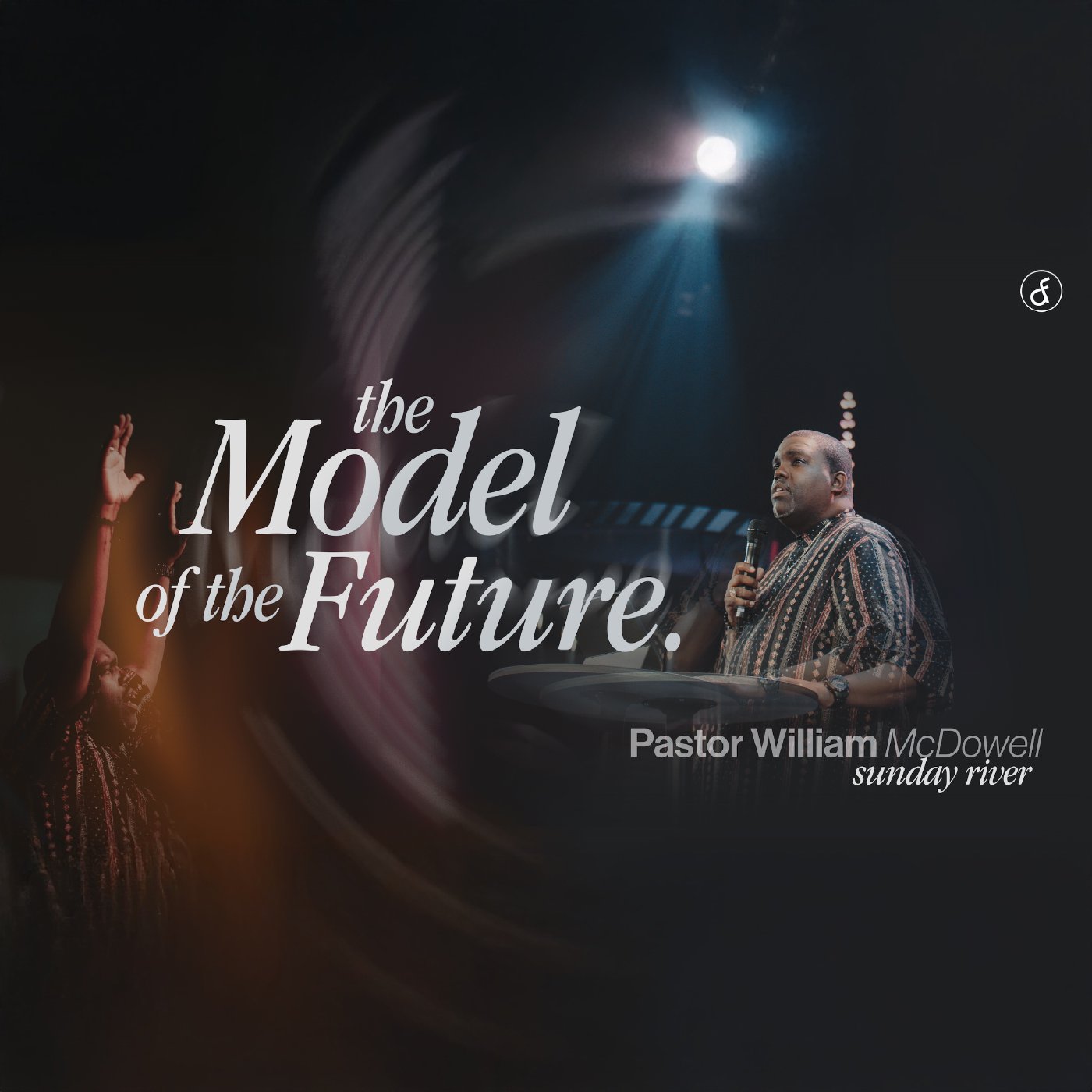
Loading summary
Transcript85 lines
- [00:01]
A
Thank you for joining us here at Deeper Fellowship Church for this week's message. Our desire is to cultivate a deeper fellowship with God and one another, and we would love to hear how God is using this ministry in your life. So take a moment and visit us online at deeperfellowshipchurch.org find the share your story button and tell us what God is doing in your life. While you're there. You will also find useful information about our church and other resources that will bring you closer to Christ. Thanks again for joining us and we hope you enjoy today's message.
- [00:40]
B
I'm going to read one passage of scripture, two verses actually, of Scripture, and I will tell you ahead of time that we're going to school today. All right? I'll tell you that ahead of time. Our first service received it very, very well. I don't have a shouting word for you. I have a thinking word for you because it is going to challenge our paradigm, it's going to challenge our way of thinking. And so. But this is called Deeper Fellowship Church. Amen. Let's read John, chapter 13, verse 34. John, chapter 13, verse 34 and 35. So now I'm giving you a new commandment. Love each other. Just as I have loved you, you should love each other. Your love for one another will prove to the world that you are my disciples. Let's pray. Father, I thank you for the richness, the depth and the power of your Word. I pray that over the next few moments, Lord, you would make us good soil, that the seed of your Word would take root in our hearts and produce a harvest of change living. I pray that you anoint me to proclaim the Word. And I pray that you anoint all of us as hearers of your Word, that we'd not just be hearers of your Word, but doers of your Word. Father, I pray as always, that the words of my mouth and the meditation of my heart be acceptable in thy sight. O Lord, my strength and my Redeemer. You are such a good, faithful, kind, loving, merciful God. There are people in the room who are coming to saving faith. They are in a place where they're coming into the awareness that they need you. I pray, Lord, that as you are revealed to the hearts of men and women and children in this place and watching online that you would awaken their hearts to the love that you have for them. And Lord, bring them to a place where they place their trust and faith in you. Father, would you give them courage to overcome fear, shame and guilt and place their Trust fully in you. Save them. I pray in the name of Jesus. Amen. You can be seated. I have been talking about spiritual formation for quite some time. We're still in our holy year, and I want to encourage you in the holy year, for those of you who have participated and said that you're going to participate, to continue to participate in the. Your act of consecration that you have set before the Lord. Obviously no one is policing that. It's just between you and the Lord. I want to encourage you to do that and to continue that. But we've been talking about spiritual formation, and I'm going to give us quite a bit of a review so that we can catch everyone up to where we are. Because the Holy Spirit is literally challenging and changing a paradigm. Today I read John, chapter 13, verse 34 and 35, and I've read it over the course of time and over a number of years. And so some of you may be familiar with that particular passage of Scripture, for some of you may be hearing it for the first time. But one of the things about these particular words is that they are both straightforward and deep at the same time. Reading it is one thing. Living it is another. Living it, however, is the expectation and the assignment of the church. So it's important, then, that we lean in on the reality of what that means and why it is important and how it plays out towards the end of our time. Last week I made this statement that evangelism has two components. The two components of evangelism being proclamation and demonstration. Demonstration itself is expressed in power by the operation of the gifts which are signs that accompany proclamation. Demonstration is also given by believers loving each other. The scripture makes it very clear in this particular passage that our love for one another is evangelism because it proves the power of the Holy Spirit is at work. It screams loudly that there is something else, a greater power than that which is in the world, which gives us the ability to do something that those without God do not have the ability or the capacity to do. And that is agape. That is to love genuinely, selflessly and sacrificially, as God does. The primary way family that the world, those who are hostile and indifferent towards God, will know that God sent Christ is the way we love one another. Now, I know that sounds like a nice little Sunday school lesson, but. But we got to go a little bit deeper than that, because what it does reveal is submission to one who is greater than. Than the world. Now, as I read these things and as I say these things, and as I Look at these things. There is also a reality in my heart, and that is that I long for something. I look at the state of the world. I look specifically at the divisiveness of the world and the vitriol and some of the other things that are taking place. And it makes me homesick because this world is not our home. And so, as a result, there's something I find myself longing for in Christian community. Something that the Scripture clearly calls for and has been successfully pursued and implemented by those who are serious about Christ. And that is that people would genuinely and deeply love each other with Christlike love and affection. Now, this is a desire, a deep desire of mine that has led me on a search for a number of years through the Scripture to see implementation. And so over the past few weeks now, every week for the past few weeks, I've been making a specific statement. We know that repetition is the mother of learning. But part of the reason I've been making this statement over and over is because I'm also aware that not only do some people not remember, not only are some people engaging for the first time right now, but other people don't engage with these thoughts between Sundays. And so, as a result, I say certain things over and over. And one of the statements that I've been making over and over is that hidden communion with God is not meant to remain internal in Scripture, which is that which is cultivated in secret eventually becomes visible in character, authority and community. We've been talking about formation. And as we've been talking about formation, formation produces fruit. And fruit is meant to be expressed. We've also said that the three dimensions or expressions of hidden works or formational fruit is that it's expressed. Expressed in what I just said in character, authority and community. We also said that there is a correlation that when people are truly formed by Christ, they begin to look like him, which is expressed in character. They begin to minister like him, which is expressed in authority. And they begin to love like him, which is expressed in community. We've also been saying that's why it's important that we resist the idea that spiritual formation is solely for the benefit of the individual. Individual being formed. Anybody remember these things? All right. Amen. If you also remember, what we've been doing is we've been progressively expanding our definition of spiritual formation, also known as Christian formation, this way. We began with a simple and straightforward definition many weeks ago. We began with this simple, straightforward definition, which is this spiritual formation is the Spirit's work of conforming us to Christ While deformation is the world's quiet work of conforming us to itself. We've talked about the intentionality of deciding where you're going to be formed. If you are going to be formed in Christ, you have to be intentional about it. Because if you're not intentional about spiritual formation towards Christ, the world has intentions for you. So we've been talking about that. We began that way. Then we also began expanding our understanding. Understanding by defining formation as an act. This way, we said it is the journey of orienting life around the presence and way of Jesus in a spirit dependent community that joins God and mission. When we gave that definition, that brought out something beautiful and something very important that we've been talking about for the past few weeks. And that is that for formation cannot be completed alone. Formation cannot be completed alone. That also then led us to Robert Mulholland's definition of spiritual formation in his book Invitation to a Journey where he said, spiritual formation is a voluntary process of being conformed to the image of Christ for the sake of others. Spiritual formation, a voluntary process of being conformed. Conformed to the image of Christ for the sake of others. What that means family is. Formation cannot be completed alone and was never intended to be pursued apart from community. Now for those who would like the preacher to shout you on Sunday, today's not your day. I just, I just, I want you to know that I'm not going to tune up today. I don't normally tune up. I'm just saying like. But we are gonna learn something. Amen. I was laughing with Pastor Jason earlier because he said the content you've been giving us is so rich, it's like you're a professor during a lecture. And so he called it the formed lecture series. But we're gonna learn something today. Formation cannot be completed alone and was never intended to be pursued apart from community. This means family. That we cannot be formed into the image of Christ in isolation because Christ's image is inherently relational. If you remove the others, you remove the very environment required for the Spirit's work. I know that we live in a society, everybody thinks you can just grow on your own. You cannot just be formed into the image of God, Christ on your own. Because if you remove the others, you remove the environment that is required for the Spirit's work. Christ's image is relational. So when it comes to the idea of spiritual formation, some really don't have an issue with the what. They just don't understand why it's so important. This is one of the primary reasons why God places you into a local assembly. He does that for the sake of. Sake of our maturity. Now, in his book, I'll be referring to a few authors here. In his book when the Church is a family, Dr. Joseph Hellerman writes this. He says, spiritual formation occurs primarily in the context of community. That's what we've been layering. And. And last week we also shared this idea. We can understand character, we can understand authority. But I suggested that we may not be able to form, fully understand community because we honestly. Until we honestly embrace the idea that Western society doesn't lend itself to the idea of community because it's built on individualism. In our culture, we are obsessed with who Am I? Which is individual identity, also known as weak group identity, instead of Whose Am I? Which is collective identity, also known as strong group identity. Last week we also said, I'm almost done with my review right here. What scholars call ontological individualism is a deep seated belief that I am the center of my own reality and that the church is a resource I use to improve my life. Most people think that way and they don't know why they think that way. In other words, we were intrinsically taught to view church as a utility. We have been trained by the Western culture to view all institutions as utilities to pursue or facilitate personal goals. I need us to lean in because I'm about to challenge some paradigms for just a moment. You and I have been socialized from childhood to view the world from an individualistic perspective. Perspective. We establish our individual goals in life and then we utilize various groups and institutions in society to facilitate the realization of those personal goals and objectives. You and I don't realize that this is what we do, but this is actually the culture in which we've been raised. And since it's the culture in which we've been raised, it has given us a lens and a view that has put us at the center of everything. So we view our employer as a utility. We view our employer as a source of income to meet our personal or our family material needs. We don't have any levels of loyalty. Now. The interesting thing is our employers now don't either. So some of y' all, like, I ain't loyal to them because they ain't loyal to me. I get it now. It was just really interesting because I said this in the first service, which has a different age demographic makeup. For example, the boomer generation probably changed jobs statistically two or three times in their life. In their whole life, they probably changed jobs two or three times millennials change jobs 20 to 25 times in their life. And in the first service, all the boomers are like, what? Because there was a sense that if I'm going to be somewhere, I'm committed to that place. Now I understand that at this point, since the employers tend to look at people as commodities and not people, and they don't care about their families and all that kind of stuff, there's no loyalty all the way around. I totally get it, but I'm just talking about the culture that we view things, everything, as a utility. So we look at our employer as a source of income to meet our personal and family material needs. We look at our schools and utilitarian terms as a place to get education that we need to qualify us to reach our individual vocational goals. So we look at our employer as a utility. We look at our schools as a utility. And as a result, we also tend to view church in the same way we look at the church as a utility. In his book Simply Christian, N.T. wright says this. We have been so soaked in the individualism of modern Western culture that we feel so threatened by the idea of our primary identity being that of the family we belong to, especially when the family in question, speaking of the church, is so large, stretching across space and time. The church isn't simply a collection of isolated individuals all following their own pathways of spiritual growth without much reference to one another. Now, here's where I need to begin to challenge some things. Because if you were to ask most people in Western culture who have not been trained to think theologically or biblically what the church is, their experiential lens would probably answer this way. They would say, the purpose of the church is to help me to continue to grow in my personal relationship with Jesus Christ. That is the lens by which most people think the church exists. Most people in the west think that the church exists to help them to continue to grow in their personal relationship with Jesus Christ. But family, that is not the primary purpose of the church. I know some of y' all like. So wait a minute. What is it then? Because I thought that's why I was here. I thought I was here for that reason. No, that is not the primary purpose of the church. Which means then that we have to get a new paradigm to begin to define something new. And because I can tell you with confidence that weak ecclesiology produces a weak understanding of community. If the community is seen as a utility, it's easy to leave when it feels like it no longer serves you. Community will never be Important to a people whose ecclesiology is that the church is a utility for them to grow in their personal relationship with Christ. Now, some of y' all like, fine, Pastor, I get it, but you better define ecclesiology. I got you. Stick with me. Stick with me. Most people in a Western context view church attendance like a spiritual gas station that we just come here to get refund filled and refueled so that we can go on about our week. And so then we come back on Sunday to get another fill. This is also one of the reasons why we are so attached to emotionalism, because I need to feel a certain kind of way in here so I can go back out there. Can I also tell you that's not what the church is for. The church is not a spiritual refilling station. It's not a spiritual gas station, and it's certainly not a spiritual drug dispenser just so we can get another hit so we can make it to the next week. No, no, no. That's not what it is. No, no, no. The pastor is not a pill pusher. We got your attention Now. We don't gather just to get something. We gather to show something. Say it again. We don't gather just to get something. We gather to show something. And if we are going to understand, embrace, and model biblical community, it must begin with the reframed ecclesiology. Otherwise, we will never understand why what Jesus said in John, chapter 13, verse 34 and 35, is important. Let me read it to you again. So now I'm giving you a new commandment. Love each other. Just as I have loved you. You should love each other. Your love for one another will prove to the world that you are my disciples. Now, the truth of the matter is, sometimes we'll be honest. We think and say things like, I read that, and that's fine, Jesus, but I barely like them, so why is it important that I love them? Y' all laughing. Cause you thought it, Y'. All, I don't like this person, so I'm good. You stay over there. But the truth of the matter is there is an idea and there's an ideology specific, specifically in our Western culture that has produced something that is not Bible. So, for example, you'll hear popular phrases where people will say stuff like, why do I have to go to church? Because I am the church. Y' all know, you've heard it or you've even said it. Or you'll hear things like, I like Jesus, but I don't like the church, or I can Grow on my own in my own personal relationship with God. Y' all go ahead and go to church. Me and Jesus, we have this thing, we have this understanding. We, we. I grow at home, I read my own Bible and I just grow. And all you are saying is that you have an incredibly weak understanding of ecclesiology. I know you think you saying something bold. I see it all the time in the social media space where people, real bold, they stick out their chest, they be like, I don't need the church, I could just have my relationship with Jesus. He talks to me, he does all that. And all you are saying is you might as well have a banner that says, hey everybody, I'm immature. Let me reinterpret some of this stuff. So then, what is ecclesiology? What is ecclesiology? Well, I'm going to give you a scholarly definition, but you're probably going to be like, okay, whatever, I don't get that either, but I'm going to give it to you anyway. Ecclesiology is the theological study of the church as a spirit formed Christ centered family of God held together by covenantal kinship and called to embody, anticipate and participate in the in breaking kingdom of God as his visible foretaste in the world. You're like, we ain't going to remember that, Pastor. That's all right, you're taking a picture. Ecclesiology is a theological study of the church as a spirit formed Christ centered family of God held together by covenantal kinship and called to embody, anticipate and participate in the in breaking kingdom of God as its visible foretaste in the world. Some of y' all are like, okay, break that down. When I was growing up in church, there was a lady, whenever the pastor preached, she said, break it down, break it down. And when it got really deep, she was like, break it down. So I get it, I get it. Ecclesiology is the study of the church, its identity as God's family, its purpose in the world, and how it embodies his kingdom. That's a more bite sized chunk there. Ecclesiology is a study of the church, its identity as God's family, its purpose to the world, and how it embodies his kingdom. I'll say it one more time. Ecclesiology is a study of the church, its identity as God's family, its purpose in the world, and how it embodies his kingdom. So then what is the church? I'm going to give you an interesting definition. Not a totality definition, but one that I think is Provocative enough for us to really begin to lean in, to understand better. The church is the family through which the future kingdom is made visible. The church is the family through which the future kingdom is made visible. I have come to challenge your paradigm. I have not come to be easy today. The church is a family through which the future kingdom is made visible. However, it is much more than that. Somebody said, let's go deeper. Y' all didn't say that with conviction. Y' all like, okay, if we're going deeper, somebody said, let's go deeper. Modern theologians like Leslie Newbigan and N.T. wright argue that the church is not a collection of individuals, but rather a public sign. Newbegin makes this statement, and I'll read to you the quote in just a moment. He says, the church is the hermeneutic of the gospel, the lens through which the world understands what God is like, meaning that the church is the embodied interpretation or visible expression of the gospel. Let me say it a different way. In other words, it's not just explaining the gospel, but demonstrating what it means. The job of the church is not just to explain the gospel, but to demonstrate what it means. Not to just explain the gospel, but to demonstrate what it means. Let me give you the quote in totality. Leslie Newbiggin says this. The only hermeneutic of the gospel is a congregation of men and women who believe it and live by it. The church exists not for itself and not for its members, but as a sign and agent and father foretaste of the kingdom of God. Hallelujah. What he's arguing is that the local congregation is the primary way the world interprets the truth of the gospel. He moves the focus away from individual piety toward the credibility of the community. The credibility of the community is what actually shows the gospel. It's not just you. You can't show Jesus by yourself. I know some of y' all like, but we are salt and light. Yes.
- [25:56]
C
Can you.
- [25:57]
B
Can you start with the first word, we? He goes on to say, and since the gospel does not come as a disembodied message, but as the message of a community which claims to live by it, which invites others to adhere to it, the community life must be so ordered that it makes sense to those who are so invited. Can I tell you why so many people are confused right now? Because the church doesn't look like what it says. That is the reason why so many people are confused. Because you are preaching a gospel that you say has changed you. But when people come into the community they see the same thing they see in the world. So they're like, well, if you are so different, what makes you different than my fraternity? What makes you different from the Boys and Girls Club? What makes you different from our work club? The church is supposed to embody the message that it preaches so that when people come in, they say, it makes sense. It makes sense conceptually. What they were doing both right and lesson new begin was they were putting forth the idea that the church existed, exist to inhabit a countercultural reality that previews the future restoration of all things. Now, I'm excited about that right there, but I'll get to it in just a moment. N.T. wright says this. If the church exists primarily for two closely correlated purposes, to worship God and to work for his kingdom in the world. Wright uses the language of anticipatory living. The church is a community that practices the habits of the future world. Oh, the church. I'mma say certain things again because it's just good. And I used to get it. It's the community that practices the habits of the future world in the present. We're going to come back to that in just a moment. I am literally giving you a deluge of information for this purpose, not because I think that you remember all of what I say, but so that you will begin to understand that we need to reframe our way of thinking concerning the church. Because our way of thinking concerning the church has been very small, because we have been trained to believe that the church is about us, about our personal growth, about our personal relationship. And so what I'm actually doing is I'm beginning to literally flood your mind so that you will metanoia some of y' all like what in the world, so that you will literally repent, change your mind, go in a different direction, stop trying to live for Jesus by yourself. Are y' all here? So in his book Life Together, Dietrich Bonhoeffer argues that Christ exists, exist as community. If we do not find Christ in isolation and then bring him to the community, we find him in the brother and sister. Can I keep going? Are y' all good? David Bosch reframed ecclesiology around the mission of God, or what would be called the missio de and he states that the church does not have a mission. The mission has a church. The church does not have a mission. The mission, which is God's work in the world, has a church. It's not that we got together because we have a mission. God had a mission that birthed the church. We are part of something this is one of the reasons why we don't say we have a new idea. Are y' all here? We. We don't actually gather together and say we're going to do church new. No, no, no. God has a mission that births the church. Is this too much for y'? All? The church, William Temple, and this is also attributed to N.T. wright, is the only society that exists for the benefit of those who are not yet its members. N.T. wright states. I know I'm saying a whole bunch, but there's a reason why I'm saying it because I want us to reform. I want us to literally go, wait a minute. I don't think I've had this right the whole time because I've been so self centered. I've been thinking this is about my personal growth. NT Wright states his explanation of the church so clearly that I decided to read a lengthy portion rather than try to restate or synthesize it because it was so good in its potency that I felt like if I tried to restate it myself, it would actually lose some potency. So can you listen to a lengthy quote for a minute? N.T. wright says this. This is in his book Simply Christian. According to the early Christians, the church doesn't exist in order to provide a place where people can pursue their private spiritual agendas and develop their own spiritual potential. Nor does it exist to provide a safe haven in which people can hide from the wicked world and ensure that they themselves arrive safely at an otherworldly destination. Private spiritual growth and ultimate salvation come rather as byproducts of the main central overarching purpose for which God has called and is calling us. This purpose is clearly stated in various places in the New Testament that through the church, God would announce to the wider world that he is indeed wise, loving and just creator, that through Jesus he has defeated the powers that corrupt and enslave it, and that by His Spirit he is at work to heal and renew it. The church exists, in other words, for what we sometimes call mission, to announce to the world that Jesus is its Lord. This is the good news, and when it's announced, it transforms people and societies. Expounding on this, he goes on to say that the church exists to work for God's kingdom in the world. It is the community that announces that Jesus is Lord. And he puts it in the context here, and therefore Caesar is not. You need to know that when we make the declaration today that Jesus is Lord, we say, oh yeah, Jesus is Lord. But you need to understand that when that phrase was Being made in the early parts of the church, it was in direction opposition to Rome because Rome said that Caesar is Lord. So when they said Jesus is Lord, what they were saying is we are making a complete break and we are saying that we do not trust and bow to Caesar. We only trust and bow to the Lord. Our faith and our trust is in Jesus Christ and not Caesar. This was a revolutionary thing to say during that time. And I think in 2026, at least in America, there are some people who need to say that again, Jesus is Lord and not government. This is very, very important because we got a whole enmeshment that is happening right now that is causing people to believe that somehow in order to worship Jesus, you also must bow to government. The devil is a liar. Jesus is Lord and Lord alone. He is the Lord of Lords and he is the King of kings and the devil.
- [33:19]
C
Church exists to declare that fact.
- [33:27]
B
And I continue to quote right, he says the church is first and foremost a community, A collection of people who belong to one another because they belong to God, the God we know in and through Jesus. I read this earlier. This is where it comes out of. The church exists primarily for two closely correlated purposes. To worship God and to work for his kingdom in the world. Now I continue to read this. I'm still quoting, right. It said the church also exists for a third purpose which serves the other two. To encourage one another to build one another up in faith, to pray with and for one another, to learn from one another, to teach one another and to set one another examples, to follow challenges to take up an urgent task to perform. This is all part of what is known as fellowship. When you are a part of the church, you don't exist for yourself. Because what happens is when you are a part of the church community, what is supposed to be happening in the community of the church is we are supposed to be encouraging one another and building one another up and praying for and with one another and learning from one another and to teaching one another and setting examples to follow and challenges to take up an urgent task of reform. This is what's supposed to be happening in a healthy community. That literally, if you feel like I'm not down today, then encourage somebody else. If you feel like you're strong today, pray for somebody else.
- [34:58]
C
Set an example for other people to follow.
- [35:01]
B
This is what's supposed to be happening.
- [35:03]
C
This is not a platform thing, it's a community thing.
- [35:06]
B
It's a church thing.
- [35:08]
C
There ought to be some people in this room, not just the pastor, that
- [35:12]
B
you should be able to look like
- [35:13]
C
and look at them and say, I
- [35:15]
B
want to be like that.
- [35:16]
C
I want to walk with God like that. I want to know God like that. There ought to be some other people
- [35:21]
B
that they come in here looking down. You say, you don't have to be that way because I was once in your shoes. And I know what it was like to not have.
- [35:29]
C
And I know what it was like
- [35:30]
B
to be able to trust God when I couldn't trace Him.
- [35:33]
C
And I know what it was like.
- [35:34]
B
When it started, it seemed like he wasn't talking to me, and I was praying and crying and praying and crying, and he wasn't saying nothing.
- [35:40]
C
But right when I thought I was going to give up, he showed up right on time. And because he did that for me, I know he will do it for you. So don't give up. Keep on walking. Keep on living. Because if you live long enough, God is not going to risk his reputation over you. He will not fail you. He's never failed anybody. He didn't fail me, so he won't fail you. I once was young, but now I'm old. And I've never seen the righteous forsaken, nor his seat begging for bread. I know this God will come through. I don't know how, I don't know when, but I'm not worried about if.
- [36:26]
B
Those who want to go it alone. They don't get that privilege. You don't get that privilege. But there's a privilege to be a part of a community. It's a privilege to be a part of a church. It's a privilege to be a part of a family.
- [36:42]
C
It's a privilege. I come to this church because I need everybody here.
- [36:52]
B
Everybody. You have no idea. The devil likes to mess with everybody, including the pastor. And so sometimes we're like, I don't know, I'm afraid to talk to the pastor. I'm afraid to come. But there'll be some people who will come up and just say, I just need you to know that since I've been coming here, my life has changed. And the words that you're preaching, they really encourage me. So don't you ever stop, and you just keep going. And you have no idea that when you just said that, the devil just said you were totally ineffective today.
- [37:23]
C
You have no idea.
- [37:25]
B
We need each other.
- [37:27]
C
You don't know what people went through this week, what people told them. Their boss might have berated them, their marriage might be on the rocks. They might have been arguing all week. Their kids might be Acting like devils. But when they come into the house of God, somebody said, it's so good to see you, man of God, woman of God. You didn't feel like a man of God or woman of God when you came in here, but somebody looked at you and saw value in you. That's the value of a community.
- [38:01]
B
That's all the preacher gonna get. Joseph. Joseph Hellerman says that the church is a surrogate kinship group that supersedes biological and social status. Now, praise God for those of you who have really close families. I praise God for that. That is a blessing. If you have a close family, you are blessed. But there are some people who, who don't have a close family that they have as a church family that. That their brother could not talk to them for 15 years, and. And their. Their cousin might talk about them all the time, and they have family get togethers and they never invite you over, and they do all that kind of stuff. But then you got some other people who stick closer than a brother, who check on you when you know how to hear you when you're silent. Oh, yeah, yeah, yeah. Sometimes when you're silent, that's the loudest you ever are because you stop talking. You didn't talk in a friend group. You stopped texting. You didn't respond to the social media meme.
- [39:08]
C
And they're like, what's up?
- [39:10]
B
You good? The church is a surrogate kinship group that supersedes biological and social status. What he argues is that Westerners view the church as a voluntary association, a group of individuals who opt in as long as their needs are met. So if I were to synthesize the sources that I just used, New beginning, right. Would say the church is assigned. Bosch would say the church is sent missionally. Hellerman would say the church is a family. Bonhoeffer would say the church is an ecology or a process by which God wants to do something. But I want to lean in for just a moment on NT Wright's position, which I spent quite a bit of time on, of the church as a sign and a forte, because this is vitally important. The church is a place where the future, the time when God will heal and rule the whole world has arrived ahead of schedule. Schedule. I need you to see the church this way. The church is the place where the future, the time when God will heal and rule the whole world has arrived ahead of schedule. When the church is done right, this is what it is. The church is the place where the future, the time when God will heal and rule the whole World has arrived ahead of schedule. Therefore, the church's life, its justice, its forgiveness, it's kinship is a literal substance of the future world present in the space, time and matter of now. What is supposed to happen? Literally, you didn't know this, but you're from the future. I know you didn't know this, but you're from the future. You are literally a signpost. You are literally pointing to a reality that is not yet, but already is and is to come. When the church gathers together, it is literally modeling the future. Now, if I were to combine the ideas of Right and Helliman, it might sound like this. The church is a welcoming family that exists to show the neighborhood what the world will look like when God is finally in charge. Let me say it again. The church. The church is a welcoming family that exists to show the neighborhood what the world will finally look like when God is in charge. There is a movie. There is a movie. It's called the Arrival. It's not as last week I talked about Titanic. Everybody's seen the Titanic. Most people. I don't know if you've seen the Arrival, but there's a movie called the Arrival. And in the movie, humanity encounters another world. In other words, alien visitors come. And the breakthrough in this movie does not come through weapons. It comes through learning a new language. The main character of the movie is a linguist. And she's asked or she is tasked with communicating with the visitors from another world to understand why they are here. Because ultimately, it's like if a visitor shows up, it's like, well, are you friend or are you foe? Have you come to attack? Should we attack you? Is this war? What does this mean? And so what they did was they said, well, here's a person, a linguist is a person who understands multiple languages or styles of language. And so what they did is they said, okay, why don't you find out why they're here? So to do so, she had to learn their language. But once she learns their language, it doesn't change. It doesn't just change how she speaks, it changes how she sees everything when she learns the language, it doesn't change how she speaks. It changes how she sees everything. What if I told you that's what the church is? The church is the place where we learn to speak the language of our true home before we get there. The church is a place where we learn to speak the language of our true home before we get there. Now, listen, I know I said this in the first gathering, and I'm going to say it Here, because I know I'm really about to mess up some people's theology and belief system with the thing I'm about to say. And I thought about not saying it, but we need to hear it. I really didn't want to mess with y', all. But I do want to message you because I want you to reframe some things. Now, you're not going to like what I'm about to say. I'm just going to tell you that ahead of time. I'm going to mess with the theology or the way people see some things if we have our theology right. Are y' all ready? We are not living now just to go to heaven. Yeah, I know. I know y' all like, so. Pastor, you better explain. Break it down. Can I mess with you a little bit further? We didn't get saved. I put saved in quotation marks for a reason to go to heaven. Why did I put saved in quotation marks? Because if we understand theology rightly, salvation is what comes. You know, I'm saved right now. I baptized, sanctified. I get it. All that. I get it, I get it. But theologically speaking, salvation is coming when Christ comes again.
- [44:24]
C
If
- [44:26]
B
we were here solely for the purpose of going to heaven, once we made a commitment to Christ, you'd make a commitment to Christ and evaporate right then and there. You made it. You gave your life to Christ.
- [44:42]
C
You come down to the front of
- [44:43]
B
the church and just like the blip in Avengers, y', all just Jesus, fade away. What's happening? Well, he made the right decision. He's going to heaven.
- [45:00]
C
Since
- [45:03]
B
we gave our heart to Jesus and he didn't take us right, then why did he leave us here? Why did he leave us here? Because he has to have a purpose for leaving us here. Because obviously it's not comfortable here. And you think you're uncomfortable in America, try somewhere else. Try the believers. Believers? Yes, I said believers. In Iran right now, we're the fastest growing house church movement in the world.
- [45:42]
A
Is.
- [45:44]
B
Is it comfortable? And we like Jesus, come get us from America, Where we have freedom of religion. We can gather whenever we want, however long we want, even though we want to go home. But we don't have to worry about anybody shutting us down. We don't have to worry about, if we're here, the government coming in with guns and taking us to prison, like a whole lot of people in the world. But we like, oh, God, it's so bad here. So he left us here. But he didn't just leave us here. He left the believers who are going through persecution in 2026 because persecution is not a first century thing. Persecution is still happening. And, oh, by the way, I just want to say persecution is not people making mean comments about you on social media. That ain't persecution. Persecution is not people having a different political worldview than you. That is not persecution. He left us here. Which means then that since the Church is here, it is the present embodiment of God's future. The Church. We are here to show the world what the future looks like. If we're doing this thing right. We are here to show the world what the future looks like. I'm gonna talk about the future in just a moment. We are the present embodiment of God's future. What is God's future? That we look like Christ. Christ is our future. I'm going to say that again because we don't recognize how dangerous. Not knowing that has led us to places. Christ is our future. You say amen. Now let me tell you why it's been dangerous. Because a lot of places that gather together under the name of Christ are teaching us how to be a better version of ourselves. What God intends is that we look like Christ, not like us. He's not coming back for us to look like us. See, you don't understand how dangerous it is for the end goal to be a better you. I'm trying. I'm trying. Because what we're trying to do is we're trying to get the best version of our ourselves. No, the best version of you is not what God is after. When he comes back, we will look like him, not like us. Look like him. Now, let me be clear. Let me be clear. Let me be clear. God, listen, that doesn't mean that you can't get better. It doesn't mean you can't learn how to better work with your finances. It doesn't mean you can't start a business. It doesn't mean you can't work on your body. It doesn't mean all of that. But that better not be the end goal. That's not the end goal. At the end, I want to look like Christ. At the end, we're supposed to look like Jesus. Can I say I need a Christian church? Because if a Christian church can't say I want to look like Jesus, this is why we got to get back to the Lord. I'm running, trying to make 199 and
- [49:05]
C
a half won't do. I don't care how good I get, it will be 99 and a half. But if I'm going to make 100, I better look like Jesus. There were people in this country and a people who went to church who their whole desire, sanctified, purified, fire baptized, do whatever you need to do. Take it out of me. Cut the sin off of me, cut the flesh off of me. Because when people see me, I want them to see Jesus. I think we need to recover a sanctified church. Who says, I want to be like him? I want to be just like Jesus.
- [50:04]
B
If the church is the present embodiment of God's future and Christ is the future, and we are supposed to be modeling the future. I gave you a ton of definitions for formation. Can I give you another one? This means that formation is a process of becoming fluent in the language and vocabulary of the future. Formation is the process of becoming fluent in the language and the vocabulary of the future. Let me say it again. Why. Why are we going through all of this in our lives? Formation is the process of becoming fluent in the language and the vocabulary of the future. Now hear me, family. You can learn vocabulary by study, but you can't become fluent until you're immersed in a culture. This is another one of the reasons why I have to rail against the whole idea that you can just grow by yourself. Because you can learn the lingo and you can learn the vocabulary, but you cannot become fluent in language until you are immersed in a culture. I know that. You know that because many people will tell you that the fastest way to learn a language is not a book. The fastest way to learn a language is to immerse yourself where the language is the primary thing that is spoken. And if you will go to the place where the language is the primary thing that is spoken, then whatever you learned vocabulary will begin to become fluent in. You can learn vocabulary by study, but you can't become fluent until you're immersed in a culture. The church is the immersion environment where you are forced to speak the language of the future with people that you didn't choose. Can I say it again? The church is the immersion environment where you are forced to speak the language of the culture with people. The language of the future. Excuse me, with the people that you didn't choose. What is the language of the future? I'm not just talking about some. Some nebulous thing out there. Let's talk about the language of the future. The language of the future is forgiveness. The language of the future is sacrificial love. The language of the future is kinship, brother and sister. The Language of the future is unity. The language of the future is no division.
- [52:22]
C
This is what the church begins to speak.
- [52:24]
B
When you are immersed in a culture where there is forgiveness, it is counterculture to the world.
- [52:29]
C
And when people are immersed in an environment where people forgive. Because that is not the language of the world. The language of the world is if they gonna get back, they're gonna get their lick back.
- [52:39]
B
I get it.
- [52:39]
C
That's the language of the world. The language of the world is, uh, you do me wrong, I'm gonna do you double wrong.
- [52:45]
B
But the church is a language that
- [52:46]
C
says, not only do I forgive you who I love, but I also forget and pray for my enemies.
- [52:52]
B
What we are doing is we are
- [52:54]
C
modeling what the future will look like. We are modeling to the world that
- [52:58]
B
there is a future in which this
- [53:00]
C
existence that you have is no more. When God reigns, when his kingdom comes, this is what it looks like. People actually love one another. When this is what it looks like, there are no divisions. When this is what it looks like, there are no cliques. When this is what it looks like, there is no preference. This is what it looks like. People forgive one another. This is what it looks like. People love one another. And what does it mean? Church supposed to be. It's supposed to be a sign of the future.
- [53:31]
B
It's an immersion environment. When it's done right, it's an immersion environment. Hallelujah. What are some of the demonstrations of the coming future? Well, there's one. The Lord's table is a demonstration of the coming future. A place where there's no hierarchy. A place where everyone who's at the table, no matter their socioeconomic status, no matter their race, no matter their upbringing, no matter their status in the world, no matter if they got saved 50 years ago or 50 minutes ago, sit
- [54:09]
C
at the same table, saved by the same grace. There's something powerful that happens when two people, three people, five people, 500 people get together.
- [54:21]
B
And no matter what their differences are
- [54:23]
C
on earth, they sit at the same
- [54:25]
B
table and say, it was the same grace. I may have a different story, but I have the same testimony. I was just as lost as you because you might have been lost and found in a bar or under a street corner somewhere.
- [54:37]
C
But I was just as lost on
- [54:38]
B
the third row of the church when
- [54:40]
C
my grandmama used to drag me every week.
- [54:42]
B
And I didn't believe a thing that preacher was saying.
- [54:44]
C
But one day, God got a hold of my heart. He took the scales off of my eyes. He took me from darkness into light. He Gave me a revelation of who he was. And at that moment, I knew that I didn't have to be down and out. I could be up and out, but I still needed him.
- [55:10]
B
There is this invisible veil that exists, and most people don't recognize it. Because as much as you want to go to heaven, Revelation 21 tells us that God wants to come here. I know we're like, I want to go, but, but, but, but John saw heaven coming down. He didn't see us going up.
- [55:42]
C
I know.
- [55:45]
B
Because God wants to dwell with his people. And because he wants to dwell with his people so bad, he didn't wait. He sent his son, and his son tore the veil, which means that we have access. Can I just remind you that the veil was not torn from bottom to top, but from top to bottom, because man couldn't get to the top, which means if it was torn from top to bottom, it was God who tore it.
- [56:11]
C
God said, let me out of this box and let me into their hearts because I'm always wanting to be with my people.
- [56:26]
B
The invisible veil gets thin at times. You become aware. I was thinking that in a moment of worship we just had in corporate worship, it's a thin veil. I know some of you, presence of God is not just a feeling. It's not just a feeling. Let me just help you. It's not a feeling because some of the same goosebumps you feel here, you would also feel at another concert when they're not singing about God. So it can't be based on feelings alone. Amen. But there are moments when that veil gets really thin and that the separation between heaven and earth seems to disappear for a moment. And when it disappears for a moment in corporate worship, we may be lifting our hands and tears start to fall down your. Roll down your face. And in that moment, I was just talking to Pastor Gabriel about this this morning. There'll be moments where you thinking that all I want to do is say, I love you, Jesus, and I just want to be with you, Jesus. But then you recognize that you're in the presence of a holy God. And what comes out of you is, lord, I repent. That's one of the ways you know you in the presence of God, talk to me, Isaiah. Woe is me. I am undone. I'm among a people of unclean lips. Something happened on the inside of him when he realized that he was seeing the Lord of glory. Something said, I'm frail and I'm human and I shouldn't even be here, but I was invited here. And if something happens, the veil gets real thin. Oh, it's one of the reasons why I love being with the people of God. Because it's not just in worship where the veil gets thin. The veil can get thin. At a coffee shop, when you met there for coffee, you were just talking, and you begin to talk about the good morning goodness of Jesus, and something just started happening. It felt like the Lord just sat down there with you. Instead, he's just sitting there as you're talking. The veil is really thin. And at that moment, you become aware that I'm modeling the future. Barista comes over and says, you guys all right? Yeah, no, we're good.
- [58:26]
C
Why?
- [58:26]
B
Because they see something. See, some of y' all don't know why people bother you. They bother you because they see something. They see something about you that models something that they have not been able to see. Y', all, I gotta stop. The veil is real thin to me right now. I can sense his presence right now. And it ain't based on somebody playing. I can just feel him. He's literally removing scales from eyes. At this moment, some of you are starting to see why God put you in church. He didn't put you in church for you. He put you in church to model something for some other people, to show the world what it looks like when the final reign of God comes. We've been put in attention. We didn't know we were putting attention, but Jesus, he told us, he said, when you pray, pray like this. Our Father in heaven, hallowed be your name. Your kingdom come. Y' all see that language not take us there. Your kingdom come, your will be done on earth as it is, or accurately as it already is in heaven. In other words, thin the veil,
- [59:56]
C
Let people see it. Now pray this, pray this, pray this. Because when they see it, they'll want it. When they see it, they'll want it. When they see it, they'll want it.
- [60:06]
B
I guarantee you, people who are in darkness, they would rather run to the light than stay in darkness. And when they see the light, they come, start running. So Jesus said, pray. He knows that we are in this tension because he knows that it already
- [60:20]
C
exists, but it's not yet. That's called the already not yet tension.
- [60:24]
B
So he says, listen, because God has
- [60:26]
C
chosen to work through men, I want
- [60:28]
B
you to pray for it.
- [60:29]
C
I want you to contend for it. I want you to pull on it so that the kingdom can be seen now here on earth as it already is in heaven. Because there there is peace, there there is joy. There. There is no sickness. Pray for it to happen here. That's why God heals people. He's letting you know there is a future that is to come where there is no sickness. That's why God raises people from the dead. He's trying to show you that there is a place where there is no death. Pray for it.
- [61:13]
B
You know what else makes the veil thin? You can come now. Because if I don't stop, we're going to be here all day. Because it's thin to me right now. You know what else makes that veil real thin? John, chapter 13, verse 34. So I'm giving you a new commandment. Love each other just as I have loved you. You should love each other. For your love for one another will prove to the world that you are my disciples. There's a whole lot of disciples of a whole lot of things. Not that you are a disciple of Aristotle. Not that you are a disciple of Socrates. Not that you are a disciple of Confucius, not that you are a disciple of Gandhi, but the fact that you are my disciples, when you love people with this kind of love, it'll prove to the world that you are my disciples. Also evangelizing by proving that he came because we are pointing to another kingdom, we are pointing to another reality. Because the world does not ask us to love that way. The world does not ask us to love sacrificially. The world doesn't ask us to live like that, but we live like that. Because there is a world that you can't see with your eye. But if you would pay attention, that veil will come real thin and you'll begin to see that there is no separation between heaven and earth. You are modeling something church. Ephesians chapter 3, verse 10 says this God's purpose in all this. He is talking about how Christ literally erased the dividing line, made one new people, contextually made them unified as one. And says God's purpose in all this was to use the church to display his wisdom in its rich variety. Now I'm gonna get in trouble, but this is good trouble. This is good trouble. His wisdom. Some translations say manifold wisdom, which would translate multicolored wisdom in all its rich variety. I know we live in an anti diverse city culture right now. Even though we're diverse, everybody wants to get rid of it. Jesus wants to use his church to display his wisdom, his diversity, his multicultural multicolored expression in all its variety. To the unseen rulers and authorities in the heaven, heavenly places, the spirits that are trying to divide. Jesus says, look what the church is about to do, y', all. Y', all, the church is going to model something that's going to make the devil envious. I know we can't. We can't clap right there because we ain't got the revelation fully. But what I'm trying to tell you is God puts you in a community where people who don't look like you for a reason. God put you in a community where people have a different upbringing to you for a reason. God put you in a community with a different ethnic makeup for a reason. He put you in a community with people who have a different levels of wealth and understanding for a reason. Because every time you get together and you begin to hold one another's hand, and you begin to pray and you begin to sing together and you begin to worship together, God makes the devil watch. He says, shut up. You can't bother them right now because
- [65:08]
C
when they are singing to me, I don't see them this way. They are one. And that's the one thing that the world absolutely hates.
- [65:16]
B
They want to put you in this corner and me in that corner and
- [65:19]
C
put us at odds with one another. But the church is modeling a future reality. What is the future reality that the church is modeling? Let's read Revelation, chapter seven.
- [65:29]
B
I'm almost done. I got two more scriptures and I'm finished. Revelation, chapter 7, verse 9. John saw the future. And in the future, he says, after this, I saw a vast crowd, too great to count, from every nation and tribe. Oh, thank you, Jesus. And people and language standing in front of the throne. And before the Lamb. Guess what? There ain't nobody left out. Everybody gets to stand before the throne.
- [66:16]
C
Everybody gets to stand before the throne. Every major, every people, every tribe, every language. I saw a number that was too vast to count. It wasn't just us four and no more. It wasn't just our little homogenous group. I saw a crowd. And everybody from every language, every nation, every tribe, and every tongue was there before the throne. That's the future. But why did the church exist to reveal it now?
- [66:50]
B
That's what it's coming back to. Because revelation, chapter 21 says, I heard a loud shout from the throne saying, look, God's home is now among his people. I know you waiting to go to him. He's waiting to come to you. And he will live with them, and they will be his people, and God himself will be with them. I need you to get a picture because you can't do this on your own. God has never prescribed a relationship with him with just you and him. He put you with people because you are here to model the future. That's why. And I'm finished. That's why he said, when you pray, pray for this. Our Father, come on, say it with me. Our Father who art in heaven, hallowed be your name. Your kingdom come. Your kingdom come. Your kingdom come.
- [67:53]
C
Your kingdom come. Your kingdom come.
- [67:56]
B
Your kingdom come on earth as it is in heaven. Heaven.
- [68:11]
A
Thank you for tuning in to this message from Deeper Fellowship Church. If this message blessed you or if you gave your heart to Jesus Christ today, we would love to hear about it. And you can do that by staying connected with us as our extended family through our website deeperfellowshipchurch.org on social media via Facebook, Instagram and Twitter, or the easiest way by downloading the Deeper app from the app Store of your choice and telling us about your decision. Until next time, God bless you.