Podcast
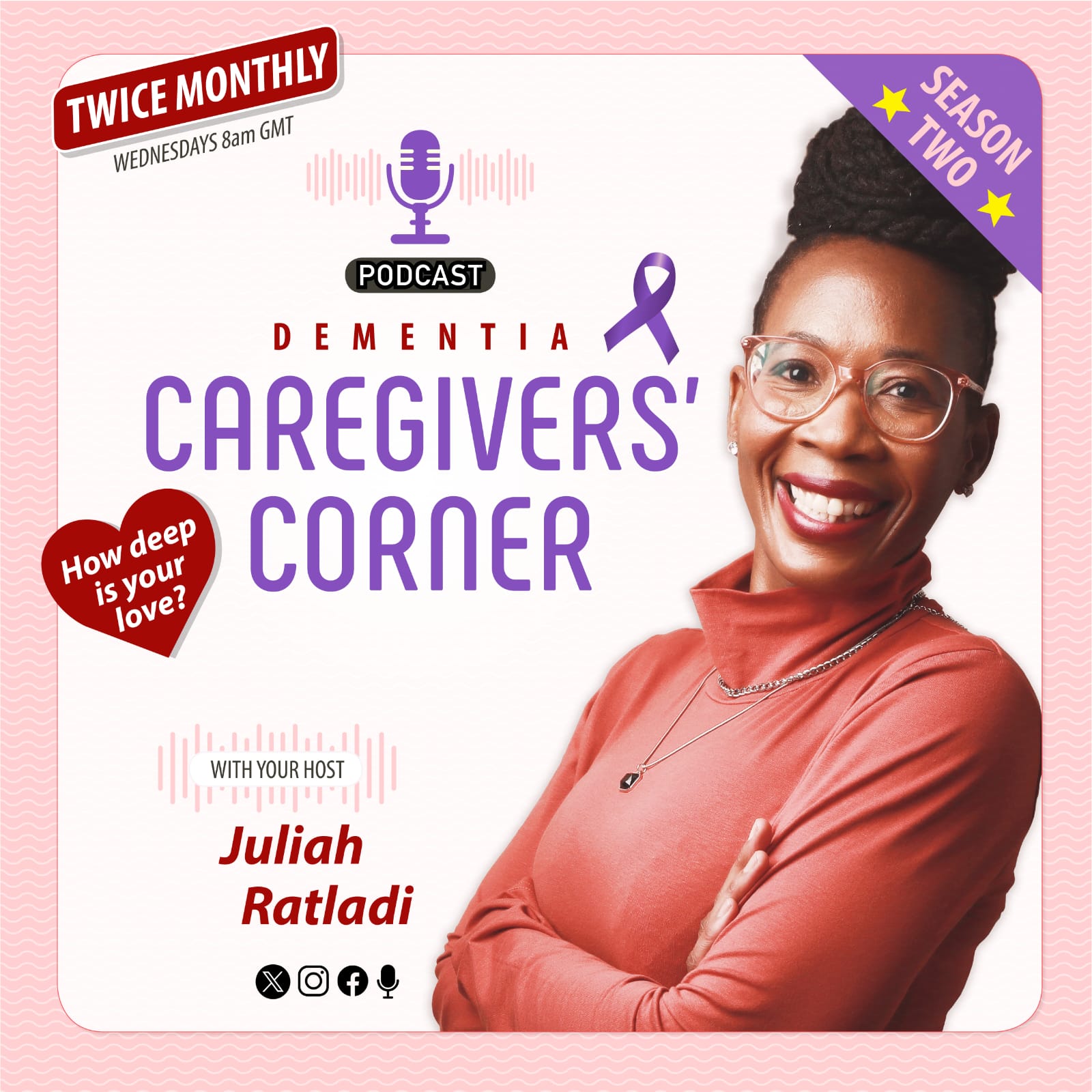
Dementia Caregiver’s Corner
Hosted by Juliah Ratladi · EN
The journey of caring for a loved one with dementia can be deeply challenging. Juliah Ratladi, an MSc Dementia Care Specialist and experienced dementia care professional, is uniquely positioned to share her observations, experiences, knowledge, and insights on various aspects of dementia care.
Together with other dementia experts and caregivers, she raises awareness, offers encouragement, and provides hope. Through meaningful discussions, they shed light on key dementia-related issues, helping to educate and support those affected by the condition.
Dementia care: How deep is your love?
20episodes
Episodes
Newest firstAll episodes

The Dementia and Death Conversation: Why Waiting Can Cost Families | Lisa Pahl
2w ago00:37:50Tap to summarizeEpisode Title: The Dementia and Death Conversation: Why Waiting Can Cost Families Death is one of the few certainties in life, yet it remains one of the conversations many of us avoid. In this thought-provoking episode of the Dementia Caregivers Corner Podcast, Juliah Ratladi is joined by hospice social worker Lisa Pahl, who has spent nearly two decades supporting individuals and families through some of life's most challenging moments. Drawing on her experience in hospice care and emergency medicine, Lisa shares why talking about death isn't about giving up hope—it's about giving people a voice while they still have one. The conversation explores the importance of advance care planning, particularly for people living with dementia, where the opportunity to express wishes can gradually be lost. Lisa also discusses the inspiration behind the Death Deck, the End-of-Life (EOL) Deck, and the Dementia Deck—innovative conversation tools designed to help families navigate topics that are often difficult to begin. Together, Juliah and Lisa discuss cultural attitudes toward death, why many families avoid these conversations, how to introduce advance care planning compassionately, and why meaningful conversations today can prevent uncertainty and distress tomorrow. Whether you're a family caregiver, healthcare professional, or simply someone who wants to prepare for the future with confidence, this episode offers practical guidance and gentle encouragement to start the conversations that matter most. Because peace at the end often begins with conversations held long before the end. 5 Key Takeaways Dementia makes timing important. Dementia gradually affects a person's ability to communicate their wishes. Having conversations early allows individuals to express what matters most while they still can. Avoiding the conversation doesn't avoid the reality. Many families postpone talking about death because of fear, culture, or discomfort, but delaying these discussions often leaves loved ones facing difficult decisions without knowing what the person would have wanted. The right tools make difficult conversations easier. Resources such as the Death Deck, End-of-Life Deck, and Dementia Deck provide gentle prompts that help families begin meaningful conversations without feeling overwhelmed. Culture should shape the conversation—not prevent it. Every family and community approaches death differently. Respecting cultural beliefs while encouraging open dialogue helps ensure care planning remains personal, meaningful, and respectful. Advance care planning is a gift to those you love. Planning ahead isn't about preparing for death; it's about reducing uncertainty, protecting your wishes, and giving your family confidence and peace when difficult decisions arise. To learn more about Lisa's End-of-Life Deck and Dementia Deck, or to purchase a copy, visit thedeathdeck.com.
Transcribe →
Designing for Dementia: How Smart Technology and Environments Support Sensory Changes | Professor Andrea Tales
4w ago00:42:43Tap to summarizeEpisode Summary Designing for Dementia: How Smart Technology and Environments Support Sensory Changes | Professor Andrea Tales Repost: In this episode, I am honoured to be joined by Professor Andrea Tales, Professor of Neuropsychology and Dementia Research at Swansea University, Fellow of the British Psychological Society, and Fellow of the Learned Society of Wales. Together, we explore why dementia should be understood as more than a memory disorder. Drawing on research from her co-authored book, A New Approach to Dementia: Examining Sensory and Perceptual Impairment, Professor Tales explains how changes in vision, perception, and sensory processing can profoundly affect the daily lives of people living with dementia. Using real-life caregiving experiences, we discuss how visual perception changes may explain behaviours that are often misunderstood, why thoughtful environmental design matters, and how SMART technologies such as Alexa and digital clocks can support independence, reduce distress, and improve quality of life when tailored to the individual. Whether you are a family caregiver, healthcare professional, or simply interested in understanding dementia more deeply, this episode offers practical, evidence-based insights that could transform the way you think about dementia care. Five Key Takeaways Dementia is more than memory loss. Changes in vision, perception, balance, and sensory processing can have a significant impact on behaviour, independence, and quality of life. What looks like challenging behaviour may actually be a sensory or perceptual difficulty. Understanding how the person experiences their environment helps caregivers respond with greater empathy and compassion. Thoughtful environmental design matters. Simple changes to lighting, colour contrast, flooring, and familiar surroundings can reduce confusion, distress, and the risk of falls. SMART technology works best when it is personalised. Devices such as Alexa, digital clocks, and other assistive technologies should be introduced based on the person's individual needs, abilities, and stage of dementia—not because they worked for someone else. Technology should enhance, not replace, human care. The greatest benefits are seen when technology supports meaningful relationships, person-centred care, and everyday independence. Throughout the conversation, I also share real-life experiences from my own dementia care journey, highlighting how understanding sensory changes transformed the way I supported people living with dementia.
Transcribe →
When Reality Changes: Understanding Lewy Body Dementia Through a Caregiver's Eyes | Kathy Teyler Jarrett
Jun 1000:41:21Tap to summarizeEpisode Title: When Reality Changes: Understanding Lewy Body Dementia Through a Caregiver's Eyes | Kathy Teyler Jarrett In this episode of the Dementia Caregivers Corner Podcast, I am joined by Kathy Teyler Jarrett, author of You Are Not Alone: Dealing with Lewy Body Dementia and a passionate advocate for Lewy Body Dementia (LBD) awareness. Kathy shares her deeply personal journey as the primary caregiver for her husband, offering invaluable insight into a form of dementia that is often misunderstood and overlooked. We discuss the early warning signs, the challenges of obtaining a diagnosis, and the complex symptoms that make Lewy Body Dementia unique, including hallucinations, sleep disturbances, and changes in movement. Kathy recounts the frightening incident that became a turning point in recognising that something was seriously wrong, and she reflects on the realities of navigating daily life as a caregiver. We also explore the overwhelming amount of information available to caregivers and how to identify practical support that truly makes a difference. Finally, Kathy speaks candidly about life after caregiving, sharing how she rebuilt a sense of purpose following her husband's death and why she felt compelled to write her book to support others walking a similar path. This is a powerful conversation about resilience, education, and the importance of ensuring that no caregiver feels alone. Three Main Takeaways 1. Lewy Body Dementia is often misunderstood and difficult to recognise. Many people, including caregivers, have never heard of LBD before it affects their family. Understanding its unique symptoms—such as hallucinations, fluctuating cognition, movement difficulties, and sleep disturbances—can help families seek support earlier. 2. Caregivers need practical guidance, not just information. The dementia journey can be overwhelming. Kathy highlights the importance of finding trusted resources, learning from lived experience, and focusing on strategies that are realistic and helpful for individual caregiving situations. 3. Life after caregiving requires healing and rediscovery. When caregiving becomes someone's identity, its end can leave a profound void. Kathy's story demonstrates that it is possible to find purpose again while honouring the person and journey that shaped your life.
Transcribe →
Dementia in Africa: The Conversations We Need to Have | Julia Mogotsi
May 2700:37:15Tap to summarizePodcast Episode Summary Episode Title: Dementia in Africa: The Conversations We Need to Have In this episode, we explore the realities of living with dementia and caregiving in African communities through a heartfelt conversation with Julia Mogotsi from Gaborone, Botswana. The discussion highlights the different types of dementia, the lack of adequate support following diagnosis, and how families are often left to navigate the journey alone. We reflect on the progression of dementia over time, especially during and after the COVID era, and the emotional impact it has on both the person living with dementia and their caregivers. The episode also examines the unique challenges dementia caregivers face — from wandering and aggression to hallucinations, emotional burnout, and balancing work responsibilities. The conversation further focuses on the urgent need for dementia awareness across Africa, where stigma, misinformation, and cultural beliefs continue to place vulnerable older people at risk of neglect, abuse, and even death. Through real-life stories from Botswana, Namibia, and South Africa, the episode calls for communities, leaders, neighbours, employers, and health professionals to work together in creating understanding, compassion, and protection for people living with dementia. This is an emotional but important conversation aimed at encouraging awareness, support, and honest dialogue about dementia in African communities. 5 Key Takeaways Dementia is not one condition Just like cancer, dementia comes in different types, with Alzheimer’s disease being the most common. Families often feel unsupported after diagnosis Many caregivers receive little guidance, education, or emotional support once a loved one is diagnosed. Caregiving for dementia is emotionally and physically demanding Caregivers often deal with wandering, aggression, confusion, hallucinations, and burnout while trying to balance everyday life and work. Community awareness is urgently needed in Africa Misunderstanding dementia can lead to stigma, neglect, abuse, and harmful accusations such as witchcraft. Education and compassion can change lives Involving neighbours, community leaders, employers, and health professionals can help create safer and more supportive environments for people living with dementia and their caregivers.
Transcribe →
Can Documentation Help Us Practice Anticipatory Grief? | Dr. Rachel Seidman
May 1300:34:26Tap to summarizeEpisode Title: Can Documentation Help Us Practice Anticipatory Grief in Dementia Caregiving? In this heartfelt episode of the Dementia Caregivers’ Corner Podcast, Juliah sits down with oral historian Dr. Rachel F. Seidman to explore anticipatory grief in dementia caregiving and the healing power of documentation. Together, they discuss how preserving voices, memories, stories, playlists, videos, and everyday moments can help families navigate loss with intention, connection, and love. Dr. Seidman shares her personal experience of recording a loved one’s oral history during terminal illness and explains why documenting family stories before loss can become a source of comfort for generations. The conversation also explores dementia, fading memory, family dynamics, storytelling, and the emotional difference between documenting for preservation versus public consumption. This episode is a gentle reminder that ordinary moments matter — and that it’s never too late to begin preserving the people we love.
Transcribe →
Calming Dementia Behaviours Without Medication: Guided Meditation with Katie Fournier
Apr 2900:26:36Tap to summarizeEpisode Title: Calming Dementia Behaviours Without Medication: Guided Meditation with Katie Fournier Repost: In this episode of Dementia Caregivers’ Corner Podcast, we explore how to manage dementia-related behaviours without medication using guided meditation, mindfulness, and holistic dementia care approaches. I’m joined by Katie Fournier (LPN, CDP) from Ember Holistic Care (USA) as we continue our discussion on non-pharmacological interventions for dementia care. Building on our previous conversation with co-founder Shari Flight, this episode focuses on practical, person-centred strategies that support both caregivers and individuals living with dementia. If you’re a caregiver, healthcare professional, or supporting a loved one with dementia, this episode offers practical tools to reduce agitation, anxiety, and stress—while improving emotional connection and overall wellbeing. We also explore how guided meditation for dementia can be used as a simple, accessible tool to create calm in everyday caregiving situations. The episode includes a guided meditation practice for caregivers and individuals with dementia, designed to help you pause, reset, and reconnect. Dementia Care. How deep is your love?
Transcribe →
Dementia Care in Ethnically Diverse Communities: What Are We Missing? | Dr. Hannah Hussain
Apr 1500:30:08Tap to summarizeEpisode Title: Dementia Care in Ethnically Diverse Communities: What Are We Missing? | Dr. Hannah Hussain Repost: In this episode, I’m joined by Dr. Hannah Hussain, an economist at the Office of Health Economics, with a background in pharmacy and a PhD from the University of Sheffield. We explore the barriers to dementia care in ethnically diverse communities, including delayed diagnosis, cultural expectations around family caregiving, and stigma—particularly within British Asian communities. Dr. Hussain also shares insights on the economic impact of unpaid caregiving and whether more support is needed for families. We discuss the importance of culturally competent care, improved communication for non-English speakers, and the role of research in shaping better outcomes. This episode highlights the need for more inclusive, accessible dementia care for all communities.
Transcribe →
Seeing the Person Beyond Dementia: Empathy, Culture & Connection with Angel Hayes
Apr 100:45:35Tap to summarizeEpisode Title: Seeing the Person Beyond Dementia: Empathy, Dignity, and Connection with Angel Hayes In this deeply insightful episode of the Dementia Caregivers’ Corner Podcast, Juliah is joined by Angel Hayes, a Namibian-born, Austria-based dementia trainer, Validation Therapy practitioner, and certified social care worker with over 13 years of experience. Together, they explore how culture, empathy, and human connection shape the way we care for people living with dementia across different parts of the world. Angel shares her journey from Namibia to Austria and reflects on the contrast between African cultural values—where respect for elders is deeply rooted—and Western care systems. The conversation highlights the importance of seeing the person beyond the diagnosis, understanding life stories, and responding to behaviours with compassion rather than judgment. They also unpack the principles of Validation Therapy, the emotional realities caregivers face, and the transformative impact of truly understanding a person’s past in order to care for them in the present. The episode does not shy away from difficult truths, addressing the stigma, abuse, and misunderstanding of dementia in some African communities, and calling for more honest, informed conversations. This is a powerful discussion about dignity, identity, and what it truly means to care. What You’ll Learn in This Episode The role of culture in shaping dementia care practices How Validation Therapy helps build emotional connection Why understanding a person’s life story improves care How to reframe so-called “challenging behaviours” The emotional struggles caregivers face—and how to support them 5 Main Takeaways Dementia care must be rooted in empathy, not just clinical knowledge Understanding emotions and validating experiences can transform how we connect with people living with dementia. Culture plays a powerful role in how we perceive and care for dementia African values of respect for elders offer a strong foundation—but stigma and misunderstanding still need to be addressed openly. “Challenging behaviour” is often unmet need or distress What we label as difficult behaviour is often a form of communication that requires patience and understanding. Knowing a person’s life story changes everything Biographical knowledge allows caregivers to respond in ways that honour identity, history, and dignity. Awareness and education are urgently needed in many communities Misconceptions about dementia can lead to stigma, neglect, and even abuse—highlighting the need for advocacy and education. Thank you for listening.
Transcribe →
When My Father “Woke Up” From His Dementia — A Conversation with Dan Cohen
Mar 1800:47:06Tap to summarizeEpisode Title: When My Father “Woke Up” From His Dementia — A Conversation with Dan Cohen In this episode of Dementia Caregiver’s Corner, host Juliah speaks with Dan Cohen, entrepreneur, author of The Awakenings in Real Life, and host of the Awakenings In Real Life Podcast. Dan shares the deeply personal story of caring for his father through dementia and the extraordinary moment when his father experienced what Dan describes as an “awakening.” Unlike the brief moments of lucidity sometimes reported in dementia, Dan’s father seemed fully present and aware for nearly two days — an experience that profoundly changed how Dan understands memory, identity, and the human spirit at the end of life. Together, they explore dementia not from a clinical perspective, but through the lived experience of family caregiving. The conversation touches on caregiver exhaustion, missed moments, family dynamics, and the possibility of meaning and connection even in the most difficult stages of the disease. Dan also discusses the inspiration behind his book and podcast, where he shares stories of people who have experienced life-changing awakenings through illness, trauma, loss, and other transformative events. This episode is a powerful reminder that even in the midst of dementia, moments of presence, joy, and connection can still emerge. Key Takeaways From This Episode Dementia does not erase the person completely. Even when memory and communication change, many people living with dementia still experience moments of awareness, joy, and connection. Caregivers need compassion too. Exhaustion and stress are common in dementia caregiving, and missing certain moments is not a failure — it simply reflects how demanding caregiving can be. Meaningful connection is still possible. Simple experiences — familiar places, favourite songs, foods, or shared memories — can still bring comfort and joy to someone living with dementia. Let me take this moment to thank you, our dear listeners, for tuning in to this episode. If you enjoyed our conversation with Dan Cohen, or if you’re passionate about dementia care, please consider leaving a review and sharing this episode with someone who might benefit from it. Your support helps us reach more people and raise awareness about dementia-related issues. Until next time, thank you for listening. Take care, and bye for now—Tara!
Transcribe →
Can Alzheimer’s Be Mistaken for Witchcraft in Africa? Berrie Holtzhausen’s Lived Experience
Mar 400:51:50Tap to summarizeCan Alzheimer’s Be Mistaken for Witchcraft in Africa? Berrie Holtzhausen’s Lived Experience Repost: In today’s episode, we are thrilled to welcome back Berrie Holtzhausen from Namibia, Africa. Berrie is the Founder and CEO of Alzheimer Dementia Namibia (ADN) and the visionary behind the Dementia Care Farm, a place of safety for people living with dementia, especially those wrongly accused of witchcraft. Berrie was diagnosed with Alzheimer’s disease in 2020 and has since become a dedicated advocate for people living with dementia (PLWD). In this episode, he shares his personal experiences, the challenges of stigma, and his innovative approach to prolonging life with dementia. Key Topics Discussed: Berrie’s personal updates on living with dementia and how he manages changes in memory and focus. His concept of DNA for prolonging life with dementia – a philosophy emphasizing inclusion and quality of life. The importance of cultural awareness in dementia care—understanding backgrounds, emotions, and communication styles. His ongoing work on a dementia-friendly village—an initiative to educate families and traditional leaders on dementia to combat stigma and harmful beliefs. Key Takeaways: Do not disconnect me from life." A dementia diagnosis does not mean immediate incapacity—staying engaged is crucial. Stigma isolates people. Many friends walk away due to misconceptions about dementia, making social support even more essential. Senses play a vital role. While memory fades, sensory experiences (smell, touch, hearing) can help PLWD navigate their world. Education can change communities. By involving traditional leaders, Berrie’s dementia-friendly village aims to shift harmful narratives and improve dementia care. Resourced Mentioned Berrie`s 1st Episode https://podcasts.apple.com/nz/podcast/breaking-stigma-building-community-berrie-holtzhausens/id1710778347?i=1000649023519
Transcribe →