← Design Better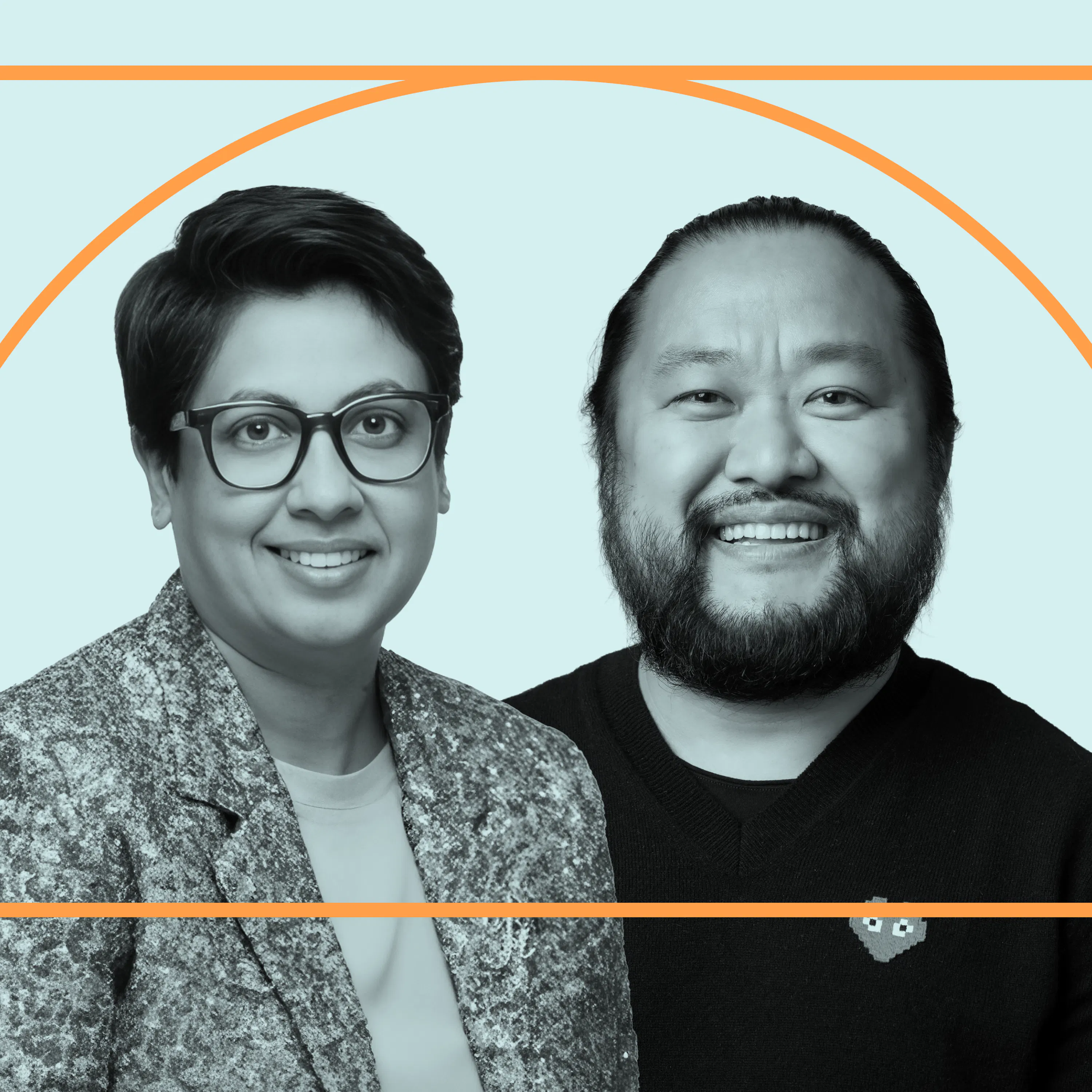
Design Better
David Shim and Rachana Rele: Read AI CEO and VP of Product Design for AI-native products at Adobe on amplifying creative work — not replacing it
00:35:30
In this conversation, we dig into some ideas that could genuinely change how you think about your work. David talks about this concept of “storage of intelligence” — the idea that your knowledge, your meeting history, your working style could all be captured and made available as a kind of digital twin that keeps working even when you’re not in the room. And Rachana shares how Adobe is thinking about AI not as a one-shot creative output machine, but as a collaborative partner that helps teams break out of their own blind spots.
Loading summary
Transcript44 lines
- [00:02]
A
We believe AI will be a creative partner. So removing the hidden work that most creatives have to go through, whether it's production work at the far end or even during the front end of the process, being an ideation partner, if you will, but never doing things autonomously.
- [00:22]
B
Today we have two guests from two different companies who have one shared conviction. AI serves us best when it amplifies people, not replaces them. Today we're joined by Roshana Raile, VP of product design for AI Native Products at Adobe, and David Shim. He's the co founder and CEO of reedai. Together they're building very different products, but they share a vision of AI that removes the drudgery from creative work, makes room for the thinking that actually matters.
- [00:53]
C
In our conversation, we'll dig into some ideas that could genuinely change how you think about your work. David talks about a concept of storage of intelligence, the idea that your knowledge, meeting history, even your working style could be captured and made available as a kind of digital twin that keeps working even when you're not in the room. And Rashonda shares how Adobe's thinking about AI not as a one shot creative output machine, but as a collaborative partner that helps teams break out of their own blind spots.
- [01:19]
B
We also push them on the harder questions, this job anxiety that's real right now in tech and the surveillance concerns that come with recording your work life and where they each personally draw the line. This is DesignBetter, where we explore creativity at the intersection of design and technology. I'm Aaron Walter.
- [01:40]
C
And I'm eli Woolery.
- [01:41]
B
At DesignBetter, our primary mission is to produce work that helps people like you refine your craft, improve your collaboration skills and get inspired by the creative process of others. If you enjoy what we do here, the best way to support us is to become a Premium Subscriber@designbetterpodcast.com Subscribe. Rachna Rayleigh, David Shim, welcome to Design Better.
- [02:12]
A
Thank you for having us.
- [02:14]
B
You know, you're an interesting pairing. We've paired you together like a fine wine and a fine meal because both of you are working on a vision for what AI and the workplace looks like in different ways. Rachna, you're at Adobe coming off of Adobe Max and probably trying to shake off some of the fatigue of the fun conference. David, you're at Reed where you're co founder and the CEO. Let's start with you, David. What's your vision of how AI is going to change the way that we work?
- [02:48]
D
I think where we're moving towards in the next year or two is this concept of storage of intelligence. And this is the idea that all the work that you do can be stored and that storage of intelligence becomes incredibly valuable, not just for yourself, but from a multiplayer aspect. So when you think about the future of work, the ability to actually share your knowledge, to share your team's knowledge and not do it proactively, where you're kind of going and saying, hey, I'm going to forward you this report, I'm going to give you this insight, but rather it's there that you could start to, just like you do with ChatGPT, start to ask questions, to go in and say, hey, what were the last a hundred customer interviews? Give me an aggregation of what their feedback was. Now, can you bump that up against people who canceled the service? So now I know people who canceled the service and the reason why, and I can start to dive into understanding what's actually happening. And that's really rare to do today because. Because it's hard to get all that information. If you've got teams in Tokyo, if you got teams in London, Seattle, New York, you don't know who to reach out to. That data isn't readily available. And it's going to be more pushed than it is going to be pulled. Like it is going to get pushed to you, just like a TikTok story somehow gets pushed to you that you like cryptos on Sundays and on Fridays you like to talk about going to dinner, and it's just going to learn that and send you that information.
- [04:02]
A
What I'm most excited about is AI playing a role of a mediator and a creative partner, especially in a team setting. Today's AI technologies are meant for a singular person, individual productivity. I would love a future where we go towards more around AI that makes us better teammates through being a creative partner with us, through mediating better practices inside a team collaborative environment so that we don't sort of hit this local maxima, if you will, of our own capabilities, but rather tap into capabilities of people we work with.
- [04:42]
C
So, Rochana at Adobe Max, some of the things that were featured, I think there's worry amongst the creative folks in our audience and all around that AI might replace their jobs or some portion of their jobs. But it looks like the focus for Adobe is largely how do you extend people's capabilities, how do you act like a partner? So maybe you could talk a little bit more about that.
- [05:01]
A
Yeah. So if you see many of the Max keynotes and the demos that we did on stage and also on the side stages, it was really about using AI as an augmentative technology rather than a replacement technology. An example of that is using AI to auto name your layers in Photoshop. That is completely augmentation as opposed to automation. So if you look at the theme of Max and theme of what we've released, it's really around removing the drudgery that people are most excited about. It's not about giving you this one shot creative output. That's not what our audience wants and that's not what we are building. We are building towards a future where we believe AI will be a creative partner. So removing the hidden work that most creatives have to go through, whether it's production work at the far end or even during the front end of the process, the being an ideation partner, if you will, but never doing things autonomously.
- [06:00]
B
David There's a strong overlap in that idea of reducing the drudgery and the mundane in the way that Reid thinks about the workplace too. You're gathering a lot of data and I think you even have this idea of a digital twin in the workspace. How are you solving for that drudgery of work?
- [06:17]
D
I think the most basic thing is if you've ever been on a call or a meeting in person, the person who is assigned to take the notes is probably the most junior person in the room. And you're not going to contribute, you're not going to take any part in the meeting outside of just taking the notes and then distributing them. And what typically happens with that is like, that person doesn't want to do the role, that person doesn't do a great job. Sometimes they miss certain facts, et cetera. That job is now eliminated when it comes to meeting notes with AI. And so with Reed, we join the call, we look at things like, are people nodding their head because that's really interesting, or are they shaking their head violently because they disag? So that kind of approach of measuring all those signals enables for better meeting notes. And no one's actually complained. No one has ever come back to us and said, you cost me my job. I can't do this anymore. It's really more like, oh, this is great. I don't have to worry about this specific task. And so that's been a great value return. Then it starts to go into things like, hey, following up. Normally you would have someone follow up, a project manager, a product manager, follow up with someone and say, hey, would you be able to give me an update on this project? What's the status on this now you can actually get those automatic updates where it's working in the background. It knows how the project has progressed. A great example that we've got is for salespeople. The biggest problem is getting them to update Salesforce or HubSpot on a regular basis. And so you don't understand what deals are coming in, what's going to close. And it's gotten so bad that you know, chief revenue officers will go in and say, hey, you're not going to get paid your commission unless you update your Salesforce opportunity, your HubSpot opportunity on a regular cadence. Well, we've now gone in and said, hey, connect your emails, connect your messages, connect your slack, connect your teams. And with that you're able to actually go in and see all of that information and move things forward very quickly to go in and see, hey, AI is telling me that this opportunity should go from 25 to 50% because the person asked for a quote. It should go to 50 to 75% because someone actually signed it and said, let's move forward. And now it's moving to 100%. And so that's all automated. Now where we launched that about three months ago and we've already had $100 million of deals go through that AI, where AI initiated the transfer, the change and what we've learned is on average it's about three to four days faster than if a human did it. But again, it's eliminating the job that nobody wanted. Nobody wants to clean up their CRM system. No one wants to update their CRM system.
- [08:36]
B
I'm curious about this idea of a digital twin. And when you collect enough information about your work and the things that you're doing and how people could interact with that, even when you're absent, I see that as being like a huge unlock in some respects, especially if you're in an executive role. So much of what executive work is is going from team to team to team to say, here's the vision, here's what we're doing. Are there ways where AI could help with that cross pollination between teams and the queries that are kind of common types of questions people might have?
- [09:14]
D
Yeah, on our side, what we are looking at with the digital tooling is we've got over 20 integrations that it brings in all that information to understand who they are, how they respond to things, what they're interested, what they're not interested in, as well as bringing in the information about the team. But it's also bringing in things like basic things like calendar. So if I email somebody and say like, hey, can we schedule this meeting internally? We have this digital twin called ada. And with ada, we can go in and say, hey, let's schedule a meeting across these three people. And it'll just do that automatically. I use that for external meetings as well. And what ADA does is it actually goes in, it schedules those meetings seamlessly because it has access to my calendar, understands what blocks of time I'm most available, that I'm most engaged. It will schedule that meeting. And what happens a lot of times is the end user will just reply back and say like, hey, this is great, really appreciate it. Totally surprised you're replying back five minutes after I sent the email at 11:35pm and then I have to jump in and say like, hey, appreciate it. And just as a heads up, this is ada. It's my digital twin. It's doing my scheduling. We've actually opened it up now a little bit more to when I send my investor letters to the board, they'll get the letter that talks about our performance, but I'll also go in and include ada and they could actually ask questions and ADA will actually pull in the answers. And I've got it set to autorespond. So we're transparent with our investors. So we're like, go ahead. Any question that you want to ask me, you can tap my knowledge base and it will immediately answer back. And so that's actually gotten to the point where it gives more trust to the investors to go and say, david's not hiding anything. The AI is actually pulling that information in. It's giving my answer immediately. And a lot of times it's giving a better answer than I can because I don't have context on what certain teams are working on, but they've given me access to their information. So that ability to fill in and be a more knowledgeable, not necessarily smarter, but more knowledgeable person can go in and say, I have access to civil information. Let me answer this question. And where we see the immediate impact is going to be on things like you're out of office. If you're out of office for a week and there's a fire drill, normally you get a page and you'd have to pick up the phone and then you get out of the mindset of being on vacation and the other person on the other side feels bad. Imagine if your digital twin can fill in for you, hey, why did you decide to do this? When did you check this in? And they can say, oh, it was because of this bug, this happened, and now you've got full context that you can go solve that problem. Imagine you're on maternity or paternity leave where you don't want to be out of commission, where all of a sudden when you come back, people have forgotten who you are and they've gone and they rely on other people. Now imagine if your digital twin steps in and says, hey, I would recommend we do this. This is my design preference. This is what I think the customer would want. And it continues that conversation for you and it fills in while you're out. I think that's where that extension comes in, where it's about augmenting who you are, not necessarily replacing it.
- [11:51]
C
This concept's interesting and it actually came up. We're doing some AI and design thinking workshops and we're trying to develop one for managers. And with one of our clients, it came up that they wanted to experiment with something like this digital twin. And there is a tool out there called Delphi which can go and funnel in all the content that you have online, essentially all your writing, all your talks, and then create a sort of digital version of yourself. Friend of ours, James Buckhouse, has one of these, and it's pretty impressive what it can do. You can go and essentially call it up and ask it questions. I guess one open question I have about it is, how are people going to react to that? If I'm an IC and I want to talk to my manager, but they're off on vacation, am I going to be comfortable talking to this digital twin, or are there guardrails around it?
- [12:35]
D
Just like with ChatGPT, just like with anything that does automatic scheduling with meeting note takers, there's going to be a little bit of hesitation. But as they start to see, oh, I can ask this question, and my manager is not going to get annoyed because I'm asking a question about process that I've asked three other times before that I just forgot what to do. Manager loves that because they're like, okay, I don't have to get annoyed that I'm getting asked this question because I want to help them, but they're still asking me the same question. The AI can fill in. The AI can actually move things forward. And it also takes things off the plate of the manager where they don't have to do that anymore. They can go in and say, hey, if it's a basic question about process, go in and ping my digital twin and potentially CC me. Or the digital twin can go in and say, like, hey, this is A question that came up from Eli, he wanted a little bit more context on this. This is what I said. If you want to follow up, feel free to do that so it becomes an extension of you. And I think people will get more comfortable in doing that. Just like with search, a lot of people will first go to their internal wiki, their internal Atlassian Jira confluence, whatever that they have to search for that information rather than bother somebody because people are generally thoughtful and they will go in and say, let me try to find it on my own. But that's gonna take a long time. It might take you an hour or two versus like I can go in and bother my boss. I can get that answer very quickly. But I feel bad about that. What's the intermediary? It's the AI, it's the digital twin that can go in and step in and give me that answer.
- [13:50]
B
Rachna, how do you think about this stuff and agents? Is that something that is on Adobe's radar?
- [13:56]
A
One place that we see for digital twins, not at a individual level, but again at a team level to be useful, is when you are actually reviewing designs, right from a standpoint of send this to a client. I constantly work with this client. This client has certain patterns. So before I send off my new designs to the same client, let me just go and see the patterns at this client level on the comments that they've given, the common themes that they touch upon usually so that I don't make the same mistakes before sending this designs off or the deck off to the client. So I think at that level, at a team level, it can be tremendously helpful as the first check, not as end all, be all, but helps you get 50, 60% there with respect to sort of making sure the baseline feedback is incorporated and yet the client doesn't have to repeat themselves. And then the second place we are seeing is also in cases of collaboration. For example, what if I have a specific style as an individual working for a company and a colleague of mine wants to call upon that style or learn from my style or learn from the codified workflows that I might have had generated through AI. So we see uses and use cases for that sort of work where Aaron, as you as my colleague can say, hey, slash, Rachna's agent on graphic design particularly so I do believe that there is goodness in improving productivity through this sort of general concept of twinning as opposed to specifically about digital twins.
- [15:40]
B
You know, there's one thing that's particularly interesting with what just was released at Max, and that's in Firefly that you can feed like a design system or design styles like brand guidelines and so forth. And one of the big challenges in larger companies is you've got so many different people who are making so many different things for different platforms, different channels. And inevitably people, they go astray from brand guidelines. And I've seen this firsthand, it's a mess. And then you have to go have uncomfortable conversations with people and say like, hey, you can't do that. Pull that right now and let's go fix that. Because you're representing our company the wrong way. Could you just talk to us a little bit about what Firefly is doing in that respect?
- [16:22]
A
Yeah. So we released something called the Custom models, which has been in the market for, I would say, over a year and a half. What it is, is you can train a model using Firefly on your specific designs, your specific style, your specific composition, and use that, release that within your enterprise for other people to sort of build upon and generate net new designs based on that specific model. So going forward, you can imagine a world where I actually invoke a model while I'm creating new designs from a colleague from, let's say, Marketing Studio Team or on a specific campaign for that matter, that you could have multiple custom built models from that standpoint. So that's how we are doing it for custom models on Firefly. And then the other thing that we released is very bespoke kind of services. We are calling Foundry, Firefly Foundry. And what it is is for large companies who want to have bespoke custom models built on their own ip. And so that's specifically for large brands who want models trained on their own ip.
- [17:29]
C
David I've been using Reed a lot for obvious things like note taking. The other things that I found that's really helpful with is, is Aaron and I have a lot of conversations, not just podcast conversations like this, but with sponsors. And over time, even if you have pretty good notes, you might lose track of where a conversation took place even. And so that's one of the interesting things, is that it can kind of help you kind of like organize your brain a bit and help you get context on things where you're like, I remember somebody said this thing about this thing, but I don't remember when or where that conversation took place. So I think that's kind of an interesting effect of having all of these conversations on Reed 100%.
- [18:03]
D
And that full memory is the thing where it's like you've got something that triggered Something in your brain. And I've done this a couple of times where it's like, what's the thing that we talked about a couple weeks ago that was about optimizing something and something? And then it will go in and say, hey, what about these four things? And it's like, oh, this is great. I know exactly what we're talking about. Where we're focusing in on is around proactively pushing some of those things out. So now if you do have a meeting and these are the five key questions that come up, we enable you to search for those answers, but we want to proactively push those to people. That's what we've really seen in this age of AI is search is kind of where we're at today. Where you think about ChatGPT, where you ask it to build something, where you ask it to find something, you narrow it down to go in and say like, hey, I like that result, but can you adjust it this way? I think what you're going to see is a very quick evolution into more of a push system where it's more TikTok meets Tinder, where it's going to go in and say, hey, I see what you're doing. You don't have to prompt anything. I'm going to deliver content to you that we think is relevant, either updates on different projects or actions that we think you should take. And you're going to go swipe right or swipe left to actually trigger that action. And then you're going to go in and maybe do a couple of edits, but then you're going to activate against it. And I think that type of motion is what we will see very shortly. And it's kind of the motion that consumers are already doing today. Like if you look at consumption of content, it is through things like TikTok and Instagram Reels. Now it is no longer through doing search, finding something and then reading an article about it. It's more like, hey, I want the content served to me. I want to figure out what's going on and it is going to be interesting on how that switches to work. But I think that's where we're going to go.
- [19:36]
B
What's the net of all of this? So there's tons of things that we can do to improve productivity. In fact, it's something we've been doing since the beginning of the industrial era is we want to try to be more productive, improve our capabilities. But when you think about what's possible in this near term future that you're both describing. And then we push that out to maybe like five to 10 years of farther term, which is a long time in an AI age. What does a company look like? How is it different when all of these tools and some of the visions of what maybe you can't share with us today, what does a company look like? How is it different?
- [20:19]
D
On our side, we think that storage of intelligence is what's going to make it different. It becomes your long term ip. And in the same way that design was an ip, that institutional knowledge, tribal knowledge, whatever you want to call it, all of that is what values the company today. The storage of that intelligence is what's going to be more valuable. And I think you're going to start to see companies and earnings reports start to say, hey, we're storing the intelligence this way. This is how we're activating against it. This is where honestly, like, hey, we're not going to replace these jobs because we know we've got a process that's now in place. And so I think that is going to be a shift and I don't think it's 10 years from now. I think it's going to be four or five or even less than that to go in and see that shift of storage of intelligence, valuing that specific entity in the same way. Where I think the great comparable that I've had is like one of my friends who is a early employee at one of the largest hedge funds in the world, he went in and said, hey, we had AI before AI existed, where the models were running things. They were telling us do this, do that, and processing all this information. But there was always a human in the middle that took all that knowledge that was available, all the models, all the learnings, et cetera, that still decided on what to do, to say, do I make this trade or do I not make this trade? So that role will still exist. You're not going to let the AI totally run free. There will always be kind of an orchestration layer is my guess. But at the same time, you don't need 50 people to do that orchestration layer. It simplifies it down to one. In the same way where for more consumers and more design, I would go in and say, hey, remember when MapQuest first came out, hopefully your audience knows what MapQuest is. But that was where it's like you used to have maps when you drove and you'd have physical maps that you like map out where you're going to go. Then you went to MapQuest, you printed it out or you wrote it out. Now we've got computers on our phones right here where we're able to go in and say this is the right direction. And against all my better knowledge, it's going to tell me to go right and I will cross nine lanes of a freeway to go in and make that right turn that's 30ft away so I can stay for 60 seconds. That's AI, that's machine learning that's going in and saying like this smartphone is telling you how to move a 2 ton car across multiple lanes of freeway with life and death scenario. And you're listening to it, but no one has second thoughts about that because we've never now become ingrained and this is how we interact with this technology. I think it's the same thing that's going to happen with AI on the enterprise level. And the one thing that will be interesting that, you know, Rachna, you talked a little bit about was like it's going in and giving you the models where you can feed in your information, your corporate information. But I think there is going to be a split. I think in about a year or two you're going to have people that say, I want to take my own model, my own training data to the next company I go to. If I'm a designer, I have certain elements, certain style. Yes, I've contributed that to the company and that's company IP for the broad work that I've done. But if I go to the next organization, I want that information to follow me. Not the secret ip but the way that I work. Because then I can go in and load up the creative elements that we talked about and I can go and say, this is the new company, these are the creative elements. This is style guide. This is how I like to work, this is how I design. And now when I combine those things together, the ramp up time goes from like three to six months to three to four hours where all that data is there.
- [23:18]
A
Yeah, I agree with you, David. I think people today are selling stock. Stock marketplaces were such a commonplace. I think in the future, very near future actually, people will sell their own agents. It's the codification of their workflows that will become their own unique IP that they will be able to sell on marketplaces, I believe. But thinking about agents through the lens of horizons, you can say that the horizon that we are in right now is the horizon where agents summon tools to us. The horizon we'll see very quickly in a year or two is where agents summon outcomes and Then push that a little bit further. It will be about agents summoning goal oriented systems where you just as an employee, you say what your goal is, is to optimize for this level of ARR or campaign outcomes and the systems go and do that work for you and of course you'll be in the middle of it, but it's very much goal oriented in the future. So I believe that's where we are going. And designers will have a very, very strong role to play in that.
- [24:22]
C
So given that a lot of roles are compressing and it's obviously in the news, a lot of those tech companies are laying off a lot of people and a lot of folks are just concerned about their future if they're a designer or any other role in tech. But perhaps there's a different vision. And I'm curious what each of you think about how roles are changing and how people might position themselves to remain relevant in tech or in whatever tech related job that they're in currently.
- [24:47]
D
I would say on my side you're seeing less of the pushback that you normally see for new technologies when it comes to AI. Like I think the adoption's actually been pretty high. Half of our users are actually in emerging markets. And that's unexpected. When we initially started the company three years ago, four years ago, now we're seeing markets like we're the number one meeting note taker in South America. That wasn't necessarily part of our roadmap, but the adoption rate was so high because it was delivering returns, it was delivering outcomes at the end of the day. And it was doing it in a way that didn't require you to program anything, it didn't require you to learn a new, a new design software, it just works right off the shelf. And so that's really been kind of interesting from an adoption perspective that we saw. I think it's leaning forward. I think it's don't worry about your IP so much, don't worry about your knowledge. Like go in and adopt the technology first. In the same way where people used to be freaked out that Google was indexing your content, now people are suing Google because they're not indexing the content, they're not making that discoverable. And so to go in and say I'm not going to participate in this next evolution, this new age of AI because I want to protect my ip, I think it's a reasonable thing to have in mind. But what you're risking is the fact that IP is now even more of a commodity and stocks are a commodity, Oil is a commodity, AI is a commodity. But you have to be able to participate in that marketplace. And if you choose to ignore that, I think you're going to get passed over. In the same way that if someone went in and said, hey, I'm not going to use coding assistance when it comes to AI because they're not as good. Totally true. Three years ago, two years ago, a year ago. But today, now you're seeing senior engineers get amplified by 20 or 30%. Where I've talked with a Fortune 500 company, CIO and they went in and said, hey, we're actually slowing down hiring because we don't need as many college students coming in because our senior engineers are actually getting better ROI by using this tool that costs maybe 500 bucks a month with additional coding elements.
- [26:38]
A
I believe the way to stay relevant and the anxiety is real. We see it every day. It's to experiment and stay curious. Right? Like that is one thing that we are instituting even within our own design teams is just to get the adoption of AI tools going just so that you understand where the limits are and where you as a designer or a researcher or a content writer can play a unique and most strategic role. That is the baseline aspect that I've been saying to people all across. Just know what is happening in the market and it's evolving very, very fast, very fluidly. So staying on top of that just takes a lot of discipline of finding that time and doing these experimental prototypes or playing around with proms or what have you.
- [27:26]
B
So one thing that frustrates me about the tech industry is that it's our superpower and our kryptonite, that we see the future with rose colored glasses. We see the positive things that can happen. And that's gotten us into trouble in the past. Thinking about 2010, 2011, social media, it's going to democratize everything. It's going to make our world wonderful. And some of that came to pass, but far more came to pass that was negative that we did not anticipate or we chose not to consider. As you develop tools for the workplace to make us more productive and help us collaborate better and help our memories be more persistent. Where are the red lines? We will not cross this. This leads to the dystopian future we don't want.
- [28:18]
A
I think the biggest both problem and an opportunity here is how recursively AI learns. And so how do you put human at the center of making decisions? And that's why for us, it is really about partnership as opposed to automation. What are the guiding principles and design principles you're using to design these systems? Are you designing responsibly and are you building trust with human beings who are at the center of your business?
- [28:46]
D
Yeah, I think one is awareness that it's being used. If you're going to roll out AI to go in and say, we're going to roll it out, but we're not going to tell the employees, we're not going to give them consent, we're not going to give them the choice to enable it. That's the wrong approach. And I think that's a red line that we live in where when we join a call, we go in and we notify people with a recording notification. We go in and put it in the chat that read AI is measuring the call. When we go in and we say, do you want to opt out? You can actually type and opt out and we'll leave the meeting and delete all the data. You have to give that level of control so that people feel comfortable in sharing that information. Because what you don't want is a gray market of information. You don't want to say like, hey, I'm not going to do this on computer. I got my personal computer that I'm going to use this for because I don't want AI to access this information. I'm going to start using Snapchat or Telegram or something else to have conversations. That doesn't help with the storage of intelligence. That actually creates pretty large gaps. I think the second is letting employees decide what is actually shit. It's a little bit different from what you think about it. It today is like top down. We're going to implement it across the board. That works when you select software solutions that you approve, that you want to move forward with, but what you want is the employee to have full control of what gets shared. So the way that we look at it is there's a concept of social sharing where you share across your public, your friends, your close friends, or a direct message. When you go on Instagram and you share a story, we think of it the same way when it comes to your work content where you have everything. But you can go in and say, I want to publish this in the entire company because I had a fantastic customer call and I think everyone would gain knowledge and information from this that they could actually activate in their work. So I shared across the board. Then I can go in and share it across my team. So I can go in and say like, hey, this is what I'm going to give to my team, but I don't think everyone in the company needs to know it. Hey, I'm going to give this to my manager. Hey, I'm going to give this to my coworker. Where it's like, hey, this is one specific thing that we should probably dive into on a one on one. All of those things. That level of control is what we provide. And I think that is something that the consumers are comfortable today with and I think employees are getting more comfortable with because if my content can become more discoverable with my choice, it's almost like an influencer. All of a sudden somebody else is working on a project, this information pops up and it says, hey, did you know that the customers are 40% more likely to click on this button if it's a circle versus a square? You're like, oh, let me click on this. This is great. All of a sudden that person gets credit for that work that nobody would have ever found before. No one would have actually benefited from. Now that person has actually influenced the change within the company. So I think there is a lot of positive momentum that can happen too, if you do it in that right way.
- [31:17]
C
So we've got one more question for you as we wrap things up here and I'm curious if either of you have seen your products used in interesting or funny or inspiring ways. And I'll throw an example first. So I've been using NotebookLM, Google's product to make these little mini podcasts mostly for my family and then I can drop them into Adobe Character Animator and animate them. So kind of like cross pollinating various tools, you can make really kind of fun, interesting stuff very quickly. And yeah, I'm curious if either of you have run into similar things where a family member or one of your users is making something unique early on.
- [31:52]
D
And I think we've seen this more and more, is it isn't necessarily the tech person, the enterprise salesperson, but it's the day to day user, the common person, my mom, my aunt, et cetera. And one use case was early on someone reached out to us and said, hey, I'd love to do a call with my caregiver. And we're like, okay, this is interesting. And it was early days, we want to interview customers. We're like, yeah, great, let's jump out a call. This was during COVID And the person that was on the call was like, hey, I have early onset dementia. I have a caregiver that is taking care of me. They're making sure all my bills are paid. I use Reed every week when I have a call with my family to understand what they were thinking about, what they were working on, how was Bobby's game, how's Carol's game? And then go in and look at the notes and then the next call that happens a week later, they reference those notes to say, this is what we talked about. So he was trying to fill in the gaps that he couldn't remember, and he was like, hey, can you just make sure that this product continues to work where even if I can't pay for it, like, my caregiver will take care of it and make sure it's assigned to the account? And that was something rare. Not in any use case that I had, but I was like, wow. The team was like, so happy that they found this use case. And it was something that we didn't expect.
- [32:59]
A
You can imagine with Adobe products, many of us are just using them constantly with, you know, both PDF AI, which is our PDF spaces, as well as all things Firefly. A lot of memes being created by teammates for each other or for their families. One thing I used just last night was we have something called the PDF spaces where our investor relationships group, our department, had put together the IR reports that come through and they had put this in one place and just given us a link of, go analyze this. You know, go look at this in this PDF space. So that was my own personal use just a few hours ago.
- [33:39]
B
Where can people learn more about you, your team, the work that your companies are doing for Reed?
- [33:46]
D
You can go to Read AI. Also, if you're a premium subscriber of Design Better, you get a free license to Read AI. So definitely give it a shot. It's included in those plans. If you want to learn a little bit more about what we're doing as a company, follow us on LinkedIn. Look for Read AI or David Shim and you'll get more information.
- [34:04]
B
Just a quick addition there to what David said. If you are a annual premium subscriber of Design Better and you go into your Reed account, you can actually query every episode of Design Better and find information on any topic that you're particularly interested in learning about Rachna, how about you and what your team is doing at Adobe?
- [34:26]
A
Yeah, I mean, the best way to know what we do is to go try this out@adobe.firefly.com and that's just all the models and generative AI technologies that we have. And then for me, is LinkedIn fantastic.
- [34:40]
B
Well, Rachna and David, thank you so much for joining us. This was a fascinating conversation.
- [34:44]
A
Thank you.
- [34:45]
D
Thanks for having us.
- [34:50]
B
This episode was produced by Eli Woolery and me, Aaron Walter, with engineering and production support from Brian Paik of Pacific Audio. If you found this episode useful, we hope that you'll leave us a review on Apple Podcasts, Spotify or wherever you listen to finer shows. Or simply drop a link to the show in your team slack channel designbetterpodcast.com it'll really help others discover the show. Until next time.