← Design Better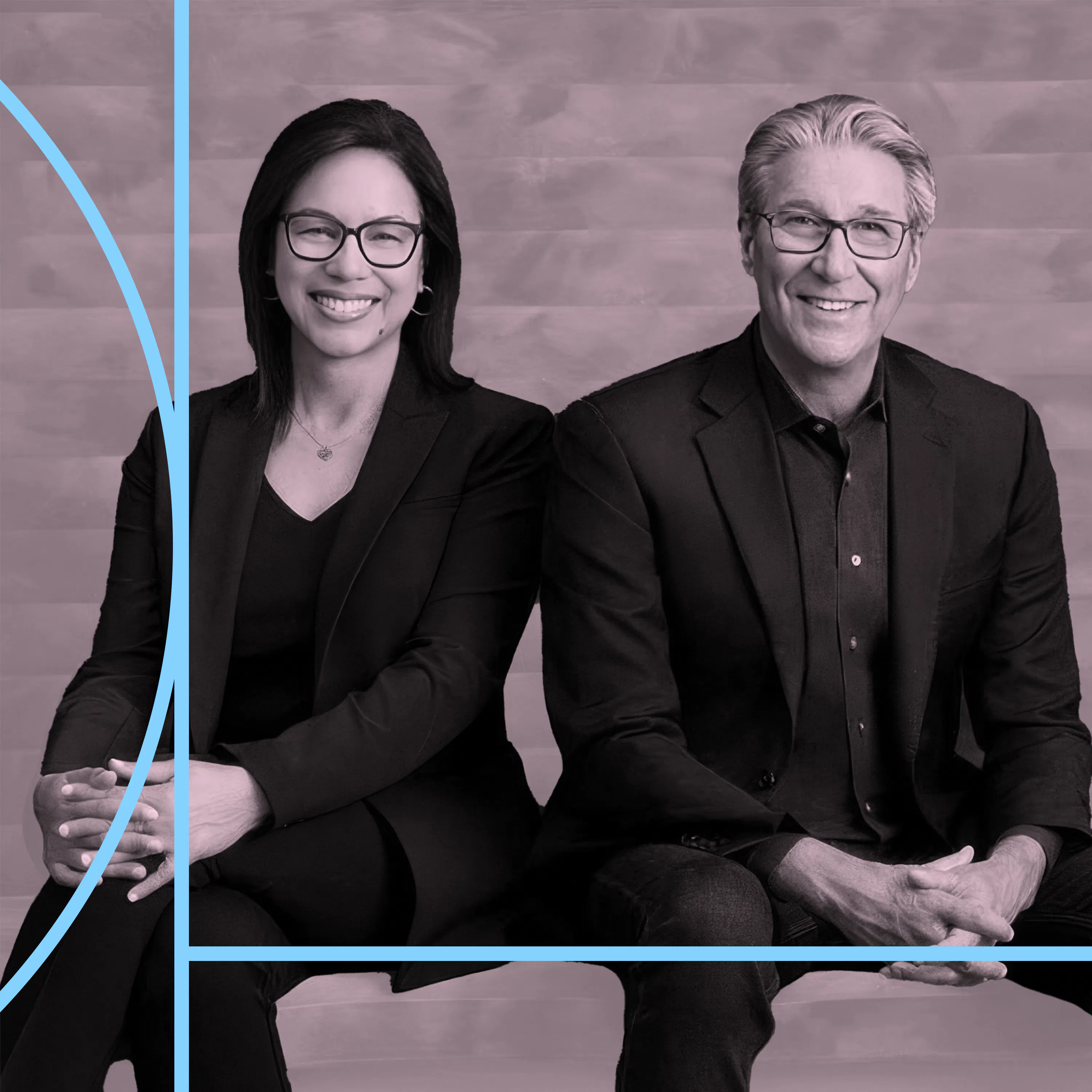
Design Better
Diane Hoskins and Andy Cohen: Design for a Radically Changing World
00:55:28
Diane Hoskins and Andy Cohen, Co-Chairs of Gensler, one of the world's largest architecture firms, have a new book called Design for a Radically Changing World, and we wanted the back story on what inspired them to write about a more sustainable approach to architecture and urban planning.
Loading summary
Transcript64 lines
- [00:02]
Andy Cohen
We really believe that everyone has aces and spaces, things they're great at and not so great at. But when you put two people together like Diana and I, with our aces in the room, it's one plus one equals five, and the sparks fly. And that's what we really believe in. We believe in the diversity of leadership, the diversity of people, and bringing the best ideas from around the world together.
- [00:27]
Aaron Walter
I don't know about you, but I spend more time than I'd like to admit worrying about our future. Central to my concerns is how we're responding to climate change. It is a massive multidimensional problem. People like Diane Hoskins and Andy Cohen of Gensler, one of the world's largest architectural firms, bring my anxiety level down just a notch. Under their leadership, Gensler has been innovating in material science, zoning and design to.
- [00:55]
Diane Hoskins
Mitigate the impacts buildings have on our environment.
- [00:58]
Eli Woolard
Diane and Andy have a new book called Design for a Radically Changing World, and we wanted the backstory on what inspired them to write about a more sustainable approach to architecture and urban planning. We also spoke with Diane and Andy about their childhood and how they found their way into architecture and what's kept them excited about staying at the Same company for 30 to 40 years, which is a real rarity in our current era. This is Design Better, where we explore creativity at the intersection of design and technology. I'm Eli Woolard.
- [01:24]
Aaron Walter
And I'm Aaron Walter. You can get ad free episodes, bonus content, discounted workshops, and access to our monthly AMAs with big names in design and tech. By becoming a Design Better premium subscriber, it's also the best way to support the show. Visit designbetterpodcast.com subscribe to learn more. We'll return to the conversation after this quick break.
- [01:59]
Diane Hoskins
Design Better is supported by Masterclass. It's usually around the holidays, as the year draws to an end, that I start to really reflect on my goals and how I want to grow in the coming year. I've often turned a Masterclass to help me expand my knowledge and satiate my seemingly unending curiosities about disciplines that I've yet to explore. Masterclass is the only streaming platform where you can learn and grow with over 200 of the world's best thinkers. I'm talking about people like Steph Curry, Paul Krugman, Malcolm Gladwell, Diane von Furstenberg, Margaret Atwood, Levar Burton, and so many more inspiring thinkers who share their wisdom in a format that's easy to follow and can be streamed anywhere on a smartphone on your computer, your smart tv, even in audio mode. Former Design Better guest David Sedaris teaches a class on storytelling and humor. And I loved Bob Iger's class on business strategy and Anna Wintour's class on creativity and leadership. Oh, and Sarah Blakely, she's the founder of Spanx, has an amazing class on entrepreneurship that taught me so much. I've been through so many classes and I just learned so much each time. The wirecutter calls Masterclass an invaluable gift and I can attest to the truth of that claim. I gave my wife a Masterclass subscription last year for her birthday and she got so much value from it all year long. With Masterclass, your loved ones can learn from the best to become their best. Masterclass always has great offers during the holidays, sometimes up to as much as 50% off. You should definitely head over to masterclass.com designbetter for their current offer. That's masterclass.com design better. I'm so excited for you to try it. Masterclass.com/design better want to shop Walmart Black.
- [03:53]
Andy Cohen
Friday deals first Walmart+ members get early access to our hottest deals. Join now and get 50 off a one year annual membership. Shop Black Friday deals first with Walmart plus see terms@walmartplus.com.
- [04:10]
Aaron Walter
And now back to the show. Diane Hoskins and Andy Cohen, welcome to the Design Better podcast.
- [04:21]
Andy Cohen
Thanks so much for having me.
- [04:22]
E
Thank you for having us.
- [04:24]
Aaron Walter
Yeah, you have a fascinating new book out. It's called Design for a Radically Changing World. And Eli and I are in particular very interested in this topic of the times we live in and the opportunities for designers to contribute to issues with climate change and community. There's. It's a multifaceted problem that we face in the modern world and we want to dig into all of that. But maybe we could just start from the beginning. You've both been at Gensler for a long time, which is a very influential architectural firm. It's not usual for people to stick in one place for a long time. Could you tell us a little bit about how you found your way into Gensler and why you've stayed for such a long time?
- [05:07]
Andy Cohen
Well, first of all, Diane and I have been co CEOs for 20 years together and we just literally just stepped aside to become co chairs of Gensler. I am the lucky guy, that Obama lifer at Gensler. I've been here for 43 years, going on 44 years and I found my home when I joined Gensler because of our entrepreneurial approach and our focus on design, innovation and our vision is to create a better world through the power of design. It's something that over my 43 years, I've seen our firm flourish. When Diane and I became co CEOs, we were about $100 million in revenue. And now we're 2 billion in revenue. And we're in 56 cities now around the world. We're in 17 countries. Last year we practiced in over 100 countries. So we have a real strong, significant, what we call constellation of stars. We have stars around the world that are focused on creating a better world. And that's one of the reasons which we'll get into about why we wrote the book, because we really believe at our scale and our focus on innovation, that we can make a difference in the world.
- [06:13]
E
My journey to Gensler is similar, but a little different from Andy's. But I also want to just say we're both so excited to be in this conversation with you. As I was mentioning, I think we're absolutely swimming in the same waters as, you know, you guys are doing some really important work to promote dialogues about the central role of design in people's lives. And that's really what we're talking about. That's what our book is all about. And frankly, we feel it's really important for design to kind of step up and lean into the challenges we face. It has to be part of the solutions as we look at really important challenges in the world. But yeah, I've been at Gensler. I'm coming up on my 30th year. As Andy said, we've been co CEOs for almost 20 years prior to coming to Gensler, you know, I kind of did a few different things. And I guess I would say that, you know, my journey to Gensler was architecture, interiors, business, real estate, you know, also getting my MBA and all of that. And then the opportunity at Gensler was this was a place, a platform where all of that could come together and where there was, as Andy said, this true vision and. And frankly, I would say our founder who. And we're in our 60th year as a company this year. So 60 years ago in 1965 in San Francisco, imagine that young guy who was starting a firm, very much a mindset around how does design shape and catalyze performance and in the workplace, I mean, it was a novel and crazy idea at that time. And, you know, he was kind of the founder of an entire industry entirely path and vector in the design world. And as we see today, here we are 60 years later, and what is the top of everyone's minds is workplace, design of workplace. How does workplace catalyze performance? And what about all the places that we work? So coming to a place like Gensler was just extraordinarily stimulating because we're going to talk about it, I'm sure, this sense of collaboration that you're with people who are smarter than you and better than you and push you and really challenge you, and all with a sense of for the greater good and we can do things together that we could never do as individuals alone. And that incredible sense of taking on those challenges, whether it was the challenges of helping people to do great work or now the challenge of climate change or social unrest or what's happening with housing and so on and so on. So, you know, again, Andy and I, we've really leaned into what it means to be this very special firm. Andy used the word scaling, and that's something that we've really focused on. How do we scale this idea? You know, you always hear about that with tech firms, right, scaling, but you don't hear about it a lot in design firms. And so that's been a major challenge. And we feel like that's been something we've kind of cracked the code on, and we've been able to find ways, even at a scale of 6,000 people, to have a culture that believes in collaboration, that recognizes that we are better together than as individuals, that takes on these tough challenges.
- [09:37]
Andy Cohen
I would just add that because we get this question a lot about collaborative leadership. Diana and I, as I said, we're unbelievable friends. We've been at this for 20 years, and the idea of collaborative leadership is throughout our whole firm. In most cases, we have two or even three leaders, men and women, leading offices, leading practice areas. We really believe that everyone has aces and spaces, things they're great at and not so great at. But when you put two people together like Diana and I, with our aces in the room, it's one plus one equals five, and the sparks fly. And that's what we really believe in. We believe in the diversity of leadership, the diversity of people, and bringing the best ideas from around the world together.
- [10:18]
Aaron Walter
That's fascinating. I mean, we don't see too many co CEO scenarios. Usually there's some sort of challenges that arise with that, but it sounds like it's a superpower. I can't help but think that a lot of the language that you've used about inclusivity, about designing for change and so forth, Diane, you just Said that Gensler was founded in San Francisco in 1965, and that's, like, right smack dab in terms of time and location in the heart of a revolution where people were looking at the world, the confines of the social contract and so forth, in a different way. And I'm curious how that translates into the mission and vision for the company now, what, 60 years later.
- [11:02]
E
Yeah, I think it is very much in our genome. And you're absolutely right. In fact, we've grown and we've become this firm, but more than ever, we kind of go back to that origin story, because it really does speak to who we are. It really does speak to that sense of mission. Over and over again, we've kind of stepped back and said to ourselves, is our vision big enough for what we could be doing? And we've had to step back and create a greater and really take on a much bigger vision of what we could be and what we could be doing. You know, an example of that, literally, you know, as we were coming out of the Global financial crisis, 2008, 2009, you know, was a moment for us of really stepping back and saying, look, you know, we came through. We are still the biggest design firm. We're doing great. We've got great clients. We've got wonderful design. But what's it for? What's the purpose? I would say it was at that point, point where we decided it was really important to coalesce a real understanding of our purpose. And that's where we stepped back and said, it's to create a better world through the power of design and to make a difference in people's lives from that point on. And that was kind of our 2020 vision. And, you know, again, we've kind of stepped back and reassessed that and raised the bar even higher when it comes to enhancing the human experience. That's another part of our goal, our mission, our purpose. And then it kind of breaks down from there about being borderless. How we operate as part of our vision is part of our challenge. You know, again, design is very local. The best way to work is with that person who, you know, who you sit near. But how do you work and have that kind of trust with people who are a thousand miles away or 2,000 miles away, or speak a different language from a different culture, Everything very different about their lived experience. But how do you create an ability to work together side by side? And that's been something we've worked at very strongly as well. And, yes, it's all the technologies that connect us. But we were working this way even before we had all of these technologies, even before the zoom era. It was about being borderless, being a one firm firm. To do that, we invest a lot in bringing people together, whether it's kind of in a small collective or even large meetings, hundreds of people. We're getting ready to have our big principals meeting, and we're going to have close to 600 people there in September at a single meeting. Again, reinforcing and living and being together, talking about what's going on in the firm and reinforcing our culture. But we also have a meeting in the spring we call our super meeting, and that's really all about exchanging ideas. And, you know, Andy used the phrase the sparks fly. I mean, the sparks really fly at that meeting where it's what we call G talks instead of TED talks, where literally there's just this rhythm of constant ideation and new ideas and what's going on and projects and videos and really inspiring each other, but also building the connection of people to people. But to your point of that origin and how that genome comes through, it is not just for the sake of being Gensler. It's for the sake of what we can do to make a difference.
- [14:35]
Eli Woolard
So we've talked a little bit about your career origins, but if we can, for a minute, just wanted to rewind further because Aaron and I are always curious about, like, how do you find your way into a creative career and what was your childhood like? So maybe you could both walk through a little bit of your childhood where you grew up. Did you build stuff? Did you draw stuff? Talk us through that.
- [14:55]
Andy Cohen
I was born in New York, and again, I'm one of those lucky people that early on in my life, I love to sketch. I love to build Lincoln Logs if you guys aren't old enough. Oh, yeah. I knew early on I'm really, really lucky. I knew early on I wanted to be a designer. Also. Simultaneously, my grandfather started a cheese store in the Lower east side of Manhattan, and my dad, who didn't have a college education, ran the cheese store. Everyone in the family thought that Andy Cohen was going to be a cheese man. So I worked in the store most of my early life and really learned a lot of skills around people skills and interacting with people. And it was really a special education for me. Unfortunately, my dad got cancer right when I was going to go to Pratt Institute. So I went to Pratt Institute in New York, in Brooklyn, and worked in the cheese store on the weekends. And this family story of Andy Cohn taking over the cheese store was shattered because my dad came and said to me before he passed away, if you follow your personal passions, if you follow design, you'll always be happy in your life. And I followed that. It resonated me so much that I was at Praddyke. When I graduated, I moved to California and joined the startup firm Gensler. It was just a startup firm with a few hundred people, and like I said, I never left since. So for me, I've been able to live my dream my whole life, and I live my passion. And I love every day I don't work. I wake up every day, and I love what I do, and I get to work with an incredible partner. And, Diane, life can't be better than that. But again, I'm one of those lucky guys who knew early on in my life that design was going to be my following.
- [16:35]
E
Similarly, I think you hear this a lot from architects where you kind of knew early, early that it was your calling. Right. You know, and I guess because you can almost do it. Well, of course you can do it. You can design without any education because you're like a baby and you're playing with those blocks and you're just making things because it's your passion. And you don't say to yourself, this is your passion. You're just doing it. I mean, I was a LEGO fanatic and continue to just love legos. And I was in a family of five kids, so we had mountains of legos. I mean, it was like everything to us. Very, very creative family. My mom had been trained in design and, you know, ended up going to work from McGraw Hill in advertising. But, you know, everything was kind of about some form of creative something, whether making things. We all played instruments. It was, you know, that kind of a family. And my mom was kind of in that mode of you feed your children's interests. So, you know, it kind of went a little bit crazy. She also always had the whole Earth catalog. I mean, that kind of stuff was around the house. So, you know, a little bit on that hippie side of things. Anyway, so early on, you know, I don't know, I was eight years old or so and declared I was going to be an architect. And so that was very encouraged and very much something that it seemed like I would like to do. It's funny because you think these things, but you don't ever really think about sort of a pragmatic, do I have the skills, really? Or what does it take to be an architect? But as it turned out there was a lot of things that I have that I think most architects end up having, which is sort of a creative and a quantitative, you know, left and right brain are always kind of going at the same time. And that's definitely been sort of my makeup. I was super strong in science and technology in high school, but I also was a French horn player in All City Orchestra in Chicago. I'm from Chicago.
- [18:46]
Aaron Walter
Very rich architectural history.
- [18:48]
E
Yeah. And I always say, you know, being from Chicago, it sort of speaks to you also.
- [18:53]
Aaron Walter
Yeah, it's everywhere.
- [18:54]
E
Yeah. And so I was really determined to kind of go to a school that was both strong in architecture, but also where I could get a really strong science and technology education as well. Ended up going to mit, Although the longer story you can read in the book, which is, you know, the influence of my French horn teacher, who really helped me to, you know, there were some great schools in the Midwest that, you know, I was seriously considering and strongly. She convinced me that I needed to really get outside of my comfort zone of going to where some of my friends were going to be going, but really to, you know, try something totally different, something that was probably going to be extremely challenging. And ended up going to mit, which I think, for me, the right experience, because it did push me to get outside my comfort zone. It really pushed me from kind of the academic side as well as design. And if you know anything about the school, there's hardly an undergraduate program. You're kind of thrown into graduate studios, literally from sophomore year on. So you're kind of in a. Always the deep end of the pool, which wasn't always fun, but it definitely gave me that strong sense of the challenges in life and the fact that you push hard and that, you know, things aren't going to come easy, that it's going to take that extra effort. And that's been something that, as a work style, has served me through my career.
- [20:34]
Aaron Walter
That's one thing you talked about these characteristics of architects being creative and quantitative, which I think is one of the more unique disciplines. The other characteristic that you didn't mention is that you have to have tenacity and persistence, because architectural school will beat the passion out of you. I mean, it will just clobber you. And I wondered if, like, if either one of you, in your pursuit of architecture. I know, because my wife went to architecture school and definitely brought that to her. If there was a point where you're like, where's the door? I just need to get out of.
- [21:08]
E
Here, honestly, you know, after junior year, I was kind of like, oh, I, you know, I don't know about this. And I did an internship at an architecture firm. This was the first internship I ever did. And it was with a firm in Boston called Tac Tac. And it was to work on the revitalization of a mill town in Massachusetts called Springfield and Holyoke area. And honestly, that internship just brought the love back. And I refound my purpose in wanting to be an architect and designer, but it was kind of getting out and doing it. And that's why I realized I needed to get out and do architecture. Architecture school was one thing, but doing architecture was what I loved.
- [21:58]
Andy Cohen
I think architects, in our training and in our critical thinking, most of the people that you know, especially in our firm, have this determined optimism. It's like, you know, that you can utilize design to make a difference in the world. That's the catalyst for positive change. So even in your down moments, especially in school, there's this optimism that you can do something special for the world. And that's frankly, the ethos that's within Gensler. It's an interesting question, because in our field, you have to be unbelievably relentless, relenting and relentless. And your perseverance, you have to have perseverance. You know, when Diane and I started, we were junior architects, and it just takes that unbelievable perseverance. But over time, if you really believe in what you're doing, like I said and Diane said, your purpose and why you're doing it, the big why behind what you're doing, it, it happens.
- [22:50]
Eli Woolard
There's a line in your book about how the pandemic brought clarity to need for a more sustainable approach to architecture. Could you talk us through it? What was it specifically about the pandemic that brought that to the forefront?
- [23:02]
Andy Cohen
Well, look, the pandemic was systemic for what's happening with climate change. And climate change is the moral and business imperative of our lifetimes. It's so important. What most people don't know, and probably on your show don't know, is that 40% of all CO2 creation is buildings. More than automobiles, more than industry is buildings. So we, as the most impactful and largest firm in the world, we feel like we have a huge responsibility in making sure that we secure our future for our children and our children's children. And so we have developed for the world and for our firm an idea around trying to push towards net zero on everything we do on all our buildings by 2030. And we're putting out in the marketplaces and here's an example. We created what's called Gensler product Sustainable design, and that's in our specifications. So we impact millions upon millions of people every year, how they live, how they work, and how they play. And we specify millions and millions of square feet of carpetings and ceilings and walls and curtain wall. And so we put together specifications that now everyone in the industry can plug into to create green buildings, to create responsible buildings for our future. The biggest contributors to climate change are concrete and steel. So we're working with a lot of concrete and steel manufacturers. We're working in buildings that are now made out of timber and wood versus steel, because we want to make sure that we're designing for a sustainable future.
- [24:36]
Aaron Walter
Can we dig into this a little bit more, the specifications that you're alluding to? Because it seems like there are probably multiple ways that architecture can really design a future where climate change is mitigated. So there's materials that you're alluding to, and maybe we could dive into that a little bit more. There's methodology or how things are built, different approaches there. Then there's also the post building opportunities that architecture shapes space and space shapes behaviors. How might people live in a different way or work, collaborate in a different way that's more sustainable. Maybe I missed some dimensions there too, but could you speak to that a little bit? What is it in your system that is most impactful?
- [25:20]
E
Wow. Well, you went the whole 360. That's. That's great. So, I mean, maybe I'll just jump into a piece of it and maybe I don't quite answer your question, but keep coming back with where we need to fill in some pieces. But look, you know, as Andy said, and I think it bears saying, and again, I think you guys are saying this on a lot of your podcasts, that this whole issue of decarbonization, that this is an area where design can make a difference, but it's also where we have a mandate and a responsibility to make that difference, and we take that really seriously. And, you know, this point about our scale really comes to bear there. You know, you look at all of the small firms out there, and 90% of our industry are firms five people or less. So you have a firm like Gensler that fundamentally designs about 1.5 billion square feet of new projects annually. So it's almost like we're designing full cities every year. That when you kind of take that in and you recognize that, yes, everyone, all the design firms need to address this issue, but we really need to Take on the leadership that we have as the largest and the most impactful. And what can we do? Not only that affects our projects, but then has a domino effect in a whole host of ways into our industry and the entire ecosystem and supply chain. So we recognize not only what we can do on our decision making, but then what is the impact to our clients and their projects, to the suppliers that are making the things to other firms in our industry who don't necessarily have the resources that Gensler has to create. As Andy was mentioning, the Gensler product specification standards that we have just recently launched. And if any of your listeners are interested, just go onto our Gensler website and look for gps. That's the Gensler product specs that have gone out now into the market. And basically saying, you have to meet this standard if you're going to be on a Gensler project, and if you're not at this standard, you're not going to be on a Gensler project. So you've just been x'd out of 1.5 billion square feet of opportunity because your product doesn't meet this standard. And we've had other architects now adopting the Gensler gps. So that kind of lateral influence that we talked about. And then also we have suppliers who are now saying, we don't have something that meets it now, but we're going to work on bringing a product to market that meets the Gensler standards. So influencing the supply chain, influencing suppliers in terms of what they're doing next is to create products that meet that standard. And then we are specifically working with particular industries as well. And I think Andy mentioned that. But you're absolutely right. It is a point of influence that we have that we all have. But we recognize with our scale we have an outsized influence and impact opportunity. And it's what we do with that opportunity. As we're talking, it's those materials, but it's also the operations. But it also is every project there's a client. And how do we help that client? You know, in some cases, they're pulling us to like, I won't say names of certain tech clients that are so leaning into this that they are challenging us to even raise our standard and take us leaps ahead where we were maybe thinking we were going to be. They want us to do a project right now that is that amazing, innovative, net zero, you know, net positive, biodiversity focused. All the things we know that are coming, they want it today. And they are helping us to create the future. And then we have clients who haven't really thought about it and we have to help them think about it, but also not scare them with a price tag that they can't afford. So that's also about how do we influence the suppliers and even the folks that make the H vac systems and so forth so that there's multiple suppliers, that there can be competitive costing on all of these. Because just like we saw with photovoltaics that were very expensive at the beginning, now they're like the cheapest thing out there. Or the light bulbs that now, you know you get a box of 100 for like $10. Any time we can get these new products that are low energy and decarbonized materials, creating a larger demand, you're going to have more entrance into the market and you're going to drive prices down, you're going to see them use more. That's what we're trying to do at Gensler.
- [30:26]
Aaron Walter
We'll return to the conversation after this quick break.
- [30:33]
Diane Hoskins
Hey web designers, let's talk about creative burnout. You're working on a site for a really big client, but between resourcing, feedback, tight budgets and even tighter deadlines, it just doesn't make the cut. Wix Studio helps close that gap so you can deliver your vision with less friction. Built for agencies and enterprises, you get total creative control over every last pixel. With no code, animations, AI powered tools, reusable design assets, advanced intuitive layout tools and a figma to wix Studio integration, which is very cool. You can design the way that you want to and deliver when you need to. And if you're worried about the learning curve eating into time you don't have, don't be. Wix Studio is intuitive by design, so your entire team can hit the ground running for your next project. Check out Wix Studio.com that's Wix Studio.com W I X S T U D I O alright, let's be real. If you're a content creator, blogger or an entrepreneur just getting started, the last thing you want to do is spend hours building a website. But you know you got to do it. You've got things to do. And that's where Bluehost comes in. Their AI powered design tool gives you pro level WordPress sites in a snap. No coding, no stress, just type in what kind of vibe you're going for and then boom, you got it. And you also get added features like marketing and e commerce tools to help you build, grow and scale your online business. Like a boss. And upgrading to Bluehost Cloud keeps your site running 247 with ultra fast hosting, 99.9% uptime and enhanced security. Always fast, never slow so you can keep making that dough. It's seriously never been easier to build your website with Bluehost. You've got ideas. All you need now is the platform. All you need is Bluehost. Head over to Bluehost.com and start building your dream website today. I love wine, but I often feel overwhelmed by the options out there. But I recently joined Wine Access and I'm learning a lot. Wine Access not only ship to your door some of the world's most inspiring wines, they also educate subscribers with full color information cards that accompany each bottle. I love these cards. They provide details on flavor profile, what food your wine pairs well with, how long to decant, the ideal drinking temperature, and plenty of fascinating information about the producers. This month I got a four bottle shipment from Wine Access new club called the Wait List which is curated by culinary icons. The box I received is from Atomics, a two Michelin star restaurant and the top US restaurant on the World's 50 Best list. Other curators include Emeril, yes, that Emeril of New Orleans and Daniel Boulud and his flagship restaurant Daniel in New York City which is also a two Michelin star restaurant. It's such a fun way to learn about wine and everything you receive will be a winner. I've been super impressed by how thoughtfully Wine Access curates and educates. You should totally join the Waitlist Wine Club. Just visit wine access.com waitlist and use promo code designbetter all one word for 25 bucks off your first shipment. That's wineaccess.com waitlist and use the code designbetter to save 25 dollars. The holidays in snuggly weather are upon us. It's a great time to enjoy great wine with the people that you love. Wineaccess.com waitlist okay, I have to tell.
- [34:17]
E
You, I was just looking on ebay where I go for all kinds of things I love. And there it was.
- [34:22]
Andy Cohen
That hologram trading card.
- [34:24]
E
One of the rarest. The last one I needed for my set. Shiny like the designer handbag of my dreams. One of a kind. Ebay had it. And now everyone's asking, ooh, where'd you get your windshield wipers?
- [34:36]
Diane Hoskins
Ebay has all the parts that fit my car. No more annoying, just beautiful.
- [34:42]
E
Whatever you love, find it on ebay. Ebay Things people love.
- [34:50]
Aaron Walter
And now back to the show. There's big commitments from companies like Microsoft and Google who are pledging to be net zero, I think, by 2030, something like that, which is not that far away. And the impact that you just outlined, being able to either use different materials or change the way concrete is manufactured, steel is manufactured to make them cleaner, less carbon emissions and make that available to more people. That's a significant impact.
- [35:22]
Andy Cohen
And we're working with clients right now. Those are some of the clients that Diane didn't mention before. But we're working with most of the tech companies on the future of sustainability. What's driving this for them is the purpose of their organization. Right. They want to be sustainable. They need to be sustainable. They're trying to attract the best talent in the world. They need to have sustainable workplaces that really work for them. Just to add one other thing, Aaron can answer your question about embodied carbon and operational carbon for your listeners. You know, embodied carbon is the making of the materials. It's the specification of the materials. It's the shipping of the materials. So we're studying all the materials that go into a building significantly, because that matters a lot. But then what matters even more? Now, 70% of all carbon is created by operational carbon was the operations of the building. So it's created a grave. It's not just the materials, it's also the operation of the buildings themselves that are so important.
- [36:18]
Eli Woolard
I'm curious if we could dive into that a little bit more. And I was just looking at an article from your alma mater, Diane, mit, where they were talking about these new additives that you could add to concrete to turn it into a carbon sink versus a carbon contributor. And I learned a few things myself, like within this article, that about 8% of global emissions are from concrete. And that also it's the second most consumed material after water on the planet, which I didn't realize either. But yeah, it seems like overall, like kind of a boring subject because we just sort of take concrete for granted. But maybe you could talk a little bit about change.
- [36:54]
Aaron Walter
Civilization.
- [36:55]
Andy Cohen
Yeah.
- [36:55]
Eli Woolard
At all our civilization. It's definitely, you know, the foundation for most of our cities and buildings, literally and figuratively. But what are the different ways we can think about it? And Andy also mentioned some alternative materials, maybe looking back at wood as a renewable resource and less carbon, intense material. You could talk through that that a little bit for us.
- [37:13]
E
Yeah. Just to kind of round out the concrete conversation. It's really great that we're seeing so much focus and so much discussion being brought to bear regarding, you know, these key materials that really have an outsized impact on carbon emissions. And I Like to think of it a little bit like the car industry, where you have a finite number of players. And if they give us decarbonized vehicles, then we've solved the problem, right? Everyone doesn't have to go make their own car in their backyard or decarbonize a car. We've got like a set amount of people of companies that do this. And you think about real estate and making buildings and architects and all the different players. There's a lot of decision makers. And how do you get our industry to really address this 40% number that we have? Well, a large percent of that 40%. And frankly, even if you get out of the pie chart of the built environment, just look at the pie chart of the planet. 10% of the pie chart of the planet are emissions created from concrete. The single most impactful single product in the world is concrete. And what you start to understand when you peel back, peel back, peel back, is that it also is an industry with a finite number of players. And if that finite number of players are able to decarbonize their systems and processes, we will have solved a major, major issue on the planet and for the built environment. So we have actually been working with a number of those companies, like three very closely, which are the three largest suppliers. Cemex in Monterrey, Mexico, Holsom, which is in Switzerland, and Heidelberg in Germany. Andy and I were at COP28 last year and had the opportunity to speak on panels and work with leaders of all the concrete companies. But in particular, meetings with these three to really encourage them to speed up the process of decarbonization, because their timelines, and they all have timelines and plans and goes out to 2050 to when we're going to have decarbonized product. But then when you look at what's going on in terms of the growth of cities in the world, you know, we have 8 billion people on the planet right now headed to 9 billion in the next 25 years. That's a lot of city building that's going to be happening globally. A lot of concrete is going to get poured between now and 2050. So what are we going to do between now and then? So we're really trying to influence the use and the focus on, like, right now there is a decarbonized product that is the first one in the history of the world that has been created by the company I mentioned in Germany. And what we're trying to do as a firm is encourage our European projects to use that product so that we start to line up around the demand and the growth and the scaling. There's one thing, there's total decarbonize, but there's also strategies for cutting half of the carbon that's better than, you know, what we have today. So really getting into the game and as you can hear, our approach is to not stay on the sidelines, but to get involved. And once you get involved, you're helping the process to move more quickly, rather than just preaching at people and telling them you have a goal, but to really understand where they're coming from, what they need from us, and then, you know, doing those things as well that are going to help them to do what they need to do as well.
- [41:04]
Andy Cohen
And Eli, you mentioned new products. There are thousands of new sustainable products that are being developed right now. I sit on the board of a company that is doing liquid photovoltaics. So imagine two pieces of glass with photovoltaics that between it that you don't see. And imagine instead of photovoltaics being on the roof of a building, now we can use this product so that the very building skins of the buildings we design collect energy. There are literally unbelievable breakthroughs of innovations happening right now that we're working with and helping to create and innovate on.
- [41:38]
Aaron Walter
Maybe we could also talk about not just how things are built, but where things are built because that's another contributing factor to climate change. We continue to spread out, we continue to reproduce and expand. A lot of wetlands and natural barriers that protect us from climate, climate change. We've made some kind of short term decisions that have long term impacts on our life and our safety. How do you guide clients in like where they choose to build? How do you influence zoning? Because presumably given the scale of operations, you can influence that in local jurisdictions as well. How do you think about where to build?
- [42:21]
Andy Cohen
Diane and I and our research team have been really focused on the future of cities. And for the first time in human history, more people live in cities than not about 53% of the population and by 20, 50, 75% of the human population will live in cities. So if you want to know where we're focusing right now, we're focused on cities through our research and through Covid, what we found is that this 20 minute, this idea of a 20 minute city that you have walkable, vibrant cities that really make sense, like we saw in Covid, if you think about it, when we're all living at home, we usually circulated within 20 minutes of your home, for your groceries, for anything of your needs. And so we're seeing this idea of a 20 minute city as a generator for what the city of the future will be. And we're working on lots of strategies around that. And it's fascinating to see because when you asked that question, Aaron, about sustainability, if 75% of the world's population, we live in cities, that's what we're focused on. And we'll focus on the idea that whether it's a 20 minute neighborhood, a 20 minute town, or a city like New York where There are multiple 20 minute cities, the idea that the human needs of people, whether it's parks and schools and healthcare, everything that people need are within this walkable environment is really, really important. Yeah.
- [43:42]
E
And I would just add to that that when you talk about where should we build? And I think there's tons of really important questions that need to be answered in that whole theme. But one of the areas that is really, I think a really active and important conversation today is really the reuse of buildings. You know, the most sustainable building is an existing building. And how do we look at right now in many of our cities? And Andy was mentioning, you know, a focus on cities. There's a really interesting transformation that is going on. Probably needs a lot more focus on it from the media because you don't hear it as a transformation of our urban fabric, but we have an overabundance of office space in most of our major cities. And then we also have a shortage of housing in those same cities. And this new calculus that is going on that is all about how do we transform those office buildings into housing. And you know, it's happening in New York and D.C. and Los Angeles, Chicago, Calgary, Toronto, you know, cities across the US and globally as well. We actually have come up with, and we've been working on this for a while and started bringing it out in the market probably about three or four years ago. And it's really where we've now studied probably close to 2,000 buildings to look at their viability from transforming from an office building to a residential building. And this is through an algorithm that we use. And literally in less than a half hour, we can determine if a building is a feasible transformation. But this is now really cracking open this idea of addressing a real problem and challenge. It's not just about can we build housing, it's can we build it fast and can we lower the cost of the build. And using an existing building actually allows you to bring it online in less than half the time and for less than half the cost because you're not paying for all of the new build of the structure. And again, all the elements that go into that. That's what we're seeing is this kind of tension. It also is being highly affected by. You mentioned zoning. There are some cities that to turn an office building into a residential building takes a huge amount of effort to rezone the building or the block or that land to be able to make that transformation. And that slows down the process or in fact, in some cases it's a total impediment to that kind of transformation. So we're really trying to advocate for much more flexible zoning in cities. Look, our cities, especially in the US have been built on this idea of commercial districts and residential districts. Huge parts of cities that are basically single use. It's always been the case that the most livable places are this 20 minute idea where you can live, where you can work and get your groceries and your kids don't have to go that far for school. And it has access. We kind of allowed our cities to get zoned exactly the opposite way into these, you know, commercial downtowns and residential suburbs and so on and so forth. Grocery stores off of the big freeway. No one could walk to the grocery store anymore because it's miles away and it's off of a freeway exit. We're, you know, needing to really question some of those ideas and undo the zoning that has disabled the creation of more livable cities. And then right now, how do we feed and fuel something that is happening, frankly, organically with this need for housing and this overabundance of office buildings? Feed that and start to really, literally organically grow housing in all of these commercial areas. And the retail will follow and the grocery stores will follow because you have the demand there. From the residential side, we're seeing this issue of where as being a lot about how do we reuse, rethink, repurpose, but better than before.
- [48:04]
Eli Woolard
I'm curious about. Building a sustainable city is wonderful. At the same time I'm here, we live outside a city and I can look outside and we have a kind of a green belt below our house. And I can see turkeys, I can see bobcats. We just had a coyote come through the other day, so there's certainly a draw to nature too. And I'm curious about how you think about integrating that into these kind of more urban plans and bring nature back. I think about living walls and roofs or projects like the High Line in New York. So maybe I'll throw this one to you, Andy, how you think about that? Aspect of design.
- [48:36]
Andy Cohen
Right now, we're studying cities of the future, both existing cities and new cities. We're working on some new cities around the world. And I would say that the opportunity is immense. We bring in this idea of mobility in cities. So in the next 10, 15 years, we're going to have the opportunity to have autonomous vehicles and the idea that we won't have parking in cities. Just think about all the parking stalls that exist in cities and the ability to take those spaces over for people. Space, park space, amenity space. Think about COVID and how all the alfresco dining occurred on our city streets. But there's even bigger opportunities. For example, there are 175,000 gas stations in the United States. So what's going to happen with all those prime properties? And we think we can create more public parks, more amenities for users, but also, obviously, some of those potentially become battery stations or community centers. But we really believe in the next 10 years, 15 years, that we have the ability as urban designers and architects to take our city streets back for people. And so, Eli, what you're bringing up, the idea that, you know, whether you're in the suburban location or urban location, in urban locations, our cities are going to radically transform with the advent of the autonomous vehicle. And it's already starting to happen already. And we're seeing codes being changed and our clients coming to us saying, why would we build parking structures when we know in the future we won't need parking? So city codes are transforming. Combine that with the whole sustainability push in the codes towards net zero, and the cities of the future are going to be very, very different than they are today.
- [50:16]
Aaron Walter
This is fascinating work that you're doing, and I love how it's summed up so well in the book Designed for Radically Changing Worlds. I hope everyone will check that out. But before we wrap here, just want to ask, what are each of you reading, watching, listening to? That's interesting. Inspiring.
- [50:35]
E
You know, I'm finding myself rereading a lot of things and, you know, kind of going back into stuff. I'll just say that I find myself. I have a book that's, like, on my desk over here, and it's called A Century of Chair Design. And, you know, there's something about the chair, right, that is just so fundamental to being human. And it also tells this amazing story of kind of the history of humanity, of civilization. And it just kind of reconnects me back to kind of thinking about the history of design and where we are in the history of design. But where We've been as well. And it always strikes me as so profound when I look at modern design. And again, you see it with the chairs that were designed in the 20s and 30s are some of the most modern designed chairs ever. And how we not had that same era of kind of a design renaissance since then. And so are we headed toward that kind of a place in design to begin to see things we've never seen before? Now we have AI also helping us to get out of our comfortable places to look at design in new ways. I guess it is kind of inspiring me to think about the era we're heading into and the possibility that it's absolutely not going to be organic evolution, but something that's revolutionary.
- [52:07]
Andy Cohen
And I'll chime in with advertising for you guys, which is I listen to Design Better because I love listening to your podcast. You know, I'm going to go much smaller with what I'm reading. I love the writer Simon Sinek, and he really inspired me. This book about the why behind what we do and the purpose. And now I'm reading his book on true leaders and how you optimize people's performance. It's unique because he has a different take on the way to motivate and inspire people. And it's something Diana and I constantly focus on. How do you motivate and inspire the next generation of leaders in the firm? That's what I've been focused on. But congratulations to you guys for what you guys do, because it's making a difference in the world. We really appreciate what you guys do.
- [52:49]
Eli Woolard
Thank you.
- [52:49]
Aaron Walter
Well, the check is in the mail. Andy, thanks so much. I have one more question for you because, you know, we've got thousands of designers who are at different points in their career who are tuning into your story right now. What message do you have for folks who are looking for purpose and mission in their work as a designer and how they could get involved in solving all these issues that we've just talked about.
- [53:18]
E
Yeah, I would just say, you know, first of all, you're in the best profession ever, because design and architecture are about hope and about envisioning the future and what we want it to be. That's kind of the beginning of creativity and creating, you know, that better world. So I just commend your listeners in their pursuit and encourage them because the world needs people to bring hope and to use design along with all the other tools. I mean, we talk about money or we talk about data and all these other things, but at the end of the day, design Brings it all together and then brings that human emotion and takes possibilities to a place where no one could have ever imagined.
- [54:11]
Andy Cohen
I'd go right back to why we wrote our book. The purpose of our book, you know, the purpose of our book is the positive impact that design can have in making a difference in the world. And when Diane and I were writing the book, we realized we live in a radically changing world. We came up with this term the crisis multiplier. And the crisis multiplier is, you know, all the geopolitical areas that are happening today. The global volatility, climate change, which we just talked about, COVID which you just went through. And you realize the purpose of design is so great right now that design can make a difference. That design is a catalyst, a massive catalyst for positive change. So if you're a designer today, your purpose becomes so much higher right now because you can make a difference in some of these bigger issues or smaller issues that will change people's lives. And that's what we're doing. I said before, our firm impacts millions and millions of people's lives. Just thinking if it can impact one person's life with your design, that would make a difference and a catalyst for that change. That's why we wrote the book. Design wasn't just for designers. Design was for anyone and everyone that wants to make a difference in the world.
- [55:21]
Eli Woolard
That's a great segue to our very last question, which is where can folks find the book? We'll put a link in the show notes, but just so they have an audio reminder. And where can they find out more about what you're up to at Gensler.
- [55:33]
E
Well, they can find the book on Amazon and we have a great website.
- [55:39]
Aaron Walter
Gensler.com Diane Hoskins and Andy Cohen, thanks so much for joining us on the show.
- [55:44]
Andy Cohen
Thank you so much. Really appreciate it, guys.
- [55:47]
E
Thank you guys. It was fun.
- [55:53]
Aaron Walter
This episode was produced by Eli Woolery and me, Aaron Walter, with engineering and production support from Brian Paik of Pacific Audio. If you found this episode useful, we hope that you'll leave us a review on Apple Podcasts, Spotify or wherever you listen to finer shows. Or simply drop a link to the show in your team's Slack channel. DesignBetterPodcast.com It'll really help others discover the show. Until next time.
- [56:22]
Eli Woolard
SA.