← Design Better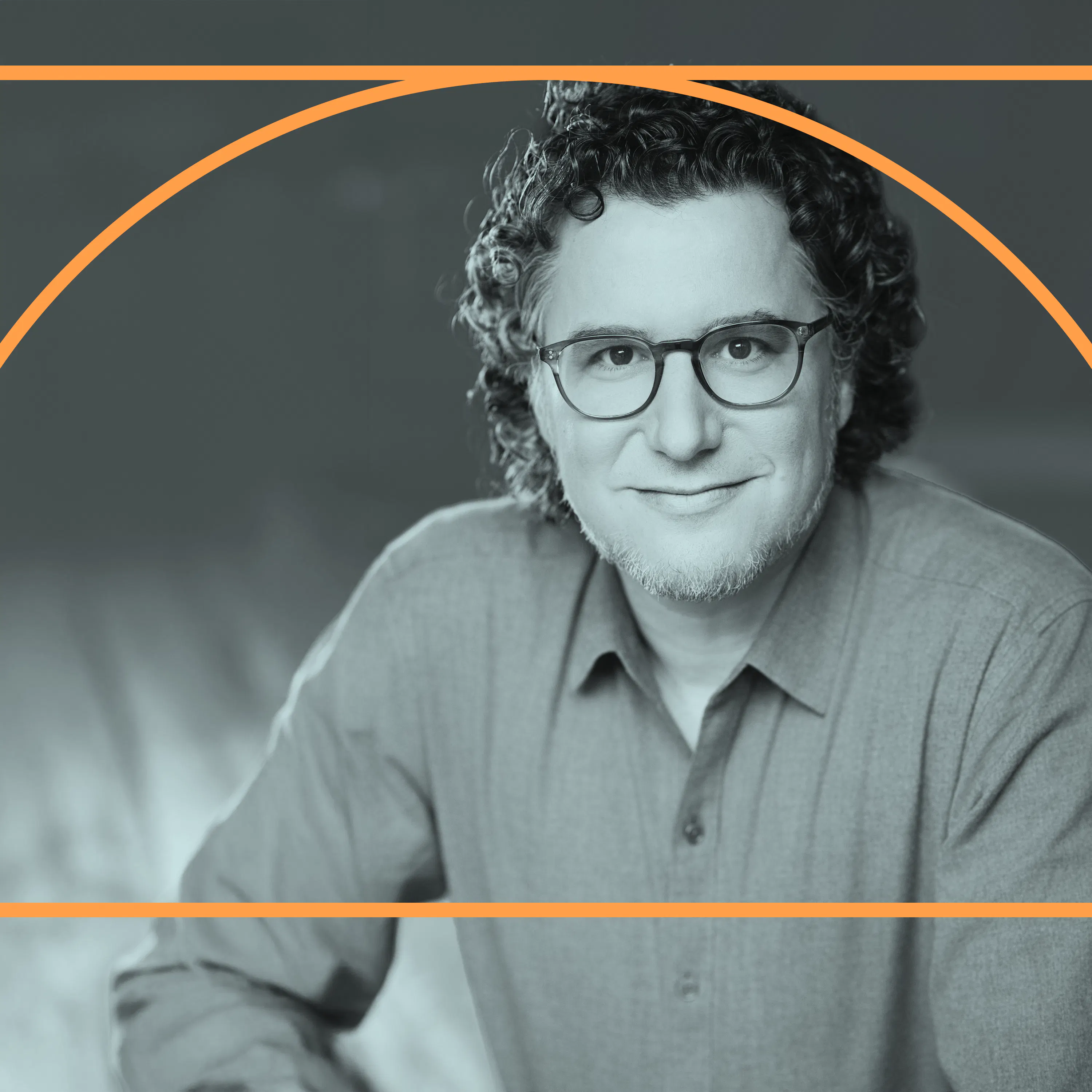
Design Better
Eric Ries: Lean Startup author on why good companies go bad, and why good design is critical to success
00:34:23
We chat with Eric Ries about the “harder is easier” principle through stories from Patagonia and the long-term stock exchange he built as a design challenge, and why the value a company makes comes from the design of its products. And because we couldn’t resist, we get into AI slop, LLM psychosis, and Eric’s clear, simple antidote: never ask these tools to make you an artifact — ask them to teach you how to make one yourself.
Loading summary
Transcript33 lines
- [00:00]
A
I strongly recommend people find companies to work for where the mission is real. And a big part of the book is how do we identify, capture, protect this sense of corporate purpose. If you master that as a designer, as an engineer, as a product, whatever functional discipline you come from, if you can master these skills, you will get an invite to the big kids table and I want us to have more people who care for craft and quality in those conversations. Businesses will be worth a lot more money if they figure out how to harness that skill.
- [00:30]
B
Fifteen years ago, Eric Reiss handed a generation of founders a playbook. When I was in a Palo Alto based Startup accelerator in 2011, the Lean Startup felt like the only book anyone in that ecosystem was talking about. It was the middle of a wildly optimistic moment for tech. Mark and Drayson had said that software is eating the world, social media was booming, and there was a widespread belief that technology was about to democratize everything and bring us closer together. Little did we know, concepts like the MVP Minimum Viable product, the pivot and pilled measure learn became the operating language of Silicon Valley. But a lot of companies built on those ideas went on to get corrupted by forces. Eric hadn't yet named his new book. Why Good Companies Go Bad and How Great Companies Stay Great is his reckoning with what happens after you build something great and how to keep it from falling apart.
- [01:20]
C
In this conversation, we get into why speed itself wasn't the problem, but treating a rising stock price as proof of health is like assuming more exhaust means a faster car. Eric explains why doing the right thing 100% of the time is actually easier than doing it just 98% of the time, and how companies behave like superorganisms with their own emergent character. The point that he illustrates with a mind bending study about an ants solving a puzzle that no single ant ever could. We talk about the harder is easier principle through stories from Patagonia and a long term stock exchange that he built as a design challenge and why the value a company makes comes from the design of its products. And because we couldn't resist, we did talk about AI slop, LLM psychosis, and Eric's clear, simple antidote. Just don't ask these tools to make you an artifact. Ask them to teach you how to make one yourself. This is Design Better, where we explore creativity at the intersection of design and technology. I'm Aaron Walter.
- [02:28]
B
And I'm Eli Woolery.
- [02:30]
C
If you're hearing this, you're not currently on our Premium subscriber feed. DesignBetter Premium subscribers enjoy weekly episodes. That's four episodes per month rather than just two, and all of them are ad free. Plus you'll get an invitation to our monthly AMAs with the smartest folks in design and tech. And if you subscribe at the annual level, you'll also get our Toolkit, a collection of our favorite design and productivity tools like Perplexity, Miro, Read AI and more. You'll hear a preview of this episode, but if you'd like to hear the full conversation, please consider becoming a Premium Subscriber@designbetterpodcast.com subscribe the podcast is available to everyone through our scholarship program, so if you can't afford a subscription, just shoot us an email@subscriptionsdepartment.com we'll help you out. We'll return to the conversation after this quick break.
- [03:33]
A
Foreign
- [03:37]
C
is supported by Masterclass Lately I've been thinking about what it actually takes to get better at a craft not just grinding reps, but learning to see your work the way that a master does. That's the thing that Masterclass does better than anything else that I've found. I took Bob Iger's class on leadership and strategy, expecting business tactics, and instead I got a Masterclass in decision Making under uncertainty, which, if you're building products or leading a design team right now, is basically the whole job. What I love is how directly Masterclass maps to the things that we care about as designers. And if you're curious where AI fits into creative work, masterclass has been adding classes that dig into exactly that tension, how the best in our fields are adapting without losing what makes their work theirs and special. It's not theory, it's people who've spent careers at the top of design business storytelling, showing you how they actually think. Plans start at 10 bucks a month, billed annually, with unlimited access to over 200 classes, all of them very valuable. And every new membership comes with a 30 day money back guarantee, so there's no real risk in finding out if it clicks with you right now. Design Better listeners get 15% off any annual membership@masterclass.com DesignBetter that's 15% off right now@masterclass.com DesignBetter go to masterclass.com DesignBetter to get 15% off. And now back to the show. Eric Riess welcome to Design Better.
- [05:19]
A
Hey, thanks for having me.
- [05:21]
C
You are well known for lean startup and we want to talk just a little bit about that. But the primary reason why you're joining us today is because you've got a new book and it's called Incorruptible why good companies go bad and how Great companies Stay great. It feels very timely where we are in the tech world. Where we are, I think, culturally, globally.
- [05:42]
A
Yeah, unfortunately. Unfortunately, very relevant.
- [05:45]
C
100%. Before we dive into that, I want to just take us back to 2011. That was 15 years ago. That was when Lean Startup came out. That was a book very much about speed. It was a very optimistic time. For younger listeners who may not remember the Tech World In 2011, Arab Spring had just happened, social media was blooming, and there was a great sense of optimism about how technology would democratize the world and communication and bring us together. What unfolded in the coming years was very different from what we had in mind. A lot's changed since then. Have your views changed on the Lean Startup methodology in the last 15 years? Where does that stand for you today?
- [06:36]
A
Yeah, I think it's held up pretty well. Of course, the optimism of that time has long gone as so many of the companies that were started at that time and before have been corrupted by the forces that I read about in the new book. But I don't make any apologies for helping people build awesome companies. The fact that they later got corrupted is not the whole story. Now, of course I feel bad. I wish I had known then what I know now and we could have protected more of those companies from the corruption that followed. I do think the principles have held up. If you look at the highest performing AI companies and the companies that are having the most success, you'll often find fidelity to Lean Startup principles in their operations, even if they don't use that language externally, which mvp and concepts like that, they're not external facing terms, they're meant to be internal terms. I think more importantly, the idea that entrepreneurship is a separate discipline that can be studied and improved, that you can have a career as an entrepreneur, and that concepts like the pivot or the mvp, whether you agree with the prescriptions in the book, the effect that it's had on the profession and our ability to improve entrepreneurial practice is the thing I'm most proud of. That will hold up much longer than the individual tactics of any of the specific techniques will be long forgotten. Any of the companies in Lean Startup that were mentioned in the book are long gone too. I remember someone asking me when I was having people test read the manuscript, how come you don't have more stories of failed startups in here? And I was like, oh, I do. We just don't know which ones yet. Don't worry, don't worry. And of course that has come true as I've been doing interviews for the new book. Interestingly, a bunch of interviewers have asked me, do I feel vindicated by what I wrote in Lean Startup? And the first time I got the question, I didn't know what the person meant. I was like, what are you talking about? They said, well, you really start quoting it to me back. And I had forgotten that part of the Lean Startup was explaining to people the context that these techniques are designed for, the context of high uncertainty paired with rapid speed, and that I said that the trend of that in technology especially is going to continue and it's going to affect every aspect of our lives. I was like, oh, I didn't know that counted as a prediction. To me that seemed really obvious. But apparently people feel like subsequent events have borne it out, so I guess that's good to a certain degree.
- [08:50]
B
When I first encountered the Lean Startup, back around the time it was written, I was sort of new to the whole Silicon Valley culture. I came from more of a physical product design background. But there was a lot of buzz around it. And as I started to read more about it and lean into it, it seemed to me it actually shared a lot of traits with the kind of program I came out of at Stanford was all about human centered design and design thinking. These terms that became kind of buzzwordy in some ways. But the core idea is about iterating fast, working with users, learning from failure, gaining empathy. There's a lot of overlap and I don't know that those necessarily influence you. And certainly some good ideas kind of can converge or come out of different evolutions. Was there anything around that that you drew from or came to realize like, oh, hey, there's some overlap here and maybe some of these methodologies can work hand in hand?
- [09:35]
A
Yeah, not only did I realize it, but it was very consciously designed that way. I spent a lot of time studying design thinking and building bridges to the leaders in that movement. Now, it wasn't just design that I was interested in. I did that with many disciplines that I felt were adjacent to Lean Startup because I had really noticed how the agile thinking people and the Scrum people and the design thinking people didn't get along, and the Scrum people and the DevOps people didn't get along and the DevOps and the design like I felt like there were all these people in what I consider we should be natural allies fighting with each other because we have our own tribal identities and our own separate cultures. And of course it was really important to me that everyone be able to understand how this idea is not a new idea meant to displace or replace what they had learned and mastered, but rather as a bridge to get other functions bought into it. So the thing I'm most proud of is how many designers have embraced Lean Startup and how many designers were able to use it. They think they used it to trick other functions to following their lead. Like, you know, I go to talk to people and say like, isn't this really just design, design thinking, but applied to engineering? And I'd be like, don't tell the engineers. But yeah, but if I go talk to engineers, they're like, isn't this just getting the designers bought into Agile? So I'm like, yeah it is, but don't tell, right? Like we all have our tribal identities. But to me, the power of Lean Startup was giving us a cross business common language we could use to talk about these issues. So like for example, if you ever tried to convince an executive that they should care about story points or burn down charts, even like development velocity, let alone God forbid, design integrity, like good luck, right? Because they're stack ranking by roi, they're talking the serious language of business and you're in there being like, let me explain to you why rounded corners are better for skeuomorphism than what I just said. Like, what are you talking about? And so as a result, people who are craftsmen, who are builders, this is true for people who care about anything other than money. Honestly, whether we're talking about the craft of design or security or architecture or engineering or any artistic profession, we tend to get left behind the business discussion because business is all about ROI and these serious things. And our interests are seen as parochial or almost like a little bit juvenile. But actually this is totally backwards. The money the company makes comes from the design of its products, without which it would not exist for even a second. So I actually think part of the disease that is afflicting business is this misunderstanding of where value is created. And part of Lean Startup, of course, was helping to correct that by creating a language to talk about innovation wherever it comes from, and to be able to translate our progress in some kind of innovation situation into business terms that even the serious business people can understand.
- [12:26]
C
So the Lean Startup taught us to build fast and incorruptible. Your new book warns that speed can lead to a meat grinder effect and quality and soul can be lost in that process. Feels like maybe conflicting messages there. I wonder if you could unpack what you learned in that timeframe between Lean Startup and your new book that changes
- [12:51]
A
your perspective, I've learned a ton. Now, I don't think it's so much conflicting messages as I've learned how to talk about this a lot better than when I was younger, as we all get smarter at this kind of things. So first of all, speed itself is not a problem. Speed is not the source of corruption. What happens is we learn some business principle. For example, we've all learned that a healthy, thriving company will see its stock price grow. And in the academic literature they call this mistake surrogation. The metric becomes a surrogate for the thing itself. So we've learned that a healthy company has a high stock price, therefore anything that makes the stock price go up must be a sign of company health. Oops. That's like saying how much exhaust comes out of the engine is an indicator of its speed. That is true, but that doesn't imply that. Therefore the more exhaust, the faster you're going. So this is where people get into trouble is they say, oh, I see, so speed is good, huh? The fastest way to get your car moving fast is to close your eyes and floor the accelerator. You'll be going real fast for a while. But of course, in the book in Lean Startup, I was trying to talk about what I called optimal speed, which is not as fast as you physically can go, but rather the speed at which you get through the build, measure, learn, feedback loop and all that stuff. I think I got that part right. What I don't think I made clear enough because again, to me it just seemed obvious. I couldn't believe we even had to say it is what are the enduring commitments that enable speed? So, for example, scientific method is a critical component of Lean Startup. It says when you look at evidence to decide what is right. When people say, well, you said to experiment with everything. Can I experiment with whether to use evidence or not? No, no, you can't. There must be some prior principle that says this is how we're going to decide things. Now again, people get so hung up on this. We're not saying that the data makes the decision. Of course, if you do that, you get yourself in big trouble. There are a lot of situations where we don't either don't have the data or the data is only one input into a decision making process. You know, data doesn't tell you what to do, it gives you information. But if we say, look, I have conducted a scientifically valid experiment and the experiment shows that people prefer this to this, you can say, that's not important because I don't care if they prefer A or B. You could say, well, so what? I'm not going to listen to it. But what you can't say is, no, they don't. How do you know? I learned from my astrological sign that they don't. It's like, sorry, no, we've already committed ourselves to the truth here. We have a specific set of principles that accord with truth. And that's true, by the way, not just for the scientific method, but for any of our philosophical commitments. If you say that part of the mission of the company is to bring beauty into people's lives through design, okay, that's not something we need to experiment with. That's our prior commitment. If you say to me that our belief is that the superior design is the one that changes customer behavior for the better, okay, that's our prior belief. So there was always this set of these enduring principles that are necessary to enable speed. In fact, one of my preoccupations in Lean Startup, as well as in all my other books, including the new book, is which Commitments enable more Speed? And one of the things I think I really have learned in the years since is that the late, great Clay Christensen said, he said right before he died, it is easier to do the right thing 100% of the time than 98% of the time. And a huge amount of modern business is having these total bullshit meetings about what is the ROI of doing the right thing. And the nice thing about having a principle that we always do the right thing is we don't have to have the meeting. We don't need a spreadsheet. We don't need to calculate the roi. There are certain things we do because that's our ethos, that's what we stand for. And those things don't need to be tested or experimented. Those are just the truth of our situation, of who we are. By eliminating all those meetings and all that discussion, we free up a lot of analytic and development horsepower that can be used on actually figuring out how to improve the product.
- [16:38]
C
And yet it seems like most companies get really obsessed with short term perspectives, short term viewpoints. We've seen so many different companies who are obsessed with speed but give no thought about trajectory. Where are we going? We're going really fast. But to what end?
- [16:58]
A
To what end? We're going off the cliff, but we're really doing it really efficiently. Oh, good job. Congratulations.
- [17:03]
C
Yeah, speed without trajectory is entropy. A lot of companies operate on OKRs, and I get why this is A valuable thing that it gives us a matrix to sort of ladder up and group together. We'll point our energies towards the beacon on the hill. But what it often feels like is it's just we're thinking about the next few weeks, it's this quarter and we never think about the next year, the next five years.
- [17:28]
A
It's absurd. It's so stupid. The short termism. And again, I really tried to make this clear in the lean startup. The first section of lean startup is called vision. The evidence is overwhelmingly clear that unless you have a philosophy of long term thinking, you don't get to do any of this other stuff. We have built an economy that is obsessed with cost cutting and short term roi and we never hold the people accountable. We reward the people who do the cost cutting, but we never hold them accountable for the long term brand damage of the cuts that they make. It's like unfair and very self destructive. One of the problems is those things which make you a trustworthy counterparty. They automatically score negative by ROI because the returns are intangible, but the costs are tangible. The book is loaded with examples of this. Costco pays its suppliers in 30 days instead of 90 days even though it doesn't have to. Well, we know the costs of that are easy to calculate. The returns are very hard to calculate. Costco refuses to mark up its products more than 14% per item. The costs of doing that are super tangible. The rewards are kind of unclear. If you know the famous Costco story about the hot dog. The time that the COO wanted to raise the price, the hot dog, the CEO, literally, this is quote. This story is so famous you can get it printed on a T shirt. Okay, it's very famous. But I think it's important to grapple with because he's like, if you raise the price of the hot dog, I will effing kill you. Figure it out. Okay, there's all these famous stories like the Johnson and Johnson Tylenol recall where they like voluntarily recalled all the Tylenol even though they didn't have to. I tell a story in the book of Cloudflare, decided to give away encryption on the Internet and totally change the nature of privacy on the Internet even though it cost them their most valuable premium feature. All these situations where we study them, we know these stories. The hot dog where the person did the right thing. And when I tell those stories, we're always like, oh, that's nice. Someone did that one thing that one time. Okay, anyway, back to business as usual. We don't really learn the lesson. So when I tell the story about the Costco hot dog, people ask me all kinds of follow up questions like how did they vertically integrate their supply chain? Or is it a loss leader? Or do customers really care about the blah, blah, blah, blah, blah. The question nobody ever asks is why did the COO try to raise the price? Because of course he did. We're trained that all you have to do is cut costs and raise prices, extract all the value for yourself, like that's what counts as a business best practice today. Again, the returns of doing the right thing are intangible, but the costs are tangible. So when we stack rank by roi, we miss those things as a lot
- [19:56]
B
of people, not just in Silicon Valley or Wall street, have trouble framing things in terms of long term thinking. And there are some projects you think about the Long Now Foundation, Stewart Brand and others who have this project to build a 10,000 year clock which is like, okay, that's an interesting way to shift people's thinking potentially. You yourself have worked on this long term stock exchange, which feels like it's another tangible foundation to maybe change some of these incentives. Could you talk us through it a little bit? It comes up in the beginning of the book, but we'd love to learn more.
- [20:26]
A
Yeah, yeah, yeah. I tried not to make the book, you know, an infomercial for this. So it's only mentioned briefly in the book. But yes, I have spent a lot of years of my life building this thing called the Long Term Stock Exchange, which for the record, I don't run it anymore. Now it's run by a very competent financial services leadership team who are much more qualified than I. But it's the first new listings venue that literally trades and lists multiple stocks with its own differentiated listing standards, like the first of its kind since the creation of NASDAQ 50 years ago. And the idea is really simple. Since companies that have a philosophy of long term thinking are more valuable, investors that choose to invest in those companies will make more money. And so we have created a set of listing standards, of set of principles that companies can adhere to in order to list on our market. And that materially changes how they are operated, but also how what kind of investors they can attract. It's actually a very simple idea to explain. Of course, the doing of it is quite hard. Starting a new stock exchange is no easy thing. We're in the same regulatory category as New York Stock Exchange or nasdaq. So it's a significant club to join, but it attracts really exceptional people who want to work on it as all mission driven companies do. And I think one of the things that might be really interesting for your audience is we really conceived of the project from the beginning as a design challenge. One of my longest time collaborators is the best designer I know. He was one of the first people we hired for the company. There was this like technical question, of course, how can we make it comply with the law and how do we do it? There's a lot of technical elements that we had to figure out. But to me the ultimate question was like, can you design something that serves all of these different constituencies at the same time? So can you make it work for our founders and for VCs and for bankers and for public market investors and for regulators, all at the same time? It was an end dimensional chess kind of project, very difficult to work on and it's still in its very early innings for all the years that I've put into it has not yet taken over the world. What I wanted is that as the dawning realization of the urgent need for long term thinking as it crashes over more and more people, we wanted to have a place that they can go to say, I'm willing to vote with my company, vote with my dollars. This is what I want to see happen. This is where I think our economy should go. And so when people are ready to rally to the cause, we will be there to receive them. We're prepared.
- [22:34]
C
Can you tell us a little bit more about the criteria for listing? What are the traits of companies that make them long term thinkers?
- [22:43]
A
Yeah, so we have a series of operating principles. This is kind of a difference between us and the other stock exchanges. We do what are called Princip principles based listing standards. Meaning instead of having a giant checklist of things you have to do, instead we have principles. The principles are basically around all forms of alignment. So you have to have long term compensation instruments. You have to say what are your fiduciary commitments beyond investors? You have to say how you're going to reward long term investors over short term investors. There's a principle about boards, board alignment, board compensation, stuff like that. For each principle, the companies that are listed with us develop their own implementation plan, which we certify. So that allows us to list companies that are very different from each other, even though they all share this common ethos. That's really the key to it.
- [23:28]
B
One of the things, you know, speaking about design and trying to design a new stock exchange, a new foundation for businesses, there's a quote in the book from Brian Chesky about Steve Jobs, which says, greatest product Steve Jobs designed was Apple. Your company is the most important product you'll ever design. And I'm curious how you think about that. That might for our audience reshape how they think about themselves and their role. Because I think we talk to many designers and know many designers. Yes, many of them are savvy about business and can talk to executives and stakeholders, but many of them think like, that's not my job. I care about aesthetics, I care about the experience, I care about our customers. And they don't really think about their relevance to the organization as a whole. Maybe you could talk a little bit about that.
- [24:10]
A
Sure, yeah. I learned a lot of this from Brian Chesky, who I've spent a lot of time with. One of the things that I think is really a shame is that there's a bit of a glass ceiling in corporate life for people who are not perceived to be able to be part of the top level business and governance conversations. And a lot of designers fall into this trap. They think that my job is just to make things and the organism that makes the thing is not really my concern. But this is really wrong that the values of the organization ultimately show up in the products you design. That's been proven many, many, many times in all kinds of different ways, especially true in technology products. So it is your concern if you care about quality. Even if you just say, I just care about aesthetics. It's like, well, guess what? You work in a company whose mission is to maximize shareholder value. The disconnect between what it cares about and what you care about is ultimately going to lead to your betrayal. So I strongly recommend people find companies to work for where the mission is real, not the mission statement. I don't really care what the mission statement is, but the mission, in fact is real. And a big part of the book is how do we identify, capture, protect this sense of corporate purpose that a really well run organization can have? If you master that as a designer, as an engineer, as a product, whatever functional discipline you come from, if you can master these skills, you will get an invite to the big kids table where the real decisions are made. And I want us to have more people who care for craft and quality in those conversations. Businesses will be worth a lot more money if they figure out how to harness that skill.
- [25:44]
C
Are you a fan of Zen and the art of motorcycle maintenance? How'd you know a lot of what you're talking about? In our conversation, what's in the book, I hear echoes from that book, which is about quality and moving towards a truth. Quality is about something that is good. And there's sort of like a shallow version of designers. I think inherently we are seekers of that truth in design, that something feels right, that we feel this human connection. But Robert Persig, in the book, is equating that to something deeper, a Zen connection that is foundational to reality. I'm curious how that sits in your understanding of this book.
- [26:29]
A
Oh, you have me dead to rights. I mean, I read that book as a child. I haven't reread it. I'm too terrified to reread it, lest it not hold up to my imagination of it. That was such a formative book for me. But I think that's absolutely right. A lot of the book is about when we make things, what is it that we make? One of the things I really didn't understand, like, when I read that book and when I've talked to people about it, it sounds very metaphorical or metaphysical, you know, like, what is quality?
- [26:56]
B
Like?
- [26:57]
A
Late night, jam session, debating. It's like these questions are immensely practical and quite urgent to get right. So, for example, in the book, I talk about how organizations themselves are a category of a thing called emergent intelligence. And for some designers, I think this would be old news. Like, yeah, of course, everyone knows about cybernetics, and emergent intelligence is an old idea, like, with a lot of scientific research behind it. But I always meet readers and listeners for whom they're encountering this idea for the first time. So if there's anyone listening who doesn't know what I'm talking about, I'll give you one of my simplest and favorite demonstrations of the phenomenon. This is a scientific study that was done a couple of years ago. Now, to be clear, this is not the study that proved emergent intelligence exists. It's just a very clever demonstration of the phenomenon. The researchers created this thing they called the piano movers puzzle, which, if you ever watch that old clip of Friends where Ross is trying to get a couch down the stairwell and he's like, they're holding it and he's skipped me. Like, pivot, pivot, pivot. People send me that video all the time for reasons probably can guess. Anyway, it's like it's kind of a puzzle like that where they create this really awkwardly shaped I beam object, and you have to get it through these two gaps in two adjacent walls. Yeah. And so in order to do it, if you watch a single human, every human can solve this puzzle. It's not hard, but you don't solve it on the first try. You have to try a bunch of stuff to get the angles just right. And if you watch someone do it, you can obviously tell they're intelligent. They try something, they pause for a second to reflect, they try something else, they wiggle a little bit, and they eventually squeeze the thing out, right? So the researchers gave this puzzle to humans, and then they gave the same puzzle to ants. Now an individual ant cannot solve this puzzle, no matter what. You give them as much time as you want. Two ants also can't solve it. Five ants, 10 ants, 100 ants. There's a certain number of ants, though. As you keep adding more and more ants to the puzzle, eventually the ant colony can solve the puzzle. And if you watch the video, it's incredible because all of the sudden the ants are so obviously intelligent. They take the thing, they try something, they pause to reflect, they move it around. They're doing the same intelligent thing that a human would do. But if you say, where is this intelligence located? It's not in any individual ant. It is in the superorganism of the collection of ants together. Interestingly, the more ants you add to the puzzle, the better they do. So they just get smarter and smarter and smarter. As you add more ants, as you add more humans to the puzzle, you do not automatically get an improvement in their intelligence. We'll come back to that. Because groups of human beings also have emergent properties. Intelligence is only one of the emergent properties. They also have a character. Some organizations are vicious and mean. Others are timid and cowardly. Others are innovative and bold. In one study, researchers were able to demonstrate that human organizations have an ethical character. And the character of the organization predicts future compliance violations better than studying the ethics of any of the individuals involved in the organization. So most founders, most leaders, people who work in organizations in a serious way hear this and they're like, no, duh. We've all had that experience where like, what is this thing that I'm doing battle with? And you meet that you meet designers who are like, this place doesn't care about quality. And you're like, well, who exactly doesn't care about quality? Sometimes if they're junior, they'll be like, the CEO doesn't care. But you'll meet companies where the CEO does care, and every executive, everyone seems to really care. And yet somehow the organization doesn't find a way to prioritize it. And this short term thinking that we've been talking about is one of these emergent properties. Companies become Addicted to the dopamine hit of short term returns, quarterly returns, whatever the thing is, whatever their particular metric is they're obsessed with. And this is the great flaw, the huge flaw in our modern system of OKRs. You hinted at it earlier. In an OKR driven system, every individual person at any time can boost their personal OKR by drawing against the trustworthiness of the whole. So, yeah, if I'm a sales leader and I need to make my quota, the easiest way to make my quota is just to make unachievable promises that the product team will have to deal with downstream. Right? I make my quota. There's this long term reputational damage to the company as eventually customers are disappointed, but maybe not for a long time. We all have that temptation. Everyone knows this. You can always cut corners if you can do stuff that nobody will notice. Think about how many times we're called to design something that nobody will ever see. Steve Jobs used to famously fight with people about the visual layout of the wires inside the case of computers that he didn't even want customers to be allowed to open. And people would just be like, man, what do you care? No one's ever going to see it. And he would tell them, but we're going to see it. We know what we did. And that's not right. This is our principle. That's what I'm saying. To do the right thing 100% of the time. So much easier. So if the superorganism that we are a part of has a value for quality or design or any other thing that it wants to act with integrity towards, then you will find that your decisions as an individual contributor that align with that value are rewarded. And if it has a different set of values, you will find you're just constantly having that feeling of swimming upstream. It's super frustrating.
- [32:12]
B
We want to talk more about the superorganism here in a minute. But while we're on this topic of quality, I also love that book. I also haven't revisited it since my college years. But, you know, one of the things I seem to remember is the idea that the quality connects you to the experience of what you're building. And there's kind of a bi directional thing there. And I'm curious, in our current age of AI, where we can essentially prompt anything to his existence and a lot of that stuff ends up being AI sloth, essentially, how do we counterbalance that? Or how do we enter this new era where these tools can also do very useful things, obviously, but it feels like there's also the opportunity for us to get sucked in and the quality just get worse and worse if we lean on it too heavily.
- [32:56]
A
Yeah, I think everyone at this point knows about LLM psychosis, which is the psychological experience of using these tools the way they're currently designed. I think in a few years the backlash to this going to be immense and we'll build better tools that won't have these same problems. I hope, because we're going to see a pretty significant backlash, partly because of the overhype, but partly because we are vibe coding our way into a Chernobyl type disaster. It's almost inevitable because
- [33:22]
C
if you'd like to continue listening to this conversation, you'll need to subscribe@designbetterpodcast.com subscribe Once you do, you'll get access to every full length episode, all ad free monthly AMAs with inspiring people in design and tech and recordings of all our past AMAs. The podcast is available to everyone through our scholarship program. If you can't afford a subscription, just email us@subscriptions the curiosity department.com and we'll help you out. Your support makes design better possible. Invest in yourself and the design community by subscribing@designbetterpodcast.com.