← Design Better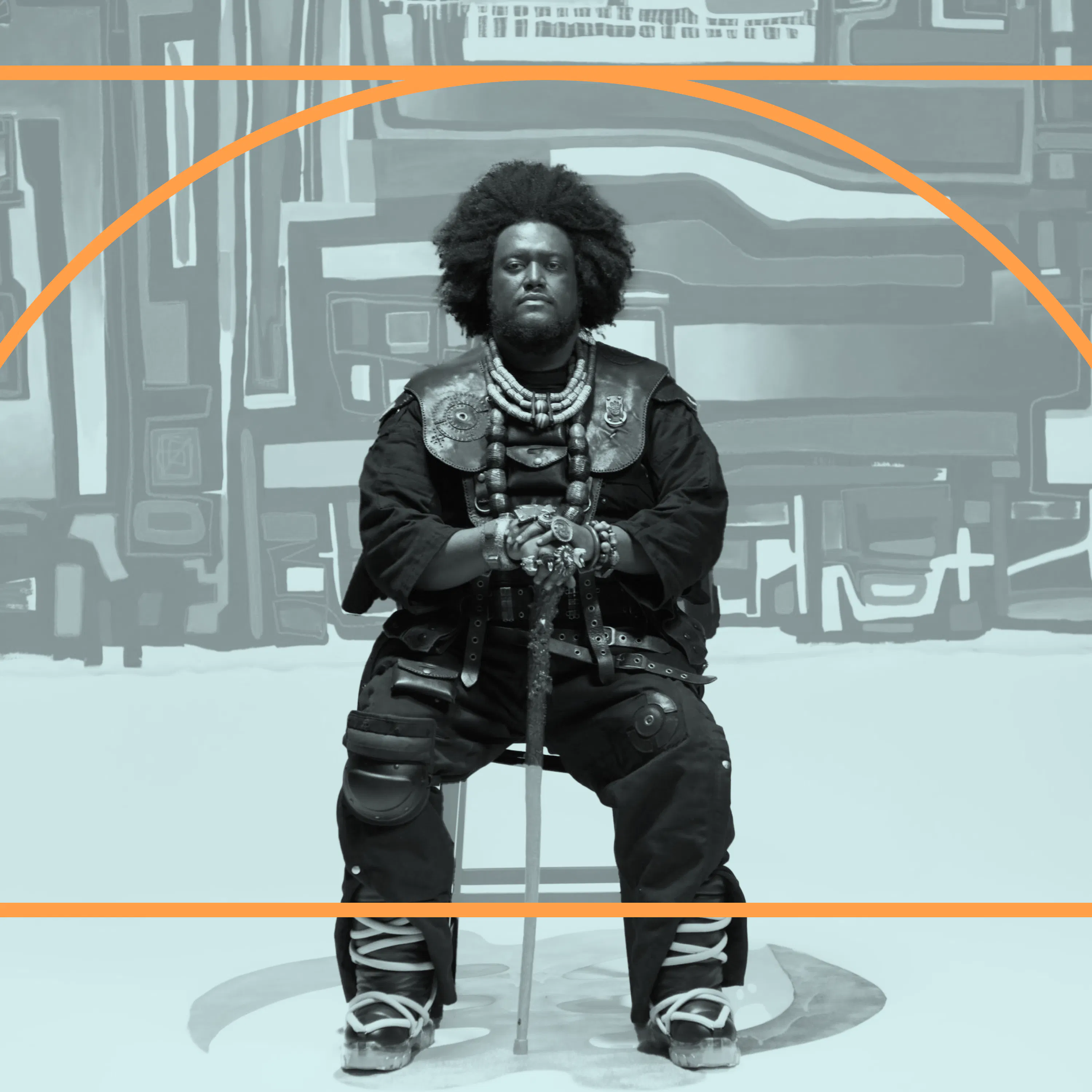
Design Better
Kamasi Washington: A jazz genius on collaborative lessons learned from Kendrick Lamar, Snoop Dogg, Lauryn Hill, and more
00:14:43
We spent an evening with Kamasi Washington, exploring his creative process, what he’s learned from his collaborators, his philosophy on collaboration, and his latest album, Fearless Movement.
Loading summary
Transcript42 lines
- [00:00]
Aaron Walter
Hi there, Aaron Walter here. If you're hearing this, you're not currently on our premium subscriber feed. Design Better Premium subscribers Enjoy weekly episodes.
- [00:10]
Eli Woolery
Four episodes per month in total rather.
- [00:12]
Aaron Walter
Than two, all ad free and invitations to our monthly AMAs with the smartest folks in design and tech. You'll hear a preview of this episode, but if you'd like to hear the full conversation, please consider becoming a premium subscriber@designbetterpodcast.com subscribe. It's just $7 a month and it supports not only your personal growth, it also makes our work at Design Better possible. The podcast is available to everyone through our scholarship program. If you can't afford a subscription, email us@subscriptionshuriositydepartment.com and we'll help you out.
- [01:00]
Kamasi Washington
It's hard to explain what makes a good song a good song, but you can put a piece of that deeper self of who you are. Not that your body is not yourself, but there's another part of yourself that we can't see. And if you put that into what you're doing, it speaks to people. There's something in all of us that wants a connection on that level.
- [01:29]
Unknown
Jazz is a constantly evolving art form offering some of the richest lessons in creative collaboration. A melody and chord progression provides the foundation, but as each musician brings their unique improvisational perspective, the music takes on unexpected, transformative shapes.
- [01:45]
Aaron Walter
If you ask any fan of the genre, who is it that's pushing jazz into new territory? Kamasi Washington's name will most certainly come up, likely at the very top. His 2015 album the Epic won him the American Music Prize, and Stan, in our humble opinion, as one of the greatest jazz records of the 21st century. Kamasi also contributed to Kendrick Lamar's Grammy winning record To Pimp a Butterfly, he scored Michelle Obama's Netflix documentary Becoming, and he's collaborated with musical legends like Herbie Hancock, Wayne Shorter, Lauryn Hill, Nas, Snoop Dogg, Chaka Khan, and so many more.
- [02:25]
Unknown
In this episode, we spent an evening with Kamasi exploring his creative process, what he's learned from his collaborators, his philosophy on Collabor, and his latest album, Fearless Movement. This is Design Better, where we explore creativity at the intersection of design and technology. I'm Eli Woolery.
- [02:41]
Aaron Walter
And I'm Aaron Walter. You can get AD free episodes, bonus content, discounted workshops, and access to all our monthly AMAs with big names in design and tech. By becoming a Design Better premium subscriber, it is also the best way to support the show. Visit designbetterpodcast.com subscribe to learn more. We'll return to the conversation after this quick break.
- [03:19]
Eli Woolery
I love wine, but I often feel overwhelmed by the options out there. But I recently joined Wine Access and I'm learning a lot. Wine Access not only ship to your door some of the world's most inspiring wines, they also educate subscribers with full color information cards that accompany each bottle. I love these cards. They provide details on flavor profile, what.
- [03:40]
Aaron Walter
Food your wine pairs well with, how.
- [03:42]
Eli Woolery
Long to decant, the ideal drinking temperature, and plenty of fascinating information about the producers. This month I got a four bottle shipment from Wine Access new club called the Wait List which is curated by culinary icons. The box I received is from Atomics, a two Michelin star restaurant and the top US restaurant on the World's 50 Best list. Other curators include Emeril, yes, that Emeril of New Orleans and Daniel Boulud and his flagship restaurant Daniel in New York City which is also a two Michelin star restaurant. It's such a fun way to learn about wine and everything you receive will be a winner. I've been super impressed by how thoughtfully Wine Access curates and educates. You should totally join the Waitlist wine Club. Just visit wineaccess.com waitlist and use promo code designbetter all one word for 25 bucks off your first shipment. That's wineaccess.com waitlist and Use the code designbetter to save 25 dollars. The holidays in snuggly weather are upon us. It's a great time to enjoy great wine with the people that you love. Wineaccess.com waitlist all right, let's be real. If you're a content creator, blogger or an entrepreneur just getting started, the last thing you want to do is spend hours building a website.
- [05:04]
Aaron Walter
But you know you got to do it. You've got things to do and that's.
- [05:08]
Eli Woolery
Where Bluehost comes in. Their AI powered design tool gives you pro level WordPress sites in a snap. No coding, no stress. Just type in what kind of vibe you're going for and then boom, you got it. And you also get added features like marketing and e commerce tools to help you build, grow and scale your online business like a boss. And upgrading to Bluehost Cloud keeps your site running 24. 7 with ultra fast hosting, 99.9% uptime and enhanced security. Always fast, never slow so you can keep making that dough. It's seriously never been easier to build.
- [05:47]
Aaron Walter
Your website with bluehost. You've got ideas.
- [05:50]
Eli Woolery
All you need now is the platform. All you need is Bluehost. Head over to Bluehost.com and start building your dream website today.
- [06:02]
Aaron Walter
And now back to the show.
- [06:09]
Unknown
Kamasi Washington, welcome to Design Better.
- [06:12]
Kamasi Washington
Hey, thanks for having me.
- [06:13]
Unknown
I am such a huge fan of your work and excited to talk to you. It's always fun to start from the beginning to find someone's origin story before getting in deep about the work.
- [06:25]
Eli Woolery
So you were born into a pretty musical family.
- [06:28]
Unknown
Your dad, Ricky Washington, is a professional saxophone and flute player, also taught music. Teaches music, perhaps still. And your mom was a high school chemistry teacher. Could you maybe paint a picture for us of the Washington household and like the mid-80s, what was that like?
- [06:45]
Kamasi Washington
Yeah, I mean, my mom is a science teacher, but she actually plays flute, too. And my grandma played violin and great grandfather played saxophone. My uncle played organ. I have an aunt Lulu that's a dancer. My older brother played piano too. My younger sister, she wasn't born in the 80s, but she's an amazing painter as well. And I have another sister that's a great designer. She even directed one of the videos from my album. So, yeah, I had a very, like, artistic household and music was definitely one of the big centerpieces of that. And my father amongst, you know, my generation was definitely the driving force of that. He's a musician and he was a music teacher. He was just someone that really believed in honing your creativity the way you were going to do it. It was a situation where, like, you know, if I was practicing, I was cool, but if I was watching tv, pops was. He was going to be on my head, you know.
- [07:37]
Unknown
So I read a couple different versions of this, but somewhere between the ages of 2 and 3, maybe you already started. You got your drum set. You already started with your drum set. And just reading that, man, this guy must be a prodigy. But from one of the interviews I was listening to, you said your brother, one of your brothers, was actually considered the prodigy. And so maybe it took some of the pressure off you and you could kind of get your own thing going. Is that true?
- [07:59]
Kamasi Washington
Yeah, I had an older brother that was like more of a prodigy. I mean, we all played music young, but he was good young, you know, and so, yeah, like, he kind of took a lot of that attention, you know, because, you know, when you're coming from a musical family, there can be some expectations and things like that. And so I kind of got to just be a kid that was playing music. Kind of like music was kind of just fun for me while all Those kind of peering eyes, like how good are you gonna be when you're five? He kind of caught that. And so, you know, what ended up happening is music kind of stayed in a very positive energy for me. You know, there was no pressure with it, you know, until I got a little older.
- [08:41]
Unknown
So you've got a creative, stimulating environment as you're growing up. You've got some guidance and structure, but it's not too much pressure. And then you get this great opportunity to go to a high school in la. The Academy of Music of Alexander Hamilton High School. That seems like a pretty unique educational experience. Like my son, he's a freshman right now, he's studying AP Gov and taking kind of the standard stuff. But you got to focus on music. Talk to us about what that experience was like and how you changed in those four years as a high schooler.
- [09:16]
Kamasi Washington
Yeah, it was great. You know, there were all different types of ensembles. So I was in jazz band, orchestra, wind ensemble, electronic music, piano theory. You know we had like beautiful nine foot grand Steinway pianos. There was a whole kind of music school within the school. So there was like a music school, humanity school and then like just a regular public school. There were a lot of resources and they did a really great job of giving you a very well rounded musical education pretty early. You know, I was learning different styles of music. They were very good about teaching you about like etiquette, being on time, you know, you learn how to read and be professional, you know, do all these types of things at the same time. I was at Hamilton, my father's teacher, Reggie Andrew was. He had a band called Multi School Jazz Man. So after leaving my music high school, I would go to another music after school situation with a lot of the best young musicians around the city. And that really was like, I mean as good as Hamilton was and Hamilton was great, there were a lot of great musicians and I was inspired by a lot of those kids. When I went to multi school and I heard people like Isaac Smith and Terrence Martin and Stephen Brunner and Ronald Brunner Jr. And Ryan Porter, I was just completely blown away. So I had a really great musical education, you know, my former two years.
- [10:37]
Unknown
What did that do for your confidence, your motivation, like to create a drive in you, did that change the way that you were approaching music?
- [10:48]
Kamasi Washington
Yeah, I actually like when I joined the multi school jazz band, I had a moment where we played the Playboy Jazz Festival and I was serious about music, but I was lightly serious. You know those other kids in that band, they Were serious, serious. And Reggie Andrews, he gave me a solo. I didn't think I had a solo. We played the Playboy Jazz Festival. 17,000 people. When going into it, I didn't think I had a solo. And I'll never forget we were playing Red Clay by Freddie Hubbard. And he points 8, and I turned around, talking to me, is he so.
- [11:20]
Aaron Walter
Someone standing behind me.
- [11:23]
Kamasi Washington
And I did my best, but I just really wasn't happy with where I was. I loved music, and in that moment, I didn't like the way I felt. And I was like, you might really share real hard this summer. And that kind of started me on this path of, like, growth. And, like, music is an interesting thing, is, like, the better you get, the more you want to get better as you get better, the desire to get even better than that, rose. And the more you get out of the music, the more fun music becomes and the more it really just becomes food for your soul, you know? I remember I came back after that summer. I had grown a lot, and I remember everybody, like, a little bit shocked. They're like, what happened? And I was like, oh, man, I don't want to get embarrassed no more.
- [12:02]
Unknown
Yeah, that is fascinating. That, like, shame or embarrassment can be a motivator. Do you know Julian Lodge, that's guitarist?
- [12:11]
Kamasi Washington
Oh, yeah.
- [12:11]
Aaron Walter
He had the same thing, same story.
- [12:13]
Unknown
Like, when he was a kid, like, going in for lessons, he had a.
- [12:18]
Aaron Walter
Couple moments where he was embarrassed, where.
- [12:20]
Unknown
You know, his teacher would ask him if he knew, like, a diminished chord or a certain scale or something, and he's like, I don't know. And I don't ever want to have.
- [12:28]
Eli Woolery
That feeling again that I don't know.
- [12:31]
Unknown
And it just lit a fire under him.
- [12:34]
Kamasi Washington
Yeah. I mean, music is the. It could be the love of your life, but it can also break your heart because you end up loving it so much. You always want the good for them. And it wasn't that I wasn't doing bad for my age. I think that's the important thing about, like, kids kind of seeing as kids, like, you know, I was listening to the record, but those are, like, adults and people that. They felt kind of distant. When you hear somebody your age kind of making the music the way you wish you can make it, it was inspiring for me. I don't know if it was shame, but it was more like it kind of gave me a clear perspective on where I was and where I wanted to be. You know, you can. You can kind of lie to yourself, like, if you're kind of serious, but you're around a bunch of people that, all right, halfway serious, then you think you're doing good, but then you get around some kids, like really, really, really on it, you know, and you kind of know, oh, man, I need to, I need to practice.
- [13:24]
Unknown
Mossy, one of the first big artists that you toured with was Snoop Dogg, a big fan of his. So my kids, all of this stuff, I'm just curious, like, you speak to your love of music and just rewinding earlier in your childhood, it sounded like artists like Snoop were a big influence. And there was also a danger, like in South Central la, where I believe you grew up, that you might get drawn into a different track, you know, kind of more of a gang track. And from one interview I listened to, he said that that can happen at a really young age. But it was really in part your love of music that kind of kept you away from that. Maybe you could talk a little bit about that.
- [13:59]
Kamasi Washington
Yeah, I mean, obviously when I started playing with Sloop, I was much older. And the reality is that a lot of times that path is something that you get kind of swept into pretty young, you know, like elementary school. You know, people don't realize, you know, these are just kids and I don't really realize what they're getting into, you know, until they get a little older. And then by the time you're a little older, you're kind of stuck. And so, yeah, for me, if you'd.
- [14:23]
Aaron Walter
Like to continue listening to this conversation, you'll need to subscribe@designbetterpodcast.com subscribe. Once you do, you'll get access to every full length episode, all ad free monthly AMAs with inspiring people in design and tech and recordings of all our past AMAs. The podcast is available to everyone through our scholarship program. If you can't afford a subscription, just email us@subscriptionscuriositydepartment.com and we'll help you out. Your support makes design better possible. Invest in yourself and the design community by subscribing@designbetterpodcast.com.