← Design Better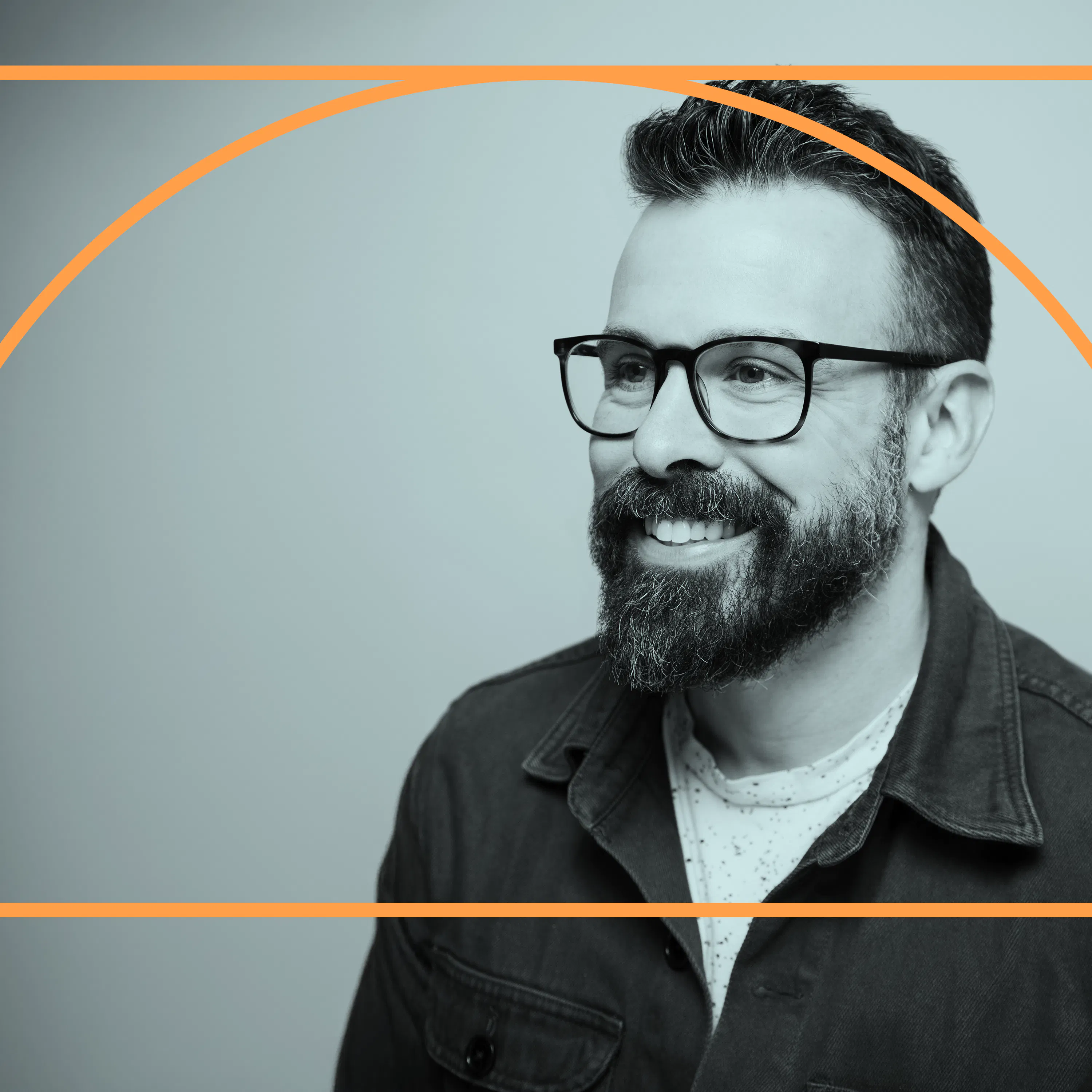
Design Better
Mike Schnaidt: Fast Company Creative Director on typography, creative endurance, and designing for the long haul
00:23:47
We chat with Mike Schnaidt about We chat about the nuts and bolts of typography (utilitarian vs. expressive, food metaphors, Fast Company's per-issue typeface system) to the philosophy underneath it all (design as service, authorship, hospitality). We dig into his book Creative Endurance — 56 rules for sustaining a creative career drawn from athletes, astronauts, and designers — and his counterintuitive take on burnout: the cure isn't rest, it's picking up something creatively different.
Loading summary
Transcript38 lines
- [00:01]
Mike Schneid
It may sound counterintuitive, but the key for me to get over burnout was to do something completely different. I think that picking up another creative task, learning something new, is really the key to burnout.
- [00:15]
Aaron Walter
For some, typography is treated as just a detail. You know, the thing that you finalize
- [00:21]
Eli Wooler
after the real design decisions are made.
- [00:23]
Aaron Walter
But not for our guest, Mike Schneid. It's closer to the foundation everything else rests on. He spent two decades in editorial design at some of the most iconic American magazines, including Men's Health, Esquire, Popular Science, Entertainment Weekly, and right now he's the creative director of Fast Company, where he recently led a redesign that does something pretty unusual. The magazine gets a completely new typeface every single issue.
- [00:52]
Eli Wooler
Mike's also a professor, a runner, and the author of Creative Endurance, a book that maps the principles of physical and mental endurance onto the creative life. It's built around 56 rules for sustaining a career in design, drawn from interviews with ultra marathoners, astronauts, and designers who've pushed way past the limits most people set for themselves. And as you'll hear, he's already working on book two. This is DesignBetter, where we explore creativity at the intersection of design and technology. I'm Eli Wooler.
- [01:19]
Aaron Walter
And I'm Aaron Walter. If you're hearing this, you're not currently on our premium subscriber feed. Design Better premium subscribers enjoy weekly episodes. That's four episodes per month rather than just two, and all of them are ad free. Plus you'll get an invitation to our monthly AMAs with the smartest folks in design and tech. And if you subscribe at the annual level, you'll also get our Toolkit, a collection of our favorite design and productivity tools like Perplexity, Miro, Read AI and more. You'll hear a preview of this episode, but if you'd like to hear the full conversation, please consider becoming a premium subscriber@designbetterpodcast.com subscribe. The podcast is available to everyone through our scholarship program, so if you can't afford a subscription, just shoot us. An email at subscriptionsecuriositydepartment.com will help you out. We'll return to the conversation after this quick break. And now back to the show.
- [02:39]
Eli Wooler
Mike Schneid, welcome to Design Better.
- [02:41]
Mike Schneid
Thank you for having me.
- [02:42]
Eli Wooler
We are excited to have you here and we got a bunch of topics we want to talk about, but I think one of the things that's a core part of your background and expertise is typography, and we're always trying to help our audience level up, whether they're just curious about typography or they're more advanced and they want to figure out where they can go to get even better at it. So maybe we could start off and just talk about. Are there any kind of core principles, core typographic principles that guide your work?
- [03:09]
Mike Schneid
The way I like to teach type is you think about type in two very different categories and one category being just like very utilitarian typography, which is what many college students would be familiar with, which is you see it on your phone, you see on a website, it needs to be very legible. And then there is the whole other school of typography, which is the Paul Ashir school of typography, where type is very much appliable, malleable thing. And I really try to teach and think of those two different modes when I'm designing. I come from the editorial space. Your page designs, whether it's in print, on screen, need to be incredibly legible and structured. But then you know, you've got your cover, your magazine cover, you've got your feature opener. And those in my opinion, should be blown out and as fun as possible. Those are the movie poster moments and those are the moments where I really try to get off the computer and sketch out ideas. Even if it's just like a ten second little thing thumbnail to figure out ideas. That's pretty common for a guy like myself who's been designing for 20 something years because my teachers would teach us about woodcut typography and so on and so forth. But people with less experience in type and more familiarity with type on mobile devices aren't necessarily thinking about that fine art aspect of type. I really try to think about type in those two different modes.
- [04:26]
Aaron Walter
Let's maybe talk about philosophy or like the creative thinking behind typography. I like the idea that you're getting off the computer and you're drawing and sort of getting a feel for what the type could communicate. So your background, lots of editorial experience, Men's Health, Popular Science, Esquire, Entertainment Weekly and today Fast Company, which many of our listeners are big fans. We're certainly big fans of Fast Company. And when you joined Fast Company, there was some exploration of typography and you were leading this design team when there was a big redesign and you ended up with Sentra, Grifo, Beckett and Simple. Is that right? Four big fonts.
- [05:07]
Mike Schneid
Yeah, that was eight years ago. We've stuck with Sentra Griffo is now just used in the Logo. And we use Tampos for body copy. And I'm not getting paid by Klim, but it's one of the most legible body copy typefaces in the world. Especially as I get older, I appreciate the hell out of a really legible body copy typeface. So.
- [05:27]
Aaron Walter
Yeah, me too. I have to carry around glasses all the time. So what's the conversation in the room? When you're going through a big editorial redesign, you've got to find the right fonts that tell the stories and still be very functional. So there's like this creating creative possibilities while still remaining very functional. What's the conversation like in the design studio?
- [05:53]
Mike Schneid
A lot of conversations that revolve around food. So when we think, I just feel like food is always such a great metaphor for design. But, you know, when we're thinking about typography, let's start with, we've got our Centro and Tiempos. That's like we're building a dish. That's our white rice. That's the foundation. And then all the other typefaces that we add on top of it are all the fun toppings. The scallions, the beef that's been marinated in soy sauce, the red pepper flakes. So when we're thinking about typefaces, and it's important to note also that you mentioned a redesign. We're on our fourth redesign. A fast company. In my eight years of being there, this most recent redesign is the most exciting one to me because we have created this redesign where we find new typefaces for every single issue. Our conversation is like, okay, when we did this initial redesign and created this foundation where we can plug in new typefaces every issue, we thought, okay, we need that foundation. We need Centra and Tiempos. Those need to look great in the magazine. They need to be the very functional typefaces. They need to also be able to work great on our site. Tampos scans great on the screen. Centra looks great on the screen. Sentra works really well for all of our podcasts and events that we do. That's the foundation right there. And then when it comes to the magazine, we're redesigning every single issue. We're introducing a brand new type base for the issue. So Kyoto is our next typeface. It's for our most innovative companies issue. That is a typeface from Pangram. Pangram. That's kind of like a Clarendon kind of style typeface. Very specific to that issue. We kind of went all in on this science textbook, old vintage Science textbook kind of theme. Three of the covers already, they're on our Instagram now. But they have this very math slash science formula design on the COVID The issues themselves, the magazines themselves, we are each very bespoke in terms of their typography. And we do that for two reasons. First off, the magazine itself is quarterly, so we want each issue to feel, like, super special. I believe that by assigning one typeface for each issue kind of just makes it feel like this great moment in time. You can pick a typeface like Kyoto that you love for that issue. I think it's a great typeface. I don't know if I would use it for every single issue, but I love the ability to be able to go all in on that typeface for just one issue. And the other reason we did this redesign was because I wanted to give my design team authorship. I oversee a team of eight, which includes a mix of photo editors and art directors. I have two very senior level art directors, and I'll assign each issue to one of those art directors to come up with the typeface, come up with just the overall look and the foundation of the issue, and then the other art director and our design fellow will jump in and work on it as well. Authorship is really important to designers. Coming up with this redesign, where each art director can pick a typist for that issue and really on the look of that issue, gives them that feeling of authorship. And I think it just creates a more sustainable creative practice. Because what kind of creative doesn't love to own something type? Yes, it's a very, like, tactile thing, but I also believe that it could be a window into really giving a designer more ownership over a project.
- [09:07]
Aaron Walter
And is there something that unifies, like, elements that unify? I'm thinking about use cases here. Like, I'm at the airport and I see the magazine stand, and I still recognize this is fast company. It's different, but it's still the familiar magazine that I love. And I trust the pages themselves.
- [09:26]
Mike Schneid
You think about it as that's your bowl of rice. You know, the page designs, issue to issue, have the same framework. We use the same body copy. We have the same grid structure. We use a little tab system because every story within the issue has a rubric or, like a particular category for the story. So there's this tab system that unifies every issue, but then within that issue, your headline typefaces, they change as you flip through the issue. It's not like a net new nose to tail redesign. There's still familiarity. There's still structure to it. The covers, the only thing that they all bear in resemblance is the logo and the fact that there's a person on the COVID It definitely would not be an easy sell to say, okay, we're creating a brand that purposely doesn't have continuity to it. My rationale for that is Fast Company, we cover design, we cover innovation. Innovation is a little buzzy these days, but, you know, it's important for us to innovate on ourselves as well. So I believe that that gives us permission to continually change the way the magazine looks. You know, it was a big gamble for me in the beginning to try to do that, to oppose this idea of, we're going to redesign the magazine every time. I'm always going to come up with a new cover design. And it was kind of counter to how I operate as a designer as well. Because you mentioned I worked at Men's Health, every single cover of Men's Health was pretty much identical. It was a Snickers package. Your mainsail had to be here. Your number had to be in the bottom right corner. You needed a cover line about ABS.
- [10:51]
Eli Wooler
7 minute ABS.
- [10:52]
Mike Schneid
7 minute ABS. Everybody knows about the 7 minute ABS in the Beach Body. We were very limited on the amount of uppercase type that we could use because folks believe that that was tough to read and don't necessarily disagree, but it was a very limiting way of working. And then I go to Fast Company, and I've stayed there for eight years because I have a lot of creative freedom, which I really appreciate. And it was kind of just like, oh, my God, what do I do? And I was like, let's try to do something different every issue. And then with each redesign, kind of pushed that a little bit further and further and further to this fourth one where it was just like, well, we're quarterly. We've got the time. What if we redesign every single issue?
- [11:31]
Eli Wooler
I like the food metaphor, and it reminds me of. We had a conversation with Jonathan Heffler, a typographer, a few years ago, and he talked about how he kind of viewed his business and his work as having a lot to do with hospitality, like welcoming people in. And one example I can think of is on his website, he had all these great font pairings. It was almost like, pair this food with this wine kind of thing. And they all made a lot of sense. Is that a kind of philosophy that you use at all in your work?
- [11:56]
Mike Schneid
When I worked at Men's Health, I fell in love with the idea of service Journalism, the whole ethos of Men's Health was like, every single tip. You should be able to put the book down and go out and be able to put into action right away. That really informed my methodology on how I design. When we're designing packages and pages or anything, we're thinking very much about the user experience. I think user experience is common language in ui, ux, digital, anything like that. I think a lot about it in print too, because you're building these packages and you've got a lot of components and the reading experience in print, it's so enjoyable. So working on a magazine that was primarily focused on service made me think a lot about utilitarian design and think about, okay, I want a nice mix of infographics and illustrations and photography and data visualization and like, just giving the reader the right balance of all of those. When I wrote Creative Endurance and I designed it, I did the two hand in hand. So I was writing as I was designing because it helps me think and it kept me thinking about the reader experience as I was designing the book. I find that if you're just writing on your own without thinking about the design experience, you're writing into a Word document, you're going to end up with just gigantic blocks of text. That may be the most genius thing in the world, but design is the way in design is going to get the person to read that. The idea of service design has helped me very much as a writer. It's helped me as a professor as well. And just thinking about the experience of my students in the classroom and how I break up information down to like, okay, you know, how much of this class should be lecture? How much of it should be Q and A? How much of it should be hands on? Should this portion be visual? Do they need a voiceover? So design is very much informed how I operate in all the different professions that I do.
- [13:50]
Aaron Walter
We want to jump into your book here in a minute, but I want to keep pressing forward on how you operate within the fast company design studio. One of the key challenges that we just don't see too often is design and a system that has to work across media. So most folks in our audience are designing for some digital output or they're designing for a print output. But designing for both is a challenge. Talk to us about how you think about design as a system and how that system has to have some continuity across different channels, different media, and where it can just be totally broken. You can break the system.
- [14:35]
Mike Schneid
Legos. I loved Legos as a kid. I Always think about that building block, that modular. With Legos, your one block is your modular. Every time we're coming up with a design system, when we're looking at mood boards, when we're prototyping, we're in search of that one modular element. It could be as simple as like, you know, for our most innovative companies package that we're releasing, the modular is just a circle that's acid green. We're using that acid green circle to depth. You'll see it everywhere. That is the one thing that unifies all of our graphics. Because we've got the print edition, we've got special website, we've got video. At our most innovative company summit, you'll see it across many different platforms. So we're thinking about that modular. Obviously we've got our typeface that connects everything as well and we've got our color palette. But I would say as long as you have that one branding element, that one modular, you're good. Because that then gives you permission to. If you've got to do something different with your type. For social media, because we take our entire magazine and break it apart into a series of different social posts, we'll probably get about 30 social posts out of this one issue. We'll take sidebars and turn them into their own slideshows. Each cover will be a post with a pull quote attached to it. And on all of those graphics that you'll see on our Instagram over the next couple weeks, you'll see these circles and you'll see this dark charcoal gray color, you'll see this tan color, you'll see the Kyoto typeface. So it really just boils down to a simple modular system.
- [16:07]
Aaron Walter
How soon is this redesign coming out?
- [16:09]
Mike Schneid
Well, it came out last year. We launched it in 2025. The fun part about it was I love design when non designers get really excited about it as well. So this design, like any kind of big redesign, I had to not only present to our editors, but I had to present to our C suite. When I did the presentation of the redesign, my chief operating officer, when I presented this idea of okay, new typeface every single issue, she was like, I feel like type designers don't get their moment in the sun. And is there a way to spotlight them some more? And in my editor in chief has said like, well, yeah, what if Mike writes a little 100 word blurb each issue about the typeface? And then our head of video was like, what if we do a video series where Mike talks about the typeface every single issue. So we launched this YouTube series last year where I've been talking about the typeface. We're going deep on the typeface. And it was honestly the kind of thing where I'm like, we love talking about type, but is this really going to pop off? Are people going to enjoy hearing about type? And there are some type nerds out there, and even people that don't quite understand type, they like learning about it because it's one of those things that we live with. Everybody knows a good body copy typeface when they see it. People that like reading and they're reading a book with a good body copy type based, it feels like a cozy shirt. But not everybody understands. Why does that shirt feel cozy? I've learned that people just enjoy having a topic explained to them. And it's also helped me find this new skill or skill that I'm working on where being on video and talking about this thing that I love so much that I didn't think that other people would enjoy. And that's just a really good example of getting people that you wouldn't expect to be interested in design all connected. This redesign has grown into so much more than I ever would have expected.
- [17:52]
Eli Wooler
Reminds me a little bit of the movie Helvetica, which came out probably over a decade ago now. But I remember kind of forcing my wife Courtney, to sit down and watch it with me because she's not a designer and doesn't have an inherent interest in typography. But after the first few minutes, she's like, wow, this is actually really interesting how this one typeface has kind of inserted itself, you know, love it or hate it, into so many aspects of our lives. And then here are some designers who, like, really embrace it. Here are some who hate it, and nobody's really neutral about it. It's interesting to hear all these different perspectives.
- [18:21]
Mike Schneid
Yeah, it's nice to, like, slow down with a topic. And I think that typography is one of those topics where you can slow down and talk about the nitty gritty. And I find that a lot of people are interested in it.
- [18:32]
Aaron Walter
Let's talk about your new book, Creative Endurance. Tell us why this book, why this was an important thing for you to write.
- [18:38]
Mike Schneid
I got the idea for it in 2022. I was teaching at Kean University in New Jersey. We're kind of just coming out of the pandemic era and students are back in the classroom. My workplace has completely changed, so at one point, my whole team was in office in New York. Now they're Distributed. At that point, I'm still kind of navigating, having a distributed team. And I was finding that designers at my most hands on level were burnt out. I was feeling a little burnt out. That's where I started to think about this topic of endurance. I also thought a lot about it as a runner. Went for a six mile run before the podcast. It's just my meditation time working in men's health. I was always interested in health and the science and the physiology of it. And I just thought it would be really cool to do a book where I can connect creativity to endurance on the physical level and also on the mental level. An early version of the book was called the Runner's Guide to Design. Rockport, who's the publisher, that was very niche, as much as they liked it. So we kind of broadened it to creative endurance. And you know, essentially it was intended to be the answer to burnout, but written through very much of a magazine perspective. So the way I structured it was 56 rules. The idea of rules came from Esquire and I always liked the idea of rules because it's sounds very formal, but you can have some fun with it. Two of the rules in the book are like, end your day on time and another one's don't end your day on time. Meaning if you love a project, pull an all nighter, put all your energy into it. But then there's some things that honestly we have to mail in because they're not as important to us. We'd be lying to ourselves if we said every single project was important to us in the same way. Like every single run that I go for is not going to be a banger where I'm going to run my best time in the world. I really just wanted to come up with an answer to the problem of burnout. And in around the same time Rick Rubin put out his book on creativity. I'm like, well, I can't top that and I'm not going to try to top that. But I spoke to it from my perspective as a runner. I spoke to it from the perspective of 39 interview subjects that I had for the book. So I interviewed Dean Karnassis, the ultramarathon man, the guy who went for three days straight without sleeping. I interviewed Jeanette Epps, astronaut who has been to space. I interviewed Sagi Haviv from Chermayev, Geismar and Haviv, you know, athletes like Dean, people who are endurance minded like Jeanette Epps, and then just your straight up
- [21:01]
Eli Wooler
designers like Soggy the quick Dean Carnetza story from a local thing here. We have the Big Sur Marathon here, which is a very famous marathon every year. And this is, I don't know, maybe 10 years ago or so he came to run it and most people it starts kind of near where I live here in Carmel and they take a bus down to the starting line. He decided to run down to the starting line first and then went back. Okay, man, you're crazy.
- [21:24]
Mike Schneid
He is bonkers. Really funny thing was I interviewed him three times.
- [21:31]
Aaron Walter
If you'd like to continue listening to this conversation, you'll need to subscribe@designbetterpodcast.com subscribe Once you do, you'll get access to
- [21:41]
Eli Wooler
every full length episode.
- [21:43]
Aaron Walter
All ad free monthly AMAs with a inspiring people in design and tech and recordings of all our past AMAs. The podcast is available to everyone through our scholarship program. If you can't afford a subscription, just email us@subscriptions department.com and we'll help you out. Your support makes design better possible. Invest in yourself and the design community by subscribing@designbetterpodcast.com Foreign.
- [22:18]
Eli Wooler
Is supported by upwork. Here's a situation that most of us have experienced. You're deep into a project, momentum's good, and then you just hit a wall. Not because the work is hard, but because it needs a skill that nobody on your team actually has.
- [22:34]
Aaron Walter
Maybe it's motion design or someone who's
- [22:36]
Eli Wooler
an expert at data wrangling and suddenly you're stuck choosing between learning it badly yourself or losing weeks trying to hire somebody. That's the gap that upwork closes. It's a one stop platform to find, hire and pay expert freelancers across more than 125 different categories, from web and software development to data and analytics, marketing, business operations, design, and more. You browse real profiles and you look at their past work and and bring someone on who already knows the thing that you don't. And if you're on their business plus tier, the matching is fast. AI powered shortlisting puts the top 1% of talent in front of you in under six hours. Contracts and payments live in one place so you're not buried in administrative work,
- [23:22]
Aaron Walter
you're back to the actual work.
- [23:25]
Eli Wooler
It's free to sign up and posting a job takes minutes. We've used it in the past and we love it. Visit Upwork.com right now and post your job for free. That's Upwork.com Upwork.com DesignBetter is supported by Masterclass there's always something that you want to get better at, and for me it's guitar. I've been studying every week for years and I kind of hit a wall. I wanted to make the instrument actually sing. So I went to Masterclass and took a class taught by Tom Morello. He's the guitarist behind Rage against the Machine, and more recently I saw him perform with Bruce Springsteen. Here's the one thing that I took away from Tom Morello treats the guitar as a sound machine, not just six strings and a handful of chords. That single shift changed how I practice. Now I sit down and ask what sound am I chasing and experiment my way there. It made playing fun again. That's what I love about Masterclass. You learn from the best in the world, the people who actually defined their fields. There are over 200 classes across business, writing, cooking, wellness and more, with plans starting at just 10 bucks a month billed annually. And it fits. Real Life Audio mode turns a commute or a workout into a classroom and the lessons are short and you can learn on your phone or on your tv. I'm not the only one who finds that it works. In fact, 83% of members say that they've applied something that they've learned to their real lives. Plus, every new membership comes with a 30 day money back guarantee, so there's no risk. Masterclass keeps adding new classes, so there's never been a better time to get in. Right now, as a listener of DesignBetter, you get at least 15% off an annual membership@masterclass.com Design Better. That's 15% off@masterclass.com DesignBetter all one word. Head to masterclass.com DesignBetter to see the latest offer.