← Design Better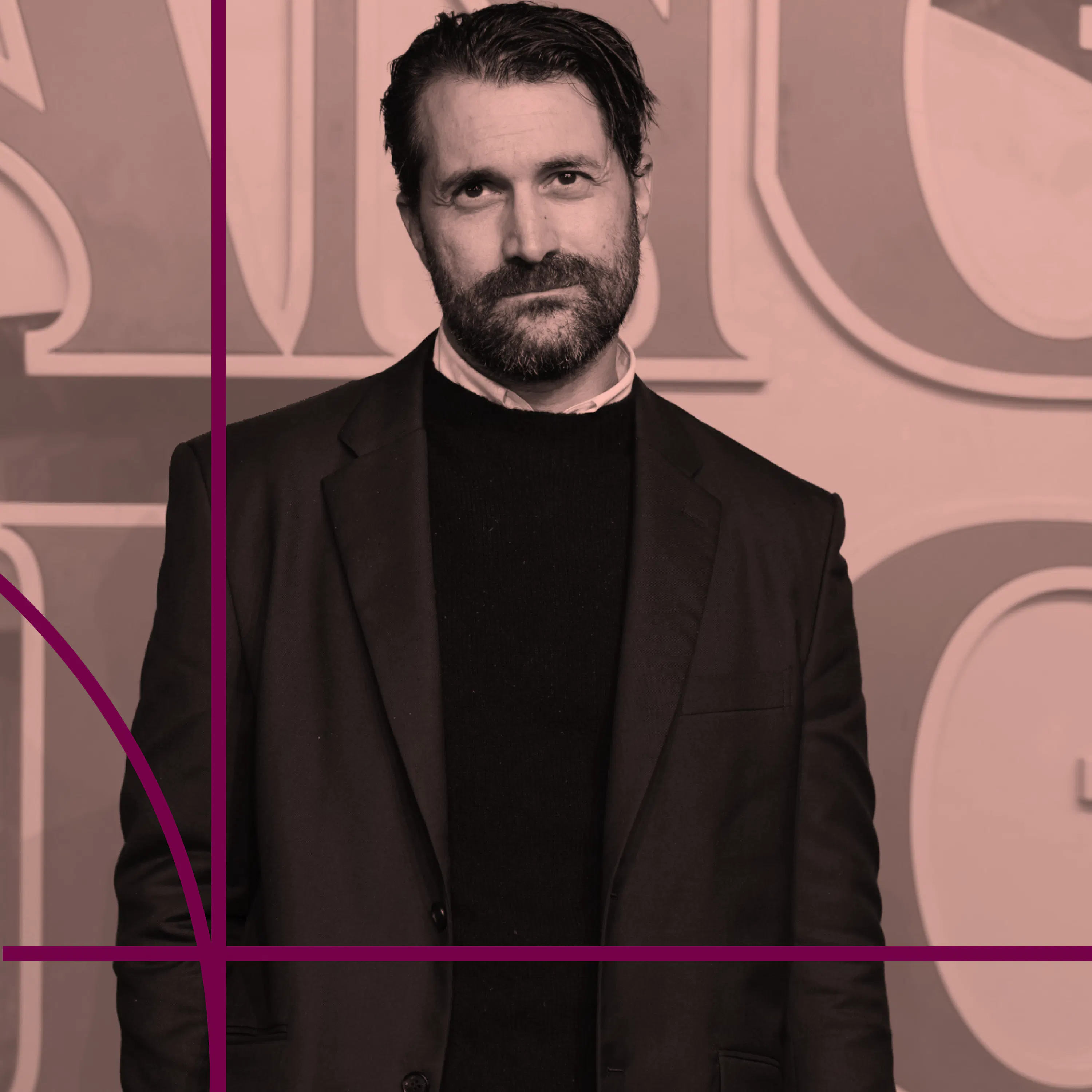
Design Better
Paul Dichter: Stranger Things writer on why the writers’ room isn’t so different from the design studio
00:32:22
We chat with Paul Dichter about the dynamics of the Stranger Things writers’ room, exploring the diverse roles—from enthusiasts to skeptics—that drive creative teams. He explores the discipline of restraint in using 80s nostalgia and the balance between following systemic logic and knowing when to break the rules for a great idea.
Loading summary
Transcript31 lines
- [00:05]
Paul Dichter
It's such an extraordinary experience, sitting across a table from super smart people who also love the same things that you love, who hopefully come from different backgrounds and life experiences and points of view, and getting to have that spirited debate. I think the best version of the Writers Room dynamic is one where people don't agree, where it isn't, like, obvious that the next thing that needs to happen is this.
- [00:39]
Eli Woolery
I'm an official Stranger Things nerd. I watched the show when it first came out, again when my daughter was old enough, and once more when my son was ready. As a kid of the 80s, the way it captured that particular feeling of freedom. Biking with friends through the neighborhood, the movies and music of the era struck exactly the right balance of nostalgia, present enough to feel real but never forced. For that, much of the credit goes to the writers. So we were thrilled to get a chance to talk to one of the head writers for Stranger Things, Paul Dichter.
- [01:07]
Aaron Walter
I'd always wondered what actually happens in a writer's room for a show like this. Are there heated debates, storyboards and character maps to keep a sprawling plot straight? Well, as we learned in this interview, yes to all of that. And in many ways, the writer's room isn't so different from the design studio. It's a place where creative ideas collide and combine, and when it's working well, it produces something greater than the sum of its parts. Paul shared with us the dynamics of the Stranger Things Writers Room, describing the diverse roles, from enthusiasts to skeptics that drive the creative teams. He explores the discipline of restraint in using 80s nostalgia and the balance between following systemic logic and knowing when to break the rules for a really good idea.
- [01:56]
Eli Woolery
There's also a lot here about how story structure maps onto design work, the idea that every scene needs an engine, that meaningful change has to register at every level, and that the best creative decisions often come not from defending what you already know, but from sitting with a note that you hate long enough to find out what's really underneath it. This Is Design Better, where we explore creativity at the intersection of design and technology. I'm Eli Woolery.
- [02:18]
Aaron Walter
And I'm Aaron Walter. If you're hearing this, you're not currently on our Premium subscriber feed. DesignBetter Premium subscribers enjoy weekly episodes. That's four episodes per month rather than just two, and all of them are ad free. Plus you'll get an invitation to our monthly AMAs with the smartest folks in design and tech. And if you subscribe at the annual level, you'll also get our Toolkit, a collection of our favorite design and productivity tools like Perplexity, Miro, Read AI and more. You'll hear a preview of this episode, but if you'd like to hear the full conversation, please consider becoming a Premium Subscriber@designbetterpodcast.com subscribe the podcast is available to everyone through our scholarship program, so if you can't afford a subscription, just shoot us an email@scriptions curiositydepartment.com will help you out. We'll return to the conversation after this quick break.
- [03:29]
Paul Dichter
This episode is brought to you by Prime Obsession is in session and this summer Prime Originals have everything you want.
- [03:36]
Aaron Walter
Steamy romances, irresistible love stories, and the
- [03:40]
Paul Dichter
book to screen favorites you've already read twice off campus Elle every year after the Love Hypothesis, Sterling Point and more, Slow burns, second chances, chemistry you can feel through the screen. Your next obsession is waiting. Watch only on Prime.
- [04:02]
Aaron Walter
And now back to the show.
- [04:09]
Eli Woolery
Paul Dichter, welcome to Design Better.
- [04:11]
Paul Dichter
Thank you.
- [04:12]
Eli Woolery
Well, we are, I have to say, very excited to have you here. Aaron and I are huge Stranger Things fans. Before we started recording, I don't think I even showed Aaron this, But for my 50th birthday my son Dash and my 10 year old son made this card for me with a demogorgon on the front. I also have a little demogorgon like crochet thing that my kids got for me that's back there on the bookshelf. I'm wearing the Stranger Things Santa Cruz. There's all sorts of nerdy Stranger Things fan stuff going on here, which I hope folks don't get too nerded out by, but we're just really excited to have somebody who actually worked on the show was deeply involved. Before we get there though, we want to know a little bit about your backstory and how you got to where you were with the show. So rewind us to Paul from before Stranger Things and what point did you decide to become a TV writer and what was your educational background like?
- [05:06]
Paul Dichter
So I have a degree in English Literature, but I was resistant to the idea that I wanted to be a writer for a long time, even though in hindsight it was there all along. Halfway through college, I ended up acting in a play in college, which I'd never acted before. I didn't do it in high school because I was too shy and I had such an amazing experience doing the play and I ended up studying acting at Steppenwolf Theater in Chicago for a summer when I was 19 and thought I wanted to be an actor. While I was getting my English degree, I started pursuing acting a little bit in Chicago. And one of my friends from that Steppenwolf Theater summer program moved to Los Angeles and got cast on Grey's Anatomy. The first season of Grey's Anatomy, when it was like the biggest show in the world. And I bought myself a plane ticket to go visit her in la. It was winter in Chicago and I used Priceline because I was so broke. I was waiting tables at a theme restaurant in Chicago, and I pricelined a ticket to LA, and I spent two days in LA and it was 75 and sunny. And I visited my friend and that was it. I was like, I have to move to la. Someone will tap me on the shoulder and ask me if I want to be on Grey's Anatomy, and I will say yes, and I'll go from there. And then moved to LA. I was 24 and basically quit acting as soon as I got to town. As soon as I landed, I was like, I can't do this. This is not for me. And then I waited tables for about 10 years, and then I got the job on Stranger Things. So there was some in between there. There was this movie that I was obsessed with, this movie, you Can Count On Me with Mark Ruffalo. It's a great movie from the early 2000s, and I was obsessed with Mark Ruffalo, and I wanted to be him. And the play that I did in college was written by the same person who wrote the movie, Kenneth Lonergan. And it took me a long time to realize that it wasn't the acting, even though it's incredible, it was the writing. Because I think that I had a block about pursuing writing for some reason. Both my parents are writers. That might have something to do with it. Once I discovered writing then, it took me years and years and years to get good at it. Really. I'm a slow learner. And I was waiting tables the whole time. The same restaurant in la, and I had a bunch of other friends. We were all trying to be writers, and we all had day jobs. And one by one, each of my friends sold a script or got staffed on a show or made a movie, and I was still waiting tables. And I remember I started dating my girlfriend, woman I met at the restaurant, who's now my wife. And I remember early on saying to her, I'm going to put a clock on this dream, and if I don't make it by the time I'm 30, I'll get a real job. And she said, if you Get a real job, I'll leave you. She said, I don't care how long this takes, even if it never happens, but if you give up on this, I'm out. Which was unbelievable. I was so bitter at the end from waiting tables. I waited tables for many, many years, which I think is an experience everyone should have. But I got very tired of it. I boil it down to, I would go up to a table and I would say, hi, how are you? And someone would look at me and they would say, iced tea. And if they just said good iced tea, no problem. But they didn't answer my question. They just went straight to ice tea. And I was so burnt out, and I was turning 30 and it was a whole crisis in my head. And then once I kind of made peace with the job from that moment that I realized that I was grateful to have a job that started at noon. And my girlfriend and I were sharing a car and she had a quote unquote, real job. So I drop her off at 8:30. I found a coffee shop in Hollywood with no Internet, and I went there every day from 8:30 to 12. And I wrote. And that was my film school. I did that for about two years. I wrote three or four feature scripts in the first year, just getting my hours in. And once I kind of accepted that this job that I was so resentful over was actually giving me time to write and enough cash to live and not so much that I felt like I could settle down from that moment. It was a very short window until I got Stranger Things. And the way I got Stranger Things is one of those friends who was also a struggling writer in LA was Rotz Duffer, who's one of the Duffer brothers who created the show. And I read the first draft of that script as a friend because we would give each other scripts to read as we were writing them, and we were all trying to make it. And we were house sitting in my aunt's house, and they were at our house the day that Netflix made them the offer to make their show, which was an amazing moment. And right around that time is when I finally wrote a script that was pretty good after years and years. And I sent them the script and Ross took me to breakfast and he said, netflix won't let me hire you as a staff writer because you're a waiter with no agent and no resume. So I want to offer you the job of writer's assistant. But I want you to pretend that you're a staff writer because we need your help. And We've never done this before. Is that okay? And I said, yes, thank you for giving me my break. And on Friday I was at the restaurant going up to people, asking them if I could get them something to drink. And then on Monday, I was in the writers room and someone came up to me and said, can I get you something to drink? That show was Stranger Things. That was the first day of the first season. And by the end of season one, I was promoted to staff writer and I got to co write an episode that year. And then 10 years later, I'm a co executive producer on the last season and it was completely life changing.
- [11:10]
Aaron Walter
That's super interesting. I was very curious how you got in kind of ground level as assistant and. And then if you watch the documentary that came out right after the end of season five, you're very prominent in there, like you're in the writers room in the mix, kind of shaping debate. If any of our listeners who are Stranger Things fans, or maybe you didn't get all the way through if you just go Google Paul's name. The Internet has shared understanding that the best episodes, the most powerful turning point episodes were Paul's. Paul was like at the center of this. You don't mind me saying that, do you?
- [11:44]
Paul Dichter
It's true. I will say that I got very lucky with the writing assignments of which episodes I was given to write. But it was a very small group of people that wrote the show with Ross and Nat. And it was an unbelievable experience to be in this tiny little creative pod inside this huge thing.
- [12:06]
Aaron Walter
Take us there, take us into the writer's room of what that's like. So our listeners, many are pursuing creative endeavors, but maybe they're different and they don't realize that what you do, writing for a popular TV show is not so unlike what they're doing, that there's debate and there's conversation and there's taste and there's sort of a feel for what should come next. What was it like in the writers room as you were working through? Maybe you've got specific stories of points critical to turning points in the narrative where the discussion, the creative debate was particularly heated and you found some pathway forward.
- [12:47]
Paul Dichter
It's the only time in my life where my expectations for what something would be were met. And it really was what my fantasy of the job might be turned out to be what the job is. And I think the biggest misconception for people who don't work in this specific industry is that we are sitting alone at the computer writing episodes because 95% of the job is done collaboratively in this case for this show was six people sitting around a table. There's a few whiteboards. In the first season, we were in a corporate office space on Sunset Boulevard. And after season one, we went to Netflix and asked them to give us the budget for an office. And instead we rented houses. And we just turned the living room of the house into our writer's room because all you really need is access to snacks and a table. The snacks are very important. But 95% of the job, like I said, is sitting around as a group talking about story, talking about what the arc of the season is, the arc of the episode, the arc of the scene. And it's not the case where a writer is in charge of a particular character or even a particular part of the story. It really feels like a collaboration. Obviously, the showrunners are the decision makers, but it's a small group that gets to brainstorm together and voice their opinions and agree and disagree and figure out what the story is together. And if you spend six months, let's say, writing a season of television, two weeks of that time you'll be in your office writing an episode. The rest of the time you are at the table with everyone else, debating, arguing, telling embarrassing stories from when you were in junior high school and trying to figure out what the show is telling you it wants to be. And it's incredible. It's the best job I've ever had.
- [14:55]
Eli Woolery
Tell us a little bit about maybe some of the visual artifacts you created, because you mentioned the whiteboards. I'm sure there was notes and maybe post its. But were there ever maps or drawings or sketches that you used to help give a point of view or tell part of the story?
- [15:09]
Paul Dichter
Definitely. I mean, once we were deeper into the series and we had a sense of the geography of not just Hawkins, but locations that we've seen before. Part of the fun and the problem solving for a specific scene is to look at the physical space, a map of Hawkins, trying to figure out how we're going to get from this place to this other place and how long it might take to ride your bike there, or if you've got a fight sequence in a hospital, trying to figure out where the monsters are going to chase you and where you're going to go and how you're going to slam the door. So all that stuff, it's really fun to look at either the architectural drawings or the location photographs, or sometimes by the end of the series were on Netflix on the laptop scrolling through an old episode just on Netflix, trying to remember, oh, yeah, look, the eight balls in Mike's bedroom. We can use that for this moment. Like, things like that, which became really fun. And sometimes, to be honest with you, you're maybe going on the Stranger Things wiki to verify some information, because sometimes you forget a detail or two, but the information exists, and it's possible that you forget a thing or two along the way. Obviously, on season one, as the creature design was starting to evolve and starting to look at drawings of different ideas for what a demogorgon could be, we would look at them together and they would say, what do you think? Which one do you like? Which is the scariest? Which is so fun. It's so fun to look at 10 different monsters and get to weigh in on them. It's the best.
- [16:46]
Aaron Walter
You know, it's interesting to me about Stranger Things. As a child of the 80s, much of what I see in the series, it looks exactly like my childhood. And so there's an incredible attention to detail of the time and place. Because many in our audience are type nerds, they may or may not have caught that the Stranger Things logo is lifted from choose your own adventure. That is the type. And I recognize that only by feel. And then I'm like, wait a second, is that it? And then I look it up, and there it is. There's so much of that where it's built into the fabric. I see a Spielberg ET Scene, I see a Back to the future reference. I see all these different things, but it doesn't hit you over the head. It's, like, baked into it. You're soaking in it, but it's not overt. So I'm curious. One, what does the research for the look of these things, like, the feel of this, what does that research look like? And then were there discussions about, okay, this is too on the head. Let's dial this back.
- [17:57]
Paul Dichter
The show had the most unbelievable craftspeople, production designers and department heads, costumes, everything with the most insane attention to detail that makes the writers look like clowns in terms of figuring out those details. But something that might be of interest to you and your audience is. Even before the writers room started on the first season, the Duffers made a lookbook, which was like a visual deck, basically, that they used to sell to show, and it was in the style of a 1980s horror paperback. And they did it themselves on Photoshop on their computer. And we ended up changing the name of the show to Stranger Things during the writers room on the first season. And There was a jar in the middle of the table and people were putting name ideas into the jar. I wish I could take credit for Stranger Things, but I can't. But anytime someone had a pretty good name, the first thing Ross and Matt would do is they would put it in that font and they would look at it on the paperback. And I think you could Google this lookbook. It's out there. But that instant hit of visual recognition, of seeing the title in that context, was essential to the decision making for them to pick that name. And I think that Stranger Things worked in that font as a lost Stephen King novel, which was the feeling we were going for, which is really cool and a great way to kind of reverse engineer the feeling we were going for. And then to answer your other question about making sure it's not too on the nose, something interesting about Stranger Things is that most of the creative team, especially on the writing side, we weren't actually children of the 80s. We're a little bit younger than the characters from the show. So for us, there was a nostalgia that was filtered through renting Amblin VHS's in our childhoods, renting Goonies, watching that movie, and being nostalgic for a version of childhood that was already kind of slipping away in the mid-90s. Not for me as much, because I was growing up in a small town and I rode my bike everywhere and I didn't have a phone and did a lot of the things that the kids on the show do. But I think part of the reason the show works is that there is some filtering happening through the imagination of the duffers, and it's not like a pastiche. I've had this interesting side job since season two of the show when Netflix started to realize that there was a universe here of stories. People started approaching Netflix saying, can we do a comic book? Can we do a novel? Can we do some merch? And the devils started getting all these questions about the story of the universe, and they didn't have time. And so they nominated me to be the liaison between the writers room and licensing, basically. And so I've been doing that and still doing that for years and years and years. So I've read every comic book and every novel, but one of the notes that I've consistently given to writers who are new to the world of Stranger Things is you don't need to put in this many references to 80s pop culture. It's really not wall to wall references, because then it starts to feel more like fan fiction, which is totally fine. It's just not what the series itself is. It feels like more the lived in version than us looking down on what that time was. And I think doing it with a light touch makes a difference. For some reason. It makes me think of the difference between the spaceships in Alien versus the spaceships in Star wars and how the spaceship in Alien is old and broken down and wanting to find that feeling that, like, if there's an incredible movie playing in the theater the week that the season is happening, of course we're googling the date, we're reading out loud all the movies. We're being intentional about that because we love those movies so much. But we're also making sure that we're not drowning in the references.
- [22:19]
Aaron Walter
Yeah. So I think that's the key takeaway that I hope our listeners file in the back of their mind is restraint is so powerful. There's a lot of these references in Stranger Things, and it would have been very easy to become a pastiche, but it never got there. I felt like I'm in that place. I know this time and space and I'm transported. If it were done too much, it would undermine all of it. And a lot of creative thinkers, like creative. You get excited about this cool idea or this reference and you can't help but just hit that again. Hit it again. Because it's so great. Music's like that too, where you know you want to hit that note over and over again and you do, and like, all the power is lost.
- [23:02]
Paul Dichter
I totally agree. It feels more universal when it becomes a texture, an incredibly important texture to the series. But that it's okay if you aren't yourself a child of the 80s. It still works for you. And it also isn't an overwhelming sensory wash of music, pop culture, toys, material culture. It's definitely more than window dressing. But it was never the central focus in the writer's room. The central focus is always on character and on who these kids are and teens and adults and what they're trying to get and what they want. And if along the way you could throw in a Never Ending Story song, like, do it.
- [23:50]
Aaron Walter
Hell yeah. Of course, George Lucas said when all the new Star wars movies came out and he was sort of trying to grumble without sounding like sour grapes, he said, you know, it turns out Star wars is a movie series not about spaceships. It's about relationships, which is very true. Like, the spaceships happen to be there, but it's really about relationships.
- [24:12]
Paul Dichter
Absolutely. That's all stories. And I think that's probably why the show resonates more than nostalgia for Dig Dug, which is too difficult for a modern audience to play anyway. Game is impossible. That's right.
- [24:27]
Eli Woolery
Yeah. I wasted many quarters on that in the supermarket growing up. So, you know, speaking of relationships, friendship is one of the core themes of the show. And it's really cool to hear that you were friends with one of the Duffer brothers, because before the show even started, friends have conflicts. And I'm sure there were conflicts in the writers room. Maybe you could talk to us how you navigated some of those conflicts, given that you were friends before and how that played into it.
- [24:49]
Paul Dichter
Yeah, I mean, it's a really interesting combination of working in the arts and having more of an artist temperament and having a 9 to 5 office job. So it can be a unusual combination platter when you're in that writer's room. Cause some part of it is still, you know, what are you eating for lunch and where are you sitting? And you're chewing very loud. Because you spend a lot of time with the same group for years on end. But then a lot of it is really, you bring so much of yourself to the storytelling, especially as a writer on a show like this, because everything starts from this origin point of feeling like an outcast as a young person and wanting to tell a story where the outcasts are the main characters are the heroes. And that coming from such a personal place and really inviting people to feel like they can tell embarrassing stories or sweet stories or both about their own lives. Not that the show is in any way autobiographical, but just the specificity of nerds writing a show about nerds is definitely there. There's tons of conflict. There's a lot of times when you are absolutely convinced that you know what the right answer is, but nobody else agrees with you. And you have to be conscious of starting to be annoying because you keep pitching the same idea over and over again. And sometimes you have to stop. People, I think, sometimes find themselves taking on different roles in that room of the kind of gut check person. Does this feel right? Do you believe this? Or the person who is firing off idea after idea after idea. That was one of the things I think that maybe was my role was here's a bad idea to get us talking. And I know it's not the right thing, but maybe it'll unlock one of you brilliant people to have a better idea. And it often did. The key here is that it's so collaborative, and especially as a writer, where the background is, you're sitting alone at Your computer staring at a blank piece of paper or a screen, trying to figure out what the person in her head should say next. It's such an extraordinary experience to go from that to sitting across a table from super smart people who also love the same things that you love, but who hopefully come from different backgrounds and life experiences and points of view and getting to have that spirited debate. I think the best version of the writers room dynamic is one where people don't agree, where it isn't, like, obvious that the next thing that needs to happen is this. Also, on a great show like with Stranger Things, Ross and Matt are sitting in the room listening to us debate and arguing with us and trying to convince us, and we're trying to convince them, and at some point, they go off and they make a decision. And sometimes it's what you thought it should be, and sometimes it's not. And fortunately for me, I would always read what they wrote and I would go, oh, man, that's it. That's exactly it. How did you think of that? And then I would get annoyed and jealous, like all creative people should. So tons of conflict, but all from this place of, like, best idea wins. And one of the magical things about Stranger Things specifically is the Duffers were really under experienced when Netflix told them they could showrun, create, write, direct that first season. They'd never really done it before, and they hired a bunch of people like me, who also were really under experienced. Our composers, our production designer, Some of the key pieces of the Stranger Things creative team who stayed with the show as long as I did for the entire run of the show. And it was people who were incredibly passionate and locked into what this story was who felt really empowered to bring their best stuff to this. And so it created this amazing environment to feel comfortable throwing out a thousand ideas and knowing that 950 of them are absolutely awful. Especially by the end when it was the same core group for the last bunch of years in the writer's room. So we really knew each other extremely well. And you also knew halfway into the first sentence of your pitch that it was garbage and no one liked it, but you would finish anyway because somebody else would have a brilliant idea and. And you try to get somebody else on board so you can go together and bring force in numbers. I think a little bit. I actually haven't seen the documentary, but I think maybe a little bit of that is in there. It's a really fun, creative environment. It really is.
- [29:34]
Aaron Walter
It's interesting what you describe as sort of like, here's a team. Most everybody is green. And yet there's something really powerful there. There's a shared passion, there's a shared dedication. Maybe there's like a hunger that might not be there if there were a bunch of veterans. But I'm also curious, you know, creative collaborative teams, there's like a chemistry when you're in a creative team that's really humming. You definitely know it and you feel it and yet you can't really put your finger on it. I'm curious if, looking back on those five seasons, you said like a decade together, if you could pull it apart and say, like, okay, here are the elements of what makes that really healthy creative environment.
- [30:21]
Paul Dichter
This is something that I've talked to the other writers on the show about a little bit because we have tried to do this to some extent, not trying to recreate what it was, but out of curiosity. And I think inevitably, if you'd like
- [30:37]
Aaron Walter
to continue listening to this conversation, you'll need to subscribe@designbetterpodcast.com subscribe. Once you do, you'll get access to every full length episode, all ad free monthly AMAs with inspiring people in design and tech and recordings of all our past AMAs. The podcast is available to everyone through our scholarship program. If you can't afford a subscription, just email us@subscriptionsuriositydepartment.com and we'll help you out. Your support makes design better possible. Invest in yourself and the design community by subscribing@designbetterpodcast.com. DesignBetter is supported by Upwork. One thing that we learned by running this show and honestly building anything creative is that the fastest way to level up any isn't just working harder, it's finding the right person for the right tasks. We've used Upwork ourselves, and what's impressed us about it is how much it's evolved beyond just posting a job and hoping for the best. Their Business plus tier actually uses AI powered shortlisting to match you with the top 1% of talent in under 6 hours. And for us, that kind of speed really matters. When you're in the middle of a project and you hit a skills gap, you can't afford weeks of recruiting. Upwork covers more than 125 categories. Web and software development, data and analytics, marketing, business operations, and the platform handles contracts and payments all in one place. So you're spending time on the work, not on the administrative side of things. And if you're looking for some side work, upwork is genuinely one of the better ways to build a client pipeline, real projects, fair pay, and working relationships that can actually stick around. It's free to sign up and posting a job takes just minutes. Visit Upwork.com right now and post your job for free. That's Upwork.com Upwork.com DesignBetter is brought to you by UserTesting. What does it look like to thoughtfully integrate AI into your design process? Well, at UserTesting's upcoming events called Crafted, you'll have the chance to explore exactly that. In Seattle and London, my pal and co host Eli Woolery will be running a 90 minute interactive workshop called AI and Design Thinking, designed to help you use a host of new AI tools not as a shortcut, but as a thought partner so you can build with confidence using the tools shaping tomorrow's creative workflow. If you care about the craft of design and the role that AI should be playing in it, this is a conversation worth being part of. Visit events.usertesting.com crafted and use the code designbetter100 to save $100 off your workshop ticket. That's events.usertesting.com crafted Use the code designbetter100 to get $100 off the workshop Girl
- [33:42]
Paul Dichter
Winter is so last season and now spring's got you looking at pictures of tank tops with hungry eyes. Your algorithm is feeding you cutoffs. You're thirsty for the sun on your shoulders, that perfect hang on the patio sundress those sandals you can wear all day and all night. And you've had enough of shopping from your couch. Done. Hoping it looks anything like the picture when you tear open that envelope. It's time for a little in person spring treat. It's time for a trip to Ross. Work your magic.