← Design Better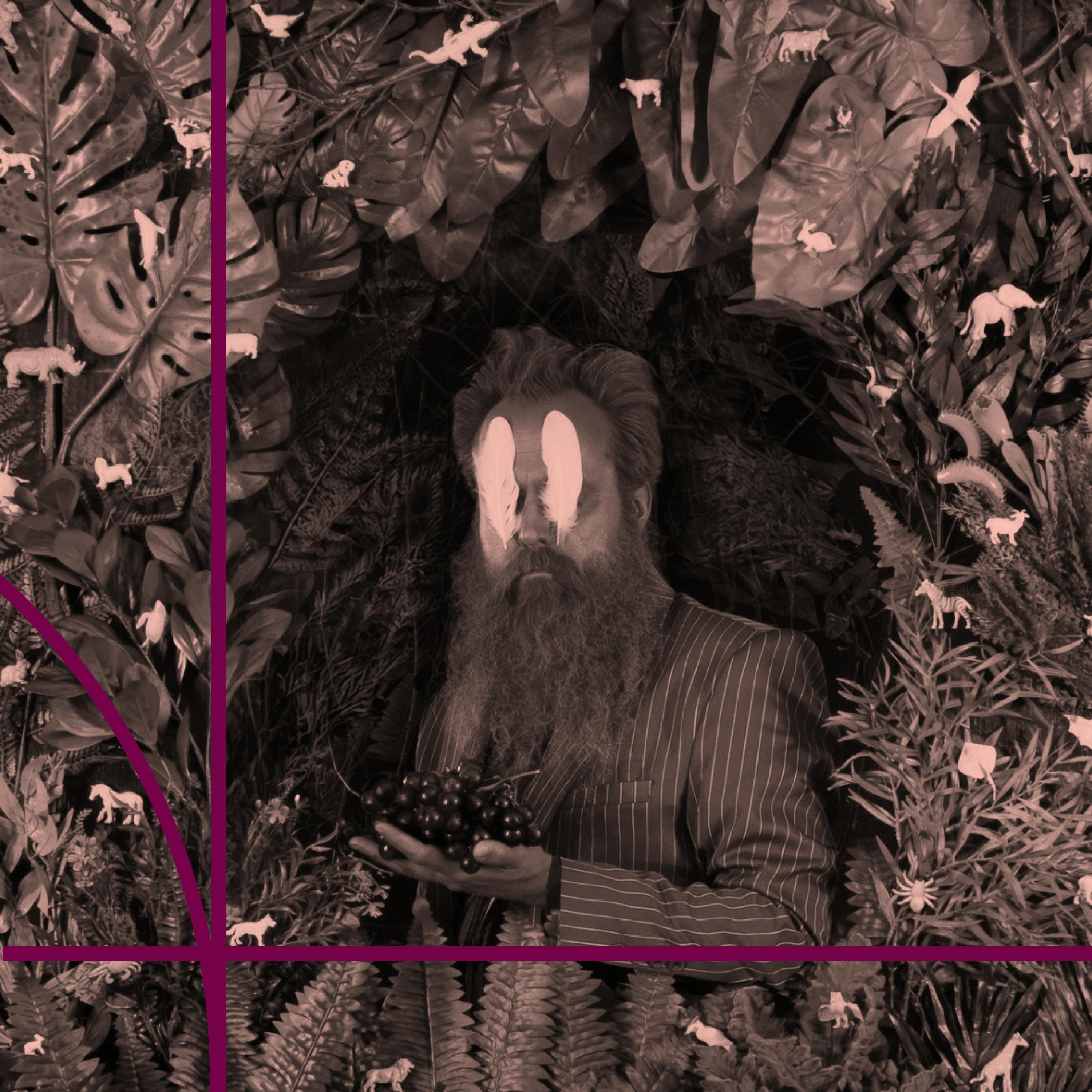
Design Better
Sam Beam of Iron & Wine: Grammy-nominated musician on creativity, collaboration, and why a good day is finding one great lyric
00:22:54
We talk with musician Sam Beam about how he balances prolific output with raising five daughters, why he used to keep “office hours” for creativity, and how a successful day can be as simple as finding one good lyric.
Loading summary
Transcript80 lines
- [00:01]
Sam Beam
I was a maker. I was a visual art maker. I just liked to start something and develop it and polish it and present it when it was done, when it was ready. And collaboration is not. It's about getting vulnerable, it's the opposite. It's about getting vulnerable, showing something half made or something that you haven't developed at all, that you're presenting to be developed together.
- [00:24]
Podcast Host (Narrator)
Most musicians start learning an instrument at an early age, or so we think. But that wasn't the path of our guest today. He was an arty kid drawing and painting in his bedroom, and then later a film teacher before he became the musical success that he is today.
- [00:41]
Five time Grammy nominated Sam Beam, who you know as Iron and Wine, told us his music career still feels like a bit of a fluke, even though it's been over half his life now. Things started to come together for him when he got his hands on a four track recorder. Suddenly, music wasn't just about performing, it was about making something that he could develop and refine, just like a drawing.
- [01:02]
We talk about how he balances his prolific output with raising five daughters, why he used to keep office hours for creativity that was nine to two every day, and how a successful day can be as simple as finding one good word. We also dig into collaboration, how working with other musicians and even his daughter Arden on his new record pushes him outside his comfort zone, and why he believes that your art should be like a mirror, reflecting something with a perspective.
- [01:32]
Sam's new record, Hen's Teeth, drops February 27th and he's heading out on tour, hitting Australia, the Midwest, east coast and West Coast. But first we wanted to understand how someone who came from visual art built one of the most distinctive voices in American folk music. This is Design Better, where we explore creativity at the intersection of design and technology. I'm Eli Woolery.
- [01:54]
Aaron Walter
And I'm Aaron Walter.
- [01:55]
Podcast Host (Narrator)
If you're hearing this, you're not currently on our Premium subscriber feed. DesignBetter Premium subscribers enjoy weekly episodes. That's four episodes per month rather than just two. And all of them are ad free. Plus you'll get an invitation to our monthly AMAs with the smartest folks in design and tech. And if you subscribe at the annual level, you'll also get our Toolkit, a collection of our favorite design and productivity tools like Perplexity, Miro, Read, AI and more. You'll hear a preview of this episode, but if you'd like to hear the full conversation, please consider becoming a Premium Subscriber@designbetterpodcast.com subscribe the podcast is available to everyone through our scholarship program. So if you can't afford a subscription, just shoot us an email at subscriptions the curiosity department.com we'll help you out.
- [02:53]
Sam Beam
It's all on your machine.
- [02:59]
Podcast Host (Narrator)
We'll return to the conversation after this quick break.
- [03:06]
Eli Woolery
Design Better is brought to you by WIX Studio, the platform built for all web creators to design, develop and manage exceptional web projects at scale. Learn more@wix.com studio
- [03:22]
Aaron Walter
and now back to the show. All right, Sam Beam, welcome to Design Better.
- [03:32]
Sam Beam
Thanks so much, Aaron. It's great to talk to you.
- [03:34]
Aaron Walter
Yeah, we were just talking before we hit record. I know your sister and your brother in law and your nieces and your mom and dad. That's right. They're all wonderful people. So I know you come from good stock.
- [03:46]
Sam Beam
Thank you. I'll let them know.
- [03:48]
Aaron Walter
Yeah, lots to talk to you about today. Your writing, recording process, collaboration. And of course you've got a new record coming out at the end of
- [03:56]
Eli Woolery
the month called Hidden streets.
- [03:58]
Aaron Walter
I think February 27th is the date it drops, if I remember correctly.
- [04:03]
Sam Beam
That's right, Hidden Streets.
- [04:05]
Aaron Walter
Yeah. And you got a couple singles out already and we'll jump into that. But let's start from the beginning. I'd like to know more about your early life and where you started because I think most folks, when they hear a musician who's sort of hit the big time or achieve some sort of success like you have, they think, oh, they must have been playing music their whole life from their childhood. But that's really not your starting point. Your starting point was painting and drawing.
- [04:31]
Sam Beam
That's right, yeah. The arty kid hanging out in his bedroom just drawing all the time. Honestly, the music career feels a bit like a fluke most of the time. It's been over half of my life now, so it's a long fluke.
- [04:44]
Podcast Host / Interviewer
Yeah.
- [04:45]
Sam Beam
But it still feels like it took me by surprise a bit. That said, I mean, I always loved music a lot, but just never really had the discipline to practice. Just never really interested in practicing. I like to make things and so when I eventually got a hold of a four track recorder, it sort of became less about just performing something and turned into making something. Something that I could develop, make changes to and refine like I would a drawing. That's when it all took off and one thing took over the other.
- [05:18]
Aaron Walter
When did you get a guitar for the first time?
- [05:20]
Sam Beam
My dad had a guitar back in the late 70s, early 80s. We got him a guitar for his Birthday and I sat in the closet and I always looked at it and it was really hard to play because my fingers are small. But eventually, eventually I figured it out.
- [05:35]
Aaron Walter
Does he still have that guitar?
- [05:37]
Sam Beam
No, I don't think so. It was, you know, when like, Kenny Rogers was big and, you know, everybody wanted to get a guitar.
- [05:44]
Aaron Walter
Yeah, I saw Kenny Rogers in Athens picking up Thai food one day, and I was picking up Thai food. I think he had ordered everything on the menu with such a gigantic order. And I gotta tell you, I saw him and I thought, all right, I recognize this guy, but doesn't look quite right. He had had so much plastic surgery, I just could not register it was Kenny Rogers under all his scars.
- [06:09]
Sam Beam
Kenny was still in there. Kenny needs options, though. Apparently likes to keep his opposites.
- [06:15]
Podcast Host / Interviewer
Sam, we were talking a little bit about family and moms before we started recording. And I know in my case, my mom definitely helped inspire my career and route into kind of a more creative life because I think given another go round, she would have probably chosen that she ended up being a doctor. But she has a real creative spark and she loves to draw and paint. And I'm curious, your mom, what role did she play in your creative explorations growing up?
- [06:39]
Sam Beam
My mom was very supportive. I mean, my parents are both science people. Don't really trust themselves around a paintbrush or wouldn't really be interested. But they never discouraged me. You know, they didn't understand it, but I always felt like they saw what I was doing and found it important. At least important and it's not to stop me. So in that sense, I was really lucky. Could have gone the other way. You know, oftentimes when parents don't have that interest, they discourage you. But no, I always felt. I always felt different, and that's a little lonely. But I never felt like I was doing the wrong thing. They made me feel like it was important, which I really am thankful for. You know, we all have different abilities and no one's like just science or just artistic. You know, they all have bits and pieces of all that together. It's just funny how we're discouraged. Oftentimes these little lanes you feel like you're supposed to get into, but I found the arts in general draw you toward the other sciences to help you make the art. Maybe it's just the way the art world presents itself, but it seems off putting to a lot of science minded people.
- [07:42]
Podcast Host / Interviewer
Yeah, yeah.
- [07:43]
Aaron Walter
So painting, drawing and music. I'm curious if visual arts. And ultimately, like you studied filmmaking and you became Interested in that. You were teaching in Miami, teaching film. It definitely comes through in your album artwork. And I feel also, like, the textures and colors and kind of layers of your recordings, too. Can you talk about the relationship of visual arts, filmmaking and music? Does that mix together in your mind?
- [08:12]
Sam Beam
Definitely, yeah. They each have things that they do uniquely. But, yeah, they're all connected. Just the pursuit is similar. One thing led to another in my education and sort of interest in art. I also like to read and like to think of stories and things like that. And so the movie stuff, the cinema pursuit, kind of made sense because, you know, it's so many things going on at one time. The visual photo element, the stories, music that goes. You know, it's all just this huge multidisciplinary art form, which I just fell in love with, but turns out it's prohibitively expensive. So I was able to do a lot more music in my spare time. And one took over the other. Sonic kind of went where the interest was, where I was giving feedback and interest. I think I was just drawn to make music the way that I do. I mean, I still feel like I'm trying to switch it up and try different things. But my interest in the way I write songs isn't necessarily trying to copy screenwriting. But I think I was just interested in screenwriting for the same reason I'm interested in telling songs in, like, a visual way. It's just sort of a tactile. Doesn't dive into explaining feelings very much.
- [09:26]
Aaron Walter
It's interesting, too, that your music career broke open through film when you had a song selected for the vampire werewolf movie. Now I'm blanking.
- [09:36]
Sam Beam
Twilight. Yeah, the Twilight. There you go. The irony is not lost on me. And it's wild. And, you know, to be able to, over the years, participate with a lot of different filmmakers and stuff with, like, different songs and things. Just be able to participate on that level. You this back door kind of way. It's interesting. It's cool. I would never have thought about that when I was in art school.
- [09:57]
Podcast Host / Interviewer
Sam, you paint a lot of your album covers. They're really lovely. I think they mesh. I mean, it's not a surprise, but they mesh so well with your, like, musical style. And I'm curious, like, how they inform each other. Would you have a painting already in mind when you're working on song or vice versa? Is it an iterative thing at all?
- [10:13]
Sam Beam
Not necessarily why I'm working on a song, but, you know, when you have this batch of songs, you start to think about Something that's related. It's kind of fun to let your mind wander, and you obviously start with very specific, literal translations of things, but you're just sort of going on trying to find a vibe rather than really like a illustration. But this last one we did, it's fun. My kids are getting older, and some of them have been in art school and different types of creative things now. And we did a big, like, a self portrait in red. There's a lot of tropicalia, Brazilian, tropical kind of music on the new record. So we did this big sort of red jungle. And my daughter, who's a makeup artist in New York, she did my makeup and all red and covered my eyes with feathers. You know, it's just really fun to be able to do this. Fun, like, family projects now, too. So I can't take total credit for, like, coming up with all that. You know, It's a group effort.
- [11:09]
Aaron Walter
It's a beautiful record cover. I think it's one of my favorites of yours.
- [11:13]
Sam Beam
I really like it.
- [11:14]
Aaron Walter
The white feathers in particular kind of almost make you look like a cartoon character.
- [11:20]
Sam Beam
So I look like that lobster off of spongebob. Yeah.
- [11:24]
Aaron Walter
There you go.
- [11:27]
Podcast Host / Interviewer
Krabby Patties. Yeah. Right? Yeah.
- [11:29]
Sam Beam
That's great. Take it.
- [11:30]
Aaron Walter
I'm curious. So you grew up with a sister. Sister Sarah. And your mom was around a bunch. You have five daughters, you have two nieces. You have a lot of feminine energy in your life.
- [11:43]
Sam Beam
So much feminine energy. Yeah. Apparently there was some imbalance in the universe that I needed to correct.
- [11:51]
Aaron Walter
I'm curious how that influences your writing. I notice, like, if we were to pull apart collaboration, I mean, you collaborate with a lot of different people. But I definitely feel like there's some comfort is my read of, like, female collaborators kind of female energy. How does that affect your writing, the creative process, do you think?
- [12:11]
Sam Beam
I mean, kids in general, whether they're female or male or whatever, you know, just have to be patient. I think parenting gives you a different perspective than people without kids. And so I try to take a long view, like my songs. I mean, some of them are, like, direct statements, but a lot of them also sort of take a step back. And I like to approach them like a poem where you talk about the middle of the story, like, what's happening in the middle, but you also back up a little bit and talk about what else is happening in the scene. And so all those things become just as important, just sort of existence and the odd things that are all going on at one time that reflect each other, but also Contradict one. You know, I find that kind of stuff really fun, and I'm not sure I would be able to do that the way that I do without being a parent.
- [12:58]
Podcast Host / Interviewer
You mentioned your kids are a little older. My daughter's now just entered high school, and my son's still a little younger. He's in the fourth grade. And there's definitely, like, these different moments where, you know, in the very early years, obviously, you're just kind of trying to survive and get enough sleep. And then it comes to play, like maybe doing creative things with them or watching their creativity develop. And then my daughter's now at the point where she's a pretty good illustrator and artist on her own, Right. And she kind of inspires me. How has that, like, evolution worked for you with your five daughters?
- [13:28]
Sam Beam
Yeah, they're all very different. Some of them have been into drawing. Some of them have been into different performance. You know, there's so much going on always at one time, and there always will be. So I always kind of feel on the back foot a little bit. Yeah. Like you said, the emergencies are still emerging. They're just different shapes. They're just different consequences and different urgencies. Definitely stays busy when they leave.
- [13:52]
Aaron Walter
So your daughter Arden is on the new record singing.
- [13:55]
Sam Beam
That's right.
- [13:56]
Aaron Walter
What was that like to have her present for a recording session? Feeling maybe less like a daughter and more like a peer, a creative peer. What does she feel about that?
- [14:08]
Sam Beam
She was into it. She's a little shy. She doesn't really want to go on tour, but she was definitely game to come and record. You can imagine. I was, like, beaming, proud dad, just sort of soaking it up and being able to share this thing that is so important to me, which I've spent, you know, a lot of my life doing. And the studio is my playground. Recording is my favorite part. To be able to share and see her enjoying it was just indescribable. It was great. Yeah. We'll see where she goes. It's hard to say. You know, she's pretty young, still trying out a lot of different things. But, yes. Sarah Simpson got some competition.
- [14:43]
Aaron Walter
Your sister?
- [14:43]
Eli Woolery
Yeah.
- [14:45]
Podcast Host / Interviewer
Sam, you're really into collaborating with other artists. I'm sure we'll talk about that, too. But you also sometimes will take another artist's work and sort of transform it. And I was just listening yesterday to such great heights, and I love the original song, but yours is so different, and it's just a cool transformation. And I just wonder, what's that process like? Have you ever talked to the artist about your interpretation and get their thoughts on it or.
- [15:07]
Sam Beam
Yeah, haven't. Probably should. That's a good idea. It's a really fun thing to do. I have the fortune or misfortune, however you want to see it or depend on the day of being a band with one permanent member. And so the band keeps changing and so I get to revisit all these different songs. And if you try to play them the same way, they'll sound different. You know, in a sense, I do it with my own material all the time. And it's just such a treat to be able to take someone else's and find whatever aspect about it that tickles you or whatever makes you feel like you have something else to say if you could change it. It's just fun to put them in different lights and different shadings and see
- [15:47]
Aaron Walter
what else it has to say.
- [15:48]
Sam Beam
Because they are like little scripts. Recording in bands in general are a lot like acting troupes. It's a lot like making a movie or like getting takes in a movie. You know, like action and then everyone has their role and they all depend on one another. And you're trying to like create this indescribable, intangible moment that has an effect that you can't really describe and you can't prescribe. But it happens when stars align and everyone's concentrating and trying. It's a really interesting connection that I had been trained to recognize and then all of a sudden recognize it in this other art form was really fun.
- [16:26]
Aaron Walter
That's an interesting way to frame it. Just even the way you've set up your band, that it's Iron and wine. So it's almost like a business is incorporated in a certain way to allow certain types of activities.
- [16:39]
Sam Beam
Right.
- [16:39]
Aaron Walter
You've set this up as like a rotating collaboration, which there are some great artists that have done this. And it's been a fabulous vehicle for reinvention. Prince famously would rotate his band. Like the Revolution was like at the top of his game and he's like, everybody out. I'm rebuilding. Miles Davis, he would do the same thing. Bruce Springsteen is the opposite. He's had the same band. Bob Dylan, he rotated people. There's not a lot of people that have set themselves up the way that you have. And I'm curious if that goes back to that four track recording experience in your bedroom where you felt, oh, I can make all of this. I have certain level of control and flexibility. Why is it iron and wine and not Sam Beam?
- [17:24]
Sam Beam
I just thought one was More interesting on a marquee, to be honest.
- [17:29]
Podcast Host / Interviewer
Here's a moment real quick, Sam, where we verify what's on Wikipedia, but the story there is that you saw a supplement on a shelf that was like beef iron and wine. Is that true?
- [17:38]
Sam Beam
Yeah, that is true. Yeah, I'll verify.
- [17:40]
Podcast Host / Interviewer
Okay.
- [17:41]
Sam Beam
For once. Yeah. I was in film school in Tallahassee, and we were shooting in some convenience store in South Georgia somewhere. And, yeah, there was a stuff on the shelf alongside, like, the other weird things like castor oil and stuff that people think they're supposed to take. Yeah, it's this stuff called beef iron and wine. It used to be, like, some kind of protein supplement that snake oil Salem would bring around. It just struck me as a weird combo of words.
- [18:07]
Podcast Host / Interviewer
That's great.
- [18:07]
Sam Beam
Yeah, Love it.
- [18:09]
Aaron Walter
So just to take us back to this collaboration thing, instead of having a permanent band, why a rotating band?
- [18:16]
Sam Beam
Well, I can't say that it was all by design. Forethought and initiative are not always my fortes. You know, I just get restless. I think it's just sort of the creative type. You keep wanting to shift, and you don't want to get stuck. And the minute it feels stale, you know, you gotta shift things around. And lately I've been doing a lot more collaborating. You mentioned, like, the early days when I was doing stuff in the bedroom, and it wasn't necessarily about controlling. It was just, you know, that's what I was doing at the time. And those were my resources. I mean, I knew a few musicians, but they didn't know me as a musician. I was just kind of doing songs in my spare time at home. But then I realized when I started to play with people that I did have some control issues, if you will. I was a maker. I was a visual art maker. I just like to start something and develop it and polish it and present it when it was done, when it was ready. And collaboration is not. It's about getting vulnerable. It's the opposite. It's about getting vulnerable, showing something half made or something that you haven't developed at all, that you're presenting to be developed together. And it was hard for me, but the more I did it, the more you got just excited about what came out. As an artist, you know, you keep developing these ideas, and the hardest thing is just to surprise yourself sometime. I mean, you get so tired of smelling your own breath. And so the minute that you have someone else that you trust and, you know, you're excited by what they bring to the table, it just makes it really easy and exciting and it gets addictive in a way. And so now, I mean, my things I look forward to the most are collaborations, things that don't seem like they might work. Just give it a shot, you never know.
- [19:50]
Aaron Walter
If we look at the bookends of albums of your career, starting off with the Creek, Drank the Cradle, which people have compared to kind of like a it's a Nick Drake guy in his bedroom making this poignant, rich collection of songs all the way up to February 27, and hen's teeth, which is rich and layered. And you can hear all the creative
- [20:14]
Podcast Host (Narrator)
energy coming from a lot of different people.
- [20:22]
Aaron Walter
Big vocal harmonies, there's strings, there's all kinds of stuff. Orchestration that's happening. That's a big slider from it's me to it's everybody. I'm curious the line of thought or how you got there from one man show to such a big production.
- [20:39]
Sam Beam
It's funny like when people talk about the first record, they imagine that was like the fruition of all of my vision or whatever.
- [20:49]
Podcast Host (Narrator)
If you'd like to continue listening to this conversation, you'll need to subscribe@designbetterpodcast.com subscribe. Once you do, you'll get access to every full length episode, all ad free monthly AMAs with inspiring people in design and tech and recordings of all our past AMAs. The podcast is available to everyone through our scholarship program. If you can't afford a subscription, just email us@subscriptions the curiosity department.com and we'll help you out. Your support makes Design Better possible. Invest in yourself and the design community by subscribing@designbetterpodcast.com.
- [21:34]
Eli Woolery
Design Better is supported by Masterclass. I am a lifelong learner. It's been decades since I've been in school. I remain in life's classroom curious about design, technology, science, history, film making, architecture, cooking, AI and so much more. Masterclass is an essential part of my learning. I've gone deeper into each of these subjects by taking masterclasses with people like Herbie Hancock, Frank Gehry, the late David lynch, and Anna Wintour, who taught a wonderful class on leadership and creativity. And I'm excited to jump into Elaine Winteroth's Masterclass on designing your career, Kim Scott on having hard conversation, and Melanie Hobson's strategic decision making Masterclass. The brightest minds are making my mind
- [22:22]
Podcast Host (Narrator)
brighter and I love it.
- [22:23]
Eli Woolery
Masterclass has in depth expertise that you can tap into anytime and any place. You can access Masterclass on your phone, your computer, your smart TV or even just listen in audio mode. I love Masterclass and I think you will too. Right now, our listeners can get an additional 15% off any annual membership@masterclass.com Design Better that's 50% off masterclass.com DesignBetter Design Better is supported by laundry sauce. I have two teenage boys. Don't tell them I said this, but they stink. My wife and I have been teaching them to do their own laundry each weekend, but sometimes they totally botch the process. They put in too much detergent, not enough. So we ended up getting them laundry sauce to lower the learning curve. Laundry Sauce is like a bath bomb for your laundry. You drop in a high performance detergent pod in with your dirtiest of clothes and they come out smelling and looking fresh. Each pod is enriched with a bioenzyme blend that tackles the toughest stains and revives fabrics for a brilliant clean. And I love the scents of laundry Sauce that they've created with the help of the world's top perfumers. They have scents like French saffron, Australian sandalwood, Egyptian rose, Himalayan cashmere, Italian bergamot. It is a treat to get dressed in the morning smelling this good and I love hugging my kids when they smell like bergamot and sandalwood. Sure beats the alternative. Make laundry day the best day of the week. Get 20% off your entire order at laundry sauce.com DesignBetter use the code designbetter at checkout to get 20% off laundrysauce.com DesignBetter Music's warmer.