Loading summary
Transcript1 lines
- [00:01]
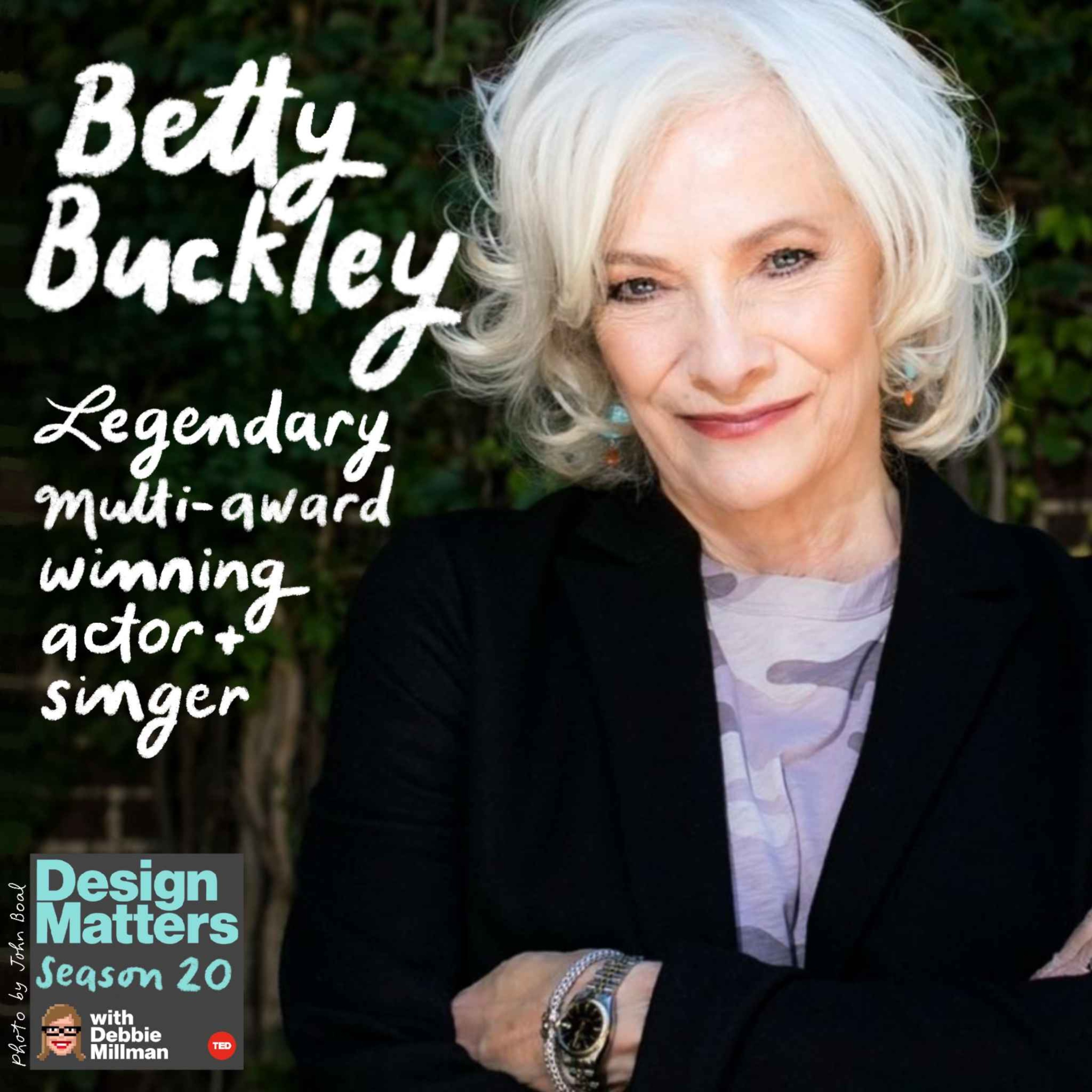
Debbie Millman
For years I've been saying I feel like I am a really fast, talented little racehorse. They keep taking her out every morning and breezing her and saying, damn, she's fast. But they never let her run the big race, right? So I just felt like, when is my big race coming? And finally with Sunset, I felt like everything I had ever learned, everything and every body of experience I'd ever gained all came together in this one role from the TED Audio Collective, this is Design Matters with Debbie Millman. On Design Matters, Debbie talks with some of the most creative people in the world about what they do, how they got to be who they are, and what they're thinking about and working on. On this episode, Betty Buckling talks about her longevity as a performer. It's about physical strength, mental strength, mental and emotional facility. This podcast is brought to you by Wise, the app for international people using money around the globe. With Wise, you can send, spend and receive up to 40 currencies with only a few simple taps and save up to 55% compared to major banks. Plus, wise won't add hidden fees to your transfer. Whether you're buying souvenirs with pesos in Puerto Vallarta or sending Euros to a loved one in Paris, you know you're getting a fair exchange rate with no extra markups. Be Smart join the 15 million customers who choose Wise. Download the Wise app today or visit wise.com learn more by visiting wise.com US Compare Ts and Cs apply G' Day America It's Tony and Ryan from the Tony and Ryan Podcast from Down Under. Today we want to talk to you about Boost Mobile, the newest 5G network in the country offering reliable nationwide coverage backed by a 30 day money back guarantee. Love your service or get your money back, no questions asked. Boost Mobile's unlimited plans start at just $25 a month and will never increase in price. The Boost Mobile network, together with their roaming partners, covers 99% of the US population. 5G speeds not available in all areas. Visit the nearest boost mobile or boostmobile.com after 30 gigabyte speeds may slow $25 per month with active boost unlimited plan. Cancel within 30 days for a refund of service fees, active activation and phone payments not refunded. Hi. Who here loves when their nails are perfectly done? Me. I'm Sarah Gibson Tuttle and I started Olive in June because, let's be real, we all deserve to have gorgeous nails. But who wants to spend a fortune or half their day at the salon? And that's why I created the mani system so you can have that salon perfect manicure right at home. And guess what? The best part, each mani only costs $2. Yep, you heard me. $2. No more 30, 40, $50 salon trips that eat up your day. Now you can paint your nails whenever you want, wherever you want. And trust me, you're going to be obsessed with your nails and everyone is going to ask you, where did you get your nails done? And here's a little something extra. Head over to oliveandjune.com and get 20% off your first mani system with code perfectmani20@oliveandjune.com perfectmanny20 that's code perfectmanny20 for 20% off at oliveandjeune.com perfectmanny20. You're all set for a nail glow up. Let's get those nails looking fabulous, shall we? This episode is brought to you by Nordstrom. With summer winding down, it's the perfect time to refresh your style for fall. I can't believe I just said that. But time is ticking and Nordstrom has everything you need for all the seasons ahead. Discover top brands like Free People, Favorite Daughter, Reformation Mother, and Veronica Beard. Plus the latest trends, everyday essentials and beauty must haves you'll reach for again and again with without breaking your budget. And it's easy too, with free shipping, free returns and in store order pickup shop today in stores and@nordstrom.com she played Grizabella in the original Broadway production of Cats and won a Tony for it. In the Andrew Lloyd Webber musical Sunset Boulevard. She played Norma Desmond in productions in New York and London and was nominated for an Olivia Award for that. New York magazine appointed her the voice of Broadway. She's a Theater hall of Fame inductee and received the lifetime achievement award from the American Songbook Association. I am talking about none other than Betty Buckley. An artist of astonishing range and longevity, she has been working steadily and memorably for nearly six decades now in film, television, music and theater. And I'm going to try to talk as much as possible about her vast body of work in today's show. Betty Buckley, welcome to Design matters. Hello, Ms. Millman. So nice to meet you. Thank you. Thank you. My first question is this Betty, Is it true your mom once told you to put on lipstick because you look too much like a ranch woman? Who? Yeah. I was in New York City when 911 happened and I, like many of my artist friends, musicians and such, chose to move back to your home roots. In the months following 9 11, I would wake up Every morning and think, I forgot to get my cutting horse, which was my dream since I was like a kid and first found out about the sport of cutting horses, which is this big international sport based on the tradition in the Old west of cowboys separating one cow from a herd of cows. And the cutting horse was the specialist in the rancher's herd of horses. Gorgeous athletes and amazing horses to watch. And the rider and the horse become like a dance pair in this competition. So I'd always wanted to do that. And my dream was to go to New York and become successful in show business and have a ranch and ride cutting horses. So after 9 11, I realized that I'd forgotten to do that. I moved back to Texas. I bought this cutting horse. I connected with one of the top trainers in the sport. But anyway, when I moved to the ranch and I was riding my horse and stuff, I would go see my mother. I would come in with my baggy T shirt and my jeans and my boots and spurs and all dirty and everything. One day she met me on the porch and she goes, betty Lynn, you need to put. You need to put on some lipstick. You're starting to look like one of those ranch women who don't care what they look like. That was a classic Betty Bob quote my mother. Betty Bob Buckley, you began singing at 2 years old and dancing at 3. Your mother was a performer turned journalist, and your father was a poet turned engineer, an army man who discouraged a life in show business. How did that contradiction shape who and how you wanted to be? It was tough because my father is so funny. He was madly in love with my mother, who was known as the Jitterbug Queen of Texas Tech University. She was a great singer dancer and had wild, red, curly hair. And his. When he was in the Air Force as a young cadet, he was stationed near Big Spring. And my mother was a Texas Tech. And so he met her and he fell in love with her. And then he went off to World War II as a bombardier, came back, married my mother, and she got pregnant with me. But he told her she couldn't be a singer dancer anymore. And so my aunt was a dance teacher and had also been a professional dancer. My father was very opposed, but I had the dance lessons because of the accessibility of my aunt. And I was always that little girl who picked things up really quickly. And I would overhear them speaking about me, saying, don't tell her how talented she is or it'll go to her head, which always confused me. I never understood, understood what that was About. So my mother took me to see my first musical when I was 11 at Casa Manana, our regional theater, which was Pajama Game, with the original Bob Fosse choreography. And when I saw the number, the classic vintage Bob Fosse number with the girl in the black suit and bow tie and black tie dance shoes and the two boy dancers doing steam heat, I just had this epiphany. It was my first time having an epiphany. And I just felt this rush of energy up through the top of my head and looked. Looking back at me in a way, saying that, that's it. That's what you're going to be doing for the rest of your life. And I was like, what? What? What is that? Shortly after that. Well, it turned out that the. The choreographer and the lead dancer on that show were a couple, Ed Holloman and Larry Howard. And they were proteges of Bob Fosse. And they decided they were tired of traveling and touring, and so they moved back to Fort Worth, where Ed originally was from. So I. In that same time period, I was in seventh grade at mon. In junior high school, and. And I wanted to be in the talent show. I told my mother, I came home from school, I said, I want to learn steam heat, and I want to audition for the talent show. And she was like, oh, wow, Betty Lynn. You know, I just found out that these people that you admire so much opened a dance studio in Fort Worth. And she called them and said, my daughter wants to learn steam heat. And they said, well, can she dance? She said, yes, she studied dance since she was 3. And so my mom took me to meet Ed Holloman and Larry Howard, and they said, can you sing? I said, yes. And they said, can you dance? I said, yes. They said, well, sing this. I got steam heat. I got steam heat. So I did. And they said, no, no, sing it as loud as you can. So I was like, I'll never forget the moment. I was so thrilled. Somebody gave me permission to be as lo as I can be. So I walked literally to the back of the studio and sang it with my giant voice. And they jumped backwards and were delighted and took me on as their student. And they taught me the original Bob Fosse hat tricks and the whole bit. So I got into the talent show, and I'll never forget that moment. I finished the song and the dance, and the audience was breathless, silent, breathless. And I. I was like, you know, and that's what you want to achieve. It's not just about getting the Applause. Surely the applause and the standing ovation is fantastic, but the moment, that's the optimal moment is breathless silence before the standing ovation. That's like, I live for that. I'm like, wow. And so I ran off stage and Mr. Boswick, the principal, loves to remind me when, when I've encountered him through my life, he's, remember what you said. I came running off and said, oh, we're having fun tonight. And he sent me back for another curtain call. And that was it. That was the beginning. I was known then in the school, as opposed to sliding along the walls and being, you know, a target for bullying, I was then, oh, that's little bitty Betty Buckley with the giant voice. And then my mother kind of took over and became. She doesn't like it when I say this, but she was definitely a sage mother. But she was sneaking you out of the house. I mean, your dad didn't want you to be a performer. Yeah, that's right. At 15 years old, you were already performing professionally in Gypsy and West side Story and in where you lived and later performed up to 16 shows a day at Six Flags. But you chose to major in journalism at Texas Christian University. But a chance performance with the band your father's mustache led to industrial gigs in cities in Atlanta and San Francisco. How did that phase of your life help you make the leap from journalism to full time performance? Well, my dad wouldn't let me. He said the only righteous calling for a woman is to be a wife and mother. And. But my mother was a journalist and, you know, was very talented woman, very smart and good writer and stuff. And he, she pursued all of that. She started her own newsletters. You know, she was just a really, very creative, passionate lady. So he decided, he said it was okay for me to be a journalist because whatever work I do would be in support of my husband to be. So I witnessed the inequities in how women were treated in that ridiculous, patriarchal, demeaning culture that in our current regime, they seem to be so hell bent on returning to, which is so insane. So anyway, I went to TCU on a journalism scholarship. But fortunately, my freshman year, the head of the theater department at TCU, Dr. Jack Cogdell, had known my mother. They had done some shows together at Texas Tech. And so my mother told me to introduce myself to him as the professor of our survey of theater course my freshman year. And so I told him who I was and he took an interest in me and found out that I was this talented kid that was Already working. And he created a theater minor program so that I could participate in the theater and then picked a show for me every single semester that I could do. You know, like, I played Megan Brigadoon my senior year. I played Mrs. Antrobus in Skin of Our Teeth. And he just took a special interest me. And so I was actually spending more time in the theater department than in the journalism school. And the journalism school had granted me this scholarship and were expecting me to be the editor of the school paper, the Skiff, at TCU my senior year. But I wasn't ever around. And I remember them this fateful day where they called me in to meet with the heads of the program in the journalism school, saying how disappointed they were that I wasn't participating appropriately for my scholarship. And I was like, but I have play rehearsals. So, yeah. So my junior year, I was recruited to be in the Miss Fort Worth pageant. And I won Miss Fort Worth. And then I had to that summer compete in the Miss Texas pageant. And I was, quote, unquote, Miss congeniality. And I 1 second runner up to Miss Texas. But the producer of the Miss America pageant was there. And they called me after the Miss Texas pageant and said, you know, we really think you're a very talented girl, and we would like to invite you to be one of the guest entertainer in the old tradition of the Miss America pageant. There were four girls, I think it was four or five girls that sang and danced to tie the evening, the theme of the show together. And usually that honor was reserved for former Miss America's or former quote, unquote state queens. And it was the first time they were considering inviting a city winner who didn't have a state title. And yet they gave me a lot of opportunities, which, you know, scholarships and stuff like that, which I'm grateful for in retrospect and in the momentary honor of it. But I am by no means and never was cut out to be a beauty queen. It was just ludicrous. And yet the fall of my senior year, I was invited to be this guest entertainer at the Miss America pageant. And I was on American television. And this woman who was part of the pageant, a dance teacher person, very nice lady called a friend of hers who was an assistant to a big agent at Ashley Famous, which was then ICM and has now merged with another company. And they saw me on TV and called me when I was in Atlantic City and asked me to fly to New York. My mother was there as my chaperone. So I flew to New York right After the pageant and auditioned for these agents, a room full of, like, 12 agents. And this superstar agent, Eric Shepard, jumped up and said, signer, and walked out of the room. So this wonderful man named Roger Hess became my responsible agent. And he's like, what do you want to do? And I said, well, I have to go back and finish school this year. And he's like, well, when you finish school, we want you to come to New York and your contract will start. So I was like, okay. So I went back and I finished college. I had my first love affair, which was devastating. So I went on that summer with a Miss America for, like, a month to Korea and Japan on a USO tour. And we were supposed to go to Vietnam. It was the summer of 1968, and our tour got detoured because some young performers were killed in Vietnam. And so we were detoured to all of the military hospitals in Japan and then all of the military bases in South Korea. And so I witnessed the results of war for the first time at 21. I came back from that tour and everything, my whole inner being was in rocked because everything that my dad had taught us about the righteousness of war, and my dad saw everything in black and white. And for the first time, I was starting to realize the world was filled with shades of gray that were important to understand and account for and acknowledge and to learn how to walk through the minefields of all that. And I was like, dad, you know, there's no purpose to war. War is horrible. I mean, the things I witnessed in the hospitals, you know, I mean, I'm grateful for the experience in retrospect, but suffice it to say, I went through a period of months with, you know, ptsd and no undiagnosed, obviously, because nobody knew about that stuff. But I would wake up shaking and crying. I didn't want to do anything. I certainly didn't want to go to New York. I saw I was lucky. I had this job at the Fort Worth Press, and I was just going to keep that and keep my head down and. But Roger Hess kept calling, and he said, you've got to come to New York. We all believe in you so much. And I said, I can't. You know, I'm so. I was fried, basically. I was just emotionally undone. He came to Dallas with this show that you mentioned, with your father's mustache and this B.F. goodrich industrial show starring Flip Wilson, the comedian. And he invited my mother. Roger Hess is the responsible person. I love him. To this day, we're still friends. My Mother and I went to see the show, and they. He told them that I was this singer. And so your father's mustache brought me up on stage. And the only song I knew, the key that I sang it in, was you Made Me Love youe. So I sang it with the band, and the buyer at bfgoodrich was there, and they put me in the show and paid, you know, offered me a lot of money to fly into these various destinations to do this show for them. And in every case, I'd pretend to be a girl sitting in the audience, that they'd bring up some local girl that would then bring the audience to this rousing experience. And so it was certainly more money than I was being paid at the newspaper. And my dad couldn't deny the money, and it was just a weekend job. So I went to Atlanta, San Francisco, Chicago. The last stop was Philadelphia. And so Roger calls me. He says, well, you can train it in from Philadelphia, and I've got you another industrial show for Gimbel's Department Department Store. It's only for six weeks, so you'll try New York, and if you don't like it, you'll go home. And so I trained it in from Philadelphia. I mean, I called my newspaper and was going to be gone for another six weeks. And they're like, fine, fine. Everybody in Fort Worth was like, yes, Betty, please go to New York. Go to everyone. Which was so sweet, you know, except for my dad. My dad was like, you will never wait tables. You will never do this. You will never do that. And fortunately, I had this guarantee of a job. So I went and I moved into the Barbizon Hotel for Women. And I was traveling with my little dog, this little Yorkshire terrier. And I was so cold because it was January 1969, and I didn't know how to dress for that kind of cold weather. You know, layers of clothing and scarves and hats. And I knew nothing about that coming from Texas. And. And so I called Roger. I said, well, I'm here. And he said, you have 15 minutes. Take a cab. Go to the American Theater Laboratory downtown. You have an audition. But he didn't explain. He said, just take your music and go. So I went to the American Theater Laboratory, and I sang for this group of. I was the last girl to audition on the last day of auditions for the new musical 1776, which had been in rehearsal. But the young woman, she was a classic soprano, beautiful lady that was playing Martha Jefferson, this kind of beautiful lyric soprano interpretation. And that section of the show wasn't working for them. And they didn't know why, but they knew they needed something different. So they opened auditions again. And I just happened to be in town. And so I sang for them my pageant song, which was Rose of Washington Square, which I'd learned when I did Six Flags Over Texas in the campus review. This brilliant showman named Charlie Meeker with this phenomenal arranger, had written this beautiful kick ass chart of rows of Washington Square of all things, which just, you know, killed every time I sang it because it was just so great. And so I did that. And these people were like, they were falling out of their chairs and they were like, who are you? And I'm like, Betty Lynn Buckley. And they're like, where are you from? I'm like, fort Worth, Texas. And I had a thick Texas accent. They said, well, when did you get to town? I said, today. And they were like, today? And I'm like, yes. So they kept me there for two hours and they taught me the song and they had me read the scene. And it was. Which is this great scene with John Adams and Benjamin Franklin. And that was it. And I went home and I called my mother. I said, something great's going to happen. I can just feel it. And the next day I was in rehearsal and shortly, a couple weeks later, we went to New Haven and opened there in a snowstorm. And then we went to Washington and tried it out there. And then we came to New York and we were the big hit that spring. So that was my beginning. And it was all very fortuitous. Well, it sounds fortuitous, but it also is really magical. I mean, it's like a Hollywood movie. You come to New York and 15 minutes later you're auditioning for a Broadway play. You get the part and you're actually on Broadway within. Within months. You've talked about how you actually weren't at all surprised to get the role of Martha Jefferson. What gave you that certainty? Because that also happened when you auditioned for Cats. You didn't get that role initially, but then you knew that they'd be back. Where does that knowledge come from? Where does that sense? I don't know. You know, that's what I mean when I say fortuitous. I've always felt this kind of divine destiny, if you will. There's definitely. I definitely have witnessed both before when I was. From the time I was younger to now, in retrospect, even there is definitely. I'm definitely on a spiritual path and I'm definitely, I think, on the planet with a Specific purpose, which has become refined as I've grown and matured. But I was given a certain gift, and I've worked very, very hard with the best teachers in the business. I also was born with an extra sense of knowing of what to listen to and what not to listen to, because I've encountered teachers along the way that didn't know what they were talking about, and I knew not to listen to that. But when I found my teachers, and it was a quest to find the right people, and I was fortunate. In 1776, for example, I was working with these wonderful actors who sang, but were not necessarily singers per se. And they mentored me, these really wonderful men. Howard De Silva, who was a genius, and William Daniels and Paul Hecht, who played John Dickinson. And they literally would talk to me and say, look, Betty, you're very talented. You have this, this and this. This is what you're good at. This is what you need to learn, and this is where you need to go to learn it. And I would listen because I wanted. I had. When I was 13, I would say I was singing, and I would practice with the recordings of all the great lady singers. My mother had a huge record collection of the great lady singers. Judy Garland, Carnegie Hall. I could mimic every single note she sang. And Ella Fitzgerald and Della Reese and Nancy Wilson and Sarah Vaughan, and I studied all of them and would mimic them literally. That's how I learned to become a better singer. And I should have studied music, but that wasn't in the budget, you know. Well, you taught yourself. Yeah, I'm a musician, and I have a really good ear, and I hear music. I know what I want to hear around me. That inspires me to sing. That's learned. I was a huge fan of jazz musicians and jazz instrumentalists. They've changed my life. Well, the first album that you recorded, which didn't actually come out until 2007, you recorded it in 1969, and it's titled 1969. I was listening to it, and I was astounded by the versatility, how many other languages you were singing in and the range of genres, you know, the genres. I've always been like. I love music, and I love all kinds of. I'm not like a Broadway traditionalist in that sense, you know, I don't like. I love the Broadway songbook, but I love this, you know, the Great American Songbook. And I love contemporary singers, songwriters, and I'm always on the quest for a beautiful story song that I can help eliminate what the writers intended and the composer intended. So all that I've achieved is as a result of brilliant teachers, brilliant spiritual teachers, brilliant. My voice teacher of nineteen and a half years, Paul Gavert, my current teacher, Joan later. And wonderful psychologists that have helped me gather my own inner resources and give myself permission to be the artist that I've become. But I knew that I wanted to bring to the American musical theater a level of truth telling in performance that didn't quite exist before I came along. I mean, you saw glimpses of it with Barbara Harris and Barbara Streisand, but it wasn't the norm. And it was my mission to do that. And I studied for years and years and years with the best teachers in the business and practiced and practiced and practiced until I could do that. And then Katz was in that little 13 minute role with that one powerful song. Finally that opportunity came along where all the skills that I'd been gathering for all those years came together and coalesced in the opportunity to deliver this one song and make this true story in this like, spectacle musical make sense. And that was my job assignment, was make it make sense and stop the show. And it was a huge weight, you know, of learning how to do that. But the years of gathering information, gathering craft, perfecting craft, and getting to the point finally in that opportunity. And I felt like when Cats opened and I was able to achieve that, that was like my master's thesis. And the same year the film Tender Mercies came out, which I'd shot the fall after Eight Is Enough was done. The TV show that I did for four years, we shot it in the fall. It came out following Cats opening. So that was a big year for me, you know. And the screenplay by Horton Foote, which won the Oscar and a performance in opposite Robert Duvall, he won the Oscar as best actor where I played a country western alcoholic, country western singing star. And finally all the skills I've been gathering were being called on for that one role. So much of being able to deliver in a performance is about the opportunity you're given with the material of the character to play. So I have a lot of technique about how to share levels of human psychology behind why people do what they do. That has been learned and practiced. But I wanted to bring that kind of work to the musical theater. And then I did. And then after that, Sunset Boulevard was the next place where the role had enough to. Sunset Boulevard was so great when I got the call to do it in London, because it was like, for years I've been saying, I feel like I'M a really fast, talented little racehorse. They keep taking her out every morning and breezing her and saying, damn, she's fast. But they never let her run the big race, right? So I just felt like, when is my big race coming? And finally with Sunset, I felt like everything I had ever learned, everything and every body of experience I'd ever gained all came together in this one role. I want to ask you one thing about cats before we talk about Sunset Boulevard. When you auditioned, you weren't accepted. You were rejected for the role, but you knew you'd be back. They wanted somebody that radiated death and dying, so. And six months later, you got called back, and Trevor Nunn asked you to sing Memory three times. Did you sing it differently in each of the renditions? What was he looking for? Who knows what he was looking for? It was like crazy. When I first auditioned for them, my agent, who was an a.m. you know, she worked for an American company, but she was British. She was. Her name was Joanna Ross. Really nice lady. She said. Yeah, that. She gave me that quote, you radiate health and well being. They're looking for someone that radiates death and dying. Because Elaine Page had played it in London and she killed with it. She was great. I think they had this prototype in their head about this diminutive person, you know, with this plaintiff Edith Piaf, cry of the heart voice. Anyway, I told Joanna, I said, they'll be back. And six months later, she called me and she said, oh, yeah, okay, you're right. They want to see you again. I said, I told you. And so I went in because I knew who my peer group was. I knew who was capable of it. In New York, there was all this press about who wanted to play Grizabella. And I mean, every. Everybody did. Every Cher wanted to play everybody. But I knew I had the skill set, and I knew I was ready to go. I knew it was all. It was my deal. I just felt it. Plus, I was shopping for a new apartment, and everywhere I would go, I would see all this cat memorabilia. I went. I remember going into this apartment on the Upper west side, and it was just filled with cats. And I was like, this is my show. You know, it's just like. It was so stupid, but I really felt this prescience about it. You know, I knew that they were coming back. And so I had my call back six months later, and I went in. There was a winter garden, and they were all in the audience. Trevor came to the lip of the stage, you know, and I sang Memory. And he had me sing it again. And so by the third time through, I literally felt I was inside out. I felt like there's not a molecule of my body and mind and heart that they didn't just experience. So either that does it for me or it doesn't. And so I finished singing, and they just still were. He was standing there looking really quizzical, and I was like, Mr. Nunn, can I speak to you? And he said, sure. He comes down to the edge of the stage, and I said, listen, I know you've auditioned everybody who's anybody that can do this part. And I know who's out there. I know who my. And there's a lot of people that can play this part as well as I can, but nobody can do it better. And it's my turn. And I don't know. Well, nobody could sing it better. Nobody has ever sung it better. Thank you. It's not even human. It's that incredibly out of this world. I also want to talk to you about Tender Mercies, because both of the. Both Cats and Tender Mercies came out right around the same time. Tender Mercies was written by Horton Foote. It was directed by Bruce Beresford. Two artists really known for their kind of quiet intensity. How did their approach influence the way you prepared for playing Dixie Scott, a renowned singer and also an alcoholic? Well, you know, I had said, I've been studying to learn how to play really emotionally, psychologically authentic characters. And it was like Horton Foote was this king of American theater, you know, plus the fact he used to write these screenplays for, like, Playhouse 90 and all these great, in the 50s TV shows that featured some of these brilliant actresses, Geraldine Page and Kim Stanley and stuff. And, I mean, the guy who worked with all of them, and I was literally living like a monk in Hollywood in order to survive this TV show. Ada Snuff was like a school of big business, show business of craziness. And then I got this call from Fred Roos, who is this big producer, film producer, and one of the major casting minds in Hollywood of all time, and he said, I'm sending you a script. It's by Horton Foote. It's going to be directed by Bruce Beresford. And, you know, it's a great role. It's a country western star, alcoholic, opposite Robert Duvall. And they asked me to recommend a really good actress who could sing country western. And I gave them one name, and he said, go get the part. And I was like, what? And so I was hugely grateful and then he sent me the script. And I read the script and I started crying. I was sobbing alone in my hotel room. It's really one of my favorite movies of all time. An incredible script. And for the first time, I understood. I mean, that kind of writing. So I went in and I met with Bruce Beresford. And he said, you've come highly recommended. He said, are you a good actress? And I said, yes, I am. It's safe to say at this point that I'm a good actress. He said, can you sing? I said, yes. And he said, can you sing country western? I said, yes, I'm from Texas. That's how I started learning to sing. And so he said, do you want this part? And I said, yes. And he says, it's yours. And I was like, what? I mean, it's the best and easiest audition I've ever had. You mentioned the sort of factory conditions of Eight Is Enough and the inner strength that it took to sustain playing that role for 102 episodes on Eight is Enough, I paid heavy dues. I mean, heavy dues. It was like graduate school for big business, show business, and in so many ways, just pure torture. But I survived it and I got better, which was my goal. And I kept studying throughout. I would fly back to New York every six weeks for a voice lesson. And then the opportunity I came out of that four year indentured servitude, so to speak. Yeah, you've described it as a factory. Yeah, it was a factory. And so I had no life but that. It was more than that. They were not kind, caring producers. They were mean, you know, And I had to hire big gun attorneys and stuff to get them to leave me alone because they were. They were abusive and awful. And it was a nightmare as far as I was concerned. But I think I played the game pretty well and learned a lot and survived it. But the most important thing was I used it as a school. And so when I came out of that, I had this technique that I could say was definitively my own and has carried me through everything. I mean, it's an amazing, amazing technique, this meditation practice that I do. And when I feel absolutely helpless or so highly adrenalized, like I tell my students, don't ever say you're afraid. But it, you know, tantamount to massive fear, this highly adrenalized state and almost incapacity, that size of energy that one is, that's required to do that level of work on stage or even in film. This episode is sponsored by Quince I've always believed that good design should be accessible, and Quince proves this beautifully with their home collection. I knew them for their impeccable clothing, but their home goods have the same luxurious quality at refreshingly honest prices. From crisp 100% linen bedding to handcrafted furniture and premium woven rugs, Quince has everything you need to elevate your space. By partnering directly with top artisans, they cut out the middleman and offer their home essentials at half the of similar brands. I recently ordered their Parisian Tumbler set, these gorgeous dusty pink glasses with delicate beaded detailing that feel like something you'd find in a chic cafe. They've instantly elevated my evening ritual, whether I'm entertaining friends or savoring a moment with my favorite drink. Make your space feel like you with elevated home Essentials from quince. Go to quince.com designmatters for free shipping on your order and 365 day returns. That's Q-U-I-N c e.com designmatters G' Day America it's Tony and Ryan from the Tony and Ryan Podcast from Down Under. Today we want to talk to you about Boost Mobile, the newest 5G network in the country, offering reliable nationwide coverage backed by a 30 day money back guarantee. Love your service or get your money back, no questions asked. Boost Mobile's unlimited plans started just $25 a month and will never increase in price. The Boost Mobile network, together with their roaming partners, covers 99% of the US population. 5G speeds not available in all areas. Visit the nearest Boost mobile or boost mobile.com After 30 gigabytes, speeds may slow $25 per month. Month with active Boost Unlimited plan, cancel within 30 days for a refund of service fees, activation and phone payments not refunded. Hey, this is Jonathan Fields, host of the Good Life Project podcast. Boost Mobile reminds me of what I love when someone reimagines what's possible, offering reliable nationwide coverage backed by a 30 day money back guarantee. While other carriers spend millions on flashy super bowl ads, Boost Mobile puts those dollars towards what matters more, delivering reliable nationwide coverage at prices that make you wonder why we've been paying so much. For just $25 a month, you get unlimited service that will never go up in price. Not next year, not ever. And they're so confident you'll love it, they back it with a 30 day money back guarantee, no questions asked. Want to see if Boost Mobile is right for you? Visit your nearest Boost mobile store or boostmobile.com customers who cancel within 30 days of activation will have Boost service fees refunded, activation fees if applicable, and phone payments will not be refunded. It's James and Fuhad from Shits and Geeks podcast and we're here to talk about Boost Mobile offering reliable nationwide coverage backed by a 30 day money back guarantee. Love your service or get your money back, no questions asked, bruv, you know how it goes. Obviously I'm on one provider, you're in another provider. So sometimes I have good signal, you have bad signal, you have bad signal, I have good signal and I get stressed and I think, shall I change? Is it worth changing? Is it going to make it better? I don't know. I've been with my provider for a long time. Same. It's anxiety inducing and I don't want the hassle. Well, guys and girls, here's the twist. Boost Mobile gives you the same nationwide coverage and network speeds that you're already used to for way less money. That's right. Boost Mobile gives you unlimited plans starting at just $25 a month. No price hike, no contracts, no multi line faf. Just solid coverage and proper value. And if you're sitting there thinking, bruv, this sounds too good to be true, don't worry, you've got a 30 day money back guarantee. Try it risk free and if you don't love it, you get your service fees back. There are plenty of benefits when you switch to Boost Mobile. Together with their roaming partners, boost mobile covers 99% of the US population. 5G speeds not available in all areas. So whether you're scrolling streaming or just lost in a group chat, you're covered. Bottom line, Boost Mobile gives you the freedom to save money without sacrificing coverage. And no one's locking you into anything. Visit your nearest Boost Mobile store or find them online@boostmobile.com that's boostmobile.com Reliable service, proper coverage and no stress. How did you sustain the emotional intensity that was required for Norma Desmond, who you were playing live on stage, especially in the scenes where she moves from grandeur into delusion. That was, I mean, it's like a dream role for a serious young actress. You know, I was just like, whoa. It was like a ride, a really an amazing ride. And you know, it's all in the preparation, obviously. And then your collaborators create this like, you know, the costumes and the, the choreography and the staging and your team and it's like once you learn all of that in this program of the quote unquote, Norma Desmond and Sunset Boulevard program, that takes, obviously, time. And fortunately, I had the time to do that kind of work and a lot of research. You know, I read all these biographies and memoirs and autobiographies of silent film stars and stuff. And so I had a very specific idea of how. How I wanted to interpret the show. And it was very different than they were doing it. And the way they had decided it should be done, I was pretty hell bent on doing that interpretation. And fortunately, I had this brilliant psychologist named Aracelia Pearson Brock. She's the reason I got the job. Because one of my biggest faults as a person is I'm out to outspoken. And, you know, I was kind of raised to be that. Why do you consider that to be a fault? Well, it's not, but it is in show business. It can be. I mean, I've learned a lot. I thought when I was a young performer and I was meeting all these, like, heavy hitters in the business, you know, directors, producers, choreographers, actors of renown, I thought all those people that I, you know, looked up to and that were masters of their craft would be interested in a young person's. I don't know why I thought this, but I thought they'd be interested to know what I thought about things because I was enthusiastic and young and, you know, energetic, and they were. They could have cared less. And I learned that everyone is hugely insecure, which I didn't know, and that they were just as insecure, if not more so, than I am. That was news. And so I didn't realize that my kind of outspoken, rah rah, Texas girl thing was stepping on that sensitivity and that insecurity. And I didn't know that. And when I went to London for the audition for Sunset, you know, I went to see it and I knew this sounds very arrogant, and I don't mean it that way, but I knew what was wrong with the show and I knew how to fix it. And I saw. The first time I saw it was with Patty's understudy. Patty was on vacation. And then I saw it a second time with Patti. You're talking about Patti LuPone? Yes. I saw it a second time when I went back and I was in rehearsal for it, but they gave me a week in London, set me up with an MD every day for several hours a day to teach me the whole score. Before my audition. It was very challenging because I had worked for them in caps, you know, Andrew and Trevor. And it was, you know, pretty diminishing to my ego, too. And. But that's okay. You know, I was like, okay, I'm gonna go get this. And so they decided they were gonna change the keys in the show from the original high. And, you know, girls with high belt voices like Patti LuPone and I, well, certainly when I was younger, we all had a certain pride in that ability to do what we could do. It's like being a gymnast with certain skills, you know, and they're like, gonna take your skills away way. And because Frank Rich had given Patty this, he wrote basically in that review a letter to Andrew saying, I'm going to kill the show if you bring this in. Because she's he. He basically said, you know, marma Desmond would have a darker voice. She doesn't have a high belt Broadway girl voice. So they cast Glenn Close in the role in LA and lowered the keys because Glenn can sing, but she's not that kind of singer. And then Patti was in this great, huge turmoil with Andrew because he broke her contract. And so I, you know, came into the scene on that, and I was hopeful that they wouldn't make a decision about Broadway till they had seen what I was going to do. Naive of me to think that, but. So they decided they were going to revamp the British production, close it down for eight weeks, put everybody back in rehearsal, make the changes they'd made in la, hire the new Norma, and put everything in these lower keys. And I was like. And so the MD's like, you gotta sing it in these keys. And I'm like, no. And they're like, yeah. And I'm like, no. So I learned it in their lower keys, but I also kept rehearsing the higher keys as well, if you can imagine, trying to get those time periods to work out for these sessions. It was expensive investment, I'll tell you. And I had this statue of Wing Victory in my hotel room by the window, which I kept focusing on. I was like, because I'm going to get this. I'm going to get this show. I don't care what gauntlets they make me run through the day. Comes to my audition, and my audition was an hour and nine minutes long. I couldn't believe. Took every ounce of focus and meditation practice to go through that audition. And then as a test, after I did the lower keys, he came up and he said, because of the movie and Carol Burnett's interpretation, everyone does Norma Desmond. It's in the zeitgeist, you know, the Norma Desmond imitation. So the. The relationship with Joe Gillis is not viable. I want the audience to feel yuck. And I'm like, in my late 40s, and I'm thinking, no, no. No fucking way. No fucking way will the audience feel yuck about my relationship with Joe Gillis? But I said, okay. So I did the song again. And then he came back and he did it again and just pressured me. And I was like, later. I think they were really trying to get me to, like, break the decorum and say, guys, you know, look, which I'm capable of doing. But they didn't. So. So I. You know, it took them a week and a half to actually make me the offer after they flew me back to New York. So after about several. The first several weeks. First few weeks of rehearsal, when I was learning the basics, I would go into rehearsal and say, trevor, you know how Medea, the Bhagata Bahada, you know, and in the betrayal of the feminine, Medea's life, she kills them all. You get that, right? And you know how Medusa, in that betrayal, then kills them all? Don't you think it's about the betrayal of the feminine? Like, you don't hurt Mother Nature in that way. And so he goes, right, show me. And so then I would show him in places in the shelf what I intended. And so he was very generous, and he let me start to give this interpretation little by little by little by little. And. And it was because of this wonderful psychologist, too, that I didn't. I didn't destroy myself in the opportunity to. To share that with him. I tried to share it so carefully so that he could open himself to understand what I was trying to say. And so, mind you, this is my second collaboration with him, from Cats to this. So then we opened, and it was hugely acclaimed, and that was so gratifying. I'll never forget that opening night as long as I live. I felt like I was swimming through a sea of love. It was just unbelievable. And I remember my. The first ovation after, with one look. The audience was crazy standing ovation. I mean, huge ovations after every one of Norma's big songs. And I came off stage for my costume change, and David Caddick, who is Andrew Lloyd Webber's music supervisor, or was at that time, was standing there in the wings looking like just so. They were all so freaking scared, Debbie. It was crazy. And I was like, dudes, I'm with you. I'm your. I'm your horse. You trust me, you know, here we go. And so he's standing there and he goes, keep going. And I'm like. Because the ovation was so huge, that When I finished with one look, I looked down, and then I kind of just looked back up at the audience to acknowledge the applause. And it kept going. And so I. When I went off stage, he goes like. I'm like, of course I'll keep going. What is wrong with you people? Right? It was just so. There was so much at stake for them. Trevor came back three months after we opened in New York, and the audiences were going crazy, which was wonderful. And it was a matinee. Comes back after the mat and he goes, the audience. The audience. And I said, I told you. I told you. And he goes, the audience. And. But I knew that, you know, we were at a point of the evolution of our cultural consciousness where we as a culture knew that older women were still valuable. That was being stated in our culture. We were still valuable. That we still had a right to our sexuality. We still had a right to our claim, our beauty as individuals. And that was the through line of what I was trying to communicate through this tortured young woman who was trapped in time in this huge gilded cage that causes her to behave monstrously, but out of genuine feelings. You know, it's not because she was just randomly a monster, but something that was, you know, very, very deep and profound in her right to claim herself in a culture that would have her feel otherwise. And I knew that that particular message was very relevant to that moment in our culture. It was 1994 when I first gave that interpretation. And then 95, 96 in New York, I was sure of it. And that's another part of what I feel very sure of. There's a part of me that has my fingertips on the pulse of the zeitgeist, of the culture. At any given time, I'm. You know, I care about it very much. I care about being a contributing communicator to the hearts and souls and minds of who we all are as a humanity on the planet, that concerns me deeply, and that's part of what I do. And so I was sure of that, and I proved it. You were nominated for an Olivier Award for your performance in Sunset Boulevard. As I mentioned in the intro, you were inducted into the American Theater hall of Fame. You have so many accolades. Does this type of recognition influence your approach to performances or your sense of self? Well, it means a lot. It means they get what you're trying to do, which is really an endorsement. Look, I know on any given project at this point, I know after all these years of studying and then coming through that doorway of my potential with cats and tender Mercies. And then I knew after that, those two jobs that I had a technique. I knew it was solid and I trusted it and I trusted myself for the first time. And I have built on it from there. And as I've gotten older, one of the joys of getting older is that skill set that is so there for me. It's like I don't have to think about it too much. I just program in what the information is and boom comes out and I'm like. And it's become more and more effortless and more and more gratifying the older I've gotten. And that ability to trust your own instrument is huge. You know, I'm still in the process of learning, I still practice, I still study is harder as you get older. It's very physical. It's physical work. So that part is, you know, challenging. And yet when I was younger, I was working so hard to be that on top of the game. It's the equivalent of being a world class athlete. You know, you go into training, you train really, really hard, and then, you know, you're ready for the big day and. But it's about physical strength, strength, mental strength, mental focus and emotional facility, which is an ongoing process. And then releasing all of that practice and homework to a higher spiritual consciousness where we're all connected and sharing that on that plane. And it's beautiful process. So when you ask about awards and stuff like that, you hope that that quote unquote body of accomplishment begins to speak for itself. You've continued to work steadily through what is now, I believe, six decades more recently, you've worked with M. Night Shyamalan on both the Happening and Split. And Knight even wrote the role of the psychologist in Split specifically for you. Very early in your career you were in the psychological horror film Carrie, as you've mentioned. What draws you to these darker roles in these darker films? Well, they're good roles, you know, it's like where you, you learn, you go and you learn to study as an actor how to play conflicted psychology. And it's fascinating to me, I mean, because my whole life has been about figuring all that out for myself, I'm still, you know, doing that six decades later, as you say, you know. Yeah, it's just part of living. And I think to the degree that we have good information that can assist us along that journey, it's my privilege to be able to share that as a storyteller. All those roles that you mentioned are great roles in great films. It's been pointed out to Me that, you know, I done some horror films, and I. I haven't even necessarily thought of them as horror films. You know, what do you think of them as? Just good movies, you know, good scripts and with scary stories, and some have been fantasy. And I think all those movies are. There's a symbolism that's relevant. I think that's what's good about them, is that you can get in there in the story and move people to this cathartic place of being on the edge of their seats, and so they follow the story, and there's maybe something to be shared there. I don't particularly like. I like thrillers. I don't like gore films. I want to talk about. There are actually three things more that I want to talk to you about. I want to talk about some of your television work, some of your recorded music, and then, of course, the Mayfly. But let's talk a little bit about your television work. You continue to work in television. You've had recurring roles on shows including Oz, Preacher Law, and svu. Good Friends. As I mentioned before, the interview with the star of svu, Mariska Hargitay. And in preparation for our interview today, I asked her what I should ask you. Oh, sweet. She gave me two questions. This is the first one. Where does your strength and tenacity come from? Well, my first, the thing came to my mind was meditation. But then I thought, because I grew up in Texas. I was raised in Texas at a time period where Texas women were really. All the ones that I knew were very bold and brash. I was lucky to be growing up. In fact, my mother, she was pregnant in South Dakota, and she drove to Texas to make sure that I was born in Big Spring so that I could have Texas citizenship. I think that's so funny. She said it was very important that I be a Texas girl. It's a wonderful answer. This is her second question. Who is your favorite character to act with on svu? Mariska. He's beloved. I mean, Mariska is beloved. I'll never forget. I played a defense attorney some years ago in War and Light, the previous. One of the great showrunners of all time. Absolutely. Man, I love that guy. He had me play this character. And my first time on the set with her, we were in some interrogation room, you know, and my client was this wonderful young actor who went on to be a big star, and it was one of his early things. And Warren came over and introduced himself on the set and said, you know, I wrote this for you, and welcome and blah. Blah, blah. And I love the show. I love, love, love, love Law and svu, and I love Law and Order, and I love. I love all of them. You know, I just. There's something about that music by Mike Post, you know? Right. You know, I dance to it every week when I'm watching the show. It's just like. It's so definitively New York. You know, everything about it. After Covid, and we were coming out of COVID I wrote Warren Light a message on Twitter. I said, dear Warren, if there's a part that's coming up, I just love you guys so much, and I love the show so much. I sure wish you'd think about me. And he wrote back. He goes, absolutely. He said, if you need your insurance, I mean, this is how great the guy bias. Do you need your insurance? I'll write you in as a judge next week. And I said, oh, that's so kind. My insurance is cool. But if you. You know, if you could, like, think about something that's recurring, I say, you know, I can't believe I had the audacity, the temerity to do this. But I was like, you know, I sure would like to be on the team because I love the show so much, and I love Mariska, and I love everybody there. You got a meaty. A meaty role at it, too, he said. And I was like, great. A couple months later, he sends me the script, and I was like, what the. It was Lorraine Maxwell, who's the, you know, the trial division chief and Carisi's boss. And it was so wonderful. And what a gift. What a gift. But Mariska, the first scene I had with her in Lorraine Maxwell's office, which was just. Just everything in the decor reflected who I am as a person. I mean, just like, just everything. And I was just blown away by the whole experience. And she comes on set, and the energy force was huge. Huge. She was this queen. Everybody just sat up, full attention. Mariska's there and just beautiful, beautiful. And, I mean, I'd met her before, but I was just thrilled. I love her, but everyone does. It's like, I'm just part of the Mariska Hargady fan club. Let's talk about your music. You've recorded over 20 albums of music. You've been nominated for several Grammys. You perform and have recorded show tunes, jazz compositions, songs in French and Spanish, songs by Radiohead and Joni Mitchell and Stephen Sondheim and Marty Balin and T Bone Burnett. How do you pick your music? I mean, how do you even go about deciding what you want to record? It's a whole process. I give myself a lot more respect for this process than I used to because I would always feel compelled to do what people expected me to do. After Cats, I started first getting concert work, and I'm a huge Keith Jarrett fan, the solo instrument pianist. I've flown all over the world to see him and guaranteed every concert of his. I had have a major epiphany, like, I'll literally in the middle of, like, it's usually about a third of the way through, I start seeing visions about life and myself, and I start having these insights. And I remember seeing him in Carnegie hall and then again in Alice Tully, and I saw myself in. When he was in concert at Alice Telly, and he was not even doing jazz improvisation. He was doing a classical concert, which was fascinating. I saw myself come on stage with a group of musicians. I saw it clearly, and I felt what the connection was with the musicians. And I felt again, the quality of what I was communicating. I didn't know this what songs or anything, but I knew what it felt like. So I went on this quest to find those musicians, and I ran into David Sanborn, the saxophone player, on the street. I was a huge David Sanborn fan. This was like, back in 1983, 84, I guess. I said, can you recommend some piano players to me? And he said, call this guy. He was a sax player. He gave me the name of Jamie Haddad, who is this percussionist, who became my percussionist for 20 years and played for me last year at Joe's Puppies. Now works with Paul Simon on the road all the time. He's a brilliant man, lovely man. He gave me the names of two pianists. One was Kenny Werner, and I called them two pianists. And Kenny got back to me and came over to my apartment at 79th and Broadway and played for me. And I immediately burst into tears. And I said, would you be my pianist? And he said, yes. And so we started creating bodies of music together because I was being asked to do concert work, and we kept it in the Broadway genre because that was the expectation. But we did really new interpretations of the music, which was what I was trying to achieve. And Kenny really lent his enormous gift and his enormous genius and skill set to me, because I find the colors that I want to hear in the jazz vocabulary, which that's really important to me. And again, it's about that history of who I studied when I was younger and who I was enchanted by. All These great jazz instrumentalists. And so we started creating bodies of music. And then we were asked to do concerts. And we had this quartet of musicians. Kenny Werner, Jamie Haddad, our percussionist, Tony Marino, who still plays bass for me, and Billy Drews, the sax player. And the first time I did a concert with them was upstate New York. And I walked on stage and suddenly was surrounded by this, like, huge masculine mastery musicians. And so we then started being asked to do concerts regularly at the Bottom Line, the great Bottom Line. I love the Bottom Line. And Alan Pepper there became our patron and would have us there two or three times a year over a period of years. And I got my first record deal with this guy who was forming his own record label. And he was. Had been a business affairs guy at Columbia Record Records. And so he wanted just Broadway. But we were doing it in this really unique, beautiful way. And when we first started doing it live, people weren't getting it because of the Broadway traditionalists. Really expected me to do it like, you know, showbiz razzmatazzin. That wasn't who I was or what I wanted to be. And so I got criticized for that. And Kenny used to say, say it's not till they sit down with our album that they're going to understand what we're doing. And so, sure enough, a year later, our first album came out, and the same people that had been critical of us in live concert had gotten it, but by sitting with the material and realizing the journey we were taking them on, which is very carefully curated. So then that ability to arrange together became like a shorthand. And we did. God, I don't know how many albums we did together. Quite a few. Then after 20 years, we parted company. And in the meantime, I had met Christian Jacob, who's this brilliant, brilliant pianist, arranger, musical director. And I called him and I said, would you work with me? And he said, yes. And so he started kind of gradually taking over because Kenny and I were kind of coming to a parting of the ways. And then when that finally happened, I said, will you be my guy now? And he said, yes. So I've been working with him for 18 years now, and we've done quite a few albums together. So this quest to find the right material, it takes Christian and I, we do a new collection. I call them collections. I've been criticized for that by critics. Why? I remember this wonderful critic at the New York Times thought it was a pretentious thing, but to me, I'm doing like a gallery showing of my new paintings every Year, basically, I enjoy it. It takes months. And both Christian and I have to like the song, which isn't always easy to get him to see what I see about something, because I find them in obscure places, you know, like this wonderful song. Little Life was this big deal last year on TikTok. Everybody was doing these interpretations of the score girl. Cordelia's song Little Life. She's a British songwriter, singer, and I mean, mothers in kitchens were singing it like, choreographers were choreographing pieces to it. It's a great recording. And so I sent him. He goes, no, you know, because he's French. And I was like, christian, no. I'm telling you, what we can do with this is beautiful. And he's like, no. So I had to just persist when I really believe in a song for me. And so that's how I pick music. And it's a collaboration with Christian that goes on for. Usually takes about six months to put together a new grouping of songs. The last thing I want to talk to you about is the film that you created and launched last year. You created and debuted an animated short film titled the Mayfly, which was selected for the 2024 Tribeca Film Festival. And the concept for the Mayfly was inspired by an actual event that you witnessed at a Judy Collins concert at the Cafe Carlisle. And you wrote, narrated and executive produced this beautiful film alongside what you've described as an extraordinary team of animators, composers and designers. What was this experience like for you? A first. Well, it was2019, December 2019, and I witnessed this beautiful little golden creature flying over Judy Collins head during her concert. And I was sitting in the far left corner of the room, and this little creature was, like, creating all these, like, light trails through the lights above her head and dancing, dancing so expressively to the music. And then at the penultimate moment, was suspended in space, and then just did this graceful float down and landed into her hair, timed with the last chord of her guitar. And I was like, what the. And it was such a precious experience witnessing that. And I turned to my companion. I was sitting with him. I said, did you see that? And he was like, he didn't know what I was talking about. And I was like, whoa, that's amazing. How did this creature get to the car while I couldn't stop thinking about it? And so I started researching mayflies and found out that they're born in water. They're part of the ecosystem. They're just born in water. Breed more mayflies and they die. And that's it. And they live for three days, tops. And I was like, what? How did this little insect get from. I figured, okay, she's born in the lake in Central Park Park. How did she get to the Carlisle? So I just started thinking about it, thinking about it, and this story came up. And I kept hearing this voice in my head, this will sound crazy, but it's really true. Write my story. Write my story. And so I wrote it the following spring, and Covid had just hit. And so I had written this lyric, what I thought was a lyric, and I gave it to Christian. And he. He just ignored it. He said, it's not a song. And I was like, okay. So we got to April and I started reviewing it again. And I'm like, there's something to this. I have. So I edited it dead and sculpt it and sculpt it. Oh, even before that, when I was trying to get him to write it, I was at my favorite restaurant in New York, which is called Bond street, and I heard this incredible piece of music. And I was like, that's the Mayfly, right? So I. I went to the Matrix, I said, what is that music? And they told me it was like this Norwegian guy. So I went back to my hotel room, I found the track, the very track. And I read my story to their track. And it was exactly six minutes and exactly fit my track. So I sent it to Christian, I said, this is how it works. And he still ignored it. Now we're, you know, into April. And so I started thinking about it again and I'm like, I know I'm right about this. So I. I called the lyric down to like absolute menace. The most economical way I could tell the story. He's like, still is not getting it. And so finally I just said, christian, score this like you would a film. Because he scored two big movies for Clint Eastwood and he's beautiful film composer. I said, don't think of it as a song. Score it like a film. And so he did that and he sent me like five different motifs. And I'd be, no, no, too sad. No, no, it's got to be joyous. You know, use that Norwegian guys band, you know, as a kickstart. And he finally came with this beautiful. That beautiful thing. That's it, that's it. Go. I financed it. And he, you know, I said, you know, we're doing all this on spec. Believe me, you'll be paid. Just let's record it. So he recorded his parts, keyboards out of his living room. Our bass player Trey Henry recorded out of his living room. I, once I had the tracks, went to this funky studio in Fort Worth, which is about an hour from where I live, and recorded my narration over the tracks. And he'd written me a couple of parts to sing as well in the story. I sent all the tracks to my mixing engineer in Virginia. We came up with this gorgeous track, and I was like, oh, this is really special. How do I release this? And I couldn't figure it out because it's not really a song, which is what Kristen kept saying. So one day I'm just walking along, and I'm like, this is an animated short film. How cool. How do I do that? So I. I wrote this gentleman on Twitter. That was my Twitter friend named Sam Levine, who's a big animation director and was working on Super Pets. So I wrote him a private me and my private messages to, like, Warren Light and Levine. And I said, I've got a beautiful track here that we've created that I think would make a lovely film. Would you mind listening to it? And he said, sure thing. Send it. So gave me his email, sent him the track. He goes, this is great here. Call these studios. So he gave me these three incredible animation studios, and I mean, I was blown away by their work. It was exactly what I was envisioning. I reached out to them and they're like, sure, we'll listen to it. Well, it'll cost you over a million dollars. And I'm like, what? I don't have a million dollars. So I just. One thing led to the next. And then Sam Levine introduced me to Eugene Solandra, who was a big character designer at Disney for years, Sent it to Eugene. Eugene right away started sending me sketches of my Mayflower. And I was like, oh, my God, this is her. This is so beautiful. And so Eugene started making introductions, and he introduced me to Suparato, our beautiful director, my co producer. And she immediately called me and said, I'll do it for free. And I said, no, you won't do it for free. All of us need work. So tell me, give me a budget I can afford and I'll go get the money. So she came back with a reasonable budget and still expensive. But. But. And so we sent. I sent it to 13 rich people that I know. Only three got back to me, which is. To this day, I'm like, you're crazy. And so. But those three saw no. No reason to finance it, because normally, like, an anonymous short is not going to be a big payback. My beautiful assistant, Kathy Comes in, she goes, remember our friends the Coolidges? Brad and Melissa Coolidge, who currently lived at that time, lived in Austin. Now they moved, moved to the East Coast. She said, they're independent producers, let's send it to them. So I sent it to them. They called me the next day in tears and said, we'll pay for the whole thing. I was like, what? And so we were dance. We were dancing all around my house. And so we called sue like, we got the money. And she's like, you got the money? I'm like, we got the money, let's go. So we formed, you know, a corporation. And soon I shopped animation companies all around the world. And we found this beautiful animation studio called Blue Blue in Poland. And they loved it and gave us like an economical budget that was within our budget. And we started working and that was like February of 2021. And we thought it was a six month project. It took three years and it came out finally. We. We started playing the whole festival circuit last year, last. A year ago June, we were at Tribeca. Whoopi Goldberg picked it as one of the six animated short films, which is a blast. And it's been all over the world. And it won at the Animator Film Festival. It won a bunch of awards. Best 2D animation, best director, best film. I want it to be a book, an illustrated book. And I wanted somebody to release it for streaming. I think it really deserves it, but it's been a joy. Never done anything like it. It's a beautiful, beautiful film. Thanks. I do have one last question for you. Sure thing. You just finished a successful run at Joe's Pub. You're in the upcoming A24 film, Eternity. You will be performing at the Arts Project at Cherry Grove in Sag Harbor Theater this summer. But I recently read that you no longer feel ambition, but you still feel called to create. Talk about your seemingly non stop work ethic with this sense of no longer needing to feel ambitious. In athletics, if you want to be the best at something, you're free to say so. There's like a different culture in the musical theater or even in music. It's because there really is no such thing as best. It can't be determined by scorekeeping or something like that. There's not even a criteria that's universal with which to assess one actor, singer, one storyteller over another. There really isn't. They don't compare. None of us compare. We're all unique individuals. So reconciling that has been not the easiest thing for me, because, you know, there is no comparing. Human beings don't compare. Art doesn't compare, none of it. But I knew I wanted to be an elite athlete in singing and acting, you know, and I had a real ambition to achieve that level of excellence and mastery. And I wanted people to understand that about me, that I was that good. That was a burning ambition. It's like, you know, it's like that. That's why I worked that hard. But as I've gotten older, I don't feel the need to prove anything. I know what my job is and I know what my contribution will be. And I know that I can assist any project I'm a part of to be as good as it can be. And my collaborators can trust me. And I know that all these years of study and pouring myself into work on just the craft of acting and storytelling and singing is one aspect of it. But the other is learning so much about what's really going on here on the planet in terms of human connection and who we all are as one being and how important it is to work together to assist each other to live as comfortably and as well as we can in the time period we have, you know, given it's as short as it is. Well, thank you for continuing to do it. Betty Buckley, thank you so much for making so much legendary work that matters. Thank you. And thank you for joining me today on Design Matters. It has been an honor. No, it's an honor. Me. I appreciate it. Thank you. Thank you. You can read lots more about Betty Buckley and her vast body of work on her website, bettybuckley.com this is the 20th year we've been podcasting Design Matters and I'd like to thank you for listening. And remember, we can talk about making a difference. We could make a difference. Or we can do both. I'm Debbie Millman and I look forward to talking with you again soon. Design Matters is produced by the TED Audio Collective by Curtis Fox Productions. Interviews are usually recorded at the Masters in Branding program at the School of Visual Arts in New York City, the first and longest running branding program in the world. The editor in chief of Design Matters Media is Emily Weiland. G' Day America. It's Tony and Ryan from the Tony and Ryan Podcast from Down Under. Today we want to talk to you about Boost Mobile, the newest 5G network in the country. Country offering reliable nationwide coverage backed by a 30 day money back guarantee. Love your service or get your money back, no questions asked. Boost Mobile's unlimited plans started just 25amonth and will never increase in price. The Boost Mobile network, together with their roaming partners, covers 99 of the US population. 5G speeds not available in all areas. Visit the nearest boost mobile or boostmobile.com After 30 gigabytes, speeds may slow 25 per month with active Boost Unlimited plan. Cancel within 30 days for a refund of service fees, activation and phone payments. Not refunded. Hey, this is Jonathan Fields, host of the Good Life Project podcast. Boost Mobile reminds me of what I love when someone reimagines what's possible. Offering reliable nationwide coverage backed by a 30 day money back guarantee. While other carriers spend millions on flashy super bowl ads. Ads. Boost Mobile puts those dollars towards what matters more, Delivering reliable nationwide coverage at prices that make you wonder why we've been paying so much for just $25 a month. You get unlimited service that will never go up in price. Not next year, not ever. And they're so confident you'll love it, they back it with a 30 day money back guarantee, no questions asked. Want to see if Boost Mobile is right for you? Visit your nearest Boost mobile store or boostmobile.com customers who cancel within 30 days of activation will have Boost service fees refunded, activation fees if applicable, and phone payments will not be refunded. I can't believe they're having a gender reveal for their dog. No, no, no, this is a breed reveal. Oh, so yeah, they're finding out the breed of the puppy they're rescuing, so they could just be spending all their money on, like, pet insurance. Instead, we got lemonade for Roscoe and it covered vaccines microchipping. We saved 90% on vet bills. Oh, here we go. What do you think beige confetti means? I don't know. That we'll never get this Saturday back. Get a quote for any breed@lemonade.com pet this is rose. Rose's flight is delayed again. At this point, she has walked the entire terminal twice and has memorized every news headline on the airport tv. All she really wants to do is take off. Good thing Rose has a library of free ebooks with Prime. Suddenly she's chasing bad guys, kissing hot vampires, solving murders. You know, living her best life. Free ebooks library. It's on Prime.