Loading summary
Transcript152 lines
- [00:01]
Cy Gavin
There's what you're trying to do and then what you actually did do. And if you're even fussily trying to put paint down in an exact way, it's still communicating that you're a person who's probably out of control.
- [00:14]
Narrator
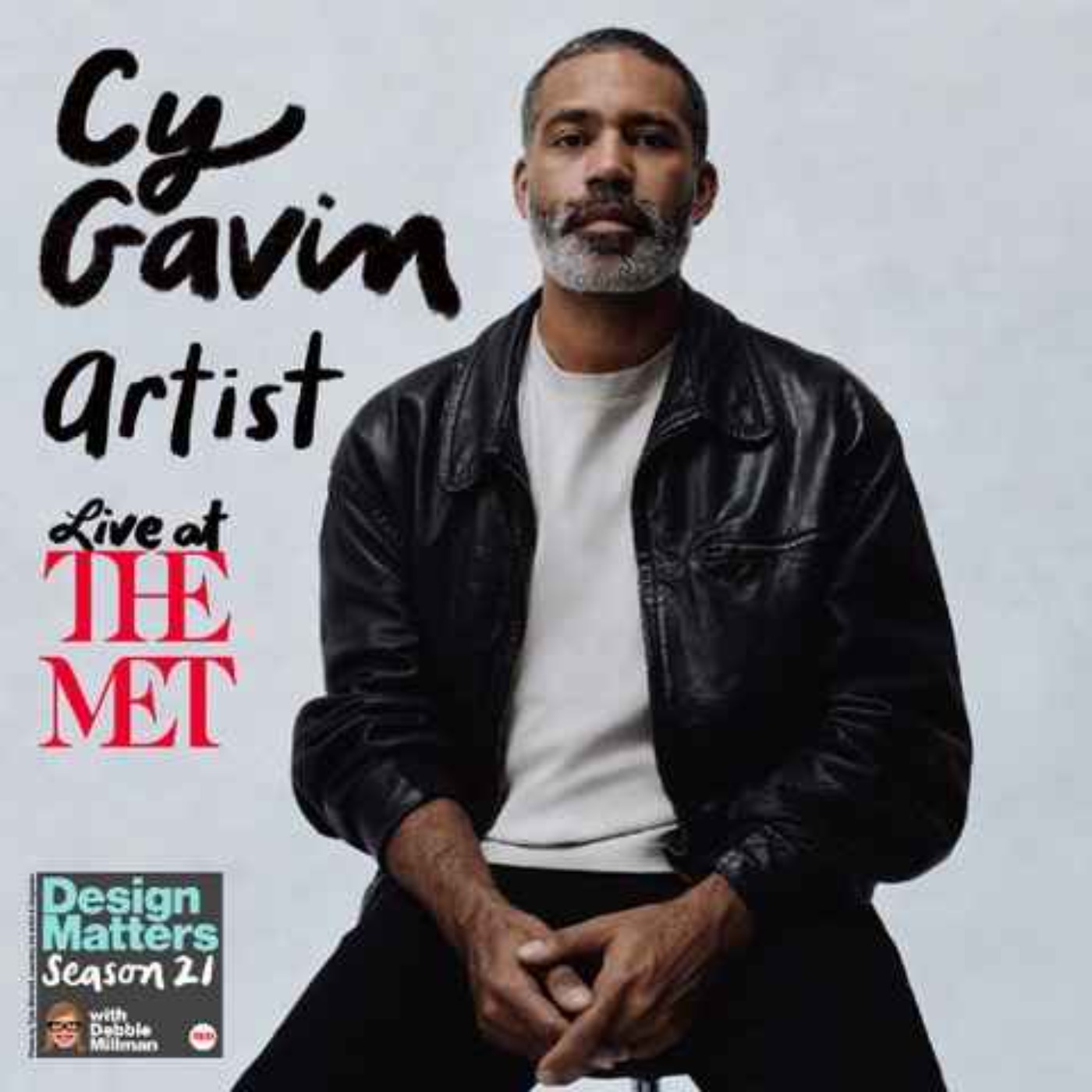
From the TED Audio Collective, this is Design Matters with Debbie Millman. On Design Matters, Debbie talks with some of the most creative people in the world about what they do, how they got to be who they are, what they're thinking about and working on. On this episode, a conversation with artist Cy Gavin about his career and about why he stopped drawing when he makes his paintings.
- [00:37]
Cy Gavin
Why not just eliminate that step entirely and just be yourself?
- [00:44]
Verizon Advertiser
Now more people than ever can bring in their bill for a better deal at Verizon. Got AT&T or T Mobile? We got you Xfinity or Spectrum. You too. So tell your friends, your family, your quirky neighbor Jeff, grab your megaphone and yell it from the rooftop. Get a better deal at Verizon because chances are anyone in shouting distance is included. Bring in your at&t, t Mobile, Xfinity or Spectrum and we'll give you a better deal on the best network come by Verizon today. Best Network based on RootMetric's best overall mobile network performance US 2nd/2025 all rights reserved. Must provide recent consumer Mobile bill in the name of the person redeeming the deal. Additional terms, conditions and restrictions apply.
- [01:15]
Capital One Advertiser
This episode is brought to you by Capital One. Capital One's tech team isn't just talking about multi agentic AI. They already deployed one. It's called Chat Concierge and it's simplifying car shopping using self reflection and layered reasoning with live API checks. It doesn't just help buyers find a car they love, it helps schedule a test drive, get pre approved for find financing and estimate trade and value. Advanced, intuitive and deployed. That's how they stack. That's technology at Capital One.
- [01:47]
Bill.com Advertiser
This podcast is supported in part by Bill, the intelligent finance platform that helps businesses and accounting firms scale with proven results. We often talk about the habits and systems that help people do their best work. For many leaders, that might include building processes that reduce friction and create clarity. That is exactly why so many finance leaders turn to Bill. With AI powered automation, Bill isn't just moving money, they're simplifying financial operations for nearly half a million customers. They're even trusted by over 90 of the top 100 US accounting firms to get it right. That trust is built on scale. Bill has securely processed over a trillion dollars in real transactions, supporting teams in handling payables, receivables and expenses. When financial tasks are organized and visible, it can free up time and energy to focus on what matters most, whether that's your team, your mission, or your community. Visit bill.comproven and get a $250 gift card as a thank you after speaking with a bill expert. That's bill.com proven. Terms and conditions apply. See offer page for details.
- [02:51]
Narrator
Cy Gavin is a painter whose work resists easy categorization. It moves between figuration and abstraction, between landscape memory, between what is seen and what is carried. He creates artwork that unfolds as atmospheres, as questions, and as a kind of inquiry into perception itself. His services hold both material experimentation, pigments, textures, light, and a deeper investigation into how we locate ourselves in the world, physically and psychologically. His work has been exhibited at institutions including the Metropolitan Museum of Art and and is held in major public collections. But what distinguishes his practice is not scale or recognition. It's the way his paintings operate as sites of searching. They ask not only what are we looking at, but how we look and what we bring with us when we do. Debbie spoke with Sy Gavin in front of a live audience at the Met, where they were in conversation both about his life and work, but also about how it relates to to ecologies of painting and installation on view in the European Paintings Galleries.
- [03:59]
Interviewer (Debbie Millman)
Hello everyone. Thank you for joining us on this beautiful afternoon in New York City. Sai, I understand that you, as you were growing up, were an avid birder.
- [04:13]
Cy Gavin
That's true.
- [04:14]
Interviewer (Debbie Millman)
Tell us more about that. I understand that you Learned more than 200 bird songs.
- [04:20]
Cy Gavin
I did calls as well. Birds have like flight, migratory mating calls and songs, some of them. So I was a person who started this group in my high school with Envirothon, which is a kind of state run academic team. And yeah, like I have a specialist in bird calls and stuff.
- [04:39]
Interviewer (Debbie Millman)
I understand that your team, this Envirothon, you competed with your classmates. No, against your classmates to test your knowledge about soil, forestry, wildlife, aquatic ecology in a national decathlon.
- [04:56]
Cy Gavin
Yeah, we went to states. We didn't win states.
- [04:58]
Interviewer (Debbie Millman)
But you didn't win.
- [04:59]
Cy Gavin
No, but we were incredibly good.
- [05:03]
Interviewer (Debbie Millman)
And I believe that you learned much of this information during long family car rides in the countryside. Where were you and your family traveling to?
- [05:16]
Cy Gavin
My family were Jehovah's Witnesses, so they would go knocking door to door. That in this, in the rural setting means driving around for hours. And that's what we did. But was really great because actually it meant that I could Bring books with me and read in the car and. Yeah, and put me in spaces where I would have opportunities to observe birds. And that made it actually engaging for me.
- [05:43]
Interviewer (Debbie Millman)
Do you still remember the bird calls?
- [05:45]
Cy Gavin
Many. Yeah, I do. I've moved to California where there was a whole other set of things to learn, so I sort of lost a little bit there.
- [05:52]
Interviewer (Debbie Millman)
But while you were in the car, you and your sister were also sketching and reading and your parents also often dropped you off at the Genora Public Library where you spent long days exploring the stacks and rows of books. Is that where you first became aware of the artwork of the old masters?
- [06:16]
Cy Gavin
100% and kind of in an ill advised way. My very overprotective parents only allowed myself and my sister to go unattended to the library. And so it gave access to all the things we had curiosity about and also luckily gave us access to people who were volunteers there who were sort of surrogate parents for me at least, and who took an interest in what I was doing and suggested books and ordered them from the interlibrary loan system and. Yeah.
- [06:48]
Interviewer (Debbie Millman)
What first inspired you to begin copying the Old Masters?
- [06:54]
Cy Gavin
I mean, I think it was really just. I wasn't allowed to do anything, so I just went to the like DIY section and would take out books about making all kinds of things. So I. I've dabbled with all kinds of things that were there because it was a way of getting an education for free. And where I grew up, it's very much like the education is about football and not an education. So to have the library really like more than supplemented in education actually provided it. And it was also a place where I could have sort of unobserved space and time to read books that would not have been allowed in my house.
- [07:39]
Interviewer (Debbie Millman)
You said you initially liked drawing when you were a kid because it was a skill where you could readily notice your improvement, for sure. Did anyone in your family at that time recognize that you had artistic talent?
- [07:54]
Cy Gavin
I think there's a difference between talent and skill. I think that's.
- [07:57]
Interviewer (Debbie Millman)
I mean, talk about what that way. There's a difference between talent and skill for sure. Tell us about that.
- [08:03]
Cy Gavin
I mean, I think I'm distrustful a bit that talent exists. I mean, I hear it all the time, but I don't know what that means for myself at least. I think that I had a life that was conducive to a certain kind of attention being paid to things because as I said, I wasn't allowed to do very much. So it concentrated my Attention on what I could. And it fostered, like, an imagination that was maybe a sort of like a escape hatch. But when I say there's a difference between skill and talent, in my case is that it was very easy to, for people in my family, maybe, and other people, too, to say, you're talented because you have drawn this thing that looks like that thing from observation or by copying it. But that. That one sort of removed them from that equation. It wasn't. It meant that you were special, you could do this, and we can't. And I remember very distinctly being a young person, and all of my friends drew, and they all drew all the time, and they drew well. And then at some point, people told them that they were good at writing or that they were good at wrestling or whatever. And then they became people who looked at me and said, that you're talented. So for me, it felt like an inadequate explanation for something. But I also think, like, whenever I would draw, I really remember and what was gratifying about it, and it was that it was, as I said, like, a thing that the muscles of your hands are used for writing as well. So it was something that I could say. Say, like, this week, I could do something that I couldn't do literally two weeks ago.
- [09:46]
Interviewer (Debbie Millman)
So it's evidence.
- [09:47]
Cy Gavin
Yeah. Compared to, say, like, trying to learn an instrument, which I tried to do as well. So by comparison, it was much more like immediate gratification to be able to create something that would be a gift for someone and also that would distinguish me in a way that would give me attention and make people feel that I had value in a society that otherwise probably didn't see that value.
- [10:08]
Interviewer (Debbie Millman)
You've described your artwork at that time, some of which we can see here as a kind of coded communication, for sure. What were you trying to communicate that couldn't be said out loud?
- [10:20]
Cy Gavin
Not in these things so much. I mean, these are paintings I made when I was in high school. And first oil painting I made is this weird self portrait with a burr on the shoulder. I had sort of two sets of sketchbooks. I had no bedroom door. Like, this is not too many, but, like, there was no sense of privacy in my youth. And it became very apparent that I had. You know, my father would rifle through every sketchbook I had, copying them and taking them to the church.
- [10:49]
Interviewer (Debbie Millman)
Why?
- [10:50]
Cy Gavin
It was dangerous to them somehow. But when I realized that there was this kind of, like, power in that, which was more than I had otherwise. It was something that I obviously, like, played with. So I could have basically Two sketchbooks. And one would be like, the one I knew that they were going to find, and then one was not.
- [11:08]
Interviewer (Debbie Millman)
So you hid that one.
- [11:09]
Cy Gavin
Absolutely, yeah. For sure. Yeah.
- [11:12]
Interviewer (Debbie Millman)
And. But none of that work is here. The hidden work is.
- [11:15]
Cy Gavin
It was a slide I took out. But those are drawings. These are paintings, but all under these. I included this because I think probably our conversation will go to a place where it talks about the act of painting. And I think these are really, like, illuminated drawings more than paintings. And that was what. When you look at a book that you get from a library that says how to paint, that is what they tell you to do. And also when you look at, you know, Titian or something, like up close, you see that there is actually, like, a chalk drawing under it or a drawing. And so I thought that that is how a painting had to be made. And so the idea of painting felt inextricable to drawing. And I don't feel that way now, but I. Back then, did you loved going to
- [12:02]
Interviewer (Debbie Millman)
the Carnegie Museum of Art in Pittsburgh, but couldn't afford the $13 entrance fee. And I understand you found a way to sneak in.
- [12:12]
Cy Gavin
Yeah, I was hesitant to talk about that because I didn't want him to, like, close it up. But there's multiple ways. But now you don't have to tell
- [12:18]
Interviewer (Debbie Millman)
us where it is exactly, if it's still there.
- [12:21]
Cy Gavin
Now I'm on the board of that museum, and it's like, it's still an issue, actually, but it's the library in the basement and through the sex. What.
- [12:34]
Interviewer (Debbie Millman)
What did that experience teach you about access to art? And is that something you're bringing to the museum now that you're on the board?
- [12:43]
Cy Gavin
That's the number one question. I mean, I wanted to be in the museum, so I made it a point to get in there. I'm sure that other people would want to be in the museum, but I'm also sure that many people wouldn't. And I think that, like, that curiosity to go into a museum has to sort of. People have to encounter that. And what was unique and I think really lucky about my experience having that be the museum I would go to was that it was also the Natural History Museum, and Carnegie funded a lot of excavations for dinosaur bones. So I did. I thought all museums were this kind of mix of, like, an active academic space and also collecting art from wherever and also relics from other cultures.
- [13:29]
Interviewer (Debbie Millman)
Once you figured out how to get into the museum, you were there all the time. And I believe that you also had a teacher in high school. Who believed you had talent or skill. And she would meet you in the mornings before class at school, and you'd bring your paintings in in garbage bags, and she'd give you feedback. What kinds of things was she telling you about your work?
- [13:56]
Cy Gavin
Yeah, I mean, I brought. I was copying paintings that I saw in the world and in books mostly, and they were all 16 by 20, because Michaels would have, like, two per sales, and that's what I could afford. It was like $5 for two.
- [14:09]
Interviewer (Debbie Millman)
And they always had the good coupons,
- [14:11]
Cy Gavin
then they had the coupons. And so I would get them when they would be on sale. And then was very afraid of just making something that I wasn't proud of because it was costly, relatively speaking. And those paintings were originally using just hobbyist paint, like 50 cent tubes from John Fabrics, which I really like, actually. And I still use that paint now because it has a lot of chalk and it's very absorbent, absorptive, rather. And so it has a matte finish, finish, and is also affordable, so you can work with it without feeling sensitive about losing stuff. But I bring paintings into her, and she would just sort of give her opinion about them or challenge me to. I remember one moment, she would challenge me to be like, well, you make all these paintings you're showing me have a certain kind of point of view. What happens when you work larger? Like, where would that point of view, Will it expand the painting as if you grab the corners of it and drew it out? Or would you clutter it up with the same scale of activity inside that large painting? And since I couldn't access, you know, larger canvases, she had canvases people had left from years past. And I would have to, you know, sand them down and paint over them. And they also left paint, oil paint. And oil paint was way beyond, like, accessibility. So, yeah, that was incredibly important for me to have a person who would just like carving out five minutes to do that.
- [15:42]
Interviewer (Debbie Millman)
One of the masterpieces in the Ecologies of Painting exhibition here at the Met that we've been hearing about from the curators is Pieter Brueghel's 1565 painting Harvesters. And you've said that first seeing Brueghel's work at that time of your life was life changing.
- [16:07]
Cy Gavin
Yeah.
- [16:07]
Interviewer (Debbie Millman)
I mean, in what way? What did it inspire you in you? How did you feel when you saw it?
- [16:11]
Cy Gavin
Not really alone, but, I mean, I think Van der Viden. I think Van Eycks, Bosch. I mean, because oil paint was, you know, made in these places. It was. It's like a new moment and in painting. And it was very fascinating to see the kind of intricacy of the way that they were made in composition, but also in loading them with data. And to contrast that with, say, like, a courtly image. It wasn't seemingly meant to serve any one person. It felt like it was more for an audience, not one person or one religious entity. And they were fun to look at. So, like, yeah, I would go art school. Like many, I guess, have like, a homeroom sort of thing. And you could go to the library in the morning. So I'd go and like. It was called Flemish Paintings who take these books out that were probably from the 60s, and a lot of them were in black and white, which was annoying, but you could still see that there was so much intention. And, you know, I didn't understand kind of the underpinnings of. Of these societies at all. I would read it what I could, but I was more interested in sort of how they were made, and they were often on wood. And that was interesting to me, too. I looked at everything. It wasn't just. I wasn't specifically Flemish painting. I looked at everything.
- [17:30]
Interviewer (Debbie Millman)
How did that early exposure influence how you thought about art?
- [17:36]
Cy Gavin
I thought that it had to do something. And I think that is not how I feel now. I think that, like, what I thought was that these functional objects, which back then especially, like, cost so much money and also time and labor to make the materials. They had to do something and often had to be funded by someone to do that thing. And it wasn't. And this is not my objective either, to be expressive, but it wasn't. It was often with an end role that feels functional in a society. And I think it. Well, that was like. It took a very long time to sort of unburden myself from that. And also, why, when I was maybe, like, 30 or something, I never saw this work as being art necessarily so much as, like, a sort of skill, something. Something that had a function and, like, you know, like, paint someone's dog that died, and it'd be like, oh, my God, this person had a real response to this because it's meaningful to them. And that was hugely gratifying. And also, like, not art in my mind.
- [18:39]
Interviewer (Debbie Millman)
Why?
- [18:40]
Cy Gavin
I don't know. That's a good question. I just didn't. I didn't feel. It didn't feel conceptual enough or zero. I mean, I think it's like. I think. No, I think it was just like making a perfect cocktail or making like, a perfect meal or something. It had to do these things and it's like, okay, it did the things. I think in the process of making something like that, in that mindset, you can totally daydream and do anything. It's more of an artisanal activity.
- [19:10]
Interviewer (Debbie Millman)
Did growing up in a post industrial town where nature was literally reclaiming what industry had left behind, shape your sense of what nature was at that time?
- [19:23]
Cy Gavin
Hugely, yeah. I mean, also society and like what capitalism was and like what globalization was, which I didn't know and encountered that when I went to school. But yeah, I mean, I saw. I lived in the kind of like ravaged aftermath of industry going into a place and then leaving. And that meant strip mines, but also old mines that had been sealed up, that would open up and just consumed someone's house and no one. My town was from 1901. It's very similar to many towns along these rivers that were all middle towns. So there was an entitlement that people felt, I think having had grandparents who had worked in situations that were very deadly to them, but which gave them a pension. I didn't grow up in that. I grew up in a dora that was 40 years after that. But I would go into buildings that were like as if you stopped time in the 30s, like just in fixtures. Everything was like that. And there was a deep grudge that was talked about and felt by people there for not having the kind of lives that they felt entitled to by merit of their parents or grandparents living when they did. Many of whom all died of like lung cancers and stuff.
- [20:36]
Interviewer (Debbie Millman)
You have some paintings here of your grandmother and they feel very conceptual in a lot of ways. Can you talk about the two pieces?
- [20:46]
Cy Gavin
This is my painting of my mother, actually, but this is the painting of my grandmother. She did fall and she did have a walker. Why she's in this space, I don't know. I just. I think I was very at that moment looking at like a lot, a lot of surrealist paintings. And I love my grandmother. And you wouldn't necessarily know it from that painting, but I painted her a lot. And she actually, I took care of her garden, which was a little strip of like maybe a foot that surrounded her house because she was bedridden. And that got me very interested in planting things. But she was very old when I was born even she's from Puerto Rico and yeah, she just was a character.
- [21:26]
Interviewer (Debbie Millman)
You've talked about feeling safest as you were growing up in the woods, places that weren't surveilled. Do you think your relationship to landscape began as a Form of freedom.
- [21:40]
Cy Gavin
I mean, I hadn't thought of that, but maybe, I mean, I think. I think more than I was maybe seeking the lands, those spaces I was escaping, the people I was with, and the kind of scrutiny that was like unavoidable in those kinds of really hermetic
- [21:56]
Interviewer (Debbie Millman)
situations at that stage of your life. You were planning on going into science?
- [22:03]
Cy Gavin
Yeah.
- [22:04]
Interviewer (Debbie Millman)
What were you planning to do professionally at that point?
- [22:06]
Cy Gavin
I don't really know. It just felt, I think, like something that to my young mind, I believed 1 and 2 that it felt exciting because it. Whatever I was, would have been something in natural sciences, but it would have been in my ignorance. I thought that that would be a space where there was like no ego. It's like, oh, like I could spend my whole life working at just finding this thing, cracking this code. And then I. As I'm on my deathbed, some young person comes and does that and I'd be happy about it. Like, I thought it was just sort of like this kind of utopic alternative to man made religions or something.
- [22:45]
Interviewer (Debbie Millman)
Your high school teacher arranged for you to attend an event with admissions officers from several college art programs. And this resulted in your being awarded a scholarship to go to Carnegie Mellon's prestigious undergraduate art program. And you said that when you got there, everyone else in the program had a baseline knowledge of art history, which you didn't have. How did you catch up? Or did you.
- [23:12]
Cy Gavin
No, I didn't. I was totally confused by that. I mean, I went. You don't really. I didn't meet these people immediately. I just saw them because it's very communal. I saw people pulling out their portfolios. They all were presenting drawings of cones and cylinders and nudes and stuff. And I was like, like, what does this have to do with you? I just totally didn't get it. And then every single person had the same thing. And it was like I brought whatever I had there, which were these lots of drawings with all kinds of people that singers and that I care about and whatever, birds and whatever.
- [23:43]
Interviewer (Debbie Millman)
Or any of these paintings that we see behind us in that portfolio, probably
- [23:48]
Cy Gavin
this painting of Maria Callas, probably that bird. But lots of drawings which I did all the time. And so. Which were very minute and like intense, but so many people rejected. They're like, really? Like, what is this? And it was really crazy circum happenstance because I arrived there, everyone was already queued up because you didn't have enough time really to go to every place you wanted. So you had to have also like a knowledge of where you'd want to go and get in a line that would take an hour. So since I didn't have that, I was standing there looking at this map of the broom, and I was just like, where do I even go? And this. These people came up, and they were running late, and they were throwing together, like, a little folding table, and they were panicked because they were there 15 minutes late. And I thought, well, I'll be the first person in line for these people. I don't know who they are. They didn't even put the thing up. And it was Carnegie Mellon, which was weird because it was also from where I was. And this portfolio review day happened in Baltimore at Micah. And the person who. She looked at my sketchbook and started crying. And she's like.
- [24:51]
Interviewer (Debbie Millman)
She started to cry.
- [24:52]
Cy Gavin
She started crying, and she's like, where are you from? And she's like, no, Don. She's like, what are you doing here? And then she's like, if I gave you a scholarship, would you attend? And I was like, yeah. Then. So she changed her life, like, in a second.
- [25:06]
Interviewer (Debbie Millman)
That's incredible.
- [25:07]
Cy Gavin
Yeah, it was bananas. And then I had, like, an hour to kill, so I was like, I'll go to these other places, I guess, and. And really, I went in line with these things, and they were like, what is this? So it was very.
- [25:20]
Interviewer (Debbie Millman)
Do you have a sense of what made her cry?
- [25:25]
Cy Gavin
I do, because I got to know her later, and she was the drawing chair. I mean, I. I talked to her about it, and, well, one that she recognized where that was in terms of socioeconomic meaning. And you wouldn't unless you were from that region. And she also just, I think, knew that what I was making was not meant to cater to an acceptance committee. And it was like a thing I was making in the vacuum of my own child mind.
- [25:59]
Verizon Advertiser
Are you really buying a car online on autotrader right now? Really? At a playground?
- [26:04]
Cy Gavin
Yeah. Really?
- [26:05]
Verizon Advertiser
Look at these listings from dealers. Wow, Your search can really get that specific. Really? And you just put in your info, and boom, Car's in your budget.
- [26:13]
Cy Gavin
Mom needs a second, honey.
- [26:15]
Verizon Advertiser
You can really have it delivered. Really? Or I can pick it up at the dealership. One sec, sweetie. Mommy's buying a car. Mommy's. I think your kid is walking up the slide, Kyle. Again? Really?
- [26:26]
Cy Gavin
Auto trader.
- [26:27]
Verizon Advertiser
Buy your car online. Really?
- [26:29]
Schwab Advertiser
This podcast is brought to you by wise, the app for international people using money around the Globe. With the WISE account, you can send, spend, and receive in over 40 currencies with no markups and no Hidden fees. Whether you're sending pounds across the pond, spending rials in Rio, or getting paid in dollars for your side gig, you'll get the mid market exchange rate on every transaction. Plus, most transfers arrive in less than 20 seconds. Join 15 million customers internationally. Be smart. Get Wise Download the Wise app today or visit wise.com Ts and Cs apply
- [27:03]
Capital One Bank Advertiser
with no fees or minimums on checking accounts. It's no wonder the Capital One bank guy is so passionate about banking with Capital One. If he were here, he wouldn't just tell you about no fees or minimums. He'd also talk about how most Capital One cafes are open seven days a week to assist with your banking needs. Yep, even on weekends it's pretty much all he talks about. In a good way. What's in your wallet? Terms apply. See capital1.com Bank Capital One NA Member FDIC
- [27:33]
Capital One Advertiser
A Better Help AD hold on one second, I just need to. What if you had a room where no one interrupts? No notifications, no expectations, just space to talk with Better Help Therapy happens in a space that's yours. Visit betterhelp.com randompodcast for 10% off your first month of online therapy.
- [28:07]
Interviewer (Debbie Millman)
It's incredible when adults reach out to people that they believe in, even when they might sense or know that the person themselves doesn't believe in what they're capable of. I ordinarily don't talk too much about myself in interviews with others, but there is somebody in the audience I want to acknowledge who I found out was coming today. Her name is Roz Goldfarb and she changed my life back when I was in my early 30s and completely lost with nowhere to go. And she believed in me. And when we find people like that in our lives, I think it's important to acknowledge what that means.
- [28:50]
Cy Gavin
And I love that. That right? Yeah. It's also I've been the beneficiary of so many people like that in my life.
- [28:57]
Interviewer (Debbie Millman)
Thank you, Ross. In any case, I believe your family was disappointed that you weren't following their biblical beliefs.
- [29:06]
Cy Gavin
I don't ask them. I can surmise my father married a
- [29:09]
Interviewer (Debbie Millman)
woman who was a Jehovah's Witness also. So I sense a little bit of what you or I'm aware of what the sort of door to door situation was. My brothers had to do a lot of that with her. How did you manage that?
- [29:22]
Cy Gavin
It's not fun in the summer. I mean, because also you're wearing like a cheap suit and like 100 degree weather. These were not confidants of mine. No. Zero. No. Absolutely not. And so they had. No, no. They had no interest in me as a person. That was a product of their. Them. I think, you know, my mother is alive and has really evolved since then, but my father did not evolve away from that. And. Yeah, and I think it's so many of those kinds of environments. It's about power and control. And if you have a personality, that's a threat and that. I had a personality.
- [29:57]
Interviewer (Debbie Millman)
You've said that the amazing gift of your upbringing is that you have absolutely no problem telling someone to f off.
- [30:07]
Cy Gavin
Yeah, I thank them for that.
- [30:09]
Interviewer (Debbie Millman)
That's really. So this is. This is the tutorial moment of the interview for all of us that might also have had challenging upbringings. Can you share how you acquired this skill to do that?
- [30:24]
Cy Gavin
I mean. Well, it's a good question. I don't know exactly where that came from. Probably from my grandmother. To be absolutely real. Not too readily to tell someone to f off. But I mean, I think if it's obvious that they don't really have your interest at heart, as was so the case when I was a kid, they're asking for it. And also just like. Like it's not a. There's not. There's nothing at stake. They're not losing anything, actually.
- [30:54]
Interviewer (Debbie Millman)
But that really requires a belief in what you're capable of to sort of tell someone no.
- [31:00]
Cy Gavin
Yeah. But I mean, you have to answer yourself at the end of the day. And I think, like, I would be. I don't. They didn't. You know, it's wonderful to have been born, but like, you do the rest of the work, it's like not. It's not someone else's job.
- [31:14]
Interviewer (Debbie Millman)
After graduating from Carnegie Mellon, you worked in video post production. You also worked in as an assistant to the feminist photographer and filmmaker Ellen Kanter and as an archivist for the artist Vito Acconci. You then applied to MFA programs and attended Columbia University, which really surprised me. I mentioned that to you the other day. Why Columbia? I would have expected you to go to like, a very famous art school for your mfa.
- [31:40]
Cy Gavin
I mean.
- [31:40]
Interviewer (Debbie Millman)
I mean, not that Columbia is not famous. I just wouldn't have necessarily thought of it first and foremost for art.
- [31:45]
Cy Gavin
I mean, to go back to this portfolio review day, like way back when I was a kid. And also. Yeah, that was. There were seven years of doing all kinds of things. And part of what was so wildly off putting about my undergraduate experience was that there was this idea that you are there to fit into an art historical Continuum. And that is basically the same as starting any business or something and having to be relevant or whatever. And that motivating drive for so many of the people I went to school with, if not all of them, made them, you know, spend huge amounts of money for student projects that looked like a museum. The kind of incredible things they were making, and then they immediately stopped making work as soon as they graduated. What I struggled with in that situation in undergraduate studies was that it was this kind of feedback loop where people were really, like, only interested in having a career. And so what was wonderful about being at Carnegie Mellon was that it was a university where I could take classes in other departments. And they actually forced a sort of disciplinary relationship. You have to choose if you're going to go to humanities and partner with them or science. And I actually went with humanities. When I was thinking about going to a graduate program, it was important to me to be like, I want to have access to other kind of coursework that will actually, like, not just be talking about what shows are happening wherever and. Or what some theorists wrote about, whatever. Like, actually to have access to, like, as I, when I was at school, I studied with Kelly Jones, who was like an enormously influential person to me, and also studied in the anthropology department. And that enriched that experience immensely. And yeah, like, it made me have a kind of multidimensional time there that I think many people you wouldn't have. Actually, you would not have that if you just had the coursework of your department.
- [33:41]
Interviewer (Debbie Millman)
How were those courses informing the subject matter of your painting?
- [33:45]
Cy Gavin
Hugely. I mean, enormously so. All you had to do was literally write a professor. And that was as simple as getting a course catalog and seeing what looked interesting, their email be there. And then because you're a grad student and they're not going to kick you out, you just write them and say, is it possible that I can be in your class for some sort of pass fail thing? And they could say no. They usually said yes because they wanted different points of view. And if they didn't say yes, then you could at least audit it. And it felt like a huge waste of incredible resource to not, I think Neil DeGrasse Tyson is there. Like, you have this access to a crazy telescope. Like whatever you were doing in your studio could have been enhanced, whatever it is, by someone on that campus. To not exploit that felt unwise.
- [34:35]
Interviewer (Debbie Millman)
These paintings feature. They all feature nature, but they also include a figurative entity. Talk about the relationship that you had at this point in your work with a figure, sort of embedded or participating or witnessing nature.
- [34:57]
Cy Gavin
A lot of these paintings were. It's like the beginning of me moving away from drawing. Yet many of these actually do have drawing as a sort of starting point. I allowed myself to deviate from that. But I remember that always being this kind of gear shift and being like, okay, throwing that away now, and now it's becoming something else. What you learn when you do that is that you immediately forget what you were so precious about, and then you're precious about something else. As far as people go, in some of these paintings, it was a bit absolutely out of this moment, which is the kind of rise of Black Lives Matter movement. And I had to kind of justify to myself what I was doing in the studio. If I'm going to be spending 10 hours a day painting or doing something else that's more immediate, like protesting or whatever. I was very also interested in creating images that I hadn't seen exist in the world. And I think the more that I thought about the language that was being bandied around at that time was really rattling around my head, like, matter. Like, what it does mean to matter and matter itself, and what constitutes that. So, like. And also I was thinking about making hangings that were more than just an image, such that they would be singular and one to the next, be very different. So, like, these have different materials in them as a sort of way of seeing also how on few occasions where some of these were exhibited, how people addressed that or how if they were, like, forensically looking for others diamonds there, or like, whatever this. They're not diamond diamonds, but like milling diamonds used for machining. But how people assign value to this, that kind of carbon, and not the charcoal that it's underneath or the whatever is in it.
- [36:41]
Interviewer (Debbie Millman)
Susanna Coffey, a painter and your mentor from Columbia, once told you that when people see something they perceive as beautiful, it becomes difficult for them to unsee it.
- [36:54]
Cy Gavin
She did say that.
- [36:56]
Interviewer (Debbie Millman)
Do you think that beauty can function as a veil, as something to sort of obscure the. The act of being beautiful obscures you from maybe what the topic matter is?
- [37:07]
Cy Gavin
Yeah, maybe like a cloak. Yeah, cloak and a dagger. I think that. Yeah, I think she was saying it's like a sort of inducement to deal with, like, topics that otherwise would be, you know, people can tune out or compartmentalize away. I think she really believed in the power of painting as much as anything else, and wasn't just an image that it had to kind of can have a certain kind of power. I think that that exists in paint, in A way that I don't really talk about, but I think it is a real thing that I make my paintings myself. And so, like, you know, a lot of people do have all kinds of people doing stuff.
- [37:47]
Interviewer (Debbie Millman)
Yeah, it's amazing. I've been to many studios where there's a whole stack.
- [37:50]
Cy Gavin
Most. Most. And so. Which is fine. That's making an image. I think when you're making a painting, though, it is. Does have a kind of inherent. Like, you know, I'm. I feel that way. Look at you look at Rembrandt. They're made by teams of people or Rubens or whatever. What I like most is looking at paintings that are made by a person and that. Where you can retrace this. The actual physicality of it, what they were bored at and what they cared about, what they. How they adjusted something or how they maybe chose to crop an image after it was painted. To me, that is, at a human level, very interesting. And I think it felt dishonest to make work that didn't foreground that. And I think that is why it felt increasingly dishonest to make paintings that were having a drawing as an underpinning and being kind of dutifully executing it.
- [38:40]
Interviewer (Debbie Millman)
So now you place the paint directly on the canvas or the medium that you're working on. Without a pre drawing and without even a sense of necessarily what might occur.
- [38:50]
Cy Gavin
Exactly.
- [38:52]
Interviewer (Debbie Millman)
For better or worse, it feels extremely dangerous.
- [38:55]
Cy Gavin
But it's like, who said that? I forget who said it. Maybe Phil Augustine or someone was like, it's not dangerous. Like, well, running and saving people out of buildings is dangerous.
- [39:04]
Interviewer (Debbie Millman)
It's like, it's not dangerous for you.
- [39:05]
Cy Gavin
Yeah, it's uncomfortable. It certainly. It's deeply uncomfortable and it feels out of control. And for me, I'm the person why I wanted to show those things at first because, like, that is my tendency as a human being is to have control, especially over an image. And I think, particularly given where I kind of grew up, everything would have been so heavily scrutinized that it was a natural inclination to hide myself away from that and puppeteer an activity in a studio rather than showing up in a kind of real way.
- [39:34]
Interviewer (Debbie Millman)
How do you navigate the tension between beauty and difficult histories in your work?
- [39:41]
Cy Gavin
I don't ever think about beauty. I'm actually shocked when people say that things are beautiful. But many I know are like, I think I don't think about beauty. I think about. Not about much, actually. If I'm painting now, I think that what I do think about happens before I paint and then when I'm working, something comes out of that, and then I have to identify it. I have to, like, reckon with it. I have to either. Yeah, I follow it. When I was younger, I've been like, oh, God, I would, like, yank this back to make it what I want it to be. And then what is. What is that? That was coming out, you know, like, that. That always happens. And I think that is also what was sort of at the crux of that is, like, to paint without a drawing. It's not actually dangerous in the way that you say it, because even if you did paint on top of this drawing that you already laid out very meticulously with every kind of voice in your head from everyone who cares about you telling you, like, you made that if you did that, you'd still have a second image. Like, there's what you're trying to do, and then what you actually did do. And if you're even fussily trying to put paint down in an exact way, it's still communicating that you're a person who's probably out of control, and you're trying to communicate that you are. So, like, why not just eliminate that step entirely and just be yourself, you know?
- [41:02]
Interviewer (Debbie Millman)
The exhibition, the Ecologies of Painting invites us to look very closely at landscape, not as a backdrop, but as something alive and entangled with human history and labor and imagination. And the paintings remind us that nature has never been neutral, and it has been observed and shaped and idealized and controlled and sometimes resisted. When you look at the images in the exhibition, what do you see beneath the idealization?
- [41:34]
Cy Gavin
That's the thing about that kind of work is that I think to read it in the way that it was resonant in its time requires information. A lot of information, actually. I enjoy that. I enjoy, like, getting books and reading about what I'm looking at from bygone times. Yeah, I think that those same. I mean, painted by human beings. I think what has really shifted hugely in terms of, like, what is painted or what people think of as worthy of being painted or whatever is the accessibility of materials. And. Yeah, and I think I was just even thinking about this conversation of, like, painting. Like, what is painting? Like, what is painting? And, like, you know, 17,000 years ago, you know, that's when the Skow Caves were painted. And it's like, we don't understand exactly what. How those images were resonant in that time. They're clearly meaningful for whoever made them. I don't think they lose value for not being able to decode them. I don't feel so arrogant as to think I understand, like, what situation produced a painting that I didn't make even myself. I'm like, what made this?
- [42:38]
Interviewer (Debbie Millman)
But the paintings, I think in the exhibition, they ask us. I mean, they span centuries. So they ask us to consider not only how artists have depicted the natural world, but how those depictions shape our understanding of our place within it. How do you approach painting landscapes that have been mythologized as paradise?
- [43:01]
Cy Gavin
As a human being, not as a person painting as a human being? If I'm puzzling something or if it matters to me in some kind of way, it's gonna be a thing I talk about. It's a thing that will probably come out in the studio. And it is not so contrived as to be like, I'm gonna do this thing that will change the way that this site is seen. It just doesn't work like that. It would have when I was younger, where I think that. I think actually to be. To use this, like, ugly word, I think that's where, like, art can become propaganda. And I really struggled as a young person to be like, so, like, who painted these religious. Like, I want to look at these paintings at face value as just great artworks. But then there's also this underpinning of, like, who's funding them, the kind of actions of the church that maybe they're working for, and how the person making it wasn't even kind of seen in a good light by those churches.
- [43:54]
Interviewer (Debbie Millman)
Does that influence how you feel about a piece?
- [43:57]
Cy Gavin
I think it. It can be a component, I think, like, not always, but I think I look at something, period, who made it, just, like, for what I can see it to be. And you can sort of infer intention without knowing it. And I think that's why outsider art, whatever the language is for calling that now, is so meaningful to people because it's made with intention and has value to the maker, and that is very immediately recognizable to me. What is harder is whenever the value is in the person funding the making. And then I usually just kind of appreciate it as a construction and also, I think. But it adds complexity to appreciate the. The societal situation that produced that thing. I think the person who jumps to mind is like, Goya or Velasquez, who were court painters, but also creating images of society, of people that were not able to buy their work, but they were also making very political, very intense personal statements, for lack of a better word, in what they were making while still painting the Duke of Wellington or
- [45:05]
Interviewer (Debbie Millman)
whoever, drawing from personal geography, you traveled to Bermuda to understand your family's legacy, your father's legacy, to the Hudson Valley where you now live. Your work explores how place holds beauty and violence, presence and erasure. And your paintings are not simply representations of landscape, but meditations on memory material and the layered histories embedded in land itself. Do you think it's possible to depict landscape truthfully? Or is every landscape in some way an invention?
- [45:46]
Cy Gavin
I don't know if there's. I don't think there's a truth to any place. And I don't think of landscape as being distinguished from even the built environment to be totally real. I think I was really thinking a lot about this for the show and for this conversation, what nature means to me. And it's really not like a thing outside of myself. It's not. I didn't move upstate to, like, find Arcadia. I'd moved there because it was like the only. Actually, it was very close, and it was very. It allowed me to work without certain constraints that I felt impeded me specifically, like being observed and also. Or having to come up with enough money to afford places that I was be. Would be working in and for that need to sell stuff to afford the place that I'm working. But having gone there, I recognized, as you do anywhere, that there are politics of a place that shape it, that shape conversations, that shape your treatment in the place that exists everywhere. And the moment when I moved upstate, it was a question of how as readily and quickly understand the texture of these places and what are the stakes? Why do these people care about this issue? And that. That is for my own self preservation, but also to be like, how am I implicated in this? What is my impact as a person who's coming into this place? If I go and tell people I'm in this town, is that going to just completely destroy a lot of positive things about the town? And it surely would have. I think I moved through the world curious about that, and I think of it as always evolving in ways that are positive, negative, and neutral.
- [47:25]
Interviewer (Debbie Millman)
You've talked about having to find ways into museums when you were younger. We're having this conversation today now in a museum that, since 2023, holds one of your paintings in its permanent collection, an institution that, like the landscapes you paint, is itself a site of history and access and transformation. What do you imagine your painting being in dialogue with the other paintings here being.
- [47:56]
Cy Gavin
I mean, it's sort of proof of having existed, which is interesting and profound. I didn't make this work right before it was Acquired by the museum. It was in my life for like a year before I even showed it. And it's of a site at my studio of literally paths that I cut into a meadow that I didn't really know what I was painting. I was working on it. But then the more I looked at it, which is why I was in my studio for a year, I felt that it was probably because the time when it was made about agency and making choices and also the kind of magic that historically happens at Crossroads. And I don't feel like that is not necessary information for people to have their experience with that work. But I think what is really amazing about the method, that what's incredibly amazing about the Met and apt over this conversation particularly is like, this is a free museum and so few are in the world. And this houses some of the most incredible things to just feed your imagination and curiosity and to be able to do that so readily. Why would you not be here all the time? And so when I was, I was here all the time. And what happens and what's interesting about painting to me is that whatever you paint, put in, does go into this kind of under realm of the subconscious and comes out in all kinds of ways. I believe that, like, when I was working on this painting, that some part of my brain remembered that Bruegel painting. And actually that cut into the Wheat Field, which struck me as like a very strange, cool choice. It sort of punctures the way that you see the painting. And I was not thinking about that in this painting here. But I think that all those things just end up informing decisions you make. And only later you're like, oh, like, did I just repaint someone else's painting? So it's like hard to put into words what it is to be at this museum. And it feels like my home, like a sort of cultural home in lots of ways.
- [49:53]
Interviewer (Debbie Millman)
And you don't have to sneak in anymore.
- [49:54]
Cy Gavin
I don't have to sneak in anymore. Yeah. This is my favorite place in New York.
- [49:57]
Interviewer (Debbie Millman)
So I have two last questions for you. Do you have a painting here in one of the most, if not the most famous museum in the world? You're represented by the Gagosian Gallery. Your work is in important collections in museums. You've even designed the carpet and some of the ephemera for last year's Met Gala. Does success impact the way you approach your practice?
- [50:24]
Cy Gavin
No, not.
- [50:25]
Interviewer (Debbie Millman)
No.
- [50:25]
Cy Gavin
No.
- [50:26]
Interviewer (Debbie Millman)
Do you feel pressure to live up to any success specific.
- [50:28]
Cy Gavin
No. No.
- [50:29]
Interviewer (Debbie Millman)
Like, how do you keep that aside?
- [50:32]
Cy Gavin
I front loaded my life that way. I was just like, I'm not doing this again. I dealt with. I had very hard conversations with gallerists that I worked with years and years ago about that. And it meant that no one goes in my studio. It's my space. And that is probably unique a bit. Like, I don't. People don't go to my studio. So not only can that now pick up something that's half done and say, I want to sell that, or like, stop, it's done. Don't put another. Like, it's like, you don't know what you're looking at. So I don't either. I don't either, but you certainly don't. So for me, like, that has meant, like, huge freedom. And I think certainly probably meant that certain opportunities were not afforded to me because I was not having people in my studio in the same way. And I was not allowing them to ever say, like, do that again. The moment someone ever said anything along those lines, I would just be like. And have a conversation about it. If they did it twice, there's a problem. So, you know, I think many people I know are. Have been intimidated into behavior because of that kind of pressure. And I think it is very important to not yield to it.
- [51:45]
Interviewer (Debbie Millman)
My last question is, actually, I think I. More of a gift for us all. Tell us about what you're working on now. And I know you have a slide to show us. Despite you not letting people into your studio, you're letting us in.
- [52:00]
Cy Gavin
That is true.
- [52:01]
Interviewer (Debbie Millman)
So look at this on the wall here for everyone to see. Talk about what you're making now.
- [52:08]
Cy Gavin
I don't know if I can. I took this picture literally last night. I'm. Yeah, I'm looking at this and working on it in real time. I think it probably came out of the painting that was previous to. This is of the Delaware river frozen. And I was going there and drawing or painting the river, but then it melted. So this is probably the algae that's underneath that I've been looking at. Probably. Yeah. It takes a long time to sort of ascertain what even something is.
- [52:38]
Interviewer (Debbie Millman)
Well, thank you for sharing this with us. I feel very nice to get this sort of very, very exclusive peek under the hood.
- [52:45]
Cy Gavin
Thank you for being an audience.
- [52:46]
Interviewer (Debbie Millman)
Hi, Gavin. Thank you so much. Thank you, everybody for joining us here today. I hope you enjoyed our conversation as much as I did, and thank you to everybody at the Met for making this happen.
- [52:59]
Narrator
Design Matters is produced for the TED Audio Collective by Curtis Fox Productions. The interviews are usually recorded at the Masters in branding program at the Start School of Visual Arts in New York City, the first and longest running branding program in the world. The editor in chief of Design Matters Media is Emily Weiland.
- [53:22]
Capital One Bank Advertiser
With no fees or minimums on checking accounts, it's no wonder the Capital One bank guy is so passionate about banking. With Capital One. If he were here, he wouldn't just tell you about no fees or minimums. He'd also talk about how most Capital One cafes are open to open seven days a week to assist with your banking needs. Yep, even on weekends it's pretty much all he talks about in a good way. What's in your wallet? Terms apply. See capitalone.com bank capital1NA member FDIC
- [53:53]
Schwab Advertiser
investing with Schwab is like spending a Saturday at a great farmer's market. You can fill your reusable tote with a bit of everything. Maybe you go for some free range self directed investing or perhaps you pick up a few farm fresh trades while you peruse. You can even get help from a dedicated advisor. That's full service wealth management. Mix, match and change your mind whenever you want. Because at Schwab, you can invest your way no matter your goals or appetite for investing, Schwab has everything you need all in one place. Visit schwab.com to learn more.
- [54:25]
Ed Gamble
Hello, it's Ed Gamble here from the Off Menu podcast and James Acaster here, also from the Off Menu podcast. Imagine a backyard tradition. Okay? A sun drenched afternoon, a massive vat of bubbling oil, and a man named Big Dave wearing goggles. It's a lot of effort for a bird. Well, what if I told you that Boar's Head has brought that exact backyard tradition right to the deli counter? Well, I'd say, James, you finally lost it. Boar's Head brings to the deli the taste of deep fried turkey. It's all the seasoning and that golden fried glory of the Friar's Turkey Breast. But without Big Dave having to set up a perimeter in your garden. Oh man, that sounds genuinely incredible. The Friar's Turkey Breast in stores now. Discover the craftsmanship behind every bite at your local Boar's Head deli. Boar's Head, committed to craft since 1905.
- [55:15]
Paige Desorvo
Hey, it's Paige Desorvo from Giggly Squad. Okay, wait, have you ever had one of those moments where you're like, I should be doing something fun tonight and then you just don't because you don't have what you need because same. But recently I've been trying to be more of a yes person. And honestly, Amazon prime has been enabling that that energy. Like the other night I randomly decided I was going to host a last minute girls night. No planning, no groceries, nothing. And instead of spiraling I just ordered everything I needed and got it that day. Snacks, drinks, even like random hosting things I absolutely didn't need. But emotionally I did. And suddenly it went from maybe next time to yes tonight. That's what I love. Prime Same day delivery makes it so you can say yes before the moment slips away. Because let's be real, the only thing worse than a bad plan is a plan you never make happen.
- [56:03]
Verizon Advertiser
Same day delivery. It's on Prime Available in select areas. Terms apply. So if you're trying to be more spontaneous or just less chaotic, go to Amazon.com prime to find millions of items delivered fast. Now more people than ever can bring in their bill for a better deal at Verizon. Got AT&T or T Mobile? We got you Xfinity or Spectrum. You too. So tell your friends, your family, your quirky neighbor Jeff. Grab your megaphone and yell it from the rooftop. Get a better deal at your Verizon because chances are anyone in shouting distance is included. Bring in your AT and T Mobile, Xfinity or Spectrum bill and we'll give you a better deal on the Best network Come by Verizon today. Best network based on root metrics Best overall Mobile Network Performance US Second Half-2025 all rights reserved. Must provide recent Consumer Mobile Bill in the name of the person redeeming the deal. Additional terms, conditions and restrictions apply.