Loading summary
Transcript212 lines
- [00:01]
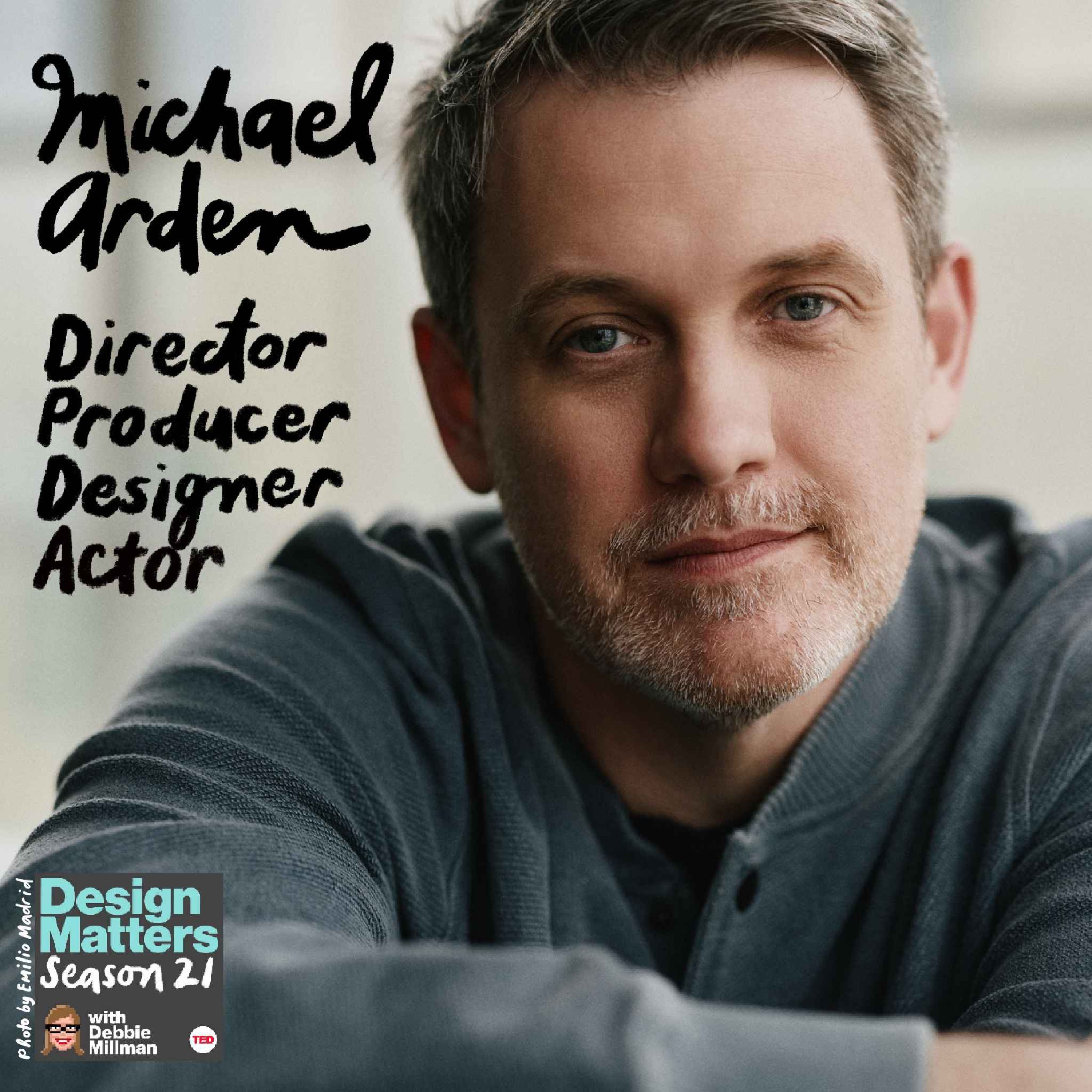
Michael Arden
Everyone who worked on that show believed 100% that if we could just get people to see it that it would melt any heart that came through the door.
- [00:16]
Narrator/Host Intro
From the TED Audio Collective, this is Design Matters with Debbie Millman. On Design Matters, Debbie talks with some of the most creative people in the world about what they do, how they got to be who they are, and what they're thinking about and working on. On this episode, a conversation with Michael Arden about his career in the theater and about some advice he once received.
- [00:39]
Michael Arden
He said, any decision you make, you should be afraid of
- [00:46]
Wise Ad Voice
Support comes from wise the smart way to manage the currencies you need around the globe. Fed up with losing out to hidden fees when you send money abroad with your everyday bank? Choose the smart way Wise. You can count on the exchange rate you'd usually find on Google. No unwelcome surprises. Plus, ditch that where's my money feeling. Most transfers arrive in under 20 seconds. Join millions saving billions on hidden fees. Be smart, get wise. Download the Wise app today.
- [01:14]
BetterHelp Ad Voice
T's and C's apply a Better Help ad.
- [01:17]
Optum Ad Voice
Hold on one second.
- [01:21]
BetterHelp Ad Voice
I just need to. What if you had a room where no one interrupts? No notifications, no expectations, just space to talk with Better help. Therapy happens in a space that's yours. Visit betterhelp.com randompodcast for 10% off your first month of online therapy.
- [01:47]
Optum Ad Voice
Healthcare can feel complicated. That's why Optum uses technology to connect the people and processes that make healthcare easier, more affordable, and more effective. We're making it clearer for you to know exactly what your benefits cover and to help you better manage your health. We're coordinating care between your doctors and your technology. We believe better, simpler healthcare is always possible. That's healthy optimism. That's Optum. Visit optum.com to learn more.
- [02:20]
Debbie Millman
Michael Arden builds theater that asks us to listen differently, see differently, and pay closer attention to one another. Over the last two decades, he has moved through film, television, and theater, first as an actor and now as one of the most celebrated directors working in theater today. He has created productions that hold intimacy alongside spectacle and humanity, alongside extraordinary craft. From Spring Awakening to Parade, from maybe Happy Ending to Bringing the Lost Boys to the stage, his productions return again and again to questions of belonging, connection, and what becomes possible when people truly feel seen. Michael Arden, welcome to Design Matters.
- [03:05]
Michael Arden
So happy to be here with you.
- [03:07]
Debbie Millman
Michael, is it true that one of your earliest adult performances was starring in a Domino's Pizza commercial?
- [03:14]
Michael Arden
This is true, yeah. It was one of my first jobs out of After I left school, living in New York, very, very broke actor at the time. So I was very happy to get that job.
- [03:26]
Debbie Millman
And were you a Domino's Pizza fan or are you still one now?
- [03:30]
Michael Arden
I was not. I mean, I do partake. My husband is a huge Domino's fan.
- [03:34]
Debbie Millman
Really?
- [03:34]
Michael Arden
Uh huh.
- [03:35]
Debbie Millman
Good to know.
- [03:37]
Michael Arden
But I'm a Papa John's guy.
- [03:39]
Debbie Millman
I happen to be a big fan of Gotham Pizza, which is a pizzeria in Chelsea on 9th Avenue. And they have the best crust.
- [03:47]
Michael Arden
Well, let's be real, like, all these brand names pale in comparison to basically any, like, New York slice.
- [03:53]
Debbie Millman
This is true.
- [03:53]
Michael Arden
So I say that with an asterisk of like, this is not my favorite pizza, but of the, you know, of
- [03:58]
Debbie Millman
the, of the noted. Moving on to somewhat more somber questions. Your father died when you were 2 years old. Your mother struggled with drugs and alcohol as a result. When you were in fifth grade, you went to live with your grandparents who provided you with safety and stability for the first time. That's awfully young to have gone through so much trauma.
- [04:26]
Michael Arden
Well, you know, I think as kids, like, I never thought like, oh, my life is rough or anything like that. It was just like. It's just what it was.
- [04:34]
Debbie Millman
Yeah, it's amazing what we learned when
- [04:35]
Michael Arden
we're older and then looking back and you sort of have to be told that wasn't normal. But then again, like, what is normal? And I feel so lucky that the good things and the people who did show up for me, like my dad's parents, my grandparents, their names were Pat and Jim Moore. Pat and Jim Moore. My birth name is Michael Moore. I changed it for obvious reasons. But yeah, I mean, I feel so for the amount of what could be considered as like, hardship, the amount of unbelievable gifts I received shadows anything negative, I'd say.
- [05:12]
Debbie Millman
What did you learn from watching how your grandparents moved through the world?
- [05:17]
Michael Arden
I learned some things that I want to strive to do and some things that I want to strive to not do. The good stuff would be to help people to go above and beyond and to assume responsibility, even in moments when you might not feel like it's your obligation. I think that's been something they taught me. I mean, they didn't have to take me in, they didn't have to take such care of me and provide for me, and they certainly did. And had that not happened, I wouldn't be where I am today. And so very grateful for that. I also, you know, we inherit our family's shortcomings as well. You know, I think I want to worry less than they did, but I don't.
- [05:57]
Debbie Millman
I was gonna ask you for tips.
- [05:59]
Michael Arden
Yeah, no, I haven't figured that out yet. And they, of course, grew up and lived in a different time and place. And, you know, Southern Baptists who grew up in the Deep south during the Depression. Really, we're born Depression babies. So, you know, having to kind of learn how to not save pieces of tinfoil in the same way.
- [06:23]
Debbie Millman
Yeah.
- [06:24]
Michael Arden
Metaphorically.
- [06:25]
Debbie Millman
Yeah. No, I can relate. Absolutely. I know your grandparents took you to see Sesame street live when you were very young. I think you were about 4 years old. And you said it was revelatory. How so?
- [06:36]
Michael Arden
I couldn't believe that a different world, one that is seemingly imaginary, could be presented in front of me in the real world. I think something about that, that, like through the proscenium that was created in the Chaparral center, which was like our, you know, this sporting arena in Midland, Texas, they set up shop. This portal of the proscenium created a magical world that was three dimensional, that if I wanted to, I could have run up there and touched something about that. More so than like going to the movies or anything I had witnessed prior, like, really blew my mind. I couldn't believe it. Something about the depth of that, the dimensionality of it, that something that is imaginary existed in the same dimension as something real.
- [07:30]
Debbie Millman
It's magic.
- [07:31]
Michael Arden
Oh, my God. I'm still obsessed with it. I just came today here from watching a put in understudy rehearsal at maybe Happy Ending. And I'm still mesmerized by it.
- [07:40]
Debbie Millman
Oh, I can't wait to talk to you about that play. That play. Oh, I can't wait.
- [07:44]
Michael Arden
But I hope you know, it's like. It's that kid. I have a picture that I guess one of my grandparents took of me watching that show. And I have my hands clasped together as if in prayer and my eyes are just like, enormous. I'm looking at the stage, like, in wonder. I keep it on my desk because I never ever want to lose that.
- [08:07]
Debbie Millman
Yeah. That's when you became you.
- [08:08]
Michael Arden
Well, yeah. And it's when I'll become not me if I lose it.
- [08:12]
Debbie Millman
Yeah. At 10 years old, you play Tiny Tim in A Christmas Carol at Midland Community Theater. And you said that that's a place that was life changing for you 100,000%. How? So how did you find. And how did you find your way there?
- [08:28]
Michael Arden
Well, God, my grandparents, I think, took me to see a show, Big river there. I saw Sesame Street Live. But then this was like the Next thing I saw, which was a narrative piece. So then it was like, okay, then here's the next step. Not just this dimensionality magic, there's also story. Oh, my God. Mind blown yet again. And I fell in love with it. And so I wanted to see everything. And there was a youth theater group called the Pickwick Players that I had to wait what seemed like an eternity to be old enough to audition, to be in. And then I got in and, you know, it just. That changed my life, I would say. I think it, like, probably saved my life. I mean, I grew up with my mom, and we lived in a trailer park, and she had struggles. She had me when she was 16 years old and had struggled with drug abuse and alcohol when I was a kid. And so once I found this place, it was where I was. If I wasn't in school, I was at the theater, even if I didn't have to be. I'd hang out in the lobby, I'd work on the lights. I'd spend a lot of time in the lighting booth and up in the grid. I mean, that's. And so it's interesting that that's now become part of my life. Or I would work in the costume shop, or I was in the play, or I would stage manager. Anything I could do to be there. And I think partially because I loved it and partially because it felt like a home, it felt like a safer place for me, probably, in retrospect, it was like a place I knew I would be taken care of. And I was like the first one there and the last one to leave all the time. And I did so many shows there. And that really, I think, solidified both my love of the theater, my interest in the craft, and in a way, like, my discipline for it, because I had incredible mentors and teachers there.
- [10:23]
Debbie Millman
In high school, you played the role of the club pianist and understudied the. The show's lead character, Franklin Sheppard, in a production of Merrily We Roll Along. That's pretty risky for a high school play.
- [10:36]
Michael Arden
Well, it was interlocking Arts Academy, so it was. It wasn't just like, you know, your average public school production. But, yeah, looking back, I mean, to do Merrily in high school. And coincidentally, I understudied Benjamin Walker, the lead in American Psycho, and has gone on to do, like, many other amazing things, but I understudied him in that show, and I got to later direct that show at the Wallace Annenberg in la. And I certainly took a lot of my inspiration from that high school production. I mean, that show's amazing because it's, like, about young people and about. So I hope I get to do it again. So I get to, like, do it, revisit it at another point in my life.
- [11:17]
Debbie Millman
Yeah, I'd love to see that show. I saw it recently when it was on Broadway, and I hadn't seen it before. And I had read a lot about the fact that it was one of Sondheim's sort technical failures at the beginning, you know, that it wasn't something that people were seeing. Exactly. They didn't realize the brilliance. Yeah, I just was absolutely mesmerized by that.
- [11:40]
Michael Arden
Oh, it's an amazing piece of writing.
- [11:41]
Debbie Millman
But when I read that you did it in high school, like, what? It took, like, decades for it to get back to Broadway, and you did it in high school.
- [11:47]
Michael Arden
Isn't that funny?
- [11:49]
Debbie Millman
How did you get to Interlochen? How did your grandparents even know about a school like that?
- [11:53]
Michael Arden
I had a choir teacher at my school in Midland, Texas, named Diane Wisnand, and she put a poster up on the choir room wall about Interlaken Arts Camp. Interlaken is both a boarding school and a summer camp. And she said, this is a really cool place. I mean, I thought, oh, my God, they do musicals there in the summer. You could audition for it and be around artists all summer. I mean, it was like utopia going there. I made the friends I still keep in touch with every day. My chief collaborator and creative partner was my. One of my friends from Interlaken, and I still speak to him every day. And we produce together. And, you know, we're always returning to ideas and dreams and questions that we had when we were there at school.
- [12:47]
Debbie Millman
I think that's Dane Laffrey.
- [12:49]
Michael Arden
Yeah. Dane Laffrey. Yeah. These things that we think about and are chasing and become interested in as young artists, I think, like, carry with
- [12:57]
Debbie Millman
us very early on. Theater wasn't only performance for you. You mentioned just hanging around and wanting to be near the theater. You also helped build sets. You were designing the lighting for your production. High school production of Jesus Christ Superstar.
- [13:13]
Michael Arden
I did the sets and the lights for that production. Just to say.
- [13:17]
Debbie Millman
Duly noted. Correcting the record. Lights and Sets and sets. So what interested you about making the world as much as inhabiting it as acting as well as lighting and sets?
- [13:31]
Michael Arden
Well, I think you go see a play, images imprint upon your mind. And if mixed with story and emotion so that they are connected. When image is connected to catharsis or despair or hope or joy or feelings, then I feel like, that's like the most powerful artist statement. And probably because, like, seeing plays when I was young, it was like the visual blew me away of the depth and the color and the light and how the portals worked and how scenery was painted. So it was not real yet it was real, you know, like all of that was like the imprint of visual on the mind really is something I'm kind of obsessed with. So when I was a kid in my grandparents garage, when I moved in with them, much to their chagrin, I used to like build sets and elaborate curtain systems and so much lighting. I mean, I was thinking about this that like, God bless them, I probably like ran up the electricity bill, like getting colored lights and borrowing gel and stealing gels from my theater and creating theaters and sets in my garage. It was like my black box for shows that I would never do. I would just like create the set and then like, that would be it. And then I'd tear it down.
- [14:48]
Debbie Millman
Did you ever tear it down? Tear ups or tear down?
- [14:50]
Narrator/Host Intro
No.
- [14:50]
Debbie Millman
Drawing?
- [14:51]
Michael Arden
No. But I made so many different sets. And it was like making these like big dioramas for me. And I'd like bring my grandmother in and be like, okay, this is what happens here. And this is a house. And there's an old couple that lives here and they sit in this chair. And I was like, describe the place.
- [15:06]
Debbie Millman
What did they make of this?
- [15:07]
Michael Arden
I don't know. I mean, they had to think it was a little strange probably, but they never let me feel like it was strange. I'm so grateful.
- [15:19]
Debbie Millman
When I interviewed Dane Laffrey, he talked about how Robin Ellis and David Monti were the force behind the training at Interlaken. And they both had a really outsized impact on you both. And I'm wondering if you can talk a little bit about how.
- [15:36]
Michael Arden
Yeah, well, Robin Ellis and David Monte were our high school teachers. He ran the department and a married couple. And they both taught acting and both directed. He directed merrily. David did. And I think what was so incredible about what I learned from is they never treated us like kids. They just like treated us like adult professionals. And that kind of like, has made my, I think the transition from being a student or a young person to adulthood so much smoother because of that. And they instilled in me, like, a great sense of. And all of us a great sense of discipline and unswerving rigor, which was huge. And nothing but your most excellent work will suffice that idea, which has stuck with me. And then we still like, invite them to Every. And make sure they have good seats and ask for their thoughts and notes. You know, it's.
- [16:37]
Debbie Millman
And they give them.
- [16:38]
Michael Arden
Oh, yeah. Absolutely. Incredibly helpful. So very, very indebted to those two.
- [16:44]
Debbie Millman
You then received a full scholarship to Juilliard's Drama division. I mean, it's hard enough to get into the school, let alone get a full scholarship. At that time, were you primarily considering becoming an actor?
- [16:56]
Michael Arden
Yeah, I mean, I had in high school. I was, like, interested in a lot of things, but loved acting and loved singing, and people told me I was good at it. So I was like, okay, this is what I'll pursue. But I definitely was like, maybe I want to be a lighting designer. Maybe I want to do this. I want to be a. I took a directing class. I don't know. But I got into Juilliard, and so I was like, well, I better go. I don't.
- [17:18]
Debbie Millman
I think that's, like, was that ever.
- [17:19]
Michael Arden
On a journey is a divining rod in some way? So I. And, you know, I just. I wanted to be in New York City, and I was excited to study drama as opposed to musical theater, because I felt like it would be a more kind of specific type of education and just being in New York. So I got to move to New York, and my second day of school was September 11th. Can you believe that?
- [17:43]
Debbie Millman
Yes. How did you manage through that?
- [17:46]
Michael Arden
I mean, I think we all just did it together. It was just a group of kids in a white room at Lincoln center asking that question, what are we doing here? Why are we studying the Winter's Tale when the city is literally on fire downtown and some people decided that they didn't want to. It's not worth it. I need to rethink my life here. But in my mind, it sort of solidified my calling and my desire to make art and to be an artist, and that. That is what I had to offer the world. That that actually might not seem like an antidote to what was happening at the time, but, like, could be a healing force and has been and was after the fact. So it was a really interesting time in which, like, we were asking ourselves really big questions for young minds.
- [18:45]
Debbie Millman
You said you randomly went to an audition for the Broadway revival of Big River. How does one randomly go to an audition?
- [18:53]
Michael Arden
Did I say random? I mean, I got an audition, and I wasn't supposed to go to auditions. I was still a student at Juilliard, so that was.
- [19:01]
Debbie Millman
Oh, verboten.
- [19:03]
Michael Arden
Verboten, yeah. So I skipped a class, I think, and went to an audition. I think the casting director I had, like, auditioned for a couple things and I guess done well enough that the casting director called me back in. And I learned a little bit of sign language at that audition. And I'll never forget, I got to audition with a deaf actor, Tyrone Giordano, who I ended up. I've worked with a few times since then. He played Huck Finn. I ended up playing Tom Sawyer. And we got to do a scene together. And we were sitting on the floor. He was signing with someone behind me interpreting a sign for him and behind him interpreting for me. And it was, like, the most mind blowing experience I maybe have ever had. I never thought I'd be able to share a stage with a deaf actor. And here I was getting to. And that was because of intricate collaboration. And that, like, was a kind of defining, like, click moment for me of, like, oh, look at this. This kind of thing is not a realistic thing. Kind of like how, you know, the scenery wasn't real, but. And yet it was. So that was a big moment. And I got the job and was in a dressing room with Oscar winner Troy Kotzer, who won an Oscar for Coda. And I, for three months, was just immersed in only sign language in that dressing room when I learned just having to want to communicate.
- [20:38]
Debbie Millman
That was a landmark collaboration between Deaf West Theater and the Roundabout Theater Company. At that time, you decided to leave Juilliard, and leaving a place people spend years trying to reach requires trusting something in yourself. When Broadway opportunities began appearing, what calculation were you making in your life?
- [21:00]
Michael Arden
Well, there weren't any, you know, other opportunities at the time. It was really just that one. Just that one? Well, I was planning on doing the show. It happened to fall in the summer. It was a limited run. I was gonna close the show and go back to my junior year, my third year. And then we became a big hit, and they extended. I got a call, like, an hour after that press release went out from Juilliard saying, okay, so are you quitting the play or are you quitting school? They were on to me. They said, we'll take the weekend and think about it, but we need to know. And I struggled with this. I was agonizing over it. And the director of that production of Big river, who I truly credit for my. I mean, he gave me my first Broadway show. And that particular one, Jeff Calhoun, amazing mentor and subsequent friend of mine, he said, any decision you make, you should be afraid of, then it's worth doing. That combined with. I, as I was agonizing about what Decision to make. I was flipping through one of my favorite books, Invisible man by Ralph Ellison. And I was flipping through, talking to a friend and just sort of thumbing through at the time, and I said, I wish I could just, like, open up a page of this book, and it would tell me what to do. And I opened it up, and I put my finger there, and it said, you have to leave that college. And the next line was, it's just like Huck and Jim. And it was the one point in this book where Mark Twain's characters were mentioned. And it said the words, you have to leave that college. And the next one of the next lines is said something to the effect of, the only reason you're staying there is because you're afraid. I mean, it was like, I. When I tell you, I like, you know, you see those cartoons of, like, one of the nine lives leaving the body of the cat. It was like, that was like, three of my nine lives. Yeah. And I, like, shut the book, turned off my lights, and I was like, I guess that's my decision.
- [23:02]
Debbie Millman
Yeah.
- [23:03]
Michael Arden
I mean, you talk about looking for signs. Thank you, Ralph Ellison.
- [23:08]
Debbie Millman
Well, not long after Big River. Yeah. And not long after Big river, you joined Bear, a pop opera, a show that developed an intensely devoted audience and explored faith and sexuality and identity in ways musical theater was not often doing at that time. What did working on Bear expose you to that surprised you?
- [23:27]
Michael Arden
Well, Bear was an amazing experience because it was like, we did it in this tiny, tiny space. So I had come from, like, a big musical on Broadway, and then I was doing this, like, tiny drama. And I really loved that experience and loved my cast and loved being able to play this, like, really complex character that I really connected with. I grew up in the church and had struggled with how my identity would mesh with faith and, more importantly, other people's faith.
- [23:57]
Debbie Millman
Yeah.
- [23:58]
Michael Arden
So it was kind of an incredible experience. And the fans of that show, I mean, I still. People still come up to me and talk about, like, that show changed my life. That happened right after I left school. I did that show.
- [24:10]
Debbie Millman
How did you meet Barbra Streisand?
- [24:13]
Michael Arden
I met Barbra Streisand at a sound check for her European tour, on which I had the insane opportunity to sing duets with her, have banter with her, escort her around a stage, through stadiums in Europe. So that's when I first met her. No, that was.
- [24:37]
Debbie Millman
I became one of the Broadway boys. How did you. How did.
- [24:41]
Michael Arden
How did that happen? Amazing. Director, producer, now friend of mine named Richard J. Alexander, who has directed a lot of her concert work. Called me up. He had seen me in times. There are change in this Tyler Tharp debacle. I was in on Broadway and said, hey, I'm directing Barbara's European tour. Il Devo had done the tour with her in the States, but for some reason, I think they probably couldn't afford Il Devo for the European tour or didn't want to pay Il Devo, their quote. So they had this idea to have her perform with what was called the Broadway Boys. And so it was four guys who had been on Broadway. Some, you know, Hugh Pinero would play the Phantom. Sean McDermott, Peter Lockyer, you know, kind of classic. And I was gonna be like the kid, like the young one. I was. God, I was like 24, 23. And so we like rehearsed with a 60 piece orchestra which traveled, by the way. We had our own plane, like a full sized plane filled with an orchestra and crew. And Liz Calloway, incredible. Liz Calloway teched the show with us and sang all of her songs. And so we like rehearsed the show, kind of teched the show in some, like, warehouse in New Jersey. I don't rem. And then flew to Zurich, I think was our first stop. And I think I met her maybe there like as we sound checked and started that tour. We played eight cities in two months. Only did like 10 shows. It was the greatest gig of my life. I mean, it was like two shows a week with Barbra Streisand 60 piece orchestra, 30,000 people in the audience, and singing some of the best songs ever written.
- [26:19]
Debbie Millman
Ever written.
- [26:20]
Michael Arden
Come on. It was pretty cool. And I got, you know, and I got a couple suits out of it.
- [26:24]
Debbie Millman
Mm. Performing insider production centered around an artist with that kind of history and precision. Must have created its own education for you.
- [26:34]
Michael Arden
Absolutely. I mean, I got a front row seat to the best masterclass anyone could imagine. Watching her work, an audience watching her sing these incredible songs and every night and navigate how to perform them for people who didn't necessarily speak the language she was doing it in. I mean, it was really cool. Looking back on it, like, I can't believe I got to do that.
- [26:59]
Debbie Millman
I can't either.
- [27:00]
Michael Arden
It was really, really cool.
- [27:01]
Debbie Millman
Yeah. I am. To say an avid fan, a zealot fan would be an understatement. I've been a fan of hers since I was 7 or 8 years old. Listening to my grandmother's LP of stony end. Uh huh. Sang that song over and over and over again in front of my grandmother's full length mirror in her bedroom with a hairbrush as a microphone.
- [27:28]
Michael Arden
Well, there you go.
- [27:29]
Debbie Millman
And I can still sing that song. That's one of my favorites of all day.
- [27:34]
Michael Arden
Well, it was funny too, because I somehow had, like, never seen Funny Girl. I liked musicals, but I was sort of like, into, you know, the new stuff. And like, somehow, like, she had eluded me a little bit. I knew who she was. I knew she was famous, I knew she was amazing. People loved her. And I knew that my grandfather, like, had her cassettes in his truck shout out to Jim. But I think that was partially why I was able to, like, have such a good time on that tour, is because I did. The other guys were like, oh my God, coming in, what am I going to say to her? And I was like, hey, what's going on? I really like to meet the Fockers, you know what I mean? And that became like, that became her joke, our joke. That, like, I was the kid who, like, didn't know who she was. And in a way, I think that probably helped me be relaxed around her. And we just had a great time together. And she called me Smartass. That was her nickname for me because I would always kind of like, you know, we'd finish and she'd be like, what do you think? And I'd be like, barbara, I have some notes. And, you know, we just had a really good time. She was, she's. She was awesome.
- [28:38]
Spectrum Business Ad Voice
You have the vision for your business. You have the plan and you just got handed a huge opportunity. But is your business connectivity reliable enough to make a move? Spectrum Business delivers fast, reliable Internet, phone, TV and mobile services. So you're always connected when it matters most. Get connectivity packages built for your business with savings that keep your budget in check. And with fast, reliable Internet and 100% US based customer support, you'll stay connected and ready to bring your vision to life. Learn more@spectrum.com business restrictions apply. Services not available in all areas.
- [29:14]
BetterHelp Ad Voice
We all prefer things a certain way, like groceries. If you want groceries just how you like them, you gotta try Instacart. They have a new preference picker that lets you pick how ripe or unripe you want your bananas. Shoppers can see your preferences upfront, helping guide their choices. Because when it comes to groceries, the details matter. Instacart. Get groceries just how you like.
- [29:37]
Wise Ad Voice
Support comes from wise. The smart way to manage the currencies you need around the globe. Fed up with losing out to hidden fees? When you send money abroad with your everyday bank. Choose the smart way Wise. You can count on the exchange rate you'd usually find on Google. No unwelcome surprises. Plus, ditch that where's my money feeling. Most transfers arrive in under 20 seconds. Join millions saving billions on hidden fees. Be smart, get wise. Download the wise app today. Ts and Cs apply.
- [30:06]
Optum Ad Voice
Healthcare can feel complicated. That's why Optum uses technology to connect the people and processes that make health care easier, more affordable and more effective. We're making it clearer for you to know exactly what your benefits cover and to help you better manage your health. We're coordinating care between your doctors and your technology. We believe better, simpler healthcare is always possible. That's healthy optimism. That's Optum. Visit optum.com to learn more.
- [30:39]
Debbie Millman
Michael, you've spent years building your life through roles that often sat close to outsiders. People carrying loneliness, longing, distance from the world around them. Looking back now, what patterns did you see in the characters you were being asked to inhabit when you were acting?
- [30:56]
Michael Arden
I mean, I think what you said there, people who are sort of like, not to quote dear Evan Hansen, but on the outside looking in and feeling that they didn't belong within. And I think maybe the thread there is that the world put that on these characters, but also they put that on themselves. So the obstacle through line for a lot of these has been like, one has to like love themselves before they can. Anyone else can love them. So maybe that's been a bit of a through line in some of the characters I've been so lucky to play.
- [31:30]
Debbie Millman
Around 2014, DJ Kurz, the deaf west artistic director, approached you about directing for Deaf west, and you and Andy Mientez decided to work reviving the musical Spring Awakening. What made you decide to choose that play?
- [31:46]
Michael Arden
Well, Deaf west had said, is there something you would like to do with us? And it was really Andy's idea. I'll fully credit him with that. He, who is also my husband, just to say he wasn't at the time, but he, he, he became my husband legally shortly after that. We've been married for 10 years. He said, oh, this is really interesting because it is about computer what happens when people do not communicate, when a mother doesn't communicate with her daughter, the realities of womanhood and sex, and when there is a breakdown in communication between both family members and the society and people within it. And so then I started doing research about what was happening in deaf history in the late 1890s. And there was this thing called the Milan Conference that occurred, which was an International meeting of deaf educators. Let me tell you, no deaf people attended this conference. So it was, Decisions were being made for the deaf community by hearing people. So this Milan conference happened and it was sort of decided by this group of hearing educators for the deaf that oralism was the only way by which deaf children could become part of society. And that means forced speaking. This is still, we are still seeing now the like reverberations of this like, horrible, abusive way of thinking and educational system for the deaf where kids who might not have ever shouldn't be speaking at all because that's not that they're deaf, right? And signing was forbidden and people were forced to speak and sterilized and, and, and, and, and it was this really eye opening moment for this piece because this is what was happening at the time. And deaf students were called that they would mark them as, as fails if they couldn't speak. And a huge plot point in Spring Awakening is the, the failing of the student Moritz. And so it just kind of opened up this, oh, well, what if we really explored what was happening at the time and could tell a story about deaf history through the lens of this Vatican play and story? And it like, cosmically all like, kind of aligned and fit together and like, in some way provided a context that the original play does not have, which I think, like, makes it a much
- [34:19]
Debbie Millman
better play at that point. You had spent more than a decade building your life and career as an actor. Moving from performing inside a production to holding an entire production requires a different relationship to making theater. From what I can tell, you haven't acted on stage or screen since 2019.
- [34:40]
Michael Arden
I think you might be right about that just at dinner.
- [34:45]
Debbie Millman
Looking back now, how would you view your transition from actor to director?
- [34:51]
Michael Arden
Looking at it now, especially in retrospect, it feels inevitable and makes complete sense. But at the time when I started to do it, it felt kind of radical. I mean, when I was a kid, I used to force all my friends to do plays and they didn't want to at all. But I was like setting up the diorama sets in my garage and I was kind of circling every part of the theater. And so thinking about it now, it makes sense that, like, me understanding what an actor does is a huge part of my work as a director. I mean, I think the best directors are actors. I look at Joe Mantello, I mean, he's like not only the best actor in the world, but the best director in the world. I saw Death of a Salesman last
- [35:33]
Debbie Millman
night and I saw it last week.
- [35:35]
Michael Arden
Oh my God, it's. Well, first of all, what a friggin amazing play. But how he was able to let us hear it was really spectacular. But that training felt like, oh, necessary for me being a director. So it doesn't feel like I like had a career change. It felt like I took the courses, the required courses.
- [36:00]
Debbie Millman
During your acting years, was there a particular role that changed your understanding of what theater could do through the performance of an actor?
- [36:09]
Michael Arden
I think doing Hunchback of Notre Dame was a big moment for me because it in a way, like drew upon so many different things I had learned. It drew upon my work with Deaf west as an actor, my training at Juilliard physically and vocally, and my understanding of light and design in terms of how I was going to be moving through the scenic world of that show. That was right around the time when I started directing and working on Spring Awakening. I was doing Hunchback. So I was starting to like, think from a different perspective about, okay, what is, what's happening on stage and where do I fit in in it? As opposed to like just having on my blinders and thinking about the perspective of the character, which I don't think is actually a great idea for an actor to do. I actually, like, I think it's important to be able to turn off the outside eye as an actor. And so that was an interesting time of struggle for me of like wanting to think about the whole. But you know, when you're on stage, you can only just be and do the actions of the character. But there was a shift during that time in terms of how I thought about acting in theater and my place in it.
- [37:27]
Debbie Millman
Certainly you chose to play Quasimodo as a deaf person as he was originally written. What did that entail in comparison to a role playing him as a hearing person as he'd been primarily played?
- [37:41]
Michael Arden
Yeah, I mean, it was, it just as I was reading the novel, it was clear that he was deafened by the bells and that he would have invented language with Frollo. And yet he did have to sing and speak in soliloquy to his gargoyle friends. And so it was a really interesting opportunity to play kind of the version of Quasimodo that people could see and the version of Quasimodo that existed in his own mind. Yeah, it was, it just drew upon so many things and it was such a gift. I mean, what a score, what a character, what a story. What a story. What. I mean, Victor Hugo, man, he was really writin about some real, real life things and at the same time I was doing that show, I lost both my grandparents. Pat and Jim passed away during that process. Kind of suddenly, my grandfather had a stroke. She passed away that same week suddenly. And then I was kind of taking care of him for a long time, and then he passed away. But in a way, I'm so grateful for that show because it allowed me a place to place my grief.
- [38:55]
Debbie Millman
Quasimodo so much.
- [38:57]
Michael Arden
Oh, my God. I mean, he buries his father, and the one person who ever showed him kindness like he, through a child's mind has to process grief. And that was an intense time. And I luckily had a place I could grieve every night on stage.
- [39:16]
Debbie Millman
After Spring Awakening was revived, you got your first Tony nomination.
- [39:21]
Michael Arden
Yeah.
- [39:22]
Debbie Millman
In 2016. And then in 2018, you were nominated again for the play you directed. Once on this island, you transformed Circle in the Square into a post hurricane Haitian landscape, which changed the physical relationship between the audience and the story itself. I saw the show. I was seated in the first row, which meant I literally was on the stage, my feet in the sand. When you begin building a production, what role does space play in the emotional experience?
- [39:52]
Michael Arden
Well, it's kind of everything because unlike a film where you watch a flat surface, you were watching three dimensional service. And therefore every vantage point of the audience is in a different relationship to every thing on stage. It's amazing. It's why, like, you can go back to a show and have a completely different experience, let alone that, like, it's live and there are probably different people and you're a different person than you were the last time you saw it. And the air is different and the temperature and the.
- [40:16]
Debbie Millman
And the live music is different.
- [40:18]
Michael Arden
Yeah. I mean, if you think about the science, it's pretty unbelievable.
- [40:21]
Debbie Millman
Yeah.
- [40:21]
Michael Arden
But the space is everything. And I have always been in love with Circle in the Square. I mean, it's the one theater in the round that we have on Broadway. What I love about that is it forces the actor to be incredibly truthful. There's no cheating out, no hiding. No, no. You don't, like, angle your body to the audience so they can see your pretty face. It's like you can just look at somebody and you have to keep moving. Always in Circle in the Round, which is an amazing challenge for the director. And also something magical happens in the round. Say you and I are in a scene. We're sitting across from each other in the studio here. We're looking at each other. There's audience behind you. There's audience behind me. This does Two things to an audience. One, it forces me to imagine, as opposed to see, I have to imagine the world behind you. So I'm involved. Right. Because there's no scenery, because that would block the audience behind you, behind you. So I'm imagining the world behind you. So you're already, like, you're in the play as an audience member. So it does that to the audience member. And it also puts you in the empathetic place of the character that you were behind. It involves the audience in a way that I think is, like, so magical. I can't wait to get back in that theater. I love it so, so much. I mean, if I had to, like, work in one space for the rest of my life, it would be in the round.
- [41:50]
Debbie Millman
After several nominations, in 2023, you won two Tonys for Parade for best direction of a musical and for best revival of a musical. And you've spoken about revival not as preservation, but reinterpretation. And when you first encounter material, what tells you where something still has more to reveal?
- [42:14]
Michael Arden
I start kind of every process when looking at a work and deciding if it's something to embark upon, saying, what is this actually about? What is this challenging me to examine? And sometimes that really relates to the world today, and sometimes more closely to the world today than the world than the world in which. The time it was written in, certainly
- [42:36]
Debbie Millman
for Parade, it was.
- [42:37]
Michael Arden
Yeah. I mean, I think when, you know, when Parade was written and Parade is about, it was already looking back to the past. But we were, you know, in the. In a time politically in America where we were kind of like, patting ourselves on the back and saying, wasn't it nice? We kind of got over all that racism stuff. This was like the Clinton administration. We had, you know, if you look at media from that time, it was like a. It seemed like we had, like, gotten over some kind of hurdle, but not really, actually. It just kind of appeared that way. And so to be able to re examine it in the prelude and middle of, like, the Trump time was really an interesting thing. The piece really came alive, I think, because of the audience's relationship to it.
- [43:26]
Debbie Millman
Well, that's what I wanted to ask you about. You were working with material built around the murder of Mary Fagan, the wrongful conviction and lynching of Leo Frank, and a musical that audiences held really deep attachment to. Yeah, standing a beginning of that process. What felt most important to get right.
- [43:44]
Michael Arden
I wanted to embrace the truth of it and to present to the audience a series of events for them to then decide. I wasn't trying to, like, say, like. And here's the answer. Leo Frank is exonerated. And this is what it should be like. Actually, I just wanted to kind of, like, do it as starkly as possible, which is why we, like, had no set. Everything was pretty minimal. And we performed all of the action basically on this, like, Gallo courtroom square, 12 by 12 square, so that we could present this to the audience and they could make up their mind. But it was important to me that we reminded the audience throughout that these events occurred, these people lived and breathed, and that we are doing a play. It was a Brechtian exercise. This particular show, it was. I was very interested in a concept that he coined called the Frendunsfekt, which means the alienation effect, where we acknowledge what we are watching is separate from reality. We are saying, this is Ben Platt. He is an actor. He is playing Leo Frank. This is what Leo Frank looks like. Here's a real picture of that. What Ben Platt is going to say things and do things that Leo Frank did. And then you, because you have been given all these ingredients that are quite disparate, some real, some manufactured, you then are creating a story, and an entire different show is going on in your head as the audience than what we are doing that can. Is personal to you, and therefore your emotional connection to it is going to be so much greater than. Than anything we could have presented in a sort of naturalistic or opulent way. It's like a fascinating, like thing.
- [45:31]
Debbie Millman
Yeah, it was. It was. The way in which audiences experienced the story was as much a part of the production as the story.
- [45:40]
Michael Arden
Absolutely. And varied from person to person based upon.
- [45:43]
Debbie Millman
Based on their entire life. Yeah.
- [45:46]
Michael Arden
I think people were so emotionally engaged by it because they got to bring themselves to it in a way we don't always get to when we, like, enter a more finished proscenium arch.
- [46:02]
Debbie Millman
Your productions repeatedly return to people trying to connect across distance, difference, or isolation. And nowhere is that more apparent than in the play. Maybe happy ending, which is, I have to say, without fawning too much, really one of my most favorite plays I've ever seen. And I am a Broadway fanatic. I see a lot of shows and have been my very first show I ever saw. My dad took me to see the original production of Chorus Line, so that's how long. That's how far back this passion of mine goes.
- [46:36]
Michael Arden
It's all downhill from that.
- [46:38]
Debbie Millman
No, no, not true.
- [46:39]
Michael Arden
But what an amazing first.
- [46:41]
Debbie Millman
It was an amazing first show to see. But I want to talk about how you came upon that show and what made you so sure it would be right for Broadway.
- [46:52]
Michael Arden
I got an email from the producer, Jeffrey Richards, saying, I really like the work that you're doing right now with Once on this Island. So this was 2017, and there's a musical called maybe Happy Ending, written by two young writers who met at nyu, and it's. It's about robots in the future who fall in love. And I thought, that's a terrible idea.
- [47:16]
Debbie Millman
Isn't that the Jetsons?
- [47:17]
Michael Arden
I want nothing to do with it. I like. Okay. You know, my phone wasn't ringing off the hook, and certainly I hadn't done a new musical, and I thought, how wonderful that they would think of me for this. And he said, the writers loved your work and would I consider directing a reading of it or something. I got in my car and drove upstate. I have a place outside of Hudson, New York. So I had about two hours to listen to the music. I listened to the demos. I was like, hmm, well, this music's really good. It sounds like songs that might have existed forever with the jazz stuff. And then the other part of the score I thought was just like Mr. Rogers meets Sufjan Stevens. I mean, it was really beautiful and interesting and not saccharine and smart lyrics, but I just listened to the songs without knowing what the story was. And so then I got home, and then I immediately was intrigued. So I started reading the script, and I read it in, like, 45 minutes and was totally wrecked by it when I got to that last scene. And he. Spoiler alert. Turns to Huobun and says, shh. Don't tell her. Okay? That he hadn't erased. I was a mess. I was a mess.
- [48:40]
Debbie Millman
I cried halfway through, started crying halfway through, and continued crying till the end.
- [48:44]
Michael Arden
Yeah, it reminded me of my grandparents. It reminded me of me and the fact that they're robots. We kind of just let them in a little bit more easily because we can't imagine they'd ever screw with our emotions, you know, like, there is something about that disconnect that I love about theater, that Ver Frendens effect. A little bit.
- [49:04]
Debbie Millman
Yeah.
- [49:04]
Michael Arden
Yeah. And so I wrote back, and I was like, I have to do this. I love this. And I had ideas immediately on how it might be done, and it turned out being a very different show than it started, but that kernel of what it's about remained the same, of helping of our responsibility to each other.
- [49:24]
Debbie Millman
All accolades aside, maybe Happy Ending arrived on Broadway facing a lot of financial challenges that had Followed the production. Early box office numbers were uncertain. Ticket sales were not robust initially.
- [49:37]
Michael Arden
It was really bad at the beginning.
- [49:38]
Narrator/Host Intro
Yeah.
- [49:39]
Debbie Millman
Living inside that period. What felt important to protect about the production while people were still discovering it.
- [49:45]
Michael Arden
I think it was useful that it was like such a hard show to do because I wasn't able to like, think about how it was being received or how it was selling. I was just trying to make it great because I believed, and everyone who worked on that show believed 100%, that if we could just get people to see it, that it would melt any heart that came through the door. We wanted the production to match the beauty of the story and the simplicity of the story and the complexity of the story. And so we all like closed our eyes and jumped off a cliff together. And people started then to say, hey, you, you have to see this thing. I mean, that is why we are running today is because people told people to see it.
- [50:34]
Debbie Millman
Yeah.
- [50:34]
Michael Arden
I went because of a marketing campaign
- [50:37]
Debbie Millman
and was like, best play I've ever seen.
- [50:38]
Michael Arden
Yeah. Yeah. I mean, it was. It was people and people and people and people.
- [50:42]
Debbie Millman
How many Tonys did you win?
- [50:44]
Michael Arden
I think it won six, maybe. I don't know.
- [50:47]
Debbie Millman
Yeah, you won Best director, won best film. I'm best best show, best musical, best
- [50:52]
Michael Arden
score, best book, best scenic design. Yeah.
- [50:57]
Debbie Millman
Many of your productions explore people existing between worlds. Hearing and deaf communities, insiders and outsiders belonging in isolation. Your latest Broadway play, the Lost Boys, feels connected to that lineage. What drew you towards this particular story?
- [51:18]
Michael Arden
I really wanted to do something scary or that could be scary. That could then lead to an emotional catharsis and love. I often think about how fear and love are like shadow and light. And to explore something about light and darkness and tell a family story with such outrageously big themes that surround. It was really exciting to me and to like, I wanted to take people on like an epic roller coaster of a journey. I mean, I think the film is so interesting and it was something I'd never seen the film before. I got asked about working on it and I watched it and I was like, well, this is strange. It's like, it's like a coming of age horror comedy. Like, how would you even describe it? Yeah, it's like it's got everything. And I was like, well, that's a real opportunity, actually. I think a lot of people think that's a flaw in tone when things are multi. But I thought this could be actually its greatest asset. That, like, because if we spend too much time in the scary vampires, like they're not gonna be too. They're not gonna be that scary. So we have to laugh at them and we have to fight in order to love and. But the fact that it, like, existed around this, like, mom and her two boys, I was really excited to get to, like, tell the story about how we choose our family, which is ultimately what I think it's about. And to pull that out of the film and deepen it and kind of give it more juice was really exciting and just like a visual and sonic playground. I mean, I got to put the team together and knew immediately that I wanted this band that I was obsessed with called the Rescues to write the music. And, boy, they did. And I can't believe they had never written for the theater before or, like, you know, had never seen a Sondheim show. So we changed that and, you know, now they're hopefully here to stay.
- [53:15]
Debbie Millman
There's a moment in the new production where a character states that turning a movie into a musical reeks of desperation. That got a big laugh. And it was a wonderfully meta moment. As you built the production, what felt newly possible through theater that made the adaptation feel necessary rather than nostalgic.
- [53:35]
Michael Arden
I think being able to acknowledge the silliness of the film and not take ourselves too seriously ever. Or if we, you know, it was like a little bit of balancing act, this show, if we ever. It's like we wanted to go to extremes, but we couldn't stay in extremes. So we kind of have to vacillate and dance on the edge of the blade there a little bit. And to be able to, because it's a musical, use music as a way to do that and like, to explore types of music, rock music, pop music, character comedy songs, things like that. It just was a really exciting opportunity to kind of harken back to, like, the big musical of the 80s that relied on its score to take you on the ride. The risk. You started writing this big score. I mean, like, when I heard it, I was like, well, I know what we have to do. We have to make a big show. We have to, like, deliver this score in a way that seems like it is working in tandem with the production, music and production.
- [54:37]
Debbie Millman
There aren't that many new musicals where you can still come out of the theater singing the songs.
- [54:44]
Michael Arden
It's true.
- [54:45]
Debbie Millman
And the Lost Boys has that, which is really wonderful.
- [54:50]
Michael Arden
Yeah. I mean, people are, like, singing the songs, like, going down the escalator. Yeah, the palace, which is awesome.
- [54:56]
Debbie Millman
You expanded the role of the mother considerably.
- [54:58]
Michael Arden
Big time.
- [54:59]
Debbie Millman
The film.
- [54:59]
Ed Gamble and James Acaster
Big time.
- [54:59]
Debbie Millman
For Shoshana Bean, who is just euphoric
- [55:02]
Michael Arden
in this, she's pretty spectacular.
- [55:04]
Debbie Millman
And then a little brother as well, you expanded his fluidity, which I really appreciated and loved. Talk about making those decisions.
- [55:13]
Michael Arden
Well, we knew that what was acceptable for female characters in the 80s was not. Certainly not acceptable today. It wasn't acceptable then, but it happened. And we wanted to give the women more agency, more depth, and more of a seat at the table and more involved in the plot for la, I mean. And so spoiler alert, like Lucy especially, she is the heart of this show. She is the one trying to hold everything together. And the fact that we get to actually give her agency and that she is the salvation of this family. In the end, having been through what many women have been through throughout history, and especially at this time, is a real, real gift to get to do. And we wanted to do the same with the character of Star, who's basically like a glorified prop in the film, but is now, you know, they're both integral to the story. And with Sam, I mean, it's like Joel Schumacher was really dropping hints in that film as to who he might be. And it just felt important to me that. That we explore his recognition and reversal of feeling, like, his queerness. And when I say queerness, I mean that in, like, a bigger sense than his sexuality, because I don't actually think this is a story about sexuality. It's about feeling queer as we. That he recognizes that the thing that he has thought would keep him on the outside is his greatest skill and his strongest sword. What I love about the Lost Boys is there's kind of like you can come in from any walk of life and find a character that you can connect with.
- [57:02]
Debbie Millman
Well, the Lost Boys themselves exist as both fantasy and metaphor. What do they represent to you?
- [57:09]
Michael Arden
I think they represent the thing that we think we want.
- [57:15]
Debbie Millman
What do you mean?
- [57:16]
Michael Arden
I think they represent the shiny life, the life without responsibility, the staying young forever, the reclaiming one's youth when we feel like it might have been taken from us or is being taken from us because of the responsibilities that are being shoved upon us by our parents. And they represent that all these things come with, like, a heavy cost. And is it worth it? Like, is it. Do you want this enough to take life from someone?
- [57:45]
Debbie Millman
It's such an interesting concept. My wife Roxanna and I were talking about. We went together to see the play and we were talking about how often vampires appear in so many cultures and how they're often extremely sexy. Interview with A Vampire and the Twilight series and now the Lost Boys. What do you think it is about vampires that is so compelling to people?
- [58:10]
Michael Arden
I think the idea of vampires forces us to contemplate the type of life we would live without the threat of death. And does that reveal our true nature? And if so, what is our true nature?
- [58:27]
Debbie Millman
Yeah.
- [58:29]
Michael Arden
Or are we just living in a reactionary reality to the reality of death? I think that might be why it actually, like, digs to the core of who we are and want to be just the existence of vampires. Like, okay, if you were a vampire and you didn't have to worry about going to heaven or hell. Right. You were just gonna live forever, and it's like, what kind of life would you lead? Who would you love? How would you behave? Would you. If you could take what you wanted without any consequence, what would you take?
- [59:05]
Debbie Millman
Yeah.
- [59:05]
Optum Ad Voice
Everything.
- [59:06]
Michael Arden
Yeah. And would what you desire change based upon that or grow or you think you desire, you know, all these. So I think it, like, actually, like this kind of, like, mythic, silly vampire idea to some actually is like, an unbelievable what if? That is a great unifier? Because everybody dies except for vampires, but everybody dies. And so I think it poses a question that is quite a complex one to grapple with. And so maybe that's why, like, every culture has it, because in every culture, you die.
- [59:42]
Debbie Millman
Yeah. Well, the Lost boys just earned 12 Tony Award nominations, including Best Musical, Best Book, Best Musical Score, Choreography, Scenic Design. You were also nominated for Best Director and Best Lighting Design. So you may win two Tonys.
- [59:58]
Michael Arden
Oh, my gosh. That would be. That would be too much.
- [60:00]
Debbie Millman
You also just won the Drama Desk Award for outstanding lighting design of a musical, which you shared with your co designer, Jen Shriver. Congratulations.
- [60:09]
Michael Arden
Thank you. It's amazing. I mean, what's the best part about this all is that the Lost Boys was just a divine collaboration. Like, in order to make magic on stage, every single element has to be working in perfect concert. And so an acknowledgement of one department or one part of the show is such a compliment to the entire group of humans who made this.
- [60:32]
Debbie Millman
I have two last questions for you. The first one is, this theater asks strangers to sit together in darkness and collectively experience something unfolding in real time what feels uniquely possible inside that exchange from your perspective.
- [60:53]
Michael Arden
I think the possibility of recalibration, of change, of reexamination, of literally changing the, like, the chemistry of humanity within the walls of the theater is possible because of it, because we are breathing the same air. We are actually feeling the vibrations, like this magical thing happens where actors on stage remember a thought created by an emotion of a writer. They speak an invisible task into the air. It travels magically through the air and through speakers and to the eyes and ears of the audience, who then go in their mind, then touch their heart, and then they leave and they change because of it. It's like really crazy.
- [61:46]
Debbie Millman
Yeah.
- [61:46]
Michael Arden
I was thinking it's really magical, the
- [61:49]
Debbie Millman
sort of sound and the experience sort of reverberates through us and off us and then onto the other people that are around us. It's this wonderful collective experience.
- [61:59]
Michael Arden
And it is unique that one time there will never, ever be a recreation of it.
- [62:05]
Debbie Millman
Yeah. My last question is this. This was published in an interview about your life in playbill in 2018. This is what was written. Fueled by his grandparents love, Arden said if he could deliver one message to them, it would be, we don't ever realize how precious life is while we're living it. And I will try in everything I do to honor the love that you gave me. My last question is this. Do you feel that you've done that? And is there still anything else you'd want to tell them?
- [62:39]
Michael Arden
I feel like I'm trying to do that. I feel like every day is an opportunity to try to get closer to that and by the act of creation that that can spread and so that they can, like, live on. And is there anything I want to say, I would like to say to them? I would say that I am constantly amazed how I keep discovering them.
- [63:11]
Debbie Millman
And we do, too, through your work.
- [63:14]
Michael Arden
Well, that's a great compliment.
- [63:16]
Debbie Millman
Michael Orton, thank you so much for making so much work that matters. Thank you for joining me today on Design Matters and good luck at the Tonys. You can see Michael Arden's latest musical, the Tony nominated show, the Lost Boys, on Broadway in New York City. This is the 21st year we've been podcasting Design Matters and I'd like to thank you for listening. And remember, we can talk about making a difference. We can make a difference or we can do both. I'm Debbie Melman and I look forward to talking with you again soon.
- [63:48]
Narrator/Host Intro
Design Matters is produced for the TED Audio Collective by Curtis Fox Productions. The interviews are usually recorded at the Masters in Branding program at the School of Visual Arts in New York City, the first and longest running branding program in the world. The editor in chief of Design Matters Media is Emily Weiland.
- [64:12]
Wise Ad Voice
Self Directed Investing, Trading, Full Service Wealth Management, Automated Investing, Financial Planning, Thematic Investing, Retirement Planning.
- [64:19]
Chase Sapphire Reserve Ad Voice
Phew.
- [64:20]
Wise Ad Voice
And to think that's just a small taste of what Schwab offers, because Schwab knows that when it comes to your finances, choice matters. No matter your goals, investing style, life stage or experience, Schwab has everything you need all in one place so you can invest your way. Visit schwab.com to learn more.
- [64:39]
Optum Ad Voice
Healthcare can feel complicated. That's why Optum uses technology to connect the people and processes that make healthcare easier, more affordable, and more effective. We're making it clearer for you to know exactly what your benefits cover and to help you better manage your health. We're coordinating care between your doctors and your technology. We believe better, simpler healthcare is always possible. That's healthy optimism. That's Optum. Visit optum.com to learn more.
- [65:09]
Ed Gamble and James Acaster
Hello, it's Ed Gamble here from the Off Menu podcast and James Acaster here, also from the Off Menu podcast. Imagine a backyard tradition. Okay? A sun drenched afternoon, a massive vat of bubbling and a man named Big Dave wearing goggles. It's a lot of effort for a bird. Well, what if I told you that Boar's Head has brought that exact backyard tradition right to the deli counter? Well, I'd say, James, you've finally lost it. Boar's Head brings to the deli the taste of deep fried turkey. It's all the seasoning and that golden fried glory of the Friar's Turkey Breast, but without Big Dave having to set up a perimeter in your garden. Oh man, that sounds genuinely incredible. The Friar's Turkey Breast in stores now. Discover the craftsmanship behind every bite at your local Boar's Head Deli. Boar's Head committed to craft since 1905.
- [65:59]
Chase Sapphire Reserve Ad Voice
This is the table, the one with the view. This is how you reserve exclusive tables with Chase Sapphire Reserve. This is your name on the list. This is the chef sending you something he didn't put on the menu. This is 3 times points on dining with Chase Sapphire reserve and a $300 dining credit that covered the Citrus Pavlova and drinks. And the thing you didn't think you liked until you tasted it, Chase Sapphire Reserve now even more rewarding.
- [66:23]
Michael Arden
Learn more@chase.com Sapphire Reserve cards issued by JP Morgan, Chase bank and a member FDIC subject to credit approval.
- [66:29]
Debbie Millman
With VRBIL's last minute deals, you can save over $50 on your spring getaway. So whether it's a Mountain Escape City break or a week at the beach, there's still time to get great discounts. Book your next day now. Average savings $72 select homes only.